54.1 F
Davis

Davis, California

Tuesday, December 23, 2025
Home Blog Page 446

UC SHIP health care plan faces changes for upcoming school year

Premiums for student families, mental health resources to decrease

The UC Davis SHIP Committee approved six changes for the 2019-20 insurance coverage year at its Feb. 20 meeting. The committee is a branch of the UC Davis graduate student association that collaborates with the vice chancellor for Student Affairs regarding SHIP coverage.

A survey was sent out by the Healthcare Committee within the Student Workers’ Union (UAW 2856) to gather support from the graduate student community on specific coverage issues.

The survey focused on specific proposed changes including, “a measure to substantially lower the costs of insuring dependents on SHIP by making dependent and graduate student premiums equitable,” said Deborah Young, an associate professor and graduate researcher working with UAW 2856 on these proposed changes.

“Currently, dependent premiums are far more expensive than subscriber costs,” stated the survey notice sent by the committee. This change will reduce premiums for spouses and children by $1,700 per year.

“Our UAW Healthcare Committee ran an issue campaign mostly centered around the first measure and sent out a notice to graduate workers to rally around this cause, to make UC SHIP more affordable for grad families,” Young said.

The notice, which has now been taken down, acknowledged that these coverage changes will not impact every graduate student, but still asked for the graduate student community’s support.

“[A reduction in costs] might make this coverage affordable for some and we must never forget the importance of solidarity because when we support and fight for the needs of others, everyone benefits,” Young said.

The UAW healthcare committee also pledged support for measures that would reduce mental health copays and lab diagnostic test prices. Both measures were approved at the meeting. Beginning in the 2019-20 school year, mental health co-pays will be lowered from $15 to $5. Lab diagnostic tests currently are co-insured at an 80/20 split, which means students are responsible for paying 20 percent of test fees, while UC SHIP covers the remaining 80 percent. Next year, a flat $10 co-pay will replace the 80/20 split.

Other measures passed included lowering Student Health and Counseling Services (SHCS) pharmacy co-pays on name brand medication from $25 to $15, lowering urgent care co-pays from $50 to $25 and an elimination of co-pays for web visits for STI screenings.

While these changes were approved on Feb. 20, the 2019-20 healthcare coverage plan is not yet finalized. Sandy Santiago, the director of information and technology with SHCS, commented on further measures that will be taken before the finalization of SHIP.

“We hadn’t received the UC SHIP vision and dental rates prior to the February 20 meeting,” Santiago said. “The UC Davis SHIP Committee will hold another meeting early in March to finalize these rates.”

Written by: Ally Russell — campus@theaggie.org
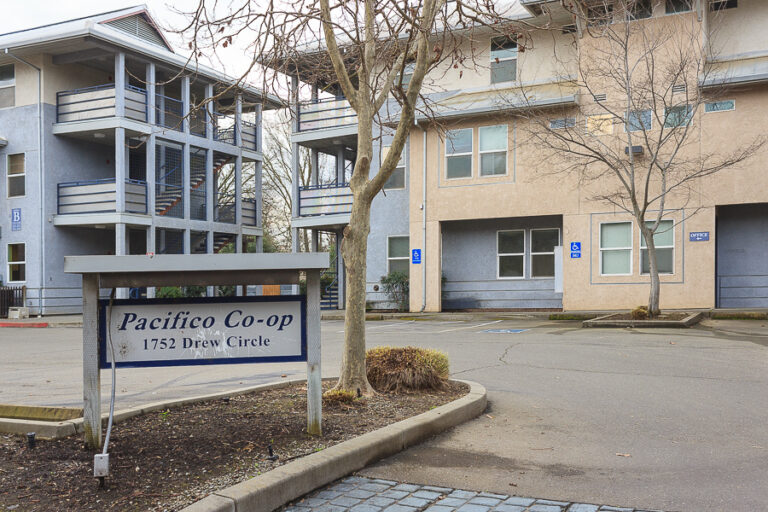
Neighbors of Pacifico affordable housing unit express concerns at City Council meeting

City Council reconsiders plans surrounding Pacifico, including creation of mental health facility

The Feb. 19 City Council meeting featured a discussion of the current state of the Pacifico Housing Property located in South Davis. The city staff provided a report on the historical background of Pacifico and the issues that it currently faces. After long public commentary from people who live in the same neighbourhood as Pacifico, the council remained uncertain about the future of Pacifico.

Pacifico is an affordable housing unit jointly owned by Davis and Yolo County Housing. It’s located at the end of Drew Circle and connected to the Putah Creek bike path.  The average annual income for Pacifico residents is $8,400, which, according to the city’s staff report, is 15 percent of the median income in Davis. Students make up 6 percent of the demographics, and disabled residents make up 34 percent.

Originally, Pacifico was designed as a 112-bed cooperative housing development for students. Due to lack of student interest to live at the property and the physical layout of the property, Pacifico went into foreclosure in 2011.

The city talked about how it could be reopened, and YCH then took over management operations from the Center for Cooperative Development. By 2015, the property was at full occupancy again for the two open buildings. However, only around 40 beds are in use.

In 2012, YCH and Davis entered into an agreement to create a plan to redevelop the two vacant buildings. In 2018, the County approached YCH to use these buildings for community needs, such as a mental health center.

The development is structured similarly to a residence hall. Each floor features communal kitchens, bathrooms and living rooms, along with single and double rooms. The city and the county are also both in charge of managing and rehabilitating the units. While the property has four buildings in total, only two of them are in use. Part of the goal of the council meetings was to review potential uses for the vacant buildings. One of the current plans that the council is looking at is to make Pacifico a mental health facility.

Pacifico counted toward Davis’ required Regional Housing Needs Allocation numbers, which were assigned by the California government. Despite two of the buildings being closed, the city counts those beds toward meeting the affordability requirement.

During the public comment portion, many residents from South Davis raised concerns about the current state of Pacifico and the bike path that leads to it. According to the staff report, there were 560 calls for service within the areas surrounding Pacifico from October 2017 to October 2018. Of these calls, 101 were from Pacifico. According to the residents, the Putah Creek bike path has become unsafe.

“We had quite a good turnout of folks who came out [to various different public meetings in South Davis], and I just wanted to acknowledge and recognize the frustration that neighbors have been experiencing in this area,” said city manager Mike Webb. “That’s part of what tonight’s about — to provide an opportunity to recognize those frustrations as continued dialogue — and I think that’s how we see it.”

Webb said that the area around Pacifico will be up for discussion and that the managers at Pacifico have taken some steps to engage in helping alleviate problems that may stem from Pacifico.

“It’s a continued dialogue moving forward,” Webb said. “There has been some initial further understanding of some of the issues here, [but] there’s more to be understood. There’s more to be discussed.”

Council member Lucas Frerichs and Mayor Pro Tempore Gloria Partida have been to some of the community meetings and have heard from the residents of South Davis.

“There’s no question that we’re taking this issue seriously,” Frerichs said. “Residents have asked for this item to be agendized. We’re doing that. Gloria and I attended the public meeting at Montgomery Elementary School on Jan. 10 […] we were very happy to attend and listen to discussions and stuff and talk to a number of neighbours about additional efforts at the council to discuss these issues.”

The council members seem to agree that they should reconsider their current plans of making the vacant buildings in Pacifico an in-patient mental health facility.

“I’m glad that the council is taking a proactive approach here,” said council member Will Arnold. “We’re taking this order holistically. The issues of homelessness are very much connected to the issues being experienced at Pacifico for better or for worse.[…] I agree with my colleagues that we need to take a fresh look at the use here and, frankly, we have an opportunity to do so.”

Written by: Hannan Waliullah — city@theaggie.org

Review: “Flora and the Red Menace”

Review: “Flora and the Red Menace”

The UC Davis Department of Theater and Dance opened “Flora and the Red Menace” as its Winter Quarter Granada Production on Feb. 28. The musical, written by George Abbott and Robert Russell, takes place in 1935 in New York City. The story follows a group of artists trying to make a name for themselves while struggling with the effects of the Great Depression.

“Flora” debuted in 1965 and was Liza Minnelli’s first starring role on Broadway. Although the play was not commercially successful, Minnelli won a Tony Award for Best Actress in a Musical for her role. It was also the first collaboration between composer John Kander and lyricist Fred Ebb, who would go on to work together on award-winning titles such as “Cabaret” and “Chicago.”

The Davis production was directed by Mindy Cooper and Judy Blazer, two women with decades of Broadway and theater experience. Cooper, now a UC Davis professor of theater and dance, has worked as a performer, choreographer and director in several Broadway and Off-Broadway productions. Blazer is the UC Davis Winter 2019 Granada Artist-In-Residence and has performed in several Broadway productions such as “Titanic the Musical” and “A Gentleman’s Guide to Love and Murder.”

Cooper and Blazer took their extensive knowledge of the world of professional theater and channeled it into teaching the student actors for the production. The expertise of the directors translated on the stage and created a top-notch production.

Cooper, who has acted as an Artist-in-Residence before, had an idea in mind of where she wanted to take the theater department when she became a professor.

“I loved the work at the department,” Cooper said. “But one of the things that I wanted to bring here was musicals.”

That is one of the many reasons the directional team chose “Flora and the Red Menace” for the students to perform. The musical score is fun, poignant and challenges the actors’ vocal ranges.

Cooper also chose “Flora” because of the relatable content of the plot and script.

“I chose it because the characters in this piece are young, passionate artists trying to find their way in the world, and I knew that the storyline would resonate very heavily with my actors,” Cooper said.

The cast of students, who only began rehearsals at the beginning of the quarter, fully immersed themselves in the characters and the era of the musical. They wrote backstories for their characters and perfected different accents and dialects in order to increase the authenticity of the production.

Third-year theater and dance major Talia Friedenberg truly shined as Flora, the headstrong and passionate female-lead. Friedenberg carries the show effortlessly on vocals alone, which when paired with her impeccable comedic timing made her the ideal leading actor.

Third-year communication major Nathaniel Challis starred alongside Friedenberg as Harry Toukarian, a fellow artist and love interest to Flora. Friedenberg and Challis’ on-stage chemistry and Challis’ strong vocal performance made any duet the two performed mesmerizing.

The rest of the supporting cast took on the challenge of playing multiple characters throughout the course of the show. In keeping with the history of the musical, there was only a cast of nine people to play the 25 different characters of the show.

“I teach my actors how to change DNA on a dime,” Cooper said. “If you put a different hat on, you’re a completely different human being.”

This challenging feat was executed to perfection by the hardworking and talented cast. Fourth-year theater and dance and wildlife conservation biology double-major Shannon McCoy was particularly strong as both Elsa, a fashion designer and friend of Flora, as well as the haughty secretary for Flora’s boss, Mr. Stanley. McCoy was believable as two completely different characters and made each of them feel unique.

Third-year theater and dance and English double major Charlie Lavaroni functioned as a narrator and comedic relief in the role of Willy. Lavaroni gave an understated, but extremely nuanced performance, and his likability was evident in each character’s hat he adorned. He was able to move the story along without distracting from the other characters, a true testament to Lavaroni’s thoughtful performance.

Second-year human development and theatre and dance double major Sophie Brubaker’s portrayal of the vehement Communist Party advocate Charlotte is what really stole the show. Sporting a bright red wig and a pinstripe suit, Brubaker became the perfect antagonistic caricature. She was an instant audience favorite with her musical number “The Flame” and continued eliciting genuine laughs and astounding people with her vocals throughout the night.

Fourth-year international relations major Hannah Ross attended the show as an assignment for class and was amazed by the production of it all.

“The set is amazing, the performers are amazing,” Ross said. “I’m pleasantly surprised.”

The show is held at the Wyatt Pavilion Theater, an intimate and small venue. The cast played the size to their advantage, often weaving in and out of the rows during musical numbers or having the characters pass out plot-related flyers.

In a post-show question and answer portion, Challis spoke to the intimacy of the theater and the effect it had on the show.

“Being able to bridge the gap between audience and cast was a really cool experience,” Challis said.

The show was a delight from start to finish. The hard work of the production team was evident in every detail of the show.

“I’m most excited for the students to relish in what they have created,” Cooper said before the performance. “It’s a very moving piece, it’s a very touching piece […] and I’m excited for them to get an audience and make them laugh, make them cry, make them feel. That’s what theater does.”

“Flora the Red Menace” will hold its second weekend of performances March 7, 8 and 9 from 7 to 9 p.m., as well as a matinee performance on March 9 from 2 to 4:30 p.m. Tickets cost twelve dollars for students and can be purchased online or at the door.

Written By: Alyssa Ilsley — arts@theaggie.org

Michael Stevens at the Pence Gallery

Local artist showcases his adolescence through three-dimensional craftsmanship

The Pence Gallery in Downtown Davis is showcasing the work of local artist Michael Stevens in an exhibit titled “Against the Grain” from now until Apr. 3. Stevens has held over 100 art exhibitions and received several awards for his work, such as the Distinguished Service Award from the CSU Sacramento Alumni Association and the Individual Artist Fellowship from the California Art Council. Stevens also has public art commissions across northern California.  

The exhibition features three-dimensional pieces that mesh children’s toys with images relating to the 1950s, the era Stevens grew up in. Natalie Nelson, the Pence Gallery Director, explained why Stevens is a good fit for the gallery.

“Michael Stevens is a well-recognized presence in our region, and he has shown widely in California and beyond since the 1980s,” Nelson said. “He approached the Pence [Gallery] with the idea of showing some of the mixed media work that he’s been working on for the past seven or so years.”

Stevens has been an active member of the California art community since the 1970s. The Pence Gallery seeks to support local artists because it is part of their mission to serve the community — their intended audience.

“Our audience for this show has been a mixture of fans of his work, largely from Sacramento and beyond, and our common mixture of UC Davis students, Davis residents and school groups,” Nelson said. “We had about 10 classrooms visit and do art inspired by Mike’s work. The kids love his sense of humor!”

Some question the relationship between an artist and their art and whether there is one at all. Stevens uses the art in this exhibition as a channel to comment on political and societal issues.

“Our intent is always to let the artist connect directly, through their work and in their artist talks, with the public,” Nelson said. “Michael’s work has a lot of social and political commentary in it, and we hope that the humor and sarcasm of the pieces open people up to deeper conversations about power and privilege in our society. Many people talk about his work as only being about childhood, since he uses kids’ toys in his work, but I don’t agree. The toys disarm people, and frighten them at times!”

As always, reactions are varied.

“Most people love the show and know his work well,” Nelson said. “Other people are really disturbed by the objects that are associated with destructive force, such as carved knives, axes, ice picks and hammers. I always think that nothing is as it seems in his work; it’s not about condoning violence, nor arguing against it. It’s about the subtle ways that violence creeps into our lives, through TV, movies and even our toys.

Regardless of the political stance his work presents, there is plenty to appreciate about Steven’s dedication to his craft — a level of dedication that even his critics can appreciate.

The Pence Gallery is located in Downtown Davis at the intersection of Second and D Streets. It is open to the public Tuesday through Sunday from 11:30 a.m. to 5 p.m. Admission is free.

Written by: Josh Madrid – arts@theaggie.org

UC Davis equestrian falls to visiting Fresno State

Program making progress, looking to grow as season approaches its end

UC Davis equestrian hosted its final home meet against No. 9 Fresno State on Saturday, ultimately falling 12-4. The Aggies now stand at 1-4 on the season that started in late January, while the Bulldogs improved to 4-6.

While not a new event for the Aggie riders, fans, friends and family were able to watch reining for the first time at UC Davis, as the event was not held during the team’s first home meet on Jan. 31. Reining, a discipline in western riding, is an event where riders perform a set of prescribed patterns which include spins, flying lead changes, circles, back-ups and the sliding stop. This last maneuver requires the rider to build up speed and suddenly stop the horse on its hind legs.

“It’s a fun event, everybody loves it,” said Head Coach Jessie Weisinger.

Throughout its season, the reining squad hasn’t been able to actually practice on reining horses, which are trained in a fashion that suits the relatively fast pace of the format.

“But [the reining team] has been hanging in right there with the other teams,” Weisinger said.

Despite the lack of reining horses, senior Laurel Jackson and sophomore Charlize Zuraek were able to snatch a pair of reining points two weeks ago against No. 4 Southern Methodist University, a team that has sent riders to the Collegiate Reining Championships for the past two years. Visiting Fresno State’s Paige Barton was also selected as a representative for last year’s championship.

Zuraek went head-to-head with Barton and fell only a point short, 73.0-72.0.

“Today we knew it was going to be tricky,” Zureak said, noting that Fresno State supplied the reining horses for Saturday’s meet, giving the away team the familiarity edge with the horses’ quirks and tendencies.

Senior western rider Haley Fredericks made the decision to attend UC Davis for academic reasons, but when she found out UC Davis would add an equestrian program in her last year as a student, she saw it as an opportunity to fulfill her goal of riding for a Division I equestrian program.

“This was a really good experience, I’m glad I have this under my belt,” Fredericks said of her experience riding for the team in her final year. “I had a year to get used to it, it was really fast and furious and I went out there with a positive mentality and enjoyed every minute of it.”

Junior hunt seat riders Sabin Marquardt and Stephanie Don secured two points early on in the equitation over fences event, while freshman Keely Laughlin finished out the event with a score of 81.0 to beat her opponent’s score of 76.0.

Laughlin also posted UC Davis’ best score of the day on the flat with an 80.0, and it appeared that UC Davis would have secured that point, but her opponent, Alex Dirickson, topped Laughlin’s score with Fresno State’s best score of the afternoon, an 85.0.

Freshman Laura Wise secured the lone UC Davis point on the flat with a score of 70.0.

“The girls are making huge improvements, they’re gaining confidence,” Weisinger said, noting the continual progress the team has made since the first meet back in January.

Moving forward, Weisinger will start recruiting more riders in the summer. The UC Davis roster currently lists 19 riders. More established programs typically have much larger rosters — Fresno State, for example, lists 34 riders.

The program is looking to add 12 new horses over this summer as well, says Weisinger. This would double the program’s current supply of competitive horses..

UC Davis will travel to Fresno to square off against Fresno State one last time on March 30, before traveling to Waco, Tex. for the NCEA Championships in April.

“The work’s not done, it’ll be busy over this summer for sure,” Weisinger said.

Written by: Bobby John — sports@theaggie.org

Seal Buildings Save Energy

A construction technology partially developed at UC Davis is being used to seal buildings and make them more energy-efficient.

Anyone who experienced the haze of smoke that descended on Northern California during the Camp Fire last year understands the benefits of an airtight building. When a structure doesn’t eak, the air quality inside can be closely regulated, and the building can be heated and cooled more efficiently. Because of these benefits, homeowners and developers demand that buildings be airtight. Finding and patching tiny leaks in a complex structures, however, can be a fool’s errand. In many cases, builders must spend hours searching for tiny leaks. A new technology called Aerobarrier, partially developed at UC Davis, could change the way leaks are identified and sealed.

With the Aerobarrier process, a blower fan is used to pressurize a structure, and then an aerosol sealant is sprayed inside the building which fills small leaks with a permanent seal. The process is quick and can fill gaps that workers cannot find, producing an incredibly airtight structure.

Aerobarrier is the successor to a technology called Aeroseal which is used to seal duct systems. Both products were developed by Mark Modera, a UC Davis engineering professor who is also the director of the Western Cooling and Efficiency Center. Aeroseal was initially developed by Modera when he worked at Lawrence Berkeley National Laboratory in 1994. Modera and his research team had done research demonstrating that leaky air duct systems waste a lot of energy. Manually sealing the systems could save energy, but it was time-intensive and difficult to do. Modera and his team set to work to find a technological solution to the problem.

“I found little robots that would go through a tape the insides of the ducts of a pipe, I found things that were used for sewer pipes, but then I had the idea based upon something I saw in the newspaper about using aerosols,” Modera said. “The newspaper said they sprayed the stuff in the ductwork to get rid of dust mites, and then it said; by the way it also seals the leaks.”

Modera invited the people who were using the aerosols to his lab but since the aerosols didn’t work as advertised, Modera and a graduate student worked for three years to develop an aerosol sealing technology that would. The product they came up with was called Aeroseal that uses pressure to distribute a sealant sprayed in a duct system. According to Modera, the pressure difference between the inside and outside of a duct system causes the particles to accumulate at the site of the leaks in the system and clog the gap.

“The air goes to make the turn to go out through the leak, and because you maintain the pressure difference between inside the duct and outside, that determines the velocity,” Modera said.  “So it’s a high velocity and it’s a sharp turn, so the particle basically skids out and smashes into the side of the leak.”

Since the launch of Aeroseal in 1997, the technology has been used to seal upwards of 200,000 houses and won numerous industry awards. After the success of the company, Modera realized that the technology could be adapted to seal houses.

Buildings are more complicated to seal than air ducts but the principles are the same. The Aerobarrier technology works alongside a common air tightness test called the blower door test that is required to meet building codes in many states. To complete the test, a fan attached to the door of a building depressurizes the building, and then sensors measure how much air leaks in. With Aerobarrier, the fan is reversed to pressurize the building, and then sealant is sprayed inside and delivered to gaps in the building envelope by positive pressure. The tightness of the building is measured in air changes per hour. Most requirements dictate that buildings be under three or five air changes per hour which can be a challenge to meet by manual sealing leaks. Aerobarrier can get a building below one air change per hour and has even even gotten some buildings down to .19 air changes per hour.

While in development, Aerobarrier was tested at the Honda Smart Home, a house located in West Village that was built to demonstrate energy-efficient technologies. When the home was built six years ago, an early iteration of Aerobarrier was used to help seal the house and make it airtight. According to Michael Koenig, the director of the Honda Smart Home project, they chose to use the technology because they wanted greater control over the air quality in the house, and wanted to heat it and cool it as efficiently as possible.

“We didn’t want air to just move through walls and cavity spaces and under sills, because it will intrinsically be less clean, than if we bring in nice clean dry air and run it through a filter,” Koenig said. “Reducing the amount of infiltration and using mechanical ventilation is part of our energy reduction strategy.”

After applying the technology twice, they were able to increase the air tightness of the building fivefold.

Last year the product launched commercially, and has been widely adopted according to company data.

“We will soon have almost 50 installers in the marketplace across North America,” said Paul Springer, the head of Business Development at the company. “We’ll have an annual run rate of seals of around 4000 homes, by the end of this year.”

Written by: Peter Smith – science@theaggie.org

Sacramento Police Department violates freedom of press, speech, assembly

85 protestors in support of Stephon Clark unjustly detained, held

Roughly 150 demonstrators gathered in Sacramento on Monday night to protest District Attorney Anne Marie Schubert’s decision to not prosecute the two police officers who shot and killed 22-year-old Stephon Clark, an unarmed black man and father of two.

Although the march was largely peaceful and winding down by 10 p.m., the protestors were suddenly met by a squad of about 100 police officers donning full-fledged riot gear and carrying rifles, batons, pepper spray and tear gas. They promptly ordered the group to disperse. Yet as the marchers looked for ways out of the premises, they quickly found themselves being “kettled” — a controversial tactic in which police corral crowds into a restricted area and prohibit them from leaving.

By the end of the night, 85 demonstrators had been detained, including members of the clergy, legal observers, college students and journalists like Dale Kasler of The Sacramento Bee, who was handcuffed and held for an hour despite notifying the police that he was on assignment. Already straddled with persistent accusations of discrimination and excessive use of force, the Sacramento Police Department can now add violating rights of free press, speech and assembly to its record as well.

Sgt. Vance Chandler, the spokesperson for the police department, justified the arrests by claiming that marchers had been ordered no less than 10 times to disperse, and that at least five cars had been vandalized. But a handful of keyed cars cannot justify the excessive, militarized police presence, nor the mass arrest of 85 individuals — especially when that group includes reporters doing their jobs and clergy members trying to maintain peace. And the fact that the crowd was physically barred from leaving renders any number of orders to disperse moot.

Since Schubert announced her decision on Saturday, community members have expressed their grief, rage and sense of betrayal at City Council meetings, marches and peaceful sit-ins. The Sacramento community’s wound is profound and indicative of the chronic lack of trust and good will between the police department and citizens.

Last year, a few days after Clark’s shooting, Chief of Police Daniel Hahn said, “I see a department and city council brave enough to say we can do better, and willing to do the hard work to get there.” This week was the time for the Sacramento Police Department to make good on this promise — to showcase its willingness to begin the long, difficult process of reconciliation and building trust.

But with the protest on Monday, the department has already fallen pathetically short, cementing its reputation as a police force that relies on undue aggression and bad judgment — which, when mixed, can lead to horrific incidents like the mistaking of a cell phone for a gun that led to Clark’s killing. When officers aren’t held accountable for their crimes, the seemingly far-off vision of trust between the community and police becomes even farther. No one can bring Stephon Clark back or change the DA’s decision. The ball is officially in the Sacramento Police Department’s court to better itself as an institution — to adopt safer, smarter and more ethical policing tactics. So far, it has just given Sacramento all the more reason to protest.

Written by: The Editorial Board

Now, more than ever, people need to say his name: Stephon Clark

District Attorney Anne Marie Schubert announces officers involved in fatal shooting will not face criminal charges

After a yearlong investigation of two Sacramento police officers who fatally shot 22-year-old Stephon Clark, District Attorney Anne Marie Schubert finally announced on Saturday that the officers will not face criminal charges. On Tuesday, State Attorney General Xavier Becerra said that the California Department of Justice also won’t press criminal charges against the officers.

Clark, an unarmed black man and father of two, was entering into his grandmother’s backyard at the time he was pursued by police after receiving a call from a neighbor that someone was breaking into cars. Clark was shot eight times while reaching for his cell phone, which officers mistook for a gun.

Officers Terrence Mercadal and Jared Robinet fired more than 20 rounds at Clark, according to The New York Times. It was also estimated that Clark, despite the severe injuries he sustained from the shooting, could have been alive anywhere from three to 10 minutes after the shooting. It took approximately six minutes for medical assistance to arrive on scene, and another five for them to finally approach Clark.

In a press conference reviewing the findings of the shooting, Schubert called the death of Clark “a tragedy for both his family and the community,” yet failed to serve justice by not holding the officers accountable. Schubert did not address that officers muted their body cameras, and instead proceeded to discuss the role of the district attorney’s office, as well as irrelevant information such as the toxicology reports and Clark’s text messages. This extraneous evidence, however, was obtained after Clark’s fatal shooting. This evidence was not pertinent to the simple question the DA had to decide: Should the two officers who killed Clark be held accountable for their actions?

Racism and other prejudices still widely persist. The Vallejo Times Herald detailed an incident in which six police officers shot 20-year-old Willie McCoy, a black man, on Feb. 9 as he was sleeping in his car at a Taco Bell. Although McCoy had a gun in his lap, video footage from the scene appeared to show police officers asking to see McCoy’s hands only after shooting him from a close range. In another case, the San Mateo County DA’s office announced that it would not seek charges against deputies that tazed 36-year-old Chinedu Okobi, another black man, to death last October, according to The San Francisco Chronicle. These are not isolated incidents — acts of violence with excessive force against unarmed people of color occur time after time. Police officers and other high-ranking officials like the DA continue to protect their own, refusing to admit when a wrongful act has been committed. Furthermore, police officers have too much leeway when it comes to what constitutes a dangerous situation that enables them to use their firearms. A reasonable use of force should be better defined, and police officers need to be more effectively trained. Family members and supporters of Clark are advocating for the passage of Assembly Bill 392, which would “affirmatively prescribe the circumstances under which a peace officer is authorized to use deadly force to effect an arrest, to prevent escape or to overcome resistance.” The district attorney has failed Stephon Clark, his family and all communities that continue to suffer from police brutality. Police officers shouldn’t be allowed to hide behind their badges; they must be held accountable for their wrongdoings. The Editorial Board urges community members to fight for those being unjustifiably treated due to prejudice or bias. These hateful acts of violence have happened far too many times and need to stop now.

Written by: The Editorial Board

Culture Corner

The Arts Desk’s weekly picks for television, movies, novels and music

Television: “Mad Men”

To be quite honest, I’ve been off my television-watching game. I have, however, become an avid Youtube television-analysis junkie. In such instances, I find myself gravitating toward the critically-acclaimed “Mad Men.” Each episode rewatch or YouTube clip adds a new layer of analysis. Themes of developing personal identity for Don Draper and other characters overlap with the turmoil and ideological shift of the 1950s. “Mad Men” is sophisticated and, ironically, timeless. “Mad Men” is available to stream on Netflix.

Movie: “Paddleton”

This story follows the dynamic of best friends Andy (Ray Romano) and Michael (Mark Duplass), two neighbors who both work dead-end office jobs. Although reserved during the day, their authentic and attractive personalities emerge when they’re together as they watch kung-fu movies, make pizza and play their invented game “Paddleton.” When Michael is diagnosed with terminal cancer and decides to undergo assisted suicide with the help of Andy, we witness the last few weeks of Michael’s life and the remaining memories of their friendship. While it is a comedy, the tragic undertones of this movie create a sentimental aura that will make you cry as much as you want to laugh. A compelling plot combined with an undeniable chemistry between the two actors made me watch the movie over and over.

Novel: “Blood Meridian” by Cormac McCarthy

I’ve been on a bit of an old-school, Western kick — Wranglers, boots, thick southern drawls, open skies and all the dirt and grit associated with such. Cormac McCarthy is notorious for his western plots which are quite violent — uncomfortably so at times. “Blood Meridian” is no exception, as the title even seems to imply. His masterful descriptions of both violence and the great outdoors combines grotesqueness and beauty in one work, displaying the mastery and diversity of McCarthy’s writing.

Album: “Half Light” by Rostam

As a die-hard fan of Vampire Weekend, it seemed incumbent upon me to become equally as acquainted with the individual work of Rostam Batmanglij, the former production mastermind of the band. Much of his sound is reminiscent of early Vampire Weekend, which differentiated the band as a unique entity in the music industry. He expands on it, however, by toying with different international sounds and often sentimental, melancholic lyrics. Batmanglij has proven himself to be an artist who has evolved from his roots and developed his own musical identity worthy of listening in its own right.

Written by: Caroline Rutten — arts@theaggie.org

Dinosaur class makes a roar as popular GE option

Many non-STEM major students choose to take GEL 012 as a GE for science and engineering credit

Tyrannosaurus rex, Velociraptor, Iguanodon, Brachiosaurus, Allosaurus, Stegosaurus — all names of dinosaurs that students learn about in GEL 12: Dinosaurs. The two-unit class grants students science and engineering general education credit, making it a popular choice for non-STEM majors.

According to Sandy Carlson, a professor in the department of earth and planetary sciences who teaches GEL 12 every Winter Quarter, the class aims to introduce lower division students to a variety of different concepts in evolution and paleobiology, using dinosaurs as examples. The class is especially geared toward students without a strong science background.

“I took [GEL 12] because everyone at a young age loves dinosaurs and goes through that phase,” said first-year English major Cami Nembach. “And with the ‘Jurassic Park’ movies, you just have a soft place in your heart for dinosaurs.”

The class meets twice a week for a 50-minute lecture. According to Nembach, each lecture starts off with the professor showing the class a current event article involving dinosaurs. New information is always being discovered about dinosaurs, and the professor makes connections between these events to the theme of the class that day. Then she moves on through the rest of the lecture.

Usually every quarter, the class is almost full with around 250 students. The class was first taught around 27 years ago and has changed from being offered once a year to being offered every quarter due to the high demand, according to Carlson.

Carlson says one goal of the class is to gain a better understanding of past worlds and extinct animals. Understanding this will help students better appreciate the world they live in today and have a deeper understanding of how science, the scientific method and hypothesis testing work.

“You see [dinosaur] characteristics in animals that are around today,” Nembach said. “It’s crazy to wrap your head around these animals that were so much bigger than us.”

A goal of the class is for students to be able to understand and be critical of scientific reports. This is often a new concept for those who are non-STEM majors.

“The scientific reports that you see are sometimes exaggerated or misleading in some ways,” Carlson said. “And developing the critical skills to detect what’s false, I think that’s really important as well. I think in college, it’s appropriate to start questioning.”

The workload of the class mostly involves studying for the midterm and the final exam since there is no homework. Reading from the textbook is recommended but optional, according to Carlson.

“We set it up so it would not be hugely burdensome,” Carlson said. “I think it’s really important for people to come to class, so I think that’s part of the workload. There’s a textbook that’s recommended but not required, but I think it’s good for a lower division class to have some kind of backup for people, especially for people who are not science majors.”

Carlson believes that the course is so popular because it is fun, and people in general are interested in dinosaurs.  

“I think the whole dinosaur-bird connection is really compelling because it makes people think about the nature of evolution and how we live with birds today and they are related to these many large, terrestrial dinosaurs,” Carlson said. “Terrestrial dinosaurs are extinct, so it just makes people wonder about them. So what we try to do in the class is to try to put that wonder into a scientific class, to set up hypotheses and test them.”

According to Nembach, she likes GEL 12 because it is a relaxing class and the professor is very animated and involved.

“She’s really into the topic so it helps the students get more interested in the subject,” Nembach said. “If we know that she loves it, I’m having a fun time.”

Carlson attested to her love for this class.

“Here, the subject matter is also so much fun that it really does make it fun to teach,” Carlson said.

First-year cellular biology major Kacey Zimmerman said that she took the class not for Science and Engineering GE credit, since she is a science major, but because she wanted to have a little more units than just her main classes. In addition to her really difficult STEM classes, she wanted one interesting, easy and fun class.

“There’s not a lot of outside work, which I think is a good thing for a GE because for me personally, even though [GEL 12] does not give me GE credit, when I’m taking a GE class, I want to learn new things that aren’t really included in what I would learn about and I want to spend most of my energy on classes that do pertain to my major,” Zimmerman said.

According to Nembach, she recommends the class to students who like dinosaurs, even if they are not very involved in science. Zimmerman shared her sentiments.

“I would recommend it even if you aren’t very sciencey,’” Zimmerman said. “It’s pretty easy to go in and get this information. You don’t really need much background knowledge.”

Written By: MARGO ROSENBAUM — features@theaggie.org

The art of pass times and playing your cards right

Students discuss their thoughts on pass times

It’s week eight of Winter Quarter. Your pass time is at 6:30 a.m., and two days before this brief appointment there is only one spot available in the lecture you know you need. White-knuckling your phone with three tabs open to Schedule Builder, you try to sleep.

Scheduling and registering for courses for the upcoming quarter can be a source of stress for students, particularly those who worry about their pass times and not getting the courses they want. For undergraduate students, course registration is done via Schedule Builder, an online portal.

Students are given two pass appointments, which are the beginning of four-hour windows during which students can register for classes. Many students, however, believe that they are only thirty minutes long due to the way they are advertised.

Claire Lu, a fourth-year psychology and statistics double major, works in the Tercero Academic Advising Center as a peer advisor for the College of Letters and Science. She advises students on a broad range of academic topics including schedule planning and course registration.

“[Students ask] and also parents come to our office and ask, ‘Hey, my kid has a really late pass time and other people, like his roommate, have an earlier pass time than my kid. Why is that?’” Lu said.

When students or parents ask her questions about pass times, she generally refers them to the Office of the University Registrar because they know more than the peer advisors. Lu says that people don’t really ask her and the other peer advisors too many questions about pass times, mostly because they can’t be changed.

While some students like first-year psychology major Brandon Law utilize online tools such as MyDegree when trying to figure out quarterly coursework, some students like first-year psychology major Kelly Huang try to plan out four years worth of classes and go from there.

“It makes it easy to be flexible and to imagine how your year will end up looking like,” Huang said. “Like in case I get waitlisted or classes become unavailable.”

Huang says that to some extent, “it’s too irritating of a topic to even bother with” since students have no control over their pass time. Meanwhile, Law, who didn’t know exactly how pass times worked, considers that a good thing, because there’s no way to really change pass time (other than by the units taken). To him, that means pass times don’t contribute to a competitive environment at school.

Law once missed his pass time because he overslept and described the “intense anxiety” he attributed to the course registration process. Huang started a quarter later than most freshmen students and said that it was frustrating to not get certain classes that are required for her major. Because she started later, she didn’t attend orientation and was left to figure out scheduling on her own. However, she makes sure to reach out to get advice when she needs help.

“[I go to] academic advisors or the psychology department,” Huang said. “[Or] my high school teachers or past instructors, especially since they already have master’s degrees. I never trust asking just one advisor.”

According to the Office of the University Registrar’s website, “the two-pass registration system ensures that all students have access to the courses that are most critical to their curricula and attain full-time status and that access to registration is distributed fairly throughout the student body.”

Until their first Spring Quarter, newly admitted freshmen are assigned zero units and newly admitted transfer students are assigned 90 units. Pass times are based on priority groups — which are established according to UC Davis units, excluding the current term, transfer units, and units from exams.

There are two assigned pass appointments, each followed by open registration. Students can only add themselves to waitlists for classes during the second pass. After the first two passes and their respective open registrations, a registration freeze begins on the the day the student fee payment is due, and no students can register for classes. Students who have paid fees are registered, and those who haven’t are dropped.

According to associate registrar Patti Flynn, there are certain groups that receive priority registration.

“The following should cover most (if not all) of the groups currently receiving priority registration: Regents Scholarship recipients, University Honors Program (UHP) participants, student athletes, students identified by Student Disability Center, students who are veterans, foster youth students, Special Transitional Enrichment Program (STEP) students, resident advisors, TRiO Scholar recipients and Chem/Math Science Honors students,” Flynn said via email.

All three of the residence areas —  Segundo, Tercero and Cuarto — offer academic advising centers with peer advisors and tutoring. Each of the colleges at UC Davis offers academic advising. Students can enroll in up to 17 units during Pass One, 19 units during Pass Two and 28.5 units during the schedule adjustment period after the registration freeze. However, that might be a lot to take on for any student.

Written by: Anjini Venugopal — features@theaggie.org

Students flock to the Pavilion in hopes of jobs, internships

The Internship and Career Center hosts its quarterly fair

Hundreds of students packed into the ARC Pavilion on Wednesday, Feb. 27 to attend the Internship and Career Center’s 5th annual fair. Rows upon rows of companies filled the bottom floor of the Pavilion, with employers ready to talk to eager UC Davis students, primed and prepared to get summer internships and future jobs.

Events and Career Recruiting Program Assistant and Event Coordinator for the Internship and Career Center (ICC) Kathy Santana felt that the fair is a good opportunity for all students to gain valuable information on how to get jobs.

“I think it is a great opportunity for students to practice looking for jobs, talking to employers, all the stuff they are gonna wanna do when they graduate,” Santana said. “You know it is across the board, a lot of younger students come here to see what is going on and to practice their interviewing skills, but certainly a lot of seniors, majors across the board, a lot of engineers, a lot of business.”

Fourth-year genetics and genomics major Kirun Chohan had done her research on the companies she stood in line for and came prepared with 10 copies of her resume for prospective employers. She also attended two workshops on preparing for the fair and constructing an effective resume, put on by the ICC.

“Bio-Rad Laboratories, Inc., is a technology company for biological science products like PCR, a lot of science products,” Chohan said. “This company [is a company I am interested in] probably because they have so many different products that I have used before, they might have something I can help with, I just want to get research and lab experience. I have talked to other employers.”

Just being at the fair is a great experience even if employers don’t have any jobs or internships at the ready because the connections made are invaluable.

“They are pretty helpful even if they don’t have anything, they still give you information if later on if they have something eventually,” Chohan said.

Third-year economics major Akshara Nair appreciated the fair because it is a good platform to personally interact with employers.

“It is more like a face-to-face platform, rather than just applying online and hoping you’ll get it, here you can talk to them and understand more about the role and the position,” Nair said. “It is really important for the student, actually, you get to know more about the role itself and get to decide then and there if you are going to be a perfect fit or not.”

Employers also have something to gain by this experience that the fair provides. Target representative Gabriella Serrato agreed with this statement.

“I think it is really beneficial and it is nice for us to get a better understanding of what students are looking for and for us to kind of explain what our positions entail, because we can only put so much on a postcard or on a website, so it is beneficial for us to express why we love Target so much.” Serrato said.

Even students who are critical of the fair acknowledge its overall value such as fourth-year chemical engineering major Joel Tinseth.

“[The fair is] more of a supplemental thing I found, I can’t imagine putting all of my chances in this event, but it definitely helps,” Tinseth said.

To find more information about summer internships or potential job opportunities be sure to check out the ICC’s website on future workshops and personal advising sessions.  Because like Joel Tinseth most of us “want a career.”

The ICC hosts career fairs quarterly, so for those who missed out on Winter Quarter’s installment, there are more opportunities to catch employers on April 17 from 10 a.m. to 2 p.m. in the Pavilion.

Written by: Isabella Beristain — features@theaggie.org

Humor: New vegan moms are convinced their own organic breast milk is toxic for their newborns

Vegans are at it again

This new age vegan religion never ceases to amaze me. From trying to disguise cauliflower as chicken wings to creating chicken-flavored soy milk, vegans have always been a bit nutty in the head if you ask me. (Get it? “Nutty”? Because they love them some good ol’ nuts.)

A piece of tofu will never taste as good as a delectable piece of greasy meat. I mean, the vegan community should care about the consent of fruits and vegetables as well. Cauliflower Lives Matter too — #CLM.

Now that I got that out of the way, I can finally get to the meat — or dare I say, tofu — of the matter. What happens when pushy plant-based vegans push their vegan religious lifestyle on their five-month-old baby?!

According to the Miami Herald, a young Floridian couple was charged with child neglect after the mother refused to feed her baby with her own breast milk because she believed the female body is an animal — so, if her baby drank from her tit, it would automatically disqualify her baby from vegan heaven. That poor baby was found with sunken eyes, loose skin and exposed bones. This is not the #bodygoals you should set on a five-month-old baby.

Instead of using the doctor’s vegan formula, the couple gave their baby a potato-based compound that they found on YouTube. At first I assumed this story was fake, but considering that this story came from Florida, it all makes sense now.

After five months of vegan hell, that baby finally received justice when the Floridian couple was arrested. Reports say that the baby has been demanding fall-off-the-bone baby back ribs as well as 100 percent whole milk straight from the cow’s tit.

Written By: Hilary Ojinnaka — hiojinnaka@ucdavis.edu

(This article is humor and/or satire, and its content is purely fictional. The story and the names of “sources” are fictionalized.)

Are comedians justified for not wanting to perform at universities?

Yes, but they should still do it anyway

Over the last few years, several prominent comedians, including Jerry Seinfeld, Chris Rock and Bill Maher, have said they no longer want to perform at colleges. They cite what they see as extreme levels of political correctness on university campuses.

“[The younger generation] just want to use these words,” Seinfeld said in 2015. “‘That’s racist, that’s sexist, that’s prejudice.’ They don’t even know what they’re talking about […] I don’t play colleges, but I hear a lot of people tell me don’t go near colleges — they’re so PC.”

This is especially interesting and impactful coming from Seinfeld, whose style of observational comedy has never been known to offend or stoke controversy. Yet, he still feels that today’s college audiences are increasingly unable to take a joke or to embrace comedic content or styles that could offend a single person in the room.

It’s very difficult to find irrefutable examples of this extreme political correctness in action where everyone can agree that it’s, shall I say, “problematic.” To one person, a comedian might be brilliantly and subversively weaving racial or sexual themes into their work, while to another person, the comedian is just racist or sexist. This ambiguity helps demonstrate why extreme political correctness on campus is a very worrying trend, especially for comedians.

It’s also an ironic trend, for it was radical, subversive and boundary-pushing comedians like George Carlin who initially pushed back against the squares and the humorless during the 1960s, 70s and 80s to help advocate the liberal values that today’s PC police claim to be protecting. Carlin and his ilk helped create the counterculture where social liberalism and social justice could be embraced, yet comedians who follow in his subversive tradition are often disowned by today’s progressive (or regressive?) left, despite being staunch supporters of liberal values in every sense (Exhibit A: Bill Maher).

Chris Rock is perplexed by this phenomenon, saying in 2014, “I stopped playing colleges, and the reason is because [the students are] way too conservative […] Not in their political views — not like they’re voting Republican — but in their social views and their willingness not to offend anybody.”

The roots of these problems that have put off many famous comedians can be observed nowhere more clearly than at the annual convention of the National Association for Campus Activities, where representatives from college activities committees across the country come to watch and book all sorts of performers for the coming year, including comedians. This is an important way for up-and-coming comedians to get exposure and book many gigs at once.

Caitlin Flanagan, who covered this event for The Atlantic in 2015, quoted a member of a student activities board as saying, “We don’t want to sponsor an event that would offend anyone.” Well, how do they hope to accomplish that? Perhaps comedians are not the product they should be shopping for. As Flanagan wrote, “If your goal were simply to bring great comics to a college campus, it would be easily accomplished.”

Flanagan said that jokes about anything to do with race, sexuality and other hot button issues were simply not welcome and that students would rather hear jokes about mundane aspects of college life. Really? Do you want comedy that just numbs you with shallow laughter or do you want it to actually make you think while still being funny? Opting for the former is just lazy.

Flanagan said comedians often omitted jokes involving race, gender and sexuality that normally do well in their club routines, and that comics who didn’t sanitize and sterilize their routines often were not offered as many gigs by the college activities committees. Is it right to do that much to accommodate the audience? Or could that be considered selling out? If the comedians didn’t alter their jokes to appease the most sensitive person in the room, then perhaps college audiences would understand the potential that comedy has to provide commentary on the topics they seem so anxious to avoid.

Comedy is at its best when it’s given a chance to evolve over time — when comics can work out their material without needless and artificial external pressures, as if by natural selection, not when arbitrary parameters set by a picky audience pre-determine what areas can be covered. Thus, NACA does not foster fruitful incentives for up-and-coming comedians trying to find their voices and personas.

There’s a difference between having jokes that incorporate sensitive topics and events in order to make a point and comedians who actually target and vilify those sensitive topics and events. For example, Amy Schumer has a sketch in which she satirizes the sexual assault problems with football teams. Some people say that rape is a topic that can never be joked about, but in this example, Schumer is not making light of the problem or saying it’s funny. She’s using irony and humor to expose how horrible, grotesque and perverse the situation is. The football players are the target of the joke, not victims. Dealing with sensitive topics in this manner should be considered completely acceptable.

If handled with craft, care and comedic intent, no subject should be off limits. And there should be no protected class who we are not allowed to joke about. College students have to understand that the only way to have a healthy society is if everyone is willing to laugh at themselves and put up with being made fun of.

I hope that we are able to change the status quo of overly-sensitive college students and scared-for-their-jobs activities committee members thinking they’ve had the last laugh by successfully forcing comedians and speakers to censor themselves in order to get a platform. After all, how can you have the last laugh if you refuse to laugh at anything in the first place?

Written by: Benjamin Porter — bbporter@ucdavis.edu

Disclaimer: The views and opinions expressed by individual columnists belong to the columnists alone and do not necessarily indicate the views and opinions held by The California Aggie.

Shopping cart ordinance to come before City Council

Ordinance to address abandoned shopping carts in Davis, impose fines on businesses for impounding carts

The Davis City Council is taking steps to address the shopping carts littered around Davis. The council and city staff are drafting up an ordinance that would require businesses to put containment systems in place, as well as impose fines and fees upon businesses for the impounding of carts.

Once a draft of the ordinance is drawn up, it will be voted on by City Council. According to Kelly Stachowicz, a staff member in the city manager’s office, businesses would only have to comply with the ordinance if they were the source of several complaints.

“We would allow everybody to have a waiver of the ordinance until, or unless, we received multiple complaints about that particular entity within a specified period of time,” Stachowicz said. “So, within a fixed period of time, if we received more than three complaints, we would require them to implement the ordinance.”

To comply with the ordinance, businesses would have to put a containment system in place. Common containment systems are wheels that lock once taken off the property, security guards to prevent customers from taking shopping carts or something that blocks the cart from leaving the store, such as a bar that is wider than the door. This is different than the shopping cart ordinances many other cities have put in place, in which all business are forced to comply.

“What we are proposing to the council — or will be proposing — is an ordinance that allows for flexibility, so that if you are determined to not be a problem, then you wouldn’t have to enact anything because you’re already policing your own carts,” Stachowicz said. “If you were a problem, and those carts were taking trips on their own, then we would require you enact something to keep those carts on site.”

The ordinance would also impose fines on businesses failing to contain their carts.

“There would be a couple of different fees associated with the ordinance,” Stachowicz said. “One would be a more administrative fee that, if we were called by someone, and they said there’s a car[t] on such-and-such street and we gave the owners a chance to pick it up, and they hadn’t picked it up and we had to go get it, then there would be a charge of the cost to pick up that cart, store it and contact the owners to come deal with it. In addition to that, if somebody was not abiding by the ordinance, there would be a fine, probably per cart, but that hasn’t been determined yet.”

The impetus for the ordinance was numerous complaints from residents. Other than being a visual blight in the community, if abandoned in the street or parking spot, shopping carts can pose a safety hazard for drivers and cyclists. Additionally, the time and money it takes to collect and return carts wastes city resources. Davis Police Lieutenant Paul Doroshov expressed support for an efficient solution.

“Whenever you have a problem, you obviously look for the most efficient way to solve it,” Doroshov said. “Obviously, sending the police out to go track them down isn’t super efficient. Having to go out for the stores and clean up these shopping carts, that’s still an issue. Why not attack the problem right from the get-go, where the source is, which is where the shopping cart is in the store parking lot. If we can prevent it from being taken out of the store parking lot, that’s the most efficient way.”

While the ordinance is a potential solution, it may not eliminate abandoned shopping carts entirely. The Davis Safeway on W. Cowell Blvd. has a wheel-locking containment system, yet it still deals with stolen shopping carts. Robert Morten, the assistant store manager of the Safeway, said that such containment systems may stop most carts from being taken off lot, but not all of them.

“It’s certainly better than not having anything,” Morten said. “Sometimes, they’ll either replace the wheel that is alarmed or they can just pick it up. If you damage the wheel, you know, it’s still a wheel. If you damage the alarm system, then it doesn’t function.”

While it may not be a perfect solution, the city is still moving forward with the ordinance. The ordinance will be brought before the city council once a more finalized version of it is drawn up. If the council does approve the ordinance, Davis residents may notice new containment systems at certain stores.

Written by: Sara Glicklich — city@theaggie.org