55.5 F
Davis

Davis, California

Tuesday, December 23, 2025
Home Blog Page 447

Congressman John Garamendi co-sponsors Green New Deal after heated town hall meeting with activists

After initially refusing to take a stance on the Green New Deal proposal, Garamendi announces support in Facebook post

Congressman John Garamendi hosted a town hall meeting on Feb. 19 where local activists pressured him to support the Green New Deal, which he initially declined to back, after a heated hour-and-a-half exchange with attendees. On Feb. 24, Garamendi unexpectedly announced on Facebook that he would co-sponsor the House Resolution 109 for the Green New Deal.

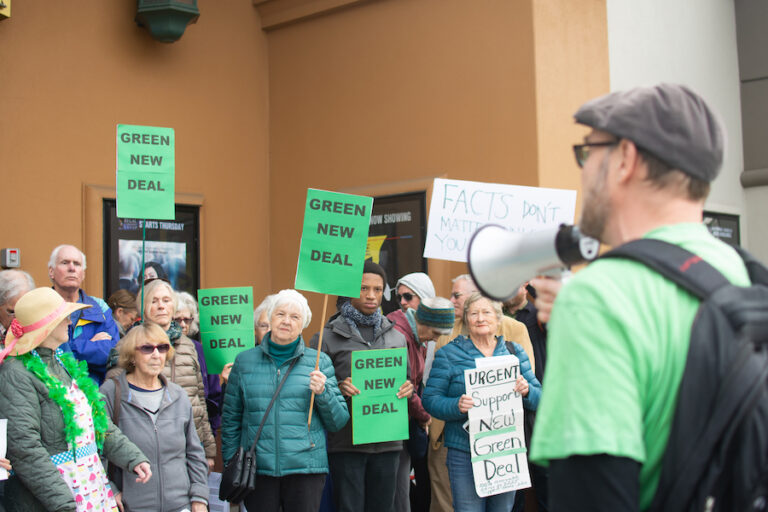
On Feb. 8, activists convened outside of Garamendi’s Davis office for the first of two local rallies this month in support of the Green New Deal, a resolution put forward in Congress by Rep. Alexandria Ocasio-Cortez (D-N.Y.) and Sen. Ed Markey (D-Mass.). The Green New Deal aspires to combat both climate change and income inequality. It proposes, among other things, to transition the U.S. to 100 percent renewable energy and create federal programs that would guarantee living-wage jobs and high-quality healthcare to all Americans.

At the time this article was written, 89 House members and 11 Senators co-sponsored the bill, according to The Sunrise Movement. But Garamendi, who represents Yolo County and the rest of California’s Third District in the House, had not voiced any position on the proposal prior to the town hall meeting.

Lynne Nittler, a retired teacher and activist from Davis, organized the first rally in front of Garamendi’s office. Nittler says she was inspired by an email she received from 350.org, urging activists to push local congresspeople to declare support for the Green New Deal.

“I thought, ‘Okay, I can pull together a gathering outside John Garamendi’s office’,” Nittler said. “I could get a little turnout and let him know that there are those of us out here who wish he would endorse the Green New Deal.”

Nittler said she reached out to a network of activist contacts, including Nick Buxton, another Davis-based organizer, who said about 70 people showed up to the Feb. 8 rally outside Garamendi’s office.

After the first rally, Garamendi agreed to meet with the activists in a town hall meeting on Feb. 19 at the Veterans Memorial Theater in Davis. At 5 p.m. that evening, activist groups began setting up tables outside the theater, distributing pamphlets and petitions and holding signs that read “Green New Deal,” “No Crude Oil” and “Medicare for All.” Activist groups in attendance identified themselves with signs and shirts, including the UC Davis Young Democratic Socialists of America, the Yolo County Progressives and the Citizens Climate Lobby.

Around 5:30 p.m., congressional staffers began seating the activists, who quickly filled every seat in the room, leaving many to stand in the back. Over 100 people appeared to be in attendance by the time Garamendi arrived at about 6:30 p.m.

Garamendi opened the town hall with a speech, touching on his opposition to President Donald Trump and his current and past policy work dealing with environmental issues. He spoke on his role as a member of the House Armed Services committee, stating he hoped to “take [the committee] in a new direction” in regard to environmental issues.

“I want the U.S. military to be the leader in addressing the issues — the profound issues — of climate change and climate crisis,” Garamendi said.

Though he spoke at length about the potentially catastrophic effects of climate change in the coming decades, Garamendi had little to say about the Green New Deal. Some of the activists in the room grew impatient, booing and yelling during his speech.

“Let’s do something: We’re going to be polite,” Garamendi said, shushing the hecklers. “I can [get] pretty riled up too, and I’ve been known to do that, but let’s be polite.”

After his speech, Garamendi opened up the floor to questions. He declined to answer any questions about the Green New Deal, however, until the end of the meeting. Some of the questions and comments began to take on a contentious tone, with attendees accusing Garamendi of avoiding the subject.

“You are a smart man and a strong leader,” one attendee stood up to say. “[But] what you’ve been doing tonight is dodging the questions.”

As he brought the meeting to a close, Garamendi did not explicitly state his position on the Green New Deal, but implied that he felt the proposal was “aspirational” in comparison to concrete effects of his policy work.

“[Is] signing on to a document that is aspirational going to solve this problem?” Garamendi said. “No more so than the years I have — with every fiber of my body — dealt with issue[s].”

Garamendi closed the meeting to mixed applause alongside shouting and booing, as some began a chant of “Green New Deal.”

A few days later, on Feb. 24, however, a post on Garamendi’s Facebook page announced he signed on as a co-sponsor of the Green New Deal.

“I am now a co-sponsor of H.Res.109, the Green New Deal,” the post read. “I welcome the energy and commitment of the supporters of H.Res.109, and I join with them as I continue my decades-long effort to stop Climate Change and save our planet.”

Garamendi has seemingly changed his mind since the night of the town hall meeting. Buxton expressed surprise and pleasure at the announcement, speculating on the rationale behind Garamendi’s apparent reversal of opinion.

“I think such a bold and ambitious approach was something outside his initial comfort zone,” Buxton said. “But he realized this is the only kind of action that actually has a chance of addressing the climate crisis on the scale that is needed. So I think he came to that realization that he needed to be on the right side on this issue. So we’re really glad he did this.”

Written by: Tim Lalonde — city@theaggie.org

Second anti-Semitism awareness training workshop held

Advocacy groups take different approaches to addressing anti-Semitism

Jewish Voice for Peace (JVP) hosted an anti-Semitism awareness training workshop at the Student Community Center (SCC) on Feb. 27. The workshop, attended by approximately 30 people, was the second on campus event this year to address student concerns about the rising tide of anti-Semitism at U.S. universities.

The organization of these workshops has highlighted different approaches to anti-Semitism awareness within the student body. Both anti-Semitism awareness training workshops were explicitly unaffiliated with the chancellor’s office.

“We are witnessing a rising tide of empowered white supremacists in the United States,” stated the Facebook event page for this event. “From Charlottesville, to Pittsburgh, to college campuses across America, white nationalists are more visible and more violent than they have been in years.”

In an email to The California Aggie, Dr. Tallie Ben-Daniel, a research and education manager for the JVP and a UC Davis alumna, wrote that “as white nationalists are becoming more empowered under the Trump presidency, and in the aftermath of the worst antisemitic violence in the United States, it is crucial that we are all more aware of antisemitism, what it is, and how to intervene when we see it.”

“Everyone should join the fight against antisemitism, racism, and white nationalism,” Ben-Daniel added. “I’m honored to return as [an] alum of UC Davis to discuss this issue with the campus community.”

In its mission statement, adopted in 2009, JVP emphasized its opposition to “anti-Jewish, anti-Muslim, and anti-Arab bigotry and oppression.”

“JVP seeks an end to the Israeli occupation of the West Bank, Gaza Strip, and East Jerusalem; security and self-determination for Israelis and Palestinians; a just solution for Palestinian refugees based on principles established in international law; an end to violence against civilians; and peace and justice for all peoples of the Middle East,” the statement reads. “[Our] members are inspired by Jewish tradition to work together for peace, social justice, equality, human rights, respect for international law, and a U.S. foreign policy based on these ideals,” wrote the JVP.

The workshop first focused on the sociopolitical context of anti-Semitism, with specific reference to recent incidents including the desecration of Jewish cemeteries; the Nazi rally in Charlottesville, Va. and the mass shooting at the Tree of Life Synagogue in Pittsburgh, Pennsylvania.

Ben-Daniel then addressed the definition and origins of anti-Semitism itself. The workshop explored the tumultuous history of European anti-Semitism as well as the experiences of Jews in the Muslim and Arab world. Ben-Daniel also spoke about the intersection of anti-Semitism and Islamophobia in the context of white supremacy.

The second half of the workshop addressed the need to combat false claims of anti-Semitism, particularly those issued by Canary Mission which, in Oct. 2018, released the personal information of UC Davis professors and students who have publicly criticized the Israeli government’s policies.

Ben-Daniel also discussed forms of anti-Semitism founded in hostility to Israel — examples of this include randomly interrogating Jewish people about their political beliefs with respect to the state of Israel, assuming all Jews are Zionists and holding Jews accountable for the actions of Israel. Ben-Daniel also talked about the use of the Holocaust as a form of emotional blackmail or as a means of comparing genocides and other forms of extreme suffering.

Workshop participants then split up into groups to discuss different real-life scenarios that could be construed as being anti-Semitic, including specific incidents that took place at Tufts University and UC Berkeley in recent years. The prompts included questions such as: Is there real anti-Semitism in this scenario? If you were a part of this situation or heard about it, how would you respond to it?

Group members discussed the necessity to proactively report incidents of anti-Semitic hate speech. For example, one group spoke about the imperative to report a hypothetical scenario in which certain students were photographed performing the Nazi salute. Another group also spoke about the need to address assumptions about prominent Jewish public figures, including George Soros.  

“What I appreciated most was the combination of the history of anti-Semitism as well as the discussion of the weaponization of anti-Semitism, and how that weaponization harms all of us,” said Dr. Caren Kaplan, a professor of American Studies at UC Davis, who was in attendance at the event. “I also appreciated how the speaker combined an attention to history as well as more current issues and concerns.”

UC Davis has a troubled history of anti-Semitism, an issue highlighted in Oct. 2018 when fliers appearing to blame Jewish people for the controversy over since-confirmed Supreme Court Justice Brett Kavanaugh were distributed throughout campus.

Jewish student leaders then met with the chancellor to express concerns over the way the university addressed the issue. After this meeting, the administration agreed to host a town hall which would allow Jewish students to voice their concerns as well as a series of workshops aimed at combating anti-Semitism to be hosted by the Anti-Defamation League (ADL). None of these events have taken place.

The ADL did facilitate a workshop titled “Combating Anti-Semitism as Student Leaders Workshop” in the MU on Nov. 28. The event was hosted by the Jewish-interest sorority Sigma Alpha Epsilon Pi and ASUCD. The administration was explicitly unaffiliated with this event.

The fallout after this workshop highlighted the differences among students regarding the various approaches to addressing anti-Semitism by on campus advocacy groups.

After the ADL workshop, the campus advocacy group Students for Justice in Palestine (SJP), expressed concerns about the ADL’s involvement in facilitating future workshops, petitioning for JVP to be used instead. The petition, which gathered 149 signatures, was sent to the administration.

Kauser Adenwala, a leader with SJP, explained the group’s stance against the ADL’s presence on campus, stating the ADL has “an explicitly tumultuous history of suppressing the voices of Palestinian activists and deeming them as anti-Semitic.”

“While the work ADL does in the grand framework is integral, especially for the safety of Jewish communities and awareness into what anti-Semitism is, the underlying stances they take by encouraging the subjugation of Palestinians through Zionism is intolerable,” Adenwala said via email. “Although ADL is deemed as a civil rights group, they are selective in which injustices they choose to speak up against and defend Israel for its actions.”

Sheri Atkinson, the vice chancellor of Student Affairs, confirmed that the chancellor had received the “request and petition” from SJP.

“[The chancellor] acknowledged the SJP petition, but made no commitment to honor its request to replace future ADL campus workshops with JVP facilitated events,” Atkinson said.

Moreover, some Jewish students have found the implementation of the Feb. 27 JVP workshop alienating.

“As a Jewish student leader — along with many other members of the UC Davis Jewish community — I chose not to attend the JVP event,” said Arielle Zoken, a third-year economics major and Jewish studies minor, in an email to the California Aggie.

Zoken said JVP does not represent the views of the vast majority of U.S. Jews — “JVP does not combat anti-Semitism and refuses to acknowledge anti-Semitism across the political spectrum,” she added.

Zoken also expressed concern over the lack of communication with students about the second workshop.

“I found out about the event on my Facebook newsfeed, although it is us, as Jewish students, who should be involved in any conversation about anti-Semitism on campus from the get-go,” she said. “We do not agree with the planning nor the execution of this event. Furthermore, no Jewish student leaders were contacted about this event.”

Zoken stated that JVP “is blind to nuance,” has a “narrow view of what constitutes anti-Semitism” and added that JVP “propagate[s] anti-semitic sentiment.” She also alleged that JVP “marginalize[s] the struggles of Jews of color to advance their anti-Zionist cause,” and said that she chose to skip the event to avoid being “triggered by [their] rhetoric.”

And although the chancellor has expressed support for student leaders’ efforts to combat anti-Semitism, the UCD administration has not played a role in organizing the two workshops themselves.

The chancellor has thus remained unaffiliated in any capacity with the SJP, the ADL or the JVP.  Despite listing the event on the Equity and Inclusion page of the UC Davis website under 2019’s Principles of Community Week, the Facebook event listing clearly stated that the workshop was “not involved with the Chancellor’s office.”

Written by: Rebecca Bihn-Wallace — campus@theaggie.org

Aggies handed defeat in nationally-televised game

Men’s basketball shoots 30 percent from the field in a 64-48 loss to UC Irvine

With live game coverage from ESPNU and a sea of white shirts around the Pavillion last Thursday night, the UC Davis Aggies lost to the UC Irvine Anteaters 64-48 in the first of UC Davis’ final four conference games of the 2018-19 season.

The two rivals were no stranger to competition, winning a combined four of the last five Big West conference regular season championships. The Aggies entered last Thursday’s contest on a two-game losing skid, sitting in fifth in the Big West Conference with a 10-16 overall and a 6-6 conference record. Conversely, the Anteaters entered the game sporting a 23-5 overall and 11-1 conference record, holding first place in the Big West.

The first half proved to be a tough start for the Aggies. Despite shooting just 38 percent from the field and at the free throw line, UC Davis only found itself down 31-25 at half time.

Throughout the first half, both teams showed that they wanted the win, bringing aggression to the court that could only be seen in rivalry games. Senior point guard TJ Shorts II, who had been out the previous week nursing a knee injury, gave the home fans a scare when a flagrant I foul from Irvine caused Shorts II to land on his bad knee. He left the court limping during the review of the play but soon returned to the game. The Aggies earned themselves a technical after a scuffle on the floor following the foul, and both coaches were warned to watch their players.

The Anteaters capitalized on the Aggies’ low shooting percentage, shooting 50 percent from both the field and the line. Shorts II led the scoring for the Aggies at the half with seven. Senior forward Garrison Goode racked up six points and four rebounds in his 11 minutes on the court.

“I thought TJ fought through and played really well since for a week he hasn’t really been on the floor,” said Head Coach Jim Les. “You could tell he was a little out of rhythm and was winded because he hasn’t been able to do much. We are in this spot where he is still day to day but we will see how he reacts to the game tonight and continue to work him toward getting one hundred percent. But those still aren’t excuses and I don’t want to take away how well Irvine played.”

Hoping there could be a bounce back in shooting percentage, the Aggies were not able to find their shot in the second half, shooting just 22 percent from the field and 14 percent from the three-point line. Collectively, UC Davis shot at 30 percent from the field and at 21 percent from the arc in a game where its opponent was the physical aggressor on the defensive end of the floor.

“I thought Irvine tonight was the aggressor,” Les said. “They started and finished as the aggressor and all in between and we didn’t respond to it as well as I would have liked. Sometimes we were more worried about the physicality versus finishing the play. As I told the team after ‘we got our butt kicked tonight and we have to own it because there isn’t much we can do anymore about this game but a lot for the next game.’”

Overall, junior center Matt Neufeld led the scoring sheet for UC Davis with 10 points and four rebounds. Even with coming off his injury, Shorts II still put up nine points, two assists and one rebound.

“We had our chances and we had some great looks at the basket,” Les said. “I didn’t think that we continued to dig in defensively. We let the fact that we didn’t see the ball go in affect us on the defensive end and they [Irvine] got some separation.”

On March 2, the Aggies showed a better performance against Cal State Fullerton, earning the 66-59 victory. Even though the team only shot 37 percent from the field, Shorts II was big on the boards, collecting eight rebounds on the night. Senior shooting guard Siler Schneider topped the Aggies with 14 points and five rebounds in the victory.

Now 7-7 in conference play, the Aggies will continue to fight in their final two games of the season — both of which are at home — beginning today against Hawaii. UC Davis will finish the regular season and honor its seniors on Saturday night against UC Riverside.

“We got to get more of our swagger back on the defensive end and let that create more offense for us,” Les said about the future. “When we do that we are a good basketball team but the last two games we weren’t as good and solid defensively as we need to be.”

Written by: Ryan Bugsch — sports@theaggie.org

UC tuition to remain steady for 2019-20 academic year

News comes after UC secures additional funds from Gov. Newsom

UC tuition will neither increase nor decrease, remaining steady for the 2019-20 academic year, the UC Office of the President announced in a press release.

The news comes after the release of Gov. Newsom’s proposed state budget, which includes an increase in funding for the UC system. Newsom’s budget would set aside $240 million for general UC funding as well as an additional $138 million one-time fund to assist with “deferred maintenance backlog” and $5.3 million meant specifically for mental health services within the UC system. Newsom will release his revised budget in May.

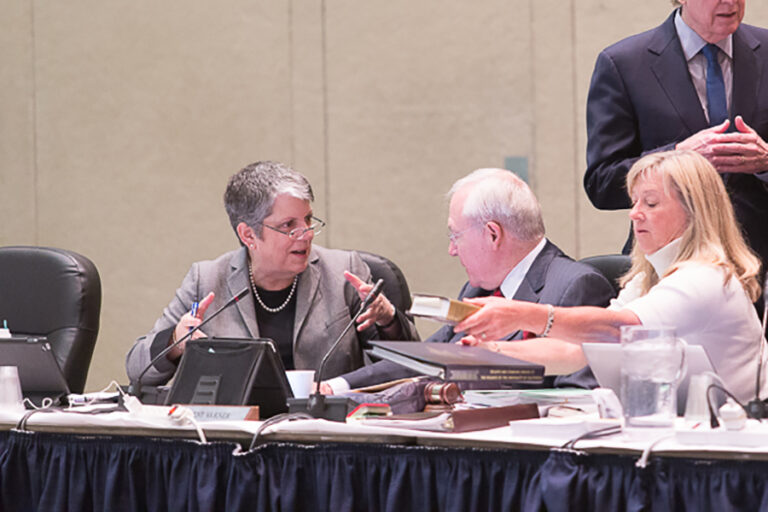
Instead of increasing tuition this year, UC Board of Regents Chair George Kieffer said “we will once again join our students in advocating for additional resources from the state.”

Tuition will remain flat for the seventh time in eight years, as the UC increases enrollment, improves its “rates timely graduation,” increases the diversity of faculty and works toward closing graduation gaps “for low-income, first-generation and underrepresented students,” the press release from the UCOP stated.
“We are optimistic about our strong partnership with the governor and the legislature and will work collectively to identify additional resources, in lieu of tuition revenues, to ensure that UC students can succeed,” said UC President Janet Napolitano.

Written by: Hannah Holzer — campus@theaggie.org

Swastikas found at Putah Creek part of recent acts of vandalism at site

Second anti-Semitic incident in matter of months occurs on campus

Recent acts of destructive vandalism at UC Davis’ Putah Creek Riparian Reserve included swastikas painted on a tree in the area. This is the second anti-Semitic incident on campus in a matter of months.

The vandals also burned two wooden picnic benches and spray-painted graffiti in the area, according to the Davis Enterprise, which also made note of previous vandalism consisting of another burned table and the destruction of signs and a portable toilet at the site.

In a public acknowledgement of the vandalism, Chancellor Gary May said he was “particularly disturbed that in the most recent incident […] someone painted a vile anti-Semitic symbol on a tree.”

“It should not have to be said, but I will repeat, that such hate has no place in our community,” May’s statement read.

ASUCD President Michael Gofman, who is Jewish, and ASUCD Press Secretary Samantha Boudaie addressed the incident in a press release sent to The California Aggie.

“The ASUCD Executive Office is appalled by the swastikas found in Putah Creek and thank the admin for recognizing and calling attention to this blatant hate crime,” the statement read. “UC Davis has no home for bigotry of any sorts, including antisemitism. Our students need proactive action against hatred in all its forms, both flagrant and subtle going forward. It is beyond unacceptable to see such malice continuing to emerge.”

In October, anti-Semitic fliers were posted throughout campus and credited to a local division of a known neo-Nazi site. Just one day before the fliers were posted on campus, a UC Davis student found swastikas carved into the concrete at Arroyo Park in the City of Davis.

Following these incidents, Jewish student leaders met with Chancellor May and other administrators. From that meeting, the chancellor committed to hold a town hall and a series of trainings to recognize and prevent the presence of anti-Semitism on campus. None of these events have taken place.

Students took matters into their own hands, organizing a workshop aimed at combating anti-Semitism hosted by the Anti-Defamation League in November and a second workshop that also addressed anti-Semitism was organized separately and recently hosted by a representative from Jewish Voice for Peace. The university made it clear that it was not involved with either of these events.

The UC Davis Police Department has increased patrol in the area and it asks that anyone with information about the incidents contact the department at (530) 752-1727.

Written by: Hannah Holzer — campus@theaggie.org

A bright idea for energy conservation

University of California participates in the Million Light Bulb Challenge

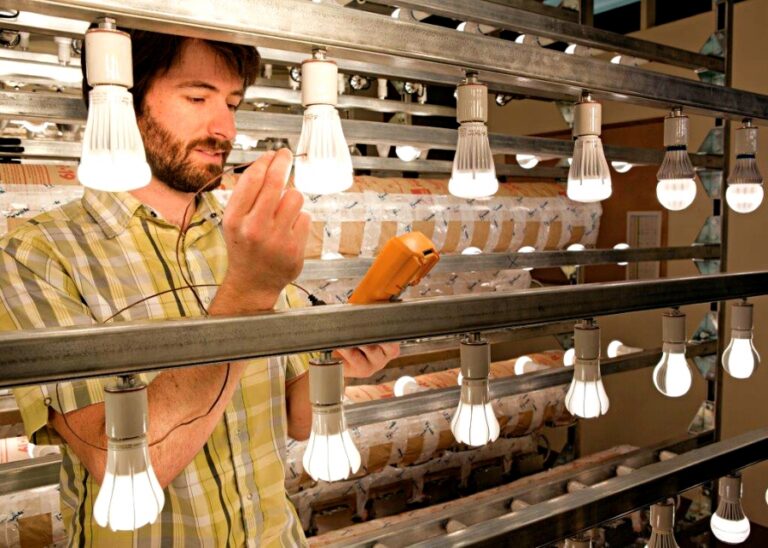
The University of California launched The Million Light Bulb Challenge to replace one million incandescent light bulbs for high-quality, energy-efficient LED light bulbs in campus buildings and residences to encourage the reduction of carbon footprints and energy usage. All UC students, staff, faculty, alumni and retirees can purchase high-quality LED light bulbs through the Community Buy program.

“Lighting can make up a significant part of household energy use within California,” said Michael Siminovitch, director of the California Lighting Technology Center and professor in the Department of Design at UC Davis. “In terms of numbers, lighting can be 30 percent of the energy using a typical home so moving to high performance LED technology could easily reduce that number by 80 percent. Switching from incandescent lamps to high-performance high-quality LED can produce very large savings in lighting energy use.”

An added benefit of switching to energy-efficient lighting is that it lasts longer, which means there is significantly less maintenance involved with replacement. Since the energy-efficient lamps provided through this program still offer quality color and service, it allows consumers to be energy-efficient without compromising on quality.

“By selecting a high-quality light bulb, the chances that you will like the light just as much as the incandescent light increase and the chances that you will take the LED light bulb out and put your incandescent back in decrease,” said Nicole Graeber, development engineer at the California Technology Lighting Center. “This results in persistent savings over time, and that adds up.”

Switching to high-quality, energy-efficient lamps could be expensive upfront, but the energy savings could help consumers save money on their monthly energy bills.

“If you are currently using incandescent [over LEDs], you can save over 80 percent on your lighting energy bill [by switching to LEDs] and that can be over $100/month [in savings] for the average home,” said Jeremy Meadows, project sponsor and manager.

This program involved the difficult task of getting all government agencies, including UC campuses, CSU campuses, community colleges and the California Department of General Services to agree to standardize on the specification of the lightbulbs. However, the impact of switching out one million light bulbs could be worth it. Replacing one million incandescent light bulbs with LED lights could decrease carbon dioxide emissions by 41,461 metric tons, the equivalent of removing 8,900 passenger vehicles from the road every year.

Written by: Kriti Varghese — science@theaggie.org

Guest: The downturn of our civic dialogue

Assemblyman James Gallagher argues UC Davis should fire Professor Joshua Clover

Some stories sound too outrageous to be true. But the excellent investigative column by The California Aggie on a UC Davis professor’s violent rhetoric shows us the inconvenient truth: that our civic dialogue has hit an all-time low. If we are to change this terrible dynamic, English Professor Joshua Clover’s revolting comments about law enforcement can no longer be tolerated.

Professor Clover made it clear in public statements that he thinks cops “should be killed” and that it’s “easier to shoot cops when their backs are turned.” When given the chance to recant in light of the recent ambush and murder of Davis police officer Natalie Corona, Clover responded that the best way to end police shootings is to get rid of the police altogether. This statement is almost as ridiculous as it is abhorrent.

His words are a slap in the face to the men and women who put their lives on the line to serve our communities day in and day out. These kinds of comments are unacceptable and have no place in our campus communities (or anywhere else in society for that matter) — especially in a time where officers are clearly being targeted by radical and deranged individuals.

Natalie Corona’s murder brought that crashing home for all of us. On Jan. 10, 2019, this bright young officer responded to a routine call to help people involved in a traffic accident. She had the training and passion for the job and was eager to carry on her father’s legacy to protect and serve those around her. In a ruthless display, she was taken out by one of these sick individuals who, unfortunately for us all, do exist.   

I attended her funeral held here on campus, and I can tell you it was a powerful and moving service. As gut-wrenchingly sad as it was, it was amazing to see the strength of her family and the unity of our community to support the men and women in law enforcement. What a contrast that on this very same campus, Professor Clover continues to believe that police officers like Corona deserve to be shot dead.  

That is not consistent with any sense of human decency, let alone our Aggie values of dignity and respect for all. And that is why he needs to go.

This is not about free speech or academic freedom. It is important to note that incitements of violence are not protected speech under the First Amendment. Calling for the death of a group of people is not a contribution to a discussion; it is the ultimate abolition thereof — to silence the other side forever. Would we tolerate his statements if they were made toward any other identifiable people group? Of course not.  

I wholeheartedly believe in free speech and the right of all professors and students to express their opinions and convey different ideas. Diversity of thought is important but can only be achieved in an environment that is free from violence and intimidation. No, I do not mean a “safe space” where I can censor ideas different than mine. I mean a civil society where we can express ideas freely without fear of retribution in the form of physical violence, where there is order. Ironically, it is the police who we often rely upon to ensure this kind of civil order.

In the Legislature, we are currently having a debate on the use of force by police officers and its impacts on minority communities. There are strongly held beliefs on the issue. There will be passionate and vociferous debate, but together we will listen to and discuss the various perspectives in our attempt to provide good public policy. One thing we will not do is call for the death of those with whom we disagree.   

This is precisely where Professor Clover has crossed the line. He doesn’t want a debate or discussion. He is not interested in discussing reform. He and others like him continue dragging our dialogue downward into “us” versus “them” in hopes of sparking the violence he apparently seeks.     

We can begin to change the trajectory of our public dialogue by no longer tolerating this kind of invective. UC Davis can act now to take us higher and preserve the values and integrity of this university by terminating Professor Clover immediately.  

Written by: James Gallagher

The writer has represented the Third Assembly District in the California Legislature since 2014. He received his Juris Doctorate at UC Davis in 2007.

Museum of Ice Cream Review

Is $35 worth it?

Last Sunday, I visited to the Museum of Ice Cream in San Francisco with my boyfriend — someone who I knew would be willing to take picture after picture of me without getting annoyed. This is important if you’re planning a trip to the museum with someone because it’s a popular destination for taking pictures. The tickets for this photographic experience cost $35 each and can only be bought online. I recommend buying tickets well in advance as they sell out quickly, especially on weekends. The tickets are non-refundable and are available in strict thirty-minute time slots. If you’re late, the ticket is no longer valid.

Parking also isn’t included; you will need to find a parking structure nearby, which won’t be cheap. The museum is located at 1 Grant Avenue and occupies a space that used to be a bank. If you look closely enough when inside the museum, you can see the infrastructure of the prior bank. The basement floors and playful safe make the history of the museum come alive.

This is not a classic museum with traditional artwork that evokes thought and discussion. Rather, the Museum of Ice Cream is an interactive museum, and what makes this museum stand out is the ice cream. In every other room, guests are given a small ice cream treat. The first room is the Instagram-famous Sprinkle Pool. While standing in line for the Sprinkle Pool, I questioned whether I made the right choice on where to spend our time and money. But as we walked into the pool, I quickly changed my mind. Although childish, the sprinkles were fun to throw around and made for a good boomerang on my Instagram story.

It’s worth it to note that the Sprinkle Pool has received backlash due to environmental concerns. The tiny bits of plastic that make up the sprinkles inevitably stick to clothing and make their way onto San Francisco’s streets and into storm drains. The museum has been cited twice. In hopes to settle environmental concerns, the museum hired extra workers to vacuum the sidewalks around the building and are working on creating biodegradable sprinkles, according to the Sacramento Bee.

The next big exhibit was a small space filled with square mirrors. I was still finishing up my mochi from the room before and wondered if it was best to skip this part of the room. The area was stuffy and too small for my claustrophobic self, and it wasn’t necessary to stay inside. After snapping a few quick pictures, we were off to the next exhibit which featured the unicorn statues (also Instagram-famous). I had a bit of trouble getting onto the unicorn, so make sure that the person you’re with is not only good with a camera but is prepared to help you get on and off the props. The picture was worth the climb though. The lighting makes the colorful wall behind the unicorn vibrant and each picture looks as though it were taken with a professional camera.

The most interesting exhibit has crystals on top of a red background cast the image of a rainbow. Following the crystals exhibit were lifesize Mother’s Circus animal cracker statues. This prop was especially hard to mount; I was afraid to jump on top for fear of falling to the other side. The sprinkled statue swayed from side to side easily, but with a little help and by holding on for dear life, I got the picture.

With a few smaller exhibits in between, the next major exhibit was the Gummy Bear Garden. This came with a choice of fruit- or milk-based strawberry ice cream, providing fellow lactose intolerant people a chance to enjoy a sweet treat. This ice cream was from La Michoacana and brought me a little closer to home. With the life-sized gummy bears and lollipops, it is every five-year-old’s dream. This exhibit wasn’t as interactive as the other exhibits, but it was definitely a sight to see. Sitting on the ground made the props look bigger than me in pictures, and they followed the same color pattern as the rest of the museum.

The next room featured two giant cherries perched on top of a small hill. The background of this room was just as expected — cherries. Floating from the ceiling were small, illuminated cotton clouds surrounded by dark cherries. However, this room had a sweet surprise in store: cotton candy. To be expected, it was cherry flavored, matching the room’s design. And it was freshly spun so the warmth was a nice change of pace from all the ice cream we had been eating.

The next treat was a soft serve lemonade ice cream and was my favorite dessert in the entire museum. This ice cream was served in a restaurant-style room called Marye’s Diner and the menus had fun facts about ice cream written on them. The room has a jukebox in the corner and visitors can choose whichever song they like, with the catch that you have to dance to whichever song you chose, according to one of the employees. Fortunately for me, we could not figure out how to work the jukebox.

The last room of the museum had a ping pong table and three swings with colorful backgrounds. Although this could have been my favorite room, it was the my least favorite. It was so crowded, the swings were always in use and the line to hop on seemed unmoving. This, however, was made up by the Museum of Ice Cream’s very own ice cream. I ordered the churro ice cream, and my boyfriend ordered the vanilla. I recommend sticking with the traditional flavor. The churro flavor’s cinnamon was overpowering.

The Museum of Ice Cream was a fun experience, but it’s all about timing. I went on a day where there weren’t many people, so I had the opportunity to take as many pictures as I wanted, except in the last room. In total, we paid $85 for a five-picture post on Instagram. This museum is mainly for the ‘gram.

Written by: Itzelth Gamboa — arts@theaggie.org

Review: “If Beale Street Could Talk”

Oscar-nominated drama showcases resilience in face of prejudice

Imagine the course of someone’s life changing in an instant as they’re handcuffed, patted down and shoved into the back of a police car. The moment someone realizes everything’s going to be different, and for the worse, is the most frightening feeling — especially if they’ve been wrongly accused. For many African American men in the 1970s, this was their reality: separated from their family, friends and coworkers behind cold steel bars.

“If Beale Street Could Talk” was nominated for three Oscars this year. It is a breathtaking captivation of resilience and perseverance. The story centers around a young couple, Tish and Fonny, played by KiKi Layne and Stephan James. The two grew up together, and at the start of the film, fell in love and were expecting a child. Fonny hears the news of his child-to-be through a prison phone because he was wrongfully accused of raping a woman he never met. In an attempt to find justice for Fonny, Tish and her family seek the testimony of their key witness, Victoria, played by Emily Rios.

The film speaks to the broken relationship between the justice system in America and the African American community and resonates with the modern audience. Fear can best describe the current political climate surrounding members of oppressed minority groups. The fear of whom those entrusted with safety actually protect and serve.

The film does not pin Victoria as a villain. Too often in society, the weight of blame is placed on the victim of a rape, either by shaming them for not speaking up, or for doing so and threatening their abuser’s future. The film stays on track with the bigger picture.

Regina King, who plays Tish’s mother Sharon, won her first Academy Award for Best Actress in a Supporting Role on Sunday, Feb. 24 for her role. Her performance as a mother desperately trying to help her child in the face of tragedy will send chills up anyone’s spine. The scene in the beginning of the film where Sharon defends her daughter from her sister-in-law is no doubt what caught the eye of The Academy.

“To be standing here representing one of the greatest artists of our time James Baldwin is a little surreal,” said King in her emotional  acceptance speech.

The layout of the storyline was configured with flash forwards and flashbacks, which increased the level of suspense. The keen editing of the film created an up-close and personal feeling because it focused on the nuanced expressions and movements of the characters. The camera came almost nose-to-nose with the actors, and it felt like the audience was with them.

The score was beautifully done by Nicholas Britell, and the music put the emotions of the characters into chords. The music closely complemented the visuals, which almost made the audience forget the music was there.

“If Beale Street Could Talk” is an amazing cinematic achievement that speaks to the ever-present struggles of African Americans in this country.

The film is currently showing at The Varsity theatre in Downtown Davis.

Written by: Josh Madrid – arts@theaggie.org

Humor: CoHo under investigation for trying to pass off boiled water as pho

What the pho?

Students arriving at the CoHo this morning were confused by the crime scene tape bedecking the pho restaurant Mandalay Express. The reason? Campus police received an anonymous tip that Mandalay Express was serving faux pho to the good people of UCD.

“The campus chief of police sent me to investigate this crime against flavor,” Officer Minnie Stroney said. “We kept getting complaints that the CoHo pho was an embarrassment to the culinary world. One caller even described it as ‘the La Croix of pho.’ We got complaints by the thousands, but we didn’t have probable cause to investigate these claims until yesterday.”

Stroney then went on to describe an anonymous caller, who insisted on calling himself the ‘Pho King.’ The Pho King told the police that the ‘broth’ was actually just boiled water.

“If these souper juicy rumors turn out to be true, the CoHo could be found guilty of fraud,” Stroney said.

Later that day, pho-rensic chemist Bonnie Mee tested the broth for its chemical composition. After the results came in, Mee tutted, shaking her head.

“My kit said this ‘broth’ is 100 percent water, zero percent pho,” Mee said. “Not a single grain of salt. These noodles aren’t the real deal, either. They’re impastas. And don’t get me started on these ‘meat’balls. I’m not sure we can legally call these ‘meat’. Lock ‘em up!”

Stroney handcuffed the CoHo employee who had been making and distributing the phoney pho.

“I would’ve gotten away with it if it weren’t for you meddling pigs!” the disgruntled employee huffed at the police.

Fans of Mandalay Express found themselves hot and broth-ered at the closing of their favorite food stall. This anger, however, quickly subsided when students realized they could drink water out of hot tubs to get pretty much the same flavor.

Written by: Madeline Kumagai — mskumagai@ucdavis.edu

(This article is humor and/or satire, and its content is purely fictional. The story and the names of “sources” are fictionalized.)

Letter to the Editor: CALPIRG accomplishes real social change

To the Editor:

Re: “Humor: CALPIRG member released from contract with the devil after collecting enough pledges” by Madeline Kumagai (humor piece, Feb. 21):

I was pleased to see that The California Aggie wrote a piece on our pledge system — but frankly, as I read, I was a bit saddened that our organization, which works to make real social change both on campus and at the legislative level, had been completely misrepresented, whether it was for comedic purposes or not.
CALPIRG is an organization that has been around for over 45 years, and we work to engage students and citizens in public interest issues. Each year, across each of the UC schools, we run campaigns that work to make school more affordable, clean up our environment, register students to vote and more. In the midst of running these campaigns, we are constantly being trained by our full-time, hired staff member, whose job it is to teach us to be effective activists. We are completely student-led, meaning that our board of directors is made up of entirely students. We are also completely student-funded. When we ask students to pledge and charge their tuition bill $10, this does not just go toward materials required to put on an event.
The $10 goes to a wide range of opportunities for us to make social change possible. Like I said, we have a full-time staff member who does much of the administrative work as well as trains us. We also hold three conferences every quarter, in Santa Barbara, Davis and Santa Cruz. In two weeks, we will hold our winter conference, where 100 CALPIRG students go to Sacramento to lobby our elected officials. Our funding makes this possible.
We also get special lobbying opportunities. Last spring, I was flown out to Washington D.C. to lobby Congress on the Pell Grant. This was under attack by the Trump administration, and with over 30 students from Student PIRGs across the country lobbying our elected officials, we were able to secure a 5 million dollar bond on open-source textbooks.
CALPIRG accomplishes real social change, and while, yes, we may take five whole minutes out of students’ days to teach them why our work matters and why their $10 fee matters, it is important that our organization does not get misrepresented on campus.
I have gained so much from CALPIRG since getting involved almost two years ago. I am a more confident public speaker, I can run a volunteer event and I even know how to power map important decision makers. I also pledge the $10 because I know it is contributing toward not only making social change but empowering students to make sure our voices are heard.

ROSE PARATORE, DAVIS

The writer is a fourth-year anthropology major and the chapter chair of CALPIRG students at UC Davis.

The Green New Deal: The good, the bad and the ugly

The Green New Deal isn’t perfect, but it’s the best we’ve got

The Green New Deal is not so new. Its roots stem from Franklin D. Roosevelt’s ambitious plan — the New Deal — to yank America out of the Great Depression. Both deals take unorthodox approaches to fix dire problems. But while the Green New Deal matches Roosevelt’s plan in ambition, will it match in success as well?  

The Good

There’s no question that the Green New Deal offers the kind of big, progressive ideas we should be discussing in order to tackle large problems like climate change. The plan proposes to transform the United States into a 100 percent renewable, zero-emission, clean-energy nation by 2030 through investments in electric cars and high-speed rail systems and implementing the social cost of carbon. Wall Street is even showing willingness to fund the plan.

The Green New Deal does not dictate how to implement these policies, and while this might seem like a weakness, it can actually be a strength, according to Steve Cohen of the Columbia University Earth Institute. Like Roosevelt’s New Deal, the lack of specificity allows for more improvisation to specific, unexpected problems and more flexibility than a cemented plan would. After all, this is how the Social Security Act was signed into law by Roosevelt during the Great Depression.

The Green New Deal also sets a political standard for environmental talking points, with presidential candidates already voicing their opinions on where they stand with the plan. The resolution encourages voters to pressure Congress members to support it, shifting the conversation from “Is climate change real?” to “Let’s start doing something about it.” This dialogue is a powerful tool for environmentalists to bump climate change up the list of priorities.

The Bad

The Green New Deal mixes environmental solutions with unrelated issues, such as income inequality, universal health care, monopoly prevention and federal job compensation. This could prove to be dangerous for Democrats, as it might be labeled as a ploy to push a left-wing agenda under the guise of addressing climate change.

Republicans have already jumped at the chance to attack the resolution — including how incredibly expensive it will be — making the Green New Deal a partisan issue when it shouldn’t be one.

Experts such as Jesse Jenkins, a postdoctoral environmental fellow at Harvard, have also claimed that the goal of becoming a 100 percent renewable, zero-emission, clean-energy nation in 10 years is not feasible — undermining the potential of actually reaching such a daunting goal.

The Ugly

While rushing to release more information about the resolution, a “Frequently Asked Questions” draft summary was posted on Representative Alexandria Ocasio-Cortez’s website, who introduced the proposal along with Senator Ed Markey. This document has been targeted by Republicans and others for its vague language and questionable remarks, such as “economic security to all who are […] unwilling to work” and “fully [getting] rid of, for example, emissions from cows or air travel.”

The fact that the government has reached the point of rushing ill-prepared documents speaks volumes to how little we prioritize the seriousness of climate change in politics. The high school methods of writing papers last minute and sacrificing quality for a finished product should not be how the government addresses life-or-death issues.

But the ugly truth is that the Green New Deal is the only option we have. When time is a factor affecting the intensity of the issue, we don’t have the luxury to throw aside this idea and wait for a “better” idea that might never come, especially when the opposition is still debating whether we should do anything at all.  

Any idea is better than no idea.

Written by: Daniel Oropeza — daoropeza@ucdavis.edu

Disclaimer: The views and opinions expressed by individual columnists belong to the columnists alone and do not necessarily indicate the views and opinions held by The California Aggie.

Police Logs

Stop vacuuming so loudly

February 19

“Grandson is at the residence ‘trashing’ the place.”

February 20

“Occurred week ago. Two aggressive solicitors came to business and made vague threats to steal reporting party’s glasses.”

February 21

“Subjects with amplified music.”

February 22

“Unknown suspect used reporting party’s bank account at Davis Nugget.”

February 23

“Unknown made access to backyard and graffitied fence.”

February 24

“Upstairs neighbor vacuuming.”

February 25

“No emergency son was having a nightmare.”

February 26

“Tenant was asked to stop slamming doors, he started yelling profanities and got close to reporting party’s husband’s face like he wanted to hit him, both separated now.”

Art as a second responder

Arts Alliance Davis looks toward art as healing mechanism

The group Arts Alliance Davis seeks ways to incorporate art as a way to heal people in the community who have experienced trauma. It hopes to serve as second responder to emergencies.

“We’re a group of artists, arts organizations — sometimes businesses, community members — and we come together to promote the arts to encourage collaboration and to advocate for private and public support for art in the community,” Labbé-Renault said. “We do a lot of networking as well.”

Autumn Labbé-Renault, the chair of Davis Arts Alliance, explained the organization.

Labbé-Renault noted that she went to a workshop titled “From Idea to Action: Advancing Cultural Equity in the Arts in the Greater Sacramento Region.” The event was hosted by the Sacramento Metropolitan Arts Commission and the Sacramento Region Community Foundation.

“That was a conversation we started at our January meeting,” Labbé-Renault said. “We meet about six times throughout the year, and our next meeting is on March 14th. That came about because several of us had attended the event with the idea to advance cultural equity in the arts in the Greater Sacramento region.”

Labbé-Renault indicated that the event sparked the conversation about art’s role in healing, which the Arts Alliance can bring to Davis.

“What that day was really about was learning more about our own biases and learning more about others and belonging and changing how we do our arts organization and outreach to focus more on explicit communities,” Labbé-Renault said. “I remember one of the speakers saying that to do this work on equity takes cultural humility —  it takes commitment through discomfort, and it takes an awareness for all the roles that arts can play.”

Rachel Hartsough, the arts and culture manager for the city of Davis, emphasized the need to plan for resources.

“As a city, we need to look at where we place our resources,” Hartsough said to The Davis Enterprise. “How do we award community arts grants? Are we reaching out in a way that is the most equitable as possible?”

According to a strategic plan for creative programs developed by the City of Davis Arts & Cultural Affairs and Arts Alliance Davis, there will be more projects to come.

“The Davis community is uniting through the arts including: arts-cultural offerings to promote learning about our community histories; collaborations that engage diverse community voices and participation — from the neighborhoods to downtown; and greater integration of the university, town, and high schools,” according to the strategic plan. “The arts are more integrated across sectors into health and wellness initiatives such as aging, mental health and educational development.”

Labbé-Renault indicated that organizations like Arts Alliance can become “second responders” to help the community cope with any form of disaster.

“Arts organizations can play as what’s being called ‘second responders,’ and that idea comes out of a publication called ‘art became the oxygen: free artistic response guide,’ and that was put out last year by the US Department of Arts and Culture,” Labbé-Renault said. “That details how art can respond to disasters or community emergencies, as well as art’s role in healing — whether the damage has been caused by acts of exclusion, violence or national disasters.”

Labbé-Renault hoped to implement these ideas, bringing them up for discussion at the meeting.

“At the January meeting, I led off with these ideas about the Arts Alliance extending its awareness about all of these issues, and I asked participants to see if we can pursue something and the answer was, unequivocally, yes,” Labbé-Renault said.

Due to the recent traumatic event in Davis where Officer Natalie Corona was fatally shot, Labbé-Renault wanted to address how the community can remember and cope with the repercussions.

“It takes an event in town to return our awareness to this is something we want to work on,” Labbé-Renault said. “What I intend to do is to bring out the subject again and we will follow up with what happened to Officer Corona — it will not surprise me to see a community mural or something emerging out of that on how to honor her and how to not forget this incident that impacts the community deeply. We will keep this on our agenda and see where this leads us.”

Labbé-Renault has personally seen how art can help with healing, so she is optimistic about the project.

“I’m an artist myself, and I had the first-hand experience of using art to heal from trauma and from grief, and so I really get that it works,” Labbé-Renault said. “It worked on an individual level — I think the question for the Arts Alliance right now is how it could work and what it might look like. As a group, we can see what kind of response we get for a given project — I think this will be a really interesting and ongoing conversation. The work of healing is never short term. The work of not forgetting things that have happened to us as a community is also really important.”


Written by: Stella Tran — city@theaggie.org

New York Times investigative journalist Jodi Kantor speaks at Mondavi Center

Kantor discusses breaking Harvey Weinstein story, #MeToo movement, journalism career

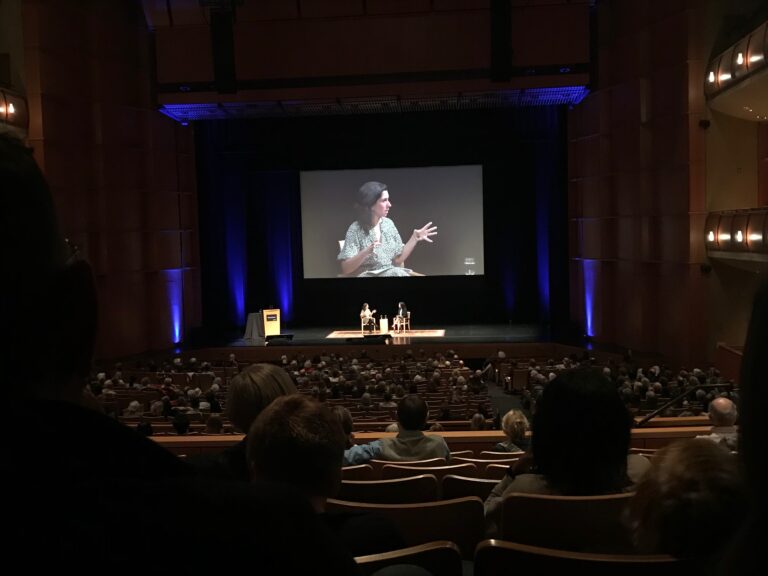
Jodi Kantor, the investigative journalist from The New York Times who broke the story exposing the sexual harassment committed by Harvey Weinstein alongside colleague Megan Twohey, spoke at the Mondavi Center on March 4. Kantor, who covers gender and politics for The Times, discussed her experience of writing and reporting the Weinstein story, as well as the impact of the piece on the #MeToo movement.

The event started with a 45-minute speech from Kantor, followed by a Q&A session moderated by Pamela Wu, the director of news and media relations for UC Davis Health and a Capital Public Radio contributor.

Kantor began her talk with an anecdote about the days leading up to the publication of the Weinstein story and explained her initial concern that people wouldn’t care about the piece. The story, which documented 30 years of sexual assault allegations against Weinstein from famous actresses, assistants and others who had worked with him, sparked the #MeToo movement and resulted in the movie producer’s subsequent firing from The Weinstein Company.

Kantor said that she and Twohey were initially skeptical as to whether the piece would have an impact.

“Investigative journalists have to apply skepticism to everything, even our own stories,” Kantor said. Before the Weinstein story was published, Kantor said that she often asked herself, “what if nobody cares?” She went on to explain, however, that she’s “a journalist because she believes that people do care.”

After the story was published, hundreds of new sexual assault allegations appeared in the news — some against Weinstein and many more against other perpetrators both nationally and internationally. Though #MeToo is not news anymore, wrestling with sexual assault in the workplace is now a “permanent condition of all of our lives,” Kantor said.

Kantor went on to explain that the problem has no boundaries: assault allegations come from all racial, economic, cultural and political areas. She emphasized that the #MeToo era requires society to ask questions about what we’re willing to tolerate in the workplace. Kantor asked the audience if, in future years, “will we be able to say: I was there when things changed?”

To close her speech, Kantor left the audience with a mantra that she and Twohey used when trying to enlist confidence in their sources to encourage them to share information on the record.

“I can’t change what happened to you in the past,” Kantor and Twohey said to their sources while reporting, “but the magic of journalism is that if we can work together we can convert your suffering into something you’ll be proud of for a long time — you never know who you might reach.”

Currently, Kantor and Twohey are working on a book about the Weinstein story and other assault cases entitled “She Said: Breaking the Sexual Harassment Story That Ignited a Movement.” After the book is published, Kantor will return to her post as an investigative journalist at The Times.

Written by: Olivia Rockeman — campus@theaggie.org