55.5 F
Davis

Davis, California

Tuesday, December 23, 2025
Home Blog Page 445

Biking lifestyle surges in Davis community

The Bike Campaign provides services, education for those seeking to use bike transportation around Davis

The Bike Campaign is a group of people from all across Davis and Sacramento dedicated to reducing car trips to schools and workplaces while increasing biking enjoyment and safety. The organization was founded by Maria Contreras Tebbutt, who also founded The Bike Garage in 2011.

Tebbutt expressed the organization’s guiding mission to educate people about cycling and encourage others to ride their bicycles.

“People at UC Davis age have grown up used to using cars, and [may] not [be] familiar with a biking lifestyle,” Tebbutt said. “They may have used the bicycle for recreation, and maybe as a toy when they were young, and then stopped using it and started using vehicles. That’s what the bike campaign is about.”

First-year animal biology major Mary Yang commented on the organization.

“I think what they are doing is really helpful for UC Davis students,” Yang said. “Many people use their bikes to get around campus often enough that their bikes will wear down eventually. Most people don’t have the resources or knowledge to fix their bikes, and these services would remedy that.”

The Bike Campaign provides various services available to everyone in the Davis community. The organization’s main place of operation, The Bike Garage, has sold bicycles of all shapes and sizes at a more affordable price. The Bike Garage also provides repairs to bicycles as well as offers information sessions on how to repair bikes. Part of its dedication to the community is to ensure that everyone has access to its services. As such, according to the website, this is a “pay only what you can” service.

“We found that one of the challenges that most of the students have is that they may have a bicycle, but the bike is not operative,” Tebbutt said. “We want to be available to not only show them what to do, [but to] help them and get it done and teach them to do it themselves. That’s just one component of riding a bike. Brake pads wear out and need to be replaced. Chains get dry and need to be cleaned and lubed. Basic bike maintenance can make your whole biking experience so much more wonderful.”

As part of the organization’s commitment to promoting cycling, The Bike Campaign has provided students and community members with free bikes. In a series titled, “Why I Ride,” people provide their own personal insights on what biking means to them.

“Everybody loves a personal story,” Tebbutt said. “I wanted to show everyday average people — people who are part of our community — that have personal reasons for using bicycles. The biggest reason is that it’s more fun than owning a car. They are thrilled with the health benefits. These are happy people who enjoy themselves, even when it’s wet. When it’s raining, we don’t stop riding; we just have different gears. We’re picking a wide variety of people, and we would like to have more Davis students.”

The Bike Campaign also hosts a number of events centered around biking education, health and fitness and cycling safety. They hosted their most recent event, the Healthy Transport Options, at UC Davis on March 4. The program consisted of a presentation about the economic, health and happiness benefits of biking more and driving less.

“We were very excited to make a connection with the coaches that are responsible for the ‘healthy living classes’ on campus,” Tebbutt said. “This topic is so exciting because this is a tool that anybody can use immediately or for the rest of their lives. It shows the different ways to live your life without being car-dependent. It offers a resource of the bike campaign to answer any questions we’re not able to cover in a 50-minute class.”

First year biological sciences major Tiffany Chen expressed her gratitude toward the organization’s outreach and events.

“With UC Davis being primarily a bike-accessible campus, these resources and events being available to students would be beneficial to campus life,” Chen said. “Education on things like bike safety could help prevent numerous bike accidents that occur often on campus.”

Written by: John Regidor — city@theaggie.org
Tracking bone movement in wrists

New imaging method allows researchers to produce models of bone movement in wrists

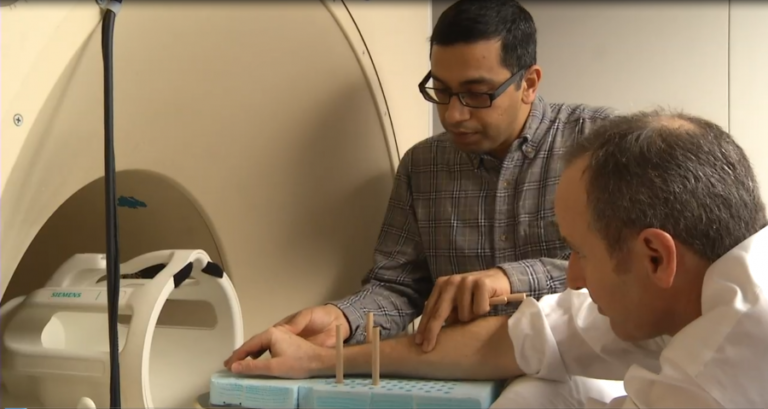
Although our wrists play a vital role in our day-to-day lives, from lifting our phones to opening doors, the extent of our knowledge on this body part is fairly limited. This lack of understanding is what sparked a team of researchers, including Abhijit Chaudhari, an associate professor in the Department of Radiology and the director of the Center for Molecular and Genomic Imaging, and Brent Foster, a graduate student in the biomedical engineering department, to develop a method to measure the displacement of wrist bones during movement.

Chaudhari explained that wrist pain is a very common phenomenon affecting many people, ranging from minor pain as a result of computer typing to wrist fractures. After joining the faculty of the department of radiology in 2010, Chaudhari recognized that although there are good techniques for imaging the tissues in the wrist when stationary, the methods for measuring movement were not as developed. It was after Foster joined Chaudhari’s lab in July 2014 that he and his team came up with the idea to look into imaging and tracking wrist motion, along with understanding the various structural differences of its tissue.

“I like how challenging it is,” Foster said. “There’s 10 bones in the wrist, so it’s a very challenging problem as opposed to other joints which only have two bones.”  

According to Foster, current imaging methods look at each bone individually and measure each angle, which does not capture how the bones move together. In order to overcome this problem, the team developed an approach called principal component analysis and imaged the wrist using an MRI scanner in various positions in radial-ulnar deviation. From these images, the bone surfaces were extracted and implemented with their statistical model to model how the bones move. Chaudhari stated that during the research process, the team had to generate their own data sets, such as MRI acquisition protocols, since movement is usually discouraged within MRI scanners due to the blurring of images.

“That’s part of the reason why I said we needed to collect our own data sets,” Chaudhari said. “[It’s] because it’s exactly the opposite of what is typically done. Technology says ‘don’t move’ and then you capture the image. Here we are actually telling people to move in the scanner.”

From the models they developed, the results affirmed that the left and right wrist move in a similar manner. Chaudhari explained how this information could be helpful for a surgeon doing reconstructive surgery.

“Previously, the physicians assumed that the right and left wrists move the same,” Foster said. “I think now we have more evidence that they do move the same, so you could use, if you have a wrist injury, you could use the uninjured hand to do surgical planning on the injured wrist.”

His team also discovered that when performing the maneuver of moving the wrist from left to right, men move in plane whereas women move a little out of plane with the wrist moving in a slight up and down motion. Foster stated that a possible explanation for this difference is that women have more laxity, or flexibility, whereas men have less range of motion which could influence the way the bones move. Chaudhari stated that this knowledge is important in developing treatment methods for men and women, since currently the same methods and techniques are used for both genders. With this new information, doctors could change the procedures according to how the wrist moves.

“So broadly in medicine, what we try to do is what we call precision medicine,” Chaudhari said. “This is essentially trying to tailor the treatment to an individual, so I think with methods of this nature, we are personalizing medicine to that individual because now we have the ability of knowing how each person’s individual wrist moves per say or track movements of their wrist and that is useful from the point of view of personalizing treatments.”

Anand Joshi, research assistant professor at University of Southern California, explained that their developed methodology will allow researchers to track and analyze bone changes during treatments.  

“Improved tracking of bone changes in response to therapies will lead to reduced disease burden, toxicity, side-effects, and overall cost,” Joshi said. “Our methods have the potential to improve sensitivity to small, early changes in bone erosion status. The image analysis studies have the potential to provide new imaging biomarkers to be used in clinical trials evaluating the efficacy of new arthritis drugs.”

Chaudhari also said the technique will allow doctors and researchers to precisely identify problems in the wrist and learn more about how the wrist works.

“I think it’s not until recently that we have had the ability of taking in vivo imaging like MRI or CT fast and actually knowing exactly what’s happening inside the body,” Chaudhari said. “I think these techniques now are just taking you to the next level.”

Written by: Michelle Wong – science@theaggie.org

UC Davis Lacrosse’s Grace Richards

Senior goalkeeper talks team and changing positions

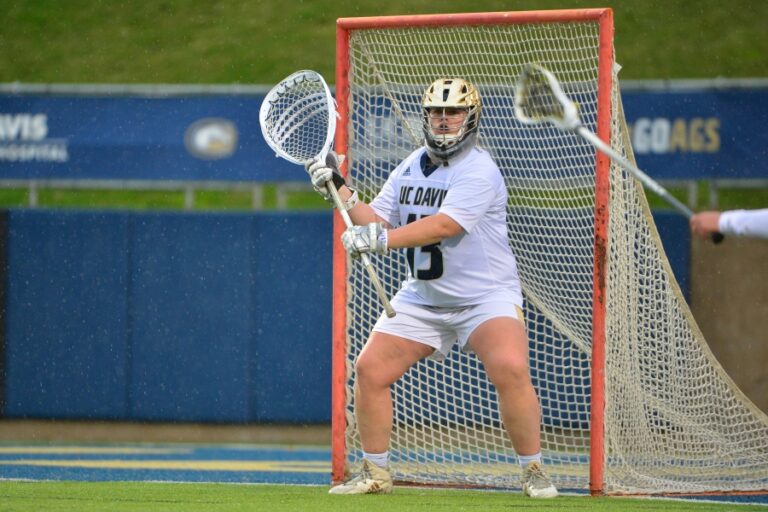
Change can often feel uncomfortable and arrive unexpectedly. For the UC Davis lacrosse starting goalkeeper Grace Richards, change has been a big part of her time on the team. She arrived as an attacker from Bel Air, Md., a popular lacrosse city where she played from a young age.

“I started playing lacrosse in first grade, and I was always an attacker,” Richards said. “That’s what I always thought I would be.”

In her freshman year, Richards appeared in nine games, scored three goals and recorded two assists. In her sophomore season, however, the team’s lack of personnel led Richards to change into a position she had never played before.

“We had one goalie, and she was amazing,” Richards said. “But she didn’t have a backup. So they were worried that if something happened, they wouldn’t have someone to step in. So, they needed to train somebody to be able to hop in if it was necessary and that happened to be me.”

Over the course of a few weeks, the Aggies’ Goalie Coach Emi Smith, a former All-American goalkeeper at Penn State, trained Richards and taught her everything she needed to know about the position.

“After that, I kind of just hopped into drills and tried to stay as positive as humanly possible because you’re not going to be great right away,” Richards said.

As she went along with the transition, she not only had the help of her coach but also her brother, who was a collegiate lacrosse goalkeeper as well. She called him before every game and asked him about the mental aspects of playing in front of the goal.

“When the game is on the line and things happen, you have to take everything shot by shot rather than thinking about past plays or things that happened,” Richards said. “That’s mainly what I would ask him about. Like how you deal with the pressure and needing to perform at the best of your ability when people are expecting you to. The mental aspect was really hard for me at first. I am a positive person, but I am also a perfectionist which is hard to deal with because goals are going to happen. It’s a high scoring game and a lot happens throughout. It’s still something I have to work on.”

Richards guarded the net in 12 games and had a save percentage of .435 her sophomore season. She was also included in the Mountain Pacific Sports Federation’s All-Academic squad.

Her junior season saw her start 14 games in front of the net, earning her MPSF Defensive Player of the Week three times. Her save average improved to .459, and she recorded 16 saves in the MPSF title game. She was once again named in the Mountain Pacific Sports Federation All-Academic squad.

The transition to goalkeeper has given Richards confidence and a new outlook, not only as a player, but as a person as well.

“[The transition] has given me the power to be able to look at things in a positive light that may not be positive or taking something and thinking, ‘what could I have done better?’ Richards said. “It’s made me more accountable as an athlete, as a person, as a student and I think that that’s the biggest thing this role change has given me, and I couldn’t thank anybody more. My goalie coach Emi Smith, my Head Coach Suzanne Isidor and [my assistant coach Ashley Johnson], they’ve been so great in teaching me how to deal with it and being patient when I need it.”

Now in her senior season, Richards has started all seven games for the Aggies thus far. UC Davis is currently 3-4. After winning their season opener on Feb. 8, the Aggies also beat Mercer 16-13 on Feb. 17 and Oregon 15-12 on March 2, but lost a tough one to nationally ranked Stanford on Feb. 24.

Optimistic and excited about this season so far and going forward, Richards describes this team as having strengths at every position. Her goal for this season is clear: Win the conference.

“We’re in a small but mighty conference with San Diego State and Fresno State, two of our biggest rivals,” Richards said. “We lost [the MPSF championship] in overtime last year which kind of burned for a while understandably. I think that winning that conference would be so great, and the fact that it’s here in Davis is going to be even greater.”

Even though the transition took place a little over two years ago, Richards hopes to keep improving as a goalkeeper and keep being the trustworthy player her team needs.

The next game for the Aggies is at home tomorrow versus Central Michigan. The rest of the season is highlighted by games against Georgetown and Fresno State on the road, before finishing off the season at home against rival San Diego State.

Written by: Omar Navarro — sports@theaggie.org

Honoring Gideon v. Wainwright

Yolo County Public Defender’s Office fundraises for holistic defense

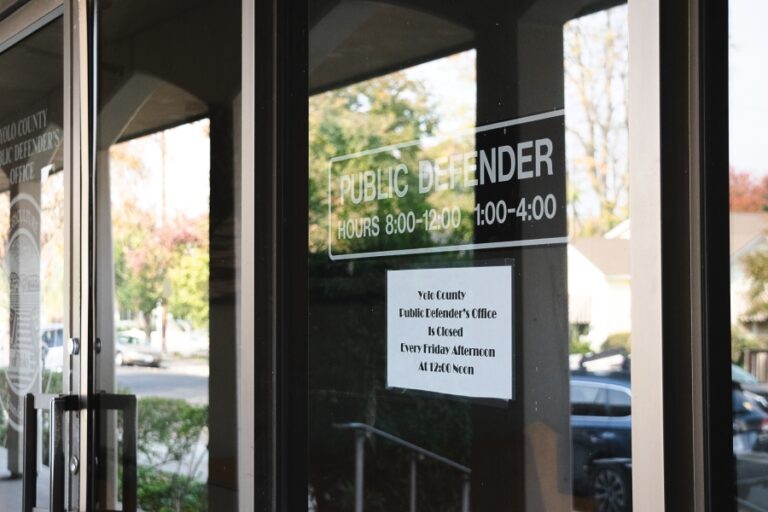
The Yolo County Public Defender’s Office will host its Holistic Defense Fundraiser on March 15 from 5 to 8 p.m. at Blue Note Brewing Company in Woodland. The event will honor of the 56th anniversary of the Gideon v. Wainwright case, which ruled that all defendants in criminal cases are entitled to attorneys, regardless of whether they can afford to hire one. The office hopes to bring awareness and help indigent individuals with basic needs.

Emily Kochly, a social worker for adult clients at the Yolo County Public Defender’s Office, explained the origin of holistic defense.

“Holistic defense is somewhat pioneered by The Bronx Defenders out in New York,” Kochly said. “They have encouraged other public defenders’ offices to reach out to the community for a dual purpose — to provide outreach and education to the community about the work that we do and the needs of the community and to gain their support in assisting our clients and the various needs that they have. It was an idea spurred on by leaders in the field and took the idea to our office, and it was supported by the office so we are putting it forward in action now.”

Yolo County public defenders are encouraged to uphold the values of holistic defense.

According to Yolo County’s website, the Yolo County Public Defender’s Office received an award in 2014 from The Center for Holistic Defense. The website states, “The Yolo County Public Defender’s Office has been selected to receive technical assistance from The Center for Holistic Defense, a national training resource center located at The Bronx Defenders in New York and funded by a grant from the U.S. Department of Justice, Bureau of Justice Assistance. The Center provides training to defender offices across the country seeking to provide innovative, client-centered, holistic defense services to indigent clients.”

Holistic Defense is a public defense model that seeks to have better outcomes for clients and communities through recognizing that the incarcerated are defined by more than their crimes — that criminal cases are only a part of the many issues individuals face.

According to The Davis Enterprise, Tracie Olson, a Yolo County public defender, noted that clients have other substantial needs that must be met.

“No client should pick up Failure to Appear charges due to inability to afford bus fare, nor be released from custody without access to food, clothing or essential medication,” Olson said. “Beyond our annual clothing drive, there is more we can do with the community’s support.”

In addition, Kochly mentioned how fitting the fundraiser relates to the Gideon v. Wainwright case.

“That court case was how the public defenders system started within the United States,” Kochly said. “Before that court case, people who were poor or indigent were not entitled to free public defense and now everyone is entitled to an attorney, which is what our office does. Our office provides legal representatives to people who are facing criminal charges who cannot afford an attorney. It seems fitting to have the fundraiser close to the anniversary of that case.”

Kochly noted that the fundraiser will be a first for the office.

“One of our main goals is to just have a large turnout or community support,” Kochly said. “We’ve been very excited when we’ve gone to local businesses and people in the community [are] in support of the idea — we’ve heard that people are excited to attend the event.”

Kochly hopes that the turnout will be substantial. In addition, the office wishes to raise funds to help clients with basic needs.

“We’re also trying to raise funds to help our clients meet some of their most basic needs — [we’re] hoping to have a source of funding to get bus tickets because that’s not part of our current budget and helping people get their medications after they get out of jail because they do not have insurance,” Kochly said. “Just hoping to get the community support and let them know the issues that our clients face on a daily basis.”

Kochly said they will be holding a raffle as well as a silent auction.

“We’ll have a 50/50 raffle that people can buy raffle tickets and, if they win the raffle, then they’ll win 50 percent of the money raised on raffle tickets,” Kochly said. “We’re also having a silent auction. Some items that are available at the silent auction will be artwork created by people who are incarcerated at our county jail or juvenile hall.”

Written by: Stella Tran — city@theaggie.org

Feb. 21 Senate report: closed session held to discuss Senator Brandon Clemons’ consistent absences

Senate meeting sees several quarterly reports, introduction of three new bills

On Feb. 21, the ASUCD Senate met in the Mee Room of the Memorial Union for its weekly meeting, with President Michael Gofman absent for its entirety. Senators Maya Barak and Noah Pearl were also absent and Senator Brandon Clemons was tardy.

The meeting began with a presentation from Creative Media, an on-campus student design firm operated through ASUCD. The team presented its plan for rebranding The Pantry, an ASUCD unit that provides up to three free meals a day for students. Creative Media discussed how, through updated advertisements and a newly designed space, they plan on alerting the student body about The Pantry.

In conjunction with Creative Media, Shubha Chakravarty, the executive producer at Aggie Studios, showed a video that their team made to advertise the Unitrans Fee Referendum, stating that reactions were overwhelmingly positive. The referendum ended up passing the next day.

Creative Media also announced that their ASUCD rebrand is fully underway. The image change encompasses both ASUCD and all its units as well, with the goal of creating a more cohesive brand identity.

After several questions were posed and praise was given, the meeting moved on to the Picnic Day Committee’s quarterly report. Elise Pohlhammer, the chair of Picnic Day, presented about the team’s winter retreat, the kickoff to the public and the status of fundraising for the event.

The Picnic Day Committee has raised $16,600 thus far, bringing them close to their goal of $25,000. They hope to reach this number by the first week of March.

The meeting pushed on to the Experimental College’s quarterly report. Stacy Wong, the unit director, announced that the college would be adding a brand new class to their spring 2019 schedule, titled “Introduction to Electronic Music Production.” A Kung-Fu class will also be available.

The college also plans on advertising their programs in the dorms and potentially even at freshman orientations to grow the college even further.

Following the Experimental College’s report, the Aggie Reuse Store also presented the Senate with its quarterly update. The store is collaborating with the Internship and Career Center to host an interview workshop for all of their interns as a way of thanking them for their help this past quarter.

In addition to the workshop, the store managers are trying to figure out an alternative payment method for their customers. Currently, they only accept cash and are looking into creating a Venmo account.

The Senate then moved on to the Environmental Policy and Planning Commission’s (EPPC) quarterly report. Commission Chair Alice Beittel began by addressing an upcoming goal: expanding what the term ‘environment’ means to emphasize that the word bears deeper societal significance.

Beittel also announced that a composting consultant will be visiting the university soon to assess the entire campus and to see how much it would cost to bring more compost bins to the school. The commission also hopes to create a composting internship in addition to their other positions.

The report highlighted a UC-wide “cool campus” challenge that will begin in April. Individuals will sign up online and earn points for their respective campuses through logging their sustainable activities.

A break was held at 8:30 p.m.

The meeting resumed with public discussion. The External Affairs Commission Chair Nayzak Wali-Ali stepped up to introduce the new Police Accountability Commission representative: Jonathan.

One of Jonathan’s major projects includes working with the UC Davis Fire Department to implement ‘Stop the Bleed’ training, which would prepare individuals for worst-case scenarios. They also plan on looking into the placement of more blue light emergency phones on campus and teaching students how to deal with 911 emergency situations.

Overall, the creation of the Police Accountability Commission representative position is intended to improve relations between law enforcement and students.

The meeting continued with three new pieces of legislation. SB #59, an ASUCD Senate Bill to amend Section 1104 of the ASUCD Bylaws to remove redundancy and to act in accordance with Section 102 of the ASUCD Bylaws, SB #60, an ASUCD Senate Bill to amend Section 205(C)(b) of the ASUCD Bylaws and SB #61, an ASUCD Senate Bill to amend Chapter 7 of the ASUCD Bylaws, were all sent to IAC.

The meeting adjourned at 9:55 p.m., with a closed session held immediately afterward.

The closed session was held to discuss Clemons’ consistent absences from Senate meetings.

Written by: Claire Dodd — campus@theaggie.org

The unique and engaging experiences of first-year seminars

Program offers professors, students the chance to delve into topics that spark passion

Stand-up comedy. Figs. Honeybees. Zombies. All of these are at the top of syllabi for many first-year students thanks to a unique seminar program.  

Incoming college students often find it difficult transitioning from traditional high school classroom sizes of 30 students to college lecture halls of hundreds of students. For this reason, UC Davis implemented the First-Year Seminar Program designed specifically for first-year students.

“It’s been around for about 30-plus years,” said Eddy Ruiz, the associate director for the first-year seminars and the University Honors Program. “We’re a big research university, a lot of classes are large and so their focus is for first years, and they’re small, limited to 19 students, so what that does is it creates a space for students to feel some connection to students with their faculty and engage in low-risk activity that has academic rigor attached to it because it’s only one to two units.”

Each seminar is focused on a different topic, anything ranging from stem cell and genetic engineering to the philosophy of tai chi chuan. These courses are proposed by professors and must meet the criteria and core values that first-year seminars are based upon.

“We want to have interdisciplinary thought, communications, ethics, people that are going to think about change, inclusivity […] those are all core values that we hold in our evaluation of the program and the courses taught within it,” Ruiz said.

Ruiz also noted the popularity of first-year seminars over the program’s duration among faculty and students.

“I take them because they are about interests that I have and they’re also low-stress, so I can explore interests in a low-stress environment,” said Chris Pettit, a first-year political science major. “They’re the smallest classes I have, so I get to spend a lot of time with the professor, who’s an expert in that interest.”

There are many reasons why students take courses within the program. A number of classes in the program are supplemental to academic courses while others, being more silly, just offer students a new hobby or niche interest. The unique topics of each class attract other students to experiment with different breadths of study while they explore their interests.

“I’ve taken two first-year seminars, one in the fall and one in the winter,” Pettit said. “I also plan on taking another one in the spring. The one in the fall was about the first amendment and freedom of speech. The one in the winter was about Mad Men.”

The professors teaching these classes also understand the amount of stress students experience, especially during their first year in college as they are still transitioning into a system that is unfamiliar to them. These classes, however, don’t just benefit the students, but allow professors a unique opportunity.

Professors come to propose and lead these classes out of their own interests as well. They may choose to escape teaching large lecture hall sized classes to teach a smaller group of students and drive the students’ interests in a certain field of knowledge while feeding their own interests in that topic.

“It is important for me to share my knowledge and motivate people and excite them about [a field], and also, I get great inspiration from people like the students in my class because everyone is so bright, so motivated and it inspires me,” said Robert Hackman, a professor in the department of nutrition who is currently teaching a first-year seminar called ‘Applied Nutrition for College Students.’

Hackman responded to a question on how he develops topics for the seminars he teaches. “I want to blend the information with the excitement I feel about nutrition and make it applicable to people’s daily lives so that instead of talking about theory, we can talk about practical, real impacts,” Hackman said.

Hackman’s teachings are reflected in his student’s experiences outside of the classroom. Tonie Leech, a first-year pharmaceutical chemistry major, and Chiso Akams, a first-year biochemistry and molecular biology major, expressed that what they learn in the class is applicable to their lives out of class.

“I’ve been a faculty member for 38 years and I think this is one of the most valuable educational experiences here,” Hackman said. “To have small class sizes in your first year where the professor knows everybody’s name and knows what everyone’s doing every week by the homework assignments and discussions is the best way to promote behavior change and promote critical thinking skills.”

Written By: LINH NGUYEN — features@theaggie.org

NeuroFest is coming for Brain Awareness Week

From brain zoos, trivia and research featuring mice on opioids, NeuroFest strives to bring a transformative experience for community members of all ages and backgrounds.

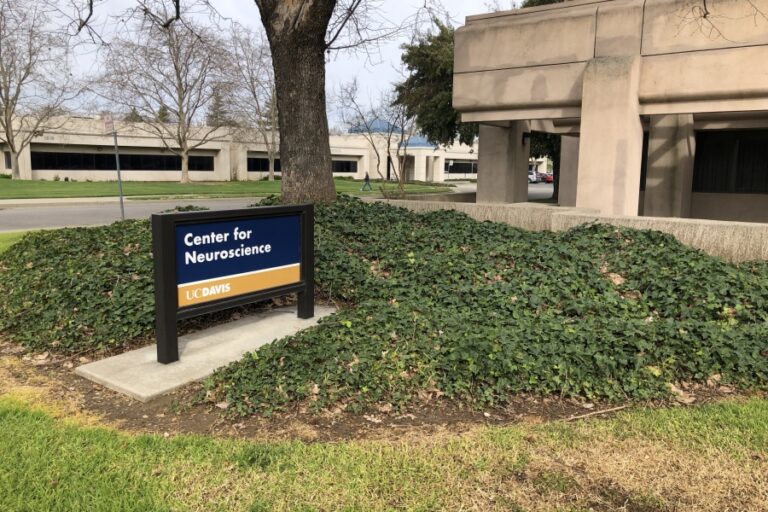
On Saturday, Mar. 9, the UC Davis Center for Neuroscience will host NeuroFest at the UC Davis Conference Center from 12:30 to 5 p.m. NeuroFest invites all Davis community members and UC Davis campus communities to spend a day exploring UC Davis research, culture and communities passionate about neuroscience.

“NeuroFest is a public outreach event led by the UC Davis CNS with the support of the Society for Neuroscience, UC Davis Neuroscience Graduate Group and the Dana Foundation,” said Diasynou Fioravante, an assistant professor in the UC Davis Department of Neurobiology, Physiology and Behavior and the NeuroFest co-chair. “Our goal is to inform the public on innovations about the brain, brain health, treatment for brain diseases and exciting brain science research at UC Davis.”

When Fioravante joined UC Davis as an assistant professor, she recognized that CNS lacked an outreach event promoting neuroscience research to the general public. She collaborated with other members from the CNS to develop her idea into the NeuroFest event, reaching the Davis campus community and beyond.

This year, NeuroFest celebrates its fifth year at UC Davis, focusing on “Mind in the Making: Executive Brain Functions in Health, Aging and Disease.”

Researchers from the CNS and across campus will feature their work and findings.

Tim Hanks, an assistant professor in the UC Davis Department of Neurology, will discuss the decision-making process through neural mechanisms and how disorders, such as depression and schizophrenia, shape decision-making.

“All the decisions we make are ultimately borne out through brain activity,” Hanks said. “Brain activity allows us to process information about the world around us, make decisions based on that information, and coordinate our actions based on those decisions.”

Jennifer Whistler, a professor in the UC Davis Department of Physiology and Membrane Biology and associate director of the UC Davis CNS, will present her work with opioid addiction, including neurological mechanisms which can be used to make balanced, non-addictive drug treatments and how opioid addiction shapes behavior in mice.

“We have an opioid epidemic because people are in pain,” Whistler said. “Everyone wants to feel normal, and there’s stigma behind that. Opioids act like a light switch for pain that is always on, shining a light saying ‘feel no pain and instead only joy.’ The opioid light switch can’t be turned off. The cells go shop for dark glasses to make the light dim since the body’s natural light switch isn’t working. They make adaptations to make the light seem dimmer, even though the light is just as bright, which builds tolerance toward the effects of opioids. When you take away the light, the cells still wear their dark glasses in the dark, leading to withdrawal and unbalanced responses to pain.”

Brittany Dugger, an assistant professor in the UC Davis Department of Pathology and Laboratory Medicine, will discuss aging and neurodegenerative diseases, including Alzheimer’s disease and dementia.

“A lot of medicine is based on upper-middle class, white Caucasian volunteers,” Dugger said.“Our Alzheimer’s disease research studies people over the age of 65 of all different backgrounds, not just one group of people as so we can aid in providing information to allow for treatment and intervention for all people.”

Steve Luck, a professor in the UC Davis Department of Psychology, will address how schizophrenia, among other disorders, affects attention, memory and cognition.

“Classically, schizophrenia was thought to involve an impairment in attentional “filtering,” or suppressing irrelevant inputs, such as one person talking when you’re trying to listen to another person,” Luck said. “However, by using state-of-the-art methods developed to understand attention in typical young adults, we’ve found that people with schizophrenia actually “hyperfocus” their attention. That is, under many conditions, they focus more intensely and more narrowly than typical people. However, they often attend to the wrong thing, so it appears on the surface that they are failing to attend.”

The day-long event features a poster competition, where graduate students and trainees compete as they convey their research findings to all attendees in an engaging way.

“One of our dynamic booth activities features a chance to control someone else’s movement, where electrodes are connected to someone’s arm and if you have electrodes connected to your hand,” said Najwa Marrush, the Neuroscience Graduate coordinator and events coordinator at the UC Davis CNS. “When you close your hand, the other person feels a pull and they close their hand.”

Attendees have a unique opportunity to vote and choose the best poster as poster judges. NeuroFest volunteers invite attendees to become judges, visit five posters and vote for their favorite research presentation.

“As someone who works behind the scenes, one of my favorite things at NeuroFest is seeing the kids in awe over the booths,” Marrush said. “They have so much joy on their faces as they see what’s going on in the brain, what it looks like and what each part does.”

The CNS also joins K-12 education for brain education and awareness. UC Davis graduate students and faculty visit local Davis schools, creating activities for different grade levels to learn and interact with brain research.

“When we visit the second and third-grade classes, we teach the students about helmet safety and traumatic brain injury,” Fioravante said. “We introduce students to neuroscience and brain research through games and interactive activities brain specimens and drawing different parts of the brain.”

Any UC Davis student is welcome to volunteer and become involved in the CNS’ outreach efforts, including NeuroFest.

“In celebration of NeuroFest’s fifth year anniversary, we are launching a $75,000 fundraising campaign to endow the Center for Neuroscience outreach efforts, including NeuroFest and K-12 education,” said Jennifer Scott, the director of Development at the UC Davis CNS. “We encourage the entire UC Davis family to donate on Give Day, April 12 through April 13, to support our efforts and reach our local communities with permanent community outreach efforts.”

Written by: Foxy Robinson — science@theaggie.org

Nearly pesticide-free parks in 2018, Integrated Pest Management policy reduces pesticide use

Focus on environmentally-friendlier weed control alternatives over chemical products

Updates to the City of Davis’ pesticide application suggest that there was only one chemical application in Davis parks throughout 2018 and thus far in 2019. The city’s Integrated Pest Management policy established an emphasis on cultural and mechanical ways of weed control over pesticide use.

The Pesticide Information Hotline offers transparency for the public on the date and location of each pesticide application in addition to e-notifications. The Anticipated Pesticide Application Calendar also informs people 48 hours prior to the application of a pesticide. The last documented spraying in a park was on May 7, 2018 in Arroyo Park. Sprayings, however, still occur in the city’s open space areas.

Alan Pryor, a member of the National Resource Commission and the Hazardous Materials Subcommittee, advocated for the decreased use of pesticides for safety concerns.

“We wanted them to fulfill that promise to their citizens,” Pryor said. “We demanded accountability. All this led to the newground changes implemented a new IPM policy that required all these notifications like email and signs being put up.”

The changes occured after former IPM Coordinator Martin Guerena resigned from his position following disagreements with upper management regarding pest management. Near the end of his employment with the City of Davis, Guerena found that the IPM program was not always considered a “priority.” Guerena still established a downward trend in pesticide use, which earned him the city’s Environmental Recognition Award in 2018.

“You can see the history,” Guerena said. “I was there for 10 years, so I’ve made the annual report every year, and it showed a steady decline — not total elimination — but a steady decline of the major pesticides.”

Since then, the IPM Policy, last updated in 2017, requires signage indicating an application location and phased-out use of glyphosate. According to John McNerney, the Wildlife Resource Specialist for the City of Davis, the city is moving away from chemical herbicides overall in response to concerns over “pesticide hazards to non-target organisms,” such as humans and wildlife.

“Multiple control methods are utilized including mechanical, cultural, biological, and chemical,” McNerney said via email. “Chemical control methods are considered the ‘last resort’ when all other methods are either not working or are known to be the only effective method of control. When needed, only least-toxic chemical pesticides are considered for application in parks, greenbelts or other high use public areas.”

Instead, the city uses mechanical methods such as weed whackers and weed flamers, as well as significant amounts of mulching to inhibit weed growth. McNerney also credited “the change in land use [and] pest management requirements at our wastewater treatment facility” with reducing the city’s pesticide use. Extension Weed Specialist, Brad Hanson, notes the benefits and potential drawbacks to non-herbicide weed control.

“Any weed control effort is really a series of tradeoffs,” Hanson said. “You can do it with chemicals like the herbicides, you can do it with labor crews, people pulling and hoeing weeds, that has a different set of tradeoffs in terms of logistic costs and social justice. You can do it with mechanical cultivation using tractors and tillage implements and that has a carbon footprint and speed of operation. So there’s not really a one-size-fits-all approach to weed control.”

In 2015, the International Agency for Research on Cancer, an arm of the World Health Organization, categorized glyphosate, a common active ingredient in pesticides, as a group 2a carcinogen. The decision followed lawsuits alleging that the ingredient, found in popular Roundup products, caused cancer, which may have further precipitated Davis’ battle against pesticide use. Pryor shared his praise for the city’s actions.

“It appears the city has done 180-degree turn, rather than increasing pesticide usage as we were fearful of –– we lost Martin Guerena –– we have gone way beyond organic-only pesticides,” Pryor said. “They’ve gone to functionally pesticide-free parks in Davis in the last year.”

Guerena finds that the ability to sustain this trend of pesticide-free parks is unpredictable.

“Especially right now with it being a wet year, you’re going to have a lot of weeds emerge, and they’re either going to have to physically remove them or probably apply more pesticides to catch up,” Guerena said. “So in other words, not doing anything is not an option.”

Hanson noted that Davis may, in theory, be able to bear the economic responsibility of being pesticide-free.

“That may not be achievable in every similar size city,” Hanson said. “It may be sustainable given the ability of a relatively high-net income city like Davis. If they are able to eliminate pesticides, then more power to them.”

Moving forward, Pryor expressed his desire for the Davis Joint Unified School District to follow the lead of the City of Davis and the Woodland Unified School District in elminiating glyphosate use.

Written by: Renee Hoh — city@theaggie.org
Alcoholic Kombucha

A new way to kombucha

Kombucha is a probiotic drink known for its health benefits. Made from a symbiotic culture of bacteria and yeast, it’s naturally fermented and already slightly alcoholic, ranging in an alcohol-by-volume percentage between 0.5 and 2. Recently, brands like California’s “Boochcraft”  or “KYLA,” which is sold at Trader Joe’s, have lead to a rise in the popularity of “hard kombucha” which range from 4.5 to 8 percent ABV.

The Boochcraft website boasts, “During the fermentation process, a large amount of probiotic bacteria is produced which fills you guys with healthy bacteria that can improve digestion, inflammation, and even encourage weight loss. Kombucha is also rich in antioxidants and it is thought to protect the liver from toxicity. Its antibacterial properties help to protect the body from bad bacteria and yeasts.” In addition, for those with dietary restrictions, hard kombucha is a gluten-free alternative to beer, and has less sugar than its counterparts.

There have been many examinations, however, into whether kombucha is actually a “healthier” alternative to alcohol. In Tierney Finster’s article, “Is Hard Kombucha a Healthier Way to get Drunk”  in Mel Magazine, a dietician from the UCLA Medical Center explained, “As for the healthfulness of some of the other ingredients, we currently live in a world of nutritional reductionism … while traditional kombucha may have some health benefits, including the probiotic and active cultures, there are some studies that indicate that kombucha potentially could harm the liver or kidney, which would be related to the fermentation of the product, possibly because it’s a different type of fermentation/yeast than that found in other products (beer, for example).”

Olivia Blair, a fourth-year human development major, found hard kombucha to be an  alcoholic beverage that met her taste preferences.

“I drink it because I’ve always loved non-alcoholic kombucha and Boochcraft is the best of both worlds,” Blair said. “They have so many good flavors and it’s easy to drink it with friends and socially. It’s good for your gut health as well with all those probiotics. I started buying them at the Davis Co-Op. I wasn’t always a big fan of beer, but drinking hard kombucha has helped, and it’s also really gotten me into hard ciders.”

For many, hard kombucha is their drink of choice due to its taste and potential health benefits. For those who enjoy the taste of regular kombucha, hard kombucha has almost no taste difference. While any alcohol consumed in large quantities presents health repercussions, in terms of drinking the serving size, many find themselves feeling less bloated or tired compared to drinking beer.

Ironically, what began as the Alcohol and Tobacco Tax and Trade Bureau regulation of regular kombucha, which stated any drink with 0.5 percent or more must be regulated as an alcoholic beverage, led to many commercial kombucha companies choosing to produce a product with a higher alcoholic option.

Regardless of the debated health benefits, hard kombucha has certainly risen in popularity among UC Davis students. It is now common to look around any place that allows one to bring their own beverage and see people holding a hard kombucha. Often times, the flavors are similar but more mature than regular kombucha. For example, Boochcraft offers “Apple + Lime + Lavender,” “Grape + Coriander + Anise,” “Turmeric + Tangerine + Ginger” and “Grapefruit + Hibiscus + Heather” that appeal to Millenials.

Dani McCabe, a fourth-year economics major, also chooses to drink alcoholic kombucha for its taste.

“I started drinking hard kombucha because I randomly saw it at the Davis Co-Op last year and figured, I love kombucha and hate the taste of alcohol so if alcohol could resemble kombucha in any way maybe I would actually like it,” McCabe said. “I love that I wake up the next morning feeling a lot less lethargic than I would with most alcohols. To me it feels like a cleaner way to consume alcohol while actually loving the taste.”

In addition, McCabe explained her experience at a kombucha brewery in San Diego.

“I love how the crowd at a place like this is not looking to get hammered (like a lot of bars and breweries),” McCabe said. “Instead it’s more laid-back and social because you can taste a lot of flavors and chat with your friends while enjoying an awesome drink that won’t leave you desperately hungover the next morning.”

This trend of alcoholic kombucha is not out of touch with other alcoholic alternatives to beer, such as hard cider and spiked sparkling water. These beverage choices reflect the larger attitudes of health consciousness and consumption that are present among college students and graduates.

That being said, the drink contains fewer sugars, calories and carbs, and most people choose these products for the healthier feeling during and after consumption, as opposed to beer. Without the gluten or high sugar content, beverages such as Boochcraft fall into the realm of other product substitutes like gluten and reduced sugar alternatives.

Quinn Carlsen, a fourth-year economics major who spent his summer working at Lagunitas Brewery, admitted his strong love for hard kombucha after trying it.

“Alcohol and kombucha were meant for each other,” Carlsen said. “Boochcraft didn’t invent the wheel when they put the two together, they just did something everyone else neglected to do. Forget the fact that it’s supposed to be not for heavy beer drinkers like me. Boochcraft is making drinks that are new and different in the alcohol industry, and they deserve respect and I’m not afraid to say I like it.”

At the end of the day, when choosing an alcoholic beverage, what matters is the individual experience and preference, and this new rise in alternatives is creating drinks that appeal to a wider audience.

Written By: Rosie Schwarz – arts@theaggie.org

How the GOP establishment turned Donald Trump into just another Republican president

The Republican Party has worked to cull Trump’s signature populism — and it just might cost them 2020

Last month, over a hundred major Republican donors descended upon Trump International Hotel to meet with campaign advisors and devise a strategy for the 2020 presidential election. Most left dissatisfied and unconfident that President Trump’s team had developed a coherent re-election strategy.

What they don’t realize is that President Trump envisioned and produced a winning strategy in 2016 — but now the same wealthy donors and political elites that claim to support him are working to sabotage it.

Looking at Trump’s actual policy maneuvers over the last two years, it’s hard to argue that any of them wouldn’t have been implemented under a more mainstream Republican administration. Sure, there were comical outbursts and antagonistic tweets, but the product has been vastly different from the messaging. Cutting corporate taxes, rolling back financial and environmental regulations, ending the Affordable Care Act’s individual mandate, appointing conservative Supreme Court justices, recognizing Jerusalem as the capital of Israel and withdrawing from the Iran deal — all maneuvers universally supported by the GOP. Even the notorious Trump foil Mitt Romney admitted that the president’s maneuvers are “very similar to things I’d have done my first year.”

Much of this is due to Trump’s inability to implement a populist political agenda despite a Republican majority in both chambers of Congress. Trump instead spent the majority of the time attempting to win over the likes of Paul Ryan and Mitch McConnell, ceding his economic agenda to their influence and capitulating to intraparty opposition over troop withdrawals and the border wall.

While this may have won him establishment Republican support, it did little to avoid major midterm election losses. Furthermore, should the Democrats nominate an actual social democrat (such as Bernie Sanders) in 2020, it’s highly unlikely that Trump could stave off a legitimate populist economic movement.

Trump’s unorthodox 2016 campaign was notoriously driven by the financial backing of small donors and his own personal wealth. Furthermore, his electoral path to the White House was paved through surprising upsets in a number of key Rust Belt states, where an anti-establishment message of economic protectionism appealed strongly to communities decimated by deindustrialization. Although they are a traditional Democratic stronghold, working-class voters in this region have shown a particular affinity for right-wing populist messaging, as demonstrated by their strong support for Ronald Reagan in the 1980 and 1984 elections.

An increasingly diverse American electorate will make the traditional Republican path to the White House gradually more difficult. In future elections, states such as Arizona, New Mexico and even Texas may turn purple, and states like Florida will continue their status as political battlegrounds. As such, Republicans will need to shift focus to constituents in the North and Midwest — voters who have shown a willingness to go red, but only when the message is jobs and trade, not billionaire tax cuts and forever wars.

Written by: Brandon Jetter — brjetter@ucdavis.edu

Disclaimer: The views and opinions expressed by individual columnists belong to the columnists alone and do not necessarily indicate the views and opinions held by The California Aggie.

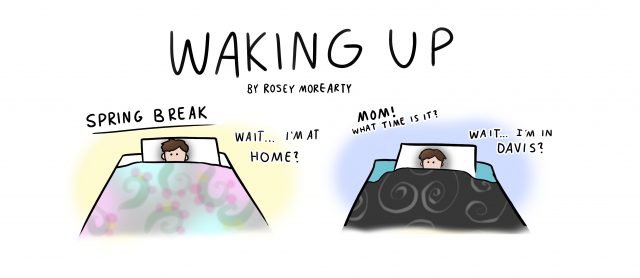
Cartoon: Waking Up

ROSEY MOREARTY / AGGIE

Written by: Rosey Morearty — rosey@morearty.org

Yolo County pursues restorative justice funding

Neighborhood Court seeks input from community for second rounds of grants, expansion

Over the past couple of weeks, the Yolo County District Attorney’s Office and the Health and Human Services Agency have been hosting a series of community engagement meetings to attain public feedback regarding grant proposal development for the second round of Proposition 47 and Edward Byrne Memorial Justice Assistance Grant funding. The funding would expand the Steps to Success and Neighborhood Court programs, both of which are restorative justice programs which aim to address root causes of criminal activity.

Neighborhood Court is a voluntary program that invites eligible offenders to participate in a conference with a three-person panel that decides what steps the offender should take to resolve their offense. After completing the steps, the offender’s record is cleared.

Nicole Kirkaldy, the Neighborhood Court paralegal, explained this philosophy.

“[Neighborhood Court] looks at addressing crime as not just a specific offense but looking at the harms it creates,” Kirkaldy said. “It looks at how to best address these harms, how to make things right as much as possible, what needs are created and how to meet those needs.”

For example, a student offender with an alcohol-related offense may be referred to Student Health and Counseling Services. An offender who was disruptive at a bar may need to write letters of apology to the bar-owner, their family and themself.

Yadira Paiz, a 2018 UC Davis alumna who began volunteering with Woodland’s Neighborhood Court as a student and is now an employment specialist and case manager for Steps to Success, shared her thoughts about this approach.

“The person matters as well — not just the community, but them too — [and] how you can heal in the process,” Paiz said. “I think that’s really a concept that I haven’t heard of, but it really works.”

Neighborhood Court began in 2013 and expanded in 2015 to cover a growing variety of offense types, a broadened criminal history eligibility and a wider region of Yolo County, including West Sacramento and Woodland. The second round of Justice Assistance Grant funding would support Neighborhood Court’s operation and continued expansion, as the DA’s office looks for ways to include more people who would benefit from the program.

“We’re finding that this process has benefits to a pretty wide variety of participants, some who are not first-time offenders,” Kirkaldy said. “They might have a bit more of a criminal history; maybe they have a higher level offense than we’ve seen in the past, or they might just need some additional resources and support that’s not necessarily available through the core program.”

As Neighborhood Court currently operates, most eligible offenders are responsible for specified minor misdemeanors, although individuals can qualify on a case-by-case basis for other offenses. There are also restrictions based on criminal history, but Neighborhood Court is looking to expand the program to more individuals who are not first-time offenders.

“We’re looking to see how we can reach a broader population and better support the needs of that population within that expansion so that they’re able to benefit and be successful through this program,” Kirkaldy said.

Along with Neighborhood Court, the parallel program Steps to Success specifically addresses the needs of individuals with substance misuse and mental health challenges. Individuals can opt into intensive case management that offers therapy, medication support, housing assistance and employment guidance.

Steps to Success was made possible through funding from Proposition 47 — the Reduced Penalties for Some Crimes Initiative — which passed in 2014. Health and Human Services Agency led the application, along with probation, public defenders and the DA’s office but contracts most services out to partners such as CommuniCare Health Centers, Empower Yolo and Legal Services for California.  

This next round of Proposition 47 funding, called Cohort 2 — for which the DA’s office and HHSA are applying — will more directly address the homelessness that many Steps to Success clients experience. Ian Evans, an alcohol and drug administrator and forensic and homeless services manager with HHSA, said that Cohort 2 will support a program similar to the current one but with changes to ensure both the originally targeted population and individuals experiencing homelessness are supported. Although Steps to Success wasn’t intended to be a homeless-driven program, about 45 percent of participants are either homeless or have recently experienced homelessness, according to Evans.

“The idea would be to utilize this [Cohort 2] funding to help support the individuals that are from that target population that are also homeless so we can have the Steps to Success program continue with the target population it was intended for, and also for these individuals living homeless with the new funding,” Evans said.

The DA’s office and HHSA have sought community input for both program expansion proposals through community discussions in Davis, West Sacramento, Winters and Woodland. These discussions were livestreamed and are available to watch on Facebook.

Additional engagement efforts include a consumer input session at the Fourth and Hope shelter in Woodland and a meeting with the Yolo County Homeless and Poverty Action Coalition in order to determine ways to make the grant’s service model as impactful as possible.

Community members with questions, comments and ideas about the programs can email prop47@yolocounty.org.

“We’ve been getting a lot of email comments and questions in from folks that have been giving some good guidance and initial ideas about how we can structure the program,” Evans said.

Some ideas, for example, had to do with securing housing to support individuals in Steps to Success, including the possibility of landlord incentives.

This engagement process helps to inform residents about Steps to Success and Neighborhood Court.

“A couple of the comments at the first session were honestly just thanking us for coming out and sharing the information because people had no idea that the current Neighborhood Court program or the current Steps to Success program [were] happening and what [they] entailed in Yolo,” Evans said.

Written by: Anne Fey — city@theaggie.org
A night of performance, togetherness and bonding to support organizations like Empower Yolo

Prytanean Benefit Ball: an event to support the campus and community

The Prytanean Women’s Honor Society is hosting its annual Benefit Ball on Mar.10, 2019, from 6 p.m. to 8 p.m. in the Walter A. Buehler Alumni Center. The annual ball not only provides togetherness for Prytanean women and the community but also supports Empower Yolo, an organization which aids those who have been victims of abuse. The event is a time for Prytanean women to continue to build one another up and have a safe, enjoyable night among friends and other individuals who wish to create change in all aspects of the community.  

Emerald Tse, a fourth-year communication and political science double major and current president of Prytanean, provided her account of the Benefit Ball and the importance behind supporting Empower Yolo through the proceeds gained by the event.

“It can be difficult to volunteer for Empower Yolo since they deal with many sensitive cases, so the best way we can support them is by raising money and donating,” Tse said. “Benefit Ball is one of the main events we hold to do that. We always have music and occasional performances. We invite local businesses to see if they’re willing to contribute, so we can offer various raffle prizes.”

Performers include on-campus groups, like the various a cappella organizations, but Prytanean extends an invite to any group that is willing to come out for the night. The open-mic structure of this year’s event allows for greater creative expression for anyone that wants to share. Tse mentioned the emphasis placed this year on creating a more relaxed environment instead of the dance-hall connotation that the name suggests.

“The event used to be a dance type of event, which can be a lot of pressure for people to come out to,” Tse said. “We felt that, if we invite some performance groups on campus, it would make it a little less scary to come to and less formal. It’s very low pressure and engages other people in the community.”

Previous Benefit Ball events have been on a smaller scale, according to Tse, but the performances and money raised always exceeded expectations. Tse noted that the fundraiser typically raises $1,000 every year, but this year she hopes to reach $1,500 to provide even more support and awareness.

Sophia Racke, a third-year international relations major and the social vice president for Prytanean, spoke about her preparation for the event and the goals she has in mind.

“Since the spring of last year, I’ve been thinking about the event,” Racke said. “This quarter, I had to buckle down and get working on it. It’s a lot more than I originally thought.”

Luckily for Racke, the effort is not hers alone as the members work together as a team to put on this event.

“We have subcommittees, like marketing that advertises the event and make flyers, and also the preparations committee that handle decorating and the overall set up,” Racke said. “The last committee, the most important one to me, is the fundraising committee that reach out to the businesses and ask for donations.”

For the marketing subcommittee, led by Aiden Lafreniere, the task of publicizing the event can quickly become cumbersome, but Lafreniere and her group work diligently to ensure the event has the traffic it needs to reach the larger Davis community.

“There’s a lot more than I anticipated when taking on marketing,” Lafreniere said. “Trying to figure out how to create flyers and tickets with an aesthetic that’s appealing was something I didn’t really think would be a challenge, but luckily we have girls that are really talented designers that work hard in trying to come up with something beautiful.”

In Racke’s experience, the Benefit Ball has always been a positive event, but she wants to change how the event is handled in hopes of reaching a wider audience than just Prytanean members.

“Last year, I was the marketing subcommittee leader, and my team and I were really excited for the event, but I felt like it wasn’t quite what I expected,” Racke said. “After marketing to so many people, I didn’t feel like we brought a lot of people in. That’s why I ran to be social vice president this year; I wanted it to be a much bigger event.”

Lafreniere also commented on the previous atmosphere of the event and how, by bringing in more diverse performances this year, she hopes the vibe will become more socially friendly than it has been before.

“Previously, we found that the environment didn’t allow for people to be as social, and we had some trouble with a few of the performances,” Lafreniere said. “I think the biggest thing this year is trying to figure out how we can change things and reach more people.”

Racke believes the new venue will also help make the event more accessible since finding a place on campus means more students and members of the community can come out and show support. She shared the pride her and the other members have in raising awareness of the service that Empower Yolo provides. They hope to elevate their position and encourage anyone who needs assistance to reach out.

Written By: VINCENT SANCHEZ – features@theaggie.org

Heading: UC SHIP health care changes, Million Light Bulb Challenge, The Green New Deal: Your Weekly Briefing

Happy Friday Aggies,

Exams, final papers and projects, oh my! The end is near, Aggies, and we are welcoming week 10 with open arms. On Sunday, we also welcome back daylight savings time, so don’t forget to set your clocks forward this weekend — except for your microwave clock, cause nobody knows how to change that.

On that note, let’s spring into the news…

RAUL MORALE / AGGIE

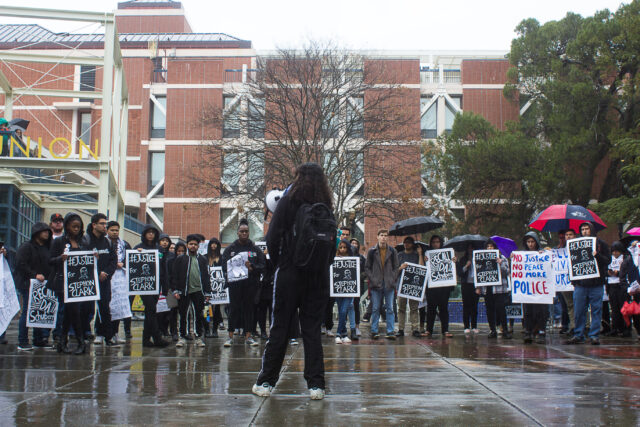
Photo of the Week: A sit-in was held at Shields Library on Tuesday, the second day of the Stephon Clark Week of Action at UC Davis. Protests over the DA’s decision not to charge the officers who fatally shot Stephon Clark are also occurring throughout Sacramento — over 85 people were detained during a march in Sacramento Monday night.

ZOË REINHARDT / AGGIE

In campus news— Some changes are coming to UC SHIP medical insurance for the 2019-20 academic year. Of the six committee approved changes, most notable were the call to reduce premiums for graduate students and to lower prices and co-pays for certain services for all. Services expected to see reduced co-pays are mental health services, pharmacy prescriptions and Urgent Care, along with reduced diagnostic lab fees and an elimination of co-pays for web visits for STI screenings. Read the full article.

BRIAN LANDRY / AGGIE

In Davis news— Congressman John Garamendi announced his support of the Green New Deal. The unexpected announcement came after Garamendi avoided taking a stance at a packed town hall meeting on Feb. 19 that focused on environmental issues. This meeting came from rallies outside the congressman’s office on G Street by activists supporting the Green New Deal weeks prior. His closing statements lead attendees to believe he would not co-sponsor the bill, but on Feb. 24 announced his support on Facebook. Read the full article.

ALLYSON KO / AGGIE

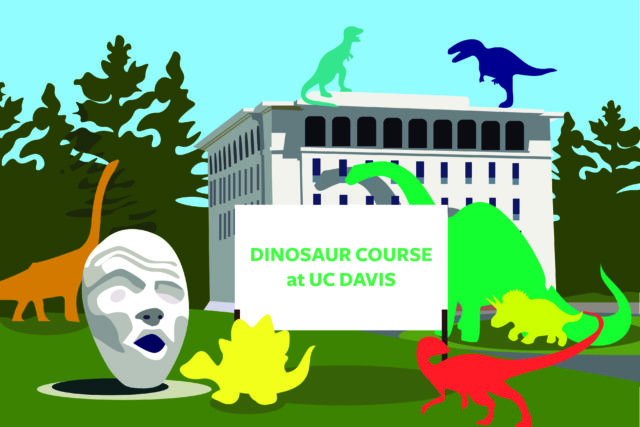
In features— The Dinosaur class (GEL 12), a popular science and engineering GE course for non-STEM majors, teaches students how to be critical of scientific reports and concepts of evolution and paleobiology through dinosaurs. “Terrestrial dinosaurs are extinct, so it just makes people wonder about them. So what we try to do in the class is to try to put that wonder into a scientific class, to set up hypotheses and test them,” said Professor Carlson, who teaches GEL 12. This two-unit course is offered every winter. Read the full article.

UC DAVIS DEPARTMENT OF THEATRE AND DANCE / COURTESY

In Arts— The UC Davis Department of Theatre and Dance is performing “Flora and the Red Menace” now at the Wyatt Pavilion Theatre. Showtimes and ticket information on the department’s website, and read our review.

Caroline’s Weekly picks:

Television: “Mad Men”

Movie: “Paddleton”

Novel: “Blood Meridian” by Cormac McCarthy

Album: “Half Light” by Rostam

JUSTIN HAN / AGGIE

In Sports— Men’s Basketball fell to visiting Irvine 64-48, last Thursday, but clapped back Saturday, beating Cal State Fullerton 66-59. Read our recap. The Aggies played Hawaii last night, losing 76-69, and our final game is this Saturday against UC Riverside. It’s a home game, go out and show your Ag spirit!

Photo Credits: CLTC/UC Davis

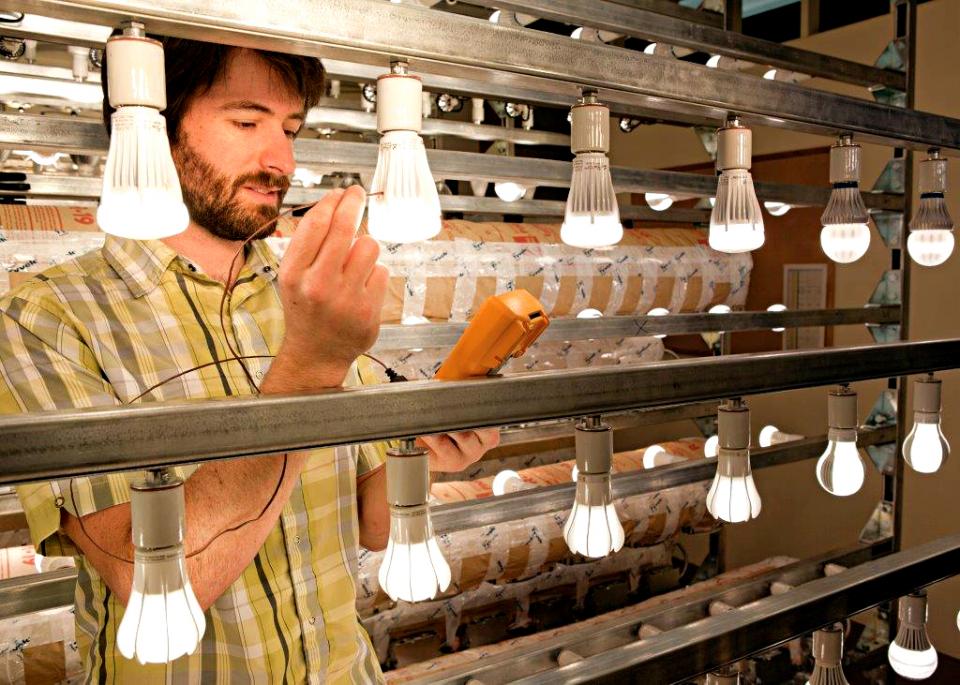
In Science— The UC joined the Million Light Bulb Challenge. In and effort to reduce our carbon footprint, all UC students, faculty and members of the community are encouraged to make the switch to energy efficient LED bulbs. In collaboration with California Community Colleges, the CSU’s and the California Department of General Services a community buy program has launched to make it easier for consumers to purchase LED bulbs and make the switch. “Replacing one million incandescent light bulbs with LED lights could decrease carbon dioxide emissions by 41,461 metric tons, the equivalent of removing 8,900 passenger vehicles from the road every year,” writes science reporter Kriti Varghese. Read the full article.

Opinion:Are comedians justified for not wanting to perform at universities?

And on that note…

Have a laugh: New vegan moms are convinced their own organic breast milk is toxic for their newborns

Editorial:Now, more than ever, people need to say his name: Stephon Clark

That’s all for your Weekly Briefing, check back next week.

To receive the briefing in your inbox, subscribe to our newsletter.

— Grace Simmons


Big Wild to play Ace of Spades

Electronic DJ’s Superdream tour will bring album to life

Jackson Stell, better known as Big Wild, has embarked on his “Superdream” tour and will be playing at Ace of Spades in Sacramento on March 10. Special guests Robotaki and Mild Minds will make an appearance.

Just last December, Stell performed in San Francisco at the Bill Graham Civic Auditorium with Louis The Child. Now, he’s back in Northern California to give fans a true Big Wild experience. The tour kicked off yesterday in Santa Ana, Calif.

“Being able to control your own show is a wonderful thing,” Stell said. “You can really cater it around your vision, your ideas, your music, your visuals, everything. I’m excited to make the show a really full Big Wild experience.”

The tour is titled after his debut album as Big Wild, “Superdream,” which was released Feb. 1. The album is not your typical EDM album but is rightfully called because it feels like a dream — almost ethereal. Featuring Stell’s vocals and thoughtful songwriting, the songs don’t follow a normal rise and beat drop progression, but rather the album is masterfully layered with different instruments.

Stell’s lyrics, influenced by his life’s experiences, take the listener on a journey of diverse, raw emotions, but never in a drastic way. The ease of transitions carry the listener throughout the album. So quickly can the listener develop a personal relationship to the songs.

The album’s standouts are “City of Sound,” “6’s to 9’s” and “Joypunks,” although the entire album is a new, interesting soundscape that both fans of EDM and newcomers will appreciate. Each song is rich and pushes the limits of the genre of electronic music.

Stell’s live performance style is what originally drew me to his music. The deep connection to his music is evident, as he dances around, like the music is flowing through him. His rhythms are only made stronger and more powerful when he beats on his cajón. The audience is given the opportunity to feel the same emotional connection that Stell does.

“I feel most in my element when I’m really in a groove on the drums or when I’m really in the middle of a vocal passage,” Stell said. “It feels great especially when you can really connect with the crowd and you hear that reaction, it’s kind of like a high you can’t explain.”

The “Superdream” tour will feature live singing, drumming, guitar, a new light rig and new visuals, as well as special guests, all working together to create an electronic, dance vibe.

“It’s like a hybrid of a show,” Stell said. “It’s got a lot of different styles and elements from other styles of music, like kind of all put into one show.”

This show may serve to act as a homecoming-of-sorts for Stell. Those familiar with his story know that his name, and this new part of his career as Big Wild, was inspired by Big Sur and California. The name Big Wild is a reflection of the “state’s natural glory and open spaces.” The album was written and recorded while living in the Bay Area and that connection is sure to come alive when back where it all began.

“I came up with the name really when I was starting a new chapter in my life,” Stell said. “It felt like a great name to encapsulate the feeling going into new and unknown territory in that new part of my life, but still being excited about excited about it. Like welcoming the challenge, being adventurous, being curious. Those ideals are something I Try to make a part of everything I do with this project. It keeps me centered.”

Stell said that his overall goal for the album was to put the listener in an almost surreal and different perspective, which he accomplishes, and is sure to accomplish with the “Superdream” tour.

More information can be found at aceofspadessac.com.

Written By: Liz Jacobson – arts@theaggie.org