55.7 F
Davis

Davis, California

Monday, December 22, 2025
Home Blog Page 45

Emma Chamberlain brews up a new business with Chamberlain Coffee

The well-known influencer and podcaster expanded her coffee business into Santa Monica — but how did she get here?


BY BETH MUNRO-MORRIS — arts@theaggie.org


In an age where “nepo-babies” often dominate the celebrity scene, Emma Chamberlain’s rise to fame offers a refreshing self-made narrative. From YouTube sensation to high fashion fixture, podcast host to coffee entrepreneur Chamberlain demonstrates how to build a multifaceted career in the modern age. A pioneer of the “content creator to A-list celebrity” trajectory, she shows the endless possibilities social media can unlock. 

Born and raised in San Bruno, a modest city just outside of San Francisco, Chamberlain’s path to stardom began far from the spotlight. Despite attending an all-girls private high school, her early life wasn’t marked by fame or fortune. In fact, she lived in a two-bedroom apartment with her mom — what she has since described as a barrier to her social life. 

Growing up an only child with separated parents, she recalls a quiet and somewhat lonely childhood. However, it was during these “quiet” moments that her creative approach to content creation took root. At 16 years old, she began uploading unfiltered vlogs of her life as a highschooler that would later propel her into stardom. Her quirky personality shaped her signature style, paving the way for a unique editing style that had millions of teenage girls in a chokehold. 

Unlike many YouTubers of today, some of whom pursue content creation for fame and commercial success, Chamberlain’s motivation back in 2016 was pure creativity. However, it wasn’t just Chamberlain’s niche that garnered attention, it was her authenticity that connected with viewers. Although her lifestyle now as a 23-year-old millionaire may be less relatable, her genuinity continues to resonate and is what defines her as a trailblazer in the crowded digital landscape.  

The leap from a small-town family home to the intimidating scene of Los Angeles is daunting for anyone, let alone a 17-year-old. And though she has toyed between various residences, she remains in Los Angeles six years later. Only her humble one-bed studio, once the iconic backdrop for many of her early videos, has now been upgraded to a multi-million-dollar mansion in Beverly Hills. In fact, her lavish home was even featured in Architectural Digest’s iconic “Open Door” series — a testament to both her success and status. 

Further proof of her star status came in 2021, when Chamberlain was not only invited to the Met Gala but also entrusted with hosting Vogue’s red carpet interviews. She has since continued this role at the prestigious event, making the dramatic shift from filming in her bedroom to stepping behind the lens of the world’s biggest fashion authorities. 

Chamberlain’s rise on social media gave her a gateway into the high fashion world. She has collaborated with the likes of Miu Miu, Valentino and Prada and secured partnerships with some of fashion’s most renowned labels, including Levi’s and Louis Vuitton. Her ambassadorship extends beyond clothing, with high-end collaborations with jewelry and cosmetic brands, like Cartier and Lancôme.  

Although Chamberlain has worked with designers synonymous with timeless, classic styles like Prada and Louis Vuitton, her fans know her for eccentric and bold fashion choices. She carries her unique and unapologetic attitude into her wardrobe, standing out in an era of polished celebrity influencers. 

Despite her meteoric rise in the entertainment and fashion industries, Chamberlain wasn’t content with just being an influencer or even a podcast host. Instead, she leveraged her notability to venture into entrepreneurship, launching Chamberlain Coffee in 2019. This move was highly anticipated by her long-time fans, who recall her coffee obsession as a hallmark of her early videos. 

Her personal love for coffee marked an authentic transition into the business world. Initially released as an online store, Chamberlain Coffee sold everything from coffee blends and matcha to mugs, whisks and even t-shirts. What began as an online business has since grown into a national retailer, with products now available on the shelves of Whole Foods Market, Walmart and Target. 

Chamberlain’s online vision has manifested into physical reality as she recently opened her very first Chamberlain Coffee shop in Los Angeles. On Jan. 30, fans flocked to Westfield Century City Mall, waiting in over an hour-long queue to experience the excitement firsthand. 

Unlike the pop-ups she has hosted in the past, Chamberlain’s new store offers a permanent location for fans to get their Chamberlain Coffee fix. The menu features a lineup of classic beverages, from cold-brews and lattes to mochas and matchas. The drinks that have received the most buzz are her signature creations — the Peanut Butter Mocha and Salted Pistachio Matcha Latte. However, for the most authentic experience, customers can also order their drink the “Emma Way” — her signature combination of espresso with almond milk and dairy-free creamer. 

Fans are already eagerly anticipating the possibility of Chamberlain expanding her coffee empire further. Given the impressive life she has built and the many industries she’s conquered at just 23 years old, an expansion seems to be within reach. Showing no signs of slowing down, Chamberlain’s lasting influence on pop culture seems inevitable.


Written by: Aaliyah Español-Rivas — arts@theaggie.org

Review: the debut season of ‘Severance’

A mind-boggling office drama that will have you questioning your nine-to-five


BY BETH MUNRO-MORRIS — arts@theaggie.org 


If you thought Ben Stiller was confined to Hollywood acting, think again. Stiller takes a bold leap behind the camera and successfully makes the audience’s heads explode in his directorial debut, “Severance.” Teaming up with writer Dan Erickson, he lets his imagination run wild in a nine-episode thriller streaming exclusively on Apple TV. 

A psychological nightmare, “Severance” takes the concept of the work-life balance to an extremely terrifying hypothetical. In the show, the characters’ minds are split into two distinct personas: the Innie (work-self) and Outie (personal-self). When characters enter the office, they lose all knowledge of their personal life, and when they leave, they have no recollection of their workday. Although the division is enforced by Lumon, a dubious biotech company, its psychological implications extend beyond the company’s four walls. 

In what is known as the “severance procedure,” a cerebral microchip is implanted into employees’ brains, with the activation point located in the elevator that leads to the headquarter’s severed floor. While each person’s Innie endures the monotony of a 9 a.m. to 5 p.m. workday, their Outie is pardoned from the stresses of professional labor and blissfully unaware of any corporate information. 

Each Innie is equally ignorant of their Outie’s life, but when questions arise and anxiety builds about life in the outside world, a group of severed employees team up to uncover the truth about the unknown. Ultimately, their mission to access the real world breaks company protocols, propelling four individuals into a battle against a corporate empire.

As the season progresses, we learn about each employee’s complex history and why they initially volunteered to be “severed.” The series is centered around Lumon’s Macro Data Refinement (MDR) team: Mark S., Irving B., Dylan G. and a new hire, Helly R.

As Helly begins to challenge the status quo upon her arrival, Mark capitalizes on the opening and uses his position as MDR supervisor to lead his coworkers on a dangerous road of self-discovery. 

Although season one does not reveal much about Irving and Dylan’s past, audiences learn early on that Mark is trying to escape the pain of his wife’s death. However, the real mystery lies in who his wife was, her connection to Lumon and the impossibility of Mark knowing her in both worlds.

Mark’s protagonistic arc is apparent through one of the show’s introductory shots, which tracks him walking through the maze of Lumon’s severed hallways. The sequence gives the audience a taste of his mundane work routine, as its two-minute-long duration feels like a lifetime for those watching. Surrounded by enclosed, stark walls, the suffocating atmosphere is palpable as Mark navigates his way to yet another windowless space — his office.  

The MDR office, along with the rest of the severed floor, is rooted in mid-20th-century design. To accompany the program’s otherworldly narrative, set designers enhance the audience’s sense of confusion by combining 1970s-inspired furniture with futuristic innovations. After all, in what world would you find touchscreen CRT monitors?

These monitors serve as one of the program’s biggest enigmas: What exactly do Lumon employees do? Throughout season one, the MDR team is frequently shown sorting numbers on their screens. Yet, the purpose of these tasks remains frustratingly ambiguous with unanswered questions continuing to build in anticipation of season two. 

Similarly, the show offers no clear context or clues about where in America “Severance” takes place. The creators of the series work hard to emulate an unfamiliarity that almost feels like a simulation, with very few references to the real world.

This robotic feel is embodied by the un-severed employees at Lumon, particularly superiors Mrs. Cobel and her assistant, Mr. Milchick. The two share an expressionless demeanor and unyielding authority over their severed employees that is deeply unsettling to watch. Cobel’s sporadic outbursts only add to the program’s eeriness, leaving the audience with a growing discomfort leading up to season two.

And after three long years of suspense and speculation, the wait for a second season is finally over. As of Jan. 17, fans can return to the severed world, with weekly episodes to satisfy all of their burning questions. So, grab some snacks, dim the lights and prepare for another round of mind-bending twists in the work world. 


Written by: Beth Munro-Morris — arts@theaggie.org 


Sundance Film Festival continues to remind us of the artistic practice of filmmaking

The popular film festival paves a way into the limelight for fresh talent


By BETH MUNRO-MORRIS — arts@theaggie.org 


What began as an underground indie festival has evolved into one of the most esteemed events in the filmmaking world. Sundance Film Festival is renowned for its celebration of emerging talent, offering a golden ticket to Hollywood for promising artists. 

Sundance originated as the Utah Film Festival which was held in Salt Lake City before it was moved to Park City in 1991. Although its name and location shifted a decade later, the festival’s core objective was to spotlight filmmaking in Utah, which was ultimately achieved. Today, Sundance has gained its reputation as a prominent stage for worldwide cinema and continues to house some of the most successful independent films.

The festival showcases approximately 200 films over a 10-day period, awarding prizes across various categories, including dramatic, documentary, short films and world cinema. Unlike other prestigious film events such as the Oscars or Golden Globes, Sundance is not reserved for Hollywood’s elite — though many from the industry still grace the red carpet.

Not only can anyone attend the festival by simply purchasing an online ticket, but the voice of the public is deeply valued. While Grand Jury prizes are awarded by a panel of industry experts, the Audience Award is decided by the public. By allowing the community to play a pivotal role in helping artists secure their breakthroughs, the festival upholds its reputation as an inclusive and diverse platform. 

Sundance has served as a gateway to Hollywood’s big leagues for many of today’s iconic filmmakers. The likes of Steven Soderbergh, Wes Anderson and Quentin Tarantino are just a few of the household names that can credit their start to the Utah festival. 

Widely considered a pioneer of the 1990s independent film movement, Soderbergh’s first film, “Sex, Lies, and Videotape,” won Sundance’s Audience Award in 1989. Though it premiered in Utah, the film went on to win the prestigious Palme D’Or at the Cannes Film Festival that same year. Today, Soderbergh’s rich legacy of creativity is celebrated in his acclaimed films: “Erin Brockovich,” “Traffic” and the “Ocean’s Eleven” series. 

Arriving at the 1993 festival was Anderson’s first, and only, Sundance production. However, this 16-minute short film was enough to kick-start his iconic career, as “Bottle Rocket” quickly became a festival favorite. The film served as a prototype for his future works, including the “Grand Budapest Hotel” and “Fantastic Mr. Fox” — films that have become synonymous with remarkable cinematography and his distinct visual style. 

Hard to believe it was his first production, but Tarantino’s “Reservoir Dogs” astounded Sundance audiences at the 1992 festival. Tarantino’s inaugural attempt at experimental filmmaking made a profound mark on Hollywood cinema, introducing audiences to a style characterized by violence, profanity and shifting timelines. His unmistakable tone can be seen in his subsequent films: “Pulp Fiction,” “Fight Club” and “Kill Bill.” However, “Reservoir Dogs” has stood the test of time and is still widely regarded as one of the greatest independents in cinema history.

A meteoric rise is not only an incentive for filmmakers but for actors too. It is contestable that older stars, Mark Ruffalo, Jake Gyllenhaal and Joseph Gordon-Levitt, owe a significant portion of their success to their appearance at Sundance. The festival’s influence remains unparalleled, with more recent examples such as Jennifer Lawrence, Anya Taylor-Joy, Michael B. Jordan and Saoirse Ronan, all of whom skyrocketed into the spotlight following their festival debuts. 

With Sundance’s acclaim comes the unique opportunity for Hollywood stars to return to smaller, often more experimental, projects. At the 2025 festival last month, some of cinema’s biggest names not only graced the red carpet but the big screen as well.

Dylan O’Brien took on a starring role in “Twinless,” an American black comedy directed by up-and-coming filmmaker James Sweeny. Meanwhile, Ben Whishaw, the iconic voice of Paddington Bear, lent his talents to “Peter Hujar’s Day.”

Even Josh O’Connor, known for his portrayals as Patrick from “Challengers” and Prince Charles from “The Crown,” made an appearance. He traded British royalty for redneck country, embracing his inner cowboy in Max Walker-Silverman’s drama, “Rebuilding.” 

Sundance encapsulates a beautiful, full-circle effect: established stars returning to support the independent scene, helping to pave the way for fresh talent. The festival is more than a celebration of fame but a reminder of the true art of filmmaking — where creativity and storytelling take center stage. 

Written by Beth Munro-Morris — arts@theaggie.org

Recap: the 2025 Academy Award winners

The night featured shocks, snubs and lively music performances. 


By AALIYAH ESPAÑOL-RIVAS — arts@theaggie.org


On March 2, the Academy of Motion Picture Arts and Sciences held the 97th Oscars ceremony at the Dolby Theater in Los Angeles. Hosted by comedian Conan O’Brien, the night recognized and highlighted the work of filmmakers, actors and crew behind the scenes of the biggest films of 2024.

Kicking off the night, “Wicked” Best Actress in a Leading Role nominee Cynthia Erivo and Best Actress in a Supporting Role nominee Ariana Grande paid tribute to the original “The Wizard of Oz” film with a medley of songs from the different film adaptations, with “Somewhere Over the Rainbow” sung by Grande, “Home” from “The Wiz” sung by Erivo and the “Defying Gravity” duet from the Best Picture-nominated “Wicked” film.

Following their performance, O’Brien gave his opening monologue accompanied by a musical number before the first award was announced. His monologue, featuring sneak references to “Emilia Perez” star Karla Sofia Gascón’s controversy, Amazon’s acquisition of the James Bond franchise and a long bit with Adam Sandler.

The first award of the night, Best Actor in a Supporting Role went to Kieran Culkin for “A Real Pain.” After, Best Animated Feature Film went to Latvia’s “Flow,” an independent film produced on an open-source software platform, a large shift for the animation industry. The film was also nominated for Best International Feature Film, a normally unusual occurrence for an animated film. Best Animated Short Film went to “In the Shadow of the Cypress,” an Iranian-made film.

Following this, the ceremony had a special segment for the Best Costume Design, with actors from each film nominated on stage paying tribute to the designers. The winner, Paul Tazewell for “Wicked,” was the first Black man to win the award.

Best Original Screenplay went to “Anora” while Best Adapted Screenplay went to “Conclave.” After winning, “Anora,” an underdog amongst the more-talked-about films such as “Emilia Pérez” and “Wicked,” continued its rise as a contender for “Best Picture.”

Best Makeup and Hairstyling went to “The Substance,” its sole win for the night despite winning Best Performance by a Female Actor in a Motion Picture – Musical or Comedy at the Golden Globes. Afterward, the show paid tribute to producers Barbara and Michael Broccoli with a “James Bond” musical montage with singers Lisa, Doja Cat and Raye.

Best Actress in a Supporting Role went to Zoe Saldaña for “Emilia Pérez,” the most-nominated film of the night. After, Best Production Design went to “Wicked,” its final win for the night despite being nominated for 10 awards.

Best Original Song went to “El Mal” from “Emilia Pérez,” also marking its final win for the night despite being nominated for 13 awards.

Best Documentary Short Film went to “The Only Girl in the Orchestra” and Best Documentary Feature Film went to “No Other Land,” a film that did not have a United States distributor, making the win monumental for independent films. The acceptance speech by directors Basel Adra and Yuval Abraham, addressed the ongoing Israel-Palestine conflict, being one of the only political commentaries made during the ceremony.

Best Sound Mixing and Best Visual Effects went to “Dune: Part Two.” During the Best Sound Mixing speech, the work of director Denis Villeneuve was recognized, after some called his lack of nomination for Best Director a snub, despite his film being nominated for Best Picture.

Best Live Action Short Film went to “I’m Not a Robot,” a Dutch-language short film. After, the ceremony paused the awards ceremony for the “In Memoriam” segment.

Best Cinematography and Best Original Score went to “The Brutalist,” also nominated for 10 awards. Best International Feature Film went to “I’m Still Here” from Brazil.

Following this, Queen Latifah performed “Ease on Down the Road” from the film “The Wiz” as a tribute to the late producer Quincy Jones.

In the last 30 minutes of the ceremony, Best Actor in a Leading Role was given to Adrien Brody for “The Brutalist,” his second Oscar. Best Director went to Sean Baker for “Anora,” who advocated for the importance of visiting movie theaters and supporting independent theaters during his speech. Finally, Best Actress in a Leading Role was given to Mikey Madison for “Anora,” her first Oscar nomination and win.

The ceremony concluded with Best Picture being awarded to “Anora.” The film, independently produced for $6 million, won the most awards of the night with five. Surprising for many, the film was not the typical “blockbuster” film, but rather a risque, screwball, semi-romantic comedy that stole the hearts of Academy Award voters. You can view the full list of winners on the official Oscars website. 


Written by: Aaliyah Espanol-Rivas —- arts@theaggie.org 

Men’s tennis is twice victorious at the Pacific Coast Doubles Championship

The Aggies come out on top over Villanova University and UC San Diego on March 2 and 3


By THEO KAYSER — sports@theaggie.org


On March 2, the UC Davis men’s tennis team traveled south to La Jolla, California to play in the Pacific Coast Doubles Championship.

The tournament was played for its 136th time this year as they drew top universities from California and beyond to compete. The weekend consisted of a doubles tournament along with standard one-on-one matchups between universities.

For UC Davis, this meant participation in the tournament by Lucas Bollinger, a third-year economics major, and Kaveh Taheri, a first-year undeclared major. The Aggies faced off against Villanova University and UC San Diego, where UC Davis came out as victors in both of these matches.

UC Davis’ duo of Bollinger and Taheri found early success and advanced to day two before being eliminated. The pair was defeated in the round of 16 by a duo from Bucknell University.

UC Davis squared off against Villanova University on Sunday morning and dominated across the board, sweeping the day 4-0. This came through a victory in the doubles point early in the day, followed by another three consecutive victories in singles matches.

The doubles point was secured through victories in the first two sets, the third set unfinished. The first Aggie victory was won by duo Perry DiGiulio, a first-year undeclared major, and Sam De Vries, a fourth-year communications major. The match was won by a decisive score of 6-1. They were soon followed by Bollinger and Taheri, who secured the tournament point for UC Davis with a 6-2 victory of their own.

The Aggies similarly dominated the singles events, coming away with another sweep. The matches were won by Taheri and Bollinger, who earned their second victories of the day, along with Eduardo Gonzalez, a second-year biochemistry and molecular biology major. All three players won their matches in just two sets, the match played to the best of three.

After dominance on day one, the Aggies were contested slightly more on Monday, March 3 by UC San Diego, though still won the tournament day 4-2. UC San Diego began on top, winning two of three doubles matches to secure the first tournament point. Bollinger and Taheri were the first to finish, taking their set 6-2 before UC San Diego won the following two sets.

The Aggies responded to this early deficit with ferocity in the singles section, winning four of the final five matches to claim victory for the second consecutive day.

Victors for UC Davis in the singles on Monday were Taheri, Bollinger, De Vries and Gonzalez. Taheri continued his impressive tournament, winning his match in two sets yet again. The remaining three Aggies claimed victories in three sets.

This tournament proved to be a strong weekend for the UC Davis Aggies as they had stellar performances across the board. After a successful run at the Pacific Coast Doubles Tournament, the men’s tennis team will be looking to continue their winning streak in future matches as they face off against Eastern Washington University on March 13.


Written By: Theo Kayser — sports@theaggie.org

Secret Spot art workshops offer a new way to feed your creative side

The Downtown Davis art and music lounge hosts local artists to teach a wide variety of classes to community members each month


By SAVANNAH ANNO — arts@theaggie.org

Founded by local artists Toni Rizzo, Harry Greer and Stephanie Pell, Secret Spot’s existence marks one of the newest chapters in the Davis art community’s long and sprawling history. Located in the heart of Downtown Davis, Secret Spot has been working continuously to make their space and programs known across and beyond the city’s local art scene since its expansion in 2024

Open every week from Wednesday through Sunday, Secret Spot isn’t easy to miss. Arriving at 117 D St., visitors are immediately greeted with the sight of a bright teal building and multiple signs welcoming them inside the lounge. 

Not just a gallery space or studio, Secret Spot is a mix between every type of place an artist or art lover may enjoy. A large couch and seating area is surrounded by displays of local vendor products — ranging from art prints to earrings to fridge magnets — as well as framed and hung displays from selected artists. 

As visitors reach the back of the building, a ramp leads them to Secret Spot’s outdoor space, where they host live music and various events. At the back of the Secret Spot house is the art studio, a garage space that originally all three founding artists used to work out of before expanding and taking over the main house. 

Each month, Secret Spot’s studio is home to a variety of teachers and workshops, with topics including comic drawing, making a needle-felt monster eye and harvesting clay to handbuild a pot. Workshops are open to all ages and skill levels, with fees placed at sliding scales and including all necessary materials. 

“We really just wanted Secret Spot to be an art hub, where not only we can showcase community art work, but we can host creativity itself,” Rizzo said. “We have so many cool artists here in town with skills that they can teach, and all of our classes are really unique. We have some pretty niche things which are really exciting.”

On Feb. 23, following a cyanotype workshop, a vision board making tutorial and a comic drawing class, Secret Spot closed out its February workshop schedule with sock puppet making. Hosted by local artist and UC Davis alumna Katerina Hanks, the workshop was two hours of hot-gluing, sewing, cutting up felt scraps and excited conversation over puppet personas. 

Hanks, who led her first sock puppet workshop at the lounge this past July, has been able to observe the positive benefits of guests being given an opportunity to create something they otherwise never would on their own time. 

“There’s not really an occasion to make sock puppets yourself,” Hanks said. “It’s something that brings everybody who comes here so much joy, even if they wouldn’t take the time or have the materials to do it at home.” 

Hanks provided various colors of felt, yarn textures, buttons, googly eyes and more to ensure each guest was able to find a unique character through their sock puppet. Some visitors decided to make more realistic sock versions of a loved one, their boss at work or a fictional character, while others took a more experimental route — sock puppets with tens of tiny eyes on their heads or ones sticking out of their mouths. 

While Hanks provided guidance on basic techniques, like shaping the mouths of the puppets and attaching hair, guests were given free range to explore and let their imagination guide them to their final product. 

Rizzo also explained this fluid workshop style is conducive to feeding creativity and providing a much needed outlet to those who may often get swept up in their demanding daily tasks.

“Especially for students and adults, we don’t carve out the time in our day-to-day life to have a hobby or decompress in a creative way,” Rizzo said. “I think burnout is really real for students, and we tend to get in the mindset of: ‘should just go home and rest and watch Netflix.’ Of course that’s physically resting, but it’s not nourishing.” 

For Secret Spot, hosting workshops is a way to promote a productive type of healing to community members. Rather than having to worry about sourcing materials or spreading out a creative project across their busy schedule, Secret Spot sets aside the designated time and resources for visitors to satisfy their artistic desires in a warm and collaborative environment. 

“You need to fuel some creativity and tap into the things you used to do as a kid,” Rizzo said. “I also think it’s important we have a space that truly is for everyone — all ages, all backgrounds and all experience levels are coming together to create.” 

If you’re in desperate need of learning a new hobby, are looking for a creative way to spend time with friends or maybe even have a skill you’d love to share with the rest of the community, Secret Spot regularly updates their monthly schedules and is always open to hearing ideas for new workshops. More information regarding workshop times, fees and other upcoming events — like their large scale Art Mania painting competition on March 8 — can be found on their Instagram page, @secret_spot_davis. 

“You really never know what you’re going to get out of it,” Hanks said. “When you commit the time and you meet all the people here and get to hang out with them, it really makes it all worth it.” 

Written by: Savannah Anno — arts@theaggie.org 

Students advise cat owners on tips to keep their pets happy and healthy

Cats owners can take action to keep their pets safe, mentally stimulated and in good health


By AMBER WARNKE — features@theaggie.org


Humans have lived alongside cats for thousands of years, sharing their homes with the creatures all over the world. Cat owners today face influence from the spotlight placed on pets through social media creators, prompting a greater discussion of the best way to raise the animals. 

Dove Tapia, a third-year wildlife, fish and conservation biology major and the treasurer of the UC Davis Veterinary Aide Club, suggested that owners give their cats flea- and tick-prevention medication monthly — even if they are indoors, as bugs can still get inside. She also provided tips on cats’ water-drinking habits and how to best encourage a cat to drink water.

“For one, cats are not used to having their water next to their food, so having their water next to their food can be a little bit of a deterrent for them,” Tapia said. “They [also] want [their water] to be moving, so that’s why a lot of people have those fountains.” 

Tapia discussed the importance of dental care in cats.

 “Get them used to brushing their teeth because dental bills are so expensive,” Tapia said. “You want to make sure that you can avoid them losing their teeth and get them okay with a toothbrush or some sort of dental treat.”

Alyssa Arino, a second-year graduate student in UC Davis’ School of Veterinary Medicine, is one of the presidents of the Orphan Kitten Project, a kitten-fostering club on campus. She suggested that owners can add more wet food to their cats’ diets or put out low-sodium chicken and bone broth if they worry about their cats becoming dehydrated. 

Arino also discussed one major health issue common to the cats in her clinic is feline obesity. 

“People tend to equate love with giving your cat lots of treats,” Arino said. “We see a lot of overweight cats, really chunky cats. Which can cause a lot of health problems later in life, especially with their kidneys.” 

She suggested that owners make sure to portion out the treats they give their cats and abide by the recommended portion sizes on cat food labels. 

Han Rogers, a second-year graduate student in UC Davis’ School of Veterinary Medicine, is another president of the Orphan Kitten Project. Rogers recommended owners to spay and neuter their cats to maintain their health. 

“Having kittens is an incredibly stressful process for [the] mom cat,” Rogers said. “It’s not good for their bodies, and it really just wears them out and makes them more likely to get sick.”

 Rogers pointed out that while some may be tempted to allow their cats to have kittens because of their endearing appearance, they may not realize that kittens can come with a host of their own health issues. 

“When you see kittens at [a] shelter or PetSmart, those are the kittens that made it,” Rogers said. “So many of them don’t.”

In addition to getting their cats spayed or neutered, Rogers said another way owners can maintain their cats’ safety is to keep them inside, which protects them from cars, parasites, diseases and other animals. However, to prevent under-stimulation from remaining indoors, Rogers had advice for cat owners.

“People think of cats as these stoic loners, but they’re really social animals,” Rogers said. “[For] young kittens, it really teaches them how to be kittens. Cats who bite hands when they’re trying to play probably [do it] because they didn’t have a sibling to teach them how hard a bite is.”

Tapia also suggested that cat owners ensure their cats have access to windows to look out of during the day and toys to play with when they are left alone. Additionally, Tapia recommended owners to spend time engaging with their pets in active play throughout the day to encourage fitness, and Rogers recommended string toys to provide stimulation for cats.

As cat owners spend time playing with their pets, however, Arino wants owners to know that in order to bond with their pets, they must respect their cat’s boundaries. 

“Some cats are totally fine with being picked up and manhandled and everything, but others maybe don’t like that so much,” Arino said. “As long as you learn what their boundaries are and respect [them], you can have a very great relationship with them.”

 Whether their cats are friendly or shy, coming from single-cat homes or multiple, students across Davis care deeply about their pets’ well-being. Students looking to get more involved with cats in Davis can involve themselves with the Orphan Kitten Project  signing up to foster litters or single cats, or the Community Cat Project, in which they can participate in feeding the feral cats in Davis. All of the cat owners and club members of Davis would surely agree — Davis loves cats! 


Written by: Amber Warnke — features@theaggie.org

UC Davis recreational sports support students physical, mental health

Intramural sports provide a way to stay connected to beloved sports or discover new ones


By EMME DUNNING — features@theaggie.org


 Sports are a fundamental part of many students’ high school experiences. They build a sense of community and lay the foundation for learning important teamwork skills. Despite these benefits, many students find it difficult to continue playing the sport they love once reaching college. Hard classes, busy schedules and work duties make a long-term commitment to sports unfeasible, forcing many to stop playing altogether. 

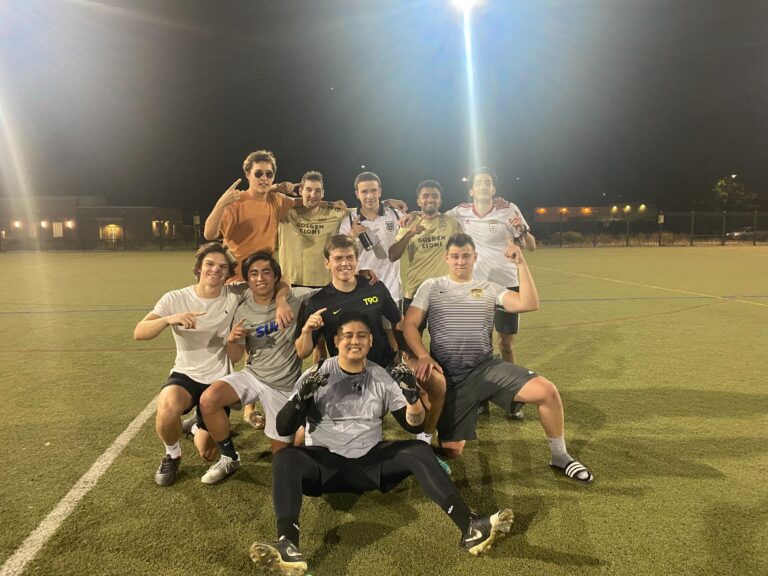
Through the Campus Recreation department, UC Davis recreational sports provide students and staff with access to over 30 different sports including flag football, indoor and outdoor volleyball and even innertube water polo. Rec sports provide an opportunity for students to continue their favorite sports or try new ones, all in a low-commitment setting that aligns with the busy and variable schedules of college students. 

For John Patrick Walker, a fourth-year environmental policy analysis and planning and Spanish double major, this flexibility has been crucial.

“The nice thing about rec sports is that you can show up five minutes before the game starts with your cleats and just hit the field and have some fun,” Walker said. “We’re busy, we’re students. We have school and work and whatnot, but to take that hour out of my day every Tuesday at 7:30 p.m., to go play the sport that I wouldn’t normally find myself in, was and still is a valuable experience.”

Walker has participated in several rec sports in his time at UC Davis, including basketball, soccer, volleyball and softball. Through this involvement, he has made memories and connections that will last beyond his college years. 

“I’ve played a lot of rec sports in my four years here,” Walker said. “What better way to boost my mental health, boost my physical health and make friends doing the thing I love?”

In addition to playing intramural sports, Walker continued his involvement by working as a referee for his peers’ games, something which he asserts has supported his desire to get more involved in rec sports while helping others explore the program. 

“I applied to be a ref after participating in rec sports,” Walker said. “It brought me campus connections and brought me participation in my community beyond the sport. I got to help other people find that same value that I found in rec sports.” 

For other students like Salina Kamburova, a fourth-year managerial economics major, rec sports has provided a way to reconnect with old favorites while maintaining a busy schedule with work and school. 

“I’ve loved participating in a sport, especially because it’s with a group of friends I don’t see outside of volleyball, so it’s nice to catch up with them,” Kamburova said. “Playing has helped me stay connected to a sport I played for [over] seven years but don’t have the time or interest to pursue as a career.” 

Kamburova also said that rec sports have given her a way to stay connected to friends throughout her four years of undergraduate education even with changing schedules and priorities. 

“I’ve played intramural volleyball all four years at college,” Kamburova said. “I used to play volleyball with random groups of people at the [Activities and Recreation Center] (ARC) freshman year and found out they were making teams, so I initiated a team of my own. I’ve been playing with those same people since then.”

Paige Benson, a UC Davis alumna, also took advantage of what intramural sports had to offer during her time as an undergraduate student. 

“I participated in intramural beach volleyball, inner-tube water polo and soccer,” Benson said. “I got involved because I heard about all the various options and wanted to find another fun way to spend time with friends.”

Benson also believes that rec sports provide access to activities that are sometimes unfeasible to coordinate outside of intramural sports. 

“Participating in sports in college is such a unique experience and resource that should definitely be taken advantage of,” Benson said. “Having access to sports fields and equipment on campus is an amazing benefit of college. It’s also a great way to meet new people, reconnect with old sports interests or spark new ones.”

As the weather gets warmer, recreational sports will continue to offer a forum for students to stay active and connected. New leagues and tournaments are announced on a quarterly basis through the Campus Recreation page, where students can explore team options or sign up to compete. 


Written by: Emme Dunning — features@theaggie.org

Students form community through Electronic Dance Music

The Davis Electronic Dance Music Club discusses their events 


By LAILA AZHAR — features@theaggie.org


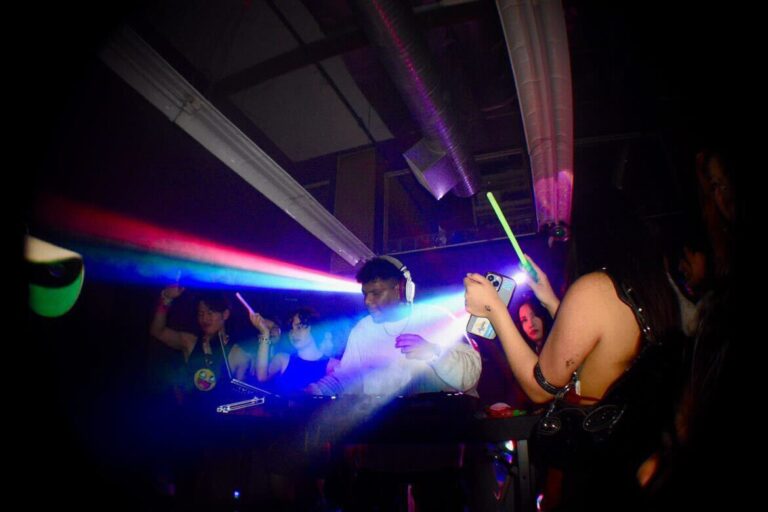
The Davis Electronic Dance Music Club (EDMC) is a space for students interested in EDM. They’ve hosted events such as the “Heaven or Hell Boiler Room” themed rave and a Picnic Day afterparty

As Tracy Duong, a third-year managerial economics major and EDMC’s treasurer explained, there are a lot of misconceptions surrounding electronic music. 

“There are so many subgenres within EDM,” Duong said. “So maybe one subgenre isn’t 

for you, but there are probably countless others that are, and our club likes to embrace that.”

Embracing this diversity within the EDM scene is an important aspect of the club. Their events often include DJs who specialize in different styles, ensuring that a wide range of music gets played. They additionally value diverse experiences within the club’s membership. 

“We have so many different kinds of people show up to our events, all different backgrounds and majors,” Duong said. “Everyone brings different energies, but it’s always so fun to see how people merge and get along together.” 

EDMC aims to appeal to people with all kinds of experiences. Some members are avid EDM listeners, some are aspiring DJs and some are completely new to the scene. 

Natalia Rascon, a fifth-year computer science and engineering major and the club’s president, noted that she hopes EDMC can be a space for people to enjoy regardless of how much experience they have.

“I think it’s really important for us to have a welcome space for anyone, whether they’ve never heard of EDM or they love it,” Rascon said. 

As the club’s vice president, Rohan Rao, a fifth-year mechanical engineering major recalled, this welcoming atmosphere is a key element of the club that made it appealing for him. 

“For my first meeting, I was actually forced to go,” Rao said. “I’m kind of a shy dude, but my friend was like, you’re a DJ, you can get your name out there. Then I got to know the people who founded the club and keep the club going. They’re cool people. I love the team and I love the community we try to create.” 

Duong echoed this sentiment, noting an appreciation for EDMC’s tight-knit community. 

“It’s actually kind of crazy how we all really do get along,” Duong said. “It really could be a miracle or some sort of coincidence, but the people in this community are really close and supportive and inclusive.” 

This is exemplified by peace, love, unity and respect (PLUR), a set of values held in great importance in the rave community, and emphasized often by EDMC. 

“PLUR is one of the important aspects of the rave community,” Rascon said. “It’s something we really keep in mind when trying to give people these free spaces to express themselves.” 

When keeping the value of PLUR in mind, EDMC events serve as a place for people from all walks of life to connect with one another, Rao pointed out. 

“People don’t have to come to events like these,” Rao said. “They come to events like these because no matter how complicated or simple your life is, music is this one standard that everyone enjoys. So you can have very different people meeting for one thing, and that’s a really cool experience.” 

Those interested in staying up-to-date with EDMC’s events can follow their Instagram account @davisedmc


Written by: Laila Azhar — features@theaggie.org


Changing exhibits at The Artery

“Citrus Season” closes while “A Wing and a Prayer” debuts


By ELIZABETH BUNT — arts@theaggie.org 


For those who are unfamiliar with it, The Artery — located in Downtown Davis on G Street — is a member-owned artist cooperative. It boasts an extensive multimedial gallery featuring curated ceramics, woodwork, glass, prints, paintings, photography and fiber arts. Because members operate the storefront on a daily basis, shoppers have the opportunity to speak with the creators of pieces that strike their interest. There is no doubt why The Artery has been voted the Best Place to Buy a Gift on multiple occasions in the Davis Enterprise’s “Best of Yolo County” survey. 

However, The Artery is more than just a shopping destination, it is a group of people determined to share art with the Davis community and provide a platform for local artists to showcase their work. These showcases are held in The Artery’s adjoining gallery, just off the main gallery room. The exhibitions in this gallery change every month and rotate between group and individual shows. 

The most recent exhibit was a group show entitled “Citrus Season: A Splash of Color.” “Citrus Season” featured the work of a diverse group of artists and a varied collection of media. It was tied together through theme rather than form, with each piece included in the show having to interpret citrus fruits in some way, either through texture, bold colors or actual depictions. The exhibit was meant to celebrate Northern California’s citrus season as well as showcase bright, cheerful works of art as a break from the mid-winter dreariness. 

Since “Citrus Season” was a multimedial group exhibition, The Artery is switching gears with its new showcase: “A Wing and a Prayer.” “A Wing and a Prayer” is a selection of ceramics from local artist and member of The Artery, Janine Echabarne. 

Echabarne is an accomplished jeweler and longtime ceramicist. Her work takes inspiration primarily from nature and from tradition. 

“I like to think of myself as a continuation of the art and craft of many ancestors,” Echabarne’s artist biography on The Artery’s website reads. 

This idea is present in her latest exhibit, which is a collection of bas-relief ceramic tiles. These tiles contain figures just barely lifted from the clay surface. They are shown dancing, embracing and interacting with animals. The pieces themselves look older than they are and evoke the ancestral art which Echabarne takes her inspiration from. More than one appear to share a resemblance to scenes from various mythologies. 

Echabarne chose the name “A Wing and a Prayer” for this exhibit as a form of political commentary, expressing her belief that humanity is flying through dangerous times on one wing and prayers. Her exhibit is a response to that feeling, depicting human behaviors that have been features of art throughout human history. 

“A Wing and a Prayer” will be on exhibit until March 24. A reception with the artist will be held on March 14 from 6 to 9 p.m. For more information on this exhibit and more to come, visit The Artery’s Instagram account, @arterydavis, or the events page on their website.


Written by: Elizabeth Bunt — arts@theaggie.org 


The rise and impact of climate guilt

Concerns regarding the severity of the climate crisis and how to stay resilient


By ELLIE NOH — eenoh@ucdavis.edu


As the effects of global warming increase in severity, their current and future environmental impacts have caused many individuals to experience anxiety about their futures. This anxiety is further fueled by others’ ignorance towards understanding the effects of the climate crisis, leaving people feeling unheard about their concerns.

The concept of “climate guilt” stems from these emotions, resulting in individuals feeling helpless when they aren’t able to live in a completely eco-friendly way in their day-to-day lives. This includes feeling guilty about a purchase from an unsustainable company or having to take modes of transportation that contribute to more carbon dioxide emissions. 

This slew of negative emotions is also caused by the increase of nihilistic media messages regarding the potential impacts of climate change. This can lead individuals to believe that their actions do not serve a positive impact — that it’s “already too late” to help the climate movement. However, this perspective needs to be reevaluated, as these sentiments should instead be treated as motivation to make a difference. From a singular perspective, it might seem that giving up an unsustainable action won’t make a difference, even though that’s not actually the case. From a collective perspective, each individual action can add up and create a larger impact than any singular action can.

An alternative result to the feeling of climate guilt is increased motivation to implement change, rather than feeling increased pressure. For most climate-related advertising, this is essentially the goal — to create a sense of climate guilt among the masses and initiate an aim to tackle environmental issues. Some means through which people fuel their motivation include participating in protests, being more cognizant of energy consumption, reposting social media posts as a form of online activism and much more.

Besides boosting your morale and motivation, another way to overcome climate guilt is to take a break from overconsuming social media and news articles. There are many publications, influencers and other forms of media that are published with the goal of making the audience feel as though there can’t be anything done in terms of a more sustainable future. When this happens, it is beneficial to practice media literacy and retain a sense of hope rather than dwell on negative news. For instance, there are various articles that cover novel innovations in climate technology, which would provide sustainable alternatives to former carbon-emitting practices. 

In order to overcome the negative connotations of climate guilt, it is fundamental to realize that each individual action makes a difference. Without each action, no change can be implemented. The key to a more sustainable future is to encourage others to incorporate sustainable practices into their individual lives. In the end, it is crucial to remember and acknowledge that every action counts, no matter how impactful you consider it to be — each action is still valuable, as it is a step closer to a greener tomorrow.


Written by: Ellie Noh — eenoh@ucdavis.edu


Disclaimer: The views and opinions expressed by individual columnists belong to the columnists alone and do not necessarily indicate the views and opinions held by The California Aggie.

Dear Democrats, please learn to throw punches

The Democratic Party needs to start fighting harder for our democracy and the people they represent


By SABRINA FIGUEROA — sfigueroaavila@ucdavis.edu


The past two months have been marked by chaos and political rhetoric that sounds like it came straight from the 1940s. If you’re exhausted, anxious, angry or upset, chances are you are not the only one who feels that way. Sometimes, it feels like people like we — students and ordinary folk — are not in control of our own lives. When we feel this way, we often look to those who do have a good amount of control: politicians. 

For as long as nations have been documented, politicians and leaders have had both their good and their bad moments. By “bad” moments, I mean that some of their actions and decisions end in prejudice, genocide, death or, in some cases, all of the above. These moments usually outweigh the good ones simply because they have graver consequences. 

Some argue that this is due to the inherent nature of being a politician — it’s impossible to make every citizen in a country happy. Even if that is the case, we shouldn’t be idolizing politicians as if we are their fans and they are our celebrities. They are people with a significant amount of power and, therefore, need to be held accountable for their actions. 

While President Donald Trump and other Republicans — who are tied to his fingers like puppets — work hard to rapidly establish executive orders and overturn Supreme Court cases to push their fascist agendas, where is the opposing side? Where is the party that supposedly stands for “fairness, justice and equality for all?” Without actually fighting for what they believe in, Democrats just give us empty words to hold on to — a false sense of security. Is this something that we, the people of the United States, should just accept in an era of turmoil? The short answer is no. 

Back in December 2024, South Korean President Yoon Suk Yeol declared martial law during a televised address. During a vote to reserve military rule, Yoon ordered the general of the military to block the ministers’ entry to parliament, many of whom belonged to opposing political parties. This action would have barred lawmakers from voting, making the order invalid. 

However, these politicians — many from South Korea’s Democratic Party — did not simply grovel in submission. One Minister of Parliament, Ahn Gwi-ryeong, grabbed a soldier’s rifle after it was pointed at her. The opposition leader, Lee Jae-myung, live streamed himself jumping over a fence to get to parliament. Inside of the National Assembly building, they created a blockade so that soldiers would not be able to get in. It’s safe to say that, one way or another, these lawmakers were going to vote no matter what or who was standing in their way.

Comparing that to our United States Democratic Party, our party seems to not care as much as we think they do and definitely not as much as we want them to. The Democratic Party has their issues, and it is uncertain whether they are the correct party to fight for the people of the U.S. But, if they are going to be the only opposition party with some kind of power, it’s time they start fighting tooth and nail too. 

On Feb. 8, 2025, Democratic lawmakers were denied entry into the Department of Education. What was in their way? One man standing at a door and maybe three police officers. South Korea’s lawmakers fought with armed soldiers, but U.S. Democrats couldn’t stand to push aside four people. At some point, respectability politics get old; They may have worked before, but they haven’t worked for a long time and they aren’t working right now. If the Democratic Party thinks this is how they keep the people’s support, they should start to wonder if, maybe, this is why they are losing it instead. 

It doesn’t help that Democrats focus on sending “inspirational messages” during this time. As much as I value the importance of words and motivational speech, inspirational messages don’t work unless Democrats actually put action and deliberation into making them come true. All we have seen so far are hollow messages — whether in speeches or on random X posts — and we do not need any more.

What we do need is to see their supposed frustration and anger manifest into action and turn into a chip on their shoulder. When alt-right fascist rhetoric threatens the values and the people you represent, a little punch where it hurts might not be the worst thing in the world. 


Written by: Sabrina Figueroa — sfigueroaavila@ucdavis.edu


Disclaimer: The views and opinions expressed by individual columnists belong to the columnists alone and do not necessarily indicate the views and opinions held by The California Aggie.

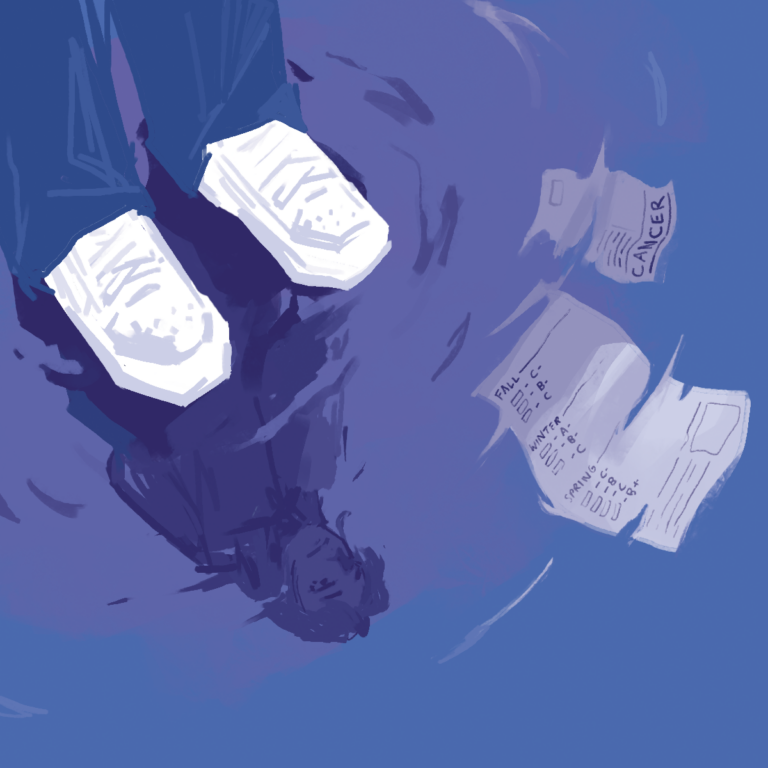
Running on caffeine and regret

How midterms expose our crippling procrastination


By NEVAEH KARRAKER— nakarraker@ucdavis.edu


It’s midnight already.

After burning through an entire pencil in three days and chugging energy drinks, time is nothing more than an abstract concept. Yet, as the hours blur together, I’ve barely finished a single assignment. 

It’s a never ending cycle of work and the progress never matches the grind.

Next to me sits a thick stack of papers, study guides and practice problems — hours upon hours of work. And, on top of it all, midterm results.

“You win some, you lose a lot,” as my dad would say — a fitting description of college life. However, it’s one thing to fail because you didn’t try hard enough, it’s another to fail while sacrificing everything (including some of your sanity) and still coming up short. 

I stare at the blank document for my essay due tomorrow, the blinking cursor on my computer screen lighting up the dark dorm. At this point, school seemed to be doing more harm than good — it was draining, and, quite honestly, futile. 

One of the simplest ways to recharge often mutates into a distraction — divulging in random tasks or reverting to doom scrolling on smartphones. It’s a numbing brainless activity that triggers small bursts of dopamine with every swipe. Being consumed by something so insignificant momentarily silences the pressure.

This habit doesn’t seem to just apply to me; it’s a contagious disease. It’s rare to find an empty study room in the residence halls and the ones being taken up are not being used for their intended purpose. Bags of chips and empty sushi containers litter the room while someone props their foot on the table, FaceTiming a friend or watching Netflix.

So yeah, maybe it is the phone. An increasingly short attention span paired with several hour-long assignments makes it way easier to put off important tasks for later. Especially when the deadline is days or even weeks away — it feels like we have a surplus of time, so why not scroll just a little longer?

Then, all of a sudden, it piles up. Before we know it, we have exams, lab reports, homework and readings all due on the same day. Unsurprisingly, we become overwhelmed to find that not enough time exists to finish everything. 

Progressively, shortcuts become the preferred solution. From using artificial intelligence assistants like ChatGPT to stealing the answers from peers, students justify their decisions by claiming they couldn’t possibly finish in time or understand the scope of the material. Deep down, we know we are manipulating ourselves — the fantasy we live in is assuming that we will always have more time.

All of us have thus been diagnosed with something terminal: a corruption of the mind. It’s one that relentlessly festers and only results in anxiety and frustration. When the outcome feels predetermined, the motivation to attempt treatment dwindles.

Once this conclusion is reached, the natural reaction is to panic — to succumb to a desperate fear that we haven’t lived our life fully, missing out on too many opportunities. In this state, we’re pulled deeper into the search for an escape, for anything that gives us temporary control or relief. Yet, these outlets are often unhealthy, self-destructive habits through which we tear ourselves down, only to find they result in the very outcome we fear.

The solution, or “pointless” treatment, is something unexpected: a positive outlook — a glass-half-full sort of approach. The kind of mindset that fuels action and gives us a reason to endure the struggle. It reminds us that we get to determine how we use the time we do have left.

Circumstances like this, while unfortunate, can be pivoted into necessary lessons — a wake-up call that procrastination is ultimately fruitless. This extends beyond putting off studying for an important exam and equally applies to handling daily tasks. The intention and dedication we put into minor aspects of our lives have a great impact, whether it’s the things we physically and psychologically consume — including food and social media — or how we speak to others. And, with each small, deliberate decision, we become closer to success and fulfillment.


Written by: Nevaeh Karraker—nakarraker@ucdavis.edu

Disclaimer: The views and opinions expressed by individual columnists belong to the columnists alone and do not necessarily indicate the views and opinions held by The California Aggie.

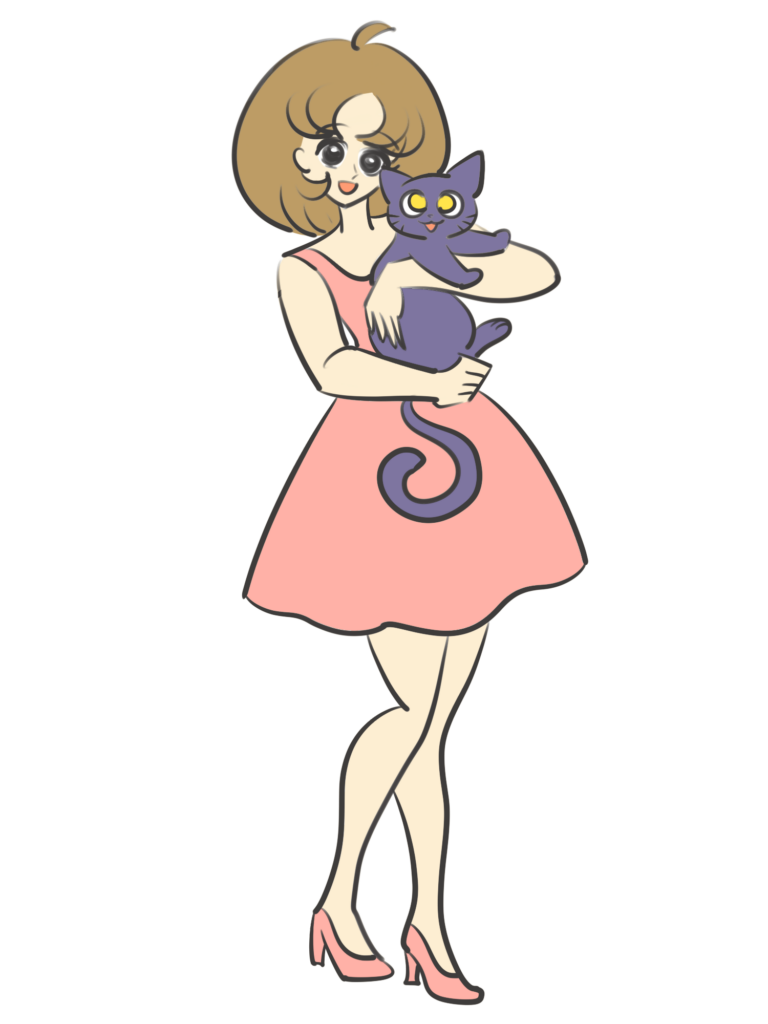
How to (not) do friendship

“Louis, I think this is the dissolution of a beautiful friendship”


By ABHINAYA KASAGANI— akasagani@ucdavis.edu


The collapse of an “everyday friendship” is unlike the dissolution of any other relationship. One must procedurally split their assets, sign papers agreeing on an amicable separation system that is fair to both parties, chronicle their collapse of routine and hope that it is all eventually worthwhile. Everyday friendships are not simply friendships — these are intertwined lives, plans and personhoods. Who am I without you? The collapse of an everyday friendship is the collapse of a rib and a phantom limb. It is, in its own right, a divorce. 

The collapse of my first everyday friendship left me inconsolable and unfit for anything else. Yes, we are different people. So what? Everyone is different. Sometimes, people become so fascinated by the make of the cloth that they fail to recognize its incongruence. That’s okay, I suppose. I was sustained by this friendship and would have done nothing differently. Still, every time my mother calls, she asks if we are best friends again. To her, this is a terrible accident — a horrible miscalculation on both our parts. 

Friendship, more often than not, is a matter of convenience. The fragility of such friendships lies in the fact that they are nurtured by proximity and not personal alignment. People once found joy in solidarity, in routine — break rooms and grocery store lines transformed themselves into front porches where one exchanged pleasantries. People felt seen: as if they belonged. The frequency with which they saw one another contributed to their friendship. Despite not being a product of ideological alignment, friendships often thrived despite differences. 

However, the fundamental way in which one approaches their friendships has changed. The fragility of proximity-based friendships in a culture that prioritizes algorithms that feed us hyper-specific and personalized content makes it harder to engage with those who think or feel differently. What was once convenient and wonderful is now weakened by difference. Friendships crumble under the weight of ideological purity and a growing intolerance for misaligned values (I have no intention of being diplomatic; some values absolutely do not have to be tolerated). 

Additionally, the burden of expectation in modern friendships demands that you bring something of value to the table, offering up your worth for assessment. Friendships are increasingly expected to fulfill roles once reserved for romantic partners, making it difficult to truly “show up” for someone in ways that prove unrealistic. 

Past generations were more accepting of casual, transactional and circumstantial friendships and viewed them as equally valuable. Nowadays, however, these unachievable expectations make it inevitable that you fall short and disappoint someone you care for. Failing to meet these expectations stunts friendships, often leading to burnout, and, ultimately, detachment.

In addition to these demands, friendships now tend to require complete alignment. Friendships are transformed into echo chambers — spaces where one is continuously exposed to a narrow range of perspectives that parrot back ideas they already believe in. This reinforces a cycle of confirmation bias, sheltering everyone from other dimensions of thought. Within friendships, there is a growing need not just for common interests, but also common philosophies — agreement on values, lifestyle and ambitions. 

“Can your 10-year plan accommodate mine? No? Then sorry, we can’t be friends.” Differences in career priorities, life planning or other attitudes can lead to the dissolution of friendships. Someone climbing the corporate ladder cannot be friends with an artist. Someone with children cannot be friends with someone who goes out every Saturday. While it is natural to grow apart over time, the mere existence of a contrasting perspective is often enough to encourage someone to have one foot out the door.

Polish sociologist Henri Tajfel introduced social identity theory as a way to explain group dynamics. This theory explores the concept of the “ingroup” and “outgroup,” discussing how individuals shape their self-identity through membership in social groups. While this framework may foster sustainable connections for some, it renders friendships fragile and exclusive; friendships become less resilient and increasingly reliant on ideological purity and congruence. 

It is key to reevaluate what it is that we expect from our friendships. The maintenance of everyday friendship benefits from the understanding that there is no “right way.” Put your eggs in different baskets and find different fish. The solution, perhaps, is to redefine our expectations for one another. Embracing imperfection and difference can allow us to preserve an everyday friendship before it becomes impossible to sustain. Just as Humphrey Bogart’s character in “Casablancas” says: “Louis, I think this is the beginning of a beautiful friendship.” 


Written by: Abhinaya Kasagani— akasagani@ucdavis.edu

Disclaimer: The views and opinions expressed by individual columnists belong to the columnists alone and do not necessarily indicate the views and opinions held by The California Aggie.

There’s no ‘genius contest,’ so stop competing like there is

Breaking down the social pressures to appear smart


By TARA ROMERO— tcrome@ucdavis.edu


In every single class across campus, there will inevitably be that one student (sometimes two or three) whose sole desire is proving that they are smarter than everyone else in the room. You can all imagine exactly who I’m talking about: the students who waste the class period arguing with the professor, your class partners who roll their eyes when you say the wrong answer or the ones in your group who hit you with the “Erm, actually” that ruins your whole day.

Talking with my friends in the science, technology, engineering and mathematics fields (STEM) and taking into account my own experiences in the humanities, it seems like in every major we run into these kinds of people. Depending on your personality type, sharing a class with these students can range from an entertaining to an extremely excruciating experience.

However, I think we’re all more similar to these students than we’d like to admit. 

In university, there’s a pressure to appear smart in front of our peers. There is a strange urge to prove to one another that we’re supposed to be here. It’s like a collective feeling of having “imposter syndrome,” yet nobody wants to talk about it. College ends up becoming a game of “Werewolf” where every single one of us thinks that we’re the only imposter.

It certainly doesn’t help that professors set us up in direct competition with one another by implementing grading curves or by releasing the highest, lowest and average scores on Canvas for us to compare our own marks to.

Even in the classroom, nobody wants to admit to one another that they didn’t finish the readings. Nobody wants to admit that they got a low score on the exam. Nobody wants to ask questions and disrupt the lecture — even if their question would help everyone else in the room better understand the material.

We might not be arguing with the professor, but we have that same need to prove ourselves and our intelligence. 

This phenomenon isn’t restricted to university either; there’s an everyday pressure to prove our intelligence. Think about when you’re talking with your friends and they bring up something you’ve never heard of. Many of us lie, saying, “Oh, I think I’ve heard of it,” and go along with the conversation without understanding the context. We participate in conversations without knowing what we’re talking about.

This phenomenon can be especially dangerous online. Not everyone is an expert in everything, yet everyone online acts like they are. People with very little understanding of an event or movement feel the need to pitch in and share their beliefs to appear knowledgeable to their followers — when, in reality, they’re only disrupting the conversation with their very limited perspective and, even worse, potentially spreading misinformation. 

The need to appear smart only harms us and prevents us from actually learning. Carol Dweck, an educational psychologist, explains how students who only care about appearing smart have a “fixed mindset.” This makes them afraid of challenges, devastated by setbacks and less motivated to learn. The fixed mindset is in opposition to the “growth mindset,” in which students want to be challenged, are resilient in the face of setbacks and are more motivated to learn.

 A crucial step to learning and embracing the growth mindset is humility. Allow yourself to admit that you don’t know something, that you’re confused or that you need help. Only then do you open yourself up to learning for the sake of learning.

So, I encourage you all to take down the “genius” facade. Admit your bad scores to your peers and you’ll find that you’re not alone in the trenches — or if your classmates did well, ask for some study tips! If your friend brings up something you don’t know about, ask them about it. If you’re interacting with a post online, do your own research on the topic before joining the conversation. 

There’s no need to prove yourself — we are all smart in so many different ways, and not knowing something is not a slight on your intelligence. In my opinion, the smartest people in the room are the ones who aren’t afraid of appearing unintelligent. When you’re brave enough to ask questions, you actually get answers. 


Written by: Tara Romero— tcrome@ucdavis.edu

Disclaimer: The views and opinions expressed by individual columnists belong to the columnists alone and do not necessarily indicate the views and opinions held by The California Aggie.