55.5 F
Davis

Davis, California

Tuesday, December 23, 2025
Home Blog Page 55

Village Bakery is relocating after 27 years and expanding offerings at new downtown location

0

Longtime Davis favorite to move into former Uncle Vito’s space, introduce Roman-style pizza, an espresso bar and outdoor dining


By ALMA CULVERWELL city@theaggie.org 


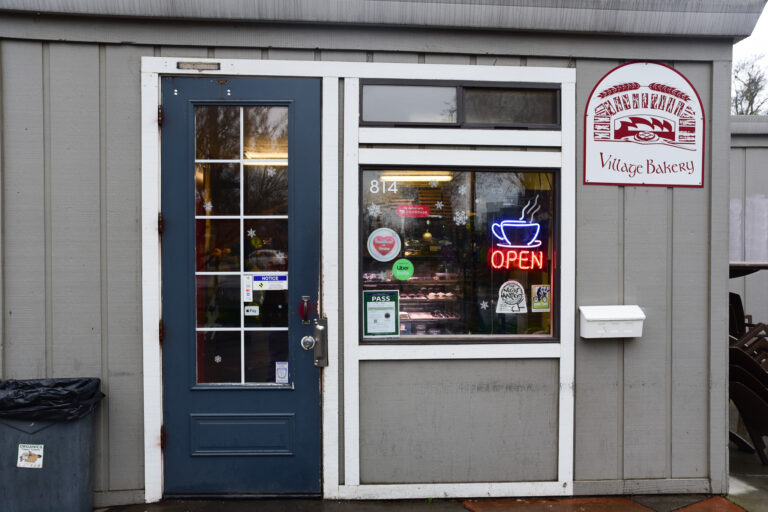
Village Bakery, a cherished establishment in Davis since 1997, is preparing for a significant transition. Owner Aziz Fattahi has secured a lease for the former Uncle Vito’s Slice of N.Y. location at 524 2nd St., aiming to relocate his bakery there within the next few months. This move comes after Fattahi lost the lease to his current space at 814 2nd St., which he had rented since the start of the business in 1997.

In addition to Village Bakery, Fattahi owns Village Pizza & Pints at 236 B St., which specializes in Neapolitan-style pizzas. Uncle Vito’s Slice of N.Y., the previous occupant of 524 2nd St., closed during the pandemic and never reopened — the space has remained vacant since. Village Bakery’s move into the new venue, which encompasses 2,200 square feet, will allow Fattahi to enhance its offerings.

Fattahi plans to continue serving their renowned New York-style pizzas, with slices sold by weight. Additionally, the menu will expand to include Roman-style pizza al taglio, featuring square slices with a variety of toppings. The new establishment will also offer beer, wine, an expanded selection of coffee drinks and a full espresso bar. 

Fattahi envisions creating a covered, fenced patio along E Street, similar to the setup at Mikuni Sushi, to enhance the outdoor dining experience. He believes the new location will benefit from increased foot traffic.

Fattahi was not seeking a change but felt compelled to move after the new landlords of the Depot Building at 2nd and G Streets, Pratibha Realtors LLC, did not renew his lease. The group plans to open a new eatery in the space.

Village Bakery and Pizza & Pints are both staples for the community of Davis. As Village Bakery prepares for this new chapter, the Davis community anticipates the expanded offerings and continued quality that has made it a local favorite for over two decades.

Clarissa Carlos, a fourth-year English major, said she has enjoyed her dining experiences at Pizza & Pints.

“I really love the pizza they make,” Carlos said. “I tried it for the first time this year, and I would definitely say it is one of the best pizza places in Davis.”

Jane Fogarty, a recent UC Davis graduate, also commented on her positive dining experiences.

“Pizza & Pints is a fun place to get together with friends and have a simple yet tasty meal,” Fogarty said. “I like to sit outside and people watch — it definitely captures the Davis vibe.”

Brenda Razo, a Master of Professional Accountancy student, said she frequents Village Bakery for its environment and food.

“I love the homey vibe of Village Bakery,” Razo said. “They have a great selection of pastries and customer service is amazing so it has naturally become one of my favorite places in Davis.”

Until Village Bakery officially relocates to a different Downtown Davis location, you can still stay up to date with the establishment throughout this transition. If you want to learn more about Village Bakery’s menu, hours of operation and delivery options, you can visit their website or Instagram page for more information.  


Written by: Alma Culverwell — city@theaggie.org
 

A review of the 2025 men’s soccer team season

UC Davis secures a Big West Conference Championship, perseveres through ups and downs


By COLINA HARVEY — sports@theaggie.org


After letting the Big West Conference slip through their fingers last season, the UC Davis Aggies came into this season with a mission: securing the Men’s Big West Soccer Championship title. 

The championship game against the UC Irvine Anteaters in 2023 ended in a penalty kick shootout where the Anteaters came out on top, ending the Aggies’ hopes of making it to the National Collegiate Athletic Association (NCAA) tournament.

“[Last year] definitely gave us some [motivation],” Zack Lillington, a third-year international relations major and midfielder, said. “It proved to us that we could get to that point, that it’s only a small margin between us and everyone else.” 

Cason Goodman, a third-year communications major and forward, said the loss made them realize how close they were to greater success.

“We talked about [the loss] a lot when we first got back,” Goodman said. “That was our main thing. There’s one more step to climb here, and we’re more than capable.”

Coming into the season, it was clear that the Aggies had a mission. After losing to Pacific University and tying with Utah Valley University, UC Davis went on a four-game winning streak, beating Santa Clara University, Oregon State University, Saint Mary’s University and the University of San Francisco. 

A 1-0 loss against Stanford University ended the Aggies’ winning streak. Despite UC Davis being competitive throughout the game, Stanford scored a winning goal in the 85th minute. This loss for the Aggies was the start of a six-game winless streak, damaging the team’s chances of making it to postseason play.

“[The loss] against Stanford kind of put us in a spiral,” Keegan Walwyn-Bent, a fourth-year animal biology major and forward, said. ”We were really trying to figure out what was going on and what we could do to kind of pull us out of the rut that we were in.”

Goodman said this loss motivated their team to improve for future competitors.

“We were looking for answers,” Goodman said. “Some people thought we were done. The ones that really didn’t want it to be over — we locked in.” 

A 2-1 win against California State University, Fullerton on Oct. 12, 2024, on home turf helped the team gain confidence and momentum for the rest of the season. The Aggies finished the season strong with three wins in a row to top it off.

UC Davis secured a spot in the Big West playoffs as the fourth seed. However, all six teams in the tournament were very close in terms of points earned during the season, meaning that every competition was anyone’s game.

The Aggies first took on the California State University, Bakersfield Roadrunners, a team they had beaten just two weeks prior in the first round of the playoffs.

The Aggies dominated the first half, firing eight shots on goal while only allowing one from Bakersfield. A goal in the 69th minute from Zachary Neuls, a first-year undeclared major and midfielder, placed the Aggies in the lead after a scoreless first half. Less than two minutes later, a handball in the penalty box gave the Roadrunners a penalty kick, which they were able to score.

In the last few minutes of the game, Walwyn-Bent came off of the bench and managed to score in the 83rd minute off a cross from Goodman, sending UC Davis to the semifinals. For their semifinal matchup, the Aggies traveled to San Luis Obispo to take on California Polytechnic State University Mustangs, the first-seeded team. Although the Aggies had a loss against Cal Poly during the regular season, they outshot the Mustangs 10-5 in this game. 

The Mustangs scored first with a 25th-minute goal off a corner kick. However, Neuls kept the Aggies in the game with a header off a corner kick in the 52nd minute. After scoring only two goals throughout the season, Neuls showed up in the postseason, with two crucial goals in back-to-back games.

Despite outshooting Cal Poly 15-3 in the second half, the Aggies were unable to take the lead, sending the game to overtime. After 30 minutes of overtime, the score remained at 1-1, meaning the two teams would shoot penalties. After the penalty kick shootout loss in 2024’s Big West Championship game, this gave UC Davis a shot at redemption. 

Lillington said the opportunity of redemption added to the team’s nerves about the shootout. 

“Obviously, everyone had high nerves, because you never really know how the outcome could be,” Lillington said. “One thing can go right for one team, and one thing can go wrong. But I think everyone came out with a calm mentality.”

UC Davis made their first penalty kick while Cal Poly was unable to get it on target. The Aggies’ second attempt was saved and the Mustangs made their kick, tying the shootout at 1-1. After each team had taken their five shots, they were tied at 4-4. 

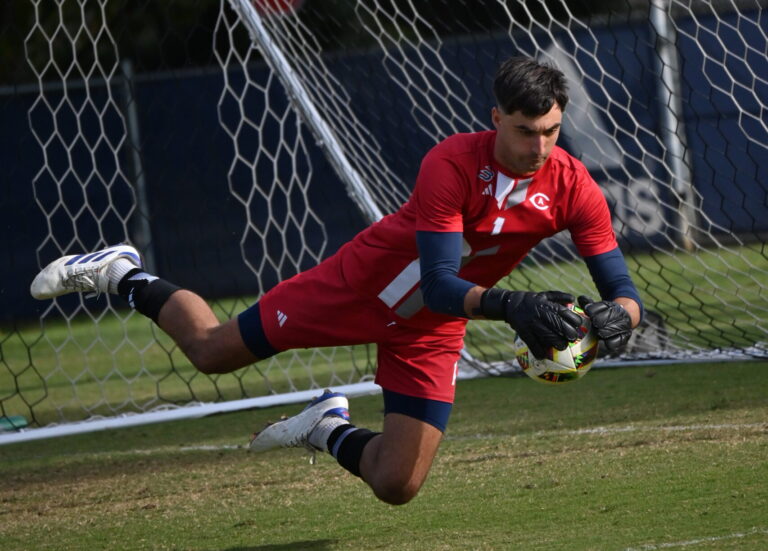
Lillington netted the sixth shot, forcing Cal Poly to make the next one in order to continue. Cal Poly’s shot was on target in the lower right corner but was saved by Mekhai Wilson, a second-year undeclared major and goalkeeper, sending UC Davis to the Big West Championships. 

Although the Aggies celebrated the win, a difficult task lay ahead: beating UC Santa Barbara Gauchos. Goodman said he was nervous about the final matchup.

“Cal Poly is a team that we normally feel like we play pretty well against, and Santa Barbara is kind of the opposite,” Goodman said. “It’s not a team that we normally do very well against.”

Walywn-Bent further described the energy of both teams going into the championship game. 

 “Santa Barbara [was] doing interviews, and they thought they were gonna steamroll us,” Walwyn-Bent said. “They thought they were gonna get into the NCAA [tournament] for free, like easy money.”

UC Davis’ underdog mentality is part of what motivated them throughout the season and postseason, according to Lillington. 

“The league kind of doubted us in the beginning of the year,” Lillington said. “[In the Big West Preseason Coaches’] poll that [came] out, […] I think we were ranked fourth, even [though we] finished in second place last year.”

Walwyn-Bent described the misconception surrounding the odds of winning against UC Davis’ soccer team. 

“I feel like people just think that once they’re playing Davis in the final they’re gonna catch a dub,” Walwyn-Bent said. “We gotta show them, we gotta let them know.” 

Lillington commented on the lack of recognition the team receives. 

“I think coaches and staff from the Big West may have overlooked the personnel we had and kind of overlooked our capabilities,” Lillington said.

The UC Davis Aggies went into the final determined to prove their worth. 

“When it comes to Santa Barbara, I honestly have never seen a team more charged and ready for a game,” Walwyn-Bent said. “We went into that game so ready to win.” 

In the first half, the Aggies got off to a quick lead with goals in the 19th and 43rd minutes. Both goals scored on the Gauchos’ home turf came from Goodman, a Santa Barbara native. These were his 10th and 11th goals this season, more than doubling the amount of goals scored by any other Aggie this season.

In the second half, UC Santa Barbara attacked viciously, getting 14 shots off. However, they were unable to connect with the net at any point.

“Towards the end of the game, we’re winning 2-0 in the second half, and Zack Lillington clears the ball off the line and he runs into the goal and he punches the net, because he’s so fired up,” Goodman said. “That’s when I knew we had them.”

When the final whistle blew, the Aggies led 2-0 — making them Big West Champions for the first time since 2019. 

“It was a great, great feeling,” Walwyn-Bent said. “It was euphoric. Everybody was just on cloud nine. Playoff soccer comes with a lot more weight and so going into it, you have to be so extremely hungry. You have to be so extremely motivated and driven to want to win the game, and I felt it from the whole team. The confidence in the locker room was just through the roof.”

Goodman described the team’s mentality going into the final matchup. 

“Once we were back in that final game, I don’t think any of us were gonna let [us lose] two years in a row,” Goodman said.

With the win, the Aggies automatically qualified for the NCAA tournament where they faced the University of San Diego in a first-round away game.

In the 35th minute of the match against San Diego, the Davis defense failed to control a long ball into their half from the San Diego backline. This gave San Diego’s Cesar Bahena enough space to get a strong shot from 40 feet out. It sailed above Noah Schwengeler, a  third-year undeclared major and goalkeeper, and met the back of the net.

Despite the loss, the Aggies had slightly more shots on goal than San Diego, proving their ability to compete at a high level. After a very successful season for the Aggies, the team will aim to hone in on skills during their winter quarter offseason training before returning in the spring for more matches. Losing in the first round of the NCAA tournament only left the Aggies wanting to come back for more. 

“We lost 1-0 in San Diego kind of on a fluke goal,” Goodman said. “And it showed everyone that we’re more than capable of competing against anybody, and so now we should set our sights higher than the Big West. Let’s put UC Davis on the map a little bit here.” 


Written by: Colina Harvey — sports@theaggie.org


ASUCD Senate puts fee referenda on spring ballot, hears reports at Feb. 6 meeting

The student government also funded the Entertainment Council for its staffers to attend an upcoming conference


By VINCE BASADA — campus@theaggie.org


ASUCD Internal Vice President Aaminah Mohammad called the Feb. 6 Senate meeting to order at 6:23 p.m. before reading the UC Davis Land Acknowledgement. 

First, the table confirmed several students to the Internal Affairs Commission. In no particular order, they are: Muskaan Bhayana, a first-year political science major, Bryan Antszak, a first-year economics major, Raadha Adusumalli, a second-year history major, Angelina Genigeorgis, a third-year political science major, and Eliot Ticer-Wurr, a first-year undecided major. 

Later that evening, the table heard a presentation from the Innovation and Research Lab (IRL), ASUCD’s in-house software and research group, on Unitrans ridership and traffic. The speakers were IRL Associate Director Jeremy Elvander, a third-year data science major, and IRL Researchers Isabella Gonzales, a fourth-year applied statistics major, and Brady Horton, a fourth-year political science and applied statistics double major. 

The three spoke of continued issues with Unitrans’ automatic passenger counting systems, noting that the unit has not been able to hire a technical director for the last five years. The presentation was also given to Unitrans leadership, who the IRL team said were aware of the issues raised.

In addition, Bike Barn Business Manager Emilie-A. Roxas, a fourth-year sustainable environmental design and English double major, delivered their quarterly report on internal training and promotions of mechanics and a new micro-loan program in association with the University Credit Union.

As for legislative matters, Senate Bill (SB) #42, allocating $485 for food for a Valentine’s Day event, and SB#43, funding $2,400 to the Office of the Transfer Student Representative for a headshot and resume-building workshop, passed unanimously.

SB#46, requiring ASCUD senators to complete two hours of volunteering a quarter, passed without discussion as well.

Additionally, two fee referenda were placed on the ASUCD spring ballot. The first is a proposed $10 per quarter undergraduate student fee for the Entertainment Council (EC) starting in fall 2025. As detailed in SB#44, the fee will increase by 50 cents every following academic year (e.g. $10.50 per quarter in 2026 to 2027 and $11.00 per quarter in 2027 to 2028) to support the EC and its financial independence from “the variability of the ASUCD budget,” according to the bill’s language.

The second referendum is a proposed Transportation Equity Fee of $5 per student per quarter (with quarterly Consumer Price Index adjustments afterwards). The referendum, introduced in SB#48, will be used for the maintenance of UC Davis Transportation Services and UC Davis Division of Student Affairs programs (e.g. bike registration, Lit Not Hit, Helmet Hair Don’t Care) and to fund a Transportation Grant for commuter students and students with dependents. If passed, it will also be effective starting in fall of this year.

Both referenda will require a minimum voter turnout of 20% of the undergraduate student population and at least a 60% affirmative vote in the spring election for approval. Additionally, 25% of both fees will support financial aid for those undergraduate students with the greatest financial need.

SB#39 was also passed, funding $6,765.80 to the Entertainment Council for its staff to attend a conference in San Diego. The bill was adjusted during the meeting, with lodging plans for the 24 attendees changed from a Vacation Rentals by Owner (VRBO) home rental to a hotel in accordance with internal ethical spending guidelines. VRBO is a subsidiary of Expedia Group, a company on the Boycott, Divestment and Sanctions list which ASUCD follows. 

The table also approved SB#45, allowing the IRL to publish data for educational reasons in a secure manner without the risk of violating ASUCD bylaws. 

After some brief procedural matters, the meeting was adjourned at 8:46 p.m.


Written by: Vince Basadacampus@theaggie.org

‘Power to the people, no one is illegal’: UC Davis students protest in support of undocumented immigrants

Following the declaration of mass deportations, UC Davis Sin Fronteras organized a protest to support local communities 


By RIVERS STOUT — campus@theaggie.org


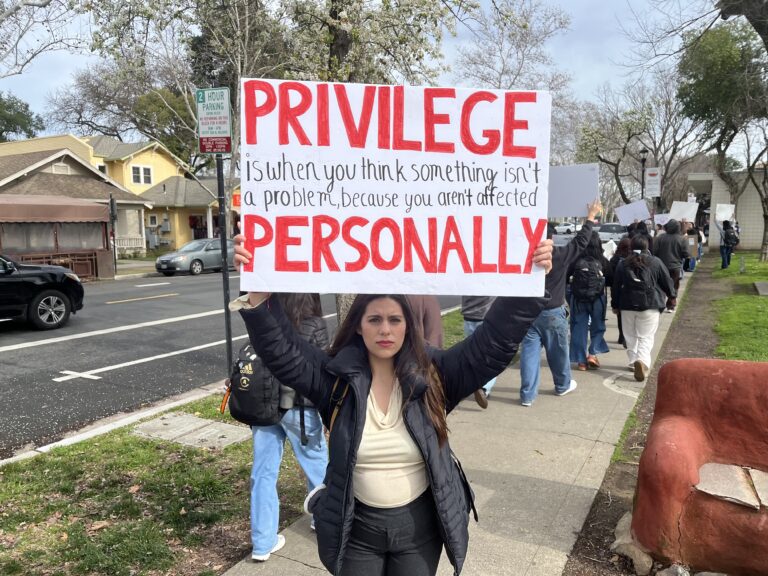
Amidst an ongoing mass deportation effort by the Trump Administration, UC Davis student group Sin Fronteras organized a protest to show support for all immigrants and undocumented individuals in the United States.

Occurring on Feb. 3 at the Memorial Union North Courtyard, protestors marched across the campus and city, eventually making their way to the overpass on Richards Boulevard that looks over the I-80. 

This year, Feb. 3 has been labeled as the “Day Without Immigrants,” with calls for nationwide walkouts to protest the Trump Administration’s rhetoric against immigrant communities and mass deportations.

UC Davis Sin Fronteras is a new student-led organization that is focused on creating a space that advocates for immigrant students. Protest organizer Pureza Moreno explained the group’s motivation behind the protest.

“We’ve been seeing a lot of protests at other [University of California] campuses, and it was heartbreaking to see that Davis was not very active,” Moreno said. “We wanted to take a step forward and support the cause. Today is a day about immigrants and we wanted to support and make a safe space for them.”   

Moreno continued by noting that she has observed a lack of presence of the Hispanic community in Davis following the deportations.

“Honestly, with deportations and [Immigration and Customs Enforcement] (ICE) and everything that’s been going on, we have noticed that the Hispanic community has not been coming to the campus stores,” Moreno said. “I’ve seen primarily white people. My usual regulars that show up who are Hispanic and Latinos, I have not seen them because of the fear they have that someone will call ICE on them or they’ll get deported.” 

However, Moreno said that although people they knew were scared of deportation, they had to continue going to work because they had no alternative.

During the protest, Sin Fronteras was met by overwhelming approval from onlookers, as many drivers honked in support of the protestors. Additionally, Chancellor Gary May spoke to protestors outside of Mrak Hall where he expressed his approval for the cause.

Protest organizer Leslie Tadeo described the interaction between the chancellor and the protestors.

“Chancellor Gary May came out and showed his support [and] gave some of his words to us,” Tadeo said. “He said that he was supporting from his own side, [and] there’s some websites and resources that he’s gathering for immigrants and students at UC Davis.”

Throughout their march, protestors shouted chants, such as “Power to the people, no one is illegal” and “El pueblo unido jamás será vencido,” which translates to: “The people united will never be defeated.” Protestors then marched back to the Memorial Union North Courtyard where the protest ended around 12:46 p.m.

A student protestor at the event, who wished to stay anonymous, addressed the harmful misconceptions about immigrants.

“It’s a basic human right that families stay together,” the protestor said. “At the end of the day, our families don’t come here to the United States to steal people’s jobs or because we’re criminals, they just wanted a better life for themselves.” 

The anonymous protestor continued saying that they are a child of immigrants, and their father was deported when they were 12 years old. They also said that they have faced discrimination due to being Mexican, both by professors and work managers. 

“There [are] jobs that people with documents and [people that] are living here will never do, like picking fruit,” the protestor said. “For a long time, my dad did that, but he doesn’t live here since his documentation. My mom [is] a single mother of six, and she’s doing her best to make [her children] successful, and we’re dismissed. We’re seen as a lower class, a burden, according to Americans that see us as subhuman. It makes me think that it’s not fair […] picking fruit isn’t going to be done by someone who doesn’t need to do it.”

A second protestor, who wished to remain anonymous, expressed their opinions on anti-immigrant sentiments being spread by President Donald Trump.

“I’ve seen a lot of rhetoric that the president has been spewing out, and I think it’s very dangerous for undocumented people, immigrants and the Latino community,” the protestor said. “I fear for the hate that’s coming towards your community, and we need to be speaking for those who cannot speak for themselves, like those who can’t be here because they’re scared of being deported by ICE.”

The second protestor also expressed their belief that Trump’s second term has increased hostility against the Latino community as well as immigrants. 

“When you have somebody with that much power, it doesn’t matter whether it’s right or not, people are going to believe them,” the protestor said. “Especially with the [Make America Great Again] (MAGA) movement, people aren’t open to hearing other’s experiences. It’s all over social media, it’s everywhere. With [Trump’s] rhetoric, it’s all going to get worse and worse.”

Protest organizer Valeria Magallan said that they all felt that UC Davis is not doing enough for the Latino community.

A protester for immigrant rights holds a sign that reads, “Families belong Together.” (Rivers Stout / Aggie)

“UC Davis is so quick to speak on anything else, but why is it when this is going on in the Latino community they aren’t speaking about it?” Magallan said. “Why are they so afraid to speak out? Why are they choosing to shut down and not bring awareness to every single Latino here in Davis?”

Tadeo agreed with this sentiment and said that UC Davis prioritizes finances over its Hispanic student population.

“We also have to consider that UC Davis is profiting off of us,” Tadeo said. “We go here but they’re not doing anything for us. Everything is underground,  [and…] things need to be talked about. People need to know where the resources are at.”

Organizers suggested that administration should send emails alerting students when ICE is on campus, as well as send out information that notifies students of their rights regarding their immigration and documentation status.

Magallan further expressed concerns about the university’s lack of a timely response in providing students with resources.

“Why do we have to wait weeks for [admin to respond]?” Magallan said. “Weeks from now, a whole other issue could be going on and everyone has forgotten about what was going on in February and January. Why do undocumented Latinos have to be forgotten about? Or be pushed to the side and be secretive when it’s an issue for the community?”

Moreno shared these sentiments and expressed remorse for those who might be scared and/or have limited access to resources.

“I feel like when it comes to Latinos, our issues are so minimized or not acknowledged,” Moreno said. “We walk around campus and see students whose legal status we don’t even know. [They could be] future lawyers, engineers or doctors and could be deported, and the school isn’t doing anything to support them. It’s lost potential and it’s so sad to look at it that way.”

The first anonymous protestor then addressed the gravity of these deportation threats and shared how harmful stereotypes about immigrants personally affect them and their family.

“I’m not a rapist, I’m not a thief and I pay my taxes every year,” the protestor said. “I’ve been working since I was 15 years old. I worked my ass off to get into UC Davis, and I work at UC Davis. I work for the community, and whenever I can, I help people. So why am I a criminal or why am I a rapist? Why is my mom a criminal or a rapist? She lives a life of fear, [and] she never stands up for herself. At numerous jobs, she’s been sexually harassed or she’s been discriminated against. [Her employers] will tell her, ‘You can’t say anything, or I’ll call immigration.’ That’s not a life anyone should live.”

Those who are personally being affected by the deportations or know someone who needs resources can visit the UC Davis Undocumented Student Center. The center provides free legal immigration consultations and can provide students with a “know your rights” card to keep UC Davis students informed. 

Written by: Rivers Stout — campus@theaggie.org

Davis City Council approves framework for down payment assistance program

The program will target low- to moderate-income households looking to invest in their first home


By RORY CONLON — city@theaggie.org


On Jan. 21, the Davis City Council approved the framework for a future down payment assistance program targeting first-time homebuyers.

Assistant City Manager Kelly Stachowicz delivered a presentation on the draft ordinance that would provide this framework. She stated that approving the ordinance would mark the beginning of the process, with more program-specific guidelines coming along later. 

“What an ordinance would do is put the signal [out] to the public and others that the down payment assistance program is something the council is interested in and has the intent at some point to go forward with,” Stachowicz said. “It may also help to show the city’s commitment to this type of program, as we are seeking different kinds of funding sources.” 

The program would target low- to moderate-income households that make no more than 120% of the area’s median income. Program beneficiaries would have to live in the home they purchase, prohibiting them from renting it out as an investment property. 

Stachowicz said the down payment assistance amount, yet to be decided, would be paid off when the buyers eventually sell the home. 

“At such time the household decides to sell the property, […] that down payment assistance funding is repaid to the city with the proportionate amount of the equity that it’s earned,” Stachowicz said. “That money coming back to the city would be used to fund the next household looking to get into the market.” 

Co-chair of Interfaith Housing Justice Davis Vera Sandronsky publicly supported the program. She revealed that a down payment assistance program had been in the works for years. 

“Volunteers from the community developed a draft down payment assistance program and met with city staff back in [the] fall of 2021,” Sandronsky said. “With Measure Q’s passage, there is [a] new urgency for the city to move forward and to make a downpayment assistance program a reality in Davis. I encourage you to allocate one million yearly to this program.”

Davis resident Elaine Roberts Musser listed nine criticisms of a down payment assistance program, ranging from a risk of foreclosure, which would lead to loss of the city’s investment, to the duplication of the same type of program at state and federal levels. Musser said the city needs to do more research before moving forward. 

“The city has dipped [its] toe into providing affordable housing assistance before, namely  [Davis Area Cooperative Housing Association]( DACHA), and it was an unmitigated disaster,” Musser said. “I would know, because I represented the homeowners in that case. It’s a shameful part of the city’s history. Let’s not have a repeat performance.” 

Former City Council Member Dan Carson urged the city council to reject the proposal and send it back to the Fiscal and Social Services commissions for review before adopting it. Carson said there are several problems with the proposal. 

“There’s no estimate here about what it would cost to give these grants out and spend literal decades overseeing the operation of this program,” Carson said. “We don’t know why you should be allowing city funds to be used for people who don’t live in the city of Davis. Not a unit of housing would be generated by this program to satisfy the city’s very significant obligations to meet state requirements to increase the amount of affordable housing.” 

Council members amended the ordinance to legally require funds to be used toward the purchase of a home in Davis. In their comments, council members also agreed that the program guidelines should be reviewed by the Fiscal and Social Services Commissions. 

City Manager Michael Webb referenced a Dec. 17 meeting where the council formed two subcommittees, one specific to pavement management and investment and another that would look into other funding needs and priorities on a city-wide level. He gave a rough timeline for when commissions could develop a budget for the down payment assistance program. 

“The work of the subcommittee on fiscal [priorities] would continue over the course of the next couple months, culminating in March or April [with] budget priority recommendations coming back to the council and the staff for those new net revenues [from Measure Q],” Webb said. “At that time, it’ll become more evident to what extent there may be a component of that funding that the council wants to set aside for affordable housing, and then of that, if there’s a sub-component for a down payment assistance program.”

The city council approved the ordinance and also directed city staff to start developing specific guidelines for a down payment assistance program in tandem with the Fiscal subcommittee working on a report for the overall city budget. 


Written By: Rory Conlon — city@theaggie.org


Aggies ride to victory with a dominant equestrian win

0

The UC Davis equestrian team takes down Minnesota Crookston with multiple sweeps


On Jan. 24, the UC Davis equestrian team faced off against the University of Minnesota Crookston Golden Eagles in Crookston, Minnesota. The Aggies secured a dominant 18-2 victory, sweeping multiple events and highlighting their depth across the board.

The first event was fences, where riders had to guide their horses around the course. The UC Davis Aggies produced a perfect 5-0 win in this event. Lauren Kolbe, a second-year political science major, recorded the highest score amongst all riders for the event with an 86 on her horse, “Bear.” All UC Davis riders scored above 80 points in fences, showcasing their dominance in the event.

In horsemanship, where riders must display a good performance of body position and accuracy in movements, Natasha Replogle, a fourth-year human development major, set the bar and scored first, putting up a score of 73.5. Laura Kate Holliday, a second-year biological sciences major, followed Replogle’s efforts and achieved a score of 74, while riding on horse “Bella,” and achieved the highest score from the Aggies.

Anna Donovan, a first-year psychology major, finished right behind Kolbe, scoring 85 riding on horse “Otis.” Emma Jolly, a fourth-year political science major, Jessie Rechs, a fourth-year sociology major, and Carmen Gonzalez, a first-year animal science major, all contributed to the 5-0 sweep, putting up strong points around the 80-point region.

The next event was reining, where riders had to perform a series of spins, sliding stops and rollbacks in a specific pattern. Mya Clader, a third-year undeclared major, set the bar high with a high score of 71.5 amongst competitors with horse “Mr. T.” 

This event would end up being the second Aggie sweep in an event. Avery Adamson, a first-year psychology major, scored second-highest with 70.5, while Emma Dillon, a fourth-year animal science major, and Nicole Shroyer, a third-year communications major, scored 69 points.

The flat event was the last of the meet, where riders were required to perform different patterns of movement without jumping, with judges observing the control and effectiveness the riders had with their horses. The Aggies won the event 5-0. 

Margaret Franke, a graduate student in the Department of Communication, scored 31 more points than her opponent with a score of 84, earning her the Most Outstanding Performance award. Kolbe on horse “Courtage,” scored an impressive 85 points. Marin Gilliland, a fourth-year history and cinematography double major, accompanied by Donovan and Rechs, participated in the 10-0 sweep of the event. 

Overall, the meet proved to be a success for the Aggies. On Jan. 25, Rechs and Franke were named the Eastern College Athletic Conference Riders of the Week for their impressive performances against Minnesota Crookston. The Aggies will look to build on this momentum in their upcoming National Collegiate Equestrian Association (NCEA) matchup in College Station, Texas on Friday, Jan. 21.

AI “art”: Let’s Baroque it down

Employing the concept of Baroque art to break down whether Artificial Intelligence can really produce art


By TARA ROMERO — tcrome@ucdavis.edu


With the rising amount of Artificial Intelligence (AI) “art” appearing on our X timelines, we are facing the beginning of a new era in the art world — whether we want to or not. With AI’s rapid spread throughout the art industry, the question on everyone’s minds is: Can we consider the images that AI produces to be art?

Essentially, AI art takes artwork which has already been created and folds together a number of artists’ techniques and styles to produce a “new” piece — a piece that plagiarizes an infinite amount of artists within the AI’s database. 

One art historian, Gilles Deleuze, wrote a book titled “The Fold” in 1988, where he defines Baroque art in a way that is surprisingly similar to how AI art programs operate. 

“[Baroque is an] operative function [where] it endlessly creates folds,” the opening text reads. “It does not invent the thing […] but it twists and turns the folds, tak[ing] them to infinity.” 

To understand where Deleuze’s claim is coming from, we first need a bit of background on what Baroque art is and where it came from.

The Baroque era in European history is notoriously difficult to describe. Different art historians make contrasting claims about how to define it, and are even conflicted about when the Baroque period begins and ends. Some art historians claim that Baroque never even existed. 

However, the Baroque period is generally considered to roughly date between 1550 and 1750, spanning all across Europe and parts of the Americas at the start of European colonization. 

Most notably for Deleuze’s argument, the Baroque period is thought to be the successor of the Renaissance. During their era, Renaissance artists referenced Greek and Roman antiquity for inspiration, contributing to many artistic developments that centered on perspective, symmetry and balance. 

The term “Baroque” itself etymologically comes from the Portuguese word for an “irregular pearl” — referring to something beautiful that is distorted. Using this word to describe Baroque art was intentional. Baroque artists were trained in Renaissance techniques but morphed them for artistic and emotional effect. For example, Baroque artist Gian Lorenzo Bernini would use the Renaissance’s “divine proportions” as a base for his works, but he then played with these proportions to create the sensation of movement within his art.

Before Heinrich Wölfflin’s analysis of “Renaissance and Baroque,” the art history scene reduced Baroque art to a cheap copy and accentuation of the Renaissance. However, Wölfflin redefined this era by comparing Baroque works to those of the Renaissance, giving credit to the techniques through which Baroque artists created movement and a unique sensational experience for the viewer — unlike anything seen before in European art. 

With this understanding, let’s return to Deleuze’s argument. He views Baroque as an idea, rather than strictly the artistic period. While the Baroque art period serves as the basis of his argument, Deleuze centers more on the philosophical meaning of the Baroque. For something to be Baroque, an artist takes what has already been made and folds it, morphing it into something new.

Deleuze’s redefinition of Baroque challenges how we view artistic inspiration. So, where would Deleuze’s definition place AI art?

Even though Deleuze believes that Baroque “does not invent the thing,” that does not mean that Baroque art is inherently plagiarism, either. One look at a Baroque piece and you will see it looks completely different from a Renaissance piece — from the use of light to the composition, you can tell they are vastly different. Baroque art does take inspiration from the Renaissance, but it feels nothing like a copy. 

Unlike the Baroque artists who used the Renaissance as inspiration, AI is not intentional in its “inspiration.” The only “intention” that goes into AI art is the three seconds that it takes a human being to type in the prompt. 

Creating a work of art is an intimate process filled with thousands of decisions that are strategically and thoughtfully taken by the artist. Baroque artists played with and distorted Renaissance artistic ideals with purpose. Every fold and twist in a piece that makes something Baroque was placed meticulously by a human being — each fold is intentional. 

The ability to create art is inherently human. Since our very inception, humans have created art as a way to express ourselves and the world around us — our creativity is limitless. To claim that AI programs produce real art is not only disrespectful to artists, but to humanity’s endless capacity for creativity as a whole. While an AI program which folds upon an infinite source of artists’ works might be Baroque, it certainly cannot be considered art.


Written by: Tara Romero— tcrome@ucdavis.edu

Disclaimer: The views and opinions expressed by individual columnists belong to the columnists alone and do not necessarily indicate the views and opinions held by The California Aggie.

Toss the roses and look for something more personal this Valentine’s Day

Explore handpicked ideas of thoughtful gifts that go beyond the ordinary


By IQRA AHMAD — arts@theaggie.org    


Roses are red, violets are blue, chocolates and flowers are classics, but it’s fun to think outside the (heart-shaped) box, too. Valentine’s Day is all about appreciating the people who matter most, whether that’s a partner, a friend or even yourself. So, even if you’re pairing these ideas with a bouquet of roses or skipping the flowers altogether, here is a curated guide to meaningful gifts that go beyond the usual — but still pair wonderfully with chocolate.


For the art lovers: “Art must be an expression of love or it is nothing.” – Marc Chagall

Finding the perfect art piece or handcrafted item can feel daunting, so impress your creatively inclined friends or partner with a gift that is a means of self-expression. 

For those who love a hands-on approach, painting kits are an unmatched gift. These kits come with everything you need to create something uniquely yours. One of the best options is a paint-your-own-mug set, which lets you design a completely custom piece — whether it’s a romantic message, a fun inside joke or an abstract masterpiece. Some kits even include oven-safe paints, so once you’re done designing, you can bake your work to make it permanent. For an interactive experience, turn it into a date night or gathering with friends: Set up a cozy painting station with snacks and drinks, put on a playlist and make something special together. These kits make for a heartfelt and memorable gift. Remember, the joy is in the process. 

Now for those who find joy in every brush stroke and sketch, high-quality tools make for both a practical and deeply meaningful gift. A set of engraved paint brushes and calligraphy pens, etched with their name or a quote, adds a thoughtful touch to their creative process. Sketchbooks or leather-bound journals also provide a beautiful space for doodling, brainstorming and bringing ideas from pen to paper. For those who love working with color, a set of watercolors or acrylic paints in vibrant shades might inspire their next piece. You can even make a set of carefully selected supplies from places like The Paint Chip in Downtown Davis.


For the book reader: “Books are a uniquely portable magic.” – Stephen King

For those who find magic between the pages, a book-themed gift is the best way to show you care. Instead of picking up a bestseller, consider something more personal.  

A personalized book box provides a curated experience, filled with carefully selected reads based on their favorite genres, along with cozy extras like candles, tea or literary-themed goodies. Many subscription services even offer signed editions or exclusive covers.  

For those who love to have a cozy reading escape, a book nook is a charming addition to their shelf. These miniature diorama inserts fit between books and depict tiny, detailed worlds, ranging from magical alleyways to a tiny library or a scene from their favorite novel. They add a touch of whimsy to any bookcase.  

And of course, a beautiful book journal to track their reading, a custom embosser to mark their personal library or even a gift card to their favorite indie bookstore gives them the joy of picking out their next great read. Sometimes the best gift is just enabling their love of books. 

You can even stop by The Avid Reader downtown to pick up some of these essentials. Whether they love getting lost in a fantasy epic or diving into literary classics, these gifts celebrate the passion of a true book lover.


For the music enthusiast: “Music expresses that which cannot be put into words and that which cannot remain silent.” – Victor Hugo

For those who always have a soundtrack to their life, a music-inspired gift is the zenith of ways to show you are in tune with their passions.  

A vinyl record from a favorite artist or an album that holds sentimental value makes for a timeless and thoughtful present. Check out local record stores like Armadillo Music, where you can browse everything from vintage classics to modern pressings. There is something amazing about the warmth of vinyl and the experience of picking out a record together, making the gift even more meaningful.  

For an experience they will never forget, concert tickets are the unrivaled way to celebrate their love for music. In a big arena show or an intimate live session, seeing a favorite band or discovering a new artist together turns a gift into a lasting memory. 

From spinning records at home to dancing in a crowd, these gifts are the way to go for the music enthusiast who believes every moment is better with the right song.


For the film aficionados: “The cinema is something between art and life.” – Jean-Luc Godard

For the movie lover in your life, why not gift them with an experience they will enjoy all year long? One great option is a Regal Unlimited subscription, which offers movie-goers the chance to see as many films as they want for just $21.49 a month. From blockbusters to indie gems to classic films, this subscription lets them watch it all, whenever they want. And with access to Regal’s entire catalog, they can enjoy the best of cinema without breaking the bank.  

But it doesn’t stop there. Regal’s Snack Saver program is the supreme add-on for anyone who loves their movie theater snacks. By joining Regal Crown Club or having unlimited membership, they can enjoy 50% off large popcorn and soft drinks for all of 2025. From spending a weekend binge-watching a series to seeing every new release, they will have snacks in hand for every screening.  

With a movie subscription and a discount on snacks, you are giving them the ultimate movie-lover experience: endless films, unlimited popcorn and a year’s worth of movie magic. This gift is perfect for those who can never get enough of the silver screen. 


With all of these ideas in mind, just remember that the best gifts are the ones that reflect how much you appreciate the person. No matter what you choose, the effort and thoughtfulness behind a gift will always be the most meaningful.

Written by: Iqra Ahmad — arts@theaggie.org

Are we running out of time?

The pressures of accomplishing certain life milestones “on time” is overwhelming 


By JHANA RHODES—jsrho@ucdavis.edu


          When I was younger, I always told myself that I would meet my future husband by the age of 20, marry him by 27 and have kids by 30. I am nearing 25 years of age and have made no progress in my goals. In the words of Jane Austen — “I’ve no money and no prospects.” 

Nowadays, it seems like everyone has figured out life, except for me. While most people my age already have college degrees, their first salaried job and have been in a long-term relationship with their high school sweetheart — I have none of those things. Instead, I’m sitting at my desk complaining about my life in an opinion essay. Don’t get me wrong, I’m still at a young age where I can accomplish many things before I reach my midlife crisis. However, I can’t help but feel like I’m falling behind. And, unfortunately, I know that I’m not the only one that feels this way.

          This feeling of falling behind stems from a much bigger problem in our society. Unrealistic social pressures create strict timelines that dictate how and when we should accomplish life goals. When this happens, it fosters a sense of competitiveness and comparison within our society, where the ones who are “on track” get the praise and those who are “falling behind” are condemned. 

It’s during the holidays when I come face to face with these demands most often. 

          “Do you have a boyfriend?”

          “What about marriage? You should hurry if you want to have kids.” 

          “My daughter is your age, and she’s engaged!”

          From the outside, these questions appear harmless — but they are, in fact, the complete opposite. There have been so many times when I declined family get-togethers just so I could avoid being interrogated. The few times that Thanksgiving dinner was hosted at my house, I’d stay in my room all night just to avoid “harmless” discourse. If these questions were meant to encourage me, then why do I feel so bad?

When external and internal influences pressure you to reach certain milestones, it can be extremely discouraging when you haven’t reached them. No matter how hard I wish I could be thrifty, flirty and thriving with a high-paying job, a mega-mansion and the paycheck to prove it, I’m just not there (yet).

          Reaching significant milestones, whether they are related to a career, marriage or having children, is a considerable accomplishment that should be celebrated. However, because of everyone’s diverse goals, aspirations and lifestyles, everyone’s journey will differ. No matter how old you are or where you are, no amount of time can determine when life will fall into place. Some of us start university late, some may not want to have kids and some don’t plan on getting married. It’s important to know that you aren’t “falling behind” — you are just going at your own pace.

          So, the next time you’re at a family get-together and they decide to set up a mock trial — make sure to set boundaries with them and yourself. Although it is imperative to work hard in every aspect of your life, don’t place unrealistic expectations on yourself. No matter how much of your life you have lived, when it comes down to accomplishing milestones, no time is correct if you aren’t ready to take that next step. Take your time and live your life the way you want to. 


Written by: Jhana Rhodes— jsrho@ucdavis.edu 

Disclaimer: The views and opinions expressed by individual columnists belong to the columnists alone and do not necessarily indicate the views and opinions held by The California Aggie.


Sneakers or penny loafers?: A look into professor fashion at UC Davis

0

UC Davis students and professor discuss the history and trends of professor fashion


By EVELYN SANCHEZ — features@theaggie.org


Waking up and stumbling to early-morning lectures, the only thing on any student’s mind is often going back to bed. Lectures can grow more tiring as the quarter continues on, and students can lose interest in certain professors. However, professors with a signature flair — particularly in regards to their fashion sense — tend to be remembered more vividly in the minds of their students. 

UC Davis students including Juliana Sandoval, a fourth-year sustainable environmental design major, have commented that their professors’ fashion sense might inspire their own. 

“I had a professor show up every day dressed to the nines,” Sandoval said. “It makes me want to show up dressed nice too. She would come every day looking like a professional baddie.” 

Sandoval was referencing her past professor Elizabeth Boults, a continuing lecturer on landscape architecture and environmental design at UC Davis. 

With higher education in the United States getting its start largely on the East Coast, the “college” look originated at the eight northeastern Ivy League colleges in America — the Ivy League aesthetic has since been the default look for higher education and academia. Blazers, coats and brogues were often worn by the common wealthy, white student, and that sense of style has transferred to other universities and stood the test of time. 

“In California in general, there’s less formality than in other regions,” Claire Goldstein, a professor of French and the director of the Humanities Program at UC Davis, said. “I find it cute, funny and interesting [that] on the Internet, people draw my attention to images of dark academia as an aesthetic. That definitely recalls professors I had when I was a student.”

Goldstein specializes in exploring fashion culture and philosophical conceptions of the body and teaches a version of the humanities forum HUM 001: How To Be a (Fashion) Critic. Goldstein went to college on the East Coast, attaining her Bachelor of Arts at Hamilton College and her Ph.D. at the University of Pennsylvania. Goldstein described that her journey in higher education was frequented by the ties and blazers familiar to the era.

Campuses in the Northeast United States would dictate the future of academic wear based on being the first and richest. Adopting elements of traditional British fashion, the Ivy League style became popular during the 1950s and 1960s. 

Formerly used to denote a person’s casual yet wealthy status, the evolution of the look continues to be associated with academia and wealth but carries different meanings for older professors and younger students. Instead, the “old money” and “dark academia” aesthetic reflect the nostalgia of the past and romanticizes a foregone era. 

However, the casual nature of public universities often brings an atmosphere of comfort rather than formality to some students and faculty. 

“Part of me feels like they’re a little bit stricter,” McKenna Thomas, a fourth-year art history major, said. “My professors who dress the same every day have chill vibes.”

Sandoval also finds inspiration in the casual. 

“I like it when professors wear the same thing every day,” Sandoval said. “I feel like I should be like that. To me, it’s the epitome of chill.”

Goldstein continued by sharing her own experiences observing professor fashion in the past. 

“I would walk into my English literature class, and my professor would be there in a tweed coat and elbow patches,” Goldstein said. “When I studied in France, my professor would have a scarf and a coat and he’d be smoking. There was a much more stereotypical professor look that has since diversified.”

Goldstein also commented that oftentimes, professors’ fashion choices are reflective of their level of professionalism — or, sometimes, their lack thereof. 

“There [are] different ways to be a professor,” Goldstein said. “There’s the convenience and performative aspect. It’s also about how you see yourself as a professor.” 

As a top research university, several thousand UC Davis professors and faculty are also busy with their own projects. STEM professors often run labs and conduct studies aside from grading and lecturing. With the attire that labs demand — goggles, lab coats and closed-toe shoes — there is hardly room for outfit experimentation. 

Goldstein also remarked that fashion and expectations are not only influenced by history but also by the more immediate climate of the area.

“Since I moved to Davis in 2013, I bike myself to work and around campus,” Goldstein said. “When I came here, I was like, ‘Flip flops? I don’t wear flip-flops.’ And then I was like, ‘Okay, I’ll wear them in my yard but I’ll never wear them into town.’ And then I found myself in class one day after rushing to get on my bike, and I’m wearing my Birkenstock slides. I would never have done that on the East Coast.”

However, fashion-based nostalgia can often be reflective of larger societal trends surrounding diversity, with now being one of the most diverse times in fashion history, according to Forbes. A study done by Pew Research Center shows that though college faculty in the United States has diversified greatly over the last two decades, they still remain far less so compared to university students. 

An alternate study done by Digest of Education Statistics showed that even as of 2021, 64.5% of faculty were white, with only 6.1% of full-time faculty being African American. Racial disparities among collegiate faculty still have a long way to go to reflect the diversity of the United States as a whole.

Goldstein shared some final thoughts about whether or not it takes a certain ‘look’ to be a professor in the contemporary world. 

“The people who have become professors have diversified,” Goldstein said. “The body of professors was rather homogenous. As we have diversified, so have the ways we dress. One of the nice things about being a professor is that there is no uniform anymore. You don’t have to look a certain way to be a professor.”


Written by: Evelyn Sanchez  — features@theaggie.org

Failure is the best medicine

Using your defeat as a tool for improvement


By VIOLET ZANZOT— vmzanzot@ucdavis.edu


So, you failed. You let yourself down, got a failing grade in class, got broken up with or felt like the world might end, all because you messed up. I don’t actually know if you have experienced these things, but I can tell you for a fact that I certainly have. It was not pretty, fun or cute, and I definitely felt like I had failed — yet, here I stand.

 Failure as an action includes conditions we all seem to have signed on to. For instance, failure is measurable. This means that there is an alternative to failure: there could have been success. It also means that there is a standard, a determining factor that dictates whether some action is a failure or not. 

Too often, that determining factor is society, and too often, the thing we use as a measuring stick is other people. The alternative isn’t so great, either: We also use ourselves as the measuring stick. Either way, comparing our actions to other actions is futile. Yet, this comparison, which leads to inevitable failure, is everywhere — and it’s getting worse. 

The phenomenon of personal failure has grown exponentially over recent decades,”  author Michael White said in an article by Informit. “Never before has the sense of being a failure to be an adequate person been so freely available to people, and never before has it been so willingly and routinely dispensed.”

Things are getting harder. We compare ourselves more often because we have become hyper-socialized and grown overly accustomed to living in a competitive environment. We reside in an anxious society that often feels divided between winners and losers, or those who succeed and those who fail. 

I’m almost certain that I’m not the first to say it, but as a society, we need to take a deep breath and get comfortable with failure. At its worst, it is a means of comparison by which we deem ourselves to be lesser. Comparison is nothing if not “the thief of joy.” I think that, if we need failure to be something, it can serve as an answer to one of our internal questions.

How often in life do we actually get any real answers, especially to those philosophical questions we ask ourselves? Is our idea of failure just a way for us to reconcile with a truth we might be afraid of? However, if we settle on the idea that we are simply not good enough at something, that is a definitive answer. 

So, congratulations, you have failed at something. What that means is that you have an answer to a question. Are you good enough to be in the National Basketball Association (NBA)? Maybe not. Should you be afraid to try out for your community basketball team? Also, maybe not. Because in order to get the answer to the question, we have to try. 

I think when I set out to write about failure, I intended to bash on comparison. To damn the word “should” to oblivion because it has just become another metric people use to compare things. Now that I’m nearing the end, I realize that I failed in condemning comparison.

 Failure is a way to get an answer, and trying is a way to ask a question. I certainly don’t think there are many better things than being inquisitive, except maybe just being kind. My point is, while on a personal scale it might feel like you’re failing, or maybe in the socio-political atmosphere it feels as though we are collectively failing, maybe that’s just an answer to a question. Your next question should be: How can we try harder? Or, better yet — what can we do differently?


Written by: Violet Zanzot— vmzanzot@ucdavis.edu


Disclaimer: The views and opinions expressed by individual columnists belong to the columnists alone and do not necessarily indicate the views and opinions held by The California Aggie.

Executive orders: democracy or dictator chic?

Balancing necessity and the temptation of overreach


By NEVAEH KARRAKER— nakarraker@ucdavis.edu


Imagine one day the name for “sushi” is suddenly altered to “fish-rice burritos” throughout all restaurants. An eruption of repulsion and anger rises — no one likes it. It neglects Japan’s influential and unique culture.

Similarly, President Donald Trump signed executive orders to legally rename the Gulf of Mexico to the Gulf of America and the Alaskan peak Denali to Mount McKinley. The Interior Department stands by the president’s expeditious orders claiming that the process of retitling preserves American heritage, reintroduces patriotism and honors former President William McKinley — the peak was referred to as McKinley until former President Barack Obama issued the name change to Denali. As far as the Gulf of America, there is an incentive to enforce a rigid, straight-line border across this large body of water.

However, it is doubtful that this change will be internationally accepted or even accepted within the United States. Alaskan senators have fought to recognize the indigenous cultural history of the mountain for years, as Denali has been a historical landmark cherished by the Alaskan people. Unfortunately, sometimes promoting one culture means rejecting another.

Additionally, declaring a national emergency on the southern border has sparked conflict across America. U.S. Immigration and Customs Enforcement (ICE) has swiftly detained thousands of suspected undocumented immigrants, sending the nation into a frenzy of terror. This fear was only amplified when Trump announced plans for a mass detention camp. He then endeavored to freeze federal funding of grants and loans to remove remnants of the “woke ideologies” embedded within the system.

After a federal judge temporarily intercepted this bold stance, the White House rescinded the freeze. However, one thing has been made clear — executive orders are driven by preferences. This seems obvious, considering that the Republican and Democratic parties will institute opposing policies aligning with their political beliefs, but there’s another layer to it — traces of bias.

When this bias is introduced, the term democracy becomes very convoluted, and we have to remember that an election is a time for the people to vote for a representative. Regardless of the party, administered policies will possess a certain percentage of this quality. While federal actions like increasing job opportunities, improving the economy and protecting culture have favorable outcomes for all, oftentimes the integrity of the methods employed is controversial.

Hence, this is where we might perceive exploitation of power or, to a greater extreme, possible dictatorship. To prevent this, the simple solution seems to be to completely do away with executive orders. That way, all future presidents won’t inherit unbalanced amounts of authority.

Yet, getting rid of executive orders would be undoing a whole governmental system. The executive branch would lose an incredible amount of power. Some may prefer that, but the consequences of this implication should not be taken lightly.

The purpose of executive orders is to direct the federal government to help mitigate national emergencies, like delegating wars and refining policies. Without it, the government would be at a severe disadvantage, as the branch would have no way of enforcing rapid legislation.

It is important to keep in mind that there are upstanding examples of executive orders. For example, the Emancipation Proclamation, the desegregation of the military and the formation of public schools were all executive orders issued by former presidents.

While there have been more than a few unethical resolutions passed, such as the mass incarceration of Japanese Americans and banning the LGBTQ+ community from the workforce, the process itself was intended to be virtuous. 

Ultimately, there needs to be balance. Maybe the concern isn’t who is in power, but how they wield it. Executive orders have resulted in the documentation of both groundbreaking advancements and also controversy, revealing whether the decisions were based on personal or public preferences and whether they alienated entire communities or united them. 

Trump’s authority is certainly characterized by a hint of excessiveness strikingly similar to Elle Woods from “Legally Blonde,” yet there is much more than pink frills and spirited speeches in his current administration — although it would surely be humorous if a legislature were passed for officials to wear more bright colors. A lack of executive orders weakens the executive branch, but unrestrained authority could lead to unwanted and harmful changes for the American people.

In the end, perhaps there should be a little less “main character energy” and a little more collaboration, such that executive orders refrain from being a mockery of political statements to advance one’s career.


Written by: Nevaeh Karraker—nakarraker@ucdavis.edu


Disclaimer: The views and opinions expressed by individual columnists belong to the columnists alone and do not necessarily indicate the views and opinions held by The California Aggie.


Culture Corner

The Arts Desk’s weekly picks for music, movies and more 


BY ANA BACH — arts@theaggie.org 


Book: “Devotions: The Selected Poems of Mary Oliver” by Mary Oliver (2017)


Dual Pulitzer Prize and National Book Award winner Mary Oliver makes her deep connection and understanding to the natural world known — capturing the reader in her effortless methods of making her words so simple, yet so contemplative. With over 200 selections of Oliver’s most compelling works, “Devotions” is composed of prose that gently assures you that hardships turn into enriching experiences when you shift your perspective. You might recognize works like “Summer Day” and “I am a Soft Animal,” some of her more nationally recognized writing. Posing eye-opening sentiments and asking us to think about the symbiotic nature between ourselves and the environment, Oliver boils down hard-to-swallow concepts into something that just about everyone can understand. 


Movie: “Gladiator II” dir. Ridley Scott (2024)


No, I did not see this movie just because Paul Mescal was the protagonist, though it was one of many deciding factors. Decades after the release of “Gladiator,” director Ridley Scott circles back to deliver this thrilling sequel. After witnessing the death of Maximus at the hands of his uncle, Lucius (Paul Mescal) is thrown into the coliseum after the powerful twin emperors of Rome, Geta (Joseph Quinn) and Caracalla (Fred Hechinger), conquer his home. Throughout the film, he battles countless other gladiators with Macrinus, the owner of a gladiator stable and arms dealer, by his side — or so you think. While I prefer the storyline of the first film to the second, Scott outdid himself with the cinematography, gracing audiences with gripping action scenes and an unbelievable set design. Safe to say, the film is extremely entertaining and a must-see, even if you have yet to see the first “Gladiator” installment.


Song: “Weird Fishes / Arpeggi” by Radiohead (2007) 


Maybe it’s the recent rain pouring or the days darkening quicker, but my playlists have been flooded with Mazzy Star, Phoebe Bridgers and Radiohead. Like the rain, the instrumentals start slow in the beginning but quickly amp up with juxtaposing sounds. Layers of varying guitar chords coupled with quick drum beats create a somber, fast-paced tune, as Thom Yorke smoothly enters with soft vocals in a mumbled fashion — a Radiohead signature. From their album “Rainbows,” the speaker talks about being seduced by love but ultimately descending back into a depressive state. “The bottom of the sea” is something he mentions quite frequently, with weird or unnatural beings inhabiting a space within his actual sea of thought. Some think the “weird fishes” could be the new love mentioned, others theorize the narrative is from the perspective of someone who suffers from Stockholm Syndrome and is slowly disconnecting from an abusive relationship — there is no right answer. The other portion of the title, “Arpeggi” is an Italian translation defined as a broken chord that builds off a descending tune, one chord at a time. The title perfectly encapsulates the story and the structure of the song, even though a lot of the lyrics are subject to interpretation. I could not suggest a more fitting song as we descend into the season of winter depression — kidding, but not really. 


TV Show: “Ted Lasso” (2020 to current)


If you have yet to see “Ted Lasso,” I will personally lend you my Apple TV+ account because guess what? — it is that good. Our giddy protagonist, Ted, lands a job as a professional soccer coach for an English Premier League team – except he doesn’t know anything about soccer. After seeing a video of the Kansas football coach go viral for his celebratory dance after their championship win, the club’s new owner, Rebecca Welton, hires Ted as a deliberate attempt to her ex-husband’s beloved Premier team: AFC Richmond. 


In her effort to run the team into the ground (or as the English call it: the pitch), Ted’s unwavering optimism and kindness prevail, winning over his players and improving the team’s performance in the league. You rarely come across a show that makes you laugh as hard as you cry, walking away from each episode with sentiments that comfort you like a warm blanket or biscuit (watch the show, you’ll understand). Thankfully, season four is coming out some time in 2026, hopefully filled with more memorable one-liners. The moral of the story is: Everyone needs a coach like Ted Lasso in their lives.

Written by: Ana Bach — arts@theaggie.org

UC Davis students face difficulties attempting to register for Craft Center classes

0

The high number of interested students poses challenges for registration, which is conducted both online and in person


By RACHEL GAUER — features@theaggie.org


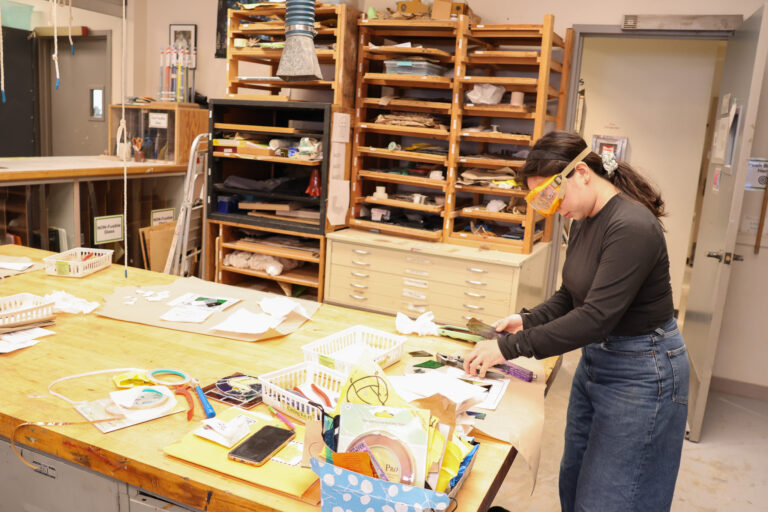
The UC Davis Craft Center is widely known for its variety of art classes that both students and community members have the opportunity to enroll in. Ranging from ceramics to woodworking to screenprinting, students can find their medium to express themselves and spend some time away from the everyday stress of university life. 

However, the registration process has proven to be a struggle for many prospective Craft Center students. Due to the high volume of interested participants, course space tends to be limited. As a result, Davis students have commented that enrollment has become highly competitive. 

During the winter registration period, Juliana Renert, a third-year design major, attempted to enroll in Flameworking 101, a class focusing on glass work, but was unable to do so due to her high spot in the online queue. Renert commented on her experience with the enrollment process. 

“I hit the registration button and got 409,” Renert said. “It was a little disheartening. I understand how it’s supposed to be random and fair for everyone, but I was trying to get into a very specific class with some friends and it just didn’t work out.” 

By the time that Renert entered into the portal, both sections of the course were filled and she only was able to waitlist for the courses — ultimately, she was not granted a spot in the class. The online registration system assigns users a random place in the line, where a high number indicates more time to wait, according to Renert. 

“I know a lot of people tried to use their computer and their phone and a different device just to try to get a better spot,” Renert said. “It’s a confusing system.”

Ella Swadley, a fourth-year human development major, successfully registered for a Handbuilding Basics class during fall registration but later faced difficulties registering for a Wheelthrowing class during winter and was ultimately unable to register. 

“Overall it was just a stressful experience,” Swadley said. “The online registration with the queue was hard, I kept getting logged out and things weren’t loading.”

Though the online registration has proven to pose difficulties, it ultimately is a result of the center’s goal to limit long in-person lines, which proved to be an issue in past years. 

Grace Lawlor, a UC Davis alumna who currently volunteers at the Craft Center, commented on the problems that arise from registering solely in person, a method the center used to rely on.

“I remember two years ago, my best friend waited in line for six hours or something ridiculous like that,” Lawlor said. “As it grew in popularity, it became heavily impacted, and I think since then, the Craft Center has tried to figure out a way to make sure no one waits in line for too long.” 

Renert also commented on the in-person option, which she experienced during her first year registering. 

“I did the physical registration where you wait in the long line, and I ended up getting the class I wanted because it wasn’t a very popular one,” Renert said. “But, I ended up waiting for two hours, which was not my favorite —  but I was just glad I got into the class.”

In response to the issues with in-person registration, the Craft Center has also tested solely online options, which also resulted in challenges as the site was often too heavily trafficked during the registration process. 

Lawlor explained that for online registration for campus recreation, UC Davis utilizes an external website called Fusion.

“Fusion is a completely third-party program,” Lawlor said. “The second that everyone got online to sign up, it crashed. It wasn’t the Craft Center’s system, we’re not the tech guys, we just use the university’s programs.” 

Though the center’s registration system still utilizes Fusion, they have implemented both an in-person and online option to limit excessive traffic on the site. 

Swadley commented on the registration process, highlighting the large number of students trying to register as the primary cause of the issues. 

“The hybrid registration system is tricky, but I don’t know what else they could even do with the high demand that there is,” Swadley said. 

Lawlor also commented on the fact that Craft Center spaces are limited due to the nature of the small class sizes, which often tend to host a single-digit number of participants. 

“Our studio spaces and the ability for our instructors to teach a high volume of students are pretty limited,” Lawlor said. “You want to have good class sizes and you want everyone to be able to fit in the studio safely.”

Lawlor also commented that due to the high volume of students interested in expanding their artistic abilities and participating in classes, perhaps a larger change could be necessary at some point down the line. 

“The Craft Center is an amazing space, and I think expanding and investing in our studios is a good idea — since there is a pretty huge demand for fun extracurricular activities,” Lawlor said. 


Written by: Rachel Gauer — features@theaggie.org


Trump’s inauguration and its impact on the Davis community

Davis residents and organizations take on the recent presidential inauguration and resulting policy changes 


By GIA LOOMIS — city@theaggie.org


On Jan. 20, 2025, Donald Trump was sworn into office, an action marking the beginning of his second non-consecutive term as president. From cold weather pushing the event inside for the first time since 1985 to Trump signing a high number of executive orders on the first day, this inauguration day was significant.

At his inauguration, Trump was flanked by the biggest names in tech, including Mark Zuckerberg, Jeff Bezos and Elon Musk, who occupied some of the most exclusive seats at the event. On Inauguration Day in the Oval Office, Trump issued a few statements regarding his connections to executives and companies. 

“They were all with him, every one of them, and now they are all with me,” Trump said. “They’re not going to get anything from me. I don’t need money, but I do want the nation to do well, and they’re smart people and they create a lot of jobs.”

Davis resident Hazel Hillenburg viewed Trump’s decision as one meant to demonstrate his growing influence in the nation. 

“I think it was a power move on Trump’s part to show the control he has over the country and its most affluent,” Hillenburg said. “He is acting as though this is a petty feud between politicians and not an outright warning of Biden’s forewarning devastating implications of these billionaires for the future of the country.” 

In his recent outgoing address, former President Joe Biden issued warnings to the United States people. 

“Today, an oligarchy is taking shape in America of extreme wealth, power and influence that really threatens our entire democracy, our basic rights and freedom,” Biden said.

 Trump also made a declaration that the United States government will henceforth only recognize two genders: male and female. The Davis Phoenix Coalition, a local organization that focuses on awareness, community engagement, advocacy and education in support of the LGBTQ+ community, was particularly affected by this declaration. 

“The mission of the Phoenix Coalition is to engage the community to eliminate intolerance for the purpose of preventing hate motivated violence and cultivate a broader civic culture that embraces and promotes a diverse community,” the website’s mission statement reads. 

Chair of the Davis Phoenix Coalition Anoosh Jorjorian took a strong stance against Trump’s two-gender proclamation. 

“How many genders there are is not up to Trump,” Jorjorian said. “Gender is something defined at the level of the individual. There’s nothing biological about gender — it’s socially and culturally determined. So, despite whatever Trump says in terms of how many genders there are, there will continue to be trans and non-conforming people, and whether the government recognizes that or not is something most of us have been dealing with all our lives, and we will continue to fight for our rights.”

Another aspect of Trump’s Inauguration Day came following his swearing-in and inaugural address. After attending the Capital One Arena filled with his supporters, Trump quickly moved on to his desk, ready to sign executive orders and pardons and combat Biden’s previous actions by rescinding 78 executive orders. The president signed an additional 26 executive orders on Jan. 20 alone. 

While the amount of executive orders signed on Trump’s first day in office was viewed as extreme by some, it was also viewed as Trump taking quick action to follow through on promises by others. Davis resident Joshua Malvitz believes that this is a sign of Trump coming through on getting things done while in office. 

“I do believe that Trump is just delivering as he promised,” Malvitz said. “As Trump said that he would get a lot of things done the moment he came into office, […] he has delivered on his word. For the future, I would expect the same pacing. Yet I believe that this flurry of executive orders is not too different from President [Barack] Obama’s second term, the Republican party had an outroar during his term, and now Democrats are doing the same to Trump.”

Many in Davis held varying opinions on Jan. 20 and its events, but regardless of differences in perspectives, the event was seemingly very polarizing — particularly so for those directly affected by the executive actions Trump has already taken. Stay up to date with the Trump Administration’s most recent presidential actions at whitehouse.gov. 


Written By: Gia Loomis  — city@theaggie.org