54.1 F
Davis

Davis, California

Tuesday, December 23, 2025
Home Blog Page 56

This comfortable material could replace your current wardrobe and charge your phone

Researchers from North Carolina State University have developed wearable technology that generates and captures electricity while increasing comfort


By NAREN KRISHNA JEGAN — science@theaggie.org


Most of us have heard of fast fashion, which is a business model where companies rapidly produce and sell current and trendy clothes. But have you heard of smart fashion?

Smart fashion is an intersection between fashion and technology, where clothing and textiles are incorporated with technology to enhance the user’s everyday life. From measuring heart rate, body temperature and muscle tension, sources project the field of smart fashion to rapidly grow to a $21-billion industry. As more time passes, the market will evolve to include more sophisticated functionalities. 

With the emergence of wearable, electricity-generating materials from North Carolina State University (NCSU), these complex features may be arriving sooner than expected. Researchers from NCSU have focused on developing models showing how a certain class of molecules (amphiphiles) affects the surface friction of various materials. 

Amphiphiles are molecules with hydrophilic and hydrophobic components. These molecules are used for a variety of therapeutic applications, such as drug delivery, tissue engineering and nerve regeneration. More commonly, they are seen in household and consumer products such as soaps, detergents and diapers to prevent scratching or scarring from materials. 

INVISTA professor of chemical and biomolecular engineering at NCSU, Saad Khan, shared his group’s research interests.

“We wanted to know if we could create energy from friction in amphiphile-modified materials,” Khan said. “It turns out we could not only generate electricity, but we could do so while also reducing the friction that people wearing these materials experience.”

The researchers discovered that some amphiphiles have electron-donating properties, allowing for the flow of electrons and a current. Applying these amphiphiles to wearable clothes, the researchers created a novel material that was low-friction, comfortable and had a powerful electrical yield of 300 volts.
Associate Professor of Chemical and Biomolecular Engineering Lilian Hsiao noted some of the limitations of these devices.

“The technology for harvesting static energy is well established,” Hsiao said. “Devices that can be worn for long periods of time are still missing.”

With further research, the group is interested in exploring how to incorporate subsequent innovations in these materials with existing haptic devices. They also are interested in partnering with others in similar fields — these amphiphiles have shown great promise when applied to clothing production, and there are many other industries that may utilize this technology in the future. 

Using Artificial Intelligence for a future of perovskite solar cells

UC Davis researchers use machine learning to study perovskite solar cells’ properties and advance them


By EKATERINA MEDVEDEVA— science@theaggie.org

Have you ever wondered what solar cells are made out of? Most of the ones that you see nowadays are composed of silicon. They have been the standard of solar cells for over a decade due to being relatively cheap, efficient and durable. 

“[Silicon] modules are expected to last for 25 years or more [while] still producing more than 80% of their original power,” an article by the U.S. Department of Energy reads.

However, there is another group of semiconducting materials that have shown remarkable growth in efficiency over the last 10 years and have the potential for low-cost production thanks to requiring simpler processing methods in the manufacturing process compared to silicon — the metal halide perovskites. 

This group of crystalline materials has a general composition ABX3, where A stands for an organic cation, inorganic cation or a mixture of the two; B stands for lead or, more rarely, tin cation; and X stands for a halide, usually I−, Br− or Cl−. By adjusting the types of organic/inorganic cations and halides present in the composition of the perovskite, researchers are able to fine-tune their efficiency at absorbing sunlight at different wavelengths, including those not captured by silicon. 

UC Davis research group led by Marina S. Leite, a professor of materials science and engineering and a Chancellor’s Fellow, has investigated the properties of different hybrid organic-inorganic perovskites (HOIP) using Artificial Intelligence (AI). This method of studying HOIPs has significantly sped up the research process and is projected to accelerate it even further in the coming years.

“We have an enormous family of chemical compositions, and besides that, this material can change in properties once it is exposed to [different] environmental factors,” Leite said. “So, there are a lot of parameters that can be varied simultaneously, and no one fully knows the influence of each one when they are working individually or in a coupled manner. It would take us an extremely long time as humans to solve this problem [without AI]. It would be just impossible.”

In the experimental process, a sample of perovskite thin film is placed on a substrate and put into small nitrogen-filled environmental chambers “to exclude uncontrolled material changes/degradation.” Then, the sample is loaded into a tightly sealed enclosure with an optical set-up where a laser beam is shot at it, exciting the electrons from the valence band to the conduction band. Shortly after, the electron returns back to the fundamental state, while emitting a photon in the process called photoluminescence. The spectra produced from the photons are the main measurement of interest. 

The research team uses a remotely controlled automated system to run these experiments, which they developed during the pandemic when access to the lab was limited. 

“These [automated] measurements take less than one second, which enables us to obtain over 20,000 spectra [measurements] per week and consequently have sufficient data to train our machine learning (ML) algorithms,” Leite said. “They are quite informative, too, because we can infer what would be the performance of a full solar cell, even though we just have the material.”

The team’s research considers various types of ML models including linear regression, neural networks and image classification in all steps of designing and testing perovskite for future photovoltaic cells. This is done in order to determine optimal tools for predicting their behavior under the influence of different stressors; for example, finding the hidden correlation between their chemical composition and thermal stability.

So far, this method of studying perovskite solar cells looks very promising. In one of the studies, Leite’s team was able to achieve a 90% accuracy of prediction of HOIPs’ optical behavior over a 50-hour period while exposed to relative humidity cycles, corresponding to those during summer days in Northern California. With more training and testing data collected, the accuracy is projected to grow even further. 

As mentioned earlier, the main problem to address with the perovskite solar cells is their susceptibility to degradation under real environmental conditions. However, even when they will become durable enough to be on par with silicon ones, most likely they will not serve as a replacement. Instead, they will complement the current solar cells with their properties, which is enabled by their thin layering and extended spectra of absorption.  

“The idea is having a halide perovskite, putting it on top of silicon and having what we call a dual junction,” Leite said. “Because silicon [solar cells are] everywhere, doing this addition is a way that does not increase cost in a concerning way, but increases performance.”

Commenting on the highlights of this work, Leite emphasized the contribution and talent of the students with whom she has worked with. Currently, this project involves two fourth-year Ph.D. students, Mansha Dubey and Abigail Hering, who are working on the different aspects of this research.

The future for the study looks bright as the team collaborates with researchers in and outside of UC Davis, including the UC Davis Electrical and Computer Engineering Department and the Lawrence Berkeley National Lab, integrating their infrastructure and expertise. 

Written by: Ekaterina Medvedeva— science@theaggie.org

Culture Corner

The Art Desk’s weekly picks for movies, music and more  


By CHRIS PONCE — arts@theaggie.org


Book: “The Long Walk” by Richard Bachman (aka Stephen King) (1979) 


Stephen King is known as “the king of horror” by many, but he is lesser known for his many works that escape the horror genre. Don’t get me wrong, every King book still has its fair share of thrills, but the best King books tend to subvert what he is typically known for. I can’t think of a better recommendation for this than “The Long Walk.”


“The Long Walk,” originally published under King’s pseudonym Richard Bachman, is a tense dystopian novel that follows a group of boys who enter a state-sponsored competition to see who can walk the longest. The winner gets granted anything they wish from the government, however only one person can remain walking. The novel is largely a critique of the Vietnam War, portraying the propaganda that leads to young people risking their lives for a cause “bigger than themselves.” The story heavily symbolizes themes such as propaganda, Post Traumatic Stress Disorder and violence altogether. In a time when we can see similar propaganda in our own lives, I highly recommend “The Long Walk.”


Movie: “A Million Miles Away” dir. Alejandra Marquez (2023)


This recent film may have gone under your radar as it went straight to streaming in most cases, but it’s worth the watch nonetheless. “A Million Miles Away” tells the inspiring true story of José Hernández, the first Mexican migrant astronaut to go to space. As a child, Hernández worked in the fields alongside his parents, struggling to make ends meet. With a dream to go to space, Hernández applied to NASA 11 times and was met with a rejection every time. Not giving up, he applied and was accepted on his 12th application. This film does an excellent job showcasing the Chicano spirit of resilience and tells a very moving story. 


TV Show: “The Ultimatum: Marry or Move On” created by Chris Coelen (2022)


Okay, hear me out, hear me out. I know that this recommendation does not match the serious themes in the rest of this Culture Corner, but everybody needs a trashy piece of media they can watch to turn off their brain. Over the last few months, “The Ultimatum” has become that guilty pleasure for me. The premise is bizarre: Troubled couples give each other an ultimatum to get married or move on (as the title suggests). Then, the couples split up and are matched with other “temporary” partners to help them realize what they are really looking for in a person. There aren’t any deeper messages to this show, no dark truths about human nature — only trashy and silly mindless entertainment. Come on, a guilty pleasure can’t hurt every now and then, can it?


Song: “Spineless” by Archer Oh (2025)


Archer Oh’s latest release, “Spineless,” emphasizes the indie-garage band’s surf-rock roots. This song, along with the rest of Archer Oh’s discography, is sure to become your next hidden gem. Originally from the Riverside area, Oh is a traveling Chicano rock band that gets bigger and bigger with every release. If rock is your sound, check out “Spineless” so you won’t miss out on the bandwagon that is being an Archer Oh fan. 


Written by: Chris Ponce — arts@theaggie.org


My take on modern self-care

With these tips, who needs to touch grass? 


By MADISON SEEMAN — meseeman@ucdavis.edu


We live in rough times. Between today’s news, yesterday’s news, tomorrow’s news and the 10-week sprint that is the quarter system, there is a lot to process. When the going gets tough, it is important to put your needs first and practice self-care. However, the self-care tips I see online only make me want to gag. 

Staying hydrated? Getting eight hours of sleep? Touching grass? It all sounds completely unrealistic and immensely boring. They just don’t work for me, and I know I am not alone. Exercising is a hassle, and meditation takes too long. Not going on your phone first thing in the morning is really just impossible, and you will never get me to eat kale. You just can’t!

Luckily for you all, this college student has been struggling, and, in that time, I have picked up a healthy habit or two. Here is my cultivated collection of universal self-care tips, tried and tested by yours truly.


  1. Connect with your inner child and revive old childhood hobbies: It doesn’t matter if it is coloring pages, playing Minecraft or eating paper. Some of us used to roll in the mud, and some of us used to chew on crayons. Bring these classic pastimes back! Whatever works — I won’t judge.


  1. Cut yourself some new bangs: An oldie, but a goodie. Yes, you probably will regret it in the long run. But the short-term satisfaction you will get from shaking up your life is totally worth the long-term pain and regret. Like, a little bit worth it at least. Just don’t think about it now; That’s a problem for you in the future.


  1. Never touch Hinge ever again: Yes, happy early Valentine’s Day! But let’s be real — it is only doing damage to your faith in romance and humanity. Free yourself: Hinge is NOT the place to yearn.


  1. But still, let yourself yearn: Just let it out.


  1. Start a podcast: Journaling is out, podcasting is in. Why keep your thoughts private when you can release them for everyone to hear, permanently solidified in your digital footprint? The people deserve to know your thoughts on your biology professor’s oversharing problem!
  2. Do not try to teach your friends any new board games: Don’t go chasing chutes and ladders, instead stick to the rivers and lakes that you are used to. It never goes as smoothly as you think it will.


  1. Order a Shirley Temple: If you must make it dirty, I can’t stop you. But nothing is better for the soul than the perfect ratio of grenadine and Sprite. Joy is stored in the maraschino cherry.


  1. Create rituals: Even better, get people to join your rituals. Even better than that, start a dedicated club where everyone can participate in these rituals. I recommend investing in robes and candles. You might get into some legal trouble if people start to think you’re a “cult,” so best to keep this ritual club a secret. And, if you are too lazy to start your own ritual club, try someone else’s!


  1. Dig yourself a hole to hide in: We can’t stop bad things from happening, but we can temporarily hide in a hole. Just for a few hours!


Everyone needs a pick-me-up now and then, and, really, there is no one-size-fits-all answer. If you are one of those rare types who enjoys yoga or going to the gym — good for you, keep it up!

As for the rest of us, we will just keep finding comfort wherever we can. Maybe there is something to those online lists of self-care advice or maybe there is a perfect tip for you on my own list (try at your own risk). Whatever you do, just take care!


Written by: Madison Seeman –– meseeman@ucdavis.edu


Disclaimer: (This article is humor and/or satire, and its content is purely fictional. The story and the names of “sources” are fictionalized.)

Yes, for the millionth time, this is my device!

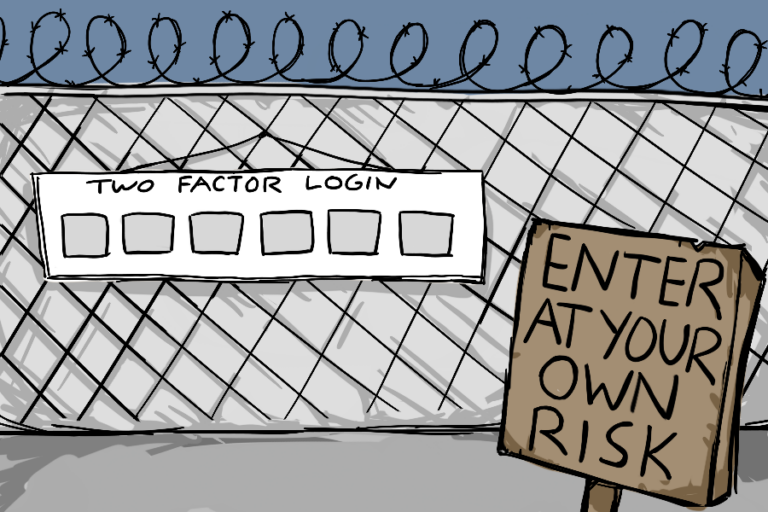
Two-factor authentication will not save you


By ABHINAYA KASAGANI — akasagani@ucdavis.edu


I was greeted upon my return to campus this winter by being ousted from my very own Canvas, and with it, my student email, Oasis and Schedule Builder. 404 Access Denied. I exercised patience and restraint — yes, I have entered my one-time password (OTP) for the hundredth time; Yes, this is really my device; What do you mean I cannot regain access for the foreseeable future? Whatever, I give up! 

Two-factor authentication (2FA) has, in recent years, become a standard measure to bolster security online. Requiring users to authenticate their identity with a password, app or device — something only they have access to — promises added protection against scams and fraud. Despite its widespread adoption, 2FA remains an incomplete solution to a much larger concern within tech infrastructure — the security vs. innovation paradox. By placing the onus of security onto individual users without addressing the deeper systemic flaws in tech infrastructure, the system entrusts its users with the burden of safety and introduces new ethical concerns in the context of sensitive data like biometric information.

The concept of security fatigue is fundamental to one’s understanding of cybersecurity. Essentially, as individuals become more inundated with security measures, they experience weariness or reluctance to engage with them. People can become burdened by security alerts, password change requests or warnings, causing them to greet this bombardment with ambivalence. They might also give into multi-factor authentication systems — which use an authentication request that users must “accept” on their device — that can be easily exploited by attackers.

As businesses attempt to reconcile the need for robust security measures through innovation, they often find it difficult to avoid compromising one for the other. An example of this trade off occurs when users seek intuitive systems — ones that are easy to access and quick to use — which tend to have less stringent security protocols. 

The University of California’s adoption of Duo is a prime example of how 2FA, while offering additional security, is not a “one size fits all.” The design of 2FA assumes that its users have access to modern technology or reliable internet — mind you, these are systems everyone is reliant on — which inadvertently frustrates and alienates users who are unable to use these tools effectively. Duo, which works by sending a one-time password to the user’s phone or requiring a code from its app, may be effective against certain attacks but does nothing to address issues such as insecure passwords, poorly designed databases and outdated software. This can be particularly worrisome in environments where sensitive data is at stake.

Additionally, one of the biggest ethical concerns with 2FA is its increasing use of biometric data — fingerprints or facial recognition — to verify its users. Despite these methods promising the user more enhanced security, they come with privacy risks that users might not fully comprehend. 

The centralized storage of biometric data increases the risk of breaches and systemic misuse (even with encryption); Programs like Duo that collect confidential data raise ethical concerns regarding surveillance under the guise of security. Biometric data is highly sensitive and irreversible — unlike passwords, it cannot be changed if compromised. The more ubiquitous these methods become, the more likely it is that our personal data will be mishandled and exposed. While companies claim to protect this data through encryption, breaches cannot be accounted for in advance, and users are left vulnerable and with all of their data in one basket. 

Research shows that even with advanced security protocols in place, human error — whether that be through poor password practices, mishandling sensitive information or failing to recognize phishing attempts — remains a primary reason why achieving security is difficult despite technological advancements. The broader concept of the security dilemma, wherein the measures taken to increase security may inadvertently introduce new risks or expose weaknesses, suggests that as security measures grow more complex, user mistakes will increase. So, even the most sophisticated tools may not be enough to prevent breaches. 

As one evaluates the usability of 2FA, it becomes clear that this misalignment between security and design perpetuates a false sense of security, leaving its users to fend for themselves. There is a much-needed shift in how to approach security in order to create a genuinely secure digital environment that does not rely on users’ vigilance to keep it safe. 

The focus needs to be on accommodating both usability — making it so that users are able to choose the right security action, limiting the number of security decisions they need to make — and security, ensuring more secure software architectures and privacy-conscious data handling. Until then, the cycle continues and the paradox persists.


Written by: Abhinaya Kasagani— akasagani@ucdavis.edu


Disclaimer: The views and opinions expressed by individual columnists belong to the columnists alone and do not necessarily indicate the views and opinions held by The California Aggie.

Davis mourns loss of local baker Tom Kilbourn

The owner of beloved bakery Davis Bread & Desserts passed away in early January


By OLIVIA HOKR — city@theaggie.org


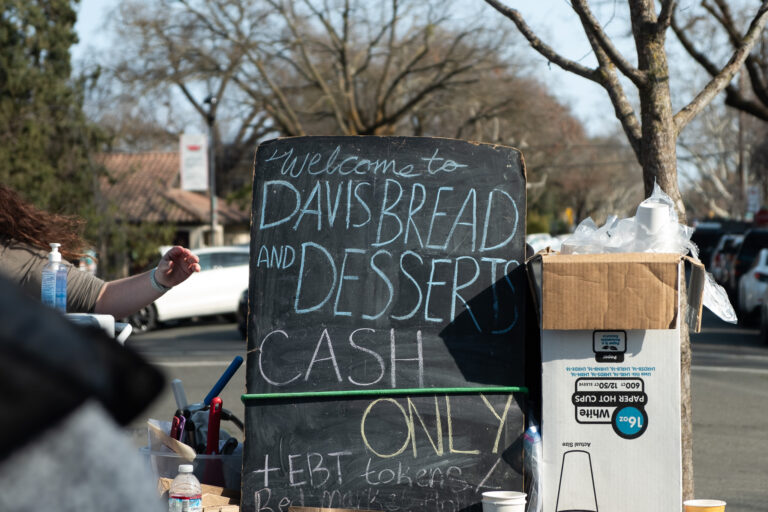
On Jan. 3, Tom Kilbourn, known throughout the city for his delicious pastries and pies, passed away. As the owner of Davis Bread & Desserts, Kilbourn spent 40 years selling his baked goods at the Davis Farmers Market and built a community of loyal customers. 

Davis Bread & Desserts was one of the first bakeries at the Davis Farmers Market. Randii MacNear, the executive director of the Davis Farmers Market, considered his bakery an anchor in the market.

“We’re all struggling,” MacNear said. “I’m not family, but in some ways, I feel like there was a market family that he was a part of, and a lot of people felt that way about him.”

MacNear said the holiday season didn’t feel complete without having one of his pies, specifically the triple berry or the chocolate pecan pie.

After announcing the news on the Davis Farmers Market Facebook page, community members came together to share condolences and stories about their interactions with Kilbourn. 

An anonymous market-goer expressed appreciation for Kilbourn’s work and the difference he made in the lives of Davis locals.

“I enjoyed seeing him working with staff and customers,” the anonymous individual said in a Facebook comment. “His baked goods were a great contribution to the Davis Farmers Market. I appreciated the vegan turnover selection and the pecan rolls are my husband’s favorite way to start a Saturday. We are thankful for Tom’s contributions to our life and making Davis, Davis.”

Another community member expressed similar sentiments about Kilbourn’s character. 

“I grew up at the market eating Tom’s sweets every week,” the anonymous individual said in a Facebook comment. “We made big Sunday morning breakfasts and his goods were the cornerstone. I am so sad to hear of his passing, the market will not be the same without him jogging about.”

Kilbourn will be missed dearly by the Davis community and the Davis Farmers Market customers. If you have yet to try the delightful variety of goods offered by Davis Bread & Desserts, they could use the support now more than ever in continuing Kilbourn’s legacy. 

“He had a family at the market,” MacNear said. “We’re going to miss him terribly. His customers are still coming even though he hasn’t been there personally for the last few weeks. […] Customers are honoring him and continuing to buy from him so we’re really happy about that.”


Written by: Olivia Hokr — city@theaggie.org


All bite and no bark

American history is wrought with censorship 


By MOLLY THOMPSON – mmtthompson@ucdavis.edu 


The road of American history is twisted, gnarled and winding. In the nearly 250 years since our official founding, we have traversed hills and valleys, glorious victories and bitter losses, periods of peace and periods of instability. 

Throughout it all, the relationship between the American people and our government has shifted, morphed and developed just as our narrative events have. One of the most important linkage institutions — connection points between citizens and government — that shape our nation is the media: newspapers, books, radio, television, the Internet and beyond. 

Media, especially journalism, allows our population to hold the people in charge accountable, spread news and important information, communicate with each other and our administrations and express our needs and desires to our government. Media is unquestionably crucial to democracy. 

The influence of the media is intrinsically cemented in the very fabric of our U.S. Constitution; The First Amendment states that “Congress shall make no law […] prohibiting the free exercise thereof; or abridging the freedom of speech, or of the press.” 

Given the importance of unrestricted speech and the fact that our government recognizes it, it stands to reason that our leaders would uphold the promise made on that ruling document. And yet, our history is just as rooted in censorship as it is in freedom. 

One of the earliest and most notable examples of censorship in American history is found in the Sedition Act (1798), which essentially outlawed public opposition to the central government. Anyone who dared to “write, print, utter, or publish […] any false, scandalous and malicious writing against the government” was at risk of fines and imprisonment. The Sedition Act was in blatant violation of the First Amendment, having preceded the establishment of judicial review — a check on central power that gave the Supreme Court the authority to consider the constitutionality of laws. 

Therefore, there was little to stop the Sedition Act’s censorship until the act was repealed, following the election of 1800. As one of the first major instances in which the limits of First Amendment rights were challenged, the event set a precedent for future controversies. 

Dating back to our nation’s conception, there are many examples of postal restrictions that call into question the First Amendment. In 1873, Congress passed the Comstock Act, which made mailing information, advertisements or materials deemed “obscene” (which included information about contraception and abortion) a crime. Many such restrictions were later removed, but those that remained came back into relevance when Roe v. Wade was overturned in 2022 and reproductive freedom was put in jeopardy. 

The 20th century brought forth a slough of censorship. During World War I (1918), the American Library Association and the United States Department of War sent lists of titles deemed too pro-Socialist, pacifist or pro-German that needed to be removed from military camp libraries. Around the same time, it was not uncommon for public libraries to refuse to allow people of color through their doors or to stock periodicals curated by minority cultures. Book bans as a whole have consistently recurred for various reasons throughout American history, each with different resolutions. 

During the Red Scare (1917 to 1920), government censorship was a prevalent response to widespread panic — President Woodrow Wilson pushed for multiple laws limiting free speech in the name of a national emergency. The Espionage Act of 1917 criminalized conveying information meant to interfere with World War I. The Sedition Act of 1918 cast a broad net over what forms of expression were legal during the crisis, penalizing speech against the government, the U.S. Constitution, the military and even the U.S. flag. While these restrictions were removed in later decades, the presiding Supreme Court upheld them as valid, even though they were clear violations of the Free Speech clause. 

A powerful but quiet form of censorship that the government often uses to its advantage is the simple act of gatekeeping. The White House controls how much of its inner workings it releases for journalists to publish, meaning that they can withhold what they don’t want the public to know. This occurs for multiple reasons, and, while it is certainly true that officers restrict information for diplomatic efficiency, administrative confidentiality and public defense, it has also been used insidiously. This can be difficult to parse, given that the line between restricting information for the sake of safety and restricting information for the sake of power is razor-thin. 

For example, journalists were not allowed to follow and cover U.S. troops as they invaded Grenada in 1983. The government’s rationale was in the name of protecting the reporters themselves, but it also resulted in limited (and arguably less substantive) public coverage of the event. 

Our modern governments have rolled the dice on their own forms of censorship more frequently than is generally realized by the public. Today’s efforts tend to be more difficult to spot, though this is not always true — the Nixon Administration’s attempt to withhold the Pentagon Papers, for example, became mainstream news. 

Though Trump’s new administration claims to prioritize “freedom of speech and ending federal censorship,” some of their actions tell a different story. Already, he has pardoned over a dozen individuals charged for attacking journalists during the Jan. 6, 2021 coup attempt, directly counteracting his goal of protecting the merits of the Free Speech clause. Only time will tell how those claims unfold. 

The bottom line is that freedom of speech and freedom of press are both invaluable and fundamental to democracy. Already, the United States has declined from a 10 to a five (between 2012 and 2020) on the Polity Democracy Index (on a scale from -10 to 10). Continued censorship is a surefire way to further this decline. Our country is no ingénue in the face of government media restrictions, but this behavior is never a sign of national health — censorship is a symptom of crisis. 


Written by: Molly Thompson — mmtthompson@ucdavis.edu 


Disclaimer: The views and opinions expressed by individual columnists belong to the columnists alone and do not necessarily indicate the views and opinions held by The California Aggie. 

The Trump Administration’s inhumane mass deportation efforts are racially motivated and set a dangerous precedent

The executive office’s agenda was never about grocery prices 


BY THE EDITORIAL BOARD


The idealized concept of the “American Dream” is a fairly simple one — no matter where you came from, no matter when you left, people can call this place home and strive for a better life. This ideal has been forgotten as the Trump Administration embarks on what they plan to be the “largest deportation order” in American history.

As of Feb. 4, new White House Press Secretary Karoline Leavitt confirmed the first round of flights bringing undocumented immigrants to Guantánamo Bay. Trump announced his plans to jail 30,000 migrants from the United States to a facility overseas following the passage of the Laken Riley Act, legislation that requires the detention of undocumented migrants charged with specific crimes. With major Republican support and 46 Democrat representatives voting for the bill, the Trump Administration has begun its operation. 

“Today’s signings bring us one step closer to eradicating the scourge of migrant crime in our communities once and for all,” Trump said, announcing the passage of the bill. 

The Department of Homeland Security has declined to answer if women, children and families will be detained at Guantánamo, according to Reuters.

The Editorial Board condemns the inhumanity of the Trump Administration and these mass deportation efforts.

The available research shows time and time again that undocumented migrants are far less likely to commit crimes than U.S. citizens. Trump’s goal has never been to reduce crime or make this country safer — his goal is to deport an entire population and culture of people. 

These deportation efforts are rooted in bigotry and racism toward Latinos, and this can be clearly seen through the racial profiling of citizens by the Immigration and Customs Enforcement (ICE). During a raid in New Jersey, a former U.S. veteran was detained by ICE agents; They even refused to believe he was a citizen when shown his military documentation. In this same raid, ICE detained the workplace’s manager who was Puerto Rican (aka someone who is from the U.S.). 

Even in places like Phoenix, Arizona, ICE has questioned and targeted Navajo Nation citizens — people who are indigenous to this land are being questioned and suspected of not being from the U.S.. 

In response to these raids, ICE has stated they might “encounter U.S. citizens while conducting fieldwork and may request identification to establish an individual’s identity,” according to NBC News.

Our country’s treatment toward migrants has always been cruel; In 2019, the United Nations rights chief condemned the detaining of children in cages, even suggesting that it violated international law.

However, it’s still worth being aware of the dangerous precedent set by this new administration. On average, ICE has arrested 1,000 to 2,000 people suspected of being undocumented per day, far exceeding last year’s average. ICE has claimed in an email to their staff that the Trump Administration has enforced a daily quota of 1,200 arrests — however, a White House official has denied these reports. 

There has been large-scale pushback to these policies, with thousands of protesters gathering in Los Angeles and hundreds in Riverside and San Diego. During the LA rally, protesters even shut down the 101 Freeway, according to The Los Angeles Times. Those gathered held signs that read slogans such as “Don’t bite the hand that feeds you” and “MAGA — Mexicans always get across,” according to reporting by The LA Times.

As the nation is delving into unprecedented times, it is important to be aware of your rights. All of these rights and more can be found on the National Immigrant Justice Center and American Civil Liberties Union websites.

  1. If you are pulled over during a traffic stop, you may ask the officer if they are from the Department of Immigration; It is likely they will introduce themselves to you as police — they are not. 
  2. Do not let ICE agents into your home without a warrant signed by a judge. If the warrant they show you is not signed by a judge, they have no authority to enter your home. Examples of the differences between ICE warrants and valid judicial warrants can be seen on the National Immigrant Justice Center website.
  3. You have the right to remain silent and not reveal your immigration status to officers at any time.


With news developing day by day, it can become overwhelming to not know where things will go next. The Editorial Board encourages you to look out for your community, speak out against these blatant injustices and not to become complicit with an executive branch that is violating basic human rights. When we look back on the political period we find ourselves in, be sure to do whatever you can to ensure you were on the right side of history. 


Written by: The Editorial Board

January’s plane crashes have sparked fear nationwide, but it’s important to stick to the facts

The situation warrants our compassion and support rather than unjustified speculation

BY THE EDITORIAL BOARD


Most of us are aware of the devastating air collision that occurred on Jan. 29, 2025 in Washington, D.C. All 67 passengers on the American Airlines jet and the United States Army Black Hawk helicopter were killed, marking the deadliest airline disaster in the U.S. since 2001. Only two days later, on Jan. 31, a plane crash in Philadelphia resulted in the deaths of seven individuals, leading to nationwide mourning and increased skepticism about the current safety of air travel.

There has been a lot of speculation about the causes of the recent plane crashes, resulting in widespread misinformation. The truth is that we don’t know everything that happened or why these events occurred in the first place — and it’s important to keep this in mind as the investigations continue. Sensationalizing information can have harmful consequences, and we have already begun to see these effects.

President Donald Trump insinuated that diversity, equity and inclusion (DEI) programs may be to blame for the D.C. crash. When further questioned about whether diversity hiring could have been the cause of the incident, Trump responded, “It just could have been,” and he accredited this viewpoint to him having “common sense” — in other words, his comments have no factual basis. Until more information comes to light, it is crucial to abstain from spreading opinions that aren’t rooted in evidence.

A tragedy like this warrants empathy and unity, and it does not and should not have to tie into political agendas. It is completely normal to want to know why and how something like this happened, but finger-pointing and rushing to conclusions is not the answer. The victims and their grieving families deserve respect in the face of these tragedies. The unknown is scary, yes, but it’s unfair to place unwarranted blame in order to alleviate one’s own fears.

Right now, individuals worldwide are apprehensive about getting on an aircraft. Aerophobia — the fear of flying — is already common, affecting around 25 million adults in the U.S. Considering the recent casualties, it is understandable that these fears are amplified, especially with news about the Federal Aviation Association allowing airline companies to self-certify that their planes meet safety standards. However, the chances of airline fatalities are still astronomically low, and flying is still the safest form of transportation.

Between 2018 and 2022, the odds of death by air travel accidents was found to be one in 13,000,000. While the statistics should be reassuring, it is, of course, still natural to feel a lack of control onboard an airplane and to ruminate over the “what ifs.” The best things you can do when flying are to try to remind yourself how many passengers fly safely every day (2,900,000 in the U.S.), distract yourself with calming activities and learn your aircraft’s safety features for peace of mind.

The airline crashes should be recognized for what they are — tragedies. Mass panic, conspiracy theories and conjectures are not helpful or justifiable based on the information that we know, which currently is not a lot. The investigation is best left to the experts, and we need to remember that while it’s understandable to be worried, you can still have trust in the safety of air travel. 


Written by: The Editorial Board

‘Keep looking up!’: How to get involved in astronomy at UC Davis

0

Students and staff discuss view of the universe, hope to involve students of all backgrounds in the field


By AMBER WARNKE — features@theaggie.org

The stars have been objects of fascination for as long as humans have been around to see them — and the students and faculty at UC Davis are no exception. UC Davis offers a variety of ways students can learn about astronomy, including lower-division courses open to all majors, physics and astronomy clubs on campus and occasional speaker events.

Kathryn Galdamez, a fourth-year physics major and vice president of the Physics and Astronomy Club at UC Davis, assists in coordinating public and private viewing events. The club provides telescopes at these events and guides viewers on what they are seeing in the night sky. 

“Being able to learn and then making that kind of information digestible to the public — I think that’s what really keeps me in physics,” Galdamez said. 

Public viewings are accessible to all students regardless of major and occur two to three times in fall and spring quarter, but they are not held during winter quarter due to less ideal weather. 

Galdamez also said that joining the Physics and Astronomy Club is an accessible way for students to learn more about astronomy. The club is currently planning a visit to Lick Observatory near San Jose, which is owned by the University of California, as well as a Women in Physics Q&A Panel on Feb. 14 and a Physics Picnic day show, information on which can be found on the club’s Instagram: @astronomyatucdavis. 

Lynn Hironymous, a fifth-year physics major and project team lead of the Physics and Astronomy Club, expressed appreciation for the experience that the club has provided to him.

 “Last time we had a viewing, we pointed [the telescope] at Orion’s nebula, which is just under the belt of the Orion constellation, and got a really nice picture of the nebula,” Hironymous said. “We also could see with our own eyes the milky spurt where new stars are being born.”

Hironymous pointed out that the club is open to all majors and explained how studying the night sky has changed his view of the universe. 

“This is just this small section of our universe and there’s millions of galaxies surrounding that,” Hironymous said. “I take up such a small portion of it, but it doesn’t make me feel small; It makes me feel like my problems are less and that I can handle what I’m doing.”

Galdamez holds a similar view, sharing that studying astronomy has forced her to take a step back and understand the bigger picture of her life. 

“Earth is exactly what it needs to be away from the sun in order to have life here, and I think that makes us pretty special,” Galdamez said. “I think that should motivate us to really make the most of [life].”

Patricia Boeshaar, a professor in the Department of Physics and Astronomy at UC Davis with a Ph.D. in astrophysics, believes that astronomy has the potential to benefit students across UC Davis. 

I think we tend sometimes to get overwhelmed with the immediate, instead of putting everything into perspective,” Boeshaar said. “And that’s what [astronomy] helps you do.”

Boeshaar’s career has allowed her to see incredible astronomical events, including one instance on Feb. 23, 1987. She was working on the four-meter telescope in Chile at the time, when she experienced the first supernova seen on the Earth since the 17th century. 

“I have to tell you, being there at the time was really, really exciting,” Boeshaar said. “It’s just serendipity.”

Boeshaar has been fascinated by the stars since 1952, when she received a book about them for Christmas at five years old. 

Women were not expected to do science in the ‘50s, but I really wanted to do it,” Boeshaar said. “I was first generation.” 

Despite societal views, Boeshaar was determined to study astronomy. 

“Back then, they thought of me more or less as, ‘You go get the donuts, you go get the coffee,’” Boeshaar said. “But I knew what I wanted to do.”

Galdamez has similarly experienced a lack of representation in her field. 

“As a woman, as hispanic, as someone of the queer community, it’s really hard to find role models in these kinds of spaces,” Galdamez said. “If I’m able to do it, then I hope someone else sees it and is like, ‘Oh maybe I could do it, too.’”

For students hoping to learn more about astronomy, a free public lecture will be held at the UC Davis Conference Center on March 4 by Nobel laureate Adam Riess, who is known for discovering evidence that the expansion of the universe is accelerating. There will be a reception at 6 p.m., followed by the lecture at 7 p.m. 

Students looking to experience astronomical events firsthand should also prepare for a total lunar eclipse on March 13, 2025, starting at 8:57 p.m. Totality will occur at 11:58 p.m., and the eclipse will last until March 14 at 3 a.m.

 Boeshaar shared what a lunar eclipse is and what to expect. 

When you have a lunar eclipse, the moon goes through the Earth’s shadow,” Boeshaar said. “The moon typically turns blood red because the Earth scatters out the blue light and what the atmosphere bends around tends to be the leftover red light.” 

On other nights this quarter, students can look for Orion, Gemini, Taurus, Ursa Major, Andromeda and the Pleiades, which can be spotted in the sky until late March. In conclusion, to quote the motto of the Physics and Astronomy Club: “Keep looking up!”


Written by: Amber Warnke — features@theaggie.org

Swarms of gym bros overwhelm Peet’s baristas with their protein demand

Please consider enlisting as a barista to help  


By ALLISON KELEHER — adkeleher@ucdavis.edu


In the wake of the protein menu release, there has been an unforeseeable surge in demand at all of the on-campus Peet’s Coffee locations. Despite the cold weather, these muscular men make their way to Peet’s in their gym shorts in search of a boost toward their protein goal. This phenomenon creates extremely long lines that deter the average Peet’s consumer from getting their regular caramel macchiato. 

Additionally, I have noticed some adverse effects on the brave baristas who are enduring this strenuous work. The other day, my friend could not take notes in class because her hand kept twitching. These baristas are not equipped to battle this newfound demand for protein coffee drinks — they are urgently searching for more baristas to help out, but no one wants the job. Apparently, the only thing worse than a middle-aged angry woman named Karen is an angry gym bro who has yet to reach his protein goal. 

I decided to take a seat on one of the bar stools inside of the Silo, so I could really observe the line of customers forming at Peet’s. As one man was showing off his pump to his friend in line, another was picking up his small matcha protein latte. 

BANG. 

Not even five minutes in, something was already wrong. A man had just slammed his fist on the drink pickup counter. 

“This was supposed to be ICED!” he exclaimed in anger. One second later, he threw the hot latte against the wall and it splattered all over the floor.

A hush fell over the crowd of gym bros waiting to place their order. Then, one ducked under the black rope and grabbed the angry man by the shoulder and escorted him outside. A couple of people clapped at his heroism, but it was short-lived — there were more customers to serve. Chatter and gossip filled the air once again as the baristas resumed taking orders. Apparently, this guy was rumored to be on steroids, and most gym bros tried to stay away from him. 

One of the baristas came out from behind the counter with a spray bottle and a rag and began cleaning up the mess that the steroid man had left. Once he was done cleaning, he placed a wet floor sign and went straight back to the trenches. 

I tallied which of the protein drinks the gym bros were buying, and it turns out that the matcha protein latte is the most popular. When I asked a passing gym bro why he ordered matcha, he said: “It looked good, I don’t know.” 

Sadly, that answer didn’t quench my thirst for investigative journalism, so I relied on analytical observation techniques instead. I sat in that Peet’s for almost 10 hours straight to find my answer. My eyes turned red and buggy as I watched an infinite amount of people step up to the counter and order some variation of a protein drink. Then, it hit me. Whenever a gym girl went up and ordered an iced protein matcha latte, the gym bro behind her would order one as well. 

I began to write frantically in my notebook to record my findings, but, as I continued to watch, nothing happened. The gym bro didn’t say a word to the gym girl or even look at her — yet this ordering pattern continued throughout the entire time that I spent at Peet’s. 

That’s when I realized: The gym bros just need a fun little drink, and they feel inspired whenever they see a woman order a matcha. This protein milk at Peet’s has opened the floodgates to the fun little drink market, and we are experiencing a once-in-a-lifetime boom. This made me feel all warm and fuzzy inside, so, to all of the gym bros out there: I hope you hit your protein goal. 

Except for you, steroid man. 


Written by: Allison Keleher — adkeleher@ucdavis.edu


Disclaimer: (This article is humor and/or satire, and its content is purely fictional. The story and the names of “sources” are fictionalized.)

Unitrans: an inside look at bus operations

0

Student bus drivers and administrators discuss operations this winter quarter


By JENEVAH HARRISON — features@theaggie.org


Each quarter, Unitrans, an ASUCD unit and student-run bus system at UC Davis, faces unique challenges in delivering reliable service to passengers while maintaining safety and comfort. Winter quarter 2025 has been no exception — but there have been notable improvements in service compared to prior quarters, according to student drivers and administrators. 

Miles Henninger, a fourth-year environmental policy analysis and planning major and Unitrans driver, shared insights into the quarter’s performance so far, highlighting smoother operations and the introduction of service enhancements. 

“Overall, I’d say it’s been pretty good so far, generally better than last quarter,” Henninger said. “We’ve increased frequencies on the J/V/W, which are some of the most busy lines, [spreading] passenger load out to more buses. We also have more drivers this quarter with people coming out of training, so that has also helped things run more smoothly.”

Despite the improvements, Henninger acknowledged lingering issues, particularly on high-traffic routes like the M and W lines.

 “Even with the increased service, we sometimes still have issues, especially with the M/W lines and rush-hour traffic on 1st Street and on the I-80 overpass,” Henninger said. “But there isn’t much we can do about that without some pretty big changes to those lines.”

Olivia Doyle, a second-year anthropology major, described the issues she has experienced with bus punctuality this quarter.

“More often than not, my buses arrive late to the Silo and Memorial Union areas,” Doyle said. 

Due to these delays, Doyle said that her commute to campus has increased from 10 minutes to over 30 minutes on several recent occasions. As a product of the added time, Doyle recounts being over 20 minutes late to some of her classes this quarter. 

This issue can be demotivating for many students, including Doyle, as it results in unnecessary absences. Despite these setbacks, Unitrans has offered new solutions that may improve these delays. 

One significant change this quarter was the increase in V line service. While beneficial overall, Henninger noted that implementing such changes comes with challenges. 

“We’ve been tweaking the times and such over the past couple of weeks so that it flows better, and I feel that the current iteration is pretty smooth and has efficiently added a couple more buses each hour for passengers to use,” Henninger said. 

The beginning of each quarter marks a transitional period for Unitrans, as new schedules and shifts are rolled out. Henninger explained that the winter quarter saw its share of adjustments but managed to avoid significant disruptions.

“The first week is usually a bit rough, especially since it’s before students start to skip their classes, so all the getting used to is accompanied with some of our heaviest passenger loads, although it didn’t seem too bad this quarter,” Henninger said. 

Unitrans Operations Manager Joshua Feil shared additional context on the logistical challenges and successes of this quarter, highlighting the benefits of frequency increases on J, V and W lines. 

“These lines have our highest ridership, so we’re excited to provide more service here and cut wait times by up to half,” Feil said. “For the J and W, we didn’t actually add any shifts or work hours to do this, we only rearranged existing shifts and added extra trips where there was previously downtime. This means these shifts are now more ‘dense’ and intensive on our drivers and conductors.” 

Feil continued by sharing insight into a common problem, cascading delays, which can arise when drivers’ shifts are too close together. 

“Packing shifts tighter brings the potential for an issue of ‘cascading delays,’ where delay on one trip bleeds over to the next trip,” Feil said. “We’ve been working to stay ahead of this issue by having on-call drivers take over parts of heavier trips, where we anticipate delays to occur.”

Feil also noted that early-quarter ridership spikes add to operational challenges, with week one averaging 23,000 passengers a day — a historically high volume for Unitrans. To combat this high ridership, Unitrans has implemented several precautionary measures, one of which Feil mentioned was sending extra buses to popular areas including lines VX and VL at the West Village. 

Feil also praised the efforts of the Unitrains training department, which has been pivotal in preparing new drivers for solo service. 

“They release about two to three new drivers into solo service each week and cover a lot of ground in the short few months they have them in training,” Feil said. “I have nothing but praise for them.”

Jacky Limón, a third-year plant sciences major and Unitrans trainer, echoed Feil’s sentiments about the training process. 

“Training sessions this quarter have gone somewhat smoothly,” Limón said. “Coming back from such a long break is hard because many of the trainees have not been behind the wheel in a long time, making it difficult to pick up from where they left off. Despite this, I feel that there have definitely been some very successful trainees who have made great progress.”

Limón shared anecdotes about her experiences training new drivers, including one memorable Halloween night shift. 

“On the very last run of the night, we had two people wearing extra-large inflatable costumes come on our bus,” Limón said. “They took up the entire priority seating area, but it was great for a training session to see if my trainee could drive while being mindful that they can’t hold on to the bus [the] best.” 

While the quarter has had its challenges, the collective effort of drivers, trainers and administrators has contributed to a smoother overall experience for Unitrans passengers. With continued adjustments and support, Unitrans looks to maintain its vital role in the Davis community while still working to address issues that tend to arise at the start of each new quarter. 


Written by: Jenevah Harrison — features@theaggie.org


Work-study jobs aid students in personal growth and financial stability

0

UC Davis students involved in work-study share their experiences with the program


By GRACIELA TIU — features@theaggie.org


Work-study, a program available at many colleges and universities, allows students to work part time and earn money for education-related expenses. UC Davis offers the program based on financial need, using certain factors such as the Student Aid Index to determine qualification to participate. 

“It’s made affording college easier, which allows me to focus more on school and professional opportunities like networking events and clubs,” Connor Drew, a second-year economics major as well as a peer advisor and administrative assistant at the Global Learning Hub, said.

Students participating in work-study often find the financial support to be its primary advantage, although this benefit can support them in other areas as well.

“Work-study contributed to my personal growth, because it allowed me to get a job on campus that directly applied to financial aid,” Drew said. “Financially, work-study has helped a lot with making college more affordable. It’s definitely helped me pay for groceries, food out, school supplies and housing expenses.”

UC Davis offers many jobs that satisfy work-study credit throughout the year, which range from desk jobs to food preparation.

Monica Sexton, a fourth-year history major, currently works for UC Davis Housing and Dining Services as a Student Assistant (S.A.), which hosts different positions that students can move between. 

“I work at Segundo Dining Commons,” Sexton said. “My current position is an S.A. 4, or Guest Services Supervisor, but I started off as an S.A. 2 back in my first year of college.”

Finding a work-study job can feel similar to searching and applying for off-campus jobs. Many students utilize Handshake, a career platform used by UC Davis, to search for student-specific employment opportunities.

“I found this job through Handshake,” Sexton said. “I saw that they accept students with work-study and applied.”

Evelyn Ramos, a third-year political science — public service and English double major, also participates in the work-study program,

“I currently work as a cashier at [the] ASUCD Coffee House,” Ramos said. “I take orders and complete transactions in Ciao, Marketplace and Swirlz.”

A large distinction between having a job through work-study and working separately from the school is the scheduling process.

“I think the biggest advantage of a work-study job compared to a non-work-study job is that they are all on campus and built around your schedule as a student,” Drew said. “When they make your schedule, they work around your classes, so you’ll never have both at the same time.”

Despite the advantages related to scheduling, work-study can still present certain time management challenges to students.

“I balance my job with academics and other commitments mainly through planning out my week in a Google Calendar, putting in everything from classes, work, study times and the gym,” Drew said. “Also, a lot of the time, my job is super slow, so I can study a bit there.”

With many students having positive stories about their involvement in the program, some have also had particularly demanding moments in their work-study journey.

“The transition period, where I tried getting used to both my job and classes, was the most challenging time,” Ramos said. “It took me a while to understand how to healthily juggle schoolwork and a job.”

Altogether, work-study at UC Davis provides students with ample opportunities to feel secure financially while also developing professional skills.

“Personally, I love people, keeping busy and making money, so this job fulfills me in many ways,” Sexton said. “Professionally, though, my problem-solving has gotten so much better. Jobs teach discipline and time management as well, which I believe it has done for me.”


Written by: Graciela Tiu — features@theaggie.org


Davis-based nail tech, Ayana Call, discusses her at-home business

0

Sets by Yana aims to create beautiful nails in a welcoming environment for clients 


By LAILA AZHAR — features@theaggie.org


When Ayana Call, a fourth-year animal science major and Davis-based nail tech, posts her appointment availability, it does not take long for slots to fill up — she is often completely booked for the week within minutes. 

Initially teaching herself how to do nails during the COVID-19 pandemic, Call explained what caused her to take matters into her own hands.

“Salons were closed, and if they were open, they were overcharging,” Call said.

As a first-year at UC Davis, Call initially started doing nail sets for other students by working out of her dorm room.

“My close friends and acquaintances knew that I did my own [nails], so I started off doing theirs,” Call said. “Then I met my boyfriend, who’s a barber, and he encouraged me to start offering services rather than just a favor, and things slowly branched out from there.” 

She started her Instagram account, @setsbyyana, that summer. While it initially only had a handful of followers, the first few months of her second year ended up being pivotal to her business. Not only did she have more time and practice under her belt, but she had also moved into an apartment, an environment much more conducive to a nail business than the dorms. 

“Those couple months took me from 100 followers to around 600, which was one of my big accomplishments so far,” Call said. 

Today, her Instagram account has nearly 1,000 followers and shows a display of her artistry, from hand-painted characters to sculpted roses to gem-studded patterns.

Priscila Anguiano, a UC Davis alum, recalled getting to witness this growth as a client. 

“I’ve been going to Sets By Yana since 2023, and it has honestly been so fun seeing her business grow as she gets recognized for her amazing talent,” Anguiano said. “She’s always a topic of conversation with me and my best friends as we’re always in awe of the newest sets she posts on her Instagram.” 

For Call, a large part of her growth has been in crafting the perfect work environment. 

“I don’t want people to come in and feel like they’re in an awkward situation,” Call said. “I think that’s something that’s grown from my time in the dorms, because I can tell you, that was an awkward situation.”

From her elegant taste in decorations to the music that plays throughout her appointments, Call’s studio reflects her precise attention to detail. 

“I think having a space that reflects the brand and the direction you want to take the quality of your work [in] is really important,” Call said. “I wanted to create a space that felt homey as well, just because I’m working out of the same space that I’m staying. I don’t want to feel like I’m living in a nail salon.”

Alongside her studio, Call aims to have a welcoming personality that makes appointments enjoyable for clients. Danielle Antonio, a fourth-year psychology and political science double major, described her experience with Call. 

“She’s a pleasure to sit with, even with a two-hour set,” Antonio said.

Call appreciates the conversations she has with clients during appointments, as connecting with the Davis community has been a highlight of running the business. 

“That’s a huge part of what I love about it: […] all the people that I’ve met doing this,” Call said. “I feel like you’re expanding your view on so many different cultures and personalities and perspectives. I’ve definitely been someone who appreciates a wide range of cultures and perspectives ever since I was younger, so I get to enjoy it.” 

Call has always been interested in artistic endeavors — growing up, she was surrounded by uncles and cousins who were interested in painting and sculpting, and she took several art classes in high school. Becoming a nail artist has served as an outlet for that creativity. 

“I think the creative world was always a calling for me,” Call said. “Doing nails is a really fun way to be in the beauty world while also having an outlet for my creativity. It’s so nice to have, especially considering [that] in college, you don’t have a lot of time to be sitting down and drawing and painting.” 

Running a business has also taught her skills that are applicable to other aspects of her life. 

“My ceramics teacher used to try and make ceramics into a life lesson,” Call said. “I feel like I’m stealing this from her, but it’s true: You’re problem solving and you’re networking and you’re communicating.”

Call shows deep gratitude for what her business has managed to bring her, and her clients feel a similar gratitude for the Sets by Yana business. 

“I never realized how much my nails could bring joy to my day-to-day life until I started having them done with Yana,” Antonio said. 

Her business is the product of her hard work and dedication throughout the years. From her meticulous artistic skills to her warm and friendly personality, Call seems to be providing a wonderful service to the Davis community. If you are interested in learning more about Sets by Yana, check out her Instagram for information on pricing and availability. 


Written by: Laila Azhar — features@theaggie.org

ASUCD Senate asserts right to political speech, calls on university to provide info on PepsiCo contract at Jan. 30 meeting

The senate also awarded 10 scholarship awards and heard quarterly reports


By VINCE BASADA — campus@theaggie.org


ASUCD Internal Vice President Aaminah Mohammad called the Jan. 30 senate meeting to order at 6:12 p.m. before reading the UC Davis Land Acknowledgement. 

First, the table awarded the recipients of the ASUCD Scholarship, worth $1,000, open to all undergraduates and awarded based on merit and an essay. The recipients are: Adeena Rahman, Rocio Luna Ayala, Noelle Law Huynh, Catherine Pham, Katherine Luong, Kailee Meade, Meher Khan, Gary Wang, Helen Januar and Michelle Feng.

Later in the night, the senate heard from the Center for Advocacy, Resources & Education (CARE), which provides crisis counseling, safety planning and other support services related to sexual assault, harassment and similar exploitation. Prevention Education Interns Deepa Bhat, a third-year design and cognitive science double major, and Ragavi Goyal, a second-year sociology and anthropology double major, provided the table with information on accessing resources and led a short training exercise.

The table also unanimously confirmed Karla Carranza, a fourth-year political science and sociology double major, as deputy head justice of the Judicial Council.

The Ethical Spending Committee, an ASUCD body created in February 2024, then presented on efforts to divest from companies on the Boycott, Divestment, Sanctions (BDS) list. Senator Siddharth Jasthi and Ethnic and Cultural Affairs Commission Chair Reem Suleiman reported on continuing efforts to research alternatives and possible future outreach and events.

After, the Entertainment Council gave its quarterly report, with Unit Director Jonathan Ng, a third-year political science major, stating that their Brain Freeze concert with headliner Luna Li sold out in 18 minutes.

Unitrans General Manager Jeffrey Flynn also gave a quarterly report, stating that with expanded service this winter, the system is now back to pre-pandemic operation levels. He also noted that with the arrival of four new buses in April, Unitrans will achieve its goal of making one-third of its fleet electric.

Public comments were then heard, with several students voicing support for Senate Resolution (SR) #6, scheduled to be heard later that night. The resolution asserts the right of ASUCD and its many entities to free speech and comes after instances between students and members of the community over political expression.

At last year’s Whole Earth Festival (WEF), a member of the Davis Oct. 7 Coalition confronted festival workers for hanging a Palestinian flag, refusing to leave when asked to do so by WEF staffers.

“It’s really important to the staff at [WEF] that we’re able to take stances about the oppression of voices within our nation and the world,” Navya Bhakta, a fourth-year English and psychology double major and WEF co-coordinator for Diversity, Equity and Inclusion, said. “Our desire to create a safe, inclusive and welcoming festival for everyone needs to have support through protective rights within a [resolution] like this — to hold political opinions and stances that differ from the stances of the university.”

SR #6, introduced as emergency legislation, was discussed for around 40 minutes, with several members of the table voicing concerns that the resolution would force immigrant and undocumented students to be associated with political movements that may jeopardize their status in the United States.

“The fact that we, as international students or as undocumented students in the United States, are forced to take a stance puts our migratory status at risk,” External Affairs Commission Chair Henry Rosenbach said. “Forcing students to participate in performative activism is not going to change what’s happening in this country.”
Another issue raised was language in the resolution that would have required units to get approval from the senate to make political statements or to justify past statements if brought into question.

“I don’t think [the] senate should have the ability to oversee what units should or should not be saying,” Senator Umar Shaikh said. “That seems kind of authoritarian and not our job. Instead, we should be focusing on protecting individuals within units instead of units abstractly because units don’t exist abstractly.”

The clause was later removed and SR #6 passed 10-1, with Senator Mia Cohen providing the sole “no” vote. She had expressed concern earlier in the meeting that the association taking political stances may alienate members of the student body.

Then, the table unanimously passed SR #5, calling on the university to provide evidence that it had received an exemption from having to hear bids for its recently signed $10-million pouring rights contract (PRC) with PepsiCo. ASUCD’s Environmental Policy and Planning Commission (EPPC), which authored the resolution, has long opposed signing with PepsiCo.

EPPC Chair Annie Kanjamala said that SR #5 is their “last resort” to get information from the university regarding the contract bidding. A similar resolution, calling on UC Davis to abide by contractual bidding processes, was presented at the Jan. 16 meeting but was withdrawn after President Gaius Ilupeju said that there had been a Request for Proposal (RFP), to his knowledge.

When reached for comment, a university spokesman told The California Aggie that this information was shared with ASUCD at their request on Jan. 17. They also affirmed Ilupeju’s previous statement that there had been an RFP in the contract process.

“For this contract, UC Davis leveraged the public request for proposal (RFP) and resulting agreement executed by UC Berkeley,” the university said in a written statement to The Aggie. “This is very common practice within the UC system, as each campus often takes point on a specific good or service that other campuses also have a need for. It is considered redundant and unnecessarily expensive to administer multiple RFP events for the same scope of work.”

The university also said that there has been much confusion over the contract being a renewal instead of an entirely new contract.

“In the case of the pouring rights RFP process, UC Berkeley conducted a public solicitation,” the statement reads. “Based on the scoring of the bids it received, it awarded the contract to PepsiCo. The agreement was drafted allowing other campuses to join, with locally negotiated terms as needed. We note that this was not a renewal of an existing contract – although that term has been used in some reporting on the topic. Renewals are quite different. The previous agreement expired and ended. This was a new contract.”

More information on the PepsiCo contract can be found on the UC Davis Supply Chain Management website.

The senate also passed Senate Bill (SB) #38, allocating $1,040 to the Office of Senator Wickramasinghe for the ASUCD Sealed with Love event on Feb. 12, and SB #40, allocating $468 to the EPPC to establish a ban on purchasing foodware from sources outside of the ASUCD Coffee House and to buy a supply of compostable utensils.

The meeting was adjourned at 9:03 p.m.


Written by: Vince Basadacampus@theaggie.org