53.5 F
Davis

Davis, California

Tuesday, December 23, 2025
Home Blog Page 696

UC Davis Alumna receives Flannery O’Connor Award for Short Fiction

ANNA HURST / COURTESY

Becky Mandelbaum wins prize for her book, Bad Kansas

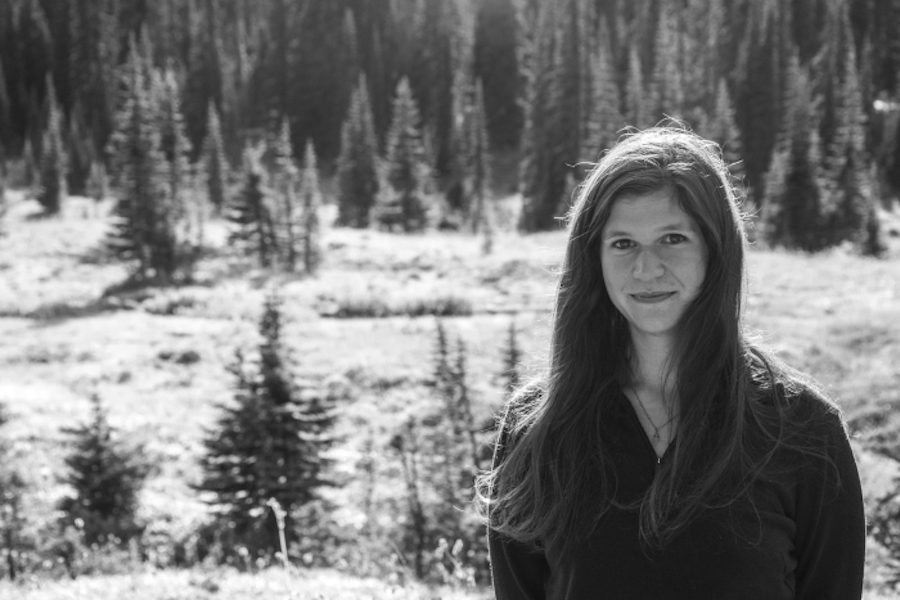
UC Davis creative writing master’s student Becky Mandelbaum was recently awarded the prestigious Flannery O’Connor Award for Short Fiction, a prize that has helped launch the careers of many renowned writers.

“My collection, Bad Kansas, is a book of stories primarily set in Kansas,” Mandelbaum said. “The stories aren’t necessarily ‘about’ anything, although they deal with themes of place and what it means to live in an area often overlooked by the rest of the country.”

The stories in the collection are largely inspired by the 23 years Mandelbaum lived in Kansas, and center on the people she knew there and the stories that she grew up with.

Mandelbaum’s talent was nurtured by the UC Davis creative writing faculty, particularly her mentor Pam Houston, a creative writing professor and short-story author.

“I liked [Mandelbaum’s] work even before I ever met her,” Houston said. “Once we met, we found we had a lot of things beyond the work in common our love of the mountains, hiking and camping, dogs and all animals.”

Houston stated that of all the applicants she screened for the master’s program at UC Davis, Mandelbaum was the one she was most eager to work with.

“What made [Mandelbaum’s] writing stand out for me is her clear and sharp eye for detail combined with a slightly canted and ultimately compassionate world view,” Houston said. “[Mandelbaum] is wise way beyond her 25 years she has more emotional intelligence than many people I know who are twice her age and as a result her characters are complex, utterly authentic and capable of generating deep empathy in her readers.”

The English Department is thrilled that Mandelbaum received the award, according to UC Davis English Department chair John Marx.

“The fact that she recently graduated from the creative writing program in June and already knows where her first book will appear is a big deal in and of itself,” Marx said. “That the book will be published with such an elite company is even more impressive. We all join her mentor Professor Pam Houston in being extremely proud.”

In addition to the Flannery O’Connor award, Mandelbaum has received the Lawrence Art Center’s Langston Hughes Award for Fiction and the Davis Stories on Stage Award for 2015 and 2016.

“I’ve always loved writing, which is really just to say I’ve always loved reading. Books have always been there for me, and writing is just a natural extension of my love for books and language,” Mandelbaum said. “Publishing and submitting work is a tricky business, especially for young writers […] Rather than sell myself short, I decided a few years ago I would let my work speak for itself in the world. I would let the readers and editors decide whether my work was worthy of publication.”
Written by: Jennifer Duong – arts@theaggie.org
Sustainable Animal Agriculture

0
LUCY KNOWLES / AGGIE

How people, plants and the planet work together

Sustainability can be tricky to define — especially as it relates to sustainable animal agriculture.

Capital Public Radio recently conducted a study in which they asked grocery shoppers what sustainability meant to them. Although the answers varied greatly, one common trend among all the answers was the lack of consistency. The people queried had difficulty defining sustainability — in no small part because they didn’t know what it actually meant.

The UN defines sustainability as “meeting the needs of the present without compromising the ability of future generations to meet their own needs.” This is one of the biggest issues scientists face as they strive to attain sustainability. But without universal consensus as to what the word even means, how can a solution be found?

Unfortunately, there is no one solution to sustainability. H.C. Petersen of Michigan State University claims it fits into the 1970s definition of a “wicked problem.” This means no definitive answer to the problem exists, there is no one solution and the cause and effect relationships involved are highly complex.

In order to simplify an otherwise complicated problem, scientists across the United States, including UC Davis animal science professor Ermias Kebreab, have come together to cultivate a simplified and understandable definition for this large problem. The result: a view of sustainability that consists of a triple bottom line — three categories that must be taken into account in order for something, whether it be design or agriculture, to be considered sustainable.

The first category is the planet. In order for something to be sustainable, it must be environmentally viable. The UN is right to say the present environment cannot be compromised in order for future generations to maintain the same quality of life seen today.

The second category is people. Sustainability must be socially viable, in relation to food affordability and changes that would directly impact the human population.

Finally, sustainability must have profit. If something is not economically viable, there is no point. Wasting money will only have detrimental effects on future generations, so it must be taken into account. It can be easy to remember the three Ps: planet, profit, people. Seems easy, right?

But there still seems to be a vital piece missing. If we’re talking about sustainable animal agriculture, where are the animals? Don’t they play an important part in reaching sustainability?

The three Ps above were designed with animals in mind. They consider the environmental, social and economic impact of livestock — which all make up essential pieces of attaining sustainable animal agriculture. So much research today is driven by the environmental impacts of livestock.

When considering livestock, humans must also be taken into account. People constantly encroach upon agricultural regions and cause a lot of auditory, olfactory and particle pollution. This also includes the prices producers can charge, which are controlled by consumer demand, says Frank M. Mitloehner of the UC Davis Department of Animal Science.

Another aspect that many might disregard is animal welfare. Animals perform better when they live in safer and healthier environments — for both themselves and the people who handle them. This includes knowing how to properly care for these animals in order to minimize stress. When a dairy cow isn’t stressed, for example, it is able to produce more milk.

It’s all about making the animals happier and more comfortable. The better they’re treated, the more efficient they are in production. Their overall carbon footprint is also reduced — essential if livestock agriculture is to meet the three Ps of sustainability.
Written by: Alice Rocha – asrocha@ucdavis.edu

UC Davis: the coolest school around

0
CHELBERT DAI / AGGIE

UC Davis makes top 10 in Sierra Club’s cool school rankings for fifth year in a row

UC Davis has once again ranked in the top 10 of Sierra Magazine’s “cool school” rankings for sustainable universities and colleges. Out of 202 competitors across the nation, UC Davis ranked at number eight.

The Sierra Club, a nonprofit environmental organization, ranks schools as “cool schools” based on their total sustainability with a specific focus on areas including campus energy use, transportation and fossil fuel divestment. For the past five years, UC Davis has consistently ranked in the top 10.

“We’re getting public recognition for the work that we are doing to make our operations more sustainable [and] to conduct research that provides solutions and opportunities to make the world more sustainable,” said Camille Kirk, assistant director of sustainability at UC Davis.

This year, applicants participated by completing an extensive questionnaire through The Sustainability, Tracking, Assessment and Rating System (STARS), which measured their sustainability performance. According to the Sierra Club, UC Davis ranked high in part to “how its students live,” since 83 percent of Aggies commute to class sustainably by walking, biking or using public transit.

Many students are also involved in environmental clubs on campus. Campus Center for the Environment (CCE) is a student-run unit of ASUCD that promotes student involvement in campus sustainability efforts. Located in the EcoHub, the CCE holds many projects throughout the year to encourage involvement.

“For Project Compost, we pick up compost from different locations on campus […] and we use an electric vehicle to drive it to our Windrows compost pile by the student farm,” said Mia Kawamoto, third-year environmental science and management major and CCE pile maintenance and compost education director. “Project Garden is another big one we have a lot of garden workdays for volunteers to come and help.”

The CCE also hosts “Project ART,” in which volunteers pitch and develop “green” ideas to promote change in the community and composting workshops to aid in waste reduction. By participating in Project Challenge, volunteers participate in monthly challenges to become more environmentally-conscious individuals.

“We’re a resource for people who are interested in sustainability and want to learn more about compost and ways to get involved on campus,” Kawamoto said.

Besides students doing their part to help keep the campus sustainable, UC Davis has undertaken many projects in water reduction, waste reduction, transportation, academics and energy efficiency.

In 2015, the Office of Environmental Stewardship and Sustainability worked with SunPower Corporation to build a 16-megawatt solar power plant on campus.

“[The solar plant] is the largest known of any university campus,” Kirk said. “It’s going to reduce our greenhouse gas emissions by 14,000 [which] is a huge bite out of our emissions portfolio.”

UC Davis achieved 27 percent in water reduction in the fiscal year 2015 to 2016. Placing recycled wastewater in campus cooling towers, a closed system, chills and heats that water to provide heating and air conditioning for buildings on campus.

Along with water reduction, campus efforts to reduce waste have been ongoing. University of California has a goal of getting to zero waste by 2020. In addition to recycling, the office of sustainability urges students to compost.

“Last year, we reported [to the University of California Office of the President] a 73 percent diversion rate [from landfill], and that means we’ve still got a ways to go,” said Sue Vang, waste reduction and recycling program manager. “The campus did an audit of its waste stream in 2013 and found that 40 to 60 percent of what was being thrown in the landfills was actually food or organic waste that could be composted.”

In terms of academics, the Office of Environmental Stewardship and Sustainability works with staff and faculty to create projects that students can work on in class. UC Davis offers approximately 300 courses on sustainability in various departments.

“[The cool school ranking] helps create more learning opportunities for students, and helps us get more ideas from faculty,” Kirk said. “Whether or not that translates into a better ranking is not why we do it. We do it because we’re here to deliver education,  and the staff wants to be a part of that where it’s appropriate and possible.”

The variety of environmental and sustainability projects and contributions happening on campus all help make UC Davis a “cool school.”

“It takes a lot of people doing a lot of work everyday to move us towards our performance targets,” Kirk said. “Having these kinds of rankings helps us […in] making the case for why pursuing sustainable actions can be helpful to the campus, and can be important to students and faculty.”


Written by: Fatima Siddiqui — features@theaggie.org

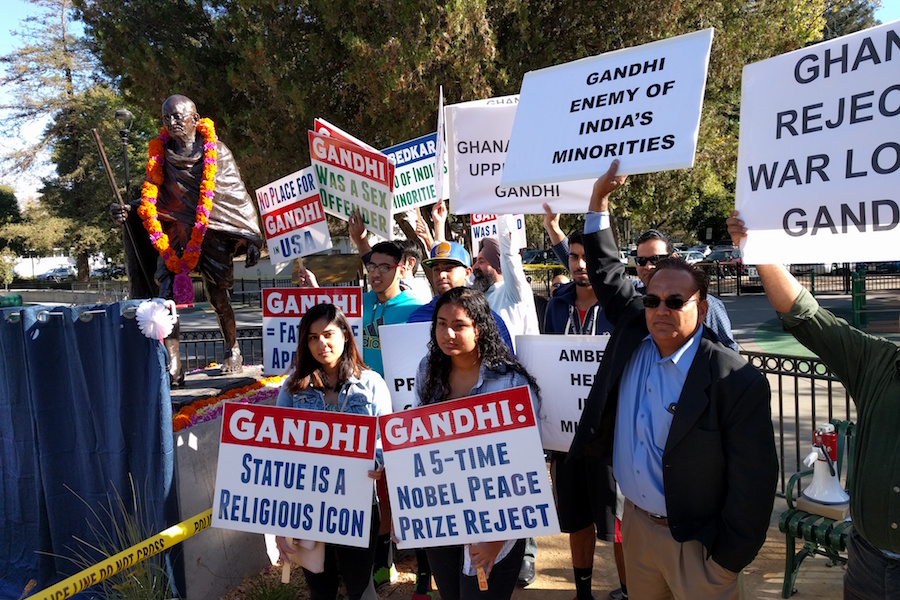
Gandhi statue ignites controversy in Downtown Davis

AMAR SHERGILL / COURTESY

Protests erupt at statue unveiling on International Day of Non-Violence

During a weekly excursion into downtown — whether for the farmer’s market or to get some much-needed shopping — passersby might notice a notable new addition to Central Park: a bronze statue of Mahatma Gandhi.

The statue, which showcases Gandhi mid-step and covered with a shawl, has garnered significant controversy both before and after the completion of its construction. Proponents of the new addition to Downtown Davis, including Madhavi Sunder, senior associate dean of UC Davis Law School and president of the Davis School Board, commend it as a physical representation of harmony.

“Gandhi is the international symbol for peace and nonviolence,” Sunder said. “The United Nations even decreed Gandhi’s birthday, [October 2], as The International Day of Non-Violence. His face is synonymous with the peace symbol.”

As for its Davis location, Sunder connects Gandhi to Davis’ history as a nonviolent city committed to maintaining a safe and peaceful space for residents.

“In fact, members of the Gandhi Statue for Peace Committee from the Davis community have lived here for decades and were even among the protesters during the Vietnam War stopping trains here in Davis,” Sunder said.

However, leading up to and at the unveiling ceremony of the statue, members of the public spoke out against the installation, citing Gandhi’s past as a reason to keep him from encroaching on the present Davis landscape.

“At a time when scholars in California, at Harvard, in Europe, Africa and India are publishing articles regarding the government of India’s propaganda campaign, which uplifts the bigotry, racism and pedophilia of Gandhi, in order to obscure their own ongoing brutalization of minorities in India, it is very curious that the city of Davis, and in particular, scholars and professors from UC Davis, would chose to ignore the repugnant history of Gandhi and to erect this statue instead,” said Amar Shergill, Sacramento attorney and opponent of the Gandhi statue.

There are some who believe this controversy is largely unwarranted. Sham Goyal, a UC Davis professor who proposed the installation of the statue to the City of Davis, believes that a statue of Gandhi in a college town will help inspire future generations, and hopes that the protests will be put to rest.

“Gandhi died 68 years ago and none of this controversy ever existed while he was alive, or even after many decades after his death,” Goyal said via e-mail.

Davis isn’t the only city facing backlash over the installation of a Gandhi statue. Academics and students at the University of Ghana are calling for the removal of a Gandhi statue that was placed on campus.

An online petition, which began circulating online as early as September, is seeking signatures to remove the statue from campus grounds. The petition cites Gandhi’s allegedly racist remarks — his letters written during his time in South Africa as suggestive of his racism — as reasoning to remove the statue. The petition has received 1,765 signatures to date.

“I think that a better option would have been to put a statue or some other piece of art in the Davis Art Center, where you can have a more complex discussion of the positive aspects of Gandhi, and also his repugnant history,” Shergill said.

Those in favor are prepared to stand by the statue of Gandhi and his message of peace, despite the negative outcry.

“Davis has always been a peace-loving town,” Goyal said via e-mail. “[…] We are a nuke-free zone. By having a Gandhi statue here, it’s making a very loud and bold statement that this city is committed to peaceful and nonviolent ways of life.”
Written By: Samantha Solomon – city@theaggie.org

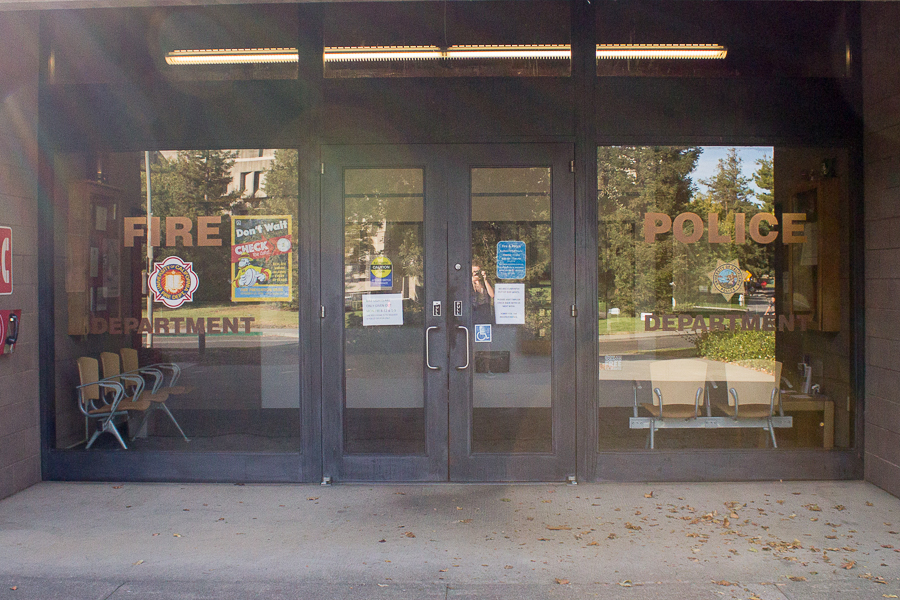
UC Davis Police Chief Carmichael moves to the University of Oregon

LUCY KNOWLES / AGGIE

Jennifer Garcia named Interim Chief during search for new police chief

After 14 years at The UC Davis Police Department, UC Davis Police Chief Matthew Carmichael resigned from his position at the end of August in order to move to the University of Oregon. Jennifer Garcia was named the new interim police chief in the meantime.

“I have some big shoes to fill because of Matt Carmichael,” Garcia said. “I have been at the university for almost 22 years and I am personally dedicated to UC Davis — that’s why I accepted this position even though I knew it would be temporary.”

Garcia has what it takes to be the intermediary between him and his successor, according to Carmichael.

“Chief Garcia is definitely prepared to be your chief,” Carmichael said via e-mail. “She rocked it as a lieutenant and I am confident will do the same as chief […] Having a police department that understands the needs of our students and applies a true community policing philosophy to how we approach safety and security on campus was always my goal. Chief Garcia truly understands and adheres to [that] in everything she does.”

Carmichael, who has already begun his new job at the University of Oregon, believes that he can use his experiences from UC Davis to help him move forward in his career.

“My experiences at UC Davis […] have prepared me to be a better chief and, quite frankly, a better person,” Carmichael said via e-mail. “I had my share of mistakes and when I was successful it was only because of the support of many amazing people on campus. I wish I could send each and every one a thank you card but hopefully they know who they are.”

With Garcia serving only temporarily, the search is already underway for a new chief for UC Davis.

“[The] Chief selection processes usually take about six months,” Garcia said. “[The administration has] a search committee — they have a company they hire, basically a head hunter. [The company] does a nationwide search and that company vets through the applications and sees that the qualifications meet their standards and such.”

Having undergone the hiring process himself, Carmichael offered his ideal qualities for a new chief, which include being caring, compassionate and demonstrating the philosophy of true “community policing.”

According to Kelsey McDonald, student assistant to the chief at The UC Davis Police Department, this concept of “community policing” is one of Carmichael’s defining characteristics.

“Having a strong sense of community I think is number one [when looking for a new chief],” McDonald said. “Something that I loved about Chief Carmichael was that the community was his priority — both the safety of the community and interacting with the community.”

In her opinion, Garcia believes the most important quality a university police chief should possess is good communication.

“We need to have interaction between our community, which is mostly students, and make sure we are open to having those conversations about what good police work is and what bad police work is,” Garcia said.

McDonald looks forward to other students having the chance to experience his policing skills.

“He was wonderful,” McDonald said. “I really, really enjoyed working with him. As sad as I am to see him go, I am really happy that he will be able to get his really great police mindset out to other university campuses. I know that the University of Oregon is really lucky to have him.”
Written by: Kenton Goldsby – campus@theaggie.org

UC Davis ranks in top ten public universities

CHARLES MIIN / AGGIE

UC Davis in top ten public universities for the U.S. News and World Report and Wall Street Journal/Times Higher Education College Ranking

UC Davis ranked tenth in U.S. News & World Report annual rankings of the top public universities in the nation, released on Sept. 12. The university tied with UC San Diego among national public universities and was 44th in a six-way tie among all national universities. On Sept. 28, UC Davis took sixth place in the Wall Street Journal/Times Higher Education College Ranking.

According to Ralph J. Hexter, Interim Chancellor of UC Davis, the university high ranking is due to the high level of education it provides students.

“UC Davis is one of the world’s preeminent universities, and we’re proud to be recognized for our leadership in educating the next generation of thinkers, doers and leaders,” Hexter said in a statement for the UC Davis website.

This year, Davis also ranked 28th among undergraduate engineering programs whose highest degree is a doctorate in a four-way tie with Harvard University, The Ohio State University and the University of Southern California. It placed 42nd for best undergraduate education by high school guidance counselors in a seven-way tie with universities such as Fordham University in New York City, Purdue University in West Lafayette and Indiana and Tulane Universities in New Orleans.

UC Davis also remained in the top ten “Cool Schools” in Sierra Magazine’s ranking of more than 150 of America’s greenest colleges and universities in 2015, coming in at eighth place and making this its fifth appearance in the top ten within the last six years.

It also maintained its place as 85th overall in the QS World University Rankings for 2016-17 and first in the subject of veterinary science. QS rankings are based on six factors which include academic reputation, employer reputation and student-to-faculty ratio.

UC Davis is also among 381 schools in The Princeton Review’s 2017 edition of “Best Colleges” for undergraduate education, putting it in roughly the top 15 percent of the nearly 2,500 four-year colleges in the United States.

Academics is the main reason for each school’s ranking on the list, but it also considers surveys in which students rate everything from financial aid to on-campus food. UC Davis earned a seventh place ranking for “best health services” and 40th for “green colleges.”

Earlier in the year, UC Davis was also recognized by Washington Monthly magazine as a top-10 national university based on contributions to the “public good” in rankings published in its September to October issue, coming in 10th place out of of 303 national universities, public and private.

This was based off social mobility, how many low-income students are recruited and graduate, educational research that produced Ph.Ds and scholarships and service that encourages students to give something back to their country.

Carina Tejada, a fourth-year community and regional development major, believes that UC Davis ranks well because of its constant effort to improve in all aspects, such as betting the environment and building and housing-structure developments.

“I think UC Davis ranked well in the U.S. News and World Report due to its improvement and work within sustainability such as solar panels and its friendly community,” Tejada said. “Through this, with having a campus focused upon the improvement of the environment as well as the education of students, I can see why it ranked within the top 10. It continues to rank well because of its continuous improvements upon helping the university grow by building new buildings and welcoming more students.”

Mirelle Sandoval, a second-year psychology, Italian and Spanish triple major, thinks UC Davis excels because of its various programs and continuous effort to offer different opportunities for students.

“We have top-notch programs in the sciences [and] if you’re interested in agriculture or vet medicine, then we are number one for sure,” Sandoval said. “We have many new facilities, and many professors who have published a lot of important research or won many awards in their respective fields. This has helped us top other schools and offer the education and college experience.”

Fabiola Perez, a second-year biochemistry major, appreciates that UC Davis has offered so many opportunities and resources for her and other students.

“My education experience here has been great so far,” Perez said. “There are so many resources for me to succeed and take advantage of, no wonder it is ranked so well amongst so many other public schools. […] I know I made the right choice by choosing to come to Davis, and it’s nice to hear I’m at one of the best schools in the country.”
Written by: Demi Caceres – campus@theaggie.org

UCs: overcrowded and underfunded

0
HANNAH LEE / AGGIE
HANNAH LEE / AGGIE

Quality of UC education being compromised by increased enrollment

The University of California (UC) Board of Regents approved UC President Janet Napolitano’s plan last fall to increase enrollment of California undergraduates in the UC system by 10,000 over the next three years. The plan, part of the deal that Napolitano made with the California State Legislature to enroll more California students in exchange for more state money, will present logistical challenges for all UC campuses.

9,500 new undergraduate students enrolled at UC Davis this fall, a 1,100-student increase from last year. While the Editorial Board agrees that increasing access to UC Davis is in line with a public university’s mission of providing education to all, the truth is that our campus is woefully unequipped to handle this influx of new students.

There is not nearly enough bike or vehicle parking, lecture hall space is so limited that classes are being held in the Mondavi Center or the ARC and crucial resources like Student Health and Counseling Services and the Financial Aid office are understaffed. This overcrowding has a negative impact on the quality of our education. When classes are held at the far-off Medical Sciences building, some students may not be physically able to go to class. When students have to wait an extended period of time to schedule an appointment with a counselor, they are at risk of growing disheartened and not seeking help at all.

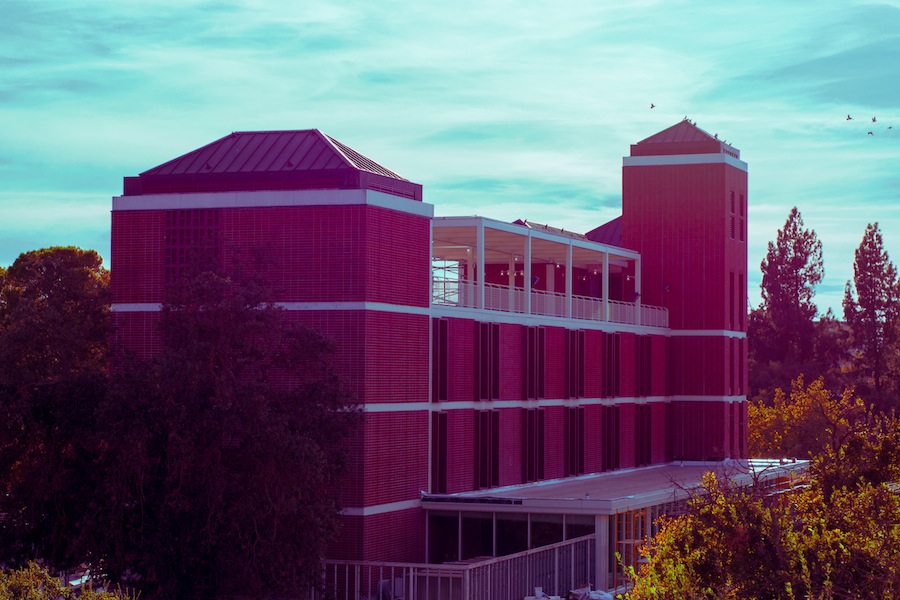
The campus has taken measures to try to make this transition as smooth as possible: new student housing is being built in the Tercero Residence Hall, construction of a new International Center concluded this summer and the newly built Ann E. Pitzer Center will function as both a recital space and lecture hall. But for every new building, there seems to be another unfinished construction project on campus disrupting student life. And when new students start searching for off-campus housing in January, the bump in enrollment means that there will be 1,100 more students looking for affordable housing in an already-crowded market with a vacancy rate lower than one percent.

This is not a problem unique to Davis. Campuses across the UC system are straining to accommodate the wave of new students. At UCLA, triple occupancy rooms now account for 73 percent of all student housing, and the Westwood campus is quickly running out of room for expansion. Because of the lack of student housing at UC Berkeley, some students are being housed at Mills College in Oakland a 25-minute shuttle ride away.

Increasing enrollment in exchange for funding is not a permanent or sustainable solution. Campuses can’t just keep increasing their enrollment numbers in exchange for the funding they so desperately need. Instead, the Editorial Board believes that the state must make funding the UC through state funds a priority.

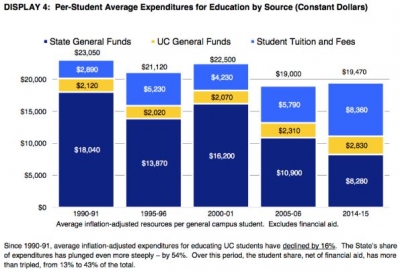
State funding of the UC has plummeted over the past 30 years while student tuition has increased dramatically. The graph below, taken from a 2014 UC regents meeting, illustrates that the state’s share of expenditures for education has dropped by 54 percent since 1990-91 while student share has more than tripled.

Infographic

The UC is overcrowded and underfunded, and the quality of a UC education is compromised. This increase of new students will not fix the problem that has been developing over the past 30 years; the real solution is for the state to start investing more seriously in public education.

Student Sounds: Starrsha

JG PHOTOGRAPHY / COURTESY

Davis band talks shoegaze, laziness and their new EP

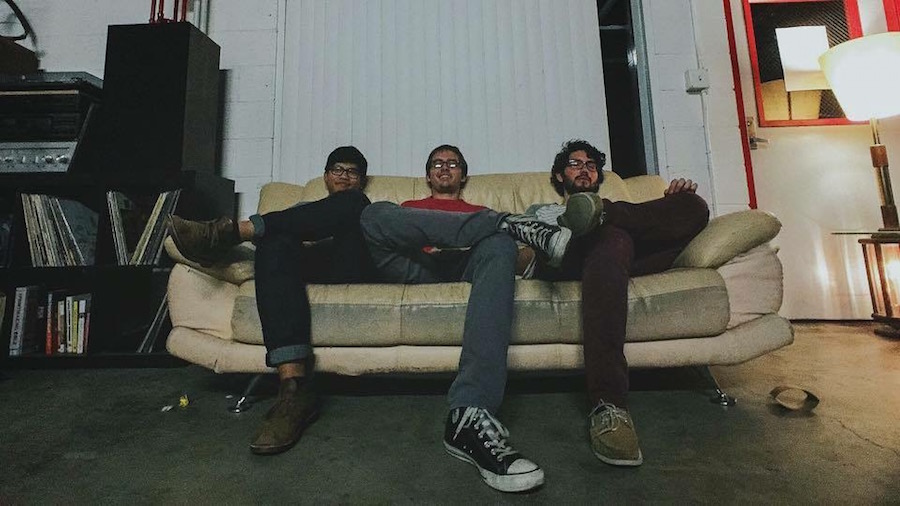
“We all live together — and you would think that’s a good thing — but because there’s no scheduled practice, and people don’t have to be somewhere, we get kind of lazy,” explained Mitchell Rotter-Sieren, the drummer for Davis band Starrsha.

“Lazy” came up surprisingly frequently during my interview with the band, especially considering Starrsha is comprised of Rotter-Sieren, a fourth-year chemical engineering major; JE Paguyo, a fourth-year mathematics major; and Carlos Pineda, a fourth-year psychology major. Though it was used in reference to their lackadaisical practice schedules and the delayed release of their new music, such self-proclaimed laziness also manifests itself in their sound.

Whether it’s Pineda’s hushed vocals seamlessly intertwined with his echoey guitar or the indistinguishable layers of Paguyo’s bass and Rotter-Sieren’s drumming, their psychedelic sound is of the laid-back variety. (That’s not to say it was lazily produced — it was professionally mixed, and sounds it.) Their EP is a complex collage of hazy sounds that places them at the forefront of the shoegaze revival.

The band’s taste in music is “a Venn diagram of music palette[s],” Rotter-Sieren said. His personal taste ranges from garage rock to electronic, while Paguyo’s centers around dream-pop and Pineda’s oscillates between reggae and punk. “But,” he added, “we all love shoegaze, and that’s the center of the Venn diagram.”

Their sound is most prominently influenced by shoegaze, a subgenre of indie rock that arose in the UK in the late 1980s that is typically characterized by blurring distorted guitars, feedback and vocals into one indistinct sound. But “everything really just melts together in terms of influences,” Paguyo said.

Each track is heavily layered with the diverse sounds typical of shoegaze, but the vocals — as Pineda pointed out — are the most interesting component in that they are essentially unrecognizable.

“If you listen to the genre, usually lyrics become more of another instrument. They don’t pop out like they do in other genres. I center more around the overall sound rather than putting something out there that people will be able to understand, [and] my voice more becoming another instrument,” Pineda said.

But it’s not just Starrsha’s sound that draws influence from shoegaze; their punk-ish, DIY aesthetic also pulls influence from the genre — known for its small, dedicated fanbase — that Starrsha calls a cult genre.

“There’s a residual following from the 90’s, and those fans focus on the 90’s stuff, but new bands show up and they [still] show support. It’s a very small community relative  to everything else,” Pineda added.

With support from other local bands, KDVS and members of the underground scene, Starrsha eagerly anticipates the distribution of their new music. Already available online (including on Spotify, Bandcamp and Soundcloud streaming), the three plan on circulating physical tapes and CDs as well.

“I’m just excited about having something to hold […] people just forget if they see you once [live] and never see you again. So it’s just something to give out,” Pineda said.

With multiple upcoming shows, the recent release will aid in gaining more publicity as well.

“It will help with booking shows outside of Davis, just to have something to show,” Paguyo said.

The production techniques of the album were mixed; although the band recorded and produced most of the album themselves, they also had professional assistance.

“Nowadays it’s really easy to just stick yourself in your room and have all the equipment ‘cause it’s cheap enough to do it,” Pineda said. “So that’s the way we did it.”

However, when it came to mixing and mastering, the band decided to call in outside help.

“We had to contact people to mix it and master it, and had to make connections that way. We ended up getting the guy from Ringo Deathstarr to mix our album,” Rotter-Sieren said.

Deathstarr, a prominent shoegaze musician, had an influence on Starrsha that extends beyond the production and into their sound. One of his songs, in fact, was the inspiration for Starrsha’s name. After a recent performance hosted by KDVS, Starrsha shared the stage with their idol, who ended up sleeping on the band’s couch. (Their home, it’s worth noting, is called “The Starrship.”) Letting Deathstarr crash on their couch provided the band both with valuable information on funding and record labels and a great story.

Not that the band is in short supply of good stories. Whether it’s their semi-famous status on Yik Yak as “That Avalon band” (they used to practice in Rotter-Sieren’s bedroom of the South Davis apartment complex), or the time Rotter-Sieren discovered party-goers using his drum as drug paraphernalia — (he was reportedly too lazy to deconstruct the drum set after a show and later discovered it at the party) — their tales sound like the ones bands tell, after making it big, about “the early days.”

After the conclusion of our interview, the band walked one way, stopped, mumbled, “We’re indecisive,” and turned in the opposite direction. This was followed, of course, by Rotter-Sieren shouting from down the street, “This is why it took us a year to release an album.”

But good things take time.

Check out Starrsha at their next show on Oct. 15 at Sophia’s Thai Kitchen.
Written by: Ally Overbay – arts@theaggie.org

A textbook marketplace in the palm of your hand

AMY HOANG / AGGIE
AMY HOANG / AGGIE

Davis Senior High School students develop smartphone app for local textbook sales

High prices and long bookstore lines make buying textbooks every quarter a rough experiences. Amazon, Facebook groups and virtual textbooks are some attempts to solve this problem, but can still prove to be inconvenient. UC Davis students have two Davis high schoolers to thank in creating a new solution to this problem: Bookbag.

Bookbag is a newly released Android app that provides a community for students to sell college textbooks to one another. Users can post listings of textbooks they want to sell, search for specific books they need and set up notifications for when certain books are available. The app was developed over the summer by Davis Senior High School (DHS) students Sheehan Selim and Sam Chung. Selim understands the difficulty college students have with textbooks, having to buy books for a course he took at Sacramento City College over the summer.

“I know that college textbooks are really expensive,” Selim said. “Since [many of] the same books are used for every class basically every quarter, there’s no need for a student to buy new textbooks and sell them [back] for next to nothing at bookstores.”

Bookbag is exclusive to textbook sales as well as being in the form of a smartphone app, which provides a quick and convenient way for students to search for and sell books to other students at affordable prices. The app is currently only available for Android phones, but the ambitious high schoolers are planning to work with an iOS programmer to make it available for iPhones as well.

“Because [the app is available] on smartphones, it’s much quicker and much easier […] to post pictures [and] books,” Selim said. “There obviously are [other] platforms right now for selling textbooks […] but I wanted something more. I wanted something that emphasizes community.”

Bookbag includes a profile feature for displaying personal and professional information for transparency, as well as chat feature for direct contacting. Users also have the option of connecting their Facebook accounts with the app.

“We want to make sure everybody [on Bookbag] is real, and they have a safe and cheap way to get books,” Selim said.

When Selim came up with Bookbag as a way of giving back to the Davis community, he partnered up with Chung, an experienced Android programmer for the Davis High School (DHS) robotics team, and the two students began the project in May.

“I used a developing environment called Android Studio, which you can use Java and XML to design and program an Android application,” Chung said.

Over the summer, the pair researched, designed and programmed the app. The two students faced several challenges throughout the project, such as traveling abroad during the summer and learning new skills necessary for the development process.

“I’ll say over 80 percent of the functionality and programming part of the app was new to me,” Chung said. “I had to self-teach throughout the summer – it was tough. There were a lot of bugs.”

Nevertheless, they overcame these challenges and successfully completed the project, and released the app in early September.

“Robotics taught me that it’s not about the skill of a programmer [… it’s] if they have the will to continue […] to search for new ways to fix a problem,” Chung said. “This project really taught me how to persevere and problem-solve.”

Selim began programming the summer after his sophomore year, and the app’s success has even ended up changing his career plans.

“I wasn’t too sure if I was interested in computer science, [but] after this, I’m really convinced that I want to try to develop more apps. Now I’m considering majoring in computer science,” Selim said.

Currently, Selim and Chung are publicizing Bookbag by reaching out to UC Davis students to gather feedback from new users in order to improve the app. If Bookbag proves to be a success on the UC Davis campus, they plan to further expand to students on other nearby campuses.

“There are several Facebook groups [selling textbooks] right now, but I think that Bookbag is a really interesting idea,” said Duke Cha, a graduate student in the department of cinema and digital media. “If [Bookbag] were to be something that is picked up, we [might be] able to [sell] textbooks [on more than] one campus.”

The platform through which Bookbag is used makes it an easy download for college students.

“I can definitely see how it would be more convenient for some,” said Biftu Mume, a fourth-year microbiology major. “However, I personally tend to use things like Facebook on my phone anyway so [the experience] would be the same for me.”
Written by Jennie Chang — features@theaggie.org

UC Davis establishes nation’s first state gun violence research center

PRAIYACHAT [CC BY-SA 3.0] / CREATIVE COMMONS
California will fund $5 million to the research center

On August 29, University of California (UC) President Janet Napolitano announced that the first state-funded firearm violence research center will be established at UC Davis. This program will spearhead scientific information to aid the development of effective gun violence prevention programs and policies.

The research center will be led by Garen Wintemute, M.D., M.P.H., an emergency department physician and one of the nation’s most recognized authorities in firearm violence research for the past 30 years.

The State of California will give the newly established center will be given $5 million over the next five years. Jay Dickey, a former congressman (R-Ark.) and a member of the National Rifle Association, and Dr. Mark Rosenberg, past director for the Centers for Disease Control and Prevention’s injury prevention program, wrote a letter to the California Legislature firmly backing the creation of the gun violence research center.

In a UC Berkeley “Gun Violence in America” interview, Wintemute said that the research center’s first projects will start with the “basics.”

We are going to look in detail at the epidemiology of firearm violence in California,” Wintemute said. “We are also planning to do a large-scale survey to learn about the prevalence of firearm ownership, factors associated with firearm ownership and the benefits that firearm owners attribute to firearm ownership.”

In the interview, Wintemute also said that the firearm violence research center will start with a core group of four investigators from the Violence Prevention Research Program at the UC Davis Medical Center. The additional funding will bring two more faculty members and two more analysts to the team.

“We’ve seen for the past four years now, a breadth and a depth of concern in society about firearm violence that simply was not there before,” Wintemute said.

Bettina Moore, a third-year economics major at UC Davis, believes that the center will have a positive impact.

“I think [the firearm violence research center is] great,” Moore said. “There is a lot of stuff this country needs to do about gun violence. It is good that everyone is aware about that.”

Rebecca Nelson, a third-year psychology and Spanish major, cited recent police brutality against Black individuals as a reason behind why the research center is important.

I think it’s really important because we definitely have a history of gun violence in the U.S.,” Nelson said. “It’s unnecessary that we have assault rifles legal. There is a huge problem with the militarization of our police, especially in regard to racial violence and the killing of many unarmed Black people. I definitely think it’s really important to research gun violence in light of recent events.”

On Oct. 15, UC Davis will propose a multi-campus plan for the center to the UC Office of the President for approval. The plan will propose and prioritize initial research projects, develop a timeline for accepting applications for small grants, outline efforts to increase philanthropic support to sustain the research and define an annual operating budget and structure for reporting activities and accomplishments.

“The existence of the center and the work that it will do will create a foundation of evidence that will not exist anywhere else,” Wintemute said in the UC Berkeley interview. “I can’t put into words how thrilling this is.”

Written by: Yvonne Leong – campus@theaggie.org

Changes in Senate

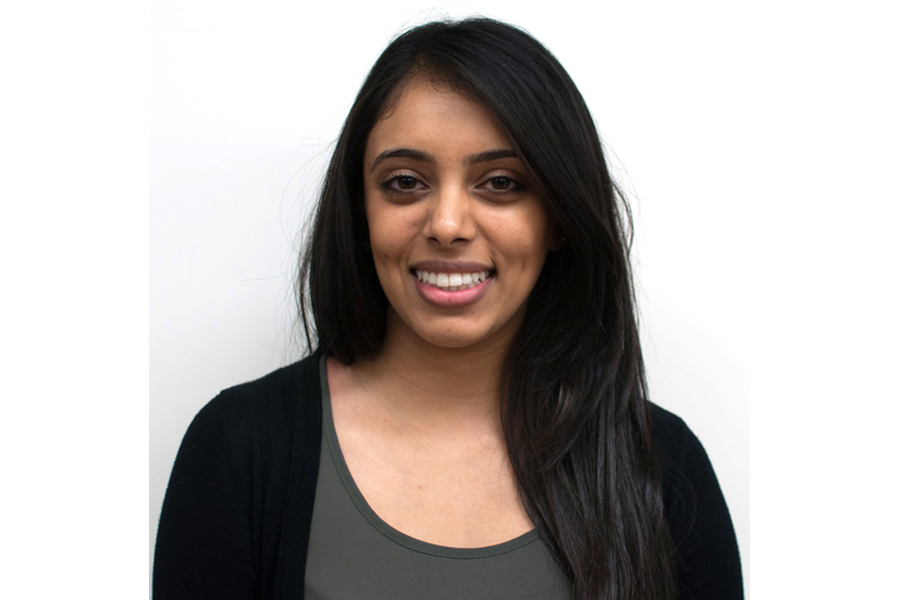
Puneet Dhindsa (JAY GELVEZON / AGGIE)

ASUCD Senator Puneet Dhindsa resigns, Julie Jung replaces former senator Georgia Savage

On Friday, Oct. 7, ASUCD Senator Puneet Dhindsa resigned in an email to ASUCD President Alex Lee, Vice President Abhay Sandhu and Dhindsa’s fellow senators.

By Friday, we will conduct a countback election with the fall 2015 candidates to see if it produces a replacement [for Dhindsa],” Lee said via email. “If not, then there will be an appointment process [in] which I as president select an interim senator. If we go down the appointment process we will probably not have a new senator for two more weeks.”

Dhindsa’s resignation follows the Oct. 6 interim senator appointment of second-year political science major Julie Jung, former executive deputy chief of staff to Lee. Jung is replacing fourth-year political science and gender, sexuality and women’s studies double major Georgia Savage, who resigned from ASUCD to become the director of UC Davis’ Office of Advocacy and Student Representation (OASR).

“While I did not want to leave before the end of my senate term, I am confident in my decision and look forward to a fruitful year as director of OASR,” Savage said via email.

While in office, Jung hopes to combat food insecurity on campus and expand student services, such as creating an on-campus Citibank ATM for students.

“I mainly applied because I wanted to be the support system that students could count on,” Jung said via email. “[…] I love serving my community and hope to benefit the UC Davis campus during my term, even if it’s just a little bit.”
WRITTEN BY: Alyssa Vandenberg – campus@theaggie.org

Summer Snapshots

Aggie photographers document their vacation through photography

I took this photo while my friends and I were visiting Santa Barbara. They were actually watching a drone that one of my friends was (illegally) flying along the coast of the beach. (BRIAN LANDRY)
It doesn’t get more London than this — Big Ben & Unitrans. (DANIEL TAK)
Over the summer I travelled to Florida and visited many places including St. Augustine, The Kennedy Space Center, Disney World and Universal Studios Orlando. This picture was taken right after a rainstorm in St. Augustine. (NICKI PADAR)
This summer, I was lucky enough to live close to Lake Merritt. I was able to go on a run around the lake and watch the sunset every week. On this day, I was able to capture my brother and his fiance enjoying the scenery together. (MONICA CHAN)
I started off this summer taking a trip to San Francisco with my family. We crossed the Golden Gate Bridge and visited Vista Point at night to get a full view of the city. (ALEXA FONTANILLA)
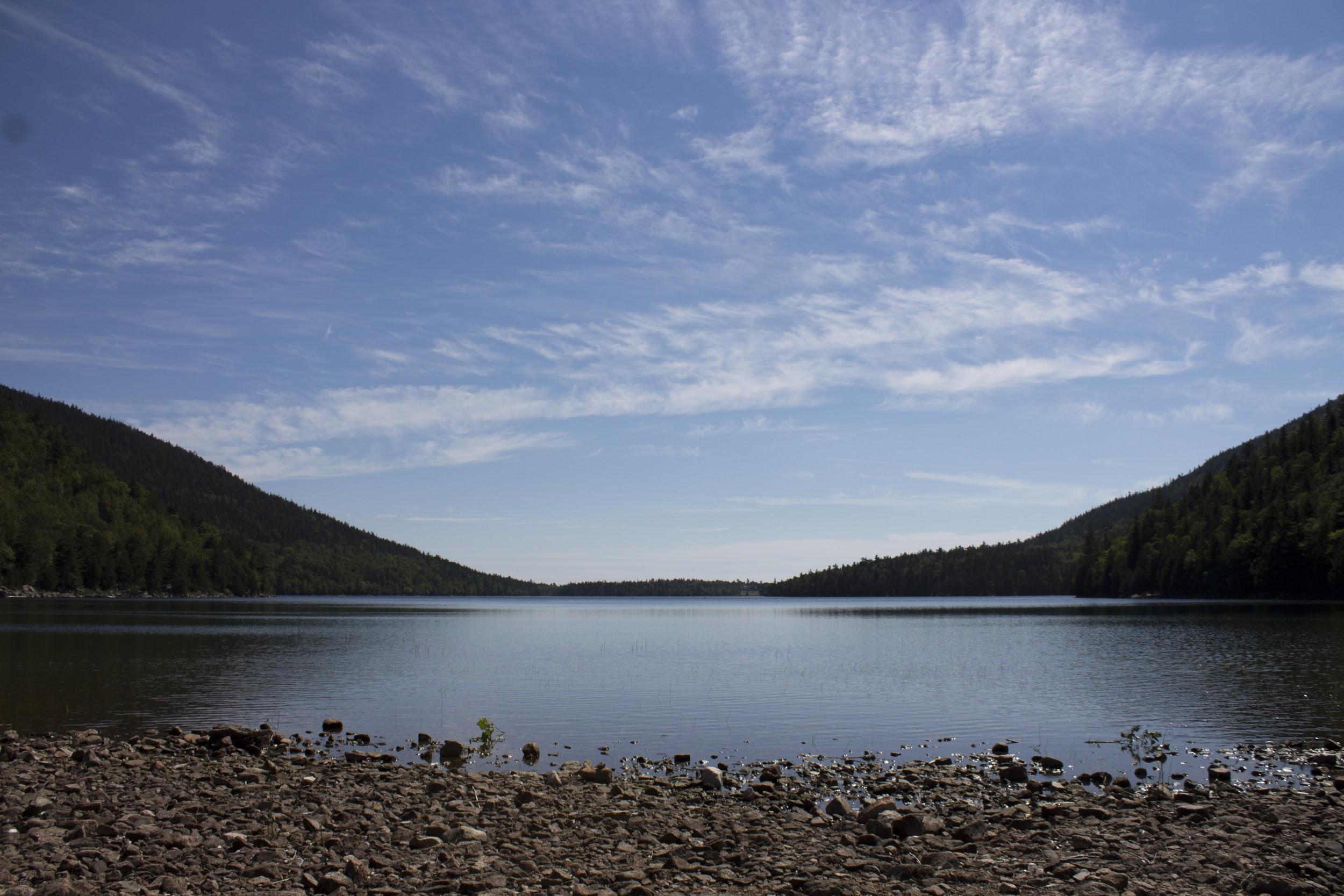
I took this photo at Jordan Pond in Acadia National Park. You can enjoy tea and popovers at the Jordan Pond House which overlooks the spectacular pond. (LUCY KNOWLES)
A weekend getaway from summer school and my first time visiting Tahoe. This shot was taken at Emerald Bay, where my family and I enjoyed a nice hike overlooking the area. (NADIA DORIS)
Thousands of years ago, gladiators entered these arches in hopes of gaining fame and fortune. Now, tourists enter for a glimpse into the past and a quick stop at the souvenir shop. (Rome, Italy) (ANH-TRAM BUI)
I spent part of my summer studying abroad in France. I decided to stay an extra week after the program in order to fully enjoy my trip while capturing photos that I had been dying to take. This one in particular was taken the night before I flew back to California. Across from the Arc de Triomphe was a small “safe” space in the middle of the street for people to stand in in order to take photos with its entirety. I obviously had to take advantage of that; jumping into the middle of traffic was worth it for this photo. (BRIANA NGO)
This summer I got the chance to take a boat ride on the Grand Canal in Venice which topped my entire trip to Italy. (VENOOS MOSHAYEDI)
Taken at Lake Tahoe during a family trip! (AMY HOANG)
I had the great honor of being invited out to capture life from one of the stages at SF Pride 2016. (CHARLES MIIN)
There’s nothing like summer days in Southern California spent at the beach. Beautiful views and beautiful weather. Laguna Beach, CA (BECCA RIDGE)

Compiled by: The California Aggie Photo Desk — photo@theaggie.org

Brady’s back

0

KEITH ALLISON [CC BY-SA 2.0] / FLICKR
Once again, I find myself in awe of how the Patriots just seem to get it done year in and year out despite the various hurdles they always seem to face. The last time the New England Patriots had single-digit wins was 2002, that is absolutely incredible. They haven’t just been a paragon of consistency for the past 14 years — they’ve been a paragon of excellence. At the helm of this juggernaut are obviously Bill Belichick and Tom Brady, but for the first four games of the season the latter wasn’t there to man the offense.

We’ve all heard about this by now. The never-ending stupidity of the Deflategate scandal has resulted in a four-game suspension for Tom Brady to open the 2016 season.

If you’ve been living under a rock for the last few years, Brady was accused of involvement in deflating the footballs used in the 2015 AFC championship game against the Colts, which sparked an investigation that ultimately concluded in his suspension.

After a long fight against NFL Commissioner/Dictator Roger Goodell, Brady decided that the Patriots were good enough to survive the first quarter of the season without him, so he abandoned the fight against Goodell’s ruling and accepted the suspension. He was right.

Despite a week-four loss to the Buffalo Bills in which the offense wasn’t able to muster any points, the Patriots are 3-1 and remain on top of the division. Second-string quarterback Jimmy Garoppolo filled in admirably for Brady, completing 71.2 percent of his passes with four touchdowns and zero interceptions through the first two games — both wins — of the season.

Unfortunately, during a week-two game against the Miami Dolphins, Garoppolo suffered a sprained AC joint, meaning rookie Jacoby Brissett would fill in. Though his play wasn’t as inspiring as Garoppolo’s, Brissett was able to fight through a torn ligament in his thumb while limiting any self-inflicted damage during his two starts, ultimately allowing the Pats to split at 1-1.

Now Brady’s back. He’s arguably the greatest QB of all time, and he will be given the keys to the engine of a 3-1 team on his quest for a fifth Super Bowl.

In a pretty fair analogy, the Cleveland Browns’ left tackle Joe Thomas claimed that Brady had received the death penalty for going 66 mph in a 65 mph zone. The analogy was more than fair at the time, but the Patriots’ supporting cast has weathered the storm so well that “the death penalty” for Brady meant Brady got to vacation in Italy while his buddies took care of business.

I feel sorry for the Cleveland Browns next week. Tune in Sunday, Oct. 9 at 1:00 p.m. EST/10:00 a.m. PST to watch a man on a mission demolish the worst team in the league. If you thought he was carrying a chip on his shoulder after being picked in the sixth round of the draft in 2000, just wait until you see him now.


Written by: Michael Wexler — sports@theaggie.org

UC Davis design professor wins award for innovative smart clothing

HELEN KOO / COURTESY

Helen Koo creates clothing help those with movement disorders

UC Davis Assistant Design Professor Helen Koo received the $40,000 UC Davis Award for Innovation and Creative Vision for her work in smart clothing. The award was established to promote and support exploration, creativity and advances in research. Koo is the first recipient of the award, funded through the support of a UC Davis alumnus and his wife. Her transformable clothing will assist individuals with movement disorders.

Since standard clothing often requires a level of fine motor control that can be difficult for people with movement or sensory impairments, Koo wanted to create garments and products that will increase the independence and quality of life of people with diseases and disabilities that limit their movement.

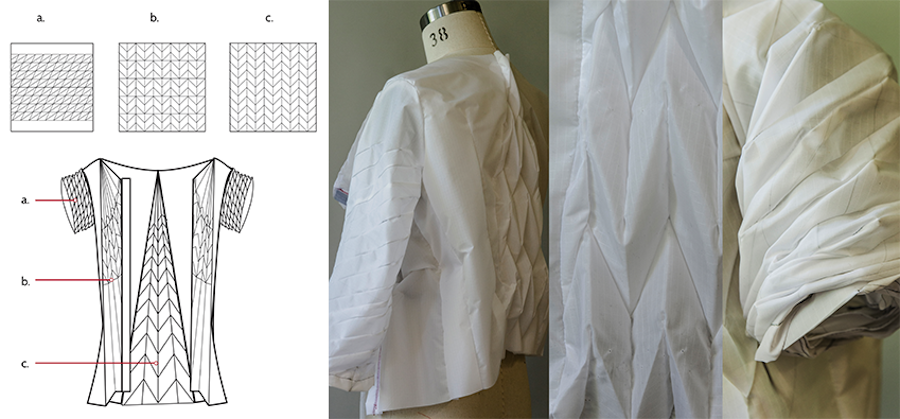
“After testing fabrics using shape-memory alloy, I thought it would be great to create transformable clothing that can be automatically worn and taken off,” Koo said.

Koo listens to users’ opinions, experiences and ideas to understand consumers’ needs and wants, which are critical in developing and designing clothing products. She also discusses her ideas with experts in other disciplines to create the wearable technology.

“I am trying to understand what people really want to wear and use, and their preferences on designs and functions through interviews, surveys and market research at the beginning of the design process,” Koo said. “I try to open my mind to search for new ways to solve existing problems and to satisfy consumers through interdisciplinary approaches.”

She also had two interns who assisted her with her smart clothing.

“At that time, I worked with passionate interns, Jason Lin and Jasmine Zhou, and created the garments with shape memory alloy-nitinol and microprocessors,” Koo said. “More interns and researchers are working on this project to make transformable clothing for people with movement disabilities using shape-memory alloy and other micro-motors.”

Shape-memory alloy, a material often used for people sitting in wheelchairs, was a key material for creating the transformable clothing, according to Koo. Shape-memory alloys “remember” their original shape and return to them when stretched, bent or deformed.

Jason Lin, a design and psychology double major and class of 2016 alumnus, has known Koo for approximately two years and has learned much about smart clothing and accessibility of fashion through working with her.

“Smart clothing is amazing! Helen was really the one who opened my eyes up to the capabilities of fashion and how to look at it in different ways,” Lin said. “I actually listened to Helen give a TED talk at TEDxUCDavis which was also really inspiring. She talked about clothes that automatically enveloped people and garments for children with Autism Spectrum Disorder.”

Koo’s work has inspired and resonated with not just her interns, but with other design students at Davis as well.

“I think wearable technology is progressing heavily, especially with [technology such as] the Google watch. You see it in films and it’s the embodiment of the future and futuristic realm,” said Bronte Blanco, a third-year design major. “It’s cool that [Koo] is able to bring together aesthetic and functionalism to individuals who need it.”

Koo will continue researching transformable clothing for people with movement disabilities, and hopes to conduct research to develop wearable technology for elderly people with dementia as well.


Written by: Jennifer Duong – arts@theaggie.org