54.1 F
Davis

Davis, California

Tuesday, December 23, 2025
Home Blog Page 697

Four movies to watch during Fall Quarter

ar_fallmoviepreviewPrepare for Oscar season by catching up on these much-anticipated movies

As we inch closer to the end of the year, we approach Oscar season. This means that we are closer than ever to the release of Oscar-bait movies. Be prepared to cast your votes by catching up on these four much-anticipated films.


Fantastic Beasts and Where to Find Them

I, like many others, choose to live in denial and believe that I am still in a world where the era of Harry Potter hasn’t ended. It seems like J.K. Rowling and Hollywood have been listening to our sad prayers and are giving us the gift of “Fantastic Beasts and Where to Find Them.”

J.K. Rowling makes her screenwriting debut on a script based on her book, and although the film doesn’t feature any of the beloved characters from the original Potter series, it gives us a glimpse into the wizarding world in another time and place.

Set in 1926 New York, the movie stars Eddie Redmayne as Newt Scamander, a magizoologist who arrives at the Magical Congress of the United States and accidentally turns dangerous creatures from his enchanted briefcase loose on the city. Once they have escaped, the authorities pursue Newt, and it seems that Muggles are catching on to wizards and witches.

J.K. Rowling is like the benevolent overlord who has us all wrapped around her finger, and I know that I’ll be waiting in line to watch and read whatever she releases, including this magical film.

Release Date: Nov. 18


Arrival

As spaceships touch down on several countries around the world, panic spreads and a team of experts are brought together to find answers.

In this adaptation of Ted Chiang’s short story “Story of Your Life,” Amy Adams stars as leading linguist Louise Banks, who is assigned to work on decoding the vastly different language of the extraterrestrials and takes a non-traditional approach in dealing with a potentially dangerous situation.

Communication is key and time is of the essence, since neither the humans nor the aliens are aware of the other species’ intentions, meaning that at any given moment, a global war could ensue due to a potential misunderstanding. Perhaps the most fascinating aspect of science fiction is that it explores human beings when they are faced with the “other,” and we, as the audience, are left to wonder who is really the bad guy.

I always look forward to seeing the versatile Amy Adams on screen, and am genuinely intrigued to find out the answer to the timely question that this movie poses: are we able to communicate effectively and peacefully with “the other,” or will we attack and destroy out of fear before finding any real resolution?

Release Date: Nov. 11


Manchester by the Sea

Just like a parent playing favorites, I can’t help but pick a favorite Affleck brother — which is why I am excited to see the underrated Casey Affleck star in this drama, written and directed by Kenneth Lonergan.

The film, which premiered at the Sundance Film Festival, centers on Affleck’s character Lee, who, after his brother’s sudden death, returns to his hometown of Manchester-by-the-Sea, Massachusetts, to become the legal guardian of his teenage nephew Patrick (Lucas Hedges).

It’s apparent that there will be some funny scenes due to the confusing relationship between uncle and nephew, who see each other more as annoying, inconveniencing brothers, but the film will mainly be a moving story.

Judging from the trailer, it beautifully explores difficult topics such as grief, anger, new relationship dynamics and a growing sensitivity and love for someone who’s now seen in an entirely different light.

Release Date: Nov. 18 (limited), and expanding release in mid-December.  


La La Land

In a sea full of trailers that reveal the entire plot, character development and the best lines of dialogue in a movie, it’s incredibly refreshing to watch the two trailers for La La Land; one beginning with Ryan Gosling simply whistling a western tune, the other featuring Emma Stone singing beautifully to a backdrop with scenes from the movie that could be paused at any point and look like a painting.

The plot is simple — Mia (Stone) is an aspiring but struggling actress in Los Angeles who meets an equally struggling and aspiring jazz musician, Sebastian (Gosling); the two fall in love, and hardship ensues.

Although we don’t understand exactly what is going on based on the trailer, we’re intrigued and drawn by the beautiful music, striking cinematography and most importantly, by one of our generation’s favorite on-screen couples.

Release Date: Dec. 9


Written By: Pari Sagafi – arts@theaggie.org
At The Crossroads: The Narrow Space Between Science and Film

0
AMY HOANG / AGGIE
AMY HOANG / AGGIE

Space exploration and film have historically inspired and promoted one another

In honor of World Space Week and the success of the Rosetta Mission on Sept. 30 — which saw a European probe land on a comet — I’m naturally turning this column’s attention to one of the most exciting scientific eras in history: the Space Age.

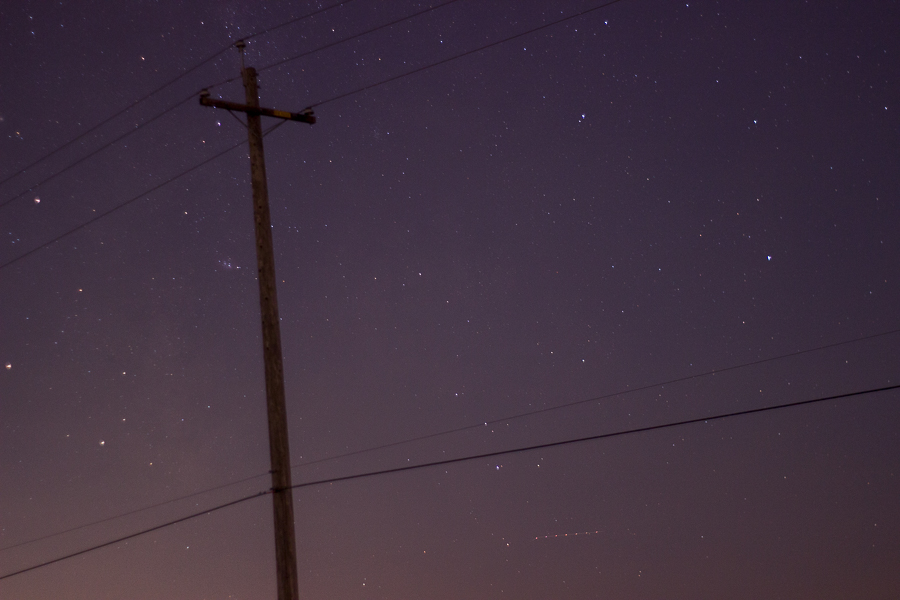
Growing up in Bakersfield, a city that champions the worst air pollution in the nation, I never acquired a true appreciation for the brilliance of a clear night sky. I could count more pregnant freshmen at my high school than stars in the sky. Instead, I looked to movies to admire the incomprehensible beauty of outer space.

Film and space have enjoyed a special relationship since the dawn of cinema. The world’s first blockbuster, the 1902 film A Trip to the Moon, follows a group of astronomists as they journey to the moon and — in true colonial fashion — slaughter all its inhabitants.

With the onset of the Space Race in the 50’s and 60’s, the function of space movies expanded tremendously. The Space Age triggered a creative avalanche as filmmakers scrambled to showcase exhilarating new technology.

But space films shifted away from mere entertainment and attempted to capture the public’s political, spiritual and moral anxieties associated with the final frontier.

Invasion of the Body Snatchers, released a year before the Space Race began, features brainwashing aliens that exemplify Americans’ paranoia over encroaching communist ideas. Several other films, such as Forbidden Planet and Invaders from Mars, also use the nation’s obsession with space to express the political atmosphere in the Cold War.

Space films also began to tackle philosophical issues, like the insignificance of humans in relation to the universe. The Planet of the Apes’ disquieting final reveal — that the ape-dominated planet is actually Earth in the future — criticizes humankind’s egotistical belief in our lasting place in the cosmos. It presents dominant concerns of the era, like whether our delusions of grandeur and entitled engagement with space will somehow prompt our downfall.

The culmination of the Space Race in art was Stanley Kubrick’s 1968 masterpiece 2001: A Space Odyssey. Working with NASA to produce a scientifically-accurate depiction of space travel, Kubrick allowed science to amaze and inspire viewers. Unlike The Planet of the Apes, 2001 emphasizes that humans are destined for advancement among the stars due to our perpetual need for renewal and growth.

But through HAL, the traitorous computer program, Kubrick still warns against the perils of science to stress the complex relationship between philosophy and science and perhaps to prevent future travelers from falling into the same dangers.

Space movies declined in popularity for years, but a recent resurgence of imaginative and, most importantly, optimistic films has swept theaters.

Take The Martian, Ridley Scott’s 2015 realist science fiction flick based on Andy Weir’s novel of the same name. In order to rescue Mark Watney (a stranded astronaut) from Mars, NASA and the China National Space Administration work together, ultimately accomplishing an incredible feat. It’s no wonder that NASA, amid its dwindling government funding, worked alongside Scott to craft an accurate space movie with a positive message.

Other recent high-grossing blockbusters have reignited a fervor for space. Alfonso Cuarón’s Gravity astounds with its majestic, spellbinding cinematography, while Christopher Nolan’s Interstellar entwines astonishing scientific theories with philosophy, love and faith. It also employs an interesting twist on the space genre: space exploration that is critical for humanity due to the environmental devastation on our own planet.

With funding for space programs declining in the U.S. but rising globally, other countries are predicted to surpass the U.S. in space activity. Promoting science in film can generate public interest, government funding and further creative breakthroughs. Many scientists today consider entertainment media one of the major influencing factors in their own scientific interest.

While part of me just wants to see more of Matt Damon in a spacesuit, my desire for more space films mainly resides in my hope for a public demand for a larger space budget — a feat that I believe can be achieved with the collaboration of scientists and filmmakers.


Written by: Taryn DeOilers — tldeoilers@ucdavis.edu

Just Davis things

0
ALEXA FONTANILLA / AGGIE

Debunking UC Davis myths, stereotypes

Does the entire campus actually have the scent of the Tercero dairy cows? Is taking Chem 2A truly the worst decision any undergraduate student could ever make? Is Davis really surrounded by desolate farmland? UC Davis is subject to a variety of myths and stereotypes, however, some tend to be truer than others.

There is no doubt that UC Davis has cows. In fact, cows are not only an animal on campus, but they are also a destination — visiting the dairy cows next to the Tercero dorms is number four on the Aggie Traditions List. However, the potent scent that these cows bring has founded the stereotype that UC Davis is a “cow town.”

“I don’t think it’s an actual stereotype — it smells by the freshman dorms because they’re closer to the actual dairy,” said Lizzie Riggall, a second-year animal science major who has interned at the dairy. “I haven’t smelled it on the main part of campus, but I could just be used to it by now.”

Although the Davis cow town stereotype can seem to prevail, class rumors floating around, such as the first course in the lower division Chemistry series, CHE 2A, being an impossible feat, appear to be relative to the student.

“The freshman come into it not really knowing how to study yet,” said Kimberly Trevino, a first-year graduate student in the department of chemistry and chemistry tutor. “They think they can just attend lecture to get through [CHE 2A], but in actuality you have to attend lecture and go through all the practice problems to master them, because when coming to the exam […] you should just know how to do it.”

Another overarching stereotype that other UCs have coined for UC Davis is that farmland isolates Davis from the rest of the world, the only fun thing available on the weekends being to visit Yoloberry for some frozen yogurt. However, this is not necessarily true, for if someone is seeking adventure, Davis is in between most activities imaginable.

“I just got back from guiding a six day Yosemite trip,” said Jess Tierney, a fourth-year environmental science major and Outdoor Adventure guide. “Point Reyes is also pretty close [and] our day hikes usually go to Auburn which is just east of Sacramento. We go to the Sierras, there is a car camping trip to Tahoe and sea kayaking in Tahoe and Tamalpais bay. Everything is relatively close and if you wanted to take a trip on your own it’s pretty easy to get to those spots.”

An event that is stressed every year in the months leading up to spring is UC Davis’ well-known Picnic Day. The community, students, plus campus organizations and departments that showcase their year’s work for the city during this April festival usually agree that this is an important day of the year.

“Picnic Day is a very fun day on campus and allows clubs and organizations to show the interested and active lifestyle of students,” said Oscar McBain, a second-year international relations student. “It’s a very well-rounded day and it appeals to both parents and students. It really brings people together.”

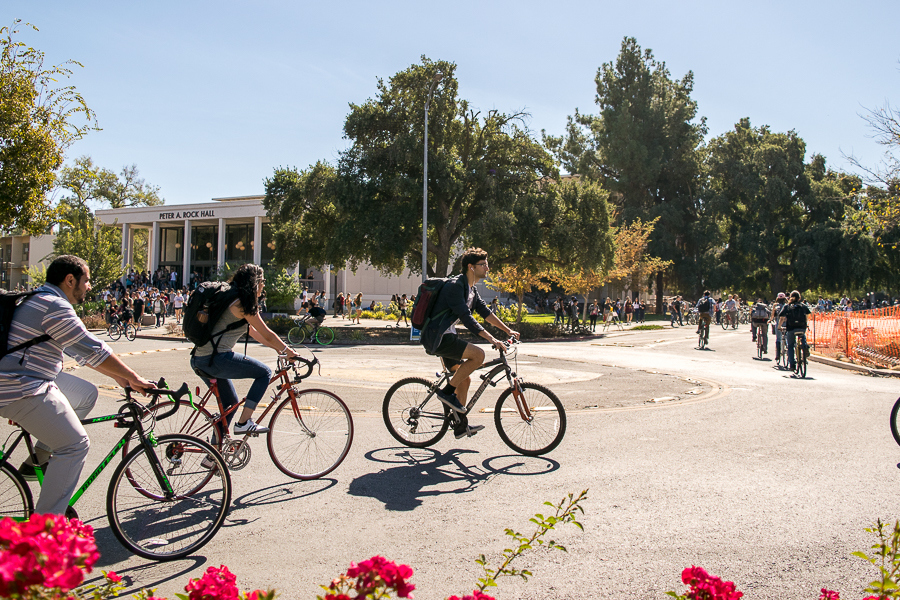
Of all the stereotypes other parts of California may designate to the UC Davis campus, Davis being a bike town is one that will stand true for the years to come.

“I’ve heard at least statistically that [Davis] is the second highest city in the world for biking,” said Jeremiah Kepner, a Davis resident who held a free bike repair event last Wednesday. “It is very much a bike town, and everyone uses bikes to either commute or road bike for fun. It’s easy to get to where I need to be, and I don’t have to worry about how long I am parked.”


Written by: Austin Carroll – features@theaggie.org

Pedal-powered mini-mobile libraries roll around Davis

YOLO COUNTY LIBRARY / COURTESY

Yolo County Public Library introduces new book bikes

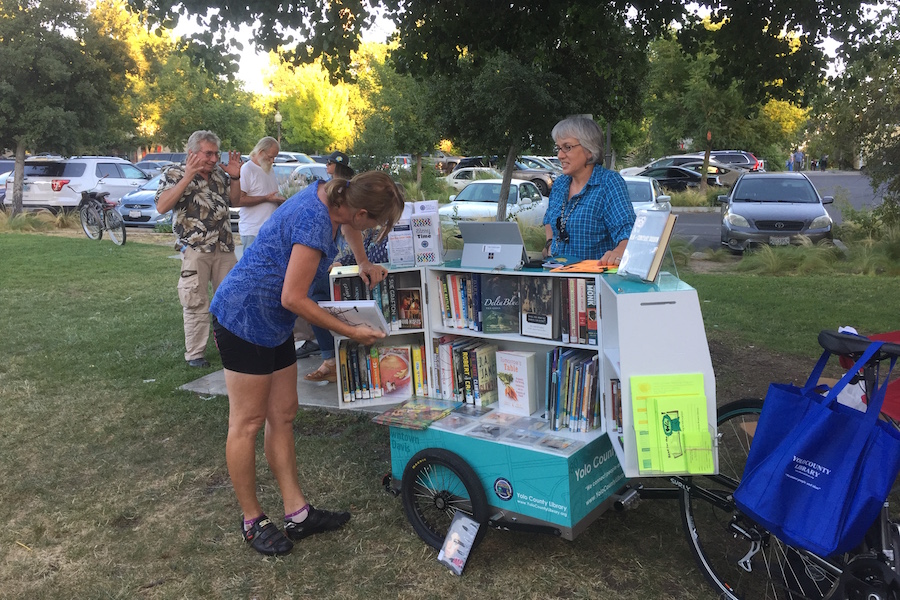
Yolo County Public Library recently implemented a new service in the Davis branch, as well as the Woodland Public Library: book bikes.

The California State Library’s U.S. Institute of Museum & Library Services issued a $10,000 grant to the Yolo County and Woodland Public Library branches, which funded the book bike project.

The book bikes are custom built trailers that have bookshelves inside for library materials. These mobile-libraries are full-service libraries where people can check out books, access computer-equipped free Wi-Fi and sign up for library cards.

“Our goal is to get books in the hands of children in our community who many not have a library card or come to the library,” said Greta Galindo, Woodland Library services director, in an interview with the SacBee.

The book bikes do exactly that. The mobile libraries cleverly cater to whichever location they travel to, and even take requests from the public by phone or in-person. Dana Christy, Yolo County librarian and book bike project manager, sees the potential of the project in Davis.

“We can curate the collection to fit whatever group of folks we are going to visit,” Christy said. “We take requests for regular stops where customers can request something and we take the materials out to them.”

The book bikes also increase community outreach and help the library bring books to the public. Lower-income residents and people who are incapable of making their way out to the library can now easily access the library resources.

“One of our [Yolo County Library] big missions is ‘Equality, Equity and Service’,” Scott Love, library regional manager said. “This was another opportunity to take service [out to the community]. There is this misconception that in the digital age libraries are not as popular or needed. The reality is kind of the opposite. We are busy now than ever, we just changed how we do business and this is one example of that.”

The library also recently spurred another new service: books-by-mail. People can apply to receive library materials by mail for a month for free, and renew the books as needed.

Yolo County Library’s book bike will be stationed at Eleanor Roosevelt Circle on Wednesdays from 11:30 a.m. to 12:30 p.m., and every other Monday at the Cesar Chavez Co-Op from 5:30 to 6:30 p.m. The book bike has also made appearances at some Davis events, including the Davis Farmer’s Market and Davis Pride, and plans to continue expanding this year.


Written By: Bianca Antunez – city@theaggie.org

Peet’s Coffee donates $250,000 to fund a pilot roastery at new Coffee Center on campus

LUCY KNOWLES / AGGIE

Center will be devoted to post-harvest coffee research, engineering

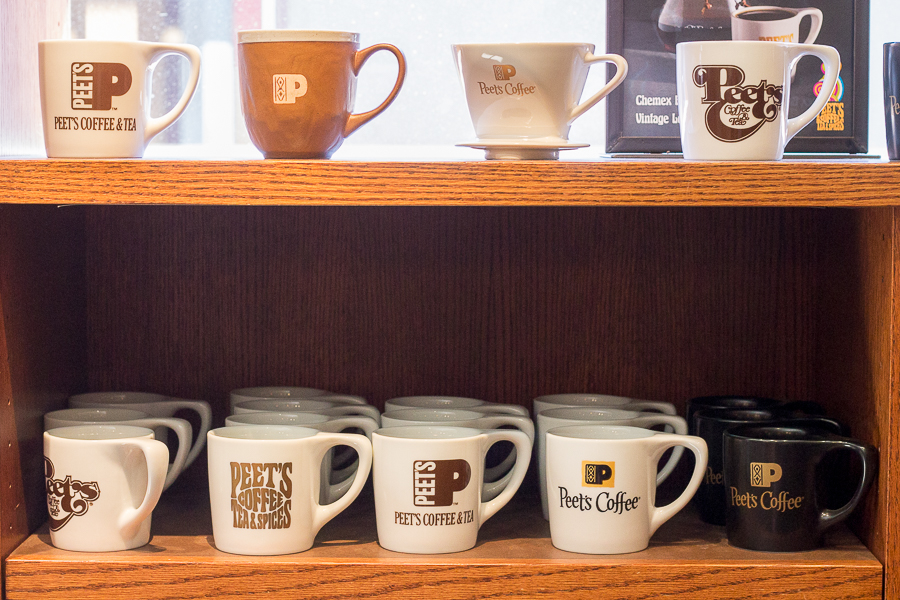
Peet’s Coffee recently announced a gift of $250,000 to UC Davis to fund the Peet’s Coffee Pilot Roastery, which will be part of the upcoming new Coffee Center on campus.

The project was initiated by faculty and staff within the engineering department, specifically those involved in ECM 1: The Design of Coffee, which started off as a freshman seminar but became a full-fledged general education course in Winter Quarter of 2014.

Bill Ristenpart, professor of chemical engineering, will lead the Coffee Center and Peet’s coffee pilot roastery. He will be accompanied by colleagues Tonya Kuhl, professor of chemical engineering, and Jean-Xavier Guinard, professor and sensory scientist in the Department of Food Science and Technology.

Vincent Dagenese, a Peet’s Coffee representative, said that Peet’s Coffee chose to grant UC Davis with this gift because they believe there is no better place to continue working on classic craft roasting.

“We wanted to spread the knowledge and love for coffee, and [UC Davis is] a good place to do that,” Dagenese said. “The main purpose is to keep the legacy of original craft roasting alive. With some of the coffee companies today, the coffee is not original and not high quality, so we want to keep it as original as possible, evoke a positive aspect and keep the movement alive.”

Andy Fell, associate director of news and media relations at UC Davis, believes this was a very beneficial gift for students and a chance to expand the research on coffee roasting.

“It was a very generous donation by Peet’s Coffee,” Fell said. “They did it because they believe it is important to have a research institution like ours to study the science of coffee [and] it is something beneficial for the students taking the Design of Coffee Class here at [UC] Davis.”

The new center will be located on the north side of the UC Davis Arboretum, alongside the campus winery, pilot brewery and food-processing facilities at the Robert Mondavi Institute for Wine and Food Science. After completion, the center will not only include the Peet’s Coffee Pilot Roastery, but also office space, an experimental green-coffee storage facility, a sensory analysis laboratory and advanced analytical labs. The Coffee Center will be the first multidisciplinary university research center in the the world dedicated to post-harvest studies of coffee.

Researchers at the center will study the microbiology of green coffee fermentation, sensory and consumer science and the chemistry behind roasting and brewing.

“The Coffee Center will generate unparalleled teaching, research and collaborative opportunities for our students, scientists and engineers, as well as for industry partners and visitors from around the world,” said Jennifer Sinclair Curtis, dean of the College of Engineering in a statement for UC Davis News Media and Relations. “We are proud that Peet’s Coffee is one of our founding partners in this bold initiative. We fully expect the center will do for coffee what the renowned UC Davis wine and brewing programs have accomplished on behalf of those industries.”

Frances Radcliffe, fourth-year design major, has previously taken the Design of Coffee class and enjoyed learning about the culture and importance of coffee.

“Learning about how coffee is made is extremely important because it is the most widely used ‘drug’ in the world,” Radcliffe said. “A partnership with Peet’s Coffee is beneficial to our campus because working with one of the main coffee store chains in the nation would allow our campus to share and benefit from coffee research and information that they already have, and in turn we can help them to know even more as well.”


Written by: Demi Caceres – campus@theaggie.org

The Tragic Loss of Jose Fernandez

0

ARTURO PARDAVILA III [CC BY 2.0] /FLICKR
On Sunday morning, the baseball world was robbed of one of its youngest and most exciting stars. Jose Fernandez, the Ace of the Miami Marlins, was tragically killed in a boating accident off the coast of Miami after clipping a rocky jetty at full speed. Neither drugs nor alcohol are suspected to be a part of the incident, and Fernandez was simply a passenger on the boat.

Jose Fernandez was different. From the various people close to Fernandez who have spoken of his death, the same adjectives are used consistently to describe him: polite, respectful, humble, kind, confident, fearless. The last two adjectives are the ones that resonate the most with me.

I remember back in 2013, my senior year of high school, the Marlins were to add this 20-year-old kid to their opening day roster due to unforeseen injuries to the Marlins rotation. Fernandez had only pitched a miniscule 134 innings in his minor league career before getting promoted. It’s also not like he rapidly worked his way through the minor leagues, with the natural progression from A ball, to Double A, to Triple A. Fernandez had never pitched above Class A, and there he was, thrown into the fire, named to a Major League roster just days before the season started.

My initial thoughts were that this poor kid is going to get rocked in the Majors. I thought to myself “oh man, this 20-year-old kid’s development is going to be stunted by the stupidity of the Marlins front office; his confidence is going to wither away and he might not recover.” Boy was I wrong.

Fernandez took the baseball world by storm. He had one of the most historic rookie seasons in the history of Major League Baseball. The dude was absolutely electric. Fernandez finished the 2013 season with 172.2 innings pitched a 12-6 record, a 2.19 ERA, and 187 Ks. He was named to the National League All Star Team, he won Rookie of the Year and he finished third in the National League Cy Young race behind Clayton Kershaw and Adam Wainwright. Yeah, I think that “confident” and “fearless” are the kind of adjectives used to describe a 20-year-old who’s capable of pulling that off.

As he garnered more and more publicity, we learned that his charisma was not just an in-game persona. This is who Fernandez was. It took him four attempts to successfully defect from Cuba, and on the fourth and final attempt, he had noticed that someone had fallen off the boat. Fernandez, at the young age of 15, jumped in without a second thought to save the person who had fallen into the water at night. It was his mother, and he ended up saving her life. Hopefully now you are beginning to understand the essence of this kid.

I’m going to miss the passion and excitement that Fernandez brought to the game. For those of you who had no clue of what I was talking about when I mentioned his rookie year statistics, it’s probably because you are one of many who believe that baseball is a boring sport. To a large extent, I agree with you. There are a lot of unwritten rules in this game, and a lot of them target players who are particularly flamboyant and animated. Fernandez wasn’t too fond of these rules. He celebrated like a boy in a little league dugout. If more guys had as much fun playing the game as he did, the game’s popularity would surge — this is why he was beloved by the younger generation of baseball fans.

Jose Fernandez defected from Cuba at 15, saved his mother in the process and was an MLB superstar by his rookie season five years later. This is who we have been robbed of, and to be honest, finding a silver lining at this point is all but impossible.


Written by: Michael Wexler — sports@theaggie.org

MLB postseason predictions

0

ARTURO PARDAVILA III [CC BY 2.0] /FLICKR
George McConnell’s wild forecasts with regards to Major League Baseball

Maybe some of you remember me as the scrub that predicted the Panthers to stomp the Broncos in last year’s Super Bowl. Yes, that was me. And I’m back. But I return to you humbled, wiser and, this time, in print. The stakes have never been higher, and I’ve never been more prepared to deliver for my dwindling fan base. With the playoff picture finally set, I’ve predicted each of the winners of the opening rounds.


American League Wildcard: Orioles vs Blue Jays

Winner: Blue Jays

By the time you read this article, this game will already be in the books. The demands of the printed world are both formidable and exhausting, but that is where #PrintTheAggie has left us. Nevertheless, in this one-game showdown, I expect our neighbors to the north to take down the Orioles with the power of Edwin Encarnación and Josh Donaldson. The near-unhittable Roberto Osuna will lock it down in the ninth. Look for a late-inning bomb at the hands of Jose Bautista and for the Blue Jays to advance to the ALDS to face the number-one seeded Rangers.


National League Wildcard: Giants vs Mets

Winner: Giants

I am so confident that the Giants will win this series that, if they don’t, you can find me on campus, cite this article, and I will personally give you $5 out of my wallet. I am a six-foot tall mediocre-looking white guy with pretty bad posture who spends a lot of time on the second-floor stationary bike in the ARC — you can’t miss me. With about 27,000 undergraduates at Davis, I wouldn’t risk $135,000 unless I was absolutely sure. And I am.


National League Division Series: Dodgers vs Nationals

Winner: Nationals

The Dodgers will choke like they have every year since 1988. The Nationals, while riddled with injuries, will rely on some of that old Dusty Baker magic to pull off a series that they have no business winning.


National League Division Series: Cubs vs Giants

Winner: Giants

I wasn’t 100 percent sure about this matchup, so I swallowed my pride and called up UC Davis redshirt junior outfielder Alex Aguiar for some expert knowledge. Aguiar played summer ball in the Midwest and is exponentially more qualified to write this article than me, so this matchup should probably be your biggest takeaway from this article. According to Aguiar, “The Cubs are satisfied with a good season but can’t actually see themselves winning. The Giants don’t know how to lose in the playoffs even if they wanted to.” The Giants will move on to the National League Championship Series after they sweep the Cubs.


American League Division Series: Rangers vs Blue Jays

Winner: Blue Jays

Unlike George Straight, all my exes don’t live in Texas. I did, however, once fall in love with a girl at soccer camp who was born in Toronto. Drake will probably make an appearance at some point in the series and the Jays will take it home for the 6ix.


American League Division Series: Red Sox vs Indians

Winner: Red Sox

The Red Sox should be the most feared team in Major League Baseball. Their lineup has scored an incredible 83 more runs than the next-best offense in the American League. The Red Sox bullpen is hot, ranking second in the AL in ERA (1.81) and first in opponent average (.198). But maybe most important of all, the Red Sox have an X factor. They have the magic of the final season of Big Papi and 20 years of MLB service, which suggest that they just might end poetically with a trip to the World Series.


Written by: George McConnell — sports@theaggie.org

UC Davis sued for failure to release public information

VENOOS MOSHAYEDI / AGGIE

US Right to Know files lawsuit for documents on GMOs, pesticides

A lawsuit against UC Davis was filed last month urging the university to heed requests regarding the release of documents on its work with genetically modified organisms (GMO) and pesticides, and their tie into the agrichemical industry.

US Right to Know, the non-profit organization suing UC Davis, retains the goal of bringing light to the backstage of our nation’s food system. A major concern of theirs is that professors may be profiting from websites that work as platforms for sharing research findings with the public.

“Our food system prioritizes profit over health. How do we get out of that?” said Gary Ruskin, co-director of U.S. Right to Know and plaintiff of the the lawsuit.

One of the websites under the umbrella of U.S. Right to Know’s concern, GMO Answers, was created for discussion about GMOs and pesticides, as well as biotechnology and agriculture. The website allows experts to answer questions concerning the public, enabling researchers to showcase their discoveries and clear up any misconceptions. Funding for the website is provided by agricultural biotechnology companies such as Monsanto and Syngenta.

Recently, rumors of experts cooperating with industries for profit have been circulating. These rumors worked as the catalyst for the lawsuit U.S. Right to Know has filed against UC Davis.

According to Ruskin, the university has something to hide this resulted in the lawsuits demands for UC Davis to release documents and email communications regarding involvement with GMO Answers and other research involving agricultural chemistry funding from major companies.

“We are conducting a search, [but] I can’t come to a conclusion based on documents I haven’t seen yet,” Ruskin said.

Kent Bradford, distinguished professor from the UC Davis Department of Plant Sciences, is one of UC Davis’ researchers who has responded to questions on GMO Answers.

“As a public scientist that is what I should do,” Bradford said. “To share my views through my 40 years of experience and communicate my ideas on these topics.”

U.S. Right to Know has uncovered for-profit cooperation between other research organizations and universities within the agrochemical industry. Their aim is to expose what the food industry really is.

However, of the information requested, fact-finding, proof of research and public funding is available for the public to see.

“You can find the same information on my own website [as is on GMO Answers], I’m not altering my opinions to please a specific group,” Bradford said.

Alison L. Van Eenennaam, animal genomics and biotechnology expert at UC Davis, has also answered public questions on GMO Answers and other similar websites.

“My inbox is full of tens of thousands of emails about Mr. Ruskin’s requests [for documents],” Van Eenennaam said.

According to Van Eenennaam, Ruskin’s requests compromise a lot of time since all of her emails must be sent through legal checks. UC Davis lawyers have to go through enormous amounts of information from the academic researchers involved.

“On top of his […] requests, he has the audacity to sue them for not doing it quickly enough. I believe the legal team is working as quickly as they can,” Van Eenennaam said.

Bradford explained that the universities have requirements on their own side to release those documents to protect personal information and academics of our own.

With new technology in the genetic engineering of food, it’s natural for questions to arise about safety. U.S. Right to Know’s overarching goal is to make sure no corruption is occurring in our nation’s food industry, however, according to Van Eenenaam, Ruskin is going on a “witch hunt” against academic professors.

“They are creating an association that academic professors working with industry is automatically is evil. That’s just not true,” Van Eenenaasaid.

Professor Bradford has no intention of changing the way he communicates his research and ideas to the public. Throughout this process, the university has to pay legal fees for Ruskin’s lawsuit against UC Davis.

“Sadly, I think the truth is losing, and the notion that there is no such thing as a honest scientist will take over,” Van Eenennaam said.

Until the investigation on UC Davis research documents and communications is completed, no decision can be made as to whether there is any profit being made by researchers working with big companies at a public universites.


Written by: Shivani Kamal — science@theaggie.org

Literature for the soul

ZHEN LU / AGGIE
ZHEN LU / AGGIE

English Department to host year of readings from prize-winning authors

The English Department’s yearlong series of readings from renowned writers will commence on Oct. 12 with a reading by Pulitzer Prize-winning poet Rae Armantrout. The series is sponsored by the English Department’s graduate program in Creative Writing and brings contemporary writers to campus to read their work.

Armantrout is a Bay Area native with an extensive repertoire of poems praised for syntax mirroring that of everyday speech, while also dealing with questions of deception and distortion in language and consciousness. Armantrout is just one of the many writers who will visit UC Davis this year with thought-provoking work.

Kathleen Peterson, an associate professor in English and organizer of the series, explained the importance of these readings.

“Hearing a story or a poem allows us to tap into the cultural memory we store in our senses […] not simply in our brains or our resumes,” Peterson said. “You might for a moment be relieved of your suffering or find yourself in the presence of language strong enough to hold and frame your desires […] it lines up with your soul and makes you feel like you’re not crazy […] that’s pretty freaking valuable to me these days.”

The writing series also gives the Davis community a chance to experience poetry in a more interpersonal way. Peterson says audience members will get a better idea of the writer’s work when listening to it in person.  

Jacinda Townsend, an assistant professor of creative writing, will participate in the writing series and has written two books that delve into feminism and societal pressures put on women.

Townsend will be reading from her second novel, Kif, about an American named Cathy and an escaped Mauritanian slave named Souria. The novel examines motherhood and what it means to be a mother.

Townsend explained that her inspiration and motivation for writing Kif came from her own experiences with motherhood.

“I’d been trying to give birth naturally, without drugs even, so when [the C-section] happened I felt like a failure before I’d even really become a mother,” Townsend said. “It made me wonder how insurmountable is the process when one isn’t the child’s biological mother. […] I wanted to prove to myself that I wasn’t a failure, that biology determined nothing about motherhood.”

Townsend mentioned that Kif also brings to light the topic of slavery in Mauritania, an issue often not given the attention it deserves.

Tiffany Willis, a third-year global disease biology major, agreed that the writing series will provide a chance for people to broaden their perspectives.

“Race is such a huge topic nowadays because there are so many issues surrounding it, but I don’t truly understand what certain people go through. This [creative writing series] will give me a chance to [better] understand other people’s struggles,” Willis said.

The creative writing series will begin on Oct. 12 at 7 p.m. at the Shields Library and is free and open to all. For more information about future readings, please visit the College of Letters and Science website.


Written by: Krishan Mithal — arts@theaggie.org

From wheat field to gathering place

MONICA CHAN / AGGIE
MONICA CHAN / AGGIE

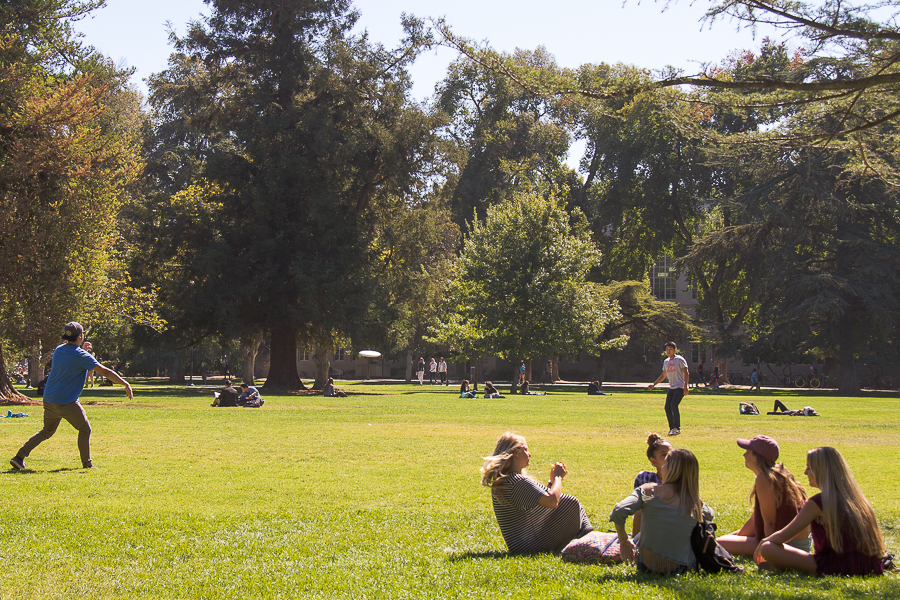
The UC Davis quad: its appeal, its history, its memories

Ninety-five degrees, a cup of iced coffee and a gently rocking hammock can make the perfect combination on a warm school afternoon. But, while most spots on campus are not ideal locations for such a combination, the UC Davis Quad is the exception.

“[The Quad] is really the true heart of the campus,” said Gregory Secor, senior project manager for UC Davis Design and Construction Management. “It’s the centerpiece. It seems to be the center element [from] which the campus has kind of grown.”

Located on the northeast corner of the UC Davis campus, between the Memorial Union and Shields Library, the Quad is an area of lawn designed to be a social space, lined with trees for shade and equipped with hammocks on either side, making for an easily-accessible hangout spot for students and faculty.

“The Quad is a centrally located oasis on campus,” said Steve Wheeler, urban design and sustainability professor of the UC Davis landscape architecture program. “It is popular partly because of its location at the center of everything. Everybody’s going by there every day — it is welcoming, it is green [and] it is shady.”

Though the Quad is primarily used as a space for relaxing, it is also home to many events and activities throughout the year. The Whole Earth Festival is an annual celebration that takes place on the Quad every spring; other events include the Involvement Fair, Lawntopia, Picnic Day and the occasional political protest.

When the UC Davis campus, formerly a family ranch, first opened in 1908, the Quad was an agricultural field for harvesting wheat, barley and other crops. Every four years, however, the students and staff would come together to work on a project to better the campus. In 1932, the project was the Quad.

“It was supposed to be twice as big as it is today,” said Skip Mezger, the UC Davis campus landscape architect. “Unfortunately, [the university] didn’t really stick to that layout much.”

According to Mezger, the walkway outside the Memorial Union that lines the Quad was originally a pathway that ran from North and South Hall (originally dormitories) to Wellman Hall. Now, that pathway is filled with tables and students promoting campus organizations.

Though the campus has been renovated over the years, changes to the Quad have been minimal. For example, the cork oak trees that line the Quad today were planted in 1925.

“There’s a great history here,” Mezger said. “[For instance, the cork tree] is also a product tree; you get cork out of it. If you haven’t gone up to one of those trees, go up and push on the bark and it’s exactly the same cork they use for cork bottles. It’s a very interesting tree.”

Despite few changes to the Quad itself, its surrounding buildings were renovated more frequently. The Recreation Hall, a venue for sports, dances and more, was torn down and replaced by the Memorial Union in the 1960s, and the Shields Library entrance, originally facing the Quad, was moved to the west side.

According to Patsy Owens, a landscape architecture and environmental design professor in the Department of Human Ecology, these neighboring buildings contribute to the the Quad’s atmosphere.

“For me, what’s really special about the location [is] if you look at other campuses […] the common university space [is] often located next to campus administration,” Owens said. “What’s really cool about [our] Quad […] is [that] it’s located next to the student center.”

Since 1932, the biggest change made to the Quad has been the walkway down the center, which was remodeled in 2008 to celebrate the university’s centennial. The walkway was designed by Mezger and Christina De Martini Reyes, UC Davis’ assistant landscape architect.

Over the years, the Quad has become a hub for main campus activities. Students use it for everything from casual frisbee practice to cramming for finals.

“The Quad is part of what [we call] the ‘sacred structure’ […it] is a place where you can go to get away,” Owens said. “If you’re trying to study for a test […] it’s a place where you can go and get your head together. It allows a lot of different things to happen there.”

Though the Quad is an important constant in daily campus life, Wheeler believes that environmental issues could impact it in the future.

“There are some redwood trees on the Quad, and redwood trees are struggling in this climate,” Wheeler said. “We do need to think about water. Are these trees going to survive this drought?”

According to Wheeler, the space will most likely make an eventual transition from “turf and trees” to a “native drought tolerant aesthetic.” However, it seems that regardless of aesthetic changes, the Quad will ultimately remain a space that continues to draw in the community.

“I think the thing to remember about the Quad is […] the memories,” Owens said. “It [has] become our space.”


Written by: Allyson Tsuji – features@theaggie.org

More than just a walk in the park

VENOOS MOSHAYEDI / AGGIE

Free nature events at the Arboretum every week this fall

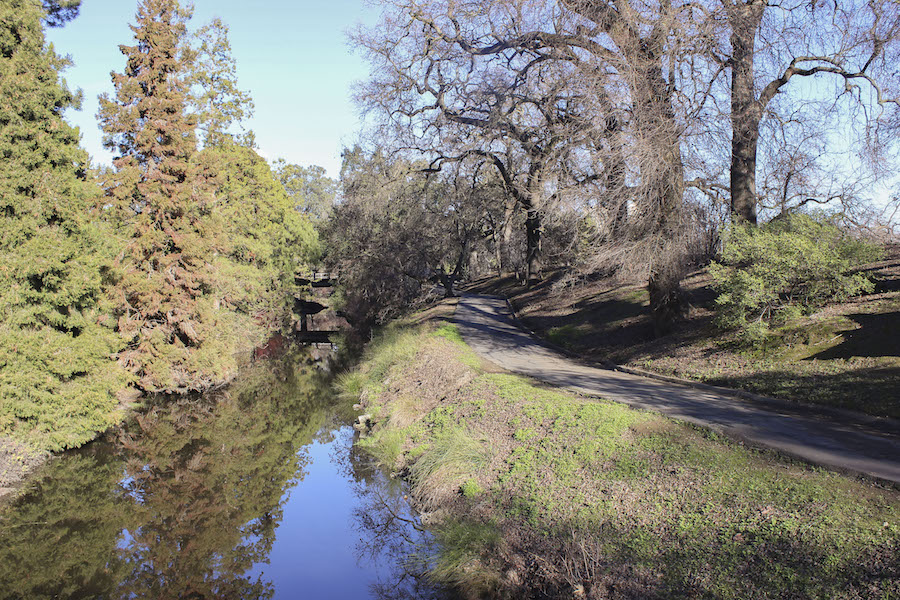
Whether students have jogged through it, biked its length of three and a half miles or only know it as the mysterious forest with a peculiarly green creek, the Arboretum is a campus resource that everyone should visit this fall.

Since its opening in 1936, the Arboretum has hosted free public events for Davis students and community members. The goal of these events is to inspire connections with nature, educate people on key environmental issues and create a relaxing break from work and school.

“We are supported by the Friends of the UC Davis Arboretum and Public Garden who help fund these free events for the public,” said Katie Hetrick, director of marketing and communications for the UC Davis Arboretum. “From showcasing our low-water California Native Demonstration Garden to our scientific collection, it’s important to have these events for students and the public to get out in nature and learn something new about these resources.”

For students who would like to learn more about plants and sustainable gardening, the Arboretum also hosts a UC Master Gardeners event which takes place in the GATEway garden at the east end of the Arboretum, as well as in the Storer garden.

“At these events, anyone can learn about native California plants, how they can grow them, how they can sustain those types in their own homes and why [these] are sustainable garden selections,” Hetrick said. “These event leaders act as in person, interpretive experts for these areas and encourage people to discover [what] we have available at UC Davis.”

The Meet the Arboretum Tour is another event geared toward students who may not know much about the gardens. This tour is led by Arboretum ambassadors, student interns who have gained skills in public outreach and environmental leadership. The Arboretum also offers internships in other departments such as edible landscaping, sustainable agriculture and restoration.

Ellen Zagory, director of horticulture, began her work at the Arboretum by growing plants in the nursery. Because of the park’s rapid growth in popularity over the years, Zagory has a lot of experience in sustaining the lush greenery and in managing Arboretum projects.

She has traveled around the state giving lectures on biological diversity and how to engineer vegetation to control floods. As part of the calendar of fall events, Zagory leads workshops for the city on how to create more sustainable gardens by removing high water lawns and replacing them with low maintenance plants.

“The Arboretum [is] a resource [for people] to get outside and relax, become more healthy and just be outside with all of the beauty,” Zagory said. “You can also learn about California and why it is so important that we grow our state’s native plants, and why it is vital to create more diverse environments in your garden by attracting more species like hummingbirds and butterflies.”

Zagory also suggested taking a stroll in the Redwood Grove, which “resembles a cathedral with its majestic and giant trees.” From there, you can even spot river otters that have migrated and settled in the Arboretum because of the ideal conditions in Lake Spafford.

Elaine Fingerett, UC Davis Arboretum academic coordinator, is another specialist who has worked for the Arboretum for 11 years. Fingerett explained that people feel very comfortable in the Arboretum — making it a friendly and welcoming place.

“The gardens are a massive resource full of collections used in teaching and research,” Fingerett said. “We have a university connection [which makes the Arboretum] a great place for us to do programming that reaches out to the public and lets them know about what professors are researching and other things going on on campus. The Arboretum has grown so much that we have added more and more programs that became part of the culture.”

While the plants and trees have grown over the years, the influence that the Arboretum has on the Davis community has flourished as well.

“Many more undergraduates and young people come out every year and experience our very diverse learning-by-leading internship program,” Fingerett said. “The Arboretum has grown and empowered a whole generation of undergraduates to go out and take leadership roles.”

Working with students to create public programming has made Fingerett incredibly hopeful for the future of not only the Arboretum, but also the Davis community. She has seen many students who are committed to working in nature and helping people understand how to sustain the environment.

“I think that to me personally, it is very important to help people connect with nature,” Fingerett said. “[Seeing] people of all ages come to the Arboretum and enjoy the environment and all it has to offer is very inspiring.”

Written by: Gillian Allen — features@theaggie.org

Entitlement, misogyny and “Call of Duty”

1
ROSA FURNEAUX / AGGIE FILE

America shows that a society based on entitlement, misogyny and violence is more prone to gun violence

Entitlement and America go together like salt and pepper: rarely one without the other. It’s a love affair that dates back to the colonialism of the 19th century.

Misogyny, too, is an ingrained societal norm, in which men objectify and dehumanize women on a daily basis — most visibly seen through cat-calling and teasing, but also when men maintain an air of superiority over women.

And gun violence? Compared to 22 other high-income countries, the United States’ gun-related murder rate is 25 times higher, proving that American aggression is out of control.

In 2014, Elliot Rodger uploaded a Youtube video of himself before proceeding to stab three men, shoot two women and another man. In this video, Rodger explained how he planned to seek retribution against women rejecting his advances and women who did not see him for the “superior, alpha male” that he claimed he was.

Another incident in Philadelphia saw an anonymous threat from a member of “Beta Rebellion,” a group of men upset about their inability to “get” women after numerous sexual advances.

In an increasingly progressive society in which women are now able to choose with whom they do and do not associate, the sense of entitlement that men once heavily relied on is crumbling, forcing them to lash out in violent ways.

And although the violence and rage that Rodgers and the Beta Rebellion group displayed is extreme, the mindset they possessed in relation to women and how they perceive them is chillingly common among young men.

Rodgers felt that he was entitled to punish the women that rejected him, entitled to take the lives of people he felt deserved to die. The combination of the misogyny that caused him to be genuinely angered by rejections of his multiple sexual advances and the sense of entitlement he felt towards others’ lives is what our society must find a way to combat in order to meaningfully deal with gun violence.

Attempts to do just that have arisen, with the “#YesAllWomen” movement on Twitter spreading like wildfire. Through the hashtag, people are trying to raise awareness of the everyday differences in the lived experiences of men and women. They strive to make even the slightest change in societal perceptions of women. Hopefully if that change does come, violence against women through guns will become less of an issue.

Violence in the form of video games also has a role in the gun violence that is so common in American society. In 2015, the American Psychological Association (APA) confirmed a link between playing violent video games and an increase in aggressive tendencies. The APA also confirmed that violent video games led to a decrease in both empathy and sensitivity.

For the majority of boys who start to play video games at age 10 or 11, a desensitization to violence occurs and they adopt a disregard for human life and the value it holds. Although there is insufficient evidence to conclusively link delinquency and criminal records to violent video game use, it has been established that violent video games are one of the many risk factors that make a person more inclined towards violent acts of aggression, including gun violence.

To perhaps decrease the risk of aggression and increase the level of empathy that children have, it is vital to moderate the amount of video games children play, or perhaps find a way to make video games less violent altogether.

Video games are nothing, however, compared to the sense of entitlement coupled with misogyny that our society ingrains into the value system of our youth. This is where change must begin.

#YesAllWomen is simply chipping away at the iceberg of a glacier that will take years to break down, and it is my hope that more groundbreaking social change comes soon as well.

Written by: Tamanna Ahluwalia — tahluwalia@ucdavis.edu

Downtown Davis receives artsy public pianos

BRIAN LANDRY / AGGIE

In the Key of Davis brings music, art to the streets with support of local artists, city officials

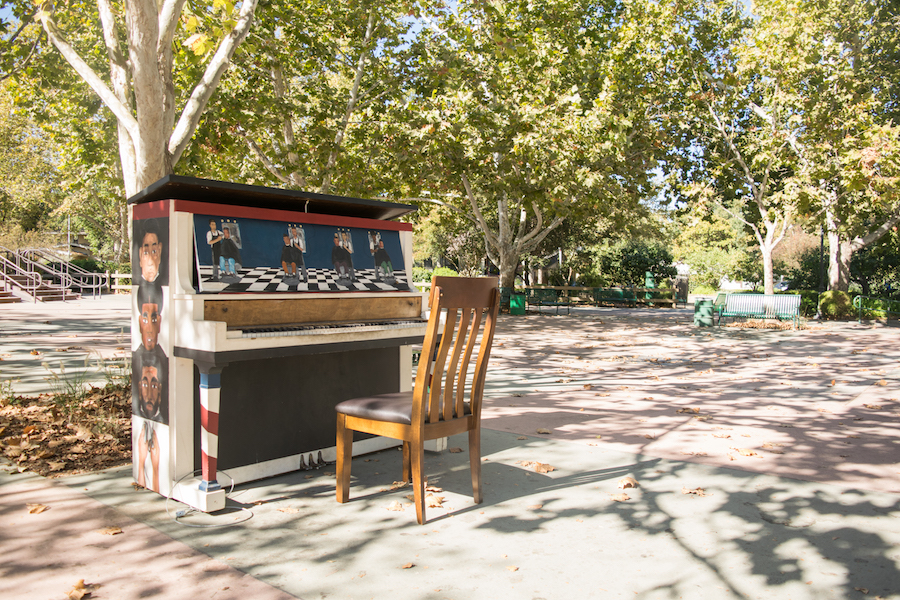
A piano-art project arrived to the streets of Downtown Davis this summer. On June 5, the city held a dedication ceremony for the public pianos project at the Hunt-Boyer Mansion. Since then, community members have embraced the pianos and shown their support for the project.

The creators of the project, Hailey and Isabelle Shapiro, ninth and seventh-grade students at Holmes Junior High, respectively, were inspired to create public art using pianos after seeing pianos painted and placed in popular public spaces in Seattle and Vancouver for people to enjoy. The pianos were placed in Central Park, at the Amtrak station on Second and E streets, the Hunt-Boyer Mansion patio, the Arboretum and the Davis Food Co-op.

“We’ve had lots of emails from people telling us how much they liked [the public pianos],” Isabelle Shapiro said.  

The Shapiro sisters presented their plan to the Civic Arts Commission, which unanimously approved the proposal and offered a grant to cover transportation costs of the pianos and a small stipend for teachers who volunteered to recruit students to help with the project.

Hailey and Isabelle were responsible for finding the pianos at no cost and for getting local students to turn them into public works of art.

“I think it’ll bring people together because they can listen to other people play and talk to each other about it,”  Isabelle Shapiro said.

Many teachers from around the community helped with the project. Amy George, from Birch Lane Elementary School, Deanna Leveque, from Holmes Junior High School and Lynnette Diem, from Davis Senior High School (DHS), all worked on the project and encouraged their students to participate as well.

Each school came up with a theme for the pianos; whereas Birch Lane incorporated wildlife into their piano, Holmes Junior High created a California beach theme and DHS used a barbershop theme.

DHS student Brandon Lim came up with the theme for his school’s piano, while Shelby Bernauer, Isabel Realyvasquez, Joshua Arias and Alex Timmons — all Advanced Placement (AP) Art Studio students — participated in the painting of the piano.

Mark Stiver, from Watermelon Music, agreed to tune the pianos, doing so at no cost to the city or to the Shapiro sisters.

The public is encouraged to play them between the hours of 9 a.m. and 10 p.m. and post a video to the Facebook page, “In the Key of Davis.”

“This could inspire people to start playing piano and be interested in the artwork that is on it,” said Joshua Arias, one of the AP Art Studio students who participated in the project. “I’ve seen homeless people play on these pianos so I think it could help people that cannot afford one for themselves [to] start playing.”

While walking around Downtown Davis with friends, Susan Brown came across the piano in the Hunt-Boyer patio.

“It was really cool to play it and have people stop by for a minute and listen to me play,” Brown said. “Hopefully people respect the pianos as pieces of art meant for the publi’s enjoyment.”

Written By: Carla Arango — city@theaggie.org

Advisory committee set to assist in search for new UC Davis chancellor

NICKI PADAR / AGGIE
NICKI PADAR / AGGIE

Undergraduate, graduate students to represent student body

On Sept. 13, 2016, University of California (UC) President Janet Napolitano announced plans to create an advisory committee to assist in the search for a new chancellor at UC Davis.

Elly Oltersdorf, a fourth-year history major and co-chair of the Student Council on Campus Climate, and Brian Riley, a current Ph.D candidate at the UC Davis School of Education and former chair of the Graduate Student Association (GSA), will serve on the 17-person committee.

The committee, which will help recruit, evaluate and interview candidates for the position, will help to find a reputable candidate that Napolitano can then present to the Board of Regents for consideration.

Associated Students of the University of California, Davis (ASUCD) President Alex Lee was asked in August to present an undergraduate representative for the committee.

“In August I was contacted by the University of California Office of the President (UCOP) and they said, ‘there is that one seat for the undergraduates. As ASUCD president, please pick [a representative],’” Lee said. “I thought it would be very appropriate to have an undergraduate student who was there at the forefront of the movement that ousted [former Chancellor Linda P. B.] Katehi.”

Along with Oltersdorf and Riley, the committee also includes Napolitano; Monica Lozano, UC Board of Regents chair; several UC Regents; Shane White, vice-chair of leadership for the UC systemwide Academic Senate; Debby Stegura, president of the Cal Aggie Alumni Association; Mike Child, the former president of the UC Davis Foundation; and Jessica Potts, chief administrative officer in the Department of Chemistry and former chair of the UC Davis Staff Assembly.

UC Davis faculty representatives who will attend the meetings include Diana Farmer, professor and chair of the Department of Surgery, professor of history Ari Kelman and Rachael Goodhue, chair of the Davis Academic Senate and professor and chair of Agricultural and Resource Economics.

The committee had its first meeting on Sept. 27 at the UC Davis Pavilion in a closed session. The group plans to reconvene several more times before January, when President Napolitano and the regents tentatively hope to decide on a chancellor.

Oltersdorf spoke at a student town hall meeting at Wellman Hall the day before the committee’s first deliberation, and she desires to gather as much student input as possible during the selection process.

“I feel really wary about the idea of trying to represent all undergraduate students at UC Davis,” Oltersdorf said. “[…] On the other hand, I feel very optimistic about the ability of students to mobilize. I think that if students feel that the process is unfair, then the committee should know about it. As a representative, if there’s something that I am taking away from this meeting, it is a lot of dissatisfaction on the part of the students in reaction to this process so I’ll definitely be taking that with me to the meeting tomorrow.”

As UC Davis’ graduate student representative, Riley will join Oltersdorf in expressing student concerns over the selection of a new chancellor. Katrina Brock, the chair of the Graduate Student Association, facilitated UCOP’s request for a representative and noted Riley’s background in education as a reason for his selection.

“He has a lot of experience working for students and working with [administration] for students, so I feel like he could be a good bridge,” Brock said. “He knows the system but he is still listening to students and […] even five years after he ended his chair position at GSA, he is still involved in GSA and serving and participating.”

Speaking about the process used in selecting the new chancellor, Oltersdorf expressed dissatisfaction with the title of her role and how the UC has decided to proceed.

“I think that, for me, “student representative” is almost a misnomer because I think that representative implies […] that there was some democratic process involved and I was not selected democratically,” Oltersdorf said. “The movement that I was involved in last year definitely tried its best to keep things completely democratic, to not have one leader but instead have a cohesive group of people that worked on a consensus basis and that constantly tried to let in outside voices […] The process set up by the regents makes this extraordinarily hard. It’s going to be a challenge.”


Written by: Ivan Valenzuela — campus@theaggie.org

Create a more inclusive UC Davis

0
HANNAH LEE / AGGIE
HANNAH LEE / AGGIE

UC Davis approaches benchmark to qualify as Hispanic Serving Institution

The University of California (UC) made its strongest effort yet to create a more inclusive public university system by admitting the most diverse class in its history this fall. Following efforts by the UC to recruit from disadvantaged high schools and communities, 38 percent of first-year students are minorities who have traditionally been underrepresented in higher education.

UC Davis, while average compared to other UC schools in terms of admitting black students and other minority groups, showed the most promise in its move toward a greater share of Latinx and Chicanx students.

The Latinx/Chicanx community is the fastest-growing demographic group at UC Davis, making up 24.6 percent of the incoming first-year class this Fall and reflecting over 1000 additional students from the previous year. The 24.6 percent figure is also important because when UC Davis hits a 25 percent Hispanic population as a whole, it becomes eligible to be designated as a Hispanic Serving Institution (HSI) which can then receive extra funding from the federal government.

UC Davis’ drive to become an HSI was led in part by then-chancellor Linda Katehi who, in an op-ed for the Huffington Post, said, “We’re aggressively pursuing this goal because it’s right for the state and our kids and because our shifting demographics make it clear that if California and the U.S. are to remain competitive, we can’t afford to leave behind this growing population.”

The goal she outlined was to earn the distinction by the 2018-19 school year, which couldn’t come soon enough. The Latinx community is the largest ethnic group in California — 39 percent as of 2014 — so ensuring that they are recruited to Davis isn’t just a matter of earning the HSI distinction; it’s a matter of creating equal opportunity. When one group is underrepresented — and several are at Davis — the quality of education and student life decreases for everybody.

With few exceptions, students who are exposed to a more diverse educational environment have been shown to hold more positive racial attitudes than their peers in more homogenous environments. At a time when social divisions seem to be ever-widening, and UC Davis has its own trouble with racial sensitivity, the need for inclusivity takes on an added urgency.

It’s imperative, then, that once this university becomes a Hispanic Serving Institution, investments be made in student scholarships and in programs like Achieve UC, which sends admissions representatives on recruitment missions to high schools with low college attendance rates. There’s no reason that UC Davis shouldn’t model itself after UC Merced, an HSI that was founded partly on the promise of expanding educational opportunity for disadvantaged Hispanics in the Central Valley.

If UC Davis “adopts” schools in the Sacramento area with the goal of engaging potential students, it will create a unique opportunity to be academically competitive on both a global and local stage.

Funding should also be diverted to programs that already exist on campus, like ones provided by the Student Recruitment and Retention Center, that assist in retaining students who may be at risk of dropping out of school. Encouraging a more diverse student body amounts to nothing more than lip service if steps aren’t taken to guarantee that disadvantaged students find community and academic help.

But even with the HSI designation imminent, problems remain. At the UC Regents meeting in May, UC officials acknowledged that African Americans on tenure track made up only two to four percent of faculty on all campuses. Latinx faculty made up two to twelve percent. Only until the University of California can guarantee diverse undergraduate, graduate and faculty populations can it fully achieve the ideal that a public university should be open to everybody.