53.5 F
Davis

Davis, California

Tuesday, December 23, 2025
Home Blog Page 695

Refugee Reflections: My experience working with the most vulnerable among us

0

MSTYSLAV CHERNOV [CC BY-SA 4.0] / FLICKR
Speak with refugees before jumping to conclusions about their place in America

Omar Daqneesh. Yusra Mardini. Their names and origins might sound familiar. Both Syrians, witnesses to the devastating civil war. Both media icons: the first a symbol of the devastation in Aleppo, the other of swimming glory at the Rio Olympics. Both faces of a generation that now knows what it means to lose a homeland.

Sadly, not all who wish to get out are able. A few, like Mardini, can. Others, like Omar Daqneesh, are stuck. But of the ones who do make it out, the true test is just beginning. Some island-hop across the Mediterranean toward the heart of Europe. Others are lucky enough to be admitted to the United States. Of these, a few are hosted by the International Rescue Committee, a non-profit refugee resettlement agency.

I was hired as cultural intern at the IRC last summer, and I assisted my supervisor with tasks ranging from helping refugees of many nations learn the bus system to developing their English and job skills in a classroom. I picked up refugees from their homes and drove them around my city — our city — of Tucson. Sometimes we talked about the city. Often we were silent. Even so, I connected with the refugees on a level few could dream of. My stories reflect the power of their humanity, humility and hospitality.

On my second day of work, a man from Central Africa hailed me as I waited on a family outside their apartment. He said he was a friend, a former refugee himself, and was helping the mother and children settle in. While we waited, he told me his story. How, because he was educated, he had to flee his own home or risk facing the government’s guns. How he never saw his family again after escaping his country almost half a century ago. The man told me he recently became a U.S. citizen and was quite proud — his smile blossomed as he recalled the long process of naturalization. I wondered, in turn, how I could have coped with a similar situation. Would I have been as strong as this man in spirit and soul?

During a bus training segment, I joked with a small boy over soccer video games outside his bus stop. His mother was a benevolent shadow in the background. There were only a few intelligible words between us: soccer, America, Syria. Our communication lapse was nullified by our mutual passion for “the beautiful game.” The joy and persistence he displayed in showing me the results of his latest hand-held match helped me consider my own methods of bliss. It’s comforting to know that even a simulated soccer game can create optimism when none seems warranted.  

One man knew only a few English words when we first met for class. One, two, three, four, five. But he practiced. His motivation was unparalleled by anything I’d seen in high school or university. By the end of the week, he could say and understand all of the basic greetings. By the end of the month, he could hold a basic conversation. When we split ways his words were, “Thank you, sir.” That’s the last time I ever saw him. Those are the words I cherish most.

Families welcomed me into their homes with open arms and drinks. One couple gave me Arabian coffee, hand-packed from Jordan and the most delicious blend I have ever tasted. With the coffee came the photos of a past life — a good life. I saw a large home and a happy family. Everything was peaceful. Trees, perhaps symbolizing what might have been, adorned the background. But now the home stands empty. There are hardly any trees left. The planes and bombs took them away.

Another couple invited me into their home and offered me the last remnants of juice from the fridge. Food is a precious commodity in these families. But the couple didn’t care about what they had or didn’t have. What mattered to them was the codex of hospitality, that extra sliver of warmth and kindness that bonds people of different cultures like nothing else can. With a comical role reversal, the couple taught me Arabic numerals as we sipped our drinks, water and juice. In the end we toasted to a new beginning.

The refugees came from all over, from Syria and Burma, Congo and Sudan, Afghanistan and Iraq. Each had a story to share. Some stories were told only through closed lips and tired eyes. Often the tales were more open and the trust more evident. But the effects on my perspective were the same. Never should we try to bar those fleeing death and persecution. Never will we as a nation have a better chance to make things right again.


Written by: Nick Irvin – opinion@theaggie.org
You can have it all, and more

0
NICKI PADAR / AGGIE
NICKI PADAR / AGGIE

UC Davis College of Letters and Science campaigns for double majoring

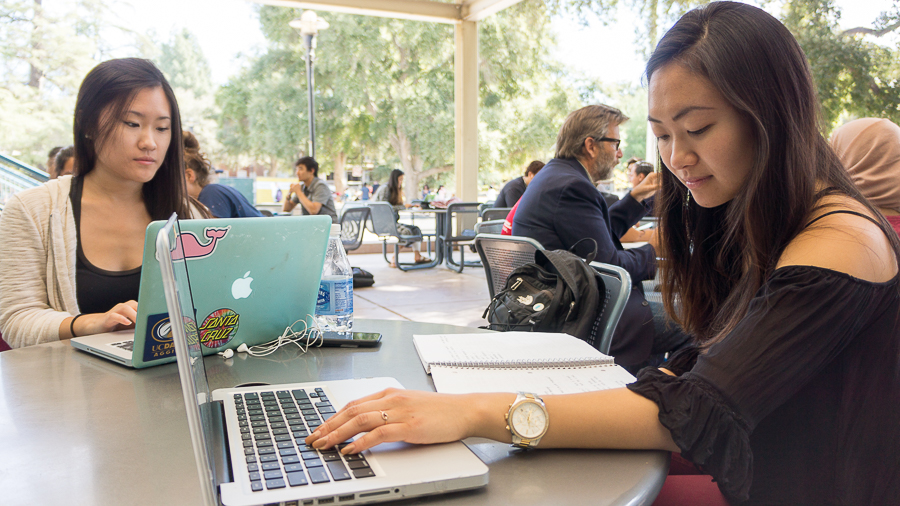
College is a time for exploration when students can consider all their interests instead of pursuing just one. However, many students are too afraid to consider studying multiple fields because they don’t know how much it will benefit them.

The “Have it All” campaign of the College of Letters and Science is a program focused on encouraging students to consider double majoring or taking on a minor in a humanities or social science in order to meet the standards of increasingly competitive workplaces.

“We are really trying to encourage students to not think of their education as just vocational training,” said Milmon Harrison, associate professor of African American and African Studies. “Whatever field you are in, [majoring in another study] can only aid you in […] what it is that you do.”

The idea for the campaign came from student testimonials in Harrison’s African American studies classes. His students that came from science backgrounds noted that they only took his classes to meet general education (GE) requirements, but that in the end they found a deep interest in the topic.

Harrison hopes the campaign will encourage students that are studying science, engineering or math to broaden their horizons for the work world and to encourage anyone interested in liberal arts to pursue that field.

“Questioning what someone will do with an English literature major is becoming an old-fashioned way of thinking about our education,” Harrison said. “The world of work is changing so much these days that for most of us we can’t afford to just be a specialist in just our own very narrow field of expertise. It is a very different world now and students are finding that when they have technical backgrounds [and a] background in the liberal arts […] that it does make them a bit more competitive.”

Another goal of the campaign is to get students to start thinking about double majoring earlier in their academic career. According to second-year philosophy and neurobiology, physiology and behavior double major Amanda Blake, pursuing both her majors was a choice made based on her current interests and future career. She took her first philosophy class during Fall Quarter of her freshman year.

“[Deciding to double major] was actually kind of on a whim,” Blake said. “Philosophy 15: [Introduction to] Bioethics […] is probably the best class I’ve taken at UC Davis. I really enjoyed the content and the class, so I decided to pursue philosophy classes to see if I liked them, and I did. I’ve been taking major requirements ever since.”

Beth Floyd, director of undergraduate education and advising for the College of Letters and Science, said that in the last five years, about 23 percent of graduates in the College of Letters and Science have graduated with two or more majors.

“In our college, Bachelor of Arts degrees don’t require a lot of units on top of GE units,” Floyd said. “Some students don’t decide to [double] it until their junior year when developing a passion [but] they can still graduate on time.”

Floyd highlighted the benefits of double majoring, as it could help students who have a smaller course load fulfill more of the 180-unit graduation requirement and allow students in more intensive majors to fulfill GE requirements.

“It’s a lot easier than people realize [Philosophy] is only a 52-unit major and it’s filling in those social science and arts and humanities GEs [I] would have to take anyway,” Blake said. “The two majors pretty much fill all my requirements.”

For students who are unsure of how to manage a double major, the campaign encourages them to seek advising or pursue a minor. Floyd also pointed out that it can be easier to take on a double major for students coming in with high school AP credits.

For Stephanie Chavez, second-year biological sciences and Spanish double major, taking Spanish in high school helped her start at higher division classes at UC Davis.

“I am glad I decided to [double major],” Chavez said. “Sometimes [majoring in two subjects] gets complicated because it’s a heavy workload, but it isn’t something I haven’t been able to handle.”

The benefits of double majoring lie in the pursual of other academic interests, to better oneself both academically and individualistically.

“Adding a second major is not difficult at all especially for those who plan early,” Floyd said. “This is the perfect time in your life to do this exploration in finding what you’re passionate about and you should take advantage of it.”


Written by: Amanda Cruz — features@theaggie.org

Rice cooker closes down Vacaville entrance to I-80

VENOOS MOSHAYEDI / AGGIE

Bomb squad investigates abandoned rice cooker as possible bomb threat

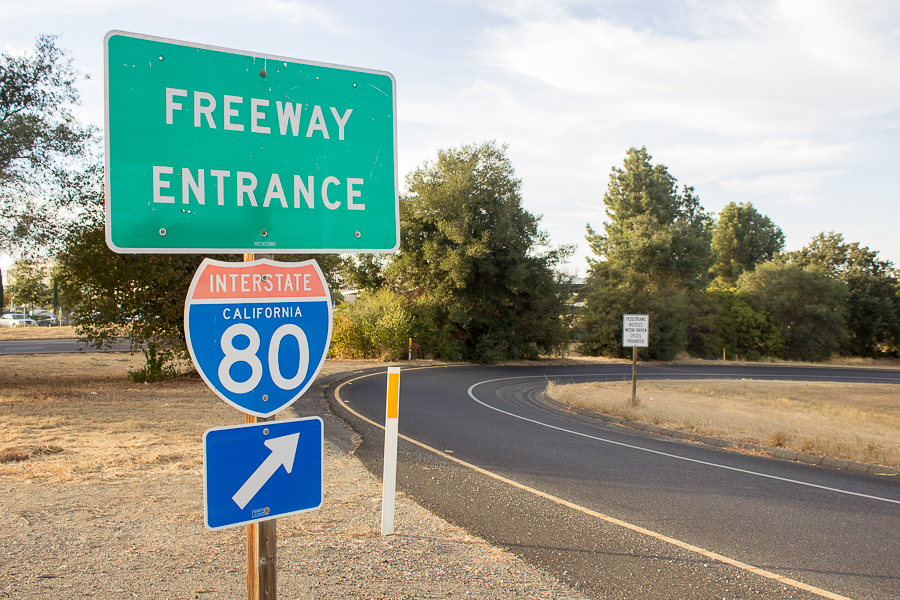
Vacaville police received a call at 10 a.m. on Sept. 22 about a suspicious object lying on an underpass leading onto Interstate 80. The call led to the closure of the Mason Street underpass from 10 a.m. to 12:15 p.m., while the Napa County Bomb Squad were called in to investigate. After using a robot to x-ray the object, it was determined to be an abandoned rice cooker.

With recent events in New York, where a pressure cooker was used as a makeshift bomb, suspicion of unidentified objects is an understandable fear. While a rice cooker is distinctly different from a pressure cooker, Lieutenant Matt Lydon at the Vacaville Police Department urged anyone who sees anything suspicious to report it to their local law enforcement agency.

“[If] somebody thought it was suspicious enough to give us a call, then we get out there because we have information and there are pressure cookers that have been used as explosive devices such as in the Boston Marathon. So we always ere on the side of caution,” Lydon said. “We looked at it from a distance, and then we called the Office of Emergency Service and […] they sent a bomb squad out.”

In light of attacks across the globe, the importance of reporting suspicious activity has seemed to be increasing. However, many are still unsure of whether to call law enforcement until they are confident that an object could pose a threat.

Sriteja Chavva, a second-year engineering major at UC Davis, emphasized that he would always report something if he thinks it could be a danger to the public. However, he’s unsure of how he would have reacted if he saw the abandoned rice cooker on the road.

“I don’t go out of my way to look for suspicious objects, but if there’s things that are very blatant and I’m suspicious, then I’d probably call the authorities,” Chavva said. “If there was a rice cooker in the middle of the road, that’s kind of difficult because I know a lot of the bombs that were detonated were pressure cookers […] If it was just lying in the middle of the road, I’d see if there was a chance for me to go close to it and see if it looks suspicious, and if it does, I’d call the police.”

Although Lydon admitted that it appeared there was no malintent in the placement of the abandoned rice cooker, it is always best to be wary when dealing with objects such as this.

While Chavva’s willingness to investigate seems admirable, Lydon stressed that one should never approach a suspicious object and should instead call law enforcement, even if it’s unclear whether the object poses a threat to the public.

“If they see something suspicious, do not go up and investigate. They’re supposed to report to us and then we have some specific training […] Do not touch, do not try to manipulate it,” Lydon said. “Any description to the police that would be helpful, a level of detail there so we can pass that along to the bomb squad, so they can make a determination moving forward.”

Shahzeb Khan, a third-year computer science major at UC Davis, pointed out that dismissiveness is never the best policy.

“I would think that someone just threw it away, so I would just not tell the police about it,”  Khan said. “But I probably should [tell the police], thinking about it.”

While it may be exasperating for a main road to be closed off because someone thought an old rice cooker could be dangerous, Lydon assured that it’s better to be safe than sorry.


Written By: JUNO BHARDWAJ-SHAH – city@theaggie.org

University of California debt reaches $17.2 billion

NADIA DORIS / AGGIE
NADIA DORIS / AGGIE

UC Board of Regents discuss debt management policy amid rising borrowing concerns

The Board of Regents of the University of California (UC) held a meeting on Sept. 14 to discuss a proposal for a new management policy to address UC’s increasing debt, which now sits at $17.2 billion.

The debt, which has more than doubled since the recession, has become an increasing concern since two bond rating services, Moody’s and Fitch, downgraded the University’s credit rating in 2014, citing continuous operating deficits.

“The portfolio has grown from $6.79 billion of debt outstanding as of fiscal year end 2008,” said the University of California Office of the President (UCOP) in its discussion agenda for the meeting in September. “During this time of contracted fiscal conditions that have continued since the Great Recession, the debt portfolio has been one of the tools the [UC] has used to invest in its teaching, research, and public service mission, and to support the future financial health of the [UC]. With the growth in size of the debt portfolio, a debt policy to guide capital markets activities and govern the use, structuring and management of debt has become even more critical.”

The University has three primary lenders that it currently owes the sum of its debt to: the General Revenue Bond (GRB), the Limited Project Revenue Bond (LPRB) and the Medical Center Pooled Revenue Bond (MCPRB).

The GRB serves as the UC’s primary source of credit, which, according to the UCOP discussion agenda, is used to “finance projects that are integral to the UC’s core mission of education and research.”

The LPRB is used for projects such as student housing, parking, recreational facilities and athletics while the MCPRB is the main financing system for the UC’s five medical centers.

The University owes $10.3 billion, $3.8 billion and $3.1 billion to the GRB, LPRB and MCPRB respectively.

In 2014, Moody’s and Fitch bond-rating services downgraded the University’s credit rating after concerns regarding the UC’s operating deficits. The University’s credit ratings for the GRB currently sit at Aa2, AA and AA from Moody’s, Fitch and Standard and Poor’s.

“The downgrade to Aa2 reflects the University’s multiple years of operating deficits, rising fixed costs and revenue constraints,” said Moody’s Investor Services in its 2014 statement. “The rating also incorporates the University’s substantial and growing debt burden, increasing the importance of stronger cash flow to absorb rising debt service obligations. The University’s ability to improve operations will be further limited by public policy and faculty and staff that are 40 percent unionized.”

Despite criticism from legislators concerned about its borrowing habits, the University insists that its debt remains manageable at this point.

“The debt policy was drafted by UCOP in conjunction with campus leadership and advised by external experts,” said Claire Doan, a representative for UCOP, via e-mail. “Debt service remains at a manageable portion of the University’s budget and the University does not use tuition to pay for debt service. Auxiliary revenues, medical center revenues and investment income are among some of the sources which help pay for debt service.”

The main objectives of the debt policy, as detailed by UCOP, would be to outline the University’s actions for debt management; provide guidelines for approving, structuring and managing debt and define roles for approving and monitoring debt after borrowing and provide reporting standards for University’s debt capital program.

The Regents will revisit the debt policy during their November meetings at UC San Francisco.


Written by: Ivan Valenzuela – campus@theaggie.org

HUMOR: Woah — is that an observatory up there?

JAY GELVEZON / AGGIE

Check it out

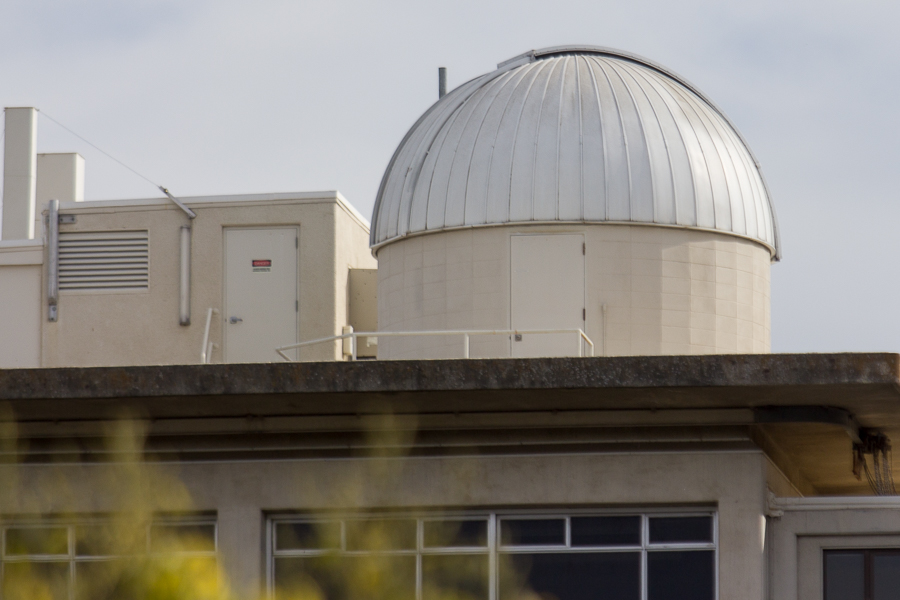
UC Davis has its problems, but I guess space exploration isn’t one of them. I mean, check it out — is that an observatory up there? I mean, woah.

Remember pepper-spray? That observatory doesn’t. It’s an observatory — it doesn’t have eyes! In fact, I don’t even think it’s alive. Unless you consider the lens an eye, which could be a metaphor for the need of students to closely examine their university and demand transparency and accountability from an increasingly opaque administration. Or nah! It’s an observatory!

The sky is big. Observatory’s “observe.” The sky. Sometimes I cry. Woah…

I asked my professor why we have an observatory on campus. He asked what I was doing at his house so late at night. I guess science raises more questions than it answers. Huh.

Here’s another problem UC Davis students face: long lines at the Silo. Hmm.

Obviously the observatory made me reconsider my place in an infinite universe. So let’s just try to get through with that part of the conversation, okay? It wasn’t good. I felt small.

I’m a passionate man. I’m so passionate. Take the heat energy of an atomic bomb, multiply that by one billion, add seven and that’s a few short of how passionate I am. I’m grunting just thinking about it. Now, you might be asking: what does this have to do with an observatory?

I was born into a poor family.

My father always said: “Son, we are a poor family — very poor.”

I gazed up at him from his lap. I sat on his lap because we were so poor that his lap was the only chair we could afford. Sad.

“Son, you need to be tough to get on in this world. You need to be hard, like the hard metallic shell of a university observatory. Yes, that’s exactly the simile I meant to use.”

I never forgot that.

In conclusion, you now know why I am crying when you see me looking at the observatory on top of Kerr Hall. I am thinking about all the chairs I never got to sit in.


Written by: Eli Flesch – ekflesch@ucdavis.edu

UC Davis mourns loss of Margrit Mondavi

ZHEN LU / AGGIE
ZHEN LU / AGGIE

Mondavi’s legacy lives on through contributions to Mondavi Center, UC Davis

UC Davis felt a tremendous loss with the passing of Margrit Biever Mondavi on Sept. 2.

“Margrit and her husband Robert were early philanthropists at UC Davis,” said Shaun Keister, Vice Chancellor for Development and Alumni Relations. “They got so engaged and believed so much in UC Davis that they continued to give. I really believe there was probably no other advocate in the history of UC Davis who everywhere she went she talked so positively about Davis.”

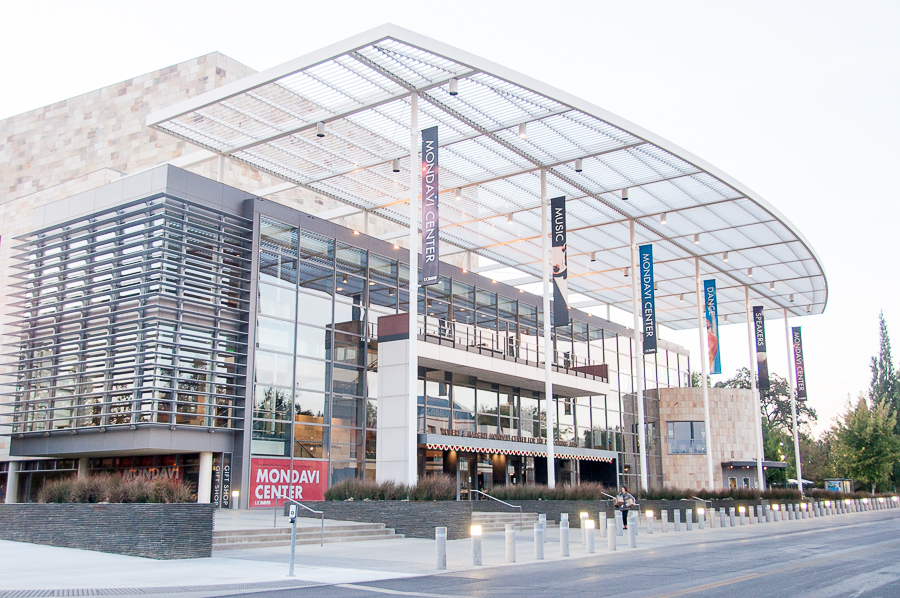
Margrit and her husband Robert donated over $30 million to UC Davis to help fund the construction of both the The Robert and Margrit Mondavi Center for the Performing Arts and the Robert Mondavi Institute for Wine and Food Sciences. Margrit was also an early contributor to the new Jan Shrem and Maria Manetti Shrem Museum of Art that is set to open Nov. 13.

Margrit was born in Switzerland in 1925, and moved to the United States when her then-husband, Captain Philip Biever, was stationed in South Dakota. After settling in Napa in 1960, Margrit became involved in the wine and arts scene and eventually worked for Robert Mondavi beginning in 1967 at his winery as director of public relations.

In 1969, Margrit founded the now-acclaimed Summer Music Festival, held annually in Napa. This event has drawn big names in music such as Tony Bennett and Ella Fitzgerald. Margrit and Robert Mondavi wed in 1980. Together they infused Napa and Northern California with several philanthropic donations that helped promote the arts.

“She was down to earth, she was very elegant and had a wonderful way about her,” said Dr. Don Roth, Executive Director for The Mondavi Center. “She was always warm to everyone in her sight. She wasn’t up on a pedestal even though she could’ve been because she had done so much in her life.”

Margrit and her husband were huge contributors in making Northern California, in particular Davis, a renowned hub for culture, wine and the arts.

“Their gifts to this campus have no equal and completely changed the access to performing arts for students, Davis and the surrounding region of Northern California,” said Dr. Roger Boulton, professor of viticulture and enology, via e-mail. “The Robert Mondavi Institute for Food and Wine Science transformed our research and teaching environments and provided the philanthropic leadership that has inspired others to follow.”

Although not a UC Davis alumni, Margrit became heavily involved with campus affairs. She actively participated in fundraising campaigns and frequented shows at the Mondavi Center with UC Davis faculty.

The Mondavis also established scholarships for students in both the College of Agriculture and Environmental Sciences and the College of Letters and Science. Margrit would often hold dinners for these students to talk about their ongoing studies.

“Margrit continued to be very involved with the campus,” Roth said. “She was on the campaign cabinet for the last billion dollar campaign we completed and she herself made a gift to the Manetti Shrem [Museum of Art]. She really felt connected to the students, [and] she regularly came to [The Mondavi Center] for performances.”

Margrit and her generous contributions to UC Davis will leave a legacy for future students to enjoy.

“Margrit’s lasting impact on UC Davis is multifaceted,” Keister said. “She is the matriarch of philanthropy for this campus. She really got this university to think differently about fundraising and she’s inspired a generation of philanthropists.”


Written by: Lindsay Floyd – campus@theaggie.org

Will 2016 Break the Billy Goat Curse?

0

DAVE HERHOLZ [CC BY-SA 2.0] / FLICKR
The mythical Billy Goat curse has plagued the Chicago Cubs since 1945.

That year, Billy Sianis, the owner of the local Billy Goat Tavern, was denied entry to his paid-for box seats during Game Four of the World Series at Wrigley Field due to the wretched smell of his pet goat, Murphy, whom he had brought along for good luck. Sianis, outraged, allegedly exclaimed, “Them Cubs, they ain’t gonna win no more!”

You would think that someone crazy enough to waste an expensive box-seat ticket on a goat would probably be incorrect in his declarations about the fate of an organization for the next 71 years, but Sianis’ curse has held true: the Cubs haven’t made it to the World Series since 1945.

With an enigmatic history and a resilient fan base, the Cubs are long overdue for another World Series; it’s been awhile since their last win, in 1908. Heartbreak has seemed to consume this organization since any living baseball fan can remember, but this should be their year. They deserve it.

Abandon your belief in the San Francisco Giants even-year magic — the Cubbies are definitely the best team in baseball in 2016. Kris Bryant is the probable National League MVP with teammate Anthony Rizzo not too far behind. Kyle Hendricks just accumulated the lowest ERA in baseball among qualified starters while also being the third-best pitcher on his own staff, and the defense may be the best in history. This team really has no holes; their 103-58 record reflects that. Theo Epstein, the young yet already legendary president of baseball operations, has created a monster of a team.

Jon Lester, Kyle Hendricks and Jake Arrieta are capable of keeping any offense in check as their big bats provide the offensive punch on the other end. Additionally, the acquisition of the flame-throwing Aroldis Chapman has fueled an incredible second half from the Cubs’ bullpen.

I’m usually not the superstitious type, but if they don’t win the World Series this year, I may start to believe in predetermination. If the Giants somehow rattle off three straight to beat them, I will definitely buy in and concede that the Giants will win every other year for the entire existence of the MLB while Chicago’s “Lovable Losers” enviously watch at home.

The beauty in baseball lies in its unpredictability. Of the 16 teams to have won 100 plus games since 2000, only one has won the World Series in that same year. Despite this, something feels different about the 2016 Cubs. They are a complete team through-and-through. They have grit, experience, youth and talent. If they don’t win in 2016, we may have to accept the fact that it was just not meant to be, and that Billy Sianis and his pet goat have supernatural powers.

To be the G.O.A.T., the Chicago Cubs have to beat the goat.


Written by: Michael Wexler – sports@theaggie.org

The grand opening of Manetti Shrem Museum

BECCA RIDGE / AGGIE
BECCA RIDGE / AGGIE

Verge Center of the Arts to host workshops in month leading up to museum opening

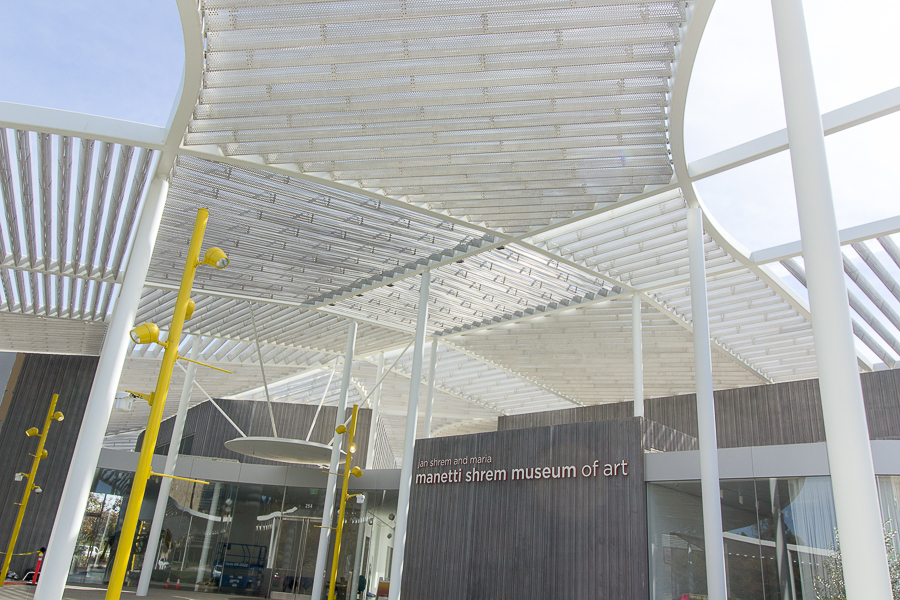
The Jan and Maria Manetti Shrem Museum, in conjunction with the Verge Center for the Arts, will host a series of workshops throughout the month of October leading up to the museum’s grand opening on Nov. 13.

The Manetti Shrem Museum, named for the philanthropist couple who donated $10 million to the university for the museum, features special exhibitions of the work of first-generation faculty, as well as exhibitions of contemporary artists who exemplify the artistic and innovative culture of UC Davis.

In order to maintain this tradition, the museum has commissioned artist Lisa Rybovich to create a 1,500-foot-long sculpture composed of hundreds of individual fabric links. The local community will be able to make its mark on the sculpture by helping to hand-paint links at a series of workshops that will be held throughout the month of October.

Susanna Tu, deputy director of the Verge Center for the Arts, described why the Manetti Shrem is so significant.

“I think the opening of this museum is important because it continues the university’s legacy of interdisciplinary practice and experimentation in art-making, with a strong commitment to contemporary art and inclusiveness,” Tu said.

Katie Bryant, a second-year Italian major, tabled at the Involvement Fair on behalf of the museum.

“It’s so important to have museums like this one on campus because it shows the importance of integrating arts with academia,” Bryant said.

According to Bryant, the museum intends to display exhibitions that cover many different fields of study, from programming to architecture. The primary goal of the museum is to bring to light the innovation and creativity that UC Davis is known for.

The museum is located adjacent to the Mondavi Center, another campus institution which fuses academia and the arts. Cesi Lopez, a third-year design major, works at the Mondavi Center, and has witnessed the progress of the museum since the beginning of its construction.

“It’s so great to see [the museum] here because it really adds to the campus […] it displays everything that UC Davis has accomplished and strives for,” Lopez said.

Every week until the end of the month, there will be free public workshops organized by the Manetti Shrem Museum staff. For more information please visit the Facebook event page and the museum’s website.


Written by: Krishan Mithal – arts@theaggie.org

George Takei to visit Mondavi Center

GAGE SKIDMORE [CC BY-SA 2.0] / FLICKR
Star Trek actor to give talk on LGBT activism, experience as Japanese American

George Takei is known to many as Captain Sulu from the original ‘Star Trek,’ but in the past few years, he has found a new source of fame as a social media phenomenon.

Takei has garnered more than 1.8 million followers on Twitter and almost 10 million fans on his Facebook page, where he posts everything from puns and silly memes to uplifting articles and political commentary. And despite growing up long before the age of the hashtag (Takei is 79 years old), he’s become an icon for a younger generation thanks to his blending of Internet humor and serious social activism.

He is a vocal champion for the LGBT community, advocating for equal rights, and he has made it his mission to shine a light on the shameful events of the Japanese American internment camps of World War II, where he and his family were confined for approximately three years during his childhood.

His talk for the upcoming Mondavi Center event “An Evening with George Takei” is sure to inform and inspire all who attend.

Amy Fink, a fourth-year English major, commissioner for the ASUCD Gender and Sexuality Commission and president of The Star Trek Club at UC Davis, is eager to attend the event. As a member of the LGBT community, she believes that Takei has significantly advocated for better treatment of members of the community.

“I think he’s done a lot! He really carries Star Trek’s vision of a better future, and he plays with that in his everyday life,” Fink said. “He’s very outspoken about his past in the internment camps, and his experiences with being LGBT during such a hard time so I think he plays that role really well.”

Reyna Selga-Eaton, a fourth-year community and regional development major who is also a member of the LGBT community, comes from a family of “avid trekkies.”

“[George Takei has been] an advocate for LGBTQIA persons of color, and for Asian Americans, and the very fact that [he] is from a different generation is what makes him such an effective advocate,” Selga-Eaton said. “He reaches a different audience, connects multiple generations and has started many conversations. And with the resurgence of the new ‘Star Trek’ movies, Takei’s influence inspired Sulu’s character in the newer movies; in the latest film, Sulu is shown having a male partner and child. That kind of influence and representation is extremely important.”

A great part of Takei’s appeal is the fact that he has lived through times where just being himself — a gay Japanese American — was often socially unacceptable and sometimes dangerous. He has managed to be an outspoken and effective activist for a variety of civil-rights causes due to his genuine desire for change.

Jeremy Ganter, associate executive director and director of programming for the Mondavi Center, touched on why Takei is an excellent choice for a speaker event.

“In his case, it’s about the breadth and unique depth of his own life experience, which goes far beyond his relationship to ‘Star Trek,’ interesting as that is,” Ganter said. “In this tumultuous time in the history of American politics and activism, he has so much to offer about LGBT rights, social media and the Japanese American experience in California.”

The event will no doubt be incredibly interesting, as Takei will bring his usual wit, humor and sincerity to his personal stories that address important issues.

“He’s really funny, and really smart, so I’m expecting to be very wildly entertained and inspired at the same time, and I’m sure that it’ll be a great evening,” Fink said.

“An Evening with George Takei” will take place on Saturday, Oct. 15 at 8 p.m. at the Mondavi Center in Jackson Hall. For more information, please visit the Mondavi Center website.

Written by: Pari Sagafi – arts@theaggie.org

Game On, Aggies

AMY HOANG / AGGIE
AMY HOANG / AGGIE

UC Davis revamps fan participation with tailgating, street parties

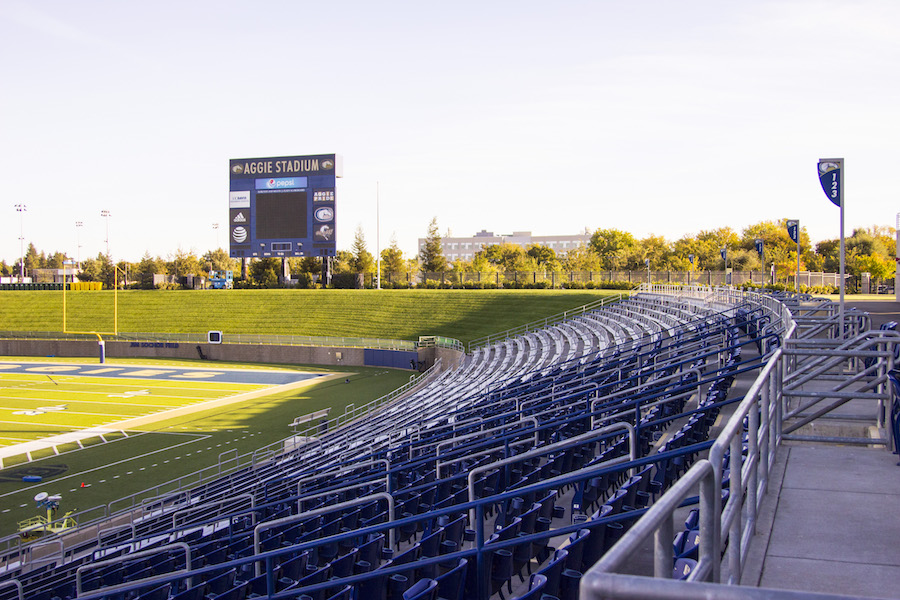
Attending a football game at Aggie Stadium and cheering on the team with the pep band while sporting blue and gold has long been an integral part of campus life.

With the recent installation of student tailgating and the Kickoff Street Party by UC Davis Athletics Marketing, Aggie Pride game days have become an accessible means of showing school pride. UC Davis has added these new events to welcome a more active and exciting atmosphere to Davis athletics.

The Kickoff Street Party occurs approximately three hours before a home football game starts, on a blocked off portion of La Rue Road directly in front of the stadium. The street party incorporates food vendors, music, games, as well as a display of vehicles on the road.

“Our fans have reacted very positively to this event, and we expect it to be a big part of our game day experience moving forward,” said Domenic Noto, UC Davis fan experience coordinator for UC Davis athletics. “We want to make sure that there is a way for all of our fans to have fun, whether they are students, alumni or families. We hope that creating this type of experience for every fan will keep them coming back to Aggie Stadium for years to come.”

The recent addition of the Kickoff Street Party is not the only place to show Aggie Pride Aggie Pride Fridays take place the day before game days and allow students to showcase their “Aggie Blue,” win free prizes and get pumped for Saturday’s game.

“If you see Gunrock on Fridays […] you can get things [from him],” said Ishita Singh, fourth-year economics and international relations double major and intern for UC Davis Athletic Marketing. “We [also] do promotions on bike circles […] by the Silo trying to [get people to] cheer and get excited for the games.”

The biggest change in football games this year, however, would be the installation of another tailgate section to promote student tailgating. The normal tailgating spots near the stadium have sold out, which led for the opening of Lot 56, located behind the Aggie Stadium scoreboard.

The spots are available for any fans, but most people who have expressed interest in them have been students. The positive feedback from students regarding these spots leave the Aggie Pack hopeful for increased student participation and overall fan experience.

“In my time here I have seen that we have a very dedicated season ticket holder and donor base that is very passionate about Aggie football,” Noto said. “One of things they enjoy most about Aggie football games is seeing the students attending our games and being active participants in helping create a great game-day environment. The student attendance at the Weber State game was great and they certainly helped create a surge in energy our team fought back to tie up the game late.”

Fan attendance for Aggie football has fluctuated quite a bit over the years in regard to the student population. However, UC Davis Athletics Marketing hopes that students’ Aggie Pride will solidify with the institution of tailgating into the game-day experience.

“We’re trying to create a more college sports type atmosphere the way bigger schools do it,” Singh said. “Davis has always been known as a smaller [sports] school, but we have so much potential we want to get students more involved with our athletics because we have great teams and we want everyone to show off […] their pride.”

With great teams comes a great fan base, and it seems as if a more student-orientated tailgate will highlight this Aggie Pride.

“Students in the past used to say, ‘you know, we would tailgate if we had a section,’” Singh said. “So we decided [to] have a section for just students where they can go out, have a good time, and then they can be super pumped and ready for the game.”

These pre-game events have led to an increase in fan attendance the biggest impact of which has been on none other than the football team itself.

Last month, when the team came home from playing against University of Oregon, where Saturdays are dedicated to the team’s football games and fan participation is off the charts, the Aggies felt what it was like to play at a bigger sports school. Nonetheless, recent fan participation has enhanced the football experience and led to many pre-game events, all part of the college game-day experience.

“With tailgating incorporated [into the pre-game], it really gave a college game day environment, and I think it’s great all around,” said Quincy Bennett, a second-year political science major and linebacker on the UC Davis football team. “When we get a lot of people to the games, it definitely has that Aggie Pride stadium feel.”

Find more information about purchasing a tailgating spot and how to show off your Aggie Pride on the UC Davis Aggies website.


Written by: Austin Carroll – features@theaggie.org

At The Crossroads: Putting the pieces together with Charles Darwin

0
PUBLIC DOMAIN
PUBLIC DOMAIN

The father of evolutionary theory proves that science and the humanities jointly form a more detailed view of the world

Some of my favorite childhood memories involve sitting at the table with my mom, chipping away at a massive, complicated jigsaw puzzle with fewer notable and unique pieces than Buzzfeed (no small feat). But to my horror, my mom often insisted on solving the puzzle without constantly studying the picture on the box.

But, to be fair, her torturous method actually made fitting the correct pieces together all the more satisfying. As we slowly assembled our masterpieces, I’d grow increasingly eager to find the special piece that would reveal the picture’s subject and help arrange the remaining pieces. And even though my cat always turned our puzzles into hairball-splattered Jackson Pollock paintings, the pride of blindly piecing together an entire puzzle forgave any of my cat’s unsolicited contributions.

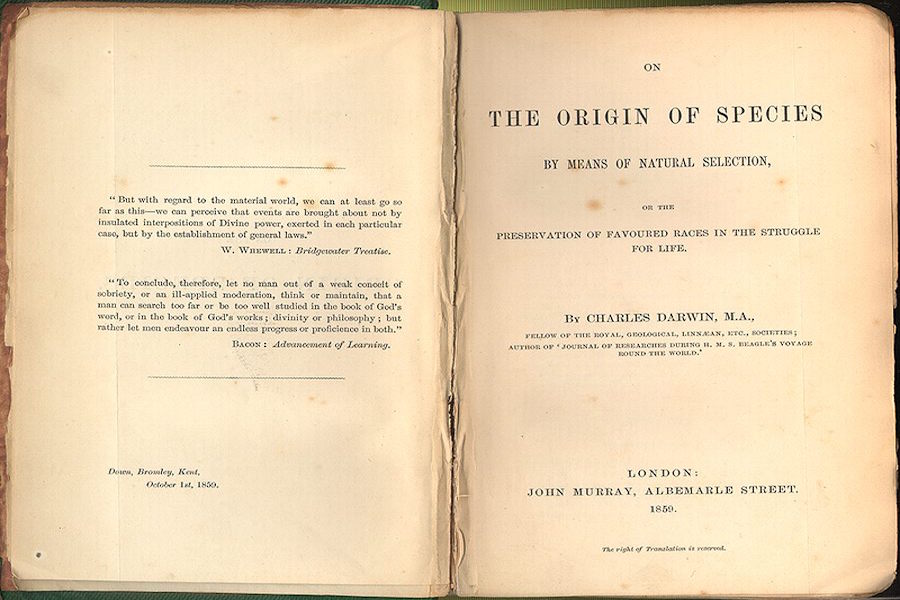
With his 1859 magnum opus, On the Origins of Species, Charles Darwin similarly pieced together fundamental scientific elements and constructed a more complete image of the world. Although he didn’t invent the concept of evolution, Darwin verified its existence by outlining its driving force: natural selection.

In environments rich in variation among organisms, natural selection operates to eliminate the species least suitable for their surroundings — an idea that spurred the creation of an entire branch of evolutionary biology and revolutionized many aspects of science.

Deemed the essential unifying theory for the life sciences, evolutionary theory has allowed scientists to understand the links between all species on Earth. Evolution also dismissed supernatural notions supported by natural theologians, instigating a culture shift toward stricter scientific and secular explanations of the natural world.

Darwin’s work has also served as a bridge between science and various fields of humanities. Like other physical sciences, certain principles of evolutionary biology require universal laws to be fully explained. Yet evolutionary biology mainly focuses on past events to uncover new information, rendering experiments and other standard scientific methods futile. Therefore, by pioneering evolutionary biology, Darwin married the two previously distinct fields of biology and history.

When mixed with psychology, evolution also provides significant insight into ethical questions about human nature. From a purely scientific viewpoint, evolution suggests that humans are intrinsically selfish due to their innate drive for self-preservation. But human beings, in reality, often express altruism and are willing to sacrifice their lives for loved ones or even complete strangers.

While this level of selflessness sounds irrational, psychology maintains that humans are social creatures who depend upon one another to survive, providing them with a strong incentive to sustain healthy relationships and preserve the lives of other group members. As a result, psychology and biology work together to provide a scientific basis for morality.  

Our universe is intricately composed of a countless number of pieces, both near, like the endless amount of cells in the human body, and far, like the estimated billions of solar systems sailing through the cosmos.

As scientists, humanists and other scholars strive to understand their own fields of interest, they build a more comprehensive understanding of our universe piece by piece. Like Darwin’s discoveries demonstrate, all pieces — whether scientific, philosophical, mathematical or otherwise — are ultimately connected, collectively comprising the entire universe.

When a crucial piece, like the theory of evolution, is placed into the puzzle, our world instantly becomes clearer, making all other missing pieces slightly easier to locate. Future pivotal discoveries in both science and the humanities will further clarify the puzzling complexities of our universe, piecing together a picture that more accurately depicts the world in which we live.

We just need to keep my cat away.

Written by: Taryn DeOilers – opinion@theaggie.org

Various grants support Kids’ Farmer’s Market in Yolo County Schools

YOLO FOOD BANK / COURTESY

Yolo Food Bank after-school program provides produce to food-insecure children in schools across the county

The Yolo Food Bank (YFB) received various grants from Walmart, Yocha Dehe Wintun Nation Community Fund, Genentech Foundation, Sutter Health, Monsanto, PG&E, Sierra Health and Nugget Markets, totaling upwards of $75,000, which will fund Kids’ Farmer’s Markets (KFM) for the 2016 to 2017 school year.

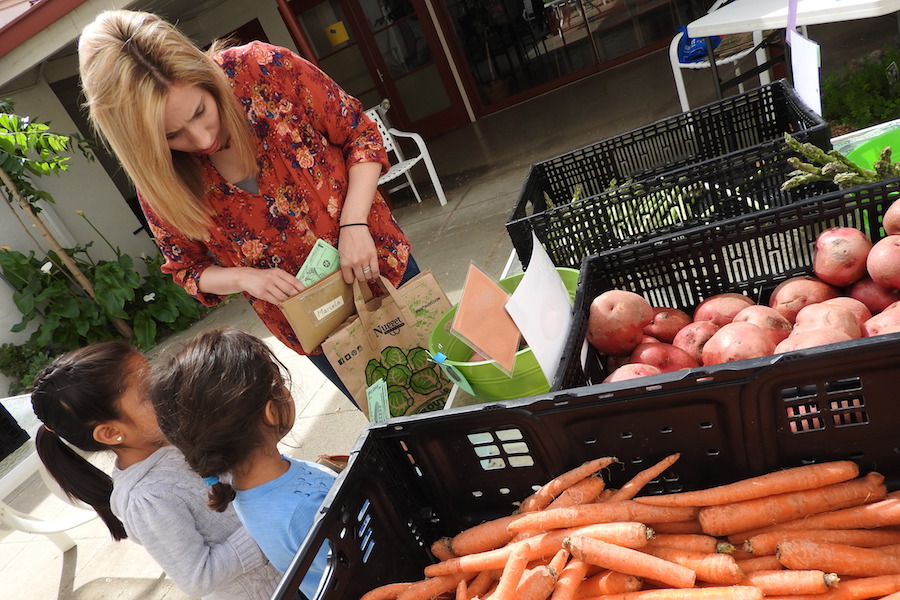
This pseudo-farmer’s market is held after school once a week, during which the children are given fake money to “purchase” fruits and vegetables from the farmer’s market.

The markets started in 2012 through a similar grant by Walmart; the free pilot-program was held at only one school then. However, the kids farmers markets have grown to serve two preschools and five elementary schools.

With consistent success and an increase in funding, YBF hopes to eventually expand to all of the 17 schools that qualify for the kids farmer’s market. Schools that can join the program must have over 50 percent of students who qualify to receive free or reduced lunch. There are about 20 to 275 kids at each school, with a total of about 1,000 children.

Jeanée Natov, program coordinator, discussed the mission and goals of KFM for this year: increasing year-round access to fresh fruit and vegetables among low-income Yolo County children, increasing food literacy and physical activity of KFM participants, increasing students’ attitudes and behaviors related to fruit and vegetable intake, expanding KFM to all elementary school sites in Yolo County — in which at least 50 percent of students qualify for the free or reduced lunch program — and increasing public awareness of the KFM program.

Stephanie Villegas, director of programs at YBF, is excited to bring the program back for another year of educating even more students.

“It helps kids get exposed to produce they’ve never eaten before and also encourages them to take it home and encourages their families to eat along with them,” Villegas said. “We also do nutrition education at each site through recipe cards and educational programs with the help of interns and nutrition based community organizations.”

YBF gains access to the produce through a program created by California Association of Food Banks called Farm to Family (FTF), along with donations from local farmers. FTF works with farmers, ranchers, pickers and shippers to donate produce to food banks. FTF provides basic produce kids are accustomed to seeing, like oranges or apples, and varies considerably, depending what time of the year it is.

The children also gain exposure to other foods through the help of various grants the program receives.

Each week, a few kids are able act as vendors behind the food stands, selling produce to their peers. The interns and volunteers ensure that everything operates smoothly, even with the farmer’s market being predominantly “run” by the kids.

Surprisingly, the kids are often open to trying a variety of fruits and veggies. The program provides samples of the produce in select recipes to try at the market but plans to incorporate more of these for the kids to taste.

“We are implementing a lot more nutrition education in the program,” Natov said. “We are also taking UC Davis interns that are nutrition or public health majors.”

The interns help promote the produce and educate the students about the fruits and vegetables. Jennifer Tong, a fourth-year nutrition in public health major, has interned with KFM since last  June 2016. She enjoys working with the kids and teaching them about food nutrition.

“It’s a cool thing because we’re teaching them to be able choose and pick nutritious examples of things they can have […] at home,” Tong said.
Written By: BIANCA ANTUNEZ – city@theaggie.org

UC Davis women’s soccer: a strong contender in the “Wild, Wild West”

0
BRIANA NGO / AGGIE
BRIANA NGO / AGGIE

A late comeback leads to a 3-2 victory for the Aggie’s home opener

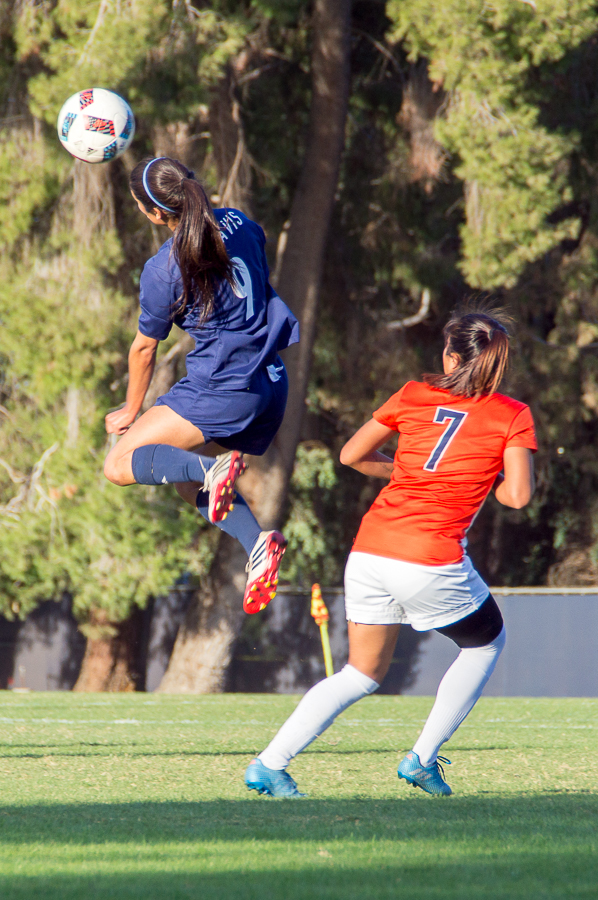
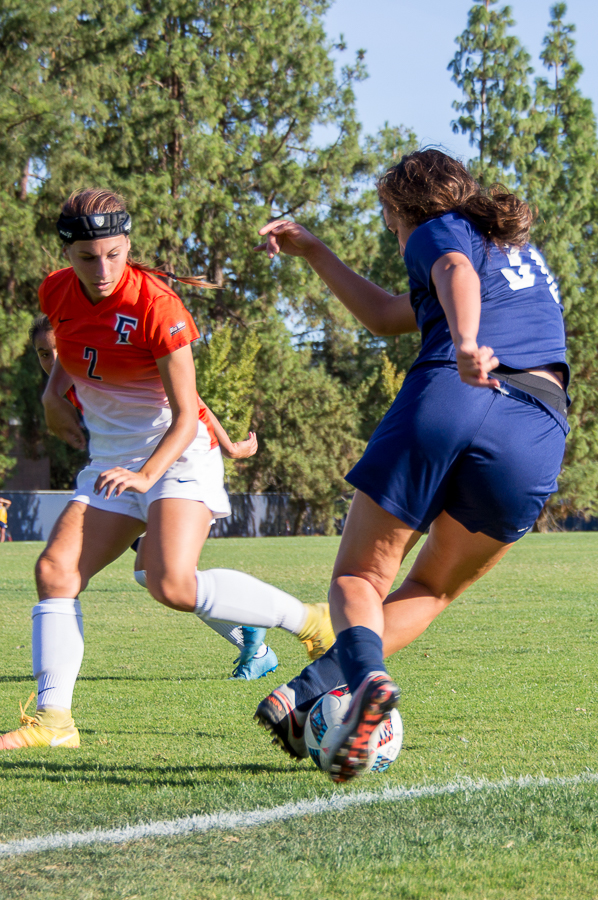
Hundreds of people crowded the bleachers on the windy night of Thursday, Oct. 6 at Aggie Soccer Field to support the UC Davis women’s soccer team’s Big West Conference home opener against the CSU Fullerton Titans.

Coming off of a tie in double overtime on the road against CSU Northridge, the Aggies wanted a win for their campaign toward a Big West Championship title.

“It’s our year,” said Andi Damian, senior forward. “That’s what we’ve been saying and we’re going with that.”

A vibrant buzz filled the air as players took the field, but that elation slowly faded as the Titans scored back-to-back goals in the first half.

The bleachers were not as packed by halftime, and it looked pretty bad for UC Davis as the second half wound down. But in the 71st minute, with a quick cross from freshman forward Nicole Carson off the endline, junior forward Zuzu Romano kicked it into the Titans’ goal and the Aggies were finally in on the board.

BRIANA NGO / AGGIE
BRIANA NGO / AGGIE

UC Davis took over from there. The Titans fouled one of the Aggies inside the 18-yard line, sending Damian to take the penalty kick. Though the CSU Fullerton goalie deflected it, the ball inched passed the end line, tying it up 2-2 in the 75th minute. The energy at the field was electric once more as fans got on their feet.

The Aggies kept pressing, getting 14 shots and seven corner kicks in the second half. Junior midfielder Sydney Burger sent the ball inside to freshman midfielder Alicia Sloss, who had only seen about five minutes of preseason action after recovering from an ACL injury. Sloss didn’t let that stop her as she evaded her defender with a spin move before taking the game-winning shot that just slipped by the Titans’ goalie.

The Titans made one final attempt as the clock expired, but the shot was wide right, and the Aggies secured their first conference victory 3-2.

Head coach Twila Kaufman said that the team needed this victory if it was going to win the Big West Championship.

“The thing is not to play like you’re two goals back, but to play with that childlike faith, just encouragement and joy, and to go out and score five goals. And they found a way to score three,” Kaufman said.

The UC Davis women have never won a Big West Championship, but they’re confident that this is their year to do so. After watching their match against CSU Fullerton, it’s easy to believe them.

With 22 underclassmen, four juniors and four seniors, the Aggies still have some growing to do. The coaching style of playing the ball in the middle and backfield has remained the same and the youth of the team hasn’t been a setback for them, according to Kaufman.

“When we got here, our staff said we’re not trying to flip a program, we’re trying to build a program and so we’ve been layering stuff in,” Kaufman said. “It just takes time. They’re still learning and growing and we’re very proud of them.”

This year’s team helped make up Sloss’ mind to play despite having the option to redshirt for the season, meaning that she could have sat out a year of competition so as not to impact her four-season eligibility of college competition.

“I’m so glad I didn’t redshirt because I wanted to play with the seniors,” Sloss said. “This is their last year and I feel like it’s going to be a great

BRIANA NGO / AGGIE
BRIANA NGO / AGGIE

year for them.”

The women’s team has the potential to go all the way this year. The Aggies went undefeated in the spring season with this year’s freshmen and without last year’s senior players.

They had a rocky preseason, staying below .500 in non-conference play this fall, but with their win against the Titans, the Aggies have something to prove for themselves.

“Up until about two days ago, we called this the Wild, Wild West and that’s just because when you have this many young people, you might have to go out and win a game 3-2 instead of 1-0,” Kaufman said.

With this win, the Aggies then traveled to face the University of Hawai’i Rainbow Wahine in Oahu last Saturday and fell 2-0 after outshooting Hawai’i 13-12 in the Big West Conference showdown.

UC Davis women’s soccer heads back to compete in its final three back-to-back home matches, beginning with UC Irvine on Thursday, Oct. 13 at 3 p.m., UC Riverside on Sunday, Oct. 16 at 1 p.m. and Long Beach State on Friday, Oct. 21 at 3 p.m.


Written by: Nicolette Sarmiento – sports@theaggie.org

Keep your eye on these UC Davis athletics

0
DANIEL TAK / AGGIE FILE

A preview of upcoming games

Women’s soccer (Aggie Soccer Field)

Thursday, Oct. 13 at 3 p.m. vs. UC Irvine

Sunday, Oct. 16 at 1 p.m. vs. UC Riverside

Today’s Oct. 13 game is the first of three back-to-back home games for the UC Davis women’s soccer team. The last home matchup against CSU Fullerton a week ago was an exciting game played before a packed crowd, in which the Aggies came back from a two-goal deficit in the final moments to win 3-2. They traveled to Honolulu a few days later to face the University of Hawai’i, and despite the competitive nature of the game, UC Davis lost 2-0.

With UC Irvine, UC Davis will face a tough team. In more than a decade, the UC Davis women’s soccer team has only defeated the Anteaters in 2015 and 2009. With the home field advantage and Fullerton’s match fresh in their minds, this could lead to a thrilling showdown.


Field hockey (Aggie Field Hockey Facility)

Friday, Oct. 14 at 2 p.m. vs. Pacific

The last home game for the Aggies nearly two weeks ago ended in a close loss in double overtime to Stanford. This week, the UC Davis women’s field hockey team returns to the Aggie Field Hockey Facility to play University of the Pacific, the first of four final conference matches.

Pacific is a dominant team — they lost the first three matches of the season and then came back to win nine straight games. But Stanford shut down Pacific 3-0 while the Aggies lost to them by a single goal; their comparable gameplay could lead to an interesting game.

Friday’s game is the second-to-last home game at UC Davis, so check out a good match before the end of the season rolls around.


Softball (La Rue Field)

Saturday, Oct. 15 at 11 a.m. vs. Alumnae

Sunday, Oct. 16 at 12 p.m. vs. Academy of Art

The UC Davis softball team begins its fall season this weekend with a fun alumnae game on Saturday, right before starting its non-conference play against Academy of Art University on Sunday. The alumnae game will be a great place to see the newcomers, veterans and alums in a friendly match before the real competition commences.

There are some new additions to the coaching staff, so it will be interesting to see how that change reflects in the team’s performance. The fall season continues through mid-November and is an opportunity for the Aggies to work out any kinks that may not be wholly apparent during preseason practice. This will give fans a taster on what team they can expect to see during the 2017 season.


Football (Aggie Stadium)

Saturday, Oct. 15 at 4 p.m. vs. Northern Colorado

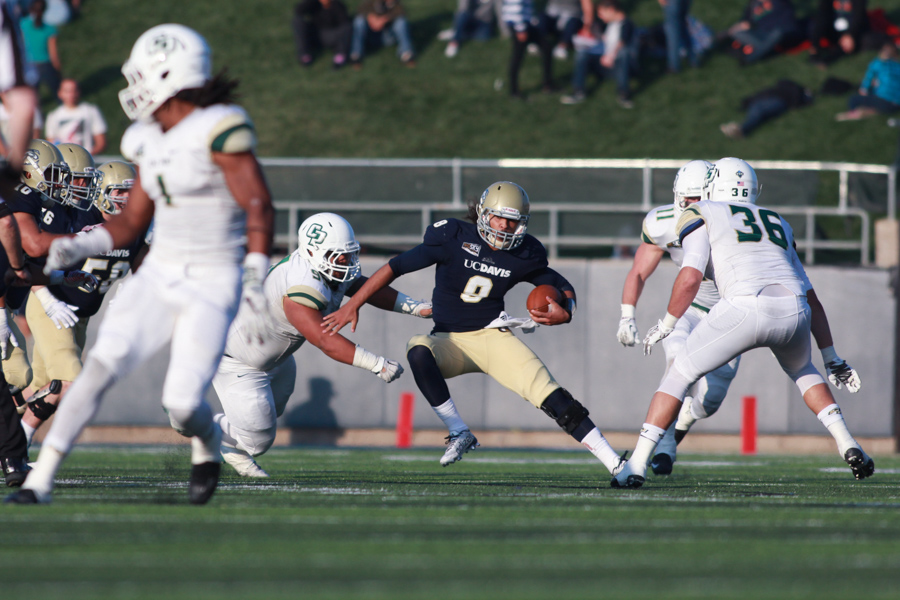
It’s Homecoming weekend, meaning the UC Davis football team will meet Northern Colorado in an effort to snap a four-game losing streak. The Aggies gave a good defensive game last week against Southern Utah and were able to sack the opposing quarterback five times, but it wasn’t enough to stop a 24-3 loss.

To put these sacks in perspective, there were 14 sacks total last year, so this might mean a good omen for the defensive future of the team. Injuries, however, are beginning to plague the Aggies, with six starters not playing in the Southern Utah game.

It’ll be an entertaining game this weekend with Homecoming day celebrations and a tailgate party before kickoff, and, if the Aggies are able to field some of their injured starters, they are well-positioned to deal out some serious competition against Northern Colorado.
Written by Bryan Sykes – sports@theaggie.org

UC Davis researchers study brain activity in deaf children

ANDREW KESSLER / COURTESY

UC Davis Center for Mind and Brain launches The Cochlear Implant project, seeks advancement in auditory, linguistic communications

Two out of 1,000 children born in the United States every year have detectable hearing loss in one or both ears, according to the National Institute of Deafness and Other Communication Disorders (NIDCD). Researchers at the UC Davis Center for Mind and Brain are collecting data for The Cochlear Implant Project to observe the development of the brain after children receive medical devices for auditory improvement.  

The cochlear implant (CI), an electronic device that helps deaf or severely hearing-impaired persons to hear, uses electrical signals to directly trigger the auditory nerve. The inner-ear functions that relay sound pressures into electrical signals are often dysfunctional in deaf patients due to a wide variety of reasons, such as fusion of inner-ear bones or trauma.

CIs deviate the inner ear pathway, making them extremely helpful for patients who are hearing-impaired.

“Most children are implanted [with a CI] by 1 or 2 years of age,” said David Corina, professor of linguistics and psychology and researcher at the UC Davis Center for Mind and Brain.

The Cochlear Implant Project at UC Davis researches the impact these medical devices have on the hearing and language development of deaf children.

“More and more children are getting CIs and the technology is getting better,” Corina said. “What is the role of sign language now with children with a CI? Is it beneficial or distracting?”

Parents of the study’s participants also ask this pressing question. Families are very engaged in this project and often look to the researchers to help them find the best strategies of communication treatment and development for their children.

“[Finding the best strategy for each participant] can be challenging, as many parents are quite busy and some travel significant distances to get quality services for their children,” said Laurie Lawyer, postdoctoral scholar in the Cognitive Neurolinguistics Laboratory at the Center for Mind and Brain.

The researchers work with families to obtain background knowledge of their children, including previous medical conditions, as well as their home and school situations.The researchers also orchestrate programs that support the transition of deaf and hearing-impaired children into mainstream schools. These programs help students succeed in communication and functional learning.

The young participants involved in this CI study come from multilingual backgrounds both at home and at school, with sign language as one of their fluencies.

Variations of sign languages exist depending on factors like geographic location.

“Britain has its own sign language, and so do other areas like Turkey and Hong Kong,” Corina said.

The CI project looks at linguistic competence by comparing the different types of languages; this includes both verbal and sign languages.

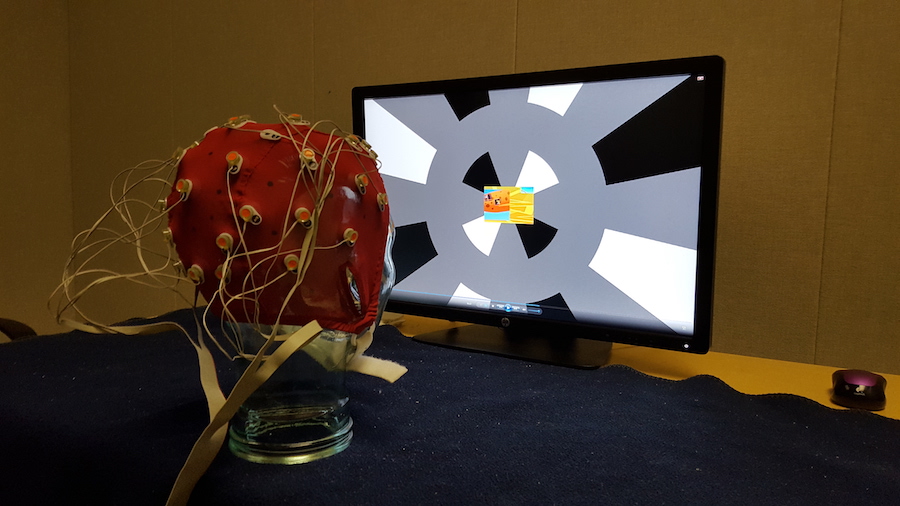
The technology used in this project includes electroencephalograms (EEG) to look at the electrical activity of the brain. Diagnostic exams involve eye-tracking tests, as well as standardized language and intelligence tests.

“In our lab we give children and parents a tour of the testing facilities and equipment prior to their participation,” Lawyer said.

The children grow accustomed to the environment at the research center.

“[We let parents] try on the EEG cap, see the electrodes and touch the electrode gel long before we attempt to put them on the children,” Lawyer said.

If at any time the child feels uncomfortable wearing the EEG cap, they are not forced to participate.

“The electrodes [on the EEG cap] record electrical activity created by the simultaneous firing of a group of neighboring cortical neurons,” said Andrew Kessler, a junior specialist researching CIs at the Center for Mind and Brain.

The researchers seek to have a better understanding of brain development after cochlear implantation.

“Our carefully-designed experiment provides a rapid and noninvasive neural metric of this population’s visual, auditory and linguistic processing,” Kessler said.

Participants from 1 to 2 years of age to about 8 years of age are recruited. It is important that data collected occurs from CI patients that are still developing their brain after the implantation of a CI.

“The goal of our current research is to characterize the relationship between visual and auditory processing in deaf children with cochlear implants, to track whether this relationship changes over time and to relate each child’s auditory and visual processing abilities to language and other behavioral outcomes,” Lawyer said.

The CI project is a five-year longitudinal study that encourages the families and participants to return for more data collection.

“In 5 years we should have collected enough data to make some conclusions about how the brain changes as a result of receiving a cochlear implant, and how that relates to clinical outcomes for these patients,” Kessler said.

The CI project is a unique study that gives participants and their families hope via better learning and developmental communication strategies necessary for the children to succeed.

“We’d eventually like to be able to develop a set of diagnostic tests which could be used prior to implantation to determine which kids may show the greatest benefits from a cochlear implant, and which kids may be better served by alternative means,” Lawyer said.

This project is paving the way for more effective and efficient treatments for children with auditory impairments.

“Getting to interact with the families reminds me of why we do this kind of work, because ultimately, we’re all trying to give these children the best possible chances for success,” Lawyer said.
Written by: Shivani Kamal – science@theaggie.org