52.4 F
Davis

Davis, California

Tuesday, December 23, 2025
Home Blog Page 694

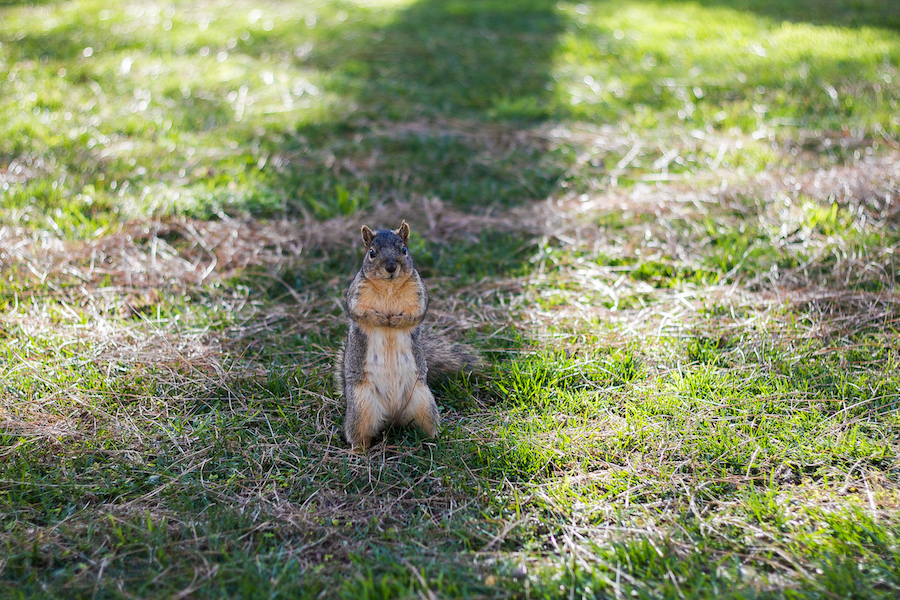
HUMOR: Cute squirrel on campus helps students forget for a moment that we are all dying

AARON BURBANK / AGGIE FILE

How a squirrel-related incident helped a pair of students realize how fragile life is

Squirrels are a well-known part of the UC Davis community. They run around our campus with us, often narrowly missing the underside of our bike tires. This is not because we attempt to hit them, but because they are dumb, and they don’t realize that death is just around the corner for us all. 

The Aggie talked to some students who recently saw one of these famous Davis squirrels drinking out of a puddle on campus. One of these students was Ellie Robbins, a fourth-year neurobiology, physiology and behavior major and self-proclaimed “vegan icon.”

“I had just finished having an epic stare-down with a crack in the pavement that I tripped on when I looked up and saw the squirrel drinking out of the puddle,” Robbins said. “I saw a lot of me in that squirrel. I, like the squirrel, drink water on occasion. I could also tell that the squirrel was really enjoying life, right up until the moment that a biker came and squashed it like a grape. RIP. It really reminded me that we’ll all die someday, and it could be in a really random and even horrific way, and I think that’s beautiful.”

A friend of Robbins, Grimry Per, a fourth-year biological sciences major, also witnessed the incident.

“I’m a pretty dark person in general, and so it was nice to see the squirrel just having a good time,” Per said. “There is a lot of cuteness in the world, not just death. And even though there was a lot of blood when the squirrel was run over, I don’t know, there was still something cute about it. I hope my death is that cute.”

The campus squirrels can serve a similar purpose to a lot of students at UC Davis, often providing a much-needed distraction from some of the darker thoughts that college students are prone to.

But the squirrels of Davis deserve to be appreciated, not just as a distraction, but as a spectacle within themselves. We as students deserve the mental energy to view them without experiencing looming thoughts of despair.

So it’s important to remember that UC Davis provides a lot of resources for students who may be struggling with mental health issues, squirrel-related or not. But let’s be honest, most problems in this world are squirrel related. It’s just the truth. Death is coming.


Written by: Brian Landry — bjlandry@ucdavis.edu

This week in senate

HANNAH LEE / AGGIE
HANNAH LEE / AGGIE

The ASUCD Senate meeting was called to order at 6:15 p.m. on Oct. 6, followed immediately by the establishment of the quorum with seven out of the 11 senators present.

First, Julie Jung, a second-year political science major, was sworn in as ASUCD’s newest senator.. Jung previously worked directly under ASUCD president Alex Lee as his deputy chief of staff. The motion to confirm Jung as a new senator was unanimous. Jung’s platform included tackling the issue of food security on campus and increasing student amenities. Jung said she would try to start a video-series program with Aggie NOW to promote food security on campus.

Next, the senate held several presentations from community individuals and campus groups.

Terry Whittier, a 1966 UC Davis alumni and current Davis local, gave a presentation in which he argued that UC Davis Neighbor’s Night Out should have a more political platform to allow for an open dialogue about community improvements.

Cory Vu, interim director at Student Health and Counseling Services (SHCS), updated senators about on-campus mental-health services. Senator Samantha Chiang questioned Vu on how SHCS plans to expand psychiatric services on campus. Vu responded that there was talk of adding a telepsychiatry service, dependent upon student interest.

Shannon George, fourth-year human development major and coordinator for UC Davis’ Body Project, discussed the club’s new body-positivity workshop titled “Myth of the Freshman 15,” in which Body Project club members will tour dorms and promote body positivity and healthy lifestyles. Additionally, the Body Project will hold periodic workshops to focus on positive body image and resisting media influences on beauty standards.

In a presentation, Emergency Crisis Management Team director Clement Stokes urged students to download the crisis-management app and gave out free gift bags to all the senators and audience members. Each gift bag included a water bottle, first-aid kit, whistle and information about the program.

The Emergency Crisis Management Team will award similar gift bags to students who download the safety app. Stokes said that students must be prepared in case of emergencies, especially in light of recent shootings at other UC campuses.

Many new confirmations were made this week, primarily regarding vacancies for ASUCD programs.

The senate unanimously approved the appointment of a new chair of the Experimental College gardens, fourth-year Spanish and international relations double major Nick Campbell. Campbell said that, during his time as director, he hopes to increase student involvement at the gardens.

Sevan Nahabedian, third-year genetics and genomics major and a former ASUCD senator, was appointed as the new chairperson of the elections committee. This position is usually elected in the spring, but the senators felt the chair needed to be filled before upcoming elections. Working with Nahabedian as election committee vice chair is first-year design major Maggie He, who has had previous experience organizing a campaign involving over 57 candidates.

Four new internal affairs commissioners were appointed, including second-year cognitive science major Kimia Akbari, first-year political science major Ryan Gardiner, first-year political science major Oscar Cervantes and third-year political science and economics double major Jaren Gaither.

The senate then considered the status of past legislation. It was motioned and confirmed to unrefer Senate Bill #4, which amends the Underwriting, Sponsorship and Advertising (USA) committee by adding two career staff. It was called into question whether KDVS and The California Aggie were notified of being removed from the committee, to which DeAngelo said he would notify them. Senate Bill 4 was called into question and seconded.

(Editor’s note: at the time of press, The Aggie had not been contacted regarding the changes to Senate Bill #4.)

New legislation was then introduced. First, Internal Affairs Commission (IAC) chair Nick Flores and Senator Josh Dalavai proposed making a constitutional amendment to dissolve the judicial branch. Senator DeAngelo proposed an amendment to The California Aggie budget that would allow its employees receive pay in stipend form for entire fiscal year.

The senators took new unit assignments of various ASUCD programs including the Aggie Reuse store, the Coffee House and KDVS.

The meeting was adjourned at 9:20 p.m.
Written by: Lindsay Floyd — campus@theaggie.org

UC Davis clinical trial saves woman fighting ovarian cancer

BECCA RIDGE / AGGIE
BECCA RIDGE / AGGIE

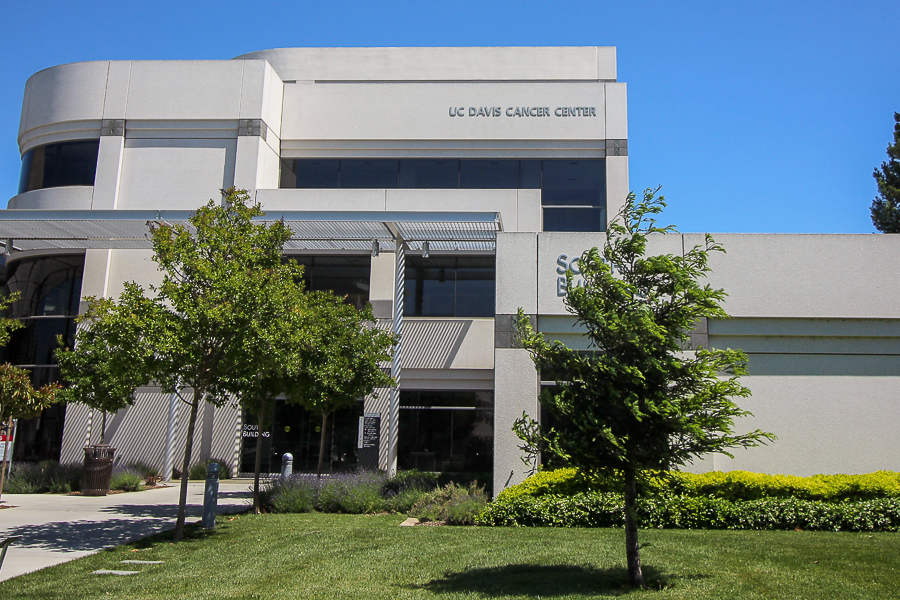
UC Davis Comprehensive Cancer Center clinical trial seeks efficient treatment for late-stage cancer

With the help of a UC Davis Comprehensive Cancer Center (UCDCCC) immunotherapy clinical trial, 60-year-old Lodi resident Victoria Pouchés has been given a second chance at life.

Pouchés was diagnosed with late-stage ovarian cancer in October 2013 and soon after began chemotherapy treatment at the San Joaquin General Hospital, French Camp. After undergoing several rounds of surgery in 2014, Pouchés was transferred to UCDCCC and began her treatment in the clinical trial in September 2015.

Clinical trials test the efficacy of cancer treatments and examine the toxicity of its side effects. When a cancer patient runs out of traditional treatment options, such as chemotherapy, he or she has the option to join a clinical trial that can result in finding a more proactive treatment.

“Some patients may have trepidation about the [clinical trial] treatments, but they often have a lot of hope that it may provide an opportunity for some clinical benefit that wouldn’t be there otherwise,” said Dr. Gary Leiserowitz, the chair of Gynecology and Obstetrics at UCDCCC.

Prior to being transferred to UCDCCC, Pouchés was not responding to the chemotherapy and surgical treatments typically used on cancer patients. She is currently part of a Phase 1 immunotherapy clinical trial for patients with late-stage cancers and travels to UC Davis every two weeks for infusions. During her visits, she has her blood drawn and tested, and her vitals checked.

Only a year ago, Pouchés was bedridden and unsure of how much time she had left to live. Today, she takes walks in her local park and has high hopes for the future.

“Does [my ovarian cancer] define me? Yes, but I don’t let it stop me,” Pouchés said. “I’m just glad for each day; I live in the moment. I feel very blessed.”

Pouchés has been working with Dr. Edwin Alvarez, a UCDCCC gynecologic oncologist, throughout the course of her treatment. She attributes the staff members’ support as making her experience dealing with cancer better.

“She is wonderful to work with,” said Mia Wilson, an UCDCCC infusion nurse who works with Pouchés. “She is optimistic and always in an upbeat mood when she comes in.”

Although Pouchés’ ovarian cancer has been suppressed, she understands that it can come back at any point. For now, she is grateful to be part of the clinical trial and to be alive.

“During my experience, I realized that it was okay to have cancer,” Pouchés said. “There’s a mental attitude about it, and the staff were there to help me understand that. Instead of it feeling like such a dirty word cancer it became more of like ‘Okay, this is cancer. Let’s figure this out. We can do this.’”

Written by: Emma Sadlowski — science@theaggie.org

Women’s tennis sees doubles

0
LUCY KNOWLES / AGGIE FILE

Von Ebbe and Breisacher lead team in doubles competition

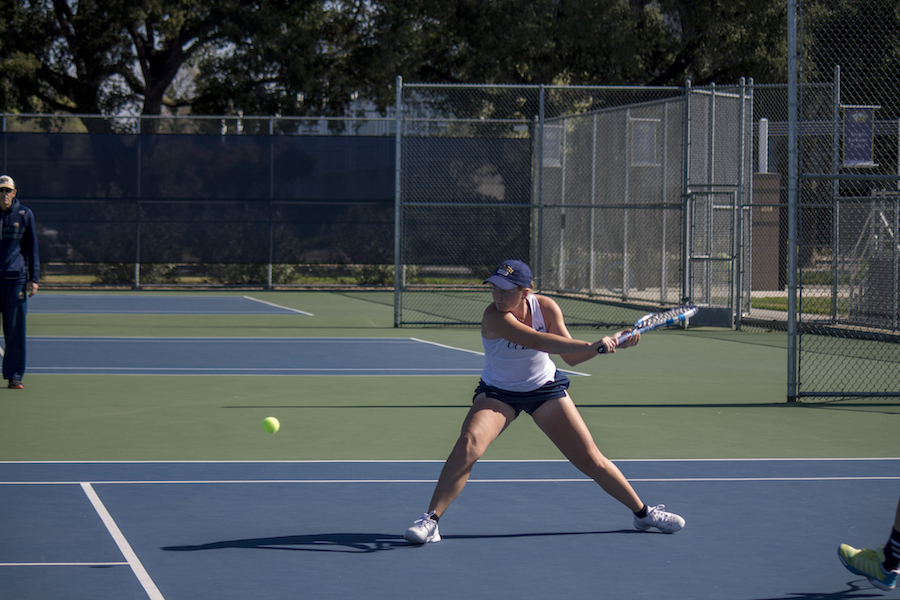
For the UC Davis women’s tennis team, the fall season is the time to see how its players stack up against other competitors as well as to get back into the groove of high-intensity competition. Head coach Bill Maze’s goals for his players are pretty simple: work hard and have fun.

“We emphasize effort, attitude and just enjoying the process,” Maze said.

The Aggies started their season late in September when sophomore Isabella von Ebbe and junior Lani-Rae Green competed in the team’s first-ever appearance in the Battle in the Bay Classic. During this competition, Green advanced to the quarterfinal round and von Ebbe fell in the consolation championship match.

The team then made its fall debut at the Cal Nike Invitational in Berkeley, where it posted singles wins from senior Kamila Kecki in her consolation championship match and freshman Kristina Breisacher in her comeback upset of the number-one seed in the final. Von Ebbe and Breisacher also dominated their doubles bracket to win the title.

UC Davis then traveled to Moraga to compete in the Saint Mary’s Fall Invitational, where von Ebbe and Breisacher won their second doubles championship title, making it their second championship victory out of three weekends of tournament play this fall.

The main focus for the team has been using non-conference competition to find doubles teams that work well and consistently, according to assistant coach Sara Jackson. The Aggies seem to have found a the right chemistry with von Ebbe and Breisacher.

“They just have good chemistry in practice, so that’s one of the things we pay attention to and it’s working well so far,” Jackson said.

Von Ebbe and Breisacher agree that their compatibility of movement and strength gives them more room to feed off of each other’s shots.

“With every partner you play with, there are certain plays that work and [Breisacher and I] have learned to develop those well,” von Ebbe said.

Even during high-intensity matches, the two have fun playing on the court together.

“It’s not serious the entire time,” Breisacher said. “We’re still laughing on the court during a match.”

One of Maze’s key coaching points is paying close attention to new players and unlocking some new skills. On and off the court, returning players focus on helping the freshmen with the transition into collegiate play.

“With coach, what’s really special is his desire to develop players,” von Ebbe said. “[Our team wants] to work and develop into dominant [doubles] teams that has plays and strategies in match situations when different obstacles come up. So to develop into that team is something that we’re looking forward to.”

The UC Davis women’s tennis team has a more challenging spring schedule than it has seen in the last couple of years, including matches against Arizona State University’s PAC-12 Conference team as well as a road match against Hawai’i. The team also has 13 home matches this spring the most it’s ever had.

Preparing for the spring season, the Aggies want to make it as far into every tournament as they can before conference play.

“For me, the fun comes from the result of working hard,” von Ebbe said. “If you work hard, you can walk on the court and know that you worked hard for this match […] That’s where the fun is.”

The Aggies look to keep the momentum going when they hit the road to Stanford University to compete in the ITA Northwest Regional Championships from Oct. 21 to 25.
Written by: Nicolette Sarmiento – sports@theaggie.org

The Impromptu at Versailles, a one-act comedy

ART THEATER OF DAVIS / COURTESY

Moliere’s renowned comedy as performed by The Art Theater of Davis

The Art Theater of Davis will be presenting the one-act comedy, The Impromptu at Versailles, from Oct. 21 to 29 at the Pence Gallery on D Street. The play, originally written by French playwright Molière in 1663, is a much-loved meta-theatrical satire.

The production is made possible by The Art Theater of Davis (ATD) and the Pence Gallery as part of the “Art After Dark” project, which brings live music and performances to the Downtown Davis gallery space.

Timothy Nutter, ATD artistic director, plays a crucial role in the facilitation of these performances; Nutter co-produced the event, directed the play, translated the script and designed both the print and online media as well as the set. He believes this project is important because it brings together a variety of art forms to showcase on Fridays and Saturdays evenings for the community.

“This project is a model for inter-group collaboration across different artistic mediums,” Nutter said.

These performances are meant to provide the community with the opportunity to witness and participate in a form of theater that is otherwise unknown.

Christina Schiesari, who holds a bachelor’s degree in theater from San Francisco State University and a doctorate in comparative literature from UC Davis, is one of the play’s actors. She has been acting in productions put on by ATD for quite some time, most notably as Elena Andreyevna in Chekhov’s Uncle Vanko.

“I have always been interested in the intersection of satire and politics […] in our present era,” Schiesari said. “I believe political satire is quite powerful and can have a significant effect on the political stage.”

Schiesari harkened back to the impact of Tina Fey’s impersonation of Sarah Palin on the 2008 election.

The presidential elections this year are a huge source for satirical re-enactments of debates and speeches, according to seasoned actress and fourth-year English major Lauren Barrows. Barrows spent much of her youth acting in plays in her hometown and has acted for a few productions in Davis.

“The crazy things being said and just the overall outrageousness of this year’s elections makes writing comedic satirical skits about it pretty easy,” Barrows said. “The Impromptu is a good example of how theater can represent the climate of society at a particular time […] it’s probably one of the most overlooked aspects of theater.”

For ticket prices and more information, visit ATD’s website.
Written by: Krishan Mithal — arts@theaggie.org

How we booked Chance the Rapper: A look inside Entertainment Council

ALEXA FONTANILLA / AGGIE

EC tackles ticketing confusion, racial tension while booking major hip-hop artist

“EC’s back!” laughed Jessie Wong, fourth-year psychology major and promotions director of ASUCD Entertainment Council (EC). “Even though we never really left.”

Wong makes a point. For years, EC has been heavily criticized for the lack of big-name artists performing on campus. And in comparison to past acts like Drake, Passion Pit and Muse, it’s easy to understand why students feel dissatisfied. However, EC points to recent budget cuts as the reason for their inability to book larger scale artists.

Wong noted, however, the importance of student involvement. She joined EC in the hopes of bringing back popular acts, and she encourages students to volunteer for EC to make the changes they want to see.

“Instead of just talking about us, join us,” Wong said.

But such an absence of standout performances has only amplified the hype regarding Chance the Rapper’s appearance at the ARC Pavilion on Oct. 30. Rachel Myers, EC director and fourth-year global disease biology major acknowledged this excitement.

“It was really rewarding to see the reactions of students, especially as someone who knows that we don’t get to bring a lot of artists to Davis. Our budget keeps getting cut, so it’s cool that we [get] to put on shows like this,” Myers said.

The days leading up to the announcement were similarly energetic; EC alluded to the performance by posting a picture of this year’s Outside Lands lineup, declaring that one of those artists would be the headliner for a UC Davis Fall Quarter show.

“[It’s] never too hard to hype up the student body,” Wong said. “All you need to do is really have people guessing.”

But the question of who was to perform quickly transformed into something more investigative: how exactly did EC recruit hip-hop icon Chance the Rapper to our quirky little cowtown? As it turns out, it had more to do with Chance and his promotion group, Another Planet Entertainment (APE), than it did with UC Davis.

“One of the promoters at APE was a former director of [UC Davis’] EC, and with the budget cuts over the last few years, he was pretty aware that we don’t have as much entertainment coming through as possible,” Myers said.

The actual booking process was more grueling than meets the eye.

“Since [booking Chance] it has been a process of getting the artist approved with the school and doing background checks on the performance,” Myers said. “It’s a pretty tedious process and it probably ended up taking about a month, but in the end everything is necessary.”

Even more challenging for Wong and Myers, however, was the task of responding to tensions on the Facebook event page regarding ticketing. Students, upset at the confusion over upper versus lower level tickets, complained the process should have been explained prior to the pre-sale.

Wong emphasized that, because APE was self-ticketing, the process of generating tickets was out of their hands.

“On the website, when you first choose to buy tickets, everyone automatically — according to the website — clicked ‘Best Available.’ After all the [general admission] tickets were sold out, it immediately went to upper level,” Wong explained.

But because APE was the middleman between EC and Ticketmaster, communicating with the student body became difficult. EC was essentially unable to release a statement until clarity with APE and Ticketmaster was reached.

“As soon as that happened, Rachel was in contact with APE,” Wong said.

Fortunately, EC was able to provide students with a presale code, giving UC Davis students priority for purchasing tickets.

“Since the time of being an ASUCD Senator, I’ve worked very closely with [EC],” Lee said. “This time for the Chance concert, I worked with EC on the student presale and got a student-wide email sent out to make sure students had first access to the presale tickets.”

Wong and Myers were faced with further conflict when racially-charged commentary surfaced on the Facebook event page. After students expressed frustration over EC’s silence in the matter, EC posted a status apologizing for their delayed response and declared that they would ultimately be removing the event page.

“We just don’t support those comments, at all. And as much as [the comments were] freedom of speech, people were getting attacked, people were being personally messaged and people were feeling unsafe. And when our student body begins to feel unsafe, that’s when we need to take a step in,” Wong said.

This sentiment is what ultimately led to the removal of the event page; Lee agreed with this decision.

“Instances of racism, antiblackness, transphobia, sexism and other forms of hate that spread were upsetting and honestly out of line with the character of [the] UC Davis community,” Lee said. “People have the right to disagree with each other, but attacking each other’s identities was unacceptable.”

Myers felt the decision was a difficult one, but necessary.

“The environment on the page had gotten really toxic. We really wanted to keep the focus on the show at the end of the day, because there were still questions about ticketing, and [we] didn’t want to allow this to grow any further,” Myers said.

Both Lee and Myers expressed regret for their delayed response on the Facebook page, wishing they had addressed student concerns sooner. They hope to use this experience — regarding both racial tensions and ticketing — as stepping stones for improving future event planning.

“Since then we have started working with ASUCD to figure out how we can better deal with this stuff in the future. At the end of the day, it’s just something we have to use to move forward,” Myers said.

Lee agreed that the situation was a good step in improving the way events on campus are handled.

“As [is] everything at UC Davis, this can be an educational experience too. If the controversy shows us anything, it’s that we have a lot of learning to do,” Lee said.

The Chance concert is now sold out and EC still has a lot planned for the future: Monthly open-mic nights, an upcoming fee referendum (in hopes of funding an on-campus festival) and Lawntopia.

But the most anticipated of questions — who will they book next? — was answered by Myers with a slight grin.

“We’ll have to wait and see.”
Written by: Ally Overbay – arts@theaggie.org

A mix of everything Burton

CINDY CHEUNG / AGGIE

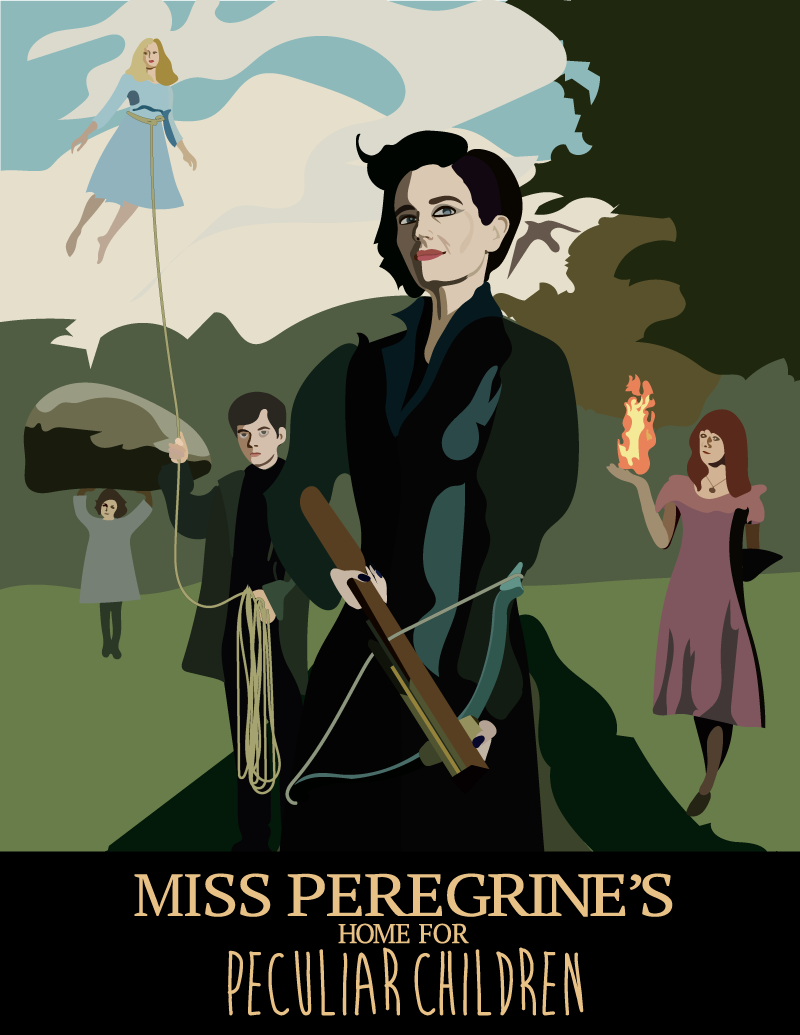
Review of Miss Peregrine’s Home for Peculiar Children


This story is a match made in heaven for Tim Burton: spooky powers, eerie villains and everything peculiar with a star-studded cast to boot. With a release just in time for Halloween, this is one film I definitely recommend for anyone wanting a little adventure.

This movie is about a young boy, Jake (Asa Butterfield), whose normal life is flipped upside down when he discovers Miss Peregrine’s Home for Peculiar Children. Peculiars are people with special powers and Miss Peregrine’s is a home where they can live safe from the outside world. They live in a time loop, which means that everyone experiences the same 24 hours over and over again as long as they stay in the house. When Jake finds their loop, trouble ensues. But the more he stays with the children, the more he becomes part of their family and learns that he himself has a power.

The cast includes Eva Green as Miss Peregrine — a pipe-smoking caretaker for orphaned children — and Samuel L. Jackson as a funny yet terrifying villain who attempts to interrupt the peace of Miss Peregrine’s home. But despite Jackson’s cleverness and Green’s control, it’s the kids who are the real scene-stealers. This seems to be a common trend currently, with the success of the adorable and talented Stranger Things kids taking over the world. The character of Emma, played by Ella Purnell, is the emotional center of the film and steals everyone’s hearts.

But besides the plot line, the cinematography is also breathtaking. The story takes place in a small town in Wales where the grass is green and the ocean is rocky, but even the shots in Florida are aesthetically pleasing. The relaxed feel of the Florida suburbs and long highways gives the audience a feeling of comfort, albeit a short-lived one.

The title sequence is very Tim Burton-esque, but when the movie itself begins, there is a harsh contrast: it shows a bright beach with the Florida state sign in the corner of the screen. This is uncharacteristic of a Tim Burton film, as his work tends towards dark colors and low light. However, he often takes dark concepts and somehow turns them into light-hearted films. This movie is no different. In fact, there are many deaths in the movie, but they somehow seemed to wash over me. I realized they were a part of a bigger story, and there was no need to dwell on the excessive death, or I might have missed something integral to the story.

Half of the movie occurs in the present day, but the other half is set in 1943 during World War II. Despite this, the contrast of time was not shoved in your face, and I often forgot about it. Given the time period, designer Colleen Atwood’s costumes are almost fairytale-like for the peculiars. One of Miss Peregrine’s peculiarities is her ability to turn into a blue bird, which is reflected in her costume. She wears a blue dress, keeps her hair in an updo that looks like a bird’s nest and rocks some intense black winged eyeliner. The rest of the children wear bright, tailored clothing well-suited to the 1940s.

The creepy monsters, called hollowgasts, look like scarier versions of Jack from Burton’s earlier film The Nightmare Before Christmas. The movie plays like a combination of all of Burton’s most recognized work: the Victorian home is similar to the one in Dark Shadows, freaks are separated from society as in Edward Scissorhands and there is even a resemblance of characters from The Nightmare Before Christmas.

But this Tim Burton film is unlike his others; there is a more human aspect present despite its supernatural essence. More importantly, the idea that there are endless opportunities for exploration only further excited me, and I hope it leaves others with the same feeling.
Written by: CaraJoy Kleinrock – arts@theaggie.org

Local produce for local people

0
BECCA RIDGE / AGGIE
BECCA RIDGE / AGGIE

The Yolo Fruit Stand: more than just an average produce market

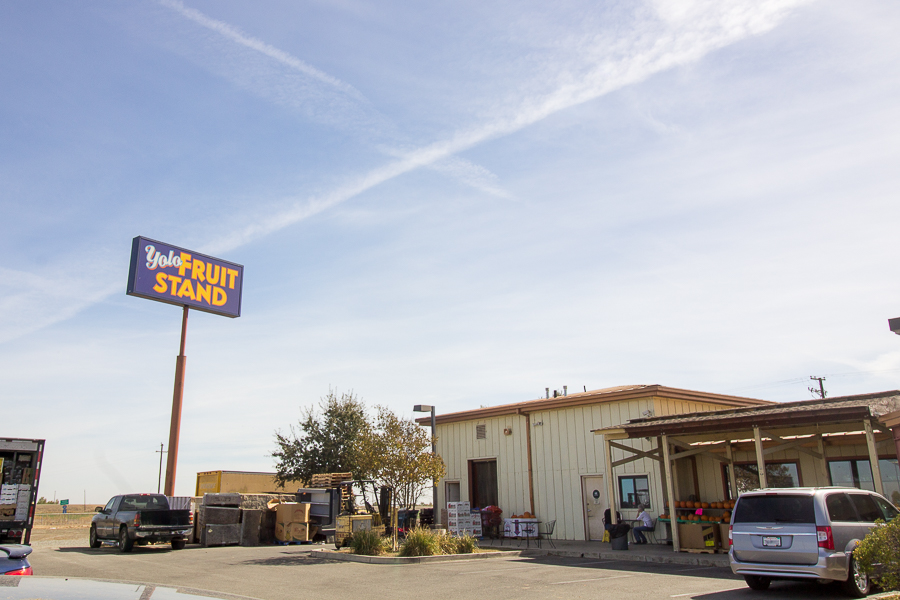
Nestled in the farmlands surrounding Interstate 80 stands a true California landmark. The Yolo Fruit Stand not only serves as a local vendor for Yolo County citizens and passersby alike, but also represents the importance of providing healthy and affordable food.

Maria Tsousis and her husband, Gus, have owned the fruit stand since they bought it from a family friend. They promised to keep the store in good hands, and several years later, their promise still holds true.

“My husband has been in the produce business for 35 years so we have a lot of experience with the area,” Mrs. Tsousis said. “The business grows more and more every day and more people are coming because we carry specific things that they ask for.”

According to Mr. Tsousis, the quality of the produce is key to attracting returning customers. Because of the stand’s unusual location, that they have to remain distinct from stores that are more readily available to the Davis community.

“A lot of produce is different from what [is] in the stores,” Mr. Tsousis said. “For example, the tomatoes we sell are homegrown by farmers in local fields.”

The stores often sell green and unripe produce that ripens in gas, but all of the fruit sold at the stand is straight from local farms and orchards. People can normally buy berries and grapes that have been processed and placed into plastic containers from grocery stores, but the Yolo Fruit Stand sells these items loose and unprocessed, which emphasizes the Tsousis’ mission of preserving the integrity and natural qualities of food.

The high demand for local, fresh and organic food in Davis and nearby communities is a main reason for the popularity of the fruit stand. For this reason, students, faculty and community members alike will make the 12-minute drive out to support the vendor that provides this kind of produce.

“We see all kinds of people,” Mrs. Tsousis said. “During the winter time we have a lot of students and faculty from Davis, and even people from Sacramento, Folsom and other [cities].”

Tim Shquti, the stand’s manager, has witnessed the business’ growth since it was purchased, and is dedicated to ensuring that the fruit stand stays prevalent within the Yolo community.

“The establishment has created a lot of returning customers even though the economy has dropped over the past few years,” Shquti said. “[Because] the fruit stand is open all year round […] we have grown as a business and established a good relationship with the customers. I have definitely seen a lot of students stop by and shop because they will save [more] money when they shop here [when] compared to the big-name stores.”

While it may seem counterintuitive to keep the business out on the side of a main interstate highway, the fruit stand’s unusual location has actually enhanced its popularity and clientele. The Yolo Fruit Stand is easily accessed off of the freeway and is a convenient stop for travellers on their way to or from Davis.

“When people drive from place to place, they stop by the stand because of our location,” Mrs. Tsousis said. “People stop just for snacks and even this little bit helps business. We appreciate everybody coming here even just to buy a bottle of water.”

The Yolo Fruit Stand is also a cultural market that provides diverse products to many community members, such as dried fruits and nuts.

“We have food items from several cultures [including] Iranian, Indian, Russian, Greek and Turkish [specialties],” Mrs. Tsousis said.  “Sometimes someone comes to the store and says that they miss a certain food item that they had in a different place. So I will look around and try to get these different foods and order them for the store. By doing that I create a good selection for the store.”

Besides the emphasis on selling local and fresh products, the fruit stand also prides itself on its individuality. The in-season produce which is currently corn, honeydew, kiwi and grapes is always grown locally and collected from and around Davis. The quality, unique environment and affordable prices contribute to the individuality and popularity of the Yolo Fruit Stand.

Just as a celebrity’s popularity depends on the fans’ loyalty, the Yolo Fruit Stand depends on the loyalty of its customers. Without the regulars who make the trip out and give their feedback to the employees, the business would not thrive as it does.

“The customers are what motivate us,” Mrs. Tsousis said. “We try very hard to succeed in this business and the customers always help us do that. We appreciate the people who tell their friends and spread the word, because that is how we get better and better every time.”
Written by: Gillian Allen — features@theaggie.org

New kinds of neighbors

0
BRIAN LANDRY / AGGIE

Students find alternate housing options in co-ops, animal barns

Not many students can say they’ve lived with real-life sheep. Isabel Olaes, a second-year animal science and management major, has become accustomed to waking up to the “baa-ing” of her neighbors.

“I was apprehensive [to live in the sheep barn] because it is the complete opposite […] of the dorms,” Olaes said. “It’s funny […] you’re sleeping and you wake up and you can hear baa-ing. It’s fun having sheep as roommates.”

While many UC Davis students move out of the dorms and into off-campus apartments or houses after their first years are over, there are some students who choose alternate places of dwelling, such as the sheep barn, located in West Davis.

Olaes lives in the sheep barn with two other roommates, both of whom also care for the sheep. The three students together are responsible for feeding the 300 sheep in the mornings, putting them away at night and moving them from one pen to another when needed.

According to Olaes, the textbook experience differs greatly from the reality of the work. With 84 pregnant ewes currently occupying the barn, breeding has become an entirely new form of education for Olaes.

“You think it’s easy to stick a tube down a premature lamb’s throat? It’s not.” Olaes said. “This morning we woke up and there were […] six [newborn] lambs on the ground. You have to take action. You can’t procrastinate with animals, because it’s a life.”

The sheep barn is just one of the alternate living arrangements available for students with interests in animal science other places, such as the horse barn, dairy barn, feedlot, beef barn, goat barn and swine facility, offer similar housing situations.

The Solar Community Housing Association (SCHA) is an organization that was founded on providing low-income housing for students interested in sustainability and diverse environments. One branch of SCHA contains the Tri-Cooperatives, which are located on campus near the Segundo Residence Halls.

“We basically want to have people here who can create a safe space, that are interested in doing things that are more sustainable for the Earth and for the campus,” said Scott Bowden, a third-year English major and member of the Pierce House in the Tri-Cooperative branch. “I love being a part of a community that’s like-minded, [yet] we all have so many differences.”

The three houses, Davis Student Cooperative (DSC), Pierce House and Agrarian Efforts House, all strive to maintain a community in which students feel safe and at-home on a low budget. All of the houses have gardens to grow their own produce, and together they plan weekly shopping trips to the Davis Co-op.

“It’s really nice to have a family to come back to; it’s a good support system,” said Shannon Ferguson, a fourth-year cognitive science major and member of the DSC house. “We cook as a house, we also buy food together as a house. The goal is to grow our own food so we don’t have to put as much resources towards buying things.”

Each house meets once a week to discuss chores and issues regarding the Tri Co-op community. The houses also have committees responsible for specific tasks; the social justice committee, for example, ensures respect within the community, and the pollinator committee holds people accountable for growing ecology-healthy crops that draw in pollinators like bees and butterflies.

Another goal of the Tri-Cooperatives is to create a community filled with diversity. According to Ferguson, the houses “want to be a safe space for oppressed groups.” With 12 to 15 people living in one house, however, things do get complicated.

“It definitely takes a certain type of person to live in a community like this, because there’s always people around,” said Peter Varas, a third-year sustainable agriculture and food systems major and member of the Pierce House. “[There are] two bathrooms [for] 12 people, [and] some of the other houses only have one bathroom, so coordinating time schedules can be difficult sometimes, but it’s been pretty good. [So far] we haven’t really had any challenges.”

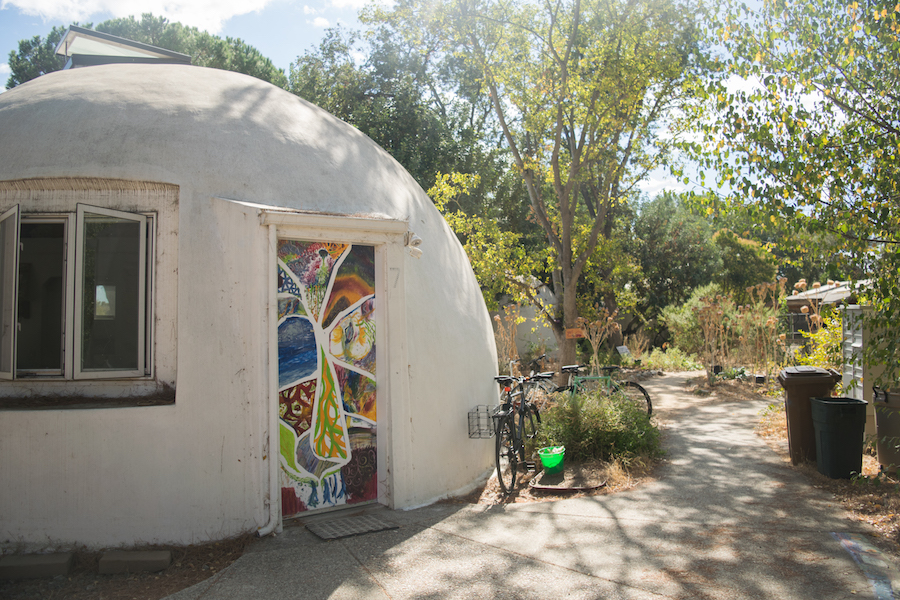
Another branch of the SCHA is the Baggins End Domes, located at the west edge of campus. The Domes, similar to the Tri-Cooperatives, house students interested in agriculture via an alternative place of living.

“We have an intentional community where we try to be there for each other and […] emphasize sustainability but also social justice,” said Laura Losmozos, a fourth-year geology major and member of the Domes community. “If I need an ingredient for food or if I just need someone to hang out with, I feel like I always have someone to rely on.”

Like the Tri-Cooperatives, the Domes host weekly meetings as well as community dinners four times a week. Students living in the Domes are expected to uphold their responsibilities to the community, which include gardening, cooking and cleaning.

“If any conflict comes up between two community members, I can’t help feeling like it’s kind of my responsibility to make everything work,” Losmozos said. “Communication and accountability can be a struggle sometimes, just because everyone is a busy student, and we still have [other] stuff to do.”

Though living in the Domes can be a lot of work, the sense of community makes up for these challenges according to residents.

“My second year I lived at an apartment complex, which was fine […] but I felt a little isolated,” Losmozos said. “[I wanted] something to connect with, and I liked this idea of having a community.”

UC Davis students agree that living in alternative housing such as the Tri-Cooperatives, the Domes or the animal barns is a learning experience worthwhile.

“You’ll learn how to cook, you’ll learn how to take care of bees, you’ll learn so much stuff,” Bowden said.  “[We] live together and thrive.”
Written by: Allyson Tsuji – features@theaggie.org

UC Davis launches Long Range Development Plan

ALEXA FONTANILLA / AGGIE

Plan includes potential student housing on Russell Field

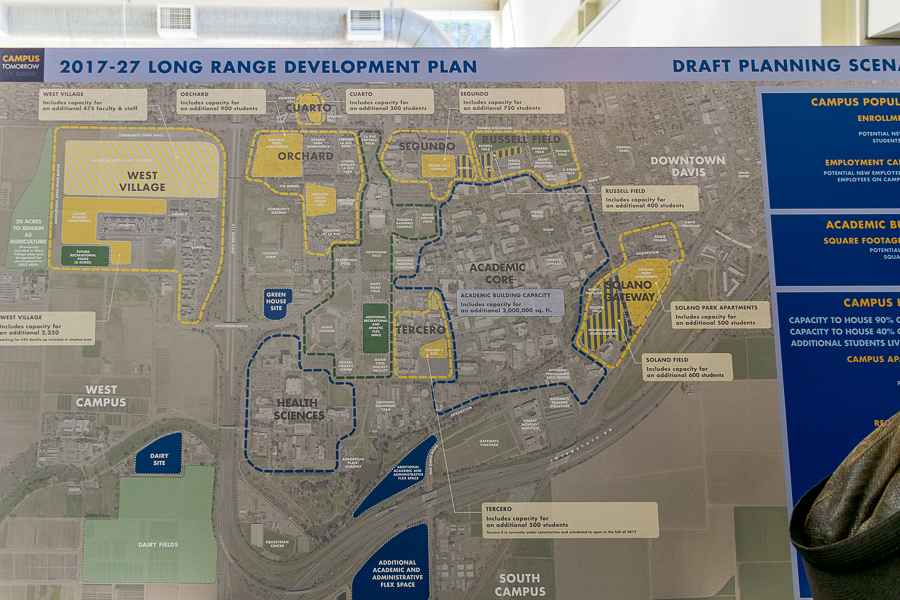
UC Davis held three open houses in the first week of October to ask community members their opinions on the revised 2017 to 2027 Long Range Development Plan (LRDP). This revised LRDP is an updated version of the 2017 to 2027 LRDP which was released in August.

The LRDP is a land-use plan and an all-inclusive policy that spots potential enrollment and employment growth while taking into consideration the physical development needed to accommodate these changes. The 2017 to 2027 LRDP update will take into account the sizeable growth in UC Davis’ student, faculty and staff campus population.

Under the 2020 Initiative, the campus expects to have an additional 6,200 potential students and 4,200 employees in future years. Forty percent of those enrolled will be able to live on campus.

Lucas Griffith, a UC Davis campus planner, said the LRDP is more of a guideline than a set-in-stone plan.

“The LRDP does not necessarily compel development or investment — it’s more of a capacity document,” Griffith said. “So that if we do increase enrollment and if we do have the funds, either from the state or from a donor, we could then look to the LRDP and say, ‘Where would we put it?’”

Lucas explained that the biggest factor of the new LRDP is the expected increase in enrollment. Jovita Widjaja, a fourth-year landscape architecture major, voiced her concern that the campus is already overpopulated.

“I feel like our campus is already crowded, people aren’t getting the classes they need and people are having to stay a fifth-year because they weren’t able to get their classes,” Widjaja said. “So I’m interested in what they will do.”

Under the LRDP, UC Davis will convert two million acres into an academic space which will include two veterinary hospitals and a Chemistry Discovery Complex.

The plan also includes an increase in first-year housing through redeveloping Webster and Emerson Halls in Cuarto as well as the Regan Hall complex in Segundo. The planners want to build student housing on Russell Field, as well as renovate Walker Hall, Cruess Hall and Haring Hall.

“We are at a point in time where the campus has inherited a lot of buildings from the 1950s and the 1960s and those buildings are reaching a breaking point where we need to either renovate and invest a significant amount of money, or we redevelop into something brand new,” Griffith said.

The plan also includes the possibility of using Russell Field for housing. Many community members, including Davis residents and intramural sports players, have expressed their concern with the development of buildings on the field.

Merline Williams, Davis resident, alumni and retired faculty member, hopes that UC Davis will avoid developing housing on Russell Field.

“I see Russell Field as a huge positive for the students of UC Davis to stay healthy and active,” Williams said. “It’s a great positive that counters the negativity […] At all times of the day if you live in Davis there are kids playing there having fun. Taking away this positive and leaving only the negative isn’t very wise.”

Other concerns about Russell Field include the loss of intramural (IM) sports space and an increased population that could cause a potential traffic problem.

A petition has been circulating to oppose the development on Russell Field and several other fields on Russell Boulevard and A Street.

Williams is not against student housing, but suggests that UC Davis find equally viable alternatives.

“If [Russell Field] is all we had, and we needed student housing, I’d be in total support even though it would be a tragedy to have that happen,” Williams said. “But, we have tons of choices and that’s not necessary. To do it is offensive.”

Her suggestions include moving the cow facility across from Tercero to a new location in order to use that land for housing, as well as using the planned faculty housing in West Village for student housing instead.

However, Griffith does believe that Russell Field is a good option for student housing.

“[Russell Field is] a gracious open space along the edge of campus,” Griffith said. “It would be bigger than The Quad and still serve a really active IM field. And it can still have all that energy that people can experience while driving along Russell Boulevard with positive interaction with students.”

Griffith wants to prioritize student housing before IM and club sports, but trusts that there will still be space for recreation with the LRDP.

“Is it our mission to host a state ultimate frisbee tournament? No,” Griffith said. “It’s a great thing. My wife plays all the time. But if I could choose, I would choose to build sustainable housing for the students, have housing for students so they don’t have to commute from West Sac, therefore they can participate in campus life more, while there are still plenty of open spaces for them to still recreate.”

After the 2017 to 2027 LRDP draft planning scenario, there will be 30 days for initial study this fall and 45 days for public comment in the spring. Campus planners will then respond and take into consideration all comments made before revising the draft plan and submitting it to the UC Regents next fall.

Written by: Yvonne Leong – campus@theaggie.org

The Minority Report: Change the narrative on violence against LGBT community

AMY HOANG / AGGIE
AMY HOANG / AGGIE

As our country remains as socially divided as ever, the hate and violence stemming from these divisions seems to become more frequent and pervasive, especially in the communities that are most often overlooked.

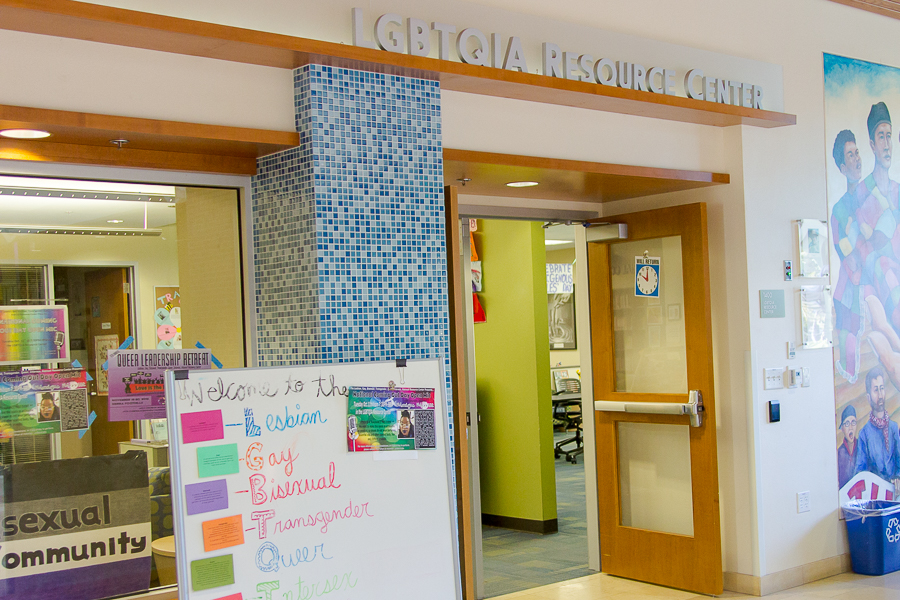
The LGBT community knows the consequences of this violence all too well. Crimes committed against this community are often hate-driven or bias-motivated — meaning the perpetrator harbors a prejudice against someone based on the victim’s identity.

For nearly all forms of violence, including sexual violence, LGBT people are attacked at much higher rates than heterosexual people. And transgender women of color suffer the most at the hands of assailants.

A Human Rights Campaign (HRC) analysis of violence against transgender individuals showed that between 2013 and 2015, there were 53 recorded victims. Of these, 46 were people of color and 46 were transgender women.

This data only accounts for transgender victims that the HRC was able to identify. Due to discrepancies like underreporting and misgendering, it is more than likely that there are other unknown victims.

In addition to this data, HRC provides a story for every transgender person who was targeted and murdered in 2015. There are a total of 21 stories, and I encourage you to read all of them. It’s much easier to look at the data and think 21 isn’t a big number, but even one murder is too many. These victims are human beings who were brutally attacked and killed just for being themselves. They deserve justice and they deserve to be heard.

But often, an array of factors conspire against the process of getting that justice. First, victims are often misgendered in investigations. The bodies of many transgender people cannot be identified by family or friends because police use their birth name rather than their real name — the ones they go by on a day-to-day basis. This is disrespectful in many ways, but above all because it takes away a crucial part of that person’s identity.

Furthermore, hate-crime laws do not fully protect the LGBT community. A large swath of victims never receive justice because the rules can vary from state to state. Of the 53 recorded victims between 2013 and 2015, only 16 were killed in states with hate crime laws that protect transgender people.

This is the tragic reality: perpetrators of violence are largely not held accountable for their actions. Even if hate crime laws are written to include the LGBT community, they may not account for transgender people. In 2014, HRC reported that 30 states have laws that cover sexual orientation, though only 15 of those states include gender identity or expression. Less than a third of U.S. states protect transgender people from being targeted. Twenty states do not even have hate crime laws to begin with.

This is a serious issue. In almost all the cases, perpetrators, even those who receive sentences, walk away without serious repercussions for committing crimes motivated by hate. This sends the message that there are no real consequences for bias-motivated crimes, and that the LGBT community isn’t important.

Transgender people need to know that if violence is committed against them, they will be protected. All victims of sexual violence already have a difficult time coming forward. For the LGBT community, there is an added fear because of their sexual orientation, gender identity and the discrimination they may face as a result.

According to the HRC, these fears prevent transgender people from reaching out to the police, hospitals and even crisis centers for help because sometimes, awfully, these authorities also contribute to the abuse and assault.

But one’s identity should not determine whether or not they seek help, nor should it determine whether or not they are targets. While changing laws won’t resolve ignorance, prejudice or hatred against transgender people, it isn’t enough to preach acceptance if a majority of our state laws don’t reflect an egalitarian justice system.

Beyond the criminal justice system, it’s time that the narratives of sexual violence extend beyond what media and television condition us to see. Rather than always portraying victims of sexual violence as white and cisgender, we need to remember that other communities are heavily affected by similar types of violence.

There is no traditional victim or perpetrator. The only consistency in the atrocious crimes against the LGBT community is the detrimental consequences for the victims, whose lives are never the same.

Written by: Jeanette Yue –– jyyue@ucdavis.edu

The motivations of gun-rights advocates versus those of gun-control proponents

MICHAEL GLASGOW  [CC BY 2.0] / FLICKR
MICHAEL GLASGOW [CC BY 2.0] / FLICKR
Gun-rights advocates not all redneck Republicans; gun-control proponents not all peace-promoting hippies

Contrary to popular belief, not all gun-rights enthusiasts are white-trash, redneck extremist Republicans who only care about their latest hunting adrenaline rush. Rather, advocates of gun rights are subconsciously motivated by a multitude of underlying factors that have little to do with personal vendettas against victims of gun violence and everything to do with an advocate’s race, socioeconomic status and level of education.

A recent study conducted by the Pew Research Center showed that 54 percent of white Americans strive to protect gun rights. This stands in marked comparison to the 30 percent of black Americans who hold similar attitudes toward guns.That 54 percent of white people support the rights of gun owners shows gun violence simply does not apply to them in the same way that it does to black people.  

This is not to say that all white gun-rights activists are racist, but it does point to a disregard for black people that many white people hold. Interestingly, proponents of gun-ownership cite self-protection and safety as their primary argument for owning guns and resisting gun reform.

However, this is counterintuitive and slightly paradoxical, as white people are considerably more likely to commit suicide with firearms than to die from firearm homicides. This implies that gun-rights advocates’ motivations extends beyond their alleged personal protection and — harsh as it seems into a subtle disregard for problems that do not apply to them.

We are all guilty of this subconscious indifference toward people whose problems are not our own. It’s human nature. And in psychological terms, it relates to psychological egoism, or the theory that we are always motivated by what is in our own self-interest. And although it is always important to maintain a sense of self-preservation, it is equally vital to be compassionate, genuinely sympathetic people. This change is hard to manifest in a legislative or even quantifiable sense, but it remains up to the individual to look at the issue of gun control objectively rather than through the lens of one’s personal interests.

In the same Pew study, researchers found that 53 percent of college-educated people would prefer more gun control, implying that the more educated the person, the more inclined they are to lean in favor of gun-control. This may be because those who go to college have a more diverse and socially-aware perspective of the world as a result of thought-provoking courses and contact with the myriad viewpoints a college experience provides.

According to The Association of American Colleges and Universities, the role of colleges and universities in fostering global learning has never been more crucial. The college environment, which can be characterized as a cultural melting pot, provides students proximity to individuals who represent numerous cultural, social and religious identities.

This, in turn, fosters an understanding and empathy for people whose situations may differ from our own. For example, hearing the story of the first-generation student in your chemistry class that attends college during the day and works an eight-hour shift after class forces you to put yourself in their shoes and expand your own perspective.

In the same way, a college education may explain why gun-control proponents advocate for curbing gun ownership — they have a deeper compassion for differences and, despite their race or personal prejudice, are able to look beyond their own self-interest and gain insight into the lives of others.

Ultimately, the gun debate is far more complex than simply race or level of education. There are a multitude of factors that influence a person’s affinity for gun control or gun-rights activism — a personal tragic experience, a vehement belief in adhering strictly to the Constitution or an unexplainable, irrational desire to go one way or the other, to name a few.

However, considering the relationship between racism and a college education as they relate to gun violence is vital if we hope to understand the nuanced attitudes toward firearm ownership.


Written by: Tamanna Ahluwalia — tahluwalia@ucdavis.edu

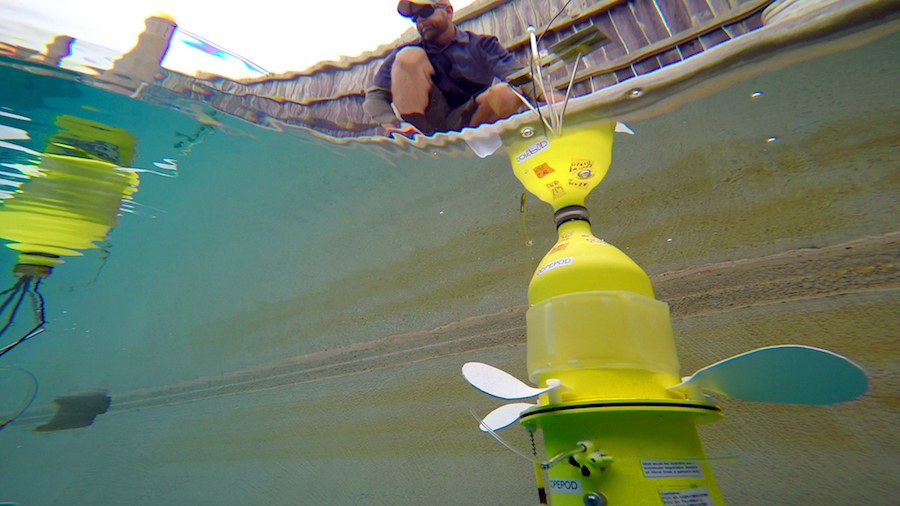
Robotic larvae released in ocean

Marine technician Grant Sussner submerges a robot larvae into a diving pool at the UC Davis Bodega Marine Laboratory. (JOE PROUDMAN and KAT KERLIN / UC DAVIS)

UC Davis researcher tracks movements of microscopic larvae using programmable robots, provides insight on habitat restoration, global warming

Marine larvae are early-stage marine organisms that turn into recognizable species like sea stars, crustaceans and fish. They can be as big as the head of a pin or as small as the tip of one, a combination that makes them extremely hard to track. That is, until recently, when UC Davis researchers deployed robot larvae into the open ocean.

Dr. Steven Morgan is a professor of environmental science and policy at UC Davis, and works primarily at Bodega Marine Lab. Morgan recognized that larvae have seven primary behaviors, and that those behaviors could be programed into robots, put into the ocean and tracked.

These robot larvae, made by professors Donna and Tom Wolcott at North Carolina State University, are not small animatronic robots, but instead are repurposed fire extinguishers each outfitted with a GPS, various sensors and a fan-like swimming apparatus. Unlike marine larvae, they are more than a foot long, bright yellow and easy to track.

“We have now 50 of these robots made,” Morgan said. “And at any time I might take three of them with the same behavior and another three with a different behavior […] put them all out [in the ocean] at the same place at the same time and see where they wind up going. We do that over and over under different wind and tide conditions and in different places, and we can figure out how effective the behaviors are.”

Morgan’s results are surprising. Amidst all of the oceanic noise, 60 percent of the 45 species of marine larvae studied fully develop within 3 kilometers of the coast where they were born. Morgan attributes this to the fact that most marine larvae follow diel, or day-long, vertical migration.

Ocean currents commonly flow in opposing directions. Because larval locomotion is limited to vertical swimming, they often pass through opposing currents that push them away from and then back toward the same spots. Morgan attributes the reason larvae expend the energy to move through the water to hiding from predators.

“They come up to surface waters at night to feed when they can’t be seen,” Morgan said. “During the daytime they go deeper and so by going up and down, that kind of keeps them in one place.”

One of the implications for this research lies heavily in habitat restoration. Rick Grosberg, director of the UC Davis Coastal and Marine Sciences Institute and a professor of evolution and ecology at UC Davis, spoke about the importance of larval movement in restoring damaged habitats, especially with regards to establishing a marine protected environment.

“One response [to a damaged habitat] is ‘let’s stop fishing there and hope the population restores itself,’” Grosberg said. “Let’s say the larvae go a long way; then a population that’s healthy might be supplying babies that can reestablish the population you wiped out. But let’s say that the larvae from a population don’t go very far, they basically return to where they were born. Then relying on another population to get you started again isn’t going to work.”

Restoration of marine ecosystems is instrumental to maintaining California’s struggling fishing industries, according to Grosberg.

“The question is: do babies larvae move out of areas that are protected and into areas that aren’t protected to subsidize the fisheries in those [locations]? And in general, we don’t have really good answers to those questions,” Grosberg said.

In total, marine protected areas cover a little over 16 percent of all coastal waters in California.

Tom Maloney is the executive director of the California Ocean Science Trust (COST), an organization created by California legislation to bridge the gap between the government, new scientific research and local communities. COST is also involved in monitoring and evaluating California’s marine protected areas.

“What [Morgan] is doing with these robots is answering a question that’s long been contemplated,” Maloney said. “We have an understanding that the connectivity of protected areas in terrestrial settings is very important. The connectivity of our marine protected areas with places where […] breeding is occurring and the larvae are starting out is also an important component of how effective our network of 124 marine protected areas is performing.”

In general, Maloney said that research in aim of understanding ocean interconnectedness will become increasingly important, especially for dealing with problems that have yet to arise from global warming and ocean acidification.


Written by: Meral Basit – science@theaggie.org

Spooked — an electronic music review

DANIEL TAK / AGGIE
DANIEL TAK / AGGIE

The story of my first EDM concert

This past Saturday, I attended Spooked, a Halloween-themed EDM concert which also happened to be my first EDM concert ever. I went in not knowing what to expect but the loud and energetic music was surprisingly effective at releasing stress and I actually ended up having an enjoyable night.

I arrived early, so I took a tour inside Odd Fellows Hall, the concert venue. It was not a grand or large place, and the art in the hallway seemed classic and historical, with elegant chandeliers hanging from the wooden ceiling. It seemed a little odd to host an electronic music concert in such a classic-looking place.

The show started with XAEBOR, a San Diego-based DJ, and, because it was a Halloween themed event, I was surrounded by EDM fans dressed in costumes and wearing heavy gothic makeup. As the set continued, the audience got more and more energized; they started dancing, laughing and enjoying themselves. Even though the EDM concert setting was a new experience for me, it was hard not to have a good time when I looked around and saw everyone dancing along.

XAEBOR’s music was explosive and fast-paced. He used lots of low bass pitches which made the sound wave so strong that I could feel my bones shaking. His strong beats had everyone in the room, including me, dancing along.

At first, I felt self-conscious but gradually I discovered an incredible benefit to dancing: it helps you relieve stress. For the rest of the set, I forgot about my problems as I moved my body to the beat of those bass notes.

The next DJ was Chris The Junglist (CTJ), an Oakland-based DJ. In general, his set was slower in tempo, but more complex and layered. He used fewer bass pitches compared to XAEBOR, which made it possible for me to hear and appreciate all the intricate details of his tracks.

For one song, he sampled the sound of wild animals, and, although I am definitely not an expert in electronic music, I could tell that CTJ’s music was more varied in style and the transitions between each song were smoother. The audience seemed similarly engaged in his performance.

Overall, the sound quality of the concert was excellent and the crowds were energetic and having a fun time. As for me, after two hours of exploring the world of electronic music, I decided to call it a night. As I closed the door behind me and walked into the quiet night of downtown Davis, I felt content.

Not bad for my first EDM concert.


WRITTEN BY: Betty Wu – arts@theaggie.org