56 F
Davis

Davis, California

Wednesday, December 24, 2025
Home Blog Page 72

Culture Corner

The Arts Desk’s weekly picks for music, movies and more 


By SAVANNAH ANNO — arts@theaggie.org


Song: “It Ain’t Me Babe” by Joan Baez (1998)


My absolute favorite Joan Baez cover, “It Ain’t Me Babe,” is the fourth track of “Baez Sings Dylan,” a compilation of various songs debuted by songwriting legend Bob Dylan. Baez, however, has proved to be a folk legend all her own, still playing sold out shows at 83 years old. Probably what proves to be most interesting about “It Ain’t Me Babe,” is the way it speaks so directly to Baez and Dylan’s rich history — playing music together, having an incredibly close relationship, but eventually realizing they had to let each other go. The sound is warm and somber at the same time, with Baez choosing to bring out her lower register rather than her usual haunting soprano. With just her and the guitar, the simplicity highlights the track’s flowing melody and Dylan’s meticulous lyrics as he explains to a lover, perhaps Baez, that she deserves better than he could ever offer. If you need a new song to add to that “sad girl autumn” playlist I know you’re working on, this is the one. 


Book: “The Bluest Eye” by Toni Morrison (1970)


Singular in her craft, Toni Morrison creates worlds from the ground up in each of her novels, forming entire communities bursting with life, secrets and histories going back decades. “The Bluest Eye,” Morrison’s first novel, was the product of her dissatisfaction with the literature that surrounded her as an editor. Nobody was writing the book that she wanted to read, so she wrote it herself. “The Bluest Eye” surrounds the complexities of Black girlhood, centering on two sisters and Pecola Breedlove, a girl in their class who — after her father burns down their family’s apartment — moves in to stay with them. The three girls are faced with the terrible truths of the world, experiencing the brunt of eurocentric beauty standards while simultaneously having to deal with being oversexualized by the men around them. While the novel can be heavy at times, Morrison’s legendary prose, impeccable sense of rhythm and critical eye pushes you through. With the conflicts of “The Bluest Eye” still relevant today, it may not be a story you’ll always enjoy reading, but it’s one you absolutely have to read. 


Album: “Bright Future” by Adrianne Lenker (2024) 


There’s a specific feeling I get whenever I listen to Adrianne Lenker’s “Bright Future”: It’s the way your cheeks feel when you’re walking around and it’s freezing outside or the lightness in your chest watching a winter sunset. Refreshing and whimsical, “Bright Future” is just the latest in Lenker’s long list of masterpieces, reading like poetry and sounding like magic. Using the tiniest of details, pulling from nature and her own experiences, Lenker creates the most intimate of listening spaces. You feel like you’ve entered a newer, more beautiful reality. Moss covers stones, meadows bloom, stars fall from the sky and Lenker continues to spin worlds with tracks like “Real House” and “No Machine.” Her skillful wordplay comes out in “Evol,” and her love for traditional folk sound in “Sadness as a Gift” and “Vampire Empire.” If you need a new album for staring at the ceiling or chilly walks to class, you won’t regret stepping into Lenker’s Grammy-nominated sonic universe. 


TV Show: “Interview with the Vampire” dir. Rolin Jones (2022)


Originally published as a novel by Anne Rice (1976), then developed into a 1994 film starring Brad Pitt and Tom Cruise, “Interview With the Vampire” is a story that has surpassed decades. As the title suggests, the show follows the life of vampire Louis de Pointe du Lac as he conducts an interview with once-revered and now washed-up journalist Daniel Molloy. With du Lac’s story beginning in 1910s New Orleans, the show gives viewers the taste of the American gothic as well as the clean cut future, as it moves between flashbacks and the modern interview setting. Of course, it wouldn’t be a true vampire tale without romance. As du Lac tells his tale, it becomes apparent that much of his history revolves around the hypnotizing Lestat, the vampire who first turned him and remained his lover for decades. As he recounts their tumultuous relationship and the life of their eventual daughter, “Interview with the Vampire” proves to be visually stunning, heartbreaking and steamy all at once. 

Written by: Savannah Anno — arts@theaggie.org
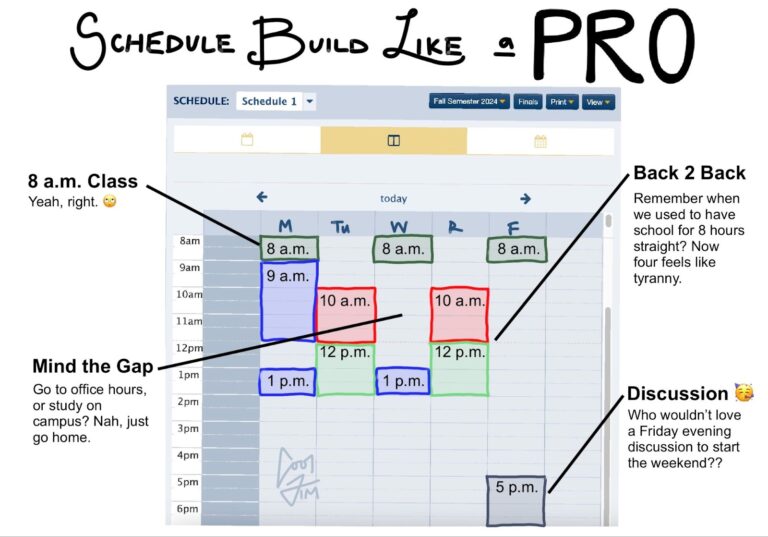
I love Schedule Builder!!!

Drawn by: Sandhya Pfile –– sbpfile@ucdavis.edu

Disclaimer: (This cartoon is humor and/or satire, and its content is purely fictional. The story and names of “sources” are fictionalized.)

The ASUCD Aggie Reuse Store reopens after being closed for months

After facing hiring delays, the store will continue to provide clothing, lab coats, books and other items to the Davis community


By JESSICA YUNG — campus@theaggie.org


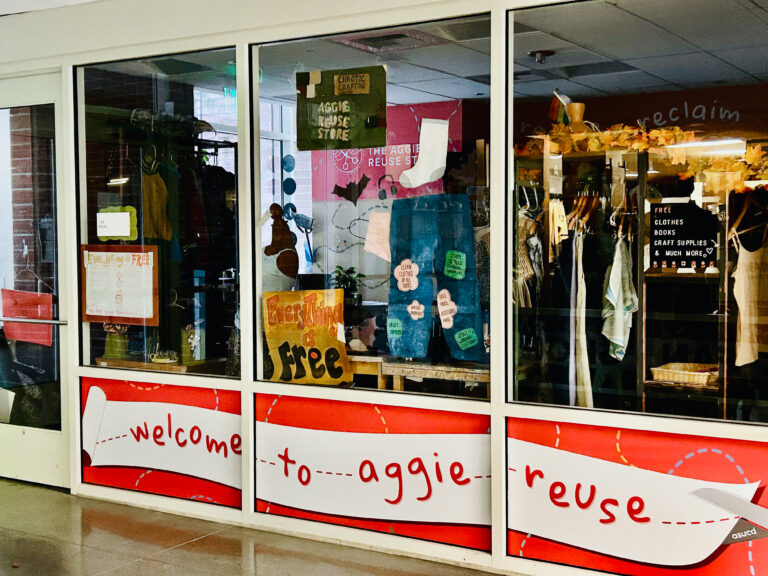
On Oct. 28, the ASUCD Aggie Reuse Store reopened after being closed for nearly half of the quarter due to hiring delays. 

The reuse store offers secondhand goods including water bottles, shirts, pants, shoes, lab coats and various other items. The goods that the reuse store provides are free to all students and the larger community and are made available through donations. The store is located at Memorial Union #154 with new hours Monday through Friday from 10 a.m. to 4 p.m.

Kate Richards, the Aggie Reuse Store unit director and a second-year history major, expanded on the reason for the delayed opening.

“Because ASUCD hires for all their units at the same time and employs so many students on campus, it’s hard for them to process all the applications,” Richards said. 

Richards described the collaborations the store was having with a local downtown business. 

“Currently, we are partnering with Yesterday Vintage, so if you donate three or more items to Aggie Reuse you get a 15% off coupon to Yesterday,” Richards said.

The mission of the Aggie Reuse Store is to “promote sustainable fashion and creative upcycling by providing a source for basic needs to the overall community and therefore discouraging fast fashion,” according to their website.

Richards further elaborated on the goals of the establishment, including its unique and community-oriented business model.

“Aggie Reuse runs on a mutual-aid model, which means that everything is free,” Richards said. “We provide an incredibly important basic needs resource to many people living in Davis. We help alleviate any financial burdens students face. The other purpose is to try and make sustainable living accessible to everyone. There is no limit to the amount of things that people can take from the store.”

However, Aggie Reuse does have policies on their donations: “No rips, holes, [and] stains. Please wash clothes before donating,” according to their website. 

Richards further explained these donation policies in detail.

“You can stop by and drop off donations anytime we’re open,” Richards said. “We take everything we can but are unable to accept undergarments/bathing suits, large furniture, children’s clothing, technology — such as computers/phones/headphones, although we will take phone chargers or cases — and anything torn, stained or excessively dirty.” 

Mileyna Soo, a fourth-year computer science major and a sales volunteer at Aggie Reuse, discussed the store’s changes in advertising and decorations, including being featured on the Unitrans buses. 

“I just know that [the bus advertising] is a project that Aggie Reuse was working on last year, so I thought it was really cool to see it when we came back to school,” Soo said. “ I think the decorations in Aggie Reuse highlight the juxtaposition between the store and the rest of the Memorial Union. Since it’s so different, people walking by get curious and take a peek inside.”

The volunteer staff is composed of “Data Analytics, Design, Social Media, Sales, and Marketing,” and applications are open to anyone, according to the Aggie Reuse website.

Richards talked about the process of becoming a volunteer for the organization.

“We hire volunteers at the beginning of each quarter, and our spaces are almost full, but you can apply at any time, and we’ll let you know when there’s space on the team,” Richards said. “The volunteering info/application can be found on our Instagram.”

Richards encouraged anyone who is interested to reach out and join their cause.

“If you have any questions about donations, volunteering, potential collaborations or anything else, feel free to email aggiereuse@asucd.ucdavis.edu,” Richards said.


Written by: Jessica Yung- campus@theaggie.com

Here’s your recap on the annual Davis Film Festival

Film buffs descend on Davis to check out a wide variety of independent movies 


By ELIZABETH BUNT — arts@theaggie.org 


Film lovers packed into the red velvet seats at the Davis Veterans Memorial Theater for a series of independent movies, short features and documentaries on Nov. 3 from 2 to 9 p.m. Members from the production crews of each film were required to be in attendance and entered the stage at several points to receive awards and answer questions.  

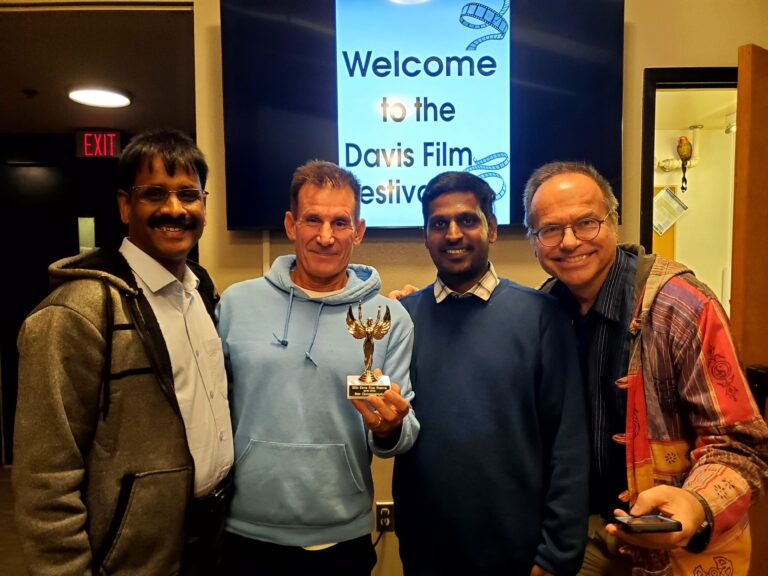
The festival had two sections: one in the afternoon and one in the evening. The afternoon portion was open to all and showcased 11 short films, all under 25 minutes. The highlighted film of this section was “A Journey Home: The Story of Sahaya Vietnam,” a documentary that tells the story of a Davis-based non-profit organization that grew to be a major force of education and housing projects in Vietnam. After the showing, director Andy Lauer spoke about the project, took questions and accepted the Best Cinematography Award on behalf of his team.

A brief intermission was called at 5 p.m., and attendees were offered dinner and music from Americana band “According to Bazooka.” As an alternative to the live show, three extra films were played quietly in the theater. 

The evening section of the festival began after dinner and was restricted to mature audiences. The evening schedule featured three films: “The First Rule,” “Vasomotor Rhinitus” and “Sally!” which was the main event on the playbill.

“Sally!” — directed by Deborah Craig — tells the biographical story of lesbian, feminist activist Sally Gearhart. Gearhart spearheaded the lesbian feminist movement in San Francisco in the ‘70s and ‘80s. With the help of Harvey Milk, she defeated the Briggs Initiative in 1978, a proposition that would have banned gay and lesbian individuals from teaching in California public schools. Additionally, Gearhart was hired by San Francisco University in the ‘70s and established one of the first women’s studies departments in the country while also being the first openly lesbian professor in the nation to receive tenure. Despite these accomplishments, Gearhart’s name has been largely lost to history, along with many of the details of the lesbian feminist movement that took place so near and so recently. Craig’s adaptation of Gearhart’s story in “Sally!” hopes to reintroduce the movement and its key figures to collective memory. 

After the showing of Craig’s film, there was a second set of awards and Q&As. For her work, Craig was awarded Best Director of the Davis Film Festival. In the past month, “Sally!” has also won the Audience Award at the Seattle Queer Film Festival, Way Out West Film Fest and Pittsburgh LGBTQ+ Film Fest. 

Once the final awards had been handed out, the audience shuffled out, talking in groups of three or four about the films they’d watched over the course of the evening. The concession stand shut off its popcorn machine, and the theater closed and locked its doors. The little crowd dispersed, and after a few minutes it looked as if nothing at all had happened at the Veterans Memorial Theater that day. The Davis Film Festival occurred quietly, tucked away amongst residential neighborhoods. Its advertising was sparse; there were only one or two small signs outside of the theater itself. The people in attendance seemed mostly to be traveling the film festival circuit or associated with one or another film’s production. Still, it was not just an event for those entrenched in the independent film world. 

The Davis Film Festival showcased a handful of films you can’t see anywhere else as well as people who love to talk about them. Anyone who has any love for movies should mark their calendars for next year’s festival; it is a uniquely Davis event and offers an experience you won’t find at any other theaters in town. 


Written by Elizabeth Bunt —- arts@theaggie.org 

Acai Fresh opens in Downtown Davis

0

Davis’ lack of authentic acai bowls has finally been reconciled


By OLIVIA HOKR — city@theaggie.org 


Last month, Davis welcomed a new business to the downtown area. Acai Fresh recently opened at 431 G Street, offering bowls made with authentic acai soft serve and a variety of toppings including fresh fruits, nuts, granola, coconut, chocolate and more. 

Acai Fresh is owned and operated by the same owner of YoloBerry Yogurt, Lee Pflugrath. YoloBerry is a staple for many Davis residents, and Pflugrath saw an opportunity to provide the city with another shop to satisfy acai cravings. After three years of thinking about how to execute his concept, Acai Fresh came into existence. 

“I wanted to do another brand, another concept that would compliment YoloBerry in a way,” Pflugrath said. “We were going to put it in YoloBerry, but I think it would’ve taken away the concept of the acai bowl. I felt that it would really stand on its own as a business and so I couldn’t do self-serve with it.”

Throughout Davis, there are minimal options for acai bowls. Pflugrath discovered that the majority of those options resemble more of a smoothie bowl rather than a traditional acai bowl. As he worked on the concept for Acai Fresh, Pflugrath paid special attention to the authenticity and freshness of the brand. To ensure a consistently satisfactory bowl, the acai is poured from a soft serve machine. 

“With the versions [of acai] around the area, most folks are used to bowls that are blended or scooped, and then the consistency of that product is more watery and soupy, and the texture is more runny,” Pflugrath said. “I felt that the texture and taste and everything of the market out there wasn’t sufficient for what we were trying to do. Our bowls come out of a soft serve machine, like the ones at YoloBerry.” 

The menu items at Acai Fresh are made up of organic, nutrient-rich and high-quality ingredients. 

“We use 100% Brazilian Acai Berry organic soft serve,” Pflugrath said. “We promote a healthy lifestyle with our brand. Our [acai] mix is very different from others. We don’t put any fillers in there or corn syrup or any of that type of stuff. We cut all of our fruit fresh daily. All of our berries and toppings come in daily so we really emphasize freshness and great quality.”

UC Davis students have shown great appreciation for the new acai shop. Being away from home can mean being away from your favorite foods, which for a lot of people is acai bowls. Jolina Huang, a third-year design and cognitive science double major, made her way to Acai Fresh the first week they opened. 

“I’ve been wanting an acai shop in Davis since I first came to university here, so I was so excited to hear about Acai Fresh,” Huang said. “I’ve already tried the Yolo Bowl with my friends, and I can’t wait to go back for more.”

Acai Fresh has not had an official grand opening yet but hopes to have one in the upcoming months. Visit Acai Fresh’s website for more information regarding their hours of operation, location and menu. 

Written by: Olivia Hokr — city@theaggie.org

Gene editing has the potential to fix neurodevelopmental disorders before they arise

New technology can deliver mRNA to to cells in-utero and correct faulty genes


By KATIE HELLMAN — science@theaggie.org

We’ve probably all heard about gene editing at some point or another, either in the context of a novel scientific breakthrough or a far-fetched sci-fi story. If you’re not sure what gene editing entails, it is essentially this: making changes to DNA either by inserting, replacing or deleting a DNA sequence; you can observe the effects in the living organism after birth. 

This technology has a variety of applications in the medical field; not only could it be used to alter physical features (like eye color and height), but it can also be utilized to eliminate or lessen the impact of genetic disorders.

A new study, published in the American Chemical Society (ACS) Nano, has made progress in developing the technology to make this happen. The tool is being used in fetal brain cells to alter faulty genes and correct arising neurodevelopmental conditions, including Angelman syndrome and Rett syndrome. These genetic disorders comprise part of the spectrum of neurologic disorders associated with autism and cause issues with speech, communication and movement. 

“Neurodevelopmental disorders are devastating diseases that impair cognitive, emotional, and motor development and affect about 15% of children and adolescents globally,” the study reads. “[They] are challenging to treat because disease onset frequently occurs early in life and damage to the brain tissue is permanent. Therefore, treating neurodevelopmental disorders during the fetal stages before disease onset occurs is desirable.”

The gene editing treatment, which is being developed through the collaboration of the Wang Lab at UC Davis and the Murthy Lab at UC Berkeley, would be administered in the womb; when administered early in the process of the organism’s development, the associated risks are lower due to the presence of fewer cells.

To deliver messenger RNA (mRNA) — which will eventually be translated into proteins — to cells, this technology uses a lipid nanoparticle (LNP) formula. The mRNA in the cells is taken into the body via endocytosis, where the LNP carrier is broken and the mRNA is released. It’s crucial to monitor the amount of LNP carriers needed for the treatment, as high doses can cause problems with toxicity and inflammation.

Aijun Wang, a professor of surgery and biomedical engineering, explained the biology behind mRNA’s impact in an interview with UC Davis Health. 

“When the cells uptake the LNPs, the particles get degraded in the acidic environment of the cell’s endosome,” Wang said. “This causes a more efficient and early release of mRNA to the cytosol, the liquid component inside the cell where the mRNA will be translated into proteins. That is where we want to have the mRNA to be effective and functional.”

This method of gene editing has been tested in a mouse model thus far; when LNP with mRNA was introduced into a fetal mouse brain’s ventricles, the mRNA was translated into proteins that edited the genes responsible for the development of Angelman syndrome. The nanoparticles were taken up in the brain and resulted in the editing of 30% of brain stem cells, 60% of hippocampus neurons and 40% of cortex neurons.

“The mRNA is like the Lego manual that has instructions to put the pieces together to form functional proteins,” Wang said. “The cell itself has all the pieces to build CAS9 [a protein that aids in the process of gene editing]. We just have to supply the mRNA sequence, and the cell will take and translate it into proteins.”

The goal of the treatment is to eventually be successful enough to prevent genetic conditions from developing while still in-utero. If enough neurons are corrected with the use of gene editing, infants with the original genetic makeup for these conditions could be born without symptoms.

Written by: Katie Hellman — science@theaggie.org

Senate hears quarterly reports and expresses concerns over student journalism at Nov. 7 meeting

ASUCD Senate hosted their quarterly town hall meeting and passed SB#11, creating a rally pack committee at UC Davis


By JORDAN POLTORAK — campus@theaggie.org


The quarterly ASUCD town hall began in the Coffee House (CoHo) around 6:10 p.m. after the reading of the UC Davis Land Acknowledgement. Former Senator Chasa Monica, a fourth-year molecular and medical microbiology and philosophy double major, asked the first question.

“Is there any way to reform town halls and find a better way to connect with the student population?” Monica said.

Multiple senators suggested engaging Registered Student Organizations (RSOs) to attend or send representatives. 

Alexander Jackson, a third-year chemistry major, asked about how the UC Davis community is impacted by the results of the election.

“How do we as a community stay committed to our shared principles, and how do we move forward and continue to recommit ourselves to change at the local level?” Jackson said.

The senators then provided reassurance that they will be part of positive change within the UC Davis community. Senator Amrita Julka expanded on the senate’s plans to support students.

“It’s hard not to lose hope, but what we can do is things to help students,” Julka said. “Specifically with the Student Health and Wellness [SHAW] unit, they will be talking with different resource centers on campus such as the LGBTQIA+ [Resource] Center, Women’s Resource[s] [and Research] Center, Cross Cultural […] Center and gauge how they will be affected [while] offer[ing] mental health resources.”

External Affairs Vice President (EAVP) Zeph Schendlebach addressed concerns regarding how the president-elect would affect the UC system. 

“The UC Office of the President [UCOP] is already looking into alternative sources of funding for the UC system,” Schendlebach said. “The UCOP is already looking for grants and long-term funding sources to receive supplemental scholarship funding for students, especially for students that qualify for the Cal Grant and the Pell Grant.” 

To spark more student participation in the town hall, ASUCD President Gaius Ilupeju walked around to various students in the CoHo and asked them what mattered most to them. The answers ranged from costs to efforts toward basic needs to freedom of protest and feeling like their voice is heard politically.

After the town hall, the senators moved to the Mee Room of the Memorial Union for their weekly senate meeting. 

The senators proceeded to confirm a new Housing and Transportation Advocacy Committee (HTAC) Member, Sexual Assault Awareness Advocacy Committee (SAAAC) Vice Chair, two SAAAC Committee Members, the STEM Committee Vice Chair and three Gender and Sexuality Committee (GASC) Commissioners.

Justin Hurst, the ASUCD President during the 2019 to 2020 school year, presented on behalf of the ASUCD Alumni Network. 

Hurst explained their mission statement for their current board. 

“Our goal is to foster a real sense of community amongst the alumni of ASUCD to help translate the skills and experiences gained through our ASUCD experiences into future growth, both personal and professional.”

The senate then moved into quarterly reports from various units, the first being the Entertainment Council. 

The Unit Director, Johnny Ng, and the Assistant Unit Director, Binh Do, recapped the success of Sunset Fest with 8,000 to 9,000 people in attendance, more money raised in sponsorships than the last five years combined and the first time the event was held at UC Davis Health Stadium since 2021. 

SB#12 was then introduced in order to gauge the support of the table. The bill proposes taking $25,000 in order to sponsor a “Pop Up” concert with Mike Sherm. Students would pay $5 for concert entry, with their ticket funds being donated to The Pantry. 

Internal Affairs Commissioner Amanda Clark expressed concern about revenue. 

“There are unexpected events that make units need more money,” Clark said. “We just went to town hall and listened to how students are concerned about everything that has happened. There are other external factors that go into addressing concerns of the student body.”

Unit Director Ng responded.

“To students who don’t know what ASUCD is and what we do, this is an opportunity to give money to a good cause,” Ng said. “In doing so, we can give you something you might have never experienced, and an artist.”

The California Aggie then moved into their quarterly report presented by Editor-in-Chief Chris Ponce. He informed the senate of “The Aggie Angle” podcast and the launch of The Aggie’s social media account on TikTok.

Ponce also responded to Julka’s concerns on student privacy.

“The Society of Professional Journalist guidelines require us to use our best judgment to minimize harm,” Ponce said. “This is a priority to us. We want to see the safety of students but we also want to see transparency when we report.”

Multiple senators also expressed concerns about being misquoted by The Aggie. 

“Journalism is a case-by-case basis,” Ponce said. “We do keep an eye on this, and the quality of our journalism matters to us.” 

The Student Advocate Office gave their report and informed the senate that since spring 2023, about half of all of their cases have come from Artificial Intelligence (AI) plagiarism. 

Next, the various members of the table encouraged the Innovation and Research Lab to promote ASUCD more in regards to their branding and events. 

After reports, SB#11 was passed unanimously. The bill creates a rally pack committee that would organize events to promote athletics and ASUCD while featuring the marching band and dance team. 

The meeting was adjourned at 11:45 p.m. 

Written by: Jordan Poltorak — campus@theaggie.org

There’s something lurking in the Craft Center

Next time you go to the Craft Center, make sure you say hi


By ALLISON KELEHER — adkeleher@ucdavis.edu


The other day, I went to the ceramics room in the Craft Center to visit all of the artistic people here at UC Davis. As an accounting student, I try to keep in touch with creative people to feel fulfilled. I think the Craft Center managers are onto me though, because every time I walk through the door a resounding sigh sounds around the lobby. 

As I was making my rounds around the Craft Center, saying “hello” to all of my creative friends, I heard a grumble echo from the ceramics studio. I figured it was a frustrated artist, which made me excited because I don’t run into those too often. However, when I walked in, it was empty and the lights were off. As soon as I walked into the studio, a manager was running after me yelling: “The ceramics studio is closed!” 

I was a little offended, because I felt like they should make an exception for me. In a way, I feel like I’m the Craft Center mascot. I show up sometimes and walk around to make an appearance, and then I leave. I’m basically the mascot. 

I ask, “Why is it closed?”

“The drain is overflowing, so it’s out of order.”

This made me mad, because some of the most creative people are in ceramics. Think of all of the friends I’m missing out on. So, I decided to investigate. 

I waited out in the lobby until closing, much to the dismay of all the Craft Center employees. During that time, I pretended to study, however I was really studying the dynamics of the Craft Center. They’re hiding something for sure. At one point, I made eye contact with someone at the front desk over the edge of my laptop, so I had to pull back a little on the investigation. I decided to actually do some homework which was painful. Once the coast was clear, I continued spying on everyone in the Craft Center. 

Throughout my spying, I took pictures of various people that entered the establishment because I needed style inspo. In addition to the lack of creative people, there’s also a style inspo drought in my accounting classes. It’s really hard carrying all the creativity and cute outfits on my back. 

Anyways, as the Craft Center was closing, the manager was basically pushing me out with a broom. I dragged my feet through the door because I hadn’t gathered enough evidence. But then, someone arrived at the door and they were let in immediately. “Why does he get to go in?!” I exclaimed. 

“He works here!” the manager huffed in annoyance. Aha. More evidence. This so-called “employee” wasn’t carrying any cleaning supplies or anything really, so there’s no reason for him to work here.

I waited in the darkness for everyone to leave, except the strange man that was let in. Then, I took out my grappling hook and rope and scaled the building with ease. I let myself in through the second floor and snuck downstairs to the ceramics studio. 

The door was cracked and a light was coming through the doorway into the hall. I tiptoed my way down the hallway to get a peek into the studio. No one will ever believe what I saw — the man was reading a bedtime story. To whom you may ask? To a giant clay monster the size of a large SUV. 

The monster was actually kind of cute — he had a round face with big cheeks and a button nose. Not sure why clay would need to smell anything, but oh well. He was sitting politely with his hands folded in his lap, listening intently to the story. I wasn’t paying attention to the story, but apparently something funny happened, because the monster let out a resounding laugh and melted into a pool of clay oobleck. When he was done laughing, he reformed into his old self and was ready for the rest of the story. 

I wasn’t sure what to do with this information, so I continued to watch. What I saw was that the clay monster would get smaller and smaller with every laugh until he was the size of a pumpkin. Finally, when the story was over and the monster was fast asleep, he would melt into a pool of clay and slip back into the grate under the sink. 

I forgot about my stealth mission because the storyteller noticed me pretty quickly after putting the monster to sleep. After apologizing profusely, he said it was okay as long as I didn’t tell anyone. I agreed, but of course that doesn’t include The California Aggie.

Apparently, as people use the ceramics studio, the clay that slips down into the grate will build up and this little monster friend will appear. They discovered that he would shrink down with a bedtime story so the Craft Center began telling stories regularly to maintain his size. 

The monster’s name is Burt, and he’s actually really friendly, so I recommend that everyone go say hi and become acquainted. Currently, I’m trying to see how I can sign up to read him bedtime stories. However, the Craft Center is reluctant to allow me, since I broke into their building. So, I guess I’ll have to break in again to read him a bedtime story. To all my readers from the Craft Center: you can’t keep Burt away from me.


Written by: Allison Keleher — adkeleher@ucdavis.edu


Disclaimer: (This article is humor and/or satire, and its content is purely fictional. The story and the names of “sources” are fictionalized.)

Four Broadway-to-film adaptations to watch as you prepare for ‘Wicked’

As the highly anticipated film adaptation of the musical releases later this month, watch these four films to get you in the musical spirit 


By AALIYAH ESPAÑOL-RIVAS — arts@theaggie.org 


“Hairspray” (2007) dir. Adam Shankman


“Hairspray,” originally debuting on Broadway in 2003 as an adaptation of a 1988 John Waters film, follows 16-year-old Tracy Turnblad (Nikki Blonsky) who dreams of becoming a dancer on the popular variety show, “The Corny Collins Show.” However, Tracy’s weight and political views become a topic of conversation when she gains a spot on the show much to the dismay of the community. With an overarching theme of acceptance, the film brings viewers through the hardships of racial segregation and prejudice in the ‘60s. However, despite the ongoing tensions, Tracy begins to shake up the show with her forward thinking, advocating for racial integration on the show and body positivity. 

The film features many catchy songs, such as “You Can’t Stop the Beat,” “Good Morning Baltimore” and “Without Love.” With other big names at the time, the film also features actors Zac Efron (Link Larkin), Amanda Bynes (Penny Pingelton) and Elijah Kelley (Seaweed). The film is vibrant and grand, a fun watch if you’re just getting into Broadway musicals. 


“West Side Story” (2021) dir. Steven Spielberg


“West Side Story,” originally debuting on Broadway in 1957 by Stephen Sondhiem, is a modern retelling of the Shakespearean story of “Romeo and Juliet. However, instead of Capulets and Montagues, there are the Jets, known as the white New Yorkers, and the Sharks, the newly immigrated Puerto Ricans. The film follows Maria (Rachel Zegler), whose family are all Sharks, and Tony (Ansel Elgort), who is a member of the Jets, as they fall in love much to the dismay of their family and friends. As race and turf tensions begin to arise between the two gangs, Maria and Tony have to decide: Is their love worth fighting over? 

Despite the popular film adaption of the musical in 1961, director Steven Spielberg aimed to reinvent the story to correct the racist depictions from the original film and musical. Despite the film flopping at the box office due to casting choices for the role of Tony, the film is absolutely breathtaking and enhanced with the vocals from Zegler and Ariana DeBose (Anita). The song sequence of  “America” alone perfectly encapsulates Spielberg’s aim to create a powerful and accurate depiction of Puerto Rican immigration in a racially polarized time period of the ‘50s. 


“Dreamgirls” (2006) dir. Bill Condon


“Dreamgirls, originally debuting on Broadway in 1981, tells the semi-fictional story of many Black R&B acts in the time period of the ‘60s and ‘70s. The film follows “The Dreamettes,” loosely based off of the real life group “The Supremes,” as they make their rise in the music industry. They experience problems with the lead singer of the group not appealing to white audiences due to her weight, looks and soulful voice as well as issues with money laundering. The film takes multiple twists and turns to show the barriers Black singers had to overcome in the music industry.

The film is also backed by an impressive all-Black cast, with powerhouse vocals from Jennifer Hudson (Effie), Beyonce (Deena) and Anika Noni Rose (Lorell). Songs such as “And I Am Telling You I’m Not Going,” “Listen” and “One Night Only” are absolutely heart wrenching. The film serves as a vast reminder of the resilience of the Black women who fought for visibility in the music industry and the challenges they had to overcome. 


“The Last Five Years” (2014) dir. Richard LaGravenese


The Last Five Years, originally debuting off-Broadway in 2002 but now slated for an official Broadway debut in March 2025, is an underrated pick amongst musical movies. Starring Anna Kendrick (Cathy) and Jeremy Jordan (Jamie), the film follows a nonlinear plot to tell the five-year relationship between Cathy and Jamie. For Cathy, the order of songs she sings goes from their divorce to the beginnings of the relationship, whereas Jamie’s songs start from the beginnings of their relationship to its eventual downfall. 

The songs such as “I Can Do Better Than That,” “Moving Too Fast” and “See I’m Smiling,” are beautiful songs that encapsulate the harrowing relationship problems the two characters face as they grapple with their past and present. Jordan and Kendrick, two previous Broadway actors, show the two perspectives of a breakup incredibly well, proving there are always two sides to every story.

Written by: AalIyah Español-Rivas — arts@theaggie.org

Finger guns are just the start of banned gestures from the ‘No Fun League’

0

NFL celebrations face serious crackdowns amidst the 2024-25 season


By (Megan Joseph) — sports@theaggie.org


The football arena can have an electric atmosphere, especially when your favorite player makes his way to the end zone. Every fan is on the edge of their seats waiting for that moment when he crosses the line and the stadium erupts into cheers — the player then does a signature or impromptu celebratory dance.

But wait, a referee comes sprinting over throwing a flag on the play, and the player is getting a fine. This last part might not sound so familiar, but it will start to. The National Football League (NFL), often also referred to as the “No Fun League” for its strict rules, has started to crack down on end zone celebration dances again. The NFL has been turning back to rules put in place starting in 2006 when former NFL Commissioner Roger Goodell was in charge. 

In 2006, the NFL cracked down on celebrations that used props including the football or performing choreographed dances, essentially targeting any celebration that was deemed over the top or excessive. Crackdowns included an automatic 15-yard penalty and a potential fine. Additionally, continuing on with the 2006 crackdown, the NFL hit with yet another ban on celebrations saying that if celebrations were deemed disrespectful, they would face a penalty. In other words, even if the celebration itself wasn’t overly long or offensive, the player and team could still face repercussions for actions such as “showboating” or group celebrations. 

After many years with these new rules and a deepened frustration by players for not being able to celebrate their victories and successes, the NFL lightened their celebration bans. Starting in the fall 2017 season, the NFL announced it would no longer be overly penalizing player celebrations.

“We are relaxing our rules on celebrations to allow players more room to have fun after they make big plays,” then-NFL Commissioner Roger Goodell wrote in a message from the NFL. Among the celebrations previously banned was using the football as a prop after a touchdown, celebrating on the ground and group demonstrations. 

“It was clear how much our players care about sportsmanship,” Goodell said. “That is why offensive demonstrations, celebrations that are prolonged and delay the game, and those directed at an opponent, will still be penalized.” 

This decision to lift the ban on celebrations for players was a long-awaited relief for teams and fans alike who couldn’t watch their favorite players face repercussions for celebrating an achievement. It seemed like the NFL had taken a turn down a new path for the future, however, this was short-lived. 

At the beginning of this 2024 to 2025 football season, NFL officials have been asked by the league to crack down on celebrations yet again. The NFL officials have listened to these requests and started cracking down on arrow, gun and other weapon-type gestures during the current football season. Among the first players targeted with a penalty, Indianapolis Colts wide receiver Josh Downs faced a penalty during the Indianapolis Colts versus the Jacksonville Jaguars game for pointing fingers, or “finger guns,” toward the stadium on Oct. 6. 

Downs has not been the only player to face repercussions for such actions this season. Among the others was most notably Atlanta Falcons wide receiver Drake London who caught a seven-yard touchdown pass to tie the Sept. 14 Atlanta Falcons versus Philadelphia Eagles game in the last 34 seconds of regulation time. To celebrate, London did a so-called “gun-inspired” hand signal that led to their team facing a 15-yard penalty. Additionally, London received a $14,069 fine for his gesture, showing the seriousness of the NFL this season in regards to “violent” celebrations. 

Similarly, Denver Broncos defensive lineman Malcolm Roach received his own punishment for a so-called “violent gesture” during the Denver Broncos’ recent game against the New Orleans Saints on Oct. 17. Roach was celebrating his coverage and success in breaking up a pass by the Saints, pretending to strap on a seatbelt and lift his jersey to show the seatbelt was locked, however, the NFL took this as Roach showing a gun. The NFL mistook the celebration as a gun reference and fined Roach $14,069 for a “violent” gesture. Roach, claiming that was not his intent, has decided to file a claim appealing the fine. 

The NFL’s increasingly strict policies have shown its intent to bring back restrictions on touchdown celebrations and more specifically what they believe to be unsportsman-like or “violent” gestures in order to establish a family-friendly and respectful image. While this may be the intent, players, fans and referees alike across the league have shown their dislike of these new regulations, arguing that the league has gone too far this time. 

As the season progresses, it will be interesting to see how the NFL tries to maintain control over player conduct and allow players to freely express their emotions. One thing is for sure, players will have to weigh the risk of expressing their emotions and celebrations with a potential penalty and heavy price. 


By (Megan Joseph) — sports@theaggie.org

Sahaya International celebrates 25 years and the thousands of people who made change happen

The Davis-based non-profit hosted speakers and performers to reflect on their history and fundraise for future efforts 


By RORY CONLON — city@theaggie.org


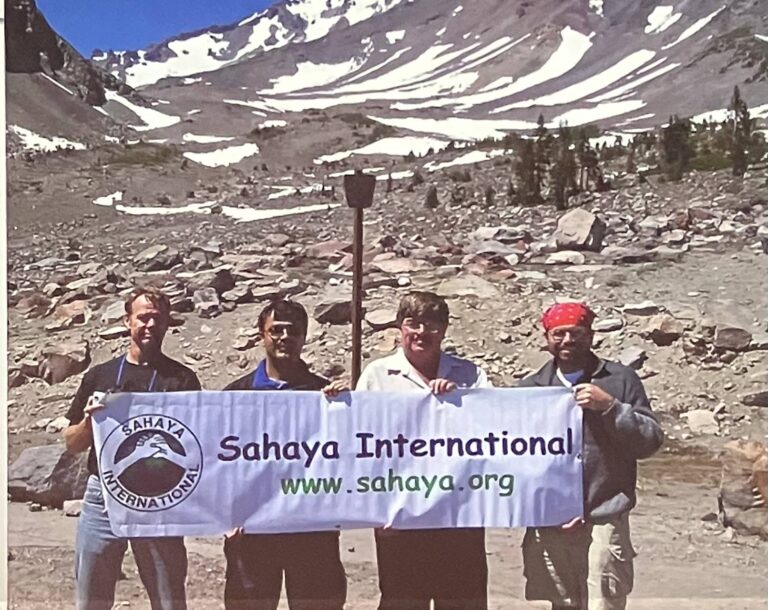
Sahaya International, a Davis-based non-profit that funds schools, HIV/AIDS programs and basic needs assistance, celebrated its 25th anniversary in the Veterans Memorial Theatre on Nov. 2. During the event, they screened a 2013 documentary made about their organization, hosted speakers to discuss their mission and recruited students to perform cultural dances.

Ramin Yazdani, the president of Sahaya International, introduced the organization’s goals to attendees. 

“Tonight is about honoring the impact we’ve made together, empowering children, transforming communities and building hope in places where there is really big need,” Yazdani said. “We are excited to share these stories and lives that have been changed and to recognize the people whose dedication has brought the Sahaya mission to life.” 

Sahaya International is a program that runs in five main locations: India, Vietnam, the Philippines, Kenya and Uganda. 

Durai Selvam, the founder of the Rural Education and Action Development Program (READ), started on his own by establishing a school for children in the rural districts of Tamil Nadu in Southern India. After meeting with Koen Van Rompay, the founder and executive director of Sahaya, Selvam expanded his goals to tackle another prominent issue in Tamil Nadu: the spread and treatment of HIV/AIDS. 

“We got a grant from the Elton John AIDS Foundation, and we gave peer education to women groups, to men through barbers and to young children through barbers and public people,” Selvam said. “Before that, for three or four years, we could not get [to] any HIV-infected people, very few. Only after giving that tremendous awareness program to all our districts, immediately more than 300 people came out, and we started to support them to get free medicine from the Tamil hospital 250 kilometers away.”

His efforts to raise awareness laid the foundation for a program supporting basic home-based care, income generation programs and nutrition support for people with HIV. Selvam told the story of a young HIV-positive girl named Monisha, who he first met in 2003. 

“She lost her parents, so we supported her through a sponsorship program,” Selvam said. “After 16 years, she graduated with a diploma in nursing and was appointed as a nursing staff [member] in Reeds Health Center. In 2021, during the lockdown period, she got married to a young man also living with HIV, and she now has a two-year-old boy who is HIV-negative.” 

Chuong Truong, who leads Sahaya’s work in Vietnam, reflected on how escaping from Vietnam in 1979 and his refugee identity shaped him. 

“We build houses for people who are homeless and living in shacks,” Truong said. “As an infant, I realized that I was living in a shack myself for a whole year […] I’m thankful to come in today to present this [documentary] and also to come full circle — escaping a country and being able to come and give back to the people who are still there.”

In the documentary, Truong described the conditions families are living in. 

“These families are living in shelters made up of rubbish and the floor is pavement,” Truong said. “A lot of these families suffer from depression and insomnia — when it rains, they can’t sleep. Tropical rain [happens] for at least four or five months out of the year.” 

Families who receive housing are chosen based on interviews conducted by nuns at a local Buddhist temple. The documentary followed two young families receiving homes through the program and orphans at a local school who received grants they needed to pursue their education. 

Koen Van Rompay, the founder and executive director of Sahaya, closed out the night by discussing the organization’s work in Uganda. 

In October and November of 2022, a series of storms struck Uganda, causing major flooding that destroyed homes and displaced many children. Rompay said that Akiikih Appolo, the leader of the Banyabutumbi Cultural Heritage Organization (BACHO-K), took those children in. 

“Almost every week, there was another storm, and the situation just got worse,” Rompay said. “Akiikih and his wife have such a big heart: they took all of those children into their little house, and they were sleeping like sardines every night. But of course, for them, it was a really big challenge, so we knew we had to do something.”

Last December, Sahaya built dormitories to house some of those children. However, since then, more children have been displaced from a village in the north hit by flooding, creating the need for more housing. 

Rompay thanked attendees for their support. He reflected on how an organization that started at his kitchen table turned into an organization that spanned continents. 

“When I started Sahaya, my expectations were humble,” Rompay said. “I thought, ‘If we are really successful, we may raise a few thousand dollars per year.’ Of course, we have far exceeded that thanks to your support. What’s really behind the success of Sahaya is this quote: ‘Each of us really has that power in us to be a drop that can create a new ripple.’ That’s really what happened, the ripple effect.” 


Written By: Rory Conlon — city@theaggie.org


The Editorial Board’s budgeting guide for dummies

Our advice for cutting costs, starting savings accounts and gaining some much-needed financial grace


By THE EDITORIAL BOARD

College, for many, is a time of newfound independence, and with this independence comes financial responsibility. While being fiscally responsible can be overwhelming, the Editorial Board wants to offer you some tips and resources to help lessen the mental load of saving.

UC Davis students can access many discounts just by indicating their status as a student. Amtrak offers a 15% discount, Amazon Prime offers students six months of Prime for free and Spotify offers Spotify Premium free to students for a month. Additionally, Regal Cinemas offers a student discount if you show a valid student ID at checkout and students can also enjoy 10 to 20% off Apple products. As for grocery stores, Safeway offers a 5% discount card for students.

Students also have access to free and discounted subscriptions. Some of these subscriptions include The New York Times, Zoom, Microsoft Office 365 and The Economist. Discounted subscriptions such as 50% off regularly priced Amazon Prime fees and Spotify Premium at a discounted rate of $5.99 a month are also available.

In addition to student discounts, there is a wealth of on-campus resources to help support students free of charge. The Pantry supplies food and basic needs to students, Aggie Reuse is an on-campus thrift store that offers secondhand clothing and Aggie Eats is a pay-what-you-can food truck. Aggie Compass also offers a document outlining all of the programs, services and resources offered to students to help ensure their basic needs are met.

Almost 18% of UC Davis students have experienced homelessness or some other kind of housing insecurity, and with Davis being ranked the 7th most expensive college town in the country, it’s easy to see why. Affordable housing is scarce in Davis, but the city of Davis compiled a list of affordable housing units for rent. Your struggle to find available and affordable housing is valid — students can rent apartments with multiple people to help reduce housing and utility costs.

Aside from reducing monthly costs, you can save money in many ways, and being informed about available options is essential. High-yield savings accounts receive 10-12 times the returns of regular savings accounts while also keeping the money accessible in case of emergencies. Individual retirement accounts are savings accounts that allow for compounded interest on money earned from working in the United States and are tax-free when taken out. 401Ks are employer-sponsored retirement savings accounts that are not tax-free when taken out but can also accrue compound interest.

Each of these savings tools comes with unique costs and benefits, so when deciding how to save, it’s important to research which method is right for you. While saving is not one-size-fits-all, saving money early and often can be highly beneficial because of compounded interest.

Though it is easy to get wrapped up in creating the perfect savings plan, it’s important to remember the worth of your well-being exceeds any dollar value. It’s okay to splurge on the things that bring you joy, and any amount of money saved is still money saved. Regardless of your financial situation, the Editorial Board hopes you can take something from this editorial, if not just a deeper compassion for where you are on your financial journey.


Written By: The Editorial Board


U.S. presidential election results stir anxiety and reflection within Davis community

UC Davis students, professors and residents express their opinions on the 2024 election


By EVELYN SANCHEZ — features@theaggie.org


With votes still being counted, this year’s Election Day was polarizing. Emotions are frayed and public discourse is as divisive as ever. By the morning of Nov. 6, the election was called by the Associated Press — Donald Trump was named the projected winner for the 2024 election season and the unofficial 47th president until Jan. 6, with JD Vance as the projected Vice President-elect. As polling offices continued counting mail-in ballots, the margin between candidates was large enough to be called, with each swing state eventually turning red.

People went to bed on the night of the election with a mix of different emotions. Saloni Gajula, a fourth-year environmental science and management major, expressed her feelings on the results. 

“I was very anxious a lot of the time,” Gajula said. “I kept watching the polls, but I kinda knew that our society was lowkey fucked and Trump had a possibility [of winning].”

James F. Adams, a political science professor at UC Davis, shared a similar sentiment.

“I’m not surprised that Kamala Harris lost,” Adams said. “I am surprised it was as decisive as it was.”

Compared to the Biden Campaign of 2020, there was a shift of +3.2 percentage points in favor of Republicans. This is a dramatic change compared to the 2020 Democratic shift of +1.9 points that resulted in the blue victory. 

“It was the first time the Republicans won the popular vote for 30 years,” Adams said. “In retrospect, Kamala Harris was in a difficult situation for three reasons. One: about 50% of Americans think America is on the right track. Two: Biden is already an unpopular president and both combined would’ve already made it hard for Harris to win the election […] Three: Harris got a historically late start, barely 100 days before Election Day.”

Previously in 2020, Trump won 49% of the men’s vote. For this election cycle, he secured the votes of 55% of men in the country. Trump also saw an increase of two percentage points to 45% for the women’s vote despite running on anti-reproductive rights policies. Even longtime Democratic states like New Jersey swung red in favor of Trump. California also saw an increase in counties voting Republican with areas like San Bernardino and Riverside, which had previously voted blue in 2020. 

Harris ended up losing every key swing state that would’ve helped facilitate a blue shift. The swing state counties that Kamala did win were won through a slimmer margin compared to the 2020 election. Essentially, this election was called early. 

Why was this?

“[Trump] won a lot of rural people that say, ‘Gosh nobody cares about me,’” Kevin R. Johnson, the former dean for the UC Davis School of Law and current distinguished professor of law, said. “Trump tapped into a sense of frustration that a majority of the voters held and found attractive.”

This election has also been a time of fear and anxiety for many marginalized groups, according to Johnson. 

“One big distinction between President Trump and President-elect Trump is the way he talks about immigrants at very disparaging rates,” Johnson said. “Besides policy measures, the rhetoric that dehumanizes immigrants is damaging to citizens and people who share affinities with them, such as mixed-status families.” 

Trump winning the popular vote sparked feelings of disbelief among many left-leaning voters.

 Originally from Texas, Gajula is aware of the unwavering fanatical support for the conservative candidate first hand. Gajula shared that the online spaces she inhabited might have contributed to creating a media echo chamber where support for Trump seemed nonexistent.

“But I knew from the beginning that there are a lot of Trump supporters out there,” Gajula said. “They’re quiet.” 

A large factor that contributed to the decisive Democratic loss was the lack of voter turnout, resulting in 1.9 million fewer votes within the largest Democratic counties in comparison to 2020. For many voters, Harris’ policies did not lean far enough to the left — her stance on the military, promising to build the American military as “the most lethal fighting force in the world,” and her stance on the Palestinian-Israeli conflict isolated important groups of voters. 

Additionally, the Democratic loss has made many frustrated toward marginalized groups that voted red and third party, while others have focused more on the other demographics of Republican voters that secured his win. 

“The Democratic party hasn’t always been effective at conveying the fact that they understand the struggles of the working class and less educated people,” Adams said. “Harris doesn’t make it clear that they’re working for them. The same people feel like Trump sees them and will work for them.”

The Davis campus, with help from Student Affairs, hosted an in-person voting center at the Activities and Recreation Center (ARC). With three other in-person voting options in the city of Davis alone, Yolo County saw high numbers of provisional voting or same-day registration voting. Over 5,000 people registered to vote on Nov. 5 within the county.

“For future elections, if people do vote I encourage them to pre-register and don’t wait until the last day to vote,” Jesse Salinas, the Yolo County Clerk’s Office assessor and registrar of voters since 2016, said. “That’s a real problem. People only show up for the presidential election.” 

With 118,000 registered Yolo County voters — not counting conditional ballots — the county had a healthy turnout. The Yolo County Clerk’s Office will only certify election results on Dec. 3, but until then, the office will continue counting votes until the last day. 

Olivia Arnold, a first-year animal science major, voted for the first time this presidential election. 

“I’m worried about the future,” Arnold said. “We’re gonna lose our voices. [The election] is going to affect the relationships different communities have with each other.”

In a similar sentiment, Johnson urges students to be cautious moving forward.

“It is important for people to be vigilant and pay attention to their rights,” Johnson said. “Immigrant students have to be especially careful.” 

Jelani Renner, a second-year economics major, shared what he has noticed about on-campus climate since the election results were made public.

“It’s definitely very depressing. You can feel that everyone is really sad,” Renner said. “I think [almost] everyone shares the same sentiment — it came as a huge shock for sure. It’s [been] hard to deal with the results while also having to deal with midterms and other interpersonal stuff. It really is just a lot.”

With Trump’s promises to follow through on anti-immigration policies, there is a wariness present amongst undocumented students. Likewise, individuals able to get pregnant are expressing fear over the loss of reproductive freedoms. 

Gavin Newsom has declared to protect California’s liberal policies, and has begun to organize to ensure protection against the future administration’s conservative policies. With all three branches of government having a Republican majority, Newsom’s goals may be more difficult to accomplish going into the new presidential term. 

California additionally voted not to pass propositions that would outlaw slavery and involuntary servitude as a punishment for crime and raise the minimum wage.

“We are more polarized now than at any other time in the last fifty years,” Adams said. “There has been a trend of increasing hate and distrust over party lines for well over a hundred years.” 

The UC Office of the President released a statement promising their commitment to diversity and inclusion in higher education, stating they will “stand ready” to support all student and staff communities.

Johnson urges individuals to participate politically, now more than ever.

“We can’t just abandon our efforts to promote justice wherever we can,” Johnson said. “It

is not helpful to throw in the towel and say nothing can be done.”

Another way to take action before the next presidential election is to vote in local and county elections and not just every four years. If you find yourself struggling, feel free to reach out to Counseling Services or find a cultural center within your vicinity.


Written by: Evelyn Sanchez features@theaggie.org

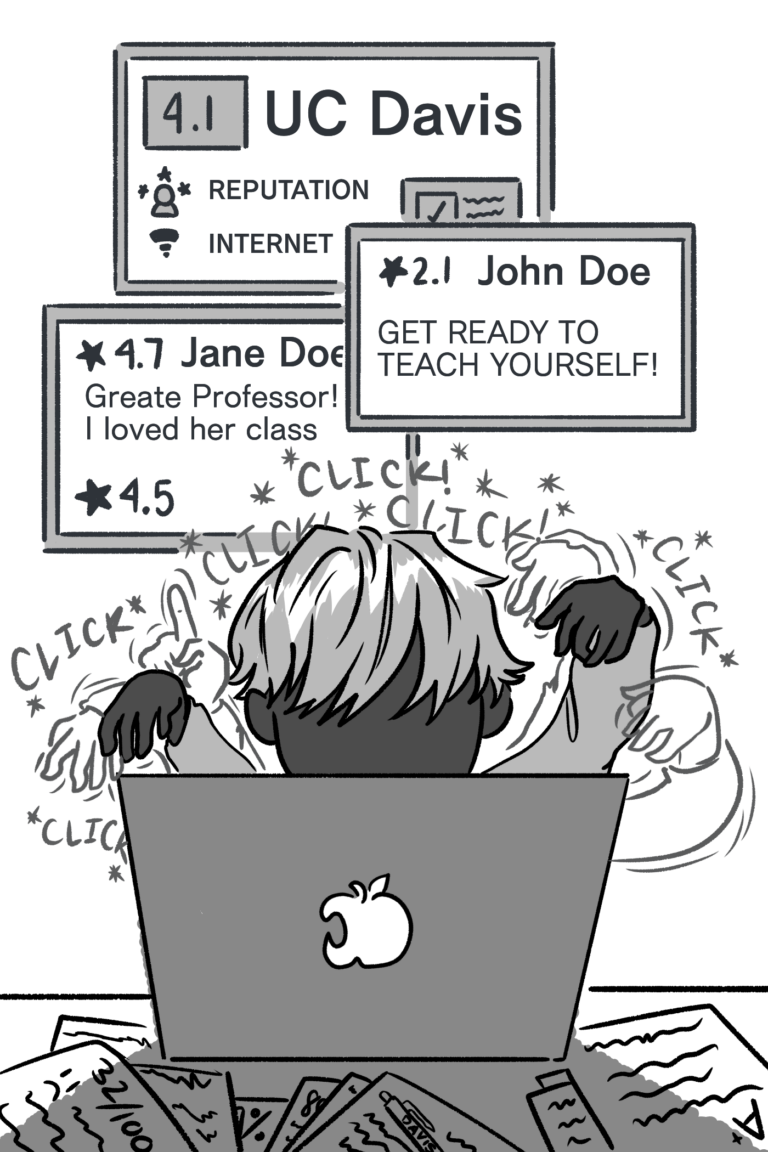
What do UC Davis professors think of Rate My Professors and student course evaluations?

0

Exploring professors’ thoughts on two main ways students can voice course and instructor feedback 


By NOAH HARRIS — features@theaggie.org


Every year, students at UC Davis have the opportunity to fill out course evaluations to give their professors and teaching assistants feedback on how well they taught the course during the quarter. Students at UC Davis have two main ways to share their opinions of their teachers online. The first is through Rate My Professors, a website where college students give their instructors and courses ratings, and the second is through end-of-quarter evaluations.

Rate My Professors allows students to post their thoughts on a professor to share with other students. In 2018, there were 1.7 million professors being reviewed, as well as four million users — numbers which have likely grown since.

Dr. Marc Facciotti, a professor in biomedical engineering, said the Rate My Professors feedback system is not as sound as the end-of-quarter reviews.

“What I found was [that] a lot of the [Rate My Professors] critique was factually wrong,” Facciotti said. “[However,] I do find the end-of-quarter evaluations much more informative. There [are] some nasty comments in there too, but [as a] whole, they’re much more focused on what happened that quarter.” 

Dr. Laci Gerhart, an associate professor of teaching in the UC Davis College of Biological Sciences, has a very high rating of 4.8 on Rate My Professors — a fact that she accepts alongside a strong amount of caution.

 “Students who do feel strongly go to Rate My Professors, and the majority of students who feel strongly about me [seem to] feel strongly positive,” Gerhart said. 

She continued by sharing some of her concerns about the overall accuracy of the reviews to the experiences of her students.

“That also means that students who go there to fill out a negative review maybe don’t because it’s pretty clear to them that they are in the minority,” Gerhart said. “I don’t necessarily think that students generally liking me actually means that they’re learning more. So I don’t pat myself on the back too much.”

Dr. Julia Chamberlain, an associate professor in chemistry, has seen both polite and rude comments while using the website. 

“[Rate My Professors] really is like going on a hate page,” Chamberlain said. “Even though there [will] be some positive comments, when someone says something nice about you to your face, it feels good. And when someone says something super mean to you, it feels like 10 times worse than the good thing.”

Student evaluations provide a way to anonymously give feedback to professors about their courses. On the site, students are unable to view one another’s responses.

However, Gerhart said evaluations have a risk of being biased.

“I make a lot of jokes,” Gerhart said. “And I do a lot of explicit encouraging a student to, you know, reach out to me and to talk to me. So how much of the positive aspects of my evaluations are just those personality and identity traits, and [are they] not really correlated at all with how much students are actually learning in the class?”

Several studies back up this claim of bias. One study found that on average, students gave more favorable evaluations to classes that gave higher grades without remarking on the abilities of the instructor.

Another study conducted at the University of Pennsylvania found that female professors are negatively evaluated more often, and that gender and student grade expectations are what students take most predominantly into account. This study, to this end, recommended that student evaluations should not be used to influence personnel decisions. 

At UC Davis, student evaluations do have tangible effects, according to Facciotti. 

“So, the way the evaluations work on campus is that there are two mandatory questions that get asked [to students], and the results from those questions go directly into a faculty member’s merit and promotion package,” Facciotti said. 

The order in which evaluation questions are asked can influence students’ responses, according to Facciotti. 

“We have to put [the mandatory questions] first, because the campus wants to make sure that, you know, if students drop out halfway through a survey, they’ve at least answered those two mandatory ones,” Facciotti said. “So, they’re the least informative [but] they’re the most impactful for your merit and promotion. If you give the student a moment to think about the elements of the class, and then they reflect on the value of the class and the instructor, they’re usually a little more generous.”

Chamberlain expressed his own doubts about the evaluations. 

“I think it’s difficult for anybody to separate the course and the professor,” Chamberlain said. “You could take the same course for two different professors and have different experiences and that would give you more perspective. But most people don’t do that.”

The average response rate from students is 65%, according to Academic Course Evaluation (ACE) — a site which UC Davis uses for end-of-quarter evaluations. The two mandatory questions that impact an instructor’s merit and promotion are: “Please indicate the overall educational value of the course” and “Please indicate the overall teaching effectiveness of the instructor.” 

These questions ask for a ranking on a scale from zero to five. Both answers on average are between 4.0 and 4.1.

Chamberlain also shared her thoughts on the difference between the comments she receives. 

“Interestingly, the feedback on ACE, the university platform [for student evaluations], to me feels much more constructive and/or polite,” Chamberlain said. “The feedback that I saw in the past on Rate My Professors felt way more hurtful — like it was a person venting. The phrasing is more hurtful, even if it’s the same sentiment.”

Facciotti, who teaches a chemistry class with hundreds of students every year, described the extreme difference in responses he receives on Rate My Professors. 

“In [one review, I could be] the greatest instructor that somebody’s ever had [and have] changed their life,” Facciotti said. “And [in another review] I’m a flaming pile of shit [that] should be reported to the dean.”

Gerhart mentioned a controversial part of Rate My Professors that was removed in 2018, several years after the website was created.

“They used to have a chili pepper where you could rate how attractive your professor was,” Gerhart said. “This was universally viewed by faculty as inappropriate, demeaning and kind of gross.”

On Rate My Professors, Chamberlain is listed as one of the most rated professors at UC Davis. Her students have posted nearly 400 ratings based on different courses she instructs here, and that number increases every quarter. 

Rate My Professors and quarterly evaluations are the two main ways that students can rate their instructors. They may look different, but they continue to inform students and professors about courses, instructors and overall processes here at UC Davis and beyond.

Written by: Noah Harris — features@theaggie.org

The city of Davis hosts forum to raise awareness for domestic violence survivors

Community event highlights warning signs, resources and the importance of a united response to a growing public health crisis


By ALMA CULVERWELL city@theaggie.org 


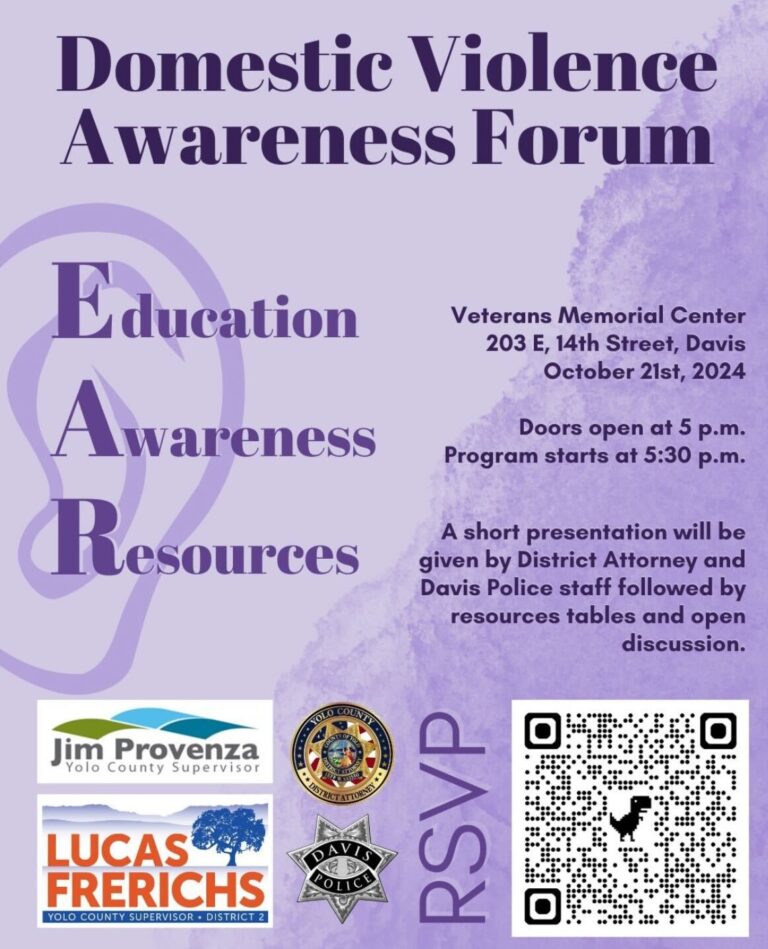
In honor of Domestic Violence Awareness Month, Yolo County, the Davis Police Department, the Yolo County District Attorney’s Office, Empower Yolo, Yolo Crisis Nursery and others hosted an educational Domestic Violence Awareness Forum on Oct. 21 at the Davis Veterans Memorial Center.

The event aimed to raise awareness about the prevalence and severity of domestic violence while providing community members with adequate tools and resources to respond effectively. Attendees learned how to recognize warning signs of abuse, create safety plans and access available resources. Presentations also covered how law enforcement handles domestic violence cases, emphasizing the importance of a coordinated community response.

Melinda Aiello, the Yolo County assistant chief deputy district attorney and coordinator for the event, explained the goals of hosting the forum. 

“The primary goal was to educate, raise awareness and provide resources,” Aiello said. “Domestic violence remains a huge societal issue, and so it is important to have these forums.”

The forum featured informational tables from local non-profit organizations, a presentation by the Yolo County District Attorney’s Office and a panel discussion with domestic violence experts. The discussion underscored the importance of awareness, support and intervention in addressing domestic violence, an issue affecting millions across the U.S.

Domestic Violence Awareness Month began in 1987 to shed light on a significant public health crisis, according to the National Coalition Against Domestic Violence. On average, 24 people per minute are victims of rape, physical violence or stalking by an intimate partner in the U.S., and over one in four women and one in 10 men experience partner abuse in their lifetimes.

The forum also highlighted the ongoing work of the Yolo County District Attorney’s Office’s Victim Services Program, which provides advocacy, court accompaniment and other vital services to survivors.

Aiello explained more specific planning details of the forum.

“The only challenge [in organizing the forum] was trying to decide on an agenda that is thorough, informative and concise,” Aiello said.

During COVID-19, domestic violence reports in Yolo County surged, with over 700 reports of domestic violence and 100 reports of sexual assault received by the District Attorney’s Office in 2020. Isolation and economic challenges created barriers for those seeking to leave abusive relationships, making community awareness and support more important than ever.

Local organizations like Empower Yolo have been pivotal in providing housing, legal assistance and counseling for survivors. Community members were encouraged to support these efforts by donating to Empower Yolo or participating in awareness events such as clothing drives and educational forums. 

Julia Hernandez, a senior social worker for the Yolo County District Attorney’s Office, explained her greatest piece of advice to people struggling with domestic violence in their lives. 

“[Reach] out to get help whether that means reaching out to Empower Yolo or reaching out to us at victims services,” Hernandez said. “We definitely do not want someone thinking that they have to stay in that environment, but at the same time, we know that a person has to feel safe to be able to do that. If they were to call us or Empower Yolo they can remain anonymous, they don’t have to say who they are. Empower Yolo has a 24-hour crisis line and we are here 8-5.”

Hernandez then discussed the kinds of support Empower Yolo provides through their 24-hour crisis line.

“While we’re on the phone with them, we can do safety planning, we can ask what-if questions, like what if I’m not ready to leave right now?” Hernandez said. “There’s different things that they can be asking us, and we’re never gonna tell a person you have to leave now, because we’re not in their shoes, but it is just so that they know that there are people out there who will be ready to help when they are ready.”

For more information about support services and other local resources, community members are encouraged to contact Empower Yolo or the Yolo County District Attorney’s Office’s Victim Services. 


Written By Alma Culverwell city@theaggie.org