59.3 F
Davis

Davis, California

Wednesday, December 24, 2025
Home Blog Page 73

What can we learn from impressionist artists?

Impressionist art is rebellious, intuitive and imperfect


By MAYA KORNYEYEVA — mkornyeyeva@ucdavis.edu


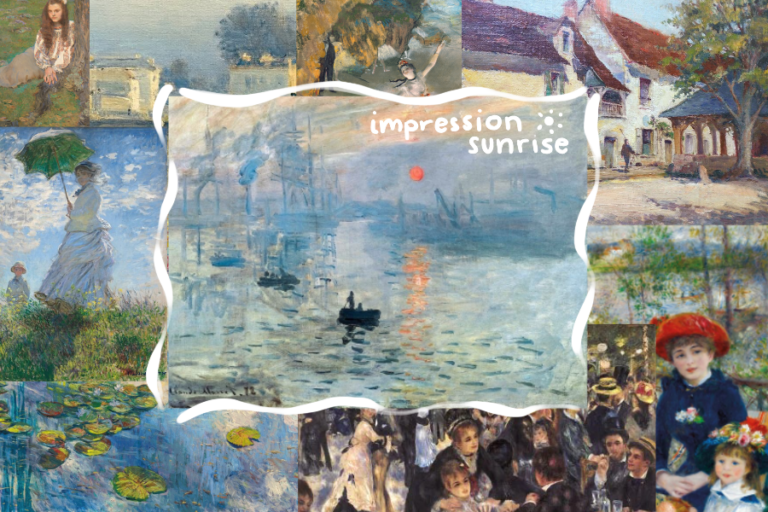
Impression Sunrise,” Claude Monet’s beautifully complex debut painting, captivated me from the moment I first saw it. 

Depicting a lonely boat floating on a waterway, a blazing orange sun and the plumes of industrial life in the distance, “Impression Sunrise” conveys a notion of both new beginnings and stillful foreboding through its creative mixture of warm and cool tones. The painting also offers a sense of full immersion through its depiction of light; with one glance at “Impression Sunrise,” I can imagine myself there on the water, looking out over a vast city and experiencing the first light of the rising sun as it breaks through the clouded morning mist.

Impressionism, named after Monet’s “Impression Sunrise,” is largely regarded as one of the most influential art movements in history. Springing forth from the rapid modernization of the 19th century, this style of painting is all about gentle strokes on canvas, the playful banter between light and shadow and the layering of dozens of colors to capture a sense of motion and serenity within everyday life. 

Despite the contemporary respect for the movement, its birth, as with any new wave of art, was fraught with opposition. Initially met with critique and ridicule, founding artists Monet, Edgar Degas and Pierre-August Renoir (among others) persevered and became immortalized through their, at the time, revolutionary approach to capturing daily life through painting. 

Even though we exist hundreds of years after this “rebellious” style of art, what impressionists brought to the table in 19th century France is not so far removed from the world of today. We can learn so much from the paintings, techniques and motivations of these talented artists: from Alfred Sisley to Cecilia Beaux. 

A key feature that set impressionist artists apart was their “rough” brushwork, which was vastly different from the predominant art styles circulating France in the late 19th century. Artists like Sisley, Renoir, Monet and Degas used “broken” color, a color theory technique that involved adding a brush of color to the canvas and allowing it to set without blending it. Often, they would put two opposite colors together, filling their chosen composition with vibrancy. 

From this technique, we can learn the importance of embracing imperfection in our lives. Not everything needs to be picture-perfect, and what may seem like a mistake can actually add to your overall experience and give you the opportunity to learn and improve. 

“Broken” color also carries the lesson of restraint and patience; anything you do takes time and conscious effort, and it is important to trust the process and not fall into the trap of self-doubt. What may seem like chaos — for instance, two opposite colors together — can have the effect of serenity.

Along with the way impressionist artists worked with color, their asymmetrical, non-idealized figures and compositions contradicted centuries of Roman and Renaissance artistic tradition. Rather than striving for perfection, they allowed their intuition to influence their paintings and lean into a new artistic style. This “parting with tradition” is another major lesson to be gleaned from impressionism; beautiful art can be created using novel strategies and with motivations that deviate from the “norm.” Social progress is driven with the introduction of avant-garde methods, ideas and innovations, and the same can be said for the world of art. 

Impressionism also encourages a symbiotic relationship with the natural world. Impressionists held a special love for the outdoors and chose to work outside whenever possible, painting in the elements and allowing themselves to be influenced by them. This method is called painting “en plein air.” 

Contrary to the values of impressionists, today we are continuously driven further into the indoors. I’ve noticed that I almost never get a chance to just take a walk outside, to get away from work or classes and allow myself to reconnect with nature. I often take the natural world for granted, and impressionist artists urge us to see its beauty and experience it more frequently. 

At the end of the day, you don’t have to be a painter, artist or designer: you just need to be yourself. Impressionism is all about capturing singular moments in time — snapshots of reality which are neither photorealistic nor abstract, but which reflect the mood, energy and vibrancy of a singular moment in time. Impressionism nudges you to live in the moment. So, view the world as an impressionist painter would: filled with raw feeling and an overwhelming sense of humanity. 


Written by: Maya Kornyeyeva — mkornyeyeva@ucdavis.edu

Disclaimer: The views and opinions expressed by individual columnists belong to the columnists alone and do not necessarily indicate the views and opinions held by The California Aggie.


Review: K-pop sensations, aespa, stun on latest release ‘Whiplash’

Girl group aespa continues to prove their worth as musical stars with their latest musical release


By NATALIE SALTER—arts@theaggie.org 


Since their flashy debut with “Black Mamba” in 2020, the K-pop quartet aespa — composed of members Karina, Winter, Giselle and Ningning — have made it clear that they are not content to simply blend in with the rest of the industry. With a distinctive techno sound and uniquely futuristic visuals, aespa’s aesthetic is unforgettable in every aspect. 

Now, the group has created yet another splash with “Whiplash,” a powerful album packed with infectious and otherworldly hits. The album’s titular track is relentless in its catchiness and energy, strengthened by an intense beat and rhythm that does not let up for the song’s entire run. It wouldn’t be out of place on a runway, and the group makes it clear that they know they are operating in a league of their own. 

The track is laden with snappy lyrics about the quartet’s star power and their standout influence, teasing those who would try to imitate their original musical and aesthetic identity. The group has earned seats at high-status events beyond the realm of K-pop, such as their own Coachella set in 2022 and a space on the 76th Cannes Film Festival’s star-studded red carpet, so it’s easy to believe in their infectious confidence. 

The album’s next track “Kill It” is in a similar vein to “Whiplash,” with its own fast-paced, hard-hitting sound and sharp lyrics. Immediately following it, “Flights Not Feelings” steers the album’s sound into a different direction, falling into a slower tempo after such an electric start. Lyrically, the song’s encouragement of independence and embracing life for yourself every day is a well-placed touch that enhances the album’s inspiring sense of self-empowerment. 

On “Pink Hoodie,” aespa takes yet another turn, this time with the intent to prove that while they usually paint a picture of confidence and edge, lighthearted fun is by no means out of their reach. It’s a bright, lovably cute track that adds a burst of sunshine to the album.

One of the album’s most standout tracks arrives next with “Flowers,” an atmospheric, almost hauntingly beautiful ode to love and yearning that feels like a dream. It’s concrete evidence that while aespa is best known for the unrelenting industrial sounds of their title tracks, they are just as capable of expertly creating more withdrawn and melodic sounds that will resonate with listeners deeply. 

The album’s closer is “Just Another Girl,” a dose of pop rock that leaves the six-track run off on a high. It’s infectiously catchy, and on it the members insist that they refuse to settle for anything less than the best in their personal relationships. 

The impression left behind by “Whiplash” is strong: aespa knows they are unforgettable, and they don’t plan on letting you forget them in the future, either. Their unbreakable self-assurance inspires confidence in any listener, and their unique blending of real life with the striking, aesthetically complex world of technology makes them stand out in the K-pop industry. If you don’t already have an eye on aespa as their fame continues to rise, this album might just be your sign to do so. If “Whiplash” is any indicator of the direction their career is set to take, their future is brighter than ever. 

Written by: Natalie Salter—arts@theaggie.org

Could new elements be in our future?

Research from the Lawrence Berkeley Lab hints at a new way to create element 120 


By NAREN KRISHNA JEGAN — science@theaggie.org


Recent news from the Lawrence Berkeley National Laboratory has demonstrated a new way to create superheavy element 116 (livermorium) using a 50-titanium beam targeting a 244-plutonium atom. Using the same technique, these same researchers intend to create element 120, marking the first new element discovery in over 20 years. Dr. Jacklyn Gates, the lead researcher at the Lawrence Berkeley Lab, and Dr. Eric Prebys, the head of the Crocker Nuclear Laboratory at UC Davis, discussed these findings.

A Crash Course on Atomic Theory

Atoms are composed of three subatomic particles: positively charged protons, neutrally charged neutrons and negatively charged electrons. The protons and neutrons are clustered together in the center of the atom — the nucleus — while the electrons are found flying around the nucleus.

The number of protons in an atom determines the name of the element. While changing the number of protons changes the physical name of the element and thereby its properties, changing the number of neutrons or electrons does not change the element.

Changing the number of electrons causes a change in the overall charge of the atom; if the total number of electrons is not equal to the number of protons, it’s an atomic ion. 

You can create either an overall positive or negative charge by removing electrons from a neutral atom or adding more electrons to an atom while maintaining a constant number of protons, respectively. Changing the number of neutrons in an atom while keeping the proton and electron count constant creates atomic isotopes — alternative forms of the same element that can display certain forms of decay due to instability. 


New research 

Gates said that although superheavy elements — chemical elements with an atomic number larger than 104 — do not have many applications, the creation of these elements suggests an expansive future of discovery.

“[The creation of these elements] allows us to refine our understanding of atomic theory and what happens on a small scale,” Gates said. “Elements are the building blocks of everything that we have here on Earth […] We are focused on what are the limits of those building blocks — how big of a block can you make and where can you stop?”

Prebys said that in order to create these building blocks, there needs to be the right mix of substances such as concrete, water, sand and gravel to create a stable structure.

“Once you get past uranium, elements are not stable,” Prebys said. “However, there’s this belief that if you get heavy enough, there’s an island of stability.” 

The island of stability refers to the certain combinations of protons, neutrons and electrons that create relatively stable elements that one can determine the atomic properties of — the most stable compositions consist of magic numbers, a certain amount of protons and neutrons. 

In order to physically create an element, high-energy beams need to bombard a target. The Lawrence Berkeley Lab applied this principle to create element 116 by shooting high-energy titanium-50 beams into plutonium-244 to create a fusion reaction that produces livermorium-290.

Prebys said that using beams is pivotal to create elements.

“Nuclei are repulsive,” Prebys said. “You can’t make two protons stick together because they are repulsive. However, the stronger nuclear forces overpower the electromagnetic forces only at considerably small distances.”

The nuclear force causes naturally repulsive protons to stick together in a high-energy interaction; In order to break something of high energy, you would need greater amounts of energy.
Currently, one of the most common ways to create superheavy elements is to use calcium-48 beams. This method has only been used to create elements up to element 118 (oganesson). However, by irradiating the titanium-50 isotope and shooting it into beams of plutonium–244, Gates’ team was able to create livermorium-290. 

The choice to use titanium-50 is due to it being doubly magic — meaning that the atom contains a magic number for both protons and neutrons. By pairing this with the plutonium-244 isotope, the most stable isotope of plutonium, the researchers were able to expect a higher percentage of a detectable reaction. By bombarding titanium-50 to the californium-249 isotope and accounting for some decay patterns, the team aims to create element 120. Because of titanium-50’s inherent stability, coupled with its higher tendency to create nuclear fusion reactions, Gates and her team hope to push beyond the current scope of our periodic table. 

If successful, this work can open up new avenues for nuclear research. Scientists can explore the multitude of ways to create superheavy elements that last for longer periods of time, enabling us to better understand the atomic theory that governs them and their potential applications. 


Written by: Naren Krishna Jeganscience@theaggie.org


Meet the candidates

Learn about who is vying to be your next student government senator


By VINCE BASADA — campus@theaggie.org


The fall ASUCD elections will open on Tuesday, Nov. 12 and close on Saturday, Nov. 16. This cycle features 10 candidates and three slates — temporary political coalitions that will dissolve after the election is over.

The California Aggie interviewed the candidates running to be one of your six student senators and have compiled everything you need to know to make an informed decision this election cycle.


Elevate Slate

Priorities: Bringing communities together and promoting sustainability initiatives.

Lexi Raben, a first-year environmental sciences and management major, is focused on sustainability and fostering community between students. Her platform includes implementing a system to reuse/donate lab supplies and equipment, advocating for longer hours in Shields Library and creating community tables and increased seating in the CoHo and Dining Commons to foster conversation. As a high schooler, she was involved in YMCA Youth and Government, as well as Model UN.

“I’m advocating for [the] increasing of campus community,” Bekar said. “Even though a lot of people do have differences at UC Davis, I still believe that it is crucial for us to be able to work together at the end of the day.”


Independent (No Slate)
Kenneth DuPont, a third-year political science — public service and sociology double major, is running a focused campaign inspired by personal experience. He is running on combating spiking and has called for the distribution of drink covers to students. He is also looking to cap the fees of campus parking tickets and increase cultural and ethnic outreach by the student government.

DuPont is the founder of Optimistic Coloring Books International Gifting Organization, which donates coloring books to over 100 hospitals in over 10 countries. For this work, he and his sister have received a commendation from the city of San Diego (which included getting a day named after them) and an accolade from President Joe Biden. He is currently an intern at California Strategies, a Sacramento-based policy and public affairs consulting firm.

“I’m running because all of [my platform] problems have very simple solutions that can be very easily enforced,” DuPont said. “If it changes just one person’s life, if it just prevents one person from being spiked, that’s all I need. I just want to make sure this campus is safer.”

Solana Rodriguez, a second-year political science — public service major, is a community advisor at The Green and is passionate about improving services for transfer students, as well as the amenities and lighting at that site. Aside from aiding transfers, her platform includes increasing basic needs access, ASUCD outreach and fostering cultural awareness. 

Rodriguez is a member of Omega Sigma Nu, a Latina interest society, where she serves as the community service chair and commissioner of cultura and sisterhood. She said she hopes that her representation on the senate table will help to address what she believes is a disconnect between Latinx students and ASUCD. In high school, she was the vice president of Lead Latino and founded the Women United Club, focused on female empowerment.

“There’s a lot of empathy that I hold for people,” Rodriguez said, “When I come and sign myself up for something, I sit down and make sure I get it done.”


Voice Slate

Priorities: Increasing ASUCD transparency and awareness and ensuring on-campus services are equitable, simplistic and accessible.

Ilias Benomar, a first-year political science and history double major, is running on a “humanity”-focused campaign. He wants to improve the accessibility of feminine hygiene products on campus and aid UC-wide goals to reduce single-use plastics. 

Benomar was a community organizer for California Assemblymember Esmerelda Soria and former Assemblymember Adam Gray. In high school, he was president of his school’s speech and debate club and its Advancement Via Individual Determination (AVID) club. He also helped organize Students for Justice in Palestine (SJP) protests at UC Merced, his hometown.

“I think that I can bring something positive to the table and that I can make a positive change for my community and my fellow students,” Benomar said.

Zack Dollins, a first-year political science major, is focused on spreading compassion and hopes to establish himself as a student advocate. His platform includes plans to expand basic needs resources and access to school supplies, improve student safety, enact sustainability initiatives, protect cultural expression and call for greater student government transparency.

In high school, Dollins founded the Kindness Collective Club focused on world betterment and hopes to start a UC Davis chapter in the coming year. He is a member of the Davis College Democrats and the UC Davis Alt Protein Project.

“I’m driven by the unshakable belief that my purpose in life is to better the world,” Dollins said. “I hope to be a beacon of love for every person I come across.”


Zaytuna Slate

Priorities: Improving campus safety and freedom of expression and building closer relationships between ASUCD and identity-based Registered Student Organizations (RSOs).

Nanki Kaur, a third-year biomedical engineering and South Asian studies double major, seeks to bring a STEM perspective to the student senate and represent the Sikh community. Her priorities are to create more 24/7 study spaces on campus, improve the current study room in Shields Library, spread information about available Title IX and harassment resources and advocate for culturally sensitive academic and mental health services.

Kaur previously ran as a candidate in this year’s spring election. She has been involved with multiple RSOs and worked as a Coalition and Solidarity Membership with hopes to build connections between different organizations and ethnic groups. She is currently the chief of staff to Transfer Student Representative Safa Mohammad. 

“I’m representing the Sikh community, who right now has a lot of concerns about their safety on campus due to a lot of transnational repression that’s happening politically,” Kaur said. “I think they want to make sure their voice is heard.”

Umar Shaikh, a second-year political science major, wants to ensure minority voices are heard and sees the student senate as the best way to express minority concerns directly to university administration. His platform includes protecting students’ rights to freedom of expression, as well as improving relationships with identity-based RSOs to make the student government more integrated with the student body.

Shaikh is the director of the UC Davis Muslim Student Association’s Political Power Committee and has experience as a competitive debater.

“If I am elected, my No. 1 priority is going to be the students,” Shaikh said. “It’s important that people know [ASUCD] exists, that we have these decision making powers and that we use them in the best way possible.”

Jenna Younes, a third-year international relations major, has been a longtime observer of the senate and hopes to improve other students’ engagement with ASUCD. Her platform is focused on maintaining ethical and transparent student government spending, building ASUCD-RSO relationships, improving student and campus safety and reducing harassment. 

In the past, Younes has done media and marketing for several identity-based student organizations, including the UC Davis Arab Student Union, and has worked with the Human RIghts Department. 

“To be a representative for my community, a community that’s pretty marginalized — it [is] really important for me to step up,” Younes said.


For students who wish to cast their vote or learn more about the candidates and ballot measure, visit elections.ucdavis.edu. Students can also follow @ucdelections on Instagram for  daily election updates.


Note: Candidates Ryan Weber (Elevate Slate) and Jorge Diaz (Independent) were not able to participate in this piece.


Written by: Vince Basadacampus@theaggie.org

Editor’s Note: An earlier version of this article wrote Lexi Raben’s last name as “Bekar,” due to a transcription mistake. The accuracy of our interview transcriptions and correct name spellings remain ever important to us. Please reach out to editor@theaggie.org if you have any concerns. 

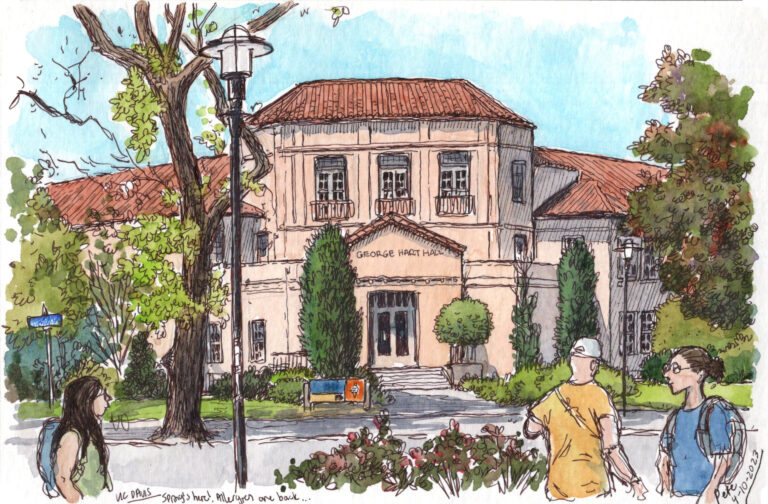
Pete Scully documents the details of Davis

0

The local artist discusses his work as an urban sketcher 


By LAILA AZHAR — features@theaggie.org


Pete Scully has been drawing for as long as he can remember. The Davis-based artist — who also serves as the management services officer of the UC Davis department of statistics — holds his pen with a slightly odd, childlike grasp.

 “I think it’s because I was holding [a pen] before they taught me how to not hold it like that,” Scully said. “Which I never learned.”

Originally from London, Scully can recall early memories of bringing his sketchbook to Primrose Hill, with the British cold freezing his fingers as he drew. But it was when he moved from London to Davis in 2005 that his passion for sketching took off. 

“It gave me a way to look at the new place where I lived,” Scully said. 

Scully specializes in urban sketching: the practice of drawing one’s surroundings. His pieces include sketches of Davis’ Arboretum, Armadillo Music and the Bike Barn, to name a few.

This form of sketching requires careful focus and attention to detail — a potentially dying art in an age of ubiquitous distractions. As social media erodes people’s attention spans, it can be rare to find someone grounded enough to take the time to soak in their surroundings enough to capture them on paper. 

“The way I look at keeping a sketchbook is that it is what keeps me able to focus on everything else,” Scully said. “I kind of think that, maybe, that’s my way of ascertaining a little bit of control over my world.” 

His art feels true to the spirit of Davis, the details so accurate and vivid they often invoke a sense of nostalgia — perhaps due to the human elements of his drawings. Rather than depicting polished, sterile versions of a location, Scully prefers to draw scenes exactly as they are. 

“I don’t make things up when I draw; I try to draw what I see,” Scully said. “I don’t leave out garbage cans — in fact, I prefer to have the garbage cans.” 

This is quite literal; while drawing the construction of Walker Hall, Scully had to stand on a bench in order to look over the fence. Faced with two garbage cans in the way, he ultimately decided to leave them in the sketch.

“You know what, that’s part of the story,” Scully said. 

Along with being an urban sketcher himself, Scully has worked to share this practice with the Davis community. In 2008, he served as one of the original correspondents for the Davis chapter of Urban Sketchers: “a global community of sketchers dedicated to the practice of on-location drawing,” according to their website. In 2010, after attending the Urban Sketching Symposium in Portland, he was inspired to create “Let’s Draw Davis,” a monthly sketch crawl that is still active today, in which participants sketch different locations in Davis. 

For him, inclusivity is a key part of the group. 

“This is something that anyone can do,” Scully said. “It’s something you can be part of if you fancy drawing.” 

He has also organized events in London, including a Jack the Ripper-themed sketch crawl in Whitechapel.

“Not glorifying Jack the Ripper,” Scully said, but rather focusing on the history of the area, and the ways in which things have changed and stayed the same. 

When moving between cities — which he often does, as he enjoys “seek[ing] out different flavors of city” — he finds himself approaching his art differently. In Davis, he’s familiar with the local scenery. In a skyscraper-filled city such as New York, he has to adjust his perspective.

Wherever he is in the world, however, Scully said that it’s often the shadows that catch his eye. He finds himself drawn to interesting shapes or patterns of light. 

“As long as I’ve got somewhere to stand,” Scully said, referencing that as the most important factor in choosing where to draw.

In line with this, he’s spent a lot of time drawing the trees of Davis.

“If you ignore the trees, you might miss all the interesting shapes they have,” Scully said. “These trees are beautiful, if you really look at the bark and the textures and the shapes.” 

He recalled that Davis lost several trees in a storm a few years back.

“I realized that some of them I’ve drawn before, and now I’ve got them on paper,” Scully said. 

One memory in particular stands out; after drawing a double-page spread of a tree, he returned the next day only to find the tree gone. 

“I’ve found myself, especially lately, drawing loads of trees, just because I’m worried — what if they fall down?” Scully said. 

By capturing specific moments in time, his work has created a record of the many changes that have taken place in Davis. 

“I like to record the changes in cities, not just the static things,” Scully said. 

It is precisely this appreciation for change that has sparked a love for drawing construction sites. Scully is quite well known for this — so much so that people on campus often give him advance notice on where they’ll be. 

Through drawing these construction sites, he’s able to record cities in their often-forgotten transitory phases. 

“I love the in-between bit, because it will never look like that again,” Scully said. “That’s a big motivator for me to get out and draw.” 

It is precisely this change that he wants viewers to keep in mind as they view his work, hoping people recall their own stories associated with the places he draws. 

When displayed in the Pence Gallery downtown, a viewer looking at Scully’s sketch of The Mustard Seed, a restaurant in Downtown Davis didn’t see The Mustard Seed at all. Instead, as he told Scully, the picture evoked memories of the friends who lived in the house in the 1960s, before it was turned into a restaurant. 

“I don’t see that. I drew it, but I don’t see that,” Scully said, noting that his perspective on a location is limited to his own memories. “Think of how [the pictures] relate to your own story and your own experiences in Davis.”

Scully’s work, from his drawings to his initiatives focused on getting others to draw, encourage a greater connection to one’s local community. His work highlights the details of Davis, making it impossible not to notice the speckled leaves of an arboretum tree or the vibrant display in a shop window. 

As he succinctly put it:“This is where you live.” 


Written by: Laila Azhar — features@theaggie.org

The ‘red mirage’ that wasn’t

I’m still waiting for the “blue shift”


By MOLLY THOMPSON – mmtthompson@ucdavis.edu 


Politics are mysterious. They shouldn’t be, but they are. Our government system is complex and multifaceted, and our electoral process is convoluted. In a federal election, we’re not just dealing with a matter of tallying votes, we’re organizing early votes, absentee votes, mail-in votes and in-person votes according to the different rules each state implements, and then threading it all into the electoral college. 

This is why so much confusion and so many competing claims arise every four years when it comes time to choose a new administration. There are countless factors that go into the decision, so it’s understandable that we always get a cacophony of theorizing, misinformation and bickering. 

I do think it’s important to mention that I’m writing this before the election, so I can’t speak to the events as they’ve unfolded this year, but we can’t ignore that these patterns are already arising. 

There’s a concept called the “red mirage” which occurs on election night. When Steve Kornacki (the national treasure that he is) stands bravely in front of that daunting, imposing, earth-shaking map of the good old U.S. of A., facing the people of our great nation (all of whom are staring into his very soul, willing him with all the Matilda telekinetic powers they can muster to color Pennsylvania one way or another), the results begin to slowly trickle in one by one. The gray map breaks out into blue and red like the floor under a 7-Eleven Icee machine, but it starts to look like cherry has been a little more popular than blue raspberry. Then it starts to look like cherry has been much more popular than blue raspberry, which is weird because we were all told they were equally favored. 

The “red mirage” is an apparent conservative lead early on election night. It happens because Republican voters tend to prefer voting in-person on election day, and those votes are usually counted first. So, early in the tallying process, Republican candidates often seem to have a much more significant advantage than they do in reality. 

Conversely, liberal voters are more likely to cast their votes via mail-in and absentee ballots, which are usually counted later in the process, causing the complementary “blue shift” that occurs following and counter to the “red mirage.” 

This is not a new or bizarre phenomenon, but it hasn’t been as important to pay attention to in the past as it is today. Because our society is more politically hostile than it’s been in recent history and because of the conservative rhetoric of our current political actors, we need to be aware of both the red mirage and the blue shift. 

Spurred by current presidential candidate Donald Trump, influential Republican figures have been laying the groundwork to claim election fraud if Vice President Kamala Harris wins on Nov. 5. They’re claiming that there will be such an apparent, right-wing lead that Democrats won’t be able to deny their victory. And, that if Harris were to take the victory, it would be undeniably fraudulent because they were winning in the beginning. 

But that’s the blue shift; that’s what happens in every election cycle. The spread of this blatant misinformation is potentially dangerous, due to our volatile political atmosphere already primed to explode. If the fuse is lit, if Trump and his supporters see the red mirage and take it as evidence of a deserved Republican victory and feel slighted by Democratic votes coming in later, they’re likely to take an offensive position. The conflict that could result from their claims that “liberal votes are coming in to counter a conservative lead” could be the catalyst for serious public unrest. 

The fact that cherry is more popular at the beginning doesn’t mean that blue raspberry won’t catch up later on. Die-hard cherry fans can be relentless, but there’s a reason that blue raspberry is more prevalent after all the cherry fans finish their Icees. It doesn’t mean that blue raspberry sales are rigged. 

This is a prime example of the severe importance of media literacy and education. Social media spreads misinformation and disinformation like wildfire, and if we as a society don’t know how to interpret and filter it, we put ourselves in trouble. We put our democracy at stake. 

As the media keeps emphasizing, this is an unprecedented election. The actual administrative outcome, as of Nov. 4, is anyone’s guess, but the public response either way is also volatile — we need to handle it all with care. 


Written by: Molly Thompson — mmtthompson@ucdavis.edu 


Disclaimer: The views and opinions expressed by individual columnists belong to the columnists alone and do not necessarily indicate the views and opinions held by The California Aggie 


Exploring the gender gap in modern presidential elections

0

The gender gap’s impact in voting behavior and its causes, according to UC Davis students and staff


By GRACIELA TIU — features@theaggie.org


In the weeks leading up to the 2024 presidential election, many political figures predicted that the gender gap in voting behavior would widen significantly compared to previous election years. Defined by the Rutgers Center for American Women and Politics (CAWP) as “the difference between the percentage of women and the percentage of men voting for a given candidate,” the gender gap quantifies the effects of variances in political beliefs and voting practices across the gender binary.

Since 1996, women have statistically preferred the democratic candidate in presidential elections, with the gap fluctuating each election year but remaining present, according to CAWP. Additionally, after 2000, men and women have overall favored different presidential candidates, with one exception in 2008. 

However, categorizing men and women into monoliths in their voting behavior would not thoroughly explain their electoral choices. Many demographic differences beyond gender such as race, socioeconomic class, age and religion can also influence a person’s vote. Still, examining the different factors contributing to the overall gender gap can point out interesting dynamics about gender and politics in contemporary American society.

Although widely predicted to increase, the gender gap in the 2024 presidential election shrank slightly from 2020, according to Associated Press Votecast data, with Vice President Kamala Harris winning a smaller percentage of women in 2024 compared to President Joe Biden in 2020. Even so, the gender gap remained at a large and observable size, similar to the past 20 years. 

Policies and campaign promises prioritized by the two presidential candidates seemed to be one reason men and women largely voted differently. Harris’ campaign often primarily focused on the importance of reproductive justice and bodily autonomy, starkly contrasting former President Donald Trump’s campaign. 

For Sydney Carlson, a fourth-year environmental policy analysis and planning major, this issue heavily influenced her choice on the ballot.

“Roe v. Wade played a role in my perspective for the election,” Carlson said. “There were so many other rights protected under Roe v. Wade which made women safer throughout the U.S. To me, the idea of voting for someone who is so publicly proud of overturning this right broke my heart.”

The Trump Campaign also zeroed in on its anti-transgender platform and subsequently its push for the upholding of traditional gender ideals, often using hateful rhetoric to push against transgender rights in many rallies and campaign ads. 

“These attacks are consistent with the gender beliefs that have fueled Trump’s support, whereby fear of gender disruption motivates a policing of sex and gender binaries that constrains conceptions of gender, promotes conformity and upholds an unequal balance of power to men over women,” a recent Forbes article reads.

With these two significant topics of reproductive justice and transgender rights, American men and women have shown their differing beliefs and priorities on a large scale. Although many other demographic factors can contribute, gender undoubtedly plays a significant role in developing these platform-based opinions.

Along with caring about platforms and policy positions, many voters — particularly women — felt concerned about Trump’s long history of disrespectful commentary toward women and the multitude of sexual misconduct allegations he has faced since the 1970s, leading some to prefer Harris instead. 

Carlson also described how she thought some of the negative rhetoric Trump used against Harris led some male voters to make their decisions accordingly.

“He referred to [Harris] in a disrespectful way, which I think caused a lot of people to follow [those] beliefs as well,” Carlson said.

Bias, whether unconscious or explicit, may have also contributed to gender-based differences in voting patterns. Both voters and candidates can exhibit forms of bias that impact their perceptions and opinions, particularly toward female candidates like Harris.

“In Western society, we have a prevailing notion of what power means that is inherently masculine,” Dr. Amber E. Boydstun, a professor and a chair of the UC Davis Department of Political Science, said. “That comes from our storybooks and our history and all of it. And so I think that any female candidate is going to have an uphill battle because we don’t have the same kind of mental model for what a powerful woman looks like in a positive way that we do for a male leader.” 

Even if a female candidate like Harris did not focus her campaign on her gender identity, voters still might display these biases and blur the lines between true political preferences and expressions of gender-based biases.

“I think even when we break down individuals to their qualities, their qualifications [and] their background, it’s still hard for some people to separate them from the traditionality of how we view men and women,” Mia Hamilton, a second-year sustainable environmental design major, said.

Another notable driver of the gender gap is the idea that social identities heavily influence party alignment.

 “Gender shapes experiences, expectations, and interests and, consequently, influences the US political system in a multitude of ways,” Heather L. Ondercin, an assistant professor in the Department of Government and Justice Studies at Appalachian State University, said in a 2017 journal article for Political Research Quarterly. “Furthermore, men’s and women’s social identities are fundamentally linked to their sex and form the basis of their partisan identification. This theory implies the gender gap’s formation is at least partially a result of men and women adjusting their partisan preferences based on the representation of their gendered social identity in the political parties.” 

This linkage of gender and partisan identity seems to make many voters resonate with the candidate or party that appeals most directly to how they want to feel represented politically.

 “I think Harris really appeals to the people in the women’s sense, like she’s backing us up on account of our rights as women,” Hamilton said. “I think a lot of the stuff that Trump votes for is very progressive in the male sense — like it kind of gives power to the men versus power to the women. Although [we] definitely see a lot of men voting for Kamala and a lot of women voting for Trump, I think it’s really easy to kind of identify them with their gender identity.” 

Similarly, many men identified with the Trump campaign’s centering around traditional masculinity.

“I think in this particular election, one of the aspects of President Trump’s candidacy that had a lot of draw for a lot of people across genders and across races was this a sense of masculinity,” Boydstun said. “Even though Harris, I think, tried very hard not to make gender the center of her campaign, I think that the kind of machismo element of Trump’s messaging meant that gender was very much at the center of this election.” 

An additional factor that may have led some men to vote for Trump could have been that the Harris Campaign’s focus on women’s rights and progress led some men to feel left behind, potentially fearing the loss of their privilege and power.

“Frustrated at not feeling understood, many then get sucked into a bro-culture of Donald Trump or Elon Musk,” John Della Volpe, the director of polling at the Harvard Institute of Politics, said in a BBC news article. “They look at who the Democrats prioritize — women, abortion rights, LGTBQ culture — and they ask ‘what about us?’”

This “bro-culture” aligns with the pushback against women’s progress that some American men have been demonstrating in the past few years.

“Donald Trump has emphasized a traditional — and even toxic -– masculinity in each of his presidential campaigns, feeding on and fueling the backlash to gender progress already evident among Americans,” Kelly Dittmar’s Forbes article reads. “In 2016, for example, more than two-thirds of Trump supporters told the Public Religion Research Institute (PRRI) that ‘society is becoming too soft and feminine.’ Multiple researchers found that hostile sexism, which encompasses perceptions that women’s advancement comes at a cost to men, was a significant predictor of votes for Donald Trump among men and women alike.” 

Overall opinions about gender inequality and partisan support have been proven to correlate, with 84% of Trump voters believing gender equality efforts are “going too far” and 86% of Harris supporters believing that they are “not going far enough,” according to a CBS News poll

The gender gap, influenced by these numerous factors, serves as a striking reminder that American attitudes and beliefs about gender permeate our daily lives — not just the presidential election.

“I think for a lot of women, it’s not that surprising,” Hamilton said. “Just because I don’t think it’s a particularly unique experience to be a woman who feels qualified for a certain role or a reward and have that blindsided by a male counterpart.”


Written by: Graciela Tiu — features@theaggie.org


UC Davis students and staff discuss the unique role of social media on this election cycle

0

Both new and experienced voters make sense of new political landscape


By EMME DUNNING — features@theaggie.org


To say that the 2024 United States presidential election has been unusual would certainly be an understatement. With a Republican candidate facing multiple felony convictions and a Democratic candidate who entered the race mere months ago, a victory for either party would be a historic event.  

The candidates for this election have been unique to say the least, and their methods of reaching potential voters has reflected this. The Kamala Harris campaign in particular has used social media trends to appeal to young voters, connecting her image with popular musical artists like Chappell Roan and Charli XCX and capitalizing on relevant TikTok trends. Voters and academics alike are taking note. 

Amber Boydstun, a professor of political science and communications at UC Davis, has significant experience analyzing the link between media and politics. In this particular election, Boydstun believes that a lack of policy information could be responsible for the increase in trend-related election content consumers have been seeing on social media. 

“We’re in a relatively low-information political environment compared to other elections,” Boydstun said. “I’ve never been alive in an election where we know so little about both candidates’ concrete policy proposals. What [social media trends] have done in this low-information environment is to give people a different heuristic to grab onto.” 

In low-information elections such as this one, Boydstun notes that many voters are drawn to candidates based on their personality and personability — particularly in terms of how these things fit in with their personal identity and values. 

“When we don’t have information about policies, then we really do go based on vibes,” Boydstun said. “We go based on whether they’re a Republican or a Democrat and what we stereotype those labels with, or whether they are a man or woman or what their race is. At the end of the day, are they someone we’d like to have a beer or a coffee with?” 

Boydstun also asserted that although social media has streamlined the process of reaching young constituents, using media to connect to potential voters is an established practice. 

“This is nothing new, right?” Boydstun said. “The entertainment space has been a place where presidential candidates have hoped to try to make a personal connection with people, and so it makes sense that social media would be the natural extension of that.”

Andrea Guillen, a fourth-year political science major, has seen this change in outreach tactics first hand. 

“Social media has definitely affected the way I see this presidential election,” Guillen said. “[In past elections], a lot of the time they would just hold press conferences, and you’d see it on live TV. Now It’s obvious that they’re trying to reach a specific audience that wouldn’t typically go out of their way to watch a presidential rally or debate.” 

Although Guillen understands the important role of social media in politics, she also is acutely aware of the unique dangers it may present. 

“Like a lot of people my age, I consume a lot of content on the internet,” Guillen said. “Social media is definitely one of the best ways to keep voters informed, but it can be tricky because misinformation is so easily spread.” 

To combat this, she recommends that potential voters continue to do research on candidates and policies outside of social media. To that end, pursuing information about individual candidates’ policies is a crucial part of participating in local and presidential elections.  

Megan Van Note, a third-year international relations major, agrees that politicians engaging in social media trends can be a great asset to reaching voters, so long as it is done sensibly. 

“I do think that trends tying together candidates or policies can make them relatable and relevant to young adults and can encourage them to vote,” Van Note said. “If done correctly, I think it can really help promote democracy.”

In order to ensure that voters make informed decisions, Van Note encourages young voters to reach beyond social media for election information and content.

“Read, listen and watch different perspectives from different sites,” Van Note said. “By only relying on news channels or social media, you are doing yourself a disservice.”

While social media has proven itself to be a powerful way of reaching young voters, experts and UC Davis students alike assert that it should be coupled with personal reflection and outside research in order to be an effective tool. 


Written by: Emme Dunning — features@theaggie.org

DJ YNOT lights up UC Davis party scene

0

The recent UC Davis graduate discussed her experience since becoming a local DJ 


By LAILA AZHAR — features@theaggie.org

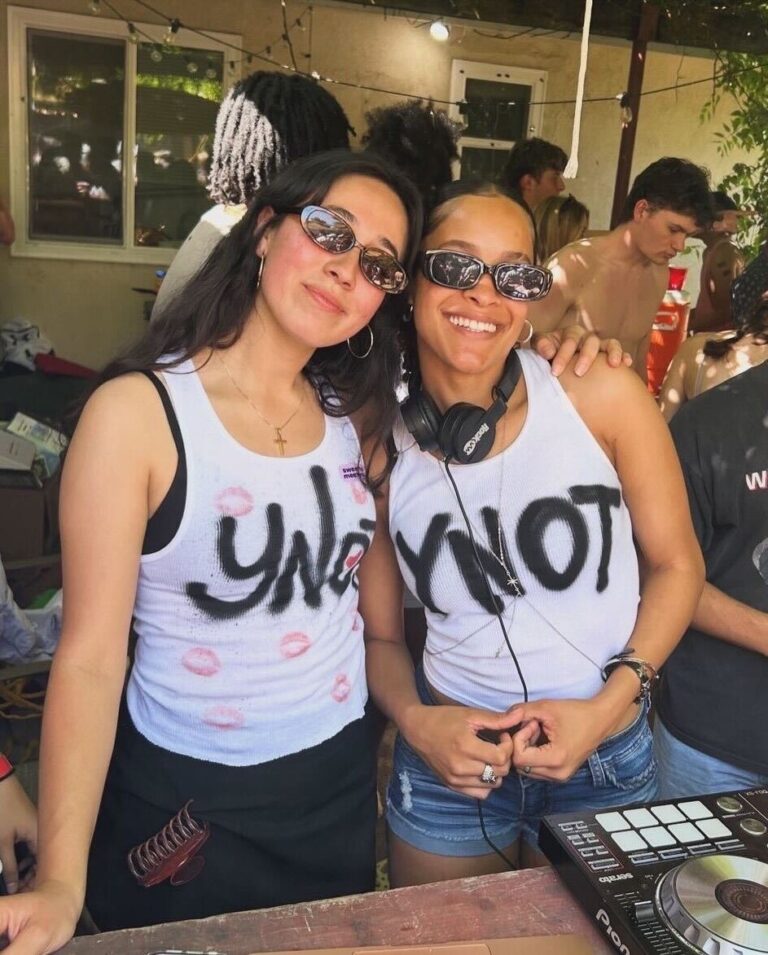
Yordan Scalas, better known as DJ YNOT, knows how to get a party started. The vivacious presence behind the DJ booth at an array of Davis events, her past several weekends have been a flurry of clustered dance floors. 

Scalas, a 2024 UC Davis graduate, became a DJ to solve a problem of her own. 

“I used to throw a lot of parties at my house last year, and I just felt like something was always missing,” Scalas said. 

Hoping a DJ would fill that void, she began searching for someone to enhance her parties. But when no one met her standards, she had only one option. 

“Fuck it, I’ll be the DJ,” Scalas said. 

Her father — also a DJ — began teaching her on his board and speakers this February. Less than a year later, Scalas has played recent events including UCD Fits and Yesterday Vintage Store’s Costume Kickback, Davis Snow Club’s Halloween Crawl and Theta Xi and Five Percent Studio’s Nightmare on First Street

Scalas has already racked up fans in Davis, including Stephanie Maravilla, a second-year political science — public service major.

“I saw DJ YNOT play at a Snow Club party,” Maravilla said. “Good music can make or break the energy of a party, so it was really cool how she set the vibes with her set.”

Ivan Lai, a fourth-year human biology major, helped plan the recent Nightmare on First Street event, and said DJ YNOT kept the crowd’s energy up throughout the night.

“She’s not just locked into one genre, which is huge for us,” Lai said. “We want our parties to keep everyone moving, and she’s exactly the kind of DJ who can deliver that. Her set feels like this perfect wave, keeping everyone hyped and engaged from start to finish.” 

Along with her training, Scalas’ DJ name also came from her father. Serendipitously, “DJ YNOT” was the first name he came up with. As soon as he said it, Scalas knew the name was the one. This DJ name has inspired its own line of merchandise, which can be seen on her Instagram page. 

“YNOT was so fire, I just had to put it on a shirt,” Scalas said. 

Her clothing line includes a tank top with the name “YNOT” in graffiti script — a piece inspired by her experience as a graffiti artist. 

In terms of creating her music, Scalas listens to music constantly and is always crafting the perfect playlist for each event. But for the most part, her process is very go-with-the-flow. 

“Honestly, I kind of just YOLO it,” Scalas said. “It’s like, this song sounds good, I’ll go from there.” 

Her friends often attend her shows, and she shared that watching them enjoy themselves is her favorite part of every set. 

“I hardly look up from my board, but whenever I do they’re always there, and I can spot them out dancing,” Scalas said.

Scalas also said that she has found similar community support in other DJs based in the Davis area. 

“I meet new DJs every day, and they teach me something new every time,” Scalas said. 

Scalas — like all of us — isn’t entirely sure about the future, but her five-year plan entails playing at clubs and festivals.

“It’s so random, but I really want to be on a reality TV show one day, so I’m hoping DJ-ing will lead me there,” Scalas said. 

It’s easy to picture her as a contestant on a reality TV show — her larger-than-life DJ personality seems that it would translate perfectly to the big screen.  

Davis has a reputation for being a particularly quiet town — a reputation that Scalas said she finds often holds true. But when DJ YNOT is at the board, the small town feels electric and filled to the brim with excitement. 

“With YNOT behind the decks, we know it’ll be an unforgettable night,” Lai said. “Why not be obsessed with DJ YNOT?” 


Written by: Laila Azhar — features@theaggie.org

Self-obsessed professor focuses more on himself than teaching

He knows what he likes


By ALLISON KELEHER — adkeleher@ucdavis.edu


I’ve spent the entirety of this quarter trying to figure out my professor. On the first day of class, he gave us a two-hour lecture on his life story, which isn’t entirely unusual, because plenty of professors will choose to do that on the first day. 

But then, it just kept on getting more and more strange by the day. He would reference his life story multiple times in class and even ask questions in lecture about himself. Following one of these questions, he would say something like, “You should know this, we covered it in lecture.” I always thought that he was simply trying to be funny. Again, it’s normal for professors to have somewhat strange senses of humor.

However, after the midterm he gave, I am ready to expose this professor. In the midterm, it was a 100-question exam all about himself. This is a physics class. One of the questions was: “What’s my favorite tie to wear to lectures?” Sadly, I got this one right — it was the magenta one. If his ego wasn’t already high enough, I would ask him where he got it. 

I intend to report this to the administration, but I figured I would start with The California Aggie. Here’s what my professor does regularly:


  1. Whenever he makes a particularly important point, he will look directly into the lecture capture camera and give a little smile. This one was pretty difficult to spot because the smile is almost unnoticeable. However, once you see it on the lecture capture, it’s impossible to ignore it. He’s like Jim from “The Office.” It’s weird. 
  2. If someone ever tries to take a picture of the board while he is teaching, he will pose for the camera. This happens rather frequently during lectures since he doesn’t post his lecture slides on Canvas. I have a feeling that he doesn’t post them on purpose. 
  3. The professor requires that homework is submitted with physical print copies so that he can grade them individually with a pen. At the end of each assignment, he will draw his own signature in very large lettering. Once, he made the joke that it would be worth something someday, but now I’m pretty sure he wasn’t joking. 
  4. Whenever he has his office hours over Zoom, you can tell that he’s constantly looking at himself on the screen rather than what he is teaching. One time, when I asked a question it took him a second to pull away from his dazzling reflection. 

Now, my loyal readers are probably wondering how attractive my professor must be to warrant this behavior. I am not going to answer that question because I am uncomfortable. However, he is alright at best. 

The following situation is very embarrassing and hard to read, so I would recommend skipping this paragraph if you suffer from secondhand anxiety. Last week in class, someone took a picture of the board with my professor in the frame. Then, they began giggling over the phone with their friends. My professor clocked this immediately. He demanded to see the phone. Finally, the phone was flipped around, and it was revealed that my professor was making a very unattractive face in the photo. “DELETE IT!” he screamed. “DELETE IT! DELETE IT! DELETE IT!” 

Everyone sort of went silent, and we all tried to pretend it never happened. However, after that midterm I must end my silence. Him and his magenta tie are going to pay for what they did to my grade. 


Written by: Allison Keleher — adkeleher@ucdavis.edu


Disclaimer: (This article is humor and/or satire, and its content is purely fictional. The story and the names of “sources” are fictionalized.)

‘Parlez-vous ballet?’

Dance as a language, not just an art or a sport 


By MOLLY THOMPSON – mmtthompson@ucdavis.edu 


“Athlete. Artist. Dancer.”

That’s what the glittery t-shirt my 11-year-old self lived in proclaimed. Is dance a sport? Is it an art? My t-shirt said both, but it’s an age-old question. Maybe it’s an artistic sport? An athletic art? Conversations around how to categorize dance have fluctuated in tandem with the development of dance and society over the past few centuries, but we’ve never arrived at a definitive conclusion. 

I propose a third option: I say that dance is a language. 

The primary purpose of language is communication. Ballet (and dance as a greater medium) is also primarily a method of communication — the best performers are able to express wild and frenzied lore without speaking a word. Dance has its history in storytelling; ballets have always painted dramatic tales of love, loss and whimsy, and audiences are drawn to watch because of the visceral, poignant feelings they can absorb from the performers. 

Stuart Carroll is the artistic director of the Sacramento-based Capitol Ballet Company and a ballet instructor at UC Davis. I’ve been taking his class here on campus since my first quarter as a first-year, and even though I came in with 15 years of ballet experience, I’ve truly learned so much from his guidance and training. 

During class last week, he stopped the combination we were working on.

 “The purpose of all of this is communication,” Carroll said, urging us to use our movements as a means of expression rather than simply executing the steps with the sole goal of being technically proficient. “Sometimes it’s the dancer to the audience, sometimes it’s the choreographer to the audience through the dancer. But that’s why expression is so important, because we can’t talk, so we communicate through movement.” 

Yes, ballet is inherently artistic, but I would argue that language as a concept is also an art form. Poetry, songwriting and literature are all products of language as an artistic medium, and I argue that dance is the same — language as an artistic medium. 

In order to be classified as a language, there must be grammar: a system and set of rules that dictate the structure of the language and how it’s used. Ballet has a clear set of rules. We always turn out our legs, we always point our toes, we have a clear formula for where we hold our arms and head in accordance with different body positions — everything is set on a foundation of basic rules that allow us to build complex serial patterns to convey meaning. This is exactly like the way we use the rules of syntax to form complex sentences out of smaller building blocks, which have a semantic value that’s greater than the sum of its parts.

 In the early stages of learning a language, we’re taught to strictly adhere to the rules and follow the grammatical guidelines by the book. Once you master the language and gain a fluent understanding of how it lives and breathes and operates, you can start to break the rules for the sake of artistic liberty. And before you know it, you’re allowed to start a sentence with a coordinating conjunction because that’s your creative decision — even though your high school English teachers told you it wasn’t allowed. 

Once you’ve mastered the basics of ballet technique (granted that, just like with spoken language, we’ll all be students forever), you’re allowed to break the rules for deliberate choreography. Sometimes classical technique isn’t adequate for what you’re trying to convey, so you alter it to suit your creative vision. That’s where the artistry comes in. That’s when it graduates from being a string of movements and becomes a story —- that’s when it becomes art. 

Just like with any language, learning is a lifelong endeavor. Every day we continue to learn new words that elevate our communication skills; in every dance class we learn new moves that allow us to express ourselves in more sophisticated ways. It takes years of practice to accumulate the skills necessary to be truly eloquent; it takes years of practice to accumulate the skills necessary to be an exceptional dancer. 

Language changes as society develops. Ballet looks different today than it did in the early days of its conception. Arbitrary letters become a vessel for a story when we string them together. Movements that seem meaningless in isolation become a narrative arc when we play them out in succession. Language is an art. Dance is a language. 


Written by: Molly Thompson — mmtthompson@ucdavis.edu 


Disclaimer: The views and opinions expressed by individual columnists belong to the columnists alone and do not necessarily indicate the views and opinions held by The California Aggie 


ASUCD Senate puts Student Bill of Rights expansion on upcoming ballot, appoints members to the Ethical Spending Committee at Oct. 31 meeting

Senator Jacob Klein also addressed “misinformation” printed in The Aggie regarding his conduct during a vice chair confirmation the previous week


By VINCE BASADA — campus@theaggie.org


ASUCD Internal Vice President (IVP) Aaminah Mohammad called the Oct. 31 meeting to order at 6:12 p.m. before reading the UC Davis Land Acknowledgement.

The senate first moved to fill the four remaining seats on the Housing and Transportation and Advocacy Committee (HTAC). Christina Smith, the HTAC chair and fourth-year political science — public service major, noted that it was a “very competitive round” for applicants and added that the chosen confirmees were all impressive applicants.

Talha Shafik, a fourth-year data science major, was unanimously confirmed as the vice chair, joined by HTAC members Chad Pugliese, a second-year community and regional development (CRD) major, Jasmine Stowers, a second-year CRD major, and Will Brooks, a fourth-year political science major, who were also confirmed without objection.

The Gender and Sexuality Commission Vice Chair Catalina Silva-Oliveira, a first-year communications major, and Student Sustainability Career Fair Committee Member Nitika Sathiya, a first-year civil engineering major, were also confirmed at the meeting.

External Affairs Commission (EAC) Chair Henry Rosenbach then gave his quarterly report and said that he was working with the Stanford Woods Institute for the Environment on securing opportunities for UC Davis students through its network, as well as forming a Rally Committee. Rosenbach, the only EAC member at this time, also informed the table that he had posted vacancies to fill the commission’s seven open seats.

Afterward, Senate Pro Tempore Asif Ahmed asked if any senators would be interested in joining the new Ethical Spending Committee (ESC) created by SB#6. Senator Mia Cohen, who had voted against making the committee a permanent entity at the previous week’s meeting, then asked to join the ESC.

“I would love to work with other senators and other committee members to see how we can spend ASUCD’s money in a way that’s ethically right, and I’d love to learn about other people’s viewpoints,” Cohen said. “Also, I think having my input would be nice, because I represent a different community on campus.”

Her appointment was immediately approved by Ahmed.

The senate then heard a presentation from the Cross Cultural Center (CCC) Director Joseph Martinez, M.A., who talked about ways to spur ASUCD-CCC cooperation and show gratitude for ASUCD’s continued support. His presentation, which included outreach information, was praised by the Ethnic and Cultural Affairs Commission Chair Reem Suleiman and ASUCD President Gaius Ilupeju. 

After a break and ex-officio reports, the meeting moved to introduction of new legislation, namely SB#8 to expand the number of protected classes against bias.

Moving onto new legislation, the senate discussed and unanimously passed CA#92 to place a constitutional amendment to include the right to privacy in the ASUCD Student Bill of Rights on the upcoming ASUCD fall ballot.

“You have the right to privacy,” the amendment reads, in part. “Your personal information’s confidentiality, including contact information, academic records, medical history, financial data and all other sensitive information, shall be protected. The University and ASUCD shall not disclose your personal information without your explicit consent, except when required by law or in accordance with other existing University policies. If your privacy rights have been infringed, ASUCD and the University are required to take any necessary and appropriate action to respect your privacy.”

The table considered weakening the wording in certain sections of the amendment from “shall” to “should” or “may” based on the recommendation of the Office of the Campus Counsel, but ultimately decided to keep the stronger wording.

The senate also discussed SB#9, which would have placed a survey on the fall 2024 ASUCD ballot to gauge student interest on a possible Student Equity Fee Referendum that might charge students $60 annually. However, the legislation was ultimately withdrawn due to concerns from the UC Davis Office of Student Affairs that students filling out their ballots would be confused and think they were voting on passing such a referendum instead of simply giving their thoughts on the bill. Ilupeju indicated that the survey might be released to students via email in the near future instead.

During open comment, Senator Jacob Klein addressed an “inaccurate” description printed in The California Aggie on his conduct during the confirmation of Emily Setiobudi, a third-year clinical nutrition major, as the vice chair of the ECAC during the Oct. 24 senate meeting.

He quoted the article, which read, “Senator Jacob Klein raised his concern over the appointment due to the politics of the constituency. His concern was widely dismissed by the table.”

Klein proceeded to explain his side of the situation.

“Let me clarify what actually happened,” Klein said. “I asked the [ECAC] vice chair candidate the following question: ‘What do you think the biggest issue facing our campus is when it comes to ethnic and cultural affairs, and how do you plan to work to address it?’ [Setiobudi] provided a great answer that included comments about how many students remain apolitical and how ECAC should hold workshops on cultural appropriation, among other things.” 

“I did not raise my ‘concern over the appointment due to the politics of the constituency,’” Klein said. “This is because, A) I did not have any concerns about the nominee and B) my constituency did not play a role in this conversation whatsoever, whatever that may be. Second of all, I have spoken to almost half of the senate table that was present at this meeting, [and they] have all agreed that my concern was not ‘widely dismissed by the table’ and that the author indeed misrepresented what actually happened.”

“In other words,” Klein said, “[The] interpretation of my interaction with the ECAC vice chair was categorically false and seriously misleading.” 

Klein said that he had clarified the issue with The Aggie’s managing editor, Alyssa Crevoiserat, earlier that day and that his “goal is not to interfere with personnel matters as they pertain to a particular journalist, but more so to emphasize the need for truth and accurate reporting.”

Additionally, The Aggie has added an editor’s note to the end of the article, recognizing the mistake: “Due to sound difficulties and the absence of microphones for every speaker, there was an error reporting a statement made by Senator Klein in an earlier version of this article. He later shared a statement with The Aggie that is included in this article.”

Chris Ponce, The Aggie’s editor-in-chief, and Crevoiserat provided a comment. 

“The California Aggie values truth and accuracy in the articles we publish, and we will always accept criticism and make adjustments when necessary,” the statement reads. “The work of journalists is not always perfect, and we take accountability when there are mistakes. We affirm that the reporting of our staff is made in good faith and prioritizes the needs of the student population and the Davis community.” 

In a separate comment, Suleiman expressed “behemoth disapproval” of Cohen’s appointment to the Ethical Spending Committee.

 “Senator Cohen did not vote in favor of the formation of the [ESC] and that there were other candidates that were interested in sitting on that committee that were, in my opinion, more qualified to be there and had been part of the process of [creating] the ESC,” Suleiman said.

Suleiman expanded on her thoughts, saying that the issue of ethical spending should not be viewed as a political one.

 “I also have a really major concern with the ESC turning into this figurehead space for people to have meaningless conversations about ‘political issues,’ when it’s really dealing with human rights issues that do not have two sides to them. If an individual is concerned with their own personal learning and growth, I suggest reading a book.”

The meeting was adjourned soon afterward at 8:43 p.m.

Written by: Vince Basadacampus@theaggie.org

College of Engineering opens new Artificial Intelligence Center

The center will work on projects that include revolutionizing energy systems, climate resilience, transforming mobility and engineering for all


By JORDAN POLTORAK — campus@theaggie.org


The UC Davis College of Engineering has opened a new Artificial Intelligence (AI) Center that will focus on 10 key areas, from the foundations of AI to transformative applications that align with the college’s strategic research vision. These include: revolutionizing energy systems, strengthening climate resilience, transforming mobility, advancing human health and engineering for all while keeping in mind underserved and vulnerable populations. In addition, the center will be a hub for advancing AI and society including developing ethical and equitable AI as well as entrepreneurial ventures. 

Dean of the College of Engineering Richard Corsi gave an overview of the center’s goals.

“We are focused on how we [can] actually make AI better,” Corsi said. “This is what we call artificial intelligence foundations. The analogy I like to give is a race car. Most people who get into the race car and drive it, don’t really understand the engine. Our focus is understanding the engine, tuning the engine to reduce biases and making AI more explainable to people.” 

Associate Dean of Research for the College of Engineering Raissa D’Souza and Professor of Computer Science and Bucher Family Chair Dipak Ghosal are co-directors of the center. In addition, an advisory board of faculty members from eight of the academic departments in the college will oversee the growth of the center.

Corsi spoke on the relationship between AI and academia.

“Universities are trying to come to grips with what is allowable,” Corsi said. “The genie is out of the bottle, so how can we find ways for students to use AI in a manner that is ethical? The big concern is that you don’t want AI to do your thinking for you.”

D’Souza expanded on the complexity of incorporating AI into society.

“If we bring in AI without being mindful of all the systems with which we live, then we will be suprised by the outcome,” D’Souza said. “We really need to think about how to integrate AI from all perspectives.”

The center will also collaborate with other units on campus such as the new Center for AI and Experimental Futures in the College of Letters and Science, DataLab, Grand Challenges and the AI Institute for Next Generation Food Systems.

In spring quarter of 2025, the College of Engineering will offer a new course titled “Artificial Intelligence for All” — ECS 011 — that will be open to all majors, according to Corsi. 

“[The course] will be based on the broad concepts of AI and the language of AI in order to make them accessible to everyone on campus,” Corsi said. 

In addition to fostering research, the center will serve as “a series of forums on broad ranging issues that bring faculty, students and staff from across the campus together with policy makers and industry partners so that we can develop frameworks for AI ethics, AI regulation and AI pedagogy,” D’Souza said. “We want to leverage AI for the betterment of humanity and the planet, while also encouraging ethical entrepreneurship.” 

The first forum will feature Microsoft’s Chief Scientist, Eric Horvitzis, as its speaker and is set to occur in January 2025. Those who wish to learn more about the center and their goals can visit the College of Engineering’s website.

Written by: Jordan Poltorak — campus@theaggie.org

Middle East/South Asian Studies holds first ever Evening on the Quad event

The event promoted Arab culture and solidarity


By Rivers Stout — campus@theaggie.org


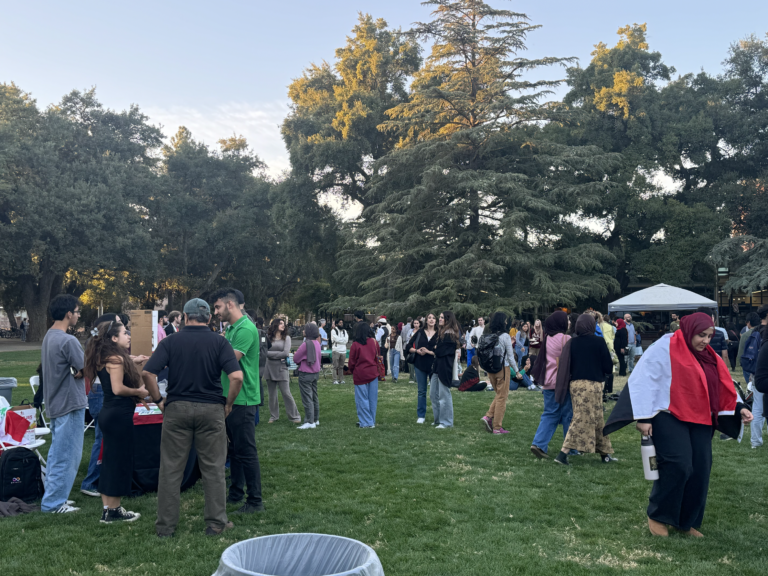
On Oct. 22 from 4 to 7 p.m., Middle East/South Asian Studies (ME/SA) held the first-ever Evening on the Quad festival. The event was organized with the purpose of embracing Arab culture and inter-Arab solidarity. Many organizations participated in the event, including the Lebanese Student Association, Dabket Watan, Students for Justice in Palestine, the Asian American Studies Department and more. Live music, free food and henna tattoos were also featured.

An organizer of the event, who has chosen to remain anonymous, shared the festival’s goals.

“I think a showing [of solidarity] like this on campus show[s] not only Arab students but Arab faculty and staff as well, that we have Arab life here in Davis,” the anonymous organizer said. “We have partnerships not only here in Davis but across our community. These relationships have been years in the making. Something that we aim to do through this event is to get students and community members plugged into Arab life in whatever way they see fit.”

From children to the elderly, people of all ages attended the event. Faculty also participated, both in hosting booths and enjoying the evening.

The anonymous organizer elaborated on the purpose of the event. 

“It’s the beginning of the school year, so part of the event is kind of an orientation for Arab students to see themselves on campus and make themselves known,” the organizer said. “That’s something that people are looking to be involved in, [to] cherish the Arab community and the Arab people. [It’s also] about cultivating our identity not just culturally but also academically.”

Amani, a first-year political science major, shared her experience as a Palestinian attendee.

“It’s really nice to feel like there’s a community around you,” Amani said. “I hope [the event] becomes annual.”

The aforementioned organizer expanded on the overall impact of the event.

“I would love to continue highlighting and showcasing Arab life, whether it looks like this or not,” the organizer said. “I think it is a priority that we show our community that we’re here and that we’re going to continue to serve [them] in whatever way [they] want [by] being responsive and attentive to the needs of our community beyond tonight.”

Many community members came out to participate throughout the night and enjoy the various live music performances.

Abdullah Haitham, a third-year computer science major and the president of UC Davis Iraqi Student Union (ISU), spoke on the ISU’s role in the event.

“Today we’re part of the Arab Involvement Fair and we’re tabling to spread the word about our club,” Haitham said. “I founded [the club] a few months ago, so we’ve officially been around for about three months. We had our first event a month and a half ago, and it was a great success.”

Haitham then talked about the community support the ISU has generated.

“It was too much support,” Haitham said. “It’s been great, it’s been so good. All of the clubs here at Davis have shown their respect and admiration for us, they’ve supported us even though we just started. We posted our stories, they’ve given us words of admiration, they’ve been such great people, and we have nothing but love for them.”

The festival served as a way for the ISU and other clubs to promote themselves but also for members to mingle and meet each other for possibly the first time in person.

“We’re hoping to connect all cultures of all backgrounds because Iraq is a melting pot of all cultures, religions, ethnicities — just like the U.S. in some aspects,” Haitham said. “We want to connect people through our ideals and beliefs.”

Haitham continued by sharing how welcome he felt by students and faculty on campus.

“There is really no difference in the treatment of how I am because of where I’m from in Davis, it’s very inclusive, and I’m proud to say it’s one of Davis’ great strengths,” Haitham said. “Student life as an Arab here is great.”

The anonymous organizer said that the event was exceptionally successful in that it brought many different people together.

“People are interacting with folks they otherwise wouldn’t, and talking to them about what it is they do on campus or here in Davis,” the organizer said. “I’m really happy with the turnout; to me this is a huge success. Stepping away from the event, I hear the Tabla playing — which is an instrument that is common in our music. If a student is walking by and hears it, I hope it’s enticing to come by and participate in the event. For me it’s really meaningful, I will never not get excited when something like this happens.”

Written by: Rivers Stout — campus@theaggie.org

Davis Cemetery hosts Dia de los Muertos celebration

0

Davis families and students gather to honor the dead and preserve the history and traditions of this holiday for future generations


By MATTHEW MCELDOWNEY — city@theaggie.org


For the first time since the COVID-19 pandemic, the Davis Cemetery District & Arboretum hosted a Dia de los Muertos celebration on Nov. 2 with prominent local Chicanx artists, vendors, performers and customs essential to this Mesoamerican holiday. 

This family-friendly, free-for-all event provided an “Ofrenda,” an altar decorated with marigolds, papel picado, food and candles, for Davis families to honor their deceased loved ones. These Davis families were provided with offerings, grave cleaning supplies and face paint to authentically pay tribute to the departed.

Jessica Smithers, the district superintendent of the Davis Cemetery District & Arboretum, helped set up the event and coordinated cemetery staff to help make this event a reality. Smithers said that it was encouraging to see the turnout of people celebrating this holiday at the cemetery.

“It is really important to us to not just use this space for those that have passed but also for the living,” Smithers said. 

  For this reason, the Davis Cemetery invited Folklorico Latino de Woodland, Davis’ local Mariachi del Valle, and prominent Chicanx artists to perform and express their culture through art. Francisco Franco, an artist and professor from San Francisco, and ROB-O, a sugar skull artist, conveyed the significance of their heritage and the Dia de los Muertos holiday through the art they showcased. 

In addition to these artists, Smithers expressed the importance of inviting educational speakers. Sheila Allen, the District 4 supervisor, stressed the importance of Dia de los Muertos and its history of cultural perseverance which is inseparable from its identity.

“The reason why we really focus on having educational speakers is because of how some may believe that it is just like celebrating Halloween and may not understand that there is a cultural history and tradition to honoring those who have passed,” Smithers said. “It was important to us to have people understand what exactly is happening during this holiday and why it is celebrated today in the United States.”

Dia de Los Muertos celebration hosted by the Davis Cemetery District. (Sacha Chickering / Aggie)

Zaid Arroyos, a UC Davis alum and intern for the Yolo County Board of Supervisors, reached out to the artists, speakers and local businesses as an organizer for this event. Among these speakers was Professor Kevin Johnson who was selected to talk about cultural preservation. 

“It is important to have these events because Davis and the rest of Yolo County have a large Latino population, and we should be doing more to have these ways to celebrate that culture,” Arroyos said. “Dia de los Muertos is especially important for all of us to reconnect with those we have lost.”

This spirit of reconnection in the face of grief best captures the essence of Dia de los Muertos, and it is through this authenticity that this holiday, one of the few remaining Mesoamerican traditions that are prevalent today, can endure, according to Arroyos.

With a focus on cultural appreciation, Arroyos and the staff of Davis Cemetery made an effort to support local businesses and vendors that share or contribute to this heritage.

One such vendor was Ailani Corona-Miramontes, a third-year design major, who sold crochets of marigolds and stuffed animals at the crafts corner of the event. 

Corona-Miramontes started her small business, @artsy_ailani on Instagram, in 2018 to make sustainable candles before transitioning into crochet crafts relatively recently. As a vendor for other events such as SoCo Market in Santa Rosa, Corona-Miramontes had learned about this Dia de los Muertos event through the craft community in Davis.

“This was more of a smaller event than others that I have done, but it made up for it by the ways I was able to connect with the community,” Corona-Miramontes said. “I was able to meet people and actually get to know them and interact with them on a personal level, which as a vendor, I love doing.”

As it is her first year as a transfer, Corona-Miramontes felt the hardest part was the transition into student life. However, thanks to events like these that recruit students and vendors from the local craft community, she felt that she was able to meet a lot of like-minded people. For Corona-Miramontes’ first event in Davis, she felt welcomed as the community was there to share about other events, trade their merchandise or simply talk about their creative passions.

Aspiring to run her own business that incorporates her creative passions after college, Corona-Miramontes stressed the importance of engaging with the community as a student.

“As a UC Davis student, there’s more than just our studies,” Corona-Miramontes said. “There’s also our responsibilities past our education, and one of the things that I took away from my design courses is how do we build a society that is sustainable and inclusive for people. And the only way to do that is if you go out into the community and understand your community.”

Written by: Matthew Mceldowney city@theaggie.org