55.5 F
Davis

Davis, California

Thursday, December 25, 2025
Home Blog Page 797

Ceramics conference strikes Davis

0

The John Natsoulas Gallery presents the 27th annual CCACA and exhibitions

When you’re walking across the UC Davis campus, do you think about the possibilities that lie underneath the grass? The dormant layers of clay beneath our feet lay waiting to be formed into ceramic sculptures. The John Natsoulas Gallery does. Located on 521 First St. the John Natsoulas Gallery is hosting their 27th annual California Conference for the Advancement of Ceramic Art (CCACA) in concurrence with 45 exhibitions. CCACA takes place from 8 a.m. on May 1 through May 3 at 3 p.m. and requires registration. The 45 exhibitions are open during the same date and times as CCACA, but are open to the public.

John Natsoulas founded CCACA – with the intentionally witty acronym – in 1988.  He found help and inspiration from his mentor, Robert Arneson, an extremely influential and controversial American sculptor and former professor of ceramics in the UC Davis Art Department. Natsoulas explains how he was inspired to create this convention by the ceramic artists that came out of Davis, as well as the nature of clay itself.

“There is something very weird about clay,” Natsoulas said. “There is this sort of warmth. They–the artists–all collaborate together.”

The 45 exhibitions, which occur at the same time as CCACA, feature local art exhibitions as well as over 40 student art shows from various colleges. The local galleries include The Artery’s California Clay Competition, The Davis Arts Center and the Pence Gallery. The John Natsoulas Gallery’s annual 30 Ceramic Sculptors exhibit has been running since April 15 and will end on May 16. It is also part of the 45 open exhibitions offered on the first weekend of May.

As the largest and oldest ceramic convention in the nation, CCACA features lectures, hands-on demonstrations and personal interaction with locally and internationally recognized artists. These renowned artists include Beverly Mayeri, Shalene Valenzuela, Eusebio Lozano and many more.

During this upcoming CCACA, Shalene Valenzuela will be attending the conference as a presenter. For many years she has been an attendee, and this time she will be doing a demonstration on how she works with painting and ceramics. Valenzuela’s art pieces tend to be inspired by everyday objects and a style that dates back to the 1950s and 1960s. With this inspiration Valenzuela explores stereotypes, how people relate to one another and many other complex issues of the self and society.

“For me, a lot of it has to do with nostalgia,” Valenzuela said. “Creating nostalgia for a time you never lived in. It’s my message: don’t believe everything you see.”

Beverly Mayeri, a science-major-turned-artist who has presented at previous CCACA’s, will also be presenting a few out of her hundreds of art pieces at this year’s convention. Along with this presentation, Mayeri will have three of her ceramic faces hanging in the gallery. Mayeri’s art pieces focus on aspects of human nature, exploring the intimate as well as the political. Her current pieces tend to focus on the traumatic impacts humans have on the environment.

“I use personal themes that explore my take on human nature, looking into our yearnings and fears, the beauty and fragility of life,” Mayeri said. “Whatever is going on in my life pops up in my art.”

These annual events bring a diverse group of artists to the center of Davis with ceramic pieces that explore themes of all types. In the villages of Greece, the country of Natsoulas’ heritage, he explains how the sense of community is so strong that when a house needed to be built, the community would come together and build the house together.

“We’re missing that whole sense of working together as a community,” Natsoulas said.

But CCACA is a start. The 45 exhibits between Fifth Street and C Street are free. Register and pay to attend the Conference here: http://natsoulas.com/ccaca-2015/ccaca-2015-registration/. For more information regarding these events, visit http://natsoulas.com/ccaca-2015/.

Graphic by Jennifer Wu.

Aggie Daily Calendar

0

TUES., APRIL 21

Classical Bassoon & Wine Tasting

5 to 7 p.m.

Monticello Seasonal Cuisine, Davis

Free baroque bassoon performance by Ricardo Rosales with wine tasting host Susan Leonardi.

Salsa Night

9:30 p.m.

The Graduate, Davis

Dance lessons with Cori from ‘Barbara’s Dancing Tonight,’ hosted by DJ Miguel. Tickets are $6.

WTF Night

4 to 7 p.m.

Bike Forth, Davis

Empower the female, gender queer population of Davis with this series of bike workshops for only $5.


WED., APRIL 22

Open Mic

8:00 p.m.

Sophia’s Thai Kitchen, Davis

Enjoy a night of free entertainment including singing, poetry, dancing and more!

Unofficial Scrabble Club

5:30 to 11:30 p.m.

Crepeville, Downtown Davis

Play everyone’s favorite word game and compete with local Scrabblers! All levels welcome.

Trivia Night

8:00 p.m.

Ketmoree Thai Restaurant

Compete against other teams in answering the hardest trivia questions! Free and open to all ages.

Connections

10:00 to 11:30 a.m.

International House, Davis

Mingle with other students and members of the Davis community while enjoying refreshments and crafts!

Evan Daly

9:30 p.m.

Our House, Davis

Enjoy a night of live Blues music free of charge.

Shorts N Longs: A Davis StoryTelling Thing

7 to 9 p.m.

Third Space, Davis

Come listen to people read their own original stories on stage or share your own.


THURS., APRIL 23

T Sisters

8:00 p.m.

Pence Gallery, Davis

Come check out all the new and upcoming talented musicians of Davis in this night of live music put on by The Davis Live Music Collective!

DJ Smilez

11 p.m.

Our House, Davis

Dance floor opens up for a free night of dancing!

Trivia Night

9 to 11 p.m.

Woodstock’s Pizza, Davis

Join teams of three to six people to answer unique and challenging trivia questions. Prizes, fun and pizza are in store.

KDVS Presents: Roses + Moaning

8:00 to 11:30 p.m.

Third Space, Davis

Come enjoy a night 80’s New Wave music for only $5.


FRI., APRIL 24

Culture Night: Mexico

6:00 to 9:00 p.m.

International House, Davis

Celebrate Mexican culture with music, crafts and yummy snacks!

Wizard of Oz

8:15 p.m.

Davis Musical Theatre Company, Davis

Come along with Dorothy and her friends to meet the wizard in the famous musical “Wizard of Oz!” Tickets $16 to $18.

Live Music with Bob Wren

5:30 to 8:30 p.m.

Monticello Seasonal Cuisine, Davis

Traditional and international live music featuring instruments including the violin, banjo and mandolin.

Author Event: Annelies Zijderveld

7:30 to 8:30 p.m.

The Avid Reader, Davis

Join writer Annelies Zijderveld celebrate her debut novel Steeped: Recipes Infused with Tea.


SAT., APRIL 25

Garden Work Day

9 to 11 a.m.

Central Park Gardens, Davis

Spend a beautiful morning helping the gardens of Davis! All tools and training provided.

Dangermaker

8:00 p.m.

G Street Wunderbar, Davis

Enjoy a night of free live music from this alternative indie pop band from San Francisco.

Wizard of Oz

8:15 p.m.

Davis Musical Theatre Company, Davis

Come along with Dorothy and her friends to meet the wizard in the famous musical “Wizard of Oz!” Tickets $16 to $18.

Plant Sale

9 a.m. to 1 p.m.

UC Davis Arboretum

Build your own personal garden with the most beautiful local plants available for sale!

Local Live Music

9 p.m.

Woodstock’s Pizza, Davis

Enjoy a fun night of live music free of charge!


SUN., APRIL 26

TedxUCDavis

1:00 p.m.

Mondavi Center, Davis

Don’t miss out on the opportunity to attend the well-known and acclaimed Ted talks coming to UC Davis for only $30 general admission and $15 students.

Food Not Bombs

1:00 p.m.

Central Park, Davis

Enjoy free vegetarian meals with the fellow food-lovers of Davis.

Stride for Aggie Pride 5K

9:00 a.m.

Wright Hall, Davis

Come out and join, or support, the students of UC Davis in this annual 5K run/walk!

International Folk Dancing

7 to 9 p.m.

Davis Arts Center, Davis

Learn how to folk dance, first time free! All levels welcome!

Wizard of Oz

2:15 p.m.

Davis Musical Theatre Company, Davis

Come along with Dorothy and her friends to meet the wizard in the famous musical “Wizard of Oz!” Tickets $16 to $18.


MON., APRIL 27

Saelua Trio

7 to 10 p.m.

Delta of Venus, Davis

Enjoy a night of free jazz music!

Café Casaire

7 to 9 p.m.

International House, Davis

A place for French learners, writers and speakers to interact.

Campus community working to combat stigma surrounding mental health

0

In the next month, three student-run groups, which include Out of the Darkness, Active Minds and the National Alliance on Mental Illness (NAMI), are planning events to help prevent suicide and end the stigma surrounding mental health. We are glad that suicide is getting large-scale attention from students at the University, as it is the second-highest cause of death among people ages 18 to 24.

Suicide is a prevalent issue among all people in the United States and is especially important to address during college, a time of high stress for students. College also provides the opportunity to dispel the stigma surrounding mental health by providing resources and education to shed light on a very real issue.

Last year, former ASUCD president Carly Sandstrom founded Each Aggie Matters, a university-wide campaign to pledge for mental health awareness. This was a significant step as it provided an outlet for students to tell their own stories about mental health and how it has impacted their lives. The campaign is supported through CA Prop 63, the Mental Health Services Act. The proposition provides housing and support to those with mental illnesses in California.

We commend the students who have provided safe spaces to discuss experiences with mental illnesses and for raising awareness on this important topic. Additionally, we commend the both the university and the state for making mental health a priority in initiatives and we encourage students to actively partake in these discussions to help normalize mental health.

Graphic by Jennifer Wu.

Teresa Gould – Interim Athletic Director

0

With the unexpected announcement of Terry Tumey leaving his position as athletics director, an interim director needed to be installed in a short span of time. That interim is Teresa Gould, currently the chief revenue officer of the Cal Aggie Alumni Association and a well-qualified individual versed in all matters of collegiate sports. The Aggie was able to sit down with Gould and discuss what led her to this position as well as her goals for the future of the Athletics Department.

You grew up in Iowa and you received a journalism degree … what led you to make the transition from Iowa to California?

I made a couple stops before I got to California, working in college athletics. Especially early on until you’ve kind of paid your dues and put in your time, I was always kind of told that you’ve got to go where the opportunities are. I would have loved to have spent my entire career in Iowa. To be honest, I love it there and that’s where most of my family is, but that wasn’t realistic in terms of professional development and advancement opportunities in college athletics. So I initially came to California literally 20 years ago to be the senior associate commissioner at the West Coast Conference, a small Division I conference — it’s the conference where Gonzaga is in. Their conference office is located just outside of San Francisco, so I initially came for that job.

How will your time at Cal help you with this new job as Athletic Director?

I think it will help me a lot. I was fortunate enough to work for two different athletics directors during my time there, both of whom are phenomenal [and] very different: one of them came from a coaching background, and the other – Sandy Barbour, who is now the Athletic Director at Penn State – came up through the ranks as an administrator, so I learned from two of the best. So I feel prepared, having worked with them beside my side. They both mentored me and provided me with a lot of opportunities to do a lot of things.

One of the running jokes is that during my time at Cal, I literally did every job. Every single head coach reported to me at some point, other than football. I oversaw sports medicine, strength and conditioning, compliance, student services, development, media relations, you name it. I was there so long that I kind of did everything, and so I feel like it prepared me well, because whether you’re the interim or the permanent, you really want somebody in this chair that knows what Mike [Robles, assistant athletic director, athletics communications] does. You want somebody that actually knows what that job entails, and that has done that work. So I think that has served me really well.

I would also say that there are similarities between Berkeley and UC Davis, from the perspective [that] they are both world-class academic institutions and I think that when you’re in a rigorous academic environment and when you’re an internationally renowned public institution like UC Davis is, athletics has a place on the campus that sometimes looks different than what it would if you were at an institution that didn’t have the same kind of academic rigor. So I think that that experience at Cal prepared me really well on a lot of different fronts. Honestly, I feel really fortunate. I worked with some of the best coaches in the world. Just the last Olympics, I think two of my head coaches were head Olympic coaches, so I feel like I’ve been around college athletics, working with some of the brightest and best in the industry, both as administrators and as coaches, and I think it’s put me in a good position to come in on a temporary basis and help make us even better than we are here now.

Are there any new or unique challenges that come with this particular job here at Davis?

Honestly, I think part of the new and unique challenge is the fact that I’m the interim. One of the things on a daily basis that I wrestle with is that I know what I’ve been charged with doing, and I’ve been charged with coming in here and taking an inventory of where we are, what we are doing really well, where can we get better, how [we can move] the dial forward and provide our student-athletes with the best possible conditions we can to support their success. I know that’s my charge.

When you’re the interim and not the permanent person, and you know you’re not going to be the permanent person, there’s a little bit of “what do you bite off first.” What do you take on first? That’s what keeps me up every night; there is so much here that I want to do, and I have so much vision to help this department become even better than it already is. It’s like, how do I prioritize my time to make the greatest impact, and I was really honest with the Chancellor in that I didn’t want to come in here and just keep the boat afloat. I really wanted to come in here and move things forward and help push it along. That’s part of the inherent challenges of this role. As the interim, you have to gauge how much change … you really want to influence in a short period of time.

So why don’t you want to pursue a full-time position?

I think at this point in my life – I mean, I walked away from a hugely successful 25-year career that I enjoyed and loved, and am very proud of – when I made the decision to leave UC Berkeley and accept the job at the [Cal Aggie] Alumni Association and relocate from the Bay Area after more than 20 years, it was really a personal decision, and a personal decision focused on my family and quality of life. Being part of this campus community in a different way, as you can imagine, there are some inherent nuances with being married to a head football coach, and I just think it is in the best interest of my family, this department and candidly the university to have somebody else be in this chair.

That being said, I will be around and will help. The Chancellor and I have talked a lot about this. I’m not going away, I’m still going to be on this campus, I’m still going to be part of this community and part of this family. My expertise won’t be lost; we’ll just use it in a different way. I really do think that’s best not just for me, but for this department.

You mentioned potential difficulties with a husband as a head football coach. Is there a potential conflict of interest there?

I think that the model we have put together in this interim role avoids that. We have a sports supervisor – Josh Flushman, who is very capable – as an associate athletic director that will be the decision maker for football. He has the direct reporting line for those responsibilities to the Chancellor. We have a lot of involvement and a lot of support from Scott Carrell, our faculty athletic rep. I think the model during the interim period will be very effective. It’s not the ideal long term.

You want your athletics director to have a huge level of involvement and a huge amount of influence over a sport that has the largest number of student-athletes, probably of any in the department, one that has a tremendous amount of influence over our success, and a sport that this community cares very deeply about. For the athletics director to have to separate himself or herself from that, in the long term is not in the best interest of the department. We’ll make it work for now, but I don’t think it’s something long-term that puts anybody in a position to have the kind of success that we want.

How long do you think the search for the new athletics director will take?

That’s a good question. I think in talking to the Chancellor there’s definitely a sense of urgency while at the same time she’s committed to doing it right. And what I mean by that is she’s been really consistent in saying that she doesn’t want to commit to a timeline until she gets the appropriate feedback from the right people in Athletics, the right people in the community, the Academic Senate [and] ASUCD. I think she really wants to make sure that she’s thoughtful about it, and that she gets appropriate feedback before she goes out of the gate and appoints a search committee, identifies the criteria she’s looking for and launches a search. I don’t know how long that’s going to take, but I know that she will be very deliberate about getting the appropriate feedback before she launches anything.

I know it’s only been a few days, so is it too early to ask what sort of progress you have made so far?

Honestly, what I have spent most of my time doing, and what I will continue to do for the next three weeks is to really spend time with our key stakeholders, getting feedback on the lay of the land. I am having one-on-ones with all of our head coaches, one-on-ones with all the people that report directly to the athletics director – so basically the Athletics Management team – one-on-ones with key student-athlete leadership, so the Sac Officers, and one of the most important groups: our campus partners. Really talking to different leaders and student leaders on the campus to talk about their perspective on athletics and what things we can do better. So really, until I take all that information in, it’s really hard for me to answer that question — but the whole goal of those conversations is to get feedback on how we can incrementally – whether I’m here for three months or four months or whatever – how [we can] incrementally start getting better, and where [the low-hanging fruit is that I can start to tackle.

In the past, there has been a sort of problem with attendance at sporting events that has been somewhat remedied with the success of the basketball team. Is that something that you might look in to?

I definitely think that attendance at sporting events is really, really important for a variety of reasons. Number one, in order for us to continue to provide the conditions for our student-athletes to be successful, you have to have financial resources to do that. So getting people to come and support our student-athletes and buy a ticket to come and watch them compete is important to our financial model, but I would also say that there is another element of why it is important.

These young people do such amazing things; they deserve to have an audience. Nobody likes working 20 hours a week to be competitive and juggling all the things that our student-athletes juggle, and then they show up and there’s no one in the stands. They get energy off of having people in the stands, so that’s the part of it that I think is important. You want them to feel supported, you want them to feel appreciated, you want them to feel like the community cares about what they’re doing. That’s why I think getting butts in the seats is a priority too.

Finally, what do you believe success looks like for UC Davis Athletics?

I think that for me, success is ensuring that the comprehensive excellence that is going on in Athletics is consistent with what is going on on this campus, meaning that at the end of the day this campus provides our students with a world-class education and does an amazing job of developing them to be their best so that they can go out into the world and make a difference and be leaders. Athletics has that same responsibility to our student-athletes. They have a little bit of a different vehicle and at the end of the day, whether you’re a tennis player or a field hockey player, or soccer player, the sport is just the vehicle to help develop the young person.

Graphic by Jennifer Wu.

This week in men’s sports

0

Men’s sports action from April 13 to 19

Baseball (21-16-1):
UC Davis vs. University of San Francisco (L, 9-4)

UC Davis @ UC Irvine (W, L, L)

The slide continues for UC Davis baseball after a 1-4 week, having now won only three of its last 12 games. The first loss of the week came at home against the University of San Francisco. The game was tight for the first few innings, but the Dons brought in seven runs over the last four innings while holding the Aggies scoreless over that time. UC Davis had only four hits in the game.

After their loss to the Dons, the Aggies managed to steal the first matchup of a three-game road trip at UC Irvine. Senior Spencer Koopmans pitched his first career-complete game, allowing three runs and seven hits. The second game of the trio was also close, with the Anteaters sneaking by in extra innings after an Aggie error in the 12th. The final contest saw UC Davis once again fall to a late run, unable to answer a late point scored in the eighth inning.

Tennis (16-5):
UC Davis @ UC Riverside (7-0)
UC Davis @ UC Irvine (1-6)

After playing their final match at home, the Aggies set off to Southern California to face the Anteaters and Highlanders. The first matchup, against UC Riverside, was an easy warm-up for the Aggies as they lost just one match en route to a 7-0 victory. UC Davis lost one doubles match, but swept the rest.

With the win against UC Riverside, the Aggies clinched at least a share of the Big West Regular Season Championship, but needed to defeat UC Irvine for the outright crown. Instead, UC Davis struggled heavily and was able to capture one point due to sophomore Jesse Ross’ singles victory. The Aggies now hold the second seed in the Big West Championship Tournament because the Anteaters captured the tiebreaker.

Track and Field:
Azusa Pacific Bryan Clay Invitational
Mt. Sac Relays

Long Beach State Beach Invitational

With three events stretched over three days, Aggies’ track and field divided and conquered. The Azusa Pacific Bryan Clay Invitational did not bring a lot of positive results for UC Davis as junior Cody Nguyen was the top finisher at No. 70. At the Long Beach State Beach Invitational, only senior Nathan Strum was able to finish within the top-10 of his respective event, garnering a No. 3 place in the 800-meter. Sophomore Marc Toney added a No. 13 place finish in the pole vault.

Several Aggies found success at the Mt. Sac Relays. Toney added to his successful week, grabbing a second-place finish in the pole vault. Junior Trevor Halstead finished No. 6 in the 5000-meter, while junior Jason Chandler completed the 400-meter hurdles in 52.62 seconds for ninth place. After a busy week, the Aggies have six days off before heading to Berkeley for a two-day meet.

Graphic by Andrew Li.

This week in women’s sports

0

Women’s sports action from April 13 to 19

Lacrosse (3-12):

UC Davis vs. USC (L, 15-5)
UC Davis vs. San Diego State (L, 12-9)

With a recent two game winning streak on their minds and four straight games at home, the Aggies looked to turn around a poor start to the season with a few victories. The results, however, were not there and UC Davis has now lost three straight games at home. The Aggies started off strong against USC, jumping out to a 4-1 lead. By halftime, however, the Trojans were up 7-4 and never looked back en route to a 15-5 victory. Junior Ellie Delich and sophomore Courtney Neff finished with two goals each in the game.

After the loss against USC, the Aggies were faced with a must-win situation against San Diego State if they wanted to make the Conference tournament. UC Davis, however, came out flat and allowed their opponent to rack up a 10-4 halftime lead. The second half comeback fell short for the Aggies despite four goals in the game by Neff. UC Davis will have its last home game on Wednesday against Stanford.

Softball (17-22):

UC Davis @ UC Santa Barbara (W, W, W)

Things are looking up for UC Davis softball after winning four of their last five games. The Aggies faced off against the Gauchos on a Picnic Day double header and won each. The first matchup was tight until the last inning when UC Davis batted in six runs and a UCSB comeback fell far short. The second game of the day told a similar story as the Aggies used a four-run sixth inning to jump ahead for the one point victory.

Six runs in the first four innings of the final game was all that it took for UC Davis to take home a sweep of the Gauchos. The Aggies finished with 10 hits in the game and sophomore Andrea Reynolds finished with the win, bringing her to a 4-1 record this season. The team has four more games on the road before returning home to face CSU Fullerton on May 2.

Tennis (11-11):

UC Davis vs. UC Santa Cruz (W, 7-0)

The Aggies used a dominant performance against the visiting Banana Slugs to finish the season at .500. The team won every set played against UC Santa Cruz, losing a total of 13 games between nine matches played. The team also honored senior Layla Sanders who played her last day at the Marya Welch Tennis Center.

With the win, the Aggies now move on to the Big West Conference Championships at Indian Wells. The matches start on April 24 with UC Davis facing off against UC Santa Barbara first. These two teams last faced one another on March 8, with the Aggies losing 3-4 at home.

Track and Field:

Azusa Pacific Bryan Clay Invitational
Mt. Sac Relays

Long Beach State Beach Invitational

At the Azusa Pacific Bryan Clay Invitational, the Aggies were unable to make a dent on the leaderboards as no participant finished within the top 15 of their respective event. At Mt. Sac, several seniors owned the day. Senior sprinter Ashley Marshall won the 200 meter sprint while senior Raquel Lambdin finished in first in the 800 meter. Junior Erika Barr added a sixth place finish in the 400 meter hurdle and senior Katie Barber grabbed an eighth place spot in the high jump.

At the Beach Invitational, only Barber was able to finish within the top-25 of her event. The senior finished in a tie for ninth place in the high jump. After a hectic week, UC Davis track and field will have six days off before competing in the Brutus Hamilton Invitational.

Water Polo (18-12):

UC Davis vs. Sonoma State (W, 10-1)

UC Davis vs. CSU Monterey Bay (W, 10-6)

With the Big West Championships closing in, UC Davis women’s water polo finished their regular season with two victories in a Picnic Day double header. The No. 9 ranked Aggies faced off against Sonoma State in the first bout, easily winning 10-1. Eight Aggies scored in the game, allowing just one goal that came in the final period.

The second game of the day, against CSU Monterey Bay, was much closer as the teams headed into halftime tied at four apiece. After the break, the Aggies didn’t look back as they outscored their opponent 3-0 in the third quarter. With the two wins, UC Davis finished the season 11-2 at home and in fourth place in the Big West. The Championships begin on Fri., April 24 in Honolulu, Hawai’i.

Graphic by Andrew Li.

Bakuhatsu Taiko Dan roars into Fourth Annual Showcase

0

Showcase to feature traditional Japanese drumming

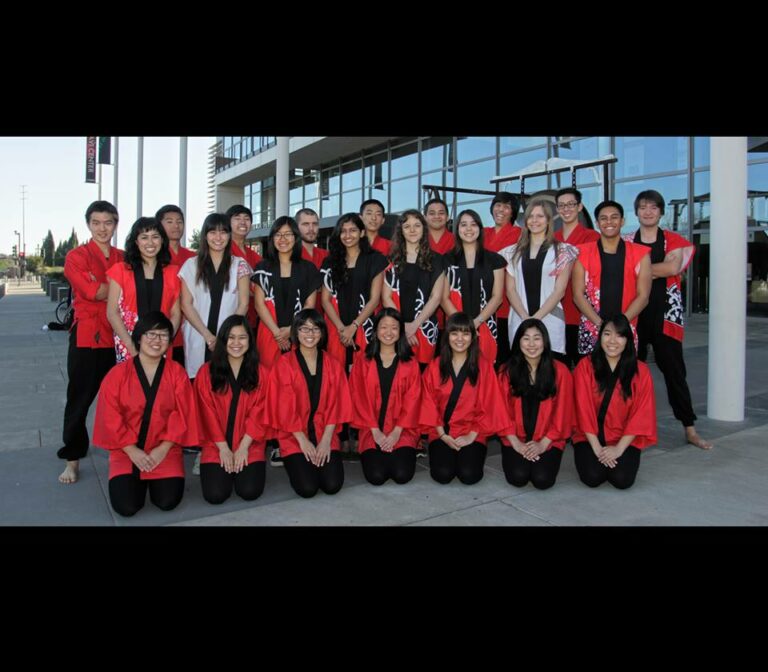
taiko_ar1

The Oxford English Dictionary defines explosion as “an expansion in which energy is transmitted outward as a shock wave.” Bakuhatsu Taiko Dan, a student-run UC Davis drumming group, takes its name from the Japanese word for explosion because they provide exactly that: an explosion of energy, rhythm and shocking volume interspersed with Japanese culture. Its fourth annual showcase, Todokori, meaning “roar,” takes place on Sunday at the Davis Veterans Memorial Theatre. The group hopes to bring their passion and fire to create an explosion of epic proportions.

Many people may find themselves unsure of what taiko is. Taiko is a form of traditional Japanese drumming that dates back to the sixth century. It has been used as a performance in different contexts ranging from religious ceremonies to military action to modern-day social movements. However, to the members of Bakuhatsu Taiko Dan, which has been around for 14 years, it means something more personal.

Jenny Matsushita, a third-year sustainable agriculture and food systems major and artistic director, cherishes the taiko group for the friendships she has made and the awareness it brings to the rest of campus.

Taiko to me means a second family since we spend so much time together,”  Matsushita said. ‘We’re all close. It’s great people can get together [and share] the same interest and then go on to share it with the rest of the community.”

The group composes all of its songs performed in the showcase and attempts to bring life to the art form via emotional enactments.

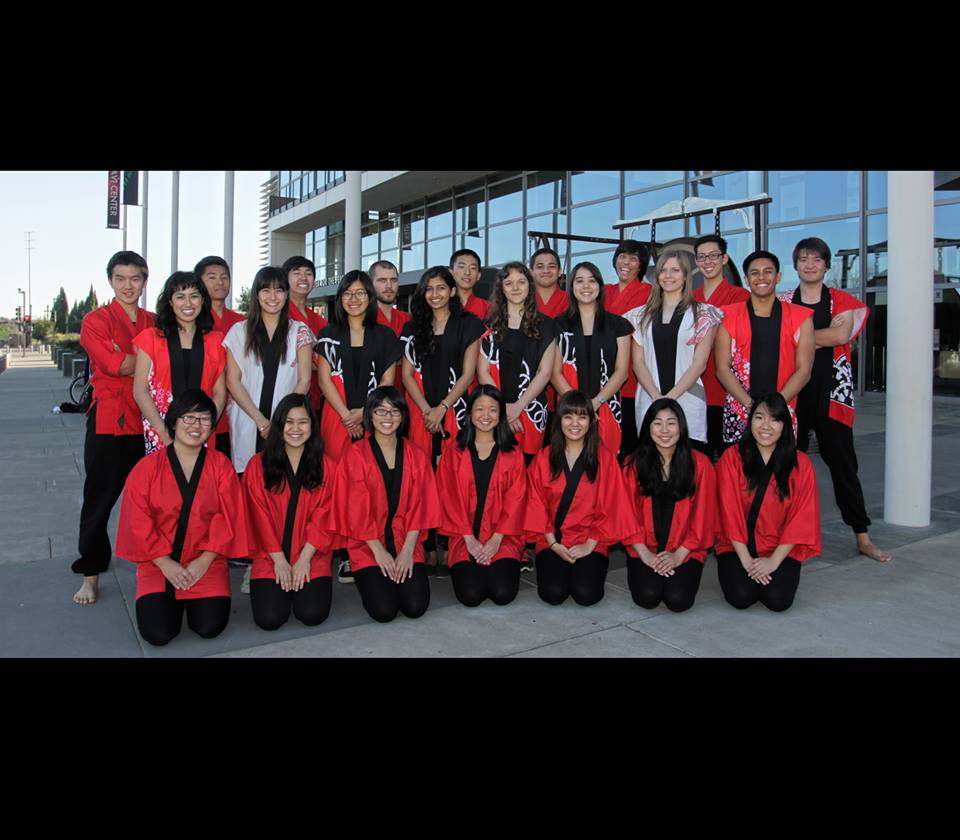
taiko_ar2

Robin Sakai, a third-year mathematics and biological sciences double major, is a new member of the group, and said she hopes the audience appreciates the work they have put into creating a unique feeling in each song.

“All the songs have really strong emotions tied to them and I hope the audience gets the emotions we’re trying to portray,” Sakai said. “On every song the performers bring their own perspective on what it means.”

The title of the fourth annual showcase is Todoroki. The past three performances have lead to this explosive performance.

Holly Higa, a third-year international relations major and president of Bakuhatsu Taiko Dan, explained the growth of the showcase through the titles.

“We started with Akebono, the beginning, then we gained momentum with Ikio and Kokoro, and now we are performing Todokori: roar,” Higa said.

Being a cultural performance art, taiko is not widely known and the members of Bakuhatsu hope to change that by bringing in modernity, energy and collaborations with groups such as the Golden Lion Dance Association and Jishin, a traditional Japanese dance group.

Higa explained Bakuhatsu’s take on the traditional manner of the drumming and what she hopes the audience gets out of it.

“We are a traditional group and people think of traditional things as the past and irrelevant. But with Bakuhatsu, we blend the traditional and the modern as we incorporate new beats,” Higa said. “We take a traditional art form and show that you can modernize old things and still appreciate the old things. I hope that people come learn and grow interested in Japanese culture and that Japanese people become interested in their own culture too.”

For an explosive performance of traditional taiko drumming, be sure to attend this event. For more information, visit the Facebook event page or bakuhatsutaikodan.com.

Photos courtesy of Bakuhatsu Taiko Dan. 

Artsweek

0

The low-down on all things art this week in Davis

MUSIC AND OPEN MICS

Open Mic Night

April 23, 6 p.m., free

UC Davis Coffee House

Come check out and support some talented Aggies as they show their stuff through music, standup, improv, poetry and more.

Music of the World Ensembles of UC Davis

April 24, 7 p.m., $20

Mondavi Center for the Performing Arts

Come out for some captivating live music and learn a thing or two about ethnomusicology. The performance features four UC Davis world music ensembles devoted to the melodic styles of Brazil, India, Indonesia and Korea.

STUDIO ART

The Art of Being an Aggie

April 21 to 30, 8 a.m. to 5 p.m., free

Buehler Alumni Center

In this photography exhibit, UC Davis alumna Sharon Dianne Hollingshead reinterprets the black-and-white works of her late father-in-law. Using pens and oils, Hollingshead puts color into vintage photos of cityscapes, street life and water scenes. The exhibit also features a painting of the Arboretum as a way to show Aggie pride.

FILM

Film Screening: ‘Pirates of the Caribbean’

April 22, 7:30 p.m., $2

Sciences Lecture Hall 123

ASUCD Entertainment Council will be presenting a screening of Pirates of the Caribbean: The Curse of the Black Pearl. In this flick, you can catch Captain Jack Sparrow and blacksmith Will Turner as they ungracefully, yet hilariously rescue Elizabeth Swann from Sparrow’s undead allies.

Film Screening: ‘Documented’

April 23, 6:30 p.m., free

Student Community Center, Meeting Room D

Documented is a documentary that follows Pulitzer Prize-winning journalist Jose Antonio Vargas after pronouncing himself as an undocumented immigrant in the New York Times. The film showcases his journey from the Philippines to America, his work as an immigration reform activist and his mission to reunite with his mother after not seeing her for 20 years. The screening will be followed by a discussion on the film’s themes.

LITERATURE

‘What Doesn’t Kill Us’

April 21, 10 to 11:50 a.m., free

3114 Hart Hall

Join author Brandy Lien Worrall as she reads excerpts from her memoir, What Doesn’t Kill Us, which observes her family’s history with the Vietnam War, as well as her personal battle against Stage III cancer. The reading will be followed by a Q&A / meet-and-greet session and a book signing.

Author Event: Annelies Zijderveld

April 24, 7:30 to 8:30 p.m., free

The Avid Reader

Join author and food blogger Annelies Zijderveld as she debuts her first book, Steeped: Recipes Infused with Tea. The book explores ways in which tea can add flavor to foods from appetizers to cakes. Tea will be served to guests!

THEATER

Surviving the Zombie Apocalypse

April 24 to 26, 8 p.m. or 3 p.m., $12 to $18

Pamela Trokanski Performing Arts Center

Ever wonder what to do during a zombie apocalypse or life events just as intense? Check out some survival tactics, courtesy of the Pamela Trokanski Performing Dance Theatre.

‘The Wizard of Oz’

April 24 to May 17, 8:15 p.m. or 2:15 p.m., $16 to $18

Davis Musical Theatre Company

Join Dorothy and Toto in trekking the yellow brick road with their charismatic pals. The Davis Musical Theatre Company will be putting on a live production of The Wizard of Oz. Staying true to the MGM film, the production will feature the classic tale and tunes, such as “Over the Rainbow” and “If I Only Had a Brain.”

CULTURE

Culture Night: Mexico

April 24, 6 to 9 p.m., free

International House

Join the International House in exploring traditions and customs of Mexico. The evening will include fruitful hands-on activities, each of which highlight an aspect of Mexico’s rich culture. Activities include live music by Mariachi Cielito Lindo, poetry readings, snacks, crafts and more.

Graphic by Jennifer Wu.

Coming of age in the digital revolution: High hopes for higher ed—reflecting on the future of higher ed

0

One thing I’ve come to appreciate about my UC Davis education is the fact that on some days, even when I’m dead tired, slept through my alarm and missed my first class, I feel like I actually learned something. This may seem like a trite statement; obviously, I “should” be getting something valuable out of the college experience. But I think it’s reasonable to observe the fact that it’s not that simple, that in order to “suck the proverbial marrow from the bones,” as Thoreau said, one has to actually apply themselves.

And so, I’ve been thinking about what this means both in my own life and in the lives of my peers, the people I interact with on a daily basis. Of course, some of these interactions are more significant than others, but what I mean to say here is that I’m hyperconscious of everyone around me on a deep level. I’m constantly comparing myself to the people around me, even if I don’t always feel comfortable admitting it to myself. I find this practice – whether it’s conscious or subconscious – a source of motivation, a kind of healthy competition if swallowed in manageable doses.

As a writer who is obsessed with observing human behavior and studying our interactions, I’m enthralled by the variety of perspectives, opinions, learning styles and ideologies I’m surrounded by. I don’t mean to get all sappy and sentimental here, I just want to publicly express the frequency of the “holy $%#&” moments I have, when I’m just totally in awe of everything and everyone around me.

It was during one of these “holy $%#&” moments recently when I started thinking about what it’d look like to compile and archive the content of every college classroom around the globe. I imagined how the experience of the college classroom could be virtually replicated in such a way as to allow anyone in the world with an Internet connection to access it. Clearly, there are a lot of pros and cons about this idea, namely the growing demand for universal access to higher education, but also the political and bureaucratic implications of this. The relationship, for instance, between corporate power structures and the institutions that fund them is of particular interest to me when it comes to imagining a society where education is universal and publicly available.

I’m starting to see more of these connections, the invisible links that shape our worldviews and that only the badass professors on our campus have the courage to openly talk about. Why is it that, in a technologically saturated world where the accumulation of knowledge has become wholly accessible via a smartphone, students and their families pay for a brand rather than the quality of learning of itself? That just seems so crazy to me, and it’s not just because I’m from a working class family that can’t afford an Ivy League education.

What I’m curious about is what those other spaces look like and how the experience of learning translates into transferrable goods among their student populations. Like, how cool would it be to access a site that live-streamed an MIT lecture on comparative media, or a seminar at John Hopkins on organic chemistry? By limiting access to institutions of higher ed based off a student’s prior academic performance, socioeconomic status and promise of achievement, the division between education and social progress is intensified. This is because the uneven distribution of our nation’s wealth, coupled with a lack of transparency among school administrations, leads to bigger problems that ultimately have a negative effect on student learning.

It follows that a digital world requires an educated and well-equipped citizenry to support it. So why are we still falling behind?

What does the university of the 21st century look like in your opinion? Drop me a line at wmdavis@ucdavis.edu.

Graphic by Sandra Bae. 

Self-care Warfare: Stop Saying That About the Weather

0

One of the more pervasive and often not thought about forms of oppressions that has gained a large amount of attention recently is ableism. Ableism is a form of oppression and prejudice that discriminates against people with disabilities, both visible and invisible.

But first, what is a disability? According to the Americans with Disabilities Act of 1990, a disability is a condition that “substantially limits one or more major life activities.” The act highlights the fact that physical and mental impairments can affect one’s ability to carry on with their daily lives. Quite often, able-bodied citizens think of disability as something that one can see. We think of what disability studies scholars and activists call visible disabilities, which are those conditions that are easily visible by onlookers. Losing the ability to walk and having to use a wheelchair is one example of this. There are however invisible disabilities, which are disabilities such as mental illnesses, chronic pain, learning differences, etc. that are not obvious to those looking at the person with the disability but nonetheless affect their daily activities.

Before I continue writing, I want to acknowledge the fact that I am writing about ableism as an able-bodied individual; thus, I do not know ableism firsthand (check your privilege first).

Back to the topic of ableism and self-care. As with the last article, I’m going to try and deconstruct ableist thoughts that we can see both in ourselves and in our daily lives.

Living in Northern California for however many years, you’ve probably heard very interesting descriptions of the weather. At least in my experience at Vanden High in Fairfield, Calif. (home to that giant Jelly Belly Factory), we often joked about how the weather was “bipolar.” We whined and groaned about how moody Mother Nature (this was way before I realised that gendering nature as mother is wrong, and that this statement itself is misogynistic) would be throughout the day/week/month/year/decade/century/millenium. One day it would be extremely windy and cold, and the next we would swear that it was the hottest day ever. We’d end our complaints with, “Why is the weather so bipolar up here?” and move onward with our conversations. However, looking back and even thinking of conversations about the ever-indecisive phenomena of weather, I realize that our usage of “bipolar” was ableist because of the relationship between the word bipolar and bipolar disorder.

You see, bipolar disorder, according to the National Institute of Mental Health, is a mental illness characterized by “severe shifts in mood, energy, activity levels and the ability to carry out day-to-day tasks.” These shifts are extremely different from the moodswings that those without the disorder experience. Rather than those mad-one-minute-and-happy-another sort of shifts, these mood-changes are debilitating shifts that limit one’s ability to function. They are periods of either hypomania, which is characterized by “excessive happiness, sudden changes from being joyful to being irritable, angry and hostile, [and] restlessness;” or depression, characterized by “sadness, loss of energy, [and] irritability.”

Acknowledging the fact that the word “bipolar” does indeed mean having two extremities or polarities, by calling the weather “bipolar” or even by describing someone who is simply moody as “bipolar,” we make light of the condition that many people suffer from. In using the term “bipolar” or any mental illness such as obsessive compulsive disorder (e.g. “Can you please do your dishes?  I’m really OCD about that”) we normalize the condition and forget entirely the debilitating effect that it can have on those who are affected. We become desensitized to the severity of mental illness. We contribute to the stigmatization of disability, particularly mental illness, that is part of our contemporary culture. By making light of mental illness and disability in general, we take part in the effective shaming of these disabilities. It becomes shameful to seek help. It becomes difficult for those with disabilities to feel the love and care that they deserve, because we invalidate their experiences. We transform disability from something that affects human beings into an inconvenience.

In terms of taking care of ourselves and unlearning oppressive behaviours, in this case ableist logic, it is necessary for those of us as able-bodied individuals to be careful with our words if we are to be allies with disabled individuals. Rather than using “bipolar,” we can expand our vocabularies and use other words like, “temperamental,” “volatile” or “erratic.” Rather than using “retarded,” we can use words like “senseless,” “illogical” or “absurd.” Rather than using “OCD,” we can say “particular,” “bothered,” or that we “prefer things a certain way.”

And it’s necessary to think beyond only these words. We need to shift the ways we frame disabilities, visible or invisible, in our own minds. We need to Google search and read books, blog posts, academic articles and narratives about disability ourselves. We need to self-educate because it is not the duty of the under-privileged to educate those of privilege. We need to be receptive to critique from marginalized communities.

We need to reflect critically and move to work harder to build a more compassionate self and a more loving community.

See also the following articles:

Why You Shouldn’t Use Mental Illness as a Metaphor

“Crazy” Talk: Why Having a Mental Illness Shouldn’t Be an Insult

Contact GILBERT GAMMAD at gdgammad@ucdavis.edu.

Graphic by CA Aggie Graphic Design Team.

Shell station on Olive Drive to be remodeled

0

Improvements include a water-efficient car wash, updated store, additional parking

The City of Davis Planning Commission approved the remodel of the Shell gas station on Olive Drive on April 8. The remodel will include an updated store, additional parking spaces, new fuel pumps and a car wash.

“It will be a more updated, contemporary look. They’re adding landscaping and parking to upgrade the site to make it look a little better,” said Eric Lee, city planner for the City of Davis.

The next step will be the submission of a building permit, which would include further building details such as architectural drawings.

The Planning Commission is aware of the high traffic that the area sees, according to Lee. The gas station is at the corner adjacent to the In-n-Out drive-thru and restaurant, across the street from the Dutch Bros. drive-thru, the Richards Boulevard undercrossing and near the Interstate 80 freeway entrance.

“We don’t see this as making a big change to the area in part because there is an existing gas station, and they are not increasing the pumps … even the car wash, those kinds of things usually aren’t creating new trips,” Lee said.

Furthermore, the plans for the car wash that will be added to the station will be water-efficient according to current plans. It will recycle approximately 90 percent of the water they use, Lee said. He added that the car wash could actually help save water if people who wash their cars on their own visit the car wash in lieu of increasing their personal water usage.

“If we didn’t have car washes today, people would be washing their cars on their driveways. Do you know how much water would be wasted? In the car wash today we have a system to recycle the water. The water is recycled up to 90 percent, so you’re going to save water, not waste water,” said Muthana Ibrahim, the architect who designed the new Shell station.

As for solar panels, the original plans reported that it was not feasible to put solar panels on the structure. The city is having a solar energy provider evaluate the plans and the property to confirm this conclusion, according to Lee.

“We take into account a lot of factors [in the property’s design],” Ibrahim said. “The first one is improving the property. The property was built 30 years ago … We have to comply with the new laws, new codes, regulations and improve the property on the circulation side and we make the property more efficient.”

Ibrahim worked with the City of Davis for six months before the building plan was approved. Some of the changes made included those that needed to comply with zoning codes as well as the City Planning Commission’s goals to create more shade by adding trees to the site.

“Right now you have a gas station that is 30+ years old. Old technology not complying with code, not providing adequate access for disabled people — we’re going to replace that structure with a brand new gas station that complies with codes, provides access to disabled people, [and has] better circulation,” Ibrahim said.

Graphic by Jennifer Wu.

Mayor discusses the Renew Davis Project with Davis Progressive Business Exchange

0

On Apr. 15, the Davis Progressive Business Exchange (DPBE) hosted Mayor Dan Wolk at the International House to speak about the Renew Davis proposal.

Various business leaders from Davis and other nearby cities gathered to briefly introduce their businesses and to listen to Wolk.

Bob Bockwinkel, chair of the DPBE, explained that the DPBE has been around for 10 years and includes many different businesses. It consists of 30 to 40 different business and nonprofits, Bockwinkel said.

“We have members who are [from] different businesses [who] share information about their businesses and we also have public figures so that we know what’s going on in our community,” he said.

DPBE hosted Wolk at their weekly meeting because of strong interest in Davis politics and current events.

“We always want to be informed about what is going on in the rest of our community. We also know that we are very lucky to have a lot of people with a lot of expertise and that’s one of the reasons why Davis kind of stands out,” Bockwinkel said.

Wolk outlined the five main points of the Renew Davis Proposal at the meeting, which include furthering economic development; reinvesting in roads, parks, and pools; securing clean energy, promoting healthier families and creating a better partnership between businesses.

“There’s a lot of good happening right now in Davis,” Wolk said.

Wolk did not fail to point out what he believes are problem areas, however. The Sewer Treatment Plant, which is 40 years old, needs reinvestment, he said. He also spoke about the Surface Water Project, a project that will provide a more diverse water supply of 18 million gallons of surface water. The project is in development and has strong roots in Woodland. Wolk hopes that support for the water project will continue.

Several attendees expressed concern over the increasing cost of housing in Davis. In response to this issue, Wolk discussed The Cannery, which is 100 acres of land purchased by ConAgra that will provide space for hundreds of homes, businesses and parks.

“The Cannery has universally designed elements, is environmentally sustainable and [is] multi-generational,” Wolk said.

According to Wolk, Davis needs to do more, by not simply using what the forefathers of Davis built but by renovating it and growing it.

“We need to further economic development by building a University Farm for the 21st century to grow the University, ensure that technology coming from the UC is harnessed here…we need a place for these businesses to stay and not grow to a certain extent and then leave,” Wolk said. “It just helps in terms of providing jobs and it helps the city out.”

Wolk also touched upon the subject of roads, parks and pools.

“Our roads are in great disrepair and we need to spend millions just to maintain them,” Wolk said.

Referring to clean energy, Wolk expressed that Davis has done a lot in terms of its effort to protect the environment. Wolk referred to Community Choice Energy, which allows residents to continue using the Pacific Gas and Electric Company (PG&E) as their main service provider but at the same time, allows more of their power to come from renewable sources such as solar panels.

“It’s important to recommit to [promoting clean energy],” Wolk said.

Wolk also spoke about healthy families, naming proposals such as getting rid of sodas in kids meals.

The last major point that Wolk elaborated on was “being better partners.” According to Wolk, Davis needs to create better relationships with schools such as UC Davis, and with other cities and counties.

“[Building these relationships] would benefit everyone,” Wolk said.

Jean Ye, a long-time resident of Davis and a retired UC Davis researcher said she wants to see Davis businesses flourish.

“I’m more interested in coming to this meeting as a parent because I have a college graduate and … I care about more business coming to Davis … I wish Davis would be a magnet to attract businesses because Davis has the best lifestyle,” Ye said.

Wolk said that he believes the five points are not all there is to the idea of Renew Davis.

“I think it’s important to recognize that within these five larger items are different things that I didn’t mention, environmental sustainability for example … But yes, those five I see as being the main things that I would like to focus on,” Wolk said.

The Renew Davis proposal has launched as far back as January of this year. The next step in the fulfillment of the Renew Davis initiative is to run the work through the city council, city staff and ultimately the community.

“There’ll be progress on a certain schedule; studies are being done, [and] are going to come back to council … later this year and we’ll presumably vote on what we want to do with them,” Wolk said.

After votes, there will be an evaluation of the revenue measure that will be ready in a month. Following the revenue measure, the budget will also return.

“Renew Davis is sort of multiple-faced; [each project has] kind of [its] own schedule,” Wolk said.

For residents who want to take part in the Renew Davis project, the first step is to get informed, Wolk elaborated.

“If you feel passionately about it, get involved in the actual election … it’s about renewing our commitment to Davis,” Wolk said.

Graphic by Jennifer Wu.

Metropolitan Transportation Commission to expand Bay Area Bike Share System by 2017

0

Motivate International, Inc. to provide over 6,000 additional bikes to bike share program

Over the next two years, the Bay Area bike-share system expects to  increase the program from approximately 700 to 6,300 bikes by expanding into Oakland, Berkeley and Emeryville. Under the leadership of the Metropolitan Transportation Commission (MTC) and bike supply from Motivate International, Inc. (Motivate), the program is perceived to expand 10-fold between 2016 and 2017.

The 2013 pilot program, which was headed by groups like the Bay Area Air Quality Management District (BAAQMD) and the San Francisco Municipal Transportation Agency (SFMTA), started off with 700 bikes at 70 different docking stations. The first system spread across San Francisco, San Jose, Palo Alto, Mountain View and Redwood City.

Jan Tore Endresen, CEO of ShareBike in Norway, gave his input via an email and listed the two main things needed to build a successful bike-sharing system.

“The most important [things are] to have enough bikes and a well-planned network of stations,” Endresen said.

Back in 2013, the pilot program had been successful with Bixi as its bike manufacturer; however, with Bixi’s bankruptcy, its contract with the Alta bike-share ended and expansion was halted.

Bixi, a company based in Montreal, had been unable to make repayments and stood $50 million in debt. Though financial concerns involving Bixi were evident early on, events escalated in 2012. Finally in 2014, Bixi declared itself bankrupt. In the midst of the bankruptcy, Alta, a global bike share company, was soon absorbed into Motivate, who purchased Alta in October 2014.

When Motivate purchased Alta and contracted to take part in the bike share, Motivate took over operations and created its own bike supply chain.

Endresen explained that bike-sharing is more than about having good hardware, but requires both a robust business case and well-managed maintenance.

“As a result, we will see that future contracts for new systems – in particular those replacing old ones – will benefit all the parties involved, including the users, just as the situation usually is for new markets that are about to mature,” Endresen said.

Since the fall of 2014, the MTC and the BAAQMD have been working with staff from pilot communities, prospective communities to be affected by the expansion and Toole Design Group who is MTC’s bike share planning consultant.

According to the Bay Area Bike Share’s (BABS) website, the bike-share system allows residents to purchase an annual membership for $88 online. Customers can also purchase 24-hour or 3-day memberships that cost $9 and $22, respectively. Though trips that are 30 minutes or less are free, additional increments of 30 minutes will cost $7.

As was the situation during the pilot program, the bike-share program will be of no cost to taxpayers.

John Goodwin, public information officer of the MTC, explained how Motivate uses corporate sponsorship to fund bike-sharing projects.

“We don’t know who the corporate sponsors here in the Bay Area would be, but [the strategy of Motivate] is to have [its] expansion funded by corporate sponsorships,” Goodwin said.

In the current Bay Area bike-share proposal document, there are five priorities for a strong equity policy: station siting, discount pricing, language access, program outreach and transaction access.

The MTC will manage and expand the bike-share program, while the BAAQMD will be responsible for expanding Electric Vehicle (EV) powering infrastructure and EV-related marketing. Both agencies will be involved in the bike-sharing project; however, MTC will be more focused on the bike-sharing program itself.

Endresen stated that bike-sharing began in the 1960s when bikes were placed around cities or campuses. Unfortunately, many of the bikes were stolen, and the Danish system in Copenhagen, which was known the be the biggest one, lost several thousands of bikes before the system was closed down.

“The solution [was] automatic stations where any loan is registered and tied to an identified person via subscription or purchase of a ‘ticket,’”  Endresen said.

Bike-sharing systems like that of the Bay Area were a result of the first automatic system that was developed in Rennes (France) in 1998 by Clear Channel.

“This system was a pilot test, and became the inspiration for the Oslo system to be the first large system delivered worldwide with 1,200 bikes in 2001-02,” Endresen said.

Motivate has offered to add 6,300 bikes to the bike-sharing system. These additional bikes will help further the programs that are already in San Francisco and San Jose. Some of these new bikes will also be distributed to the East Bay where cities will, for the first time, be able to take part in the bike-share system. There are no reported plans to expand into the Peninsula, however.

“The plan is to phase it in over two years, with 25 percent of the bikes deployed by the first of June in 2016, … another 15 percent of the bikes deployed by October 1, 2016, … 30 percent more by April 1 of 2017 and the remaining 30 percent by November 1 of 2017,” Goodwin said.

Motivate also aims to offer lower prices for low-income residents by placing some biking docks in areas such as Oakland.

Goodwin explained that if the details of the proposal are approved, residents would be qualified for discounts based on their eligibility for the Pacific Gas and Electric California Alternate Rates for Energy (CARE) program.

“My expectation is that [the discount program] will be approved, and what they have proposed [with] the eligibility requirements outlined in the proposal would be that households that are eligible for PG&E’s CARE program … would be eligible for membership in the discount program,”  Goodwin said.

During the first bike-share program, San Francisco had been a key participant by accounting for 90 percent of the rides in the system.

When asked what kinds of benefits the Bay Area bike-sharing program would bring to urban areas such as San Francisco, Endresen responded that a system built according to proper size and good network of station would lead to more flexible and available public transport. As a result, more people would be encouraged to use public transport.

“Bikes ‘feed’ the other transport carriers, [and] indirectly result in less traffic and less pollution and [solve problems concerning heavy traffic congestion] with little investments and within a short timespan,” Endresen said.

Endresen added that bikes would help promote health improvements and foster an improved image of the city.

Bijan Sartipi, district director of Caltrans Bay Area, elaborated on the positive aspects of the bike-share program on urban areas as well.

“We are looking at more of a multi-model approach to transportation and providing an alternative to driving … It [also] reduces the need to maybe take the bikes on board of some of the crowded transits that we have in the Bay Area,” Sartipi said.

Sartipi emphasized that the first and last miles of transit are important because users of transit find the lack of mobility from one source of transit to another inconvenient.

“That lack of availability of transit for that first and last mile could change the decision of a commuter from using transit or not,” Sartipi said.

Though the proposal shows promising results, it has not been met with absolute approval. There are concerns about the sole source contract that characterizes the proposal.

“Typically, we do not do a sole source contract unless there is great advantage and there’s a lot of public benefit to it,” Sartipi said.

Contracts, according to Sartipi, are usually competitively bet, so that groups are able to get the best value.

The proposal will be presented to the entire board later in April. In early May, MTC and BAAQMD will also present for the execution of the various logistical transfers involved.

Presently, proposal staff recommends for there to be an International Agreement to be made with all cities involved in the bike-share system, who are supporting the contract terms listed in the proposal. The staff is also discussing prospects for these cities to determine agency roles and responsibilities for tasks that are listed in the proposal.

Though Sartipi desires for a full evaluation of the proposal and necessary modifications to be made to it, he expressed his positivity toward the changes.

“It it is good to have someone coming in and saying, ‘We want to increase biking 10-fold, we want to expand it and we’re not going to be using any public money,’ and so when it comes to that, I think it’s all positive,” Sartipi said.

Graphic by Jennifer Wu.

UC Davis, Mars, Inc. create sustainability partnership

0

In September 2014, UC Davis and Mars, Incorporated, agreed to a partnership that created the Innovation Institute for Food and Health, managed through the UC Davis World Food Center. In January this collaboration was officially launched.

Bruce German, a food science and technology professor as well as the facilitator of the development of the Innovation Institute for Food and Health, said that the goal of the partnership is to bring science into practice in order to create advances in sustainable agriculture, food safety and health.

“At the core of this institute is the realization that it is not enough for UC Davis to lead the world in agriculture and food science: we must lead the world in bringing that science to practice,” German said.

UC Davis Chancellor Linda P.B. Katehi’s statement on the UC Davis news website reiterated this goal of finding ways to ensure future agricultural sustainability.

“Establishing the Innovation Institute for Food and Health will mark a great step forward in addressing the sustainability challenges we face at the nexus between food, agriculture and health,” Katehi said in her statement. “We are proud to be at the forefront of this multidisciplinary and multifunctional effort to confront these issues head-on through innovation at scale.”

Over a 10-year period, Mars plans to contribute at least $40 million to the institute, while UC Davis will contribute at least $20 million.

Harold Schmitz, the chief science officer at Mars, said that the relationship between Mars and UC Davis actually began 40 years ago around the specific research area of companion animal nutrition. Twenty years ago, Mars began working with UC Davis on a program regarding human nutrition, thus creating the idea for the current collaboration.

German said that this partnership was formed due to the increasing need for agriculture sustainability.

“That sense of urgency for discovering solutions to what were becoming global challenges drove the idea of an Innovation Institute forward,” German said.

According to Schmitz, UC Davis and Mars are both well-equipped to create change in the sustainability fields because of the uniqueness of both institutions’ skills.

“UC Davis is unique in that it is the world’s leading food and agriculture school and it’s part of the University of California, which is uniquely the best public university system in the world,” Schmitz said. “Mars is unique for Davis because we’re privately held and the interests of the ownership are in health science and technology, [which] helps fuel the innovation cycle to change food and agriculture.”

According to Schmitz, the long-term perspective makes the relationship between UC Davis and Mars work so seamlessly. According to Schmitz, Mars wants to retain its status as a privately owned-company for at least one more generation, and he said that research regarding ideas, such as utilizing sustainable agriculture practices and finding sustainable protein sources, are essential to doing so.

Schmitz believes that the Innovation Institute for Food and Health will be a virtual institute, at least initially.

“If we built a building that makes the institute, I would be worried that we’d end up separating people rather than bringing them together,” Schmitz said.

Schmitz also hopes that this collaboration can be extended to other universities and companies in the future.

“The intention of this is not to be an exclusive Mars-Davis relationship,” Schmitz said. “The intention of this is for Mars and UC Davis to be the seed crystal to bring in other universities, other companies [and] other [non-governmental organizations]. So really, our intent is to create an innovation ecosystem open to all and fueled by all.”

Graphic by Jennifer Wu.

News in Brief: EcoHub has grand opening

0

On April 13, EcoHub held its grand opening event from 10 a.m. to 2 p.m. Located next to the Silo by the Bike Barn, the new EcoHub holds five ASUCD units: Campus Center for the Environment, Project Compost, Aggie Reuse Store, Whole Earth Festival and Experimental College. Previously, these ASUCD units had been located in various different areas, including the Memorial Union and the Silo.

The directors of these units encouraged students to stop by the opening event to get free stickers, enter a raffle to win gift cards to the Davis Food Co-op and learn more about the role of these ASUCD units on campus, as well as to become involved in these units.

According to the Campus Center for the Environment Director Rosalyn Lam, the EcoHub will be open Monday through Friday from 10 a.m. to 2 p.m.

“[The EcoHub will] act as another student space to hang out, do homework, find out how to get involved with all the units within the building and foster community,” Lam said.

Graphic by Jennifer Wu.