59 F
Davis

Davis, California

Thursday, December 25, 2025
Home Blog Page 798

News in Brief: Police department, students come together for community forum

0

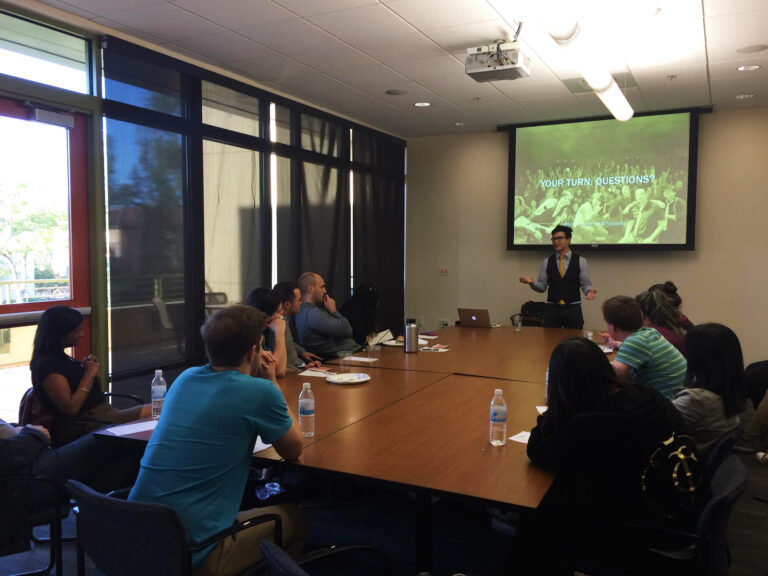
UC Davis students and the UC Davis Police Department hosted this year’s third community forum entitled “Realism and Racism” on April 14 in the ARC Ballroom.

This forum series is a student initiated event meant to address current national issues and events involving police misconduct. The first forum was held on Jan. 7, titled “Police Conduct and Police Misconduct,” and the second was on Feb. 18, “Problems, Processes, and Procedures.”

The forum was directed by police officer Tim Hunter and fourth-year community and regional development major Chakera “Star” Bacon. Campus leaders, such ASUCD president Mariah Watson, Acting Lieutenant Jennifer Garcia and UC Davis Police Chief Matthew Carmichael, were in attendance.

A community agreement that established the rules and guidelines of the forum was presented first. It stated the two-minute speaking limit, that only one microphone was to be used at a time and that mutual respect was expected both from the police department and the UC Davis students during the forum.

The forum then began with a small activity. Bacon asked the police officers and students to vote from a variety of compared products and choose which one they prefer. Bacon explained how the activity was meant to express how these items are very similar, yet people still have varying preferences between the two.

There was next a group discussion, in which students and police officers at each table were meant to answer and discuss amongst themselves the statement, “If you know me, if you really knew me.”

A video clip was presented after group discussion titled “Crack the Code,” which is a documentary film based on racism and stereotypes. Group table discussion was encouraged at each table after the video.

Larger public discussion broke out when Hunter and Bacon asked who wanted to voice aloud their questions and concerns about the topic of racism involving the police department.

Officers responded by offering solutions and by asking what the public expects to see from them. A recurring response was for the police department to better educate themselves on racial issues and become more aware of subconscious racial biases and white privilege.

Many students spoke out on their personal experience with racism and on the topic of trust building between the students and police officers. Students strongly voiced their opinions on gun culture and gun privilege and how they believed officers should not carry an armed gun with them when on campus grounds so that students can feel more comfortable around them.

Both the officers and students spoke on the hiring process of potential police officers and about the concern for improvement within the system so that officers with a subconscious racial bias are not hired.

The forum was wrapped up by ending with a review of a few statements to take away based on the topics discussed.

Graphic by Jennifer Wu.
Watson taps Smythe as new ASUCD VP

After a whirlwind week in ASUCD, Mariah Watson looked to bring some tranquility back to the association in the form of a familiar face. Watson, the ASUCD president, named Gareth Smythe as her new vice president today. Smythe fills the void left by former vice president Robyn Huey, who was elected in the Winter ASUCD election with Watson before resigning last week.

Smythe, a third-year political science and history double major, served as an ASUCD senator from Fall 2013 through Fall 2014, writing legislation and participating actively at senate meetings. He also served as The California Aggie’s adopted senator during his term.

Per the ASUCD constitution, senate will vote to confirm Smythe at Thursday’s senate meeting. Smythe would be confirmed with a majority vote.

“I’m grateful for the nomination, and excited to work to make ASUCD a more efficient and welcoming place,” Smythe said.


Scott Dresser can be reached at campus@theaggie.org and will publish more information regarding Watson’s decision moving forward.

Women’s golf prepare for Big West Championships at home

Five-time defending champions, the UC Davis women’s golf team sets out to prove themselves once more as they host the 2015 Big West Championships starting Sunday, April 19. A daily high temperature of 90 degrees and a large-home crowd is expected to welcome the Aggies, who will embark on their 3-day journey starting at 7:30 AM at the El Macero Country Club just outside of Davis, California. Senior golfer Blair Lewis will hit the first ball, followed sequentially by senior Beverly Vatananugulkit, junior Betty Chen, junior Andrea Wong, and sophomore Paige Lee.

UC Davis has been dominant in Big West play, having won the last five straight Big West Championships. Still, this is the first time in history that the 24th ranked Aggies will host the annual event. Traveling to Davis to vie for the Big West title are Long Beach State, UC Riverside, CSU Fullerton, Cal Poly, Hawaii, UC Irvine, and CSU Northridge universities. Stakes are high, as the winning team moves forward to the NCAA Division I women’s regionals in May.

“I’m really excited to be at home and local,” said junior golfer Andrea Wong. “Friends who’ve never seen me play before will be able to come and watch. We love the support.”

The Aggies head to Big West having placed third in their previous tournament at the SMU/DAC Invitational held in Dallas, Texas on April 10 and April 11. Despite their now 7-top 3 performances this season, the Aggies find room for improvement going into this weekend.

“Last week in Texas, we had kind of a rough third round,” said Wong. “It was a good wake up call, and it let us know that we have things to work on. We played a decent first and second round, but having that rough third round put a fire in us a little bit to focus this week in practice.”

With just a few days away, Head Coach Anna Temple prepares the team this week with extensive short-game practice. Hitting a 72.83 average this season, Lee holds the team’s lowest average heading into the Big West. The sophomore is currently ranked as the No. 48 golfer in the country according to Golfweek. Wong has the team’s second best average with 72.92 and also ranked within the top 60 at No. 57. Fellow Aggies Chen, Lewis, and Vatananugulkit each hold 74.13, 75.42, and 75.58 averages respectively.

Watch women’s golf battle for their sixth-consecutive Big West title, April 19-21. Admission is free for all who want to attend.

ASUCD vice president resigns

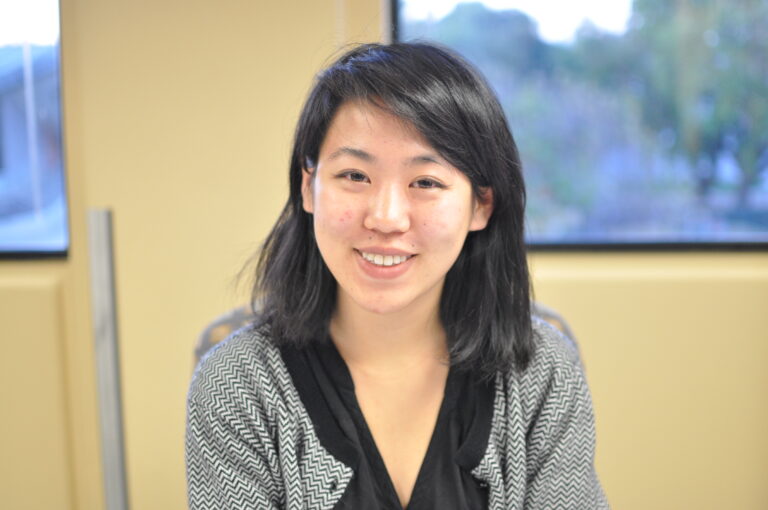
On April 16, ASUCD vice president Robyn Huey presented a letter to ASUCD senate announcing her resignation. ASUCD president Mariah Watson was made aware of the “comprehensive” letter and decision by Huey a day prior. The letter will be made public on Monday, April 20.

Watson, while declining to go into significant detail before Huey’s letter is made public, said that she fully supports Huey and her decision and intends to use Huey as an “invaluable” resource moving forward.

“I was so incredibly proud of her,” Watson said. “This was really really tough for her. ASUCD is hard, especially when you get higher up and you are criticized and dehumanized. Robyn was able to sacrifice herself in a lot of respects.”

Per the ASUCD constitution, Watson will be able to choose and appoint a new vice president, and senate, with a majority vote, will be able to confirm the candidate. Watson said that she has offered the position to someone already, although she declined to give a name on the promise of anonymity. She expects to have an answer by Sunday or Monday and iterated firmly that the association will be in good hands.

“There’s a name. It is someone I feel so incredibly strongly about,” Watson said. “Someone who I think a lot of people would get on board with.”

Watson said that she stands behind Huey and respects everything that the two have been able to accomplish together.

“I was relieved and really proud of her for doing what we tell everyone else to do in really prioritizing mental health,” Watson said. “So I’m sad, obviously, I was deeply sad but really proud of her and happy she came to this decision.”


Scott Dresser can be reached at campus@theaggie.org and will publish more information throughout the weekend.

Photo by Jian Gelvezon 

Cuts on the horizon for ASUCD

0

Last quarter, ASUCD passed Senate Bill #46, requiring that this year’s budget proposal will have to cut around $50,000 in anticipation of potential future deficits. On top of thinking of ways how to cut $50,000 from the budget, ASUCD also will need to come up with an additional $36,000 if it decides to restore a paid membership with the University of California Student Association (UCSA), as ASUCD president Mariah Watson has stated she will do to attempt to improve student representation at the state level.

UCSA is a coalition of student representatives from across the University of California system that advocates on behalf of all UC students to officials at the State Capital, UC Office of the President and UC Board of Regents. UC Davis has not been a member of UCSA since 2006 and is currently one of only two UC campus not to permanent members of the association, with UC Irvine being the other. However, this January, UCSA granted ASUCD a membership fee waiver that will expire in May, so UC Davis is currently a member of the organization.

Once the waiver period expires, if ASUCD decides to rejoin UCSA, our student government will be on the hook for $36,000 annually to fund its membership. Membership costs go to salaries of career UCSA staff, travel expenses and other logistical costs.

However, ASUCD cannot simply pass a fee initiative to explicitly cover UCSA costs, as designed by the ASUCD executives in 2006. That year, ASUCD senate voted to change the bylaws to state that the association may not pass fee initiatives to join external organizations. Therefore, the money would have to come from current ASUCD fees, likely at the expense of cutting units and/or their funding. There are 26 ASUCD units, including the CoHo, Unitrans and The Aggie.

The Editorial Board hopes that ASUCD rejoining UCSA will not come at the cost of cutting ASUCD units. Advocacy is necessary and important, but $36,000 is a lot of money, especially for an association already looking for funds, to spend just for a seat at the table.

We believe that ASUCD should first seek to serve its units, as we understand the many benefits that students reap from belonging to and working for units. ASUCD facilitates a learning experience for students that cannot be found elsewhere, allowing students to develop experience and skills in a multitude of fields.

UCSA does important work. It allows for UC student governments, who represent students across the cultural and socio-economic gamut at different campuses, to have a voice in UC and state politics. Because we also understand that ASUCD is fairly set on becoming a permanent member of UCSA, we beseech the ASUCD executive team and its advisors to be innovative with next year’s budget. We understand that units are the backbone and lifeline of the association, and we encourage the executive team and senate to find ways to effectively merge units and/or redistribute funds in order to efficiently and responsibly hold together ASUCD units and avoid unit cuts. Additionally, we believe that the UC Davis administration could also help subsidize the UCSA membership fee, validating the administration’s primary role to serve UC Davis students.

While the timing of the decision to rejoin UCSA is far from ideal from a fiscal standpoint, we understand ASUCD’s desire to give UC Davis representation and a voice in UC and state politics. Additionally, we trust Watson and ASUCD to be mindful and resourceful with the budget. Advocacy is important, yes, but not at the expense of student services that ASUCD currently provides. If UC Davis students can gain access to advocacy but also still keep access to the resources and opportunities that ASUCD allows students, the student body and community is better off. We hope that our student government can rise to the challenge.


Designed by Jennifer Wu

Students consider questions that would cause someone to lie

0

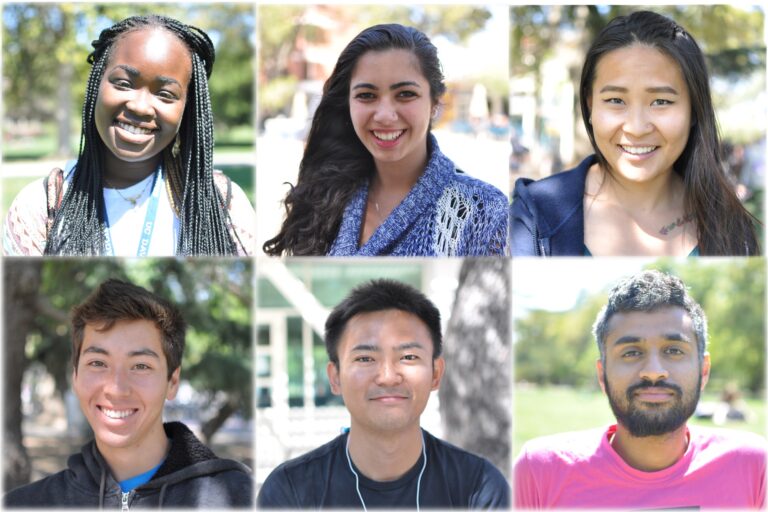
What is a question that people would most likely respond to with a lie?

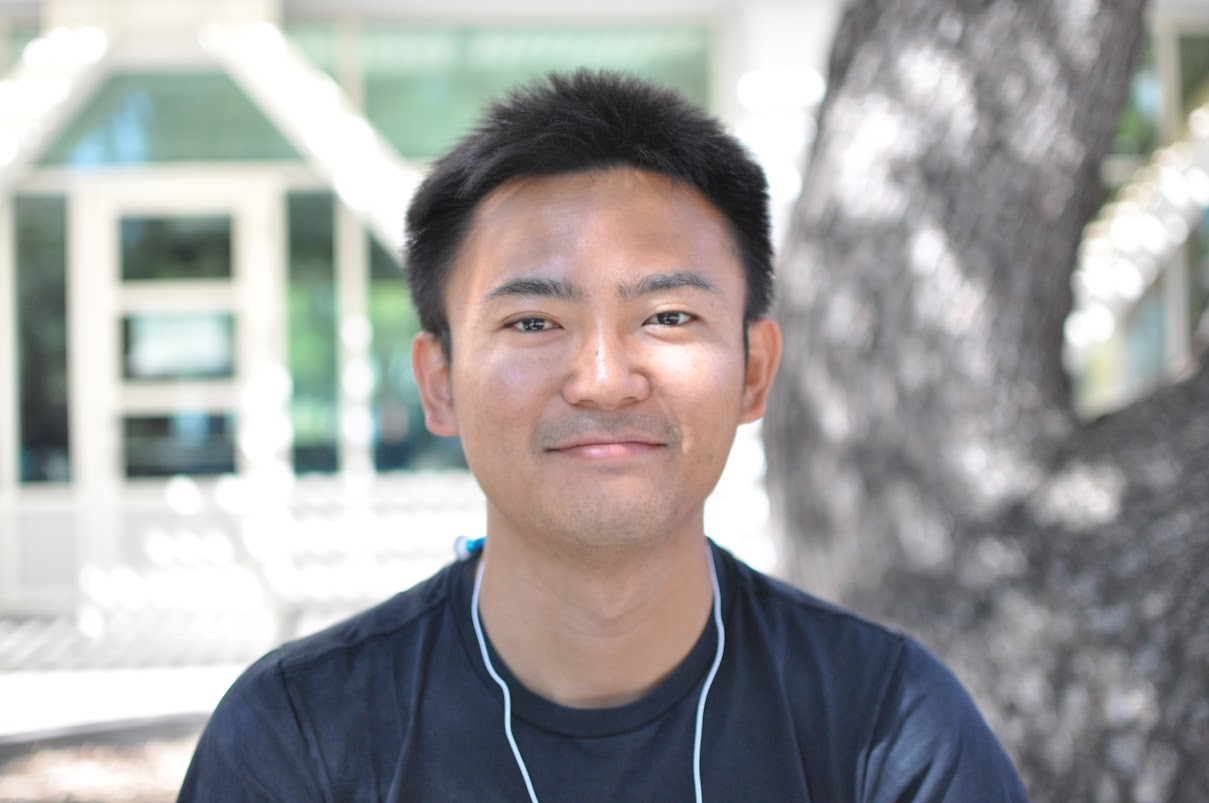
roaming 1

Kengo Takahashi

Fourth-year genetics major

“Do you cook everyday?”


roaming 2

Brenna Peters

Third-year sociology major

“Do you brush your teeth every night before you go to sleep?”


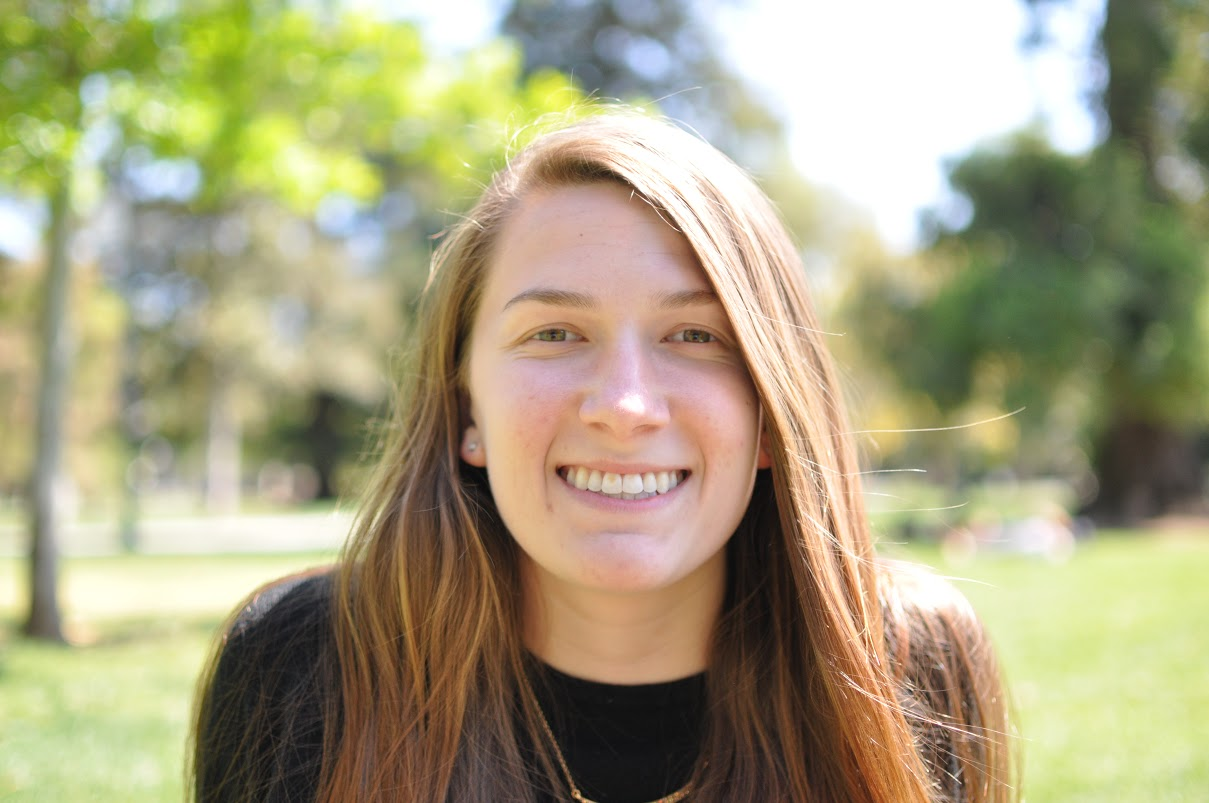
roaming 3

Scout Faller

Second-year comparative literature major

“How tall are you?”


roaming 4

Allan Bach

Third-year managerial economics major

“What are your political views?”


roaming 5

Ammarachi Nnodim

Second-year biochemistry and microbiology double major

“What’s your GPA?”


roaming 6

Angadh Nanjangud

Graduate student, mechanical engineering

“Would you give a cancer patient a cigarette on their death bed?”


roaming 7

Alex Lee

Second-year political science major

“Are you lying to me?”


roaming 8

Sam Alavi

Second-year sociology major

“When was the last time you told a lie?”


roaming 9

Liz Seeley

Third-year women studies major

“Are you racist?”


roaming 10

Charlie Newcomb

Second-year managerial economics major

“How’s it going?”


roaming 13

Roman Rivilis

Fourth-year political science and economics double major

“What’s the best question you can ask me?”


roaming 11

Cole Caceres

Second-year environmental science and management major

“Do I look fat?”


roaming 12

Yappo Wong

Second-year communication major

“What do you do on your free time?”


Photos by Jian Gelvezon.

Grooving at Davis Dance Revolution

0

ddr_ar1

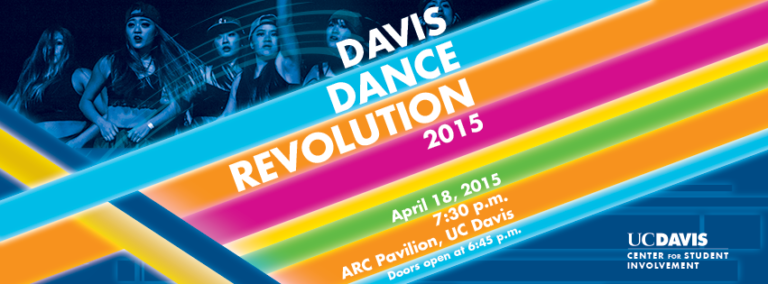
Davis Dance Revolution to feature campus dance groups at Picnic Day

Every year Picnic Day brings a myriad of activities for students to participate in and witness. One of these events is Davis Dance Revolution (DDR). DDR began 11 Picnic Days ago and has continued its success each year. It is a highly anticipated and energized event that showcases the various dance groups on campus.

The competition is split between the traditional cultural dance groups, including Baile De Fuego, Bhangre Di Jaan, Davis Wushu, Filipino Association for Health Careers, Golden Turtle Lion Dance Association, Japanese American Student Society and Na Keiki ‘O Hawai’I, and the modern dance groups that include Agape, Beats Per Minute, Davis Ballet Company, MK Modern, Mobility, Released Contemporary Dance Company and SoNE1. One group is chosen from the traditional style dances and one is chosen from the modern style dances as champions. The winners are chosen by a panel of judges, which includes an array of professional dancers.

The victors are awarded a cash prize and bragging rights among the dance community. Therefore, the competition is regarded highly as all groups strive for success.

Nathaniel Harder, the president of the Golden Turtle Lion Dance Association, a Southeast Asian cultural lion dance group, and a fourth-year biochemistry and molecular biology major, hopes to beat out the other dance groups competing in the traditional category but still maintain the fun atmosphere.

“DDR is definitely a competition, but is also fun too. As long as we go out and give a good performance, then the end result doesn’t really matter; as long as we can be proud of our work in the end,” Harder said.

Armaan Bhattal, a fourth-year civil engineering major and president of Bhangre Di Jaan, echoed Harder in his desire to take the group’s hard work and translate it into a win.

“Bhangre Di Jaan has the most energy of any group,” Bhattal said. “We really want a win this year after not placing last year.”

All of the groups have put a great deal of hard work into creating innovative choreography for their sets to be presented at DDR, pulling out all of the stops for the most important performance of the year. They expressed a hope to be awarded with a bigger fan base as a result.

Janine Klein, a second-year wildlife, fish and conservation biology major and director of hip hop group Mobility, promised a fun set that would hopefully establish a dedicated group of fans.

“I would love a bigger fan base,” Klein said. “We have some supporters, called Mobsters, but would like more [supporters]. [We want to achieve this] through making people happy, making them laugh, grooving with the audience and connecting with them instead of performing at them.”

Fifth-year art studio major Gavin Cheng, who is the team leader and manager of k-pop dance group SoNE1, also wants to entertain the audience with great energy and surprises.

“We just want recognition [more than a win] because people don’t know about the genre. We have our best set yet this year because it is really geared toward high-energy dances with high-energy songs,” Cheng said. “The audience will be invested throughout the whole set. We hope to be a breath of fresh air for people who don’t know K-pop and surprising for those that do.”

All groups, whether traditional or modern, have exciting sets planned for the 11th annual Davis Dance Revolution that they hope the audience enjoys. Dancers promise a fun, good time showing off what they have been working on non-stop leading up to the event.

For tickets or more information go to csi.ucdavis.edu/programs/davis-dance-revolution/. Tickets can also be purchased at the door but sell out fast.

Graphic by Center for Student Involvement.

UC Davis ensembles explore musics of the world

0

Concert to showcase and support ethnomusicology program

The study of ethnomusicology shows that music is more than just organized sound. By digging into the roots of various music styles, ethnomusicology uncovers social and historical meanings unique to its cultural context.

To support our campus’ own ethnomusicology program, the music department is putting on Musics of the World Ensembles of UC Davis, a showcase featuring four of the university’s world music groups. The performance will take place on Fri., April 24, at the Mondavi Center.

The concert will begin with the Korean Percussion Ensemble making a procession from the theater doors to the stage. This opening piece demonstrates the rhythmic of the percussion and dance genre, p’ungmul.

“Many Korean percussion concerts begin with this opening procession as a way to welcome the audience and to figuratively open up the space for the performance,” said Katherine Lee, assistant professor of music and Korean Percussion Ensemble director.

Traditionally performed by villagers during peak harvest cycle times and holidays, p’ungmul symbolizes the significance of community to Korean culture. Lee expressed that to experience the music brings out a strong connection with the culture.

“Many [Korean percussion] ensembles are not linked to Korea in terms of ethnicity, but rather [to] small communities that share an affinity for this kind of percussion music,” Lee said. “In the p’ungmul genre, one has to learn how to walk while performing different rhythms; it is a truly embodied experience.”

Bonding communities is just one of the many ways music demonstrates cultural significances. Ethnomusicology brings into light the many perspectives music cultivates.

Henry Spiller, associate professor and chair for UC Davis’ department of music, has pursued ethnomusicology ever since his first Gamelan music class. Gamelan is a traditional music genre from Indonesia, played through mostly percussive instruments. While demonstrating the ways music shapes identities, Spiller’s focus on Gamelan also introduced new insights to music as a whole.

“Musical talent is a myth,” Spiller said. “All humans must be musical to survive, and musicality appears in many forms. Music is [also] not a universal language; it is just as easy to misunderstand and misinterpret as words.”

Spiller also directs the UC Davis Gamelan Ensemble, which is also performing at the concert. According to Spiller, the ensemble will play a dynamic set list consisting of a choral piece, a dance piece and a piece that blends gamelan with Western themes.

“We will perform three pieces on two different sets of gamelan instruments,” Spiller said. “The [choral piece’s] lyrics describe fragrant flowers in a pleasure garden and how they compare to beautiful women, of course. [For the dance piece,] we have invited Bay Area dancer Margot Lederer Prado [to perform] ‘Tari Topeng Menak Jingga,’ a masked dance [that] portrays a king whose lust has overcome him. [The last piece combines] European medieval compositional techniques with gamelan idioms.”

The concert also features performances by the Hindustani Vocal Ensemble and the UC Davis Samba School. The Hindustani Vocal Ensemble explores the music of North India. Led by Rita Sahai, the group takes on various ragas (melodic systems traditionally representing certain feelings, times of day and holidays), exemplifying music’s integral role to everyday life.

The UC Davis Samba School, led by Chris Froh, strikes charismatic beats, commemorating the music of Brazilian Carnival, a festival traditionally meant to be one last celebration before Catholic custom Lent. Stephanie Swalberg, a former member of the samba school and a fourth-year communication major, relished the way the ensemble introduced her to another culture’s interpretation of music.

“My experience in Samba was great!” Swalberg said. “It was fun emerging myself in a different genre of music and playing different instruments.”

Whether through the high-energy of Samba or the dynamic expressiveness of Hindustani vocals, Sundanese Gamelan and Korean percussion, the Musics of the World performance will illustrate the manners in which music moves us together, but also makes us unique. By immersing audiences into diverse styles of sound, the performance showcases the significance of ethnomusicology through the very ways of the study itself.

“I think it’s important for people, and students alike, to expose themselves to different music of different cultures because we gain more perspective,” Swalberg said. “We have a better understanding of this magnificent world around us just by learning another culture’s music.”

For further event and ticketing information, please visit the Mondavi Website.

Graphic by Sandra Bae.

Kick your creative can around a warehouse

0

Kick it and Create to foster community and inspire creativity

You know that growing list of creative projects you keep pushing back on your schedule? Do you ever wish there was a designated place that was separate from your home or school where you could sit down among other artists and dedicate a two hour chunk of time to? If so, you need to check out the Third Space Art Collective’s “Kick it and Create” event.

A second home for many, Third Space is a venue where students and community members can find creative refuge and commonality within its high ceilings and open atmosphere. The space hosts a wide variety of artistic and cultural events, ranging everywhere from poetry and storytelling nights, to music and art shows.

Sally Hensel, one of the founders of Third Space and the instigator behind this specific event, hopes that the space will help get people’s creative juices moving.

“The goal is to conjure up the magic that happens when people get into the same room and work on their endeavors together,” Hensel said. “It’s a flow thing. [Another objective is to] cultivate camaraderie [among] people working on creative projects.”

So far there have only ever been around 10 people at the space during one of the events, but Hensel would be excited to see more people show up. They have a capacity of 49 people.

“[It would] be so bonkers if 49 people showed up. It would be awesome,” Hensel said.

With dimmed lights, local music in the background and folding chairs for every bottom, the atmosphere is very much like a coffee shop, except there is far more interaction between persons and groups, and a lot more oil pastels.

Luis Aspeitia, another founder of Third Space and runner of the event, thinks being in that creative environment inspires and influences people a lot more than one might realize.

“When you meet other people that have different viewpoints or skillsets, it helps you see things from a different perspective,” Aspeitia said.

Eric Frankenstein, a fourth-year anthropology and Spanish double major, has been to the recurring event three times now and loves the vibes, the resources they supply and the fact that he is making time for himself and his work around like-minded people.

“There [is] some laughter and [there are] jokes to be had [but] it’s also a good time to bring some other ideas [to the table],” Frankenstein said. “[People often] plan things for the future or talk about music shows, or about something they want to collaborate on together.”

Both Aspeitia and Frankenstein address the fact that there seems to be an intimidating or exclusionary stigma associated with Third Space, and that they hope this event will take steps towards dispelling that.

Frankenstein told a story about a couple on their way home from the Rocknasium (which is very close to Third Space) and popped their heads into the building to see what was going on. They ended up staying and working on a collaborative project with some of the people there.

“People think it’s hard to weasel your way into Third Space, but it’s super welcoming,” Frankenstein said.

To stay in the know on future dates of this event, visit thirdspacedavis.com.

Graphic by Jennifer Wu.
aggieANGELOUS

0

In loving memory of the inclusivity and resilience of Maya Angelou

The Poetry

“Opposite Sex”

By NICOLE TRAN

salt drops drip

down swollen breast

bloated, un whole

in nature,


empty in

habit. fingers part

lips that do not feel

like mine. they belong

to you and to the

world. that is the very

least that you deserve

of the devotion you

wrap me in. I return

it. unwholesome, soiled.

i’m feeling inside, but

it is foreign, only you can

help navigate, but you

too are lost. to

surrender these dark

canals and caves to you,

or shed light upon them.

I am afraid that when

my eyes open, it won’t

be you.

only rigid parts now

fluid at the thought of


me

narcissist


aggieThePoets&ThePoetesses

“Opposite Sex”

by Nicole Tran

My name is Nicole Tran and I am a fourth-year English major here at UC Davis. I’m originally from Georgia so I’m a pretty southern girl, but I was raised in Southern California. I am an aspiring filmmaker and photographer, but I also enjoy creative writing and hope to someday combine all of my passions into one wild ride of a career. After graduating this year, I would love to take some time off to write and to focus on personal film and photo projects. When I’m not in class or doing schoolwork I love photography and I love finding new music. I also adore finding new places to eat!

AA


Be featured in aggieANGELOUS:

Send your poetry to aggieangelous@gmail.com with your name, major, year and a short one- or two-paragraph description about yourself. Feel free to include your interests and/or hobbies, or maybe even your favorite quote!


Photo by Courtesy.
Graphics by CA Aggie Graphic Design Team.


Myths and Misconceptions about Health: The Calcium Complex – Is Milk Really The Best Source Of Calcium?

0
Designed by Tiffany Choi

Growing up in the United States, you were more than likely taught and maybe even scolded by your parents, grandparents and other authority figures to drink milk. They all probably told you that milk has calcium and probably emphasized that milk consumption is necessary for building strong bones. But is milk really the best source of calcium? And does calcium really encourage bone strength and help to prevent osteoporosis? And if so, how much calcium do we really need to consume? These questions adequately encompass the common misconception that milk is the best source of calcium and prevents bone damage.

Spinach and Kale Have Calcium?

Calcium sources are out in nature and milk is merely one. Plant-based sources such as spinach, kale and other dark leafy greens as well as legumes also contain substantial amounts of calcium. Unfortunately, few people are actually aware of this information. Milk seems to dominate common calcium discourse. Perhaps this is because people tend to believe it is either the only source of calcium or that it is the best source of calcium. However, you can get your required intake of calcium from vegetables or fortified drinks such as orange juice or soy milk.

In addition to this, there are reasons that highly suggest milk might not be the best source of calcium. First of all, there are a number of individuals who are lactose intolerant, which means that the consumption of dairy products causes them problems like cramping, bloating and diarrhea. Milk is also not very heart-friendly because it is so high in saturated fats. Essentially, saturated fats compromise the proper functioning of your cardiovascular system by raising blood cholesterol levels, which increases your risk of heart complications. The majority of saturated fats consumed by the general population come from animal products such as red meat, cheese, milk, etc. One important thing to note is that calcium is not the be-all, end-all for bone strength. Vitamin D and regular exercise are just as important for building strong bones.

Where does milk even come from?

Along with the health concerns of milk consumption, there are also ethical concerns. That is, where the milk is actually coming from is hardly ever questioned. It is hidden, ignored or deemed unimportant. We know milk comes from cows, but that is usually about as much as people are aware of.

Generally, people don’t know how the cows are treated, how the cows are milked or how the cows are bred. The cows are not treated as carefully as we would like to imagine. They’re not groomed and fed nutritious food — they’re kept in small environments and are fed whatever hastily fattens them up. The cows are inseminated and then have their calves taken away at birth to either be raised to produce milk if they are female or to produce beef if they are male. They may “just be animals,” but so are the animals we keep as pets. Why should sentient beings be hierarchized? What makes a dog or a cat inherently better than a cow? It may be argued that it is the “circle of life,” and yet most people would cringe at the thought of butchering the meat they consume. The aesthetically pleasing packaging erases what actually occurs.

It is unclear why this information on milk is not widely dispersed. This information might not be in the favor of large corporations, which profit off of the widely held conception of milk as a vital source of calcium. Dairy farms and companies would lose money if more people were aware of other calcium sources and the ethics behind their practice.

Swap Milk For Veggies

You may be thinking so what. So what if milk is not that good for you—lots of things are not “good” for you, right? You would not be wrong in thinking that. However, the point of this is not to make individuals feel wrong for consuming milk nor is the goal necessarily to make readers feel obligated to give it up. The point, instead, is to encourage readers to be more conscious of the health information that is popularly accepted and practiced. Ultimately, I hope to leave readers questioning the objectivity of so-called facts. So ask yourself this, why do you consume milk? Is it to build strong bones? Is it because you heard it on the news, read it on some website, or because someone told you to? If your overall concern is receiving an adequate amount of calcium, then I suggest you look beyond the dairy aisle and open your horizons to the wide variety of plant-based foods that offer the same source minus the saturated fats and indigestion.

If debunking, debating and questioning the “man” is in your repertoire please feel  free to contact Tiffany Marquez at  tmmarquez@ucdavis.edu.

Graphic by Tiffany Choi.

Rape? Yes, I do want to talk about it: The Very Ineffective Program (VIP)

0

With the growing trend of disgusting rapists, and the increasing movement to stop disgusting rapists, the Obama administration has made it it their mission to educate us about disgusting rapists. The articles of legislation, including the California Assembly Bill 1088 and the Federal Violence Against Women Act, require college campuses to teach incoming students about issues relating to sexual assault, consent, dating/domestic violence, risk reduction strategies, bystander intervention, reporting options and survivor resources. UC Davis, therefore, uses the Violence Intervention & Prevention (VIP) program, transferred to an online program this past year, to both follow legislative orders and ensure that all students attending UC Davis are educated on this topic. And within the past few weeks, freshmen received emails requesting feedback about the VIP program. Here’s mine:

“When I went through those required videos at the beginning of the school year, I personally found them extremely impactful. Those powerful words spoken – by my suitemate as she explained her outfit dilemma to me while my computer was on mute – really resonated with me. And those quizzes at the end, they truly put my Google searching abilities to the test.  I think I might have even accidentally read one of the questions as I was copy-pasting it into my search bar. Call me crazy, but I would even go so far as to say that with the VIP program, I learned as much about sexual assault as I learned about driving from Driver’s Ed.”

But in all seriousness, I knew squat about what was in those videos. My friends, neighbors and classmates knew squat about what was in those videos. Yet here we all are, walking around campus as “educated individuals” according to Davis, Obama and anyone else with a knack for lying to themselves.

How were we supposed to care about preventing ourselves from something too terrifying to seem realistic? If you made me watch a video called “Mosquito Bite Intervention and Prevention,” before I went camping, I’d probably take diligent notes. Because yes, I do want to prevent myself from getting a painfully itchy mosquito bite, and everybody talks about how easy it is to get bitten when you’re in nature.

But nobody talks about how easy it is to get raped when you’re in college. Nobody looked me in the eye and said, “This can happen to YOU.” So nobody cares about the Violence Intervention & Prevention program because nobody has been taught to understand rape as something that actually happens. It’s a terrifying thought, of course, but it’s not doing us any good to pretend that it doesn’t happen. It does happen and it happens here, at Davis – to my friends, my loved ones, to me. So I can tell you, from personal experience, that the emotional and physical trauma of rape stings a hell of a lot more than a mosquito bite.

When I went back to watch the VIP program this weekend, this time not on mute and not while simultaneously painting my nails, I learned a few things. I learned that “prevention” isn’t necessarily for the person getting raped. No, the real prevention lies in the hands of everybody else. It lies in our power, as a culture, to prevent ourselves from unknowingly invalidating a victim’s feelings about their devastating experience. It lies in our power to prevent ourselves from traumatizing somebody just as much as his/her rapist did. And this powerful prevention – it lies in the 10 minute video we were too lazy to watch.

The video addressed common phrases said to victims, like:  “Oh, it wasn’t THAT bad, I mean he did love you,” “Well, you were really drunk so it was kind of your fault,” “Are you sure you want to report him? It was only bad for you for one night. It’ll be bad for him for the rest of his life. How could you do that to him?” and, “You wanted to do things before, so how was he supposed to know you didn’t then?” I know these sound like stupid, overused examples, but when your own friend, your own suitemate says them to you – out of nothing but sheer ignorance – they don’t sound so stupid anymore.

By educating ourselves about rape, we’re not “protecting ourselves from getting raped.” Terrible things happen and, as much as we might try, we can’t hide from all of the monsters that live in our closets. But we can understand what behavior is and isn’t OK. We can learn to talk about rape more openly and learn to support those who need our help the most.

I don’t know how to make people aware of our rape problem any more then the VIP program does. If I did, I would be a genius. I’m not. I’m just a girl who once couldn’t help but laugh at the terrible acting in those mandatory videos, and now can’t help but cry at their painful reality. I’m a girl who needed a horrible experience to want to deal with the issue of rape in our campus and our world — but you can be a person who just needed an extremely blunt article to want to deal with it too.

Like her bluntness? Contact MADDY PETTIT at mepettit@ucdavis.edu.

Graphic by Jennifer Wu.
In Our Nature: The Sweet, Wild Call

0

As the humble ambassador of the great outdoors, in this column I am compelled to break from my usual style to call attention to two significant occasions coming up. One is the 177th birthday of great American environmentalist John Muir on April 21 and the other is Earth Day on April 22. Both are crucial to American environmental history, and here I’d like to say a few words about that history and why we as the students of UC Davis should care.

John Muir, as many of you know, was a mountaineer and naturalist whose deep love of the Sierra Nevada led him to become the grand champion of the first American environmental movement.  After coming to California in the late 1860s, Muir spent decades in the Sierras exploring their mountainsides and studying their ecology. Amidst the snow-capped peaks and rushing waterfalls, he found glory and grace he couldn’t help but see as divine.  Through books and journals in which he infused ecological observations with religious passion, Muir became the prophet of a new understanding of our relationship with nature.  Land had until then been known only as a resource to be exploited, but the poetry and heartfelt emotion of Muir’s words inspired Americans to see it as something worthy of protection and respect. It was an awakening of our ability to care about the environment beyond our immediate self-interest; thus began environmentalism.

Over the decades that followed, this philosophy developed into two camps. Those who took a more pragmatic, sustainability-focused approach to natural resources called themselves conservationists, while those who like Muir saw the land as intrinsically valuable became known as preservationists. With the exception of things like the early national parks, both groups were largely unsuccessful as policy-makers; conservationist policies were too piecemeal to be very useful, and the idealistic preservationist goals were often too extreme to gain traction. As suburban and urban development brought environmental issues to a crisis in the ’60s, however, it was clear that the earth needed immediate help. Both sides rallied together, and the combination of conservationist practicality with preservationist vision soon began winning policy victories. In 1970 Earth Day was established to raise awareness for environmental matters, and the ensuing public concern led to the Clean Water, Clean Air and Endangered Species Acts, huge policy victories which remain keystones of environmental legislation to this day.

But what does all this history have to do with us? The answer to that begins with the little-known fact that Earth Day’s date was chosen for its suitability to college students. April 22 was deemed to be sufficiently distant from finals, midterms and holidays for educators to be able to hold teach-ins about the environment and have the largest possible impact on the student body. Implied in this prioritization is the idea that the power to effect change lies in the hearts and minds of young adults like us. I think this is right; we are the ones who the world hasn’t beaten, who still have in us the will to care.

Here in Davis today, we don’t use plastic bags, recycling bins abound and we love our bicycles. No one could accuse Davis of being a bad place to be an environmentalist. But in conversations with friends and in articles I read, I see that on the macro level, we environmentally-minded students face a crisis of confidence. While the global reality is arguably even direr than it was in the ’60s, our hope for comprehensive environmental legislation is constantly discouraged by oil-controlled politics and congressional gridlock. It’s hard to imagine major changes coming when we, the changers, are confronted with a system that threatens to deny and defeat us at every turn.

I would like to submit, however, that our chief obstacle is our pragmatism. Like the conservationists, we are preoccupied with small victories; what is likely, what is politic, what is safe. But this preoccupation comes from the fact that although we know intellectually what we’re fighting for, we don’t know it.  We’ve forgotten the impetus, the root of our passion. To truly know our purpose, we have to listen as John Muir did to the sweet, wild call of the mountains. Truly caring about the environment comes from connecting with it and finding what it really means to us. Through this, we can rediscover what grounds our environmentalism and put our souls back into what we believe in.

So just as it can help restore balance to our understanding of ourselves, our connection with nature can help restore balance to our understanding of the world in which we live. When we try to help in the world, we don’t have to be enslaved to pure pragmatism; there is a living spirit that can give us hope and help us fight if we let it. From the time of John Muir to the ’60s to now, the environment has been and will always be something worth caring about; this Earth Day, I hope all of you can go outside and remember why.

Look up, look out, look around; caring is in our nature.

If you have any questions or comments, want to get more in touch with nature, or just want a down-to-earth chat (I promise I don’t always talk like this!), feel free to contact me, Nick Jensen, at njensen@ucdavis.edu.

Graphic by Sandra Bae.

3D printing reaches new dimensions at UC Davis

0

The hottest engineering technology becomes available to all students 

Last month, three UC Davis graduate students — Andrea Bledsoe, Randy Carney and Holly Abney — began working with a 3D printer in Sacramento’s Arcade library to create a prosthetic leg for Bledsoe’s dog.

However, not everyone who wants to use a 3D printer needs an extensive knowledge of materials science. Nor do they have to aim to build something as complicated as a prosthetic leg.

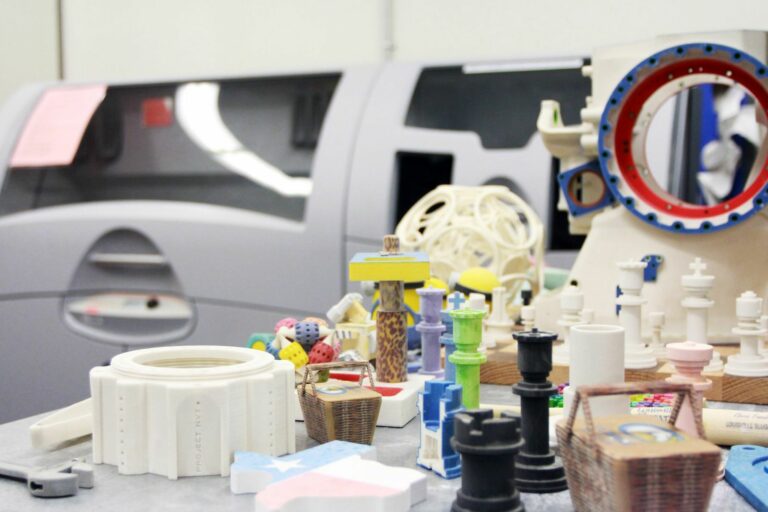
In fact, on Wednesday, a handful of undergraduate students walked into the Engineering Student Startup Center (ESSC) in Academic Surge 2060 for a free 3D printing workshop. They were greeted by a small 3D model of Yoda from Star Wars. The model was printed in a machine that is available for students of all majors to use free of charge.

“All students have to do to use the printer is to sign up for one workshop to learn about basic usage and safety,” said ESSC director Dr. Lucas Arzola. “We give them a quiz so they can be certified and prove that they have learned how to use it safely.”

The goal of 3D printing, or “additive manufacturing,” is to create solid objects from a digital computer file. The process starts by slowly adding plastic volume layer by layer. With the machine, as plastic melts to form a new layer, previous layers begin to shrink as they cool down. Eventually, the successive layers add up to create the entire object.

According to Arzola, the ESSC is a leader in 3D printing safety. Research suggests that 3D printing generates nanoparticles by melting plastic. However, research about the dangers the nanoparticles pose is still ongoing, and there are currently no specific safety measures for a 3D printer. The ESSC has taken extra precautions and installed a fume hood above the printer to absorb nanoparticles.

“We’re very big on safety here,” Arzola said. “In that sense, we’d like to think that we’re a leader [in] safety. There are other 3D printers on campus, but to my knowledge, this is the only one with a fume hood and the only one available to all students.”

The safety procedures used with the printer were developed in part by second-year mechanical engineering major Kendall Lui, who is also a student manager employed by the ESSC. Lui and his co-workers, including fourth-year aerospace engineering major Kevin Arcalas, will teach the safety and training workshops, held weekly throughout spring quarter.

The managers themselves are self-taught — Lui built his own 3D printer while still in high school, and Arcalas read manuals and experimented with the printer over the summer. Arcalas strongly believes in the trial-and-error process.

“To really learn about this machine, the students that come to the workshops actually have to use it,” Arcalas said. “There’s always a student manager watching, and of course we’ll approve what they want to print before they begin. But sometimes things can happen during the process.”

Lui roughly estimates that the printer has a 20 percent success rate and that 80 percent of projects experience small problems. The ESSC printer lacks a heating bed, a component that other 3D printers often have. The printing process warps the object and can cause it to remove itself off the printing bed, and a heating bed would keep layers consistently warm.

3D printing also requires a lot of patience. The entire process can take several hours to complete — the Yoda model took 16. Since the printer in the ESSC does not have the capacity to manufacture multiple copies of the same product, it is mainly used for smaller projects and prototypes.

“Many students use the printer for their senior project, and need to build brackets for whatever they are building. I’ve also seen some cool things like a small whistle or a nametag,” Lui said. “What they build doesn’t necessarily have to be something that’s useful in the long run. Part of our goal is just to give these students exposure to 3D printing.”

Arzola believes that this exposure will allow people to see that 3D printing and self-manufacturing can become commonplace.

“The 3D printer is the hottest technology around right now. It used to be really difficult to manufacture a product that was tangible, and it was also really expensive,” Arzola said. “What 3D printing is doing is making manufacturing more accessible to everyone. In the future you might imagine that 3D printers will become so cheap and commonplace that even little kids can have it in their houses and make their own toys.”

Photos by Ciera Pasturel. 

UC Davis celebrates diversity with 42nd annual Asian Pacific Culture Week

0

To celebrate the diversity and achievements of Asian-Pacific Islander (API) culture in the community, the UC Davis Cross Cultural Center (CCC) is hosting its 42nd annual Asian Pacific Culture Week (APCW) from April 14-24.

“I think Asian Pacific culture week is essential in recognizing that the [API] community is extremely diverse, big and significant, not just by size, but in nature of the differences in their experiences,” said community and regional development graduate student and CCC program coordinator Fong Tran. “I think APCW reflects that diversity by talking about different ethnic groups, also talking about issues that pertain to particular communities as well as the intersections of the API community.”

This year’s APCW theme is “Our Story: From the Ground Up,” aiming to highlight the history, struggles, accomplishments and varying intersections of identities that make up the API community on and off-campus.

“The purpose of APCW is to highlight the current issues going on,” said fourth-year nutrition science major and APCW program coordinator Jenny Huynh. “API is a big umbrella, and there are a lot of different identities within that. I think when deciding to figure out the different programs for the week it’s important to consider a range of different topics to make sure that encompasses certain identities and the many intersections of identities.”

The CCC has been planning the two-week event since January with a small team of about eight students. The team meets every week to delegate tasks, plan events and reach out to various off-campus groups and organizations who might be interested in participating in the week’s activities.

“It’s very much a student-run event and I think it’s important that it stays at the student level, by students, for students – they’re the leaders in this campaign,” Tran said. “We’re always trying to reach out to the Asian American Studies Department, other ethnic studies departments, as well as nonprofits outside of UC Davis, and [trying to be] more civically engaged.”

A very significant aspect of APCW has to do with helping the community to understand the varying and diverse identities within the API community.

“For me, the purpose is to, yes, raise awareness on the various issues that the API community faces, but also to show the school the large body of representation the API community has on this campus,” said fourth-year economics major and APCW program coordinator Donald Yu. “We want to inform the UC Davis-wide community that we’re not just an ethnicity on some piece of paper or some statistic, that we come from a very deep background that people should be informed and educate themselves on.”

While both Tran and Huynh have been involved in APCW for the past three years and Yu for the past two, there are others such as second-year international relations and Asian American studies double major Mandy Lew who have recently started their involvement in the growing event.

“[Everyone’s] very enthusiastic and also very dedicated to helping make this event a success,” Lew said. “I would say that by being part of this planning committee, I’ve learned a lot more about the campus community – it’s very diverse. I feel like I’m more involved in the API community having talked to a lot of the student organizations and to a lot of other different people interested in the topics of the API community.”

The two weeks consist of various events that include workshops, presentations, film screenings, musical performances and open mic nights.

“There’s something for everybody,” Tran said. “Our big headlining event is always Asian Pacific culture night (APCN), and that’s a showcase by a lot of the student groups and then we fly in a couple of artists from out of town.”

This year’s APCN, held on Fri., April 24, is featuring a capella group SanFran6, rapper Jason Chu and stand up comedienne Kat Evasco.

“I’m excited for the culture night,” Yu said. “That’s the greatest part of the week for me – not just being able to present the culture but to showcase it through performance. What we all planned for, people can visually see how cool the API culture is.”

Overall, the students planning the event agree that the week’s success in terms of learning about the API community on-campus makes it worth the large group effort.

“I think people walk away from the program thinking ‘wow I didn’t expect to learn so much,’” Huynh said.  “Throughout the different programs we hope to highlight the intersection of identities for people to connect to these communities.”

Photo by Anisa Bashiri.