55.4 F
Davis

Davis, California

Thursday, December 25, 2025
Home Blog Page 799

UC Davis student organizations work to destigmatize suicide, mental illness on campus

Increased resources, open conversation assist in improving mental health of campus community

There is an ongoing effort by organizations at UC Davis to break the stigma surrounding talk of suicide and mental illness.

This is the primary concern for groups like Out of the Darkness, which focuses specifically on suicide prevention, the National Alliance on Mental Illness (NAMI) at UC Davis and Active Minds.

“I think our society doesn’t like being uncomfortable,” said second-year political science major and UC Davis Out of the Darkness President Briana Megid. “I think there’s a reason why stuff like political correctness is a thing that we have. People want to be as polite and proper as possible, go over the ugly parts and not have to look at it.”

Mental illness, such as depression, is often viewed inaccurately, according to Diksha Mohapatra, a fourth-year neurobiology, physiology and behavior major and president of NAMI at UC Davis.

“When you think of someone with depression, you might have an image in your head of what that person might look like, but it’s never like that,” Mohapatra said. “It could be anyone experiencing anything, and you wouldn’t know from appearance.”

Mohapatra reasons that the stigma surrounding mental illness and the negative associations have a lot to do with how the topic is portrayed in the media.

“People see mental illnesses, because of the media, as a really ridiculous, horrible, degrading thing that they would never want to associate themselves with,” Mohapatra said. “It’s not something that you define yourself as. And it’s not black or white, there’s definitely a grey area in between.”

NAMI is trying to steer students away from these associations and open a dialogue to better address the issue of mental health awareness and eliminate the taboo around discussion of mental illness.

“Just because it’s a sensitive issue doesn’t mean it needs to be pushed under the rug,” said Leo Moley, a fourth-year biological psychology major and officer in Active Minds.

Moley pointed out that the lack of discussion does not reflect the significant prevalence of the issue in our society.

“People are oftentimes very surprised when they find out that one in four people are directly affected by mental illness in the US, so it’s a very relevant issue that doesn’t necessarily get the exposure it needs to,” Moley said.

Mental illness is of particular concern at the university level, where the average student falls in the age group where several mental health issue often begin.

“Things like depression, anxiety, schizophrenia are all things that come out at this [college] age group, in the early 20s,” Moley said. “So you combine that predisposition with all the stress that people are under, you can really see a high emergence of mental illness.”

According to Danen Adelson, a psychologist at the UC Davis Student Health and Counseling Services (SHCS), suicide is the second leading cause of death among people aged 18 to 24, behind car accidents. However, while college often coincides with the time period in which many problems arise, Adelson says it is also one of the best environments for attempting to eliminate the stigma surrounding mental illness.

“I think developmentally at this age group, students are at a point where they’re starting to be curious about things,” Adelson said. “This is where they start separating from their families and really coming into their own, so I think this is a prime time for people to start having these conversations.”

Students’ willingness to begin conversation about their own mental health is often one of the most difficult steps.

“I think that with such a crippling stigma,” Megid said. “You feel like it’s not appropriate or it’s uncomfortable, or they won’t receive you properly, that just contributes to you feeling even more alone.”

Groups like NAMI, Active Minds, and Out of the Darkness aim to point out that the people affected are not alone.

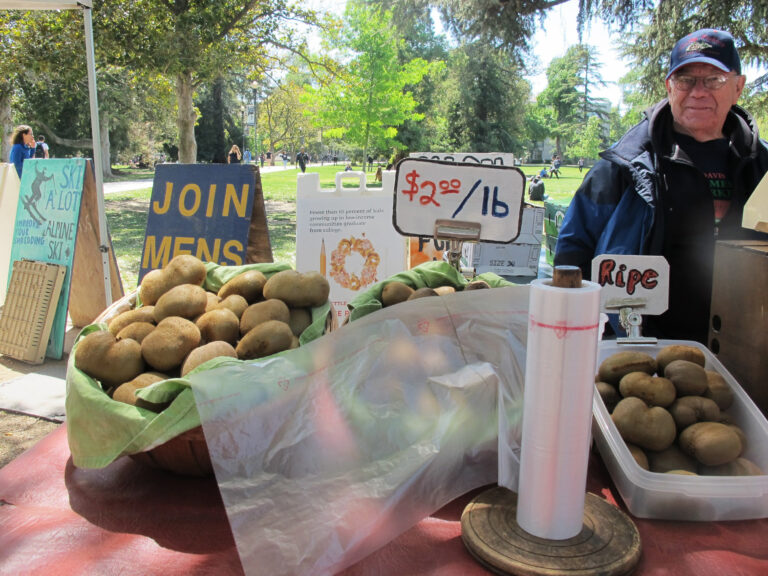
“One of my favorite things is tabling out on the farmers market,” Moley said. “People are very interested, people really want to have these discussions and talk about these kinds of things, so we’re giving them that outlet.”

One of the biggest pushes toward increasing conversation on-campus came from a campaign called Each Aggie Matters, which was established through state funding specifically targeting the promotion of mental health in higher education.

“What it is is a campaign on-campus that really promotes an open dialogue around mental health and focuses on destigmatizing these issues, collecting commitments from students, faculty and staff members about how to make our campus a community that’s supportive and open to having these conversations,” Adelson said.

The various groups agreed that understanding mental illness is one of the most important steps in opening the dialogue surrounding it.

“Just learning more about mental illness actually made me a lot more confident and a lot more able to recognize real signs compared to regular, everyday stress,” Moley said. “I kind of deal with stress myself, and at the same time that’s what I want to study more than anything else, learn the biology of stress so when those bouts of stress come up I can literally visualize what’s happening in my body as it’s happening, and that gives me an ultimate sense of control.”

Education is the primary interest of the groups and of the Each Aggie Matters campaign. Each group is holding an event this quarter to educate students and offer resources available to those affected by mental illness.

Active Minds is preparing for their largest event, End the Silence, which will be held on the quad April 27 and 28.

“It’s a big suicide awareness campaign, and it’s been in the works since last year, so we’ve been planning it for a while,” said third-year psychology and evolutionary anthropology double major and Active Minds President Brenna Williams. “Basically the goal is to let people know the staggering figure of the amount of college students who commit suicide every year, which is 1,100 across college campuses in the United States. We’re trying to educate our peers about this staggering number, because when you think about how many people that is it’s really baffling and horrible.”

The event will have interactive features for people who want to talk about their direct or indirect experience with mental illness or suicide. Mental health resources will also be available.

Out of the Darkness is planning their first on-campus walk to promote suicide prevention, at 11 a.m. on Sat., April 25, at Russell Field.

“The beautiful thing about a walk is it can be as emotional as you want it to be, it can be as physically challenging as you want it to be,” Megid said. “We hopefully attract a broad spectrum of people and comfort levels.”

Megid set out to start a walk based on her positive experience with similar events in the past. She pointed out that oftentimes people have fun walking in groups and being able to talk to one another.

“You don’t necessarily have to talk about your story but there’s just this underlying ‘I understand you’ element to it that’s really nice and supportive,” Megid said.

NAMI has a table set up every Wednesday in the quad where visitors can practice breathing exercises to help them with stress, and recently began setting up games of four-square on the quad as a fun distraction from studying.

Their biggest event, the Mental Health Fair, will be on Wed., May 13, at the West Quad. Their goal is to bring all the organizations together to inform students of the resources available to them regarding mental health.

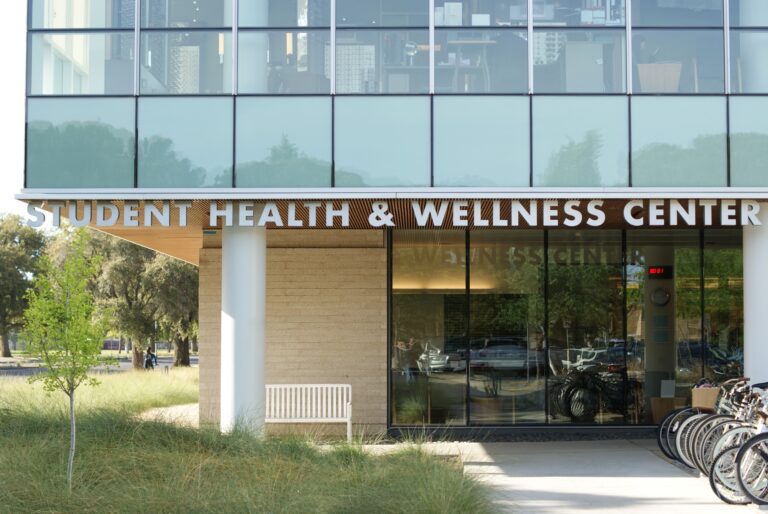
“One of the things that I love about UC Davis is that we get really creative about our mental health promotion and how we deliver our services,” Adelson said. “Of course we have counseling services here at North Hall and we have psychologists and mental health providers at the Student Health and Wellness Center, but we also have counselors located in different departments and units across campus.”

A new program, called the Interactive Screening Program (ISP), makes it possible for SHCS to extend beyond physical offices and reach students who might not normally go to them, by sending out a self-assessment to students via email.

“They can choose to participate in it, they can choose not to participate in it,” Adelson said. “The results are reviewed by a licensed mental health provider, and if there’s anything that kind of raises our red flag they get an anonymous dialogue back to them.”

These groups pointed out that they share the common goal of increasing accessibility of mental health resources by decreasing the stigma surrounding the need for these resources. The method they emphasize is simply talking.

“The goal is to at least start a conversation,” Megid said. “I would consider it successful if one person who is either struggling with depression, or another person who had just recently lost someone turned to one of their friends and said ‘this is something I’m going through.’ That is just one more step towards having a community that hopefully won’t flinch when you say ‘this is something I’m dealing with right now.’”

Photo by Johnny Ma.
Picnic Day celebrates its 101st year

0

The largest student-run event in the nation plans to showcase UC Davis campus community

One of the most cherished and well-known UC Davis traditions, Picnic Day, is celebrating its 101st birthday this Saturday, April 18.

“Picnic Day is a community and campus celebration of everything that UC Davis has to offer,” said third-year plant biology major and Picnic Day chair Grace Scott. “We have departments coming out and leading events. Student groups are giving information about their [organizations]. There are animal events to celebrate our agricultural roots and all sorts of fun quirky events that make Davis unique.”

The theme of this year’s event is “Heart of Our Community,” through which the event’s staff hopes will bring the Davis community together. Traditionally held on the third Saturday of spring quarter, Picnic Day is the largest student-run event in the country, serving the entire city of Davis and as a homecoming celebration for UC Davis alumni.

“There are over 200 events on Picnic Day,” said Picnic Day advisor Molly Bechtel. “There’s a Doxie Derby at the Pavillion or a completely student led fashion show at the ARC. This is a time for alumni to come back and celebrate being Aggies.”

To kick off the events of Picnic Day is the traditional parade, which has 70 entries this year, including student groups, local businesses and campus departments.

“[Entries] range from bikes of different locomotion to University radio station KDVS. Even the Girl Scouts are walking,” Scott said. “The parade really embodies so many community elements and it’s so cool to see all these puzzle pieces put together.”

Many ASUCD officials will also be partaking in this year’s parade, as Picnic Day is a unit within the Association.

“I’m extremely excited to continue the tradition and even more open it up to commissioners and other members of the senate to be a part of the festivities,” said ASUCD president Mariah Kala Watson. “We’ll be a united ASUCD, supporting one of our units, Picnic Day. I’m overjoyed that we’ll also have access to the big blue fire truck which will surely be a blast to hang out in and wave to the crowd.”

In order to showcase student involvement and interests on-campus, Picnic Day is also hosting their traditional Student Organization Fair on the Quad, where 12 student groups were chosen from a lottery to prepare and serve food as a fundraiser for Picnic Day.

“The Student Organization Fair is an opportunity to highlight the great work that students are doing,” Bechtel said. “There will be over 40 student organizations present at the fair.”

In the past, Picnic Day has faced challenges with safety, specifically surrounding alcohol and violence amongst university students as well as community members. This year, however, many local businesses and Greek life organizations have signed an agreement to help Picnic Day host a family friendly environment.

“The board has been collaborating with [campus police] and the [city police], to help [with] the safety of Picnic Day and the community,” Scott said. “Additionally, the Greek [community] has put out a covenant for the presidents to sign to make healthy and safe decisions.”

“See something, say something,” said Rock Liu, a recent UC Davis graduate and Picnic Day vice-chair. “If you see someone else doing something bad or if any bad situation is going on, you have to report that. It’s not just about yourself in your own bubble being safe and healthy, we have to make sure the whole campus and the whole city is safe.”

This year, there are 16 board members and over 60 assistant directors as well as volunteers and faculty who help plan Picnic Day.

“Each one of them has made their mark on Picnic Day,” Scott said. “These students have put so much time into making this event happen, this event that we put on because we love UC Davis and [to] come together to celebrate what this campus has given us.”

Photos by Katie Lin.

Sacramento County supports downtown streetcar project with $3 million dollar budget

0

County joins other local governments supporting the 3.3-mile urban circulator project

Sacramento County joins a round of local governments supporting the funding of the Downtown Streetcar Project, a 3.3-mile urban circulator connecting the city of West Sacramento and downtown Sacramento.

“The County of Sacramento has committed $3 million towards [the project’s] cost of construction,” said Fedolia Harris, principal planner for the city of Sacramento.

According to Mike Luken, deputy director of operations, planning and special projects of Yolo County transportation district, several entities support the project. These include the City of Sacramento, the City of West Sacramento, Yolo County Transportation District and the Sacramento Regional Transit District. According to Harris, The city of Sacramento has contributed $7 million toward the construction, and will impose a sales tax that would cover approximately $25 million worth of construction.

According to Luken, The Downtown Streetcar Project will circulate from downtown West Sacramento via the Tower Bridge Gateway, across the Tower Bridge toward downtown Sacramento and connect to the inner-model station, eventually connecting to midtown Sacramento and loop back to West Sacramento.

“[The system will] provide both transportation and economic development benefits for both cities,” Harris said.

According to Luken, the project is currently in the design stage. Consultants have been hired to design the tracks and placement of the stations. A separate consulting firm was hired to design the streetcars. A complete environmental review and further securing of the funding will occur in future stages of the project.

“We will put out the project for a public bid in laying the track and designing the stations, and producing the streetcars themselves. The streetcars will be produced by firms that have experience in [constructing] streetcars,” Luken said.

According to Luken, construction is expected to begin in 2017 and is projected to launch for operational use in 2018. The project has been in the works since as far back as 2009 with public outreach meetings with the local business community and property owners.

“[The public response to this project] is very positive… residents of West Sacramento overwhelmingly approve the sale tax…to fund the project, that passed a couple of years ago,” Luken said.

Several organizations have expressed concerns regarding the project’s budget, however. The cost, which is estimated to range between  $135-$150 million dollars, are seen by many as too expensive and should be allocated to fund other infrastructure or development projects. Stephen Green, president of the Save the American River Association, believes the project funding could be used to solve other problems. He said the money would be better utilized to fund after-school programs or to fund organizations aiding homeless communities in Sacramento.

“The county should … spend [the taxpayers’] money on county projects and services. Regional park’s budgets have been cut. Maintenance have been neglected there….We have many other needs, such as the child protective services which are under staffed,” Green said.

According to Harris, the project also applied for a federal grant of $75 million through the program “Small Starts.” The project is expecting an additional $10 million contribution from the State of California, in addition to imposing a property tax for the area within three blocks from the streetcar system in Sacramento. The project also expects a private contribution of $30 million toward the streetcars.

“Certainly there’s a great need for money in transportation and infrastructure, throughout the communities and the region. There is never enough money to fund all the kinds of projects,” Luken said.

According to several studies, Luken said, the streetcar system has been proven to cause an increase in economic activities. According to the project’s fact sheet, the project is intended to accommodate developments for the new Downtown Sports and Entertainment Center, new commercial spaces, and over 16,000 new residential units in the Bridge District and the Railyards Specific Plan area. The project is expected to facilitate a transportation system intended to serve these new employment and residential districts.

“[The Downtown Streetcar Project] encourages compact urban development around the streetcar, it is in line to the development plans of both cities. In terms of prioritization, the two cities have made the streetcar a priority,” Luken said.

Graphic by Jennifer Wu.

Police Brief: Week of 4/5-4/18

0

Our little town of Davis never sleeps and the Davis police department is here to keep the peace. The following are the most entertaining bits of police activity in Davis.


THURSDAY, APRIL 9

Caffeine rush hour

10:15 a.m.: Dutch Brothers Coffee traffic blocks a deliveryman from delivering package.

Furry friends

7:41 p.m. A raccoon entered the reporting person’s home. The reporting person said they tried to push it out but the raccoon would not move.

FRIDAY, APRIL 10

Rock ‘em sock ‘em roommates

4:05 p.m.: An argument over dishes and personal space between roommates resulted in one threatening to punch the other in the face.

Pranking the pork

8:46 p.m.: Dickey’s BBQ general manager has had several prank phone calls made to the Davis location. They have had pizzas ordered in their name and their phone numbers posted on craigslist. They suspect the perpetrators are employees who were recently terminated.

SATURDAY, APRIL 11

Bull fight

1:46 a.m.: Man was hit on the back of the head and had his Chicago Bulls hat stolen.

Scared-y… dog?

8:36 p.m.: Shots fired at a track meet were scaring the reporting person’s dog.

Graphic by CA Aggie Graphic Design Team.

News in Brief—Farmers market moves to Quad

0

Due to upcoming renovations occurring at Silo South, the weekly on-campus farmers market has returned to its original location—the Quad.

In 2006, the Farmers Market was originally located at the East Quad up until two years ago, when it relocated to the Silo patio.

According to the Farmers Market press release, there will be fresh produce as well as nuts and honey. Vendors include Mt. Moriah Farms, UC Davis Student Farm, Schletewitz Family Farm, Toledo Farms and Ariza Farms.

Visitors will also be able to purchase from food vendors, such as the ASUCD Coffee House, that will be selling coffee and pastries for only a dollar each.

The Farmers Market is on Wednesdays from 11:00 a.m. to 1:30 p.m. at the North Quad. This is a zero-waste event, so visitors are encouraged to bring reusable bags

Photos by Angela Willis.


Spain on stage

0

La Poltrona presents “El Animal de Hungría

The Spanish and Portuguese Department’s classical Spanish theater group, La Poltrona, is giving the Davis community an opportunity to be transported 5,000 miles away and 400 years in the past to the Golden Age of Spanish literature. At 7 p.m. this Friday, La Poltrona is performing Lope De Vega’s 17th century play “El Animal de Hungría”, in Spanish, at the Wyatt Pavilion. Lope de Vega is one of the most prominent authors of the Spanish Golden Age, as he is often paralleled with Shakespeare because of the popularity and incredible quantity of his plays.

La Poltrona has been performing Spanish-language plays since 2004, with “El Animal de Hungría” being their tenth production. Typically, all the productions by La Poltrona have been portions of plays composed, adapted and performed by graduate students, undergraduates and a few faculty members. “El Animal de Hungría” is La Poltrona’s first time producing a full-length play in verse.

Rebeca Rubio, the director of this production, is a graduate student in the UC Davis Spanish and Portuguese Department. She is a first-time director for La Poltrona and chose to produce “El Animal de Hungría” after reading the play in a seminar and becoming inspired. Rubio first became involved with La Poltrona in 2012 where she played a witch in an adaptation of a Cervantes novel. Rubio describes her directing experience as demanding, especially with the added responsibilities of being a graduate student, but also said the job was very enriching.

“When you are an actor it’s more about creating your character, transforming your character and your voice. Now, as a director, I need to have a global vision of the play, and a detailed understanding of all the characters,” Rubio said.

As Rubio’s area of study focuses on Golden Age Spanish literature, this production helps her see how people of different cultures interpret the text. Rubio explains how this understanding will be helpful when she teaches Spanish literature from this time period.

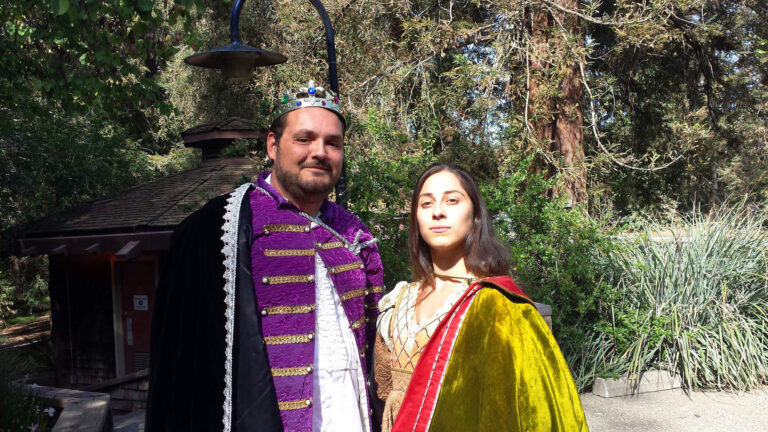
The cast members of La Poltrona have various levels of experience with acting, as some are returning actors and others have never been on stage before. Diego Valdecantos, a graduate student studying Spanish Golden Age poetry, last performed with the company in 2012 and is playing the King of Hungary in “El Animal de Hungría”.

“It is unusual to see this type of play at UC Davis, as it’s one of the first times Lope de Vega is on stage at this university. This is a unique opportunity to see classic Spanish theatre in person,” Diego said.

For other members of the cast, this will be their first time performing with La Poltrona. Emily Frankel is a first-year graduate student in the Spanish and Portuguese Department and describes her first experiences with La Poltrona as very fruitful. In this production, Frankel is playing the role of a hunter and an ambassador.

“It’s a positive experience to see something that you read come to life. You have to think it’s probably the one time to be part of a Golden Age play that is directed by a Spaniard and cast with people from Spain,” Frankel said.

The group has been meeting together since October 2014, beginning with reading and understanding the play, and then moving on to memorizing the lines. Melissa Vega-Valdez, a first-year graduate student in Spanish linguistics, plays the role of the King of Hungary’s first wife. Melissa explains how her experiences with “El animal de Hungríahave broadened her perspective on the Spanish language.

“It’s a beautiful story. It’s so culturally enriching at so many different levels,” Melissa said.

Admission to the show is free of charge. For more information, please visit the play’s Facebook event page.

Photo by Dimitra Loumiotis.

Guest Letter: Minimum Wage Rally

0

Dear UC Davis Faculty,

We are writing to ask that you provide your students with an opportunity for extra credit if they attend and write about their observations of the April 15th Rally for Fifteen, which will be part of an historic international day of action in the fight for a $15 minimum wage, in which many tens of thousands will participate.

This campaign isn’t just about McDonald’s workers, it is fundamentally about our students, many of whom are struggling. Rising tuition and student loan debt is making the university less accessible, and the bad job market will put many of our students into low-paying service sector jobs. Many students we have taught come from families that work jobs that pay below a living wage. Our/their generation will be the first in this country to be worse off than their parents if something doesn’t change now. But we can change that, by providing them with an opportunity to take part in this historic event that many would go to if they were not penalized for missing class that day and if they were given a small incentive to check out something new to them and to think critically about it.

We think that this is an important campaign for our students to become aware of and attending it can be a great opportunity for students to not only learn about the campaign but for them to speak to participants to find out why they are supportive of the campaign and then reflect on how they feel about it in writing.

More information about the day’s events can be found here. Buses will be provided to bring students to Sacramento and Berkeley and then back to Davis for free. They can sign up at this link.

Signed,

The Davis Unit of UC Student Worker Union UAW 2865

Graphic by Jennifer Wu.

Coming of Age in the Digital Revolution: Adventures in a Cyberplayground

0

I recently had an experience that left me with a new perspective on how to relate to other people. I’d traveled to San Francisco on a whim, taking a mini-getaway from the repetition of my daily routine to attend a film festival and visit an old friend from high school. This tiny trip was overwhelming in the best way. I soaked in the environment of filmmakers and connoisseurs of the form, imagining the whole time how I would translate my observations, interactions and experience into a feature. Per my natural tendency, I indulged in my favorite pastime, especially in places like San Francisco: people watching.

Amidst my bus and Uber rides, I listened to the conversations around me and watched how people connected. Two women – one holding a spot in line for the second – found each other with phones pressed to ears and a shared laugh once they realized they’d been standing next to each other. Inside the theater, I watched as the people sitting next to me Instagrammed the old-fashioned organ player in the middle of the stage, the logo for the film festival projected on the red velvet curtain in front of him. I noticed these things and thought about what I’d say, how I’d translate my experience into a discussion of our social relationship to technology and what that possibly suggested about our collective consciousness.

It turns out I didn’t have to search very far for the answer. In fact, it found me before I was even done processing the question. It came in the form of the Folsom Street Foundry Game Night, a collective space and game convention of competitive teeth-cutting and rank-climbing. For me, going to the Foundry for the first time was a visceral trip down the rabbit hole, a reminder of the fact that those of us who function outside the mainstream are world-builders. We speak in a language that’s constantly transforming and connect via our shared approaches to reality. I understood this on a deeper level while I was at the Foundry, felt unmistakably akin to Neo and laughed at my awkward self and my rising body temperature. It wasn’t just that I immediately wanted to talk to everyone there; I wanted to see how their identities – digital and otherwise – translated into social interactions and face-to-face connectivity. As anyone who’s been to a Con or similar event will know, there’s something striking about several hundred Super Smash bros. fans interacting with eachother because almost all of those interactions are mediated through a screen. Add to that the competitive nature of the environment and it’s easy to see how collectives like The Foundry have emerged to foster and preserve the unique subcultures within the modern gaming industry.

The thing that impacted me the most about my experience in this cyberplayground was the fact that I felt isolated although other people physically surrounded me. I asked myself what that meant, to feel like I was disconnected yet plugged in as much as the monitors around me. I felt this total paradox, to socialize and to remain silent, to observe but also interact with the people around me. This dichotomy is not unfamiliar to me but its edges are a little sharper now. I was able to visit a place that reminded me what life is like outside my immediate surroundings and what type of communities are available for people who want to pursue playful lives. My experience at The Foundry left me with an electric kind of emotional residue and it showed me a new way to value mediated human connection.

Follow Whitney Davis down the rabbit hole at wmdavis@ucdavis.edu.

Graphic by Sandra Bae.

Self-care Warfare: It’s Everywhere – Unlearning Racism

0

Now that I’ve hopefully built up enough of a background for you and I to be on the same page, I think I can start to discuss some more specific ways in which we can unlearn oppressive and marginalizing behaviors and opinions. This week I’m going to be talking about racism and racial microaggressions (I will define that in a bit), looking specifically at those related to Asian Americans, and relating this to self-care. However first I think I need to define a few terms before we can have a discussion on the topic of racism.

So what is racism?  Scott Woods, a black poet, writer and critic from the Midwestern United States, moves beyond the dictionary definition of racism as prejudice based on race to tell us that,

“Racism is a complex system of social and political levers and pulleys […] to continue working on the behalf of whites at other people’s expense […] Racism looks like hate, but hate is just one manifestation. Privilege is another. Access is another. Ignorance is another. Apathy is another. And so on.”

Racism exists within us, in our daily interactions, the culture we live in, and the policies that are in place that affect the lives that we lead and the futures that we are able to access. Although I’m going to be talking about individual behaviours that are indeed racist, I want to forefront the simple fact that racism is not something that occurs only in our interactions, but also on a broader level.

But how do we recognize racism in our everyday lives? One instance that comes to my mind was a discussion about racial preferences when it comes to dating.

A couple of months ago during a conversation with some of my friends about our “types,” one of them joked that they were struck by “yellow fever” – a “sickness” defined through a preference for Asian (specifically East Asian) persons. I put sickness in quotations because it’s not an ailment, it’s a “preference.” You might wonder, how exactly is that racist? You might say, a racial preference isn’t bad and that the desire to date and have romantic or sexual relations with someone outside of one’s own race is great! However, when we say things like, “I have yellow fever,” or “I only date Asians,” or use come-ons like “All my successful relationships have only been with Asians,” an interesting thing happens. You essentialize someone to their race. You take away all facets of their personality and identity, erase it through ignorance of their own humanity and use their race as a stand-in for their entirety — race becomes a prerequisite for your attraction. You are being racist, whether you want to be or not.

What’s key here is the idea of essentialization. Racism in our interactions occurs when we essentialize someone to their racial identity. When we assume that someone is a bad driver/biker because they are Asian. When we assume that someone is good at math and science because they are Asian. When someone makes a joke about you eating cat or dog because you are Asian. When these moments happen an erasure of one’s personhood and an essentialization of one to their race occurs, which contributes to racism that we find in society. But what does this mean in terms of self-care?

I want to suggest that we begin to question ourselves, our attractions, the actions we take, the thought patterns we have, the jokes that we tell and think of the ways that we might be contributing to racism in our everyday lives. I want us to start thinking about race and the ways that we ourselves are racist. Once we start thinking about race and having honest discussions about our experiences of racism, and the ways that we think we are being racist, we can begin to unlearn racism. We can begin to call out racism in ourselves and our own communities. And once we call it out, once we name it, we can start the long and hard process of deconstruction. We can take care of ourselves by holding ourselves and each other accountable. We can take care of ourselves by taking a long hard look at our interactions and our attractions and attempt to recognize when we have been racist. And once we can recognize that, we can build toward undoing racism.

GILBERT GAMMAD can be reached at gdgammad@ucdavis.edu.

Graphic by CA Aggie Graphic Design Team.

Boba tour of Davis

0

Writer and friends traverse to find the best boba of Davis

As trends come and go, one particular popular trend in Davis appears to be boba, and there definitely is not a shortage of local options to choose from. I went with a group of friends to various boba joints across town and compiled the following list. At each location, we requested a small serving of straight boba, also known as tapioca pearls. I travelled and sat down with a few friends who will represent the general public in these boba testimonials.

Using a scale between one and five, one being the lowest and five being the highest, we rated the boba in five different categories: smell, look, taste, chewiness, and texture/consistency. I also asked those who worked at the places we went to for ratings as well as information about their boba.

Once I collected my data, I averaged a score for each rater to obtain an overall score. Each category has the average between each individual category as well as the overall score, shown below. The places are then ranked from lowest overall score to the highest overall score.

No. 8 Quickly

640 W Covell Blvd.

Phone number: (530) 750-7888

Smell: 3.6

Look: 3.1

Taste: 2.8

Texture and Consistency: 2.5

Chewiness: 1.2

Overall: 2.6

It feels like a different texture than other boba, probably due to the honey and brown sugar coating. There isn’t a whole lot of sugary flavor, but it definitely has a nice taste to it.

“[The boba] takes about an hour to make; it’s not very hard,” said Quickly employee Minghu Lei.

Some of the general public who tried Quickly’s boba said it was soft, slimy and tasted odd yet still had a nice sweet smell. Others didn’t perceive any particular taste at all.

No. 7 The Old Teahouse

825 Russell Blvd

Phone number: (530) 297-5150

Smell: 2.6

Look: 4.5

Taste: 2.2

Texture and Consistency: 2.75

Chewiness: 4

Overall: 2.9

Several employees expressed that they did not like the boba they served. When asked about their boba, Old Teahouse employee Howard Tseng provided insight on how it’s made.

“We boil and cook it for about an hour,” Tseng said. “It’s not very hard to make. It takes times and you get used to it. You can’t stir the boba too fast — you have to be gentle, or it can break. It’s white because of the brand of boba.”

To me, the boba is very chewy and looks very appealing. The white boba looks very different in contrast with other boba I encountered in Davis.

Most of the negative comments were about the smell of the boba, similar to the smell of honey-flavored cough syrup. Some Old Teahouse goers liked that the boba was white (since most boba is black or brown), but said it has an unsavory smell that is similar to that of cough drops or menthol.

No. 6 Coffee House

250 West Quad Avenue

Phone number: (530) 754-2646

Smell: 3.9

Look: 3.7

Taste: 3.6

Texture and Consistency: 2.3

Chewiness: 1.8

Overall: 3.4

The stated boba is made fresh every morning when the Coffee House (CoHo) opens. The boba is really sweet and is brown, which is different than most of the boba we tried.

“The boba is sweet, but not too sweet,” said fifth-year clinical nutrition major and CoHo employee Madeline Pitman. “I like the sugar smell it has. The boba balls are really hard to make because [they are] very sensitive. It takes about an hour [to make], and requires a lot of manpower.”

However, some of the general public disagreed and believed the boba to be too sweet.

I thought the boba was really hard and slightly difficult to chew. It smells like brown sugar, but you don’t taste any in the boba.

No. 5 Bambu

213 E St.

Phone number: (530) 231-526

Smell: 3.3

Look: 3.7

Taste: 3.9

Texture and Consistency: 2.5

Chewiness: 3.3

Overall: 3.6

The boba looked smaller than all the other boba in Davis. Most comments gathered from employees and the public stated while it’s not the best boba, it’s not the worst.

“The boba is made fresh everyday,” said Bambu employee Danh Do. “It comes pre-made and we just need to cook it. Not the best boba, but it’s not bad.”

While it doesn’t have the best flavor, it is a very consistent flavor. Most of the other boba we have tried had flavor for a few seconds and then turned bland, while this had the same flavor throughout.

While some boba-eaters enjoyed the taste more than other boba places, a few thought the boba was too soft and had a lesser, but a more constant syrupy flavor.

No. 4 Open Rice Kitchen

204 G St

Phone number: (530) 757-2328

Smell: 1.2

Look: 4.2

Taste: 1.3

Texture and Consistency: 4.5

Chewiness: 4.9

Overall: 3.9

The boba didn’t have a smell or a taste to it, which I thought was strange, until one of my group members pointed out to me that the boba takes the flavor of its drink. I purchased a drink myself and tried several to find that the boba does take on the flavor of the drink. In fact, I think this type of boba makes the entire drink taste better.

The general public said that the boba looks clean, well shaped and well formed, with no specific flavor.

According to manager Steven Huang, the boba is made every four hours.

“We strive for [consistency] and simplicity,” Huang said. “There is not much of a smell and it takes the part of the drink. A good product speaks for itself.”

No. 3 The Lazi Cow

407 G St.

Phone number: (530) 746-208

Smell: 4.4

Look: 3.9

Taste: 4

Texture and Consistency: 4.2

Chewiness: 4

Overall: 4

Personally, I liked how the boba felt in my mouth — very soft, but not too soft.

Although the boba looked appetizing to consumers, it was said to be not especially chewy.

Employee Brandon Dinh gave an insight to how the boba has evolved over time.

“I think it’s very ideal boba,” Dinh said. “When we first made the honey boba, it took a lot of trial and errors. It finally has reached it’s perfect taste and texture. It’s sweeter and tastier than plain boba, and it has a nice honey flavor.”

The honey smell that the boba has adds to it’s appeal. This place is for those that like sweet boba.

No. 2 Teabo Café

2191 Cowell Blvd.

Phone number: (530) 297-7417

Smell: 4.2

Look: 4

Taste: 4.2

Texture and Consistency: 3.75

Chewiness: 4.1

Overall: 4.2

The boba at Teabo is liked very much by the general population of Davis, consumers testifying that it is sweet and simple with a good taste and an ideal texture.

I felt that the boba was definitely chewy, but not extremely chewy. It has a good brown sugar flavor to it, with a sweet savory smell. It doesn’t taste like there is so much sugar added to it; it has the right amount of sugar added.  After it’s been in my mouth for a while, though it has a weird texture.

Manager An Nguyen said that all the boba comes from Taiwan and is gluten-free.

“I didn’t drink much [boba] before working here,” Ngyuen said. “I drink boba from other places, and ours is pretty up there.”

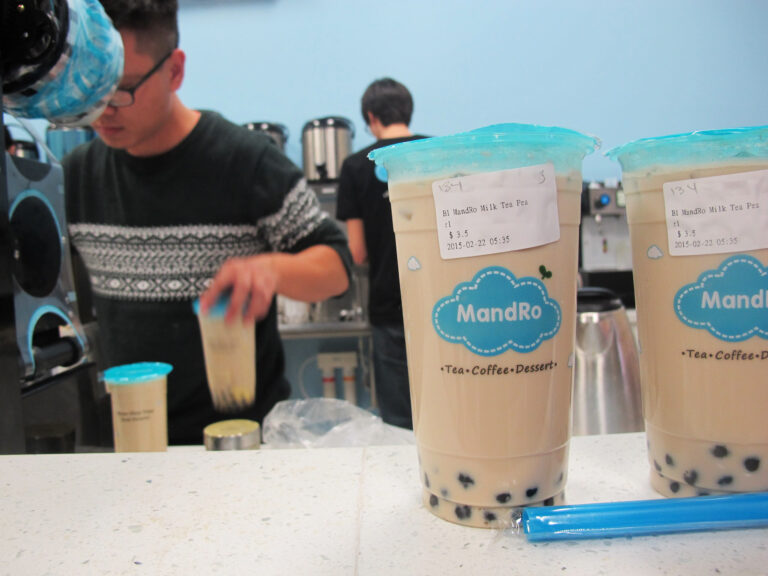
No. 1 MandRo

1260 Lake Blvd.

Phone number: (530) 231-5073

Smell: 4.25

Look: 4.1

Taste: 4.2

Texture and Consistency: 4.6

Chewiness: 3.8

Overall: 4.4

MandRo boba tasters said that the boba is the perfect amount of sweetness, with a silky smooth texture and an appetizing appearance.

According to employee Roey Zhu, MandRo has a house-made sugar that they soak the boba in everyday.

The boba has a caramel smell to it, almost as if a lot of brown sugar was added to the syrup to make it. I would recommend this boba for those who like sugary boba.

NOTE: The cups say “Please finish within two hours,” which was pointed out to me, as other boba places did not have this on their cups. The reasoning is so that every drink is fresh; otherwise, over a long period of time, it will lose its flavor.

Photos by Angela Willis.

Meet your ASUCD Senators

0

Newly elected officials share goals for current term, fun facts

anas_treshAnas Tresh:

Third-year transfer student and neurobiology, physiology, and behavior major Anas Tresh plans to better integrate transfer students and provide more accessible resources for pre-medical students during his senate term.

“I look forward to just making change wherever that may be,” Tresh said. “Additionally, being a voice to my community, being a voice for the people who voted for me. I feel very fortunate in being able to make these changes that will hopefully affect students for years to come in a positive way.”

Tresh is also on the Arab Student Union Board, volunteers at Shifa Clinic and is a member of the Minority Association of Premedical Students. He was encouraged to run by senior officials in these groups who felt that he could best represent their voice on the senate table.

“I’ve only dabbled in senate so far, but without a doubt, the most difficult process is managing everything in a timely manner,” Tresh said. “You don’t really realize the huge time commitment senate is, especially when you have a million other things on your plate. So it’s really just making sure to accomplish what you want to accomplish.”

Tresh said his experience living in Libya during the Libyan Revolution played a key role in shaping who he is today. Specifically, he said the time taught him to value family and basic liberties. Overall, Tresh feels that he is an easy-going person who appreciates the simple things in life. In his spare time, he enjoys breakdancing, eating burritos and spending time with his friends.

“I think I’m like a monkey,” Tresh said. “I feel like they just like to have a good time, hanging out, kicking it with their monkey homies. They’re strong, smart and active, and they know how to just enjoy.”


miguel_guerreroMiguel Guerrero:

Miguel Guerrero, a third-year economics and political science double major, wants to facilitate the transition for incoming freshmen and merge all campus resources onto a single, more accessible website.

“This is a new chapter in my life, and something that I never thought I’d do in college, Guerrero said. “I’m just looking forward to putting work into the association and learning more on how I can help represent the students.”

He believes the greatest challenge he will face in senate, along with the other senators, is improving the image of the association.

“Our public image isn’t exactly the best, so I think that’s going to be the biggest challenge going forward in terms of trying to get support from the student body, trying to get people to come out to the events,” Guerrero said.

In addition to senate, Guerrero participates in a fraternity, an a capella group and is a tour guide at UC Davis. Guerrero also records acoustic music for his Youtube channel and said he never leaves the house without his music in hand. He enjoys talking about comic books, movies, TV and video games.

“My spirit animal would be an air bison from Avatar the Last Airbender,” Guerrero said. “They’re mellow, loving and good companions and I would think I’m like that with the people around me.”

sevan_nahabedianSevan Nahabedian:

First-year biochemistry major Sevan Nahabedian said he would like to focus his upcoming term on adding alcohol education to first-year orientation and increasing student participation in ASUCD elections.

“I’m really excited for spring quarter and next year and thankful for this opportunity,” Nahabedian said. “I’m definitely looking forward to being able to work with ASUCD and other senators and [administration] to get all the projects on their way, and see them manifest into actual change.

According to Nahabedian, ASUCD currently faces two major challenges: student involvement and budgeting.

“One challenge is student engagement with the campus,” Nahabedian said. “That relationship has been damaged over the years to the point that people think ASUCD doesn’t represent the students. And the budget, it’s no secret that the financial state of ASUCD is not what it’s been.”

Although it has been challenging adjusting to college and ASUCD, Nahabedian feels that he has transitioned well over the last two full quarters. So far, his best memories have been meeting everyone at welcome week. He’s recently discovered a love for folk and indie music, and while not fluent, has learned Latin.

sarah_prianoSarah Priano:

Sarah Priano is a second-year community and regional development and women and gender studies double major. For her senate term, Priano’s goals include making tampons and pads more readily accessible and increasing the presence of informational signs about gender neutrality on-campus. She also aims to decrease the university’s dependence on fossil fuel industries.

“I’m looking forward to just learning about the association and hopefully changing its perception for the most of campus,” Priano said. “ I want to advocate the things I believe in. I’m not the typical senator or political type person, so I want to have that new voice represented. I want to start changing how things are spoken about by offering a different perspective.”

Priano considers herself to be different from other senators because she doesn’t have a political background, nor does she plan to go into politics. She said this has been a bit of a challenge for her.

“It’s a constant battle of how I view change and want to make change,” Priano said. “There’s an outside versus internal: how I’m going to justify working inside the system and how I’m going to change the issues.”

Priano is also the vice president of Global Water Brigades, and a member of the California Student Sustainability Coalition and anti-genocide club, STAND. Some of her best experiences at Davis have been working as a co-director of Vagina: Our Stories.

“I did the vagina monologues in high school, and this definitely expanded on that, and added identities that haven’t been given a voice to,” Priano said. “You have these performances, pieces about gender silence and issues, spoken word, poetry and monologues, and it just brings awareness.”

When she has the time, Priano likes to jot down her thoughts and sketch in a journal she always carries with her. An unusual fact about Priano is that she has spots in her eyes, and will trick people into believing she has multiple pupils and a better range of vision. Overall, Priano said she is dedicated to what she believes in and hopes to represent a different voice.

gabriel_johnsonGabriel Johnson:

As an ASUCD senator, Gabriel Johnson, a transfer student and economics major from Minnesota, aims to achieve greater academic support and increase campus diversity through admissions. Being a transfer student who is also part of the Afrikan diaspora and queer community, Johnson would like to see greater integration of different communities on-campus.

“As a transfer student, it was hard at first, but now, especially since I have an ASUCD quarter under my belt, I’m excited to actually know the systems and fluidly navigate them,” Johnson said. “I’m looking forward to taking the summer to plan and reach out to new communities.”

According to Johnson, student involvement and teamwork are crucial in ASUCD. He hopes to accomplish his goals by working alongside other students.

“One of the greatest challenges is finding the most effective ways to get the things that I want and the students want done,” Johnson said. “I know I can’t do all this stuff on my own. I really want to drive home the message that these things are important and that I need their help in order to get what they want done. I know there’s some skepticism about elections and the lack of candidates and those things, but let the actions play out versus what-ifs.”

Johnson enjoys reading, beatboxing and playing Super Smash Bros. He learned American Sign Language as his first language because both his parents are deaf. One of his favorite experiences at UC Davis was attending the African Black Culture conference, which allowed him to appreciate the UC system’s diversity. He hopes to continue to push himself and work upwards.

“I’m definitely a phoenix,” Johnson said. “I’ve come along way and I’ve been very very low. And I have come out of the ashes consistently and I keep that in the back of my mind as a personal trait of mine. Things break you down, especially on this campus, especially in the quarter system, but you’ve got to pick yourself back up.”

danielle_mae_q_santiagoDanielle Santiago:

Third-year political science and philosophy double major Danielle Santiago would like eradicate sexual violence and create more gender-neutral restrooms while serving as an ASUCD senator. She also plans to help in the creation of student employee parking passes, a shorter SafeRide response time and implementation of college or major advisor evaluations.

“A lot of what I’m looking forward to is diving into the association and making sure I’m serving students as much as can, especially accomplishing all the problems I ran with,” Santiago said. “I hope to achieve more communication and transparency with the association.”

Santiago believes the biggest hurdle for her is showing students the value of ASUCD, and how interconnected and essential it is.

“Everything is interrelated in terms of ASUCD and the university as a whole,” Santiago said. “Whether you’re taking the Unitrans or enjoying a cup of coffee at the Coho, everything is interrelated through ASUCD and I hope to better show that to the students.”

Santiago is involved in the Greek community and the Sexual Assault Awareness & Advocacy Committee, while also serving as a university tour guide. Though not through ASUCD, Santiago has been active in pushing what she advocates for.

Although most people know her as the cheery and talkative person involved in multiple committees, but, according to Santiago, she’s actually an introvert. She compares herself to a cat, in that it’s difficult to get into her inner circle, but once someone is, she will open up more. She values keeping time for herself, and enjoys playing the piano and clarinet when she has free time. Santiago also loves spending time with the community.

“Picnic Day is one of my favorites,” Santiago said. “Whether it’s the wiener dog race, the chemistry magic show or getting green bean plants, just seeing the Davis community come together and enjoy the weather is so nice.”

Graphic by Jennifer Wu.

Photos by Jian Gelvezon. 

City Council votes to begin progress on organics containerization

0

Ordinance would help achieve waste reduction goals

City Council voted unanimously on April 6 to begin the process of putting an ordinance in place that would require the containerization of yard waste and biodegradable products. This would allow those items to be picked up on a similar schedule to that of trash and recycling and would divert those items from landfill. This ordinance would also reduce the pick up of street piles of yard waste from weekly to monthly.

At the City Council meeting, Jennifer Gilbert gave an introductory presentation outlining the details of the program. According to Gilbert, the current program that the staff designed would require no extra cost to the city.

“The main reason we have this organics program before council today is really to achieve the city’s waste reduction goals,” said Jennifer Gilbert, conservation coordinator for the City of Davis.

The city has a goal for reducing its waste by 75 percent by the year 2020.

Additionally, an ordinance from the state, Assembly Bill 1826, requires that cities and counties in California provide organic waste pickup for single-family homes and commercial properties.

The organics carts would be issued to residents and would be scheduled for pick up once a week. The default cart would be 95 gallons, however 65- and 35-gallon carts would be available upon request. Extra carts would also be available for residents for a small fee which has yet to be determined.

The carts would be for both yard and food scraps including bones, egg shells, rice, beans, cheese, napkins, paper plates, pizza boxes and yard clippings.

This containerization would mean that the piles of yard waste in front of homes would only be allowed five days before monthly pick-ups by what most residents present at the April 6 meeting referred to as “the claw.” The exception to monthly pick-up would be from mid-October to mid-December, in which street piles will be picked up weekly due to heavy leaf fall.

Otto Robby, a Davis resident of 40 years, expressed concern about the reduction in yard waste pile pick-up.

“If we drop back to one collection every four weeks, then there is going to be 8,000 or 9,000 tons that will be collected in that one week. I don’t know where that’s going to be stored.”

Carl Hiller, a resident of College Park, expressed a similar concern. Hiller said that because of the unique and mature plant life Davis supports, the monthly yard pile pick-up would not suffice for the needs of maintaining his yard.

“This ordinance appears to be trying to fix a system that isn’t broken,” Hiller said.

Many proponents of this ordinance support it because of the increased bike safety. Michelle Millet, among other cyclists that expressed similar sentiments, said that she has hit her fair share of yard waste piles and will be happy to have them in the streets less frequently.

“After approval of this organics containerization program, Davis will join 48 other cities in California that have similar programs that allow for curbside pickup of all compostable materials, including yard, food and other organic waste, giving Davis residents another convenient way to divert a significant percentage of their waste from landfill,” Millet said.

The program is still undergoing adjustments according to Gilbert, particularly the opt-out option, as well as the enforcement of using the carts in lieu of the yard waste piles.

Graphic by Jennifer Wu.

This Week in Senate

0

ASUCD vice president Robyn Huey presided over the senate meeting last Thursday, held in the Mee Room of the Memorial Union.

After Quorum Roll Call, Senator Alex Lee motioned into public announcements, in which public attendees brought up and explained events such as bike month in May, the Davis Student film festival and the Pantry Scholarship sign-up.

During Public Discussion, the senate discussed Outreach Assembly’s “Why I Joined” Campaign and then Picnic Day, which is on this Saturday. Senator Casey Nguyen announced that ASUCD members have certain fire truck privileges on Picnic Day and the pantry food drive occurring today.

Senate Bill #58, which will create the Underwriting, Sponsorship and Advertising Committee (USAC), was approved along with Senate Bill #65 to amend section 503 of the ASUCD bylaws to extend the term of the Outreach Assembly speaker to fall quarter. The term ended in Spring Quarter previously. Senate Bill #54, regarding senate office hours, was discussed but reaffirmed.

Senate discussed and approved the Memorandum of Understanding (MOU) between Intercollegiate Athletics (ICA) and ASUCD. The MOU refers to an agreement in which UC Davis ICA and Entertainment Council agree to a one-time waiver that will permit the Entertainment Council to enter into an agreement with Goldenvoice for a spring 2015 show at the Pavilion. Entertainment Council agreed to enter into an agreement with the promoter in which the promoter agrees to pay ASUCD three dollars per ticket. Both ICA and ASUCD hope that this one-time waiver can lead into a long-term agreement for two to three shows per year between the two parties.

Senate appointed four new members to the Gender and Sexuality Commission.

President Watson also updated the table on her recent meeting with University of California President Janet Napolitano and California Governor Jerry Brown.

The meeting ended past 1 a.m.

Graphic by Jennifer Wu.


UC Davis History professor recognized for scholarship, undergraduate teaching

0

History professor Clarence Walker has been awarded the 2015 UC Davis Prize for Undergraduate Teaching and Scholarly Achievement.

Walker found out that he won the award when Chancellor Linda P.B. Katehi came into his “Jacksonian America” class to announce it.

“It was completely unexpected. I’m still overwhelmed,” Walker said.

According to chair of the History Department Kathryn Olmsted, a committee of students, faculty and alumni review teaching evaluations, student letters and scholarly achievement to select a professor for this annual recognition.

“This is a prize for scholarship and for undergraduate teaching, and [Walker] is terrific at both,” Olmsted said.

Not only is Walker honored through this award, but he will also receive a $45,000 prize, funded by the UC Davis Foundation.

A history professor at UC Davis since 1986, Walker teaches classes that focus on racial issues. He has even created several courses himself, including “Constructing and Deconstructing Whiteness” and “Race and The Cinemagraphic Imagination.” Olmsted believes that Walker’s ability to draw on his own experiences in African American history has played an important role in his teaching, as he himself attended segregated schools in Texas in the 1950s.

Walker said that he enjoys teaching students because he has the opportunity to introduce new perspectives to them as well as challenge their preconceived ideas.

“He brings passion and commitment to the classroom and to his interaction with students,” said George R. Mangun, the UC Davis dean of the social sciences in the College of Letters and Science. “He is ferociously honest in his judgments and assessments, and his students appreciate this tremendously.”

Walker’s students echo his passion for academia, emphasizing his ability to help students think in different ways.

“He strongly [encouraged] questions so that students would begin to think critically about the subject, or discuss different perspectives on history to encourage breadth and understanding,” said Julia Lahl, a former student of Walker. “You always managed to walk into class thinking one thing, and leaving class view[ing] it a different way.”

Walker enjoys helping his students, often working with them directly on projects. Lahl said that Walker worked tirelessly with her on her thesis project her senior year at UC Davis, even attending her honors thesis ceremony. According to Walker, despite his own accomplishments throughout his career, his proudest moments are when his graduate students find jobs.

In addition to his teaching, Walker has published a number of books pertaining to race and black history, including Deromanticizing Black History and We Can’t Go Home Again: An Argument About Afrocentrism.

Walker said that he is very happy to have won this award not only for himself, but also for the History Department, as several professors from the history department have won this award in previousyears.

Walker is retiring this June, but plans to stay busy in his retirement with travelling and writing about slavery in film.

Photo by Abby Alcala.

Aggie Daily Calendar

0

TUES., APRIL 14

You Knew Me When

5:00 p.m.

Sudwerk Dock Store, Davis

Relax with some live music accompanied by a mid-week drink.

Salsa Night

9:30 p.m.

The Graduate, Davis

Dance lessons with Cori from ‘Barbara’s Dancing Tonight,’ hosted by DJ Miguel. Tickets are $6.

Tap the Mic Tuesdays

5 to 8 p.m.

Sudwerk Dock Store, Davis

Enjoy poetry, music, stand up and various other act at this free open mic!


WED., APRIL 15

Open Mic

8:00 p.m.

Sophia’s Thai Kitchen, Davis

Enjoy a night of free entertainment including singing, poetry, dancing and more!

Unofficial Scrabble Club

5:30 to 11:30 p.m.

Crepeville, Downtown Davis

Play everyone’s favorite word game and compete with local Scrabblers! All levels welcome.

Evan Daly

9:30 p.m.

Our House, Davis

Enjoy a night of live Blues music free of charge.

Trivia Night

8:00 p.m.

Ketmoree Thai Restaurant

Compete against other teams in answering the hardest trivia questions! Free and open to all ages.

Connections

10:00 to 11:30 a.m.

International House, Davis

Mingle with other students and members of the Davis community while enjoying refreshments and crafts!

Fig + Axle Poetry Reading

7 to 10 p.m.

Third Space, Davis

Enjoy a night of poetry read by AJ Fitzgerald, Julia Neal, Mary Kathryn Nielsen and Christina Tremill with a suggested donation of only $5.


THURS., APRIL 16

Kick It and Create: Early Edition

5 to 8 p.m.

Third Space, Davis

Create some great art with fellow Davis artists for a suggested donation of only $5.

DJ Smilez

11 p.m.

Our House, Davis

Dance floor opens up for a free night of dancing!

Trivia Night

9 to 11 p.m.

Woodstock’s Pizza, Davis

Join teams of three to six people to answer unique and challenging trivia questions. Prizes, fun and pizza are in store.

Poetry Night Reading Series

8 p.m. to 10 p.m.

John Natsoulas Gallery, Davis

Poetry night hosted by Dr. Andy Jones with featured reader at 8 p.m. and an open mic starting at 9 p.m.


FRI., APRIL 17

Undergrad Composers

3:30 to 4:30 p.m.

Music Building, Davis

Listen to the performance of some wonderful Chamber Orchestra works.

Big Sticky Mess

7 to 10 p.m.

Delta of Venus, Davis

Enjoy live music from the Delta of Venus concert series!

Live Music with Bob Wren

5:30 to 8:30 p.m.

Monticello Seasonal Cuisine, Davis

Traditional and international live music featuring instruments including the violin, banjo and mandolin.

Author Event: Bil Paul

7:30 to 8:30 p.m.

The Avid Reader, Davis

Join local author Bil Paul in his reading of hi nonfiction novel The Train Never Stops in Dixon.


SAT., APRIL 18

Picnic Day

All day

UC Davis Campus, Davis

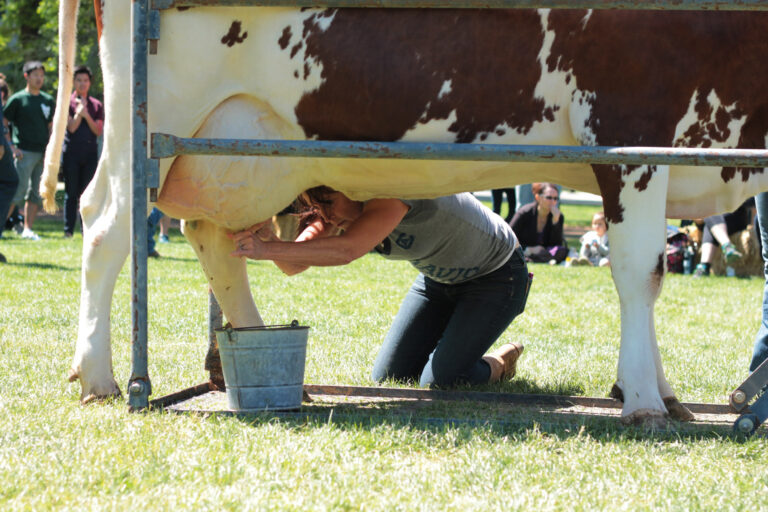
Come to UC Davis’ event of the year where you can milk cows, watch the Doxie Derby, create amazing art, learn about sustainable agriculture and more. Picnic Day has something for everybody!

Local Live Music

9 p.m.

Woodstock’s Pizza, Davis

Enjoy a fun night of live music free of charge!

African Night

10:00 p.m.

Tucos, Davis

Celebrate African culture with this free night of entertainment!


SUN., APRIL 19

Food Not Bombs

1:00 p.m.

Central Park, Davis

Enjoy free vegetarian meals with the fellow food-lovers of Davis.

Square Tomatoes Crafts Fair

11 to 4 p.m.

Central Park Gardens, Davis

Have a fun day of music, dancing, vendors and a a special upcycling and invention contest!

International Folk Dancing

7 to 9 p.m.

Davis Arts Center, Davis

Learn how to folk dance, first time free! All levels welcome!


MON., APRIL 20

El Circulo Espanol

7:30 to 8:30 p.m.

Logos Books, Davis

Come meet other Spanish speaker of the Davis community!

Pub Quiz

7:00 p.m.

de Vere’s Irish Pub, Davis

Free quiz night hosted by Dr. Andy, with teams of up to six players. Arrive an hour early to secure a table.