59.3 F
Davis

Davis, California

Wednesday, December 24, 2025
Home Blog Page 808

Sustainability in the built environment: Should we invest in renewable energy?

0

lundheadshot_opWith the rise of renewable energy sources, the question of whether or not to invest is becoming necessary. The initial idea one must consider when thinking about investment within a renewable energy is the risk versus the return. This column will address the potential pros and cons of investing in the renewable energy industry, and give an overview of renewable energy investments in the past. Generally, renewable energy sources are not the best investment for a company (but still a positive investment); however, there is an extremely positive future for the investment of renewable energy sources.

The prices of renewable energies have dropped significantly over the past 25 years.  When analyzing solar, biomass and wind, it is apparent that these sources can be cheaper than grid-source energy. Some of the reasons for this is that the technology behind these sources has increased exponentially, thus lowering the price. With a lowered price and an increase in efficiency, investors are more obliged to invest in certain renewable energy projects. With the prices of these energy sources lowered, why aren’t investors giving these companies their money?

Through the past, we can see that renewable energy sources have never been a great source of income for investors. The main reason for this concept is simply because the technology of the renewable sources wasn’t advanced enough.  Also, federal and state incentives weren’t offered as much as they are presently, so there was no motivation for a company to invest in renewable sources. For the companies, even if the technology was interesting, they would only invest if there would be a marginal return on their investment, and with the past’s limited technology, the return value was non-existent.

Currently, however, the return value for almost all companies is a positive investment! This means companies – after an initial investment and some small amount of time – will be making money via use of renewable energy sources. The average return on an investment for most companies is about one to nine percent. This sounds good, but generally, especially for larger companies a 20 percent plus return rate is considered good. So the return value is there, but not as high as the companies would want.

The lack of investments with renewable energy sources is due to the small revenue made via the investments. Companies should, however, be looking at past trends and increases in technology. By looking at these trends, companies would see that the increase in technology is worth an investment. The money might not pour in initially, but with an increase in grid power and increased technology, money would be made and the investment would be worthwhile.

Brent Lund can be reached at brlund@ucdavis.edu.
“To Light a Candle” film sets a spark

UC Davis’ Baha’i Club kicks off a campaign promoting the right to education for those of Baha’i faith

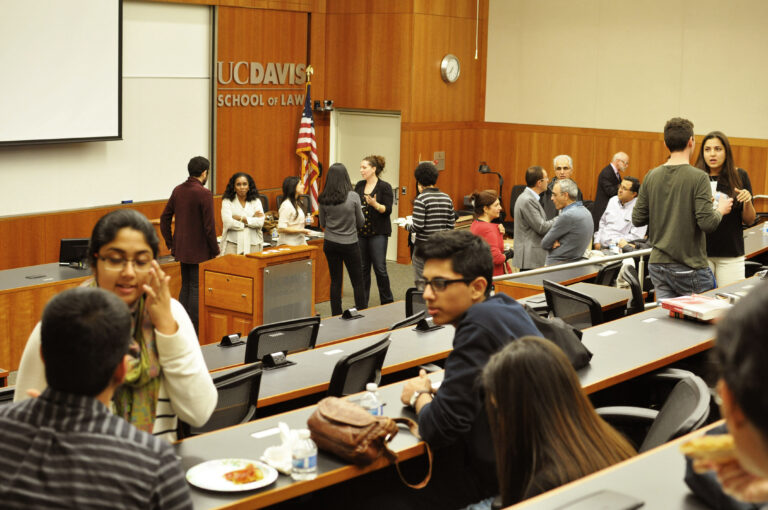
Murmuring amongst themselves, individuals seated in a lecture hall in the UC Davis School of Law begin to hush as the film To Light a Candle begins. Some eyes widen slightly in preparation, and others hold their breath. The film, made by journalist Maziar Bahari, addresses the persecution of those belonging to the Baha’i Faith.

The Baha’i Faith was developed in 19th century Persia, and has since grown to encompass over five million followers and is practiced in over 200 countries. Operating on the ideals of peace, equality and nonviolence, the faith remains to be seen as a dangerous political organization — rather than a minority religion — in the eyes of the Iranian government. According to the film, Baha’i children and young adults living in Muslim Republic of Iran today continue to be treated as second-class citizens and are denied access to traditional education.

As part of the larger “Education is Not a Crime” campaign, which launched on Feb. 27, the film is being screened in multiple college campuses and Baha’i centers across the country. UC Davis was one of the first universities to show it, on Feb. 26.

“The campaign was brought to my attention by the National Spiritual Assembly of [the Baha’is of the United States of] America, which takes care of the administrative aspects of the Baha’i faith in the United States,” UC Davis alumna Negin Sobhani said. “They want us to start showing this movie in universities in any capacity that we can.”

Sobhani has returned to her alma mater to work with members of the newly revived Baha’i Club, which was active during her undergraduate years but had since dissolved. The club was restarted on-campus this quarter.

Club president and third-year biological sciences major Taraneh Allahdadi moved to the United States 11 years ago when her brother, then a high school graduate, was denied the right to an Iranian college education in medicine. For Allahdadi, the campaign is close to her heart because of her personal connection to its cause.

“I want people to know how lucky they are to have the opportunity to study in the United States or anywhere else in the world where there is freedom,” Allahdadi said. “We take advantage of this freedom and we are able to study without any limitations. Knowledge is so important but only when it is taken away from you do you realize how precious it is. I want people to be able to sympathize with those who aren’t able to have that.”

Raised in Iran until her pre-teenage years, Sobhani also moved to the United States with her family because of difficulties obtaining an education without harassment. Sobhani also recalls being shunned by her classmates and asked to leave classrooms by her teachers once they realized she was of the Baha’i Faith.

“I remember a time from when I was only six or seven.  My mom was holding my folders under her arm and walking me out of the school. I remember thinking, ‘Where are we going? It’s the middle of class.’ I didn’t understand what was happening at that young age. I kept thinking, ‘Why am I different? What have I done to be treated like this?’ There was so much confusion and chaos,” Sobhani said in a panel following the screening.

Sobhani was joined on the panel by three other guests — UC Davis alum Hossein Gouran, former chairperson of the National Spiritual Assembly of the Bahai’s of America Bill Davis and Dr. Mona Mahmoudi. Mahmoudi, who is featured in the documentary itself, reveals in the film that her parents were taken away from her during the Iranian Revolution of 1979. Especially for older members of the audience, her stories brought back painful memories from the past.

“I cried. This was so emotional for me,” said Sobhani’s mother, Nahid. “Even if I saw this movie ten more times I would cry. It brings me back to when I lived in Iran and when my brother was imprisoned because he was a Baha’i. I can never forget that terrible time, but this film refreshed my memories.”

For members of younger generations, however, the film could not refresh memories. Instead, UC Davis undergraduates, recent graduates and other young guests were informed of issues in modern-day Iran that they were not thoroughly educated about. Saman Ferdosian, a Baha’i and American River College student in Sacramento, attended the event after being invited by a friend. Ferdosian felt that he knew little about the situation in Iran before viewing the film, and scarcely enough to make a difference. He believes that the film presented a clearer picture about the situation his people face overseas.

Though UC Davis biochemistry and molecular biology alumnus Hasan Entwistle does not identify as a Baha’i, he describes himself as having grown up in a Baha’i community and surrounded by Baha’i individuals. He works closely with Baha’i youth groups on community service projects and believes that he is invested in the movement for their education and success.

“This was such a powerful movie and I hope the Baha’i Club can find ways to hold more showings of it,” Entwistle said. “I think awareness of any sort of issue like this is important. It is through these movements that we create change, and I think this event was successful in making people aware of this movement.”

Photos by Anisa Bashiri.


City-wide food scraps collection program projected to start in 2016

0

New organics collection program stirs up interest

Graphics Courtesy City of Davis Public Works Department.

On Feb. 25 the Veterans Memorial Center, located at 203 East 14th Street, hosted a community meeting regarding the proposed Davis city-wide food scraps collection.

The city-wide program, projected to start at the end of 2016 would give single-family residential customers a 95-gallon organics cart that would be picked up once a week, the same day that trash and recycling are picked up. Apartment, multi-family and non-restaurant commercial customers would receive a 95-gallon organics cart per parcel, which would be picked up on the same day as residential carts. Restaurants and other commercial customers would receive a 65-gallon organics cart, which would be picked up twice a week, due to the large amounts of waste produced.

While details concerning sanitation, fee for extra carts and rebates for residents who do not produce 95-gallons of waste are still being discussed, individuals have been showing enthusiasm for the prospective program.

Jennifer Gilbert, the conservation coordinator for the City of Davis, explains that the contract with Davis Waste Removal, the private company that hauls the City’s garbage, recycling and yard waste, was signed Feb. 17. She adds that this was the first step needed to move forward with the Organics Program.

“We started in 2007 because we wanted to do a large pilot program to put more carts out on the streets and [to] reduce yard waste but that kind of fell through so here we are now trying to put everything together and we’re going to try it out….[The counsel approved] our integrated waste management plan that we put together in 2013….We’re actually starting to get the process going so that this can happen,” Gilbert said.

When asked what the program planners had been doing during the one year after the city council approved working with Davis Waste Removal, Gilbert responded that action focused on the contract.

“[We were] negotiating our contract with Davis Waste Removal. Step one was that we needed the contract. That contract was signed last Tuesday and so here we are. We finally got the contract signed and now we’re ready to roll,” Gilbert said.

The proposed waste program would potentially remove more organic material from the landfill by prompting Davis residents to separate their waste in the provided organics carts. According to the City of Davis’ recycling website, potential environmental benefits of the program include reduced waste, greenhouse gas reduction and improved stormwater quality. Some residential benefits include improved cyclist and pedestrian safety, cleaner streets and ease of use.

“Our goal is to reach 75 percent waste diversion by 2020. And the way that we’re going to get there is by collecting all the waste,” Gilbert said.

Gilbert also emphasized during the meeting that yard waste piles would still be collected once a month, during the first full week of each month, and every week between October and December due to the high volume of dropping leaves. Another point that Gilbert drove across was that there would be no additional costs to customers.

Sarah Mandel, a gardener at Davis Community Gardens, attended the meeting and stated her thoughts concerning the program and her desire to see a composting culture in Davis.

“I have family in Berkeley where they pick up all the waste and it’s great. I mean, I understand there are some problems with it but I think it makes a lot more sense. And we’ve been composting for years and it would be nice not to have to always do it myself, to have it be part of the culture,” Mandel said.

When asked about her interest in composting, Mandel expressed personal influences.

“I’m very concerned about soil. My parents grew up on the edge of the Dust Bowl and I was taught about how important soil is… And so this is just a really crucial part of soil improvement [just] in general….It really matters to compost waste and put it back in the soil,” Mandel said.

Amanda Emmel, a third-year wildlife fish and conservation biology major who is a member of the UC Davis Pierce Co-op, describes her support for such a program.

“Well, it seems like a perfectly good idea. A lot of the food in America…a third of it is wasted. It makes me happy to see that larger organizations are [finally] accepting that this is an important thing. There’s a lot of waste that happens. Getting some compost back from the waste is a great idea,” Emmel said.

Like Mandel, Emmel has hands-on experience with composting.

“Well [the Co-op] collect[s] all our compost from our kitchens. We do have, [in the gardens], a little compost system going. We have a few different piles and…it’s modest, like you can’t take care of orange peels or paper, or some things that larger, more carefully managed piles could take care of but… it works pretty well,” Emmel said.

When asked about what kind of impact she foresaw that the new program would have on Davis, Emmel pointed to both environmental and social factors.

“I think it’s obviously a positive environmental thing. And I think having something in place where there’s an authority [that] you’re close to… would be good,” Emmel said. “[It] would raise awareness about food waste…[that] things that you do throw out do go somewhere and some of these things have actual value.”

Graphics Courtesy City of Davis Public Works Department.

In the March 3 article “City-wide food scraps collection program projected to start in 2016,” it was reported that the contract for the waste removal project was signed Feb. 17  approving partnership in the compost program. The contract was actually a general agreement for the private company to pick up garbage, recyclables and yard waste, not specifically for the organics program.


U.S. Geological Survey investigating presence of mercury in Cache Creek

Formal report projected to be concluded in 2017

Scientists of the U.S. Geological Survey (USGS) have been working on an ongoing project in the Cache Creek settling basin, near Woodland, to investigate the presence of sediment and mercury trapped in the basin. The Cache Creek settling basin is of particular interest to the USGS as it collects debris from the creek before it washes into the Yolo Bypass.

USGS scientists began measuring flows in Cache Creek in 2009 and started measuring mercury in 2010 according to Charles Alpers, a USGS research chemist. Alpers said that the study is designed to go through 2016, but the exact time it will end is not yet conclusive. The data, which is currently being gathered, is expected to be reported in a USGS report and journal articles are projected to be written sometime in 2017.

Alpers reported that the USGS is not a regulatory agency and the work he and his colleagues are conducting in Cache Creek is a way of providing scientific input to local, state or federal agencies to help solve societal problems. The USGS provides information and quantitative data to regulatory agencies in order to assist them in making decisions regarding policy and land use. They have also partnered with the California Department of Water Resources which has asked USGS to do research in the Cache Creek settling basin.

“The area was built by the U.S. Army Corps [of Engineers] in 1937 and expanded in 1993. [It] is an engineered area surrounded by levees,” Alpers said in regards to the ongoing project at Cache Creek.”

Alpers further explained that mercury mines such as the Reed Mine in California, “are sources of mercury that dissolve to the sediments of Cache Creek and cause it to carry a higher concentration of mercury than is typical for other watersheds in the area,” Alpers said.

According to Alpers, one-half to one-third of the mercury that comes into the Sacramento River and Sacramento-San Joaquin Delta can be traced back to Cache Creek. There there is much interest in controlling that mercury as it can cause a lot of problems for fish and those who consume that fish.

“There is an organic form of mercury called methylmercury. When this methylmercury gets into the fish or other animals that eat the fish it can cause them to be at risk for neurological damage. Mercury is known to be a neurotoxin to humans and animals and there are advisories regarding not to eat some of the fish because of the mercury,”  Alpers said.

David Osleger, professor of geology at UC Davis, conducted research in mercury contaminated Clear Lake located northwest of Davis. He said mercury can take two forms though in its more toxic form is methylmercury, which is created during metabolism by certain bacteria. According to Osleger, the neurotoxin bioaccumulates in fish thereby making its way up the food chain.

“Humans who eat contaminated fish are more likely to feel the effects, which damages the nervous system and immune system, among others.  Women who are pregnant are particularly vulnerable since embryonic development may be seriously impacted by methylmercury in the system,”Osleger said.

In regards to the majority of the American public, Osleger suspects people are under-informed about mercury hazards. Osleger believes students should be informed more about mercury.

“We discuss it in certain geology courses where relevant, but not in all. Whenever the opportunity arises in any course, perhaps in discussion sections, students should be informed of the sources of mercury hazards in California, how it accumulates in the environment, and potential dangers to humans,” Osleger said.

Raul Stebbins, a first-year chemistry major said he is surprised more people aren’t concerned about mercury poisoning.

“From what I understand, the problem of mercury contamination will only worsen in the coming years, I believe more people should become interested in the effects [it] causes so steps can be taken to educate the general public about the problem is poses,” Stebbins said.
In the March 3 article “U.S. Geological Survey investigating presence of mercury in Cache Creek,” it was reported that the U.S Army Corps of Engineers was expanded in 1939. The expansion was in 1993, not 1939. Also, mercury does not dissolve “into” sediments, but rather it dissolves “to” sediments in Cache Creek.

Uncontested election fails to attract voters

Incoming senators hope to increase future student participation

Less than three percent of UC Davis undergraduates voted in the 2015 ASUCD Winter Election that took place the week of Feb. 16.

The elections website reveals that 792 students voted for at least one senate candidate, and 730 voted for the only presidential ticket. Out of the 26,620 undergraduate students estimated by the University’s Student Population Summary for Winter 2015, those who voted for their student-government constituted approximately 2.98 percent of the undergraduate population.

The results of the election were announced in Olson Hall to a group of mostly candidates and campaign managers; fewer than 10 people were present.

Incoming S.M.A.R.T. senator Danielle Santiago underscored the abnormality of the recent election.

“I remember election results being whole rooms in Wellman filled up, whole rooms in Olson filled up, and the amazingness and the energy that came from that because it was such a tight, competitive election,” Santiago said.

Independent senator-elect Sevan Nahabedian attributed the election’s low voter turnout and results attendance to the fact that the election was uncontested.

President-elect Mariah Watson offered a complementary explanation to the poor turnout at election results, stating that candidates had not invited friends to the election results due to a late room reservation.

“We didn’t have time, and we had other means of celebrating the election results,” Watson said.

Senator Amelia Helland, concerned about a lack of awareness about ASUCD, suggested that senators could do more now to promote the Association.

“I think it would be better if [senators] were more visible leaders,” Helland said. “We should be on our social media platforms making what we do known and talking to people. I think that would make more people know what the Association is and see how it has potential.”

Nahabedian stated that the primary goal for his imminent term is to improve voter turnout by loosening campaign regulations.

“Residence halls, for example, are off-limits to campaigns,” said Nahabedian. “That’s thousands of students that live on-campus that are kind of shut out of elections.”

This winter’s Student Population Summary estimates that the 3,824 freshmen currently enrolled account for about 14 percent of undergraduates.

Graphic by Jennifer Wu.

Head coach Jim Les helms successful team

0

Aggies basketball domination can be traced to coaching

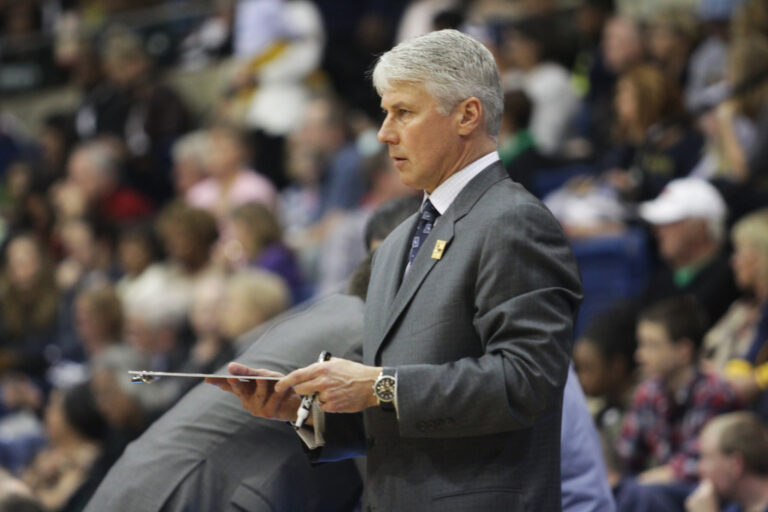
Jim Les has coached the UC Davis team to the best season in school history, but getting to this point came with many obstacles. Last season, injuries to key players plagued the Aggies. Senior forward Josh Ritchart played in nine games before being sidelined for the remaining season due to a right lower leg injury. Junior forward J.T. Anderele joined Ritchart on the bench, having suffered a knee injury that kept him out the entire year.

The return of Ritchart and Anderele have been instrumental to the team’s success. Ritchart is currently averaging 12.2 points per game and 4.5 rebounds per game, second on the team in scoring after senior guard Corey Hawkins who averages 20.8 points per game and 4.5 rebounds per game.

But it is not individual success that have led the Aggies through this historic season. UC Davis is home to one of the best shooting teams in the country. The Aggies are shooting a at .499 field goal percentage, third best in the nation behind Gonzaga and Notre Dame. Behind the arc, UC Davis is shooting at a .463 percentage rate, the best rate in the nation.

The Aggies’ success this season had earned UC Davis a top ten ranking in the latest College Insider Mid-Major poll, coming in at number eight.

Collegiate Career:

As a player, Les began his career at Cleveland State University, where he received a scholarship to play under Ray Dieringer. After his first two seasons with the Vikings, Dieringer was released as the coach. Les would later transfer to Bradley University, where his brother had played years before.

“After Dieringer was relieved of his duties, I decided that I wanted to play somewhere closer to home,” said Les. “I was aware of the tradition and history and I wanted to be part of that as a player.”

At Bradley, Les excelled at the point guard position and averaged 10.6 points per game and 8.0 assists per game while shooting at a .477 percentage rate. Les led the Braves to three consecutive winning seasons, including a 32-3 record during the 1985-1986 season.

During the 1985-1986 season, the Bradley Braves held an impressive 21 game winning streak, but would later lose in the second round of the NCAA Tournament that year.

Les currently has the 17th most career assists in NCAA men’s basketball history, with 884 assists in 118 games. He also holds the all-time assist record at Bradley University. In 1998 Les was inducted in the Bradley Athletics Hall of Fame and his number was retired by the team.

During his last two years as a Brave, Les played alongside Hersey Hawkins, the father of UC Davis standout Corey Hawkins.

“He made me look really good,” said Les of the older Hawkins.

NBA Bound:

The Atlanta Hawks drafted Les in the third round of the 1986 NBA Draft, but he was later waived by the team. Les bounced around from the Continental Basketball Association and the World Basketball League. Despite being cut and waived by many teams during the first couple years of his career, Les maintained determination to make a name for himself.

“I was always worried about having regrets,” said Les. “I wanted to ride this basketball thing out as long as I could. I gave it all I could to play at the highest level.”

The Utah Jazz offered Les a roster spot under head coach Jerry Sloan and alongside John Stockton and Karl Malone for the 1989-1990 season. It was not until the following season when Les found his niche with the Sacramento Kings. In his first season with the Kings, Les had his best season of his NBA career. He shot at a .444 percentage rate and .461 from the three-point line.

“I had to become a student of the game and be a sponge. I was fortunate, I played for Lenny Wilkins, I played with Stockton and Malone, and I played in the Bird-Magic-Jordan era,” said Les. “I was just trying to absorb as much as I could day in and day out. I still have notebooks in my office full of notes, full of plays, full of philosophies from all those years of playing.”

Les would later retire from the NBA after the 1994-1995 season with the Atlanta Hawks.

A Career in Coaching:

Les started his coaching career as an assistant coach for the WNBA’s Sacramento Monarchs from 1999 to 2001, the lead would later fold and shut down in 2009. Les helped the Monarchs reach the WNBA playoffs during his three seasons as a coach.

In 2002, Les was offered the head coaching position at his alma mater, Bradley University, despite his limited coaching experience. In his first two seasons Les was able to improve the team’s record, 12-18 in his first season and 15-16 during his second season. During the 2006 season, Les coached the Bradley Braves to the Sweet Sixteen of the NCAA Tournament. That was his best season as Bradley head coach with a 22-13 record.

Bradley continued making post-season appearances, in 2007 Bradley advanced through the National Invitation Tournament and in 2008, the Braves lost in the champions round of the College Basketball Invitational tournament.

After being relieved of his coaching duties in 2011, Les joined his son, senior guard Tyler Les at UC Davis and began his career as head coach for the Aggies. In his first season as head coach, the Aggies recorded a 5-26 season. The Aggies saw tremendous improvement during his second season, obtaining a 14-17 record.

Last season, as the team was marred with injuries, the team regressed upon its improvements and only won nine games. Despite the various setbacks during his first three seasons at UC Davis, Les was able to turn the program in the right direction.

“People want to shortchange the process, but there is a process in order to do everything right,” said Coach Les. “Building a basketball program is no exception, it takes time to build the culture, the environment and there is no question that there were some obstacles. But I also think that failure is part of that process. It helped me grow as a coach, it helped the individuals on the team grow because of the adversity they experienced. What you’re seeing on the fourth year is a culmination of a lot of adversity. One of thing we focused on when we got here was recruiting good-character guys, and when you go through a tough time, character is revealed.”

With the post-season quickly approaching, Aggie fans across the country have been able to enjoy this year’s success. The bar has been set, but Les is adamant that the basketball program will continue to thrive, and that this year is not a fluke.

The Aggies currently hold a 21-4 record and hope to improve that record as they travel to central California to face the UC Santa Barbara Gauchos on Feb. 26 and the Cal Poly Mustangs on Feb. 28.

Photos by Jian Gelvezon.

For you were made from stardust, and to stardust you will return

0

The art of getting by: theories of general relativity

I am passionate about people. There is nothing I care about, nothing I am more interested in, nothing I am more intrigued by than my fellow humans. Humans are amazing, they are beautiful, and the idea that human existence is a weird random occurrence in the history of the whole universe – whether you believe that randomness was a work of a higher power, or science, or both – leaves me in a state of constant awe.

The universe is always expanding, and every moment, more and more space is created — space that you or I attempt to, but cannot really, fathom. Yet here we are, on this grain of sand-planet in the cell of a tiny universe, simply and strangely existing. To some, this notion is horrifying. It triggers a fear that we are nothing, that we mean nothing, and that everything that’s going on right now in our small small space is ultimately pointless. To me, though, it’s comforting that I am small, and something about being a twinkle in the scheme of things puts my mind at ease.

We are made of matter, therefore we do matter. Somewhere in the Bible it says “For you were made from dust, and to dust you will return,” (Gen. 3:19), and to me, that’s pure poetry. My hand is probably made of atoms that were projected from the explosion of a star, or maybe they were a pinpoint of glowing dust in the coldest purple nebulae toward the beginning of time; and the best thing about this is that so was yours.

We, we, we. We are of the same origin, and together we have inhabited this planet for less than a millisecond. We are small. I will continue to stress, we are so small, because we are. But our minds and our souls, they are infinite. Huge. We want meaning, we want hope, and most of all, we want love. We make art, we create ideas and explore until we are once again stardust because we want to be, we want to live, we can feel that we are alive, that we are, we are, we are. We thrive on the knowledge that we can never fully proclaim to know everything, and we look up toward the sky knowing that maybe there’s just as much splendor in mystery as there is in knowing.

At the end of the day, at the center of our universe there are just us, you and I and every human on this tiny rock. We are all we have, we are all we know, really. We are of these same phenomena, of cosmic misunderstandings that resolve for the love of gravity and the need for grounded-ness, of light that perpetually progresses forward to illuminate every deserved particle in the corners of space-time. Though I am native to purple nebulae and you are partial to aged stars, we exist in astonishing harmony and cannot help but admire that we are derived from the same unlikely origin. I can’t think of any truth more beautiful.

AKIRA OLIVIA KUMAMOTO can be reached at arts@theaggie.org.

Photo by Akira Olivia Kumamoto

Woyzeck brings “working class tragedy” to Wright Hall

0

The Department of Theatre and Dance premieres their winter production

The UC Davis’ Department of Theatre and Dance’s winter production of Woyzeck is set to open on Feb. 26 at 8 p.m. The production will run through March 8 in the main theatre at Wright Hall.

The play, written by German dramatist Georg Büncher, tells the story of the eponymous protagonist, Franz Woyzeck, a working class man who deals with psychological trauma. The story explores themes of class, violence and the fragility of the human psyche. The Theatre Department’s Granada Artist-in-Residence, Bob McGrath, will direct Neil LaBute’s adaptation of Woyzeck.

“Neil came and saw a play I did at the Brooklyn Academy of Music,” McGrath said. “We introduced ourselves and we seemed to get on real good and he asked me if I ever wanted to do a play by him and that he’d be into it. I said yes and he suggested [Woyzeck]. I knew this play, but the idea of an adaptation of it by him sounded fantastic and we went for it.”

In an effort to further immerse the audience in the bleak atmosphere of Woyzeck­ ­– set in what McGrath calls a “nightmarish version of 1930s Shanghai” – the director heavily utilizes projections, one of McGrath’s stylistic anchors.

“I started doing that 25-30 years ago. I grew with the technology.” McGrath said. “I wasn’t the first one to do it, but I was early at the party.”

In these past 30 years, the technology for stage projections has grown exponentially. He will project images using a scrim. A scrim is mesh material, kind of like cloth backdrop, that extends from the top of the stage to the bottom. Christian Hebron, a second-year dramatic arts major, has not only been involved with the setup of the scrims, but all of the other technical aspects of the play.

“We deal with every aspect,” Hebron said. “From how a scene looks to how the lights are hung, [from achieving] the director’s vision [to deciding] where the actors stand.”

The deck crew started their work on the play a week before “tech week” (the last week of rehearsals before opening night) where they watched the play to get an idea of its natural rhythms and what they would have to do to make the play more efficient for all parties involved. Hebron also explained that as part of making themselves the most efficient in their work schedules, a sense of camaraderie had to be created between the members of the crew.

“As technicians, we make sure we work as a family” Hebron said. “We’re working anywhere between 3 hours a day to 10 hours a day, dealing with actors, directors, and designers, just trying to get whatever their vision is onto the stage. It’s like trial by fire, we have to make sure everything is done right.

Rose Kim, a second-year communications major, will be starring as Marie, the wife of Woyzeck (portrayed by Hein Huynh). McGrath explained his selection process for the actors.

“[Woyzeck] is a very dark play,” McGrath said. “[I was looking for] someone who could handle the text but could also move well and had a certain [charismatic] quality that the play needed, which was edgy.”

After casting, Kim utilized lessons from her classes here at UC Davis to prepare for the role and to become fully immersed within the emotional state of the character.

“[I was] going through the script, looking at every line, and seeing what my character wanted – the playable objective of the role [which I learned in my dramatic arts class],” Kim said. “I had my interpretation of Marie and then as we [went] through the rehearsal process, [my interpretation got] tweaked, melded and molded into also the image of the director.”

Kim was able to find her interpretation for Marie through the aspects of the character that resonated with her the most.

“The first thing that stuck out to me was that she was a survivor. She was born into the butt of society and through her own instincts she found a way to survive,” Kim said. “It’s been a process of realizing that she is still vulnerable. She makes some questionable decisions ­– which just makes her human to me. [Her flaws] really spoke to me, no matter how strong you are, you are still human. You can do bad and good and they both can manifest in different ways.”

In addition to the traits or “playable objectives” of the characters, actors are able to resonate with the themes of their work their character exists. Kim is no different, as she acknowledges that some of the themes explored in Woyzeck, originally written in the early 1800s, are prevalent today.

“There’s some things about being born on the lowest rung [of society] – there’s obstacles that come with it that are so ingrained into society from history that have to be acknowledged [and are so in this play],” Kim said. “[You cannot just] say ‘everyone is equal,’ because [everyone is] still not. [We have] a long way to go.”

For tickets and scheduling information, visit the UC Davis Department of Theatre and Dance’s website.

Photo by UC Davis Department of Theatre and Dance


AggieTV to become Aggie Studios

0

ASUCD leaders look to restructure AggieTV

ASUCD has been looking to restructure AggieTV to make the unit more usable for student groups and more profit-driven. Originally created in 2002 as a marketing device for ASUCD through Creative Media, AggieTV will soon evolve to focus more on services that it can provide for student organizations on campus, according to student government. After a holistic rebranding, the unit will be renamed Aggie Studios.

According to AggieTV Unit Director Ruben Rojas, the traditional role of AggieTV on campus has been to generate revenue for ASUCD through client projects. Some of these projects have included work for The American Red Cross, UC Davis Police Department and UC Davis Theater and Dance. The restructuring of the unit would lead to a larger focus on the business side of AggieTV.

According to ASUCD senator Alex Lee, ASUCD is looking to change the unit to have it provide video and photography services to students. ASUCD Vice President Maxwell Kappes said that these services would include photography/videography for student events, graduation photos, Greek-system composites and promotion videos for student clubs.

“When they are actually providing these direct services that us as students can utilize it not only makes it so that they’re contributing more to the association by making more money and being financially stable, but also providing more services for students,” Kappes said.

Lee added that there has been a “perceived priority problem” between AggieTV and ASUCD leadership in recent years.

“AggieTV has focused less so on marketing the association and more so on their projects and their experiences and their news goals than originally,” Lee said.

Both Kappes and Lee said that restructuring the unit to make it more business-like would allow AggieTV to continue marketing the association but also be used by students from all parts of the campus.

AggieTV has also traditionally been a resource for students who hope to gain experience in broadcasting, videography and photography. Rojas hopes that students involved in AggieTV can still obtain that same experience despite the restructuring of the unit.

“We will be working together more and making a bigger impact on UC Davis and the community as a result,” Rojas said. “This does not mean we will stop giving our staff the opportunity to work on content videos.”

To go along with the more business-like model of the unit, both Kappes and Lee said that the unit would be rebranded as well. The name “Aggie Studios” was thought of in an effort to better encompass the services that the unit would be providing. According to Kappes, this was an idea that he and ASUCD president Armando Figueroa adopted as part of their platform when they ran as executive candidates last winter. Before them, executive candidates Paul Min and Sergio Cano had the idea to restructure AggieTV during their campaign in Winter 2013.

“This idea has been bounced around a lot, but now we are actually making tangible steps towards getting it done,” Kappes said.

The restructuring would require more funding for the unit to enhance photography and videography equipment; however, how the unit will receive this funding is still to be determined.

“It’s a one time expenditure that will hopefully lead to years of savings,” Kappes said.

According to Kappes, ASUCD is looking to create a large monetary investment in the unit to further develop the necessary technology and to ensure that the unit can adequately provide its intended services with quality. After this investment, ASUCD leaders are hoping that AggieTV’s subsidy drops significantly. AggieTV’s subsidy for the 2014-2015 school year is $11,188.

“You have to spend money to make money,” Lee added.

Rojas is overall in favor of restructuring the unit for the benefit of the students involved and for the rest of the campus community. Students on campus will benefit from more live streams for online viewing and students involved in the unit will have more opportunities to work on projects that they are particularly interested in for their professional careers.

“For our staff this means they will still be able to work on ‘passion projects’ related to the field they are most interested in pursuing after college,” Rojas said. “The new business ventures we will be undertaking will not only help ASUCD but they will also prepare our staff for future jobs in the filmmaking industry.”

ASUCD is looking to finalize the restructuring process by the next academic year.

Graphic by Jennifer Wu

Davis apartment vacancies down, rental rates increasing

0

Students will face tough market in search for housing options

Out of the dorms and into apartments. Students, do you know where you’re living next year?

Apartment vacancies in the city of Davis have decreased while rental rateshave slightly inched upward, according to a Fall survey conducted by UC Davis Student Housing and released last Feb. 15.

The 39th annual Apartment Vacancy and Rental Rate Survey collects data on vacancy and rental rates for rental units located within the Davis community and provides UC Davis students insight into planning housing arrangements for the upcoming year.

Student Housing partnered with BAE Urban Economics, an urban economics and development advisory practice based in Sacramento, to conduct the study, administering questions for the survey using an online survey tool, Survey Monkey.

“The administration of the 2014 survey primarily took place during the months of October and November,” according to Student Housing’s report. “The timing of the survey reflects the desire to capture information on housing market characteristics during peak occupancy.”

The survey presents responses from 134 apartment complexes and property management complexes, including The Colleges at LaRue, The Atriums, Russell Park, 8th and Wake and West Village.

According to the survey, the results of the report help campus officials assess the current housing market conditions faced by UC Davis students and adapt to the needs of a growing body of students.

The results of the survey showed that compared to last year’s 1.9 percent vacancy rate, this year shows a negligible vacancy rate of .3 percent, or 24 apartments leased by the unit out of total 8,274 apartments.

“In looking back over the past 10 years or so, the vacancy rate has fluctuated with the highest rate being 4.2 percent in 2005,” said  Emily Galindo,  executive director of Student Housing. “And this year’s rate of 0.3 percent being the lowest. If the rate were to remain this low, it does suggest that the market for students looking for apartments will be much tighter.”

According to the survey, a majority of respondents reported static or increasing rent. The average rental rate for all units was $1,414 per month, which represents a seven percent increase since 2013, when the average rental rate for unit-leased apartments was $1,321.

“Economists and urban planners consider a vacancy rate of 5 percent to the ideal balance between the interests of the landlord and tenant,” Galindo said. “With a rate significantly lower than 5 percent, it suggests that the landlord may have the advantage of setting rents higher because the supply is less than the demand.”

The survey also inquired into various amenities commonly offered by apartment complexes and found that complexes averaged at around one and a half parking spaces per unit. The majority of the complexes offered incentives and move-in specials in the 2014 leasing season to help fill vacancies and attract new residents, according to the report.

“We see a general trend that the larger bedroom apartments are harder to fill, so apartment complexes will provide incentives and use roommate finder tools to help students connect with roommates in order to fill in these vacancies,” Hernandez said.

Graphic by Jennifer Wu

Eighteen years old, eighteen weeks in

0

After nearly two quarters at UC Davis, first-years reflect on their expectations for college and adulthood

First-year art history major Lena Rohde slowly settles into the passenger seat. She rolls her head back and lets it fall on the head rest. Closing her eyes, she breathes in deeply, then lets go with a sigh as the car leaves the Tercero parking lot. The weekend has barely begun, but her mother has already arrived to drive her back to Rocklin, her hometown.

At this exact moment, first-year biological sciences major Meghan Mahalawat is only two miles away, at the corner of H and 2nd Street, waiting for the Amtrak train to pull up and whisk her away to San Jose. Her home.

As winter quarter comes to a close, most first-year students would have spent nearly eighteen weeks at UC Davis. In that time, Mahalawat has gone home several times, and Rohde has not spent a single weekend in the residence halls.

“I have not made a lot of friends here or found ‘my’ thing that I want to do. There is no real reason for me to stay,” Rohde said. “With my house being so close, I would rather just go home. Be able to do simple things like shower without my shoes on. And now that going home has almost become a habit, it’s what gets me through the week.”

Rohde anticipated her transition to college to be far easier than it is now. She had picked a college only forty minutes away from home and was already fairly independent. She had held a job, driven herself to high school every morning and often cooked meals for her family. Dozens of people had told her that she would easily make friends in her dorms and find a number of extracurriculars to suit her interests.

Instead, she realizes that she lives in what feels like the quietest floor of her dorm. Despite the diverse range of activities available to her, Rohde struggled to find something she really enjoyed. She grew lonely and homesick.

Homesickness is an experience that many college freshmen have grown to anticipate. Mahalawat recalls a family member’s experiences with homesickness.

“I expected to be a little homesick when I first came to Davis,” Mahalawat said. “When my cousin went to college, I remember that she often called my mom and cried about how much she missed home.”

First-year molecular biology Joshua Omoletski found that he missed home more in his second quarter of college than he did at first.

“Before fall quarter, I had four months of summer vacation, so basically I couldn’t wait to get to college,” Omoletski said. “Then I had only two weeks of winter break to see my family, and then I had to come back for nearly three more months. I almost feel like [missing them] is going to get worse during spring quarter.”

Even Rohde knew homesickness would be an issue, but she had never prepared for its overwhelming pervasiveness.

“I feel like all my teachers talked about at my high school was how hard college classes would be,” Rohde said. “They would tell me that no professor here would hold my hand and that I would have to study all by myself. But that is not hardest part at all. Really the hardest part is having to live life on our own when in the past eighteen years, you have been in the same situation with your family, with at least one person there to take care of you, talk to you and help you figure stuff out.”

Rohde believes it is the little things that have become, quite ironically, so difficult to adjust to. Buying toothpaste by herself when it runs out because her mother has not kept a spare tube in a cupboard. Or reminding herself to eat even when the smell of home-cooked food does not waft up to her room.

“They are just logistical, simple tasks,” Rohde said. “But suddenly you are doing them in a completely different environment. You are having to rearrange and rethink your life all on your own. No one really tells you about that.”

Indeed, glossy college brochures come with photographs of students sitting with a study group on the grass, walking through the quad with their arms hooked in each other’s or smiling with a professor as they flip through textbooks. They can paint only a small picture of what college life may be like — but that is not to say the experiences they portray are not real. First-year biomedical engineering major Tiffany Huynh has found her college social life to have exceeded her expectations.

“My social life has expanded almost exponentially,” Huynh said. “In high school there was a lot more work for me to do. I couldn’t plan my own schedule so I didn’t have that time in between just to be out on the grass, play frisbee or just hang out with my friends. I’m learning to make time for the friends and things I care about.”

Omoletski agrees that his circle has friends has grown more than he had imagined it would. As a result of living in such close proximity to his peers, he finds himself in the same spaces as his classmates or floormates, and is always able to start a conversation.

“It surprised me how willing people are to be social here,” Omoletski said.

Still, some first-year students continue to feel that their transition into college and adulthood has required more independence than any other time in their lives, both generally and throughout the school day.

“In high school, you’re always surrounded by the people and things you know even if you’re eating lunch or walking to class,” Mahalawat said. “And now you are by yourself more often, and it is likely that you never expected it would be the case.”

Rohde mentions how odd it is for her to begin to live her life alone, and away from what she has known all her life. She cannot to walk into the kitchen and see her mother or hear her sister sing along to the radio. For her, this will be strange for a long time.

“New people, new food, new places and a whole new environment are huge life changes for anyone, even if someone was middle-aged,” Rohde said. “We are only eighteen.”

Graphic by Jennifer Wu.

UC Davis’ Early Childhood Lab school proves valuable to all ages

The preschool possesses research opportunities in child development, while also using unique methods to promote learning

By providing local children a unique and active learning environment, as well as students the chance to get hands-on experience in a classroom setting, the UC Davis Early Childhood Lab (ECL) school serves the Davis community in more ways than one.

“The lab school serves for several purposes,” said Gina O’Neill, second-year human development Ph.D student and graduate student researcher at ECL. “Not only does it provide a fantastic developmental center for young children – particularly for those people who are affiliated with Davis – but it also helps the undergraduate population.”

ECL, which is run through the university’s Center for Child and Family Studies (CCFS), is a half-day educational program for young children, and also doubles as a site for undergraduate and graduate students to acquire experience in child development research.

“About 50 to 80 percent of the research is basic developmental research – cognitive development, social development, those kinds of things,” said CCFS Assistant Specialist in Cooperative Extension Lenna Ontai. “The majority of the research that takes place in the classroom is merely observational, just watching kids within the classroom or taking the kids aside and doing a task with them in the room. The other percentage of the research is looking at caregiving practices –  looking at how caregivers interact with children, and how the temperament of the kids influence how the caregiver responds.”

Of the 82 children that attend ECL, 60 of them are preschoolers, with the remaining children being toddlers and infants. Each class consists of the lead teacher, a child development specialist and four to five undergraduate student caregivers who have a background in human development studies.

“I research cognitive development in preschoolers and basically just look at how they gesture when they’re problem solving,” O’Neill said. “I go in [an ECL classroom] and test children for about half an hour at a time, and play games with them and just kind of attend to what they do with their hands when they’re problem solving.”

Many UC Davis professors and staff have children who are currently or have been enrolled in the ECL school, which is located right off the university campus on First Street.

“In my son’s class, I would say half the [children are professors’ kids] and then the other half are graduate students’ and postdoctorals’’,” Ontai said. “Community members [attend the school] as well. [CCFS] try to take a number of factors into account [for enrollment], but one of the things they really do try to take into account is to be there for graduate students and postdocs.”

UC Davis mathematics professor Joseph Biello has one alumna lab school child and one child currently enrolled.

“It’s been great – I have a lot of great things to say about ECL,” Biello said. “It was wonderful to not only watch your own student blossom in this environment but also watch these undergraduates – some of them will stay a whole year or more – really come into their own and be these great, wonderful teachers. As a professor, I really love that too because the whole thing is not only about teaching the kids, it’s about teaching the students as well.”

ECL’s teaching philosophy has to do with active learning through play, designed to focus on the children’s social and emotional development through various unparalleled teaching strategies and programs that are unique to the school.

“[ECL] implements a strategy for conflict resolution,” Biello said. “Last fall on the school ground in second grade, my daughter and her friends encountered a conflict with somebody else. They had this problem, and they went through the conflict resolution script by themselves, unprompted by adults and they figured it out best they could. These are seven-year old children – and it was really amazing. It was really a moment where I [thought] ‘I’m so happy we went to ECL!’”

Amongst the various reasons for ECL to be a preferred over other local Davis preschools is the adult to child ratio, which is much lower than other schools and thus ensures each child gets individual and specialized attention from the faculty.

“In the infant room you only have two infants for every one student, and when they get to toddlers there’s three to one and then preschool it’s four to one,” Ontai said. “If I were to send [my kids] out to an infant program in the community, the infant ratios for accreditation are [much higher]. That was one of the main motivators for me, just to be able to have my kids have a really close interaction and relationship with their caregivers.”

Another one-of-a-kind method that ECL utilizes is called “reflective sports casting,” which is the practice of caregiving that is more similar to observing behaviors rather than directing behaviors or constantly telling children what they can and cannot do.

“I feel like [my kids] were able to develop a sense of how to interact with people and certain kinds of expectations for what those interactions would bring them,” Ontai said. “I think they just expect that they’re going to be listened to and appreciated versus feeling like they have to scream and act out to get attention.”

On top of maintaining many research and study options in the realm of child development for students in the Davis community, ECL hopes to continue to create a comfortable and positive environment for the children and parents of Davis.

“I can’t say enough about their center, they just do a fantastic job at what they’re doing,” O’Neill said. “They’re always very happy and pleasant, and everything is very under control. The kids are happy and everybody’s happy there.”

Photo Courtesy Center for Child and Family Studies.

Police Brief: Week of 2/21-2/26

0

policebriefs-page-001

Our little town of Davis never sleeps and the Davis police department is there to keep the peace. The following are the most entertaining bits of police activity in Davis.

Saturday, Feb 21

Take a ride with me

9:25 a.m.: Loitering man asked the reporting person how to unlock a bike; she informed the man that the bike he was trying to unlock belonged to her husband. The subject then left the scene.

Sunday, Feb. 22

Knock, Paper, Scissors

10:34 a.m.: 60-year-old man was reported knocking on doors on San Marino Drive holding a piece of paper.

Mail Call

1:22 p.m.: A man tried to get into a postal truck while the mail delivery woman was delivering mail.

Speed Racer

11:53 p.m: White Mercedes reported for reckless driving. The car was driving 15 mph and stopping at green lights.


News in brief: 6th annual Sacramento Beer Week

0

citydavis

Sacramento Beer Week (SBW) kicks off today through March 8. Today’s event, the Sacramento’s Brewer Showcase will be held at the California Auto Museum from 5:30-9 p.m. where 30 local breweries will be presenting their craft beers. According to the SBW website, many of the brewers will be offering first tastes of “beers made exclusively” for SBW.

The last event of the SBW, the Capitol Beer Fest will be held on March 8 at the Capitol Mall in front of the State Capitol from 2-5 p.m.

The annual SBW is entering its 6th year. While there are presently over 40 breweries in the Sacramento area, when it was founded there were just eight. The event is now organized by Darrell Amerine, executive director of Northern California Brewers guild. According to the SBW website, the event drew thousands last year.

City to take actions supporting federal legalization of gay marriage

0

gaymarriage1_ci

Davis city attorney to sign court brief following national efforts

On Jan. 17 the Davis City Council unanimously passed an instruction to the city’s attorney, Harriet Steiner, to sign on a court brief currently compiled by the Los Angeles City Attorney regarding the support for federal legalization of gay marriage and the end of discrimination against gay marriage. The court brief will be delivered to the U.S. Supreme Court, and be decided on during this summer.

“This idea [is to add] the City of Davis’ name to the Los Angeles mayor’s friend-of-the-court petition on behalf of legalizing gay marriage across the U.S.,” said Brett Lee, city council member.

According to the Davis City Council staff report, the Los Angeles City Attorney’s Office’s friend-of-the-court brief was available for review on Feb. 20. The report mentions the effect of marriage discrimination, such as the harm to citizen’s health and welfare, costs to local businesses in tourism revenue and impact on the efficiency and effectiveness of local government as employers. The brief coincides with current city policies, including the most recent resolution 13-115: Resolution Reaffirming Support for Same Sex Marriage. Mayor Dan Wolk will have to sign on by March 2.

“This has been an important issue for me, and I know it has been an important issue to our community. I think it is defining the shift of our generation,” said Wolk.

The brief is supported by various organizations, including the U.S. Conference of Mayors, individual mayors and cities and the organization Freedom to Marry and its campaign, the Mayors for the Freedom to Marry. The organization contacted and requested Wolk to join the group of mayors already supporting the campaign. According to representative of Freedom to Marry Angela Dallara in an email interview, the city of Davis is one of the many California cities that are supportive of the federal legalization of gay marriage. According to Dallara, Mayor Wolk’s approval to join the movement proves his agreement for marriage equality to be prevalent everywhere in the U.S.

“The City of Davis, like others throughout California, prides itself on being smart, open, inclusive and diverse. By joining Mayors for the Freedom to Marry, Mayor Wolk cements his support for marriage and sends the message that he expects nothing less than fairness and equality for all people, not just in Davis, but throughout the nation,” Dallara said.

By signing on to the brief, Davis will be joining neighboring cities to support the cause. Woodland, West Sacramento and Sacramento have previously signed on.

According to Lee, the mayor of Davis does not have more executive power than other city council members. In order for approval, other council members must sign on to the court brief.

“The council unanimously agreed that Davis should sign on in support of legalizing gay marriage across the U.S.,” Lee said.

Wolk asserted that a few people in Davis oppose the decision, however he believes that the community in Davis generally supports the legalization of gay marriage and the LGBT community.

gaymarriage2_ci

“In general, Davis is better than most areas but it has still [room for improvement]. We have defused issues about racial discrimination and prejudice, sexual orientation and identity issues, [and] people with disabilities… I think it would be better for us as a society to treat people as individuals,” Lee said.

According to Dallara, 12 states across the country continue to discriminate against same-sex marriages. The organization’s campaign, Mayors for the Freedom to Marry, requests mayors from all over the U.S. to sign on to ending marriage discrimination at all levels of government. The campaign targets mayors because of their close relationship with constituents and communities they serve.

“Mayors are in a unique position to make the case for marriage, and are accessible and responsive to the constituents and communities they serve, making them super-strong advocates for ending marriage discrimination and helping state and federal lawmakers and judges do the right thing,” Dallara said.

Freedom to Marry is a national campaign to support same-sex couples opportunity to marry. The organization focuses on a “Roadmap to Victory” strategy, which according to Dallara, involves winning the freedom to marry in more states, grow the national majority for marriage and end federal marriage discrimination. The campaign involves a nonpartisan group of mayors who represent cities all over the U.S.

“As leaders of our cities, mayors are in a strong place to showcase American values, and that means standing up for basic human rights and dignity,” Dallara said. “We are working to get more mayors on board to show that all of America is ready for the freedom to marry.”

Graphics courtesy to Freedom to Marry.