


55.9 F
Davis

Davis, California

Tuesday, December 23, 2025
Home Blog Page 847

Voter’s guide to Measures O, P

0

On June 3, the City of Davis will be holding its General Municipal and Special Elections. Registered voters will be electing two seats for Davis City Council along with voting on two measures — Measure O and Measure P.

Measure O
Approving Measure O would mean re-authorizing and extending the current transactions and use tax — sales tax— as well as increasing the current sales tax by one percent. Approving this would extend the existing sales tax sunset from Dec. 31, 2016 to Dec. 31, 2020.

As the current sales tax, the increased sales tax would be a general tax so all revenue would pool into the City’s general fund and could be used for any legal governmental purpose.

With the current rates, the city’s total sales tax rate — including both state and local sales taxes– is eight percent. This measure would increase that number to 8.5 percent. If not approved, the original 2016 sunset clause would bring down the sales tax to 7.5 percent.

For Measure O
Several individuals have expressed support for this measure, believing that it’s necessary to uphold the quality of life in Davis. They believe that the half-cent increase would provide the necessary revenue to continue with road repairs, bike path repairs and parks maintenance, among other things.

“I’m supportive of Measure O. Davis is a nice place to live. It has a lot of amenities and nice features and in order to maintain those, I think paying an extra half-percent sales tax is reasonable,” said Brett Lee, current City Council member.

Lee adds that Sacramento already has a sales tax of 8.5 percent.

The sales tax, supporters say, will also help in reducing the existing $5.1 million structural budget deficit. It would bring in $3.6 million in revenue per year.

Supporters believe that some basic services in Davis — such as police, fire and parks departments — could be slightly compromised if the measure were not to pass.

“Realistically, half a percent won’t make a large enough impact on my life. I’d probably vote for that also because the investment of half a percent has a bigger benefit in returns rather than not doing anything,” said Gabriel Ferreira, a second-year chemical engineering major.

Against Measure O
Several community members see problems with this measure, one of their greatest grievances being that they feel the City of Davis has failed to explain how the sales tax would aid in offsetting the $5.1 million deficit in enough detail.

“The cost of [the] living situation here in Davis has become extraordinary high due to many factors such as an inordinate number of voter approved special parcel taxes in recent years,” said Thomas Randall Jr., a member of the No Parcel Taxes Political Action Committee (PAC) in an email.

Additionally, those against Measure O believe that this would be just the start of several new propositions to increase sales tax and institute parcel taxes.

“I will oppose any upcoming proposals for new taxes or increases such as the special parcel tax assessment being considered as a ballot measure in the upcoming November general election as well in the City of Davis,” Randall said.

Stav Grossfeld, a fourth-year genetics major, believes taxpayers shouldn’t have to pay extra taxes because of the City’s deficit, believing Davis should be able to generate revenue in other ways.

“I don’t think it’ll affect student life. College is already so expensive, I wouldn’t want other students to pay more. It does amount to some money — maybe in a year there would be extra money but it wouldn’t make a huge difference,” Grossfeld said.

Individuals who don’t support Measure O also note that this sales tax would be the highest in all of Yolo County.

Lee said he believes non-supporters have a different vision.

“When you look at communities close by, Davis stands out as one of the nicest places to live. It’s a safe and bike friendly community, citizen friendly. Some of these things cost some more money, so for a slightly higher tax in turn we have slightly higher expectation. I think that’s a fair trade,” Lee said.

Measure P
If passed, Measure P would repeal Ordinance No. 2405 (2405), an ordinance passed in 2013 that authorizes increase in the water rates for the coming five years to fund future water system maintenance, operations and improvements, including the Woodland-Davis Surface Water Project.

The repeal would return water rates back to pre-May 2013 rates. The previous rate was a fixed rate based on meter size and variable water use charge.

There would be no refunds of the 2405 rates already paid if Measure P were to pass. Regardless of the Measure P vote, the City may change water rates.

Those who put Measure P on the ballot also filed a lawsuit against the City of Davis in January 2013 alleging that the City’s water and wastewater rates were in violation of Proposition 218, which states that a ratepayer cannot be charged more than the cost of supplying water to their property.

On Jan. 22, the city’s current and future rates were found fair and legal.

Supportive of Measure P
Those in support of Measure P believe that the main problem with the consumption-based, fixed rate (CBFR) is unfair to Davis’ single family homes who would be paying more for a gallon of water than other residents, the biggest issue being irrigation over the summer.

They assert that the average homeowner will be paying 40 percent more than apartment landlords for each gallon of water by 2018. Additionally, they believe the rates should be dependent on yearly use.

Randall said he believes the cost of living here is too unnecessarily high.

“The threat of rising utility (water) rates and further caused by highly restrictive development (growth control) policies has the potential to become further problematic to the cost of living situation especially for the low to middle income residents in Davis,” Randall said.

Against Measure P
Those against Measure P see this measure as a delay tactic against the water surface project. The new rates, which were judged as constitutional by the Yolo County Supreme Court, were based on the idea that everyone should pay a fair portion that is dependent on how much water they use and the systems with which they acquire it.

They add that, in Davis, approximately two-thirds of residential ratepayers would pay less with the new rate structure.

Lee says City Council will be redoing the water rates whether Measure P passes or not. He adds that those in support of this measure are attempting to stop the water project.

“They want to stop the water project and this is a way to help them.  I’m supportive of the water project and it’s important we do the rates. Additionally we’ll do that whether [Measure] P passes or doesn’t pass,” Lee said.

GABRIELLA HAMLETT can be reached at city@theaggie.org.
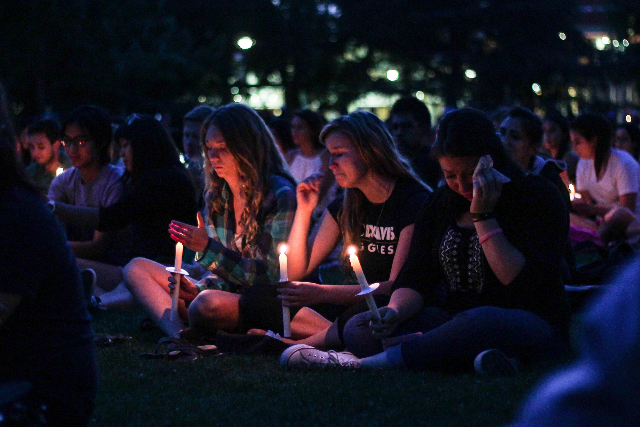
UC Davis students voice their opinions on UCSB shooting

candlelight_fe_Hanni Newland_Lin13Hanni Newland
First-year neurobiology, physiology and behavior major

“I think a lot of times in tragedies like this, you get caught up in it and you don’t think about how these people had friends, had families,had lives — you just hear a name and see a face.

I don’t feel unsafe [being on a UC campus], but I think the biggest thing is balance. There needs to be a time for mourning and a time for thinking and reflection — a balance between the two is always good.

Not to get political, but when I see fingers pointed that it’s a gun rights thing, it’s a feminist thing, it’s a mental health thing, I say why not all three, why not approach all issues? Just as the victims are multifaceted, so was the perpetrator, and I think that’s something to keep in mind.  I don’t feel like it’s just one issue, there’s a lot there.”

candlelight_fe_AhmedNaguib_LinAhmed Naguib
Conduct Coordinator in Student Housing

“I graduated from UCSB two years ago, so not too long ago. I was an RA there so I have residents who are still there — the thing about the UCSB community is that you might be four or five years removed but we still have deep roots there.

My immediate reaction was a huge amount of shock, like how does this happen in our community. The second part was what can we do, how can we show support. I almost drove down immediately that day but I had family stuff and it was one of those things where you’re stuck between a rock and a hard place. I had friends who drove down that day, who flew across the country to be with people there and be part of that community.

As I was walking up [to the vigil], I was thinking wow there are a lot of people here, and I noticed more and more. Even seeing my students here — I don’t think they know how much it impacts me and supports me to see them here but its amazing.”

candlelight_fe_MattZajic_Lin8Matt Zajic
First-year Ph.D. student in education

“I’m from SB [Santa Barbara] and did my undergraduate there. My family lives in Santa Barbara, luckily not in Isla Vista but a lot of friends are still there. As it unfolded, I heard from an old boss of mine that an old coworker was one of the ones that ran for her life at the scene. [It felt] too close for comfort. And thinking about the location – every single picture thinking ‘oh I lived a couple blocks from there!’”

candlelight_fe_Casey Jereb_Lin9Casey Jereb
Second-year biological sciences major

“I came out [to the vigil] to support the whole UC Davis community along with Santa Barbara, and I’m also in Tri Delta and two of the girls who were shot were in Tri Delta, which is really scary. Honestly that could’ve happened anywhere, it could’ve happened on this campus.

It’s scary knowing that nobody’s really safe, especially living in a sorority house. I don’t personally live in a sorority house, but I know many girls do and people come up to their door all the time and want to come in, and they don’t know them.

All the speeches [at the vigil] were so touching and it made me feel like I knew the people in the incident. My roommate knew one of the people – she spoke [at the vigil], which was really courageous. And one of my sorority sisters was actually in Isla Vista, and also someone who went to my high school was actually injured. It’s just strange how it’s such a big state and it all comes down to this and everyone has some connection.”

candlelight_fe_MalloryBonnema_Lin6Mallory Bonnema
Third-year human development major

“I was in the shower and I had my radio on my phone and the news came on it said, ‘Breaking news: shooting in Santa Barbara,’ and I thought ‘No, there’s no way.’ I got out of the shower as fast as I could and I called my friends immediately and no one was answering and I remember getting on Facebook and googling it thinking, ‘This isn’t real, this isn’t happening.’ I remember all my friends were freaking out like ‘has anybody heard from so and so’ – luckily all my friends were okay, but it definitely very surreal.

I think [the vigil] went really well. I think it says a lot about our community to come together for our sister school.

Hearing memories [from the speakers] kind of makes you think of loved ones that you went to school with. You just want to hug your friends. So to hear people that actually knew them personally, it’s really sad to think about what they are going through emotionally.”

candlelight_fe_Sasha Kasper_Lin11Sasha Kasper
Vigil coordinator, second-year English and neurobiology, physiology and behavior double major

“It felt really bizarre [hearing about the shooting] because I took a summer course at UCSB and I have a good amount of friends that go there, so my immediate reaction was ‘Oh my god are they okay?’ I didn’t know the people who were victims, but I just felt so sad and it felt so close to home. It’s just crazy to think that all these students were our age — it’s a really eerie feeling.

When I heard about the event I thought it’s just so tragic, how can we make it so we can maybe reflect more on the people who were injured besides the shooter. I saw that UCLA and UCSD were doing vigils and I thought it would be neat if we did it, so I took the initiative. Not in a million years did I imagine so many people would come.”

ELLIE DIERKING can be reached at features@theaggie.org.

Photos by Katie Lin. 

This Week in Senate: May 15, 2014

ASUCD Vice President Maxwell Kappes presided over the senate meeting on May 15, held in the Mee Room of the Memorial Union. The meeting was called to order at 6:12 p.m.

Senate addressed the ASUCD website being down for an extended period of time. According to ASUCD Senator Gareth Smythe, a new website is being developed.

Plans for the renovation of the Rec Pool and the ARC were discussed. There are currently plans to get rid of the current pool and replace it with two new pools — one seasonal and one year round. The committee in charge of the renovations is collecting suggestions from students about what additions they would like to see. Plans for the ARC renovation include expansion to create more space and possible expansion of the second floor balcony.

Entertainment Council (EC) Director Ben Bryan gave EC’s unit report. Explaining some of the problems the EC faced this year, Bryan cited lack of venue availability, the new campus ticketing policy and an inability for the unit to conveniently access its reserves.

“People are looking for larger artists on campus and we really can’t afford them,” Bryan said. He presented four options that could help resolve some of EC’s issues: increasing the midsize show reserve and putting on shows for free, increasing the midsize show reserve and selling tickets to shows, rewriting the bylaws related to large shows and working with campus recreation and unions and the ticket office to form a contract with outside promoters.

Various options were discussed, including putting the unit into “sleep mode,” which senate decided against in a vote to divide the house.

Unit Director Cameron Cairns gave the KDVS report. KDVS is having monthly meetings with ASUCD Business Manager Janice Corbett. Cairns introduced the new general manager, Ashley Hanson.

During public announcements, Smythe discussed Sunday’s 5K Stride for Aggie Pride, reporting a signup list of about 3,000 people — double the size of last year’s. The employment of a new unit director for the Experimental College was also discussed. ASUCD Senator Mariah Watson reported an increase in The Pantry’s inventory of over 1,000 food items. The Pantry will host the Canned Food Castle Competition on  May 30 from 12 p.m. to 2 p.m. on the Quad.

“People are starting to use it more and really utilize this resource,” Watson said.

In the appointments and confirmations section of the meeting, senate appointed Tara Storm as new unit director of The Pantry, John Wu as Elections Committee chair and Adriana Reyna, Alexis Caligiuri and Haley Silvano as members of the ASUCD court.

Meeting attendees then ventured out of the Memorial Union for an impromptu fireworks show put on by the Celebrate Davis! Festival on the roof of Kerr Hall. Afterward, senate and the public headed back to the Mee Room for deliberation over old legislation.

Senate passed four bills: Senate Resolution #25, Senate Resolution #26, Senate Bill #72 and Senate Bill #77.

Senate Resolution #25 calls for the support of State Senate Bill (SB) 150, proposed by California State Senator Ricardo Lara. SB 150 would allow California high school students who have not yet received legal immigration status to attend California Community Colleges without having to pay non-resident tuition fees.

Senate Resolution #26 supports California Assembly Bill 25 (AB 25), proposed by State Assemblymember Nora Campos. AB 25 would protect the privacy of California public employees by ensuring they will not face negative consequences for refusal to provide personal social media account information to their employers.

Senate Bill #72, authored by ASUCD Senator Katie Sherman, is intended to create consistency in the ASUCD bylaws and constitution by implementing use of the word “emergency” or “urgent.”

Senate Bill #77, authored by Smythe, calls for the allocation of $9,450.42 from the Equipment Reserves to purchase new computers for the Student Services Office.

The meeting adjourned at 11:52 p.m.

— Lauren Mascarenhas

Main Stage Dance Theatre presents Penumbra

Get ready to move and be moved. On May 29, Penumbra opens at the Main Theater in Wright Hall. Presented by the Main Stage Dance Theatre, Penumbra features a myriad of dance styles, expressing emotions and stories familiar to many.

The Main Stage Dance is an annual showcase for students’ original choreographies. Throughout every school year, select dance students each create a piece to be performed in Spring Quarter. The students are committed to developing their choreographies as they would with thesis projects. The recital overall celebrates the select students’ passion, devotion and talent.

Director David Grenke describes how the program demonstrates every dancer’s unique relationship with the art. Speaking with MUSE, Grenke put the concept into perspective.

“We think of presentational performance as storytelling or expression; another way we think about it is as a kinesthetic way of thinking,” Grenke said. “We think with our bodies; we take in information that way. It’s one of the earliest forms of anything we do. It’s how we think after birth: functioning with our body.”

Penumbra specifically features the work of Cynthia Arellanes, Mark Crumrine, Mariah Heller, Hien Huynh, Fidel Prestegui, Veronica Quiroz and Quiona (QJ) Williams.

Hien Huynh — a fifth-year communication and dramatic art, dance emphasis double major — choreographed the piece “Ethereal Abyss.” Huynh said his work pays homage to the complexity of human emotion and expression.

“The piece explores the external and the internal — how sensations of what we see may differ from what we feel,” Huynh said. “It follows instincts of opposition: the existence and the nonexistence. Hollow-like human beings, rigid, stiff with composure, yet inside there exists emotions of regret, pain and frustration. These beings attempt to break out from their hardened shell, seeking one another through the shared struggle. Yet, they are ripped and reversed apart from one another in a cycle of emotion and emotionless.”

The program concludes with Mariah Heller’s “Awakening.” Heller — a fourth-year dramatic art, dance emphasis major — centered her piece around themes of patriarchy and female empowerment. Heller’s piece draws inspiration from observations of relationships.

“We’ve been working on these projects for about a year now, and my piece originated as a narrative based on the cyclical nature of relationships,” Heller said. “As my piece evolved, it became a bit more focused. I drew from the dynamics that I have experienced in my personal, familial and romantic relationships. I also drew from various social constructs such as patriarchy.”

While all pieces may resonate with viewers differently, the dancers and Grenke expressed that they hope that the program will leave audiences with a new take on dance.

“We hope the performance can be a catalyst for any new thinking, whether it’s a new perspective around a narrative idea or concept, a new way of considering what dance is or a different way of seeing use of space in a theater,” Grenke said.

For show times and ticketing information, please visit tickets.mondaviarts.org.

CHLOE CATAJAN can be reached at arts@theaggie.org.


Column: Closing Thoughts

0

kenIt’s been one long year. From learning how to do my job as the sports editor to trying to pass the Save The Aggie referendum, it has been one long journey that is finally coming to an end.

In many ways, the ups and downs of this year at The Aggie have mimicked the rollercoaster year for UC Davis athletics. There have been plenty of high points, such as the women’s track and field team capturing their third straight Big West Championship title, and there have been some low points, such as the season-ending injury of men’s basketball player J.T. Adenrele and the subsequent subpar season for the team.

Rather than focusing on the negative, I’m going to be positive. Shocking, I know.

My goal is not to discuss the failures of UC Davis athletics but rather some observations I have gathered through my experience covering UC Davis sports.

I entered UC Davis representing the majority of UC Davis students who like sports, I thought the 2005 wins against Stanford in basketball and football were impressive, but I sure did not choose UC Davis for its athletics program. I honestly thought that UC Davis was like many other athletic programs, occasionally lucky, but doomed to mediocrity.

This seems to be a lasting attitude among a group of students at UC Davis. So, my first observation is directed at students and UC Davis supporters as a whole.

Look harder. Don’t focus on the “cash sports” such as football and men’s basketball. Looking beyond these sports, you see teams such as women’s and men’s golf, women’s tennis, men’s soccer and women’s track and field.

These teams have shown the ability to win. Look at the women’s golf team’s complete dominance of the Big West conference. They won their fifth straight Big West title this year. Yet, these teams often don’t get the coverage they deserve. For my part in this, I apologize.

But all of this is to say, for those of you who believe we don’t have successful athletics: Look harder! Gain a deeper appreciation for sports as a whole, not just basketball and football. Appreciate the dedication and hard work that these athletes have put in on and off the field to thrive.

I understand that this view of UC Davis athletics is not for everyone. Some would give almost anything for a 11-1 football team that defeats Stanford yearly or a 22-7 men’s basketball team which makes the Big Dance yearly. However, why have this obtuse and unrealistic vision of UC Davis athletics, which inevitably ruins your enjoyment of the program? Why not just take UC Davis for what it is and enjoy success of “smaller” sports and take success of “bigger” sports in stride? Enjoy the success now, because one thing I learned this year is: you never know when it’s gone.

Now, on to the administration and athletic department. I came into Davis not fully understanding the UC Davis model of athletics. However, the more I learn about the core principles and the concepts which UC Davis athletics was founded upon, the more it impresses me.

The purpose of the UC Davis athletics department is not only to produce great athletes, but also great students. They are student-athletes after all. These athletes aren’t just here to perform on the field but they should also be able to thrive in the classroom.

On this front, UC Davis has done a fairly good job. I commend the athletes and administration for this. UC Davis recently announced their Academic Progress Rates (APR) for various sports including the perfect 1,000 rating which the women’s tennis team scored. They were also honored with an NCAA Public Recognition Award due to the overall quality of its APR scores.

Now, we can argue about the meaning of these scores and whether or not it is significant. However, I believe this defeats the point. The administration has, for the most part, selected student-athletes who could succeed on and off the field. The student-athletes have worked hard and are making use of the opportunities given to them. Good for them.

Another concept which UC Davis’ athletic program is founded on is the concept avoiding tiering. Tiering, for those of you who don’t know, is supporting one sport, generally a money-generating sport, more than others.

As someone who has grown more and more weary of the NCAA and its cash crop system of exploitation, the idea of avoiding tiering and giving all teams equal support seemed to be the countering force against the NCAA.

I wish this had stayed true, but the cut of several teams in 2010 showed otherwise. The cutting of teams to “save money” while at the same time increasing the expenses of men’s basketball reeks of tiering.

I understand the desire of a good men’s basketball team or football team. After all, who wouldn’t want a Kevin Durant or a Johnny Manziel at UC Davis? But, this is a slippery slope towards the NCAA model.

UC Davis’ athletic model was set out to distinguish itself from the NCAA model of exploitation and inequality. I urge the administration and directors who make decisions regarding the athletic program to fight against this change.

If you want UC Davis to stand out, let it stand out for the right reasons. UC Davis has the capability of being a athletics program which promotes student-athletes, not just athletes.

If this piece was too long and you didn’t read it here is the summary: UC Davis athletics has been founded on a unique set of core principles. UC Davis may not ever compete for the national championship in football or basketball but it should always strive to uphold its unique principles for its athletics program. Besides, doing things the “right way” does not always doom a program to mediocrity. If you think it does, then you should look a bit harder. Success is definitely there.

You can tell KENNETH LING that his columns sucked this year at sports@theaggie.org.


UC Davis student founds first national Amigos de las Américas program

For over 50 years Amigos de las Américas has sent high school and college students to Latin America to volunteer with community development projects. For the past year, however, second-year community regional development major Anna Peare has been redefining what it means to be a part of Amigos.

Peare was recently awarded the Donald A. Strauss Foundation Scholarship, winning $10,000 which will go towards her plans to launch the first national Amigos program, working with youth to impact local change. Her project is called the Amigos de las Américas: Backyard Program.

For those who are unfamiliar with the organization, Amigos de las Américas is an international nonprofit that fosters adventures and education alike by preparing high school and college students to spend a summer in Latin America. Once there, students live with a host family, soak in the culture and lead service projects that range from health to environmental, depending on the individual needs of the community they’re living in.

Peare was already an Amigos veteran when she came to UC Davis, having done two over-the-summer programs in Panama and Peru. Her idea takes a very new spin on the established organization, and since its inception in the fall, she and the program have been very busy.

“I actually started the backyard program with this grad student who goes to Davis,” Peare said. “So we kind of just thought, ‘What would happen if we just took the summer program and made it local?’ And now we’ve been working on it for over a year, working with different departments at UC Davis.”

The community and regional development graduate student mentioned by Peare is Todd Simmons. Simmons, who has been involved with Amigos since 2002, is currently president of the board at the Sacramento-Davis Chapter of Amigos.

“In the past we’ve been very focused on privileged youth going from the U.S. to Latin America and that’s due to the cost… This new program, the Backyard Program, is zero cost to the participant. It is engaging them at their own community level.”

Though Peare is currently the director of programs for the Amigos de las Américas: Sacramento-Davis Chapter, the Backyard Program is an independent project and not part of her current duties for Amigos de las Américas. The Amigos Davis-Sacramento Chapter has been fully supportive of the program, however, and Peare has also received a great deal of support here on campus.

“We’re working closely with certain professors in community development — so the college of Ag. We’re also trying to partner up with the University Honors Program — trying to get some sort of service learning component going on with that,” Peare said.

Katie Stone, executive director of the Sacramento-Davis Chapter of Amigos, has been assisting Peare in her development of the program. However, before Peare won the Strauss Scholarship, their work was unfunded.

“She [Peare] was working with the Amigos organization over the last year to develop the curriculum for everything, but without that scholarship I don’t know how we would be able to roll everything out as we move forward.”

The Strauss Scholarship is a step toward expanding and strengthening the Backyard Program. As far as getting involved in the program, Peare said that it’s open to anyone who wants to get involved in the Davis community.

“We have the supervisor application posted, but as soon as we get those locked down we’re going to be focusing on getting youth to participate. We want college level volunteers,” Simmons said.

ELLY OLTERSDORF can be reached at features@theaggie.org.

New Event Observer Service accepts volunteer observers for fall

The Office of Campus Community Relations (OCCR) will launch a new Event Observer Service (EOS) on campus next fall.

The service is to provide the University impartial observers consisting of UC Davis faculty, staff, student and retiree volunteers to observe and report at campus events and demonstrations. The observer’s role does not include mediating or getting involved with participants in any way. Once observers feel their safety is being compromised and feel the need to contact authorities, their role as observers ceases to continue at the event since they are no longer taking a neutral stance.

Anyone may request to have EOS at a public event that has the potential of illegal activity or violation of University policy.

EOS stems from Recommendation 41 made by the University of California Office of the President in 2012 in the Robinson Edley report that was composed in response to protests and demonstrations at UC campuses. According to the Robinson Edley description on the UC website, “This report guides the UC system and campuses in how to respond to future protests effectively by addressing roles and responsibilities; policies; organization and structure; and training.”

Several elements of the service model similar programs at UC Berkeley and the University of Oregon.

In the past, staff who worked as event observers were permitted to interact with participants at the event. Volunteers of EOS, however, are to be objective and neutral by only observing.

Depending on the size of the event, two to three observers will be present to gather data for an annual report for the campus. They will be identifiable by armbands.

“The idea is to get a better understanding in terms of what took place so that as much information is gathered in understanding a particular situation,” said Mikael Villalobos, administrator of Diversity Education Program at OCCR.

Students expressed concerns regarding the service’s potential negative usage as well as the administration’s perceived mistrust in its students.

“Neutrality doesn’t exist,” ASUCD Senator Azka Fayyaz said. “One of the biggest problems I have with this program is the fact that it calls for neutrality when it really isn’t neutral because anyone can request the service.”

According to Villalobos, he will determine each request on a case-by-case basis. As the manager of EOS, he will not provide the service at an event that he does not consider appropriate to have observers. Events must be open to the public, and those having the potential of drawing large crowds or getting out of hand will be considered.

However, some students are concerned that certain events will be more observed than others.

“The people holding protests and who are activists come from marginalized communities and the fact that these observers are coming in makes them feel that they can’t be as free to say what they want because of their presence,” said Edina Metovic, a third-year managerial economics major.

Many concerned students desire more transparency in the evaluation process of requests to help alleviate the fear of being targeted.

“The point is they are demanding transparency of students by essentially spying on them without permission, while failing to live up to their own standard of transparency by not making public the important details of this program,” said Matthew Palm, Ph.D. student in transportation technology and policy.

Those against EOS view it as a surveillance program that puts student observers against student participants, and some are worried about the motivations of these volunteers.

“I am concerned about the kinds of students who will sign up as observers,” said Evan Sandlin, a second-year political science graduate student. “They will most likely be the kinds of students that feel comfortable working with an administration that has

opposed the interests of student activists, and so will therefore be biased in favor of ‘calmness’ and ‘order’ rather than change and justice.”

According to Carolyn Penny, director of Campus Dialogue and Deliberation, the foundation of EOS is based on trust, and its intentions lie with serving the campus community. In response to the issue of the service reinforcing a silence at demonstrations that are already typically peaceful, Penny explained how EOS serves to support and not monitor.

“Based on information from similar programs at UC Berkeley and University of Oregon, I don’t expect conflict between student protestors and any of the observers,” Penny said. “My hope is that all of the campus community will see the event observers as a valuable service of and for the campus community to support freedom of expression on campus.”

Volunteer applications were accepted until May 23, and training will begin next fall. Observers of this two-year pilot program are to go through an initial six-hour training in the start of the 2014 academic year and will continue with quarterly trainings. Training will cover skill sets required for observers, including a focus on neutrality and impartiality as well as reporting without personal evaluation.

“I think it’s important for folks to hear the intent of the service as a service for the campus community,” Villalobos said. “It’s not intended to squelch speech. It’s not intended to squelch activity.”

NICOLE YI can be reached at campus@theaggie.org.

LocalTones to showcase UCD a cappella groups

Six a cappella groups will perform together on May 30 as part of a concert that will benefit the United Mitochondrial Disease Foundation.

LocalTones, the latest installment in an annual concert series that showcases the a cappella groups of UC Davis, will feature performances from The UC Davis Lounge Lizards, The Spokes, The Afterglow, GreekBeats, Jhankaar and The Liquid Hotplates.

“LocalTones is an awesome collaborate a cappella event,” said Rachel Riley, a fourth-year English major who is president of The Spokes. “It’s a chance for the local a cappella community to come together for one event.”

Jaimie Wu, a fourth-year exercise biology major who is president of The Liquid Hotplates feels that Localtones exhibits the strong sense of community among the a cappella groups of UC Davis.

“While LocalTones has changed a lot since my freshman year, the theme of a community effort has been constant,” Wu said. “This year’s going to be the best one yet because we came together and had all the groups host the show as a community. We’re sharing the work in publicizing and selling tickets and it feels way more equal [than in past years]. All the groups were involved in choosing the date, the nonprofit we would donate the proceeds to and how to promote the event. The distribution of work is more even and our effort has gone beyond just changing our profile pictures to the event flyer.”

This year, the event’s profits are going to the United Mitochondrial Disease Foundation. This charity has been chosen because the Nool brothers who are members of The Afterglow recently lost their younger brother to this disease.

“I like that I get to support their family,” Wu said. “What’s a better way to be a community than to support someone in the community?”

This is the second LocalTones for GreekBeats which consists of members of sororities and is the newest a cappella group on campus.

GreekBeats formed in January 2013 as a way for members of sororities to have an a cappella group that didn’t require as much of a time commitment.

“We’re definitely more established now,” said Madison Kime, a third-year managerial economics major and a founding member of GreekBeats.  “It was a little intimidating being the new group last year.”

LocalTones will occur on Friday, May 30 at 8 p.m. in 123 Science Lecture Hall. Tickets are $5 presale and $7 at the door.

JOHN KESLER can be reached at arts@theaggie.org.


Guest Opinion: As Graduation Approaches, A Call to Service

0

Days from now, the Class of 2014 will begin their lives beyond UC Davis leaving behind the infamous egg heads scattered around our school, the very distinct cow smell of Tercero, the delicious coffee of the CoHo, the bike crashes by the Silo and many other important landmarks distinct to our beautiful UC Davis campus. A year ago, I stood where they will, thinking about how my four years on campus had prepared me for the challenge I was about to take on. Now here I am, a Resource Specialist (RSP) for the Sacramento Unified School District and a first-year corps member for Teach For America.

As any first-year teacher will tell you, those early days in the classroom are exhilarating and intimidating. In those first few weeks, the importance of the work ahead of me came into focus. All of my students receive special education services and I am only one component of their education. My students are placed with a general education teacher and I go into their classrooms to provide them with specific academic interventions in all subjects. The magnitude of the responsibility continued to dawn on me as I realized that I would be working with some of the most vulnerable students in our educational system and I needed to work twice as hard to ensure they received access to their education.

I joined Teach For America because I knew I wanted to be a part of a larger movement towards educational equity. In this country, zip code, income bracket and skin color all play determining roles in a child’s access to a decent public education. This is a huge, historically-rooted, deeply entrenched problem. It’s also one we have a responsibility to solve. Although I come from a low-income background, I had never given much thought to the fact that there are some students who, aside from facing racial, economic and social struggles, also have to struggle to access their education because of a learning disability. I am humbled to say that the fact that I never even have to think about it proves to me how much of an unrecognized privilege I have had.

In the last year, my students and I have been through a whole lot together. I’ve seen the frustration in their eyes when they cannot read a passage from a story and then the joy in their entire faces when they finally can. I’ve seen my students struggle to meet grade level standards and have to work twice as hard to understand the material, but I’ve also seen the satisfaction they feel once they have accomplished their goals.

Looking back to my own pre-graduation days, I’m grateful for the friends, professors and campus administrators who encouraged me to pursue this work, which is harder and more rewarding than I could have imagined. Through them and the education I received, I was able to find a career that both challenges me and inspires me to get better every day.

Looking ahead, I feel myself inclined to pay this forward. For those seniors getting ready to begin your own careers in education or social justice, get ready for a new chapter you won’t regret. For the underclassmen still charting your futures, I hope you’ll consider the one we’ve chosen — whether through Teach For America or countless other programs that support recent grads to make a great impact. As you do, my students and I will be cheering you on from Sacramento!

Alicia Zamorano
2013 UCD Alumna
Community & regional development major, political science minor
Teach For America corps member
Resource Specialist (RSP) for the Sacramento Unified School District

UC Davis study looks to increase health for Latino farm workers

Researchers at UC Davis recently received a grant of $3 million from the National Institute of Diabetes and Digestive and Kidney Diseases (NIDDK), part of the National Institutes of Health, to conduct a study that aims to improve the health of Latino farm workers.

Marc Schenker, the lead investigator of the study, a UC Davis professor and director of the UC Migration and Health Research Center and the Western Center for Agricultural Health and Safety, said that the grant money will be used to conduct careful evaluations of body weight distributions of Latino farm workers, especially when exposed to different food and diet programs. The studies will primarily take place on ranches in the Watsonville and Salinas, Calif., areas, but Schenker hopes that the findings will apply to farm workers everywhere.

“The money will be going towards a careful evaluation of effectiveness that may lead to an international program,” Schenker said.

Schenker said that this study was started after conducting numerous pilot studies that show that many Latino farm workers are susceptible to diabetes and other health problems.

“The origin from my end was work I do on farm workers and realizing the challenges of diabetes in that population,” Schenker said.

According to Daniel Sumner, the economist for the study, the fact that many Latino farm workers are susceptible to diabetes surprised health professionals. They believed that the exercise farm workers are exposed to in their jobs would prevent these health problems from arising.

“I was surprised by how much we had to explain to people that this is a problem,” Sumner said. “We had to convince them that what they thought is true isn’t.”

Schenker said that one of the main reasons for these health problems is due to poverty among farm workers.

“A healthy diet costs more,” Schenker said. “Cheap calories tend to be unhealthy and cause diabetes.”

Schenker said that although the poverty among farm workers is a major concern, the study will focus on limiting the diabetes. The study will include trying to educate Latino farm workers on how to have healthier diets and to provide exercise programs such as Zumba dance classes.

Dr. Christine Hunter, director of behavioral research at the NIDDK, said in a statement that the study will produce results to show if these interventions will prevent health problems among Latino farm workers.

“The farm-working Latino population that will be reached through Dr. Schenker’s work often has limited access to health care,” Hunter said. “With this grant, we hope to determine if bringing a culturally sensitive program to improve diet and activity habits to the farm worksite can lower the participants’ risk for obesity and type 2 diabetes and also be cost-effective for employers to implement.”

Schenker said that this study will be used to see if worker productivity and retention increases through the interventions used through the study. This will allow other employers to pick up the methods used in the study to help increase worker productivity and health of workers.

“We’ll be looking a lot at productivity and absenteeism as a unique part of what we’re able to do through this study,” Schenker said.

Sumner said that although a large goal within the project is to encourage employers to pick up these techniques, the main goal is to help farm workers gain healthier lifestyles.

“We want to provide something that will help this group of people become healthier,” Sumner said. “We want to put this together in a way that will be sustainable and will last not just during the project but after.”

MELISSA DITTRICH can be reached at campus@theaggie.org.


Letter to the Editor: Hate Speech on Campus

1

Dear UC Davis community,

Today, Wednesday, May 28, I witnessed a group of men holding up signs, some of which said “You deserve to die” and “You’re going to hell.” I’m all for free speech, but where do we draw the line between free speech and hate speech?

On a campus dealing with the issues of violence and hate, and as seen tragically at the recent events at our sister campus UCSB, how can we let this group disrupt the very point of this University: to educate?

I am a TA for several courses and had several students unable to attend discussion section due to being emotionally upset by both the shooting and the group on the Quad. Aren’t our Principles of Community about instilling tolerance and respect and most of all, to create a safe environment to learn for all our students? How can we abuse the title of “free speech” on a campus that could very well face the same issues of violence and hate seen at UCSB?

Screaming at students, engaging in hate speech, including swearing and cursing at students, promoting hatred and advocating for violence — these are hopefully not the principles here at Davis, but today, I’m not so sure. Chancellor Katehi — your thoughts?

Piper Milton
Graduate student, Department of Art and Art History


California Strawberry Commission sues UC Davis

0

The California Strawberry Commission (CSC) filed a lawsuit against UC Davis in fall 2013 with the belief that UC Davis has intentions of ending its strawberry breeding program.

The strawberry breeding program is a program that has, for decades, researched and developed new varieties of strawberries. Because of its existence, California strawberry growers can buy their plants directly from the University rather than buying plants from private breeding programs, which have much higher royalty rates.

According to Carolyn O’Donnell, the communications director for the CSC, concern for the continuation of the breeding program arose as the professors who work for the program, Douglas Shaw and Kirk Larson, approached retirement.

“In 2012, they let us know that they were not going to continue renewing the contract we have with them on an annual basis for the breeding program, that would also terminate the royalty discount the strawberry growers were getting, and that they weren’t planning on continuing the program,” O’Donnell said.

Following this news, the CSC filed a lawsuit in hopes that UC Davis would reconsider their statement, and would both continue the program and keep the program public.

“Having a public breeding program enables anyone who wants to start growing strawberries commercially, to have access to the varieties that were developed by the University of California, Davis,” O’Donnell said.

Many immigrant families have come to realize the ‘American dream’ in California through growing strawberries commercially, according to O’Donnell. She said she fears that this will no longer be a viable option if the royalties on strawberry plants increase.

Additionally, the CSC has helped to fund the strawberry breeding program since 1955. According to a letter from Assemblymember Luis Alejo to Chancellor Linda P. B. Katehi, which was signed by several other California assembly members and senators, the CSC spent $20 million on the program since the CSC’s partnership with the strawberry breeding program. The same letter also stated that over $100 million in royalties have been paid to the University through the program.

“ANR [the University of California, Division of Agriculture and Natural Resources] informed the Commission that it planned to terminate the Program and enter into a licensing agreement with the Program strawberry breeders who intend to appropriate publicly funded research for use in a private company they were forming,” Alejo said in the letter.

Katehi said UC Davis has no plans to terminate the strawberry breeding program.

“As we have repeatedly articulated throughout our ongoing discussions with the CSC and other external parties, the University remains fully committed to continuation of a public strawberry breeding program for the benefit of both the strawberry industry as well as the general public,” Katehi said in response to the letter.

Katehi further mentioned that she is disappointed in the CSC’s decision to continue the litigation against UC Davis.

On April 23, 12 days after Katehi responded to Alejo’s letter, UC Davis filed a motion that the CSC’s lawsuit against the University be dismissed according to a press release issued by UC Davis.

Professor Mary Delany, associate dean of agriculture and environmental sciences, said that she believes the misconception that the University is terminating the program stems from the interest of both Shaw and Larson to retire.

Additionally, the program is currently searching for a new breeder/geneticist to take the place of Shaw and Larson when they do decide to leave.

Delany said that the CSC’s financial relationship with the breeding program was born from the program’s desire to raise royalties for the strawberry plants that it produced. The commission agreed in lieu of raising the royalties they decided to backfill the cost through research agreements.

“We are looking forward to an updated version of our program, we’re looking at the program carefully deciding in the future what is best and to continue to do what we’re doing but do it in a better and more efficient manner,” Delany said.

Delany confirmed that UC Davis is in discussion with the CSC and is working to resolve the issues between them, and that UC Davis does not have intentions of ending the breeding program.

SYDNEY COHEN can be reached at city@theaggie.org.


ASUCD Entertainment Council presents Lawntopia

On May 30, ASUCD Entertainment Council presents Lawntopia on the Quad for the second year running. This year’s free event will feature Bay Area hip-hop duo, Zion I.

Zion I, renowned duo of producer AmpLive and MC Zumbi from Oakland, Calif., debuted in 1997. In total, they have released over seven studio albums, their most recent EP releases being The Masters of Ceremony and Libations. In a phone interview, Zumbi talked about his music.

“It’s positive, but not radio, corporate hip hop. It’s soul music with a lot of bass. My intention is also to be reflective and introspective; I read and pray and meditate a lot and I think all that comes through in the music. It’s celebratory and party music but with a mindset,” Zumbi said.

Zion I has performed in Davis several times before. They will be including both well-known songs and newer material in the Lawntopia show.

Ben Bryan, a fourth-year managerial economics major, has been director of the Entertainment Council for the past school year. The first Lawntopia featured independent trio Radical Something, and the Entertainment Council has worked hard to surpass last year’s efforts.

“This year we wanted to do something a little bit bigger and really make sure it appeals to everybody,” Bryan said.

Lawntopia has already received a huge response from the Davis community, and the Entertainment Council is expecting a good turn out.

“We put out the [Facebook] event invite on Monday night and by Tuesday morning there were already 1,000 people attending so that’s pretty exciting for us,” Bryan said. “One of the reasons I love doing this is because, music’s my passion, I love music, but being able to set up the event, put it on and then go and see the look on everybody’s face when it all comes together, nothing’s better.”

The second installation of Lawntopia is a further step toward making the event even bigger in the future. UC San Diego and UC Santa Barbara have annual music festivals Sun God and Extravaganza, respectively.

“Maybe next year it’s kind of this size and then the year after we could turn it into a festival like all the other UCs have,” Bryan said. “We’d be looking at bigger artists and more artists playing instead of just one or two.”

Andrea Hasson, a fourth-year clinical nutrition major, has been assistant director of the Entertainment Council for a year and a half. Hasson is responsible for booking the Quad shows and running volunteer meetings.

“It’s cool to see that you’ve organized something and people watching the music. This is probably the biggest event I’ve been part of on the Entertainment Council,” Hasson said.

Letty Uy, a second-year design major, is the online promotions director for the Entertainment Council. Uy is in charge of marketing Lawntopia through social media and posters, and her role allows her to utilize her design skills.

“I start out usually with a movie or a performer, so I would check out what the movie’s about, watch the trailer or look at the performers and listen to their music while I’m designing the poster, so just kind of the essence of what I’m designing for,” Uy said.

The Entertainment Council also hosts regular film screenings on campus.

“It’s such a great team, we’re all friends and that makes it really enjoyable. I just love doing the work, being involved in the music, and bringing events that people look forward to and have fun with,” Uy said.

For those who were disappointed by Holy Ghost’s recent cancellation, the band will be making an appearance next school year around Halloween time.

Lawntopia will take place on May 30 at 6 p.m. at the UC Davis Quad. Students will need to bring along their UC Davis Student ID to attend.

ZOE SHARPLES can be reached at arts@theaggie.org.


News in brief: Davis Art Studio Tour

From May 31 to June 1, the Davis Art Studio Tour will take place all over the City of Davis. The Davis Art Studio Tour is an annual city-wide exhibit meant to showcase the vast artistic talent throughout the city of Davis. The tour works by offering viewers a map of all the different art studios in Davis that are open for public viewings.

The tour was founded in 2007 and sponsored by the Pence Gallery in order to celebrate local artists and make citizens aware of the variety of art that could be found in Davis.

Now the tour is sponsored by a Davis art cooperative, The Artery. The art viewings are unique because rather than an artist displaying their pieces in an organized gallery, the work is displayed in the same place where the art is created: the studio. This gives new perspectives to art enthusiasts as to what kinds of environments professional artists build for themselves in order to spark the creative process.

This year there will be 27 unique artists from around the city. The pieces set to be showcased range from oil painting to sculpture to photography and beyond. Local ceramic artist, Linda S. Fitz Gibbon, will be displaying some of her new work as well as older pieces. She said she is excited for art admirers to see the space in which her work is created.

“My home is like a gallery with art wall to wall,” Gibbon said. “I’ve been collecting art longer than I’ve been making it — over 20 years. This is a great opportunity to see a broad range of artwork from some well-known figures. I’ll [also] be showcasing both figurative and abstract ceramic sculpture from a few inches to several feet high.”

Local painter Marie-Therese Brown will be showcasing her pieces at the tour. She said she believes this event is not only beneficial for consumers and admirers of art in Davis, but for the artists themselves.

“This is also a chance for the artists to get to know the community and get feedback on their process and art,” Brown said.

A pre-tour exhibit will be held from May 27 to June 2 at The Artery on G Street. The tour is $10 for adults and free for kids 12 and under. For more information, visit www.davisartstudiotour.com.

— Akira Olivia Kumamoto

Aggie Arcade: Your weekly dose of video games

Best of 2014 (So Far)

All good things must come to an end. Graduation is just around the corner, so this marks the final edition of the Aggie Arcade. But sappy goodbyes are boring — let’s talk about great video games instead.

The first half of 2014 has seen plenty of enjoyable releases, but a few games stand out among the crowd. One of those games — Transistor — came out just last week. It’s the newest project from developer Supergiant Games, the team behind 2011’s critically acclaimed Bastion. Let’s just say they avoided a sophomore slump.

Transistor‘s greatest strength and weakness is its ambition. It tells a complex story of identity and technology that lacks a much-needed emotional punch, but it makes up for it with a gorgeous sci-fi world and deep combat system.

I became addicted to Transistor‘s action/strategy hybrid combat and its insistence on experimentation and careful planning. It reminds me of games like Valkyria Chronicles and XCOM: Enemy Unknown in that overt aggression works against the player. Thoughtful decisions and patience are the keys to success.

And though I found the narrative to be disappointing, the way in which Supergiant Games crafts a unique and highly detailed world always makes for a memorable experience. Years from now I’ll still fondly recall Transistor‘s Cloudbank city.

I loved my time with Transistor, but Dark Souls II and TowerFall Ascension are my two favorite games of 2014 so far. Both have been discussed in previous editions of the Aggie Arcade, but it’s worth repeating why they leave such a huge impression.

Anyone who knows me knows my passion for the Souls series. It challenges players and truly tests their resolve, but victory and the ensuing sense of accomplishment stands as the series’ greatest achievement. Dark Souls II retains that distinctive feeling and makes some important mechanical changes in the process.

I still prefer the original Dark Souls, but the sequel provides another unforgettable experience with terrifying bosses and even more terrifying environments. Even at its worst, it trumps most RPGs out there.

TowerFall Ascension, on the other hand, captures the nostalgic joy of my youth. It reminds me of when my brother and I would play multi-player games together in the same room. Now the industry continues to push online multi-player, but games like TowerFall still remind us how fun local multi-player can be.

It helps that the game itself emphasizes the importance of smart game design. At its core it’s a simple 2D archery game, but the way in which TowerFall factors in different arrow types, environmental hazards and player movement makes for a fun game outside of the appeal of local multi-player.

As I said, there are plenty of other 2014 releases that I have enjoyed, but Transistor, Dark Souls II and TowerFall Ascension are my clear favorites. I can’t wait to see what the rest of 2014 has in store.

Now it’s time to close the Aggie Arcade. Thanks for reading!

ANTHONY LABELLA can be reached at arts@theaggie.org.