


58.4 F
Davis

Davis, California

Tuesday, December 23, 2025
Home Blog Page 848

Editorial: Safer communities — Call for change

0

On May 23, six UC Santa Barbara students were killed and 13 community members were injured after a Santa Barbara City College student went on a rampage.

Like the many mass shootings that have occurred within the last few years, this incident is tragic and horrifying. The occurrence of incidents like these have prompted discussions regarding what can be done to prevent them in the future.

Over the weekend, we all received emails from Chancellor Linda P.B. Katehi and UC President Janet Napolitano expressing their sympathies to the UC community and the friends and families of the victims of the attack. Katehi said that it is our responsibility “to seek out those in need and to make our campus safer in thought and in deed.”

While we agree with these sentiments, we cannot help but feel that their words leave out many of the deeper issues raised in light of this tragedy. Although the assailant’s state of mental health was debatably at play in his actions, we cannot ignore that they follow a pattern of violence motivated at least in part by his hatred toward women.

The assailant’s violent acts reflect an extreme manifestation of the deep-seeded misogynistic mentalities prevalent in our culture. In his manifesto, he stated, “I will punish all females for the crime of depriving me of sex.” We see this kind of mentality in less-extreme forms in our everyday lives — from issues ranging from microaggressions and party culture to sexual assault.

We agree with what Katehi said about being there for the UC community “in thought and in deed.” But a deed requires action. We hope for a concrete set of changes to be put in place that address these issues.

We ask the UC to reevaluate its general education requirements to add at least one class that tackles the issue of sexism (eg. women’s studies, sociology, cultural studies) so that our community can be educated on the dangers associated with trivializing and ignoring the symptoms of cultural misogyny. In conjunction, we think it’s important that the administration provide us with more accessible and effective emergency resources for victims of sexual abuse and assault.

For example, many victims of sexual assault, who are primarily women, struggle to find out what to do and who to talk to after the attack. Many don’t know how or where to get a rape kit, and many don’t even know what a rape kit is. We ask ourselves why the reported rape cases at UC Davis are back-logged, and why it’s so hard for victims of sexual abuse/assault to see justice served. The ineffective and difficult nature of receiving help reflects the UC’s inadequacy in addressing these issues for its students, and inevitably suggests a form of misogyny ingrained in the administrative system.

In this time of crisis, we hope that those in power may respond in a way that encourages critical thinking about the greater issues at hand. It is the responsibility of the University as an educational institution to prevent ignorance from perpetuating a cycle of discrimination and hatred.

We encourage students to attend the candlelight vigil on the Quad on May 29 as a way to not only express support for those most directly affected and to remember the victims of the attack, but also to go with the intention to educate yourself as well as others on ways to make safer communities.
Arts Week

MUSIC

Korean Percussion Ensemble
May 29, 12:05 p.m., Free
Wright Hall

The Korean Percussion Ensemble will be performing with guest artist Gamin Hyosung Kang, a classically trained p’iri player. Gamin is a highly acclaimed artist from South Korea. The afternoon will showcase the group’s knowledge of multiple genres within traditional Korean folk music and will seamlessly meld wind instruments and rhythmic drums.

Sylvia Herold Ensemble
May 30, 8 p.m., $20
Bill Wagman House Concerts, 1350 Monarch Lane
The event titled “Vintage Songs and a Big Guitar” brings the sultry vocals of Sylvia Herold, the masterful notes of guitarist Mike Wollenberg and the hopping double bass lines of Chuck Ervin together for a night of American jazz-inspired songs through the decades.

LocalTones 2014
May 30, 8 p.m., $5 presale/$7 at the door
123 Sciences Lecture Hall
The UC Davis a cappella groups will be putting on the collective annual concert, LocalTones 2014, on Friday, May 30. The lineup includes The Afterglow, GreekBeats, UC Davis Jhankaar, The Liquid Hotplates, The UC Davis Lounge Lizards and The Spokes. Ticket proceeds will go to the United Mitochondrial Disease Foundation.

DANCE AND THEATER

Pamela Trokanski Dance Workshop Student Concert
May 30-31, 7 p.m., $14 general/$11 students, seniors, kids
Veterans Memorial Theatre, 203 East 14th St.
The Pamela Trokanski Dance Workshop will celebrate their 29th annual student concert this weekend. The hour-and-a-half show will feature ballet, contemporary, jazz, belly dancing and dance team performances from a wide range of ages.

The Art Theater of Davis Presents: Hedda Gabler
June 1, 3:30 p.m., $15 general
ThirdSpace Art Collective, 946 Olive Drive
The Art Theater of Davis will be performing Henrik Ibsen’s extremely popular play Hedda Gabler at ThirdSpace Art Collective. Translated by Adam Siegel, the story follows a newlywed woman and her stifling marriage that ultimately leads to a dramatic turn of events.

ART

Davis Art Studio Tour
May 30-June 1, 10 a.m.- 5 p.m., Free
The Artery, 207 G St.
This tour provides a chance to see how local artists create their work. With over 30 artists opening up their studios to the public, this event allows the artists and public to connect personally and creatively. The Artery will be hosting a pre-tour exhibit and gala May 30 from 7 p.m. to 9 p.m.

UC Undergraduate Experience Survey to donate $1 for every completed survey

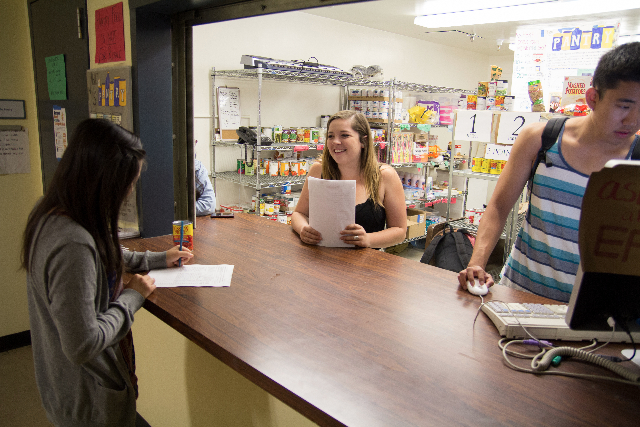
For every University of California Undergraduate Experience Survey (UCUES) completed between May 20 and May 30, UCUES will donate a dollar to The Pantry, the student-run food bank located in Lower Freeborn. The collaboration was in response to the high statistic of students who frequently skip meals because they cannot afford them as indicated by previous surveys.

According to UCUES, 25 percent of students who took the survey indicated that they frequently skip meals in order to save money. This is a slight increase from 2010, when the survey indicated that 24 percent of students frequently skipped meals to save money.

The Pantry was created in 2011 in response to the previous year’s statistic. It is an ASUCD unit that provides free food and personal hygienic supplies to students in need and is open Monday through Friday from 9 a.m. to 11 a.m., and Monday through Thursday from 4 p.m. to 6 p.m.

Shinna Kim, unit director of The Pantry, said the stagnant statistic shows that student hunger is still a prevalent issue on campus.

“We’ve used that statistic since the very beginning and every year we ask for an updated version and every year we realize the same number of students are struggling, the same number of students are skipping meals,” Kim said. “And that’s a good reminder for us to keep doing what we do and a really good reminder to tell our community members that the need is still present and the combat against student hunger is very much present right now.”

According to Gillian Butler, Student Affairs Research and Information lead analyst, the collaboration was a way to both increase student responses to the survey and also raise funds for The Pantry and reduce student hunger on campus. Butler chose The Pantry due to the personal connection she felt as a hungry student when she was an undergraduate as well as The Pantry’s relevancy towards a wide population of the campus.

“We were trying to think of what we could do to get more of students to respond and I had been thinking for some years of trying a charity incentive because people will do things for other people that they won’t do for themselves,” Butler said.

Butler said the money for the donations will be taken out of the University’s budget.

Tara Storm, director of internal operations and upcoming unit director for The Pantry, sees the collaboration as an important way for students to engage in philanthropy while providing information for the University.

“I think it’s important because I think philanthropy is important,” Storm said. “I think getting the students to answer the survey while having a philanthropic cause is really important because the survey asks a lot of important questions. This survey is one of the reasons The Pantry exists because we found out there’s a statistic that one in four students are skipping meals frequently because they can’t afford them.”

In addition to the survey, The Pantry will hold a canned food castle competition on the Quad from 12 p.m. to 2 p.m. on May 30 in order to celebrate the last day of donations. Afterward, the cans used for the competition will be donated to The Pantry.

According to Butler, 2010 was the first year UCUES added questions concerning students’ financial situations after the increase in tuition. Butler said the percentage of students skipping meals to save money hasn’t gone down because of the difficult economy and student tuition remaining high.

“I don’t think the economy has gotten better from what it was and tuition certainly hasn’t gone down,” Butler said. “In terms of the economic situation that most of our students are in, it just hasn’t changed very much.”

According to Butler, UC Davis is the first UC to adopt a collaboration of this sort. She said that if it is successful, it is likely that UC Davis and other UCs will repeat it in the future.

Patrick Sheehan, student assistant to the chancellor who played a part in bringing this need to the administration, agrees with Butler and hopes to see more charitable collaborations in the future.

“It seems like a fantastic way to incentivize participation and I hope these charitable incentives will become a trend for future surveys,” Sheehan said.

In the first two days of the survey, UCUES raised $376. While the amount is far from The Pantry’s goal of $5,000 by the end of the period, Kim sees this number as a huge donation towards The Pantry.

“Within the first two days we have 376 students who have taken it, that’s $376 that could go to The Pantry, which is equivalent to maybe 2,000 cans of food for students,” Kim said. “That’s a huge deal for us.”

However, Butler sees the amount as disappointing and hopes to see a huge increase by the end of the period.

“$401. Three days. I was hoping that we would get 2,000 students,” Butler said. “Wouldn’t it be great to hand over a chunk of dough to The Pantry?”

In addition to The Pantry, this is the first time UCUES has partnered with Creative Media, who has created a social media campaign to publicize The Pantry’s collaboration.

After working closely with The Pantry as one of her adopted units, ASUCD Senator Mariah Watson sees the collaboration as an important move by administration towards an end of student hunger. She encourages students to take the survey.

“This survey is one of the most amazing things that’s ever happened to The Pantry. In my first year, I saw that unchecked hunger was one of the biggest issues that faced our campus yet no one talked about it,” Watson said. “I’m just so thankful that administration is really starting to see this as an issue on campus and wants to begin addressing it through monetary means.”

Butler sees the collaboration as a meaningful way for administration to work with students. She views student hunger as an obvious issue that people need awareness of.

“I think it’s always good when we collaborate with our students. It’s too easy to sit up here in Mrak and lose track of who it is we’re supposed to be serving out there,” Butler said. “It’s important that our students can concentrate on their studies instead of worrying about where their next meal is going to come from. In that particular collaboration with The Pantry, that’s a slam dunk as far as I’m concerned. It’s the basics.”

Students can take the survey at http://ucues.ucdavis.edu/.

JASON PHAM can be reached at campus@theaggie.org.

Photo by Rousseau Gleitsman. 

UC Davis Dining Services to discontinue Aggie Cash off campus

On June 30, Aggie Cash will no longer be accepted on off-campus locations. According to Kraig Brady, UC Davis Student Housing food service contract manager, the change is due to the partnership ending between Sodexo, the food service provider that UC Davis Dining Services is partnered with, and the financial institution that sponsored Aggie Cash, Off Campus Solutions (OCS).

According to Brady, the banking system that OCS uses to transfer money from a student’s Aggie Cash account to a third-party vendor discontinued its service. Brady said UC Davis’ volume is too small for the bank to support the number of credit card transactions and banking fees.

While Brady has looked for other companies to sponsor Aggie Cash off campus, he said that the potential solutions he had come across were not cost-prohibitive and compliant to the regulations needed for the transactions. However, Brady maintains that the University will continue to look for solutions to reinstate this service.

“The good news is we’re not giving up yet. We’re looking for a potential down the road,” Brady said. “It’s not going to happen this next year, but down the road we were looking at how we can expand the service.”

Additionally, Brady maintains that there will be no other immediate changes to the program. He notes that Aggie Cash users will still receive a 10 percent discount at UC Davis Dining Services locations and that Aggie Cash will continue to be accepted at the ASUCD Coffee House (CoHo) after this year’s trial period.

According to Brady, UC Davis Dining Services is considering a plan to add more flexibility to student meal plans. In addition to the dining commons, students with a meal plan will be able to redeem their swipes at other Dining Services locations on campus. However, this plan is still in its early stages of design, according to Brady.

“We’re considering adding flexibility to meal plan participants so we can give them another option,” Brady said. “We’re kind of looking at how can we break the monotony of eating at the DC [Dining Commons], even though it’s fantastic, sometimes you want another alternative, that was a design of Aggie Cash. As off campus is taken away, what can we do to enhance on campus?”

While participating off-campus vendors will no longer receive the influx of Aggie Cash customers, Brady is hopeful that these businesses continue to sponsor UC Davis students.

“What I do hope is that the retailers that were partners of ours can continue to support UC Davis students,” Brady said. “It’s up to them on what kind of promotion they want to do. It’s not going to be a relationship with Aggie Cash, but it’s still a relationship with the students who have been their customer. I hope that doesn’t disappear.”

Several students have reacted negatively toward the reduction in options for Aggie Cash.

Austin Somers, a first-year economics major, sees the change as restricting Aggie Cash users to pricey on-campus locations.

“It forces me to shop at the Junction [at Segundo] way too much and it’s already expensive there,” Somers said.

Emma Rudolph, a first-year, views Aggie Cash as a primary motivation for first year students to explore downtown Davis. She imagines this change will affect the way they interact with the city.

“It’s not a really big deal to me due to the fact that I’m not going to be having Aggie Cash next year, but for the freshmen, I think that’s really inconvenient because having Aggie Cash really allows you to explore downtown and makes going out more accessible,” Rudolph said.

However, Caroline Shimeld, a third-year psychology major, doesn’t see the change affecting Aggie Cash users that much. She notes that when she was a first-year, she didn’t use Aggie Cash that much off campus. She imagines a majority of Aggie Cash users use the service at campus locations.

“I think if it wasn’t being accepted at the CoHo that would be a problem because then your options would be less,” Shimeld said. “If they didn’t accept it at the CoHo then that would be a bigger deal.”

While Brady understands the disappointment that students can no longer use Aggie Cash off campus, he maintains that there are other amendments to the program to come in order to make up for the loss in options. He encourages students to use Aggie Cash at the remaining locations on campus.

“It’s disappointing that we can’t offer that service anymore, but it’s still exciting to know that we’re broadening the flexibility of it and continuing to look at Aggie Cash as a benefit,” Brady said. “I think I just want to make sure that the whole point of Aggie Cash in the purpose was to give them another choice. I still think there are a lot of really great restaurants on the UC Davis campus that maybe they haven’t experienced. So give those a chance, give those a try for the first time.”

JASON PHAM can be reached at campus@theaggie.org.

Featured photo by Kenneth Cunningham.

Co-op Bonanza: Thanks for all the Seitan

0

mug_monizI am an avid journaler. I have 29 journals that don’t shut all the way because they are packed with tickets and pressed flowers and receipts and cards and notes and fruit stickers. Okay, I’m a hoarder. I’m also a sentimental cheese-ball. How is this important? It means that I have a detailed record of my co-op life.

The first week of co-op life was a flurry of bike rides, dried lentils, cats and sitting on the porch confused about how to live with 14 people.

When I visited the co-ops as an applicant, it was a place to garden, dance and eat seitan. I hadn’t considered what living in that space actually entailed. In the first month or so the main things I learned were how to cook over-easy eggs and that Youth Lagoon somehow feels like a leather sofa, rooftop phone calls, nerve-wracking nights, fire alarm tests, cleaning for 12 hours and the “feelings” meeting agenda item.

Over the last nine months in the co-ops, I managed to find the “discover” feature on Spotify and also become a more motivated, dedicated, confident and responsible person. As I’m sitting in my dark room with my fan running on high because we don’t have an air conditioner, I’m thinking about what I’ll be taking with me and leaving behind when I leave for the summer.

I’ll probably leave my bamboo plant, since it dislikes the Davis tap water as much as the rest of us. I’ll probably leave a few books in my house library. Sorry Conrad, Douglas Adams will bring me a less fraught summer. I’ll be bringing home a few empty suitcases, because a year of learning to travel and swapping rooms every 10 weeks taught me to pare down. Don’t get me wrong, I still love all my floral dresses.

I’ll be taking a lot of lessons with me, ones that people tried to teach me pre-college. Before college, my teachers and parents tried to teach me responsibility and time management. Ha. Middle school was more about learning that Hot Topic neon pants are not a no-no and in high school I mastered the inaudible-to-adults quip. I didn’t think that hard work would get me to the acclaimed college student status. It wasn’t until I got out of the wonderful system of state education standards and started doing things for myself that I started caring about “life lessons.”

I can’t possibly separate my college lessons from my co-op ones, nor can I claim that I wouldn’t have learned these outside a co-op. I’m tentatively saying about myself now what I’ve heard co-op alumni say: In the co-op, I have learned how to communicate, live with people, live with myself, and, well, get shit done. I wrote about communication, which kind of relates to living with people. I feel that living with people and living with myself are linked. And, no, I don’t mean living with myself in an I-ran-over-my-childhood-cat-while-pretending-to-drive-my-mom’s-car-when-I-was-12-way. I mean that I learned to be alone and be with people and be okay with myself in pretty much any situation. Imagine me in frantic hamster form when I moved in. I am now a wise and collected owl. I eat hamsters for breakfast.

Not only have I become comfortable with myself and learned to turn my head all the way around, living in a co-op has taught me things that are highly applicable to an actual adult career. I could win a gold medal in spreadsheet use and rapidfire emailing. I can facilitate and participate in meetings. I can do adult things that are boring to list.

The downside of learning these things is that I journal less due to time constraints. But my house has become my journal. My fruit stickers now frame our kitchen door and the receipts are carefully labelled, sorted and stored. Bam. Adult points. (Because of the receipts, not the stickers.)

I’m trying to come to some sort of conclusion but, as I said in my first article, I don’t think I can. When interviewing applicants, my house likes to say that things in the co-op are “fluid” and I think that encompasses a lot. I, along with the people around me, are constantly changing, even outside of the co-op. I look forward to taking that, and all the other lessons, with me, even if I’m still unsure about our ownership model.

Make really pretty spreadsheets and always pack a towel with ISABEL MONIZ via irmoniz@ucdavis.edu. If you’re interested in hearing more about the co-ops, come by in the fall for garden parties on Fridays at 2 p.m. and dinners Sunday-Thursday at 7 p.m.


Breaking Norms: Expect the unexpected

0

mug_holmesOn my quest for answers to the age-old quandary of why social norms exist and how they came to be, I discovered not only that society implemented these standards long ago for arbitrary reasons, but also that they can easily be broken and repaired for kinks.

By this I mean that social norms are based off of what a society as a whole deems proper and acceptable — whether that concerns behavior, public decency or mannerisms — and it’s easy to deviate from those standards, but it comes at a cost. And that cost is the judgment that lingers in the air after one breaks social norms, which can also come in the form of weird looks from strangers, peeved responses from friends and an overall adaptation of how people view you.

Throughout Spring Quarter, I did some odd things that I’ve personally never witnessed before. I wanted to elicit responses from students on campus when I broke free from the constraints of the (technically unwritten) rules of social conduct.

I may have scared some people, evoked fear or awe in others, annoyed a few and made most people question what my intentions were. Some responses were very visible and others were more low-key and nonchalant. Some people verbalized their confusion about my actions, while others silently gawked in the corner.

This experience taught me that there’s a fine line between acceptable and unacceptable social behavior. Some actions may just be qualified as weird or abnormal, while others have been deemed inappropriate and unthinkable.

You can figure out the difference between these two types of situations by the types of responses that are fabricated.

If people stare, but continue on without much more than a second glance, then it’s most likely something that’s considered odd, but not totally absurd. If people stop what they’re doing to look at you, point to their friends, call their mom to tell them about it and then post something on Facebook, then it’s going to be an action that people in society don’t often witness.

The bulk of my actions were from the latter of the two categories. Many people participate in “weird” actions or tasks around campus, but not as many are out there breaking social norms.

I confirmed that people really appreciate their personal space, substantiated the norm concerning table manners, gave way to the expectations of gym-goers and validated that spontaneous movement is often unexpected and confusing when executed in a calm, public atmosphere of strangers.

I embarked on this tantalizing journey knowing full well that people would be surprised and confused by my actions, but what I wanted to find out was how far I’d have to go to really stun people.

Like I said before, there’s a line drawn in the sand somewhere.

With personal space, that line clearly lies at the mark of physical contact. With table manners, it’s a very jagged line that gets blurred by feisty children in the sandbox. For me, the line appeared as soon as I sat down at strangers’ tables. With gym etiquette, I’d say the line develops right when you pull the dress over your head and the pink pajama pants up your legs before a workout. And with spontaneous movement, I discovered the line lies right before you startle people with ninja-like parkour skills out of nowhere between classes.

Breaking these social norms was a blast and hopefully I’ve given someone out there a fun story to tell their friends about. And remember, norms are easy to break once you accept that people may respond differently to your apparently absurd actions.

However, we must also remember that it’s okay to give people a bit of entertainment. Like they say on Broadway, the show must go on.

SAVANNAH HOLMES can be contacted at skholmes@ucdavis.edu if you want to know why she’s a rebel without a cause, or even if you have your own story about breaking social norms to share with her.


The Maturing Moviegoer: Finding the Nice in Mean Girls

0

mug_fleschWatching Mean Girls for the first time on Saturday was a bittersweet experience. Sweet in that this movie is just that — a cotton candy pink slide through the humors of adolescence. Bitter in that, once more, I had to accept that I will not be marrying Tina Fey, the one true love of my life, in the near future. But I’m not here to fanboy. This film has resonated with young adults, females in particular, for reasons beyond the clever one-liners so many associate with the movie. It seems to have a deeper, albeit comically exaggerated, understanding of what it means to be influenced by others and how the individual reacts in response.

The story revolves around Cady Heron, a girl entering high school after an extensive life of home-schooling in Africa. She falls in with ‘The Plastics,’ a popular clique. Through Cady’s eyes, we see why The Plastics are called such — they exhibit a remarkable ability to be fake, even around one another. Holden Caulfield’s head would explode at the sight of them.

Despite the saccharine plasticity of this clique, Cady seems to develop an affinity toward them, something that she recognizes and inherently dislikes. Here, we see the importance of self-confidence.

There is an interesting dichotomy in American culture. On one hand, we value and respect individualism, which raises self-made men, rebels and autonomous individuals onto a high pedestal. But these individuals often find themselves stifled at an early stage in their lives. Why are they stifled? Because on the other hand, going against the group is often seen as something undesirable. Self-confidence is, in a sense, a defense mechanism to shield the individual from an unforgiving mainstream.

I am not recommending that one should become a contrarian. I know that type of person, and they would probably best belong in the Burn Book. I am recommending introspection. Taking the time to develop values and personal philosophies is a task crucial to coming of age. Why? Well, let’s look at the consequences of such introspection.

In my first column, I described how themes are expressed by stories. Similarly, personal values are expressed by actions and words. A failure to introspect would therefore result in default actions. This default is, you guessed it, the mainstream. Simply because it is easy to go with the flow.

I would find it highly unlikely that introspection causes a total reversal in your thoughts and actions. When we introspect, we paint on a canvas that’s already been primed and splattered. To totally deviate from this design would require a blank canvas. What would a blank canvas look like? How about Cady? She does have a down-to-earth feel initially, but her personality is easily swayed by The Plastics. Only after having to confront her inner change does she seem to relax and “be human,” as she says toward the end of the movie.

Developing self-confidence is a difficult process, especially when the people around you may be pulling you in the opposite direction. Eventually, it may tear people apart. One of the things I thought truly fantastic about Mean Girls was that The Plastics didn’t necessarily find their happy ending in one another, but they found it more naturally, in people and pursuits more akin to their personalities.

Ultimately, people find comfort in others when they find comfort in themselves. And considering that adolescence is universally considered to be one of the most uncomfortable times in a person’s life, it may help to pursue inner happiness.

I would being doing Mean Girls an injustice if I did not make further reference to the fact that this is a comedy. It’s the main selling point of the entire movie, showing us that this process of self-development in the context of others is funny, once you take a moment to step back.

Everyone reading this deserves a piece of Cady’s homecoming crown. So get out there, have fun, have some me time and continue to amuse yours truly in the process.

To let ELI FLESCH know that this column was quite fetch, you can reach him at ekflesch@ucdavis.edu or tweet him @eliflesch.

Modern Bey Feminism: A Song of One’s Own

0

mug_strumwasser“I was spending all my nights and days laid back day dreaming/Look at me — I’m a big girl now, said I’m gon’ do something/Told the world I would paint this town/Now betcha I run news.”
True to the lyrics from her song “Grown Woman,” Beyoncé has had great success.

Her musical ability is clear — just watch that video of her rehearsing in her dressing room filmed by Jay-Z. Seriously, go watch it, it’s great.

But Beyoncé’s success is more than just her talent. Her accomplishments as a businesswoman in the creative world has given women a strong female to look up to and emulate in the work place.

However, this success is not always obtainable for women in our society.

A Room of One’s Own by Virginia Woolf, a prominent feminist writer, explores the idea that women can only be successful if they have a room of their own — that is, they can only be successful if they have a certain level of money and time to begin with.

Beyoncé did start her career in music without family connections to the music world — her father was a businessman and her mother was a hairdresser. But they did have the money to move so Beyoncé could follow her career, and her father was able to resign from his job to manage Beyoncé’s music career.

Would Beyoncé continue to be successful without all of the resources that she had then, and has now? Probably not.

Which leaves one to wonder how many talented musicians (and painters and writers and artists) are out there who don’t have the time or money to be successful.

And as a graduating senior (hopefully) heading toward a career as a writer, it’s scary to watch the Beyoncés of the world succeed, while other women seem to be unsuccessful.

This is both a modern-day phenomenon and a societal problem that has carried over from Virginia Woolf’s time. Although her book was published more than 80 years ago, the ideas in it are still present, as it’s easy to see that women are at a disadvantage in the workplace.

According to the Pew Research Center, 33.3 percent of mothers in the United States are stay-at-home moms, while only 3.5 percent of fathers are stay-at-home dads. The idea that moms are staying at home to take care of their kids means they don’t have the time or space — mentally or physically — to explore their creative careers.

And according to the White House’s website, the women who do work make 77 cents to every dollar that men make, on average.

So if some girls really are running the world, I’d say it’s because they are lucky enough to have the time and money to do so, not necessarily because they are the most talented.

So what do we do with that?

We should continue to talk about the issues women face in the workplace, and work to alleviate the pressures working mothers feel — this is a class issue as well as a gender issue. If the media spent half the amount of time talking about equal pay and equality in the workplace that it does talking about the Solange vs. Jay-Z fight, I think serious changes could be made.

As always, I try not to get discouraged by successful women like Beyoncé. Rather, I see them as inspirations for myself and others to break through the challenges women face.

So if you need me, I’ll just be listening to “Grown Woman” and optimistically sending out my resume.

If you have any Beyoncé-themed job openings in mind, HANNAH STRUMWASSER can be reached at hstrumwasser@gmail.com.


“Filed Away” exhibit showcases personal objects, stories during undocumented student awareness week

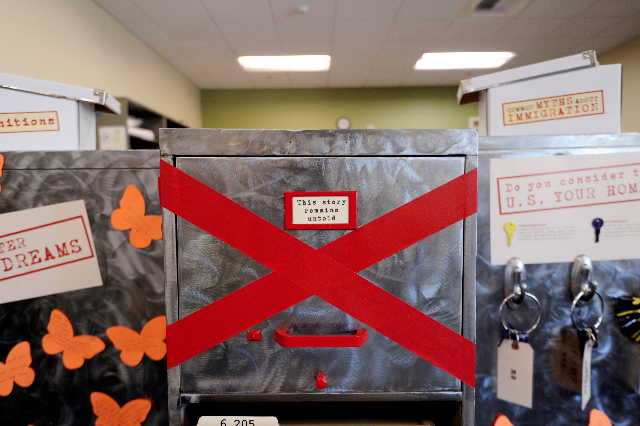
Exposing contemporary issues through design, the filing cabinet drawers of the “Filed Away” exhibit contain the objects and stories of anonymous undocumented students at UC Davis.

This exhibit is the thesis project of designer and MFA candidate in the design department Emma Thorne-Christy. To her, “Filed Away” strives to uplift these objects and stories through her design and museum skills in order to bring awareness to undocumented students.

“This is about connecting to people’s personal everyday objects. Putting them under Plexiglas creates this power,” Thorne-Christy said. “They say in the museum world that there is a museum effect that comes out of putting a case over something. Suddenly a cell phone charger becomes a piece of art.”

Other objects in the temporary exhibit include a keychain, a couple blankets, children’s toys and a small painting, all symbolizing the experiences of the undocumented person to whom they belong and will be returned.

“I wanted to give students who are still under the radar a chance to speak through an object, not through their name, not through their face,” Thorne-Christy said.

In order to reach out to these students, earlier this academic year Thorne-Christy approached S.P.E.A.K. (Scholars Promoting Educational Awareness and Knowledge), a student organization on campus that supports undocumented students and makes the community more aware they are present on campus.

Volunteers from S.P.E.A.K., including second-year sociology major Claudia Rios and first-year psychology major Johana Mendoza, formed Thorne-Christy’s advisory board for the exhibit.

“We were basically in charge of getting the people to provide the objects, like a middle person to the undocumented community to keep the objects safe and stories anonymous,” Rios said.

In addition, the advisory board helped come up with the name of the exhibit.

“Given the way that many of these people are filed away and kind of forgotten, there are a lot of untold stories. That’s how the idea of the file cabinets came about,” Rios said.

Articles on UC President Janet Napolitano’s $5 million grant to support undocumented students were what originally inspired Thorne-Christy.

“[Napolitano] wanted the undocumented student community on campus to decide where the money goes,” Mendoza said. “That’s where S.P.E.A.K. came into play with our chancellor and vice chancellor — to decide that we wanted to focus on a resource center for undocumented students.”

Thorne-Christy had been searching for a topic that would resonate with her target audience, UC Davis students, and thought this might be it.

“I was gearing the entire exhibit towards students that knew a lot about the topic and just wanted to have their voices heard, which definitely worked, and then students who had no idea,” Thorne-Christy said.

However, she did not expect to get such a response from the UC Davis staff.

“I’ve had the administration from financial aid, counseling and admissions all come up to me and have very lengthy discussions with me about how much they appreciate the exhibit,” Thorne-Christy said. “I think sometimes the administration can be detached from student life, and this is a way for them to gauge what is going on, because everyone knows, within the system, that there is some kind of resource center happening.”

Such increased awareness of undocumented students is one of the goals of the “Filed Away” exhibit, according to all three sources.

“And not sympathy, but more like empathy, being able to relate to these students,” Rios said. “We’re all students and we have different sets of struggles and some of us have to go through more than others to be at the same place where we are now.”

Thorne-Christy said that she also wanted to present the facts and make people think.

“I’m not suggesting certain reforms, and very intentionally the exhibit asks more questions than it answers,” Thorne-Christy said.

These questions include the following: What privileges come with being documented? Should your birthplace define where your home is? What obstacles come with being undocumented?

“Those questions were the first that came to our minds that most people probably can’t answer,” Mendoza said.

However, at a community conversation that took place May 21, those who attended were able to hear answers to some of those questions from a panel of undocumented students.

“We first asked them all to explain when they learned they were undocumented. We talked about the new resource center, which is very much in its developmental phase,” Thorne-Christy said. “I asked the panel to talk about what it was like coming to college.”

In her opening speech to the community conversation, Thorne-Christy expressed her gratitude toward the undocumented students who anonymously contributed objects.

“Because of their bravery we have an exhibit to share,” Thorne-Christy said. “I am incredibly grateful for the trust they put in me and my board to do well by their stories.”

Currently, the exhibit is in the main lounge of the LGBTQIA Center in the SCC, where it will be through June 4 until the objects must be returned to their owners.

“It’s going to break up, but I think there is something kind of beautiful in that,” Thorne-Christy said. “It’s this temporary thing, and the impermanence makes you go to it.”

EMILY MASUDA can be reached at features@theaggie.org.

UC Davis participates in third annual Global Accessibility Awareness Day

UC Davis participated in the third annual Global Accessibility Awareness Day (GAAD) on May 15. According to event coordinator Joe Devon, the day was started as an effort to enlighten tech companies and web developers on ways they could make their websites more accessible for people with disabilities.

Devon, who is a Los Angeles-based web developer, said that when he found out about the accessibility equipment available, he was blown away.

“I’d seen a video from the accessibility director at Yahoo,” Devon said. “You could have web pages spoken to you through screen readers and I thought that more developers should know about it.”

Devon said he started the event through making a blog post about how websites should increase their accessibility. The event took off when an accessibility professional and now GAAD co-director Jennison Asuncion saw the post.

“Jennison saw the post on Twitter and said it was a great idea,” Devon said. “We picked a date and had one event in LA and one in Toronto.”

After the first date in 2011, the event grew globally. Companies all over the world participate in GAAD today.

UC Davis participated in the event through hosting presentations and breakout sessions throughout the day that showed how to use accessible technology. Presentations included those on video captioning, using the assistive technologies that UC Davis offers and designing courses to help a diverse range of students learn.

Tim Kerbavaz, a special event support technical director at Academic Technology Services (ATS), is also the chairperson of the captioning subgroup on campus.

“We meet once a month and talk about ways with people from all over campus to come up with a campuswide solution for captioning,” Kerbavaz said. “It would be plugging in a video and have it get automatically captioned.”

Kerbavaz said that captioning will benefit everyone. An example he used was that if a student was in the CoHo while it was noisy and trying to watch an online lecture, the student would be able to get the full access to the video.

Josh Hori, an assistive technology analyst for the Student Disability Center (SDC), said that there are many opportunities for using accessible technologies on campus but that the resources are not always utilized.

“People need to be aware of what’s available to them,” Hori said.

Hori said that the development of GAAD has helped bring awareness to the different accessibility technologies. He said the event has become acknowledged globally, and it has also helped spread awareness around the UC Davis campus.

“It’s growing more and more,” Hori said. “We’re collaborating and becoming a campus commitment.”

Hori said the collaborations include the SDC with other campus organizations, such as ATS, Information and Educational Technology (IET) and Center for Excellence in Teaching and Learning (CETL). These services also offer access to all students who are interested in learning or gaining more accessibility on campus.

Cara Harwood, a faculty developer for CETL, works with faculty on making their classes more accessible to all students. She educates many instructors on ways they can use digital accessibility to make their classes more accessible for everyone.

“We create and distribute materials to help instructors learn how they can make their courses have a universal design and meet the needs of diverse learners,” Harwood said. “If you design your class with the needs of all diverse learners in your class in mind, it’s benefitting everybody.”

Hoby Wedler, a blind Ph.D. student studying organic chemistry, said that accessible technologies such as 3-D printing has helped him feel models of molecules.

“I don’t like to do any innovating of a new method that wouldn’t help everyone,” Wedler said. “My classmates are realizing that these printouts are accessible to all of us. It’s such a strong, powerful way to make it accessible to everyone.”

MELISSA DITTRICH can be reached at campus@theaggie.org.


Column: Smells Like the Nineties

Ideas on what to wear to a ‘90s themed party

Recently my friend told me she had been invited to a 1990s-themed party. She was wondering what to wear. After much consideration, she settled on trousers and a T-shirt. “Don’t forget shoes,” I replied. “People wore shoes in the ‘90s.”

Was ‘90s fashion really so dull and nondescript? Granted it had a hard act to follow coming after the ‘80s bombarding us with, among other offerings, shoulder pads, leg warmers and lots and lots of neon.

But was ‘90s fashion really so boring that you could boil it down to this joke and only be half joking? Just what was in the average wardrobe in the 1990s?

It’s a fair bet that if you were a slave to trends at some point you’d have owned an item of clothing by Benetton. As well as the rugby-style polo shirts, bright colors and checks, there was the controversial ad campaign. You remember the ones featuring AIDS patients and bloody newborn babies that was aimed at selling the message that all people of all races were equal.

Gap was another ‘90s mega-brand, the only place to go if you wanted to pretend you were American by shelling out for chinos available in every color under the sun. Gap made ‘basics’ cool again, from anoraks to pocket tees. Gap reached Hanley in 1999 when its store at the Potteries Shopping Centre opened. The store was on the ‘wish list’ of the then city centre manager who also wanted to see Jigsaw, Karen Millen Ted Baker and Paul Smith bring their wares to Hanley. Sadly, they didn’t, but Gap still did.

One nostalgic trend item that you might struggle to find up ‘Anley today is a ‘90s-style neon (it had to be neon) windbreaker. You could never again walk around low-key wearing what essentially looked like a bright, magical cape. The more colors the better…

If sweaters were more your thing then in the ‘90s you probably wore it mainly tied around your waist. And if you were into the grunge scene, then it’s a fair bet your jumper would have been striped.

One might argue that Nirvana’s Kurt Cobain, with his ripped denim and dishevelled hair, led the way for ‘90s grunge fashion.

Whether it was in the 1991 video for “Smells Like Teen Spirit,” with his striped T-shirt and jeans, to walking the red carpet at MTV’s 1993 VMAs dressed yet again in a striped T-shirt and jeans with wife Courtney and daughter Frances Bean, Kurt Cobain made an impact on fashion.

The impact included a huge helping of flannel, layers and canvas plimsolls.

Cobain’s look was copied across the board from actor Matt Dillon in Cameron Crowe’s movie Singles to Jared Leto playing ‘90s sloucher pin-up Jordan Catalano in the TV series “My So-Called Life.”

Stepping away from grunge and onto another trend: Air Jordans. Basketball star Michael Jordan claimed six championships in the ‘90s. While donning a pair of his Nike-endorsed footwear didn’t give you magic powers, they did give you a certain amount of street cred.

Similarly, everyone from the “Fresh Prince of Bel Air” (or to you and me in the 2000s, Will Smith) to members of boyband ‘N Sync were rocking the denim overalls. Perhaps one of the most heinous ‘90s fashion trends, there was no escape from the demin.

If you wanted to be particularly ‘with it’ the overalls were worn with the straps down. If you were a bloke and weren’t a stranger to exercise equipment, they were worn shirtless.

I’ll admit to rocking the overalls look in the ‘90s… as a child. But then again maybe children can pull off outfits of those sort more than adults.

Over on this side of the pond, track jackets were in, and particularly ones in Adidas three stripes. Adidas was a central part of the ‘90s look for Noel and Liam Gallagher along with the Beatles-eque mop. Flick through Oasis’ ‘90s photo album and you’ll find the Adidas jackets, trainers, bags and those blatantly-branded jumpers.

Noel was apparently so enamored with retro Adidas trainers that he collected hundreds of pairs and kept them in mint condition. One ‘90s trend you wouldn’t find Noel and Liam sporting is the bandana. If you were a rap fan, your bandana was a statement of which rapper you liked. Remember all those Tupac pictures with the red, white or black bandanas?

So, my dear friend, you see… there are plenty of options for your ‘90s-themed party.

ESTEFANY SALAS can be reached at arts@theaggie.org.


Candlelight vigil for UCSB victims to be held May 29 at 8 p.m. on Quad

To honor the victims who were killed and injured during a recent rampage in Isla Vista, Calif. near UC Santa Barbara on May 23, there will be a candlelight vigil on the UC Davis campus.

The vigil will take place on the Quad at 8 p.m. on May 29.

Because of the potential fire hazard, the UC Davis Fire Department has asked that students not bring real candles and lighters to the event, but event organizers encourage community members to bring electronic candles and other electronic forms of light.

For more information, please visit the event’s Facebook page: https://www.facebook.com/events/449867888481878/?ref_newsfeed_story_type=regular.

—Melissa Dittrich

ASUCD battles expected low student turnout for upcoming elections

1

U.S. college students in their young adult years are responsible for historically low voter participation rates, averaging between 21 and 25 percent turnout in the last 35 years, according to a study by the Center for Information and Research on Civic Learning and Engagement (CIRCLE). UC Davis students are no exception to this statistic and are expected to continue in this trend in the June 2014 gubernatorial primary and November midterm elections, said ASUCD and CALPIRG members.

The CIRCLE study further reported voter turnout of college students ages 18 to 24 — both registered and unregistered to vote — was 26.5 percent in the 2010 midterm elections and 53 percent in the 2012 presidential elections.

Youth participation is considerably lower in primary, local and midterm elections than in presidential elections, even in years when presidential election participation is on the rise, said CIRCLE.

This trend of low civic participation on the part of college students has a number of explanations, said former ASUCD Vice President Bradley Bottoms, a fourth-year political science and sociology double major.

Of U.S. students who were registered yet failed to vote in the 2010 midterm elections, 34.7 percent reported this was due to a lack of time, 23.1 percent were out of town or away from home, 21.6 percent had “other reasons,” 12.2 percent were not interested and 8.4 percent forgot, reported CIRCLE.

Additionally, students may refrain from voting particularly in Yolo County elections because they are unaware of the process.

“They don’t know they need to re-register to vote once they move to another district or they choose to vote via mail in ballot in their home districts,” said Director of University Affairs and third-year political science major Dillan Horton.

As a form of “homesickness” or to stay attached to issues at home, Horton said that many choose to remain registered in their hometowns and believe their few years in Davis are not a significant enough period to register to vote in Yolo County.


“I probably wouldn’t consider registering in Yolo County because I’d be graduated by the next presidential election,” said Lucas Mohageg, a second-year managerial economics major, who is registered to vote in his hometown.

However, Horton refutes this notion.

“The way I rationalize it, whether or not [I’m] voting for [local officials], they are representing me,” Horton said. “So if they’re representing me and I choose not to vote for them, I choose not to have a say in decisions made on my behalf. There’s no reason I should be voting for people who do not represent me currently.”

Additionally, some students may refrain from political participation as they do not sense that their participation will affect election outcomes or that they are educated enough to make informed voting decisions.

“The problem is that students don’t think their vote matters,”  said Donna Farvard, CALPIRG board chair and a fourth-year neurobiology, physiology and behavior major. “The more students who go out to vote, the more our voices would be heard. It is like a collective action as students. Candidates and elected officials would then realize that they need to listen and understand issues that are pertinent to students.”

Horton said he feels there is very little reason for feeling powerless in local elections.

“If you want to make a change or decision and you get a group of people behind you, you actually can do that in a local election because there are less people voting than in national elections,” Horton said.

Much of the issue, Bottoms said, is due to lack of time on behalf of busy students; for most, seeking more education on political matters is the last thing students want to do.

“I don’t vote because I’m not educated enough on the stuff I’d be voting on. I don’t want to be somebody who votes only according to how my ‘party affiliation’ expects me to vote without forming my own opinions,” said Courtney Jimenez, a second-year neurobiology, physiology and behavior major.

However, advocacy on the part of ASUCD has been set into motion to aid in increasing young voter participation.

“We think that students’ voices aren’t heard because candidates don’t think that students go out to the poll[s] enough,” Farvard said. “The first step is getting students to register to vote.”

According to the U.S. Census Bureau, voter participation increases in newly registered citizens. An average of 81 percent of newly registered voters between the ages of 18 and 21 participated in the 2004 presidential elections.

During the 2012 presidential election season, CALPIRG’s New Voters’ Project registered approximately 5,000 students to vote in Yolo County. This campaign has continued on behalf of CALPIRG, including for the upcoming June primaries, in efforts to get to the root of the issue and raise students’ voting rates.

Additionally, ASUCD plans to host candidates running for local and state offices on campus for rallies and debates in the months preceding November’s midterm elections.

Bottoms, Farvard and Horton agree that many of the issues in the upcoming primaries — particularly who will be seated for local and state offices — directly affect students at UC Davis. These officials will make decisions upon issues such as public universities’ state-funded research, grant availability, quality of education and tuition hikes, Bottoms said.

“If students don’t have the power, City Council will vote in the favor of people who will get them reelected,” Bottoms said. “There’s a lot of power getting students to vote, especially in Davis.”

BRENNA LYLES can be reached at city@theaggie.org.

This Week in Science (5/16/14-5/21/14)

Custom fit hip surgery
Researchers from the University of Southampton, England for the first time made a titanium hip to custom fit a patient undergoing her seventh hip surgery. They used her CT scan and computer aided design as well as computer aided manufacturing technology to implant a new socket for the ball of the femur bone to enter.

The science behind finding your soul mate
Recent research from University of Colorado, Boulder suggests that spouses are more genetically related. According to the study, we are more likely to select mates who have similar DNA as ours compared to randomly selected individuals from the same population. The researchers determined this by examining the genomes of 825 American couples.

Alpha waves and the brain
Alpha waves were once thought to emerge when we dozed off and the brain went on idle mode. However, according to Pr. Ole Jensen from Radboud University, Netherlands, the alpha frequency is much more important. His theory postulates that these frequencies allow the brain to concentrate on the task at hand, thereby stopping the brain’s activity from other parts of the brain.

Let there be no pain
Researchers at the University of North Carolina School of Medicine found the enzyme (PIP5K1C) that is responsible for signaling body pain. The team also discovered a compound (UNC3230) that could decrease the activity of PIP5K1C. The researchers found that reducing the enzyme and compound levels decreases pain. This finding could lead to a new kind of pain reliever. Experiments are currently underway to form an effective drug that contains this compound.

JASBIR KAUR can be reached at science@theaggie.org.


Davis Chamber of Commerce hosts Celebrate Davis!

0

This year, Celebrate Davis! 2014 was held in Community Park on F Street on May 15. Celebrate Davis! is an annual, free, community-wide festival organized by the Davis Chamber of Commerce. It is a family-oriented conglomeration of picnicking, a music festival, food booths and a Davis business expo.

“Celebrate Davis! is truly a community celebration of all things Davis,” said Alison Rodegerdts, the deputy director of the Davis Chamber of Commerce and planner of the event. “This annual event would not be possible without the commitment of our event committee, the on-site volunteers.”

Consistent with the Davis stereotype of encouraging alternative transportation, parking near Celebrate Davis! is very hard to find. Most bike, walk or take public transportation to the event in downtown Davis. Free valet bike parking was available to people who attended the event.

This was an opportunity for the Davis community to come together and visit community businesses and organizations at their booths, buy dinner, enjoy live music and watch fireworks at 9 p.m.

“Davis ACE was one of the original Celebrate Davis! contributors,” said Mike Gunter, Davis ACE representative. “We have a raffle giveaway; this is my first year personally, but I will definitely come back next year.”

The most eye-catching part of Celebrate Davis!, visible from the streets were the inflatable bounce houses standing several stories tall, which attracted people of all ages.

“The kids go on every bounce house; we ate at some of the booths, we really enjoy everything. Goes to show that Davis is family-oriented,” said Jessica Cato, a Davis resident.

The attractions for kids were considered a highlight of the event.

“It was a great set up at the park for lots of people to get together and have fun,” said Caroline Golden, a fourth-year anthropology major. “Lots of fun things going on for kids. I would have absolutely loved it as a child — all the bounce houses and the petting zoo! The llamas were adorably shaven and fun to interact with.”

The petting zoo had goats, llamas, puppies and kittens, and some of them could be purchased at the event.

“I’ve been a part of Celebrate Davis! for five or six years now,” said Elsie Greenich, owner of Greenich Acres’ petting zoo. “I love the kids, everyone has a different favorite animal, but usually it is the kitties and puppies.”

The fireworks at 9 p.m. were, for many guests, the reason that Celebrate Davis! was such an exciting event. Unfortunately, the fireworks have been a bit controversial in relation to this event.

According to Davis Wiki, the fireworks catch some people and their dogs by surprise. Many people don’t know about Celebrate Davis! or know that there will be fireworks. Dogs have been known to panic and bolt, and some are never found. So some Davisites have suggested that the fireworks be eliminated from the event.

However, there are still some Davis residents who think the fireworks are a valuable addition.

“The fireworks were a great way to end the night, unifying people and letting them appreciate what a great place Davis truly is,” said Kaye Marquez, a second-year communications and sociology double major.

SHANNON SMITH can be reached at city@theaggie.org.