


52.4 F
Davis

Davis, California

Tuesday, December 23, 2025
Home Blog Page 846

Outside the bound, a look into UC Davis’ hidden population

Sharon Haanstra, a third-year transfer student and psychology major, walks the UC Davis campus wearing a shawl, chandelier earrings and stylish glasses. Heavy backpack in tow, she has just left her bio-psychology class and is beginning to stress out about her upcoming final. On the surface, Haanstra seems like the typical undergraduate student. She is anything but that.

Haanstra is 60 years old, lives in Woodland and has already had a career providing care for mentally ill people before coming to UC Davis for the second time. She is a re-entry student, and is one of nearly 1,500 at UC Davis who range from 25 to 60 years old.

“People always ask me, are you a professor? A grad student? And I say, no I’m an undergrad,” Haanstra said. “It’s embarrassing, but also not. I’m proud of it.”

Haanstra began her education at UC Davis in 1972 at the age of 18. She had been a good student throughout high school, but struggled academically at Davis. At the time, she said she thought this was because she was not cut out for the academic rigor of a place like UC Davis. Now, she said she looks back and recognizes that it was not her own shortcomings, but the effects of a traumatic event from her teenage years. When Haanstra was 16, she lost both her parents and younger brother in a plane crash. Having grown up in Connecticut, Virginia, New York and Arizona, she then moved to Orinda to live with her aunt and uncle.

“After that, I was on autopilot. I didn’t really grieve, I just kind of went on with life,” Haanstra said. “The first couple years at Davis, I pretended everything was OK, but everything wasn’t OK.”

Haanstra said she had hit a wall, chose to leave school and what was initially an indefinite break turned into 40 years of her life.

“It’s the single greatest regret of my life,” Haanstra said.

She worked low-skill jobs like caregiving or clerical work, and traveled. Without her degree, she wasn’t able to move much further in her career. But going back to school wasn’t something she considered for a long time.

She said she briefly entertained the idea of going back in her 30s, but a conversation with her uncle discouraged her from it. For years, she said she internalized the notion that she was not meant for a college education, until she began taking courses at Marin College and realized she could, in fact, succeed academically.

Though Haanstra’s case is unusual because of the time she took to come back to school, her experiences still reflect those of many re-entry students, which UC Davis defines as students over the age of 25.

“A lot of these students had to leave school for financial reasons, or personal reasons. Some are veterans, or people going to school for the first time,” said Victor Garcia, advisor at the UC Davis Transfer, Re-entry and Veterans Center.

According to Heather Doumbia, a 43-year-old single mother, sociology major and fifth-year transfer student, many re-entry students have spouses and families, and many have built successful careers already. Adjusting to a campus that can feel like a small city and being surrounded by students years and sometimes decades younger, is a challenge.

According to Doumbia, students don’t know how to react when they see someone much older than them in class.

“Sometimes they give me less responsibility in group projects, or don’t really listen to me, because they think I can’t do it,” Doumbia said.

Often, she said these reactions come down to the fact that students see someone different from them.

Doumbia found her way to UC Davis against the odds. She grew up in the San Francisco Bay area and Portland, Ore., and says her parents had a troubled relationship and that drug use was common. She got her GED and left high school at the age of 16 and embarked on a series of different life paths.

She said she joined the army, but dropped out after a few weeks of boot camp and encounters with what she said was an anti-woman sentiment in the army at the time. She later attended a private business college, became homeless for a while and eventually quit that too.

Doumbia has been married twice and has children from both marriages. Two of her children have mental disabilities, and she has spent many years working low-wage jobs, living off welfare and providing care for her disabled children. At various times, she has also played the role of mother figure to her nieces and nephews, as well as her husbands’ children from other marriages.

After bouncing around the country and finding their way back to California to live with her mother, Doumbia and her children settled in Fairfield. Doumbia’s daughter had been homeschooled for most of her life due to her disabilities. The school district eventually decided that her daughter was ready to be integrated into a traditional school setting, which initially scared Doumbia. Eventually, however, it provided her with inspiration.

“I made it a point, if she was going back to school, I’m going back to school,” Doumbia said. “When I was younger, I was a quitter. This time I wanted to do something and complete it.”

Doumbia completed her associate degree at Solano College and is now at UC Davis, with her sights set on eventually getting a master’s degree. Her experience with children and the rocky road that led her to UC Davis have inspired her to work with developmentally disabled children and with kids in situations like she was once in. She also said that she was further motivated by what she saw at Solano College, seeing students with potential but lacking direction and guidance.

“I saw things that frustrated me and I wanted to change them. The way for me to do this is to further my education,” Doumbia said. “My teachers took me and brought me up. It makes me sad to see other students failing. It shouldn’t come to that point.”

Doumbia is proud of how far she has come and said she doesn’t mind when her friends say her neighborhood is too quiet, because she has gone from neighborhoods where shootings and prostitution were common to a neighborhood where her children can play outside and sleep safely at night. Still, she, like other students, sometimes struggles with being able to connect with students in her classes.

“The important thing for traditional students to understand is that a lot of transfers are here to get in and get out. A lot of us have other obligations, people at home that need us. We’re on a different path,” said Dustin Ellis, a 26-year-old transfer and re-entry computer science and engineering major.

Ellis also said he believes re-entry students are a rich resource for traditional students, with their years of experience in the real world and careers of their own.

The Transfer, Re-entry and Veterans Center seeks to help these students adjust to campus life and to provide the resources necessary for their success. They are constrained by a small staff and limited budget, and according to Hope Medina, Retention Services coordinator at the center, it is impossible to reach all the students who can benefit,

“We try to focus on the population we directly serve. It would be nice to be able to do outreach and education for the larger campus to educate them about these students, but we can’t with the resources we have,” Medina said.

Medina also said that the most important thing for traditional students to know is that all students have a story to tell, and that she hopes for mutual respect and consideration from both sides.

“Respect people at where they are at and where they come in, and what they bring. It makes for a richer and more ideal university,” Medina said.

Haanstra said she is hoping to attend UC Davis full time next quarter, having split her time between classes and work as a caregiver in San Francisco for the past two quarters. She says that her age does make it difficult to be integrated on campus, and coming back to UC Davis brings back memories of her family and why she left in the first place.

While she said it is hard being a re-entry student, she also said it is without a doubt the most rewarding thing she has ever done. For her, going back to school is as much about having the opportunity to no longer work entry-level jobs as it is about coming full circle for herself and completing school for her parents. Her sights are set on a master’s degree and she hopes to start her own practice providing rehabilitation counseling for mentally ill patients.

“Maybe I’ll call it the Haanstra House,” Haanstra said.

NISHANT SEONI can be reached at features@theaggie.org.
Women’s Athlete of the Quarter: Ashley Marshall

0

As the Big West Women’s Track Athlete of the Year in 2013, junior Ashley Marshall had big expectations for continued success in the 2014 season, and she certainly did not disappoint. Her skilled performances out on the track have earned her the title of Women’s Athlete of the Quarter this spring.

“Ashley brings a familiarity with national-level competition with her to the line when she races,” said head coach Drew Wartenburg.

Marshall’s sprinting prowess earned her a second straight appearance in the NCAA Division I Track and Field Final for the 100-meter dash on May 30. During the NCAA West Region Preliminary Meet, Marshall also competed in the 200-meter dash, finishing 20th in the semifinal round. Unfortunately this was not enough to take her to Eugene, Ore. for the 200-meter final.

However, she will still be representing the Aggies at the finals in Oregon from June 11 to June 14, racing in the 100-meter dash for her second consecutive season.

Expectations are high for the young sprinter come the finals in Eugene, Ore. However, Marshall is still young and has time to contribute, as she is only a junior. Coach Wartenburg and the rest of the UC Davis track and field squad can look forward to another excellent season from Marshall when spring 2015 rolls back around.

SLOAN BOETTCHER can be reached at sports@theaggie.org.

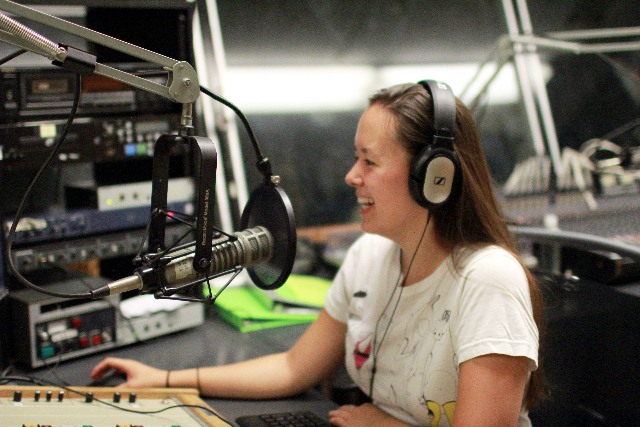
KDVS elects first female general manager in 10 years

Ashley Hanson began her role as general manager of KDVS on June 1, and will hold the position for the 2014-15 academic year. Hanson began working for KDVS as a first-year and is now a third-year clinical nutrition major. Hanson’s first show for the UC Davis freeform radio station was “Moonwalk With Us,” and she has gone on to host “In The Sun.” MUSE spoke to Hanson about her new role.

MUSE: How do you feel about becoming general manager?
It’s not something I aimed for initially. When I started volunteering at KDVS, I didn’t even want to be on the air. I didn’t even want to be a DJ. I tabled at events, I volunteered to do things around the station and then I was here for a summer, the summer between freshman and sophomore years for me, and I was really bored. Someone convinced me to go through training and then I realized I really loved it. One of my best friends was my co-host and so I was a DJ for the year. In that summer when I was training, someone off-hand mentioned that one of the two of you is probably going to be general manager in a couple of years. I totally wrote that off and said I’m just a volunteer, I’m no one special, but she called it. We haven’t had a female general manager since 2004 and she said yeah, one of the two of you is going to be the next female general manager. I didn’t think anything of it until I was going through the application process. So it wasn’t something I initially aimed for but it seemed like every time I got more involved I wanted to be even more involved. I didn’t anticipate it at all.

Why are there not as many female general managers?
The station is a really funny little subculture. We are literally underground in the basement and we don’t get a lot of exposure so a lot of it tends to be word of mouth. So, your guy friends bring all their guy friends; it’s kind of intimidating going down there. I don’t know why there aren’t more women and I’ve actually seen an increase in female participation in the few years that I’ve been down there so I think it’s definitely changing. This year’s core staff is, I think, 50/50 half male and female so that’s cool. I just don’t know that we’ve had as many female applicants.

What will your role as general manager involve?
I am the interface between KDVS, our volunteers, our staff and the rest of campus. I am the face of the station any time we have to be represented anywhere, so if we have to make a press statement that would be me. Also, we run as a team but I hire the next core staff so we’re in the process of accepting applications and doing interviews for core staff for next year. I get to put together that team of people and pretty much make sure the place runs. If anything goes wrong, I’m on call 24/7 for the entire year. So I have to be the glue to hold it all together.

Will you be making any significant changes at KDVS?
I’m bringing back the assistant to the manager position. We had one some years ago and then it kind of disappeared. Some of our core staff positions come and go as they’re needed. I recognize I’m a busy person; I love the station but I do have other things in my life — I’ll be a senior. I have to know all the legal things and a lot of the technical things about running a radio station and how a radio station works. That’s a lot of knowledge I have to learn very quickly and if I have someone else to supplement and be another depository for that information, that can only help. So I am reinstating that position and I think that’s the first big change. Other things I’m sure will happen as the year goes on.

What will your biggest challenge be as general manager?
They’re [the UC Davis administration] demolishing Freeborn [Hall] or they’re closing Freeborn. Sometime soon in two to four years we’ll be relocating potentially. They still haven’t really given us solid estimates, they could still retrofit the building, we don’t know but it will begin in my tenure, planning for this move. That means digitizing parts of our library so that we don’t physically have to move it, defending the amount of space that we need and asking for more; making sure that the University pays for the relocation and building the new studio and that we don’t have to because we didn’t decide to move, they’ve decided to move us. Those I think will be the big challenges.

What are you most looking forward to about being general manager?
I think it’s going to be a lot of fun. I really love KDVS and all of the fun that comes with being involved there. The music and the events and the people that it brings together. I’ve always wanted to know more about how everything works and I think this is the best way to do that. So really, just working with the people is going to be a lot of fun. We’ve got a huge community that’s not just students. We’ve got this huge community of alumni and other Davis community members, Sacramento community members and that’s something that a lot of student groups don’t get; this consistent involvement of grown ups, real grown ups, that have finished with university and still come back and participate in this college activity.

ZOE SHARPLES can be reached at arts@theaggie.org.

Featured photo by Jennifer Wu.


Women’s Team of the Year: Women’s Golf

0

It’s tough to say anything other than good things about a team which won its fifth consecutive Big West Conference title this season. It becomes nearly impossible to nitpick when four of the six players got Big West recognition and the coach was given Big West Conference Coach of the Year.

The UC Davis women’s golf team has been a standard for excellence for quite a while now and continued their strong showing this season. Head coach Anna Temple has created an environment of excellence and improvement this year, as the Aggies managed to breeze their way through the Big West tournament.

Three UC Davis players — sophomore Betty Chen, junior Beverly Vatananugulkit and freshman Paige Lee — were named to the All-Big West first team because of their outstanding play this season. Sophomore Andrea Wong was an honorable mention and rounded out the group of Aggie players who got Big West recognition.

The team was excellent throughout the year, racking up six top-three team finishes in 13 tournaments this season. Highlights included first place team finishes in the Hoosier Fall Invitational at Bloomington, Ind. and the Big West championships held in San Luis Obispo, Calif.

The Big West championships were especially impressive, with the Aggies beating second-place finisher Cal State Northridge by 16 strokes. The large margin of victory marked the fifth consecutive year the Aggies have won the Big West Championships by at least 13 strokes.

“It means a tremendous amount to win our fifth consecutive Big West Championship,” coach Temple said. “It’s always special to win conference and this year was a unique experience.”

UC Davis’ players each played extremely well individually and guided the team to victory. Vatananugulkit led the way, finishing third in the competition individually, shooting a 1-over 220.

UC Davis unfortunately placed 12th in the NCAA Regionals and did not advance. However, with all three of their All-Big West first team members returning, the Aggies should once again continue their winning ways next season.

The complete dominance that the women’s golf team displayed this season is why they are The Aggie’s Women’s Team of the Quarter.

KENNETH LING can be reached at sports@theaggie.org.

Women’s Athlete of the Year: Paige Lee

0

Paige Lee is one of only three Aggie golfers ever to qualify for the U.S. Women’s Open. She was also a first-team All-Big West selection this year, was second on UC Davis’ team with five top-10 finishes and was tied for second on the team with two top-five finishes.

By the way, she is also a freshman.

Lee’s best finish of the year was at the Golfweek Conference Challenge at Red Sky Country Club in Walcott, Colo. She went 5-over 221 and finished fourth out of 90 competitors. Lee shot an even 72 in her second round which helped her maintain a sizeable advantage over the other golfers.

Lee’s fantastic freshman year culminated in her helping the Aggies to a fifth consecutive Big West title. She finished tied for seventh in the Big West playoffs with a 6-over 222.

Beyond the team title she helped win this year, her qualification for the U.S. Women’s Open shows individual quality that is rare in a golfer, let alone a freshman golfer.

“Qualifying for the U.S. Women’s Open is no easy feat and Paige was able to put together two solid rounds on a challenging golf course today at Half Moon Bay,” said head coach Anna Temple. “Last summer’s experience at the U.S. Women’s Amateur will really help her during what will be a strenuous and amazing week.”

Lee has performed at a high level all year and has grown as a player throughout the season. The hope is that she will only continue to get better as time goes on.

“Paige has been working hard and has really improved over several categories over the past season and she is starting to see that pay off now,” coach Temple said. “This is a testament to the level of Aggie golf as she is the third UC Davis player to qualify.”

Lee’s quality production on the course is marvelous in itself. The fact that she accomplished what she did in her first year of collegiate golf is even more remarkable.

For her fantastic season, including entering select company in the Aggie record books, Paige Lee is The Aggies’ Women’s Athlete of the Quarter.

KENNETH LING can be reached at sports@theaggie.org.

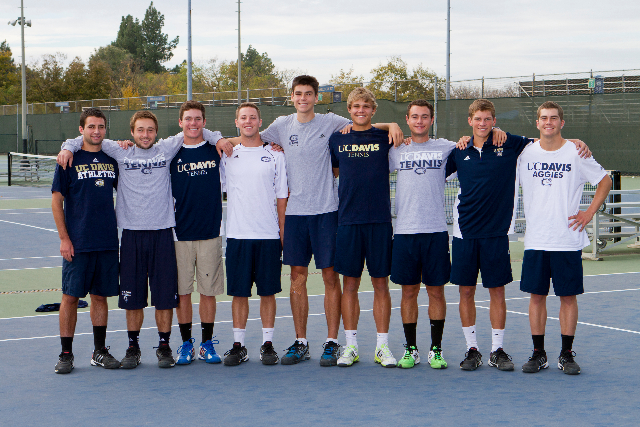
Men’s Team of the Year: Men’s Tennis

0

The UC Davis men’s tennis team finished out their season with a 4-3 loss against Hawai’i in the Big West Tournament semifinals match on April 25. The Aggies finished their season with their first winning record in Division I, 14-11. UC Davis went an impressive 11-3 at home and led the conference in wins.

Six members of the team earned All-Big West honors after a successful season. Freshman Alec Adamson and James Wade made the all-conference team in singles. Adamson and sophomore Adam Levie were awarded All-Big West Doubles First Team for only the second time in UC Davis history. Senior Kyle Miller earned his third consecutive All-Big West honor and made the all-conference second team.

Sophomore Brett Bacharach and senior Adam Luba made it to the All-Conference Second Team in doubles.

With a season full of accomplishments, expect the Aggies to come back next year and be a dominant force in the Big West. WIth only three graduating seniors and currently no juniors on the team, the Aggies will have a young but experienced team.

OSCAR DUENAS can be reached at sports@theaggie.org.

Photo courtesy of Mark Honbo.

Davis Shakespeare Festival to return this summer

The Davis Shakespeare Ensemble will return this summer with two shows as part of the fifth annual Davis Shakespeare Festival, which will run from June 26 to Aug. 3 at the Veterans Memorial Theatre.

The Davis Shakespeare Festival will consist of two shows: the Shakespeare comedy Much Ado About Nothing and the musical comedy She Loves Me.

She Loves Me was chosen because it pairs so well with Much Ado,” said Rob Salas, one of the artistic directors of the Davis Shakespeare Ensemble. “It’s about co-workers with mysterious pen pals who meet and fall in love. It was based on a story that was most recently adapted as You Got Mail. It’s very cute and charming.”

This particular play is the first time the Davis Shakespeare Ensemble has staged a musical.

“We chose this musical because it’s not like a typical musical,” Salas said. “It’s not over the top nor is it epic. Larger musicals tend to have a big spectacle, but this one is more intimate. It’s about the characters. I’d say it’s more like a play with music than a musical.”
She Loves Me is directed by Gia Battista, who is the other artistic director of the Davis Shakespeare Ensemble.

“Directing has been a fantastic experience,” Battista said. “We have the same cast for both plays so you have to find actors who can handle Shakespeare and sing. It’s a great, multi-talented cast. You can tell how a process is going by the energy in the rehearsal room and it has been very positive. We spend rehearsals laughing while being productive, so we’re moving along quite nicely.”
Salas is directing Much Ado About Nothing, which will have a setting inspired by the Napa Valley, post World War II.

“The characters are coming back from war and celebrating, so we feature swing music and a romantic setting, which falls into that vibe, ” Salas said.

The cast of the plays said they are highly enthusiastic about the experience.
“Rob and Gia are close in directing style and the rehearsals are basically intermingled,” said Pablo Lopez, a first-year Chicana/o studies and dramatic art major. “It’s pretty balanced and a great process, so it hasn’t been much of a strain on me to do two different shows. It’s cool to jump between singing a ballad to a really funny scene with Don John and Borachio.”

Susanna Risser, who plays Beatrice in Much Ado About Nothing, wanted to work with the Davis Shakespeare Ensemble so much that she sent in a video audition from her home in Salt Lake City.

“Doing two shows is a cool experience that you don’t always get to have,” Risser said. “The plays and my characters are so different from each other that the whole thing is really fun. There’s so much to experience and explore that it’s more fun than overwhelming.”
Salas and Battista envision the Davis Shakespeare Festival as a fixture for the city in the future, an event that would bring business to the area during the summer.

“By doing two shows, we can offer a weekend package,” Salas said. “We’ve been partnering with businesses and getting the city’s attention, and they’ve been helping us. The festival gets people to stay in Davis and support local commerce. In the years ahead, we want to do three shows so that if someone stayed in Davis over a weekend, they could catch a full series.”
The Davis Shakespeare Festival will run from Thursdays through Sundays from June 26 to Aug. 3. For more information and to buy tickets, visit www.shakespearedavis.org.

JOHN KESLER can be contacted at arts@theaggie.org.

Downtown hosts fourth annual Davis Music Fest

From June 20 through June 22, the Davis Music Festival will take over downtown Davis with its fourth annual celebration.

Much like the popular Texas music festival South by Southwest (SXSW), the Davis Music Festival will host over 40 bands playing at eight venues scattered throughout the town.

Some of the participating venues include Little Prague, Sophia’s Thai Kitchen, Third Space Art Collective and Armadillo Music.

Danny Tomasello, the Davis Music Festival director, believes the SXSW model caters to all types of patrons.

“The nice part is that people can create their own schedules,” Tomasello said. “They can hunker down and settle in at a particular venue or they can walk around and go see a bunch of different acts.”

Along with a hangover brunch on Sunday, June 22, the festival will alsointegrate a new opening night into the schedule. Tomasello hopes to reach a different audience with the rock-centric kick off.

“Friday will be the opening night for the festival which will be split between Rock Band University and Third Space,” Tomasello said. “The music is a little edgier that night with a dedicated metal stage and some garage-noisey rock at Third Space.”

The event’s lineup boasts a combination of local bands such as The Bottom Dwellers and Big Sticky Mess, but also brings acts that “would normally skip Davis over on their tour from San Francisco to Portland,” Tomasello said.

John Vanderslice, an acclaimed San Francisco indie rock artist, reminisced on last year’s event and expressed his excitement for upcoming years in a recent phone interview.

“Playing there was so much fun. I mean, that’s really why I requested to do it again this year,” Vanderslice said. “Davis is a great town. It is a great place to go to and hang out in and it was just a lovely experience.”

The event aims to raise money for the arts and music in education. A large portion of profits will go to the Davis High School Blue and White Foundation and Davis School Arts Foundation.

“With budget cuts in schools today, it’s important to raise money to support music in schools. We really hope that people come out and support it,” Tomasello said.

While the event serves to benefit local schools, Lauren Cole Norton, the director of Third Space and former Davis Music Festival performer, believes it also helps local businesses.

“The intimacy of the smaller venue appeals to both performers and the audience,” Norton said. “It also gives business owners in Davis an opportunity to appreciate what a dynamic local performance scene can do for their bottom line.”

For more information on the festival visit www.davismusicfest.com or visit their Facebook page. John Vanderslice will play June 22 at WunderBar on G Street at 9:30 p.m.

COLEMAN PERKINS can be reached at arts@theaggie.org.

This summer in arts

THEATRE AND DANCE

Penumbra
June 5, $19 adults, $14 seniors, students and kids
UC Davis Wright Hall
This annual event, this year directed by David Grenke, will feature student choreographers’ original dance routines inspired by classical ballet, hip-hop, jazz and other dance forms among many.

2014 Davis Shakespeare Festival
June 26 to Aug. 3, $35 adults, $30 students/seniors, $25 kids
Veterans Memorial Theatre, 203 E. 14th St.
The Davis Shakespeare Ensemble is set to present their fifth annual Davis Shakespeare Festival. This year the ensemble will be performing Shakespeare’s Much Ado About Nothing and Joe Masteroff’s musical She Loves Me. Single show tickets are available online at www.shakespearedavis.org.

“You Are Here”
June 5-6, 6:30 p.m., free
Arena Theatre, Wright Hall
All students and citizens of UC Davis are welcome to attend and enjoy the comedy stylings of Christopher Wolfe, one of UC Davis’ MFA candidates for dramatic art.

ART

Landscape Exhibits
Now through July 26, free
Natsoulas Gallery, 521 First St.
This summer the Natsoulas Gallery will be featuring work by landscape painters Reif Erickson and Al Pounders. Erickson tends to specialize in the natural regions of California while Pounders is known for offering his artistic perspective on many types of terrain.

MFA Exhibit
Now through June 21, free
Pence Gallery, 212 D St.
The work of UC Davis MFA candidates of fine arts Brett Davis, Jamie Dunn, Rachel Gelenius, Jacob Greenlund, Daniel Harano, Jeff King, Alyssa Lempesis and Joyce Nojima will be displayed for public viewing.

MUSIC

Songs Folks are Made Of+
June 6, 7 p.m., ticket prices vary $8-$17
Jackson Hall, Mondavi Center
UC Davis’ University Chorus will be presenting their final concert of the 2013-14 school year. The show will feature pieces by Finzi, Bortniansky, Anders Edenroth, Vaughan Williams, Clausen, Tormis, McGlynn, Piazzolla, Holst and Barber. Ben Johns is set to guest conduct.

Nickel Creek
Aug. 3, 7p.m., ticket prices vary
Jackson Hall, Mondavi Center
This Grammy Award-winning multi-platinum selling trio is set to reunite for the first time since 2007 with their new album A Dotted Line. The trio’s music is influenced by multiple different genres of music (from Bach to Radiohead) and their tour has been long-anticipated by fans across the nation.

Column: Smells like the Nineties

Spin Doctors: Where are they now?

Looking back on 1993, I’ve realized it was a weird, weird time. President Clinton was going on jogs around Washington, D.C. and talking to people at McDonald’s, the Menendez brothers killed their parents, the Branch Davidians were in Waco, Texas, music was splitting into factions of a new, why-the-hell-is-this-happening hippie movement and the top-selling album was The Bodyguard soundtrack.

Oh, and the seventh best-selling album of 1993? Nope…not In Utero by Nirvana. Not even Bat Out of Hell II: Back into Hell by Meatloaf. The answer is Pocket Full of Kryptonite by the Spin Doctors. The Spin Doctors. Riding the wave of the hippie movement and the top-20 singles “Little Miss Can’t be Wrong” and “Two Princes,” they sold millions of records, played numerous festivals and soundtracked many a teen movie.

The Spin Doctors formed in New York City in the late ’80s under the moniker Trucking Company. The original line-up featured lead singer Chris Barron, guitarist Eric Schenkman and harmonica-man John Popper of Blues Traveler fame. Popper later quit the band to focus on Blues Traveler, and Barron and Schenkman added drummer Aaron Comess and bassist Mark White, changing the name to the Spin Doctors in 1989.

Just two short years later the Spin Doctors signed to Epic/Sony and released its debut EP Up for Grabs…Live, a live recording from The Wetlands Preserve in Lower Manhattan. They released its debut full-length, Pocket Full of Kryptonite, later that year. The full-length received very little attention at first, but through touring, festivals like H.O.R.D.E., grassroots fans and heavy radio and MTV play of their lead singles “Two Princes” and “Little Miss Can’t be Wrong,” the album went gold by September 1992.

Stemming from a popular “Saturday Night Live” performance in October 1992, the album had sold one million copies by January 1993, entered the Billboard Top Ten and landed the band on the cover of Rolling Stone. By the summer of 1993, Pocket Full of Kryptonite had gone triple platinum and entered the Billboard Top Five, and “Two Princes” was a Grammy-nominated hit, the number-one rock radio single of the year and firmly planted into the brains of everyone within earshot. They even got to perform a modified “Two Princes” on Sesame Street, where they sang the praises of cooperation and sharing to Elmo and Telly Monster.

Riding the overwhelming success of their first album, the Spin Doctors entered the studio to record their second, and in 1994 they released Turn it Upside Down. However, oversaturation had taken its toll, and the album didn’t make nearly as big of a splash as their first even though it still sold nearly two million copies worldwide.

That same year they toured extensively, including stints at Woodstock ’94 and the Glastonbury festival. During this tour, Schenkman walked off stage during a show and quit the band, citing personal and musical differences. Guitarist Anthony Krizan replaced Schenkman, and the Spin Doctors continued the tour.

Things began to quickly unravel after the departure of Schenkman. In 1996, they returned to the studio and released their third album, You’ve Got to Believe in Something. Even with a performance on Late Night with David Letterman, a contribution to the theme song of the hit TV show Spin City and a new keyboard player, the album only sold a modest 75,000 copies. Later that year, new guitarist Anthony Krizan left the band, and Epic/Sony dropped the band from the label.

The Spin Doctors attempted to retool by picking up new guitarist Eran Tabib and then signing to Uptown/Universal records in 1998. Here Comes The Bride was released in 1999, and was the band’s first with Uptown/Universal. While recording the new album, bassist Mark White left the band, and the bass lines had to be laid down by drummer Aaron Comess. Then while on tour for the new album, lead singer Chris Barron suffered from a rare and acute form of vocal cord paralysis and could no longer sing. Neville took over vocal duties while Barron recovered for the rest of the tour.

After the tour, the band went on hiatus from 1999 to 2005, only playing a few sporadic shows across the country with the four original members reunited. Then in 2005, the original members entered the studio to record their first studio album together in 11 years. The product of these sessions was the 2005 release Nice Talking to Me. The album has sold a small amount, and the band continues to play one-off shows around the U.S.

So if you have hopes of hearing “Two Princes” or any other jammin’ hits, you still may have a chance.

ESTEFANY SALAS can be reached at arts@theaggie.org.


Tech Tip: Protect yourself with Watch Over Me

As college students, we often take safety for granted, especially in familiar settings. Inspired by a real life story, an app called Watch Over Me ensures your safety no matter where you go, for those less than ideal moments (e.g. walking to your car late at night) through automated tracking.

Co-founder Xin-Ci Chin was inspired to create this app for urban women — but really anyone — because she was abducted by two men in Malaysia. This incident occurred during a Sunday afternoon in one of her favorite shopping towns. Luckily enough, Chin was able to unlock the car during the abduction and successfully managed to stumble out of the car while it was still moving. The scariest part of this unfortunate situation was that she did not have the luxury to get in contact with her loved ones easily. Often times, during an emergency, simply pulling out your phone to make a phone call seems like a difficult task, especially when you have to be discreet about what you are doing or else further endanger your safety.

Although many similar apps are currently out on the market, none compares to Watch Over Me because it does not require the individual in an emergency to log into their phone, find the emergency app, click on it and activate the emergency alert button. Depending on which version you get, Watch Over Me simply requires you to shake your phone to signal the alert if it is not appropriate for you to push the emergency button. In this way, the user-interface is really simple when your back is against the wall and there is no time to think, but just act.

The app does simple, yet very important things, though it requires internet access. You essentially tell the app what you are doing and provide an estimate of how long you think it will take you to accomplish the task. Then, within the timeframe, just check in and inform the system that you’ve made it to your safety spot. If you fail to notify the app however, an emergency alert will be sent to your emergency contact.

Watch Over Me is available for both iOS and Android-based smartphones. The free version features a 20-minute maximum event time, one emergency contact, and email and Facebook emergency messages only. The paid version ($3.33 a month or $23.99 for 12 months) features unlimited event duration, unlimited SMS alerts, emergency contacts, SMS, email and Facebook alerts and video recording when you shake your phone to trigger the alert.

This is a great tool for anyone who is concerned about their safety or just would like to have a peace of mind when they’re in questionable circumstances. No matter who you are, or where you are, a little safety precaution can go a long way.

— Jasbir Kaur

Tech Tip: Work it with Sworkit

As college students, our lives are filled with multiple commitments, ranging from academic to extracurricular to social. The last thing some of us want to do after a long day is exercise. There’s just no time to fit in a workout, right?

Maybe you’ll change your mind after trying Sworkit, an app designed to motivate people to workout wherever and whenever their busy schedule allows.

How much does it cost?
Sworkit is currently free in the Apple Store and is available for iPhone, iPad, Android and Kindle. You can also upgrade to Sworkit Pro for just $0.99.

How does it work?
Once you open the app, you simply choose from several types of exercise (strength training, cardio, yoga, stretching, etc.) and select the duration of the workout. Based on your input, Sworkit will design randomized circuit training workouts that require no equipment and can be done anywhere.

To begin the workout, press the start button. The app will display a different exercise every 30 seconds before you move on to the next. Every two minutes or so, you will be given a 30-second break. You can also skip an exercise if you find it uncomfortable or dull by swiping to the left or clicking the forward icon.

Each exercise comes with depictions of the various steps. If those are confusing, click the video camera icon and a video will pop up with a demonstration of the exercise by the app’s founder, Ryan Hanna. Visit the Sworkit website to see a full list of all exercises and videos used in the app.

If you prefer to listen to music while you work out, you can still listen to your own playlist while on the app. Simply begin playing music from your library and then open up the Sworkit app.

Upgrading to the Pro version gives you extra benefits like audible announcement of exercises, the ability to save custom workouts, the ability to change the length of each exercise, bonus workouts and advanced stat tracking and goal setting.

What are the drawbacks?
Sworkit generates new exercises based on duration, not your fitness level. While you can skip an exercise if it is beyond your fitness level, that does disrupt from your workout a little bit as you take time to settle on an exercise you like.

There is no default time interval between moves which can be a problem while you’re trying to transition between two exercises, look at the screen, understand how to do the next one and position yourself to do it. You can change the settings during each new workout routine to add a “transition pause” of four seconds but you can create longer pauses with Sworkit Pro.

In addition, viewing the videos requires internet, which would be inconvenient if you’re working out in a place with no Wi-Fi or phone signal.

Why you should try it
If you have trouble finding time to get to the ARC, working out at home with Sworkit is a great alternative. On the other hand, if you’re a complete beginner and don’t even know what exercises to do, Sworkit gets you moving by creating a workout for you.

The randomized workouts ensure that you stay motivated to get fit and never get bored. The circuit training method provides highly efficient workouts at a fast pace, allowing you to easily fit a session into one of your study breaks.

— Manasa Davuluri


Student volunteers plan 12th annual UC Davis Pre-Medical, Pre-Health Conference

After a year of hard work and careful planning by a group of student volunteers, the UC Davis Pre-Health Student Alliance is in preparation to host over 8,500 people at the 12th annual Pre-Medical and Pre-Health Professions National Conference this coming October.

Every year, the conference exhibits a large selection of around 300 specialized workshops and over 1,200 professional speakers in health-related fields across the United States. From university deans and professors to pharmacists, physicians and nurses, the conference presenters represent a wide range of industries.

“The goal of the conference is definitely to prepare students,” said fourth-year psychology and neurobiology, physiology and behavior double major Axana Rodriguez-Torres. “This year our goal is to inspire each one of the students — to make them believe that they can do it. A lot of people have what it takes, but they lack that self-confidence, and they’ll find that here.”

This year marks Rodriguez-Torres’ fourth year being involved in the conference, working her way up from volunteering a four-hour shift at the beginning, to becoming a staff volunteer and a Medical Programming coordinator, to finally working as director of Medical Programming for this year’s event.

“The med program is a lot of responsibility, a lot of talking, maturing. As freshmen and sophomores, not everyone has the skill of talking to a dean on the phone,” Rodriguez-Torres said. “For that part, it’s really a growing experience. Being part of the conference at any role is very empowering.”

Some features of the upcoming conference are considered staples, and include neurology and emergency medicine workshops, university deans’ panels and medical school admission speakers.

“[Doctors] are doing these workshops about how they got there, how life is once they’re there, and in general what the field is about,” said recent graduate Harvinder Kaur who double majored in psychology and neurobiology, physiology and behavior. “For questions that people usually post on our website, we try to ask them out loud in front of everybody, ensuring that they are getting the correct information.”

This year, the conference has expanded to include fields such as optometry, physician assistance and veterinary medicine.

“I’m really excited for all the new attendees who’re going to see that we’ve added these new fields and there’s a place where they can find this information,” Kaur said. “I want to see that feedback. I’m excited to see what we can change and what we can improve next year. To see how the things we’ve added are going to affect people and see how they’ll react is exciting.”

Like Rodriguez-Torres, Kaur started off as a freshman volunteer working a four-hour shift, and worked her way up to becoming chief of logistics for this year.

“I think it’s amazing that [some of] these speakers have won Nobel Prizes. Others are surgeon generals, and they are interested in coming here and speaking to people,” Kaur said.

For second-year biological sciences major and Pre-Nursing Programming Coordinator Nene Takahashi, this year’s conference serves as her first experience being involved with the conference.

“You have your workshop assigned to you, and then you have to find speakers for the workshop,” Takahashi said. “During the conference, you’re [the speakers’] source on campus, so you have to take them to whatever locations they need to be in, know their schedule and things like that.”

Apart from being in a program coordinator position, there are various ways of being involved with the conference, including working as a staff volunteer, a director or executive board member.

“[The conference] is a great leadership opportunity — anyone that wants to go into health should try to be part of it,” Rodriguez-Torres said. “It gives coordinators the opportunity to interact with speakers that will be their decision makers at admission places.”

Third-year biochemistry and molecular biology double major and chief of programming Katsumi Watanabe believes that she has gained a tremendous amount of confidence and leadership skills during her three years of conference participation.

“Every week I address 70 people on a podium and make agendas and voice my opinions,” Watanabe said. “Two years ago, I wouldn’t be able to voice my opinions with 20 people in a room, let alone 70. That is really empowering because I’m the youngest of four, and my family usually talks over me when I’m talking — and when you come here you learn to empower yourself.”

The first ever conference started off small, with about 230 attendees at the American River College. By 2013, the conference had already moved to UC Davis, and also expanded its numbers to approximately 7,000 attendees.

“I’m excited for the conference in general because it’s what we work really hard for the whole year, and everything comes together,” Takahashi said. “I’m excited to talk to the speakers too, and get to know them.”

Not only does the conference serve as a channel for medical and health students to get a taste of what their future career paths might hold, it also works to reach out to underrepresented populations in science-related fields.

“We really try to target the underserved population — the population that’s not really representative in the health field,” Kaur said. “Some people might not know that there’s information out there and we’re trying to get them connected to the proper resources and tell them where they can find these resources and who they can talk to.”

For Watanabe, the most difficult part about the planning process of the conference has been adapting to the changes that occur throughout the full year of preparation.

“The hardest part of my job is adapting to all the changes that happen on a daily basis, on a weekly basis, on a monthly basis — from a speaker not being able to make it, to a coordinator sending out an email that has completely wrong information that has now changed the plans,” Watanabe said. “But it’s like any group, you have to have trust in who you’re working with.”

Two-day general admission conference tickets can be purchased for $35. For more information, please see www.ucdprehealth.org.

ELLIE DIERKING can be reached at features@theaggie.org.
 

Robert Reich screens his documentary ‘Inequality for All’ at UC Davis

The United States has the fourth highest degree of wealth inequality in the world and is experiencing its worst levels of income inequality since 1929.

These are a few of the key issues discussed in the film “Inequality for All,” screened on May 19 at the Mondavi Center. Robert Reich, former U.S. Secretary of Labor under former President Bill Clinton, and current Chancellor Professor of Public Policy at the UC Berkeley was also present at the screening.

During the question and answer segment after the film’s screening, Reich discussed a number of problems pertaining to the issue of income inequality that he believes greatly impacts students.

“College students are inheriting this problem, which, along with climate change, constitute the largest and most troubling challenges to our future,” Reich said.

Originally, the film was inspired by Reich’s book titled Aftershock: The Next Economy and America’s Future.

“The director, Jake Kornbluth, came into my office one day and said, ‘I want to make a documentary about widening inequality. I’ve read your books, and you’re the person who I want to collaborate on this project with,’” Reich said.

The film was partly funded through a crowdsourcing website called Kickstarter and later premiered at the Sundance Festival. Since its release, it has received many accolades and is often referred to as the Inconvenient Truth for income inequality.

“The richest 400 Americans have an income equal to the bottom 50 percent of Americans. That’s 150 million people,” said Lovell Tu Jarvis, who is special assistant to the dean in the College of Agricultural and Environmental Science and the director of the UC Davis Blum Center for Developing Economics.

Jarvis was also the one who spoke to Reich during the question and answer segment of the event.

“The main reason that I’m interested [in the screening] is because Robert Reich has been a passionate defender of the poor and working person,” Jarvis said.

The Blum Center was founded in Davis about four years ago, after breaking off from its counterpart in Berkeley, which was founded six years previously. According to Jarvis, Davis’ Blum Center is currently sponsoring a number of classes dealing with poverty, and according to the Blum Center’s website, its broader goal is to improve conditions of people in need and make the world a more equal place.

Reich works as a Senior Fellow in the Blum Center’s branch in Berkeley. The Blum Center was also the initial organization responsible for bringing the screening and Reich to Davis.

“I got a call from Berkeley saying ‘would you enjoy having Robert Reich come and screen his movie ‘Inequality for All?’’ and I said I’d love to,” Jarvis said.

After receiving the call from Berkeley’s Blum Center, Jarvis contacted the UC Davis Chancellor’s Office and they collaborated on the event.

According to Louise Uota, the director of the Office of Ceremonies and Special Events, the Chancellor’s Office was responsible for ticketing, preparation of invitations, advertising and a number of other things related to the organization of the event.

The Chancellor’s Office mainly reached out to professors, hoping that they would reach out to their students. Over 500 people attended the screening, and of them a large number were students.

During the event’s question and answer segment, the issue of raising the minimum wage was a widely discussed topic, and Reich proposed that raising the minimum wage is a way to diminish income inequality.

According to Reich, a poll stated that over 80 percent of Americans want to raise the minimum wage. Though an argument commonly used by the remaining 20 percent is that it would harm the economy, Reich claimed that a small raise in the minimum wage wouldn’t do any harm, but in fact would have a positive effect and spur more people to spend their money.

“The typical minimum wage earner is a primary breadwinner, not a teenager,” Reich said.

Reich also added that primary breadwinners often have to buy things for themselves and their families, and no matter how much money one wealthy person spends, there is usually a limit to the amount that they will buy.

“It’s often the case that someone with an income of 10 to $20 million a year, doesn’t spend 10 to $20 million a year,” Jarvis said.

Jarvis said that for the wealthy, excessive money is usually put into savings, and savings don’t create more jobs. Seventy percent of GDP is consumption and if people don’t have money to spend, then the economy stagnates.

“There is always a tension between having a system that allows opportunity to people and [also having one that] encourages innovation, hard work and saving,” Jarvis said.

Reich also suggested an increase in unionization, and predicted that more people working in areas like fast food, retail and customer service would unionize.

“They aren’t in direct competition with the global market and technology,” Reich said.

This is especially relevant since fast food, retail and customer service jobs require direct customer and worker interaction, meaning that they have less to fear in terms of their jobs being outsourced to other workers outside the United States.

Reich said he hopes that the film will spur more people to find new solutions for the issue of income inequality, especially students.

“I hope students are inspired to become change agents, and take leadership roles in tackling this problem,” Reich said.

LEYLA KAPLAN can be reached at features@theaggie.org.
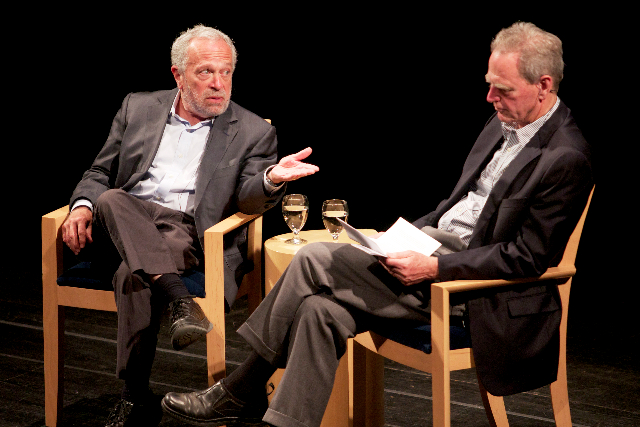
Photo by Katie Lin.

International House hosts second Formal Without Borders

On the corner of College Park and Russell Boulevard stands a white building ornamented by a fringe of foreign flags. International House represents a celebration of culture, and this year it hosted Formal Without Borders, a new tradition for the international development clubs of UC Davis.

The second Formal Without Borders was held on May 17. The event kicked off at 9 p.m., and more than 10 clubs tabled at the event to fundraise for impoverished communities in developing countries and raise awareness about a multitude of causes.

The outside area was set up with an assortment of food and club tables. Attendees in formal wear mingled, enjoyed snacks and struck up conversation with both established and upcoming clubs. Inside, the festivities were complete with international music, dancing and performances.

Imaan Taghavi, a third-year civil engineer major, was a main organizer of both the first and this second formal.

“I was thinking to myself, it would be really cool to get a lot of these international development clubs together, because there’s lots of them,” Taghavi said. “I’m a part of Engineers Without Borders, there’s Med-life, Global Brigades — and there’s like 10 clubs in Global Brigades. And all these new smaller clubs like Eau and Invisible Children. I thought this could act as a way for them to communicate, and also for the smaller clubs to network and expand.”

The planning, which took place over the summer of 2013, picked up faster than expected.

“We started networking and within a week we had tons of clubs emailing saying ‘this is awesome, can we get 20 tickets and sell 20 tickets and raise money?’” Taghavi said.

However, the formal ended up as more than a simple means of fundraising. The Council for International Development, a medium for communication between international clubs, was organized after the first formal Fall Quarter.

“Now representatives from all these clubs come together once every couple weeks and plan small things, like the formal, tabling, general outreach or grant opportunities. Fall Quarter [we had a] formal, Winter Quarter was getting the council off the ground, this quarter we decided to do another formal. We felt it was so successful that we wanted to try again,” Taghavi said.

Each club table was laid out with information and objects specific to the cause. Marie Shadowens, a second-year civil and environmental engineering major, is the current vice president of the Davis chapter of Engineers Without Borders and tabled at the formal.

“A lot of the stuff that we displayed on our particular table came from the different places where we’ve had projects previously,” Shadowens said. “Water treatment seems to be the need,  especially in developing countries … It’s really cool to be able to share these ideas with students who aren’t engineering majors. Just because, sometimes people look at a diagram and think ‘eh that looks scary, I’m just going to look away’ but it really challenges us to present the stuff in a way that’s super understandable.”

Colette Barton, an undeclared first-year, tabled for the Invisible Children club, where they sold bracelets and presented a poster detailing the background of the cause.

“It’s a really cool event,” Barton said. “I would have never known that this many people were involved in international development.”

For the first formal, 72 percent of every ticket went back to each club involved. This formal, clubs will receive an even bigger percentage due to budgeting. According to Taghavi, both formals were a huge success, a trend that he hopes will continue in the following years.

“The school does a lot with club fairs, but I feel like there’s more engaging and entertaining ways of having club unity and club dialogue … I think that the vibe of the formal is unique, and that’s my goal,” Taghavi said.

ELLY OLTERSDORF can be reached at features@theaggie.org.
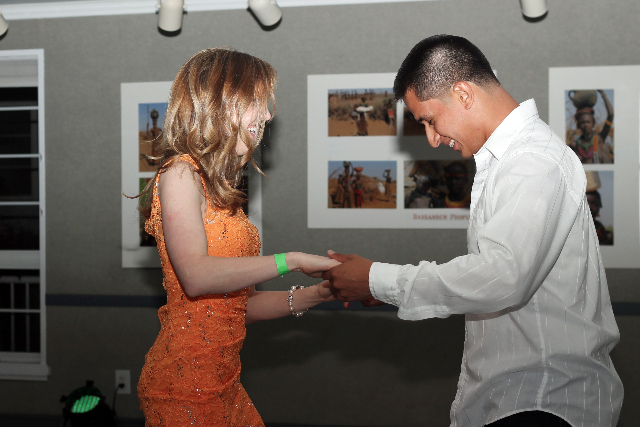
Photos by Katie Lin.