57.9 F
Davis

Davis, California

Monday, December 22, 2025
Home Blog Page 889

Design for America comes to UC Davis

Thanks to the efforts of engineering and design students, UC Davis has become one of 17 universities nationwide to be part of Design for America (DFA).

DFA is an interdisciplinary network of student-led teams that use the design process to solve problems in their communities, with the help of faculty, mentors and sponsors. Founded in 2009 by Dr. Liz Gerber of Northwestern University, DFA has spread coast to coast and to other UCs like Berkeley and UCLA.

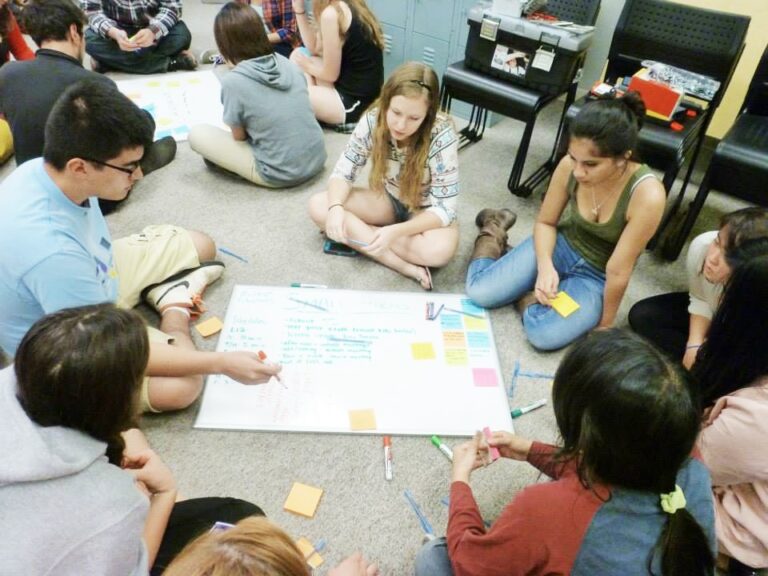
Following the national DFA design process, the organization advocates a three-step system: first understanding problems in their communities through interviews and research; then creating solutions and prototypes via collaboration, teamwork, and feedback from mentors; and finally implementing those solutions in trial-runs within the communities.

“The general mission is to have students and people from the community come together to solve problems using human-centered design,” said Max Bern, a fifth-year mechanical and aerospace engineering double major and co-founder of DFA-Davis. “Human-centered design is different than design from a business standpoint because you’re focused more on getting feedback from the specific user group during the entire design process instead of relying on how much money you’re going to get in a marketplace.”

In order to become a campus studio of DFA, universities must first go through a competitive three-phase application process. The process is orchestrated and judged by DFA alumni and fellows who work at Northwestern University, the national DFA hub.

Throughout the 2012-13 academic year, teams were required to compile signatures from the student body to determine campuswide interest in the organization. They then completed a four-week prototype development assignment to illustrate their teamwork and problem solving abilities, and lastly participated in a Skype interview to assess team leadership.

The team focused on bike safety at night by developing a prototype for motion sensored lights along bike lanes, using only flashlights, socks and cardboard boxes to simulate a moving visual indicator for bicyclists. DFA-Davis and three other campuses were officially selected in the spring of 2013 out of an estimated application pool of 60 universities.

DFA-Davis co-founder and 2013 mechanical engineering alumnus Ben Geva discovered DFA through a “serendipitous” encounter with Dr. Gerber while visiting the graduate programs at Northwestern University. He spearheaded student involvement at UC Davis in the summer of 2012. After talking to his major advisor at the time, Pr. James A. Schaaf, and the chair of the Design Department, Tim McNeil, the Engineering and Design Departments became sponsors for DFA-Davis and have even given the organization their own space in Cruess Hall.

According to Geva his DFA leadership role has exposed him to interdisciplinary skills he did not often encounter in the classroom.

“DFA is all about teaching the whole design process and not just one part,” Geva said. “[In engineering classes] when you’re told to design something you’re designing it around math … whereas in the real world there is more to it than math. Math is an important part of [the process] but there’s an enormous gap in education where they don’t teach us about what we’re going to design. Before you even get to the math there are thousands of questions that you need to have answers to.”

Starting as an official member in fall 2013, DFA-Davis has worked on projects concerning agriculture, food insecurity and disaster relief, which have already passed stage one: Understanding, and will soon enter the next stage: Creating Solutions.

Project teams have also introduced two new projects beginning this quarter concerning Alzheimer’s and transportation, each with their own project teams and leaders who have considerable autonomy under DFA’s administrative studio leaders.

Part of the DFA design process is to connect with community partners that are willing to spend time mentoring the teams, like organizations such as the Federal Emergency Management Agency (FEMA) and the Red Cross of Sacramento, which have partnered with the disaster relief project.

The Yolo County Food Bank and Seminis, a seed hybridizing sector of Monsanto, have partnered with the food insecurity project, while organizations like the National Center for Appropriate Technologies (NCAT) and an online forum for mechanical alternatives for small farmers, like Farm Hack, have partnered with the agriculture project.

Another faculty member who has become very involved in DFA-Davis is Executive Assistant Dean for Administration and Finance of the College of Engineering Jeff Lefkoff, who sees the organization as an extension of the University’s purpose as an institution.

“It’s a great opportunity for students who are interested in working on societal problems and having a positive impact through innovative mechanisms and solutions,” Lefkoff said. “UC Davis has a public service mission in addition to our teaching and research mission, so it is very important we create these opportunities for our students, faculty and staff to contribute to this larger community we are a part of.”

Projects are scheduled to show results this coming Spring Quarter, however Bern has stated that there are still negative aspects of the design process.

“A large problem for other studios and [DFA] as a whole is that sometimes the projects don’t work out, they’re hard to implement, they cost too much, people don’t use them and despite their best efforts they fail,” Bern said.

This is why the studio leaders of DFA-Davis hope to expand their size to allow for more projects and designs, and a larger, diverse group of students.

Nevertheless, according to Sydney Patterson, a second-year design major and co-founder of DFA-Davis, size is not important.

“We really just want to impact the lives of people for the better. If we can design new processes or products that can help people through their daily lives in some way, then we have succeeded,” Patterson said.
UC policy change results in shorter winter break for 2014-15 school year

0

The three-week winter break that UC Davis has come to know will be changed to two weeks for the 2014-15 school year. Due to conflicts with religious holidays, Fall Quarter 2014 will begin a week later than before for all UC schools running on the quarter system. Winter break will be shortened from the regular three weeks to two weeks.

“All UC quarter academic calendar campuses will have an Oct. 2, 2014 instruction start date for the fall 2014 quarter,” said Senior Associate Registrar at UC Davis, Barbara Noble. “This is to meet a UC system requirement for a common instruction start date across all similar academic calendar UC campuses.”

The change in the schedule was done to comply to UC rules and policies. Noble also said that the schedules for the academic calendars are created by all of the UC campuses together and at one time.

“The decision for the academic schedules are planned years in advance,” Noble said. “We have to make sure it fits with all of the UC restrictions.”

The University Registrars, along with the Academic Senate and Office of the President staff plan the academic calendars every two to three years.

Because the Jewish holiday Rosh Hashana falls on the same weekend as move-in weekend, the Fall Quarter 2014 schedule must be pushed back in order to not overlap with the holiday. Rosh Hashana is the Jewish New Year, and it, along with the day of atonement, Yom Kippur, normally occur in September and October respectively.

UCLA University Registrar Frank Wada said that this specific change is due to a policy that addresses religious holidays during move-in weekend.

The Policy for Addressing Religious Holiday Conflicts with Residence Hall “Move-In” Days, which was created in 2007, states that, “in setting the common academic calendar after 2010, the responsible University bodies … shall choose calendars (semester and quarter) that avoid scheduling fall residence hall move-in days for students that conflict with the observance of a major religious holiday.”

The academic calendar has not yet changed since the policy has been implemented. The 2014-15 school year will be the first time that the policy will create a change in the schedule.

“This is the first time that this sort of change has been made since the policy went into effect in 2007,” Wada said. “The calendar will change again based on when Rosh Hashana is.”

The policy was implemented because of a concern among the Jewish community regarding conflicts with move-in dates affecting students’ ability to celebrate these major holidays.

According to a letter to the Chancellors by former UC President Dynes which clarifies the policy, “representatives of the Jewish community and members of the California Legislature have expressed a desire for the University to avoid the conflicts that have arisen between fall residence hall move-in days.”

Future academic calendars, from years 2015-16 up to 2017-18 have been released. These calendars are tentative, but predict a normal start date for Fall Quarter during the last week of September and a three-week winter break.


Melissa Dittrich

UC Davis gymnasts open strong at NorCal Event

0

The UC Davis women’s gymnastics team opened strong at the five-team NorCal Preview in front of an audience of 924 at Sacramento State on Jan. 5. UC Davis finished fourth while posting its all-time high for a season opener with a total of 193.450 points.

Stanford won the meet with a 194.825, followed by UC Berkeley, who came in a close second with 194.650, while the hosting Hornets placed third with a score of 194.400, a school record for an opening meet. San Jose State came in fifth place with 193.325.

Sophomore Stephanie Stamates led UC Davis on both the floor and vault events. Stamates shared the individual win on floor exercise, matching a score of 9.850 with Alicia Asturias of UC Berkeley, Julia Greer of San Jose State and Taylor Rice of Stanford. The Alamo, Calif. native also headed UC Davis on vault with a 9.725 and added a 9.675 on beam.

The Aggie gymnasts opened with a 48.625 on floor due to the efforts of junior Kala DeFrancesco, whose score of 9.750 was followed by Stamates’ 9.850 to close the rotation.

The vault squad scored a total of 48.100, with senior Anna Shumaker putting up a score of 9.700 in the anchor spot.

The uneven bars crew scored 48.425, due to the 9.700 point contribution from junior Lisa Wiktorski and a 9.800 from sophomore Dani Jundal, who led UC Davis on uneven bars.

Junior Tiana Montell and senior Madeline Kennedy followed, opening with consecutive 9.775 scores to start off the beam crew and finish with a 48.300.

This meet also marked several career debuts for Aggie gymnasts young and old. Taylor Baron scored a 9.825 on the balance beam, while also competing on floor for the first time since her junior year in high school. Katy Nogaki, after suffering from a knee injury, competed in her first meet in two years and scored a 9.625 on vault. Freshman Yonni Michovska scored a 9.625 on uneven bars.

UC Davis faces Alaska Anchorage for its home opener on Jan. 13 at 7 p.m.

Sustainable Ag: Fork Off

0

I’m tired of the word “sustainability.” I’m equally tired of the words meant to supplant it such as “eco” and “earth-friendly.” As a fourth-year sustainable agriculture and food systems major, I am well aware of the novelty attached to the title of my degree. What exactly am I conveying to others? What value do the terms “sustainable” and “food systems” hold in our modern lexicon?

The sustainability movement, in my experience, is fueled by good intention often punctuated by naiveté and ignorance. The latter often goes unnoticed. I arrived at Davis as a bright-eyed, affluent suburban youth wanting to save the environment. Food seemed the ideal pathway. Everyone eats. I delved into the study of the food system: its structure, its injustice and its solutions. As I was confronted by facts, figures and stories of the hands that touched the food products I eventually consumed, I was overwhelmed. “Organic,” “fair trade” and “local” all became terms that I strived for. I was attempting to participate in a more just food system through my individual, consumer choice.

As the quarters rolled by, though, I was fortunate enough to take classes that deepened my understanding and comprehension of such complex issues. These classes, though, did not often focus on the “food system.” Women’s studies, community development and anthropology — the social sciences — exposed the flaws in my thinking. I learned to examine the structures around people as opposed to the individuals themselves in order to expose the root of the problems within the food system.

In the U.S., we all too often are taught to not only act, but think, like consumers. By trying to be a “conscious consumer,” I was enacting a vote-with-your-fork mentality. Voting-with-your-fork can more accurately be described as voting-with-your-wallet. In short, I was attempting to exert power through my economic standing. One has to wonder, when put like that, if that isn’t the cause of the problem instead of the solution.

Voting-with-your-fork or wallet means people with more money get more votes. Those that lack the same economic power are effectively silenced in this façade of democracy. This is one reason why the sustainability movement has largely overlooked issues of inequality.

The good intention inside us may be asking at this point, but my purchase must make some difference, right? Sure it does. Your purchase at the Farmer’s Market likely supports smaller, more ecologically sound farms and farmers. Your purchase of Fair Trade chocolate could support women in cooperatives of workers in other countries. Your purchases aren’t meaningless, but they won’t save the world. It’s also important to note that not everyone can afford a grocery bill from the Food Co-op or Whole Foods.

Sustainability has caught on, because it has been adopted by capitalist ideals. Marketing terms, third party certifications and biodegradable packaging are sexy and make us feel like good consumers. We don’t have to question our consumer habits, just adopt the new consumer fad.

We are told that our individual actions added to other people’s individual actions will amount to change. Consumers are championed for demanding that rbST be removed from their milk supply. “rbST” is a genetically modified dairy cow growth hormone manufactured by Monsanto that increases milk production. The European Union banned it citing questionable safety.

Although consumers can buy “rbST-free” milk (a label strongly fought against by the pharmaceutical companies), the synthetic hormone has not been banned. In fact, we unknowingly consume it through cheese quite often. With a critical eye, it is a shallow victory.

What if we stopped thinking of ourselves as consumers and started acting like citizens? Citizens wouldn’t limit themselves to individual actions. Disrupting the link between change and purchasing power brings in the voices of those most disadvantaged within the food system. Our power as groups can amount to real change, like bans and regulations, that provide safer, more wholesome food for everyone — not just those with the luxury of free time devoted to researching healthy food and can afford to buy it.

Our power as consumers is intrinsically limited by the relationship we have with food corporations. We are seen as wallets, not people. But I’m not a wallet, I’m a person. With a body that can get sick. With a mind that deserves to know what I’m eating. And a desire to help everyone, regardless of income, eat healthy food.

To brainstorm other ways to be a citizen, contact ELLEN PEARSON at erpearson@ucdavis.edu.

Third Space presents Stelth Ulvang

0

A taste of pure Colorado folk is soon to hit Davis. On Jan. 9, Stelth Ulvang of The Lumineers will be performing at Third Space with special guest Abe Abraham.

On the road with The Lumineers, Ulvang is often found painting melodic memories through piano keys. His musicianship, however, stretches over a spectrum of skill. The Denver native is also a singer, songwriter and multi-instrumentalist.

With a new album on the way, Ulvang is devoting his winter tour to showcasing his work, along with reminiscing the charm of playing intimate shows. MUSE had the opportunity to speak with Ulvang and discuss his musical journey thus far, as well as what is yet to come.

MUSE: What influenced you to first get into music?

SU: I played the woodwinds growing up in high school. I played the saxophone, clarinet and flute, but I started drifting away from the whole band-classroom thing; it turned me off from music. I didn’t plan on sticking with music, but then I got into piano on my own and taught myself from there, along with the accordion, guitar and other stringed instruments. So the woodwinds and music theory stuff definitely helped me pick up piano, which is probably my main instrument now.

How has your experience in The Lumineers evolved you as an individual musician?

It’s helped create a good balance, not necessarily in singing your own songs, but playing someone else’s songs. In some ways, it’s a lot easier. When you’re standing on stage and you’re putting your heart out there for songs that you wrote, it’s a different kind of pressure in communicating. Communicating as a backup musician is complementary to communicating as the main singer. Also, [Wesley Schultz, lead vocalist and guitarist] is inspiring to work with because he has a really strong stage presence. Something I value playing live is learning how to guide a crowd — not control a crowd, but guide a crowd. I look up to him for that.

As a multi-instrumentalist, how do you connect with all these instruments, when many musicians focus on just one? Do you have a different creative experience with each instrument?

I really admire and feel closely related to the term “jack of all trades, master of none.” I guess the difference is slowly starting to understand the relationship between all these instruments. You have a lot more options musically. It’s almost like a creative infinity. There’s still so much to learn. I’m not necessarily coming up with new ways to make music; I think I’m more of a fan of taking a lot of these old sounds and finding new ways to communicate them in songs I write.

What will fans anticipate to hear from your upcoming album?

Right now, the album doesn’t have a certain direction yet, except I want it all to remain fairly honest. I want it to be a truthful documentation of what’s going on in the moment of the recording. It’s like getting a bad tattoo. I’ve had friends who’ve gotten bad tattoos and I’d say, “Do you regret getting that tattoo?” And they’d say, “Well, it’s a truthful documentation of how I was at 18.” Maybe they don’t even think about it as much anymore, but it’s like a scar — it can’t be denied. I would like that to be said about my album: that all the songs were completely truthful in how I decided to record them.

What is in store for your winter 2014 tour?

It’s just a nice little week of touring where I have the time off; I have a bus, and I’m trying to get it to California from Colorado. It’s basically a good way to keep my chops up; it’s a good way to start meeting new people. With The Lumineers, it’s kind of drifted away from small shows in small places. I think it’s always humiliating and fun to play smaller rooms where the show inevitably becomes more intimate. It will be a good reminder of where we all come from. I’m constantly writing new songs and now is just as good time as any to try out new things and to find out what my sound is and what people are into that I’m doing.

Letter to the Editor

0

“ANIMAL WELFARE LEGISLATION NEEDED”

Our state legislature reconvened on Jan. 6. Now’s the time to ask your representatives to introduce legislation to protect animals, both wild and domestic. A few suggestions: ban all “wildlife killing contests” of coyotes, rabbits, ground squirrels, crows, whatever; they are unethical, ecologically-unsound, and give all hunting a black eye. Ban the use of electronic duck decoys (“roboducks”) — unethical and unsporting. Ban the Mexican rodeo’s brutal “steer tailing” event (already banned in Alameda and Contra Costa counties). Amend current law (Penal Code 596.7) so as to require ON-SITE veterinary care at all rodeos. Ban the sale of non-native turtles and frogs for human consumption — all are diseased. Released into local waters, they displace and prey upon our native wildlife. Ban elephant rides — dangerous for animals and public alike. Ban the cruel “farrowing crates” at state and county fairs. Ban the giving away of goldfish as “prizes,” and the sale of hermit crabs as “pets” (all taken from the wild) at fairs and carnivals. Most will die an early death.

All legislators may be written c/o The State Capitol, Sacramento, CA 95814. As the Lorax says, “If somebody like YOU doesn’t care a whole awful lot, nothing’s going to get better. It’s not.”

Sincerely,

Eric Mills

Coordinator, ACTION FOR ANIMALS Humane Society


Fire breaks out at Segundo hall

At 1:37 p.m. on Jan. 7, a fire broke out in a dorm room on the second floor of Sereno Hall, located within the Regan Residence Halls complex of Segundo. Firefighters evacuated the building in order to clear out the smoke. No one was present in the room at the time.

According to UC Davis Fire Chief Nathan Trauernicht, the room’s garbage receptacle near the door was on fire and a water extinguisher was used to put it out. Trauernicht said that the improper disposal of a cigarette butt most likely led to the fire. The UC Davis Fire Department was dispatched to the room when the room’s heat detector transmitted a signal indicating it had been dismantled.

UC Davis became a smoke and tobacco-free campus beginning Jan. 1. The residents of the dorm room will be referred to Student Judicial Affairs.

— Claire Tan

Young Wanderlust: A book review

The back of Evan Kenward’s self-published debut novel Young Wanderlust asks the questions: What do you do when you graduate college? Do you get a job? Start your career? Begin your young adult life?

If you’re Evan Kenward, a recent University of Massachusetts Amherst graduate, you answer these questions by dropping everything and commencing on a cross-country road trip with two of your two best friends in an unreliable rusted out old Subaru. What happens on the way is up to fate.

Young Wanderlust is a 28-day account of Kenward’s cross-country road trip he took during the early summer months of 2008. Determined to experience everything that the American west and has to offer on a small backpacking budget, Kenward tells his story with optimism and wonderment and engrains in the minds of his readers that spontaneous travel is the true road to complete and total freedom.

Beginning in Massachusetts, Kenward sets off west traversing highways and taking in the sights of middle America. The car holds up for the cross-country drive that included, but was not limited to, memorable stops in the badlands of South Dakota, hot springs in the Nevada desert and a quick camping trip in Yosemite. However, the real part of Kenward’s journey begins when the car that had driven him nearly 3,000 miles across North America breaks down in Eureka, CA. His two traveling companions decide to call it quits and return home to Massachusetts. However, Kenward wasn’t about to let a car come between him and the Pacific Northwest.

Kenward, 3,000 miles from home, has to network his way north. He discovers couch surfing, which provides him with unforgettable experiences that include participating in Vancouver’s Critical Mass (an event hosted on the last Friday of every month in major cities around the US where thousands of bikers take to the streets to promote more sustainable ways of transportation) and sleeping under the stars in Whistler, British Columbia on the shores of a beautiful alpine lake.

Kenward’s genuine admiration for the series of events that lead him to these unforgettable experiences is supported by his smooth prose. He articulates scenes with ease and you feel as if you’re right there looking over his shoulder as he takes on the unknown. The wonderment he must have felt while in the midst of his journey is clearly read and he writes with a confident voice that rarely falters.

The book, however, can be a bit tedious. Rounding out at 476 pages, Young Wanderlust is a work that pays attention to the slightest of details, and if patience is not one of your virtues I would recommend preparing yourself. Nonetheless, Kenward’s first attempt is commendable and is worth taking a few days to read and find out what it takes to make the classic American road trip.

If you’re thinking about adventuring out into the world with just a backpack and the drive to see a place through the eyes of a weary traveler without the typical tourist agenda, i.e. sightseeing, hotels and rental cars, Young Wanderlust will provide inspiration for those eager to find new experiences.

Young Wanderlust can be purchased online in a variety of formats. Check out the book’s Facebook page at https://www.facebook.com/youngwanderlustbook.


Review of Jeff Tweedy’s solo concert

On Dec. 10, Jeff Tweedy of the bands Wilco and Uncle Tupelo presented his solo concert at the Mondavi Center with Scott McCaughey of the band The Young Fresh Fellows as his opener.

I’d like to inform you that I attended this concert knowing almost nothing about Tweedy’s music besides a few of his popular songs from Wilco. All I had at hand was my love for all genres of music and low expectations to avoid possible disappointment (I’m a bundle of sunshine).

I got there a few minutes into the show and found myself watching McCaughey in a furry silver top-hat and sunglasses sipping whiskey and trying not to spill on the piano. He comically stumbled around stage between his guitar, banjo and piano, singing about The Walking Dead comics and Babe Ruth. Though I couldn’t tell if he was comedian or a musician, I definitely enjoyed the oddity of it all.

The audience was mostly middle-aged to senior citizens hooting at McCaughey’s absurd gag reel of simplistic chords and arbitrary lyrics, but as soon as Tweedy took stage tons of young couples flooded the audience holding hands, cuddling and screaming cutesy requests at the headliner. Since I’m quite young and seemingly single, I felt out of place (mostly because the couple next to me kept kissing at different angles depending on the song that was playing).

Tweedy entered alone with his guitar, pulled out from the shadows with a single spotlight, and opened with a somber version of “Via Chicago” from Wilco’s 1999 album Summerteeth. I thought the song seemed weird as an opener because it was exceptionally low-energy.

As the concert progressed I realized he chose pretty low-key rep, though not necessarily lethargic. He did sprinkle in a few driving forces like Wilco’s “Heavy Metal Drummer,” and I took into account that the lack of a full band and minimal amplification created a toned-down atmosphere. Whether this was his intention or not, it worked well, keeping a cozy atmosphere while still engaging the audience.

Tweedy displayed mastery over his guitar, never over-indulging in his abilities, but offering a satisfying taste of what he knew. Paying tribute to Wilco several times, he soloed carefully past the musical complexities of what his band is generally known for to leave room for what felt like an intimate at-a-bar-in-the-middle-of-nowhere with your sweetheart setting (which may explain why I was surrounded by snuggly couples and tipsy fifty-somethings).

As much as I appreciated Tweedy’s guitar skill, I enjoyed his voice more. His tenor range was smooth and piercing during his ballads, but released a rawer, less-perfected sound when the beat picked up, making him emotionally accessible for the audience. He tossed in a few whistle interludes which seemed to charm the couples into trying to whistle along (needless to say it didn’t work out and they went back to snogging).

As I finally settled into the feel of things, a heckler pointed out that Tweedy had been suspiciously quiet in between songs. To this, Tweedy explained he didn’t feel like telling stories that night. This riled up the older audience causing them to pressure Tweedy until he told a story about his father, while the couples continued to scream out random song requests.

It was halfway through the show at this point and Tweedy looked slightly distressed, snapping back at heckling audience members and immediately apologizing for his snarkiness. He then began loosening up, cracking little jokes and occasionally dancing (quite poorly) in silence in an attempt to be “fun.” As things began to escalate from somewhat tense to downright strange, I gave up and started engaging with the weirdness, trying to ignore the couple next to me, who were now whispering scanty nothings to each other.

After watching a girl in the front row attempt to dance to the excessively slow song, “I’m the Man Who Loves You” and listening to multiple other audience members pick at Tweedy’s setlist, the show ended with a standing ovation and Tweedy came back for an encore that lasted as long as his show had. He tried to start a sing-and-echo with the audience, but instead went on a rant about how he wished he was cool enough to get the audience to echo him without planning it beforehand. He nonetheless exited to another standing ovation.

Despite being sandwiched in between young couples in heat and Davis’ thirsty hecklers (who knew this was Tweedy’s fan base?), I thoroughly enjoyed the show. Tweedy was able to last through a good two hours of rep without losing his vigor and his endearing (humorously awkward) personality. I can’t wait to see what his concert is like when I’m thirty years older and have taken to whiskey.

Letter to the Editor: Stolen election in Honduras

0

National elections in Honduras were held on Nov. 24, 2013. I went with a delegation from the National Lawyers Guild invited by the government. In 2009, a military coup kicked out the president and took over the country with a fraudulent election. Unfortunately the same ruling party of the coup has now also stolen this election.

Hondurans live in a militarized state where they cannot trust their police force or their government. The entire country is well aware of the stolen election, but most are afraid to stand up.

Students are unafraid and march everyday. On the first day of their rally, municipal police assaulted them with tear gas for over an hour. The students were undeterred and have marched against fraud every day since.

On Sunday, Xiomara Zelaya, of the Libre party and whom the election was stolen from, marched with supporters. She demanded a recount. This rally, which was planned since Nov. 29, was overshadowed with grief because of the assassination of a prominent and well-loved Libre party member Jose Antonio Ardon. He was shot multiple times by four gunmen the night before while preparing for the march. This was the fourth political assassination of a Libre party member in the last week. The message is clear: speak out against fraud and your life is in danger.

The students of Honduras continue to march. Please keep your eye on them and show them your support. You can find out more at jessicatarena.com, facebook.com/pages/Camisas-Negras/1432736630278767 and Twitter #JOHNoEsMiPresidende.

Jessica Arena

UC Davis King Hall student

Member, National Lawyers Guild


Professor Profile: Dr. Bryan Enderle

Basic chemistry is the undisputable right of passage for each young science major at the University of California. In what is effectively a three-quarter crash course on all things chemistry-related, the UC Davis Chemistry 2 series serves as an introduction to basic chemical intuition; the series tests the wit and persistence of many young science majors, and eventually beckons them into upper-division coursework.

Dr. Bryan Enderle is one of the few professors in the Chemistry 2 series who, for some students, has helped to improve or transform their perspective on the subject.

At 39, Bryan Enderle is one of the youngest lecturers in the UC Davis Chemistry Department. He received his bachelor’s degree in chemical and petroleum engineering from UC Berkeley in 1997, and his doctorate in chemical engineering from UC Davis in 2002. He has been on board as an affiliated faculty member at UC Davis ever since. Dr. Enderle’s past endeavors as a UC Davis PhD student have helped him to feel connected with students — he has been part of the Aggie community for over 11 years now, as both a student and educator.

Even from an early age, Dr. Enderle appreciated the fantastical properties of atoms. He’s currently making it his life’s work to simplify the intricacies of the chemical world to young scientific minds.

“I enjoy the abstract, intuitive nature of chemistry, ‘What is the chemical or atom going to do next based on its chemical environment?’ These concepts have been quite enjoyable for me since high school. The subject just worked for my brain; it’s how I’m wired,” Enderle said.

Dr. Enderle is a lecture-only professor, which is a unique position to hold in a subject founded upon constant research and development. While many university professors divide their time between working in and/or administrating laboratories and leading courses, Dr. Enderle made the decision early on in his career to focus primarily on the education of his students.

“Most instructors teach a couple classes a year and also partake in research. You have to publish, you have to get grants and all of this is very time consuming. For some research professors, by the time they get to a class, it’s not necessarily the first priority … this all depends on the person of course,” Enderle said. “For myself I enjoyed research at one point and I got what I wanted from it, but then I decided to focus fully on teaching. I realized that I enjoyed teaching a lot, and now that’s what I spend most of my time doing.”

Dr. Enderle employs an underlying philosophy that if students can connect with him they’ll be more engaged in the subject matter. He makes an effort to reach out to students and chemistry enthusiasts through the UC Davis Chem-Wiki page videos, chemistry review sessions (which are often at capacity before exams), office hours and his chemistry-related YouTube channel, which currently has over 2.3 million views. Dr. Enderle also mentioned that he spends a generous amount of time responding to student emails in regard to chemistry-related questions.

“People don’t have to necessarily like chemistry, but I know they need to get through my class to proceed in their education … if they can see some value in it by the end of my course and feel more prepared for future classes, then I’ve succeeded,” he said.

In 2012, he was the overall campus winner of the ASUCD Excellence in Education Award (as well as the overall winner for the College of Letters and Science), recipient of the Interfraternity Council Teacher Appreciation Award and an Honored Faculty at the Prytanean Honor Society.

In the time he spends outside of teaching, Dr.Enderle has dedicated himself to exploring the overlap of science and religion. In a recent TEDxUC Davis talk entitled “Science vs. God,” he was the featured speaker in the discussion, and was able to share his views during an interview.

“I am both a science professor and a man of faith. I have no need to be one or the other when I believe that both can coexist. I love to explore their overlap and parallel streams of thought. It is a passion of mine,” he said.

When Dr. Enderle isn’t delving into the overlap of science and God, preparing his lectures, replying to emails, upholding his post at undergraduate academic advising or filming “e-walking” extravaganzas around Davis (these comedic videos are also on his YouTube channel), Dr. Enderle spends his time with his wife and three-and-a-half year old son. Enderle is a frequenter of Central Park, the Davis Farmers Market and family/friend board game nights and he especially enjoys reality TV shows.

Dr. Enderle has some closing remarks for his students.

“I would tell students to engage in all parts of their lives. Most students have a big chunk of their life consumed by academics, especially in the sciences … Pay attention to the other parts of your life: exercise, sleep, your emotions, spirituality, if that’s your thing. So many of these things are important to make a well-rounded person,” Enderle said.

Freeborn Hall to host annual a cappella event

0

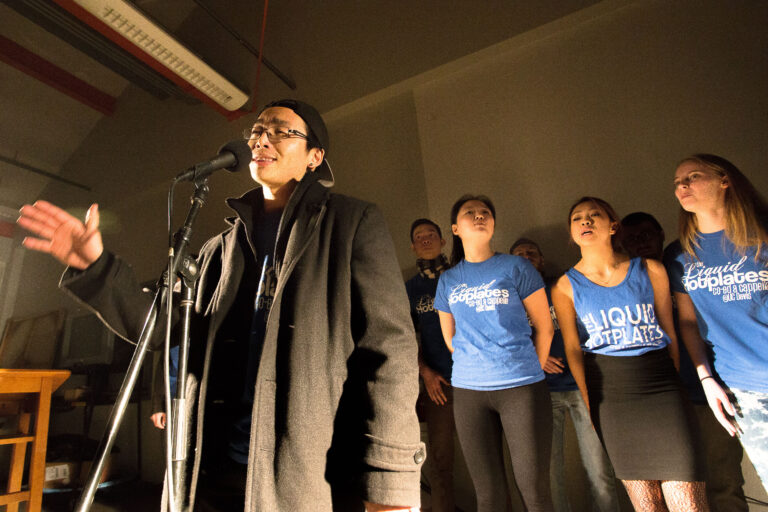
On Dec. 6 at 7 p.m., the a cappella community of UC Davis will come together for the annual Alotta Cappella show. Alotta Cappella is an a cappella showcase hosted by the undergraduate a cappella group, the Liquid Hotplates. This year, the show will take place in Freeborn Hall.

The Liquid Hotplates host the event on the last day of class instruction each year. Though in the past Alotta Cappella has featured some graduate groups, this year only undergraduate a cappella groups will be performing.

Some of the a cappella groups joining the Liquid Hotplates include The Lounge Lizards (a coed a cappella group), The Spokes (an all female group), Afterglow (an all-male group) and Jhankaar (a coed South Asian group). Each of the diverse groups performs a set of two to three songs.

“It’s just a really fun show. It involves the whole a cappella community within Davis so it should be very high energy,” said Jaimie Wu, a fourth-year exercise biology major and the Liquid Hot Plates’ business manager.

Additionally, the groups themselves arranged the songs that will be performed.

“People will be amazed by the arrangements that are made from the songs they know and love,” said Jessie Herrera, a third-year animal science major and music director for the Lounge Lizards.

Wu said she hopes the show will be more exciting than ever, as it has grown increasingly in size.

In the past four years the annual event has transformed in size. The event has gone from a free show performed in a classroom of the Social Sciences building to its current location in Freeborn hall. The 2012 show was hosted in the Science Lecture hall, which holds approximately 500 students, whereas Freeborn accommodates approximately 1,200.

“Last year we sold out and even had to turn people away,” said Sydney Kovacs, a second-year biology and music double major and Liquid Hotplates member. So, this time we hope to accommodate everyone who wishes to share an evening of a cappella.”

Wu attributes some of Alotta Cappella’s success to the recent film Pitch Perfect. The film, which premiered in 2012, was highly successful in its portrayal of collegiate a cappella. Wu said the film took a cappella from something many people didn’t know about to something in the forefront of popular culture.

“A cappella is in right now: people love the movie Pitch Perfect, the show The Voice and the new season of the Sing-Off is premiering on Dec. 9,” Herrera said.

Wu hopes this boost in popularity will allow her to bring what she feels is exciting about a cappella to a wider audience.

“[I think it’s really fun] hearing how people take songs and completely change how they are sung and make them a cappella,” Wu said.

Herrera said he too hopes that the Allotta Cappella show will be able to bring the unique performance aspects of a cappella to more people in the Davis community.

“The appeal of contemporary a cappella isn’t just that it’s people singing with no instruments; it’s people replicating the same instruments you would hear in a song using only their mouths,” Herrera said. “There are thousands upon thousands of noises that the human voice and mouth can make, so why not use them?”

Alotta Cappella tickets are available for $7 presale and can be purchased at Aggie Stadium or tickets.ucdavis.edu. Tickets will also be available for $10 at the door on the night of the event.


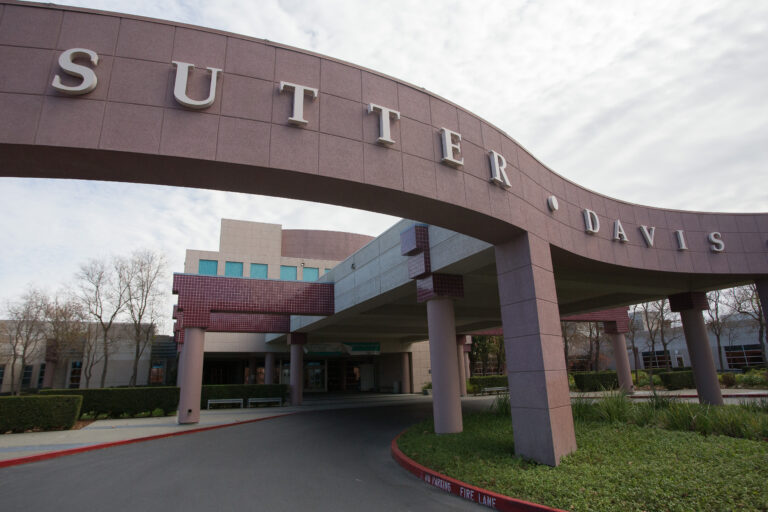
Baldridge Program awards Sutter Davis Hospital with Presidential honor

0

Sutter Davis Hospital received the 2013 Malcolm Baldridge National Quality Award, the nation’s highest Presidential honor that recognizes performance excellence in quality improvement, workforce, operations and leadership.

“Sutter Davis Hospital has been on this quality journey for five years to improve and sustain our performance in seven categories: leadership, strategic planning, customer focus, measurement, analysis and knowledge management, workforce focus, operations focus and results,” said Nancy Turner, the communications director of Sutter Health Sacramento Sierra Region.

According to a press release, the Baldridge Award was established by Congress in 1987, and is managed by the Baldridge Performance Excellence Program of the U.S. Commerce Department’s National Institute of Standards and Technology.

The Baldridge Program raises awareness of the importance of performance excellence in the U.S., and provides assessment tools and criteria. Businesses, schools, health care organizations and government and non-profit organizations are eligible to receive the award.

Thousands of organizations use the Baldridge criteria in order to guide their operations, improve performance and get sustainable results. This improvement and innovation framework offers organizations an approach to key management areas. The criteria are regularly updated.

The Baldridge Award provides benefits for the selected organizations, among which include a growth in revenue and jobs, as well as the honor of the title. According to the Baldridge Performance Excellence Program’s website, one report in 2011 noted that healthcare facilities that have won or been in the final review process for the award were six times more likely to be among the annual Truven Health “100 Top Hospitals” list.

Sutter Davis hospital has been on the “100 Top Hospitals” list four times, including the past three years. This is also the first time an organization in the Sacramento region has been the recipient of the Baldridge Award.

“Sutter Davis is a small hospital, so if anyone is looking for a facility that is more community-oriented with family support and a friendly staff, this would be the hospital for them,” said Eunice Lee, a registered nurse who completed part of her nursing training at Sutter Davis. “There is an interpersonal relationship between the patient and the staff, and the physicians provide a one-to-one focus.”

The hospital is located in West Davis, and has the city’s only emergency room. It is affiliated with the Sutter Health System in Sacramento, which is known for specific specialty care.

“Although it is a small hospital, Sutter Davis strives for excellence,” said a Sutter Davis physician who preferred to remain anonymous. “We see all kinds of different conditions come in and we try to keep the patients’ safety our priority.”

Sutter Davis is known for being a family birthing center, with personal options like water births for expectant mothers. It is the only hospital in the greater Sacramento area to offer the option of water births in a designated water birth tub.

“Their birthing center offers options that tend to the mothers and their families, in order to make it as natural as possible,” Lee said. “The hospital is commendable for those features, and it’s very baby-friendly.”

UC Davis students who are covered under the UC SHIP medical insurance go to the Sutter Davis Hospital if they need immediate treatment or need to be taken to the emergency room. Many students have had positive things to say about their experiences in the hospital.

“The staff really tend to the patient’s needs, and I can see their efforts in trying to get to know their patients on a more personal level,” said Kristen Pham, a third-year cellular biology major who has been to the hospital several times. “They made me feel as comfortable as possible, and within the couple times I’ve been admitted everything was quick because they went straight to work. Their use of equipment was also very efficiently done.”

The 2013 Baldridge Award will be presented to Sutter Davis in a ceremony in Baltimore, Md. in April 2014.


Tune in: Addressing all types of music

0

Guitar Pioneers

 Guitar is a magically dynamic instrument. To some, learning it seems impossible. I am one of those folk. I just don’t get how people can move their fingers so intricately and play so fast.

Some quick history: stringed instruments (known as chordophones) have been around for over 3,000 years, but the instrument officially named “guitar” has existed since at least 1200. A long damn time.

A long time which, in combination with wide cultural influence, has allowed the instrument’s utility to develop and expand. There is an infinite combination of sounds one can make with a guitar, and we currently live in an age in which the best guitar pioneers of all time are going hard on the six- (or 12-) stringed instrument.

The following is a list of six great guitarists who, in their own ways, have revolutionized the guitar:

1) George Harrison (The Beatles): No two George Harrison guitar parts sound alike, so it’s confounding how he can consistently sound so catchy. He creates beautiful melodies on the acoustic (“Black Bird,” “Here Comes the Sun”) and can create a soft sound, but frequents the electric guitar. He is father of some of the most memorable riffs ever (“Ticket to Ride”), can solo like a madman and manages never to overdo his part — he doesn’t dominate or overshadow the other Beatles. The best-selling band of all time’s sound goes nowhere without this man.

2) Jewel: One of the emotionally rawest artists I have ever listened to — especially on her debut album, Pieces of You. It’s just Jewel and her acoustic guitar. Her music is simple, and her honesty is so pure, the literal opposite of heavy metal. She gets me every time with songs like “Morning Song,” that make me want to hug my girlfriend or a puppy. Her simplicity and emotionality revolutionize how guitar is played as well as how it functions in relation to lyrics.

3) Isaac Brock (Modest Mouse): Pure twang is how I would describe his guitar sound. But he utilizes this twang so well. Listen to the song “Broke” and be prepared to get inspired and think deeply. He brings a deep, sad spaciness that is unrivaled to the guitar world. The album The Moon and Antarctica literally makes you feel like you are in Antarctica looking at a massive white moon — it’s incredible. His guitar sound contains hints of loneliness and depression, which are only complemented by his sad voice. He is able to communicate mood so well with his guitar playing.

4) Noel Gallagher (Oasis): Rough, distorted guitar never sounded so beautiful. He characterized this sound for Oasis — beginning songs like “Some Might Say” with loud yet surprisingly melodic strumming, only to solo and riff his heart out when the time is right. Oasis’ rough guitar reminds us of their grunge contemporaries, but the underlying beauty and melody within their loudness is what separates them.

5) Bob Dylan: Bob preceded Jewel by about 30 years, but embodies the same simple relationship between musician and guitar. He’s like no one else, though — for one, his guitar playing is much folkier. He strums and noodles away, and his acoustic guitar complements his scratchy voice so uniquely.

Then there are his lyrics — guitar or not, some of the best poetry ever written. He paints vivid pictures nonstop in the listener’s mind with his abstract lyrics.

6) J. Mascis (Dinosaur Jr.): I love when lead singers also play guitar, because usually their musical personality shines through equally in both. J. Mascis is no exception. His guitar, exemplified in songs like “We’re Not Alone,” sounds very raw and unproduced — it sounds like he is playing it live.

What really makes him special, though, is his ability to wail on the guitar when he plays solos — he evidently puts himself out there. I lose myself in them, so I can only imagine how much he does while he plays. His soloing skill is unequal to anyone, and his tone is always spot on.

These artists each took/take guitar to new levels in their own way. I would be overjoyed if I could play literally one-tenth as well as any one of them — their talents are extraordinary. We live in an age of musical pioneers, but I am so excited for what is still to come.

 Other guitarists that I would have loved to discuss: Johnny Marr (The Smiths) , David Gilmour (Pink Floyd), Axl Rose (Guns N Roses), Jerry Garcia (The Grateful Dead), Thom York (Radiohead), Keith Richards (The Rolling Stones) and Bradley Nowell (Sublime).

Male Athlete of the Quarter: Gabe Manzanares

0

The 2013 football season elicited a great deal of change for the Aggies (5-7, 5-2 Big Sky). There was the hiring of new head coach Ron Gould and the innovative program that came with him. But the change that generated the majority of the Aggies’ offensive success had just walked on to the UC Davis campus at the start of the summer.

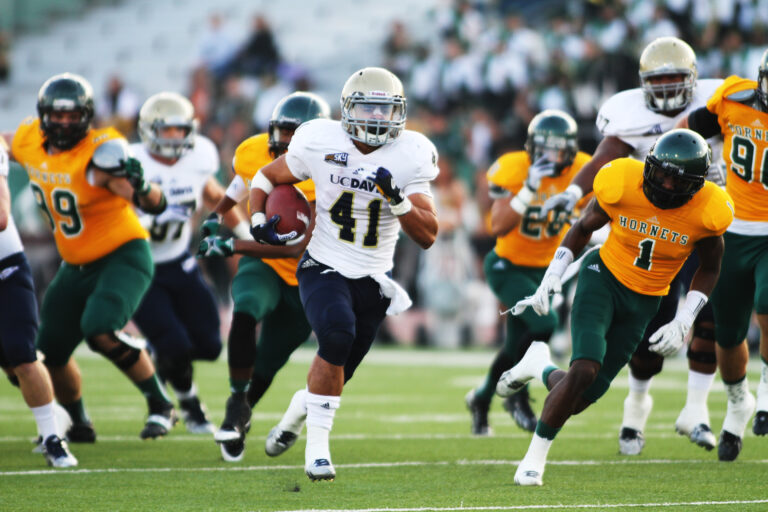
Junior running back Gabe Manzanares stood out among the rest in his first season as an Aggie. The former Wesleyan University and City College of San Francisco substitute finished the year with 1,285 yards (seventh most in UC Davis single-season history) and rushed for 10 touchdowns.

Out of the backfield, Manzanares caught 27 passes for 385 yards. Getting the ball to the quick and powerful back was a key ingredient in the Aggies’ recipe for success.

The San Francisco, Calif. native first turned heads with a 208-yard performance against Idaho State. Manzanares captured the attention of both Aggie fans and opponents and, due in large part to his impressive drive and dedication, continued to produce one impressive performance after another.

“He has a heart as big as the United States,” said coach Gould. “He never wants to come out of the game, and what you see out [there] is what you see every day in practice; he by far sets the tone for what practice is going to be like.”

Despite the upsetting home loss against Cal Poly, Manzanares still gave UC Davis something to celebrate as he became the first Aggie to rush over 1,000 yards since Matt Massari rushed for 1,274 yards in 2002.

“That running back is legit,” Cal Poly coach Tim Walsh said of Manzanares. “He’s a great player.”

“Obviously that’s an awesome achievement,” Manzanares said regarding the feat. “I [attribute] all the success to the [offensive line], my fullback Dalton Turay, the tight ends and the receivers blocking downfield. It’s a team effort.”

In the last home game of the season against Northern Colorado, the St. Ignatius High graduate moved up to eighth on the Aggies’ single-season rushing list with 1,163 yards while advancing six spots to fourth for single-season carries with 232.

At the season’s finish, Manzanares passed Matt Brown (1,183 in 2000) for the seventh spot, and fell two yards short of G.P. Muhammad (1,287 in 1998) for fourth all-time, earning the fifth spot.

In UC Davis’ 34-7 victory over Sacramento State in the 60th Causeway Classic, Manzanares accounted for 217 yards — 122 rushing and 95 more receiving on four receptions — with a pair of touchdowns. The ground-game workhorse scored from 2- and 33-yards in the first quarter. It was the junior transfer’s fifth consecutive 100-yard ground game.

“His professionalism, his heart and want to succeed … the young man is going to be very successful,” coach Gould said. “I am so fortunate, very grateful that he stumbled into our lap. I don’t know what we would do without him.”

Manzanares’ impressive season earned him the title of Male Athlete of the Quarter. Look for big things from Manzanares next season as the UC Davis football program will luckily have him back next year for his senior season.