56 F
Davis

Davis, California

Wednesday, December 24, 2025
Home Blog Page 909

Daily Cal

0

Thursday, October 17

Poverty Eradication Student Organization Showcase
11 a.m. to 2 p.m.
West Quad, UC Davis
Oct.17 is the United Nations’ International Day for the Eradication of Poverty, and the Davis Blum Center invites you to a showcase of student organizations that directly address poverty locally and internationally.

Water Entrepreneurship Workshop
2 to 6 p.m.
1213 Gallagher Hall, UC Davis Graduate School of Management
Imagine H2O is co-hosting a workshop with the UC Davis Sustainable AgTech Innovation Center that will highlight opportunities for innovation in the water sector. RSVP online and attend an interactive afternoon of exploring business ventures in food and agriculture that help solve the global water crisis, featuring discussions with industry leaders and serial entrepreneurs.

ITDP: Body of Knowledge
8 to 10 p.m.
Lab A, Wright Hall
Body of Knowledge, presented by ITDP, is a non-traditional performance piece that moves across theater, performance art and visual art to explore ways in which memories are embodied and transformed across time. Audience members will be invited to participate on multiple levels in this experiment that recasts relationships between materiality and memory, and questions whether such a thing exists as a “true story.”

Friday, October 18

Prelude to a Kiss
8 to 10 p.m.
Wyatt Deck, UC Davis Arboretum
Common House Productions and the Friends of the UC Davis Arboretum present this slightly dark, but touching comedy with a whirlwind romance. Tickets are $12 for adults and $10 for students and seniors.

Author Event: Dirty, Sacred Rivers
7:30 to 9:30 p.m.
Avid Reader 617 2nd St.
Attend award winning journalist Cheryl Colopy’s discussion about her new book, which explores South Asia’s severe water crisis. The event is free.

Saturday, October 19

Preview Day
7:30 a.m. to 3 p.m.
UC Davis
This one-day event is an opportunity for potential students to check out the UC Davis campus and get an idea of what student life is life. The event is free, but online registration is encouraged.

Prelude to a Kiss
8 to 10 p.m.
Wyatt Deck, UC Davis Arboretum
Common House Productions and the Friends of the UC Davis Arboertum present this slightly dark, but touching comedy with a whirlwind romance. Tickets are $12 for adults and $10 for students and seniors.

Sunday, October 20

Emergency Preparedness and Response
1 to 2 p.m.
Davis Public Library, 315 E. 14th St.
Aimee Chen of the American Red Cross will discuss some simple steps for preparing and responding to potential emergencies. The event is free and refreshments will be provided.

Prelude to a Kiss
8 to 10 p.m.
Wyatt Deck, UC Davis Arboretum
Common House Productions and the Friends of the UC Davis Arboertum present this slightly dark, but touching comedy with a whirlwind romance. Tickets are $12 for adults and $10 for students and seniors.

Monday, October 21

Pub Quiz (21+)
7 to 9 p.m.
DeVere’s Irish Pub, 217 E Street
Dr. Andy Quizmaster will host his weekly celebration of knowledge, strategy and raucous company. Teams of can have up to six players.

Tuesday, October 22

Salsa Tuesday (18+)
9:30 to 11:30 p.m.
The Graduate, 805 Russell Blvd.
Attend dance lessons at the Grad with Cori from Barbara’s Dancing Tonight. The event is $6.

Wednesday, October 23

Picnic in the Park
4:30 to 8:30 p.m.
Central Park
Shop the Farmers Market and enjoy live blues music from Julie & the Jukes.
MOMIX presents Botanica

0

“Lunes laugh in darkness for swans to dream of genesis and a new green.”

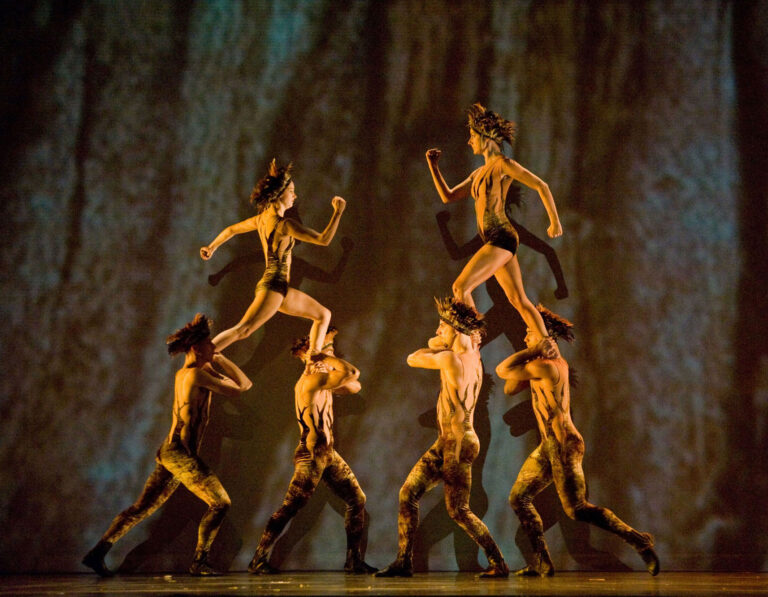
That’s how Moses Pendleton, artistic director for the dance company MOMIX, describes his work in Botanica, which will be performed at the Mondavi Center on Oct. 26 and 27. Pendleton believes that Botanica is not your average dance show, as its sensuality, soundtrack and sensorial stimulation will appeal to people who don’t usually view dance performances. From his office in Connecticut, Pendleton spoke with MUSE via phone interview.

MUSE: Can you briefly describe Botanica?

Pendleton: Botanica is a show that depicts the four seasons in a MOMIX style, using a mixed media presentation. It’s taking MOMIX — props, lights, special effects and different kinds of music — and creating another world, inspired by the botanical experience and nature. It’s very spectacular and involves a lot of costumes, mystery and magic. The soundtrack includes Peter Gabriel, trance music and some classical.

It plays on the logic of dreams, in the sense that it doesn’t have to be logical, but surreal. It’s non verbal … it’s a bit difficult to explain in words but you should see it to get an idea. I hope that it will be a good evening for all and that audiences walk out of the performance with a little less gravity in their step.

MUSE: How old is Botanica? What was the inspiration for Botanica?

Pendleton: It will be five years old in January. It’s a distillation of a lot of interests I’ve had in my lifetime. I was born and raised on a farm so I’ve had a lot of interest in the natural world. I feel like the show makes contact with life forms and energies beyond human. Part of the show’s draw is transforming human objects into other forms of nature, which is fun to watch. It’s a series of optical confusions that take the rust off your dendrites, stimulate your head and get you to imagine what you’re looking at.

MUSE: How did you come up with some of the imagery?

Pendleton: There are special props like old sewer pipes and fans and we transform them into other things like a sculptor. We create images first and then we realize them with props. For example, there are five girls that we lay petticoats on, until they look like marigolds. Then we figure out how that dancer can move.

MUSE: What is a moment in Botanica that really stood out for you?

Pendleton: I feel like they all have impact. There’s another piece called Centaur, like the half man half horse. We create the top half with one dancer perpendicular to the floor, and then there’s an ass end to the centaur on the floor. The two bodies combine to move around and they do a number to a midsummer night’s bacchanal. It’s a trick of MOMIX to not disguise the bodies with horse hair but we see the illusion at the same time.

MUSE: What inspired you to pursue dance and choreography?

Pendleton: I got into it by accident. I was training to be a downhill racer. I went to Dartmouth to pursue skiing but on my second day I broke my leg. To recuperate, I took a dance class and it changed everything. Six weeks later, I was dancing in the opening act for Frank Zappa and the Mothers of Invention. It was very shocking since I was an English major. We were encouraged by positive reception to pursue this path. We got such buzz that it really helped us pursue this. We’ve been fortunate to have a following all this time, since it has allowed us to make a living from Momix for 33 years now.

Tickets can be purchased at the Mondavi Center Ticket Office or online at mondaviarts.org.

JOHN KESLER can be reached at arts@theaggie.org.

Watts Legal

0

Question: Here’s a “hypothetical” scenario: I’m keeping a secret and don’t know what to do. Without telling me about it, my cousin used my social security number to get a loan and buy a house in my name. My cousin is renting the house out under the table, keeping the money for herself  and not paying the mortgage. I only recently learned about the house, when a collection agency gave me a call. Apparently this happened a few years ago. Until now, I’ve always had perfect credit.

Even though my cousin is ruining my life, she’s still family, and I’m struggling to decide whether to report her. I want her to stop, but I don’t want her own life ruined. If I reported her, what kind of trouble would she get in? And what kind of trouble would I get in if I didn’t report her?

-Jamie Q., Woodland

Answer:

The short answer: She’s looking at 15 years in federal prison. And if you knowingly tolerate the fraud, you risk getting drawn in as a co-conspirator if the prosecutor is particularly zealous.

Federal law prohibits fraud in connection with identification information in 18 U.S.C. § 1028. Anyone who knowingly uses, without lawful authority, another person’s identification information with the intent to commit a felony violates that statute. If they end up obtaining anything worth more than $1,000, they can be sentenced to 15 years in prison. You don’t mention where this house is located, but I’m guessing it’s worth more than $1,000. (Most houses are, unless they’re in Detroit).

It might seem strange that you could get in trouble for simply forgiving your cousin and refusing to report her. But imagine the alternative to turning her in. You’re obviously not planning on paying this mortgage yourself, so when the collection agency calls again, you’re going to have to dispute the debt. They’ll ask who did rack up the debt, and then you have a choice: Protect your cousin and lie, or tell the truth. If you lie, you’re covering up a crime.

“But I could just refuse to pick up the phone,” you might say. True, but eventually the collection agency or the bank is going to foreclose on the house, and sue you to collect the debt. They’ll drag you into court with a subpoena and force you to testify. Debt collecting is a civil proceeding, not a criminal one, so the Fifth Amendment’s popularized “right to remain silent” does not apply, especially since the crime about which you’d testify isn’t your crime — it’s your cousin’s. And you certainly don’t have a Fifth Amendment right to remain silent about other people’s crimes.

Eventually, your cousin is going to get caught, whether it’s by your tattling or the creditors’ investigations. As for you, your implied collusion could get you in trouble as well, depending on the prosecutor assigned to your cousin’s case. You might remember the case of Aaron Schwartz, a computer genius and internet activist who downloaded academic articles from a computer in MIT in order to “liberate” them by posting them online for free. For downloading and distributing articles without authorization, prosecutors charged him with a dozen felonies, which could have sent him to prison for 35 years and forced him to pay a $1 million fine. Civil rights activists heavily criticized the prosecutors’ conduct, but prosecutors still overcharge crimes. To get you to testify against your cousin, they might threaten to charge you with conspiracy to commit fraud unless you cooperate. It’s an outside risk, but it’s a real one.

Stay Tuned: Here’s a tip

0

So, you’ve decided to make a few bucks on the side as a street musician? Well how can you call yourself a musician when you’ve sold your artistic integrity to material desires? Only joking.

Making money on the streets (as unappealing as that might sound) can be an excellent way to take in some extra cash for something you love to do. First off though, let’s discuss the difference between earning tips and getting a salary.You might choose to put out a tip jar, but unlike deciding to get a job, this is by no means a guarantee at earning money. Even if you’re good. Even if you’re brilliant.

In 2007, a violinist played in a Washington DC metro. He played for 43 minutes and made $32 and 17 cents. Not bad one might think. Not bad until one is informed that the violinist was Joshua Bell, an internationally acclaimed virtuoso playing a $3.5 million violin, no less. His tickets usually sell for around a hundred or more. He has filled some of the most prestigious symphony halls in the world but on the streets, in street clothes, with only his music to validate his name, the public has deemed him to be worth just over $32.

If you’re interested in making the big bucks, you have been sorely misinformed as to what it means to play on the streets. No one has ever referred to street musicianship as profitable — or if they did they meant it in a spiritual, touchy-feely way, not in the “pay the rent” or “buy food” sense of the word.

So you might not be making bank here, but why not make a dollar or two while you’re sharing your talent? You can be your own boss! You can buy yourself a hard-earned candy bar on the way home! And this is all exciting and wonderful as long as you remember one imperative truth: The money does not make the musician.

Don’t let anyone convince you that you are worth $32 and 17 cents, or $5, or nothing. It simply isn’t an accurate way to measure your musical talent. It’s hard to quantify whether you’ve added joy to an atmosphere or created a fleeting moment of peace for someone walking by. It is regrettably easy, however, to count how many dollars have been thrown into your case.

If you can’t separate the value of money from the value of art (which is admittedly incredibly hard to do as the artist) then it might be best to just sidestep the whole mess and leave the tip hat on your head.

Keep in mind though, that there are some selfless reasons to consider playing for money. Believe it or not, some people are more comfortable when you have a jar or a case open for tips — it means that they can deduce their own role in the whole equation. Nothing is more uncomfortable than turning someone down when they offer you money or them having to interrupt you because they couldn’t find the tip jar.

I once had a man walk up to me with a smile and a five-dollar bill after I finished a song. I thanked him and looked around awkwardly for my bag or guitar case. In that moment, driven by some logic-crippling attack of social anxiety, he wadded up the five and shoved it into the hole of my guitar. He smiled again as if pleased with his problem solving abilities and then sauntered away with a friendly wave.

I don’t know if this was an act of impatience or a rather aggressive attempt at humor but it took me a few slow, embarrassing minutes to fish out the crumpled cash. Since then I always make sure to take money graciously and without hesitance, lest I let some other stranger leave me and my guitar feeling strangely violated.

Money is a complicated matter, even when we don’t want it to be. It can turn sex into prostitution, lying fanatics into politicians and art into a commodity. We all want to say that we are bigger than money. Hell, if there was a world where we bargained with love, music and cable, you know I’d be the first to sign up. But unfortunately we live here on earth and money is important to us. Which is all fine, as long as we realize that there are things of far greater significance.

To share music and not money with ELLY OLTERSDORF, contact her at eroltersdorf@ucdavis.edu

SFJAZZ Collective celebrates 10th anniversary

0

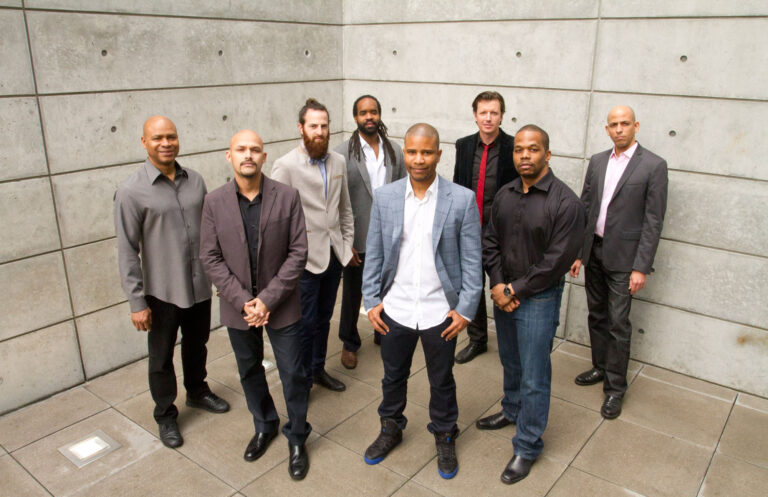
In celebration of its 10th anniversary, SFJAZZ Collective, a San Francisco-based eight-piece ensemble, will perform at the Mondavi Center on Oct. 23.

The group is comprised of eight musicians: alto saxophonist Miguel Zenón, tenor saxophonist David Sánchez, trumpeter Avishai Cohen, trombonist Robin Eubanks, vibraphonist Warren Wolf, pianist Edward Simon, bassist Matt Penman and drummer Obed Calvaire.

Each member’s musicality contributes to creating SFJAZZ Collective’s diverse sound, which Wolf attributes the group’s innovative take on the art.

“We’re all from different parts of the world, bringing parts of all the cultures that we grew up in,” Wolf said. “We move beyond what most people think of Jazz. We’re just bringing a collective of ideas from each musician. That’s why we’re called the Collective.”

The 10th anniversary performance will demonstrate the group’s evolution throughout the years by showcasing its most noteworthy arrangements.

“This is our 10-year anniversary, so we’ll be playing music from Thelonious Monk to John Coltrane, and compositions by a few members of the band. It’ll be a lot of different things from the past 10 years of the Collective,” Wolf said.

The SFJAZZ Collective dedicated the past ten years to interpreting and presenting Jazz in a refreshing manner. Through its assortment of arrangements, the SFJAZZ Collective is often renowned for epitomizing the versatility of modern Jazz.

Their works include original compositions written by each of the eight ensemble members. Additionally, the group writes arrangements of classic pieces, implementing personal interpretations and colorful twists. Composers the SFJAZZ Collective has paid tribute to include John Coltrane, Thelonious Monk, Herbie Hancock and most recently, Chic Corea.

To Penman, the music’s infinite flexibility exemplifies what Jazz is all about to the SFJAZZ Collective: an unbounded, ever-evolving art.

“Jazz has continued to develop and continued to stay current. It’s an art form that is continually in flux,” Penman said. “That’s what this band tries to continue and the aesthetic it tries to uphold. It’s always changing. There’s no limit from what you can do.”

Rob Tocalino, the Mondavi Center’s marketing manager, is particularly keen on the SFJAZZ Collective’s arrangements.

“What the octet has done is something not replicable,” Tocalino said. “They’ve put a lens on past composers and arrange their music in a way that’s both authentic to what the composer’s intent was, but also really radical.”

Tocalino once worked for the SFJAZZ organization, developing an eternal passion for the SFJAZZ Collective. He will be giving a pre-performance talk, sharing how the group perpetually influences his take on Jazz.

“It makes me reconsider what I think about of tunes that I’ve heard over two hundred thousand times,” Tocalino said.

The SFJAZZ Collective performance will not only demonstrate musical passion, but also personality. Penman foresees an energetic evening of moving melodies and funny banter.

Overall, he hopes that the SFJAZZ Collective’s performance will leave the Davis community entertained and inspired to delve deeper into the depths of music.

“We hope to inspire and to be inspired,” Penman said. “We’re going to give it our 100 percent like we do every night. It’s going to be an exciting night of our original music. Come expected to be blown away.”

For more information about the SFJAZZ Collective’s performance at the Mondavi, please visit mondaviarts.org.

CHLOE CATAJAN can be reached at arts@theaggie.org.

The F Word: Porno-ween

0

October is very much here and I am spending the entire month changing costume ideas for Halloween. I will eventually end up going as an obscure film character that maybe a shocking number of five people will recognize. But if you don’t take Halloween as seriously as I do, then you can go with some classic costumes: pirate, superhero, zombie or ghost.

But, if you’re a young lady, you have the option to go as a sexy pirate, sexy superhero or sexy member of the living dead.

 However, I have met many girls who would prefer not to have their sex appeal as the highlight of their costume, and choose to shirk risque counterparts to traditional favorites. These girls have snuck off to the men’s aisle as an alternative. This practice has originated from a time as early as middle school, when we’re slightly precocious about our burgeoning sexualities.

Remember the time when you first started reading “young adult” novels and felt your first transition into adulthood. It was around that time, in the seventh grade, when “young adult” was the section in department stores where I had to start shopping. I was too big to fit into any kids-costumes so I had to try on outfits from this new area. When I actually donned my half-angel, half-devil dress, I kept pulling down the hemline because I felt like my underwear was in brazen display.

This is probably fun at an adult costume party but it wasn’t fun being that self-conscious while taking pictures with my friends and getting judgmental stares from parents everywhere. I was too young to realize I was being sexualized, but I had a vague suspicion that that was the uncomfortable weight of the stares that I felt. What was I to do? Nothing else fit me.

Aside from my personal anecdote, this is problematic on a societal level. Because Mean Girls describes Halloween as an excuse for girls to dress up as slutty versions of animals, making us seem vapid and unoriginal. Because costume versions of Disney princesses and other of our childhood characters such as Minnie Mouse, Bert and Ernie from Sesame Street and Hermione from Harry Potter are made to be sex symbols.

Our lives before puberty shouldn’t be the sexual ideal because that brings a whole set of problems with beauty expectations, such as the desirable pre-pubescent hairless body. Serious professions that are typically male-dominated (e.g. medicine, criminal justice) are caricatured in sultry ways. Women can’t get the respect they deserve in these highly specialized fields if they are pre-conceived as objects that are meant to be ornamented in sexy ways. And let’s face it, it’s kind of ridiculous that there are sexy hamburger costumes.

The Halloween costume industry is not the main contributor to the body manipulation our commercialistic culture is capable of. It’s troubling that many markets and industries thrive off of the usage of woman as sex objects. The effect of the porn industry is subtle yet pervasive enough that it becomes normal for Victoria’s Secret advertisements to be more geared towards the titillation of men than it is aimed towards making their main consumer group excited to buy their products.

Not a lot of girls look like Victoria’s Secret models, and possibly feel like they aren’t the target demographic for these commercials. In fact, it’s a method of poking at our insecurities to sell a product. Bras are marketed to us more for the purpose of making our breasts appear larger and rounder rather than offering us comfort and support.

Taking masculine underwear into account, Calvin Klein models may sport some really provocative crotch shots but the advertisers don’t tell men that their boxers would make their penis look bigger. Men just don’t have to worry about that sort of thing.

On a large scale, Halloween has become an awkward occasion where most girls’ costumes look like lingerie. It’s just another situation where girls have to keep on adjusting their bra straps or pulling down their dresses when they’re clearly not enjoying themselves. If you want to show your naughty side during Halloween that’s fine! I mean, it’s not like we can go trick or treating anymore. We need our thrill from somewhere. All we are asking for here is a little more variety, a little less objectification.

Email MONA SUNDARA at msundarav@ucdavis.edu and share some of your creative costume ideas!

Service worker paycut: Fiscally “safe”, morally wrong

0

On Sept. 24, University of California announced that a 1.5 percent decrease in take-home pay will take place for members of the American Federation of State, County and Municipal Employees (AFSCME) 3299, the UC system’s largest union representing over 8,000 service and patient care workers.

This paycut will affect the lowest-paid employees in the entire system, most of whom earn an average of $35,000 a year. The decision came after a year of bargaining on behalf of AFSCME 3299 for higher compensation.

The UC defends this paycut as part of “pension reform.” And at first glance, that makes sense, right? These are tough economic times, and UC employees are simply tightening their belts for the sake of fiscal responsibility.

By the way, did we mention that 700 of the UC’s highest paid employees receive larger salaries than the President of the United States?

For the past year, AFSCME 3299 has campaigned for higher wage and more extensive health coverage and has met resistance throughout their efforts. The UC’s decision seems like a final attempt to scare service workers into silence — to take every possible avenue in order to remove collective bargaining rights.

Our leaders cry fiscal responsibility and argue their service compensation packages are competitive, but most of their service workers take two jobs just to stay afloat.

Yes, these are hard times. Yes, the UC is strapped for cash.

But is imperative that we remember that while the UC is responsible for enormous funds, it’s is not, first a foremost, a business. It is a public educational institution.

As the largest public university system in the nation, it is our responsibility to set the standard for how our employees are treated, from custodians to chancellors.

Arts Week

0

FILM

Under the Same Moon
Thursday, Oct. 24, 7 p.m., free.
International House, 10 College Park
The International House will be showing Under the Same Moon, a bilingual English-Spanish film, by Patricia Riggen, that complements the book, Enrique’s Journey. The film presents the captivating story of nine-year-old Mexican boy, who decides to embark on a journey across the Mexican border to Los Angeles, in search of his mother. Refreshments will be provided by the International House.

MUSIC
The San Francisco Symphony
Friday, Oct. 18, 8 p.m., $25.
Mondavi Center
The San Francisco Symphony will be performing Berlioz’ Roman Carnival Overture, Schumann’s “Piano Concerto in A Minor, Op.54” and Dvorák’s “Symphony No.7 in D Minor, Op. 70,” under the conduction of Yan Pascal Torteller, with Martin Helmchen on the piano.

Dangermaker
Saturday, Oct. 19, 9 p.m., free.
Wunderbar, 228 G St.
Dangermaker is a rock/alternative/indie band from San Francisco, that has been compared to The Black Keys, Interpol and The Killers. They will be performing songs from their debut album “Black Dream,” for all ages.

The Tenderloins
Saturday, Oct. 19, 11 p.m., Sunday, Oct. 20, 12 p.m., free.
KDVS
The Tenderloins, a rock band from the East Bay, will be performing live in Studio A. They are bringing the concert feeling to you via the airwaves.

Yolo Mambo
Sunday, Oct. 20, 6 p.m., free.
Ketmoree Thai Restaurant, 238 G St.
Davis’ own world jazz group, Yolo Mambo, will be performing. The transglobal rhythms of Yolo Mambo will transport you to Brazil, Cuba, Peru, Cape Verde, France and Spain.

SFJAZZ High School All-Stars and SFJAZZ Collective
Wednesday, Oct. 23, 6:30 p.m., free/$12.50
Mondavi Center
The SFJAZZ High School All-Stars is an eight-person ensemble of the Sacramento region’s most talented high school musicians, that play SFJAZZ Collective charts and compositions and arrangements contributed by the members, and under the direction of Mike McMullen.
Following their performance will be the SFJAZZ Collective itself, which is celebrating its 10th anniversary of quality performances, playing scores by jazz legends, like Thelonius Monk and others.

Mnozil Brass
Tuesday, October 22, 8:00 p.m. $12.50
Mondavi Center
Austria’s Mnozil Brass is an infectious brass band that will be performing at the Mondavi Center. They will be playing lively favorites, such as “Bohemian Rhapsody” and others.

THEATER:
Prelude to a Kiss
Friday, Saturday and Sunday, Oct. 18-20, 8 p.m., $12 general admission, $10 students and seniors.
Wyatt Deck, UC Davis Arboretum
Common House Productions and the UC Davis Arboretum present Prelude to a Kiss, Craig Lucas’ quirky play about a young woman who swaps lives with an old man on the day of her wedding.

Dracula
Saturday, Oct. 19, 7 p.m., $25.
Davis Art Center, 1919 F St.
Presented by Acme Theater Company, actors tell the story of the seasonal favorite, Dracula. Jack Seward opens a sanitorium in a portion of an old abbey in 1888. Soon after his arrival, many of the patients are taken with a strange illness, even his fiance, Lucy. Meanwhile, the rest of the abbey is purchased by a dark and mysterious neighbor who tends to show when you would least expect.

OTHER:
Artist Reception at the UC Davis Craft Center
Saturday, Oct. 19, 3 p.m., free.
South Silo
The UC Davis Craft Center Gallery presents “Prakuti,” a ceramic show by Latika Jain. “Prakuti” the ceramics in the show incorporate architectural elements. The show will run until Nov. 11.

“The Enchanted Cellar” Costume Rentals and Mad Hatters’ Auction
Wednesday to Friday, Oct. 23 to 25, 3 p.m.
Wright Hall, Room 17
“The Enchanted Cellar” is joining forces with UC Davis Theater and Dance Department, to offer a wonderful array of Halloween costumes to choose from. Choose from 500 fine-crafted costumes and accessories for sale, priced between $1-20. A 50 percent discount on rentals for UC Davis students, faculty and staff will be offered.

“Body of Knowledge”
October 17 to 19, 8 p.m.
Wright Hall, Lab A
Presented by ITDP, “Body of Knowledge” is a non-traditional performance piece that moves across theater, performance art, and visual art to explore ways in which memories are embodied and transformed across time. Performed by Linda Noveroske-Tritten, a UC Davis doctoral candidate in Performance Studies, the show brings up the idea of recasting relationships between materiality and memory.

— Larissa Murray

Police Briefs

0

WEDNESDAY Oct. 9

Pizza Planet
A pizza delivery car was driving over 50 miles per hour on Fifth Street.

THURSDAY Oct. 10
Organized chaos
A crossing guard was misdirecting children into oncoming traffic on Cowell Boulevard.

Annoying Orange
Someone on Hanover Drive is having an ongoing problem with a guy with long orange hair jumping out from under the stairs and scaring him.

FRIDAY Oct. 11
Pedalophile
A transient subject was talking to a bike rack on C Street.

SATURDAY Oct. 12
Smooth delivery
A suspicious person came to someone’s door saying he was there to deliver something, but had nothing in his hands and was looking into the homeowner’s windows on Chiles Road.

SUNDAY Oct. 13
Completely powerless
Someone on Cantrill Road called to report her power had gone out but she didn’t know her address.

Police briefs are compiled from the City of Davis daily crime bulletins. Contact EINAT GILBOA at city@theaggie.org.

Government shutdown affects UC Davis, city community

1

On Wednesday Oct. 16, Congress voted on legislation on to reopen the government after a 16 day government shutdown and raise the debt ceiling. A failure to reach a decision regarding the appropriation of funds was the reason for the federal government shutdown. Federal agencies had to work with a skeleton staff, scientific databases were no longer being maintained and funds were no longer being distributed.

The shutdown has drawn criticism from the public and elected officials, mostly due to the lack of discussion between disputing factions. The bill passed by Congress will reopen the government until Jan. 15 and raise the debt ceiling until Feb. 7.

Within two weeks, hundreds of thousands of federal workers were furloughed. In Davis alone, over 200 U.S. Department of Agriculture (USDA) employees cannot work. Eight government websites are shut down altogether, while over 42 are severely limited.

Farmers cannot afford to harvest their crops because federal inspectors cannot visit the sites. If they can harvest it, they will be forced to sell their crop immediately rather than wait until spring for better prices since the Farm Bill subsidies only carry over through this fall season.

Businesses cannot apply for alcohol or import/export licenses. Facilities which make processed food for the masses are only being inspected by 976 out of 1,602 FDA investigators.

Federal grants, loans

Thankfully, the shutdown does not affect federal grants or loans for the 2013-14, but research and scientific tools are severely limited.

Gary Falle, associate vice president for UC Federal Governmental Relations at the UC Washington Center, explained that there are three major areas of funding: financial aid, research and healthcare. Each area is affected to different degrees, with research suffering the most immediate impacts, financial aid remaining stable per academic year and healthcare remaining most stable due to the majority of money coming from trust funds.
“Despite the shutdown being a heavy disruption, all the money for federal financial aid is paid in advance for each academic year, so no students are going to have their grants pulled,” Falle said. “However, if it goes on to July 1 [the day after the 2014 FAFSA application deadline], we might have an issue because the funds won’t have been made available for incoming students.”

Gina Banks, director of Federal Government Relations at UC Davis, pointed out that many agencies saw the shutdown coming and were able to soften the blow.

“Luckily I think that many federal agencies foresaw that this might happen so they tried to get everything out the door before it did,” Banks said. “Given that we did receive the last of our financial aid money on Sept. 27, and the government shutdown on Oct. 1, there might be some correlation but that’s purely conjecture.”

The National Institute of Health (NIH) and the National Aeronautics and Space Administration (NASA) now have severely limited resources. Faculty members at university campuses were required to submit grant proposals by Oct. 5 to the NIH in order to receive appropriations, but now the proposals are left in bureaucratic limbo.

Dawn Sumner, a UC Davis geology professor, ran into funding roadblocks with NASA, which funds her research.

Professor Sumner had originally planned to spend four weeks in Antarctica this year and six weeks next year in the spring to collect chemical samples at key transitions in the microbial communities. Due to the shutdown, there is nobody to give the OK for Sumner’s team.

Lockheed Martin, the logistics contractor for United States Antarctica Project, hasn’t received further funding and is forced to disassemble support. Lockheed Martin has also sent memos telling all American-backed researchers to suspend their work until further notice.

“I keep trying to put it in perspective; I keep telling myself that it’s not a health and safety issue” Sumner said. “But there is a huge amount of science research that’s really damaged by this. The Antarctic field season is such that a brief pause might mean us losing the whole year.”

Debt ceiling

If the government didn’t by Oct. 17, the United States would have had to default on its loans, losing its full faith and credit.

The debt ceiling was established in 1917 as part of the Second Liberty Bond Act. The bill served to finance the U.S. entry into World War I by allowing the government to take on more debt.

According to a 2008 report, “The Debt Limit: History and Recent Increases” by government financial analyst D.A. Austin, a debt ceiling is a useful means for a government to remain in good standing with its lenders. It is the United States’ way of stating that it will only borrow a certain amount of money before it has to pay back the debt it has already incurred.

The Treasury Department pays back the debts in a constant cycle throughout the year using tax revenue. The issue this year is that the tax revenue did not match the amount of debt.

Another issue is the failure of the Budget Control Act of 2011, which instated yearly spending caps for Congress over the next decade.  The end goal was successfully making $1.2 trillion in cuts.

A “supercommittee” consisting of Democrats and Republicans from both branches of Congress was to be appointed by Majority Speaker of the House John Boehner. Their job would be to decide where to find the income, whether it be from increased taxes, spending cuts, or entitlement reform.

Boehner did not appoint a committee, which resulted in cutting all discretionary spending by 8.2 percent.

Rep. John Garamendi, representing California’s 3rd District (including Davis) and former Deputy Secretary of the Interior during the Clinton Administration has experienced two of the longest government shutdowns in U.S. history.

Garamendi endorses raising the debt ceiling for at least a year, as it will provide stability and deeper understanding of the problems the government is facing.

“The Tea Party is dominating the discussion and driving their radical agenda,” Garamendi said. “The Tea Party has no solution, and we are coming up against another potential crisis … the United States of America cannot allow itself to lose its full faith and credit.”

Garamendi also said that laws don’t always start out perfect, and that they should be changed through normal legislative channels, not by trying to force a hand.

Importance of education

Garamendi emphasized the importance of the phase most are in right now: formal education.

“Our nation prospers with economic growth when key investments are made, the most important of which is education … [it] is the first rung on the success ladder,” Garamendi said.

The Federal Department of Education was unreachable for an interview; only six percent DOE employees were deemed “essential” to keep the department running.

Budget decisions being made now by the federal government will have long-lasting effects for the next decade.

“Even if they [students] don’t feel like the issue directly affects them, it does,” Banks said. “It affects all of us.”

VALENTINA NAKIC can be reached at city@theaggie.org.      

Letter to the Editor: Regarding TAPS

0

In regard to the Oct. 10 issue of the California Aggie and the “TAPS increases parking prices for 2013-2014” article, I am questioning the facts reported by TAPS resulting in the increased parking prices.

Although I understand that fewer permits being sold can certainly contribute to the need to raise prices, I also understand that permit prices may need to be raised to assist with the 20% salary increase of [Transportation Demand and Marketing Coordinator] Leslie Mancebo. As a UC employee, Mancebo’s salary data is public knowledge; thus her 2011 salary of $44,770.00 increased by $8,972 to $53,724 in 2012. This increase seems to be significantly above and beyond the typical UC Davis employee salary increase.

Within the article, TAPS failed to disclose how many fewer permits invoked this rate increase.  Instead, TAPS seemingly uses a magician’s sleight of hand and quotes other less-specific figures (such as the annual budget and the number of increased goClub memberships) as a diversion away from what they specifically claim to be the major contributor to the increased rates. This makes it seem like TAPS is hiding something, possibly the real reasons behind their rate hike. Perhaps some investigative journalism is required here to bring the truth to light.

Aren’t staff and students entitled to know how many fewer permits were sold between 2011 and 2012? I want to know these figures so I can to plug the numbers myself and see if they really add up to the sum that TAPS says they do.

– Anonymous UC employee and parking permit holder


Men’s soccer preview

0

Teams: UC Davis vs. UC Santa Barbara

Records: Aggies, 6-6-1 (2-2-0); Gauchos 9-4-0 (4-0-0)

Where: Aggie Soccer Field — Davis, Calif.

When: Saturday, Oct. 19 at 3 p.m.

Who to Watch:

Although the weekend started off rough with a loss against Cal State Fullerton on Oct. 11, the Aggies ended the weekend on a high note with a big win against UC Riverside on Oct. 13.

Coming into the weekend matchup, both UC Davis and Cal State Fullerton held 1-1 records in league play. Although the Aggies didn’t get the results they were hoping for, they still held their own. While the Titans scored the only goal of the game within the first five minutes of play, the Aggies still had a lot of confidence heading into their second weekend game on Sunday, Oct. 13 against UC Riverside.

Not everything about their loss against Cal State Fullerton was negative. Senior goalkeeper Omar Zeenni continued his dominance in goal, making three saves against the Titans. Those three saves allowed Zeenni to set a new school record, placing him at the top of overall career saves for UC Davis goalies. With 197 saves in his Aggie career, Zeenni broke a 10-year-long record held by alumnus Nic Platter.

After their initial loss, UC Davis bounced back with a huge 2-0 victory against UC Riverside putting them back at .500 in the Big West conference.

Junior forward Matt Wiesenfarth recorded his third goal of the season, giving him the best shot percentage on the team. His goal came in the 14th minute of the game. Coach Dwayne Shaffer had high praise for his junior forward.

“He’s training really hard at practice and is doing all the right things,” coach Shaffer said. “When you get hot, things start to go your way.”

Continuing his solid season alongside Weisenfarth is junior forward Matt Sheldon. In the afternoon matchup versus the Highlanders, Sheldon kept his hot streak alive, scoring an insurance goal to help guarantee the Aggies a win.

With his goal against the Highlanders, Sheldon is the team’s leading scorer with four goals this season.

A final standout player from the match against the Gauchos was redshirt freshman Armando Quezada. Quezada started his first game in goal, and made five saves on the day.  This marked Quezada first collegiate start and first shutout victory.

“In his first collegiate game, he stepped up and played really well,” coach Shaffer said. “Armando proved today that he is a quality goalkeeper.”

Coach Shaffer was pleased with the performance which the Aggies put up in the weekend series.

“I thought we played really well and were excellent in every area of the game — offense, defense and on set piece situations,” coach Shaffer said. “The team played outstanding today.”

Preview:

The men are back at home to take on the always tough UC Santa Barbara Gauchos.  This game marks the halfway point in league play for the Aggies. A win at home would set them up to finish their season strong.

The Gauchos currently hold an overall record of 9-4. Even more impressive is their undefeated record in conference play at 4-0. With wins versus Cal State Fullerton, UC Riverside, Cal State Northridge and UC Irvine, UCSB is not a team not to take lightly.

The Aggies will need to be firing on all cylinders if they want to break above .500 this season and establish themselves as a force to be reckoned with in the Big West. However, the men feel good about their chances.

“We are feeling very confident going into the game on Saturday,” said senior Alex Aguiar. “We know that we can beat any team in the nation at any time.”

– Sloan Boettcher

ASUCD Coffee House accepts Aggie Cash

As of Sept. 26, the ASUCD Coffee House (CoHo) began accepting Aggie Cash. The CoHo became the latest of UC Davis campus dining service locations to accept this form of payment, making Aggie Cash accepted at every dining service location on campus.

In addition to the CoHo, satellite locations The CoHo To Go and The CoHo South Cafe have also begun accepting Aggie Cash. According to Brenan Connolly, the general manager of Resident Dining, students now have more variety to choose from for their meals.

“From a standpoint of partnering with the Coffee House and trying to make sure we’re looking at all the different entities of food service means that our community spends their money with as much flexibility as possible. That’s definitely a benefit to the whole campus,” Connolly said.

Along with providing variety and flexibility to campus meal plans, Connolly also hopes that the Aggie Cash will grow beyond just a first-year market. Director of Student Development Branden Pettit is pleased at the potential for freshmen involvement at the Memorial Union.

“I am glad that everything fell into place this year so that residence hall students can engage the MU community even more than before,” Pettit said in an email interview.

According to Connolly, the partnership has been in discussion for at least six years. He claims that there are various reasons why the partnership didn’t work out until now. However, Connolly also claims that Darin Schluep, the most recent CoHo food service director, saw the deal as a viable option and was one of the major reasons for why the partnership happened.

“I’m relatively new to my position; I’ve been here about a year. So I thought it’d be a great opportunity to recheck it out and see what was available out there and if we could partner with them. Really for us, the reason why we want to do it is it’s a service to the students. So it was in our best interest to make it happen,” Schluep said.

According to Chris Rzenut, Aggie Cash program controller, technical issues also played a part in the delay of Aggie Cash partnering with the CoHo. He claims with the advancement of technology over the years, cost for it has been brought down enough to possibly sway the other party’s decision.

“As technology grows it gets easier, and I think the price came down enough that it made sense. Maybe five years ago, the technology would’ve been more expensive and wouldn’t have been worth their while to do it,” Rzenut said.

According to Schluep, the decision allows the CoHo to tap into the first-year market, a much smaller market than other classes. Having already seen an increase in the first week of business, Schluep expects both the number of everyday students that come into the CoHo and sales numbers to increase further over time.

“Up until now, we had some freshmen that come over, but not as much as they’re probably going to come over now just because they can use their Aggie Cash here. We’re tapping into a freshman group of 5,000 or so that are now able to utilize their Aggie Cash here,” Schluep said.

Although a 10 percent discount is given to those who use Aggie Cash at a majority of participating locations, the CoHo will not provide a discount for using Aggie Cash at this time. Schluep claims the reasoning behind this decision is that prices at the CoHo are already competitive. However, he also claims that the door for an Aggie Cash discount remains open if the program goes well for the Fall Quarter trial period.

“If down the road, we see that there’s a benefit to offering a discount, we do have the door open to do that if we so choose. Our prices are discounted already. That’s how we look at it. We have some great prices; we hold up well against anybody else,” Schluep said.

As of now, Aggie Cash is accepted at every location in the CoHo except the two outside registers at the Marketplace. According to Schluep, if one wants to use Aggie Cash at the Marketplace, they have to go to the middle three registers. There are also signs to direct people to which registers accept Aggie Cash. Schluep claims that it was a business decision to save money on installation costs as these registers are only open a couple of hours a day during the CoHo’s peak period.

A business’ startup cost for Aggie Cash includes running wires, purchasing readers, a monthly charge for the readers in case one fails and a monthly charge that goes to the service by Sodexo.

According to Kyle Privette, Dining Services marketing manager, UC Davis dining services look for unique businesses to partner with in terms of Aggie Cash. Privette claims what’s unique about the CoHo is that it’s on campus.

“We’re always looking for a variety of vendors that offer something unique. We don’t want 25 pizza places,” Privette said.

Regina Marion, a third-year nutrition science major, is a fan of the partnership because of the increased options.

“I think it’s great for students. I know a lot of places you would think would accept Aggie Cash, but don’t. It gives students more variety,” Marion said.

JASON PHAM can be reached at campus@theaggie.org.

Internet problems plague students

0

On Oct. 7, an internet outage in East Davis involving Comcast’s Xfinity services affected many students. Comcast attributed the problem to an area-wide outage beyond their control.

This problem is a common occurrence throughout the City of Davis. A wide array of students from all over Davis have reported problems with slow or no internet connection within their apartment complexes. Common internet providers include Comcast Xfinity, AT&T and UC Davis Wi-Fi.

Whether these providers are the cause of the internet and Wi-Fi problems depends on the situation. But many students do agree that getting a good, solid connection is often very difficult, especially during midterms or finals.

“When I have internet problems it’s usually because of the wireless connection or my laptop,” said Elizabeth Chun, a third-year biological systems engineering major who uses Comcast’s Xfinity service. “It’s probably due to a bad modem connection, so my computer is to blame as well.”

Issues stem from internet provider

When asked where they think the problems are coming from, students agree that the separate internet providers are to blame rather than their apartment complexes.

“It has to be coming from the providers’ end because our apartment management [cannot] do anything about it,” Chun said.

Several management offices in Davis apartment complexes have received complaints from their tenants about the Wi-Fi lagging repeatedly.

“Usually when students come in with complaints about their internet, we try to help them figure out the problem by establishing whether it’s our issue or the provider’s issue,” said Thomas Chang, the community manager of the Avalon, Sorrento and Brisa Apartments located in South Davis. “We get a few instances where it actually is a maintenance issue with the pole-wiring system. If that’s the case, we step in and file a contract for a rewiring system.”

According to the Davis Wiki page on internet providers and usage, the quality of the cable reception and internet speed is based partly on how far one’s house is from a hub. If the home is farther than 300 feet or so, then there can be some problems with signal quality and channel reception.

“AT&T might be faster, but it shares a central hub with its users, whereas Comcast uses a single hub for each household. Everyone is wired to their own internet,” Chang said.

Student housing

Some apartments use the UC Davis network for their internet services, in which the campus provides the Wi-Fi for the residents. One example is The Colleges at La Rue.

“The internet is provided by the campus which is extremely convenient because we get lightning-fast internet without having to pay monthly network bills,” said Daniel Choi, a fourth-year aerospace engineering student who lives at The Colleges. “Even when [my housemates] are using it at the same time, the ping time is almost always a single digit number, and the test results on speedtest.net always show a network speed of 90-95 megabits per second.”

Apartments that come with campus Wi-Fi seem to have a solid internet connection, although there have been problems due to the routers. In those cases, the problems can be quickly solved by connecting an Ethernet cable from one’s computer to the wall modem socket.

“If the connection were to suddenly slow down or get dropped, I would say that something would’ve happened to the campus servers,” Choi said. “Maybe the school received a major bug or virus attack, or maybe IT accidentally pressed a button that shut the servers down, or maybe even someone like a Davis’ own ‘Mark Zuckerberg’ was hosting a huge website on the campus servers, causing an exponential increase in the campus’ web traffic and overloading the systems. But it definitely would be a problem with the campus servers.”

West Village

Apartments in West Village are also presumed to use the campus Wi-Fi, but according to Julia Ann Easley, senior public information representative of public affairs for UC Davis, they do not.

“The campus network services are not extended into the West Village residences,” Easley said in an email. “However, UC Davis does provide data, voice and wireless services in West Village office spaces where campus units are housed. UC Davis also provides some Wi-Fi services in some outdoor and common areas at West Village.”

Many students living in West Village have complained about the frequent and long internet outages in their apartments. The Facebook page for The Ramble has numerous comments from students about internet outages and low connectivity issues with Wi-Fi.

West Village uses a company called Korcett to provide network services to their student apartment complexes: Ramble, Solstice and Viridian. However, the issues with internet connection are recurring, and students claim that it takes several days to fix the problem and that they have to keep calling Korcett for help.

When asked about the internet issues, the management office of West Village declined to comment.

Finding solutions

Although the cause of the problems could be the routers, some students do not think that bad routers seem to be the issue. Due to the fact that everyone has different routers under their respective internet providers, the company could be to blame rather than the routers.

“It’s never the router’s fault, it’s always the service,” said Selah Shine, a third-year international relations student, who lives in Sorrento Apartments. “When I go on my MacBook, the Airport Utility tells me my router is working fine and that there is a disconnection problem.”

In terms of finding solutions for lagging Wi-Fi, the only options are visiting the local offices of their internet providers or calling the main 1-800 number to assist and teach them how to use their service and equipment in an efficient manner.

“I would expect them to send a person from the company to either help us on the phone or come and give us a new modem in order to do whatever they can to help us out,” Chun said.

TAMMY LEE can be reached at city@theaggie.org.

Pence Gallery opens new exhibits

As a part of the ARTober festival, a month-long celebration of the arts and humanities in October, Pence Gallery opened three new exhibits. The exhibits’ opening reception will take place this weekend and will include a curator talk with a San Francisco guest curator.

Since 1975, the Pence Gallery’s mission has been to educate and inspire the community by offering high caliber art exhibits by local and regional artists and providing education programs for all ages. Every year, they offer 14,000 visitors free admission to encounter quality exhibits that cater to all ages.

The nonprofit gallery organizes several different exhibitions and events for the community throughout the year. The Pence has planned for three different exhibitions to be on display for the public for this month: “Reality ,” “Magic Lands” and “The Tiny Show.”

“Reality²” will be the largest exhibit this season, presenting an exhibition of Bay Area figurative painters, selected by San Francisco artist and art critic DeWitt Cheng, on view from Oct. 1 through Nov. 10.

On Oct. 11 from 5 to 6 p.m., the gallery will host a curator talk, where guest curator Cheng will give an overview of the “Reality²” exhibit. The free admission includes free wine and food provided by Holly’s Hill Winery. The talk will also be accompanied by a performance of “Dracula,” by the Acme theater company.

This particular exhibit will show the works of six Bay Area figurative painters, Arthur Bell, Mark Bryan, William Harsh, Chris Leib, Pierre Merkl and Michael Kerbow. Their works all display a modern take on pictorial realism, illustrated with imagination and humor in different naturalistic styles.

Natalie Nelson, curator and director of the Pence Gallery, usually chooses the artists for the exhibitions. This time, she invited Cheng to do so, since he is known for his expertise relating to California artists.

“I believe the Pence Gallery’s mission is to highlight local California art. We try to represent really good art that may not have had a lot of exposure. We like what is a little off the mainstream and what shows a different side of the art world. I think ARTober is the perfect time to display Cheng’s picks for ‘Reality²,’ as all the pieces are very different, quirky and thought-provoking,” Nelson said.

DeWitt Cheng is a well-known sedulous art critic and artist from San Francisco, known as a kind of “ombudsman” for Bay Area visual art. He acts somewhat as a catalyst for curators, suggesting names of artists, or helping to put artists’ work in perspective for the art audience.

“I had run across the work of these artists in various places over the years, from Open Studio to the internet, and believed that their work deserved more exposure. ‘Reality²’ focuses on surreally imaginative figurative painting as a vehicle for social and political satire, but there are others, of course, whose work would be perfect for other themes,” Cheng said.

For example, artist Michael Kerbow chooses to depict modern landscapes, like in his painting “Means to an End,” which shows an everyday landscape view, of a freeway running through a busy city, but with an ominous tone.

“These artists are doing something totally different with reality. When you think of realism, one normally thinks of the 19th century. But these guys incorporate a naturalistic style that embodies realism in a completely different way,” Nelson said.

Another show on display at the Pence Gallery for ARTober is “Magic Lands,” which displays the art of Cynthia Martin Kroener, on view from Sept. 28 through Nov. 3.

Some of Kroeners works include depictions of the alpines around Lake Tahoe and the Sahara desert. Kroeners said her travels serve as inspiration in her art.

“I love color. I love travel. And I try to convey both these loves of mine in the art I create. I’m having fun. That’s all that matters,” Kroener said .

On Oct. 11, from 6 to 9 p.m., the opening reception will allow guests to meet the artist and view the exhibit. All the exhibits on display for ARTober will only be displayed throughout the month of October. For more information, visit pencegallery.org.


LARISSA MURRAY can be reached at arts@theaggie.org.