






Our silence speaks volumes
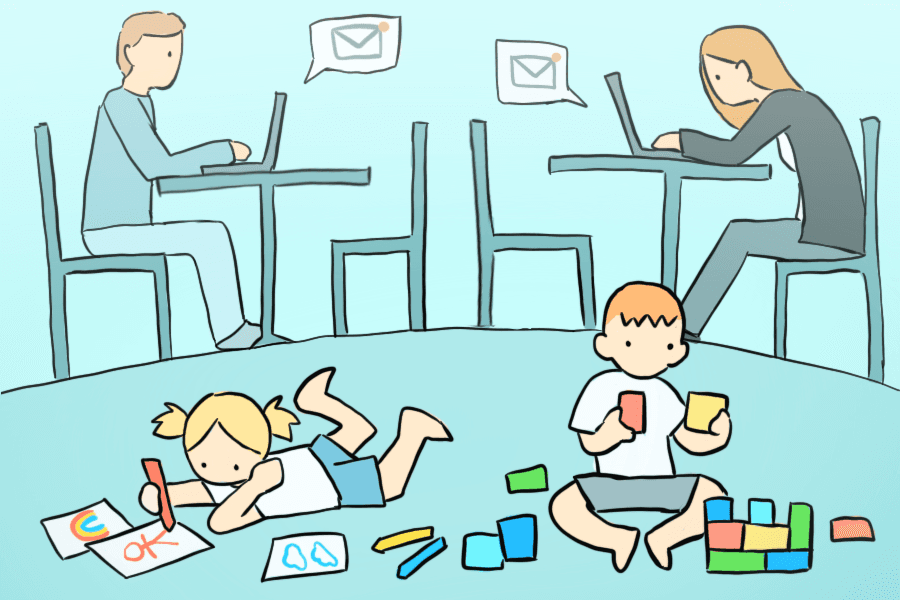
Parallel play as an adult model of social intimacy
By ABHINAYA KASAGANI— akasagani@ucdavis.edu
So much of my adult life has been informed by the enclosure of my friendships within four walls, stationed in the same room and space. I do not think I understand much about the world outside of two girls sprawled across the floor listening to Fenne Lily sing “Car Park,” or rewatching the first season of HBO’s “Girls.” The continual influx of friends through my door — with no expectation of worldliness from me — is why I am able to hold this happiness in the palm of my hand.
In the simplest of words, parallel play is primarily about “children playing independently in the same area, with the same materials, but with minimal engagement with one another,” according to the Neurological and Physical Abilitation Center. What initially starts with building blocks or coloring, with the passing of age, transforms itself into more interactive play, becoming extremely valuable in adulthood.
For children, the integration of parallel play into their playdates comes more organically. Free from implicit biases or inhibitions, they prioritize physical presence over communication. The inclination for parallel play in adult relationships, however, often gets overshadowed by our need for more structured interaction or socialization, where we are often predisposed to evaluating our friendships based on the depth of conversation and shared activity they provide.
You pencil your friends in for coffee, meals or drinks, demanding from these relationships constant engagement that can be overstimulating and overwhelming for both parties. This expectation of conversation inhibits your relationship and, as a result, pressurizes it. Parallel play offers you an alternative: low-pressure intimacy. This approach to social togetherness can allow you to be present and meet more realistic demands, while simultaneously reevaluating your own, without the constant need for dialogue or active engagement.
The need for new models of social intimacy is a byproduct of the quickness with which the world is evolving and changing. The COVID-19 pandemic only accelerated this shift, forcing many of us back into our holes of solitude (which were, more often than not, computer screens), making it difficult to readjust to the constant flux of information we were bombarded with.
Parallel play antidotes these overstimulating settings, allowing us to recognize the importance of finding new ways to connect with one another that don’t require consistent verbal interaction. Moving away from the traditional approach to “quality time” that hinges on shared conversation can lead to rewarding moments of closeness — the anxiety that comes with keeping up the conversation and constant performance is done away with.
The beauty of this model is that it not only manages your anxieties regarding your relationships but also allows you to remain accountable. Modern adulthood looks dystopian at times, with lives distilled through layers of media — you never fully know if you or others are being taken at face value. Interacting within a common space like this allows you to prioritize your time: you might read together, work alongside one another or finally devote yourself to a hobby you’ve always wanted to learn. What was once the stress of overscheduling or the insistence that “quality time” be of high quality now requires no planning.
Many already participate in forms of parallel play without considering it as such. The appeal of parallel play as an adult model of social intimacy eliminates further pressure within social settings for introverts, allowing them to enjoy the company of others without the expectation for reciprocity — engagement is encouraged at your own pace.
The science behind parallel play suggests that non-verbal communication can strengthen social connection, not only through the release of oxytocin, but also through the theory of attachment, which claims that presence stimulates feelings of safety, familiarity and trust. The practical implementations of parallel play include but are not limited to: social media-free gatherings, collective hobbies, book clubs, silent retreats, craft nights, walking and yoga. Inculcating this method of play is fairly easy for those who find themselves able to limit their use of technology and maintain a healthy work-life balance.
The primary challenge with embracing parallel play as a social model is overcoming the misconception that intimacy inherently demands interaction. Some might feel as if, by not speaking, the relationships lack an arbitrary fundamental element — this is not necessarily the case. Understanding that being present is what’s most necessary to foster intimacy can help veer one away from this school of thought.
The rediscovery of parallel play provides adults with access to novel vocabulary to define social intimacy, suggesting the cultivation of meaningful and wonderful relationships without an itinerary. Listen to the loudness in the silence, and hear it speak volumes.
Written by: Abhinaya Kasagani— akasagani@ucdavis.edu
Disclaimer: The views and opinions expressed by individual columnists belong to the
columnists alone and do not necessarily indicate the views and opinions held by The California Aggie.