







Eat what you know
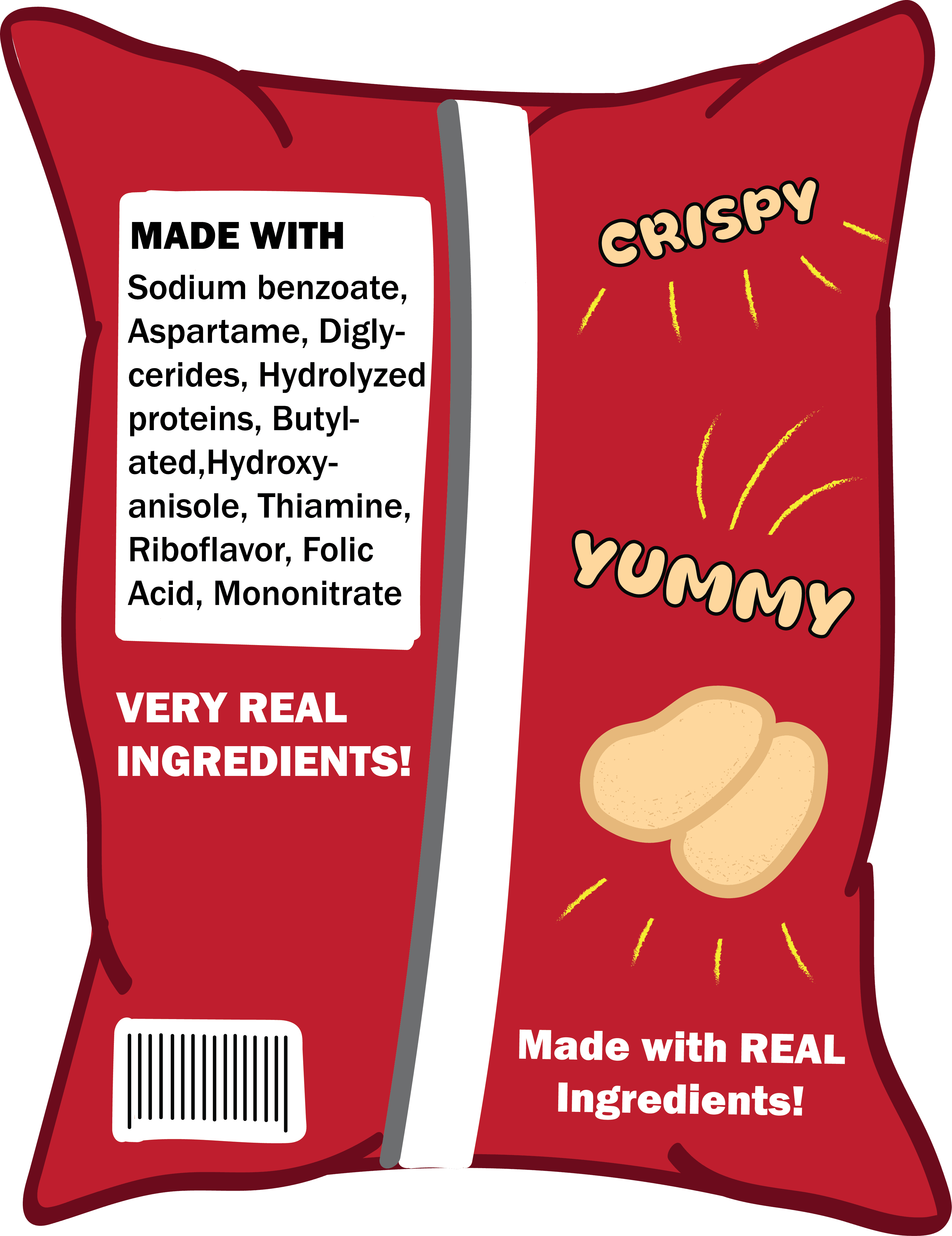
We should simplify healthy eating by cutting out chemically processed foods
By VIOLET ZANZOT— vmzanzot@ucdavis.edu
One of the best ways to test your knowledge is to try to teach someone else what you know. The idea, while seemingly ordinary, is tied to a significant lesson: Simplicity is key. In order to explain a subject to a person who knows nothing about it, the best strategy is to start small and build upward. Pick only the necessary details. Elaborate just enough.
I find that this method helps you to teach yourself as well. Start simple, add where you can and then digest the easy information to prepare yourself to take on the harder material.
People seem to have lost a love for the simple things, or at least lost an appreciation for them. One of the easiest examples can be found in the ways we choose and consume food.
Please turn your attention to the back of a protein bar. Now, please read off the ingredients. If you could explain to me what at least five of the ingredients are, I would be deeply impressed. If you could explain what five of the ingredients are to a five-year-old without using the word “chemical,” I would be astonished.
The thing about teaching someone something complicated is that, even as the material gets more advanced, simplicity remains crucial to understanding. Hard concepts make the most sense if we reduce them to what they really are.
When it comes to health, we can explain to a five-year-old that our bodies need protein for certain functions. We can say that protein bars have protein in them, as is meant to be their nature. But it becomes hard to explain in simple terms how certain chemicals are synthetically created to make protein bars last longer or taste a certain way. So, why would we put food into our bodies if we could not explain where the contents of that food came from to a five-year-old?
While I can tell you that ultra-processed foods are chemically produced using synthetic ingredients and additives, I honestly could not break down what any of that means scientifically. To be fair, I suck at chemistry. But if I can understand how naturally processed foods are grown and then operate in our bodies, then perhaps the issue is not my failure to understand chemistry, but rather that manufacturers have unnecessarily over-complicated food to maximize their profit.
There is a tendency to assume things have always been the way they are now. I have this issue myself, so I can’t blame anyone else. The real truth is that foods have not always been made in a lab — there was a time when they were grown and prepared. These foods tasted good because they were simple, not super-saturated. And when we consumed simple foods, they made us feel good.
Beyond the complex, often synthetic ingredients used to make them, ultra-processed foods also contribute to the rise in obesity rates as well as mental health problems. People eat chemicals, then take pills that are made of chemicals, all to be “skinnier” and “happier.” We have created a system that is 15 steps longer, with 40 million extra chemicals to make our bodies look and feel a certain way.
If you look at the back of a bag of broccoli, there is one ingredient listed. You may be shocked to find out that that ingredient is broccoli. Same with chicken, whose one ingredient is chicken, or tofu, which is just soybeans.
Our aim as a society should be to try and simplify healthy eating. Ultra-processed foods have not always existed, and while they are not a necessary evil, they are not making us feel better. They are not making us look better. They are making us feel like we need to continue to eat them, so put them down. You do not need the potato chip made of 1% real potato! If you want to eat a potato, eat a potato. Don’t be an ultra-processed person.
Written by: Violet Zanzot— vmzanzot@ucdavis.edu
Disclaimer: The views and opinions expressed by individual columnists belong to the columnists alone and do not necessarily indicate the views and opinions held by The California Aggie.