







Killer robots could save us all
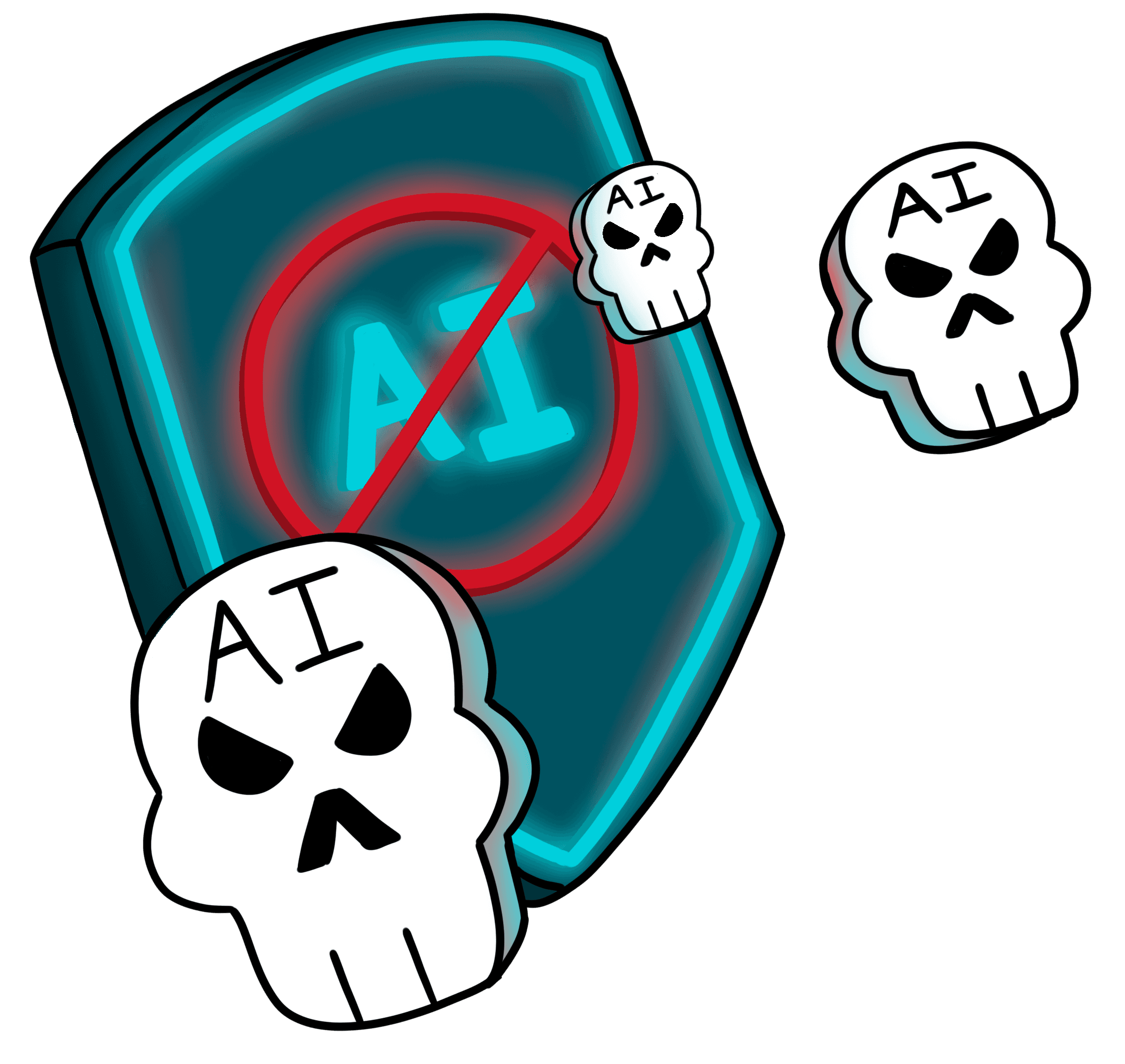
Not all monsters are metal
By NADIA IWACH — nmiwach@ucdavis.edu
The days of a taxi-cab industry with robust unions and reasonably predictable pricing are long-gone, with Uber as the undertaker. What began as a promise to revolutionize transit devolved into something much less noble — in its wake, an exploitative platform emerged, cannibalizing transportation entirely, gutting a once-stable labor system and obscuring its ethical shortcomings with sleek user experience masqueraded as innovation.
Uber markets a pipe dream of convenience, promising cheaper and faster service where mediocrity was once the norm. However, profit-hungry practices soon bastardized this initial vision, leaving its thousands of drivers to fend for themselves. As its shiny newness wore off, Uber’s antidote to antiquation remains bleak.
In the background of this slow unraveling, a new figure materialized: Waymo. In its early days, I ogled at their cylindrical tops, struggling to understand what the cars even were. Watching tech fanatics flaunt the Google Glass and litter cityscapes with Tesla Cybertrucks, I had yet to discern whether these cars were just another Silicon Valley status symbol or one step closer to flying cars.
I particularly remember the juxtaposition of Waymos moving through the city that surrounded them: the visual of a technologically retrofitted luxury car slinking through San Francisco’s increasingly dilapidated and dangerous streets felt dystopian in a way only movies could depict. Like a band-aid over a bullet hole, I became pessimistic about technology’s role in reinforcing the deepening political, economic and social crises in the city I loved. In other words, San Francisco and its citizens appeared to be casualties of the latest “killer robot.”
Still, I brushed it off and continued to frequently use Uber without much afterthought or question — whether it was an early-morning airport ride or late-night retreat, it fit into the rhythm of my daily life. However, like many users, I began to notice a nearly imperceptible erosion of the experience. Rides were more expensive and less reliable, with drivers cancelling mid-route, arriving visibly exhausted or agitated altogether. On countless late-night rides, the tension in my chest hummed as innocuous questions about my major blurred into inquiries about who I lived with, if I had a boyfriend and whether he was waiting for me at home.
More troublingly, the gig economy had unraveled drivers’ autonomy and well-being in well-documented labor and ethical violations, widening the rift between San Francisco’s tech-fueled bourgeoisie and those sacrificing for their convenience. The human cost of comfort was now baked into the system; With Uber’s promise to eliminate inefficiencies, it only stealthily redistributed it. With drivers, users and the city they inhabit suffering, I began to wonder — was Uber’s engineered indifference the killer robot we should have feared all along?
The question and its reverberation made my recent experience with Waymo all the more jarring. After struggling to secure an Uber over spring break, a friend and I decided to roll the dice and try Waymo on our trip through San Francisco.
After years of hyper-vigilance and back-pocket exit strategies, Waymo lifted that weight completely. Without a driver, I did no mental gymnastics over whether the route would end in my destination or whether anxiety had crossed the threshold of paranoia into genuine threat.
After verifying my identity, the vehicle prompted us to use seatbelts and chirped away its automated safety spiel. Settling in, we marveled at the encoded safety mechanisms — where an emergency stop was just a click away — and relished our ability to customize the rider experience from music to cabin temperature. As Future’s latest album scored our journey, we giggled and wondered aloud if this was the future the suffragettes envisioned.
For the first time, I was not a data point or a liability. I was just a passenger.
If accustomed to systems rooted in exploitation and human error, automation and the “killer robot” may offer the most pragmatic alternative in an inevitably digital future. Without absolving it of its ethical, environmental and economic implications, integrating emerging technology eliminates the detriment we’ve failed to wrangle, regulate or remove altogether.
Waymo and its contemporaries remain far from solving everything — automation should never be an inoculation to criticism. While the ride felt safer, the system behind it is far from foolproof: the vehicles have yet to master unpredictable braking, jaywalking pedestrians and misread construction zones. With their limited geographic reach, largely piloting in wealthy cities, accessibility and equity concerns linger; Who benefits from this safety, and who is left behind?
Aggregating Artificial Intelligence’s environmental footprint — with murky data practices and long-term effects yet to unfold — it’s clear that exchanging one broken system with an untempered one won’t save us. The answer to our technological dilemma may not lie in aggressive development or nostalgic devolution, but in a lateral move — one that integrates the two, using further research to prioritize safety, transparency and nuance alongside innovation.
Before we ostracize new innovation and emerging technology, it’s worth examining systems we’ve accepted: flawed and corrosive in their own right. What do we really demand from technology? What kinds of harm can we bear, and when does digitization reduce it?
So, fear not the “killer robots.” They might just save us all.
Written by: Nadia Iwach— nmiwach@ucdavis.edu
Disclaimer: The views and opinions expressed by individual columnists belong to the columnists alone and do not necessarily indicate the views and opinions held by The California Aggie.