






Review: Final season of ‘The Summer I Turned Pretty’ keeps its love triangle alive until the very end
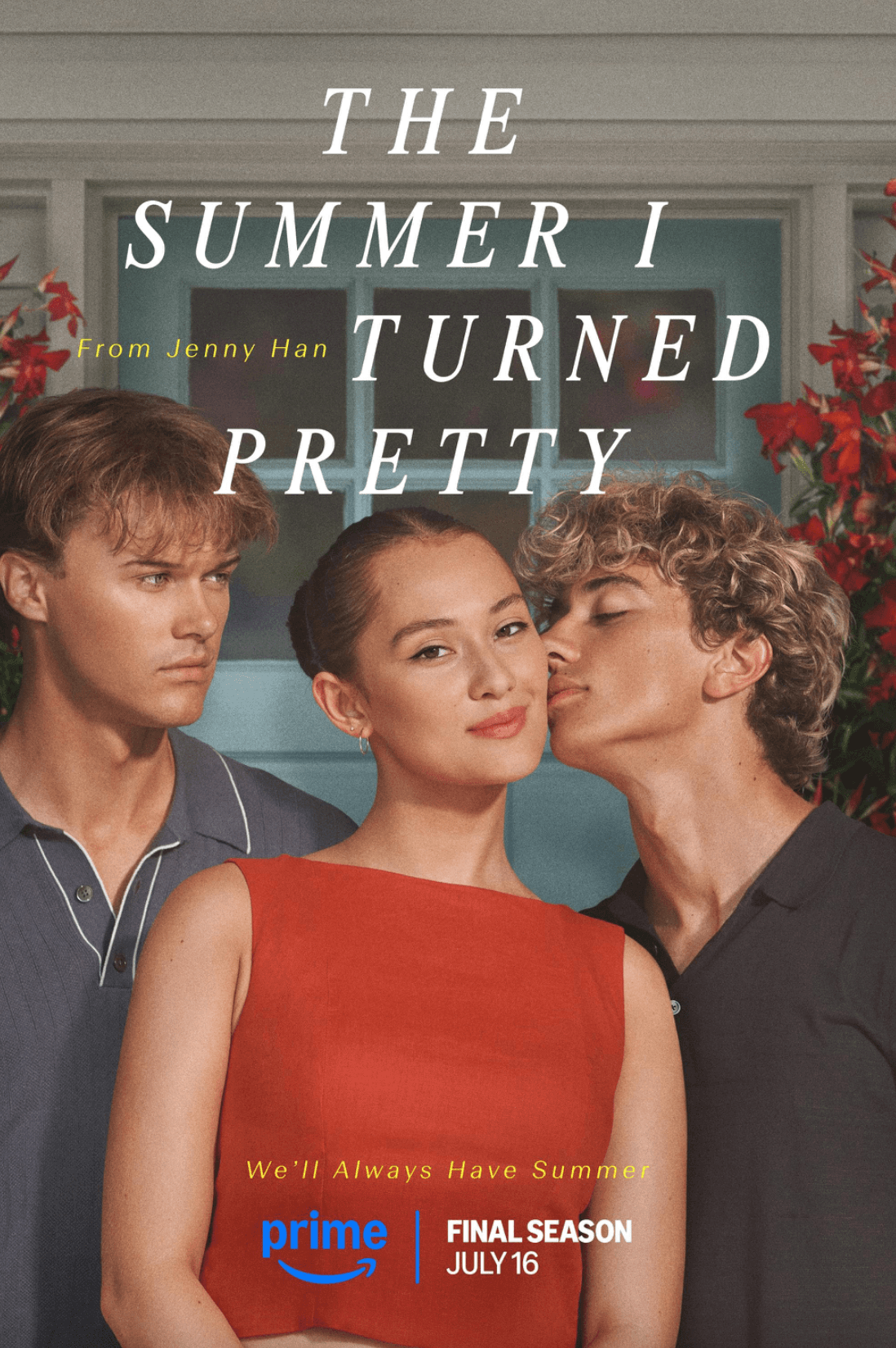
The popular romantic drama toes the line between tension and frustration in its final season
BY JULIE HUANG – arts@theaggie.org
Airing from July 16 to Sept. 17, the third and final season of “The Summer I Turned Pretty” promised to finally answer the question of who Isabel “Belly” Conklin would ultimately end up with. Would she choose her childhood best friend Jeremiah Fisher or his older brother — and her first love — Conrad? Would she stay single or find someone completely new?
The previous seasons had set up a love triangle between Belly and the Fisher brothers, which was complicated by the discovery that Conrad and Jeremiah’s mother, Susannah, had a terminal illness. Season two specifically explores their grief following her passing and how it affected their relationships with one another.
By the start of season three, Belly and Jeremiah attend the same college and have been in a long-term relationship for four years after Susannah’s death, each holding onto the other as a reminder of a time when she was still alive.
Meanwhile, Conrad has been attending Stanford University on the other side of the country, seemingly disconnected from his past in Cousins Beach and with Belly. When he finally returns home for his mother’s memorial, he finds that Belly and Jeremiah are engaged to be married.
To his dismay, the couple hopes to alleviate growing tensions within their relationship through nuptials, and the fallout of this decision comprises the bulk of the final season’s content.
Eight episodes out of eleven are spent depicting the wedding preparations, during which anything that can go wrong goes wrong at least once. Instead of strengthening their union, Belly and Jeremiah’s relationship grows noticeably more strained during their efforts to organize the event, and Belly begins to find companionship in Conrad’s presence while they stay in Cousins Beach for the summer.
Moments between Jeremiah and Belly that should feel loving begin to feel uncomfortable, but neither is there any true comfort to be found in the moments shared by Belly and Conrad. Every instant is charged with tension that could be thrilling, but instead becomes excruciating, as every character doggedly ignores their true feelings. With no resolution in sight, a silent love triangle plays out for eight episodes, bringing the audience into the same purgatory that Belly now resides in: torn between two extremes but unable to find a remedy for her internal guilt.
When the actual wedding fails to go on at all, there are a scant three episodes left to clean up the emotional battleground left behind for both the characters and the viewers, who have sat through eight weeks of build-up and now conflict that rips all three leads away from each other.
Three episodes may have been enough time to provide a satisfactory denouement, if not for the show’s final, and arguably most important task: showing Belly and Conrad’s permanent physical and emotional reunion.
In the wake of eight episodes of poor communication, was it possible for the final season to put on a convincing portrayal of their everlasting love story?
Perhaps not. It becomes clear that the believability — and rootability — of the “Bonrad” connection suffers from the lack of time available to re-establish an onscreen romance. Even the characterization of sharing a meaningful past, or the physical chemistry between their actors Chris Briney and Lola Tung, could not completely overcome the awkward choices surrounding the season’s structure and pacing.
The final episode, in which “Bonrad” finally reunites, tries hard to hit all the right emotional notes and make up for the palpable absence of time dedicated to showing their reconciliation. Some of the dialogue between Belly and Conrad sounds directly targeted at the audience, attempting to dismantle popular criticisms of the show or its characters. Conrad’s declarations that “it was not on [Belly] to keep [their] family together” and “we all broke it” especially stand out as a dismissal of viewers who blame Belly for the love triangle conflict.
The episode also tries to smooth over previous grievances between characters, as Belly and Conrad acknowledge moments in past seasons where they crossed each other’s lines. Their dialogue adds more context to how the characters were feeling back then, making them more sympathetic while conveying that they have grown and matured.
Belly and Conrad finally find themselves in the same place, having both gained enough maturity to admit that they hurt each other. Together, they reflect on their mistakes while keeping a healthy amount of emotional distance from the pain of their past.
Previously this season, both leads spoke around their pain or let it speak for them, and yet neither could completely acknowledge it to the other. In the final episode, they ask and answer questions that viewers, too, have been asking all summer. They hear each other, and it is satisfying. At the same time, it’s difficult to forget that it took eleven long weeks to reach this point.
A year has passed in their universe, but the memory of Belly and Conrad’s pain is not as distant for viewers as it is for the characters themselves. The feeling of tension lingers even while the story onscreen signals to its audience that all has been resolved for good.
Prime Video has announced the existence of a follow-up feature-length film, which may explain the sometimes puzzling and frustrating pacing choices of the show’s final season.
Showrunner Jenny Han, who authored the original novels on which the television series was based, stated that “There is another big milestone left in Belly’s journey,” alluding to further onscreen development of Belly and Conrad’s story.
The upcoming film may alleviate concerns surrounding the depiction of their journey back to each other. On its own, however, the final season fails to be entirely convincing in its portrayal of a love story that spans infinity.
Written by: Julie Huang — arts@theaggie.org