Following the release of titles like ‘The Last of Us,’ ‘Until Dawn’ and ‘The Minecraft Movie,’ is this even good news?
By BELLA PETERSON — arts@theaggie.org
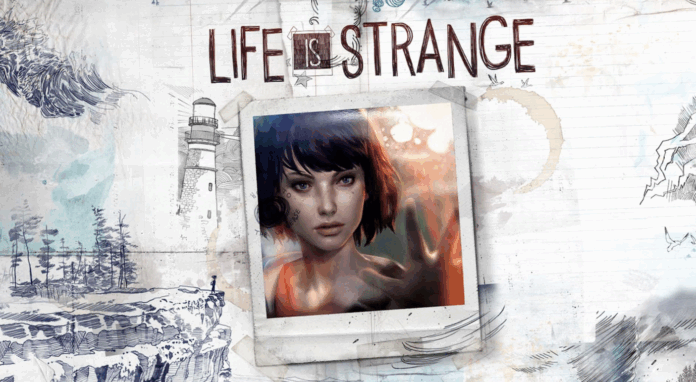
On Sept. 5, Prime Video announced that the beloved “Life is Strange” video game — following an 18-year-old Max Caufield who rewinds time in an attempt to save her best friend’s life — has been greenlit for a live-action adaptation. Called “a cultural touchstone” by executive producers Dmitri Johnson and Mike Goldberg, fans must have taken this announcement as good news…right? Instead, producers were met with mixed reactions from the gaming community and publicly criticized by a co-writer of the game for not involving the original creative team in the adaptation.
Video game adaptations are hardly a new thing. This year alone, fans have seen the release of the second season of “The Last of Us,” “Until Dawn,” “A Minecraft Movie” and others. The majority of these adaptations received an overall negative response from the fans of their original games, with “Until Dawn” and “A Minecraft Movie” earning 5.7 and 5.6/10 ratings on IMDb. The criticism for these adaptations can be traced back to one major problem: continuity within the canon of the original story.
HBO Max’s “The Last of Us” initially received plenty of positive feedback after their first season of the show. Despite some changes that were made, the majority of the fans enjoyed the adaptation and were looking forward to the second season. After the release of the second season’s first episode, those same fans found themselves disappointed with choices made by the creative team — particularly the highly anticipated casting of Abby, the antagonist of the game’s second installment. As the season ended, the show began to see a loss of loyalty within the audience it had originally solidified.
The shift in opinion was purely a result of the creative freedom the show took with the story — almost completely stripping away the identity of the video game itself. Even regular watchers found themselves disappointed after the show broke the golden rule of storytelling: “show don’t tell.” The show’s key figure, Ellie, explains her motives to the audience in a repeated monologue format as the story progresses, rather than taking advantage of full, detailed scenes. By disregarding the element of mystery, the showrunners left the audience lacking that sense of intrigue.
With the “Until Dawn” film, fans were in disbelief after the trailer revealed the story would be completely separate from the original game. The movie only ended up including easter eggs as a way to pay homage to its namesake — but is that fair? The inclusion of taking elements from the game but diverting from everything else is a major risk in adapting something, evident in the film’s IMDb rating of 2.5/10 stars. With an entirely different setting, cast of characters and reimagining of the universe’s time-bending rules, “Until Dawn” became just another run-of-the-mill, hollow horror flick.
While “A Minecraft Movie” may have not had any canon lore to divert from, that didn’t stop the adaptation from taking creative liberties. “Minecraft” is a timeless game, one that has over 200 million active players each month. However, with a lack of linear storytelling, it’s hard to evolve the world into a watchable film. The movie managed to become more of a joke than an actual adaptation, viewers enjoying the theatre experience more than the actual film itself.
Luckily, not all adaptations can be grouped in with this trend. Prime Video’s video game adaptation of the “Fallout” series proved to be a distinct standout amongst most other executions. Instantly popular, the series has already garnered a renewal for season three prior to the release of the second season. Rather than trying to copy-paste directly from the source material, this adaptation is so successful because it created a new story that stayed true to the game’s universe — tying back to the lore of the games and sparking praise for its fresh, unique take. It didn’t erase the genius of the games; it embellished the story by building upon what was already there.
New announcements of video game adaptations are popping up everyday: casting reveals for “The Legend of Zelda” characters Zelda and Link, a movie adaptation of the “Bioshock” series’ first game and most recently, the announcement of the “Life is Strange” adaptation coming to Prime Video.
With constant reveals of which of the public’s favorite video games are being adapted, there’s no shortage of concern in their respective communities. These announcements don’t bring about a hive of excitement because there is so much evidence pointing to altered characters, completely different settings and unconvincing plot points.
Specifically in the case of “Life is Strange,” there is substantial concern for sticking to the canon — due to the fact that the original video game uses a choice-based mechanism as its main source of gameplay. With endless possibilities and more than one ending, there is almost a guarantee that the adaptation will stray from the source material. It feels nearly impossible to adapt a game like “Life is Strange” in a way that will satisfy each fan.
As a video game fan nowadays, the possibility of your favorite game getting an adaptation isn’t a hope; it’s a fear. A fear that something you have grown to love will become entirely unrecognizable. Not every video game needs an adaptation — a lesson that studios would benefit from learning sooner, rather than later.
Written by: Bella Peterson — arts@theaggie.org