





NASA plans a major mission to return to the Moon
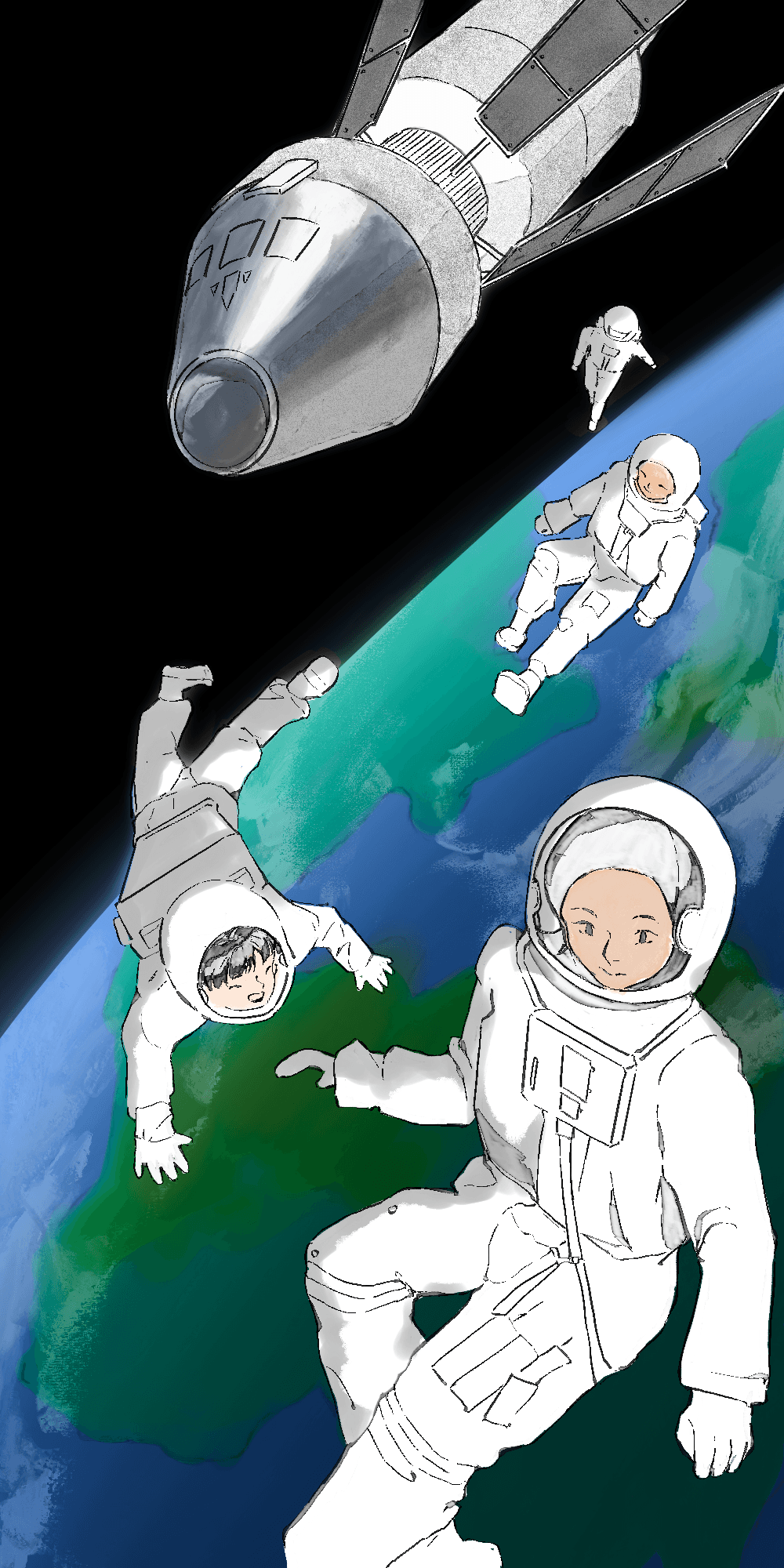
Students react to the upcoming Artemis II mission
By NAREN KRISHNA JEGAN — science@theaggie.org
“That’s one small step for man, one giant leap for mankind.”
This line, spoken by astronaut Neil Armstrong as he took the first steps of any human on the moon in 1969, could be heard at Houston’s Mission Control Center and through the TV screens of over 650 million viewers internationally. Since then, subsequent missions have initiated further lunar exploration, experimentation and documentation, with Apollo 17 in 1972 marking our last endeavor.
This year, NASA has scheduled a return mission to the moon, which they dubbed Artemis II after the Greek goddess of the moon. This mission would be the first time humans have journeyed back to the moon in over 50 years.
Led by Commander Reid Wiseman, Pilot Victor Glover and Mission Specialists Christina Koch and Jeremy Hansen, Artemis II is set to launch on Feb. 6, 2026 for a 10-day crewed flight on a free-return trajectory around the moon and back to Earth. The astronauts will be on board the Orion spacecraft, propelled into space using the recently developed Space Launch System (SLS). The SLS is a super heavy-lift rocket that enables astronauts to venture further within our solar system while also carrying multiple astronauts and large amounts of cargo.
Introduced in the Artemis I mission, the SLS with an Orion spacecraft performed an unmanned 25-day mission that served as a starting point for further space exploration. The successful results and data collected were foundational to the development of the Artemis II mission and the start of manned missions back into deep space.
Max He, a second-year neurobiology, physiology and behavior major, shared what most excited him about this upcoming launch.
“There’s a lot of resources that we can get from our analysis of this mission,” He said. “Although we’re not going to the surface of the moon again, it would be super cool to see this come back to life soon. From this mission, NASA could gain a lot of insight about the new SLS rocket system. Not only could this help power future missions to the moon and potentially its surface, but maybe even [to] Mars.”
Parinitha Balaji, a second-year human biology major, was interested in the biological aspects of the mission.
“Spaceflight has been shown to affect human health due to increased radiation exposure, temperature/pressure differences and obviously, zero gravity,” Balaji said. “What would be cool is if NASA could collect the biometrics from each astronaut; that could inform them further for longer missions like we did in the 1900s.”
While there are skeptics about the multi-billion dollar budget used for this launch, He and Balaji offered their reasons as to why these projects are useful for humanity.
“We are exploring areas that might affect us in the future: Who knows if we’re going to start recolonizing the moon or even moving further into space?” He said. “There’s so much to learn about our natural world; the funding not only would help increase our understanding of spaceflight and the moon, but also our own skills as engineers, scientists and leaders.”
Balaji continued, focusing on the research performed on the astronauts’ health while in space.
“A lot of the budget doesn’t just go into the rocket; there’s biology, chemistry and physiology of the astronauts that is crucial to study,” Balaji said. “This mission marks the first major manned spaceflight that the [United States] has accomplished in the 21st century. As we develop smarter technology that can make our lives easier, we should also invest into pushing what we observe to its deepest limits.”
With Artemis II, NASA is pushing beyond to new horizons that can enable further exploration. With this mission, we may someday — in the not-so-distant future — have hundreds of millions of viewers glued to YouTube or social media to witness a long-anticipated return to the surface of the moon.
Written By: Naren Krishna Jegan