






What is the Davis Sexual Health Clinic?
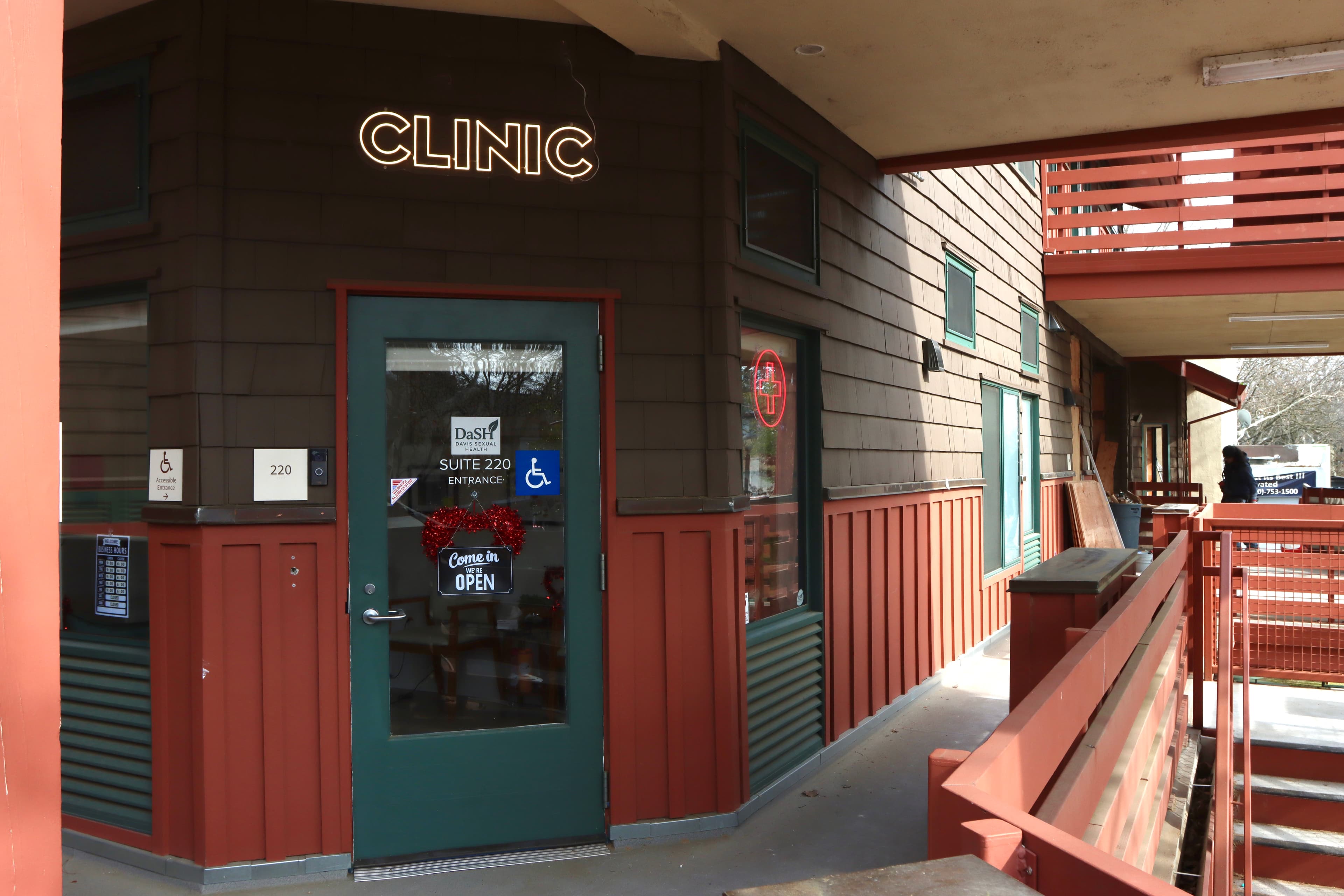
The independent practice aims to increase healthcare accessibility and provide an inclusive space for patients
By SONJA WOOLEY — city@theaggie.org
The Davis Sexual Health Clinic (DaSH) opened its doors on the corner of 3rd and A St. in November 2025. They offer services like contraceptives, infection testing, gynecological exams, menopause hormone therapy and gender-affirming care to UC Davis students and community members alike.
Founder of DaSH Liz Oleson worked as a nurse practitioner at UC Davis Student Health for five years before she was inspired to start her own clinic because of barriers to access she noticed at the university.
“Student Health is an amazing facility, but it means that if you’re not a student [or] if you don’t have the UC SHIP [Student Health Insurance Plan], it’s a little bit trickier to seek care,” Oleson said. “So I always had this dream that we could provide an acute care clinic more focused on sexual and reproductive health [where] we can see uninsured folks and we can see students and non-students.”
Dr. Brenden Tu, DaSH’s supervising physician, worked for UC Davis Student Health and Counseling Services for 10 years. He also experienced barriers to providing care at the university.
“The Student Health center has been understaffed for years […] due to people’s lack of leadership,” Tu said. “But it’s multifactorial — the hiring process is complicated and the budget is complicated, but the big thing is limits on access. As the campus population grew, the demand grew, so inaccessibility became worse.”
Tu expanded on their commitment to accessibility.
“I know that […] the driving force behind what [Oleson] is doing is that [for] anyone who walks in the door or calls for an appointment, she wants to find a way to see them as opposed to ‘Oh, we don’t take your insurance sorry, go somewhere else,’” Tu said. “That’s not the way we function. We might end up spending more time trying to figure out how to see someone than we might actually spend seeing them.”
DaSH’s centrally positioned location between campus and Downtown Davis has given its growth a headstart.
“Our numbers are increasing each week, and we have seen lots of support from campus and students, which has been wonderful,” Oleson said.
The clinic is also actively present on social media, where they repost awareness videos — including information regarding the importance of cervical cancer screenings and myths about sexually transmitted infections (STIs).
“When trying to appeal to and reach young folks, we have to be creative, and that is potentially easier to do on a small-scale, independent level,” Oleson said. “We want to provide education as much as we want to provide services because that feels like such an important part of providing health care — allowing the patients to make informed decisions about when [they] want to seek care and for what.”
Tu reiterated the importance of sexual health education.
“Sexual health is generally a weakness in a lot of people’s knowledge,” Tu said. “It’s not taught well. In classes they talk about, ‘You can be on the pill, you can be on IUD,’ but what are those things actually? A lot of people know the name, but that’s all: [not] how you access [the medicine], how you take [it] [or] how it actually affects the body.”
Oleson also emphasized the importance of making DaSH an inclusive, safe space for all patients.
“The trauma that health care institutions can cause […] or trigger in folks cannot be overemphasized,” Oleson said. “So, if we can create a safe space where people can ask questions and learn about what’s available and then opt in or opt out in an informed way, that to me is the actual service that we can do. Rather than the patriarchal approach of saying, ‘This is what you need. This is the power dynamic. I’m telling you what you should do, and you should listen,’ [we’re] kind of turning that on its head.”
Oleson focuses on this approach with her transgender patients in particular.
“One of the things that providing gender-affirming care has taught me is that it’s so important to just consider the language that we use,” Oleson said. “That’s part of why we say ‘sexual health,’ because ‘reproductive health’ is actually biased towards reproduction, which is kind of a cis-heteronormative word. We can say ‘sexual health’ and be much broader and much more inclusive. So, I feel very proud to always be thinking about that and always taking cues from the folks I’m fortunate to work with.”
Written By: Sonja Wooley — city@theaggie.org