





ASUCD balances budget during 2026-2027 budget hearings
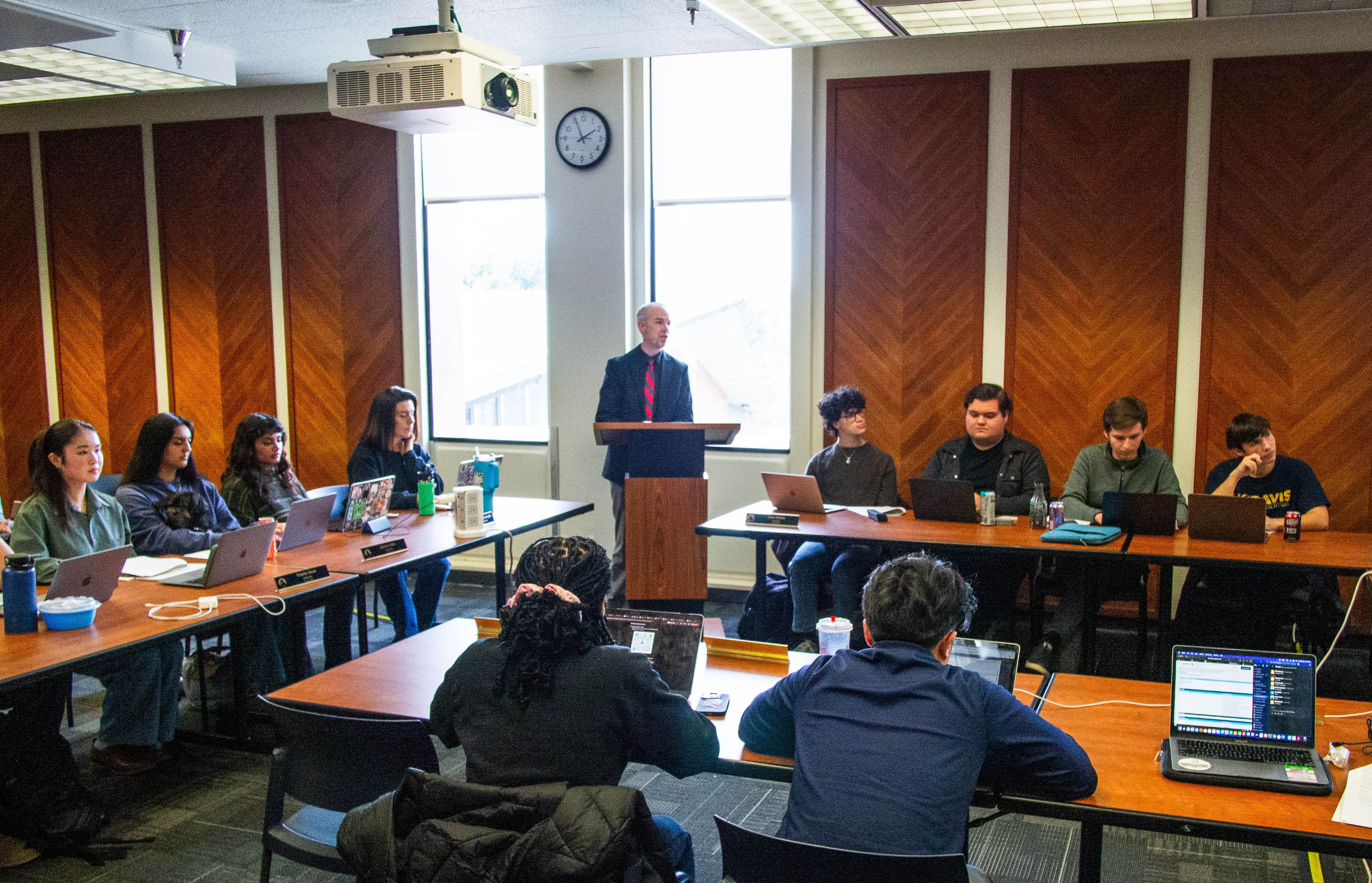
With a 10% cut across all units, ASUCD officials debated and finalized next year’s operating budget
By LILY KENROW AND AALIYAH ESPAÑOL-RIVAS — campus@theaggie.org
Associated Students, University of California Davis (ASUCD) wrapped up its annual budget hearings, finalizing the budgets of its numerous units, commissions and committees for the 2026-2027 school year.
Held Friday, Feb. 20 through Monday, Feb. 23, senior student government officials — including the 12 student senators and the international student and transfer student representatives — voted on suggestions and adjustments.
The overriding concern was a $400,000 deficit left at the end of the 2025-2026 budget hearings and a projected decrease in student funds. By the hearings’ end, ASUCD had balanced their budget, but not without widespread cuts.
On Feb. 13, one week ahead of the budget hearings, the ASUCD management team — consisting of the ASUCD president, internal vice president, business manager, controller (the Association’s chief financial officer) and vice controllers — released the President’s Proposed Budget along with a report detailing some changes. The proposed budget served as a suggested outline for how to distribute ASUCD’s $25 million budget.
In prior years, budget hearings have proved host to contention among the voting body. At the Feb. 12 Senate meeting, ASUCD President Amrita Julka reminded the table to maintain professionalism throughout the hearings.
“I highly suggest you keep professional disagreements just that: Keep it professional,” Julka said. “Not every hill is worth dying on.”
In the proposed budget, the deficit was largely addressed through a downward adjustment of wages — lowering the hourly pay for some positions — and by employing a tiered hour system that varied the number of hours some student employees work from week to week. ASUCD also implemented a new curtailment of hours, restricting the number of paid weeks in December and introducing a compulsory break for staff and employees during the last two weeks of the calendar year.
ASUCD currently employs some 1,600 student employees over 30 student units. They are the largest student employer on campus and are partially funded through student fees. All units were expected to make efforts to achieve a 10% cut from their current budgets.
The two biggest ASUCD commercial units — Unitrans and the Coffee House (CoHo) — are slated to break even with their income covering their projected expenses, $10.1 million and $6.9 million, respectively.
A major topic of debate at the hearings included the budget of the student government itself, which encompasses the salaries of senators, executive officers, commissioners and other program expenses. The student government was originally allocated $460,514 in the proposed budget and was allocated $463,010 by the hearings’ end.
Senator hours were reduced from 14 to 12 hours a week, while maintaining their hourly wage of $19.50. Meanwhile, Judicial Council staff pay was increased to match the wages of those in the Executive Branch.
The Senate’s food budget was also decreased from a proposed $5,400 to $4,000, pushed by Senator Nate Little. The current budget for student government food and entertainment is $7,000.
Little, who ran his fall quarter campaign partly on decreasing administrative spending, made multiple attempts to completely eliminate the food budget.
“I don’t think that we should be spending money on something essentially only people on the third floor [ASUCD Headquarters] are getting,” Little said. “I think it’s great that we give out the food after [the meetings], but I would rather see the money go to The Pantry and go to people in need, especially given the current federal administration.”
Senator Luis Garcia also advocated for the funding of the ASUCD Awards Ceremony, recognizing outstanding volunteers and ASUCD employees for their work. Award funding was excluded from the prospective budget and debated over until the very end of budget hearings, at which point it was added.
Garcia also proposed funding for the associate director of communications, a position in the Executive Office. The role currently exists in the Executive Office but is unfilled and was thus not included in the 2026-2027 prospective budget.
The role was not kept after discussion, with Julka expressing concerns over the optics of paying for additional student government staffers amid cuts to units and other services.
“We saw some units yesterday that we were very, very critical of, who provide basic needs services, and it’s all over money,” Julka said of approving budget cuts. “But then here we are adding a position, and this isn’t even something the Executive Office wanted, but this is now how this makes us look.”
Garcia’s continued advocacy for the position also drew questions from fellow members of the table about his future plans for office and a possible campaign for ASUCD President.
“Luis, for full transparency, do you have any intention to be in the Executive Office in the next term?” Senator Aaron Heth said.
Garcia declined to answer the question.
In non-student government matters, The Pantry requested more funding and received an additional $3,900 to go toward funding repair and maintenance, services rendered and supplies and materials. Those line items were originally allocated $300, $400 and $151,000, respectively.
Disclaimer: The California Aggie is a unit of ASUCD but is managed independently and retains editorial control. It was subject to the same 10% cut affecting other units in the Association and had its budget approved during the hearings.
Written by: Lily Kenrow and Aaliyah Español-Rivas — campus@theaggie.org