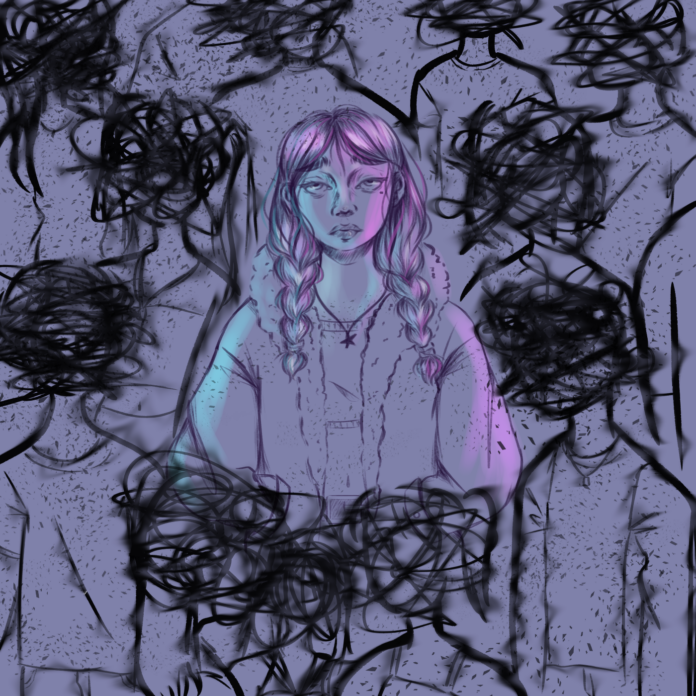
Students open up about their social and academic backgrounds as they navigate college
By AMBER WARNKE — features@theaggie.org
College can be challenging for many students, with balancing social life, academics and work experience proving difficult across majors. Neurodivergent students however, may face unique challenges as they encounter a system that was designed around a different way of processing.
Neurodivergence refers to people who process information in an “atypical” way, including disabilities such as dyslexia, dyspraxia, Attention-Deficit Hyperactivity Disorder (ADHD) and autism, according to Northwestern Medicine. An estimated 10 to 30% of students in higher education are neurodivergent, which can lead to struggles with sensory processing, time management, attention and social differences.
A source, who wished to remain anonymous, said that being autistic has led to them experiencing the social side of college differently than some of their peers.
“I think it’s definitely made it more challenging to make friends, because I get very stressed out sometimes, going to social events,” they said. “I feel like there’s a lot of unwritten rules about things that you just kind of have to figure out.”
Social rules can be difficult to navigate, especially when contemporary culture sometimes emphasizes politeness over genuineness, such as when people say they ‘should meet up for coffee’ when they run into one another, only to never set up a time.
This is something Erin Burnett, a third-year neurobiology, physiology and behavior major, relates to having a difficult time navigating.
“Social niceties just confuse me and I kind of can act on them the wrong way and it can be misinterpreted,” Burnett said.
Burnett, who has ADHD, autism and Obsessive Compulsive Disorder (OCD) tendencies, is the event coordinator for the Aggie Neurodiversity Community. Being a part of this community is something that has helped her navigate the often confusing social aspect of college, and has allowed her to meet many other students who can celebrate being their true selves.
Being a member of the Aggie Neurodiversity Community has also helped them navigate collegiate social life.
“It’s just really reassuring to see people who also are dealing with similar challenges and see that they are going at their own pace, and they’re still being successful and doing what they want to do in life,” they said.
A second-year English major, who wished to remain anonymous, has ADHD, autism, antisocial personality disorder and Post-Traumatic Stress Disorder (PTSD). The student spoke about his experience with people who might not initially realize that he is neurodivergent.
“If people don’t even know you’re autistic, they can still tell there’s something weird about you,” the student said. “If someone doesn’t fit with how [others] think they should be, they’re going to be weird about it.”
This can be especially challenging in college, where snap judgments can often be made in social interactions, which are considered an integral part of the college experience. The student shared how students can create a more welcoming environment not only for neurodivergent students, but for everyone.
“Everyone’s a goddamn person and everyone’s fucking weird,” the student said. “You don’t have to know what their disability or what their shit is, what’s going on. Assuming everyone is trying their best is something that helps me. Like, I’ve got no empathy, but I have a lot of compassion.”
In addition to socializing, academics can also be challenging for neurodivergent students in a system designed primarily for neurotypical lecture-format learning styles, with many accommodations being difficult to access.
Burnett has especially been impacted by the sensory difficulties tied to autism.
“There was one final, I remember crying and having to say, ‘I need a second,’ because the lights buzzed,” Burnett said. “I got to experience just how difficult it is to go without accommodations. And then I was fortunate enough to receive them and see how much better it could be. To have captions during a lecture, or be able to take an exam after having cried during that final to be able to not have to cry during exams because of sensory issues because I [now] take them at the accommodating exam center.”
The anonymous student’s multiple disabilities also pose unique challenges as he navigates college academics.
“ADHD makes it hard for me to focus, which is kind of a given,” the student said. “But because of the mixing with the PTSD, I have a very high threshold for the panic that needs to happen to get things done.”
The anonymous student also commented that the main thing that helps with this is proper medication, which can be difficult to secure as UCSHIP does not cover stimulants. This has made it especially hard for some students to access medication, as many stimulants have been impacted by continual shortages since 2022.
Part of the first anonymous academic journey, meanwhile, has been gaining a greater acceptance of their college trajectory.
“Some stuff is just going to take a while, or it’s going to take longer for me to do,” they said. “I’m going to have my own path and go at my own pace.”
The anonymous student suggested ways the university could better support these students, who may require more self-paced academics, rather than a standardized academic trajectory.
“If you want to facilitate learning, you have to facilitate growth, not just constant [focus] on deadlines,” the student said. “Whether or not the school system supports you is not a measure of your worth, I promise.”
The anonymous student went on to suggest that if all professors gave partial credit for late work, recorded their lectures and allowed test retakes, not only would neurodivergent students potentially be more supported academically, but neurotypical students would as well.
Professors building more flexibility into their courses would be especially helpful because neurodivergent students may require accommodations in different areas. While one student may need assistance with the socializing required for group work, for instance, another may have executive functioning challenges, and benefit most from extended deadlines. Neurodivergent students are not a monolith, as these students have shared, and two students with the same disability can experience vastly different challenges.
“If you’ve met one neurodivergent person, you’ve met one neurodivergent person,” Burnett said.
However neurodivergent students opt to cope with their disability, and whether it’s through seeking community with students who can relate to their challenges, pursuing academic accommodations or practicing self acceptance — their perspectives and experiences are integral to the diversity of the Aggie community. Neurodivergent students have always been a part of the UC Davis community, and they always will be.
Written by: Amber Warnke — features@theaggie.org
Editor’s Note: A source’s name has been made anonymous for their privacy. In the original publication