UC Davis administration discusses federal funding cuts, SNAP/EBT benefits, safety initiatives, research innovations and protection of undocumented students
On Nov. 17, The California Aggie’s Editorial Board met with Chancellor Gary May, Provost and Executive Vice Chancellor Mary Croughan, Associate Chancellor and Chief of Staff Carl Engelbach, Chief Marketing and Communications Officer Dana Topousis, Vice Chancellor of UC Davis Finance, Operations and Administration Clare Shinnerl, Vice Chancellor for Inclusive Excellence Renetta Tull, Chief Campus Counsel Mike Sweeney, UC Davis Police Department Chief Joseph Farrow and Associate Vice Chancellor for Student Life, Campus Community and Retention Services Sheri Atkinson.
Below is a transcript of the meeting that has been edited for length and clarity. Note: Part of the first question was not recorded, so that section of the response was not included.
Editorial Board: UC Davis has ranked within the top 10 of the nation’s public universities for the fifth year in a row, according to the U.S. News Best Colleges Ranking. What do you believe contributed to this success, and how does the university plan to uphold this standard in the future?
Chancellor May: We were ranked No. 2 up behind only one of our UC peers in the Wall Street Journal public school rankings. And the rankings just kind of demonstrate that we create opportunities for our students to be successful. I mentioned that Wall Street Journal in particular because that one measures your success after graduation. So, that’s more meaningful than how much money we have in our endowment, right? So, that’s something that we’re proud of.
It’s a testament to the faculty and the quality of their work and the research that they do preparing our students for their careers and for graduate school, and our staff who support students throughout their time here, and for admission to graduation, making sure their basic needs are met, and all the resources are available, and questions are answered, and also reflects the commitment of you, the students. You guys excel academically. You represent us well. You’re ambassadors for us before and after you graduate. I think one of the things I said when I came to UC Davis eight years ago was that I want us to no longer be the best-kept secret in higher education, as I was calling it, and I think this is one way we’re showing we’re no longer a secret and people are recognizing the quality.
Editorial Board: How is UC Davis adapting to federal changes in funding for research grants? How is UC Davis and the University of California (UC) system compensating and is the state providing additional fiscal support to the university’s research mission?
May: I’ll just start by saying this has been a really big challenge for our university and most other universities around the country. Last year, we received about $450 million in federal grants, which is about a little less than half of the total funding that we got in research, and those funds cover both direct costs of the research, as well as what we call indirect costs associated with the conduction of research.
It’s no secret to say that the reductions occurring in those funds have a really devastating impact on research that we do and innovation that results from that. Some of the global leadership and national leadership that we’ve had, you probably are hopefully seeing some of the features that we’ve done. We’ve done a workshop called Labs to Lives, which talks about how the research that we conduct actually translates to improving the quality of people’s lives. We couldn’t do that without the federal support, so we’ve been doing a lot to try to mitigate this. We have litigation that we’re involved in, we have lots of advocacy work, we meet with regional and national elected officials regularly to raise awareness and to plead our case here about the proposed changes.
Recently, the other chancellors and I, along with President James B. Milliken, endorsed what’s called the Fairness, Access, Inclusion, and Representation (FAIR) model, which is a new model for indirect cost recovery. We hope that that will be something that’s accepted by the administration and sort of get us back to a reasonable amount of what we can charge for the cost of doing research. It basically modernizes the reimbursement process and the structure to make us both accountable and transparent for the research that we do. Our Office of Research is doing a regular series of projects to actively help our faculty and scholars navigate new projects and work within this shifting landscape. That includes both appealing grants that we’ve lost as well as trying to strategize for how to win new grants.
Sweeney: Well, I’ll just mention that certainly more than 100 grants were terminated or suspended through a lot of aggressive effort by the primary investigators. Lawsuits by UC and lawsuits by our faculty, about 95% of the grants were reinstated, which is good. But I’ll just add, I view it as catastrophic cuts to future funding. So, that’s something we have to work on.
May: Some of the grants couldn’t be reinstated because the entire agency was dissolved, like the United States Agency for International Development (USAID), for which we had about $95 million in awards that we won but were not received. Yeah, so the impacts are pretty serious.
Croughan: Also, the training grants. It’s bad enough for current researchers and what’s happened with them, but you’ve also got the next generation of students and a lot of Ph.D. programs across the country are either not accepting students or accepting significantly fewer than they have traditionally. So, what happens to the next generation of researchers that either have fields they want to do research in that are no longer being funded or they can’t get a graduate training program in the U.S.? I just spent time last night reviewing faculty requests for work they do outside of the university, and this is the first time ever that the majority of those requests were sabbaticals or visiting professors outside the U.S. I’ve never seen that one. I get like three a year, and eight out of the 12 requests last night were to go work outside the United States. You can take that for what it is, but I suspect I know why.
Editorial Board: UC Davis’ new Bachelor of Science in Business major launched this fall. What has been the initial feedback from students and faculty in the program?
May: You know, when I came, I was shocked that we didn’t have an undergraduate business degree at UC Davis. That’s kind of unusual in most peer universities. It’s been sort of decades in the making, and a lot of credit goes to the two people sitting next to me on my right [Croughan and Kelman] that made it happen, and they can tell you about that. I’ll just say we had about 9,000 applicants for the major. We only were able to admit a fraction of that: 175. Nevertheless, this magazine, Poets&Quants, named us as one of the top 10 undergraduate business schools to watch in 2025, so we’re excited about that.
I think the students that are enrolled are very excited and motivated. There’s a student success seminar that’s offered by the Business Advising Office that provides those students with opportunities to connect with each other and learn and grow within the major. Faculty seem to be pleased with the quality of the students, even though they’re just now in the early part of their studies doing the foundational courses, not the business courses, but we’re excited about what’s to come.
Croughan: I’ll just add one more thing: This Poets&Quants is like the top business magazine or journal, really, I should say. And they also just named H. Rao Unnava, the dean of the UC Davis Graduate School of Management, as the top dean in the country. So, not only are we the one program to watch, but we just got Dean of the Year basically. Ari Kelman did massive amounts of work to make this happen. It really was almost 30 years of people trying to get us a business major. We’ve finally got it. It passed up computer science for being the top major that students were interested in when they applied for admission for this fall quarter and just kind of blew everything out of the water. So, we expect it to continue to do extremely well there, and after probably five to six years, we’ll look at what we can do to grow the major even larger.
Editorial Board: On Nov. 1, Supplemental Nutrition Assistance Program (SNAP) benefits were set to be frozen amid the government shutdown. Many students rely on these benefits — is there anything UC Davis is doing to ensure that students facing food insecurity have additional resources?
May: We’re always very concerned about the basic needs of our students. Even though the shutdown has ended, and the benefits will resume soon for SNAP, there’s no doubt that this disruption has had an impact, and we’ll continue to be committed to supporting basic needs. The Aggie Compass has an update page on its website that helps the students who are receiving CalFresh benefits stay informed. The website is aggiecompass.ucdavis.edu/calfresh for students, so please put that in the transcription of the article.
Food programs across campus are actively working to increase the quantity of food available. That includes our Pantry — two pantries, the Undergraduate Pantry and the Graduate Pantry — the Aggie Eats food truck, which I got to drive on its first time around, the Yolo Food Bank and the Satellite Pantry Network. On Nov. 8, we had 400 volunteers help Yolo Food Bank. The food bank delivered 10,000 pounds of groceries to support our students who are facing disruptions from the CalFresh benefits. I want to encourage any students facing any insecurity in food or housing to connect with Aggie Compass. They do provide really good resources to help them navigate these difficulties. I encourage others to volunteer, lend a helping hand, contribute to The Pantry, to Aggie Compass and volunteer at the Yolo Food Bank, which I try to do during the holidays as well.
Atkinson: Just adding that we believe that students did receive their benefits after the shutdown ended from Nov. 1, and then we know that the Nov. 10 folks also received them, so we think that students didn’t have too much of a gap. But again, we have these programs available in case students do.
Editorial Board: Given the current political climate under the Trump administration, how will UC Davis continue to advocate for and support its undocumented and first-generation students who may be fearing for the safety of their families amid Immigration and Customs Enforcement (ICE) raids?
May: That’s a really great question. So, we are now and have always been firmly committed to supporting that student community, undocumented students and first-generation students, especially with the current climate of fear and anxiety surrounding ICE and other activities. Through the Undocumented Student Resource Center, the university offers free legal consultation, Know Your Rights workshops and emergency support to anybody who’s directly impacted since the center was created in 2014. We have institutionalized support for undocumented students, some permanent funding, a campus-wide UndocuAdvocate Program for Educators (UPE) to educate faculty and staff about these issues and the dynamic immigration landscape. This also extends to partnerships with campus units and departments like the UC Immigration Legal Services Center, Student Health and Counseling Services, Financial Aid and Scholarships, as well as the Aggie Compass, which we talked about.
We feel it’s our responsibility to protect this community, not just now, but in all times, but especially in times of need, and build opportunities for them after graduation. We have these policies and resources available to promote belonging and safety. I’m going to stop there. I don’t know if Chief [Joseph] Farrow may want to say something about ICE and what its practices are with respect to new legislation.
Farrow: Yeah, I can just tell you that I know that’s a big concern by a lot, the entire community, about ICE and what their role is and how they may play some role here on our campus. We have had conversations with people that work at ICE to really understand what their game plan is. A lot of these agents have been deployed elsewhere in California and across the nation. College campuses remain places where they’re really not interested in coming to do their business. But I always caution everybody just to understand that sometimes, if there are events where somebody has a high-profile warrant, you know, criminal-type activity, the rules change just a little bit. But for their very nature of ICE involvement, the college campuses are not the places that they’re focusing on and that we do have a good protocol and procedure with members of the federal government if they were so inclined to come here, and we would have knowledge of that. We have a system set up to alert our community, and I think Mike’s [Sweeney’s] group has put out correspondence in the past about what our roles are, what we should do and things that we cannot do. I think that’s been public, and I think you probably have access to some of that.
Sweeney: California law used to require citizenship for police officers. You didn’t have to be a citizen to be chancellor or chief counsel or provost, but you had to be a citizen to be a police officer. And our police department envisioned, sponsored and advocated for a new law to eliminate the citizenship requirement and then became the first police department in America to hire an undocumented police officer, and he’s still with us. It’s a fabulous organization. It’s supportive of our undocumented community.
May: And Joe [Farrow] gets credit for championing that whole legislation that went through the state a couple of years ago.
Farrow: I’ll just add on that. Our officer, who’s very well known in the AB 540 center, frequents there quite a bit, and people in AB 540 work in our police department, in the Aggie Host Program, so we have a pretty good relationship there and constant communication, so they feel part of our team, part of the system, and we keep them apprised of everything that we know, and so I think we have a pretty good relationship going on within the center.
Editorial Board: Throughout fall quarter, construction has been present around the Memorial Union (MU) Quad. What does the construction aim to achieve, and what is the timeline of completion? What are the goals of campus planning at this time?
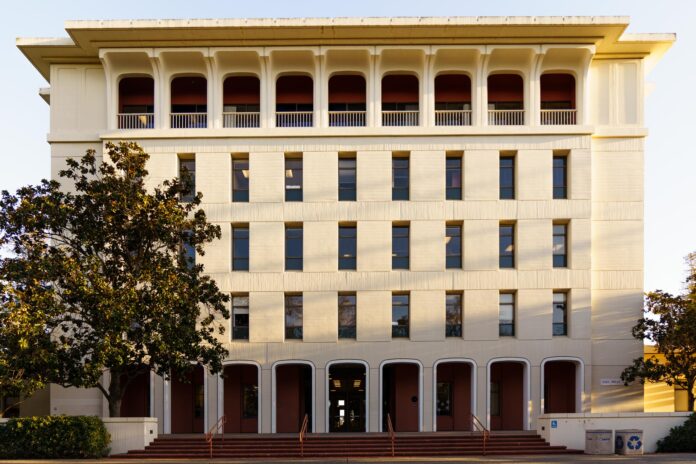
May: So, you know, UCD not only stands for University of California, Davis, it also stands for Under Construction Daily. That was my dad joke for the day. But, for a campus of our size and complexity, construction is just a reality. I always like to say it’s a sign of a healthy campus. If you didn’t see anything going on, that would really be something to worry about. But you talked about the MU in the question, so the construction that’s closest to the Quad there is work on our various seismic projects; the buildings that are east of the Quad on this side — Voorhies, Young and Social Sciences and Humanities (SSH), or the Death Star — have renovation work requiring barriers and pedestrian pathways and bicycle rerouting.
In addition to the seismic improvements to these buildings, that work includes upgrading fire alarms and sprinkler systems and elevators and security systems, accessibility improvements for the physically challenged population, restroom innovations, roofing, mechanical and electrical updates, landscaping, painting, all sorts of things, all sorts of upgrades. At the corner of Third and A Street, we are filling in the pit stair at the SSH building to create a more open and welcoming space to that entry point to campus where you guys like to take pictures. We have ongoing work in something we call the Big Shift, which is our Fossil Fuel-Free Pathway Project. The latest construction there is at the Coffee House, and you’ve probably noticed some of the closed entrances there because of the Big Shift. Clare [Shinnerl], you want to add anything about campus construction?
Shinnerl: Closer to the 113, you’ll see a lot of construction there for a brand new center that’s going to open up next summer: Resnick Center for Agricultural Innovation.
May: And then there’s also new housing, the Segundo Infill Project that’s already started as well. Did I forget anything?
Shinnerl: More to come. I’ll just add that the construction by the MU is largely funded by the state. So, we’re grateful for that and would like to get more.
May: And we’re excited about sometime in the future, after you’re all graduated, we’re going to tear down Freeborn and rebuild something real nice there: the Student Opportunity Center, we’re calling it.
Editorial Board: As UC Davis continues to accept more students each year and grow its student body, which steps are being taken to accommodate the increasing population size (e.g. housing, dining, class availability, parking, etc.)
May: Yeah, I mean, we actually aren’t really growing. We’re not growing at a high rate right now. When I came, we were about 38,000, maybe 37,000. Now we’re about 40-41,000, and the undergraduate level is especially stable. So, when admissions offers increase, people think that means enrollment is growing as well, but that doesn’t mean every student that gets admitted ends up enrolling. We admit many more students than actually wind up setting foot here. But, we’re committed to meeting these challenges in infrastructure as they arise — with protected housing, dining classrooms and parking, etc.
One way that we assist incoming students with course availability is through reserved seating; I don’t know if any of you have used that. It started three years ago. We have reserved seats set aside for incoming students, and since incoming students register after you, the continuing students, this has really helped them have access to the courses they couldn’t have, that could have been filled up by the time they got a chance to register. Housing and Dining has expanded housing inventory to accommodate more than 15,000 students living on campus. I think we can house about 40% of our enrollment now, which is a really big change over the last several years. We’ve added more than 7,000 beds or so in the last eight years, and this is in keeping with a Memorandum of Understanding we signed with the City of Davis to try to house the growth that we were having at that time. I mentioned the new construction, the new Segundo Infill Project. We’ll have 400 to 600 new spaces for residents there, opening fall of 2027.
Croughan: Actually, for this coming year, we’ll likely go down slightly. Because, across all the University of California campuses, we have more than met the compact, as it’s known with the state of California. We’ve actually enrolled more students than the state of California asked us to enroll, and they have not, in turn, paid for those enrolled students. I don’t mean this as a tit for tat or a fight. It’s just, if you’re not going to pay for them, we need to scale back. So, this year we will take less. The chancellor’s right in his numbers that things have basically been pretty stable. I think where students feel it sometimes is when you’re trying to sign up for courses and you might have trouble getting in. What we’re trying to do is offer more sections, because it’s usually biology, chemistry, maybe calculus or perhaps physics. There tends to be specific courses where there’s waitlists and things. My rule post-pandemic was no one could have a waitlist anymore. Rather than that, they had to just offer another section and enroll everybody else. So they’ve been doing pretty well, not perfect.
But it’s getting better, and this year specifically we’ve launched a new biology series: Bio 1, 2, 3. I actually see heads nodding — there’s still doing 2A, 2B, 2C, the prior series. So right now, your biology faculty are offering two sets of courses, which is pretty demanding, but by next year, the old series will end, and the new series will begin. That’ll have a lot more labs available. It’ll also have molecular and cellular biology, which has not been in the old series, and more sections. So, waitlists are not a thing of the future with biology.
May: We also are having some enrollment decrease because of the current political environment. International students are not showing up as readily as they did in past years. That will have an impact as well.
Editorial Board: On Sept. 1, on-campus parking fees were increased by 50 cents per day for most drivers. What went into the decision to increase these fees, and is there an expectation of further increases in the future?
May: I have to say parking is my favorite topic. I gotta talk about parking. It actually comes up in every meeting. Breaking news, though: The parking rates increase was postponed, so it did not happen in September, and parking rate increases are approved only when it’s necessary for Transportation Services to meet the significant financial obligations — they have debt service on some of the parking lots and keeping the road and pathways, of maintaining all those sorts of things, as well as the salaries for the staff and things that need to be repaved or repaired. These costs go up like everything else every year, and we have to meet those costs. So, we don’t make money on parking. I think that’s one myth we want to bust here. People think that we’re making all this money in parking and parking fees, but that’s not the case. We actually are behind. We’re committed to maintaining the improvements that keep everybody safe, and these efforts are all outlined online on the fall 2025 operational updates page that Transportation Services maintains. So you can take a look at that.
The fees also go to improve lighting and cameras and pedestrian pathways and mobility shuttle operations and all these projects that we think are beneficial to the safety of the community. I also want to note that Transportation Services is doing something pretty neat. Up until Nov. 21, they’re partnering with The Pantry and the food drive. In this program, you can donate food and essential items instead of paying for your citation. So, get more tickets, so it can go to the food drive. If you want more information, that also is on the Transportation Services webpage.
Shinnerl: I’ll just emphasize the word postponed. Yeah, so it is postponed for now, but we will have rate increases for the reasons that [May] mentioned. We just cannot operate, paying our folks and keeping everything up without an increase.
May: I’ll also encourage everyone to look at the parking rates at some of our sister campuses. You’re getting a really decent deal here compared to some of the other UCs. I won’t mention them by name.
Editorial Board: In past years, there have been multiple safety-related incidents happening on the UC Davis campus, such as instances of sexual assault, as well as the series of stabbings that occurred in spring 2023 in the city. What is currently being done to maintain and improve campus safety measures?
May: Safety is always the highest priority that we have, for everybody — students, staff, the entire community — because everybody deserves to be able to work or study in a place that’s safe. So in 2023, we committed to collaborating more robustly with the community to improve things like lighting, enhance campus safety practices; the Safe Ride program is an example. Clare [Shinnerl’s] team has voted $20 million, a five-year investment, to improve lighting and install security cameras, enhance AggieAccess and build up security systems. We do this based on the feedback we get from students and staff and faculty through one of the programs that the chief conducts every year, the lighting safety walk; it’s once or twice a year, so you may have done this. A group of people can walk around with Chief [Joseph] Farrow just to see where places are maybe too dark or lights have burned out, or things like that. Student Affairs is also heavily involved in that, in design and construction management.
Lighting upgrades will occur roughly one mile from pedestrian pathways in various key areas across campus. By December 2025, these locations will be Olson Hall, Bike Parkway, East Quad Bikeway, Shields Avenue, California Avenue, 8th Street, South Court Campus neighborhood near the Art, Music and Writing Hall Park walkways and the plaza between the School of Education and Olson. We’ve got seven new emergency call boxes installed, bringing our total number to 30. We have 11 new outdoor security cameras added, including near the Egghead sculptures and along La Rue, Hutchison and Old Davis roads. We’re expanding AggieAccess to more and more buildings, enabling remote door locking, modernizing our security infrastructure while still trying to keep the campus open and welcoming. Safe Rides gives free evening and late-night transportation or escorts for anyone who prefers not to walk or travel alone after dark. The police department operates that. It’s a really trusted option that students use for getting home safely. We have the Health 34 program that the fire department manages, and Student Health and Counseling Services that provides 24/7 mobile response for non-emergency mental health and medical calls, like students in crisis, directly connecting those individuals with the care and support they need. So, we really have a comprehensive approach to safety.
Farrow: I would add this: You’re seeing a much more visible security team that’s on campus, not the traditional police officers. We try to tier it, so we have about 125 students who work as your Aggie Hosts, who are also security. They go out at night, and they’re kind of the eyes and ears for us. We also have professional security staff that we will embed in the core and in areas where we don’t necessarily always send our police officers. And then, of course, the police officers do their job to try to maintain and lower criminal activity. As those reports come in, they’ll do the investigations and adjudicate those through the criminal justice system, but it is a very wide, tiered response that we’re trying to do.
Also, I just wanted to add on the lighting in the call boxes; that was a student initiative in 2018. It was a product of ASUCD who did a Senate Resolution and asked the university to put in call boxes in various strategic locations. We’ve followed that map for about six years, and all of those cameras are coming in via grants. So they’re not coming in from student tuition money; they’re coming in from different grant opportunities that we have. It’s an evolutionary process to continue to grow, but the plan of these would be corridors to get you from places of learning to where you live and dormitories and that sort of thing. So, the Aggie Host program is one that continues to grow with students helping students, and we’re running just under 80,000 rides per year. That’s a lot, and sometimes we’re slow to get there because of the demand. It just depends on what it is. But we put more vehicles out.
Editorial Board: What is the status of UC Davis’ effort to receive a Hispanic Serving Institution (HSI) designation? Is the university actively pursuing HSI status at this time given cuts to HSI grants under the Trump administration?
May: The good news is last year we became eligible as an HSI, so 25% of our domestic undergraduate population is Latinx. The bad news is in September, the Secretary of Education announced that they were ending the minority-serving institution programs. So, we are still — we meet the threshold — but there’s no money for those programs. But, regardless of that and how it winds up, because I know that’s being disputed, we remain committed to serving those students and all of our students. And, despite that uncertainty, we continue to advance HSI-related goals through various initiatives. I know Renetta [Tull] will have something that she can announce in just a second, but before I turn it over to Renetta [Tull], I just want to acknowledge that more than 9,300 students at UC Davis identify as Chicanx or Latinx, which makes us second in the UC system; I think Riverside has more. So, we’re committed to serving that population here with equitable access, especially since more than half of the California high school graduates are in that demographic.
Tull: We also have our Cesar Chavez Youth Leadership Conference, which is one of the largest conferences for high school students, middle school students in Northern California; we’re doing a lot with the K-16 project to make sure that we are also serving students throughout the North State and the Redwood Coast all the way to the Oregon border. We have a director called the Avanza Director, Avanza meaning move forward and advance, to serve all of our students.
There have been all kinds of efforts on campus, from student success and equitable outcomes, for example, and our Avanza director — our Avanza initiative — is looking to see how we can make sure we’re serving all of our students. It seems to be going very, very well. We’re looking at retention; particularly, our new Avanza director is trying to make sure that students across the campus are going to be retained. We are really excited about all of the things that are happening to move forward.
May: I think we just — I don’t know if it’s been announced — identified the new Avanza director.
Reneta: Her name is Mayté Frías.
Editorial Board: What is UC Davis’ position on university-wide regulations or standards regarding artificial intelligence (AI) usage by students? Are there any changes to current policies that faculty or students have advocated for? Are there any changes that the UC Davis administration would like to see?
May: As with anything, we want to be a leader. So, we want to be a leader in AI, but we also want to be responsible in how it’s used and policies that drive how we use it in teaching and research and innovation. We’re in the process of developing various models for adoption that create opportunities for students and staff and faculty to engage more deeply with various AI tools. A real bedrock principle in that endeavor is shared governance. The faculty has all its control and purview of all matters related to the curriculum. So, when it comes to considering what happens in the classroom with respect to AI or anything else, we work with our colleagues in the Academic Senate to establish those policies. Just last month, we established the UC Davis AI Council, and that council has issued a draft report addressing AI on campus in a variety of ways — in the classroom, research and operations.
I convene that council, including representatives from across the campus, including some student representatives. They’re gonna be charged with developing campus-based principles and government structure for how we implement AI on campus. I’ve charged them with delivering these following items: a comprehensive implementation governance plan for your activities; some proposed policies and procedures for AI evaluation, approval and oversight; a structure for continuing campus governance beyond that committee’s term, although it may be an ongoing committee; and identification of resource needs and infrastructure requirements and capacity gaps that might happen. The committee is going to be guided by some systemside principles that were established by the University of California Office of the President (UCOP) and the Regents: transparency, accountability, equity, inclusion, respect for academic freedom, and human oversight and responsibility.
Sweeney: I think your generation has a healthy skepticism about AI. I have two daughters that are in college, and they worry about privacy. Generative AI stores that data. So, we are very cognizant of the rules around this. I don’t want to say policing it. I mean, AI is here. On the other hand, we’re just ensuring folks are receiving guidance on what’s an appropriate usage for AI and what’s not an appropriate usage. I think this will be evolving a lot over the next few years.
Editorial Board: Following the recent Canvas shutdown on Monday, Oct. 20, are there any plans to move away from or broaden web service usage apart from Amazon Web Services (AWS) or to provide a safeguard or alternative resource for students if this re-occurs in the future?
May: I think you probably know this, but it wasn’t just our campus that was affected. It was Amazon Web Services users nationwide. My wife works for — she’s a software developer, and they are heavy users of AWS products and services — and they were impacted dramatically as well. But anyway, back to UC Davis. I guess Canvas access was impacted for maybe 10 hours that day, and it was a Canvas, it was a power grid issue, I think AWS was the source.
We are reviewing the incident through our vendor accountability and problem-review processes. We have taken some action. We’re engaging with vendors, including the Canvas vendor and AWS, on their root cause analysis and remediation plans. We have business continuity efforts to review and refine our business continuity plans, including campus communications about such things. And then finally, communication and transparency. We have a follow-up summary on the IET website outlining what occurred, explaining how UC Davis and our partners are working to respond to these disruptions. But we have to be realistic that these disruptions can and probably will occur in the future. We just have to try to be more prepared and resilient as possible when they do occur.
Editorial Board: On Nov. 4, there was a Statewide Special Election in California. Since many UC Davis students are California residents, what does UC Davis do to encourage the student body to register and vote?
May: We actually have an Aggies Vote campaign that we created a few years ago to promote voting information and awareness to students during elections. As part of that campaign, we have an Aggies Vote webpage, which gives information about voting registration and resources for students, election information, as well as ASUCD voting guidelines. We also offer the Are You Ready to Vote resource for students, which gives details about voting, registration processes, considerations and local voting centers where you can vote and vote through mail and other mechanisms.
These are resources we provide in a variety of ways through Student Affairs and partner units. We use emails and newsletters, social media, LCD screens are on campus and on myucdavis.edu site, and I do promotional videos; you may have seen one. We’re very excited about encouraging students to vote.
Tull: Inclusive Excellence also has a non-partisan voting page with information and resources and things like that that we always do around the time when it’s time for Californians to vote.
Engelbach: And we also host on campus a voter center, so you do not have to leave campus.
Editorial Board: Latitude is now offering breakfast options for students. Was there student demand for this change? How has it been received thus far, and are there any plans to expand other food options on campus?
May: So first of all, I’ll just say, Latitude is one of my favorite dining commons. [My wife and I] go to all the dining commons and just sit by students and make them feel awkward. I guess that decision was based on high participation numbers in Tercero during the 2024 academic year.
Latitude was built to support the Tercero neighborhood’s high density, so it made sense to open the location there for an additional option for those residents in that area.
We think that change has been well received. Attendance numbers have increased since fall, and the team continues to do a great job serving the menu items to the students. Dining Services is always receptive to any feedback that you might have to improve that experience. I don’t think we have any plans to further expand.
Editorial Board: Aggie Square opened a new mixed-space residential building earlier this year — how are operations at the Sacramento campus and are there any recent achievements related to their medical research?
May: I’m really proud of Aggie Square, and it opened in May. We’re really happy about the developments there. About 350 of our scientists from the School of Medicine and various research centers over there have moved and will conduct collaborative studies at 75 state-of-the-art laboratories, which we’ve built there for patient care, quality of life, public health, all sorts of things. The U.S. Department of Veterans Affairs is a partner we’ve had for a long time, and they’re going to be collaborating in cancer and neuroscience research at Aggie Square. The School of Veterinary Medicine is moving and expanding its veterinary genetics lab to Aggie Square, and they will be examining the connection between human and animal health, and how both can be improved. We have a new master’s in engineering medical device development, which will be housed there. The first graduate degree program line exclusively for Aggie Square.
Some discoveries: We had a new gene therapy developed for Angelman Syndrome, which is a collaboration between Davis neuroscientist Jill Silverman, and a stem cell gene therapy specialist, Joseph Anderson. And they’re developing a novel approach to use patients’ modified stem cells to deliver a functional version of a missing gene directly to the brain to treat that condition, which is pretty cool. Another team, Aijun Wang and Jill Silverman, and Berkeley’s Niren Murthy, they’re pioneering in utero gene editing therapy for severe neurological genetic disorders, for infants, and their approach uses nanoparticles that deliver a gene editing tool non-virally to the fetal and neural stem cells, and it’s designed to prevent conditions by correcting mutations that occur before childbirth. I’ll just mention one other, Diana Farmer, who’s the chair of surgery, has moved her lab to Aggie Square, and she and others on the team have, we think, cured Spina Bifida. So, that’s a really, really exciting one.
Croughan: Can I add to that? I think it’s really particularly cool and could have only been done at Davis. They’ve determined that stem cell therapy — of actually taking stem cells and inserting them into where there’s a hole in the spinal column in bulldogs in utero, which have a very high rate of Spina Bifida, that they could cure Spina Bifida. So, the bulldogs are born without the hole. The spinal column fuses, forms normally. Dogs can run around. They’re fully continent. They do beautifully.
We took that technology from our vet school and applied it at the medical school, and Diana Farmer does it to human babies in utero instead of puppies. And now we have human babies running around, fully formed and not paralyzed or paraplegic. It’s a pretty phenomenal Davis story between the vet school for the animal model and the human model.
May: It’s a really emotional video. The couple who had the baby that they were worried about came out wiggling his toes, and it’s a really tear-jerking moment.
Editorial Board: Many of our readers — both first-years and transfers — are finishing up their first quarter at UC Davis. Now that you have been the chancellor for eight years, have you noticed any resources/opportunities offered on campus that are consistently overlooked and that you would like to share with new students?
May: I’ll let everybody jump in on that one. I don’t know if these things are overlooked, but there are some things I’m proud of. I’ll start with the Aggie Compass, which didn’t exist before I came. The Student Affairs colleagues have done a great job in making that resource available for students that have real needs in food security and rapid rehousing and other needs. I’m excited about all the projects that we’ve completed, including the Diane Bryant Engineering Student Design Center, Coffee Center, the Resnick Center for Agricultural Innovation, and the Teaching and Learning Complex. We’ve extensively renovated the chemistry building. The Edwards Family Athletic Center, all these things that have happened, and multiple housing projects, West Village, and multiple other housing projects that happened.
I think we’ve done a really good job of transforming the Davis campus. And we already talked about Aggie Square on the Sacramento campus. But in addition to Aggie Square, there’s a new outpatient facility called 48X. It’s the biggest outpatient surgery facility in the country. There’s the new bed tower that’s going to open in 2030.
Croughan: No. 1 thing, and this is as a mom of four plus provost. I really think it’s important for students to go to office hours. If you’re going to talk about the one thing you can do that actually changes the trajectory of your time at Davis academically, it’s going to office hours with the professor or the teaching assistant or both. I can tell you, as a professor, if a student who comes to office hours is on the border of two grades, I’m going to bump them up to the higher one. Let’s say you’re between a B+ and an A-. I’m going to give you the A-, because you came to office hours, and I know you were trying hard during the course.
The other thing is to get a research opportunity while you’re here. I say that across every single discipline. If you get an opportunity to work with a non-profit, if you get an opportunity to work in a lab, you get to go work with a museum, you get to do field research, whatever it might be, do it at least once, if not more than once. It tells you a lot about what you do and don’t want to do later. It opens more doors for you for opportunities.
Tull: I am incredibly proud of our Principles of Community. We just celebrated 35 years of the principles, and there’s this one part of it that talks about how we affirm the dignity inherent in all of us, and I hope that new students when they encounter or learn about this and that it’s something that we have to help as a framework for how we connect with one another, how we treat one another, that they’ll remember dignity, connection and respect for all of us. I’m just really, really proud of that, and I think that there are people who know about it, but I hope that more people know about it going forward and that all of our students can connect to it in some kind of way.
Editorial Board: Earlier this year, 160 UC Berkeley students and staff’s names and personal information were given directly to the Trump administration in efforts for them to “investigate antisemitism” on the UC campus. What does the UC Davis administration think of this exchange, and would the personal information of students and staff here be given out under similar circumstances? How does UC Davis manage student-staff confidentiality matters in this context?
May: I’ll just start by saying the federal government can request such information any time. There’s nothing unique about the Trump administration, although we have concerns about that administration. I understand that anxiety, but these information requests happened under the Biden administration, you can keep going back to any administration. So that part is not new. It’s about as new as traffic on I-80. But I do get the concern.
I don’t want to sound tone-deaf. I understand that there’s specific concern about this administration and what happened at Berkeley. Mike [Sweeney], do you want to comment?
Sweeney: Yes, I mean, this is not my time to provide comments on the Trump administration. My comments, if I did provide them, would be very similar to your comments on the Trump administration. But, as the chancellor said, certain agencies of the federal government have the legal right to information. Information was provided to the Johnson administration, the Nixon administration and the Ford administration, all the way up to the present.
I used to be a regulator with the state civil rights agency, and we would get that information. That’s very common. When you receive information, it goes into kind of a lockbox for that agency, and it can only be used for that purpose. You can’t share it with another agency. You can’t send it over to the police or over to immigration. You’ve got to use it for the purpose for which you collected it.
It is a fact that at Davis, we have not disclosed information, but that’s not answering the question. Legally, do we have to? The answer is legally, we do have to. Right now, we have redacted names. We’re waiting for the shoe to drop and for them to demand that we un-redact those names, but that hasn’t occurred. So, I’m happy to answer follow-up questions, but it’s a complicated space. Can they go get an order commanding us to produce it? Absolutely. It’s a difficult position to be in.
May: That’s what happened to Berkeley. It wasn’t Berkeley volunteering information. They were required to.
Mike: It’s a very difficult position to be in. I think no one even bothered to ask that question on the Biden administration or the Obama administration. But that’s the norm for regulatory enforcement in America.
Written by: The Editorial Board — opinion@theaggie.org