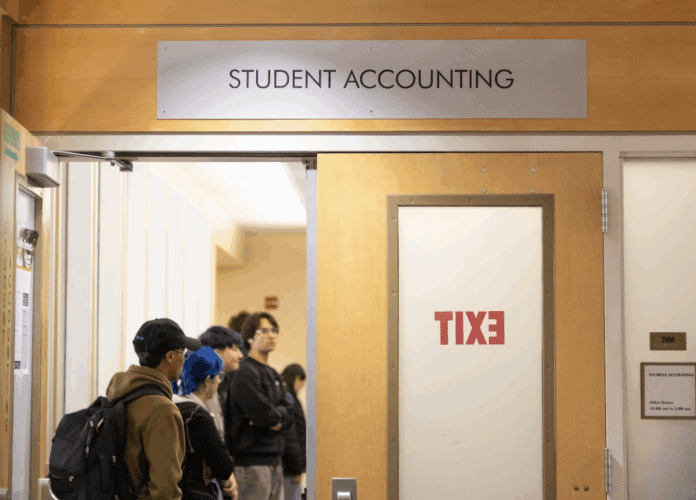
The renewal of the Tuition Stability Plan is set to increase tuition between yearly cohorts of admitted students
By KHADEEJAH KHAN — campus@theaggie.org
The University of California (UC) Board of Regents, the system’s governing body, has voted to continue tuition raises for future students of the UC system.
The Regents, who made their decision at their November meeting in a 13-3 vote, hold full responsibility for creating university policy and managing the UC’s $53.5 billion annual budget, $190 billion in investments, three national labs and six health centers. Issues like tuition plans, increases and policies are decided at a systemwide level by the UC Regents.
Introduced by former UC President Michael Drake in 2021, the Tuition Stability Plan increases tuition between yearly cohorts while keeping tuition at a flat rate for students up to six years. Every student in an admitted cohort would pay the same amount for tuition, however, the next cohort’s tuition would increase. Under the new model, current undergraduate student tuition would not increase. However, graduate students — who are not included in the cohort model — and future classes of admitted students can expect increased tuition prices.
The November vote would allow for tuition to increase as much as 5% annually based on inflation. Since 2021, when the model was first adopted, tuition for newly admitted undergraduates has risen from $12,570 to $14,934 in 2025.
In a summary addressed to the Regents, the UC Office of the President wrote that the Tuition Stability Plan “has resulted in greater financial aid for students,” in addition to increased campus support.
Regent Michael Cohen supported the plan at the meeting, citing that the University has been able to enroll 15,000 new undergraduate students since the implementation of the Tuition Stability Plan.
“That’s remarkable,” Cohen said. “Obviously some of that is from increased state funding, but without knowing that tuition dollars were coming alongside of it, I can pretty much guarantee we wouldn’t have had the capacity to grow.”
Sonya Brooks, a doctoral student in education policy at UC Los Angeles (UCLA) and the Board’s voting student regent, was one of the three regents who voted no on the plan. In the meeting, she objected to the lack of attention given to student mental health and basic needs. She also expressed concern over how tuition increases could impact student retention and educational outcomes by hindering students’ ability to afford a UC education.
“The UC doesn’t have a tuition problem, they have a capital problem,” Brooks said. “And that problem should not be placed on the backs of students to bear.”
In response, UC’s Chief Financial Officer Nathan Brostrom, who is also one of the executive directors of the UC Student Health Insurance Plan, added that the increase would be reflected in the services that students can access for mental health support services.
In addition to Brooks, Eleni Kounalakis, the lieutenant governor of California and ex-officio member of the UC Board of Regents, opposed the plan, citing accessibility and student basic needs concerns.
“Our students sleep in their cars,” Kounalakis said. “Our students go to foodbanks in order to be able to eat. And yet, here we are taking a second vote that would effectively double tuition over a relatively small period of time, and with very little real analysis and understanding of what the impact of the university will be on that.”
Groups like the UC Student Association, representing UC undergraduates across the system, have also opposed tuition hikes brought forth by the model. In a press release, Aditi Hariharan, the association’s president and a fifth-year nutrition and political science double major at UC Davis, said the model would establish “forever tuition hikes.”
“When cuts are being made across the board, the answer cannot be to raise tuition and pass the price tag onto the future students of the UC and their families,” Hariharan said. “This proposal will devastate the diversity of our campus communities by shutting the doors and telling low-income, first generation, students of color and their families that the UC is not the right choice for them.”
Following the passing of the amended Tuition Stability Plan at the November meeting of the Regents, the model will be implemented in the 2026-2027 academic year.
Written by: Khadeejah Khan — campus@theaggie.org