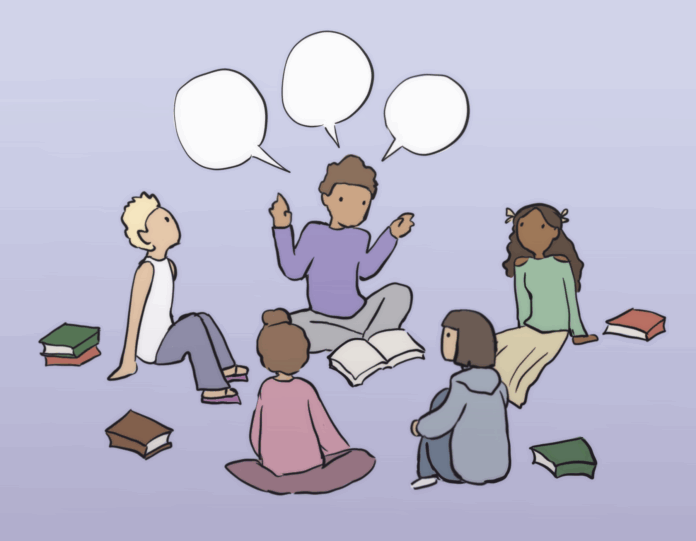
Joining a book club is a learning experience in more ways than one
By SABRINA FIGUEROA — sfigueroaavila@ucdavis.edu
I’ll admit it: I hated reading as a kid. Don’t get me wrong, I love it now, but back then I thought I was just too dumb to ever understand complex prose. I’d even get a little jealous of the kids who read past 100,000 words and were rewarded a game truck (I still do).
I grew out of this hatred once I got to middle school, and I’ve tried to make a habit of reading for pleasure ever since. But it’s hard in college when you have so many other readings to do and responsibilities vying for your time. You lose motivation and get caught up in deciphering 40-page research articles and writing a million essays — you’re exhausted; it’s not your fault your love for your hobbies died out.
However, I’ve found the perfect cure for my seemingly endless reading slump: a book club — in a sense. It consists of my friend and I, our long “To Be Read” (TBR) lists and an occasional coffee shop meet-up. So far, we’ve had a range of discussions about “A Room with a View” by E.M. Forester and “East of Eden” by John Steinbeck. From disagreeing on whether we’d like to experience unconventional love like the one between Lucy and George in Forester’s novel to trying to figure out the symbolism of scars in Steinbeck’s work, the meetings are incredibly fulfilling and a great way to exercise our brains.
The beautiful thing about being in a book club is that you get to organize and form your own thoughts, while also working to understand the perspectives of another person. This doesn’t necessarily mean you have to agree, just that you have to listen — something we could all stand to do a little better. This is also not to say that it’s easy; the challenge is what makes this experience so valuable.
Starting a book club has also made me realize that my friend and I still have so much to learn about each other. Understanding someone else’s thought process is an intimate, vulnerable part of making and fostering long-lasting friendships. Simply discussing a book with strangers or friends breaks down a barrier that allows you to see another aspect of the person.
Additionally, a book club allows you to grow in ways you didn’t know you could. I never thought I would be smart enough to understand intricate prose or large texts, and sometimes I still feel like I’m missing something. However, discussing and answering questions that you and your book club peers may have about a novel can help you realize you’re a lot more intelligent than you thought you were. In time, it teaches you to be a lot kinder to yourself. That way, you don’t stay imprisoned by your mind — you can flourish more than you ever thought possible, and learn so much about life, other people and yourself.
Written by: Sabrina Figueroa — sfigueroaavila@ucdavis.edu
Disclaimer: The views and opinions expressed by individual columnists belong to the columnists alone and do not necessarily indicate the views and opinions held by The California Aggie.