UC Davis students discuss their experience with NorCal and SoCal personalities
By AMBER WARNKE — features@theaggie.org
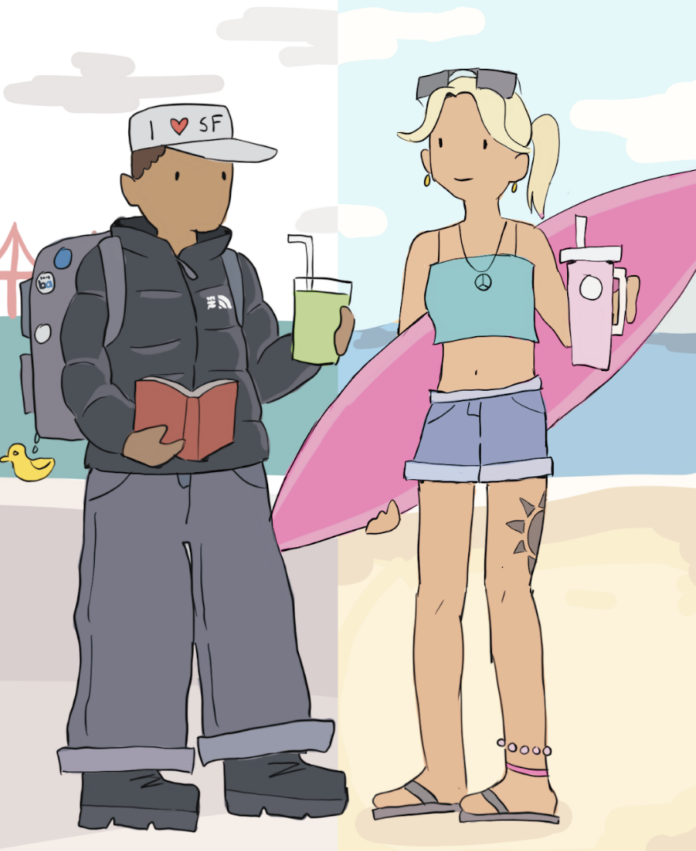
UC Davis is known for hosting large numbers of both Northern California (NorCal) students — being one of the few University of California campuses in the upper half of the state — while also welcoming large amounts of Southern California (SoCal) students from Los Angeles, San Diego, Long Beach and beyond. This can lead to an interesting mix of personalities, and the creation of stereotypes about the regions among students.
Meghana Yamajala, a second-year computer science major, came to UC Davis from Ventura County in SoCal, directly between Santa Barbara and Los Angeles (LA). When Yamajala came to UC Davis, she noticed the direct approach NorCal students can have toward their career goals.
“A lot of people from NorCal, especially in the engineering department and the science side, they’re very experienced, they’re very competitive, [because] a lot of the corporations are here,” Yamajala said.
Silicon Valley, a major area for technical jobs, no doubt contributes to this “tech bro” stereotype. The area includes some of the largest tech companies in the world, including Google, Apple and Facebook, with the city of Mountain View even featuring a Google Android sculpture garden open to the public.
Amy Khim, a third-year political science major from Long Beach, agreed that there are personality differences between NorCal and SoCal Aggies, but noted that just as SoCal students have preconceived ideas about NorCal students, so do NorCal Aggies about SoCal ones.
“I know many people think I have a vocal fry or say ‘like’ a lot, which I think is funny,” Khim said. “I also think folks from NorCal maybe think people from SoCal tend to dress provocatively, because we’re used to hotter weather.”
Southern California has long been known for its scorching hot weather, especially during summer heat waves, but Khim believes that this does not mean people should make assumptions about SoCal residents based on what they wear.
“I do start to dislike the alignment of having a SoCal accent or wearing less clothes to being dumb, because I also think that can carry values of misogyny,” Khim said.
However, most stereotypes about the two sides of California are lighter in tone.
Matt Frost, a fourth-year human biology major, hails from Chico, a city in the Central Valley most famous for their California State University campus. What Frost hears most from SoCal Aggies is not about their weather, clothes or dialect, but their sprawling megalopolises.
“They love talking about their cities,” Frost said. “I hear about LA more often than I think I need to.”
SoCal is known for their populated urban landscapes, with California’s two largest cities, Los Angeles and San Diego, located in the southern part of the state. These cities have led to the creation of a thriving art scene, with countless museums and music venues dominating many SoCal cities.
However, coming from the smaller town of Chico, Frost’s most treasured thing about NorCal is its ample access to nature, as opposed to the hustle and bustle of bigger cities.
“I’ve lived in NorCal my entire life, and one of my favorite things about up here is just how many trees we have,” Frost said. “There’s a lot of nature up here in Davis, and that feels very similar to what Chico has, but I’m not sure if there’s this much greenery in a lot of SoCal areas.”
While SoCal does have a variety of natural landscapes in their own right, including the Channel Islands, Joshua Tree and Death Valley, NorCal is also unique in what the scenery offers. Coastal redwoods, the tallest trees in the world, are only native from southern Oregon to Central California, creating the awe-inspiring backdrop of the redwood forests California is known for. Additionally, NorCal is known for its foggy weather, something many residents find refreshing, as well as having far more volcanoes than SoCal, including Lassen, Shasta and Clear Lake.
Additionally, NorCal is known for its access to mountains, with the Cascade Mountain Range being a favorite destination for Luka Stephens, a second-year marine and coastal science major.
“On the drive up to Redding, there is a really pretty spot where you can see Mount Shasta and there’s nothing blocking it,” Luka said. “It makes me feel happy.”
This mountain range provides access to many ways to spend time in nature, as well as being the natural environment of the largest trees in the world, giant sequoias. Mount Shasta is also a site of skiing and winter activities in the cold season, ensuring that visitors are able to participate in activities on the mountain year-round. In their day-to-day, however, Luka most appreciates the culture in NorCal and people’s attitudes on social issues.
“The people here are pretty nice,” Luka said. “They’re pretty accepting, especially about [lesbian, gay, bisexual and transgender] people and non-white people.”
NorCal cities like San Francisco have a rich history of activism, having roots in the anti-racist, feminist and LGBTQ+ movements, even hosting the world-famous annual pride parade. Sacramento is also a location with strong activism, with frequent protests advocating for social and legal reform.
While SoCal and NorCal both bring their own charm and personality, Davis is a unique place where the two groups can interact, merge and collaborate. California is one of the most diverse states in the United States — a melting pot not only of international cultures, but regional cultures as well. While NorCal and SoCal Aggies may always have pride in where they came from, UC Davis can point students toward where they are headed next.
Written by: Amber Warnke — features@theaggie.org