55.9 F
Davis

Davis, California

Tuesday, December 23, 2025
Home Blog Page 270

An open apology letter to Lady Gaga

0

Gaga’s album, “The Fame Monster,” will never be topped, and here’s why

Dearest Mother Monster (aka Stefani Joanne Angelina Germanotta, or Lady Gaga), 

Before I get into the nitty-gritty of my letter, I just need to tell you that I’ve loved you for so much of my life, it is almost scary—13 years to be exact. I am here as a dedicated little monster (paws up) to regretfully inform you that I do not believe it is possible for you to top the masterpiece that is “The Fame Monster (Deluxe Edition),” your sophomore album released in November 2009. 

First, I’ll lay out the facts. While this album is admittedly an add-on to your debut album, “The Fame,” it is still entirely its own piece of pure art with its eight additional songs and one remix of the previously released “Bad Romance.” Not only did this album earn you your fourth Grammy, for “Best Pop Vocal Album,” but it was the best-selling album as a re-release in 2010. Needless to say, I have ample evidence to back up my claim that this is the best album ever created. (For legal reasons, I am employing the use of hyperbole to get my point across.) And Gaga, I know, you know, we all know that you won’t stop creating music (it’s your job) and trying to grow and outdo yourself as an artist, and I don’t think you should stop—but it just might not be possible to create any one album better than “The Fame Monster.” 

I hate to do this, but I am going to compare your six or seven albums (depending on if we want to count “A Star is Born”) following “The Fame Monster” to fully illustrate this one album’s supremacy over all the others in your discography. 

First up, there’s “Born This Way,” and while I love the drama of it—from the outrage the single “Judas” caused, especially after releasing it and the music video on Easter weekend—this album didn’t do anything more than “The Fame Monster” had already done, besides make many conservative groups hate you more than they already did.

Next, we have “ARTPOP,” and quite honestly Gaga, I don’t really want to get into this one—not that it is exactly a bad album, but we all know it doesn’t even come close to “The Fame Monster.” You tried out experimental club and new age music, and it was clear it wasn’t the right fit, except I will say the song “Donatella” is thoroughly enjoyable (but that’s not saying much from a 14-track album). I’d say the direct predecessor to “ARTPOP” (that somehow did it better) from “The Fame Monster” would be the song “Teeth,” which has a bit of talking and could be classified as conceptual like “ARTPOP” because I don’t understand the meaning behind it, but I like the feeling of the song. 

In all honesty, I would prefer to sweep “Cheek to Cheek” (with Tony Bennett, aka my grandma’s favorite singer) as well as the soundtrack album “A Star Is Born” under the rug as they are not entirely yours and they just aren’t you. It’s almost a chore to attempt to sit through all of “Cheek to Cheek” as it feels almost as long as Tony Bennett is old. As far as “A Star Is Born” goes, I watched the movie (for you), I cried and I only really need “Shallow” (and maybe “Always Remember Us This Way” if I’m being completely transparent) to sing along to those incredible vocalizations; the rest I can do without or just watch the movie again. For these two “albums,” I feel no need to compare them to “The Fame Monster” as it’s clear to see they’re not even in the same league. 

I must say your brave dabble in country music, “Joanne,” took some time to grow on me. While this departure from conceptual pop music came as a surprise to many, Gaga, believe me when I tell you I was prepared. Hints of the rock-fused passion of this album are especially apparent in the song “Brown Eyes” from “The Fame Monster”—a beautiful guitar- and piano-heavy ballad for a lost lover. Perhaps due to your maturity when making “Joanne,” or simply the time in which it was made, there are a few songs off the album that might make someone think, “Hah cool, feminism,” something we definitely cannot say about “The Fame Monster.” For those wondering, the primary “#feminism” songs off this album are “Grigio Girls,” “Hey Girl” featuring Florence Welch, “Joanne” and some may argue for “Come to Mama.” Basically, this album is beautiful even though I didn’t fully appreciate it when it came out in 2016 and yet, it still doesn’t reach the creative genius that is “The Fame Monster.” This is mainly because “Joanne” is inherently restricted by being your “country album,” whereas “The Fame Monster” is anything and everything. 

It’s a long time coming but we’ve made it to “Chromatica,” and yet again, it can’t compete. Gaga, this one really hurt me because with all the promotion for it and both of the amazing singles, “Stupid Love” and “Rain on Me” with Ariana Grande, I was really hoping for a pop magnum opus. Maybe this one is slightly my fault, building it up so high and with “The Fame Monster” admittedly as my frame of reference. This is in no way saying “Chromatica” is not good, because I can wholeheartedly say I like at least half the songs, and I definitely thoroughly enjoy about five of the 16, but this futuristic return to your roots of dance-pop didn’t go above and beyond.

Perhaps the one part of “Chromatica” that competes with “The Fame Monster” is its visuals. Both albums come with incredible music videos, something so many pop artists these days sadly neglect, and those from “Chromatica” clearly had some incredibly high production values with full-blown CGI in “Rain on Me” and incredible sets and wardrobes in “911.” This is definitely due in part to your now being worth about $320 million, most likely with boundless budgets for things like music videos in comparison to the days of “The Fame Monster.” Yet, those videos still hold up today as some of the best music video rabbit holes to dive down anytime I find myself on YouTube. Need I remind the masses of the masterpiece that is the video for “Telephone” featuring Beyoncé? Honestly, no amount of CGI or fancy set design can beat the power that music video holds. Not to mention that your music video for “Paparazzi” essentially kickstarted the actor Alexander Skarsgård’s career. All in all, “Chromatica” attempted to do the impossible (go toe to toe with “The Fame Monster”) and fell short. 

Gaga, I’m sorry to rag on you like this, but you (and everyone else in the world) needed to know the scope of “The Fame Monster”’s excellence and how it will always stay on top. There’s nothing else I can say besides thank you, and I hope you take solace in the fact that I will never stop streaming that album—hopefully, someone will go ahead and listen to it after reading this and understand everything I’ve been saying. 

Sincerely, 

Your biggest fan and critic

Written by: Angie Cummings — arts@theaggie.org
UC Davis Comprehensive Cancer Center acquires Versa HD linear accelerators to improve radiation cancer treatment

New technological advancements allow faculty to offer faster and more accurate treatment for patients

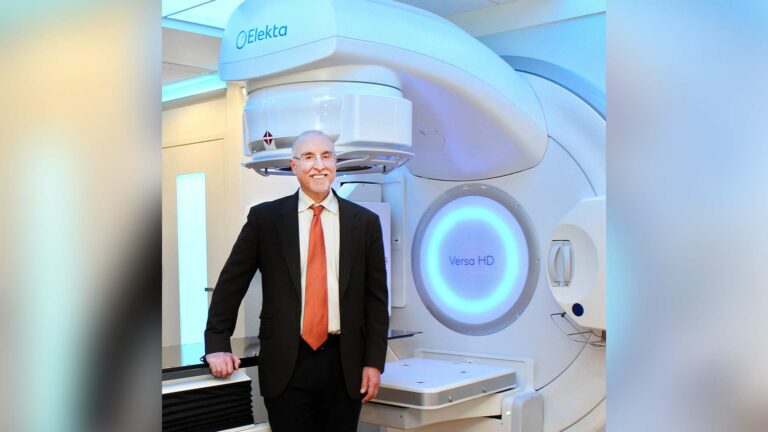
As a National Cancer Institute (NCI) designated Comprehensive Cancer Center, the UC Davis Comprehensive Cancer Center has a responsibility to offer personalized and innovative treatment to their patients, as explained on their website. In order to continue providing patients with quality care, the center recently installed an Elekta Versa HD linear accelerator to target complex tumors, according to a recent article by UC Davis Health. According to Stanley Benedict, a professor in the UC Davis Health Department of Radiation Oncology, the currently installed machine is named Versa Blue and the incoming one—to be installed September 2021—will be named Versa Gold to pay homage to the UC colors.

“These linear accelerators have multiple digital imaging capabilities that provide planar images, 3D images (like a [computerized tomography] CT scanner in diagnostic radiology) and even 4D images which can indicate the range of motion for a patient’s anatomy relative to their treatment site,” Benedict said via email.

Shyam Rao, an associate professor in the department of radiation oncology, elaborated that there are three central pillars of treating cancer—surgery, chemotherapy and radiation oncology, or using ionizing radiation to destroy tumor cells. Despite radiation being a powerful treatment for killing cancer cells, it also has the potential to damage normal tissues. Rao explained that with the new Versa HD linear accelerator, the improved image guidance through 3D and 4D scans allows him to better focus the radiation. 

“This machine can do something that the [older models] couldn’t do which is a 4D scan, which [means] it can take images in real time,” Rao said. “Let’s say someone had a lung tumor. If you just did a CT scan, you would just get a snapshot of where it is, but with these 4D scans you can get scans of how it’s moving in time. As you breathe in and out, the tumor goes up and down or left and right.”

This new technology is also able to deliver the radiation to patients at a faster rate. Rao described prior treatments taking up to 25 minutes, whereas the Versa HD can deliver the radiation in 15 minutes or less, according to the Elekta website.  

The Versa HD is not the only recent upgrade the UC Davis Comprehensive Cancer Center has made. Rao stated that the center has been adding other advancements such as imaging techniques that can detect the patient’s movement on the operating table with non-ionizing radiation. They also have been recently using a Flexitron, a machine used for the technique of brachytherapy where radiation sources are placed inside the tumor to radiate from the inside out. In addition, the center has a Gamma Knife unit which allows physicians to use extremely focused radiation on small structures such as the brain. 

“Versa HD is very exciting, but we’ve actually been upgrading and updating everything in the department so we’re very excited about that,” Rao said. “For everything, we’re bumping up our technology which makes us excited that we can do more targeted treatment. In the end, that’s the goal—to get the treatments more and more focused and targeted on the tumor and try to miss all the normal tissues and minimize damage.”

Rao elaborated that each piece of technology is used for a different kind of tumor. For example, as demonstrated in a case study by the University of Heidelberg, the Versa HD linear accelerator can be used to treat surgically inoperable tumors in the lung, while gynecological tumors are better treated with a brachytherapy machine. 

“It’s not just one machine, we need to have all the technologies because we see so many different things, complicated things that sometimes are not familiar to people in the community so we have to be prepared for anything or to help anyone who comes in,” Rao said.

Ultimately, the UC Davis Comprehensive Cancer Center hopes to use these new upgrades to achieve the same, if not better, effectiveness of treatment while reducing side effects and normal tissue injury from radiation.

“Our goal is to cure people first and foremost if possible,” Rao said. “But we know there’s side effects and we’re trying to be on the cutting edge of minimizing those side effects. That’s the overarching unifier between all these technologies we’re putting in.”

Written by: Michelle Wong — science@theaggie.org

The end of Scrooge McDucking

0

The war on the rich

Cryptocurrency is in the news again, as Coinbase, a cryptocurrency exchange platform, made its market debut to an $86 billion valuation—this marks a major moment for the supporters of this digital asset. While many critics like Secretary of the Treasury Janet Yellen have warned the public of cryptocurrency’s inefficiency, many have forgotten about the true victims of the move toward cryptocurrency: the rich.

 Many may see the support of cryptocurrency among the rich, such as CEO of Tesla Motors Elon Musk, and scoff at that claim. They may say “How can this possibly hurt the rich?” Ladies and gentlemen, I bring to you the end of Scrooge McDucking and the war on the rich.

Scrooge McDucking is defined, “To dive into and swim around in a large pile of gold coins to celebrate one’s wealth, as made famous by cartoon character Scrooge McDuck.” This practice has been in decline ever since civilization decided to stop using gold coins as currency, but the choice has remained with physical dollars. Cryptocurrency will relegate this practice to obsolescence.

CEO of Amazon Jeff Bezos is worth over $200 billion dollars. Sure, it’s cool to be the richest man in the world, have Washington D.C. in your back pocket and soon control the world, but what is the point of having all that wealth if you can’t take to it like a miserly cartoon duck to his sea of treasure? 

No longer will the wealthiest members of society be able to hoard their accumulated capital above the rest of us by literally swimming in money. There are no vaults for cryptocurrency. No mountainous mounds of money to swim through. No gargantuan gobs of gold in which to dive. There is no Scrooge McDucking in a blockchain.

Written By: Ean Kimura — etkimura@ucdavis.edu

(This article is humor and/or satire, and its content is purely fictional. The story and or names of “sources” are fictionalized.)

COVID-19 derails the future of teaching as students and teachers become less inclined to pursue the profession

0

Due to the pandemic, fewer students are majoring in education and more teachers are quitting their jobs as a result of increasing constraints and pressure placed on teachers

With most schools being remote for over a year, admissions statistics illustrate that many students are becoming dissuaded from committing to a profession in education while more teachers are quitting their jobs. 

Izamar Ortíz-González, a first-year Ph.D. student studying student-school organization and policy at UC Davis, described her previous experience as a teacher and how the pandemic has influenced her peers’ decisions. Last year, Ortíz-González knew it would be her final year teaching at K-12 schools as she began her Ph.D. program application in order to become a professor. Before she left, however, she noticed that with the transition to online learning, some children who had previously struggled in school were improving, while many who had excelled during in-person schooling now began to struggle. 

Çağrı Güzel, a third-year Ph.D. student specializing in language, literacy and culture at the UC Davis School of Education, discussed the similar difficulties he noticed among the students he taught. He mentioned that students face physical strains and screen fatigue when learning online. In addition, he said that virtual learning can perpetuate an inadequate form of education and retention.  

“After a certain point, it really doesn’t take you anywhere in terms of your education and in terms of getting the conversation or the topic at hand,” Güzel said.

Beyond the difficulties he has observed among students, Güzel also noted that the teachers are placed in a difficult position where they can sense the struggles of their students, yet they only have access to limited resources to help them succeed. 

“Obviously, if you look from the other side—teachers’ perspectives—we’re seeing the problem, we’re in the middle of the problem and we’re trying our best,” Güzel said. 

For Ortíz-González, the pandemic only emphasized the difficulties of teaching, such as developing relationships with different students.

“As a teacher, you’re in front of students, you’re performing constantly and […] you’re having a relationship with 30 different students,” Ortíz-González said. “If you’re a teacher in a secondary [school], like middle school and high school, that’s 160 different relationships.”

According to Ortíz-González, though teachers have always faced obstacles, now the harsh reality of the pandemic has encouraged many teachers to quit their jobs.

“Outside of my Ph.D. program, I do know people who […] stopped themselves from continuing their program or they’re taking a year off,” Ortíz-González said. “Whether they will go back, I’m not sure.”

In addition to more teachers leaving their positions due to the pandemic, Güzel noted that many of his friends deferred their journey to get a degree in education. Despite the difficulties surrounding careers in education, Güzel emphasized his commitment to his Ph.D. and remains motivated to pursue his goal of becoming a professor.

“When you’re in academia, you are already aware of the problem and possible problems that could always come up,” Güzel said. “This is part of our training process of how to manage these problems, how to manage unexpected crises and how do you tackle that in your trajectory. I am definitely very committed to my end goal.”

Although he remains within his Ph.D. program, he still has doubts over future job opportunities and potential success within the field. 

“Because of the pandemic, I know that the job market right now is terrible and people are having a really hard time finding jobs, even to get an interview,” Güzel said. “It’s a big mystery, it’s a big question. It’s of course that fear too of what I’m going to do and how I should navigate this.”

For undergraduate students, Güzel said that the current issues that teachers face, such as a lack of resources, are dissuading students from pursuing a degree in education. 

“When we have conversations with students, […] they are having second thoughts right now,” Güzel said. “When they see how their profession is being treated by the government and by other outlets, of course they’re having second thoughts.”

Despite these doubts, Güzel encourages his students to continue with their education degree.

“Of course we are encouraging them, but there are also realites that they are seeing as well,” Güzel said. “It’s very sad to unfortunately see that people are having second thoughts about their passions.”

If this pattern continues with fewer students becoming education majors and more teachers leaving their jobs, Ortíz-González said that this could seriously impact the quality of education that students receive. California has already been impacted by a teacher shortage that has made reopening schools more difficult.

“I think that in the short term, if teachers continue to leave or choose not to enter the field at all, you’re going to have bigger classrooms so students are going to have less quality instruction,” Ortíz-González said. “Because of the teacher shortage happening in California, a lot of districts are partnering up with teaching credential programs […] that expedite the process.”

Though the future of teaching remains unknown, Güzel remains confident that current educators will be able inspire students who are passionate about teaching to pursue a future in education. 

“This is why we are doing this job,” Güzel said. “We will win them again. We will work hard. We will help their hopes come back again, and we will bring them back. It’s on us right now.”
Written by: Farrah Ballou — features@theaggie.org

Chancellor Gary May comments on police killing of Daunte Wright, an unarmed Black man, in midst of Derek Chauvin murder trial

0

Student Health and Counseling Services refers to racial trauma resources and partnerships with campus retention centers to gauge students’ needs

In the wake of the police shooting of 20-year-old Daunte Wright, an unarmed Black man, in a Minneapolis suburb earlier this week, UC Davis officials and spokespeople for Student Health and Counseling Services (SHCS) spoke about racial trauma and mental health resources available at UC Davis. 

The police officer who fatally shot Wright has since been charged with manslaughter, having allegedly mistaken her service weapon for a taser gun she planned to use on Wright during a traffic stop. 

Wright’s death has sparked protests demanding racial justice and police accountability in Minneapolis, MN, which is also the site of the high-profile murder trial for former police officer Derek Chauvin who instigated worldwide protests last year. 

“As a Black man in America, I often feel like Schrödinger’s cat: I exist in an uncertain state that can be simultaneously considered both alive and dead, subject only to a potential random interaction with an incompetent/fallible/malicious law enforcement officer that may or may not occur,” Chancellor Gary May wrote in an April 13 letter to the UC Davis community. “It’s exhausting.” 

The University of California Office of the President (UCOP) also released a statement condemning this week’s events in Minneapolis and highlighting its re-examination of police reform on college campuses in recent months. 

“Even as Americans follow the murder trial of Derek Chauvin, this latest horror vividly conjures the trauma and heartbreak of the killing of George Floyd just a few miles away,” UC President Michael Drake wrote in the UCOP statement. “And so many, too many, others.”

May wrote an email to The California Aggie about resources available to students struggling with these events. These resources include accessing information about racial trauma and anti-racism on the university website or making an appointment with SHCS

Students with UC SHIP insurance can also make an appointment through Live Health Online, which offers no-cost video counseling appointments. 

“In times like this, it’s easy to feel scared, hurt, frustrated, angry or exhausted,” May said. “Many of us felt those emotions last month with hate crimes on the rise against the Asian Pacific Islander community. We felt them last summer when George Floyd was killed and many times before that.”

Dr. Michelle Burt, the director of multicultural resources and a counselor at SHCS, said in an email that students’ reactions are valid.

“It is important to remember that there is no one right way to react,” Burt said. “Some students may want self-help resources. Others may want to be in community with friends and family and others with shared identities or allies, and still others may seek more formal types of mental health support.”

Other resources listed on the Diversity, Equity and Inclusion website include student-focused cultural centers on campus, local organizations, reports on police accountability, academic articles about racism, social justice links from different organizations and news articles. 

According to Burt, the Community Advising Network (CAN) at SHCS consists of counselors who connect with campus coordinators about the current needs of students.

 Campus centers are seeking to gauge what kinds of support students may need amid the current wave of protests against police brutality. 

“With the Chauvin trial and recent shooting of Daunte Wright, CAN counselors are collaborating with student retention initiatives and student resource center staff to determine any additional ways to support students,” Burt said. “As these spaces and resources are confirmed, information will be sent out through our partner units.”Written by: Rebecca Bihn-Wallace — @campus@theaggie.org

Local vaccine supplies increase as vaccine eligibility expands to people 16 and older

0

Yolo County official explains that the pause on Johnson & Johnson vaccines has not severely impacted the vaccine schedule

In a press release published on March 31, Yolo County announced that those aged 50 and older became eligible for the COVID-19 vaccine starting on April 1 and those 16 and over starting on April 15. 

At the time of publication, the press release explained that “supply of the COVID-19 vaccine is still extremely limited and the newly eligible population is large. As a result, not all eligible residents will be able to immediately schedule an appointment or get vaccinated.”

Yolo County Public Information Officer Jenny Tan said that since its publication, however, supply has increased.

“We have seen a slight increase in the vaccine doses we’ve gotten from the state of California, so we definitely want people to know that we do have doses available, that if they are eligible that they should absolutely get the vaccine,” Tan said.

Even with the number of vaccinations increasing, some parts of the country have experienced a rise in cases, particularly among young adults who have not been vaccinated yet. Tan stated that in Yolo County, however, cases have been “steady.”

From March 30 to April 5, the test positivity rate was 0.6% in Yolo County, according to the Yolo County COVID-19 dashboard. However, Tan explained that the metrics for transitioning to the yellow tier have yet to be satisfied. 

“We have noticed that in terms of moving tiers, we’re still in the orange tier—we haven’t quite hit the yellow tier metrics yet,” Tan said. “So our numbers have not gotten better by a whole lot over the last couple of weeks, even though I think they’re pretty good for what they are.”

Davis City Councilmember Dan Carson explained via email some factors that have contributed to the steady case numbers in Davis and Yolo County.

“I think the strong local commitment by a large share of our populace in partnership with UC Davis to our Healthy Davis Together has made a huge difference in reducing the spread of coronavirus and holding down the human toll of sickness and death,” Carson said via email.

Carson further explained that the large-scale local testing operations have reduced the number of asymptomatic carriers of COVID-19 who are unaware of being infected. 

“Our regular and quick testing of persons for the virus on and off campus allowed us to identify more than 1,000 persons who were asymptomatic carriers,” Carson said via email. “That allowed us to work effectively to prevent thousands more from becoming infected. This is a victory for classic public health strategies and innovative new methods to adapt them in this deadly pandemic.”

Tan emphasized that despite the rise in vaccinations, it is still important for people to not let their guard down and continue adhering to social distancing guidelines—particularly due to new variants. 

“We have seen that there have been some more cases in California and in our region that have a variant,” Tan said. “So it’s still important that people get tested, people get the vaccine. Even though I think with the warmer weather, also with the vaccines being out, that people sort of have this feeling that things have really turned the corner. Even though it seems like it’s better, the variants really hone in on the fact that people still can get sick, that people are still getting severe symptoms and that there are people that are still dying. So we definitely want people to take this seriously and to get vaccinated when they are eligible.”

Since the Federal Department of Agriculture (FDA) and Centers for Disease Control (CDC) recommended pausing the use of the Johnson & Johnson (J&J) vaccine on April 13, Yolo County placed all J&J doses on hold and will be waiting on further guidance from the California Department of Public Health. 

Any J&J vaccine appointments scheduled during the pause will be replaced by Pfizer or Moderna, as Yolo County has some of those doses leftover. Tan explained that the hold will not have a major impact on the vaccine schedule and that people’s “health and safety are [of] utmost concern.” 

Tan said that should an individual experience “severe side effects or are not feeling well from the vaccine, they should contact their medical provider.” 

Despite the hold, Tan explained the other vaccines are still safe. 

“The vaccines are still considered safe and effective—the Pfizer and Moderna ones, and so even though there is this pause on Johnson & Johnson, we do want people to feel that they should still take the vaccines when they’re eligible. They can go on the My Turn website, where they can sign up for different types of appointments and clinics within the area.”

Ultimately, the pandemic will be overcome, but there is progress to be made, according to Carson. 

“Obviously this has been a challenging and heartrending time because of the loss of life and the terrible impacts of the pandemic on renters and small businesses and workers who are underemployed or lost their jobs altogether,” Carson said via email. “We will bounce back, but we still have work to do to see our community through this crisis.”
Written by: Shraddha Jhingan — city@theaggie.org

KDVS to move locations

0

UC Davis campus radio station is one of several organizations affected by the demolition of Freeborn Hall

UC Davis campus radio station KDVS is relocating after functioning out of Freeborn Hall for more than 50 years. UC Davis decided in 2018 that Freeborn Hall (the big triangular building next to the Memorial Union) must be taken down. The decision came after confirmation that the necessary seismic retrofit, which was considered as an alternative to taking down the building, would be too costly to justify. While the building has been closed since 2014, the university has spent the interim considering a variety of options—among them converting the building into an open-air pavilion. Lower Freeborn, the basement level, was declared safe for occupancy, and continued to be used by KDVS until recently, in addition to other ASUCD units such as Aggie Studios, The Pantry and The California Aggie, until they were forced to move locations in preparation for the demolition of the building. 

Luckily, a new base of operations has already been located: the first floor of the Memorial Union.

“Our new home in the Memorial Union will be the stomping ground for our current community to elevate their creative passions, as well as a supportive space for new KDVSers to cultivate their own,” said Noel Fernandez, the general manager of KDVS.

The station intends to remain on-air during the move, but given the complexity of the situation, the specifics of the move remain unclear. Despite this ambiguity, KDVS remains confident that they’ll be able to finish the process during the 2021-2022 academic year.

The new location will offer a significant increase in visibility, in addition to space for the broadcast studio and a lounge and office area. Unfortunately, the new location won’t have room for the entirety of “The Stacks”—the collection of records and CDs KDVS has so diligently collected over the years. Part of “The Stacks” will be stored on-site at the new Memorial Union location, but the remainder will remain in temporary storage until a permanent home is found.

The demolition of Freeborn Hall is anticipated to cost around $5 million (compared to $8.5 million for the seismic retrofit) across six months, with a start date still undetermined. The building’s role as a primary large-event space for the university has been usurped by others like the Mondavi Center and the Recreation Center Ballroom, and as such the extra $3.5 million appears to be too high a cost for the university to pay. 

KDVS is optimistic about the move, and hopes it will play a part in ensuring the station’s viability in the coming years. They intend to provide updates to the student community as the timeline of the move becomes clearer.

Written by: Jacob Anderson — arts@theaggie.org

Why are the life choices of Black police brutality victims put on trial?

0

How character assassinations absolve blame from the actual perpetrators—the police

When it comes to victims of police brutality, a frequent narrative is touted: They were no angels. Victims of police brutality receive polarizing news coverage and have their reputations ruined in the courtroom. Their death is not put on trial—their life choices are. As author Touré puts it: “It’s as if a Black person must be a perfect victim to escape being thuggified, an angel with an unblemished history in order to warrant justice.”

A study analyzing the media coverage of Eric Garner, Michael Brown, Akai Gurley, Tamir Rice, Tony Robinson and Freddie Gray (all unarmed victims of police brutality) found that when racial minorities are depicted as victims, they are dehumanized, demonized and criminalized. There is constant fixation on their criminal histories, as well as “stereotypical elements” about their lifestyles.

Michael Brown, according to HBO Talk Show host Bill Maher, was “acting like a thug, not like a gentle giant.” Eric Garner was a “career petty criminal” who was a “victim of himself,” according to New York Post editor Bob McManus. Twelve-year-old Tamir Rice’s mother’s old drug charge was reported by the media. Alton Sterling, according to a Baltimore Sun article, “was not an admirable man […] [with] convictions [for] domestic abuse […] [and] illegal weapons possession.”

Victims of police brutality are ultimately dichotomized, according to Emily Jenab of the Fordham University Center for Ethics Education: “They are victims or they are thugs; or worse, they are meaningless statistics, neither martyrs nor criminals.” Victims are forgotten into a media trajectory that seeks to amplify a narrative that they were no angels. 

By stripping victims of their wings, their deaths become free reign for invasive media outlets to publicize irrelevant details and for media personalities to dole out judgement calls on the deaths of victims using only snippets from their lives. The narrative that they were no angels effectively absolves blame from the actual perpetrators—police officers. What happened in these officers’ lives is never as actively discussed compared to the highly racialized examination into the lives of their victims. 

The conjoining of a victim’s criminal history and their death implies that victims have a responsibility in their own death. Emphasizing a victim’s innocence or lack thereof, places the onus onto a victim; as though their series of life choices—in particular life choices that reflect the Black criminality narrative—creates a tragic domino effect of their doing that leads to their death.

Stereotypes of Black criminality are especially pronounced in courtrooms as well. Trayvon Martin, though not a victim of police brutality, was unarmed and fatally shot. Text messages and photos from his personal cell phone were disclosed by the attorneys of the man who shot him, George Zimmerman. These images include Martin with gun and drug paraphernalia, as well as text messages with references to gangs, all in an effort by Zimmerman’s attorneys to “paint a different picture of the 17-year-old than the one portrayed by his family and supporters.”

Similarly, Stephon Clark, who was killed by a police officer in his family’s backyard, had his private text messages to his fiance detailing his mental health struggles released by the Sacramento district attorney. The district attorney also did not charge the police officers who shot an unarmed Clark.

For the families and victims of police brutality, these unfair characterizations and publicization of intimate details only serves to strip victims of every shred of their humanity and demonize them beyond death.  

The constant invasion into the lives of such victims understates a larger conversation that needs to take place: Black Americans are unjustly targeted and killed by the police, so much so that Harvard University researchers are calling for it to be treated as a “public health issue.” Instead of working toward ways to revise the criminal justice system, many are finding ways to excuse the police officers responsible for the deaths of Black victims through constant character assassinations.

Written by: Renee Wang — reswang@ucdavis.edu Disclaimer: The views and opinions expressed by individual columnists belong to the columnists alone and do not necessarily indicate the views and opinions held by The California Aggie.

University of California plans COVID-19 vaccine mandate for Fall Quarter

The mandate will be subject to the widespread availability and full FDA approval, but will fall in line with other vaccination requirements UC Davis already has in place

By KATHLEEN QUINN and REBECCA GARDNER — campus@theaggie.org

The University of California announced yesterday that it plans to require a COVID-19 vaccination for attending in-person courses Fall Quarter assuming vaccine availability and full Food and Drug Administration (FDA) approval.

Currently, the COVID-19 vaccines remain under emergency-use authorization (EUA) and the legality of mandating vaccines under EUA is unclear. The decision to require students to provide proof of vaccination is contingent on the FDA approval of the vaccines beyond their current designation of EUA.

Dana Toupopis, the chief marketing and communications officer for UC Davis, responded on behalf of UC Davis Chancellor Gary May via email, directing questions to the University of California’s Office of the President. 

“We should have an announcement about our overall fall plans in the next week or so,” Toupopis said via email. 

UC Davis has so far encouraged students to self-report their vaccination status through the Health-e-Messaging platform. As of now, this has been entirely voluntary. 

UC Davis announced its intention to reopen the campus to full capacity for Fall Quarter in late December of last year

The California State University system also joined the UC system in moving toward a vaccine requirement, affecting all four-year public universities in the state.

Many UC Davis students expressed support of the University of California Office of the President’s decision.

Eddy Nikoff, a third-year philosophy major, said that while he was initially skeptical of the Moderna and Pfizer vaccines, because of their novelty, he understands the rationale behind the mandate. 

“I see mandating the COVID-19 vaccine just like mandating the flu shot,” Nikoff said. “It makes sense because if people aren’t vaccinated and they have school in-person if there is an outbreak, [the UC] is liable for creating a super-spreading environment. They’d be responsible for deaths.”

Anastasiya Osher, a fourth-year physics major also said that requiring COVID-19 vaccination, upon FDA approval, isn’t unlike requiring other vaccinations.

“I think it’s no different than mandating other vaccinations,” Osher said. “I don’t disagree with [the UC]. It’s not like the vaccines are really dangerous.”

Dr. Wolf-Dietrich Heyer, the chair of the department of microbiology and molecular genetics department, said that many UC Davis faculty agree the vaccination mandate is a crucial measure to assure a safe return to the classroom in Fall.

“From my conversations with colleagues, I encountered essentially no hesitancy in getting vaccinated against COVID-19, and I expect that a vaccination mandate comes paired with a public information campaign to address potential concerns,” Heyer said via email. “A vaccination mandate is critical to ensure a safe return to in-person instruction that makes students, staff and faculty comfortable.”

Under California law, students may exempt themselves from presenting proof of vaccination on the basis of medical or religious justifications much in the same way other vaccine requirements operate at UC Davis. 

Currently, approximately 30% of residents of Yolo County are completely vaccinated, with approximately 47% having received at least the first dose. 

For now, students are required to present a self-reported negative Daily Symptom Survey when accessing campus facilities. The Daily Symptom Survey does not ask for proof of COVID-19 vaccination. Looking forward there is speculation that digital vaccine passports could be implemented in settings across the country including universities and workplaces to provide proof of vaccination.

The UC encourages all students, faculty and staff to obtain the COVID-19 vaccination as soon they are eligible. All persons over the age of 16 are eligible to receive vaccination as of April 16.

Written by: Kathleen Quinn and Rebecca Gardner — campus@theaggie.org

There might not be a future for our TikTok celebrities

0

As our free time runs out, their spotlights may dim

BY ISABELLA CHUECOS –– ifchuecos@ucdavis.edu 

For the first time since last March, our pandemic-ridden lives seem to be coming to a close—safe and healthy freedom is on the horizon. No more are the days of lying face-down on the couch, staying up ‘till six in the morning and letting the weeks bleed together. 

The end of quarantine symbolizes not only gaining back our freedom, but also losing something to which we’ve all grown a bit too accustomed: free time. Remember when we were all excited to have an extra few weeks of spring break? We quickly learned that too much of a good thing isn’t so good. Now, we pine after the hours in lecture halls and bike commutes to our favorite campus study spots. 

At the beginning of the pandemic, we mitigated all of the extra time with new hobbies and fads: whipped coffee-making, banana bread baking and the like. This got old pretty quickly––my banana bread count was at a measly two when I gave up. We’d all gotten tired of keeping ourselves busy with these mentally stimulating activities and sought refuge on the internet for something banal to take our minds off the stressors of the year. 

TikTok emerged as our savior here. We can rag on it all we want, but this app saved many quarantiners from hours of boredom. My summer routine consisted of waking up, checking my subpar grades on Canvas and then scrolling through TikTok for hours as the sun rose slowly through my blinds. There was something so comforting about being guaranteed some sort of comedic relief as the world experienced its own personal drama. 

The emergence of TikTok celebrities, then, was a given. We had the time to learn the 30-second TikTok dances and familiarize ourselves with the names of the different characters that crossed in and out of our For You pages. The faces of these previously unknown teenagers flooded Instagram, Twitter and Snapchat. A group of especially prominent TikTok influencers known as the “Hype House” had their own New York Times feature.

Outside of the dancing and the humor skits, there was a strange sense of invincibility that these influencers exhibited in the face of the pandemic. While we were festering inside, these teens fulfilled all of the rags-to-riches dreams that were more reflective of normal times in our lives. In a period of disorder, we sought to create order by living vicariously through these internet personalities who seemingly weren’t affected by this chaos. 

This idea checks out when we look at the numbers. In May 2020, we were in the thick of our quarantine lives. Charli D’Amelio, TikTok’s most-followed creator, was incredibly popular at this time, with 157.5 million views on a video from that month. In March 2021, by contrast, D’Amelio’s most popular video reached only 61.9 million views. Granted, these are very high view counts, but was about an 87.2% decrease in viewership. 

This downturn in D’Amelio’s view count is not a reflection on any of her merits. As an influencer, she’s been consistently creating hundreds upon hundreds of dance videos, and has 9.1 billion likes across her entire account. The downturn, then, is a reflection of the public’s attitude toward TikTok celebrities in general––we’re starting to move on. With the world coming back to normal, there’s no need for us to live vicariously through young influencers.

You could say that this is all speculative, but it should be noted that we aren’t really giving these creators much of a chance to expand their careers outside of TikTok. When Dixie D’Amelio (Charli D’Amelio’s older sister) and Addison Rae (the second most-popular TikTok creator) both attempted to launch music careers, they were met with ridicule from social media users outside of their target audiences. In our minds, we’ve already relegated these individuals to the “pandemic-era TikTok celebrity” niche, and we’ve done this mostly without paying attention.

TikTok influencers are going to be hit especially hard by the post-pandemic fan migration simply because they rose to fame during the pandemic. As a collective, social media users (including myself) enjoy reminiscing. As a young Instagram user, I was marred by ‘90s kids nostalgia-posting about “Rugrats” and Tamagotchi Pets.

These days, TikTok users are already posting about their “early quarantine nostalgia,” which is something that I relate to even though it gives me very intense Stockholm syndrome vibes. Whenever this pandemic will truly come to a close, TikTok stars will become a fixture in the halls of pandemic history as the unlikely figureheads of 2020. The coronavirus may go away for us, but their careers will be stained forever. 

Written by: Isabella Chuecos –– ifchuecos@ucdavis.edu 

Disclaimer: The views and opinions expressed by individual columnists belong to the columnists alone and do not necessarily indicate the views and opinions held by The California Aggie.

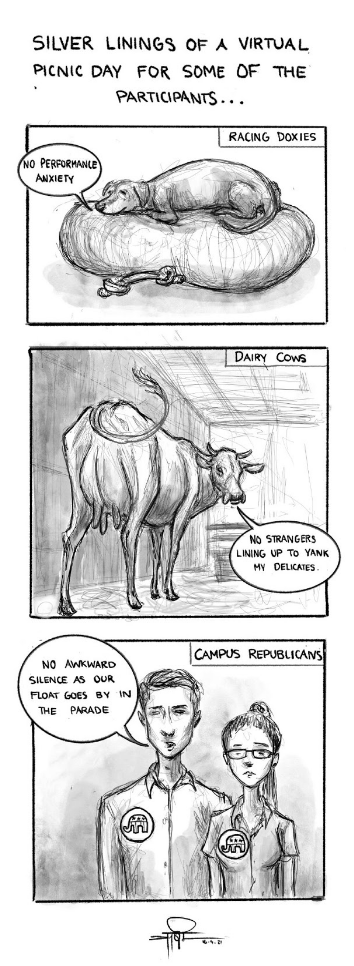
Picnic Day 2021: Discovering silver linings

0

Drawn by: Rushi Tawade –– rntawade@ucdavis.edu 
Disclaimer: (This cartoon is humor and/or satire, and its content is purely fictional. The story and names of “sources” are fictionalized.)

As the planet continues warming, corporations responsible for greenhouse gas emissions must take the lead in restoring the environment

0

We will all continue to feel the consequences of climate change if direct action is not taken immediately

In May 2019, the Breakthrough National Centre for Climate Restoration in Australia released a report on climate risk, detailing the possible environmental disasters that could take place by 2050 if we proceed to wreak havoc on the environment at the same rate we have been for the last 100-some years. The report, which uses models based on prior research to illustrate potential outcomes, outlines jarring scenarios—warnings, really—including mass human displacement, the collapsing of many ecosystems and even global food shortages. 

The causes of warmer temperatures due to climate change are mainly attributed to the increase of greenhouse gas emissions, which trap the heat radiating from Earth in our atmosphere. Human activity over the last century or so has led to the emission of several types of greenhouse gases, including carbon dioxide and methane, which make up most of greenhouse gases in the atmosphere. The three economic sectors that are responsible for the most greenhouse gas emissions are electricity and heat, agriculture, forestry and land use and industry. So, we’re pointing to the people in charge of these massive sectors to make a change. 

All of these sectors, of course, are necessary to sustain human life as we know it. Though humanity may need to adjust to a new lifestyle in an effort to protect the planet, it is not a matter of simply halting production in all those arenas but rather overhauling the way we go about them. To the major corporations responsible for providing these resources: It’s time to stop prioritizing profits at the expense of the environment and invest in renewable energy and other environmentally-conscious practices. The people making trillions of dollars off of climate change are responsible for increasing global temperatures, and as such have the most obligation—and means—to do something about it.

Despite the undeniable role these companies have both in creating and combating climate change, they have managed to convince citizens that it’s the individual’s responsibility to clean up after them. When the public began to realize that too much plastic waste was being produced in the 1980s, big oil companies that wanted to keep making money off of plastic funneled millions into advertising campaigns that touted its necessity and the ability to recycle it. This not only falsely justified continued production of plastic, but misled the public to believe that it could be reused, when very little scientific evidence found economic potential for repurposing plastic. 

Fast forward to today—many of us buy single-use plastic frequently and recycle it under the impression that we aren’t harming the environment, and if we don’t recycle, we blame ourselves for contributing to climate change. Not only has the plastic industry lied to us about the viability of plastic, but they’ve gotten us to believe that we’re the ones responsible for its effect on the environment, when in reality, they should have stopped producing it years ago. Producing plastic, attempting to repurpose it and incinerating plastic waste all contribute to greenhouse gas emissions, and tons of plastic waste find their way into ecosystems every year which can have devastating impacts on wildlife.

If changes aren’t made immediately, the catastrophic consequences will be realized, likely in our lifetimes. A warmer atmosphere means ice is melting and sea levels are rising, threatening low-lying coastal lands and islands and displacing those residents. Extreme weather events are increasing, from the record-breaking California fires to slower-moving hurricanes with intensified devastation in the areas they impact. 

And, as is the case with most systemic or structural issues, impoverished communities and people of color are most affected by climate change. A glaring example comes from Flint, Michigan, where the city switched their water source to one being poisoned by local industries in 2014, causing corrosion in water pipes that contaminated water with lead on its way into resident’s homes. Despite complaints from residents, it took over a year for officials to address the problem, and only in 2020 was the entire city receiving clean running water again. Flint is a low-income community with a population made up of 57% Black residents—richer, whiter areas would not have had to wait six years for restoration of such a basic necessity. 

As bleak as the future may seem, we can take steps on an individual level to combat the prospect of an uninhabitable planet. On a day-to-day level, making lifestyle choices like using reusable products, eating a more plant-based diet and shopping at eco-friendly and sustainable businesses can help create a culture that prioritizes protecting the environment. And as consumers, we can tell corporations what we want with our wallets—exclusively supporting environmentally-conscious businesses might be a wake-up call to those companies who haven’t committed to sustainability goals. 

Beyond everyday life, electing leaders and politicians who care about reversing climate change is an imperative step in this process. Individually, we do not pull as much weight as the corporations, but collectively we can make our voices heard at polling stations by electing officials who prioritize the climate crisis and can enact environmentally-friendly policy.

But we need to be more than just friendly to our planet. It gives us life, and, unfortunately, through things like extreme weather and pollution, can take it away just as easily. We need to treat Earth like it’s the only chance we have at survival—because it is. 

Written by: The Editorial Board

Yolo County pauses initiative distributing Johnson & Johnson vaccines to populations of individuals not currently housed in the area

0

Officials explain that the pause is a minor setback as individuals are given Pfizer or Moderna instead

Prior to April 13, when Yolo County reported that it was pausing the distribution of Johnson & Johnson (J&J) vaccines, it had been directing the J&J vaccines toward populations of individuals who are not currently housed in the area, including those experiencing homelessness, people who are homebound and agricultural workers.

Fourth & Hope is a Woodland organization that provides resources to individuals experiencing homelessness. Amara Pickens, its chief operations officer, said that the homeless facility is working with the county to set up an event to vaccinate its clients. As a part of this process, Fourth & Hope is providing COVID-19 tests to clients every Tuesday and is following COVID-19 protocols. 

“There were initially three vaccinated [individuals]—we have 54 clients at the moment,” Pickens said. “We’ve had another eight express an interest in signing up to get vaccinated. The County has reached out to us; we are planning a vaccination event for all of those that are interested in receiving the vaccine.”

Fourth & Hope staff can sign clients up through the normal process by facilitating appointments and assisting them with transportation, according to Pickens.

Pickens explained that the single-dose vaccine can be more convenient for individuals who are often moving from place to place.

“With our population being transient, there is a benefit potentially to a single-dose vaccine rather than a double dose,” Pickens said.

As of April 13, the J&J single-shot vaccine is no longer available, but individuals who are not currently housed in the area and other hard-to-reach populations will still be able to receive the Pfizer and Moderna vaccines, according to Yolo County District Four Supervisor Jim Provenza. 

Provenza explained that sometimes these individuals do not come back for a second shot, so the county will prioritize outreach to ensure individuals receive both doses.

“We’ll just have to double our efforts to make sure they come in the second time that we have the vaccines,” Provenza said. “We’re going to continue to prioritize homeless and other hard-to-reach populations; that’s a major priority right now.”

Yolo County Public Information Officer Jenny Tan highlighted that the County has always considered populations of individuals not currently housed in the area in its vaccination plans, rather than just the people who can drive to attend an event. 

“We’re really thinking about equity, thinking about everyone in our community, not just those that can come to an event,” Tan said via email.

Since the J&J shots were put on hold, any J&J in the vaccine schedule (including those for individuals not currently housed in the area) will be replaced with either Pfizer or Moderna.

Although J&J is paused, Tan explained that it will not drastically impact Yolo County’s vaccine timeline.

“We only received about 795 J&J doses for this week,” Tan said via email. “What it does mean is that there is more work on the back end as we’ll need to do second dose appointments/clinics.” 

Provenza explained that although the County is receiving increasing amounts of the vaccinations, the exact number varies each week. 

Provenza described how Yolo County plans to ensure that hard-to-reach populations are not left out of the vaccination plans. 

“We’re going to make a special effort to get to the homeless people, continue with the farm worker population, continue with people who live in areas where they don’t have access to the internet, help people sign up,” Provenza said.

Tan encouraged people to continue signing up for vaccines following the blood-clotting cases. The J&J shot is a viral vector vaccine, which has been rigorously studied to be safe and effective. The viral vector technology has also been used in Ebola outbreaks and for molecular biology research.

“Vaccines, including J&J, have been shown to be overwhelmingly safe and effective at preventing COVID-19,” Tan said via email.

Provenza explained that although the risks for the J&J vaccine are very low, he believes that pausing its distribution was warranted. 

“It’s very unlikely that there’s going to be serious problems with anyone in our county,” Provenza said. “But having said that, it makes sense to pause.”
Written by: Ellie Lee — city@theaggie.org

UC Davis researchers find that seagrasses can reduce the impact of ocean acidification

A recent study lead by scientists at the UC Davis Bodega Marine Laboratory reveals the seriousness of climate change and its impacts

A UC Davis study has provided evidence that seagrass meadows can do more than create homes for active ecosystems; they can buffer ocean acidification. The study, led by Aurora Ricart, included seven seagrass meadows from approximately 1000 km of the U.S. West Coast over a time period of six years. 

Ricart, the lead author of the paper published in the journal Global Change Biology, was involved in the project when she was a postdoctoral scholar at the UC Davis Bodega Marine Laboratory. Ricart is currently working at the Bigelow Laboratory for Ocean Sciences located in East Boothbay, Maine.

The driving force for Ricart and other researchers was to find a solution for reducing ocean acidification, a phenomenon caused by anthropogenic effects. Since climate change is happening now and will continue to worsen, the best thing to do is slow it down and mitigate its effects, according to Ricart.

The study was started by UC Davis researchers including Tessa Hill, a UC Davis professor in the Department of Earth and Planetary Sciences. When it was proposed that seagrasses were a way to buffer ocean acidification, Hill and other researchers collected part of the data and tested the methodology. Ricart was recruited three years later in 2017 to analyze and interpret the data because of her expertise in seagrass ecology.

The main implications of the study focus on management and policy, according to Ricart.

“I really hope this work opens the door to ask questions on conservation and restoration on seagrass ecosystems and natural ecosystems that can really help us to deal with climate change effects,” Ricart said.

This is the largest study done on seagrass meadows, according to Hill. Researchers documented the seagrass’ ability to modify the local environment and noticed that over time, ocean acidification around these beds had significantly been reduced. 

“It has the power of millions of data points that show these trends that seagrass beds improve the environment within and around them when it comes to carbon and climate change,” Hill said.

Now, the state of California and conservation groups that are interested in protecting seagrass meadows have even more evidence that these areas need to be preserved. Prior to the study, most evidence that seagrass benefited its local ecosystem centered around how the plant provides a good habitat for young organisms, such as dungeness crab, and acts as a filter to remove pollutants. Through this study, it has been determined that seagrass removes carbon dioxide from the water through photosynthesis and protects the aquatic community from ocean acidification, according to Hill.

Melissa Ward, a UC Davis graduate student researcher at the time of the study and currently a postdoctoral researcher at San Diego State University, assisted in the field operations of the project. This consisted of preparing the equipment, gathering a team of divers, coordinating with whoever was at the site and showing up with all the equipment. It also included deploying water chemistry sensors into the seagrass meadow and pulling them out, driving back to the lab, cleaning them up and pulling the data from the sensors, according to Ward.

The deployment process of the sensors was about a month long. This meant several weeks of preparation at the lab to prime the sensors and get them ready.

“[The sensors] are the most needy pieces of equipment. I felt like I was babysitting,” Ward said.

The sensors had to get accustomed to the seawater they were going to be in and were put in tanks while being transported to keep them wet on the way to the field site. Float-bags were attached to the heavy sensors so the divers would have an easier time placing them in the seagrass meadow. Divers would deflate the bag to lower the sensors carefully into the water. The sensors are held by anchors screwed to the sediment of the seafloor.

“The whole process was exhausting but super fun,” Ward said.

Priya Shukla, a Ph.D. candidate at UC Davis, participated in the study when she was a lab manager for the Bodega Ocean Acidification Research Group. Along with being a co-author on the published paper, Shukla helped collect water samples and processed them to get an accurate reading of seawater chemistry. 

“The two things I was specifically doing was measuring pH and alkalinity,” Shukla said.

Shukla was interested in how the presence of seagrass beds in the proximity of oyster farms and reefs could actually help the oysters build their shells. Restoring the seagrass beds and other ocean ecosystems could have strong benefits for coastal communities and economies, according to Shukla.

“Restoring ocean ecosystems isn’t just a conservation goal; it could actually be a humanitarian goal because it can make a difference for humans across the planet because the ocean certainly has a strong role in the planetary climate,” Shukla said. 
Written by: Francheska Torres —science@theaggie.org

Senate Bill #70 passed at April 8 ASUCD senate meeting

0

The ASUCD senators voted to support Fair Trade and environmentally sustainable  products on campus and in the Davis community

The April 8 ASUCD senate meeting was called to order at 6:10 p.m. by Internal Vice President Emily Barneond. 

Controller Alexis Lopez-Perez was late.

Sarah Theubet, the chair of the Disability Rights Advisory Committee (DRAC), presented the respective nominations for DRAC. The nominees included Stephanie Loera, Sydney Wren, Kris Matas, Katrina Zara and Julia Shurman. Each nominee introduced themselves and their qualifications for the role.

In light of World Autism Month, Senator Kristin Mifsud asked if the committee had any potential projects in mind pertaining to autism awareness.

“I think that it’s really important to educate people about [autism],” Zara said. “We want to create a newsletter—that’s in the works. It will promote awareness and education for the public.”

The nominees were unanimously confirmed as DRAC members.

Tariq Azim, the chairman of the Transfer, Reentry and Veterans Committee (TRVC), then introduced the TRVC committee member nominees and provided their respective qualifications. Nominee Juliana Olivera was present at the meeting and the other two nominees were absent. All nominees were confirmed as committee members.

President Kyle Krueger then introduced the Fall Planning Task Force. The task force includes campus stakeholders, faculty and students who are planning the academic and operational aspects of the 2021 Fall Quarter. The task force members at the senate meeting included Ari Kelman, the interim dean of the College of Letters and Science; Cynthia Ching, the interim provost and dean for undergraduate education at UC Davis; Jason Stewart, the assistant director of institutional analysis; and Pablo Reguerín, the vice chancellor of student affairs. 

Krueger then facilitated a conversation between senators and the task force members present to address concerns regarding what Fall Quarter will look like for students.

“Right now, it seems like not only our campus, but all of the UC campuses are pointing toward being back in person in the fall,” Kelman said. “There will still need to be a certain number of courses that are going to be taught remotely.”

When asked whether COVID-19 vaccination will be a requirement for students, Reguerín responded that it is very likely that there will be a vaccine mandate for students. 

Reguerín added that unvaccinated students are likely going to be tested weekly. However, vaccinated students may not have the same requirement depending on the effectiveness of other testing methods, such as wastewater analysis. 

Senator Annoushqa Bobde asked what accommodations are in place for international students who may not be able to travel to the U.S. for Fall Quarter.

“We need to see if what we need to create is a series of smaller individualized solutions or if there can be some large solutions that would apply to a larger group,” Ching said.

Bobde replied that the best ways to support international students include exam windows of 24 hours, flexible office hours and alternative ways to receive participation points outside of live lectures and sections.

Ching shared that the Academic Senate will be meeting with faculty to determine which professors are willing to teach asynchronously and in-person classes simultaneously. 

She also shared that the Academic Senate is forming a separate subcommittee on international student issues and instruction to better serve those students.

Senator Ryan Manriquez raised concerns over proctored exams contributing to stress and discrimination for students with disabilities.

“One of the questions that was asked to me [while taking a proctored exam] was, ‘Can you lift up your laptop and show us your work area?’” Manriquez said. “That question is inherently ableist because someone with a physical disability, like myself, is not able to do those simple tasks that someone who is able-bodied would do super quickly.”

Ching responded that every quarter, the Academic Senate sends out a strong recommendation to faculty to avoid using electronic proctoring during exams and shares recommendations for other types of assessments. 

Kelman said that in the fall, first-tier physical exercise activities will be offered such as swimming lessons and self-defense, at no additional cost to the student. 

Barneond then introduced SB #72, a bill to adjust the ASUCD reserves structure to better reflect the needs and services referendum. The bill was assigned to the Internal Affairs Commission, the Academic Affairs Commission and the Environmental Policy and Planning Commission (EPPC) to be reviewed. 

The table then moved to SB #69, and Senator Maahum Shahab shared her authors’ comments.

“This amendment proposes a housing commission [that will] be ASUCD’s representative and lead strategist when it comes to all housing and student housing advocacy efforts,” Shahab said.

Currently, several branches of ASUCD are addressing housing efforts, which are focused in very niche, specialized areas. This bill will centralize those efforts and better mobilize student voices, according to Shahab.

Senator Lauren Smith voiced concern that the commission might not be active enough as the housing committee vacancy was posted several times with no interest. Smith advocated for utilizing the resources that already exist.

Allie O’Brien, the co-founder of Aggie House, shared some statistics on the student population the housing commission would be supporting.

“Annually, over 2,000 students experience homelessness,” O’Brien said. “[Additionally], 3% of our student population at some point will be in a car, living in shelters, couchsurfing in living spaces that are not meant to be homes, and 7% experience homelessness. Almost one-fifth of students experience housing insecurity.”

The commission would be advocating for the construction of more student housing to help offset the steep cost of housing in Davis, which has tripled in the past decade, according to O’Brien.

Mifsud echoed the thoughts of several senators by stating that she could not support the bill as it stood and voiced evaluating and expanding the advocacy already in place.

The bill was voted on, and due to a tie, SB #69 was tabled.

Senate Bill #70 was then brought to the table and was introduced by author Sydney Cliff, an EPPC member.

“As a fair trade university, UC Davis will demonstrate a commitment to sustainability and continue to educate the campus community about Fair Trade,” Cliff said. “[They hope to] inspire other institutions and organizations to support Fair Trade and enhance [UC Davis’] image as a leader in sustainability and social justice issues, while working with student housing and dining services.”

The bill will establish a long-term plan to increase the use of Fair Trade products and support Davis vendors that are environmentally responsible, according to Cliff.

SB #70 passed unanimously.

Barneond adjourned the meeting at 10:46 p.m.
Written by: Maddie Duley — campus@theaggie.org