55.9 F
Davis

Davis, California

Tuesday, December 23, 2025
Home Blog Page 271

New human biology major to be offered starting fall 2021

0

Professors Aldrin Gomes and Ken Kaplan give insight into the major’s unique opportunities and subject matter

The new human biology major is currently only open by lottery to College of Biological Sciences students who entered UC Davis as freshmen and have met other requirements detailed on the major’s website—200 students will be admitted into the major starting fall 2021.

Professor Ken Kaplan, the vice-chair of the Department of Molecular and Cellular Biology, and Professor Aldrin Gomes co-created the major, which will be offered to students with second-year status. According to Kaplan, human biology is a topic central to biological sciences that hasn’t been given a sufficient platform at UC Davis.

“A lot of us in biology think all the time about human biology whether we study model organisms or not, so it’s central to how we think, and I think there’s a recognized need to help students see that,” Kaplan said. “[We’ve] got micro[biology] majors, neurobiology majors and cell biology majors and they all study different organisms, but this is an opportunity to really focus our teaching on human systems in a way that we haven’t had a chance to do.”

Jasmine Taros, a second-year biological sciences major, said she had been considering other majors as she approached her third year at UC Davis and wished she could apply to a major that involved the human side of biology.

“I was thinking about cell bio and I was even thinking to myself, ‘I wish they had a human bio major,’ because ever since a young age, I’ve always liked bio but […] always liked the chapters that have to do with the human bio rather than the plant part,” Taros said.

Professor Aldrin Gomes, the vice-chair of the neurobiology, physiology and behavior (NPB) major, believes that the new major will allow students to take more diverse biology classes than other majors in the college.

“We wanted something where students can actually have access to anything in other majors that they thought [was] very useful for them going forward,” Gomes said. “For example, in a microbiology lab, if a student was only an NPB major, […] it wouldn’t give credit toward [their] major,” Gomes said. “Now, they can still do things like that and get credit toward the major.”

One of Kaplan’s motivations for wanting to implement the human biology major was that it integrates a wide array of laboratory subjects, whereas labs in other College of Biological Sciences majors have a more narrow focus.   

“To me, one thing that’s super exciting is that now, students can satisfy their laboratory requirements […] choosing from this menu of really exciting laboratory courses that span microbiology, biochemistry, physiology,” Kaplan said. “There’s just so many opportunities for them to pick from these laboratory choices that they may not have had access to before.”

As a part of most majors within the College of Biological Sciences, students will take certain upper-division restricted electives pertaining to their major. According to Kaplan, the new major’s restricted electives will incorporate both the natural science and social science concepts necessary to understand human biology. 

“We will have courses from anthropology introduced as one of those restrictive electives, so not only do they get courses that we’re used to teaching here, but they’re going to get exposed to human biology from different perspectives across the university,” Kaplan said. “My vision is that we continue to work on bringing in those kinds of courses from outside because human biology is more than just the molecules and the genes and the proteins and the organs, it’s also how it affects society, […] medicine and policy.” 

Gomes said that he and Kaplan plan to increase the number of students in the major after five years.

“The tentative plan was for five years at a cap of 200 because we want to give a good experience to students and if problems arise, we want to be able to handle it and get a well-oiled major before we start to let everyone who wants to do it in,” Gomes said.

Gomes and Kaplan plan to continue revising the major as it progresses.

“It allows us now to leverage the strengths of all the departments instead of just one department to really create something that is like a live-in document which you continue to improve, and in future years, we’re actually thinking about specific courses to add that will add value to the major,” Gomes said.
Written by: Lyra Farrell — features@theaggie.org

‘Fearless (Taylor’s Version)’ is a success despite unsavory reasoning behind its release

0

Why the singer re-recorded her album and why we’re so glad she did

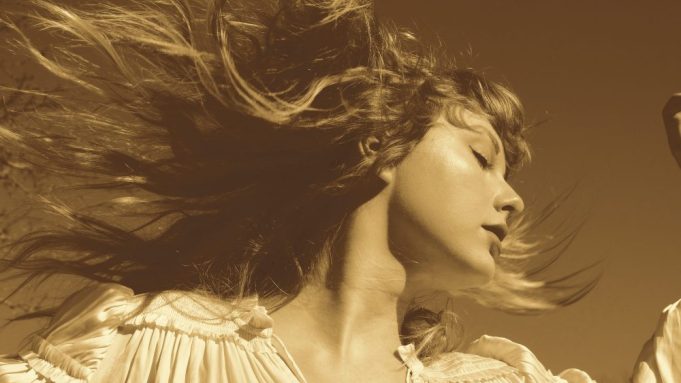
When artist Taylor Swift posted a message on her Tumblr regarding CEO of Big Machine Records Scott Borchetta refusing to sell her the masters to her music without conditions, many of her fans’ hearts sank. They were left in a moral dilemma where they didn’t want Borchetta or Scooter Braun, the owner of Big Machine (better known as a record executive and music manager), to gain any money from her life’s work, but they loved her music and wanted to continue to listen to it. So Swift, being the savvy business woman she is, decided to re-record her masters once enough time had passed, making it legal to do so. 

But before we get into dissecting “Fearless (Taylor’s Version),” let’s learn a little Swift history. When Swift first started working with Borchetta (her then manager) back in 2005, she was 15. When she finally got out of the contract, she was in her late 20s. Swift wanted to buy back her masters, but instead of giving her a price, Borchetta gave her the alternate deal of being able to ‘earn’ back each album with every new album that she created under Big Machine Records. After being locked in with a recording company for 13 years that owned her music, Swift refused. But the true drama didn’t unfold until Swift discovered who was buying Big Machine Records: Scooter Braun, a man who has had previous drama with Swift. Swift then wrote that post on Tumblr, proclaiming that this situation was her “worst case scenario,” but as much as fans attacked and begged, Borchetta wasn’t budging and Swift never bought back her masters. 

Fast forward to November of 2020, Shamrock Holdings, a private equity firm, bought her masters from Braun. In an aim to be fully transparent with the fans, Swift released a statement on Twitter in addition to the letter she sent to the company. The company let Swift know of the deal after it was done, but because Braun would still profit from her music, she refused to work with them. This is where the re-recordings come in. While there were doubters who thought her re-recordings were pointless, she proved them wrong and set a record as the first artist to release nine albums that each garnered at least 500,000 sales in a week. 

The “Fearless” album definitely isn’t my favorite of Swift’s discography. I will admit that it’s because I’m not a fan of country music. So while listening to “Fearless (Taylor’s Version),” I had to take a step back and remove my country-hating bias in order to assess the album well. While this album does have more of a country pop focus than pure country, I still can’t count it as one of my favorites. Don’t get me wrong, there are a few songs on the album that I’ve always loved, including “The Way I Loved You” and “Forever and Always,” but those songs didn’t outweigh the country tone of the album. 

The “Fearless (Taylor’s Version)” album sounds the same to a casual fan, but those that have listened to the original album on repeat, knowing every lyric and who each song is about, notice subtle changes in her tone and lyrics. For the most part, the songs sound identical, which is a mind boggling concept considering that if she had no copies of her original tracks, she probably would have had to sit down and listen to her old album numerous times to get them to sound exactly the same. One apparent difference is that her voice does sound more mature, but that was to be expected 12 and half years after the original release. When “Fearless” was released, Swift was 18 and just beginning her career—now, at 31, with many years and concerts under her belt, her voice is bound to sound a bit different. Where listeners could once hear the effort it took to sing certain notes, fans can listen to the effortless tone in Swift’s songs.

What I was most excited about with the re-recordings were the previously unreleased songs she labels “From The Vault.” I was never the type to look for unreleased songs on YouTube, so all of her “From The Vault” songs were ones that I had never heard before, and I was looking to see what songs didn’t make the cut the first time around. One of her first new songs that was released as a single was “Mr. Perfectly Fine (From The Vault),” and I am in love with it. There’s something about a 31-year-old Swift singing the playful (yet heartbreaking) lyrics that a young teenage Swift wrote when a breakup was ripping her to shreds. For reference, with this album a good number the songs are about the musician Joe Jonas, who is now good friends with Swift—she even sent his baby a blanket. This is what’s great about having the re-recordings—so many of the songs are whispers of what Swift once felt, and fans can rest knowing she’s in a much more peaceful place now.

Swift brought six new songs from the vault on Taylor’s Version, and fans are eagerly learning every lyric. One of those songs is “That’s When (From The Vault)” featuring artist Keith Urban, which is climbing its way into my heart. It’s a playful song that I can’t imagine Swift writing now, when I’m so used to her storytelling. I love hearing what could have been on this album so long ago; it feels like we are getting to know more of Swift when she was young and how she felt. 

In addition to the new songs on her album, she also added in some twists on her original setlist that came as a welcomed surprise. Her new rendition of “Forever and Always” as a piano version made me appreciate the song so much more. I was so used to hearing the song with its happy, dance-y sound that I didn’t get to appreciate it as a song about the devastating pain that is teenage heartache. 

It’s also so nice to be able to absorb these songs as if it were the first time you were hearing them. When the album first came out, I was nine, and didn’t know how to feel lyrics for what they were. I just sang along to “You Belong With Me” because it was catchy. These new songs, and realizing what was always there that I just didn’t pick up on, only reminds me how much her writing has grown over the years. While her songs were always catchy and I was always a fan, the elegance that her newer albums hold with their imagery and storylines is astounding. Whether it’s with “Fearless (Taylor’s Version)” or “Folklore,” I’m here for the new Taylor. 

Written by: Itzelth Gamboa — arts@theaggie.org

UC Davis Women’s Water Polo team prepares to finish off their season

0

After last year was cut short, the motivated Aggies enter tournament season with a clear goal

The No. 10 ranked UC Davis women’s water polo team is now entering the final frame of their regular season and in what’s been a whirlwind year, there is a lot to take away. After having their season cut short last year due to COVID-19, the Aggies have been back in the pool this impressive season. 

After rising COVID-19 cases hit the country hard during the fall and winter months, it was doubtful that there would even be a season. Up until January, the team’s training consisted of only distanced swimming and leg work. When they were cleared to incorporate passing and balls into their training, county guidelines eventually loosened and since then, the situation progressively got better. Still, the long road it took to work up to the season was not an easy task for all involved—it was one of uncertainty.

“It was a week by week thing [during the offseason],” said head coach Jamey Wright, who is coaching in his 36th season. “[The team] enjoys training and enjoys each other’s company. I think those two things really got us through those tough times. You don’t know if you’re going to have any games. There’s a lot of questions in your head like ‘why am I working so hard?’”

For the players, trying to recreate the normal team feel was not easy. With all protocols in place, building that team chemistry during a pandemic was difficult. 

“It was pretty tough in the beginning,” said junior attacker and psychology major Emily Aikema. “We had a lot of team meetings together, we did team bonding, everything we could—obviously socially distanced. We just have a good team and a really dedicated group of girls this season.”

When the team got the green light to play a season, it was time to get to work. Getting tested three times a week and 48 hours before a game, the protocols were set for the Aggies to begin their water polo season. In their first taste of action after almost a year, the team hosted No.11 Fresno State at the Schaal Aquatics Center in Davis on Feb. 13. In a close matchup, UC Davis fell in overtime 11-12, but were able to see them once again in a doubleheader two weeks later—this time in Fresno. After falling in the first leg of the double header, the team was able to finally knock them off, earning their first win of the season, 10-7.

“I was honestly surprised that we were going to have a season,” Aikema said. “I’m very grateful that we had a season and I know a lot of other girls [on the team] are very grateful as well. It’s just really nice playing with a team that gets along and all want the same goal.”

Having been in a rhythm and practicing full-on now, the team began to find their groove. In a span of two weeks, the Aggies were able to put together four straight impressive wins against ranked teams. They beat No. 17 Pacific University twice, No. 15 San Jose State and upset No. 4 ranked UC Irvine in the first leg of the doubleheader on March 12. Despite losing the second leg, the Aggies’ big wins in previous weeks began to draw the national spotlight, as they climbed the rankings. A split against No. 9 UC Santa Barbara on March 21 followed by a sweep of Long Beach State a week later, gave them their eighth win of the season as they closed the month of March. 

As with many things in life during the pandemic, the team had to make many adjustments this season, especially in regard to travel. In a normal season, there are events held in one location where many teams meet throughout a weekend and play on a neutral site. There are also occasions when the team has to travel both in state and out of state. This year, in an effort to reduce travel and stays, most games have been doubleheaders played the same day. Aside from their trip to Santa Barbara and their upcoming trip to Hawai’i, the Aggies have been able to avoid overnight trips this year, a much different experience than they are used to.

Against No. 8 ranked UC San Diego, the Aggies were able to again achieve a split, moving to their ninth win of the year—surpassing last year’s shortened season’s total. On April 17, the team hosted Fresno Pacific in a doubleheader, beating them handedly both times, by scores of 17-2 and 13-5 respectively. With only two games remaining in the season at Hawai’i, UC Davis is shaping up to be a force as they enter the Big West Tournament. 

The team’s solid defense and scoring have catapulted UC Davis to the edge of the top 10 in the Collegiate Water Polo Association rankings. Led by center and sophomore human development major Noelle Wijnbelt who has 28 goals, the Aggies have been able to outscore their opponents by a total of 141-130. Aikema has also played a major role this year, as the junior has 35 total points thus far. The team as a whole has eight players in double digits, a sign that their scoring strength is fairly spread out. Even during all this success and a much better year in terms of wins than last year, head coach Jamey Wright is still taking it on a weekly basis, as the team approaches the end of the regular season. 

“In a strange way, I’m still kind of holding my breath,” Wright said. “Just two weeks ago, [UC] Santa Barabara, who is in our conference, suddenly had a group of people test positive [for COVID-19] and had to cancel the rest of their season. We’re only 10 yards from the safe ground but any step can be your last one. We just keep applauding our team ‘way to stay safe and keep staying safe.’”

With only two games remaining until the Big West Conference Tournament, the Aggies hope to make it back to the NCAA Tournament—a place they haven’t gone since the 2008 season where they finished fourth. They will finish playing 18 games, two less than last year’s season which was cut short. Regardless, this has been one of the most memorable seasons thus far in the careers of not only the players, but the coaches. 

“This feels like all of a sudden it’s April. How did that happen? It was so quick,” Wright said. “It’s just a great group. We’re relatively young, but I’m just so proud of them with how well they followed the rules and followed the protocols [this year].”
Written by: Omar Navarro — sports@theaggie.org

The Editorial Board expresses its support for the federal legalization of marijuana

0

Federal legalization should be equity-based and confront criminal justice and economic inequities

With this Tuesday marking 4/20, the Editorial Board wants to express its support of the federal legalization of marijuana—Senate Majority Leader Chuck Schumer recently announced that he and other senators are drafting a bill to “end the federal prohibition of marijuana.” 

The federal government currently classifies marijuana as a Schedule 1 drug under the Controlled Substances Act. Schedule 1 is the most severe drug tier; cocaine and meth are Schedule 2. If this classification strikes you as too severe, that’s because it is—racism against Mexican immigrants in the 1930s and Black people during the War on Drugs drove marijuana’s classification as a dangerous drug. 

Details of the bill have not yet been announced, and it remains unclear if it will federally legalize marijuana or decriminalize it, although Schumer said in an interview that it’s leaning towards legalization. 

The distinction between legalization and decriminalization is important since they have different impacts on arrest rates and marijuana equity. Legalization means that marijuana can be legally sold and taxed, and adults of a certain age are able to possess and use it recreationally. Under decriminalization, marijuana remains illegal to sell and possess, but the crime of possessing certain amounts of marijuana is reduced from criminal charges to civil fines. 

Federal legalization and decriminalization are both steps in the right direction, but the Editorial Board supports legalization because of the greater number of benefits it’s associated with, including lower arrest rates, legal avenues for selling marijuana and the ability to use it recreationally. 

It is well-known by now that marijuana legalization provides states with economic benefits and individuals with medicinal benefits. The Editorial Board believes that the most important component of federal legalization is addressing past injustices against low-income communities and people of color caused by marijuana’s strict criminalization.

Although white and Black people consume marijuana at similar rates, Black individuals were 3.6 times more likely to be arrested for marijuana possession than white individuals from 2010 to 2018. In that same time period, states that had either legalized or decriminalized marijuana had lower marijuana-related arrest rates than those that did neither, but arrest rates were still eight times higher in states that had decriminalized it as opposed to states that had legalized it. 

Despite being associated with lower arrest rates, racial disparities are still prominent in states that have either legalized or decriminalized marijuana. Therefore, the federal government cannot stop at legalization or decriminalization—it must pass other racial equity-based reform that addresses legal and economic injustices. Decreasing over-policing in neighborhoods of color and further reforming the criminal justice system could diminish the racial disparities in marijuana-related arrest rates. 

To confront criminal justice inequities, it is vital that any legalization or decriminalization bill also mandates that individuals currently serving time for marijuana-related crimes that would fall under decriminalization are released and have their records expunged. Those who have already served time for the newly-legal infractions must also have their records expunged.

Schumer is already looking towards economic injustices, pledging that the bill will favor small marijuana-related businesses located within communities of color over large alcohol and tobacco companies. Despite his acknowledgement of this economic injustice as a problem, Congress will have to follow through in order to ensure that the growing marijuana industry doesn’t exclude the people of color whom marijuana was weaponized against. 

The bill must include that people with felonies (especially marijuana-related felonies) are able to own and operate legal dispensaries. U.S. legislators also have a responsibility to pass the Secure and Fair Enforcement Banking Act, which would enable banks to legally serve certified dispensaries. Opening a dispensary costs about $250,000, and allowing banks to give loans to hopeful dispensary owners would increase equity for people of color, who hold significantly less wealth than their white counterparts.

And even if these actions are taken, there is still so much work to be done. Even in states that have legalized marijuana, businesses can randomly drug test employees when it isn’t relevant to their job, which is problematic since marijuana can be detected in a person’s urine up to 30 days after ingesting it. 

The Editorial Board urges everyone to educate themselves about marijuana-related racial disparities and advocate for equity-based legislation. And if you’re purchasing marijuana products, consider buying from a local dispensary owned by a person of color, such as Crystal Nugs in Sacramento or one of these businesses if you’re not in the area. 

Written by: The Editorial Board

Thrifting and vintage shopping during COVID-19

0

From antique fairs, vintage markets and flea markets, three organizations describe their practices during the pandemic

By FARRAH BALLOU — features@aggie.org

With 80s, 90s and early 2000s fashion trends reemerging in popular culture, social media posts and videos have begun publicizing the process and experience of finding unique items in thrift stores and markets. 

Marolyn Rose, the owner and operator of the Sacramento Antique Faire, noted that though secondhand goods have always been popular, she has seen an uptick in popularity which she attributed to online platforms and their influences. 

“I can’t believe how popular 80s and 90s clothing are, and we have a huge group of young people that are social media driven,” Rose said. 

Sacramento Antique Faire

A tradition for years, this fair is located in Sacramento and brings dozens of vendors together for its monthly showing of antiques that are at least 20 years old. From textiles to clothes and garden decor, Rose described how the fair sells a diverse range of goods that originate from all over the globe. 

For Rose, this event is especially important due to the dedication that she consistently sees from the vendors. 

“What makes it the most special are the vendors,” Rose said. “They are very hardworking people. I remember as a child a certain work ethic that I saw all around me, and these people just work incredibly hard.”

She noted that vendors are constantly traveling, shopping for these goods and setting up early on the mornings of the fair. 

Rose further emphasized that the event provides an alternative place for goods to be sold instead of going to landfills, while also allowing customers to have access to a large quantity of handmade goods. 

In addition to simply selling objects, Rose said that she has many emotions and memories tied to the experience. 

“It’s just nostalgic because everyone that comes to the fair will see something that they remember from their childhood and they’ll say, ‘Oh my grandmother had that,’ or, ‘My mom had that,’” Rose said. 

She even recalled a special time where a man coincidentally found a University of Southern California (USC) trophy that honored one of his father’s accomplishments when he attended the university. 

Rose stated that the Faire offers the unique opportunity to gain a glimpse into the past and recall moments that may have been present in one’s life. 

In terms of COVID-19, the fair was closed for the second half of 2020 but recently reopened with shifts into the new tiers. Rose noted that the fair has adopted COVID-19 protocols by enforcing social distancing rules, removing eating tables and following the mask mandate. 

Rose encouraged everyone to attend because of the fair’s unique objects and welcoming vendors. 

“Anyone considering coming, whether they like old stuff or not, they should just for the experience,” Rose said. “It’s kind of like going to a museum.”

Folsom Boulevard Flea Market

Suzanna Berger, the owner of the Folsom Boulevard Flea Market, described this event as a diverse market that has been active for over 50 years. She mentioned that the market does sell new and used clothes, used books and antique items. Even pallets of Amazon items and Costco returns can be found at the market. The market encompasses a large range of items such as makeup, plants and household goods. Berger also noted a nostalgic feeling that emanates from the market where many unique products are sold. 

“You can find just about anything at Folsom Blvd Flea Market,” Berger said via email. 

The market is open every Saturday and Sunday, rain or shine and is set up in four barns with each barn containing 10 to 15 unique stores. Here, the vendors set up shop where popular items like produce, goods and tools are sold.

“I personally love looking at what the daily vendors bring in to sell as it is like going to several garage sales in one place,” Berger said via email. “You never know what you will find.”

To maintain safety during COVID-19, Berger explained that vendors and customers are required to wear masks, there are limited tables at the food court which are spaced six feet apart and the market is continuously cleaned. 

Ultimately, she emphasized that the variety of unique objects present makes the market a worthwhile visit. 

“There is great food, necessities and just all around good stuff,” Berger said via email. 

Davis Craft and Vintage Market

Though the Davis Craft and Vintage Market was also heavily impacted due to COVID-19, Debora Ariola, the director of the market, said that the event’s gradual reopening process began with the holiday season of 2020. 

Ariola described how the market carries a vast assortment of goods from vintage to handmade crafts. In the vintage realm, she described a diverse selection of jewelry, kitchen goods and clothes that are available to customers. There is also a large variety of crafts ranging from pottery, graphic art and knitted products. 

Her booth, “Recollections,” is influenced by the feeling of nostalgia and connection that is incited when people see past objects that their family may have owned.

“When people come to my table and see something that their mother had or their grandfather had and they connect with it emotionally, that’s what I get out of it,” Ariola said. “It’s almost like I’m putting things out there for people to rediscover or have a connection to.”

She also remembered a notable moment where she was selling an Army Aircorp World War II sweetheart locket that contained a picture with an officer and his sweetheart inside. 

“You see that and you can’t help but just want to connect to that emotion or the sweetness of that,” Ariola stated. 

The locket was later purchased by a U.S. history teacher who believed that it would be applicable to his history discussions. 

As the market reopens, Ariola described the safety precautions they are undertaking to keep customers and vendors safe. They are practicing social distancing with spaced vendors, hand sanitizer bottles on the tables and posted signs to ensure mask wearing. When the market reopened during the holidays, the usual presence of live music was not possible due to county mandates. Now, Ariola looks forward to the fact that they can reintroduce live music to the market. 

With the easing of restrictions, Ariola encouraged people to visit the market as a way to reconnect with life. 

“We all need to get out,” Ariola said. “It has become too easy for folks and we readapted to our caves a little bit too well sometimes. We need to get out and this is a way to brighten your day and reconnect to society.”

Written by: Farrah Ballou — features@theaggie.org


Police logs

0

Stop moving furniture—I’m trying to sleep!

March 26

“In parking structure, 10-11 cars up there possibly partying, loud music, nothing seen.”

“Noise complaint. Sounds like they are moving furniture.”

March 27

“Several subjects in hot tub, talking loudly and playing music.”

March 28
“Complaint of live band in backyard.”

March 31

“Male with stop sign standing in the roadway attempting to direct traffic.”

April 2

“Coyote sitting in the field along the fenceline.”

“Group of juniors riding electric bikes on campus.”

April 7

“Approximately 6 or more subjects partying in backyard, playing beer pong, yelling.”

UC Davis researchers examine the severity of the effects of smoke taint on California wine

Climate change is one factor that may impact the quality of wine production

By: FRANCHESKA TORRES – science@theaggie.org

While wildfires are often known for the devastating effects they impart on local communities, few realize the wider impacts they can have on industries throughout California. In terms of the wine industry, grapes’ exposure to smoke in the air has the potential to ruin the wine product by giving it an unwanted smoky flavor, according to UC Davis researchers.

A smoky flavor is often satisfactory for customers when aging the wine in wooden barrels, according to Anita Oberholster, a cooperative extension enology specialist at UC Davis. However, like many other good things, too much can create a negative effect. 

The smoke from nearby wildfires will cause an increase of that smoky flavor and tarnish the flavor of the wine, according to Oberholster. This leads wine growers to question what the risk is when their harvest is exposed to smoky conditions.

“If you have smoke that is less than 24 hours old, you have high risk,” Oberholster said. “If it is more than 24 hours old, the risk decreases significantly.”

Volatile phenols, the compounds that are released when wood burns, break down quickly and absorb into ash. This extends their lifetime and allows them to absorb into the grapes. The density of smoke relatively correlates to smoke risk if the smoke is really fresh, according to Oberholster. After the smoke has been in the air for a while, the correlation decreases. 

“Just because you see there’s grapes on a vine and smoke in the vineyard, that doesn’t mean anything,” Oberholster said.

It should not be assumed that the grapes will be impacted since the compounds released from the fires cannot be seen with the naked eye. The smoke in the vineyard can just be particulate matter suspended in the air, which is not harmful to the berries, according to Oberholster.

When the grape absorbs all the free volatile phenols in the air, it oscillates these compounds as a defense mechanism, releasing sugars on the fruit. It is believed that the bound, smoke-impacted compounds are released by bacterial enzymes in human saliva, which contribute to the character of smoke taint that affects the taste of the wine.

Raul Cauduro Girardello, a postdoctoral student in the UC Davis Department of Viticulture and Enology, works in Oberholster’s lab. He was present with Oberholster at the Oakville Experimental Station in 2017 when there were wildfires causing smoky conditions in the vineyard.

“This was around the time Anita started thinking about doing smoke taint research,” Girardello said.

Girardello was conducting an experiment at the time and lost part of it due to the grapes being impacted by the smoke. This was the first day that Girardello and Oberholster noticed that smoke was impacting the quality of the wine.

While not directly involved with the research on smoke taint, Girardello’s role in the Oberholster lab includes making the wine, harvesting the grapes and choosing sites to draw samples from, depending on smoke exposure from fires.

Girardello is working with clones of grape vines that produce the popular wines Cabernet Sauvignon and Merlot. The clones have the same genetics but have different characteristics, such as color. 

“My research involves climate change indirectly,” Girardello said.

The effect of climate change on the vines is studied in harvests throughout different seasons. A comparison is made between the different years on how dry and hot the season is, according to Girardello. For example, when there are heat waves, the method of controlling water irrigation is studied and observations are made to determine if adding more water will decrease the impact from the unusually hot temperatures.

Another researcher interested in how climate change affects grapes is Kaan Kurtural, a professor of viticulture at UC Davis who conducts research on rootstocks and clone combinations that display potential in achieving drought tolerance. His research on this topic is ongoing and results are yet to be determined.

Kurtural also works with the Oakville Station by conducting trials on how climate change affects wine production. One of the trials consists of the production of Cabernet Sauvignon. The grapes grown for this wine are protected from the sun by shades that filter different spectra of solar radiation. Examples of the light filtered are ultraviolet A, C and infrared light. The purpose of these different filtrations is to compare the responses of the plants to each one, according to Kurtural.

Kurtural is not worried about climate change affecting the production of grapes due to the many technologies being invented that allow them to be grown almost anywhere in California.

“We are not going to run out of grapes anytime soon,” Kurtural said.
Written by: Francheska Torres — science@theaggie.org

The best documentaries on Netflix

0

From unsolved crimes to the darkest depths of the seafood industry 

By ITZELTH GAMBOA — arts@theaggie.org

Seaspiracy 

The most recent documentary that stirred my point-of-view was “Seaspiracy.” The title broken up says “sea’s piracy,” which is what the documentary explores. I’ve always been interested in marine animals—huge creatures that are simultaneously beautiful and terrifying. When I first saw the intro for “Seaspiracy,” I figured it would talk a little more about the animals and how they are affected by climate change or pollution, but instead, the film focuses on the problems in the seafood industry that I previously wasn’t aware of. 

The documentarian’s intention was to share his love for the ocean and its creatures through “Seaspiracy.” As mentioned in the documentary, he wanted everyone to experience the beauty that he saw within nature’s largest animals. But as he was filming, he soon fell into a rabbit hole that landed him in the middle of the negative effects of the seafood industry. 

The documentary explores issues within the industry such as whaling and bycatch, both of which I knew existed but never did my own research on. The documentary also investigates dolphin-safe labels and their inability to guarantee that there are no dolphins found in bycatch. 

However, one of the main problems with this documentary was that it only provided one not-even-viable solution. I would like to know how to fix a problem if I’m going to learn about it, and I think it should be a staple goal in making a documentary on an issue; informing people about a situation isn’t enough. People need to know how to make things better and what they need to do to change the issue that the documentary presents. However, “Seaspiracy” fails to propose a suitable resolution, simply saying that the best way to not hurt animals is to not eat them. This solution isn’t even feasible for people in some regions; not everyone can afford to cut out seafood from their diet. This is what angered so many people as they watched the documentary—the documentarian oversimplifies his reasoning on why seafood is bad and how to help the oceans.

Rotten 

This documentary series, which has two seasons on Netflix, focuses on parts of the food industry that people are oblivious to. Each 50-minute episode dissects a different part of the food industry, ranging from garlic peels to chocolate, and gives viewers an inside look at what goes on behind the scenes and how they can fix it. 

I was hesitant to start the series because the food industry isn’t particularly my favorite thing to watch documentaries on, but it hooked me. If you want to watch just one episode to see what this series is about, I would recommend the episode that covers chocolate and cocoa beans. The show goes into the roots of where cocoa beans are most grown and how dangerous it can be to grow and harvest these beans. 

This documentary series gives more of a personal view on the issues it presents; they share graphic videos and photos, but they also interview people directly affected by the system and share stories that have a lasting impact. 

Explained 

As someone who is constantly googling random questions that pop up in my head, a documentary series that explains random things is perfect for me and any other curious people. However, as each episode is limited to 20-something minutes, “Explained” doesn’t go very in-depth about the topics. The show merely scratches their surfaces, but it does give a sufficient explanation, allowing me to pursue further research on the topic in the event that I am compelled to uncover more about the matter. 

The show touches on diverse topics ranging from K-pop to why diets fail and astrology (my personal favorite). I included this show in my list because I don’t think that documentaries need to include a shock factor for them to be deemed as noteworthy. Often, interesting documentaries can simply explore topics that people don’t have a general knowledge or understanding of, thereby, teaching them something new. 

Unsolved Mysteries 

If you’re looking for a true crime documentary, “Unsolved Mysteries” is the perfect one for someone who’s leaning more toward a mystery than a crime. The short series gives viewers the details of an unresolved, mysterious event in order for them to engender their own ideas on what really happened. The show features unsolved murders, vanished children and spirits that came at the end of a tsunami disaster. 

I’m a huge fan of true crime documentaries, which I blame on my mom. I have an endless amount of true crime shows recorded back home. However, I only watched the ones where the detectives were able to tell me exactly what happened and who did it. I always hated being left in the dark, considering all of the terrible possibilities. With my requirements for a documentary, it would make sense for me to hate “Unsolved Mysteries,” but my feelings toward it are actually the complete opposite. Every episode of “Unsolved Mysteries,” while not giving me the answers I need, has an interesting story to tell. 

Written by: Itzelth Gamboa — arts@theaggie.org


Transfer Class of 2022: From community college to Zoom university

0

Students share their experiences transferring to UC Davis during the COVID-19 pandemic  

BY NORA FARAHDEL — features@theaggie.org

After spending two years at community college, a new transfer class was welcomed to the UC Davis community in fall 2021. However, their transition to the university was affected by restrictions due to COVID-19.

Harris Razaqi, a third-year economics major, made the decision to transfer to UC Davis based on the circumstances of the COVID-19 pandemic. Deciding between UC Davis and UC San Diego, Razaqi chose Davis because of its closer proximity to his hometown. Razaqi made plans to move into an apartment in Davis during fall 2020 but faced difficulties when the time to move came.  

“It was pretty hard, pretty depressing, just because you’re basically in a college town but it’s a complete ghost town,” Razaqi said. “That was definitely very difficult my first quarter, and then I decided to come back home after that, and now I’m kind of going back and forth.”

In addition to challenges with his living situation, Razaqi shared that it was difficult to meet new people given the constraints of the pandemic. However, Razaqi has been able to connect with peers through clubs on campus, and serves on the board for the Afghan Student Association.

Razaqi also said that the academic transition while transferring was difficult during his first quarter. 

“Compared to community college, it’s way more work in such a short amount of time,” Razaqi said. “I would have class Monday to Friday, so I would just not really have time to do anything. I would just be at my desk all day.”

Razaqi’s experience at Davis so far has not met his expectations for college life.

“Obviously, you’re going to a different school and I thought I would meet more people, get involved in a lot of stuff, [and] just be able to have fun,” Razaqi said. “But now that I’m here, I don’t really want to have fun, I kind of just want to finish, especially now that [it’s] online that feeling has just grown more on me.”

Despite the challenges of his first year, Razaqi still feels proud to have made the transition to UC Davis.

“It shows that you’ve put a lot of hard work into what you do, especially being a transfer student,” Razaqi said. “From my own personal journey, going to Davis has been a dream of mine. From being in high school, I had a 2.4 GPA, and going to community college, busting my behind just to get here, I definitely feel like that’s what Davis stands for. It shows hard work, determination and all that stuff.”

Razaqi recommended that incoming transfer students network themselves as much as possible by joining clubs and meeting people in classes. 

Manpreet Kaur, a third-year managerial economics major, was drawn to UC Davis because of the Punjabi community. Like Razaqi, Kaur moved to Davis as a third-year transfer student in fall 2020. Because her roommate did not move in until winter quarter and it was a difficult time to socialize, Kaur found the beginning of her time at Davis to be boring and visited home frequently. However, she shared that this quarter has reaffirmed her decision to choose Davis because she has been able to go out and see friends more. 

“Now that everyone’s [being] vaccinated and stuff is starting to open up because COVID rates have started to go down, it feels more and more like a college town,” Kaur said. 

Kaur has extended her friendship circle at Davis through mutual friends. Despite online classes, Kaur has found that her experience has become more of a normal college experience with the loosening of COVID-19 restrictions.

“Now I have become more involved in clubs and organizations on campus than I was in fall quarter,” Kaur said. “With everything leaning back toward reopening, clubs are starting to be more active, so I’m pretty much just happy with where I am and really glad that I did in fact move on to campus this year.”

While Kaur is happy with how this year ended, she looks forward to next year when she hopes to experience more of the normal life of a UC Davis student. 

Brooke Harrington, a third-year sustainable environmental design major, also moved to Davis in fall 2020. 

“I’m on campus, I enjoy biking around, I enjoy the people that I live with,” Harrington said. “It’s been really nice living with a group of other people, most of [whom] are either freshmen or also transfers. It’s nice living with people and not being alone or isolated during this time.”

Beyond her roommates, Harrington met new friends through interning at the student farm this year. Additionally, Harrington found a community among the students in her major. 

“With everything that’s online, it’s definitely nice that I have a small cohort within my major,” Harrington said. “It definitely allows me to get to know people a lot easier than it would be if I was in 500 person lecture classes.”

Harrington shared that while she imagined her transfer experience to be different, like being surrounded by new faces and having college nightlife, she is happy with her decision to transfer to UC Davis. 

“I’m a firm believer that people continue to grow,” Harrington said. “Even though due to the pandemic, college life isn’t what I thought that it was going to be—at least this year—I definitely think I wouldn’t be who I am if I hadn’t transferred this year.” 

Reflecting on her first year at UC Davis, Harrington shared advice to incoming transfer students. 

“Trust the process, try to get involved in whatever ways you can and take it slow,” Harrington said. “It’s a rough adjustment in a normal year, and it’s even more difficult when we’re all dealing with the social, emotional and familial aspects of living through a global pandemic.”

Written by: Nora Farahdel — features@theaggie.org


If the COVID-19 vaccine companies were perfumes

0

Coming to stores near you this holiday season

BY KATE HARGES — klharges@ucdavis.edu 

As I’m sure many can relate, the vaccine names Moderna, Pfizer and Johnson & Johnson have been incorporated into my family’s daily vocabulary. At this point, my dog is reacting to the word “Moderna” as if it means she’s getting another one of those Milk-Bone dog treats. 

As these sweet, sweet words travel throughout my household, it got me thinking. Moderna, Pfizer and Johnson & Johnson don’t sound too far off from the names of famous perfumes. 

Therefore, I will be using the rest of this article to consider which scents each vaccine would be as a perfume, and what types of commercials would be used to advertise them. 

Let’s begin with Moderna. Moderna would be your classic cologne. It would smell fresh, zesty and bold. However, if we’re being completely honest, it’s essentially rebranded Old Spice Swagger. As for the commercial, it’d be a montage of a man in a tight suit looking out at the New York City skyline. 

Now on to Pfizer. Part of me wants to assume that it’d smell atrocious—like the dining hall of an old folks home. But when I really thought about it, I decided it could be a subtle orange smell with a hint of damp pinewood. It’s worn by divorced middle-aged women in Vermont, as well as a niche group of women in their 20s. The commercial would try to follow a storyline but would just be a bunch of women running through poppy fields. 

Lastly, we have Johnson & Johnson. Johnson & Johnson would smell safe and familiar. It’d smell like a mix of laundry detergent and vanilla. While it would be considered the cheaper alternative to other perfumes, it’d still be one of the best-selling products at Macy’s… in the greater St. Louis area. The commercial would feature women of varying ages dancing to “Happy” by Pharrell Williams.

I can only imagine how infatuated you must be by these perfumes and colognes. Don’t worry, I’m in contact with Macy’s stores everywhere. They’ll be available by December 2022.

Written by: Kate Harges — klharges@ucdavis.edu

Disclaimer: (This article is humor and/or satire, and its content is purely fictional. The story and the names of “sources” are fictionalized.) 

Student’s mental health day makes mental health worse

0

De-stress at your own peril

BY ANNABEL MARSHALL — almarshall@ucdavis.edu 

In—at this point—moderately-precedented times, it is important to set aside time for oneself. Many colleges advise students to guard against burnout with mental health days. As UC Davis student Allison Kwon discovered, it’s easier said than done.

“I took one day off, and now I have 200 emails, six missing assignments and 32 death threats from my final project group members,” Kwon said.

The “day of healing” began when Kwon’s cup of herbal tea gave her lips second-degree burns. Nevertheless, Kwon bravely continued forth. After she attended to her scalded mouth, she had a few moments of peace as she looked out the window of her apartment and observed a songbird. Then she remembered that shifting temperatures and weather patterns are putting hundreds of bird species at risk of extinction. This, in turn, called to mind a failed environmental science midterm, which evoked feelings of shame and inadequacy. 

The train of thought culminated in a crushing sense of guilt at having used almond milk in her tea despite her awareness of the unsustainable farming practices used to grow and harvest almonds. (It is, however, the opinion of the author that she deserved that guilt for putting milk in herbal tea).

Kwon messed up her breakfast, but not, as she notes, in the “cute, endearing way of the clueless romantic lead in a ‘90s movie.” Her roommates watched with disgust as she tried to cram a full bagel into one slot of a toaster and accidentally cracked an egg into her cup of tea, somehow making it more of a crime against nature.

It went on. She was allergic to her sloth mucus face mask. When she tried to listen to her favorite podcast, she discovered the host had now become a vehement anti-vaxxer. 

Even her Pinterest board of affirmational quotes began threatening her with elegant calligraphy of “Grind or fall behind!” “Just do it, wimp” and “You’ll never be an art curator in this economy. Why didn’t you major in computer science? Your brother is 15, and he’s already doing more with his life than you ever have.” To be fair, Kwon admits, those may have been texts from her parents.

In the end, she spent the rest of the day sitting in a corner of her apartment, eyeing her surroundings nervously like a trapped raccoon. 

Kwon says she has learned one thing from her experience: “The next person who recommends I take a day off is getting a roundhouse kick to the face.” 

Written by: Annabel Marshall — almarshall@ucdavis.edu 

Disclaimer: (This article is humor and/or satire, and its content is purely fictional. The story and the names of “sources” are fictionalized.)

We need to stop breeding bulldogs

0

The truth behind our favorite friends

The bulldog is a dog breed known for its wrinkled nose, exaggerated gait and easygoing companionship. It clocks in as the fifth most popular dog breed in America according to the American Kennel Club, but its popularity has led to people ignoring dangerous issues with the breed. Although its extreme features have been selectively bred to make the bulldog the way it is today, the process has included many ill-advised tradeoffs. Because of selective breeding, bulldogs are one of the unhealthiest dog breeds in existence, and we may have already missed our chance to salvage the breed and save these dogs that are born into a short life full of pain and problems.

Bulldogs were first bred as strong, aggressive dogs for competition with bulls, hence the name bulldog. However, the bull-baiting sport was banned in 1835 by the British Parliament and almost drove the breed to extinction. Saved by a small group of people breeding bulldogs to be docile companion dogs, the breed survived to be recognized in 1886 but was already heading toward disaster. 

Bred to look cute and eerily baby-like, we have watched their snouts shrink, legs shorten, heads enlarge and skin fold over time by selectively breeding for these traits. Numerous health issues have arisen with each of these changes, slowly turning the bulldog from a hardy breed into an unhealthy breed with a current median lifespan of only 8.4 years. These dogs are deliberately bred into short lives full of hardship, just to look cute for humans—we need to put an end to it.

We have changed so much about these dogs that it is extremely challenging and dangerous for them to reproduce naturally. They need human intervention to both inseminate and give birth. Their hips are too wide, the males are too heavy and their snouts are too small even to breed. Also, because of their small snouts, bulldogs can barely regulate their temperatures, leading them to be at extreme risk when outside in the heat and they can overheat while mating, regardless of whether the process is successful. Past that, we have selected bulldogs to have heads too large for their birth canals, meaning over 90% of births have to be done by C-section. We shouldn’t find it surprising that even after such a difficult conceiving process and birth their puppy mortality rate is among the highest of dog breeds.

Because of our breeding strategies, all bulldogs now have lifelong struggles with breathing issues, back and hip problems, dental and eye impairments alongside a smattering of other conditions due to their reduced genetic diversity. Airlines like Delta have even outlawed flying with bulldogs, as their numerous breathing problems make it unsafe to take them in the air. We need to either fix our breeding or stop breeding new bulldogs; it’s that simple. We can’t go on doing this.

Sadly, we may have passed the point of no return in saving bulldogs. According to a study from 2016, the gene pool may already be too small to breed healthy bulldogs.The fifth most popular dog in the U.S. is an amalgamation of unhealthy mutations engineered with the express purpose of being cute, instead of healthy. The fact that we let the breed fall so far is a failure of humanity—we bred them to die of heat exhaustion after 30 minutes in 80-degree weather. If genetically possible, we owe it to the dogs to reverse our selective modifications and save the species. However, if we no longer have the tools to save them, we need to recognize our failure and discontinue the breeding, while making a concentrated effort to ensure this doesn’t happen to other breeds.

The fact that one of America’s most popular dog breeds is doomed to a state like this because of humans is a travesty. How we could be so misinformed or ignorant enough not to know the truth behind these dogs is startling. While our bulldogs are cute, breeding them is inhumane and must end soon. Every day these dogs continue to be bred, bringing us closer to the irreversible end of the breed and this subjects many more dogs to a painful life—it needs to stop.

Written by: Alexander Motawi — almotawi@ucdavis.edu 

Disclaimer: The views and opinions expressed by individual columnists belong to the columnists alone and do not necessarily indicate the views and opinions held by The California Aggie

Woodland celebrates its 150th anniversary

0

Woodland to hold a year-long “Celebrate Woodland” campaign 

Woodland celebrated its 150th anniversary on Feb. 22, 2021, and the city is hosting a series of events over the course of the year in celebration. 

According to a press release, the theme for the sesquicentennial celebration is “Celebrate Woodland” and the year-long celebration is intended to highlight both its history and future.

 The celebration will begin with a t-shirt design contest and a birthday card contest. More information on these first two virtual events and how Woodland residents can get involved are located on the Celebrate Woodland website

President of the Yolo County Historical Society Kathy Harryman explained that this celebration is part of a rich legacy of local life. 

“In 1888, Woodland was called the richest town in the United States,” Harryman said via email. “In the late 1960s there was a resurgence in preserving the town’s local businesses and houses. Today, Woodland still embodies the optimism and dedication of the early pioneers.”

Harryman explained that her recent studies on Woodland’s Chinatown has shed light on new aspects of Woodland history for her. 

“That study has been a fascinating adventure of discovery for me,” Harryman said via email. “China Alley reminds us of the contributions that immigrants have made in this community.”

Harryman explained that her decision to volunteer for the Celebrate Woodland project was driven by a dedication to both preserve local history and continue its legacy. 

“Part of the Yolo County Historical Society’s mission is to preserve history in the county,” Harryman said via email. “We educate and advocate history. Working on this committee not only fulfills our objective, but continues the rich legacy of history in this town.”

Communications Manager and Policy Analyst for the City of Woodland Spencer Bowen explained that the event is a collaborative project that incorporates multiple facets of the Woodland community. 

“The driving force behind this effort is a group of community members, some city staff and local organizations,” Bowen said. “The important thing is that this is a diverse group of actors, all with unique talents and skills.”

In addition to the t-shirt and birthday card design contests, Celebrate Woodland will host a variety of other projects and events, including a project that highlights some Woodland residents over the age of 100, explained Bowen. 

“A lot of what we are doing is celebrating history, and one of the features we want to do is finding Woodland centenarians and asking them to tell their stories,” Bowen said. “One of our larger themes is that we want to recognize those who are invested in and central to the community. Documenting stories adds a personal touch.” 

While much of the focus is on Woodland’s history, Bowen explained that Celebrate Woodland is as much about looking toward the future as it is celebrating the past. 

“Woodland has always been good at celebrating its history while looking toward its future,” Bowen said. “On our video project, we want to tell the stories of the agriculture community and the Woodland youth. We want to tell stories focused around the future and economic development.” 

Bowen explained that while it is difficult to plan for in-person gatherings, these events will hopefully culminate in a Downtown Festival on Oct. 16, 2021. 

“The balance of in-person gathering is targeted till later in the year,” Bowen said. “We have to constantly read and react in relation to what is happening. It’s hard to plan, but we’re optimistic about being able to host an outdoor event by October. We’re taking it as it comes.”

Bowen explained that the Celebrate Woodland Committee understands that a lot of individuals are facing very real challenges in their lives right now, and his hope is that these events can be celebratory and hopeful while also maintaining a sense of perspective. 

“As enthused as we are, we understand that there are more important things in people’s lives,” Bowen said. “We have a healthy perspective on this, but there is some hope that this event can help people emerge from a really challenging time. We really believe that Woodland is uniquely good at coming together as a community.” 

Written by: Yan Yan Hustis Hayes — city@theaggie.org

UC Davis encourages students to report COVID-19 vaccination status on Health-e-Messaging portal

0

The university has begun to collect data about the proportion of students who have received the vaccine

With more Californians receiving the COVID-19 vaccine than ever before, UC Davis is encouraging students to report their vaccination statuses on the Health-e-Messaging portal via the Student Health and Wellness Center site. 

As of April 15, all California adults ages 16 and older are now eligible for the vaccine as supply increases statewide. Previously, the state was impacted by vaccine shortages in some counties as well as confusion regarding eligibility. 

Approximately 33% of Yolo County residents have received one or more doses of the COVID-19 vaccine, with 19.6% of individuals now fully vaccinated, according to the Sacramento Bee. Yolo County leads the Sacramento area in the number of people at least partially vaccinated. 

In addition to the campus vaccination site, UC Davis Health, Kaiser Permanente and pharmacies like CVS, Walgreens and Rite Aid also offer the vaccine in Yolo County.

However, due to a vaccine shortage on the UC Davis campus, eligible student workers on campus have been encouraged to get their vaccine anywhere they can. According to campus officials, the demand for the vaccine far exceeds its supply. 

The university also recently moved its scheduling program to My Turn, a website used by the state for public vaccination scheduling.

Universities including UC Davis are working to gauge whether the vaccine should be mandatory for incoming and current students as they plan for in-person instruction this fall.

Universities including Cornell, Rutgers, Brown and Fort Lewis College have made the COVID-19 vaccine a requirement for students planning to return for in-person classes in the fall.

UC Davis has not yet decided whether the vaccine will be mandatory for incoming or current students, according to Dana Topousis, the chief marketing and communications officer at the university. None of the other UC campuses have made it a requirement at this time, according to Topousis. She indicated that a potential vaccine mandate is a matter for the University of California Office of the President (UCOP).

“Whatever they decide will set the policy for all 10 UC campuses, including ours, of course,” Topousis said via email. “I know there are discussions happening at the UC about this, but I don’t know when they’ll make a decision.”

According to Jennifer Butler, the university’s director of student affairs marketing and communications, UC Davis does not know what proportion of its student body has already been vaccinated.

“We have just begun this data collection process and do not have any numbers to share at this time,” Butler said via email. “It is also important to note that providing vaccination information to campus is not required at this time, so for the people who have been vaccinated, some of them may opt to not enter the information into Health-e-Messaging.” 

UC Davis is encouraging students to report their vaccination as they would any other illness.

“Vaccine status is critical to public health mitigation measures and best practices for the pandemic—for example, at our own university, knowing the vaccination status of our community will play an increasingly important part in our decision-making as we head toward fall and a return to in-person instruction,” wrote Chancellor Gary May in a March 29 update. 

The university anticipates that employees and students will want to have their vaccination status readily available in the future, according to the update.

“We are administering around 300 vaccines a day at our Vaccine Clinic at the ARC Ballroom,” said Margaret Trout, the executive director of student health and counseling services, via email. “We are excited that all students will be eligible for vaccination starting April 15 and encourage folks to check out My Turn for scheduling with us and other California locations.” 

Written by: Rebecca Bihn-Wallace — campus@theaggie.org

UC Davis announces in-person commencement

The limited-scale in-person ceremonies will be offered from June 10–13, with a virtual alternative available

On April 16, Chancellor May announced that UC Davis will be holding in-person commencement ceremonies for the class of 2021. Students will have to present proof of vaccination or a negative COVID-19 test within 72 hours prior to the ceremony.

May said that the limited in-person graduation ceremonies are a first step toward a return to normalcy, and that they are reliant on Yolo County achieving yellow tier status. As of April 19, Yolo county is in the orange, or “Moderate” tier. There will still be safety regulations in place in addition to needing proof of vaccination or a negative test—masks will be required except during the photo op, for instance.

“The biggest difference is it will be all outdoors,” May said. “There will just be a procession—there won’t be a speaker or much of a ritual in the event.”

Graduates will line up six feet apart to receive their stand-in diplomas from May or Provost and Executive Vice Chancellor Mary Croughan on stage.

Each graduate will be allowed to bring two guests to walk alongside them through a series of tents leading up to the stage. All guests must bring a completed vaccination card.

“Any[one] from outside of the state of California, under the California Department of Public Health rules, must show proof of vaccination,” said Karl Engelbach, the chief of staff to the Chancellor. 

Jazleen Nijjar, a fourth-year biological psychology major, said she is glad to have an in-person ceremony, but that she empathizes with the class of 2020 who lost out on the experience. She plans to attend the in-person ceremony with her parents once they receive the vaccine.

“It’s honestly bittersweet,” Nijjar said. “I know [the administration] is trying to be as rational as possible [by] allowing people to come with vaccination cards. It’s not the best solution, but it does give my mom and dad the opportunity to see me graduate since I am first-gen.” 

Those who aren’t able to get vaccinated can watch the event via a live stream.

May said the spring graduation plans were made in consultation with ASUCD and Graduate Student Association (GSA) leadership, but that the in-person plans are subject to change based on Yolo county and state guidelines.

“When we looked at what we were going to do for spring commencement, we consulted with students as well,” said Dana Topousis, the chief marketing and communications officer. “We did want to make sure we heard from students, both undergraduate and graduate.”

In lieu of a handshake when graduates receive their diploma, Whitney Smith, the  ceremonies and special events director, suggested that graduates and the Chancellor exchange a special Aggie hand signal.

“We need an Aggie sign,” Smith said. “Maybe we could start that this year.”

May encourages students to get creative with their celebratory exchanges and gestures. 

“I’m up for anything safe that the students might want to do as they walk by,” May said.

Smith said they are hoping to make the event exciting while still abiding by safety protocols. 

“There will be a lot of photo opportunities for students and guests as they are waiting in line,” Smith said.

 There will also be a Cal Aggie Alumni Association booth where recent graduates can briefly celebrate their new alumni status.

“We are trying to make it as fun as possible without encouraging a lot of mixing of households and mingling,” Smith said.

As of April 16, anyone 16 and over is now eligible to get the COVID-19 vaccine. 

May, who received the COVID-19 vaccine in December 2020, is mostly worried about accommodating the demand of guests, as well as withstanding the summer heat in a gown. 

“I’m not concerned about being in-person,” May said. “I am worried about what kind of demand we’ll have and being able to accommodate the demand, and standing outside in the hot robe.”

“And the robes are very hot,” Engelbach said.

By REBECCA GARDNER — campus@theaggie.org