58.4 F
Davis

Davis, California

Tuesday, December 23, 2025
Home Blog Page 272

YoloArts awards $12,630 to Yolo County arts organizations

0

Nonprofit leaders explain that arts and culture nonprofits are in need of support during the pandemic

YoloArts awarded a total of $12,630 on March 17 to five different Yolo County arts organizations: Mariachi Puente, Bike City Theatre Company, United in Unity, Yolo Community Band and Winters Participation Gallery for the Arts.  

Executive director of YoloArts Alison Flory explained via email how YoloArts decided to opt in to receive CARES Act funding from the California Arts Council. 

YoloArts received the funding “for the purpose of regranting to arts and cultural organizations in Yolo County serving communities of color disproportionately impacted by COVID-19,” Flory said. “As an organization it was vital to participate in the program to ensure that these government funds were made available to organizations within Yolo County.”

Flory described how YoloArts decided which local arts organizations would receive funding.

“YoloArts created a granting program, which included a set of guidelines and an application process,” Flory said. “Of the ten applications received and reviewed by the committee, the five organizations funded most closely aligned with the guidelines.”

Chair of Winters Participation Gallery Valerie Whitworth explained how the YoloArts grant greatly benefited their operations. 

“It’s a huge expense each year that we have to mount before we can even start doing art activities,” Whitworth said. “This year, YoloArts has paid for half of that, which allows us to complete our mission, which is to take up to 20 middle and high school students and teach them how to make a mural and how to research history that they can put into the story of the mural.”

Founder of United in Unity Sandy Holman described the national impact that her nonprofit has had. 

“We’re small, but we have national impact in our efforts in trying to promote systemic change, inclusion, cultural competency, equity, diversity, literacy, equality and education for all,” Holman said. “It’s very tough, critical work.”

Flory explained how the COVID-19 pandemic caused nonprofits to transition to a virtual format over the past year. 

“As an industry of creatives we are known for our ability to problem solve, adjust and change to ensure that the arts remain a part of the communities we serve,” Flory said. “However, these adjustments and changes are not without challenges. With the loss of funding streams [nonprofits] have had to cut programming [and] lay off staff just in order to stay afloat.”

Whitworth discussed the importance of arts and cultural nonprofits on mental health during the pandemic. 

“Mental health has been a big issue during the pandemic,” Whitworth said. “I think that those folks who have found groups online to do art with have found that they survive it much better than isolation.”

Holman noted that she considers nonprofit workers to be frontline warriors. 

“I see nonprofits as your frontline warriors because they often do tremendous, impactful, very difficult work with little support or resources,” Holman said.

Flory described the importance of arts and cultural nonprofits.

“The arts have the power to spark dialogue, build empathy and encourage shared experiences, which builds a strong and resilient community,” Flory said. “Without the opportunity to experience live theatre, a musical performance, dance to a good rhythm, create in a local studio or walk through a gallery as a community we struggle to process our circumstances and share our individual stories.”

Holman explained that nonprofit organizations are important because they can help to meet community needs.

“Nonprofits are just essential,” Holman said. “They often fill in the gaps where for-profits don’t. They also usually are very community-focused—at least the smaller nonprofits are—and very, very dedicated.”

Whitworth described the importance of art during the pandemic. 

“The arts allow people to delve into something that takes them out of the present moment into a very creative space, and I think it’s important, especially when things are so chaotic and so unsure and so ambiguous, that people have a creative outlet,” Whitworth said.

Holman left a final note regarding the ability of community members to make a difference. 

“I want the community to realize how powerful they are, what potential they have to be changemakers for the good of their community, our country and the world,” Holman said. “I want them to know that we all have a responsibility to use our gifts and our talents to make a difference and to make our living a better place for all.”Written by: Jelena Lapuz  — city@theaggie.org
Review: ‘Ginny and Georgia’

0

The teen-drama-meets-true-crime series, while entertaining, ultimately succumbs to overused tropes

Disclaimer: This article discusses content that may be sensitive to some readers, including sex and self-harm, as well as spoilers about the show.

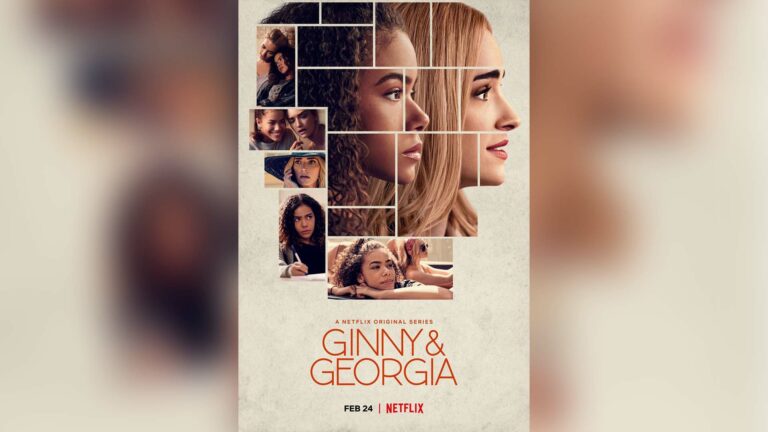
In the 10-episode Netflix original show “Ginny and Georgia,” released on Feb. 24, 2021, the audience is introduced to a unique story plot that soon turns into a cliché. 

We follow the lives of Ginny, her mother Georgia, her brother Austin and all the other characters whose lives these three turn upside down. Ginny Miller is the embodiment of the teenage stereotype. She is all shades of teen angst, anger and too much entitlement with an added “ugh, my mom is so hot, mysterious and all the guys want her” dynamic going on. 

Georgia’s character arc is the most interesting of the whole show. Her storyline feels new and organic, and by episode 10 you understand her traumatic past, the skillful male manipulation she’s dealt with and why she thinks and behaves the way she does. 

There is an inspiring strength in a woman with an extremely abusive and difficult past who makes it through teen pregnancy, a trailer-park environment and the perverse leering of both young and old men to somehow work for the mayor’s office in Wellsbury, MA.  

Her character is the most intriguing; I need to find out what really happened to her last two husbands, how she was embezzling money from the mayor’s office, why her outfits were always the best in a town full of mostly, rich white women and how she always seems to come out on top.

At the beginning of the series, it is confusing why Georgia is so desperate to settle down in somewhat boring Massachusetts of all places. However, as the story progresses there is a genuinely heart-warming “aha” moment that happens.

At only nine years old, Austin presents himself as the most stable character despite being an ardent Harry Potter fan, believing his incarcerated father is a wizard and having a tendency for violent and comedic outbursts with very few lines throughout the show. 

I did have a few issues with the show. For a show that tries to put a unique spin on the overtold story of the new girl who’s always moving and is somehow plopped into the middle of the whitest and richest town, where she makes it into the “in crowd,” there were many overused tropes and stereotypes. 

For whatever reason, the writers and producers of the show decided to just throw in graphic scenes of Ginny’s self-harm issues and also include one of her friends suffering from body dysmorphia, portraying these struggles with very little advice on how to manage these issues. It felt as if they were sensationalizing these trauma responses to extremely painful experiences felt by these characters.  

The darker aspects of being a teenager, like experimenting with drug-use, underage drinking, sex and family issues, feel sporadically thrown into the stories of each character as if the writers were checking items off the list for how to make a successful show. 

This show also has an issue with the message it conveys. There is an obsession with the sex lives of the teenagers within the show as they try to make sex casual and a huge deal at the same time. Especially for a show about teenagers made for a Generation Z audience, I find it a bit jarring to see “15 year-olds” talking about and engaging in explicit sexual acts all the while being played by twenty-some plus actors. At the same time, Ginny’s mother feels the need to protect her virginity in an attempt to prevent Ginny from experiencing the hardships she went through as a teenage mother. 

Yet there is something endearing and nostalgic about this show because it follows a plot we’ve all grown up with either reading or watching on TV. 

It incorporates every single aspect of Generation Z popular culture—embarrassing Snapchats, memes, an obsession with weed and alcohol, the Free Britney Movement and the constant need to impress everyone around us. 

All in all, it is a show worth watching solely for the cringey teenage moments, the darker, true-crime scenes involving Georgia and the touching portrayal of a mother who will do anything for her kids.

Written by: Muhammad Tariq — arts@theaggie.org

Chancellor Gary May hosts new monthly talk show

0

The talk show, called “Face to Face,” aims to highlight the achievements of students, faculty and staff

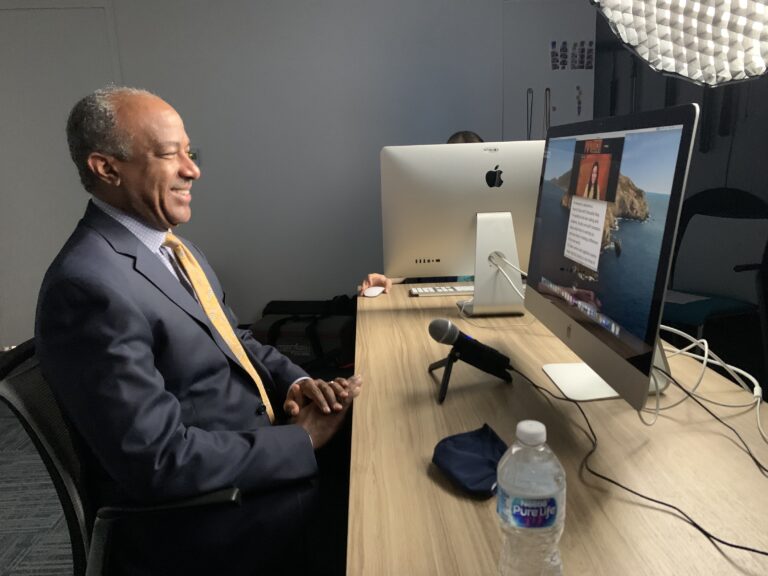
Chancellor Gary May is holding a new monthly talk show, “Face to Face,” during which he shares the spotlight with impressive guests. May said he hopes the show will allow him to build a deeper connection with the community despite the pandemic’s obstruction of normal modes of human interaction.

“We have an ongoing commitment to try to be closer to the campus community and be accessible, available and approachable,” May said. “During the pandemic, it’s harder to do those things because you can’t do them face-to-face, so now we have ‘Face to Face.’”

If May wasn’t a chancellor and electrical engineer, he said he would perhaps take on hosting a talk show as a full-time gig.

“A couple of years ago, Chancellor May answered a question someone asked him about other career paths he was curious about,” said Dana Topousis, UC Davis’ chief marketing and communications officer, via email. “He said being a talk show host was interesting to him. Because I know how much he enjoys interacting with students, faculty and staff, I suggested that we introduce a campus talk show with him as host. He agreed!”

Topousis said that May is a natural talent.

“He isn’t receiving coaching on how to behave as a host,” Topousis said via email. “He has interviewed a lot of people during his time as chancellor, particularly during his Chancellor’s Colloquium series, so he’s had a lot of experience.”

“Face to Face” seeks to spotlight campus leaders, enable connection during the pandemic and highlight impactful work, according to May. By allowing viewers the chance to get to know the chancellor better, the show also aims to lessen the gap between administrators and the rest of the campus community.

 “[‘Face to Face’] gives me a chance to learn about all of the neat things that are happening around campus and the people that are contributing,” May said. “It gives the audience a chance to hear and learn about those things too, but also it humanizes me and makes me more approachable. I think I am pretty human, but I like to be humanized so that the connection can build.”

The first episode of the show was released on March 30 and featured student leader and activist Akshita Gandra, a fourth-year cognitive science major. Gandra is the founder and president of The REVIVAL Zine, an intersectional feminist publication, and the co-founder of the UC Davis chapter of Period.

 “I started REVIVAL to provide underrepresented students, especially women, with the chance to share their opinions, use their voices and tell their stories,” Gandra said via email. “I co-founded and led Davis Period, which strives to provide free menstrual products to students and communities in need, all while providing educational resources about periods and reducing stigma.”

Gandra said she was honored to be the first guest to chat with May.

“I enjoyed being given the opportunity to speak more about the projects I’m very passionate about, as well as learn more about the Chancellor,” Gandra said via email. “It was a very self-reflective process and it was great being able to share my favorite things about UC Davis. I’m very happy with the outcome of the interview because I was able to talk about causes that are super important to me.”

When UC Davis resumes in-person classes in the fall, guests will join May in his studio in Mrak Hall. 

“We’ve got a studio under construction in Mrak in the basement,” May said. “We’ll have two chairs and me just talking to the person.”

Currently guests are hand-picked by strategic communications, but Topousis said that they are working on developing a nomination method. Future guests can look forward to May’s comedic approach and relaxed demeanor. 

“Chancellor May has a great sense of humor, which helps guests feel at ease,” Topousis said via email.

Gandra agreed that the chancellor has a calming presence. 

“At first I was a little nervous about speaking with the Chancellor, but he was very easy to talk to,” Gandra said via email. “Sometimes, it can be intimidating to speak with administration, but based on my experience there are plenty of UC Davis representatives who are incredibly receptive to students’ opinions, ideas, and stories.”

Viewers can watch the next episode of “Face to Face” on April 27, which will feature a faculty member who writes children’s books. But viewers can also anticipate learning more about the show’s host.

May described his relative fame as a blessing and a curse. While he loves interacting with students, being in the public eye comes with its pitfalls.

“It’s kind of like being on the D-list,” May said. “I do get recognized at Davis—that’s kind of fun. It’s a double edged sword because you have to kind of watch what you are doing all of the time, because someone is always paying attention. But for the most part people are really nice. They’ll come up and say hi. They may ask about something going on or give you a compliment or want a picture, which is always fine. My wife and I both enjoy that.”
Written by: Rebecca Gardner — campus@theaggie.org

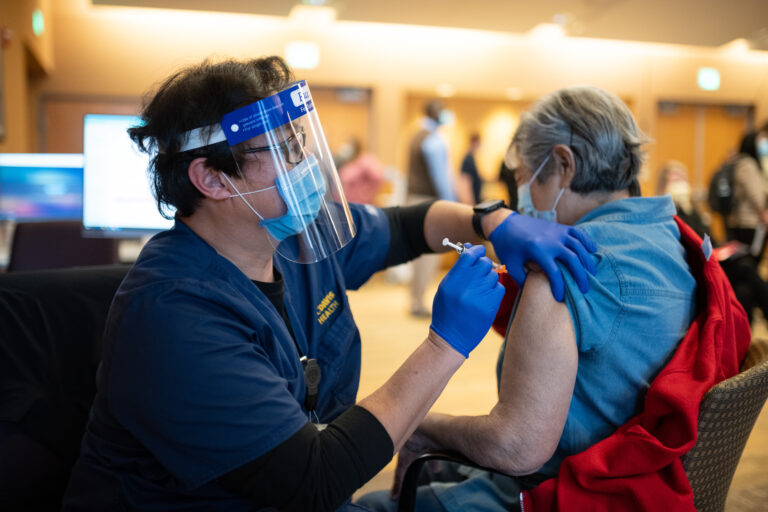
UC Davis Health suspends distribution of Johnson & Johnson vaccine following CDC and FDA recommendation

Rare blood clot found in six J&J vaccine recipients, halting vaccine administration

Sports leagues tread a long road to financial recovery

0

Major pandemic losses may take time for the leagues to recover, but there is some hope

As fans begin to make their way back to the seats at sporting events, some places are farther along than others. For a variety of reasons, having fans back in any capacity is something that team executives have loved seeing.

After all sports paused on March 11, 2020 due to COVID-19, experts projected losses of up to $12 billion across all sports. While the resumption of leagues cut that cost down by some margin, there is still a significant hole left in the pockets of leagues owners. How different leagues recover over time remains to be seen, but it is clear that there will be a long road ahead to get back on the upward trajectory they had pre-pandemic. 

The National Basketball Association (NBA) was able to conclude their season in the bubble in Orlando, FL, a campus that cost the league $180 million to operate. But that was a price tag the NBA was more than willing to pay, as their successful venture at the Walt Disney World Resort prevented a loss of $1.5 billion. 

Ticket revenue is usually a major part of the NBA’s annual revenue, but the pandemic had forced them to rely primarily on television and sponsorships instead. In the end, their total revenue during the 2019-20 season was $8.3 billion—10% less than the last full season. 

As they entered the new 2020-21 season, a lot was left to be determined. With a start date undetermined and the absence of fans in most arenas, the NBA had decisions to make when it came to the salary cap and how they would set up their finances. A January start to the season would have cost the league up to $1 billion in revenue, so they decided to do a quick turnaround and start Dec. 22, 2020. With their salary cap staying the same as it was in 2019-20 ($109.1 million), teams would not be hit as hard, nor would they have to make drastic changes in finances. In the agreement between the players association and the league, at least 10% of the salaries would be held in escrow to allow the planned increase of 3 to 10% in the salary cap each year. 

The revenue losses this current season remain to be seen, but after a year where the majority of games did not accommodate fans, it is possible that the losses will further increase from last year. Although fans might begin to make their way back slowly as the playoffs approach, it is clear that the pandemic put a major dent in the NBA’s future plans that signaled a lot of financial prosperity. 

As with the NBA, the National Hockey League (NHL)’s season was derailed by the pandemic. When everything paused in March, the league lost an estimated $150 to $200 million  in playoff ticket sales alone and much more in additional television and sponsor revenue. While they also finished off their season in an NBA-type bubble in Canada, the lead-up to this season has been quite underwhelming. The league only played 56 games, but NHL Commissioner Gary Bettman stated that it would’ve saved more money to not play at all. 

Like the NBA, the NHL’s salary cap stayed the same at $81.5 million. However, even after their new lucrative TV deal with ESPN, the possibility remains that the salary cap will remain flat for up to five years. This can spell some danger for teams who were banking on the rise of the salary cap and may lead to some major cuts in players’ future earnings—especially those who were looking for a big payday down the road. Out of all leagues, the NHL, which relies heavily  on ticket revenue and has sustained multiple billions in potential losses, is especially eager for fans to re-enter the arenas. 

Out of all leagues to play in 2020, the one that saw the most drastic change to their sport was Major League Baseball (MLB), who saw their usual 162-game season shortened to just 60. In a grueling negotiation, MLB and the players association reached an agreement for their shortened season, and after many postponed games, the league finally welcomed back fans for the first time in the National League Division, Championship and World Series. 

According to a study by Penn National Gaming, MLB lost about $2.5 million in ticket revenue as a result of the shortened season with no fans. Given that baseball doesn’t have a salary cap, the amount of financial changes when it comes to salaries depends on the owners’ willingness—or rather, unwillingness—to spend. As there is no official number on how much was lost, the answer changes depending on who you ask. 

According to MLB Commissioner Rob Manfred’s statement back in October, the league lost at least $2.8 billion in 2020. But powerful baseball agent Scott Boras claimed that not a single team lost any money. While the number varies per team, there has been even more of a reluctance to spend due to COVID-19. Whether it is due to big losses or simply MLB owners not willing to spend a lot of money, this baseball season is one that the league and teams hope somewhat recovers as all stadiums are welcoming back some percentage of fans. 

The National Football League’s (NFL) handling of COVID-19 was very different from the other leagues’. During March’s shutdown, the NFL was not in season, nor did they have any official league business in person that required drastic changes. Aside from draft preparation, the NFL had a lot of time to prepare for the upcoming season. Still, they didn’t reach an agreement with the NFL Players Association until late July. Nonetheless, the league began their regular season with no preseason, and fans in attendance varied on the location as teams like the Dallas Cowboys, Tampa Bay Buccaneers and many others welcomed some fans back. As the season progressed, many more teams were able to get some fans in but not enough to significantly curve the financial damages. After a season of headaches rescheduling games in order to avoid cancellations, the league was able to culminate the season with their annual Super Bowl in front of 25,000 socially distanced fans. In the end, the NFL benefited from being the last league to start their season in the pandemic, which allowed them to learn from other leagues and find ways to welcome some fans into some arenas nationwide.

According to the New York Giants co-owner, the league lost out on $3 to $4 billion in revenue. While this is a big figure, they believe that it is not anything “catastrophic,” as the NFL is the most profitable league in the world. Although the salary cap this year was set at $182.5 million—$15 million less than last year—the new television deal worth $10 billion a year starting in 2023 will surely help give the salary cap a major boost in the coming years. In agreement with CBS, FOX, NBC, ESPN/ABC and Amazon, the league was able to recuperate a lot of money, and in the future, the NFL will be able to fully recover from the pandemic losses. 

It is hard to say if these sports leagues could have survived the substantial financial losses without major television deals. Sports has become lucrative over the years, and the television industry has surely helped with that. As fans begin to fill the seats, the road to recovery begins for the majority of sports leagues—but it will be one that will take time given the unprecedented nature of what has occurred in the last 13 months. 
Written by: Omar Navarro — sports@theaggie.org

Yolo County scheduling public vaccine clinics based on vaccine supply allocated by state

0

Yolo County supervisor states that 30% of the county has received at least one dose

On April 2 and 3, Yolo County held public vaccine clinics in Woodland and Davis. The schedule for future pop-up clinics will likely be unpredictable and come out with short notice, according to Yolo County District Supervisor Gary Sandy.  

“We plan clinics based on the supply that the State of California says they will be able to provide to us on a weekly basis, so clinics are not always on the same day [or] location each week,” Sandy said via email. “This also means we don’t get a lot of time to plan, so things sometimes move very quickly.”

Approximately 800 doses of the Pfizer vaccine were administered on each of the two days, according to on-call Public Information Officer Frank Schneegas.  

“On April 2, it was 805 Pfizer, and on [April 3], it was 800 Pfizer as well, but that was both a first dose and second dose clinic,” Schneegas said.  

The county also held private clinics for “our homebound residents, agricultural workers, migrant center families and some other groups” throughout the week of April 5, according to Sandy. 

Sandy explained that Yolo County held one public clinic in Woodland on April 7, where some doses were reserved for “specific groups, like seniors and childcare workers, since there are some barriers for these groups to sign up, like time, online skill, etc.”

Sandy explained that in addition to reserving doses for certain groups, the county also allocates a certain number of doses to other local community clinics that do not yet receive doses from the state.  

“Our vaccine supply has been slowly increasing; however, it’s still not enough to meet the demand of our residents,” Sandy said. “Demand still far outweighs supply. We also reallocate doses to some of our local community clinics since they are not yet getting their own doses from the state.” 

Sandy elaborated that during the week of April 5, Yolo County shared roughly 2,000 doses with “CommuniCare, UC Davis Occupational Health, Winters Healthcare, Elica Health and even some local fire departments.”

A considerable portion of Yolo County has now been vaccinated, according to Sandy.  

“So far, about 30% of Yolo County residents have received at least the first dose, approximately 70,000 out of 220,000 total residents,” Sandy said. “However, this denominator includes children. If we only count those that are 16 and older, we have 179,000 residents that [became] eligible for a COVID vaccine on April 15, and if we divide 70,000 by 179,000, it gets us about 39% of Yolo County residents with at least one dose. This would include those that are vaccinated by hospitals, county clinics, community clinics and other counties.”

The upper limit of the vaccination rate is moreso set by the vaccine supply than by the county’s vaccine infrastructure. According to Schneegas, Yolo County has been fairly successful in vaccinating its residents.  

“We are able to administer all the doses we receive very quickly, and we are more constrained by the amount of doses we receive than [by] the amount of people we can administer the doses to,” Schneegas said.  
Written by: Rachel Shey — city@theaggie.org

Student ballot measure seeks to continue The Green Initiative Fund, $9,800 fund for undocumented students passes after one year

0

The $3 student fee proposal requires a vote by 20% of students to pass

The April 1 senate meeting was called to order at 6:10 p.m. by ASUCD Vice President Emily Barneond.

Senate Bill #69, a motion to introduce a student ballot measure for the continuation of a $3 fee to support The Green Initiative Fund, passed with one objection from Senator Roberto Rodriguez Ibarra, who said that the fee would disproportionately affect minority students.

“It’s unfair to have a fee referendum during a global pandemic which has affected every student, but particularly those students from marginalized communities,” Rodiguez Ibarra said.

A full 20% of the student body would need to approve the continuation of the $3 student fee and the subsequent $2 increase every academic year until 2031. This translates to approximately 5,900 students required for it to pass, according to Environmental Policy and Planning Commissioner Hunter Ottman. 

“Simply looking at how the voter output was last quarter, I just don’t really see how it’s going to get to 20%,” Senator Kristin Mifsud said. “Is there a huge effort to advertise this and make sure that it gets to 20%? Because I definitely know that this needs to pass, but I don’t know if it’s feasible on its own.”

The fee would not increase the overall student fees currently being assessed, but would continue a fee that has been paid by students for the last five years and phases out at the end of this Spring Quarter, Ottman said. The motion passed with 9-1 against, with senators offering to assist in the get-out-the-vote campaign. 

Senator Michael Navarro presented Senate Bill #64, which allocates $9,800 dollars directly to the AB540 and Undocumented Student Center

Controller Alexis Lopez-Perez noted that after the bill is passed, ASUCD will have $502 left in senate reserves.  

The bill was passed unanimously. The motion has been working its way through the senate process since spring 2020. 

“I just want to say thank you to the Senate table,” Navarro said. “This has been in the works for literally over a year so I’m so glad we got this done.” 

Senate Bill #68, a bill intending to restrict commissioners’ ability to endorse Senate candidates, was presented as emergency legislation before being withdrawn by its author Mifsud. Multiple commissioners criticized the proposed legislation, saying that it removed the limited power that commissioners have. 

“When we endorse candidates, we don’t endorse them based on their slate, we endorse them based on the work they put in and how they’re going to stand up for us,” said Academic Affairs Commission Chair Navreet Hundal. “Our roles are different, as commissioners, we do advocacy.”

After three more commissioners spoke up against the introduction of the bill, Mifsud apologized for presenting the item as emergency legislation, which she said she did because elections were coming up quickly. 

“Hearing your perspectives on this, I see I was definitely wrong and for that, I do apologize,” Mifsud said. “I meant no disrespect.” 

Senate Bill #67 was assigned to the Academic Affairs Commission; the bill would establish the Research and Data Center Unit.

Senator Maahum Shahab introduced Constitutional Amendment #69 to create a commission to focus on Davis housing advocacy. The amendment was assigned to the Internal Affairs Commission, the Ethnic and Cultural Affairs Commission and the Academic Affairs Commission. 

Mifsud mentioned the large-scale data breach that affected the University of California and encouraged students to be protective of their data.

“Be aware that some of our data might have been compromised in the cyberattack,” Mifsud said. “There is not a lot of information other than that right now.”
Written by: Kathleen Quinn — campus@theaggie.org

Davis district teachers weigh in on schools reopening this month

0

Educators share concerns over safety and fairness in the reopening process

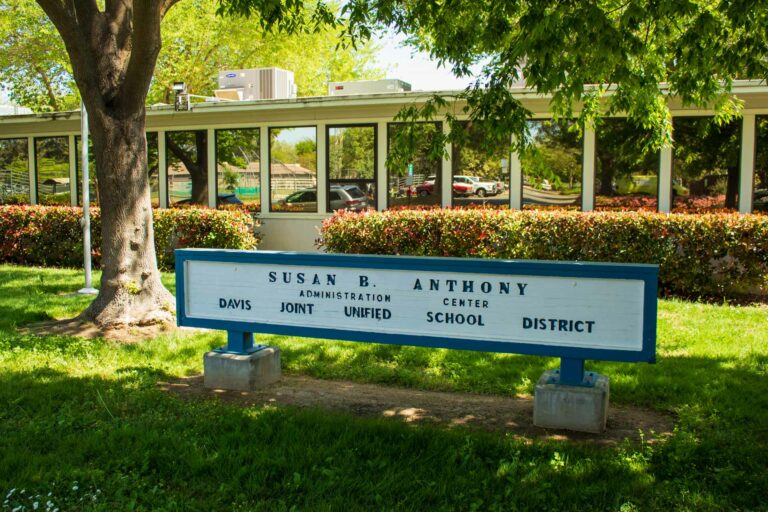
As COVID-19 vaccination rates increase and infection rates decrease in California, many public school districts are preparing to reopen for the first time since March 2020. The Davis Joint Unified School District (DJUSD), which includes over 20 elementary, middle and high schools, has set their reopening date for April 12, when all students will be invited to return to school five days a week. 

Originally, the district had come up with a hybrid plan wherein two pods would be created in every grade, an A and a B pod. The A pod would attend school in person on Mondays and Tuesdays, the B pod would attend on Thursdays and Fridays, and all students would learn from home on Wednesdays. 

Then, over the district’s spring break, on April 2, the district released new plans to open to all students who wished to return to campus five days a week. A special board meeting was held to decide between two entirely new schedules: one in which all students returning in person would be on campus four days a week and everyone would learn virtually on Wednesdays, and another where all in-person students would be on campus five days a week. Ultimately, the board decided in a 3-2 vote decision to move forward with the five day plan, beginning on April 12.

According to Jessica Beckinger, a kindergarten and first grade teacher at Birch Lane Elementary, it has been very difficult for teachers to adjust to this decision.

“It’s been stressful because they sent out one schedule for Phase 3, and then we went down a tier and so then all of a sudden, without notifying teachers or parents, we jumped into a totally different schedule,” Beckinger said. “So we had planned over spring break for having kids two afternoons a week, and now we will be having them five mornings a week. All the plans we did got scrapped, and we are kind of scrambling […] to come up with a whole new way of teaching within a week.”

At the elementary and secondary levels, 20% of students have elected to remain in distance learning for the remainder of the school year, which means that teachers will have to create separate lesson plans for these students to meet district requirements. For kindergarten students, that means 45 minutes of “live” instruction per day. 

“We’re trying to think about how we meet that live [Zoom] time while still keeping a similar schedule to what we’ve had for our distance learners. Their parents have built their whole work lives around that and are not going to be thrilled with us if we suddenly radically change it on them,” Beckinger said. “Some of our students are home with their parents in the morning and then are going to a preschool or a daycare in the afternoon, so [we’re] trying to think of what will work for families.”

To accommodate these students, Beckinger and her colleagues have decided to “simulcast”—or record—their morning meeting with the in-person students so that the distance learners can watch it whenever their guardians have established their school time. They plan to make sure the meeting is at least 45 minutes long so that it can count for their live instruction minutes. In addition to this simulcast, Beckinger will have to create separate asynchronous lessons for her at-home learners to watch so that they get the same amount of instruction as they would in person.

Generally, Beckinger teaches in a Montessori style, which usually involves children working with one another, sharing materials, and moving around the classroom independently, but due to COVID-19 restrictions, she had to restructure her in-person teaching style completely. Students will no longer be allowed to choose their own seats or collaborate with a friend. She will be teaching lessons from the front of the classroom while all students sit at least three feet apart. When students do use books or Montessori materials, they will have to be disinfected and quarantined for some time before another student can use them. 

She explained that this is going to be difficult for students whom she taught last year to adjust.

“They’re thinking they’re going to come back and it’s going to be like it was last year, and it’s not,” Beckinger said. “There’s going to be no recess, no working with a friend, that social aspect […] is not going to be there anymore.”

Middle school teachers are dealing with a similar situation. Josephine Eberle, a seventh grade teacher at Emerson Middle School, said that she and her colleagues have also been trying to ensure that both students in person and at home are being taught, which has required a lot of reworking.

“We’ll be teaching the students in front of us and the students who are in that distance situation,” Eberle said. “We are going to have to learn how to do that. That’s going to be the transition.”

An even larger proportion of high school students—about 50%—have elected to remain in distance learning for the rest of the year. High school classes won’t look that much different in person as they have online, according to Dianna Stommel, an 11th grade history teacher at Davis Senior High School.

“I can’t really do anything much different than what I’ve been doing,” Stommel said. “You still have to be aware of the half of your students that are still logging in with Zoom and doing their work that way. The benefits for the students that are coming to school […] is really the socialization and returning to campus and having some sense of normalcy.”

Stommel will continue to teach from home this year because of a medical exemption, but she said that even if she were in person, her lesson plans would look largely the same. Her in-person students will be proctored by another teacher while they watch her on the projector at the front of the classroom, and her distance learners will continue to watch her via Zoom on their personal devices. 

For all teachers, the preparation for in-person classes on April 12 has been very hectic, according to Stommel. Beckinger explained that it has also been less than ideal for most.

“We had a choice between a four-day week schedule and a five-day week schedule,” Beckinger said. “Teachers were polled and 85% of teachers wanted the four day [in-person schedule], so that we did have one day a week to plan and prepare lessons for the distance learners. That was not passed, so that was a big disappointment. I’m a parent of two young kids. I cannot be here until eight at night.”

Many teachers have concerns over both the safety and fairness of the way that the DJUSD is handling the return to in-person classes. 

“Even if you’re a super experienced teacher and have lots of years and activities under your belt, you kind of had to relearn everything this year,” Stommel said. “Most of the things that I would do in my classroom that work, and how I would teach, you can’t really do. You have to kind of redesign and redo your entire curriculum. I know people have been working tons of overtime this year.”

Beckinger echoed similar sentiments to Stommel.

“It’s asking teachers to do two jobs within the time and for the pay of one job,” Beckinger said. “I don’t think it’s fair. It’s just asking a whole lot of teachers and learning a whole new way of delivering education when we have already done that twice in the last year.”

In addition to the increased workload that this year has required of teachers, some believe that the district’s handling of the return to campus has been unfair for teachers personally.

“We don’t get the choice to keep our children in distance learning once we’re being sent back, so that piece is also a bit unfair,” Beckinger said. “If we have school-aged kids and we don’t want them in a room full of other children, that choice is being taken away now from a lot of families.”

Some teachers have also struggled to get permission to continue teaching from home, despite their safety concerns, according to Beckinger.

“It’s turning out to be quite difficult for teachers who do have a medical note for themselves or someone in their family to actually remain in distance learning,” Beckinger said. “I have a close friend here at work who is a single mother, and her daughter has a pre-existing condition, […] so they have been completely and very strictly quarantined this whole time, teaching 100% out of her home, and now she has to come back to work. What about her daughter who isn’t vaccinated? On our salaries, it’s hard to hire a personal nanny to come in.”

Some teachers are also worried about the safety of their students as a vaccine has not yet been approved for their age group.

“Personally, I am more comfortable because I have had my two vaccines, and my doctors have said that I can be comfortable,” Eberle said. “But I’m still nervous for the kids because we’re teaching adult-sized people who have not been vaccinated. The CDC has issued its guidelines, California has issued its guidelines, Yolo County has issued its guidelines, but we don’t understand the full logic of [the] guidelines. Why are certain things all of a sudden okay, but other things aren’t?”

Beckinger said that she is also worried about the well-being of students’ parents.

“I am personally protected, but that does not mean that my classroom opening up will not be the source of a community spread,” Beckinger said. “What if my room is responsible for someone’s death?”

Eberle said that apart from these concerns, teachers are looking forward to having students back in person.

“It is a completely different energy,” Eberle said. “I keep telling my students that they really have to wear name tags, because I have no idea what they look like because my secondary students have kept their cameras off for the last quarter. So everybody’s going to have to introduce themselves all over again.”

Although many teachers are excited to welcome their students, Beckinger is worried that teachers might not be as sure about their career plan as they have been in the past.

“This is my 16th year teaching. I’ve always been 100% sure that this is what I was going to do my entire career,” Beckinger said. “And this past year has been so demoralizing. […] Teachers are getting publicly vilified as though it’s our decision whether or not to open up schools, [even though] every teacher I know is trying so hard to make the kids happy and learn.”
Written by: Katie DeBenedetti — features@theaggie.org

‘MONTERO’ has conservatives seething

0

Lil Nas X’s second No. 1 hit has sparked yet another cultural battle

Off of the success of 2019’s “Old Town Road” (and its numerous remixes), it was no easy task to predict whether Lil Nas X would establish himself as a genuine presence in music. Without a full album, or much of a supporting discography at all really, the artist’s future appeared to be an amorphous question mark. While his 2020 single “Holiday” did quite well, peaking at No. 37 on the Billboard charts, he didn’t appear to be maintaining his momentum from “Old Town Road”’s record-breaking 17 weeks at No. 1. With “MONTERO (Call Me By Your Name)” debuting at No. 1, however, Lil Nas X has cemented himself as at least a two-hit wonder and created a huge amount of momentum for his upcoming studio album debut.

The song’s reach has been amplified by conservative voices getting up in arms about the song’s content and music video, with former U.S. Marine Matthew Betley calling it “sick and depraved and an attempt to destroy our society” in a now-deleted tweet. Comedian Matt Walsh wrote an article for the conservative outlet Daily Wire entitled “With His Satanic New Video, Lil Nas X Is Directly Preying On Children.”

It’s hardly a surprising reaction, given the presence of lyrics such as “I want that jet lag from fuckin’ and flyin’/Shoot a child in your mouth while I’m ridin’,” which are explicit enough to prompt pearl-clutching even independent of the visual content (which includes the artist riding a pole down to hell and giving Satan a lap dance). It’s hard to divorce the apparently conservative reaction to the song from attitudes these posters display toward Lil Nas X’s identity as an openly gay artist making music that does not address his sexuality obliquely. The offense seems to originate, at least in part, in the massive voice and artistic freedom granted to a gay man.

This has not phased Lil Nas X. On April 5, he posted, “i hope my haters are sad. i hope they are crying. i want your tears to fill my grammy cup.” It’s hard not to imagine he predicted this. If his daily quote-tweets of enraged politicians are any indication, he’s enjoying it. 

In fact, the situation has doubled on the back of Lil Nas X’s release of customized Nike “Satan Shoes,” which include a drop of real human blood. (The blood, if you were curious, comes from members of the art collective responsible for designing the shoes, MSCHF.) Despite the shoes selling out almost instantaneously, MSCHF has since been forced to recall the shoe as a result of a lawsuit from Nike. Many people incorrectly assumed that the shoes were an official Nike release, leading many to threaten a boycott of the company.

The music video itself is a bit cheap looking, but of course little of the conversation surrounding “MONTERO (Call Me By Your Name)” has to do with its artistic value. Nothing about it is groundbreaking or impressive, save maybe the volume of fuming indignace it has spawned online. While the song is catchy and well-produced, it doesn’t have much to offer those treating it as a piece of popular art rather than another coal propelled into the firebox of our machine of perpetual outrage. 

Written by: Jacob Anderson — arts@theaggie.org

Call it what it is—Alabama’s Vulnerable Child Compassion and Protection Act is discrimination

0

Transgender youth and gender affirming care are not items on an agenda

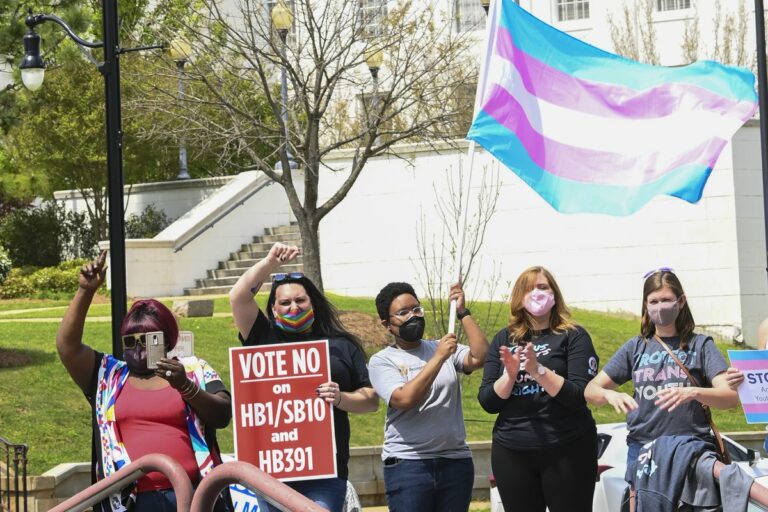
Next on the agenda: the livelihoods of transgender youth and the state of gender-affirming care—ploys in a culture war that when made into law, reap political benefits at the expense of those most vulnerable. Despite names like Arkansas’ Save Adolescents from Experimentation (SAFE) Act and Alabama’s Vulnerable Child Compassion and Protection Act, these laws are malicious and created with zero empathy for transgender youth.

The Arkansas SAFE act prohibits physicians from providing gender-affirming treatment for transgender youth under 18. After the bill was passed in the House, pediatric doctor Michele Hutchinson testified to the Arkansas senate that there were “multiple kids in [the] emergency room because of an attempted suicide.” Hutchinson’s testimony captured the plight of transgender youth who will be denied necessary care; however, it did little to change the convictions of Arkansas’ House and Senate.

With Arkansas’ House and Senate voting 71-24 and 25-8 to override Gov. Asa Hutchinson’s veto of the SAFE act, Arkansas is now the first state to criminalize gender-affirming treatments for transgender youth. This is not an isolated case. In the past year, 174 anti-LGBT bills have been introduced, 95% of which are specifically aimed at transgender people.

In Alabama, the Vulnerable Child Compassion and Protection Act criminalizes medical professionals who provide puberty-blocking medication, testosterone and estrogen doses and surgery for transgender youth. Should the bill become law, violations by medical professionals will be considered a Class C felony and punishable by up to 10 years in prison. 

The law manages to be even more egregious in its invasion into the lives of transgender youth by requiring school administrators such as nurses or counselors to disclose to their parents that “his or her gender or sex is inconsistent.” It effectively outs transgender youth and further ostracizes them by eliminating their support systems.

As of now, the Vulnerable Child Compassion and Protection act has passed 23-4 in the Alabama Senate. As the future of gender-affirming care hangs in the balance, Dr. Morissa Ladinsky reports that “almost every clinic visit [has] ended with either a parent or child choking back tears, saying, ‘Where do you think those bills are going? Is it gonna happen?’” 

The act is sponsored by Sen. Shay Shelnutt of Trussville, who has admitted he has never spoken to transgender youth, yet feels justified in stating that “there’s no medical condition that these kids have. It’s just in their mind.” 

Shelnutt’s bill opens up a realm of horrifying precedents. It is an over-expansion of government authority into the lives of transgender youth, prohibiting treatments even with parental consent. It validates that a law can be created by a politician who has never spoken to the constituents it gravely affects.

It exacerbates obstacles transgender youth face. Thirty-five percent of trans youth have attempted suicide compared to 7% of their cisgender peers, according to a 2017 study. When unable to access adequate care, some youth resort to buying off-the-counter hormonal treatments and administering these treatments without “proper medical management.”

Shelnutt’s bill fails to acknowledge the dismal realities transgender individuals face in searching for gender-affirming care. There are numerous roadblocks in finding gender-affirming care; it is inadequately taught in medical schools, and discrimination by healthcare providers—verbal and physical abuse, refusal of care and incorrect care—is routine. Sixty percent of transgender patients who are unable to find physicians to help them due to anti-transgender bias have attempted suicide

The bill fails to acknowledge the “nuanced and deliberative” practice a person experiences when transitioning. Contrary to Sen. Shelnutt’s point that “children aren’t mature enough to make this decision on surgeries and drugs,” transitioning is not a process that happens on a whim. According to psychologist Laura Embry, who works at an adolescent gender clinic in Alabama, families may wait months or even years before interventions are deemed appropriate; the process of informed consent is “extensive” and highly individualized to a person’s development. 

The act also describes puberty blockers and hormones as “uncontrolled human medical experimentation,” implying that transgender youth aligning themselves to their true and congruent gender identities is somehow a self-inflicted form of “experimentation” that is happening with little medical guidelines put in place. The language in the bill stigmatizes transitioning by implying that it is inherently unnatural by placing it in conjunction with an “experiment.”

The bill fails to look beyond its single-minded narrative into the benefits of puberty blockers for transgender youth and the positive implications on mental health. The bill refers to the administration of puberty-blocking medications as “irreversible.” Puberty blockers are not “irreversible”; if a youth were to stop using puberty blockers, “puberty will continue as if the medication were never utilized.” Furthermore, puberty blockers can give transgender youth more time to explore their gender identities before making permanent changes all while “reduc[ing] the distress associated with secondary sexual characteristic development that is incongruent with the patient’s lived gender.”

The bill’s claim that “a substantial majority of pre-pubescent children who claim a gender identity different from their biological sex will ultimately identify with their biological sex by young adulthood or sooner when supported through their natural puberty” falls back on a narrative that many youths will “desist,” an assumption based on studies that have been called into critique by the Gender Dysphoria Affirmative Working Group.

Research on desistance cite that 65 to 94% of transgender youth “grow out of their transgender identity.” However, there are many issues with this existing research: criteria for gender dysphoria diagnosis was “less stringent” in the past, and many diagnosed with it in the past may not have the same diagnosis today, potentially overblowing desistance statistics. Also, a study cited anyone not returning to their clinic as “desisting” without greater inquiry, when in reality, some participants did not respond or could not be contacted.

It is wholly irresponsible to use studies with problems in its methodologies to make a blanket assumption of transgender youth. It also perpetuates misconceptions about detransitioning by “painting transgender people as just temporarily confused or suffering from a misdiagnosed psychological disorder.” A 2015 study surveying 28,000 people found that 8% of respondents detransitioned, with parental pressure cited as a common reason. For puberty blockers, less than 2% of youth decided to stop treatment.

The Vulnerable Child Compassion and Protection Act does not care about protecting children—this is apparent in the discriminatory language in the bill, its lack of empathy and its dispensation of inaccurate information. 

I want Sen. Shelnutt to look into the faces of the transgender youth that his law will affect and tell them that the distress and turmoil they experienced due to their gender identity is imagined. I want Sen. Shelnutt to look into the faces of transgender youth and tell them that they do not know the person they are meant to be. But that would require Sen. Shelnutt to first speak with youths like Syrus Hall, Phineas Smith and Jessica Fuller

Which to reiterate—he has not, yet he is spearheading a bill that would deny transgender youth their rights to gender-affirming care and force them to be outed when they are not ready. Sen. Shelnutt and other politicians who support this bill should not impose their lack of knowledge or moral systems into the lives of transgender youth.

Written by: Renee Wang — reswang@ucdavis.edu 

Disclaimer: The views and opinions expressed by individual columnists belong to the columnists alone and do not necessarily indicate the views and opinions held by The California Aggie.

Recent NCAA controversy brings gender inequality back into the light

As players prepared for the biggest tournament of their lives, controversy shined a spotlight on the gender inequalities within college sports

The treatment of men and women in collegiate athletics has long been a topic in discussions over gender inequality. Many more examples of gender disparities among the National Collegiate Athletic Association (NCAA) have remained hidden for years, but new findings during the most recent NCAA tournament has brought the issue back into the spotlight. 

Last month, the University of Oregon women’s basketball sophomore Sedona Prince posted a video on the social media app TikTok that went viral. This video had approximately 7 million views at the date of publication, and presents a comparison between male and female basketball weight rooms during the NCAA March Madness tournaments. The women’s weight room consisted of only a weight rack and a few yoga mats, while the men’s room had access to an entire gym full of squat racks, dumbbells and other equipment. 

After numerous images surfaced on social media showing the drastic differences between the women’s and men’s facilities in Texas and Indiana respectively, the NCAA apologized for causing the female athletes any inconvenience and upgraded the women’s weight room. 

“We fell short this year in what we’ve been doing to prepare in the last 60 days for 64 teams to be here in San Antonio, and we acknowledge that,” said Lynn Holzman, the NCAA’s vice president of women’s basketball.

Part of the problem is that the NCAA has a committee that focuses on Title IX—with the Women’s Basketball Coach Association (WBCA) also a part of it—but they have been left out recently. They are vocal when these issues come up, but remain frustrated that they have been cut out of any decisions. 

Title IX states,“No person in the United States shall, on the basis of sex, be excluded from participation in, be denied the benefits of, or be subjected to discrimination under any education program or activity receiving Federal financial assistance.” This applies to any institution receiving federal financial assistance from the U.S. Department of Education.

Val Ackerman, who was the founding president of the WNBA and is currently commissioner of the Big East Conference, called the WBCA “fragmented and frustrating” because whenever she reported instances of inequality, there never was any change. 

“It is a Tower of Babel,” Ackerman said. “Trying to get the right people at the table, how to get consensus around who you can trust to make the right decision is really challenging.”

According to ESPN, the 2018-19 NCAA Division I men’s tournament had a budget of $28 million, which was almost double the women’s budget of $15.5 million. The NCAA provided additional information that showed the men’s net income of $864.6 million that season and the women’s event lost $2.8 million—the largest loss of any NCAA championship.

Women’s basketball does not bring in the same amount of money, potentially in part because, despite the growing number of women’s sporting events, the media’s coverage of them is still very minimal. Women make up nearly 40% of all sports participants— yet, according to a study by the Tucker Center for Research on Girls & Women in Sport at the University of Minnesota, women only received 4% of the sports media coverage. Women are not being streamed as much as men on television or any other media outlets, causing a decrease in revenues that makes it hard to allow any financial improvement.

“One of the things we can do right away, is to call the tournaments ‘the Men’s Basketball Tournament’ and ‘the Women’s Basketball Tournament’,” said Muffet McGraw, former women’s basketball coach at Notre Dame. “When you turn on the TV and you look at the guide it just says NCAA Basketball Tournament, and of course that just means men’s. The NCAA runs two social media accounts, one called March Madness, one called The Final Four, and of course they’re both men’s. They don’t state that.”

 After the most recent incident with Prince and the gyms, the NCAA hired a law firm to help examine all championships for all the divisions. Financial evaluations are being made and they are also trying to identify “any other gaps that need to be addressed, both qualitatively and quantitatively, to achieve gender equity.”

When considering the complexity of college sports, the NCAA has many deeply rooted organizational issues. Nevertheless, the NCAA clearly has several different avenues and approaches they could take to improve women’s athletics.

 Without Prince’s video and the public scrutiny and attention it brought the NCAA, they would have not given women a proper facility during the biggest tournament of the year. This experience has inspired many people, not only women, to have the courage to fight for justice and equity. 

“I think this is an awakening that probably needed to happen. I think it will jump start more change,” Ackerman said.
Written by: Katherin Raygoza sports@theaggie.org

The Editorial Board demands reform to save Black lives

0

Despite the many calls for change, Black individuals continue to be unjustly killed by the police—it must stop

Last Sunday afternoon, another Black individual died at the hands of a police officer. An encounter from a traffic violation was all it took for Daunte Wright to be fatally shot. Expired registration tags, an arrest warrant and air fresheners hanging in a rearview mirror are not reasons to end a person’s life. 

Wright’s death was avoidable. If an unarmed officer had handled the traffic stop, today Wright’s son would continue to have a living father. Instead last Sunday, the police officer mistook her gun for a taser. “Oh s***. I shot him” were her words, and his life was gone—a fate all too similar to many other Black Americans such as Philando Castile, who was fatally shot in 2016 after being stopped for a broken tail light in the Minneapolis area.

Wright was also fatally shot near Minneapolis, a city where Derek Chauvin, the former police officer charged with murdering George Floyd in 2020, awaits trial. Floyd’s girlfriend was Wright’s former high school teacher; although this may seem incidental, it demonstrates the collective trauma that generations of Black Americans continue to face. 

How many Black lives must be lost before real change occurs? With racism rooted so deeply into American law and politics, the Editorial Board strongly supports Black Lives Matter (BLM) and its work to “eradicate white supremacy and build local power to intervene in violence inflicted on Black communities by the state and vigilantes,” as well as other like-minded individuals and organizations. We understand there is a systemic problem in the American law enforcement system and we demand change. 

Within the past year, 991 people have been shot and killed by the police, according to The Washington Post’s log of fatal shootings by on-duty police officers in the U.S as of April 12. This follows a trend tracked since 2015; close to 1,000 people are killed every year by on-duty police officers. Both Black and Hispanic Americans are killed by the police at a disproportionately high rate. Even though Black Americans account for less than 13% of the U.S. population, they are killed by police at more than twice the rate of white Americans. 

Yet, some individuals remain uninformed. “All lives matter” and “blue lives matter” groups disrespect and undermine the BLM movement. Such people choose to ignore the fact that “Black lives matter” does not mean that Black lives matter more—it means their lives matter just as much as white individuals who have the privilege of rarely fearing for their lives in confrontations with police officers.

Communicating with people who disregard the necessity of the BLM movement can be frustrating and challenging. But sometimes these conversations can’t be avoided; in that case, the burden of dispelling racist ideology should not fall exclusively on those most affected by racism. The responsibility should fall on non-Black allies of the BLM movement to engage in this discourse when they witness racist behavior and language. 

On the individual level, holding these critical conversations, as well as educating and training oneself to be a conscious media consumer help fuel change. Individuals must learn to proactively seek out credible sources. While many publications work to provide sound and reliable news, consumers must be critical of what they see by fact-checking information with other sources and also understanding inherent biases in reporting. This is especially prevalent with BLM and police brutality coverage, as content differs depending on the political lean of the publication.

Staying informed is not enough, however, to make a meaningful contribution to reform. Despite the colorful infographics dotting social media stories, speaker events and protests widely covered by the media, Black individuals continue to be unjustly murdered by police officers. It is becoming more and more clear: real systemic change in the law enforcement industry is crucial to save lives.

On a local level, the Editorial Board appreciates the recent steps toward police reform in Davis. More than 500 community members and dozens of local organizations signed a letter calling for a new, independent department to conduct unarmed welfare checks, noise complaints, code enforcement and homeless outreach instead of armed Davis police officers. The letter was delivered to Davis City Hall on April 5. 

On Tuesday night, the Davis City Council voted unanimously to move the city’s homeless services program from the Davis Police Department to the city manager’s office. More change may come in the future, as a subcommittee of Mayor Gloria Partida and Councilman Will Arnold are currently looking to reassign other city services currently handled by the police. 

City-wide change is just the beginning. In order to stop the wrongful killings of Black individuals in this country, we need state and federal restructuring of the policing system in the form of disarming officers and defunding law enforcement programs. People must educate themselves by consuming media that details the truth about police brutality.

Wright was a man pulled over because of a traffic violation. A man the same age as many members of the Editorial Board. A man whose son will grow up without his father. A man who did not deserve to die. How many Black lives must be lost before real change occurs? 

Written by: The Editorial Board

UC Davis discovers new essential probiotic for breast milk-fed babies

The probiotic strain, B. infantis, helps babies effectively digest human milk and maintain a healthy microbiome against pathogens

Right from birth and to their first exposure in a new world, babies’ immune systems are naive and vulnerable, learning to distinguish allies from pathogens. That process begins directly from the gut of babies, a whole sub-world of living microbes called the “microbiome.” However, in developed nations over the past few decades, the microbiome of babies has changed for the worse. 

Recently, a team of researchers discovered a probiotic called B. infantis that lives up to one year in babies’ digestive tracts, playing a critical role in shaping a healthy microbiome and therefore, a healthy immune system. Jennifer Smilowitz, the leading author in the clinical study and the associate director of the Human Studies Research Program for the Foods for Health Institute at UC Davis, described the role B. infantis plays in breast milk-fed babies. 

“Human milk oligosaccharides, or HMOs, are highly abundant in human milk,” Smilowitz said. “They are not digested by humans because we don’t have the enzymes in our gut to digest them. Of all the microbes that do consume them—there’s not too many of them—B. Infantis is like this incredible resource that eats them up. It outperforms all the other microbes and is like the superstar that really only prefers HMOs.”

Because human milk is the sole source of nutrients for babies in their first six months of life, B. infantis is a necessary, beneficial microbe for babies to effectively digest the HMOs and ultimately ensure a healthy microbiome, according to Smilowitz. 

Dr. Mark Underwood, who is trained in neonatal medicine and is now a retired general pediatrician from UC Davis, further explained other properties of B. infantis aside from effectively colonizing the intestinal tract of breast milk-fed babies for up to one year.

B. infantis has other cool properties like decreasing inflammation,” Underwood said. “Another benefit of B. infantis is that it tends to displace the pathogenic bacteria that can cause infection. Those bacteria can’t use human milk as a food source, so they get outcompeted.” 

Claire O’Brien, a fourth-year Ph.D. student part of the pharmacology and toxicology graduate group at UC Davis who worked with Smilowitz, describes the significance of the longevity of B. infantis

“When we think about probiotics, it’s usually really transient, especially in adults,” O’Brien said. “You take a probiotic supplement and that may have some impact on your microbiome and in the very, very short term. After you stop taking them, that effect is pretty much gone immediately, and so the really interesting finding was that, even though these babies had not had a probiotic since they were one month old, we were actually able to see that change in the microbiome persisted for one year out, so that was really a novel kind of finding for this study that I think surprised a lot of the researchers.”

In the same vein as O’Brien’s explanation, Smilowitz provided the analogy of probiotics as campers in a “campsite” that are in constant competition with each other.

“If you take a probiotic, that little bug will likely be in your gut, but after you stop taking them, they will die out because you already have an existing microbiome,” Smilowitz said. “Think about a campsite. All the campsites are taken and there’s no space for the new guys. But for babies, they don’t have filled campsites, so B. infantis can really take traction in a baby.”

As long as B. infantis was provided with its food, HMOs, babies could continue to digest the nutrient effectively. The significant finding of this study, as Smilowitz and her team discovered, was its effective colonization in the gut after one year, even when babies typically start eating solid foods at around six months old and may no longer ingest human milk as a main source of nutrients.

With changes in medical practices, such as a greater increase in C-sections and use of antibiotics and infant formula, as well as changes in diets over time, the natural composition of the microbiomes in babies has shown a large decrease in B. infantis. The supplementation of the probiotic along with human milk has become all the more necessary to restore their microbiomes.

“These babies [in Davis] did not have an abundance of B. infantis, with much lower levels compared to babies from developing nations like Gambia and Bangladesh,” Smilowitz said. “We saw that 30% of the microbiome was represented by B. infantis instead of 80%.”

However, the future of probiotics in shaping and maintaining a child’s microbiome is bright, and Smilowitz highlighted her research’s expansion of this field into later stages of development, like toddlers, and to other areas with microbiomes, such as the mouth.

“Being able to alter and support the infant microbiome was a big finding,” Smilowitz said. “But I am also excited to be looking at different sorts of combinations of foods and microbes to support a healthy microbiome in many parts of the body, with an emphasis on pregnancy and lactation.” 
Written by: Brandon Nguyenscience@theaggie.org

Davis Joint Unified School District implemented in-person instruction starting April 12

0

DJUSD campuses are now open to students, but families can choose to continue distance learning

Starting April 12, the Davis Joint Unified School District (DJUSD) moved to Phase 4 of their plan to return to campus and started holding in-person classes five days a week, according to a message from Dr. John A. Bowes, DJUSD Superintendent.

Before spring break, families were able to select whether they wanted to continue with distance learning or return to in-person instruction. For in-person participants, the DJUSD website describes that the Centers for Disease Control and Prevention (CDC) and the California Department of Public Health (CDPH) have updated guidelines for physical distancing in the classroom and for students wearing masks. 

Students’ chairs can now be only three feet apart in the classroom as opposed to the previous six, provided that mask-wearing is enforced, according to the website. When students are unmasked, such as when they are eating, they have to be six feet apart. Staff should remain six feet away from other students or people when possible.

North Davis Elementary School Principal Sarah Roseen provided more details about the school’s reopening plans.

Roseen explained that starting on Monday, April 12, students were able to attend school in-person for five days a week if their parents decided to opt them into in-person learning. Students still have the option to continue doing distance learning, however.  

All students who chose to participate in in-person instruction at North Davis Elementary School are able to do so at the same time, in comparison to staggered groups, for example. 

“We actually are welcoming back all students who are interested, because we are able to accommodate them under the new guidance from the California Department of Public Health, which says students may sit three feet apart, chair-to-chair with masks on in the classroom,” Roseen said. “We will be enforcing our mask policy—all staff and students will wear masks at all times. We will enforce social distancing, and we will practice hand hygiene. Those are our big three.”

Public Information Officer for Yolo County Office of Education Anthony Volkar explained that as of April 6, some school districts in Yolo County have already been using hybrid models. 

“Currently, three of our five school districts are fully reopened to in-person learning via hybrid instruction,” Volkar said. “Winters opened up on March 8, Washington Unified opened up on the 28th and 23rd—they split it between their preschool through grade 5, and then their older students, grades 6 through 8. And then Esparto as well split their reopening, but they’ve reopened on March 22 and 24.”

On April 12, the Woodland Joint Unified School District also joined DJUSD in reopening for all grades via a hybrid model, Volkar said. 

The schedules for reopening vary slightly between school districts.

“For hybrid learning, what we’re expecting is, again, a partial in-person and a partial distance learning,” Volkar said. “And some of that is due to space accommodations for some of our school districts, so what they’re doing is a student would do distance learning on two to three days per week, and then in-person learning for two to three days per week.”

Volkar explained that schools are able to reopen as a result of teachers becoming vaccinated and a decrease in COVID-19 positivity rates in Yolo County. 

“We know that there’s less community spread, as well as we’ve been able to vaccinate teachers,” Volkar said. “So at this time, we feel pretty confident saying we’ve vaccinated most if not all of the teachers who wish to be vaccinated.”

Generally, in the school districts in Yolo County, around 25 to 30% of students have chosen to stay entirely in distance learning, according to Volkar. 

Roseen noted that distance learning has been difficult for many and that all students have had varying experiences with it, but that it has equipped students with new skills. 

“I think overall, staff and students are really looking forward to being back in-person at school, and I think that distance learning—all of the new skills and competencies that our students and staff have learned along the way—are lessons that we’ll take with us moving forward,” Roseen said. “So I think there’s definitely some silver linings within it all in terms of the new skills that we’ve been able to learn and really growing together.”
Written by: Shraddha Jhingan — city@theaggie.org

Student-run clinic provides healthcare to the medically underserved Latino community

0

Clínica Tepati advocates for the Latino community and helps support the next generation of underrepresented Latino doctors

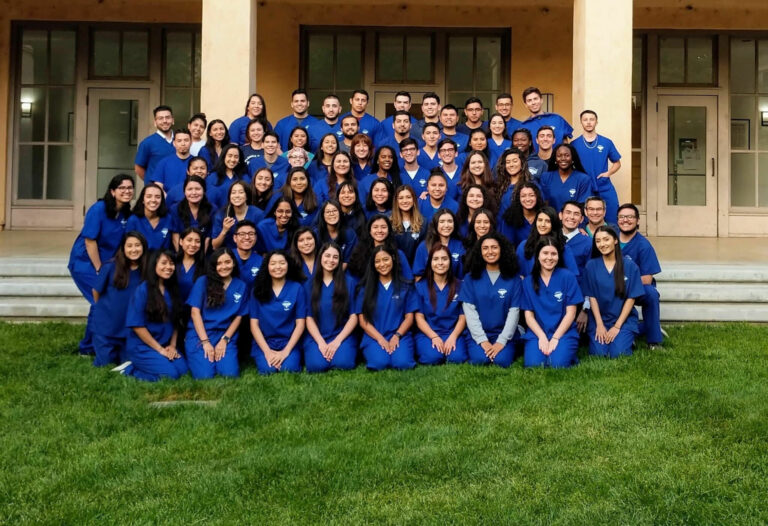
Located in Sacramento, Clínica Tepati is run entirely by UC Davis undergraduate and medical students and is geared toward supporting the Latino community. The goal of the clinic is to provide free healthcare and health education in Sacramento and the surrounding areas. 

Diana Magana Martinez, a fourth-year neurobiology, physiology and behavior (NPB) and Chicana/o studies double major and the executive administrator of Clínica Tepati, has witnessed the impact of culturally sensitive exchanges between Latino healthcare providers and patients in the clinic.

“I have seen that the connection that is made between providers and patients who identify culturally or even speak the same language is a lot deeper than you see if it was otherwise,” Magana Martinez said. “I also see that even in healthcare, you are not treating an illness or […] just a condition, you are treating a person, so with a person comes all of their identities, all of their culture.”

Elian Andrade-Garcia, a third-year Spanish and gender, sexuality and women’s studies double major and the undergraduate representative of Clínica Tepati, grew up in a small, predominantly Latino agricultural town and was motivated to apply to the clinic because he wanted to serve a similar population in his future career. 

“A lot of them will [say] coming to our clinic is one of the few times that they feel that they’re actually being heard and advocated for in the way that they would expect any medical professional to do for them. So it’s amazing to hear but at the same time it’s super disheartening knowing that other spaces don’t always provide that same care,” Andrade-Garcia said.

According to Yesenia Alvarez, a fourth-year biological sciences major and the community representative of Clínica Tepati, for the undocumented Latino population, finding a healthcare provider that is affordable and that they feel will not report them is a hurdle that is difficult to overcome.

“In the Latinx community, healthcare isn’t something that is very accessible, due to finances or due to immigration status,” Alvarez said. “We offer all of our services for free, and our patients are very comfortable with us. Some people are scared to go to the hospital if they don’t have papers—they’re scared that if they go, they’ll be deported,” Alvarez said. 

In Andrade-Garcia’s service with Clínica Tepati, he said that he’s learned that a non-Latino doctor may have internalized stereotypes about the Latino community that could stand in the way of proper care. For this reason, Andrade-Garcia said, better Latino representation in the medical field is vital. 

“Doctors will sometimes assume that Latina women specifically are more hysterical and dramatic about their pain or the symptoms that they’re experiencing,” Andrade-Garcia said. “A lot of that misunderstanding or even chalking patients up to putting on a show is super damaging, especially to the population that we serve, so having more Latinx representation in the healthcare field definitely helps.”

Aylín Rojas, a fourth-year human development major and co-head of the clinic’s mental health committee, became interested in healthcare when her great-grandmother suffered from Alzheimer’s disease and she realized her family had little knowledge of what the condition meant. 

According to Rojas, mental health is often ill-addressed in the Latino community due to stigmas.

“Especially in the Chicanx/Latinx community, […] a lot of people don’t believe depression is a thing,” Rojas said. “A lot of people, even if they know what they’re experiencing is not normal, they don’t really talk about it because it’s stigmatized, and if you admit it, you’re crazy.”

According to Rojas, with the financial strains COVID-19 has put on already-struggling Latino populations, mental health issues are even more important to address, yet often go ignored. 

“Especially during [COVID-19], they’re one of the most impacted communities—it’s really hard to get them to realize […] that it’s okay to have these problems, and when you do, it’s okay to reach out and talk to someone and get help for it,” Rojas said.

Only 6% of doctors in California identify as Latino, although the Latino community makes up 39% of the state’s population. Magana Martinez worries that not enough Latino healthcare workers will enter the field in future years to support the needs of the underserved Latino population. She sees Clínica Tepati, however, as a successful outlet for Latino students who strive to enter the healthcare field despite the unique struggles the Latino community faces and the current lack of representation in the field.

“We see Clínica Tepati as something greater for the next future of healthcare providers,” Magana Martinez said. “It is a worry, but in places like Tepati, I get inspired and I am hopeful that all of our Tepati staff, as we transcend in our professional life, will be constantly making the same impact.”
Written by: Lyra Farrell — features@theaggie.org