52.4 F
Davis

Davis, California

Tuesday, December 23, 2025
Home Blog Page 269

Culture Corner

0

The Arts Desk’s weekly picks for movies, TV shows, books and music

Movie: “American Gigolo” dir. by Paul Schrader (1980)

Director Paul Schrader Bingo—fill out a 3-by-3 note card row by row with the following: 1. Protagonist conceals their true nature with superficial charm. 2. Romance with a soft-spoken woman. 3. Extreme violence in the last 20 minutes. 4. Protagonist has a bizarre or questionable relationship with sex. 5. Protagonist is a lonely, alienated male (free space). 6. Religion. 7. Protagonist engages in self-destructive behavior throughout the film. 8. Box office under $10 million. 9. Semi-autobiographical. And we have like three bingos, baby. “American Gigolo,” with its Giorgio Moroder soundtrack and slick ‘80s sleaze feel, doesn’t stray far from the mean of Schrader’s filmography. Actor Richard Gere gives a fantastic performance in the lead role and, despite a whimpering finale, the film is calm and brilliant. 

Book: “A Cup of Rage” by Raduan Nassar (1978)

Following the singular spiraling argument between an isolated farmer and his journalist lover, author Raduan Nassar hits notes of furious cruelty and confession. This book is extremely short (65 pages) but every line is brimming with psychosexual anger and confusion. For every uncomfortable moment, there’s some exaltation: a step toward a resolution that never really arrives. The prose is vengeful and tons of fun, never snapping out of the delirious state it introduces from the very first line. It can be difficult to stomach, but it’s worth pressing through to the end.

Album: “Les Cinq Saisons” by Harmonium (1975)

“Les Cinq Saisons” is awesome. It takes diverse, beautiful folk tunes into uncharted territory, fusing them with contemplative and expansive progressive improvisation. Despite “Les Cinq Saisons” marking only the band’s second release, Harmonium had already brought this combination near to perfection. It’s impossible to separate the folk from the prog here, not that you’d want to anyway; the product is pressing and beautiful the whole way through. No single note is out of place. While the shorter, sweeter tracks deserve attention in their own right, the true star of the album is the closing track, the 17-minute “Histoire Sans Paroles,” which gives the band’s compositions ample time to breathe, revealing the magnitude behind it all. I forgive the superfluous nature of French-Canadian culture for this reason only.

TV Show: “Xavier: Renegade Angel” (2007)

This show is an absolute nightmare, somewhere between surrealist comedy and philosophical horror. It goes to extreme lengths in the name of never being lucid for more than a moment, and describing the plot of any individual episode is an impossible task. This is one of the few good shows to come out of Adult Swim and, despite its cheap presentation, there is real passion behind it. It straddles a line between funny and off-putting with surprising skill, never becoming predictable or ambivalent—it defies explanation. Unfortunately, it received just two seasons before its 2009 cancellation. But both are magical.

Written by: Jacob Anderson — arts@theaggie.org

UC Davis begins welcoming students back into classrooms

0

Three students share their experiences with in-person classes during the COVID-19 pandemic

While UC Davis plans to resume in-person classes in the fall, a few courses have been offering in-person instruction since Fall Quarter 2020. Although these classes do not look similar to those in previous years, according to three UC Davis students who are taking in-person classes this spring, they have been exciting and refreshing nonetheless. 

Naina Misra, a fourth-year cognitive science major, said that being on campus for class is a welcome break from the rest of her Zoom classes.

“It was a really nice change of pace,” Misra said. “Also the class is outside, […] so just being able to be outside was really nice. It’s a good break from sitting on Zoom all day. I feel like that can be really exhausting.”

Misra is taking Field Methods in Wildlife, Fish and Conservation Biology (WFC 100), which usually includes 30 hours of field work and 30 hours of lab work, a requirement that the pandemic has made more challenging. This quarter, WFC 100 has transitioned from entirely online to hybrid so that some of this important field work can happen. Misra explained that there are two online lectures each week, and the class is split into two groups for lab sections. These two groups alternate being in person, so throughout the quarter each student will have the opportunity to complete five labs in person.

Although she was excited to get back on campus, Misra said that she didn’t expect to be as nervous as she was.

“I was like, ‘Oh my gosh, I’m going to have to be somewhere for a certain amount of time,’” Misra said. “That’s a window of time that I’m not going to be able to do anything else. The thing with online classes is that my schedule has been so flexible. But then when I actually got to the class, it felt very normal.”

Like Misra, Emma Ramirez, a third-year genetics and genomics major, had been completing virtual labs for the past year. This quarter, however, her molecular and cellular biology laboratory, Principles of Genetics, has been hybrid. Ramirez said that being in the physical lab is crucial to learning this material.

“Especially being in an upper-division genetics class, [professors] really realize that we can’t teach these techniques over Zoom because all lab work is incredibly hands-on,” Ramirez said. “Lab is probably one of my favorite things. I love being able to be in the lab, work with samples and also be able to collaborate with my peers.”

Ramirez attends the lab in person every other week, and her class is divided into four groups so she only shares the lab with five other students at a time. In addition to more hands-on learning, Ramirez said that having a lab in person has also helped her focus.

“[At home, I’m] distracted by housemates and our four dogs, and there’s so many external things constantly going on,” Ramirez said. “That makes it even that much harder to stay focused, but when you’re actually in the lab, there aren’t any distractions. You’re just solely focused on the task at hand.”

Ramirez added that it has also been motivating to be back on campus.

“I’ve had two of three quarters of physics being online, and those [labs] are three hours,” Ramirez said. “It is one of the most tedious things to sit through. That week of being on campus has made me excited. I’m motivated again, especially for that class.” 

Ankita Angarwal, a fourth-year managerial economics major, said that her two-hour dance class also felt extremely long on Zoom before it was moved to in person.

“I don’t know if it was just the fact that it was online and we would have to be in our room and it was on Zoom, [but] those two hours go by so slowly,” Angarwal said. “I would be counting down every 10 minutes, but now, the time goes by so much faster because I think [in] dance and art, most of the fun comes with interacting with others.”

Angarwal said that the in-person class feels less tedious, and she is able to get a lot more out of it.

“I think it’s super nice because a lot of my classes are held outside, so there’s not even that big of a risk, but I still get the benefits of interacting with other students,” Angarwal said. “I’m actually creating more meaningful connections.”
Written by: Katie DeBenedetti — features@theaggie.org

UC Davis part of nationwide cyberattack

0

As federal law enforcement conducts an investigation, many details of the Accellion data breach—which resulted in stolen personal information of a range of UC affiliates including students, their families, faculty and staff—remain unclear

The UC was affected by a nationwide cyberattack that impacted 300 other organizations, including other university systems such as the University of Colorado system. The University of California Office of the President (UCOP) was utilizing Accellion’s File Transfer Appliance (FTA), and hackers exploited vulnerabilities in this product to seek financial gain. 

The personal information that hackers may have obtained include names, birthdates, addresses, Social Security numbers, credit card and bank account information. Federal law enforcement is investigating to determine who was affected, and the UC will notify these individuals once they have been identified.

The attackers sent emails to those who had their information stolen and others who may not have been compromised, threatening to release the stolen information to the dark web. Some stolen information has been published online, according to the UC

UC Davis IT prevented phishing emails containing threats to release personal information from reaching UC Davis email account inboxes, according to Vice Provost and Chief Information Officer Viji Murali.

“We did receive a few emails threatening our users,” Murali said in an email. “We immediately prevented those phishing emails from being delivered to your inboxes so users would not click on the links by mistake and get hacked.”

The UC Davis administration stressed that UCOP, not UC Davis, utilized the Accellion software which resulted in the data breach. Chancellor Gary May emphasized that the Davis campus’ systems have been secure.

 “I do want to make one thing clear: UC Davis systems were not breached,” May said via email. “The data that was stolen was from UCOP systems and affected UC campuses to varying degrees.”

Murali echoed May’s sentiment, explaining that affiliates’ personal information was stolen from UCOP systems and asserting that UC Davis systems played no role in the breach.

“As Chancellor May indicated, we were not attacked,” Murali said via email. “We are working closely with UCOP to understand the incident and to follow the recommendations provided to us on how to secure our campuses. We also have multiple tools and applications in place to assist us.”

Murali recommended that all students, faculty and staff take unilateral security measures including theft protection and resetting passwords. Murali extended this recommendation to students’ families, whose personal information could be compromised as well, according to UCnet. UCOP paid for all faculty, staff and students to get Experian IdentityWorks, according to Murali.

“Students, faculty and staff should use multifactor authentication (DUO), change their passwords often and use unique passwords for all of their accounts and applications,” Murali said via email. “This is especially true for your bank accounts and credit card websites. You should also sign up for Experian based on the link provided by UCOP to protect your identity. This is especially important now.”

Ashley Bilbrey, a first-year computer science student and member of the UC Davis cybersecurity club, experienced her second data breach as a result of Accellion’s FTA, despite taking extra precautions against cyberattacks.

“This is also not the first time I’ve had my data breached from this specific vulnerability,” Bilbrey said. “I used to work at Kroger, and they also used this product.”

Bilbrey said she fears identity theft and follows the best cybersecurity practices possible to protect herself against cyber attackers.

“I’m mostly just scared that my identity is going to be taken and I’ll be a victim of identity theft,” Bilbrey said. “As someone who is interested in cybersecurity, I take really great care to protect myself, protect my identity. I try to make myself the hardest target. So it’s disappointing to me when there’s a breach and I couldn’t have stopped it because it wasn’t my responsibility.”

While it is a difficult task to determine which individuals’ information was stolen, Bilbrey said that providing UC community members with Experian identity theft protection for one year is an insufficient response.

“The use of Accellion FTA should have been discontinued in January when there were first notifications that there were vulnerabilities in this service,” Bilbrey said. “Post-notification of this breach, in specific to the university, I am disappointed that they only provided one year of identity protection coverage, as we will need to deal with this the rest of our lives.”
Written by: Rebecca Gardner — campus@theaggie.org

City of Davis celebrates Cesar Chavez Day in its 20th annual event

0

The city’s virtual event includes performances from local youth and messages from community voices

On March 31, the City of Davis shared a video in celebration of Cesar Chavez Day. The video features a mix of musical performances and spoken messages. It will be available to view on the city’s YouTube channel until the end of April.  

Management Analyst for the Davis City Manager’s Office Carrie Dyer, who oversaw much of the coordination of the video, explained some of the history behind the city’s Cesar Chavez Day event. 

“The first Cesar Chavez event was hosted by the Human Relations Committee in 2001,” Dyer said. “One of their charges is to host educational activities that seek to discourage and prevent discrimination and prejudice and to promote diversity, equality and justice.”

Dyer, who also coordinated the city’s Martin Luther King Jr. event and the annual tree lighting event, explained that there are advantages and disadvantages to hosting events virtually. 

“There are definitely pros and cons to putting something out virtually like we’ve been doing,” Dyer said. “[We took] some tools from different events. It’s good because we can reach larger audiences that might not be able to tune in for an in-person event, but we also tend to lose people sometimes.” 

The video features a mix of performances and messages from Davis Mayor Gloria Partida, the youth music group Mariachi Puente and local activists Rick Gonzales and Justine Villanueva, explained Dyer. 

“Longtime community rights activist in town Rick Gonzales provided the farmworkers’ prayer for us, and he has read the farmworkers’ prayer at the Chavez event for years now,”  Dyer said. “We also wanted to recognize the role of Filipino workers and youth in our community.” 

Hiram Jackson, the co-director of Mariachi Puente, explained the origins of the youth music group and its role in the community. 

“I have three kids, and as a parent, I got involved as a music booster. I noticed that there were not as many students that identified as Latino,” Jackson said. “My wife is from Chile and she picked up the vihuela [a type of Spanish stringed instrument]. We focus mostly on junior high students—all of our students are enrolled in a regular music class, and we’ve been around now for about 10 years.” 

Jackson explained that while they have not been able to meet in person, Mariachi Puente has found a way to stay active throughout quarantine. 

“We’ve been making quarantine videos—we have maybe 10 or 11 performance videos,” Jackson said. “I put together a backing track, and they video themselves performing this track. Then they send their videos in.”

Jackson explained that music plays an important role in celebrating cultural heritage and bringing people together. 

“Music is a means of bringing [the] community together and a way of commemorating culture,” Jackson said. “It is a way to be together with other people—I find that sometimes it gets overlooked for that value.”

Partida, who provided the opening remarks for this year’s Cesar Chavez celebration in both Spanish and English, explained that Chavez’s work is still relevant today. 

“Essential workers do the difficult task in our society—often for low wages—and have little resources to deal with crises,” Partida said via email. “The inequity of this reality was the impetus for the farm labor movement. As Cesar Chavez said, the fight is always about people.” 

Although community members are unable to gather, Partida explained that continuing to hold events such as this one fosters community. 

“We must mark the occasions somehow,” Partida said. “It gives us an opportunity to reach out to community members and give them an anchor to hold until we get back to normalcy.”

Partida explained that it is important to remember the collaborative elements of all movements for justice and continue to embody the spirit of collaboration and community today. 

“While it is well known that Cesar Chavez was the face of the labor movement, it took much collaboration and many willing to support this cause,” Partida said. “The Filipino community in particular was ahead of Chavez in organizing. As we continue to struggle to make conditions better for farmers and other essential laborers, we must remember to work together and amplify our activism.”

Written by: Yan Yan Hustis Hayes — city@theaggie.org

Why study abroad when Davis is essentially the new-and-improved London?

0

I see London, I see France, I can study abroad in my underpants

Hey you! Are you dying to study abroad? Dying to meet that special someone overseas while taking English 1? Who could blame you? Here at the UC Davis Hub of Global Learning (unaffiliated with UC Davis Global Learning Hub), we understand that studying abroad can be an expensive endeavor. Between the flight tickets, room and board expenses and frequent tourist shopping sprees, the prices add up. That’s why we’re here to offer you a study abroad experience here in Davis. 

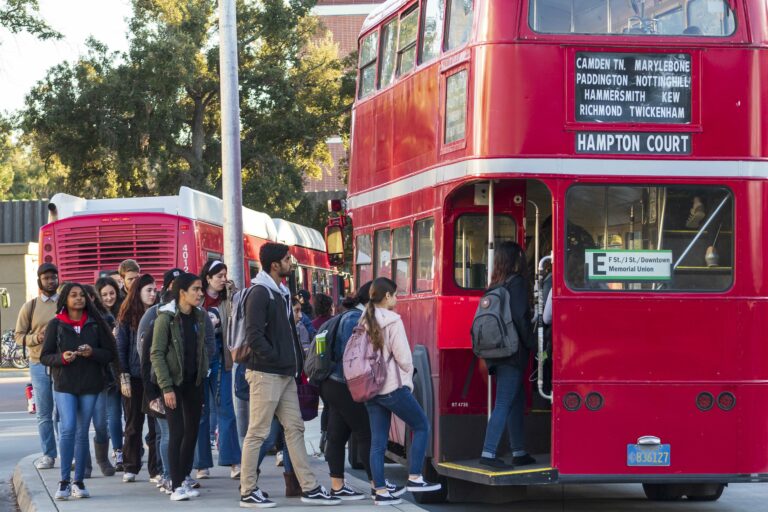
One of our most popular programs is called “London in Davis.” Students will spend their quarter learning about the history and culture of London—from the comfort of their own homes. 

While it’s not enforced, they are encouraged to adopt an English accent and act snobbishly rude at all times. Students reported that their favorite activity was dressing in jerseys and yelling “just kick the damn ball already,” at the local pickup soccer football game.

If you’re still not convinced that you could receive the full London experience here in Davis, we will be asking an alumna of the program to outline some similarities she noticed between the two cities. Here’s the list she gave: 

  1. Double-decker buses. Both cities are known for their red double-decker buses. Enough said.
  2. Big Ben. London is known for its famous clock tower at the Palace of Westminster, called Big Ben. Similarly, I met a student named Benjamin the other day who was 5’7”, and I’m 5’3” so I’d consider him to be rather big.
  3. The Beatles. London is the birthplace of one of the most famous bands of all time. Here in Davis, I have a friend whose buddies are trying to start up an indie rock band. The lead guitarist is currently taking guitar lessons, but says he can almost play “Hey There Delilah.” So, I see no difference—they have Abbey Road, we have Dairy Road.

There’s no better city to experience the culture of London in than Davis. If you’ve found yourself interested in the program, please contact the UC Davis Hub of Global Learning. It would be greatly appreciated if you would refrain from telling people about the program, as the Chancellor is still unaware of its existence.

Written by: Kate Harges — klharges@ucdavis.edu 

Disclaimer: This article is humor and/or satire, and its content is purely fictional. The story and the names of “sources” are fictionalized.

Stark numbers show that larger companies thrive during the pandemic while small businesses suffer

0

As small businesses struggle and large companies like Amazon continue to break records, individuals can decide which stores to support

As the COVID-19 pandemic continued on, America fell into economic crisis, social justice movements came to the forefront of our lives and people became obsessed with TikTok. Healthcare providers were touted as superheroes while some people became distrustful of scientists. This last year has been worse than anything most people could have predicted. 

So why is it that the world’s richest billionaires continued to increase their wealth by 54%? Why have some businesses continued to profit when most other parts of the world suffer? 

Many restaurants suffered from a mixture of the stay-at-home mandates in many states. People cooked more at home and many restaurants were unable to stay open or offer sufficient safe dining options. Meanwhile, according to credit card data from the research firm Second Measure, the meal delivery industry saw a 70% increase in spending with Grubhub, Doordash and Uber Eats seeing an increase in their customer base. 

Gyms began to shut down due to COVID-19 restrictions and there were limited options of outdoor exercising, so another company that saw a major rise in popularity was Peloton, the stationary spin bike that shows instructor-led classes in the convenience of your own home. Peloton has done so well in the last year that they expect even higher sales than predicted as they now expect a full-year revenue to exceed $4 billion, a significant increase from their previously predicted $3.9 billion. 

Unsurprisingly, Amazon saw a giant spike in sales, in part because of the pandemic as it was much easier to shop online than in person. The behemoth of a company was already a staple in many people’s lives but saw even more traction as COVID-19 surged. In the beginning months of the pandemic in 2020, the company acquired more than 175,000 new warehouses and added 36,400 more employees. 

Amazon’s 2020 sales were at $386.1 billion, which was a 38% increase from the year before with profits doubling to $21.3 billion. The company even became a go-to spot for high-demand, low-quantity items—such as toilet paper. From February to March of 2020, toilet paper sales soared to 186% on Amazon. The company also described sales during the holiday season as “record-breaking.” 

As a consequence of Americans hoarding toilet paper and spending more time at home, even toilet paper companies saw a huge increase in sales, as the sale of toilet-paper spiked to over 845%, which amounted to about $1.45 billion in the month of March of 2020 alone.

But perhaps the most successful as a result of the pandemic was Zoom. From May to July of 2020, Zoom saw bigger sales and profit than all of 2019 as the world transitioned into online learning and working. Zoom’s profits from the second quarter of 2020 were $185.7 million, a huge increase from its $5.5 million from the same quarter of 2019. The company reported an adjusted profit of nearly $1 billion, compared to their 2019 fiscal year of $100 million. 

With the successes of major companies came great losses for small businesses. In August of 2020, Yelp saw 163,735 businesses that indicated closures with 97,966 reporting they will not be reopening. According to a survey by the Federal Reserve Bank, it was revealed that three out of 10 small U.S. businesses claimed they would not survive without further governmental assistance, which is an estimated nine million businesses who may potentially have to permanently close their doors.  

In April of 2020, the unemployment rate was at a staggering 14.8% with over 23 million Americans unemployed as most of the U.S. had frantically transitioned into some kind of quarantine: many jobs were going remote or shutting down and people were being laid off. As of March of 2021, the unemployment has fallen to 6.0% with 9,710,000 million people still unemployed.

Large corporations survived 2020, profiting off of a global pandemic that has killed millions of people, while data shows that small businesses and the restaurant industry saw staggering hits.

Individuals should ask themselves if supporting companies—who do not need more sales—for the benefit of cheaper prices or more convenience can potentially come at the expense of small businesses which are often the backbone of communities. Individuals can decide how they spend our money. If this pandemic has illustrated one thing, it’s that supporting one’s community is one of the small things they have control over that can have a big impact.

Written by: Muhammad Tariq — arts@theaggie.org

Staying in tune online: Davis music groups reflect on functioning virtually for a year

0

A cappella and chorus groups at UC Davis share their experiences singing together this year

As a school year of Zoom meetings and online hangouts comes to a close, clubs and organizations in Davis are left to reflect on their experiences during the COVID-19 pandemic. Similar to other organizations, music ensembles have adjusted to a new reality without in-person meetings.

Makenna Stever, a third-year applied mathematics major and the president of The Spokes, joined the all-female a cappella group her freshman year and has loved it ever since. Auditioning on a whim, Stever stated she didn’t expect to find such a meaningful extracurricular and community. 

“It was the niche that I didn’t expect to find in Davis,” Stever said. “It’s been my absolute favorite extracurricular my entire college career.”

Under normal circumstances the group rehearsed for five hours every week and performed at gigs and a cappella group showcases. Since the pandemic began, the group has lost the experience of singing together. Instead, The Spokes meet on Zoom to learn music pieces as a group and practice separate parts in different breakout rooms. The music pieces are created by group members individually recording themselves singing their part which is then sent to the group’s music producer who combines the recordings into a finalized version. 

Moreover, the group has made content with these pieces through music videos posted on YouTube. Stever shared the process of perfecting the group’s sound for these audio pieces when they cannot meet in person. 

“It’s definitely been hard to figure out stuff like trying to make sure that everyone has the same tone and that we’re all blending together,” Stever said. “What we’ve been doing with that is our music director will hold little office hours during rehearsals sometimes, where if we’re learning a piece and we’re submitting audio recordings, you can come to her and show her your recording, and she’ll give you tips on it, she’ll try to make sure that you’re matching her sound.”

Additionally, Stever shared that this year’s singers were mainly composed of new members because the majority of the group graduated last year. 

“Most of the members in our group have never sung in an a cappella group before, are brand new and all they know is [COVID-19] rehearsals and individuals recording and learning music distanced,” Stever said.

Despite her continued love for The Spokes even throughout the pandemic, Stever said she misses singing in person with the group and looks forward to the time when it will be safe to do so again. 

“It was something before [COVID-19] that I looked forward to every day,” Stever said. “And I definitely still feel like I’m a part of something now. I love this group and I will always love being in The Spokes. I just do miss that in-person component and being able to stand next to someone and hear the music live because that’s something that we haven’t had at all this year.”

John Agpalo, a second-year mathematics major and the treasurer of The Liquid Hotplates, is finishing his second year in the coed a cappella group at UC Davis. Coming from a performing arts high school and with a choral background, Agpalo knew he wanted to join a singing group in college and found The Liquid Hotplates to be a perfect fit. 

Before the pandemic, the group would meet every week to practice songs and go over choreography, preparing to participate in competitions like the International Championship of Collegiate A Cappella (ICCA) along with performing at events and gigs. 

Today, the group rehearses online, and according to Agpalo, has gone from focusing on choreography to video editing while preparing for online competitions. 

Agpalo explained the new process of creating music that took place this year. 

“We each record our part of the song, which we send to our sound engineer to piece together and make us sound beautiful,” Agpalo said via email. “We tried singing together on Zoom or Discord, but because of latency, lag or just bad internet, it’s hard for everyone to synchronize and sing at the same time.”

While the group participated in a yearly retreat and small gatherings in the past years, Agpalo shared that it is difficult to meet with his fellow members under the circumstances of the pandemic.

“For the future, we hope that it becomes safe enough for everyone to meet again on campus for our rehearsals face-to-face; I think we […] all just want to see each other again and get back into the old groove of singing and dancing together,” Agpalo said. 

Professor Caleb Lewis, a lecturer in music and the director of choirs at UC Davis, leads three choral ensembles open to students and community members. Before the pandemic, each choir met twice a week for two hours to sing and rehearse for concerts together. When the pandemic initially began, Lewis focused on classes about music history and theory while also doing guided listenings and warm up sessions on Zoom. 

Since fall, however, Lewis has created a routine for virtual projects. 

“We put all the choirs into one group, and we met twice a week on Zoom for a little vocal warm up and a Q&A session [and to] practice some new training stuff,” Lewis said. “Then we do the recording projects where I’d make practice recordings for everybody with a click track, […] they spend a lot of time on their own learning the music, they send it in and then we compile it together.”

In addition to the online meetings and recordings, Lewis has set up slots for one-on-one meetings with singers in which they can seek help on their parts. Since Spring Quarter, however, the groups have been able to meet in small socially distanced groups outdoors, separating back into three ensembles. 

Lewis shared that the social element of the choral groups has grown in isolation, and students have formed friendships while chatting over Zoom. 

“I’ve been really pleased by the enthusiasm and the longevity of a lot of our singers: They just keep showing up,” Lewis said. “Because even though they can’t hear each other singing, they like to see one another, and it feels like we’re together in isolation.”

Lewis shared that while the experience this year is different than normal, the group continues to provide a sense of togetherness that keeps people singing even online. 

“One of the things about music, and singing especially, is that it brings people together who otherwise would not be together at all,” Lewis said. “And that’s what’s really great about it, and I think that people miss that. They just know that it’s a place where [they’re] welcome, and that they can come together. I hope that that’s what keeps bringing people back.”

Written by: Nora Farahdel — features@theaggie.org

2021 NFL Mock Draft for non-playoff teams

0

With the draft right around the corner, The Aggie looks at where the NFL’s future will land

The National Football League (NFL) Draft is upon us, and teams are preparing their final thoughts and big boards ahead of the event which spans from April 29 to May 1. The event will be held in Cleveland, OH this year, so the return of fans will bring back a familiar element after last year’s fully virtual set-up. With the league’s future stars also in attendance, 259 names will be called and their lives will be greatly impacted. 

As the countdown approaches, there is a lot of talk and uncertainty surrounding most of the top 10. After the Miami Dolphins, San Francisco 49ers and Philadelphia Eagles all shuffled the draft order in late March, it remains unknown where these players will land. As fans and teams anxiously await the arrival of players they hope can give them an extra push for a Super Bowl, The Aggie looks at the most probable landing spots for these players. 

  1. Jacksonville Jaguars: Trevor Lawrence, Clemson QB

The NFL Draft’s worst kept secret is the No. 1 overall selection held by the Jaguars. After going 1-15 last year, Jacksonville won the “Tank for Trevor” sweepstakes and will look to build around Trevor Lawrence, who is touted as the best quarterback prospect in almost a decade. After reportedly giving the Clemson quarterback the playbook, the Jaguars are hoping to turn their fortune around and finally have their franchise quarterback, making him the obvious choice at the top.

  1. New York Jets: Zach Wilson, Brigham Young University (BYU) QB

After much speculation on whether the Jets would go quarterback at No. 2, their trading of their former third overall pick Sam Darnold all but solidified that choice. After Zach Wilson’s athletic stature and ability impressed college football once again this past season, many expect New York to begin a new era with the BYU star at the helm. Having not made the playoffs since the 2010 season, the Jets hope they finally got it right with the quarterback selection.

  1. San Francisco 49ers: Justin Fields, Ohio State QB

Having come up short in the Super Bowl just a season ago, last season was quite the opposite for the 49ers as they battled injuries the entire year. Although quarterback Jimmy Garoppolo is still under contract for two more seasons, his ongoing health issues and his limited capabilities as San Francisco’s starter has led the team to make a splash up to No. 3. After many believed the Niners would go in a different direction, Justin Fields is now the betting favorite as the pick to round out the top three. His ceiling and potential as the future quarterback of the 49ers is enough to place him in third. 

  1. Atlanta Falcons: Kyle Pitts, Florida TE

With Fields off the board, the Falcons are in an interesting position. As longtime starting quarterback Matt Ryan turns 36 in May, a future investment could be at play. However, Atlanta could decide to give it one last push. Enter Kyle Pitts, the athletic tight end from Florida. Pitts dazzled at Florida and his 6’6” frame and elite speed makes him the perfect tight end in today’s NFL. As the Falcons hope to make it back to the Super Bowl, Pitts would join a stacked offense of Julio Jones and Calvin Ridley—more than enough to wreak havoc in the league. 

  1. Cincinnati Bengals: Ja’Marr Chase, LSU WR

All signs point to a Louisiana State University (LSU) reunion in Cincinnati, as it is reported that the Bengals are locking in on the LSU star wide receiver. Ja’Marr Chase would join his former college teammate and fellow quarterback Joe Burrow, who is working his way back from injury. After the young quarterback suffered a tough injury during the season, the Bengals hope to give him some more weapons to work with. Although Cincinnati could use a lot of offensive line help, the possibility of teaming up Chase and Burrow to an already impressive receiver room is too much to pass up.

  1. Miami Dolphins: Penei Sewell, Oregon OL

Labeled a “generational” draft prospect, the quarterback-heavy top of the draft could make Penei Sewell slide just a bit. However, the Dolphins could be the beneficiary here, as Pro Football Focus ranked them the 28th best offensive line this past season. Hoping to give last year’s first-round pick Tua Tagovailoa some more protection, Sewell can help the young quarterback flourish after an inconsistent year. 

  1. Denver Broncos (trade with Detroit Lions): Trey Lance, North Dakota St. QB

Rumored to be interested in moving up for a quarterback, the Broncos will be able to do just that in a trade with the Lions. Advancing two spots, Denver is able to get their franchise quarterback in Trey Lance, a prospect from the Football Championship Subdivision (FCS) ranks. After striking out on every quarterback since the retirement of Peyton Manning, the Broncos hope Lance is the fresh start they’ve been looking for. 

  1. Carolina Panthers: Rashawn Slater, Northwestern OL

After trading for quarterback Sam Darnold from the Jets, the Panthers may look to give him some help and boost as he begins a new era in North Carolina. With Rashawn Slater, the Panthers would give Darnold better protection than he had in New York and more time in the pocket. With great speed and balance, Slater will make an immediate impact on the Panthers’ offensive line. 

  1. Detroit Lions (trade with Denver Broncos): Devonta Smith, Alabama WR

The 2020 Heisman Trophy winner gets the nod at No. 9, as the Lions begin a new era with Jared Goff. After a stellar year at Alabama, Detroit will be looking for him to replace Kenny Golladay, who made his way to New York in free agency. 

  1. Dallas Cowboys: Patrick Surtain II, Alabama CB

Another Alabama player is off the board as the Cowboys start the draft in desperate need of defensive improvements. After setting a franchise record in permitted points, Patrick Surtain II would join fellow Alabama defensive back Trevon Diggs, who was drafted by the Cowboys last year. 

  1. New England Patriots (trade with New York Giants): Mac Jones, Alabama QB

Once seen as a possible top three pick, Mac Jones has the potential to slide into this year’s draft. Although the Patriots brought back Cam Newton, Jones gives them a new quarterback to develop in the post-Brady era. 

  1. Philadelphia Eagles: Jaylen Waddle, Alabama WR

Jaylen Waddle would continue the slew of Alabama players drafted, as the Eagles look to give new starting quarterback Jalen Hurts some more weapons. Having drafted Jalen Reagor in the late, first round last year, Philadelphia’s misses at the wide receiver position have placed them in a position to draft someone they hope can be a splash player. 

  1. Los Angeles Chargers: Jaycee Horn, South Carolina CB

The young defensive mind of new head coach Brandon Staley brings a fresh element to the Chargers who are looking to get back into contention. To fix up the defense that showed flashes, Jaycee Horn gives Los Angeles that athletic player in the secondary that can fit Staley’s system. 

  1. Minnesota Vikings: Micah Parsons, Penn State LB

Head coach Mike Zimmer had his worst defense in a long time the previous year, and after many offseason moves, Micah Parsons would be one of the last pieces to get the Vikings back to normal. After a slow start to the year, the Vikings picked up near midseason and hope to build on what they have. 

  1. New York Giants (trade with New England): Alijah Vera-Tucker, USC OL

With quarterback Daniel Jones entering a make-or-break year, the Giants’ offense has enough in their arsenal to compete this upcoming year. Alijah Vera-Tucker stands to add some more pass protection to a line that showed potential, which could be huge for the development of Jones. 

  1. Arizona Cardinals: Jaelen Phillips, Miami DE

Even after the addition of JJ Watt, the Cardinals’ defense needs some help when it comes to rushing the passer. After losing Haason Reddick to the Carolina Panthers and the return of Chandler Jones from major injury, going defensive with Jaelen Phillips would be choosing the best player available. 

  1. Las Vegas Raiders: Christian Darrisaw, Virginia Tech, OL

After a flurry of moves in the offseason, the Raiders must now rebuild their offensive line. Holding the 24th ranked line last year, the addition of Christian Darrisaw allows them to improve and give quarterback Derek Carr more time in the pocket. 

  1. Miami Dolphins: Kwity Paye, Michigan DE

In their second pick of the first round, the Dolphins look to attack a need. The losses of Kyle Van Noy and Shaq Lawson to free agency leaves a hole when it comes to rushing the passer. For their secondary to continue to impress, pressure on the opposing quarterback will be key, making Kwity Paye a reliable pick. 
Written by: Omar Navarro — sports@theaggie.org

Primitive languages do not exist

0

We need to end discrimination through language

Language is what makes us human. Language, the driving force behind how we function today, has been the foundation of society for every human culture on Earth. Our language has developed over thousands of years to fit our needs as a species, so calling any language primitive is just a way to denigrate other groups to feel better about yourself. The concept behind “primitive languages” is discriminatory in nature and void of scientific merit, making it a construct best left deep in the past.

To truly grasp how the concept of a “primitive language” came to be, we have to go back to the beginning of our language studies and language itself. Before naturalist Charles Darwin’s work, language was considered a gift from God, as read in the Bible. After Darwin countered by insinuating that language came from evolution, the roots of language became a touchy topic. It got so contentious that scientific societies even banned papers on the origin of language. 

However, in 1905, a master’s student named Edward Sapir, revived the debate and birthed the myth of “primitive language” still prevalent today. Sapir theorized that because language comes from sound we should be able to analyze the languages of “less-evolved” people to find out how speech emerged, which implied that these indigenous tribes to be studied were primitive and inferior to normal humans. Sapir assumed that, because of their language, these groups were genetically inferior because they weren’t the same as he was—which is discrimination to a T. Sapir even believed that they were so inferior that we could study them as less-evolved versions of ourselves. 

Franz Boas, an anthropologist and Sapir’s own professor, proved all this false. His studies of Indigenous people produced the paradigm-shifting result that every human on earth is equal in terms of evolution. He proved that the entire difference between the “civilized” world and the “lawless” world of the indigenous peoples resulted from cultural differences. Sapir took it upon himself to prove this in the realm of linguistics and confirmed Boas, but his discriminatory assumption is still responsible for the continuation of the “primitive language” myth.

An interesting study about this and the embodiment of what we mean by “cultural differences” is the ethnographic study of the Pirahã people, an indigenous group of people native to South America. The Pirahã live in small groups on the Amazon River and had made no contact with any other group until seen by Brazilians in the 1700s, effectively making them the most “primitive” humans in our world. If primitive languages existed, they would’ve been here. However, it became clear the differences in language between the Pirahã and the rest of the world was purely cultural. 

For example, the Pirahã have no word for directions as we understand them, only referencing “upriver” and “downriver” because their location compared to the Amazon River is all that mattered to them. They also have no past tense or future tense in their language because their society functions purely in the present. This cultural representation of “if I can’t see it, then it doesn’t exist” is also why all attempts to teach the tribe Christianity have been unsuccessful. Their language doesn’t have these things because they don’t need it culturally, not because it’s primitive.

If you have to call a language primitive, I’ll give you one. The Neanderthals spoke a primitive language. They spoke it because the larynx in their throat was slightly higher than ours and their mouths slightly smaller. They could not create the vowels we could due to their throats and couldn’t speak as clearly because their long nose made their mouth small. That was our only advantage over the Neanderthals.

Quick question, which of these species went extinct 8,000 years ago? The one with a primitive language, or humans? 

There is no excuse to call any language (or group of people) primitive in our modern world, yet it still happens all the time. Calling languages (or groups of people) primitive needs to stop. You would never call your own language primitive, and that’s the crux of the problem. You would never assign such a negative label to your own spoken language, yet people see it as fine to place upon the language of others. Saying a language is primitive is incredibly discriminatory and offensive towards its speakers. It is insulting and also completely false. Insulting people based on their culture is not something we do anymore, so stop calling the speech of others primitive. It’s that simple.

Written by: Alex Motawi — almotawi@ucdavis.edu 

Disclaimer: The views and opinions expressed by individual columnists belong to the columnists alone and do not necessarily indicate the views and opinions held by The California Aggie.

Priority registration for student parents and caregivers offered through new ‘virtual hub’

0

The Transfer and Reentry Center has partnered with the Women’s Resources and Research Center to provide priority registration for students who are parents or primary caregivers to adults

Students who provide primary care for their children or are pregnant, as well as students who are primary caregivers of adults, are now eligible for priority registration through the Transfer and Reentry Center’s partnership with the Women’s Resources and Research Center

“It was a natural partnership and, goodness, it’s been a really wonderful collaboration,” said Marissa Weiss, a transfer retention specialist. 

The application, which is offered yearly, is available through the Transfer and Reentry Center’s webpage

Those who become pregnant or are in the process of adopting or fostering a child while at the university are encouraged to reach out to Weiss. 

As part of the push to create more awareness and opportunities for student parents and caregivers, the university has launched a new webpage dedicated to pooling resources throughout the university.

  “We don’t have a Student Parent Resource Center like Berkeley, who has a robust one. We would love to have one,” Weiss said. “When we launched the student parent website, it says on there it’s a virtual hub because it’s almost like a virtual student parent center.”  

Juliene Obusan, a fourth-year global disease biology major, said she had to take time off from her undergraduate career at UC Davis‚ which she started in 2014, to care for her two children. 

“My advisor knew about me being a student parent because I’ve mentioned it a couple of times, and I had to withdraw from school because I got pregnant with my second baby,” Obusan said. “I never heard of any accommodations for student parents through my advisor.”

Weiss said she has had difficulty identifying student parents unless they claimed a dependent on the Free Application for Federal Student Aid (FAFSA), information to which the institution has limited access, or unless they identified themselves as a single parent in their admissions questions. 

“We had to get some background information on the parents which is hard because student parents aren’t really tracked in a consistent manner,” Weiss said. “It’s not unique to UC Davis. It’s really a national issue.”

Weiss said caregivers are even harder to track because they don’t know what types of questions could be asked.

Eric Hanaway, a third-year astrophysics major and caregiver, said he was unaware of the priority registration option until recently. He said he only found about it when The California Aggie called for a request for comment by student parents and caregivers on this development. 

Weiss said she hopes more awareness about the new program will help students. 

Among the resources offered to student parents, the Women’s Resources and Research Center offers its “Student Parent Closet” program, providing free diapers and other supplies to student parents, though the pandemic has limited the availability of those resources. 

Obusan said that she had looked into the programming at the Early Childhood Lab, but because of its half-day programming, she would end up having to pay double the price to have a sitter watch her two daughters for the rest of the day. 

“It wouldn’t have worked for us because of the way I scheduled my classes,” Obusan said. “It was really hard to schedule my classes in clusters, so they were all over the place.”

Kelly Twibell Sanchez, the interim director of the Early Childhood Lab, said the lab currently serves up to 24 children for essential workers, but typically serves up to 84 children for half-day programming.

“One of the hopes that we have in partnering with [Weiss] in the future is to look at what we can do to make the Early Childhood Laboratory more accommodating, particularly to undergraduate student families, single parents [and] low-income parents,” Sanchez said.

Sanchez said she hopes to open up full-time programming for the children of student parents in the future and that the Transfer and Reentry Center will partner to publicize the opportunity to student parents. 

“There’s research that shows the more time children spend time on campus, the more they identify that college or university is for them in the future,” Weiss said. “So in a weird way, it’s almost like doing recruitment to the very youngest people.” 

Obusan said she was often dependent on individual professors to provide accommodations, and mandatory synchronous lectures haven’t helped her.

“The synchronous lectures are a little harsh, especially the mandatory attendance,” Obusan said. “We’re in the middle of a pandemic and there’s a lot of things going on.” 

Before the pandemic, Obusan’s babysitter got sick and Obusan was told she could not bring the child into the classroom for a mandatory lecture or leave the classroom early to take care of her child. She was concerned about the impact this could have on her grade.

“I know there [are] not a lot of student parents on campus, but we also matter,” Obusan said.

When Hanaway’s mother had cancer removed from her stomach last month, he was unable to attend his finals. 

“Fortunately, my professors were able to just give me the grade I had without taking finals,” Hanaway said. 

Obusan said she would love it if there was a community of parents that she could connect with.

“I never realized that being a parent is very isolating,” Obusan said. “I’m never alone because I’m always with my kids, but it’s very isolating.” 

Recently, Sanchez piloted a workshop to provide student parents with early childhood development information and is working on a program to distribute play kits.

“I know that particularly when you are a student, housing space is limited,” Sanchez said. “So having a rotating kit of play materials for your child that you don’t have to store long-term can be appealing.” 

Sanchez said she would like to get the lab up to 80% capacity for Fall Quarter.

Obusan said she hopes that UC Davis will look into adjusting FAFSA fees for student parents who live off campus because the price for a family is much higher than it is for childless students who can have roommates.

“I think there’s a big discrepancy in prices that I think should be changed for student parents,” Obusan said.

Sanchez said the priority registration is intended to help student parents and caregivers manage their schedules. 

“Having that priority registration at least gives them a solid start to set up that important family schedule,” Sanchez said. “Hopefully [it] will take some stress off of parents as they juggle all their responsibilities.” 

Written by: Kathleen Quinn — campus@theaggie.org

Empower Yolo hosts virtual fundraiser to benefit domestic violence and sexual assault victims

0

COVID-19 pandemic negatively impacts victims of domestic violence and sexual assault, according to experts

Disclaimer: This article discusses content that may be sensitive to some readers, including domestic violence and sexual assault

Empower Yolo hosted a virtual walk and run fundraising event from April 3-11. The proceeds benefited the organization, which focuses on supporting survivors of domestic violence and sexual assault. 

Director of the UC Davis Center for Advocacy, Resources and Education Sarah Meredith explained via email that domestic violence and sexual assault have continued to occur throughout the pandemic. 

“Intimate partner violence and sexual assault has continued to affect our UC Davis community throughout the pandemic,” Meredith said via email. “Survivors continue to face many of the same challenges they faced pre-COVID, along with additional challenges unique to this period of time.”

My Sister’s House is a Sacramento-based organization that supports women and children of Asian and Pacific Islander descent who are impacted by domestic violence and sexual assault. Executive Director Nilda Valmores described the organization’s goals. 

“All our work is about preventing and intervening in issues of domestic violence, sexual assault and human trafficking,” Valmores said. “Our whole vision from our board members to our staff, to our volunteers, to our clients—we recognize the importance of trying to end and prevent gender violence from occurring.”

Valmores noted that domestic violence and sexual assault affect people of all backgrounds. 

“Domestic violence and sexual assault affect people of all ages, of all education levels, of all religions, of all colors,” Valmores said. “People should get the help that they need. Otherwise, the problems get even bigger.”

Director of clinical programs at Empower Yolo Amy Groven explained via email that the therapy department at Empower Yolo has recently been receiving an influx of clients seeking therapy regarding domestic violence. 

“We are not out of the woods yet; most people realize this and are still under immense stress,” Groven said via email. “Wherever there is stress, uncertainty and pressure, there is a risk for violence.”

Celina Alveraz, the associate director at Empower Yolo, explained via email that domestic violence is also about power and control.

“Although stress, uncertainty and pressure are some risk factors or triggers for violence, domestic violence isn’t only caused by stress,” Alveraz said via email. “Domestic violence is about power and control, and as long as we continue to live in a society that oppresses individuals, those who lack power and control will continue to be at a risk for domestic violence.”

Natalia Baltazar, the director of development and community relations at Empower Yolo, explained via email that survivors still need resources and support after escaping from dangerous situations. 

“We would like the community to always be mindful of survivors and not forget about them just because it may not seem to be a forefront issue as much anymore,” Baltazar said via email. “Domestic violence is always happening and is always an issue, and we need to always remember to be there for survivors and their families during those difficult times during the pandemic and moving forward.”

Groven noted the increase in uncertainty as a result of the pandemic, which further negatively impacts people experiencing domestic violence. 

“Though the state is easing up on restrictions, people are still struggling with the stress of the pandemic and being out of work,” Groven said via email. “Many clients are fearful that they will get a job and a COVID spike will happen and they will be back at square one.”

Meredith emphasized the importance of dismantling oppressive systems as a whole in order to help combat domestic violence. 

“Gender-based violence, including intimate partner violence and sexual assault, is sustained in a community where racism, sexism, cis-sexism, xenophobia and other forms of oppression are allowed to exist,” Meredith said via email. “If folks want to end gender-based violence, they need to be thinking about how to dismantle these oppressive systems.”

Valmores offered a word of advice to anyone experiencing a situation of domestic violence or sexual assault. 

“Be brave and get the help—find someone who’s professionally trained to deal with the issue,” Valmores said. “These issues are very complex, and it’s hard for others who aren’t trained. There are resources available to assist folks. They should access those resources.”

Valmores left a final note regarding the importance of discussing difficult issues such as domestic violence and sexual assault. 

“It’s uncomfortable to have these discussions, but it’s important to have these discussions so that people can address the issues and the trauma that have occurred in their lives,” Valmores said.

For those who may be experiencing domestic violence and sexual assault, resources such as Empower Yolo’s crisis line at 530-662-1133, the National Domestic Violence Hotline at 800-799-7233, or WEAVE’s support line at 916-920-2952 are all available 24/7.

Written by: Jelena Lapuz  — city@theaggie.org

Student completes more thorough background check on TA than NCIS within first five minutes of class

0

On a mission to discover everything but the syllabus

Let’s face it. No one particularly cares for Zoom introductions, especially the one-sided rambling of your apathetic teaching assistant (TA). You could find out more from a thirty-second Google search than from their inane mini-presentation about themselves. Actually, that’s not a bad idea.

How do you spell that last name? No, wait, here it is. Seventy-eight results on Facebook. Okay, grad students, Sacramento Davis area… 

Here. Got it. That was easy. 

University of Alabama, blah blah blah. Neurobiology major? This is a history class. Why are you teaching this class? 

Ooh, campus involvement. Let’s see that. Geography Club. Sounds like a hoot. And a sorority? Let’s go to their Instagram. Tagged photos. Oh, how cute. They’re all wearing the same white mini dress and borderline culturally insensitive fake tan. I wonder if they bulk order those dresses from Sears. 

Wow! That—that’s definitely not legal. I guess sophomore year hit hard. 

I’m really good at this, actually. I should work for the Federal Bureau of Investigation. Or try to find my ex’s new girlfriend on Instagram. Did she say she was an astrological counselor?

Maybe I should check on the Zoom. Oh look, they’re on another slide about her boyfriend. He’s from Wisconsin. They went to Disneyland together. Riveting. I can see him on her Instagram dressed like a rejected J.Crew model. Wait, that’s her dad. Oh my God. He looks like her boyfriend. Oh my God. She’s dating her dad. Ewwwwww. Is there a hotline for this? Disgusting. Anyway, moving on.

Who links their Twitter in their Instagram bio? You are not Chrissy Teigen.

“I would literally kill someone for Olive Garden breadsticks.” Dude, you don’t have to. They’re unlimited. 

“Undergrads are idiots. They never pay attention and then email at the last second.” Oh, that’s just unfair. This one says, “Stop stalking me.” Who would want to retroactively read your mediocre attempts at—Okay, point taken.

Wait, did she say something important? No, they’re still on the syllabus. I can read the words “office hours,” thank you.

LinkedIn! How could I forget LinkedIn! Sales associate and customer advisor at Burger King. That’s definitely a stretch. Wow, can you actually speak Arabic, Spanish and Zulu? Elementary proficiency. Get out of here.

The Zoom is ending. Smile and wave. No, I will not do the reading. You might want to ask if your father has an illegitimate child who grew up in Wisconsin. 

Unmute for the first time to say thank you. I’ll email you my questions. Keep smiling while clicking to exit. Goodbye.

Written by: Annabel Marshall — almarshall@ucdavis.edu 

Disclaimer: (This article is humor and/or satire, and its content is purely fictional. The story and the names of “sources” are fictionalized.)

UC Davis helps develop enzyme to convert pigments into new natural blue food coloring

Pigments, or anthocyanins, of blue color are extracted from red cabbage to be converted into products for commercial use

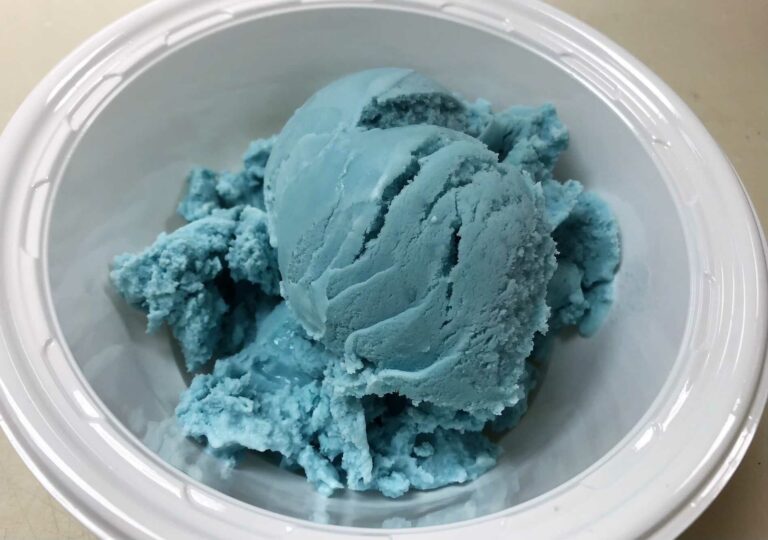
An international team of researchers, including chemists from UC Davis, recently discovered and refined the natural production of cyan blue food coloring, a challenge that has plagued scientists for almost two decades. 

The scientific lead on the research project, Pamela Denish, a current UC Davis Ph.D. candidate in her sixth year as part of the Biophysics Graduate Program, explained why discovering this natural blue dye on par with the current FD&C Blue No. 1 was such a remarkable feat.

“There has been this movement in the customer demand for natural ingredients and their food products, and people are trying to get away from synthetic ingredients,” Denish said. “So we’ve seen a lot of the major food producers making public commitments to getting rid of synthetic ingredients and one of those groups of ingredients is food coloring. Companies have started to phase out synthetic dyes in favor of naturally sourced colors and they actually found that blue is really hard to find; it does not exist in nature as much as you would think.”

Mars Advanced Research Institute and Mars Wrigley Science and Technology, addressed as Mars for short, has been the primary research institute developing a natural and brilliant blue dye. They found that the pigment in red cabbage produced a perfect brilliant blue, but only existed in very minimal amounts. 

With the help of chemists from UC Davis, an enzyme has been developed and refined to convert these pigments, called anthocyanins, into much higher amounts and at a much higher efficiency in hopes of meeting customer demand. Mary Riley, a graduate student in the UC Davis Department of Microbiology, tested and refined the enzyme to better mass produce the anthocyanins.

“[Mars] realized that this anthocyanin was only like 5% of the entire red cabbage mixture,” Riley said. “There are these other anthocyanins that are just slightly bigger than this one that we want, and we designed an enzyme to break those bigger ones into the small one that we want. So then it goes from 5% of that anthocyanin we need to like 50% of the mixture.”  

Rebecca Robbins, a trained organic research chemist at Mars, explained the chemistry behind why blue is such a rare color in nature compared to other colors like reds and violets.

“In order for the anthocyanin to absorb in the red area, for example, nature has to create actually very elaborate structures,” Robbins said. “It’s just the nature of the wavelength and the energy. You see all the violets in petunias; that’s an anthocyanin but it’s just a simple anthocyanin. In order to really shift it to the area of blue, nature starts to add aromaticity. It has to react with metals; it has to not only increase one molecule, but sometimes it has the stack in order to get blue and the right wavelength. That costs a lot, if you will, in terms of natural resources and natural energy, so they are very rare in nature.”

From what appeared impossible, UC Davis chemists successfully designed an enzyme to help convert these rare anthocyanin blue dyes, found as a small percentage of red cabbage extract, into a highly efficient anthocyanin that can now be used for mass production. 

“We were able to look at the anthocyanin that we wanted, to look at what other things exist in red cabbage and come up with an enzyme reaction for enhancing that blue anthocyanin from red cabbage,” Denish said. 

From the lab to the world of industry, Denish and Dr. Justin Siegel, for whom she works in the lab, had already begun a startup company called PeakB, which Denish explained as a unique opportunity to bring the blue color to the market.

“I think it’s a cool opportunity to kind of standardize the production of natural food colorants,” Denish said. “There are a couple of big companies that have started to transition into that. They’re called color houses, and basically there are companies dedicated to food coloring. But they have their portfolios of all these synthetic dyes and have slowly started to look for sources of natural color, so we’re trying to just kind of establish that pipeline for blues.”
Written by: Brandon Nguyenscience@theaggie.org

How quarantine has impacted students’ body image

0

Two Student Health and Counseling Services counselors weigh in on quarantine’s effect on students’ perception of their bodies

Disclaimer: This article discusses eating disorders, a topic that may be sensitive to some readers. For more information and resources about eating disorders visit https://shcs.ucdavis.edu/health-topic/eating-disorders. 

With more time spent at home during the COVID-19 lockdowns, social media consumption has greatly increased. This spike in social media usage and lack of fulfilling in-person activities can cause students to spend more time comparing their appearance to others’. Two counselors at Student Health and Counseling Services (SHCS) who specialize in eating disorders—Meghan Jones, a counseling services postdoctoral resident, and Katie Silbiger, a health psychology doctoral intern—discussed how quarantine has impacted students’ body image and how they can overcome negative thoughts about their bodies.

Jones pointed out that students are regularly staring at their own face and classmates’ faces during Zoom meetings. This puts a lot of focus on appearance and makes it easy for them to compare their own looks to others’. In addition, Silbiger noted that the pandemic has limited access to some things that bring balance and richness to many students’ lives, such as friends, family, activities that have been canceled and places that have been closed.

“When your world gets very small, it’s easy to forget that you have many different identities and that you are more than a student and definitely more than just a body,” Silbiger said.

This focus on appearance can be further heightened by social media. As students are more restricted from seeing peers in person, many have resorted to social media as a replacement for social activities and as a way to keep up with friends. 

“It seems like students have been using social media more to stay connected and are comparing themselves a lot to others, especially ‘influencers,’ since quarantine,” Jones said. “It can be easy to think that what we see on social media is the expectation and is how our own body ‘should’ look.”

Early in the pandemic, there were a lot of messages circulating social media about engaging in “self-improvement” while being at home. While this could encourage students to take up new hobbies and make the most of their time in lockdown, it could also increase the pressure to fit a certain image, according to Silbiger.

“When ‘self-improvement’ turns into a mandate that you need to look a certain way or stick to a rigid set of rules to be okay with yourself, that can create a problem,” Silbiger said.

Jones stated that while having more focus on the body is not necessarily a bad thing, research suggests that a person’s mood impacts their perception. For example, if someone is in a more negative mood because of everything that has happened this past year, they could be more likely to perceive their body negatively. Furthermore, when a student becomes highly fixated on their body, it can affect their eating habits and daily routine.

“Having so much focus on the body also takes up a lot of brain space and can lead to difficulties focusing on other things like academics, hobbies and even social life,” Jones said.

While students may struggle with their body image because of these factors, there are ways that they can overcome these negative thoughts. For example, instead of engaging in negative self-talk, Jones recommends talking to oneself using the same positive language as one would use with a friend.

“For example, I would never look at a friend and say ‘You’re so ugly,’ so why is it okay for me to look in the mirror and say that to myself?” Jones said. “To a friend, I would probably say, ‘I love that shirt, you’re glowing,’ or maybe, ‘You’re having a great hair day.’ So practicing talking to ourselves in that positive way can be really life-changing.”

According to Jones, this strategy can be used for body image, academics, sports or any area of life in which there can be negative self-talk. Students can also focus on non-body-related goals or interests instead. This can help them practice body neutrality, the idea of adopting a neutral perspective toward one’s body.

“It can be hard to fully love your physical body 100% of the time, so it can be pretty freeing to remove that expectation of yourself,” Silbiger said.

Students can also curate their social media feed to avoid content that makes them view themselves in a negative light.

“If seeing posts from a certain person always makes you feel like garbage, go ahead and unfollow or hide them,” Silbiger said. “Maybe you’re following someone for inspiration, but when you look at their posts, you actually feel inadequate, rather than inspired—unfollow. You can replace those things by following content creators with content that actually makes you feel good instead.”

 In addition, Jones recommends diversifying one’s social media feed with things unrelated to people or bodies, which can help deemphasize looks.

“There is so much amazing photography of landscapes, animals, art and other stuff on social media,” Jones said. “There are also a lot of cool informative videos about social justice, cooking and new hobbies that can be fun to see more of.”

Resources on campus can help students facilitate a healthy relationship with their body, Jones said. SHCS has two groups for students with eating concerns, Heal and Nourish. Heal covers skills and strategies for managing difficulties with eating and body image, and Nourish is an open discussion group where students with past or current eating disorders can share their experiences and struggles. Both groups accept new members at the beginning of each quarter and are free for any enrolled students.

Anyone interested in joining one of these groups can call counseling services and ask to be placed on the waiting list for the following quarter. SHCS hosts an information session to help students identify which group may be the best fit.

“I would suggest that students try to give themsel[ves] some self-compassion and understanding that poor body image doesn’t develop overnight,” Jones said. “There are many reasons why this is a struggle, and it will likely take some time to change those negative thoughts and find body acceptance.”

There are also individual therapists who specialize in eating disorders and brief therapy (5-6 sessions), which are also free to all enrolled students. To discuss body image concerns, students can make an appointment with an eating disorder specialist or any therapist.

“It’s also okay to make an appointment if you aren’t sure you have ‘enough’ of a concern to talk about,” Silbiger said. “First sessions are called ‘initial consultations’ because the therapist is there to listen to what’s going on and help you decide what kind of support would be best for you. Whatever it is that you’re dealing with, we are here to listen.”

To make an appointment with SHCS or for after hours crisis consultation call 530-752-2349

The following links can be used to learn more about eating disorders and find counseling or recovery services:

SHCS Eating Disorder Services

Eating Recovery Center of California

Sutter Center for Psychiatry 24-Hour Crisis Line: 916-386-3620

Additional Resources:

Healthy UC Davis

National Association of Anorexia Nervosa and Associated Disorders

National Eating Disorder Association 
Written by: Liana Mae Atizado — features@theaggie.org

UC Davis offers new ‘Cow Wrangling’ major, comes with free hat and whip

0

Yeeeeeeeeehaw!

“We at UC Davis support all kinds of education, and we want to allow students to follow their dreams of eating beans and dying of dysentery,” said new head of the Western Studies Department, professor Thaddius Cowboy. 

It’s been a long time coming, but UC Davis finally has its first official “Cow Wrangling” major (COW), filled with classes like “Professional Yeehawing 101,” “101 Ways to Cook Beans” and “Brokeback Mountain Climbing.” Professor Cowboy has even hinted at a possible study abroad opportunity at Donner Pass for more “culinarily-minded” students. 

Students who have taken the first round of the new COW curriculum had a lot to say: “So I took one of the classes just to try something new, y’know? And after one week I’ve stuck my arm in a cow, hit myself in the face with a whip and I think I’m becoming illiterate,” said one student.

“I’m really grateful they started the COW curriculum. Cow-wrangling has always been my dream, and I never knew I could do it professionally. I’ve just been walking around in chaps and a cowboy hat around campus, terrorizing the townsfolk,” said a second-year, riding a horse through the Memorial Union.

“YEEEEEEEEEEEEEEEEEHAAAAAAW,” said another student.

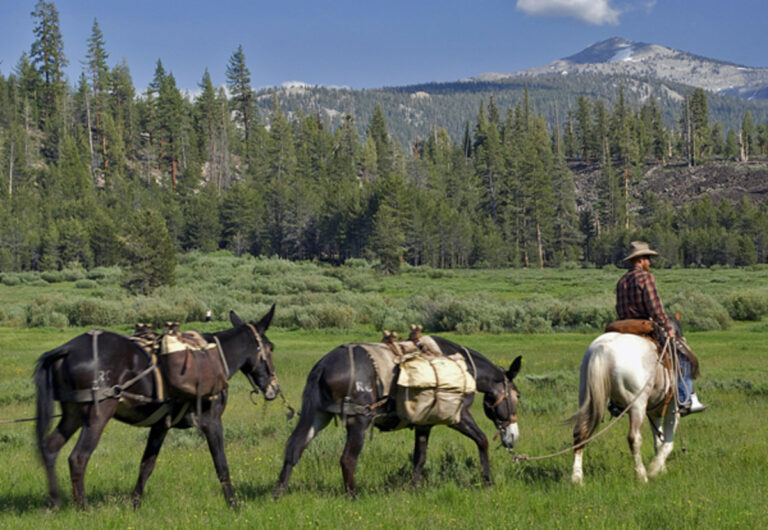
It’s not just all horse riding and dangerous river crossings. As part of their senior project, students must retrace the Oregon Trail, crossing only with the materials and technology appropriate to the era. And as entertaining as it may seem to cross America eating only bacon and eventually your horses, multiple students have failed the trip.

But that’s not all. If you actually make it back to Davis in one piece, you’ll be forced to face down Professor Cowboy himself. You’ll showdown at noon in front of the Memorial Union, and whoever is the last man standing will gain the title of Professor Cowboy and teach the curriculum for the next year. The current Professor Cowboy is undefeated, but with a practically-free Doctorate degree bounty on his head, who knows how long until the next professor is named. 

The current Professor Cowboy assured me that it’s just part of “being a cowboy.” 

UC Davis’ first, spur-jangling steps into the world of the West may be a bit of a culture shock to other students, but I respect all forms of education and expect all students to do the same. COW classes will be available to all students next quarter, with priority registration for students from Texas.

Written by: Ian Cosner — iacosner@ucdavis.edu 

Disclaimer: (This article is humor and/or satire, and its content is purely fictional. The story and or names of “sources” are fictionalized.)