53.5 F
Davis

Davis, California

Tuesday, December 23, 2025
Home Blog Page 268

City of Davis and UC Davis collaborate on ‘Reimagine Russell Boulevard’

0

Community invited to participate in the planning stage of project

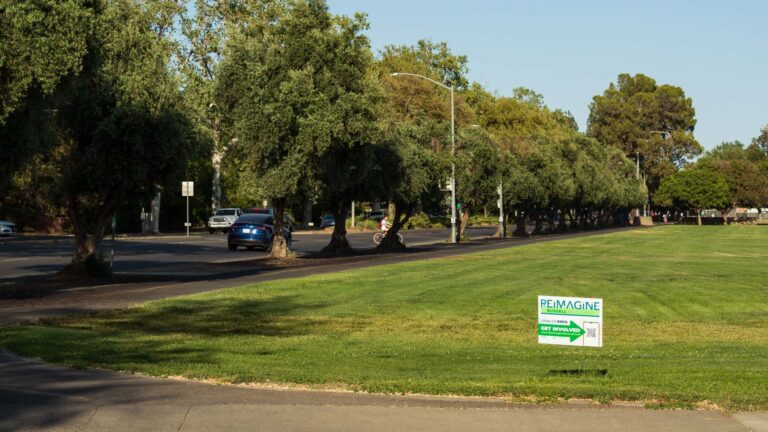
On April 28, the City of Davis and UC Davis hosted a virtual community meeting from 5:30 to 7 p.m. in an effort to get the community involved in the planning process to improve Russell Boulevard

The project grew out of a memorandum of understanding that the city, the university and Yolo County established in 2018, according to City of Davis councilman Dan Carson. He explained that cooperation was vital since campus activities also impact the city as a whole.

“The impetus for this planning really came out of the 2018 memorandum of understanding that involved three parties: UC Davis, Yolo County, and the City of Davis,” Carson said. “The gist of the agreement was: how was our community going to work together with these different parties to deal with the impacts of growth from the campus, which impacts housing and transportation?”

Carson explained that community members have brought forward a variety of ideas and considerations for reimagining Russell Boulevard. 

“In my district, some of the ideas that are bubbling up in the conversations are things like creating a traffic circle where Arlington and Russell converge and installing other controls at other intersections on Russell to make it safer for bicyclists and pedestrians to cross,” Carson said. 

Carson also noted that additional funding for this project is derived from the University Mall. 

“When the University Mall project was being considered, future monies generated from that project were earmarked for making improvements both on the north side of Russell, where the University Mall is now, but also on the south side of Russell along the area of that project to try to create a safer passageway both for bikes and pedestrians,” Carson said. 

Senior Transportation Planner Brian Abbanat specified that there would be financial limits to the feasibility of some traffic solutions. 

“There’s a lot to consider, there’s a lot on the table—we haven’t excluded anything, and there are going to be some natural limits from a cost standpoint,” Abbanat said. “There will only be so much space in portions of the corridor, and that will all be taken into consideration when we go through the process.”

The project may also involve Yolo County, as Abbanat suggested that the project leaders might extend the western boundary of the project to include the intersection with County Road 98, where Yolo County is building a roundabout

“It’s a long stretch of road, three miles, so we’re also talking with the county to consider extending the western border,” Abbanat said. “The western boundary of our project ends at Lake Boulevard. There’s approximately two-thirds of a mile between Lake Boulevard and County Road 98. In this case, there was consensus that it would make sense to continue the planning effort to extend all the way to the intersection with County Road 98.”

Abbanat focused on bike lanes as one area for improvement. Segments of Russell lack dedicated bike lanes, which is a hindrance to bicyclists who must navigate through high-speed, high-volume traffic as they move west. 

“In terms of bike lanes, there are segments of Russell particularly between Anderson and A Street where there aren’t bike lanes on the street at all,” Abbanat said. “In the westbound direction, that’s really problematic, because if somebody’s traveling on Fifth Street, through downtown, they’ll want to go to University Mall, or just continue westbound. It’s really uncomfortable to continue on the street, because they are now sandwiched between parked cars and fast moving, high volume traffic.”
Written by: Rachel Shey — city@theaggie.org
Major League Baseball versus the Georgia Voting Laws

0

Nobody knows who they’re sticking it to

New voting laws passed in Georgia to appease former President Donald J. Trump, and supporters of the “Stop the Steal” campaign have had responses from all over the political spectrum. The Democrats’ opposition has blasted these new laws as racist voter suppression, while Republican backers have praised them as measures that ensure the security of the ballot box. Meanwhile, Trump has blasted these laws as “too weak” and decried the Republicans in support of the Georgian law as Republicans in Name Only (RINOs). 

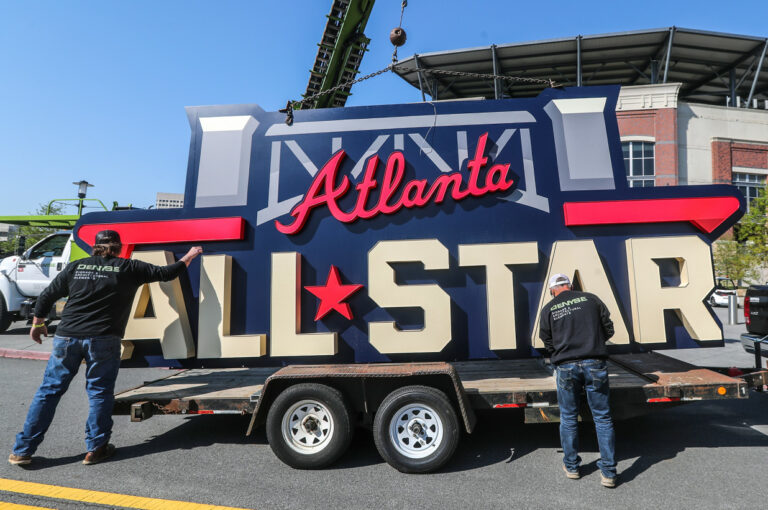
Shortly after these new laws were passed, Major League Baseball (MLB) announced that the 2021 MLB All-Star Game would be moved out of Atlanta—one of the many corporate responses to the new voting laws in the wave of economic backlash.

GOP lawmakers had a strong response, with Republican senators putting forth legislation to end MLB’s antitrust exemption, a huge move that could change the business of baseball. On the other hand, Republican Senator, Senate Minority Leader and filibustering fiend Mitch McConnell warned CEOs to stay out of politics. According to reports, in order to really stick it to these meddling corporations, McConnell remains staunchly opposed to raising corporate taxes.

Meanwhile, on the other side of the spectrum, President Joseph R. Biden encouraged the MLB to move their All-Star Game out of Georgia by labeling these new voting laws as “Jim Crow on Steroids.” Biden would have probably been closer to the truth if he had said that Jim Crow was this new Georgia law on steroids with a hidden camera in center field. Surprisingly, MLB decided to condemn something that was allegedly on steroids before it made them a ton of money.

Reactions to the MLB’s move in the political sphere seem to be divided along partisan lines. Many on the left praised the bravery of a multibillion-dollar corporation that pays its minor league players poverty wages, while many on the right decided that corporate power is a problem only when it is turned on them. 

All this continues without asking the important questions: How effective will this move by the MLB and other corporations be in changing legislation? Why do corporations have this much power? And without all this, would anybody care about the MLB All-Star Game?

Written by: Ean Kimura — etkimura@ucdavis.edu
Disclaimer: (This article is humor and/or satire, and its content is purely fictional. The story and/or names of “sources” are fictionalized.)

Student leaders share about UC Davis’ virtual Picnic Day

The hard work of the student board contributed to a successful virtual event

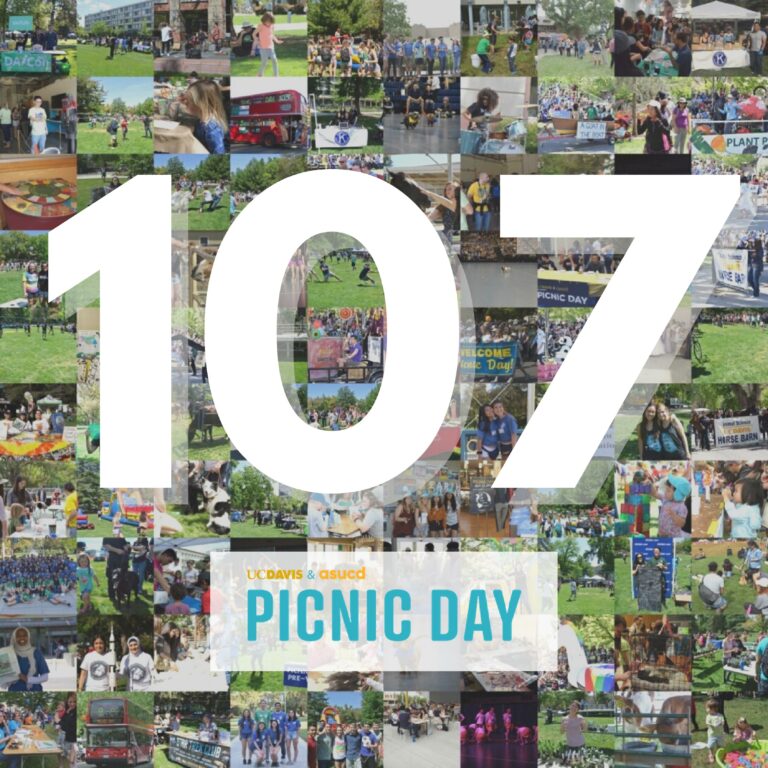
This year’s annual Picnic Day took place on April 17 and intertwined asynchronous events with live virtual Zoom events held on ASUCD’s Picnic Day website. In light of the pandemic, the student-run board had to focus on finding a way to continue the beloved Davis tradition with all of the fun involved. When the planning for this year’s event started, the team had no indication of how Picnic Day would go.

“In dealing with so much uncertainty, one thing was certain,” said Alexis Tornero, a third-year managerial economics major and Publicity Director for Picnic Day, via email. “As Board members, we have a love for Picnic Day that cannot be shaken and we know like ourselves, there are many students, staff, faculty, and others in the Davis community who love and look forward to Picnic Day every year. Because of this, we knew it was important to keep up the Picnic Day tradition not just for us, but for all Picnic Day enthusiasts.” 

With over 100 years of hosting Davis events under their belt, there were plenty of virtual activities planned, including animal events, a scavenger hunt, the children’s discovery fair and different exhibits. The Picnic Day board worked hard to continue the fun for everyone this year, offering a wide variety of at-home activities. 

“The general consensus from our Exhibits Awards Polling seems to be that most people enjoyed Cockroach Racing, Biomedical Engineering & Biomedical Engineering Society present Escape the Genome and Biomedical Sciences Facility as well as A Virtual Fashion Show hosted by the Fashion and Design Society,” said Erxue Wang, a third-year managerial economics and music double major and the Exhibits Director for Picnic Day.

The ranging events also included live music performances, several activities including a yoga class, an exhibit on how plants communicate and a pancake breakfast. In order to cater to all of the typical Picnic Day audiences, they also held family-friendly activities. The Children’s Discovery Fair included DIY lava lamps, origami crafts and slime.

“This year’s Picnic Day was very exciting, it was a very rewarding experience to see how everything turned out after all of our hard work and planning. Our LIVE Children Discovery Fair craft tutorials went very nicely and the kids really enjoyed making some crafts,” said Jade Cervantes, a fourth-year animal biology major and Entertainment Director for Picnic Day. 

The board continued to stick to tradition by naming a theme for the event, but they wanted it to represent the events that everyone has gone through. This year’s theme, “Discovering Silver Linings,” was a fitting choice. 

“We chose this theme because despite all that has happened this year, the UC Davis community has continued to find silver linings everywhere,” Tornero said. 

As UC Davis created a bubble around the town and its civilians, people have persevered and continued on with their attempts to make the most out of their days and trying to keep everyone COVID safe. 

“It’s been a very challenging year for all and I have faced a handful of challenges myself,” Tornero said. “When faced with these challenges, I pushed myself to find silver linings in every part of my life, including the continued love and support from my family, friends who reached out constantly despite not being able to see one another, and last but certainly not least, the Picnic Day Board who have also supported me and helped me become the leader I am today.” 

The “Discovering Silver Linings” theme followed throughout the event and while the process of creating Picnic Day wasn’t the same as previous years, the board members found that through their hard work and organized planning, Picnic Day was a success. 

“Last year I learned that patience is key, which I took into consideration this year because being entirely virtual comes with a lot of patience not only for navigating new ideas to do things virtually, but to make Picnic Day just as engaging as it was in person,” Cervantes said. 

The first Picnic Day was held in 1909, as the University Farm celebrated their new dairy barn and invited the community to view it, giving away free coffee to the visitors. Two thousand visitors attended the event, but over the years Picnic Day has grown into a grand celebration and student-run event, bringing together both Davis community members and visitors from afar. 

“My first goal for this year’s Picnic Day was to focus on solidifying the great relationships that we had already built with our past [year’s] Picnic Day participants,” Wang said. “This is all the more important for us this year as Picnic Day became virtual and our only form of communication with the participants was through emails and the occasional phone call.”

This year’s multitude of activities created a welcoming environment for all those who long for the normality and excitement that Picnic Day once provided. This event went smoothly thanks to the student board who worked to put on the event completely virtually.

Tornero described the board’s motivation in creating the best experience possible for the event.

“We worked hard this year to provide a virtual experience so that Picnic Day could hopefully be a silver lining in someone’s year, something they could still look forward to.”
Written by: Itzelth Gamboa — arts@theaggie.org

Statistical insignificance and dire consequences: How public health data fails marginalized groups

0

Native Americans are excluded and mischaracterized in COVID-19 data, undermining the severity of the pandemic’s impact on their community

How does the collection and portrayal of data influence public perception of an issue? The presence of data during a pandemic is a source of consistency and comfort. It connects you from your screen to every disembodied death toll, new COVID-19 case and now vaccination numbers. Data is consistent: its perceived neutrality removes it from an untethered, qualitative human nature that is hard to process.

Data, however, is not entirely untouched by the individual or institution. Recognizing the malleability of data and the human hand that shapes it does not weaken the power it holds, but rather awards it a new power central to how data has the ability to quantify and add value to things and people, thus responsible for the making of worlds.  Public health data represents a type of responsibility that on one hand is grasping at the lives of those in need and on the other  holds the solutions to aid them.

The body between these two hands are public health professionals and the general public. According to Nancy Krieger, a professor of social epidemiology at Harvard University, the ways data is collected and reported to public health professionals and the public impact the support or opposition for public health programs. To make it into the conscience of public health professionals and the public, you need to be included in the data. 

So what about the groups who do not have a hand in data and are grasping for entry into public conscience?

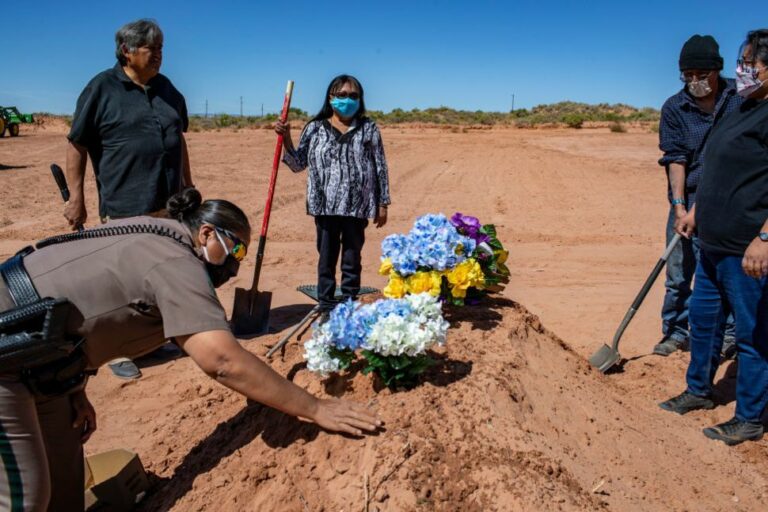
Native Americans have been disproportionately affected by the pandemic. As of Feb. 4, one in 475 Native Americans have died from COVID-19 compared to one in 825 white Americans and one in 645 Black Americans. 

Yet in the first year of the pandemic, Native Americans have been erased, mischaracterized and rewritten out of public health data. An analysis by The Guardian revealed that of the 80% of state health departments which released racial demographic data about COVID-19, half of these states did not include a separate category for Native Americans and relinquished them to “other.” Even in areas with large Native populations, states like New York and California did not include Native Americans at all in their data collection at the time the study was conducted.

Other data collection problems persist as well, such as mischaracterization and listing the incorrect race on death certificates. In California, doctors often assume a person of Native descent is of Hispanic or Latinx origin because of their surname. Because of this racial misclassification, the data on COVID-19 for Native Americans may be more drastic than reported. 

In doing so, the stories, needs and disparities experienced by Native Americans are not weaved into the narrative of public health data and are instead written out of existence. If data can “make up worlds,” the way public health data is collected creates a reality where Native Americans are excluded from resource allocations, media coverage and public awareness. It is in this vein that data can be weaponized against a community—by erasing problems from existence through exclusionary or careless data collection, we bear no social responsibility to them. 

Behind each dataset is an individual and institution with a situated viewpoint that is limited to their singular set of experiences. When so few standpoints arrive at the table, the way that data is collected and produced conceals issues and populations from necessary discourse. 

The ongoing data collection issues faced by Native Americans have persisted for years, according to Abigail Echo-Hawk, the director of the Urban Indian Health Institute who has spoken at workshops and testified before Congress for the ethical inclusion of Native Americans into public health data. 

Public health data has not only failed to include Native Americans in an essential data narrative, but has made accessing existing information an uphill battle. Echo-Hawk’s institute, along with other tribal epidemiology centers, were initially denied access by the Centers For Disease Control from data about COVID-19 testing and cases due to privacy concerns, although this data was made available to states.

The lack of ethical inclusion of Native Americans in public health data is an example of “undone science,” where research is underfunded, incomplete or ignored despite community groups and activists urging its importance. As Native American communities and activists fight for inclusion into data that has systematically excluded them, it is more essential than ever to recognize how data can be weaponized to erase people from our public conscience because ignorance becomes organized.

Written by: Renee Wang — reswang@ucdavis.edu Disclaimer: The views and opinions expressed by individual columnists belong to the columnists alone and do not necessarily indicate the views and opinions held by The California Aggie.

Alumna helped innovate the recently flown Mars helicopter, Ingenuity

0

Sara Langberg, a UC Davis 2016 graduate, details her experience in bringing Ingenuity to life and how her studies at UC Davis led to her work with NASA

Sara Langberg, who graduated from UC Davis in 2016 with a degree in mechanical and aerospace engineering, has helped to build and test the first ever helicopter to make a powered, controlled flight on another planet. The experimental helicopter, Ingenuity, first arrived on Mars attached to the Perseverance rover on Feb. 18 of this year and made its first successful flight on April 19, followed by a second flight on April 22. Perseverance is the fifth rover to be sent to Mars. 

“It was absolutely surreal and breathtaking to see the video come back and see images of it flying, to see pictures that it had taken of its shadow on the ground using its navigation camera,” Langberg said. “We were really excited to get that imagery back and to get the data back and see that it had finally flown.”

Langberg said that during her time at UC Davis, she had never anticipated being able to help innovate the first helicopter to lift off the surface of the red planet. This project could ultimately lead to new discoveries, such as seasonal water, by capturing images of environments that are inaccessible to rovers.

“I get the question a lot: ‘Is this my dream job?’ and I’ll be honest—it’s not my dream job because I never could have imagined working on a project like this,” Langberg said. “It’s just mind-boggling how cool this project is, and I’m so honored to have been a part of it.”

According to Langberg, she’s been conducting work on Ingenuity for about five years, starting when she graduated in 2016. An internship that she began in the summer between her junior and senior years at AeroVironment, a company that manufactures unmanned aerial vehicles, led directly to her working on the project when the company began a partnership with NASA’s Jet Propulsion Laboratory (JPL).

“AeroVironment has been […] partnered with JPL starting [in] 2013, so we’ve been working on this for a really long time,” Langberg said. “It’s been more than just a year of waiting, we’ve really put our heart and soul into this project.”

Mars’ atmosphere is about 1% of the volume of Earth’s atmosphere, making it the second thinnest atmosphere in the solar system, which created unique challenges while designing Ingenuity. According to Langberg, Earth-based helicopters usually aren’t suited for flying above an altitude of 10,000 feet. The atmosphere of Mars equates to a much higher altitude on Earth. 

“It’s similar to flying at roughly 100,000 feet on Earth, and very few aircraft have even gotten close to that, one of which is some of our own high altitude, long-endurance aircraft that AeroVironment has done,” Langberg said. “Using what we learned on those programs, especially for propeller design, fed directly into the design of Ingenuity.”

Langberg gained much of her hands-on experience with machinery at UC Davis’ Human/Robotics/Vehicle Integration and Performance (HRVIP) Lab, where she was mentored by Stephen Robinson, a retired NASA astronaut, a professor of mechanical and aerospace engineering and the director of the lab.

“I’m very lucky to have connected with [Robinson] like I have, he’s really encouraged me academically and professionally and really opened my eyes to what’s possible,” Langberg said.

To celebrate Ingenuity’s status as the first helicopter to perform controlled flight on another planet, a piece of fabric from the original Wright Flyer, the first airplane to take flight on Earth, was attached to the helicopter.

“A small scrap of that fabric is wrapped around the cables that attach the solar panel to the rest of the helicopter,” Langberg said.

Langberg offered advice to UC Davis students who aspire to make similarly impactful contributions to mechanics and aerospace engineering in the future.

“You’ll learn ten times what you can in the classroom by building things and learning how things go together,” Langberg said. “The classroom stuff is important too, to help you get to that point, but there’s nothing that can replace the hands-on experience of building something for yourself.” 
Written by: Lyra Farrell — features@theaggie.org

Vague goals and ignorance won’t combat climate change for California

0

California’s air quality problem will get worse, especially for people of color, if the government doesn’t take meaningful action

Especially in recent years, California has often been portrayed as the most environmentally conscious state. A variety of things have contributed to this portrayal, like Gov. Gavin Newsom’s executive orders on the environment which have prioritized protecting 30% of the state’s land and ocean for conservation and paved the way to phase out gas vehicle sales over the next decade. Despite these promises, what exactly has California done to address equitable transition away from fossil fuels?

A recent UC Berkeley study found that over the past quarter century, California has cut air pollution by nearly 80%. This might sound impressive on the surface, but considering that conditions 30 years ago were some of the worst in the world, this isn’t that impressive. California cities account for four out of five of the worst ozone and year-round particle polluted cities in the nation. They also add up to be three out of five of the worst short-term particle polluted cities. So how can California be one of the most sustainable and one of the most polluted states in the country?

There is a systemic irony to how California has treated environmental issues. California’s system promotes sustainability for those who can afford it—leaving behind low-income and marginalized communities to fend for themselves. Over the past few decades, the disproportionate impact on the health and living standards of communities of color by environmental pollution has been well-documented, yet California has been slow at best to explicitly protect these communities.

For instance, take a look at how California regulates carbon emissions. Its cap-and-trade program went into effect in the mid-2000s and was originally hailed as a great compromise and a good step toward combating climate change. Cap-and-trade programs work by having the state set a specific limit on carbon emissions each year and then allocating a limited number of permits that each allow for a specific amount of emissions. Additionally, businesses can get credits from other companies that remain under the limit. This has ultimately allowed big polluters that are predominantly based in communities of color to continue at their current emissions levels by just buying credits from other companies. 

“As warned by environmental justice advocates, cap and trade has increased pollution hotspots for two communities of color in California, exacerbating pollution health and safety harms,” stated dozens of environmental organizations in a letter to the Biden administration. “The cap-and-trade program and other market mechanisms—which commodify the source of the climate crisis that most severely threatens global communities of color and low-income people—account for a modest reduction of greenhouse gas emissions and has not been successful in meeting California’s climate goals.”

Across the board, some industries may have reduced emissions because of this policy, but the companies that haven’t are the biggest polluters. These companies, like oil refineries, are overwhelmingly located in low-income communities and communities of color—and California is one of the top 10 oil producers in the country. The state’s environmental policies have worked for the white upper middle class, who up until recent years have dominated conversations around environmentalism and membership within groups like the Sierra Club. 

Environmental racism is prevalent across the state from Chevron’s refinery placement in Oakland to the toxic release sites that are spread across Los Angeles. Los Angeles actually has the worst air quality in the nation when looking at ozone pollution, with 71% of its Latinx residents living in areas with the worst air quality. You’d think that the decrease in car traffic in Los Angeles due to the pandemic would have impacted this pollution, but the air quality is so bad that it didn’t even make a noticeable difference.

“We learned unambiguously that if you just take half the cars off the road, that cleans up the CO2 quite a lot, but CO2 doesn’t contribute to smog,” said Ronald Cohen, a professor of atmospheric chemistry at UC Berkeley to the LA Times. “And that removing half the vehicles is not enough to control smog in LA. So you can’t just cut driving and stop smog, unfortunately. It’s possible that with cars we’ll only be clean enough when we go all electric.”

Individual actions are important, both symbolically and literally, but structural change is what is going to make a difference to entire communities. The pandemic allowed us to see unequivocally what would happen if the majority of consumers stopped using cars even for a brief moment, and it just reinforced that the burden of pollution should be on companies, not consumers. California’s environmental issues, especially air quality, must be addressed equitably if we are to truly fight climate change. It’s absurd to continue to put out vague goals that don’t address the largest polluters and ignore the impacts of environmental issues on those who are affected the most. If the government doesn’t start regulating extractive industries, they will continue to profit off of exploiting marginalized communities. 

Written by: Joe Sweeney — jmsweeney@ucdavis.edu Disclaimer: The views and opinions expressed by individual columnists belong to the columnists alone and do not necessarily indicate the views and opinions held by The California Aggie.

NBA experiences the hard effects of shortened offseason

Injuries to the league’s top stars have many questioning whether a condensed schedule was the right call

First female-focused hackathon from UC Davis aims to promote gender diversity in tech industries

Lovelace Hacks, organized by SacHacks, offers a chance for women and gender minorities to explore the worlds of computer science and design

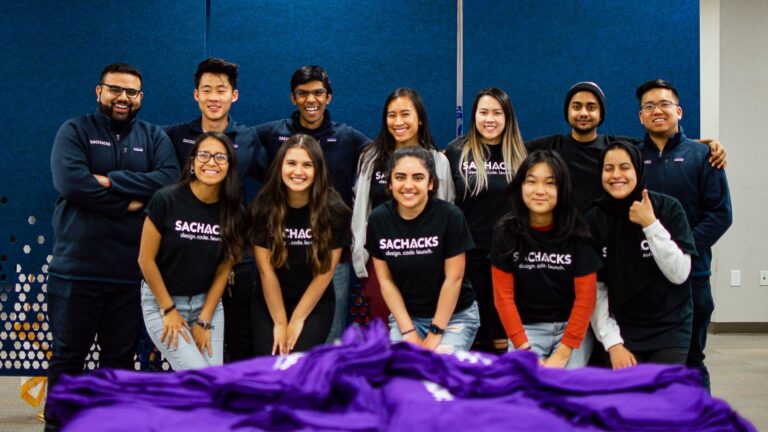
Lovelace Hacks, the first women-focused hackathon hosted by UC Davis, took place virtually on the weekend of April 23–25 in an effort to promote gender diversity in the traditionally male-dominated field of computer science. The competition, led by the organization SacHacks, offered both beginner and experienced programmers and designers a chance to learn new skills.

SacHacks was founded in 2018 at UC Davis and currently hosts a variety of hackathon events each year. This particular event is named after Ada Lovelace, who has been called the first computer programmer, in line with one of the event’s goals of recognizing female contributions to the tech industry.

Derek Lee, the executive director of SacHacks, graduated from UC Davis in fall of 2020 with a degree in computer engineering. Lee explained the general schedule of a weekend competition like Lovelace Hacks. 

“During hackathons, students will assemble into teams and use data and technology from different sponsors to develop solutions and projects to be judged from industry professionals and UC Davis faculty,” Lee said via email. “Throughout the event, there will be keynote speakers, technical and non-technical workshops and fun activities.”

According to Jen Jeon, a fourth-year cognitive science and design double major, a designer at SacHacks and the president of Davis Women in Computer Science (WiCS), coding is not the only aspect of hackathons, but design also plays a huge part in the success of tech projects. 

“In terms of hackathons, designing and coding come together in that design works to serve as a roadmap to how the project will look and feel,” Jeon said via email. “That design is then implemented with code.” 

Joen said that planning Lovelace Hacks was a collaborative process, with the WiCS board also taking large part. 

“[WiCS] seeks to empower and build community among women pursuing computer science specifically, but also the technology industries broadly as well,” she said. “The WiCS board worked in conjunction with SacHacks to market and plan the event to ensure that it is an event that is inclusive and welcoming, as well as educational and community-building.”

Lee elaborated on the goal of inclusivity. 

“Lovelace Hacks exists to provide those who identify as women and gender minorities the awareness and opportunity to explore technology, regardless of skill level and background,” Lee said. “By fostering the importance of women in computer science and STEM, we hope to get more individuals to try computer science, demonstrate that women and gender minorities can thrive in this male-dominated field and bring awareness to all the women that built the tech industry.”

Lee highlighted keynote speaker Sadie St. Lawrence, the founder and CEO of Women in Data. 

“I have been in touch with Sadie St. Lawrence for many years as I have tried to have her be a guest speaker for the SacHacks events as she is from Sacramento,” Lee said. “Thankfully, she was finally free the weekend of Lovelace Hacks to be our keynote speaker. As the founder and CEO of Women in Data, she is a very inspirational person for the tech community.”

Mary Bangloy, a second-year statistics and communication double major who holds leadership positions at both SacHacks and the UC Davis branch of Women in Data, described the importance of female-focused hackathons. 

“We currently live in a world where women and gender minorities don’t feel as welcomed in tech careers,” Bangloy said via email. “Through hackathons like Lovelace Hacks, women and gender minorities can embrace the energy and ideas they bring into the world of technology.”

Lee detailed how Lovelace Hacks came about, explaining that although the idea of female-focused hackathons is not new, it is new to UC Davis.

“I always thought UC Davis had enough opportunity for students to participate in hackathons and that this type of event did not need to exist in UC Davis,” Lee said. “However, in my last quarter of college at UC Davis, I took ECS 188 […]. In that class, professor Patrice Koehl had a lecture dedicated to women in technology and sparked a lot of discussion about what it is like to be non-male in technology.” 

According to Lee, listening to his classmates talk about their experiences in the tech industry made him realize that an event like Lovelace Hacks might need to exist, and after the lecture, he had a one-on-one with Koehl to discuss the idea further. Following his graduation in fall of 2020, Lee worked with WiCS to create the initial plans before training Davis students to organize the event as part of SacHacks’ expanding organization team. 

Any undergraduate student or graduate student over the age of 18 who identifies as a woman or gender minority was welcome to sign up for free to hack or even just attend workshops. Lee also encouraged allies to participate as mentors. 

Jeon encouraged people to try participating in a hackathon, especially beginners.

“Even if you have no experience in technology at all or [are] scared of the prospects, hackathons are a perfect place to learn more,” Jeon said. 

Lee said that this goal of inclusion for new programmers and designers was a success, detailing that 63% of UC Davis students who submitted a project to Lovelace Hacks were first-time hackathon participants.

“[This] shows to me that we succeeded in supporting our Lovelace Hacks Three Core Values of Awareness, Thrive, and Exposure,” Lee said. “This amazing statistic would not have been possible without UC Davis Engineering Alumna Tran Nguyen sponsoring the event. Her insights on how isolating it feels when you’re a minority for the duration of your career gave us the guidance on how to empower and inspire in this important and progressive initiative for women and gender minorities in tech.”
Written by: Sonora Slater —science@theaggie.org

Culture Corner with the Editorial Board

0

Ed Board’s picks of movies, TV shows, books, podcasts and more

Come the fifth week in the quarter system, most Davis students are drowned in coursework, midterms and most likely, an unhealthy dose of stress. The Editorial Board is right there with you, and we think you deserve a break. A break can be many different things depending on the person, but for us, some form of entertainment usually does the trick. 

Even if all you have time for is a little music while you make lunch, a moment of calm before hitting the books once again can make all the difference. In fact, it has been shown that music can reduce anxiety and improve sleep and memory, all things that boost academic performance. And while the same can’t necessarily be said for binging a couple episodes of your favorite show, taking a break from working helps concentration and productivity. From mindless television to (voluntary) intellectually stimulating content, below are some of our favorite ways to decompress and recharge. 

Anjini Venugopal, Editor-in-Chief

Podcast: “How I Built This with Guy Raz”

Although my family listened to the first season of “Serial” in its entirety on a road trip in 2014, I never really got into podcasts until I came to college. I was raised on a diet of NPR, and that has translated into most of my podcast choices. I try to listen to their morning news briefing “Up First” every day, and I pick episodes of Hidden Brain in efforts to be more knowledgeable about cognitive science. Hands down, my current favorite podcast to listen to is “How I Built This with Guy Raz” (also from NPR). My best friend recommended the podcast to me years ago, but it took a pandemic and hourlong walks every day to actually listen to a full episode. In each episode, Raz speaks to entrepreneurs about the way they developed their businesses, some of their biggest failures and how much of their success comes from luck and hard work (many of his guests say it’s overwhelmingly luck and if I recall correctly at least one has brought up privilege). In an article in The New York Times, Raz said that he’s not “some rah-rah ‘Go capitalism!’ person”; he says his goal is not to glorify money (though sometimes that does come across) but to build a narrative surrounding individuals he selects after months of research and considers to be “generally kind” and “moral and ethical” who treat their employees well. The narratives he builds and conversations he facilitates are compelling—perfect for a long walk, road trip or just a break from schoolwork. I typically choose episodes about companies whose products I use or am interested in using and while I would recommend you do the same, you should definitely check out the Life is Good, La Colombe and Ben & Jerry’s episodes.

Margo Rosenbaum, Managing Editor 

TV Show: “Solar Opposites” 

“Solar Opposites” is a delightfully odd and hilarious sci-fi masterpiece. Co-created by Justin Roiland, one of the creators of “Rick and Morty,” this TV series has a similar animation style, dark humor and extraordinary characters as Roiland’s other show. As explained in the title sequence, “Solar Opposites” tells the story of four aliens who escape right before an asteroid hits Planet Shlorp (their home planet). Terry, Korvo and their two “replicants” (clones of the two adult aliens) crash on Earth, a world that they must “terraform” (presumably colonize with their kind) by using the unexplained powers of their “pet/baby” Pupa. Stuck in suburban America, the aliens become a dysfunctional family who constantly grapple with whether their new or old life is superior. To set it apart from other sitcoms, “Solar Opposites” beautifully flips around the classic nuclear family storyline. Instead of two heterosexual parents, Terry and Korvo are sexless aliens who act more like bantering colleagues than a married couple and Jesse and Yumyulack, the “siblings,” are clones of their parents. In addition, a second storyline of “the wall” carries through the show. Yumyulack shrinks down humans that he doesn’t like, locking them in a multi-level cage in his room. A gruesomely-awesome aspect of the show: Every few episodes turn to “the wall” and viewers get a glimpse of the mini-society created behind the glass. Through satirical commentary on the many wasteful, toxic aspects of American existence, viewers can apply what is discussed in both storylines to their own lives. With two seasons currently, and a third coming soon, I highly recommend “Solar Opposites” on Hulu. 

Sabrina Habchi, Campus News Editor

Movie: “Someone Great” dir. by Jennifer Kaytin Robinson (2019)

Anyone who knows me will tell you that I laugh too much, so it should come as no surprise that I usually really like comedies. Despite this, I have seen “Someone Great” more times than I can count. The movie follows the aftermath of the breakup between college sweethearts Jenny and Nate as Jenny’s two best friends, Erin and Blair, help her get through it and move on to the next exciting chapter in her life with seamless transitions to scenes of Jenny and Nate’s relationship. It is heartbreakingly beautiful. It breaks your heart that Jenny and Nate can’t seem to make it work despite the fact that they clearly love one another, but the love Jenny and her best friends have for one another and her prioritization of her success and needs uplifts you at the same time. Beyond the story itself, the movie is an incredible show of diversity and representation: Jennifer Robinson—one of a fraction of women directors in Hollywood—wrote and directed the film, the vast majority of the main and supporting roles are filled with persons of color and Erin’s own relationship with her girlfriend is a significant part of the story. And not to worry, there are still many comedic moments throughout the movie.

Eden Winniford, City News Editor

TV Show: “Maniac”

“Maniac” is a Netflix mini-series about Annie and Owen, two adults facing mental health struggles and uncertain futures, played by Emma Stone and Jonah Hill respectively. It’s very subtly sci-fi, similar to the present-day United States but with a few futuristic additions, like sentient computers and a system of drugs that promise to “cure” any mental health problem. Annie and Owen both take these drugs during a pharmaceutical trial, and what follows are a series of dark, heartbreaking and funny hallucinations that each last about an episode. Stone and Hill try on a variety of personas and accents, from New Jersey suburbanites to fantasy-world elves as they grow closer together and try to process what went wrong in their real lives. I love that it often feels like a rom-com, but that the love shared between Annie and Owen prioritizes true friendship over romance.

Calvin Coffee, Opinion Editor

Book: “Talking to Strangers” by Malcolm Gladwell (2019)

Malcolm Gladwell’s “Talking to Strangers” should be on everyone’s must-read list. Through unparalleled research and engagement, Gladwell explores why our interactions with strangers often go so wrong. From Neville Chamberlain misplacing trust in Hitler to how modern policing in the U.S. has become such a mess, the case studies that Gladwell presents prove how critical our interactions are. Why is alcohol seen as an agent of disinhibition in the U.S. but not in other cultures? How did Fidel Castro evade the FBI for decades? Gladwell answers these questions and dives even deeper; I found myself amazed at how thoroughly and thoughtfully each story was told. I barely have time to read books, if you read one book this year let it be this one—we’re all terrible at interacting with strangers, even if we don’t know it. 

Sophie Dewees, Features Editor 

Book: “To the Bright Edge of the World” by Eowyn Ivey (2016)

Through diary entries and letters, “To the Bright Edge of the World” tells the fictional story of three explorers who brave the uncharted Alaskan wilderness in the winter of 1885. The story follows Col. Allen Forrester who leads a small group up the Wolverine River as well as his wife, Sophie Forrester, who remains at home struggling with the confines of pregnancy. From time to time, the reader also encounters interactions between a museum curator and a modern-day descendent of the Forresters. The story is based on real historical figures: Lt. Henry Allen and a team of explorers, guided by an Ahtna chief, made their way through 1,500 miles of Alaskan wilderness in 1885. In Ivey’s re-imagination of this journey, the men experience luminescent northern lights and sparkling mists that shroud everything from sight. True to its genre of magic realism, there are intriguing, surreal elements that give the story a mythical feel. The characters encounter Native Alaskans who both help and hinder their journey; one of the men marries a woman who is part of the mist, and the group comes across another woman who was married to a man that was secretly an otter. These elements contribute to a fascinating story that draws the reader into another time and place, delving into the beauty of trekking through nature that remains unharmed by human industrialization.

Allie Bailey, Arts & Culture Editor

Movie: “Spirited Away” dir. by Hayao Miyazaki (2001) 

When I was a kid, I remember being enchanted by the eerie, beautiful imagery typical of Studio Ghibli movies, and “Spirited Away” was always my favorite. The film follows Chihiro, a young girl who reluctantly moves to a new town with her parents. While exploring, they cross a tunnel that takes them to a seemingly abandoned market. When Chihiro’s parents greedily take food they find there, she leaves and stumbles upon a bathhouse for spirits. After a young man, Haku, warns her to leave, she returns to find her parents have been transformed into pigs. Chihiro returns to the bathhouse, and starts working there with the help of Haku in order to blend in as she tries to help her parents. There, she meets No-Face, the troubled spirit who adopts others’ personalities by ingesting them, and who terrified me as a child. She encounters plenty of other creative characters along the way, including a many-armed man reminiscent of a spider and an enormous, angry baby. I watched this film recently for the first time since childhood, and as is the case with most child- and adult-friendly movies, I developed an entirely new appreciation for it. Not only did it induce nostalgia from the many times I watched it growing up, but once unnoticed details offered new lessons, connections to the characters and general enjoyment of the exciting and unique storyline. Whether young or old, “Spirited Away” (and any other Miyazaki film) is a must-see. 

Omar Navarro, Sports Editor

Book: “Three-Ring Circus: Kobe, Shaq, Phil, and the Crazy Years of the Lakers Dynasty” by Jeff Pearlman

The last year has felt like I’ve been living the same day over and over again. After countless attempts of trying new things to see if they’d work, I found some solace in the last place I would think. When it comes to reading, I used to be into a lot of science fiction growing up but somewhere along the way, I lost the interest in reading. Today, I have once again found that, but this time in biographical sports books. As time passes, I’ve grown a fascination with 1990s-early 2000’s sports superstars, which is why I thoroughly enjoyed Jeff Pearlman’s latest book, “Three-Ring Circus: Kobe, Shaq, Phil, and the Crazy Years of the Lakers Dynasty.” Pearlman is no stranger to detailing sports events as well as dynasties. His deep dive into the dynasty Lakers of Kobe Bryant and Shaquille O’Neal uncovers just how much problems there were between the two stars. It really is a miracle that they won as much as they did, as some of the stories in the book left me shocked. Even though I already know how the book ends or which championships they won, this book lets me travel back in time and see one of the most storied dynasties ever. Whether you know all about it or know nothing at all, this story is definitely one I recommend for all readers to get an insight on just how much it takes to win sometimes. 

Madeleine Payne, Science Editor

Movie: “My Octopus Teacher” dir. by Pippa Ehlrich and James Reed (2020) 

My Octopus Teacher is a friendship and love story within a call to acknowledge the beauty of the earth and protect our planet’s most intelligent creatures. The film footage, taken everyday for a year by a filmmaker and skilled swimmer in South Africa, is a break from the traditional style of nature documentaries depicting short segments of many different animals. Instead, the documentary provides the rare opportunity to observe an octopus’s life from near beginning to end: Key scenes highlight her intelligence and strength, like when she’s fighting for her life while trying to evade the ruthless pyjama sharks, but viewers are also able to witness her more vulnerable moments of inquisitively exploring the world around her and playing with the nearby fishes. Some of my favorite parts of the film are when she’s simply resting, her large eyes peering curiously and cautiously into the world, occasionally directly into the camera. In these moments, her undoubtable strength and beauty transcends the barrier between species, reminding us that all life—human, octopi or other—deserves to be valued and protected.

Written by: The Editorial Board

Female athletes deserve equitable recognition, support, opportunities

0

Organizations, including universities, need to do more to advocate for their female athletes, provide them with the support needed to achieve success and highlight their success, just as they do for male athletes

The members of this Editorial Board have grown up watching male athletes dominate the media. We all have attended Super Bowl parties, dressed up in themes for high school football games and heard someone say “Kobe” after managing to accomplish throwing a wadded up piece of paper into a trashcan. 

Women athletes are rarely talked about with such reverence as Michael Jordan, Kobe Bryant, LeBron James, Tom Brady, Tiger Woods, Usain Bolt, Michael Phelps and so many more. Even if you aren’t interested in sports, chances are you’ve heard those names but are less familiar with Billie Jean King, Katie Ledecky, Yolanda Griffith and Diana Taurasi. 

To the Aggie fans reading this, did you know the women’s basketball team has been the Big West Conference regular season champion five years in a row? Or that the women’s lacrosse team will play in the Mountain Specific Sports Federation championship for their third straight year and are the top seed this year? But you may more easily recall the electricity and packed stadium when the UC Davis men’s soccer team played in a Second Round NCAA Tournament

This is such a large societal problem, it’s difficult to even pinpoint where the system is failing women in sports. In their P.E. classes, through the media and even at home young girls learn at an early age that aggression, especially in sports, is meant for men—nearly one-third of American parents think that boys are better at sports than girls. This reflects a cultural understanding that girls and women will never be the same athletes that boys and men are, no matter how hard they try.

Even girl athletes have less exposure to positive role models in their sports—almost every member of this Editorial Board who participated in sports had mostly if not all male coaches. At the college level, coaching is consistently male-dominated; as of 2019, only about 40% of women’s college teams and 3% of men’s college teams are coached by women. This sends the message that not only is playing sports male-dominanted, but coaching sports is as well.

These cultural values systematically reinforce themselves in practical ways that prevent female athletes from reaching their full potential or keep women out of sports altogether. Girls have fewer opportunities than boys in sports at young ages, which often stops them from reaching their full athletic potential, allowing people to point to what seems like “lesser play” to justify inequitable gender treatment. Not only do many Americans hold the belief that women athletes are inherently worse than men athletes, but also these beliefs translate into practical implications when women athletes at the collegiate and professional are treated poorer, given less attention to and paid astonishingly less than their male counterparts. 

Most recently, the NCAA came under fire for the stark differences between the weight rooms provided to female basketball players and male basketball players at the biggest tournaments in college basketball. This discrepancy was exposed in a video by University of Oregon forward Sedona Prince. In the video, it can be seen that the women had only a small rack of dumbbells while the men had extensive state-of-the-art bars, racks and stands at the March Madness tournaments. Rather, the March Madness and NCAA Women’s Basketball Tournaments, because the NCAA has refused to brand the women’s basketball tournament similarly. 

In addition to the lack of equitable equipment, the NCAA also provided less accurate COVID-19 tests at the women’s tournament than the men, packaged meals to the women and buffets for the men and differing quality and amount of player gifts. How many inequities do women athletes face that do not go viral and do not receive widespread outcry?

This issue extends further than women student-athletes. The gender pay gap between professional men and women’s sports teams is simply unacceptable. The U.S. Women’s National Soccer Team (USWNT) have back-to-back defending world titles, while the last time the U.S. Men’s National Soccer Team (USMNT) qualified for the World Cup was 2014 and the team has never won a world championship. 

Yet, the USWNT players would make 89% of what the USMNT players would make if both teams won 20 straight matches. After losing a World Cup qualifying match, USMNT players receive $3,000 more in bonuses than USWNT players would make after winning such a match. This is all despite the fact that the USWNT brings in the same or more revenue from games than the USMNT. The pay gap is even more extensive in other sports—on average, WNBA players make $116,000 while NBA players make $7.5 million in a season. 

We believe there needs to be a societal shift towards accepting that women belong in sports just as much as men do—this needs to be reflected in equalized pay, media coverage and opportunities for women in sports. Although structural changes are needed, we encourage you to make change on the individual level simply by attending and watching games by female athletes. There are 16 NCAA Division I women’s teams at UC Davis that are filled with extraordinary Aggie athletes who deserve your attention and support just as much as our men’s teams. 

Written by: The Editorial Board

Senate Resolution #12 requests consideration for Muslim students observing Ramadan, budget deficit projected by budget director at April 15 ASUCD meeting

0

The resolution requests that dining services provide more options for students and asks faculty to factor in potential sleep disruption or scheduling conflicts when taking attendance

Senator Kabir Sahni called the April 15 ASUCD Senate meeting to order at 6:10 p.m. in the absence of Vice President Emily Barneond.

Senator Maahum Shahab introduced emergency legislation Senate Resolution #12, requesting faculty members and staff to accommodate Muslim students observing Ramadan, which runs through the middle of the Spring Quarter, from April 12 to May 12 this year.

“We just want to remind professors and admin again that it’s Ramadan and students may need just a little bit of accommodations when it comes to synchronous classes and things like that,” Shahab said. “From personal experience, it’s tough. As much as I love the beautiful community feeling during Ramadan, it takes a huge toll.” 

The resolution requests faculty to be thoughtful in marking attendance for students observing Ramadan due to the fasting requirements of the Muslim holiday as well as recognizing some student’s sleep disruption due to waking up before or staying up until dawn to eat. 

The resolution also asks Food Services to be aware of food restrictions and that Halal food be available for Muslim students. It also requests an extension of dining services to 8:30 p.m after sundown.

“Obviously fasting takes a toll on someone’s ability to perform in academics, so they should have that accommodation,” said Yalda Saii, the chair of the Ethnic and Cultural Affairs Commission (ECAC). 

The resolution passed unanimously. 

UC Davis is facing a potential $200 million deficit if no action is taken to mitigate the funding gap, according to the Campus Budget and Institutional Analysis presented by Laurie Carney, the assistant director of the Budget Office, and Sarah Mangum, the assistant vice chancellor and budget director.

The presentation showed that at its current funding rate, UC Davis will be unable to pay for current employees’ salary and benefits through its core funding.

Core funding consists largely of student and family contributions through enrollment. Cost-saving adjustment measures will need to be made over the next four years to compensate.

“Back in 2010, students started supporting our operations more than the state—students and their families,” Mangum said.

Since the state had a reduction in funding allocated to the university this year, there is a larger gap between what is funded by students and their families and what is funded by the state, according to Magnum. 

“I will also say these are projections based on assumptions, that’s what we budget people do,” Mangum said. “We might be a little conservative; we try not to be too conservative but be realistic as well.” 

Mangum said that they will be looking at more options for funding than just cuts, such as endowments or philanthropic contributions, so that they have minimal impact on the student experience. Magnum added that the budget reduction plan was not related to COVID-19. 

Senate Bill #71, which passed unanimously, established a Research and Data Committee.

“It’s honestly a very much needed piece of legislation,” said Internal Affairs Commission Chair Julian Garcia. “We thought it was a really good idea to set up a committee that tries to consolidate all the research and data efforts within the association.”

Senate Bill #77, which also passed unanimously, renames the previously known “Davis Housing Discrimination Committee” to the “Aggie Housing Advocacy Committee” and increases the breadth of advocacy activities related to housing. 

“The purpose of the committee is to do what the commission was meant to do: be a body that’s meant to uplift the voices of students when it comes to housing,” Shahab said. 
Written by: Kathleen Quinn — campus@theaggie.org

President Biden’s Executive Order on gender identity discrimination has been met with backlash from states

0

Some states in the U.S. have passed several bills regarding a ban on transgender athletes

Since stepping into office on Jan. 20, President Joe Biden has issued numerous executive orders, including one that focuses on discrimination based on gender identity or sexual orientation. Since it was signed, the order has become subject to criticism and is a focal point of some lawmakers in certain states. 

After Biden issued this order, dozens of states filed laws to counter it. These laws ban transgender women and girls from competing with cisgender women in school sports teams. Several states, like Mississippi, Arkansas, Idaho, South Dakota, North Dakota, Tennessee and other southern states, have passed laws that ban transgender athletes from competing in college and high school female sports this year. As more state legislators continue to push their respective bills, some have done much more than others.

In the months of March and April, the North Carolina state General Assembly introduced three new bills that would restrict transgender individuals in sports, health care and gender-affirming care. 

In late March, Republican representatives of North Carolina Mark Brody, Pat Mclraft, Diane Wheatley and Jimmy Dixon presented House Bill 358, titled “Save Women’s Sports Act.” This bill only allows individuals to compete in sports that align with their assigned sex at birth and prohibits transgender individuals from competing in sport teams that do not correspond with their sex assigned at birth.

About two weeks after the “Save Women’s Sports Act” was introduced, three more representatives filed other bills of their own. These bills were titled “Youth Health Protection Act” and “Health Care Heroes Conscience Protection Act.” The bills would make it illegal for healthcare providers to give medical attention to anyone under the age of 21 who does not identify with the sex they were assigned at birth. These bills would also allow health care providers to refuse service to transgender people—something that has the potential to lead to more transphobia. 

As this topic has become widespread since Biden took office, Ryan Anderson, the author of “When Harry Became Sally”—a book critical of modern transgender topics—thinks that these next four years will create “legal headaches.”

 “After the inauguration that addressed unity and healing, we got a radically divisive executive order from our new president,” Anderson said. “The language says that it’s banning discrimination, it’s protecting equality, but you have to understand what [the Biden administration] views as discrimination. Our embodiment of male and female isn’t discriminatory.”

In the college ranks, the National Collegiate Athletic Association (NCAA) remains supportive of the transgender athlete community as long as they follow the proper guidelines they have set in place. It requires “testosterone suppression treatment for transgender women to compete in women’s sports.” The NCAA is also hosting their championship events in locations that are discriminatory-free and a safe environment for all athletes.

“When determining where championships are held, NCAA policy directs that only locations where hosts can commit to providing an environment that is safe, healthy and free of discrimation should be selected,” said a statement from the NCAA. “We will continue to closely monitor these situations to determine whether the NCAA championships can be conducted in ways that are welcoming and respectful of all participants.”

Ryan Kemey Russell, a professional football player in the National Football League (NFL), became the first openly bisexual player in the league when he publicly came out in an essay for ESPN in Aug. 2019. The defensive end, who is currently a free agent and last played in an NFL game with the Tampa Bay Buccaneers in 2017, spoke about the transgender athlete issue and said they deserve to have the same opportunity as a cisgender individual.

“After the past few weeks, most trans children including those who have immense potential to be great athletes or, at the very least, find love and joy in sports, can’t even pick up a ball without legislation telling them they don’t belong,” Russel wrote. “Isn’t it important for trans children more than most to feel the belonging of a team, especially when society is questioning if they belong at all?”

These restrictive policies pertain to mainly adolescents and college students across these various states. “More inclusive” policies for transgender individuals are there, but like Grace O’Connor from The Chronicle said, they say that transgender athletes can only join high school or college sports teams after one or two years of hormone therapy. This severely limits their time to play on a team and is very costly. According to the American Civil Liberties Union, the more extreme policies require gender reaffirming surgery and frequently deny transgender athletes’ positions on sports teams.

“That’s what people are missing from this entire debate,” said Debi Jackson, a mother fighting against the transgender athlete ban. “Trans kids just want a chance. They want to be a part of something. They want to have a connection with their friends and want to hang out with them. They are not coming in to steal opportunities or ruin anyone’s sport. They are just trying to be involved.”

Written by: Katherin Raygoza — sports@theaggie.org

The inevitable death of Snapchat has arrived

0

Maybe it’s high time we ghost the Ghost

Snapchat is a wondrous little app. From its inception, users marveled at the novelty of posting a Snapchat story or sending a dog-filtered snap to their friends. In the past decade Snapchat has dominated as one of the most popular social media apps

I was barely starting middle school when Snapchat made its debut on the App Store. I’d been on Facebook for all of two months—much to the chagrin of my mother—and Instagram for even less than that. When I downloaded the app I was instantly drawn to the disappearing nature of my content. I could send my buddies a pimply, brace-faced selfie and it’d be gone in a matter of seconds; we would even challenge each other to try to sneak in a screenshot in a snap that would only appear for one second. 

It’s a bit sad, then, to see how Snapchat has fallen from its high praises. The social media app of our childhood has been pushed aside not only by other platforms, but by our own ever-evolving personal tastes.

My early attitude towards Snapchat could really be characterized as a sort of wonder toward the little yellow app. The novelty of being able to message your friends in a way that was impermanent was intriguing. It also reflected earlier sentiments about the internet at large. We’d been taught that what goes online exists forever, including your Facebook profile pictures from fifth grade (and yes, mine is still up). When we got the ability to go online without the penalty of things being permanent, we were all excited. 

Now, however, folks have gotten pretty used to the idea of things staying on the Internet. We’ve been able to develop archives of old posts and memories on our profiles, and we’ve welcomed these nostalgia breeders on our platforms with open arms. Snapchat’s formerly cool feature has just become a reflection of old ideas about how we create and view content online.

Snapchat users also frequented the news section of the app, which provided short, story-form bits of current events presented like your everyday news channel. Prominent news sources like NBC launched “Stay Tuned,” a story that updates with breaking news stories multiple times a day. As teenagers, we felt that getting our news on Snapchat was like killing two birds with one stone. We got to check our streaks and feel like adults by checking the news. 

Ever since former President Donald Trump’s presidency, however, the desire for more concrete and trustworthy news sources has been pushed to the forefront of everyone’s minds. NBC’s “Stay Tuned” may be connected to a valid news channel, but the fact that it’s on Snapchat gives it an informal connotation that has people turning towards more substantial sources for their current events. 

We can speculate forever about the features of Snapchat, but one of the main reasons why Snapchat doesn’t do as well as other platforms is that you can’t truly cultivate your online persona on the app, which is sort of the reason why we go on social media. The permanence of posts on Facebook, Twitter and Instagram all contribute to our personal brands. If everything you post on Snapchat eventually disappears, could there ever really be a sense of a persona?

That’s why the beginning of Snapchat’s slow demise came in August 2016, when Instagram launched “Instagram Stories,” an obvious dig at one of Snapchat’s most distinctive features. Instagram chose to combine the best of Snapchat with the powerhouse platform that they’d already developed. Why would users choose to go to Snapchat when they had everything that used to make it unique on Instagram? 

2016 was one issue, but the true kicker of the app came in 2020. Like most things in our lives, the pandemic made an absolute fool of Snapchat this past year. Why? There was nothing to take pictures of. The concept of posting your daily life was completely destroyed; everyone was living the same life and it really wasn’t worth posting about. Once the pandemic began, I gave up Snapchatting my friends almost entirely, save for a few posts on my private story. It even started to feel weird to still be on the app—almost juvenile. 

I’d like to leave with a question: is Snapchat dying, or are we just getting older? The fall of Snapchat may be apparent to college students, but there’s a chance that the app can remain popular with the help of younger generations patronizing its fun photo-sharing capabilities. Either way, the app’s fate is in the hands of millions of users across the planet. It’s up to us to decide. 

By Isabella Chuecos –– ifchuecos@ucdavis.edu Disclaimer: The views and opinions expressed by individual columnists belong to the columnists alone and do not necessarily indicate the views and opinions held by The California Aggie.

Davis City Council unanimously votes to move homeless services out of the Davis Police Department

0

Members of the Davis community call for independent Department of Public Safety in letter with over 700 signatures

During the April 6, 2021 Davis City Council meeting, the city council members voted unanimously to move homeless services out of the Davis Police Department (DPD). All of the city council members also said that there are other service calls that should be dealt with non-sworn and non-armed personnel. 

Morgan Poindexter, a UC Davis Immunology graduate student and member of the research team at Yolo People Power (YPP), a volunteer group that focuses on promoting justice, explained that “police do every job in society that is not desirable to be done by someone else,” such as dealing with unhoused people and traffic as there is often not enough money allocated to these issues by society and toward creating systems that work for these services.

“What I would like police to do in our society would be essentially just the jobs that they’re trained for: only the things that they go to academy and train specifically for, which would be apprehending criminals, dealing with violent crime and not so much arresting people for loitering, giving people traffic tickets—all of sorts of those things which are non-violent and in some cases even victimless crimes, like people who are arrested [for] drug possession,” Poindexter said. 

Only 4% of calls to 911 or the police in Davis are for violent crimes, according to Poindexter. Instead of focusing on punishment and “punitive measures,” Poindexter said that there needs to be more focus on “support for people before they become unhoused.”

In a letter dated March 22—which has amassed the support of more than 700 signatures and organizations such as YPP—members of the Davis community called for the city to create an independent Department of Public Safety, separate from the Police Department that is “staffed by social workers, civil servants, and mental healthcare professionals.”

Poindexter explained that while YPP was working on its Time for The Nine campaign to educate community members about its nine recommendations for public safety, YPP also connected with Yolo Democratic Socialists of America and the United Auto Workers Local 2865, Davis Unit (UAW 2865). 

“And so those core three groups decided to co-author and sort of form a coalition together to in our own separate ways help to push the city council toward the creation of this new department,” Poindexter said. “So we created this open letter which essentially is calling for the creation of an independent department of public safety, which would essentially prioritize the wellbeing and safety of all members of our community, divert calls away from the police department and really look at things like code enforcement, parking, traffic, mental and behavioral health calls, welfare checks and all of that.”

UC Davis Associate Professor of Sociology Ryan Finnigan explained the role that policing typically plays in society, particularly in relation to individuals who are experiencing homelessness. 

“In general, policing is not a constructive way to provide social services, especially for people experiencing homelessness,” Finnigan said via email. “Research in Los Angeles and San Francisco has shown that police themselves often feel ill-equipped to provide social services. Police generally have a limited range of options when called to address homelessness, which frequently result in shuffling off people experiencing homelessness, writing tickets, and sometimes more extreme outcomes (like arrests or violence). Police often 

recognize that these actions do little to address homelessness and can often make it worse.”

There are currently three non-sworn personnel at the DPD working in homeless services and doing homeless outreach. They sometimes co-respond with officers, but Poindexter explained that separating city employees from the police can help reassure unhoused individuals that the city employee’s “boss is not the police chief, that they’re not in danger of being cited for trespassing.” Instead, the city employees can help the individuals and provide them with the services they need. 

Moving homeless services out of the DPD is economically beneficial and will allow there to be more of a focus on homeless services, according to Poindexter. She explained that the police chief receives funding, “which right now is 30% of all the discretionary funding of the entire city” and has a duty to allocate this funding to protect officers and make sure their equipment is working well.

“That’s his duty as the police chief,” Poindexter said. “So housing something like homeless outreach inside the police department means that the police chief is necessarily going to have to make a decision between ‘do I buy a new vehicle, do I invest in this new training’—whatever his consideration is—versus ‘do I fund the homeless outreach team.’”

Finnigan further described how those experiencing homelessness usually do not see police as an ally.

“Even when police accompany outreach service workers, police presence can deter people experiencing homelessness from accepting assistance,” Finnigan said via email. “People of Color, especially Black People, are overrepresented among those experiencing homelessness. Racial trauma associated with police violence compounds this disconnect.”

Finnigan added that this is also the case “for mental health crises or other social issues among other systematically disadvantaged communities, more generally.”

Overall, Poindexter believes that moving homeless services out of the DPD will benefit the city positively.

“I think the move will have a positive impact in our community; I really would like to see this city take the next step and create this independent department of Public Health and Safety because I really think that that would have the biggest net positive benefit for Davis as a city,” Poindexter said.
Written by: Shraddha Jhingan — city@theaggie.org

A day in the life of an Aggie Public Health Ambassador

0

UC Davis 2021 graduate Lauren Alimento shares her experience working as a campus public health ambassador

Since September 2020, anyone walking across UC Davis campus or visiting downtown Davis has likely come across Aggie Public Health Ambassadors—student employees who encourage students to follow safety protocols during the COVID-19 pandemic. 

Among the roughly 250 ambassadors is Lauren Alimento, a UC Davis winter 2021 graduate and an Aggie Public Health Ambassador. Alimento said that working in the Silo is one of her favorite shifts as a Health Ambassador.

At the Silo, Alimento sits near the entrance and checks daily symptom surveys of students and staff, makes sure they are following mask-wearing and social distancing rules and grants them access to the building. She also helps visitors access the visitor symptom survey and educates them about the safety precautions that the university has in place.

“Usually, it’s a lot of students who walk in,” Alimento said. “Students know what to do—just flash their symptom survey and then walk by—but there are a lot of [community members who] come in without masks, and it’s a lot of educating them about how you’re supposed to properly wear masks.” 

In addition to these tasks, Alimento has been able to interact with many prospective students touring the campus. 

“A lot of visitors come, and I explain things about campus to them because we’re the only students who are working on campus right now,” Alimento said.

Aggie Public Health Ambassadors work at the entrances of campus buildings with the most traffic, such as the Silo, Memorial Union and the three Dining Commons. They also have “floater” shifts, during which ambassadors are assigned to walk around campus or downtown to enforce social distancing and mask-wearing and give out rewards to groups and individuals following public health protocols.

“A lot of times we have little gift cards that we’ll give out, like a $5 Yolo Berry gift card or a $5 student store gift card,” Alimento said. “It’s mostly trying to encourage [health guidelines] in a positive way to make it a healthy, happy experience of, ‘We all want Davis to open up, so thank you for keeping your mask on [and] distancing.’”

Alimento said that one of her other most common shifts is in the library, where she and fellow Aggie Public Health Ambassadors have to check symptom surveys, but they also “float” around the library, enforcing social distancing and mask-wearing. 

“Usually there are three to six ambassadors there, and we rotate every hour,” Alimento said. “One person will be in the front desk checking people in; one person will be at the next desk. You have to check at two different desks to show your daily symptom survey. Then there are a handful of people who just roam around making sure people are keeping their masks on.”

Alimento said that she applied for the Aggie Public Health Ambassador job over the summer because it was a way to spend time on campus while all of her classes were online. 

Alimento said that she has realized that Aggie Public Health Ambassadors have had a significant impact on UC Davis’ campus culture during the pandemic.

“I know most people know how to wear masks. It’s just a few people that could be problematic, and having ambassadors who help clean up those loose ends ensures that every single person on campus is safe and wearing a mask,” Alimento said. “We’re all in this together and the ambassador program really emphasizes that.”
Written by: Katie DeBenedetti — features@theaggie.org