60.8 F
Davis

Davis, California

Wednesday, December 24, 2025
Home Blog Page 275

Immigrants held in ICE detention centers face higher risks of complications due to COVID-19 infection

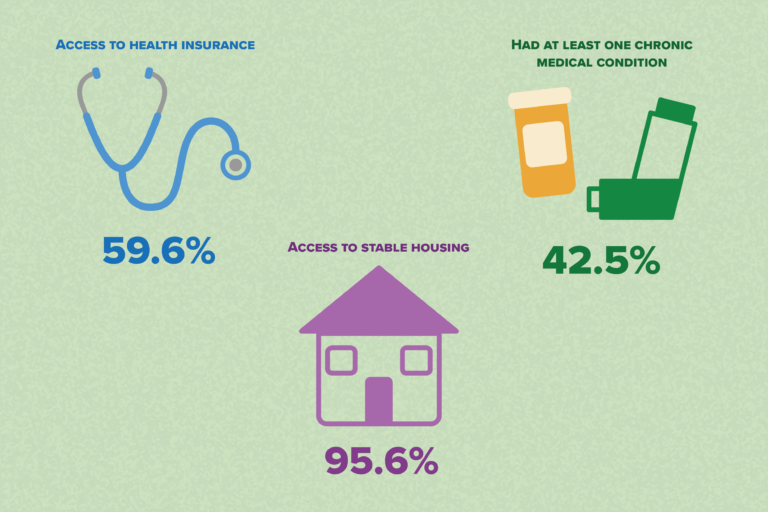
Of the 529 individuals detained by ICE that participated in the study, 42.5% had at least one chronic health condition and 20.9% experienced a disruption in their healthcare

According to a recent study by UC Davis, immigrants detained in the U.S. Immigration and Customs Enforcement (ICE) detention facilities are at a greater risk of contracting COVID-19 due to underlying health conditions. Dr. Caitlin Patler, an assistant professor of sociology at UC Davis, was the lead author of the study alongside Altaf Saadi, a neurologist at Harvard Medical School and Massachusetts General Hospital.

The motivation behind the study was the death of Carlos Ernesto Escobar Mejia on May 6, 2020. He was the first person in ICE custody to die from COVID-19, according to Patler. ICE reported that 4,444 detainees out of 22,580 in their detention facilities were infected with COVID-19 between February 2020 and August 2020, according to the study. 

According to the Centers for Disease Control and Prevention (CDC), there is no information available to the public on clinical characteristics that could assist in detecting the health conditions of the detainees or if they are more prone to contract COVID-19. To determine who will be most at risk, the researchers examined a systematic cross-sectional health survey from 2013-2014 of adult immigrants detained in California to collect information on any chronic conditions, lack of healthcare and sociodemographic characteristics that would cause major consequences when testing positive for COVID-19.

“Understanding detained immigrants’ health profiles is vital to decision-making on the part of policymakers, public health professionals, legal advocates and others seeking to stop the spread of COVID-19, reducing morbidity and mortality among detained immigrants and minimizing impact on local healthcare resources,” Patler said.

The results of the survey were that 42.5% of detained immigrants had at least one chronic health condition, 15.5% had multiple and 20.9% of the 529 detained experienced a disruption in their healthcare, according to Patler. This indicated that a large number of immigrants who were detained would be in danger of facing severe outcomes when exposed to the virus. 

“I was alarmed to see the high prevalence of chronic health conditions in the study,” Palter said. “We know that prisons, jails and detention centers are bad for health. Our results, combined with that fact, raise serious questions about whether it is ethical or humane to detain people indefinitely under civil law.”

The survey also revealed that 95.6% of individuals in Patler’s study had access to stable housing in the U.S., which is critical for their chances to be released from detention centers. For immigrants that come to the U.S. without being detained by ICE, the health of their children is still affected. Erin Hamilton, an associate professor of sociology at UC Davis, studies immigrant health and commented on the differences in health between immigrants and U.S.-born citizens. 

“So the big pattern of immigrant health that’s really interesting is immigrants on average in the U.S. tend to have better health outcomes than U.S.-born members of the same national background,” Hamilton said.

In her research on the U.S.-Mexico migration, there is a common pattern that children born in the U.S. often have worse health than their parents who were born in Mexico and migrated to the U.S. This has been seen in European, Caribbean and Asian immigrants as well and is often contradictory to popular belief because immigration is thought to be a difficult venture, according to Hamilton. 

“Losing your comfort, language familiarity, networks, the place that you grew up… all of those things are really hard,” Hamilton said.

Despite that, Hamilton in her research continues to see worse health in the next generation of immigrants in comparison to their parents. One possible explanation for this is that individuals who decide to immigrate are different from those who do not. Immigration is very difficult because of all the costs involved and is something that people tend to do proactively in order to improve their lives, according to Hamilton. People who are willing to take a risk and face hardship are more likely to be more motivated, ambitious and hopeful, and these qualities may indicate that they are in good mental and physical health, according to Hamiliton. 

“Immigration is not randomly sampling from the population in Mexico, it is selecting a particular group of people [who] tend to be healthy, and their children are not selected in the same way,” Hamilton said.

By the second generation of immigrants, the characteristics exhibited by their parents do not necessarily directly transfer. Instead, some children are motivated and some are not. Other factors in reduced health are the culture of the U.S. which includes fast food, smoking, drugs, lack of exercise and discrimiantion against immigrants, according to Hamilton. There is also the possibility that immigrants are comparing the U.S. to where they immigrated from and know they are improving their life, while their children do not have a similar comparison for the U.S.

While there is evidence of health differences between immigrants who are in detention centers and immigrants who are not, there is yet to be research done on how COVID-19 affects detained immigrants versus the children of immigrants. However, the primary concern is how ICE detention centers are jeopardizing the health of immigrants coming to the U.S., according to Palter.

“Our study makes clear how harmful detention can be for health and underscores [the] need to find alternatives to detention now, and keep it that way after the pandemic ends too,” Patler said.

Written by: Francheska Torres — science@theaggie.org

Aggies fall in ranked clash

0

No. 9 Eastern Washington outlasts No. 11 UC Davis in a matchup with major playoff implications

In a game that could be considered make it or break it in terms of the Football Championship Subdivision (FCS) playoffs, the UC Davis Aggies fell to the Eastern Washington Eagles, 32-22. With the Eagles ranked No. 9 and the Aggies a bit behind at No.11, the winner of this matchup would be set up with a great opportunity to take one of the five at-large bids for this year’s playoffs.

In the first UC Davis Athletics game with fans allowed inside, a socially distanced crowd of 1720 people set foot in UC Davis Health Stadium for this prime FCS matchup. A clear and sunny day made it for a perfect football setting, as the Aggies felt refreshed to have fans back for the first time this spring season. 

“It was so much better,” said redshirt freshman quarterback Trent Tompkins after the game. “Hearing people yell and stuff and boo, it was awesome. Versus Cal Poly and Idaho State, it got awkward sometimes just sitting on the sideline. I stood there in the first quarter just looking around and I was confused for a second. So yeah, it was awesome.”

With Eastern Washington receiving the ball to start the game, the Eagles had a chance to show their flexibility on offense, running a 13-play drive of both runs and passes. Led by senior quarterback Eric Barriere, who has received some National Football League (NFL) buzz, Eastern Washington drove the ball down to the UC Davis 10 yard line. A strong stop by the Aggie defense that has impressed thus far, however, held the Eagles to just a field goal, as they opened up the scoring of the day. 

After a penalty by the Aggies on their offensive drive set them back, Eastern Washington took over once again on offense. Firing on all cylinders, Barriere completed consecutive 20-yard passes to wide receiver Freddie Roberson and eventually found Anthony Stell Jr. for a short touchdown after UC Davis’ Jaylin White was called for pass interference. With a 10-0 lead and back to back 10+ play drives, the Aggies knew they would have their hands full the rest of the game with the high powered Eagles offense.

Looking to respond before the game got out of hand, the Aggies found a bit of a groove on offense. A pass by junior starting quarterback Hunter Rodrigues to senior wide receiver Khris Vaughn for 39 yards gave them some life and they were knocking on the door of the endzone. After three plays in a goal situation, UC Davis was unable to punch it in, but got down to the one-yard line. With a decision to make, head coach Dan Hawkins elected to go for it on fourth down. In a huge play that would eventually loom large in the grand scheme of things, Eastern Washington got the stop and forced the turnover, leaving the Aggies empty handed after that impressive drive. 

It was a big blow for UC Davis, as a touchdown would have put them right back in it. Instead, it was still 10-0 and Eastern Washington now had a chance to increase their lead heading into the second quarter. But, after a pass by Barriere across the middle came off of his receiver’s arms, the ball shot in the air and redshirt freshman Jehiel Budgett was able to make the diving play to get under it and secure the interception. The play was exactly what the Aggies needed. With great field position near midfield and the crowd active, UC Davis had an opportunity to respond. But, after gaining a first down on the first play of the drive, the Aggies were unable to get another, and punted the ball back to the Eagles. In a drive that took a total of 22 plays, more than nine minutes and almost the length of the field, Eastern Washington was able to convert two fourth down plays and three third-downs to punch in yet another touchdown. After a failed two-point conversion, the game now stood at 16-0 Eagles. 

Another three-and-out by UC Davis marked the end of the half, with a lot of ground to make up. With the ball back to start the second half, they needed a big play to be the catalyst and avoid the game getting out of hand. They were able to get just that, as a 44-yard strike from Rodrigues to sophomore tight end McCallan Castles put them on the board for the first time all afternoon. A successful two-point conversion by the Aggies now made it a one possession game, 16-8.

With the crowd of over 1700 getting loud, UC Davis was able to get a stop on defense and get the ball back in just 2 minutes and 29 seconds. They were feeling some momentum, but were unable to capitalize and punted it away. After two more punts by both sides—one for each—Eastern Washington got the ball back with their eight point lead still intact. All it took was one play to extend their lead, as Barriere fired a deep shot down the right sideline to redshirt senior Talolo Limu Jones for 77-yards and the touchdown. This was a huge blow for the Aggies, as they now faced a 22-8 deficit with 6 minutes and 40 seconds remaining in the third quarter. 

A change at the quarterback slot saw Tompkins come in to add another dimension to the offense. With his ability to throw and run it himself, UC Davis was able to use his threat to an advantage. A 23-yard rush by freshman receiver C.J. Hutton gave the Aggies some life, and Tompkins was able to find junior receiver Carson Crawford in the endzone for the score. With it being a one-possession game once again, they hoped for another stop and a chance to tie or possibly take the lead.

Entering the fourth quarter with the Eagles on top by a score of 22-15, they needed a response to the Aggie momentum. All it took was one play to start the fourth quarter, as Roberson was able to find some room and make a move to run in for a touchdown from 42 yards out. Now a 29-15 game, time was running thin for UC Davis. Looking for something to happen, the Aggies hurried it up on offense and were able to put together an 11-play, 81 yard touchdown drive in just under four minutes. A Tompkins touchdown run now made it 29-22 with 11 minutes and 11 seconds remaining in the ballgame. 

As Eastern Washington looked to burn out the clock, they were able to use their rhythm on offense to set up a nice offensive drive. Barriere had his offense rolling, but a nice third down stop by the Aggies set up the Eagles with a decision to make from the UC Davis 28 yard line. That was, until the referees decided to review the previous tackle made by senior linebacker Cole Hansen. The officials looked for targeting, a rule put in place to ensure the safety of the athletes and try to eliminate dangerous collisons. It was a hard play to call, but after a lengthy review that took a couple of minutes, the referees determined that it was in fact targeting, ejecting Hansen and giving the Eagles another 15 yards and an automatic first down. It was a huge blow to UC Davis’ chances as the penalty gave Eastern Washington the chance to kick a field goal and go up 10 points with about 5 minutes and 28 seconds remaining. 

“Every time we tried to get a little momentum going in the second half, they countered. So give them a lot of credit. They did a nice job.” Hawkins said. 

The Aggies needed something quick, but with multiple running plays and short passes, they were burning away crucial time. After getting down to the Eastern Washington eight-yard line, Hawkins elected to go for it and failed, effectively bringing an end to the game. All it took was the Eagles to run one more first down, ending the game and leaving Davis, CA with a 32-22 win.

“They’re a good football team,” Hawkins said postgame. “They made plays when they had to and you got to give them a lot of credit for that. [They had] good quarterback play and were able to move it and convert and eat up clock, particularly in the first half.”

The UC Davis passing game never really got into a good flow, as they only attempted 225 passes and starter Rodgrigues only had 14 attempts himself. On the other hand, they were once again run heavy, running it 42 times for 218 yards, with freshman Lan Larison gaining a team-high 81. Larison was a nice replacement for junior star running back Ulonzo Gilliam, who missed the last two games for the Aggies and could be seen with a walking boot on the sideline. In the end, the Aggies’ inability to score on two of their four redzone possessions ended up being a major factor in the game’s outcome. 

On the Eastern Washington side, Barriere showed why he is an NFL prospect, throwing for 392 yards and three touchdowns while also running for 43 yards. He was not sacked once, as his mobility and elusiveness let him evade UC Davis rushers on multiple occasions. His receiver Limu-Jones had a game high 10 receptions for 154 yards and two touchdowns and caused problems for the Aggies all game long. Holding the ball for 36 minutes and 6 seconds, they were in control and negated UC Davis from getting anything going on offense. 

After Cal Poly football decided to opt-out of the rest of their season, this game marked the end of the regular season for the Aggies. With a record of 3-2 and close losses to two highly ranked teams—Eastern Washington and Weber State—the possibility of an at-large playoff berth is not over just yet. But, they must receive a lot of help from other scores for that to happen so for now, they must wait until April 18 to see if their season will continue. If this does in fact mark the end of the road for UC Davis, there were a lot of positives to take away from this very different year, as their difficult journey brought a lot of positives for the rising program. 

“I thought we did a lot of positive things this year,” Hawkins said. “We came back against Idaho State, we came back against Idaho, won on the road. Battled Weber, came back even after they came back. There’s a lot of redeemable things there we just gotta continue to capture the details and raise our standards in everything we do.”

Written by: Omar Navarro  — sports@theaggie.org

Culture Corner

0

The Arts Desk’s weekly pick of movies, TV shows, books and music

Movie: “Crazy Stupid Love” dir. by Glenn Ficarra and John Requa (2011)

This 2011 classic comedy stars Steve Carell, Ryan Gosling, Julianne Moore and Emma Stone and is now streaming on Netflix. We are introduced to a dysfunctional family, who—despite being racked with cheating, divorce and betrayal—shows how familial ties often cannot be broken no matter how messy life gets. Steve Carell gives a daring and endearing performance as a wronged husband on the rebound, Emma Stone is witty and encompasses what being in your twenties is really like and Julianne Moore effortlessly plays a loving mother who screwed up at her family’s expense. As a pre-teen watching this movie, you might’ve missed the good one-liners, jokes and definitely the inappropriate innuendos that you’ll truly appreciate now as an adult and that will make you wonder how this movie is only rated PG-13. This is a must-see if you are currently an emotional college student living through a pandemic and would like to feel some childhood nostalgia. 

TV Show: “Behind Her Eyes” (2021)

In this six-episode Netflix series, viewers follow the lives of Louise, David and his wife Adele. Louise is a single mother who feels as if her life is passing her by and wants to reclaim a love she lost. David is a psychiatrist who seems far too keen on controlling the actions and mental state of his wife Adele. On the surface, Adele is the perfect wife but there seems to be something dark and broken hiding behind her beautiful face. When all three of their paths collide and interconnect, scenes of betrayal, forbidden love and secrets slowly unravel. There’s this gentle darkness about the show, like you are always waiting for the sinister truth to be revealed. There’s a blossoming relationship between two adulterers, an unexpected friendship between Louise and Adele and a twist that no one saw coming. It makes you really wonder what we all are trying to hide. 

Album: “Chemtrails Over the Country Club” by Lana Del Rey (2021)

The queen of alternative pop, blues, jazz and sad girl hours is back again, somehow, with her seventh studio album. It is definitely an acquired taste—I didn’t fall in love with her songs the first time I heard them. However, with the pandemic blues and life continuing to be a mess, I found myself pressing the replay button on Spotify. One of the songs I absolutely love is “Chemtrails Over the Country Club,” which makes me feel like I am being transported into another era where our decisions are affected by our astrological signs, I am falling in love in a dead-beat town and there’s this lightness to life again. Another song that makes you want to just sway in the wind at a dimly-lit park on a spring night is “White Dress.” The feeling you get is that of being a waitress in a white dress during the summertime who managed to snag a rich man while also being “down at the Men in Music Business Conference.” Simply put, you don’t really know what she’s singing about but her voice, the melodies, the unexpected drops and the harmonies make it the signature Lana Del Rey experience.

Book: “Why Not Me?” by Mindy Kaling (2015)

Mindy Kaling is simply quite talented. She created and starred in her hit show “The Mindy Project,” was a writer, executive producer and actor in the incredibly successful show “The Office” and has appeared in countless movies. On top of that, she is a comedian and New York Times bestselling author. In her collection of essays in “Why Not Me?” Kaling recalls her experiences growing up Indian in the very state of white Massachusetts, the cultural shock to her parents for her attending an Ivy League college for anything other than medicine or law and going on to pursue a male-dominated career as a show writer. Kaling recalls the seasons of her life, her many successes, the incomparable loss of her mother and what it feels like to be the actual representation in Hollywood that she always wanted as a child. This book is a vulnerable and witty perspective of an adult learning to adjust to her fame, discovering self-love in unexpected places and figuring out how to navigate the many messy and beautiful moments of life. 

Written by: Muhammad Tariq — arts@theaggie.org

Native American students share their experience combatting Indigenous erasure

0

Three Native American students give insight into the ongoing struggle of amplifying Indigenous perspectives   

Tori McConnell, a fourth-year Native American studies major from the Yurok and Karuk Tribes of Northern California is the student director of the American Indian Student Recruitment and Retention (AIRR) Center. In 2019, she helped to form the Native American and Indigenous Advisory Committee to the Chancellor and is currently serving in her second term. 

In 2019, UC Davis released a land acknowledgement statement in which the university “pays homage to the indigenous people and land on which the Davis campus is located.” In McConnell’s opinion, however, not enough is done by the university to acknowledge the history of the land it occupies. 

“[There’s a] longstanding trope that Native American people are of the past and aren’t even here anymore,” McConnell said. “This university is here because of that, it sits on Native land and it barely does anything to actively make up for or pay any kind of reparation for sitting on this land.”

According to McConnell, UC Davis’ Native American community has been subjected to problematic instances overseen by the university in the past. For example, in 2019, the Manetti Shrem museum held an exhibit that was “extremely offensive,” in McConnell’s words, to the Native American student community and to Native American elders and did not respond to the dismay expressed.

“They refused to take it down and they wouldn’t listen to the community, […] they just left it up,” McConnell said. “To this day, they haven’t offered an apology and they haven’t done anything to try to make up for that terrible display and the harm that they did.”

In response to this event, McConnell took part in forming a committee that would aim to increase communication with the university and prevent similar issues from surfacing.  

“Having an established committee […] is a change within the institution, it’s hardly anything, but it’s a step in the right direction,” McConnell said. “All of that came about because our community was upset and traumatized about the [incidence] with the Manetti Shrem.”

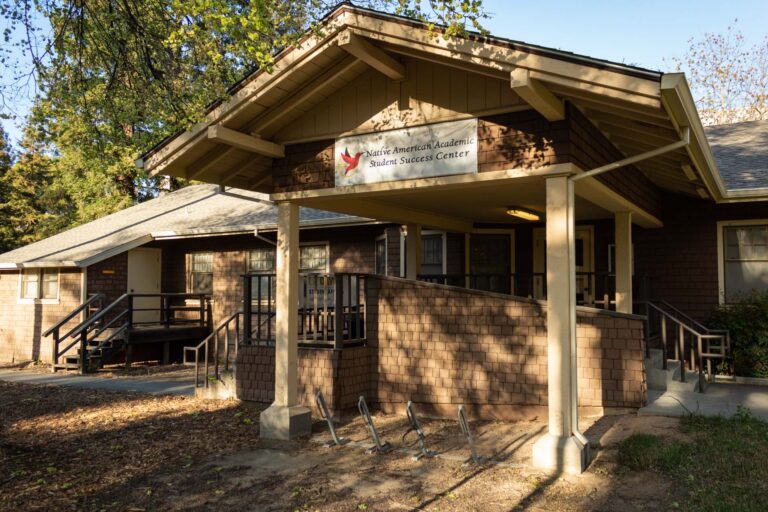
Marialuisa Kemmerle, a fourth-year Native American studies major from the Cherokee Tribe of Mvskoke Creek, is the program director of the American Indian Recruitment & Retention (AIRR) project and helped petition for a space on campus to be devoted to Native crops and serve as a community area for Native students. For about three years, Kemmerle said, Native students and the Native American Academic Student Success Center, also referred to as the “Native Nest,” advocated for this, but were met with little support from the university.   

“It did make me discouraged about the university wanting to meet the needs of Native students,” Kemmerle said. “Being a Native student myself it just felt like it was my duty as a community leader and a student leader on campus to get the conversation going to start advocating for a space on campus, whether it be at the arboretum, at the student farm or somewhere else. It was up to the students to really make that happen with the support of other Native faculty and […] the Native Nest.”

Annika Shije, a second-year biological systems engineering major and a member of the Santo Domingo and Santa Clara Pueblo Tribes, used to work at the Native American Academic Student Success Center. Shije remembers first finding a rare sense of community at the Native Nest among other Native American students. 

“Inside the Nest, we were all really close,” Shije said. “We had a lot of the same experiences and that was really refreshing and nice, and I actually spent a lot of my time there, a lot more than I thought I would. I think it’s very good that I had that kind of connection because in classes and other areas, I did not have that at all.”

According to Kemmerle, after years of advocating for garden space, the university has recently granted a Memorandum of Understanding (MOU) to the Native American Student Union (NASU), stating that it will pay in perpetuity for five plots of land that the Native American community will use to plant traditional crops. 

“In the MOU, the ASUCD say, ‘Oh, we acknowledge we’re on the land of the Wintun people,’ but instead of just doing land acknowledgments, they’re going beyond that,” Kemmerle said. “They’re saying, ‘Okay, what do Native students need,’ or, ‘How can we better serve the Native community?’ And this is definitely […] a positive thing that has come out of years of students wishing they had a space on campus.”

One of McConnell’s current endeavors is to disaggregate, or create an accurate breakdown, of data reflecting the population of Native American students at UC Davis.

“One of the things I’m working on on the Native and Indigenous Committee right now [is] I’m sharing a subcommittee for disaggregating Native student data, […] which is crazy because it seems like that should already be something that’s worked out,” McConnell said.

When considering the broader UC system, the percentage of Native undergraduate students in the fall of 2011 was 0.67%, which is not reflective of the percentage of California’s population that identifies as Native American (1.94% as of this year). According to McConnell, the UC should be cognizant of this discrepancy.

“The proportion of Native people in California doesn’t match up with the proportion of Native students in the UC, so basically, Native students are underrepresented in UC, even compared to the population,” McConnell said. “So that’s something to keep in mind—what is the University of California doing such that the demographic of California isn’t even reflected in their student body?”


Written by: Lyra Farrell — features@theaggie.org

To revolutionize social media activism we have to stop virtue signaling through infographics

0

Bait-like infographics and posts don’t prove what they should

Since the turn of the decade, we’ve learned through life-changing events—such as the Black Lives Matter movement or the COVID-19 pandemic—that the internet is our most powerful tool for spreading information and sharing resources on a large scale. We can now safely say that the 2020s are destined to be the age of bubblegum pink backgrounds, serif fonts and hand-drawn comics dominating social media. 

The vast majority of accessible knowledge about both national and international current events is found on platforms like Instagram, Facebook and Twitter. A study conducted by the University of Oxford and the Reuters Institute revealed that 57% of Gen Z reported getting their news from social media and messaging apps. The fact that these platforms are used by so many individuals for the express purpose of news drives individuals to create informative posts that are compressed into simple, easy-to-consume media morsels, more commonly known as infographics. 

These little tidbits of information can come in myriad sizes (180 characters, possibly), colors (rainbow gradient or millennial pink) and styles. Many are written in digestible language and peppered with charming graphics. They have the benefit of permeating several layers of humans online; a factually inaccurate infographic can only exist for so long until it is debunked by one of the millions of social media users that come across it. 

Infographics are also useful in that they spread good old-fashioned awareness. Simply being in-the-know is half the battle of understanding and keeping up with current events; just 30 seconds of scrolling through Instagram stories can give you ample exposure to any given issue and varying perspectives regarding the situation. 

When it comes to infographics, however, it’s incredibly important for users not only to be critical of the content presented in them, but also the ways in which content is presented and how the language can be seeking to appeal to their ego. Take, for example, the infographics which insinuate that a social media user doesn’t care about the issue if they don’t repost a picture or data chart. I’ve seen one that implored users to share if they were “against rape,” implying that if a user didn’t repost it, they were “pro-rape.” 

When we bring a social media user’s perceived morality or ego into a seemingly benign infographic, it’s no longer a post that is bringing awareness to others, but something that implicates the sharer’s ego and pride. It’s a classic example of virtue signaling, which is defined by Oxford Languages as “the action or practice of publicly expressing opinions or sentiments intended to demonstrate one’s good character or the moral correctness of one’s position on a particular issue.” 

Social media is all about perception, and if our cultivated persona is being challenged, we’ll do anything to defend it. That’s what’s so wrong about infographics that urge users to virtue signal. Social media users are being coaxed into reposting more because of the potential attack on their egos, rather than reposting to actually highlight injustices, demand change and share resources. Deciding to not repost a harrowing image of a malnourished infant on one’s Instagram story shouldn’t be tied to a social media user’s morality. It should be tied to the issue of world hunger or poverty—without any extra bells or whistles. 

I understand the logic behind sharing one of these more bait-like infographics; I’ve fallen victim to the temptations of these sorts of posts myself. If I found that an Instagram story struck a chord with me emotionally, I’d be more tempted to share it. If someone were to tell me that I didn’t care about the issue for failing to repost an important current event, I would feel bad and then repost––it’s that simple. I’m only motivated because I want to prove that I am, in fact, a human. 

I think the elimination of these types of posts is critical to revolutionizing social media activism as a whole. The influx of political postings and discussion on social media has to be one of the most important developments of our decade. The digital age is here to stay. In order to effectively seize the art of internet activism, we have to remove ourselves and our personal brands from the equation. 

Written by: Isabella Chuecos — ifchuecos@ucdavis.edu 

Disclaimer: The views and opinions expressed by individual columnists belong to the columnists alone and do not necessarily indicate the views and opinions held by The California Aggie

Yolo County moves to ‘moderate’ orange tier

0

As Yolo County moves forward with reopening, local businesses are able to provide county residents with increased services

On March 24, 2021, Yolo County moved from the red (substantial) tier, into the orange (moderate) tier. 

According to a press release, the move follows two consecutive weeks of meeting the orange tier’s metrics. As a result of moving into the orange tier, many Yolo County businesses are now allowed to either expand capacity or resume operations entirely. 

Fitness centers and gyms can now operate at 25% max occupancy and both restaurants and movie theaters can open indoors at 50% max occupancy or 200 people, whichever is fewer. A full list of guidelines can be found on Yolo County’s website

General store manager of Tim’s Hawaiian Laura Armero explained that while the move to orange tier has allowed for increased capacity, Tim’s Hawaiian has not made any significant changes to operations.

“We’re still following all the COVID-19 guidelines—we have markers on the floor, we sanitize every 30 minutes or whenever we feel it’s needed and masks are required for employees and customers,” Armero said. “Our indoor space is really small so we have to consider the space.” 

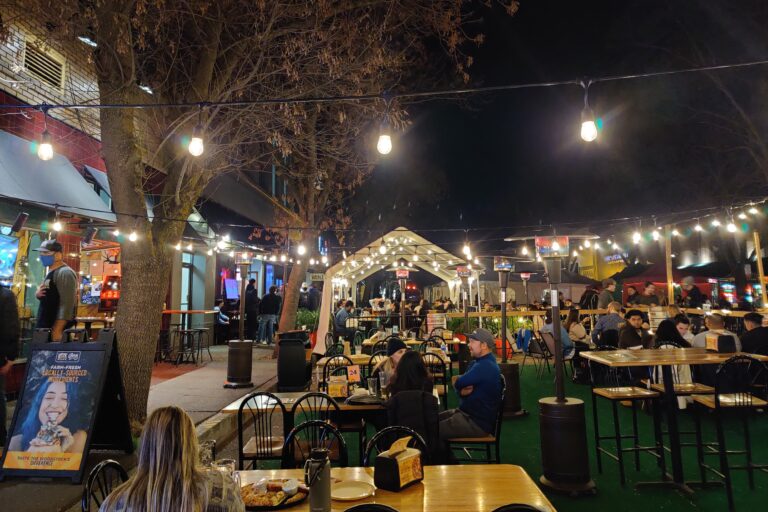
Due in part to its outdoor seating options, Amaro explained that Tim’s Hawaiian has actually seen a recent increase in business.

“It’s safer outside,” Amaro said. “The outdoor space lets customers just have a good time. They can eat and enjoy the things we used to do before the pandemic started.” 

Amaro also attributed the increase in business to changing weather conditions and the more widespread availability of vaccines. 

“More students are coming back, so we’re seeing more business because of that,” Amaro said. “I also think that people are feeling more comfortable with the vaccines coming out and the nicer weather.”

Co-owner of Davis Strength and Conditioning Drew Temple explained that like Tim’s Hawaiian, most of their operations with customers have been moved outdoors since the start of the pandemic. 

“We had an outside area that was already built, so we basically have just been adding things back inside as things open up more,” Temple said. “When [indoor capacity] was 10%, we moved some back and now we’ve moved more. We also schedule when people can come in so there’s not a lot of overlap.” 

Temple explained how Davis Strength and Conditioning has been handling the increased indoor capacity and the health concerns that come with increased indoor capacity. 

“In terms of keeping things clean, it was pretty simple—our gym was designed to keep people spread apart, so we’re lucky,” Temple said. “It was just a matter of teaching people. We have cleaning stations at all of our racks and platforms.” 

Temple explained that many customers are eager to return. 

“We’ve adopted a grow-as-it-comes approach,” Temple said. “People are desperate to get back into the gym—supply is low, demand is high. We have a lot of student clients so for us to be a place where [students] can interact with people and engage with people is really important.” 

While there has been no shortage of customers who wish to return to the gym, Temple explained his frustration with the speed at which reopening has gone so far and his hope for future reopening. 

“I’ve seen a lot of business shut down and friends have to permanently shut down their gyms, and as a business owner I’d like to have things go back to 100% open,” Temple said. “As the vaccine rolls out, I see no reason to open up slowly.” 

While the State Theatre & Multiplex in Woodland originally reopened on March 5, 2021, its general manager Sally Muro explained that with the move to a higher occupancy in orange tier, the theater has been limiting ticket sales to ensure proper occupancy. 

“We were able to move to a 50% occupancy, so to make sure that we don’t go over it, tickets are only allowed to sell at 50%,” Muro said. “We’re also taking time after each movie to make sure everything is clean.” 

Muro explained that reopening in general has been a welcome step forward. 

“As far as getting the opportunity to reopen, it’s great—not just for employees but for customers as well,” Muro said. “They’re able to get popcorn and have the experience of going to a movie theater. We have a lot of regulars and we appreciate them willing to come in, and we’re happy to be able to provide them with this experience.” 

Written by: Yan Yan Hustis Hayes — city@theaggie.org

UC students call for UCPD policy changes, budgetary reallocations during second UC Campus Safety Symposium

0

Many prospective campus proposals to reimagine campus safety and security were discussed at the symposium

During the second live University of California Campus Symposium on March 24, students, staff and faculty members met to discuss the future of campus policing and the role of the university’s police departments. UC students from the UC Student Association (UCSA), the UC Graduate and Professional Council (UCGPC), No UCPD Coalition and more called for policy changes and budget reallocation to the UCPD.
The symposium began with opening remarks from UC Regent John A. Perez and UC President Michael V. Drake. Drake reflected on the past symposium and the months of discussion between students, staff and community members about their experiences with policing on and off campus, acknowledging that these experiences and perspectives are important.
“We want to assure you that we are listening, learning and committed to real change,” Drake said.
He mentioned that despite the symposium having no prescribed or fixed outcome, as there is currently no fixed procedure on how campus safety looks, the discussion is “guided by the same desire” to create a more respectful and safe community within the UC. A proposed summer action plan is designed to inform campus plans for the fall and to envision the future of campus safety and policing.
Due to a lack of student involvement from the last symposium, the discussion began with a presentation from Naomi Riley, the UC Council of Presidents co-chair and an undergraduate student at UCLA, and Naomi Waters, the vice chair of the UCSA Racial Justice Now at UC Riverside. Other students provided opening remarks, including UCSA President Aidan Arasasingham, an undergraduate student at UCLA, and UCGPC President Gwen Chodur, a graduate student at UC Davis.
“The problem of over-policing at the UC in our communities is not new, and students, faculty and staff are justifiably tired of discussing the problem every few years with only Band-Aid solutions on the table,” Arasasingham said. “This symposium asks us to think older, to think and to ask, ‘What solutions truly re-envision [what] campus safety looks like from the ground up?’”
Citing the aftermaths of the 1965 Watts Rebellion and the 1992 Los Angeles uprising, Arasasingham mentioned how solutions to campus safety exist if a similar model to the solutions to both uprisings is followed. The solutions that resulted from both events called for an investment in basic needs instead of over-policing, according to Arasasingham.
“By the end of these symposium discussions, we have either the opportunity to be a mirror reflecting the failed status quo policies and thinkings that have guided racialized over- policing for decades, or [we have] a window into a new and transformative view of campus safety that breaks from our past and lights the way to our future,” Arasasingham said.
Chodur added how most of the student position is “overwhelmingly abolitionist.”
“This is not a radical position, this is not an uninformed position,” Chodur said. “Our stance is informed by the lived experiences of our community and by rigorous scholarship performed by faculty at our institution.”
She further mentioned how the UC system adopted a new framework which examined basic needs beyond food and housing for students to succeed academically. Chodur called for the UC to approach a similar idea to campus safety to see what needs to be changed so all students feel safe and secure.
Riley and Waters provided a list of student demands, which included policy changes regarding UCPD policing, and safety and budget reallocation to address student needs like combatting student homelessness, food security, mental health services and more.
They further cited how the UC campuses spent $136 million on policing alone in the 2019-2020 school year despite other programs going unfunded. They called for a reduction in the number of officers by at least 40%, the elimination of mutual aid between municipal and state police and shared governance over campus operations between faculty and students.
Riley mentioned how despite many attempts of state and local programs to reform the police department through body cameras, anti-bias training and more, none can get at the roots of policing as it is an “inherently oppressive institution that must be abolished.”
Riley referred to Graduate Center Professor Ruth Wilson Gilmore, who has emphasized protection through life-affirming institutions.
“Building life-affirming institutions at the UC looks like investing in students’ basic needs: Providing housing for all students, creating institutions that believe and support survivors, increas[ing] recruitment and retention efforts for those most marginalized [and] challenging notions of criminality, power and justice,” Riley said. “In the upcoming months, the UC has a chance to put this theory into practice, to lead the nation in reimagining campus safety, to repair harm that silencing and systemic racism has inflicted on our communities of Black, Indigenous and people of color, and to build a university [that] truly allows its students, staff and faculty to thrive.”
Liz Halimah, the associate vice provost of Student and Equity Affairs at the UC Office of the President, shared prospective campus proposals to re-imagine campus safety and security. Some campuses are thinking of creating mental health police/crisis teams for wellness checks or crisis response, having students serve as community service officers, introducing public safety officers, using data to better inform resource allocation and de-emphasizing enforcement of minor traffic violations.
The proposals have also included reconciliation methods, such as UCPD outreach to historically marginalized communities, acknowledging past harms and trauma and integrating campus anti-racism initiatives.
Halimah shared that there are undergraduate and graduate students who already serve on police advisory boards and campus safety task forces, but the hope is to further engage students through town halls, focus groups, personal security training and task forces.
Further faculty and student discussion touched on reconciliation, accountability and data transparency, as well as the current and future roles of police and non-police.
Jack Clarke Jr., the chair of the Task Force on Campus Safety at UC Riverside, commented on the re-examination and re-assigning roles of campus police.
“The concept of policing should be more [of] a movement of community and in this case, campus safety overall,” Clarke Jr. said. “That would require considering and implementing a series of campus elements that could address mental health concerns, address people who are simply in crisis [and] address situations where force is not being used. The [UC] Riverside Campus is considering and making efforts to create a department that reflects those concepts.”
Martin Reed, the assistant vice chancellor for Student Life and Residence Education at UC Merced addressed the UCMPD’s role in helping to address Title IX cases and helping to deal with students of concern, stating that the removal of the campus police could be harmful.
“They’re not perfect, but I prefer them over Merced City and Merced County police,” said Reed.
Nicole Green, the executive director of CARE and the director of Counseling and Psychological Services at UCLA, touched on stigmatization and criminalization of mental illness at the UC and the role the police play.
“What has happened is that police have been used in a lot of ways to sort of mitigate and respond to mental health crises,” Green said. “When UCPD is often called, the assessment is rudimentary in a lot of ways, restricted to a few basic questions and officers can’t really go on in a more sophisticated way like a mental health clinician [could]. There is no real intervention being offered at the moment beyond just de-escalating a crisis and maybe a referral.”
Kerby Lynch, a graduate student at UC Berkeley and the co-chair of the Independent Advisory Board, mentioned personal incidents with the UCPD and called attention to Black student lives lost due to hostile campus climate at Berkeley, specifically.
“The role of UCPD is that we have to invest in internal affairs, we have to invest in people in the department who have the actual skill-set in accountability,” Lynch said.
In the closing remarks, Drake thanked those in the discussion and highlighted how the UC is impacted by issues of our society.
“We know that [the issues discussed] also exist across the street from our campus and our broader cities and we have to work in ways to address these issues of oppression and systemic racism that exist throughout our society,” Drake said.

Written by: Annette Campos — campus@theaggie.org

When will lives be more important than gun ownership?

0

Our political leaders need to pass gun control laws that limit the access to and use of guns

The members of this Editorial Board cannot remember a time before we were required to participate in school shooting drills or lockdowns due to a threat. We don’t know what it’s like to not always have an exit strategy when entering any public place—movie theaters, schools, malls, grocery stores and even on our own campus. We have become so desensitized to gun violence in the U.S., we often wake up to the news reporting another mass shooting and we are horrified but not surprised. 

Shootings have been so normalized that instead of trying to fight the disease, we’re trying to treat the symptoms (to put it in words familiar to those of us who thought we were escaping mass shootings in a COVID-19-stricken world). In fact, mass shootings have still been consistently occurring despite the fact that the world we currently live in presumably lacks crowds. A mass shooting is typically defined as an incident involving a firearm in which four or more people are wounded or killed. Only four months into this year, there have already been 125 mass shootings in the U.S.—that is a problem. 

We do not believe there is a rational argument for owning assault-style weapons, like AR-15s, and we believe Americans should not be allowed to own them. A bill passed in 1994 that banned these weapons was associated with a reduction in mass shootings during the time the bill was in effect, but it was not renewed at its sunset date 10 years later. Since then, research has shown that mass shootings using assault-style weapons have dramatically increased. This seems like it should be obvious—easier access to guns means a higher likelihood that these guns will be used in gun violence incidents despite claims from the National Rifle Association (NRA) that the ban had no effect. 

It is clear that when countries—including the U.S., as evidenced by the assault-rifle ban—take action to regulate guns, incidents of gun violence decrease. In 1987, 16 people died in a mass shooting in the U.K. A year later, legislation that outlawed semi-automatic weapons and restricted some shotgun sales was passed by a parliament overwhelmingly controlled by the right-wing Conservative Party at the time. When another mass shooting occurred in Scotland 10 years later, legislation was immediately passed to restrict the ownership of most handguns, many of which were bought back by the government at market value. 

Not only could stricter regulations on guns decrease mass shootings, but also they could even decrease the number of individuals dying in police shootings, which disproportionately affect Black Americans, because police would no longer need to carry guns (more than 90% of British police do not carry guns).

Australia had a similar buyback program which was part of broader legislation to limit the ownership of automatic and semi-automatic weapons after a deadly mass shooting in 1996. This was also instituted under the governance of a center-right political party, the Liberal Party of Australia, led by then-Prime Minister John Howard. In fact, Howard called on former President Barack Obama to follow the country’s model after the Sandy Hook Elementary School shooting in 2012, which claimed the lives of 20 children and six adults. 

After a horrific mass shooting at two mosques in New Zealand in 2019, Prime Minister Jacinda Ardern announced temporary measures in less than 24 hours that came into effect just days later, including a buyback program and restrictions on semi-automatic weapons. These measures were formalized by the national parliament a month later and overwhelmingly supported by members of right- and left-leaning parties.

Despite the fact that this issue has had bipartisan support in the U.K., Australia and New Zealand—with the first two nations passing gun control legislation in legislatures held by right-wing or right-leaning parties—the Republican Party’s platform strongly opposes gun control measures. Furthermore, in 2020, a majority of Americans (57%) said they wanted stricter gun control laws. This shouldn’t be a political issue and it clearly has not been for other nations.

Understandably, there are many more barriers to effective gun control measures in the U.S. than there may be in other countries—notably, the Second Amendment of the Constitution and the nation’s extremely powerful gun lobby. As noted earlier, however, the U.S. has passed gun control legislation before and we believe in American political leaders’ ability to resist political pressure when countless lives are at stake unnecessarily. 

We believe lawmakers have the capacity to enact comprehensive legislation that outlaws semi-automatic weapons; institutes universal background checks for prospective gun owners and red flag laws that allow people to report those not fit to carry guns; creates federal licensing programs; and closes loopholes that allow individuals prohibited from purchasing guns to do so through gun shows or private transactions. 

If you own a gun, you are increasing the risk of accidentally injuring or killing yourself or using it to die by suicide. If you have children, you are increasing the risk they could die by an accidental shooting—the second leading cause of children’s death in the U.S. is gun injuries. If this information makes you uncomfortable, consider investing in an alarm system or pepper spray instead. 

We want to live in a world in which we do not have to carry the mental load of being legitimately scared for our lives when we pick up food at the grocery store. We want to be able to enjoy our time at the movies without having to sit in an aisle seat so we can jump up and run out at a moment’s notice. We want to be able to learn effectively, which will in turn help us to become more productive citizens, without constantly wondering whether we’ll have to duck under a table in the library. 

These should not be outlandish desires. It is up to eligible voters to elect candidates who are determined to prioritize lives over unregulated gun ownership and it is up to those representatives to put lives over political gains or pressure from powerful organizations like the NRA. At the current rate, there will be 500 mass shootings before the year’s end. The Editorial Board wants to see a country in which most of those shootings are prevented with the passage of significant legislation. 

Written by: The Editorial Board

The inscrutable Elon Musk

0

The innovator may be shaking up the tech industry, but controversy seems to follow

The name Elon Musk has been associated with both infamy and innovation—a man who people often either love or hate; an innovator who has an ardent cult following and half as many critics. Yet, some say his problematic behavior dilutes his successes.

Shambhavi Mishra, a fourth year biochemistry and molecular biology major, said the first few things that pop into her head when she hears Musk’s name are “wealthy and skillful.” 

“He is a visionary. But I would not describe him as someone who looks towards the social good,” Mishra said. 

Elon Reeve Musk was born in South Africa where he spent a good portion of child adolescence. When Musk was 17 he went to Canada to study at Queen’s University, then transferred to the University of Pennsylvania two years later, where he holds degrees in economics and physics. 

To the surprise of many, Musk does not actually have an engineering degree. He was accepted into an applied physics Ph.D. program at Stanford University, however, two days into the program he dropped out and began his entrepreneurial ventures.

One of his earlier and more notable accomplishments was being the co-founder of PayPal. In 2003 Tesla Motors, an electric motor vehicle company founded by engineers Martin Eberhard and Marc Tarpenning, was born. Musk joined as an investor in 2004 after investing $6.3 million in Tesla Stocks. Musk is officially the co-founder, CEO and product architect of Tesla. 

As of 2021, Tesla’s market capitalization wavers around $830 billion, being the fifth-most valuable company on Wall Street, tailing Apple, Alphabet, Amazon and Microsoft. 

In 2002, Musk created his second company, Space Exploration Technologies Corporation (SPACEX). The goal of SPACEX was to build spacecraft for commercial space travel. By 2008, SPACEX soon became an extension of NASA’s space program as it was contracted to handle cargo transport with the hopes of handling space missions. 

Under Musk’s vision and control, SPACEX has had both successful and unsuccessful rocket launches. As of 2021, SPACEX is worth $74 billion. 

In 2016 Musk founded his third company, The Boring Company, which was created to address congested traffic with a loop intra-city transit system made up of a large network of tunnels. 

In 2019, a survey of 3,600 tech workers from the U.S., U.K., France and Canada found Musk as the most inspirational figure in tech. 

But with the shocking amount of success, wealth and influence Musk has amassed have come some questionable decisions along the way. 

For example, In September of 2019, the U.S. Securities and Exchange Commission (SEC) fined Musk with misleading investors with his Aug. 7, 2018 tweet, in which he shared potential plans to privatize Tesla at $420 a share and that funding had been secured, which at the time had not. After his Tweet, Tesla shares soared to almost $381, a 12% increase. 

As a consequence of his actions, a settlement was reached between the SEC mandating Musk to pay a $20 million fine, step down as chairman of Tesla for three years and get his Tweets approved by legal counsel. 

It is not uncommon for critics to come after Musk. When this happens, Musk had responded by tweeting about how he would create a site for the public to rate the credibility and trustworthiness of journalists and publications.

In the earlier months of the pandemic, Musk spread confusing and misleading information regarding COVID-19 to his 40-some million Twitter followers. On March 6, 2020 Musk tweeted, “The coronavirus panic is dumb.” Over the next few months, Musk went on to suggest hospitals inflated COVID-related cases to increase profit, compare COVID-19 to a flu and even suggest the large majority of deaths in Italy were from causes other than COVID-19. 

Musk’s image—and tweets—seems to leave him with mixed reviews.

“He worked to get where he is and is innovative in creating what he has,” Mishra said. “But it doesn’t take away from his problematic behavior or past. [But] I respect people who have a growth mindset and learn from their mistakes.”

When asked about Musk’s response to the handling of the Coronavirus, Elliot Locke, a third year mechanical engineering major, said that Musk’s, “comments during the pandemic in regards to COVID safety guidelines could be seen as a bit disconnected.” 

However, as a recent summer intern at a Tesla design factory, Locke recounts his experiences working at Tesla Motors during the pandemic. 

“It was one of the few jobs or internships that were available to be in person,” said Locke. “They were serious with safety checks and COVID guidelines. Tesla was granted essential worker status and had really tight guidelines—face masks, shields and hand sanitizers everywhere.” 

In December of 2020, Musk said he would be relocating from California to Texas—a significant move as much of Tesla is concentrated in California—as California had become complacent with Silicon Valley startups and had more strict COVID-19 restrictions which Musk fought as they affected his companies’ production. 

Musk has a real-time net worth of $155 billion and is ranked as number 31 on list of the wealthiest billionaires on Forbes’ list of “The Richest in 2020.”

When asked if Musk is changing the world, Annie Andrews, a third year philosophy and psychology double major, said the answer varies person to person.

“Innovation is always good for progression and Elon is definitely innovative and a go-getter,” Andrews said. “But in a world with so many things wrong, it’s difficult to say that someone who is so wealthy, but contributes financially so little [to people in need], is really changing the world simply with innovation.” 

Mishra echoed a similar sentiment.

 “I think it depends how you define ‘revolutionize’,” she said. “For someone who works in tech, obviously he is revolutionizing these industries. He thinks outside of the box. But when looking at the social good aspect of revolution, not really. It seems like he isn’t doing enough in helping people get out of poverty or improve the quality of their life, especially for low-income communities.” 

These are not issues that Musk is solely responsible for, however, given his affluence, students seem to share the sentiment that he should attempt to address them. 

“Anybody and everybody with the wealth that Elon Musk possesses can, and should, be doing more,” Andrews said.

But when viewing Musk’s achievements through the industries he has changed, Locke appreciates the progress the entrepreneur has made.

“He did SPACEX and rockets and these are things from science fiction from like 20 years ago,” he said. “We haven’t had a successful automaker in over a century. He did all of this [Boring Company, SpaceX, PayPal] and there’s so much he’s done in parallel with an electric company. Space transportation, vehicle transportation, PayPal (online banking), rockets, energy production, and storage. He’s doing all of this simultaneously.”

It seems as though an industry titan like Musk, with such immense resources and influence, could always be doing more. He simply has the means to do so. 

“If the work a person is doing is helpful and progressive, by all means support that work and acknowledge it,” Andrews said. “But it’s most important to recognize what the people behind the work stand for, call them out and make it known if their actions and ideals are skewed.” 

Whether one focuses on his accomplishments or his shortcomings, Musk continues to create change that very few have. 

Written by: Muhammad Tariq — arts@theaggie.org

Youth summer recreation guide released by City of Davis

0

Both in-person and online recreation camps will be offered as the program adapts to COVID-19 restrictions

The City of Davis Parks and Community Services Department has released a recreation guide for summer 2021. There are camps available for children and youths from ages 2 to 17. Registration will take place on April 13 for programs from June 14 to July 18, and registration will take place May 18 for programs from July 19 to August 31.    

Tamiko Kwak, the senior community services supervisor for the City of Davis, explained that the summer recreation programs have been modified due to the pandemic. 

“We are building upon what we have been able to offer throughout the pandemic,” Kwak said via email. “We have adapted our recreation programs by offering online and in-person activities. It is important for us to continue to offer both options as not everyone is able to join in person.”

Christine Helweg, the parks and community services assistant director for the City of Davis, explained that recreation programs were put on hold early on in the pandemic. 

“Initially, when the pandemic first hit, all of our recreation programming was canceled,” Helweg said. “We were not able to provide the level of programming within the safety guidelines that the county and state had.”

Kwak added further commentary on the recreation programs prior to the pandemic.

“Pre-pandemic, our recreation programs were interactive, in-person and offered a wide variety of recreational gathering opportunities,” Kwak said via email.

Erica Walters, a seventh-grade teacher and Sacramento County resident, explained the importance of recreation for youths. 

“I would say that [recreation] is significantly important in their lives,” Walters said. “It contributes to their social and emotional growth and teaches them not only a healthy lifestyle and sense of community, but also life skills.”

Kwak commented on the department’s goal of offering different types of services during the pandemic.

“Throughout the pandemic, we were reminded that our mission is to create and enhance the quality of life for our Davis residents and visitors by providing a diverse array of programs and services,” Kwak said via email. 

Walters further commented on how she believes art and recreation can benefit youths, especially during times of stress and uncertainty.

“Secondary to the arts, recreation should be a priority in young people’s lives—particularly during this time with so many young people experiencing a sense of loss and collective grief and trauma that it seems as if recreation would have some healing properties,” Walters said. “It would make a positive impact in young people’s lives and the community.”

Kwak described the innovative ways they were able to modify recreational programs. They had to pull staff together, review restrictions and health guidelines, submit revised recreation proposals for review and determine which programs could be adapted while keeping participants and staff safe. 

“We had to get creative; we had to create new recreation programs that could be done at home, online and socially-distanced,” Kwak said via email. “Although our programs looked different, we found ways to keep connected.”

Helweg encouraged community members to participate in summer recreation classes, whether they are in-person or online. 

“I just encourage the residents to take advantage of them where they can,” Helweg said. “If they’re not comfortable with in-person programming, [they can] take advantage of a lot of the virtual programming we have available as well.” 

Kwak added that this summer could be an opportunity for people to gather and spend time together again. 

“This summer we are focusing on reconnecting,” Kwak said via email. “We are looking forward to spending time outdoors and being together again.” 
Written By: Jelena Lapuz — city@theaggie.org

UC Davis Health unveils $3.75 billion hospital expansion

0

Residents remain skeptical of renovations

This February, UC Davis Health (UCDH) released a $3.75 billion plan to rebuild and expand its medical center in Sacramento, “California Tower.” The new construction will consist of a 16-story hospital building and a five-story pavilion while also demolishing buildings that no longer meet seismic safety standards. 

The construction is projected to last until November 2030 and will double the facility’s square footage, according to the university’s press release on Feb. 26

“In the not-too-distant future, fewer people per capita will need to be hospitalized due to evolving health technologies, same-day surgeries, telehealth visits and being able to remotely monitor a patient’s vital signs,” said Davis Lubarsky, the CEO of UC Davis Health. “However, those individuals who do require hospitalization will likely require longer stays for complex surgeries or other critical care services, such as trauma care, that we provide.”

Although the square footage will double, the number of beds will only increase by 12%—from 625 to 700—since most of the new beds will be in private rooms, according to the Sacramento Business Journal. The new rooms will be “acuity adaptable,” meaning they can easily be converted into intensive care unit (ICU) beds in an emergency, raising the number of possible ICU beds at the hospital to 450. 

According to the UC Davis Health press release, “the core of our everyday mission is to increase the health of the community overall.” 

However, in 2018 the journal “Academic Medicine” reported, “While Medi-Cal beneficiaries account for nearly 40% of hospital discharges, UCDH currently provides care to fewer Medi-Cal inpatients than one of its three private nonprofit health system competitors and provides fewer Medi-Cal emergency department visits than all three of its local competitors.” 

This also comes at a time when UC Davis is battling a lawsuit about the environmental impact of the Aggie Square, a housing project that is being built in the same neighborhood.

Bill Motmans is a former member of the Aggie Square Community Engagement Advisory Committee and current board member of Sacramento Investment Without Displacement, the group filing the lawsuit. Motmans, along with other community members in Sacramento Investment Without Displacement, said he’s not satisfied with how UC Davis has implemented these projects. 

“None of the people working on these projects live in the neighborhoods [being affected],” Motmans said via email. “Most of them don’t even live in Sacramento.”

The university expects the hospital expansion to create thousands of new health care positions for the local community, but UC Davis has yet to reveal a plan to house these thousands of new employees coming to the area. 

According to the lawsuit, the project would increase the UC Davis Sacramento Campus population by 7,700, while only providing enough housing for 411 new on-campus residents. 

“It’s not our intent to derail this project, we’re not trying to do that,” Motmans said. “Sacramento Investment Without Displacement just wants to make sure these communities don’t become so gentrified they’re no longer recognized.”
Written by: Wm. Schroedter Kinman — campus@theaggie.org

City of Davis plans Climate Action and Adaptation Plan Update to reach 2040 net carbon neutrality

0

Yolo County also creates a Draft Sustainability Plan to work toward a more sustainable future

The City of Davis has started planning for an update to the 2010 Climate Action and Adaptation Plan (CAAP), according to a news statement released on March 11. This CAAP Update will establish a plan for the City of Davis to meet its preexisting goal of becoming net carbon neutral by 2040.

According to the statement, the CAAP Update will reinforce recent efforts by the Davis City Council, which include evaluating progress in greenhouse gas reductions since 2010, prioritizing carbon reduction and recognizing climate justice. 

Community members will also be able to participate in this process through workshops and surveys, both of which will be posted virtually, or by contacting CAAP@cityofdavis.org to share their comments or input with the project management team. 

The project is forecasted to end in Dec. 2021 and will involve many stakeholders in the community to increase consciousness of how to best serve all community members.

The Draft Sustainability Plan by Yolo County is another local environmental effort. Public Information Officer at Yolo County Jenny Tan explained via email that the plan will focus on sustainability. 

“The Yolo County Sustainability Plan is intended to serve as a living document for the public and the County in charting a path towards a more sustainable Yolo for all its communities,” Tan said. “The Plan consists of an Existing Conditions Report that identifies the various plans and programs already underway in Yolo and an implementation strategy that contains recommendations for each of the eight Sustainabilty Elements where gaps were identified in the Existing Conditions Report.”

The eight Sustainability Elements are air quality, buildings, water, ecological health, local food, waste, education, agriculture and buildings, Tan explained. The elements correlate with and develop from current programs. 

District 2 Yolo County Supervisor Don Saylor described the impact the plan could have on multiple environmental concerns.

“As a County Supervisor, my role is to help set policy direction,” Saylor said via email. “This document provides a holistic framework for long-term environmental sustainability, from greenhouse gas emission reductions to food security and ecological health. This assures that protecting our planet remains a priority.”

Tan added that the most vital changes that the plan would focus on are “equity and inclusion of all sectors of our community toward achieving sustainability goals” through having “a broad based advisory body” implement the necessary steps.

Saylor explained that Yolo County is also updating its Climate Action Plan, which was first adopted in 2011.

“We will be guided in this process by a Climate Crisis Resolution adopted by the Board of Supervisors in 2020 that sets the ambitious goals of achieving a just economic recovery and transition to a countywide carbon negative footprint by 2030,” Saylor said via email. 
Written by: Shraddha Jhingan — city@theaggie.org

Commentary: The harmful and transphobic reality of ‘super straight’

0

The new term, coined to dismiss trans women, has been adopted by hateful groups

Trigger warning: transphobia, nazism. 

If you or anyone you know is experiencing transphobia or antisemitism, you can find resources at https://transequality.org/additional-help and https://www.shalomdc.org/resources-and-tools-addressing-anti-semitism/.

Whether you witnessed it on Twitter, TikTok or Reddit, or you entirely missed it, “super straight” took the internet by storm during the first couple weeks of March. Coined by a now-deleted TikTok user, “super straight” is a (fake and made-up) sexuality which many straight men were quick to get behind as it functioned perfectly as an excuse to be overtly transphobic

Those who are backing “super straight” define it as only being attracted to those who were assigned the opposite sex from themselves at birth—thus reinforcing the idea of a gender binary and the inaccurate concrete connection between one’s gender and the sex they were assigned at birth. Personal preference when dating is one thing, but invalidating the identity of trans people (in this case primarily trans women) is an entirely separate thing. 

After TikTok user @Kyleroyce posted the original video introducing “super straight,” many different sides of the internet responded both in support and against this harmful term. On TikTok and Twitter, some users were quick to perfectly break down exactly why “super straight” is nothing more than blatant transphobia. User @procrasclass on TikTok succinctly shuts down “super straight” supporters and points out its basic logical fallacy—”super straight” supporters saying they only date “real women” means they harmfully and incorrectly view trans women as men. Stating that this transphobia is a form of extreme “straightness” inherently limits the women one “can” be attracted to. 

No matter the angle taken, there is no defense for “super straight,” as seen when the creator of the term responded to Insider, stating that “it was never meant to be hateful towards anyone,” even though in the original video posted he states “[in reference to trans women] that’s not a real woman […] I only date women that are born women”—there is simply no way around this statement being extremely hateful toward trans women. 

The exclusion of trans people simply because they are trans within this sexuality is no different from the statement that you would never date a trans person because they are trans—reinforcing the harmful perspective that trans men and women are different, often seen as lower class from cis-gendered people. To put it plainly, “super straight” (whether it is used as a joke or proposed as a new sexuality) is offensive toward the LGBTQ+ community as a whole, and purports extremely harmful rhetoric toward all trans people. 

As things so often do on the internet, the controversy surrounding “super straight” soon gained traction among alt-right and neo-Nazi circles on web forums like the infamous 4chan, and even some parts of Reddit. Groups in these chat rooms adopted the black and orange flag deemed the “super straight pride flag” (some have pointed out it is possibly correlated to PornHub’s logo of the same color scheme), and added double-lightning bolt motifs to it—something strongly associated with the Schutzstaffel or “SS,” the paramilitary organization of Adolf Hitler’s Nazi Party. 

There was some confusion as to whether these neo-Nazis were the ones who invented the term “super straight,” but it has since been made fairly clear that they simply co-opted something rooted in hatred and ran with it. Transphobia and violence against trans people (most prominently Black trans women) has long been deeply tied to the alt-right and white nationalist movements, so it is not surprising that these violent groups were so quick to embrace the “super straight” ideology, and infuse it with their own. 

Most of the actual chats where these neo-Nazi groups created the connections between “super straight” and white supremacy are gone due to 4chan’s feature of permanently deleting message boards after certain periods of time—luckily there are still screenshots that made their way to Twitter, making it impossible for any supporter of “super straight” to truly distance themselves from the hateful roots of this “movement.” In one set of screenshots posted by Twitter user @DavidPaisley and then verified by Mashable, one user on 4chan stated “Hail SuperStraight Victory” paired with an orange and black SS flag. 

Identifying with a sexuality is a way to create unity and spread understanding and respect for everyone’s different identities. There is no space for things like “super straight” that are rooted in hateful and divisive perspectives concerning sexuality or identity. 


Written by: Angie Cummings — arts@theaggie.org

UC Davis veterinary team evaluates mass near kangaroo’s heart

Female kangaroo Brodie undergoes her annual evaluation conducted by the veterinarian team in collaboration with the Sacramento Zoo

In collaboration with the Sacramento Zoo, a UC Davis veterinary team recently evaluated Brodie, a 10-year-old kangaroo with a suspected abnormal mass near her heart. 

Melissa McCartney, the senior manager of animal care and veterinary health services at the Sacramento Zoo, described the observations in her recent annual health exam on Brodie.

“We could see maybe some little nodules in her lungs that look older and not active,” McCartney said. “There was also an esophagus issue, which you can find in macropods, often associated with genetics. They’re born with it. But because we don’t have a full history on her, it’s hard to tell if she was just one of these kinds of mildly abnormal macropods or if there was something going on—an underlying cause.”

The zoo had accepted Brodie in late 2018 from a private owner who kept her as a pet on their ranch in Texas. The family had thought that it was best to transfer her over to a zoo to ensure that she would receive optimal care. 

Dr. Janessa Gjeltema, an assistant professor of zoological medicine at UC Davis and service chief of zoological medicine for UC Davis’ Veterinary School, is the head veterinarian for the zoo and leads the team on Brodie’s case.

“Upon performing an echocardiogram and a CT scan, the advanced imaging techniques determined that there was no mass in Brodie’s chest,” stated a press release from the UC Davis School of Veterinary Medicine. “It did confirm, however, some minor abnormalities in her lungs, a small nodule in her heart, and an abnormal esophagus.”

Currently, Brodie is out in her new Australian exhibit at the Sacramento Zoo front and center, along with her fellow kangaroos and emus. As part of what the zoo does in collaboration with the veterinarian team, preventative health care is important, according to Gjeltema. 

“I think one of the messages that comes out of Brodie’s case is that preventive health care is incredibly important,” Gjeltema said. “And for her, we were able to recognize a disease process going on inside of her before she started feeling really bad because of it. Because we’re very proactive, and we’re looking for abnormalities, we’re able to find them at a point where we can actually do things about them. So it gives us more options for figuring out the right path forward for her, and hopefully instituting any kind of therapy or treatment before it becomes a huge crisis for her from a physical standpoint.”

McCartney added that though check-ups may look different for certain animals, they are all performed on a consistent basis. 

“As part of our preventative health program, and our welfare program, every animal at the very least is going to have their yearly checkup,”  McCartney said. “And sometimes that’s not a full sedation knockdown. Sometimes, that’s just getting an exam with a vet. And we review all of their medical records at that time. We have our caretaker staff fill out a full welfare assessment, which looks at all aspects—how was their enrichment program, how is their housing situation, what is their social group and so forth.” 

Not only is preventative health care important for the well-being of animals, it also serves as a good reminder for individuals to take care of ourselves on a consistent basis. Despite the often observed separation between health care of animals and that of humans, Gjeltema noted the striking similarities that send an alarming message of awareness of one’s personal health. 

“Much of [health care] is the same between humans and animals,” Gjeltema said. “I know that sounds kind of weird to think about, but humans are an animal species. They are a primate. So some of the things that are seen in human healthcare and animal healthcare are very similar.”

Gjeltema has treated a plethora of different animals along with Brodie. Animals from the same species are treated differently as unique individuals, receiving their own form of creative therapy and treatment, according to Gjeltema.

“The way that we have to deliver them to the patient, or implement them to the patient, needs to be a little creative,” Gjeltema said. “We have to sort of make it work for not just that species, but also that individual. Every animal has a different personality, and has different comfort levels with different things and different experiences. It’s also a team sport. We have incredible experts in so many different fields. And we’re able to sort of pull all of that expertise together to really provide the best options and solutions and knowledge and evidence that we have in medicine to a specific problem.”
Written by: Brandon Nguyenscience@theaggie.org

Requirement for professors to give end-of-quarter exams waived again for Spring Quarter 2021

0

Students will also have up until the last day of instruction to take a class pass/no pass

The requirement for professors to give end-of-quarter exams has been waived again for Spring Quarter 2021, according to Dr. Richard Tucker, the chair of the UC Davis division of the Academic Senate. 

Professors must notify students about whether they plan to give a final exam by the end of the first week of their respective courses. 

When contacted by The Aggie, Chancellor Gary May referred inquiries about the university’s current exam policies to Tucker.

“Exam policy is really the purview of the Academic Senate rather than the administration,” May said via email. 

Tucker said that the Academic Senate hadn’t yet determined whether the same policy will be applicable for instruction in Fall Quarter 2021, although in-person classes have been tentatively scheduled for that time due to the increased availability of COVID-19 vaccines. 

“We will determine these [policies] once we’re closer to fall and have more confirmed details about campus operating status,” he said, referring to the UC Davis Academic Senate’s website for further details. 

Exam policies have been frequently adjusted throughout the previous year due to pandemic regulations and changing social conditions in the U.S..

In-person final exams for Winter Quarter 2020 were previously canceled last March due to the onset of the COVID-19 pandemic as universities nationwide prepared to go online and the UC Davis campus was eventually closed for in-person instruction.

In June 2020, following the police killing of George Floyd, an unarmed Black man, the Academic Senate at UC Davis allowed faculty to determine students’ grades based on their work up to the last day of instruction in Spring Quarter, instead of relying on their exams for final grades. 

Professors were also encouraged to be more lenient with pass/no pass grading and incompletes, a policy which has carried into Spring Quarter 2021

Accordingly, students have up until the last day of instruction to decide whether they want to take a class pass/no pass instead of for a letter grade. No more than one-third of courses may be taken as such, however. The decision to require or cancel exams also remains at the discretion of professors, according to current exam policy guidelines. 

Written by: Rebecca Bihn-Wallace — campus@theaggie.org