57.6 F
Davis

Davis, California

Tuesday, December 23, 2025
Home Blog Page 274

Healthy Davis Together compiles wastewater testing data for COVID-19 on website

0

Graphs show trends in COVID-19 spread in Davis as experts explain how the data is analyzed

Healthy Davis Together has been collecting data from municipal wastewater autosamplers to assess the extent of the COVID-19 outbreak in Davis since Sept. 2020, and recently compiled and analyzed the wastewater data on its website.  

As of March 31, the website shows data from seven regions, plotted on graphs of normalized virus concentrations against sampling dates, accompanied by citywide trends. 

There are no numbers on the y-axis, which is intentional, according to Hannah Safford, a fourth-year Environmental Engineering Ph.D. student and core member of the wastewater team.

“As the normalized values don’t tend to mean much to people it’s common practice in the wastewater-surveillance world to leave numbers off of the y-axis so people can focus on trends in the data,” Safford said via email.

The data is normalized against a pepper virus called Pepper Mild Mottle Virus (PMMoV), UC Davis Health Director of Business Development Tod Stoltz explained. PMMoV is a virus that infects pepper plants and is commonly found in human feces, which scientists can identify in sewage treatment plants. 

“The way they calculate [COVID-19 levels in wastewater] is that they compare the amount of DNA or RNA in the sample to what’s a fairly consistent amount of RNA from a pepper virus,” Stoltz said via email. “There’s a pepper virus that people generally consume and it’s at a fairly constant level in the wastewater, because people are always eating it and excreting it. So if you compare that COVID-19 RNA to how much pepper virus RNA is in the wastewater, then you can start to say whether there’s a higher amount than normal. It’s that ratio which is being presented in the data.”  

Safford elaborated that normalizing against the pepper virus reduces the impact of confounding data.

“Normalizing by PMMoV also helps us adjust for factors like rainfall that can dilute wastewater samples,” Safford said. 

The graphs on the wastewater testing website show both lines and crossmarks. The crossmarks represent exact values from the samples, while the lines represent the two-week moving average, which is used to smooth out the noise in the data, according to Safford.  

“It’s common to use a moving average to assess trends in noisy temporal data such as the data we collect from environmental monitoring or clinical testing,” Safford said.
“We’re using a two-week moving average for [wastewater] data right now in part because we’re getting limited data points (only two per site per week) and in part because there’s an epidemiological reason: because COVID-19 infections typically run for 2–3 weeks, it’s reasonable to expect that we might see trends manifest over a two-week timeframe.”  

UC Davis Assistant Professor in the Department of Civil and Environmental Engineering Heather Bischel elaborated via email that noise can be a considerable element in the data because toilets are flushed at all hours of the day.  

“Some of the important sources of variability are the “fecal shedding rate” and the randomness of toilet flushing,” Bischel said. “An infected individual can shed a wide range of virus in their excrement… People will flush the toilet at different times of the day, creating mixtures of virus concentrations in the sewer system. To try to account for some of this variability in our sampling, we collect composite samples from the sewer system using automated samplers that draw a portion of the flow in the pipes every 15 minutes over a 24-hour period. The virus concentration we measure represents an averaged concentration from many people who flushed during the collection period.”  

Bischel anticipated that the wastewater testing infrastructure could still be useful in the future, even after the COVID-19 pandemic has passed.  

“Wastewater monitoring can continue to inform public health efforts in the future,” Bischel said. “While we are focused on supporting the pandemic response right now, my research group has been studying enteric viruses in wastewater and working to develop tools for more rapid virus detection and monitoring for our water systems.”  
Written by: Rachel Shey — city@theaggie.org
UC Davis research shows seaweed reduces cow methane emissions by as much as 82%

0

Research suggests that lemongrass may also be a successful feed additive to reduce cow methane emissions in the future

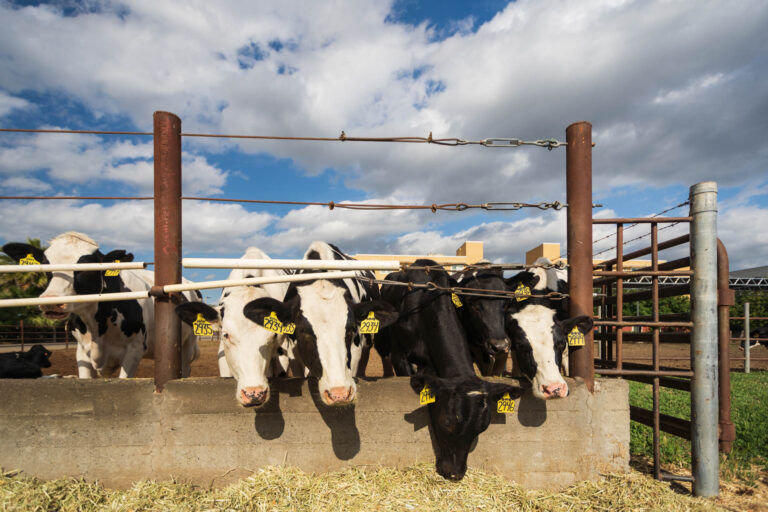
The lab of UC Davis Animal Science Professor and Associate Dean of the College of Agriculture and Environmental Sciences Ermias Kebreab has successfully identified seaweed as a feed additive that can reduce the enteric methane emissions of cows—methane released from cow burps—by as much as 82%. These findings were released March 17 in the journal PLOS ONE, and represent a viable opportunity for farmers to meet California methane standards and reduce the amount of short-lived climate pollutants in the atmosphere.  

“I work with cattle, both beef and dairy, to find new feed additives that can increase the sustainability of livestock,” said Breanna Roque, a fourth-year Ph.D. student in the animal biology department, who is working alongside Kebreab on the project. “One of the goals of the lab is to see if we can reduce methane production coming from cattle through the use of feed additives.”

Students working in Kebreab’s lab are testing the impacts of different feed additives on the enteric methane emissions of cows.

“About 95-98% of methane comes from the front of the animal,” Roque said. “A big myth is cow farts are contributing to climate change—it’s actually the burps.”

By reducing enteric methane emissions, Kebreab’s lab is focusing on reducing the methane emissions that are released through the cow’s mouth.

“Livestock contributes about 14.5% to greenhouse gas emissions worldwide and about 4% in the U.S.,” Kebreab said. “About 5.7% of global greenhouse gases comes from enteric methane [released by ruminant animals].”

Kebreab hopes the discovery of seaweed as an effective feed additive will reduce the global enteric methane emissions from ruminant animals—typically farm animals like cows, sheep and goats—from 5.7% to 2.5-2.8%.

Roque ran the day-to-day operations of the study by implementing the seaweed into the cows’ diets and ensuring the animals’ safety throughout the 21-week project.

“With any new feed additive, it takes cows a little bit [of time] to get used to the smell and the flavor of something new into their diet,” Roque said. “The seaweed comes freeze-dried and ground so it’s more like a powder than strips of seaweed. I took this powder and mixed it with molasses, which has got a bit of a sweeter smell and taste that cows really enjoy.”

Roque added this mixture to the cows’ diets twice a day and encouraged cows to visit a GreenFeed machine in order to measure their methane emissions.

“The animal voluntarily walks up to the machine and eats [alfalfa pellets] from this tray,” Roque said. “While it’s [eating, it is] also undergoing other processes such as burping and regurgitating. While it’s doing this, the machine is able to capture the burps or the gasses that come from the mouth and measure them.”

By reducing livestock enteric methane pollution, the project strives to help farmers meet new California legislation regarding climate pollutants.

“[In California], legislation has gone through that states that short-lived climate pollutants, such as methane, need to be reduced by 40% in the next 10 years,” Roque said. “If seaweed is reducing such a significant amount of methane, and we are able to get it to the market for these farmers, it provides them a viable way to meet these standards.”

Mallory Honan, a second-year Ph.D. student in the animal science department who is also working alongside Kebreab, studied the effects of lemongrass as a feed additive to reduce enteric methane emissions. 

“[Lemongrass] has a lot of secondary compounds, such as tannins,” Honan said. “What  we were hoping to see is that these secondary compounds would elicit a change in the rumen microbiome environment, thus reducing methane emissions.”

While Honan’s lemongrass study did not elicit a methane reduction as drastic as seaweed, Honan predicts it is due to the location of the lemongrass sourced for the project. 

“The [lemongrass] that we had sourced wasn’t very concentrated in those secondary compounds [tannins], because it was grown in California and not in a tropical, native area,” Honan said.

While students in Kebreab’s lab continue to test the effectiveness of different feed additives, the success of seaweed has allowed Kebreab to explore ways to produce and distribute it. He is working with a couple of companies to do so as quickly and safely as possible.

“I feel very lucky to be a part of this and also very excited for the livestock industry to be able to provide research that contributes so greatly to more sustainable practices,” Roque said.
Written by: Maddie Duley — campus@theaggie.org

Shincheonji Church of Jesus, labeled as a cult by some, actively recruiting members at UC Davis through Newsong Fellowship, according to former affiliates

0

The South Korean church accused of being responsible for massive COVID-19 outbreaks throughout South Korea has secretly recruited UC Davis students on campus for years, former members say

When Individual A* was a second-year, a student approached her in the Memorial Union and asked her if she could spare a minute to help out with an assignment. Individual A pulled out her headphones and said, “Sure.” “Do you believe in God?” they asked. “Yes,” she answered. “How would you rate your relationship with God?” they asked in response. 

Individual A was intrigued. When the student invited her to a Bible study group with Newsong Fellowship, she shared her phone number. The student never mentioned the assignment again.  

Throughout her years at UC Davis, Individual A was approached twice more by others who were completing this same assignment. During summer session, when a student recruiting Individual A mentioned that they also attended her church, she said that she felt at ease and decided to give the Bible study a chance.

“At the time, I was curious,” she said. “Since I’m a believer, I thought to myself, ‘Is God trying to tell me something? Is God trying to tell me to go and study with this group?’”

For two years, Individual A intermittently attended these small Bible study groups. She recounts that initially the Bible study groups felt pretty standard—the attendees studied parables. The teacher mentioned that they were missionaries and not a student-run organization.

Then, Individual A said subtle, unsettling incidents started to occur that left her weary and confused. In her denomination, Saturday is a holy day. After a Bible study leader implied that Saturday isn’t a holy day, she texted the student who attended her church to ask how he accepted this discrepancy. He brushed it off and promised that her concerns would be addressed: “Don’t worry. I had the same questions that you have. It’s all going to be clarified.”

Eventually, Individual A attended larger meetings. The first one took place in a classroom on campus and later in the basement of Kobe Mini Mart downtown. The same teacher who instructed Individual A’s small group years prior stood in front of the group and explained that the Second Coming would be a silent event. 

Individual A shared that when she confronted the teacher after Bible study and said this secretive Second Coming was contradictory to what is presented in the Bible, the teacher became aggressive, frantically pulling Bible verses and telling Individual A that she needs to look at the bigger picture when studying scripture. 

“I remember I felt so guilty that day that I texted her and apologized to her,” Individual A said. “From then on, I kept attending the meetings, but I attended online because they had a Zoom option as well.”

On a walk in the Arboretum with the teacher who had snapped at her, Individual A said that she was pressed about her relationship with God; her teacher said that she should really be more serious about Bible study and discouraged her from watching a Christian YouTube channel that Individual A had been enjoying. She was constantly told to attend meetings in person and was berated with text messages whenever she was absent.

“In a sense, I didn’t want to go anymore, but I felt guilty about not going because I knew people now,” Individual A said. “I felt like they really wanted me to go, and I didn’t want to make them feel bad if I didn’t. I was also always really impressed by [how] they would recruit people and two days later those people who were just recruited would be going around campus recruiting others.”

At one meeting they were presented with the Parable of the Sower—the same parable that Individual A was presented with at her first Bible study session with the group. The parable explains that there are three seeds planted: one on pavement, the next in rocky soil and the third in healthy soil. The condition of the soil determines whether the seed flourishes into a strong tree or withers away.

“At the end of the meeting, the pastor that was presenting said, ‘Hey everyone, at the next meeting we are going to ask you about what we talked about and what each of these seeds represents,’” Individual A said. “‘If you don’t remember, we will know what kind of seed you are.’”

Individual A described feeling uncomfortable.

“I remember closing the Zoom and I googled Newsong fellowship,” Individual A said. “I wasn’t finding anything. I googled fellowships on campus. I was looking and looking. A Reddit post appeared that said, ‘Warning cult on campus. They go by Newsong, but they also labeled themselves all of these other names. They’re Shincheonji.’”

The New York Times has deemed the Shincheonji Church of Jesus (SCJ) the “most vilified church in South Korea.” Others have classified the South Korean church as a cult. The church recently also received international news coverage for its disregard of COVID-19 safety regulations, which had resulted in the rapid spread of infections throughout South Korea.

The “shadowy” church has been recruiting UC Davis students for years, starting students in a small group Bible study examining parables then moving them into larger classes, according to the three students The California Aggie spoke to. For fourth-year undergraduate Individual B, the group was appealing for its logical and nondenominational analysis of the Bible.

Individual B was first recruited during his freshman year; he was approached by two girls in front of the Segundo Dining Commons and asked to attend Bible study. He went, and it was nothing out of the ordinary. Later, he was approached at the Memorial Union which resulted in him attending another unexceptional session at Wellman Hall. Eventually, Individual B was attending Bible study and a larger theological class made up of about 15 students for nine to 12 hours a week.

Individual B said he grew skeptical as he began to notice considerable red flags. The meetings were mandatory and his friend was prevented from attending after Individual B asked if he could bring him. Recording the Zoom meetings was forbidden. When he expressed being overwhelmed with school and proposed a lighter commitment, his mentor suggested that Individual B should follow in his footsteps and drop his course load and take a fifth year.

“Finally, [my mentor] said, ‘If you really believe in God and you truly want to be in heaven, then you’ll sacrifice some of your time in school,’” Individual B said.

Despite Individual B being heavily invested in the group, they didn’t explicitly reveal their affiliation with SCJ to him. 

“They never mentioned [SCJ],” Individual B said. “They would refer to, ‘The Him Who Overcomes.’ That popped up a bunch throughout the Bible study. They derived it from the last book of the Bible, Revelation.” 

To Individual B, the true biblical meaning of “The Him Who Overcomes” was anybody who perseveres through hardship, rather than representing a single person as presented in their Bible study. When he searched the phrase online, he discovered a blog post about SCJ and called a fellow group member who he considered a friend to share this revelation.

Followers of SCJ believe “The Him Who Overcomes” to be the group’s founder Lee Man-hee, according to Individual B. Man-hee, who is also known as “Chairman Lee Man-hee” and “the Promised Pastor,” was acquitted of conspiracy charges for not cooperating with COVID-19 protocols in January 2021. 

On the evening after he uncovered the blog post, Individual B was invited to dinner at Thai Canteen with his mentor and his teacher. His teacher confronted Individual B about the blog post (that he had only shared with a close friend in the group) and denied any affiliation with SCJ.

Like Individual B, Individual C was also drawn to attend meetings for the fellowship’s “truth-seeking” textual analysis of the Bible. When she was recruited on the Quad during her senior year, the organization’s name wasn’t provided. Recruiters offered the explanation that they are a new group or that they’re missionaries from all different denominations, Individual C said. Individual C, who didn’t have many friends at UC Davis, was seeking in-depth Biblical analysis. 

“I always had been critical with most Biblical teachings as they were vague and only feel-good, yet I was always seeking and driven by wanting to do the right thing, which was to pursue truth,” Individual C said. “I assumed [the truth] would be found within my Christian faith because I was raised in it and had convinced myself for it to be true. So this was the perfect Bible study for me, because they taught with so much detail, with logical reasoning that pieced all their interpretations together, everything cited with a Bible verse.”

Individual C had surpassed Individual B in his studies and was regarded as a high-level member. Once she obtained this status, she said that the group revealed themselves as SCJ. 

Individual C said that they used logic to rationalize previous lies and manipulation tactics, referencing Schindler’s List as an example of justified deceitfulness. Individual B and Individual C both came to the conclusion that fellow members that they were confiding in were not actually UC Davis students like they had claimed.

“People pretended to be new students with you at the small group Bible studies—later you find out that they were a ‘plant’ and it was their job to make you feel welcome, ask you questions about what you thought about the lesson,” Individual C said. “I felt betrayed when they revealed afterwards that they’ve been with SCJ for like one to three years. They made it seem like it was just a fun surprise, but I honestly felt lied to, because I was.”

Individual A and Individual B both said they were able to walk away from the group without significant psychological consequences. They remain connected to their previous churches and their experience didn’t alter their core spiritual or religious beliefs. In contrast, Individual C no longer identifies as a Christian. 

“I wanted to see a counselor because my faith, which I had spent all my life trying to fit and build my worldview, was ruined,” Individual C said. “I had nightmares here and there for several months.”

Individual A said that she thinks college students are especially vulnerable to forms of manipulation and deceit as they are away from their homes, experiencing the many newfound freedoms of young adulthood for the first time. There have been reports of SCJ activity at other campuses across Northern California, according to a former member of an SCJ-affiliated fellowship. 

Individual A suggested that the university administration take action to protect students from harmful groups by better vetting of classroom reservations.

“Because of the fact that they were having some of this stuff inside of classrooms, I really thought that it was affiliated with the university and that it was a safe community,” Individual A said. “It does get to a point where you start to question if this is mentally beneficial for the people that they are recruiting, because if they are dropping out of school—if they are being pulled away from their families—is this something [UC Davis administration] should act on? Something that could be done is to monitor a little bit more the way that the classrooms are being used.”

Students interviewed declined to share their contact info, citing fear of harassment; Individual C said that her driver’s license was photocopied by members of the church. The California Aggie was unable to get in touch with SCJ after multiple requests for comment.

Individual C struggled to exit the fellowship even after learning its true identity. 

“It’s hard to think you’re in a cultish spot because the SCJ members who are UCD students are also very normal UCD students with social lives, diverse interests, friends outside of SCJ, great jobs,” Individual C said. “I often referred to that when I was getting suspicious sometimes. But, I think that’s what made this one so hard to be identified as a cult.”

*The names of the sources, who spoke to The California Aggie on the condition of anonymity for fear of harassment, were changed. 
Written by: Rebecca Gardner — campus@theaggie.org

Miniseries may be short, but they deliver in big ways

0

A look into why miniseries work so well and some UC Davis students’ favorite iterations of the limited series format

They go by many names: miniseries, limited series or anthologies—but are universally understood to be multiple-episode series with a set end right off the bat (they are not good TV shows that were canceled too early, sorry “Freaks & Geeks” fans). It’s honestly hard to pinpoint exactly why these short-run TV shows are  extremely successful and “bingeable”—you might expect people to prefer more of what they like, but I believe that the miniseries is a perfect example of quality over quantity. 

The typical miniseries has a clear and concrete storyline and character development that we just don’t really see in TV anymore, as most series are drawn out far past their due dates or created with no real end goal from the get-go. Personally, my first introduction to the limited series was one that might not technically fit the definition. However, as it was based on a play and was never intended to go past its 12 episodes, I consider “Fleabag” (2016) a miniseries. It is the perfect example of a show so well-made you might never want it to end, but when it does (on episode 6 of its second season) it makes perfect sense, and quite honestly, a season past this would feel quite forced. 

Most of us are not used to the concept of a show ending when it should, since most studios will just continue to green-light season after season of a show as long as it keeps raking in money—and let’s face it, you’ll keep watching a show that you like even if it feels dead four or five seasons before it’s finally canceled because you’re loyal and might even have some hope it will get better (it won’t). 

A miniseries is just like a movie, but one in which you can get a bit more from through its exploration of multiple characters, its clearer scope of the story through time and its ability to set up more of a sense of mystery while still having the time to tie up all the loose ends. This is most likely why so many of the most popular and genuinely satisfying miniseries are based on books. 

If you’re trying to retrain your tired little brain to read books again like me, I’d highly suggest finding a book through a miniseries (as I did with Showtime’s “Patrick Melrose” (2018), based on a book series of the same name). Some of the most successful miniseries of the past year have been based on books—“Queen’s Gambit,” “Normal People” and “The Undoing,” just to name a few—making it clear that these heavy-hitting books are incredibly well-received as a limited series, and one film would most likely not even come close to capturing all that the novels have to offer. 

Caroline Hopkins, a second-year computer science major, feels passionate about “Sharp Objects” (2018), an eerie mystery based on a novel of the same name written by Gillian Flynn (yes, the author of the infamous “Gone Girl”). 

“There’s no way a movie could’ve gotten through the entire story while also maintaining all the mystery like the series did right up to the last episode,” Hopkins said. 

In this instance, the miniseries format aided show-runners in cutting back and forth between present day and the main character’s childhood as she attempts to solve crimes of the past. Creating a miniseries in place of a movie for a book is clearly the perfect solution to much of the backlash book-based films receive, as these adaptations are often accused of glazing over some incredibly important but perhaps nuanced aspects of the stories simply because they did not have the time. 

As miniseries have been steadily gaining popularity, it is no surprise that streaming services and film franchises would jump at the chance to cash in as well. The perfect example of this comes from Marvel Studios’ current roll-out of limited series on Disney+. No matter your stance on the plethora of content that Marvel Studios churns out, there is no denying the immense success of their first miniseries “WandaVision” and the huge anticipation of all the rest of the upcoming series. 

Sarah Gougeon, a second-year plant science major, is among those thoroughly satisfied with “WandaVision,” as six years was almost too long to wait for a deeper exploration of actor Elizabeth Olsen’s incredibly complex and powerful character, Scarlet Witch. 

“[Marvel Studios] did such an amazing job of really doing a deep-dive into her trauma and backstory—something they probably would’ve messed up or glossed over in a movie,” Gougeon said. 

Currently, Marvel is putting out their second series, “Falcon and the Winter Soldier,” and a series on the fan-favorite villain Loki is planned to come out just after this one ends. I can’t even count the rest of the miniseries Marvel has in store on one hand—all planned to set up the next onslaught of feature-length films beginning in Spring of 2022

In addition to using miniseries for cinematic-universe building or adapting books, they have been extremely successful in the rollout of an almost entirely unique genre: the docu-series. Out of all the streaming services, perhaps none has been as successful in producing internet-breaking, internationally successful miniseries on historical events, crimes and tiger wranglers as Netflix. With these new kinds of series, audiences are given extended looks into what are typically some extremely serious or hard to handle topics—similar to the reasons why a miniseries for books with hard-hitting themes works so much better than a movie. 

Nushi Abdullah, a second-year mechanical engineering major, recently watched HBO’s most recent docu-series, “Allen v. Farrow,” which details the controversy and sexual abuse allegations against Woody Allen involving his children with the actress Mia Farrow. 

“I had more time to deeply process the information that was thrown at me […] the miniseries format allowed for reflection at regular intervals,” Abdullah said. 

While chunking these documentaries into multiple episodes allows for deeper insights into the events, whether purposeful or just a helpful coincidence, the ability to step away from some of these extremely heavy themes definitely lets everything sink in that much more. It would be hard to imagine some of these series as one movie—the first that comes to mind are the huge revelations and sensitive content in the series on Jeffery Epstein, “Filthy Rich.”

Whether the rise in popularity of miniseries can be attributed to a collectively shortened attention span developed over the past few years or a general impatience for drawn-out TV series, they are a great way to successfully tell a story with fully developed characters no matter the genre, form of source content or weight of the themes explored. 
Written by: Angie Cummings — arts@theaggie.org

UC Davis Health donates Johnson & Johnson COVID-19 vaccines to local population without housing

Editor’s Note: As of April 13, UC Davis Health has paused all use of the Johnson & Johnson vaccine in accordance with government recommendations and “will determine new plans for providing safe COVID vaccinations to people without housing.”

Staff volunteers supply doses as part of a joint initiative to try to protect vulnerable members of the Sacramento community

The Food and Drug Administration’s (FDA) recent emergency use authorization of the Johnson & Johnson (J&J) COVID-19 vaccine has opened new doors in the fight against coronavirus. Unlike the previously authorized Pfizer-BioNTech and Moderna vaccines, the J&J vaccine does not have to be stored at ultra-low temperatures and only requires one dose. According to Dr. Angela Jarman, a physician in the department of emergency medicine at UC Davis Health, these features make the J&J vaccine ideal for people who might not have consistent access to healthcare, such as those experiencing homelessness. 

“The J&J vaccine has made it much easier to vaccinate many of our patients from vulnerable, marginalized, and minoritized communities given that it is only one shot,” Jarman said via email. “This makes it easier for those that are unhoused, lack transportation, or who don’t have access to primary care to get vaccinated.”

As a result, when UC Davis Health recieved shipments of the J&J vaccine, they donated the doses to a local community partnership in order to ensure that the homeless community could receive them. The community partnership consisted of members of the Sacramento Fire Department, City Councilwoman Katie Valenzuela, Harm Reduction Services, Sacramento County Department of Public Health, Sacramento Steps Forward, Loaves & Fishes and Sacramento Homeless Organizing Committee. 

Valenzuela said she got involved in the vaccination project through previous efforts to relocate those who were experiencing homelessness. 

“We are involved in the relocation effort of the camps under the WX freeway in anticipation of the upcoming construction project,” Valenzuela said. “It was during that process that the idea of vaccinating folks came up, and my chief of staff worked with advocates to identify a way of making that happen.” 

According to Valenzuela, people experiencing homelessness were a priority to vaccinate because “folks experiencing homelessness cannot shelter in place. They are out in the community all of the time, greatly increasing their [chances] of exposure—and, unfortunately, their chances of exposing others.” 

Jarman decided to volunteer for the initiative because she saw it as the next step in battling the pandemic.

“I am faculty in the Department of Emergency Medicine, so I have been working on the front lines of COVID since the beginning,” Jarman said. “My job is necessarily reactive and we treat sick patients, so the advent and approval of the vaccine has felt like the first proactive thing we can do to try [to] prevent covid infections, aside of course from masking and social distancing, so for me it was really gratifying to be a part of something that will help prevent patients from needing me. Thankfully our department has a diversity, inclusion, and equity committee that has been spearheading efforts to connect volunteers from our department with community vaccine efforts.”

Dr. James Chenoweth, assistant professor and director of toxicology research for the UC Davis Department of Emergency Medicine, was one of the doctors who volunteered their time to the initiative.

“I wanted to help with this project specifically because our homeless population is high risk and can have difficulty accessing medical care,” Chenoweth said via email. “I also know the great work that the outreach team has been doing including mobile clinics and wanted to be a part of it.” 

Chenoweth explained the challenges the volunteers experienced while participating in the project. 

“We ran into some people that were resistant to getting the vaccine,” Chenoweth said. “In some of those cases it was simply that we woke them up asking if they wanted a vaccine. Some people were initially hesitant until they saw someone else getting it and then decided that they would get it too. Finally, there were plenty of people that were really excited to get the opportunity to get vaccinated. I think the greatest challenge was just seeing what these people were going through.” 

Jarman faced similar challenges as Chenoweth when administering vaccinations.  

“We have experienced a fair amount of vaccine hesitancy in this community, and that has been the biggest challenge to me,” Jarman said. “As a physician and a scientist it is always challenging when patients elect not to receive potentially life-saving vaccines, but this is something we encounter regularly in the hospital as well. It’s part of our job to ‘meet patients where they are’ and understand and address their concerns. We have found that doing outreach work in preparation of vaccination efforts is helpful so that patients have time to learn about the pros and cons of getting vaccinated without being put on the spot when a clinical team is there.” 

Overall, Chenoweth said, “[The patients] are such wonderful people and were very kind to us.” As production of COVID-19 vaccines continues to increase (including that of the J&J vaccine), the hope is to continue programs like these to protect and serve the local community. 

Written by: Justin Weiner — science@theaggie.org

UC Davis admissions employees offer insight into the college decision-making process

0

In an abnormal year for college admissions, employees supply resources for recently-admitted students

With the May 1 college decision deadline rapidly approaching for many incoming students, applicants must be prepared to utilize online resources such as attending virtual admitted-student days in order to make their decisions. COVID-19 has not only impacted the format for college tours and admissions resources, but also the application process in general. 

Across the country, colleges and universities have received a record-breaking quantity of applications due to test-optional opportunities during the pandemic. Brenda Fudge Jensen, the associate director of public advising and admissions advising at UC Davis, affirmed that this nationwide trend of increased applications was also evident across the UC system. The UC received 203,700 freshman applications from students who applied to at least one campus, with UC Davis receiving 105,850 applications.

As this unprecedented admissions process comes to a close, Ebony Lewis, the executive director of Undergraduate Admissions at UC Davis, advised students to read UC Davis’ online blog, which has articles that outline the factors that students should consider when contemplating their decision. 

In terms of UC Davis decisions, Lewis recommended that students look through the Admitted Freshman page which highlights essential information regarding financial aid and housing. Following this initial step, both Lewis and Jensen recommended that students explore the Undergraduate Admissions Events for a more immersive and interactive way to get a sense of what attending UC Davis might be like. 

“We have a wealth of other activities, live virtual tours and many ways to learn more about joining the Aggie family,” Lewis said. 

The events outlined allow for intimate chats between newly-admitted students and current Aggies, informative presentations with current students and a virtual tour that transports viewers to the UC Davis campus from anywhere around the world.

To make a decision regarding one’s options and acceptances, Jensen recommended examining each university and the resources they provide. 

For questions and information regarding financial aid packages, Jensen noted the need to reach out to the financial aid office for more information. 

“Contact the financial aid office and make sure your package is correct,” Jensen said. 

For transfer students and waitlists, Jensen referenced UC Davis’ freshman waitlist and transfer pages to gain more specific information regarding next steps, advice and answers to frequently asked questions. 

Throughout this process, Lewis emphasized the importance of tracking dates and remaining attentive to deadlines while also using MyAdmissions to learn more about UC Davis or to commit to UC Davis. For additional help, he encouraged students to contact the admissions office as they learn more about the UC Davis campus and decide whether to enroll. Lewis said that assistance can be done over the phone or through Ask an Advisor

“Be sure to keep grades up [and] contact our office as soon as possible if there are any changes to [your UC Davis] application,” Lewis said. “Take a deep breath and know it will all work out and we are here to support.”

Written by: Farrah Ballou — features@theaggie.org

The Snyder Cut

0

Zack Snyder’s cut of “Justice League” sparks more interest than the four-hour film itself

WarnerMedia Studios CEO Ann Sarnoff confirmed it: Zack Snyder’s cut of “Justice League” is the end of the DC’s fealty to Snyder’s drab, slo-mo-drenched, narcoleptic versions of Batman and Superman. In her words, “With [‘Justice League’] comes the completion of his trilogy.” 

It’s a decision that’s hard to argue against, what with the studio nightmares of “Batman v Superman: Dawn of Justice” and “Man of Steel” wrecking any chance the DC Universe might’ve had at living up to the colorful consistency of the Marvel Cinematic Universe. Snyder’s interpretation of Superman is a monotonic Jesus-coded killer, and his interpretation of Batman is a similarly monotonic (but mercifully secular) killer. These movies did not offer exciting, heroic figures for wide-eyed second-graders to worship in the way Marvel’s films so effortlessly have.

Though not the most embarrassing entry in the DC Cinematic Universe (an honor doubtlessly belonging to “Suicide Squad”), the original version of “Justice League” was an unpaced, tonally confused turd that established once and for all that no, there is no ultimate plan for the DC Cinematic Universe, and the “creative executives” steering the ship are just as, if not more, confused by what’s been happening on screen for the last 10 years than us viewers. The Snyder Cut is marginally better, at least providing a cohesively bad experience when compared to the version prostituted to Joss Whedon.

While the movie itself doesn’t merit more than a few sentences’ discussion (See if you can do it in a haiku!: need it be this long?/all is brown—hurts much to look/rather watch “The Raid”), the nature of its existence does; after taking advantage of a tragedy in the Snyder family to frankenstein Snyder’s existing film into something a bit more imitative of “The Avengers,” it appeared that WarnerMedia had locked Snyder out of the DC Universe entirely. They were (understandably) dissatisfied with the direction he’d been taking their biggest names, and hoped to replace his approach with something a little (read: a lot) more Marvel-esque. While the broad strokes of their plan appear to be unchanged, it’s no small deviation from normalcy that the internet was somehow able to cyberbully boardrooms full of millionaires into releasing a monstrous four-hour cut of one of the least memorable films in recent history.

Sarnoff said that WarnerMedia “wanted to give Zack the opportunity to complete his vision in a four-hour movie,” and that “We’re always going to listen to our fans,” claims that appear to contradict the very move that inspired calls to “release the Snyder Cut” in the first place—the hijacking of Snyder’s original film. Speculation abounded about whether the decision to release the Snyder Cut was a simple acquiescence to the desires of the internet, a perceived opportunity to double-dip on their investment in “Justice League,” a desire to prove that the Snyder Cut wasn’t that much better and thus that the “creative executives” at WarnerMedia had not made a gigantic mistake in butchering the version put into theaters or some combination thereof. In any case, it’s clear that WarnerMedia intends this to be a freak event, and one they don’t intend to repeat. 

But the precedent set by the Snyder Cut finally seeing the light of day is one that’s far more interesting than the film itself—it seems that the internet has enabled fans to, in essence, organize and unionize against studios. Never before have fans been able to so efficiently and synchronously shout their desires into the ears of Hollywood money, and the effects make it seem likely that this model, established by the release of the Snyder Cut, is eligible for repetition. A very funny thing to consider indeed.

While the cut itself may be pointless and boring, its existence appears to hint at newfound power for legions of internet denizens. Sarnoff says she’s “very disappointed in the fans that have chosen to go to that negative place with regard to DC, with regard to some of our executives,” referring of course to certain pro-Snyder factions online. It seems her job may get much harder.

Written by: Jacob Anderson — arts@theaggie.org

As Derek Chauvin murder trial begins, UC Davis administration discusses mental health, racial trauma resources

0

Ongoing efforts toward police accountability include a task force with student input

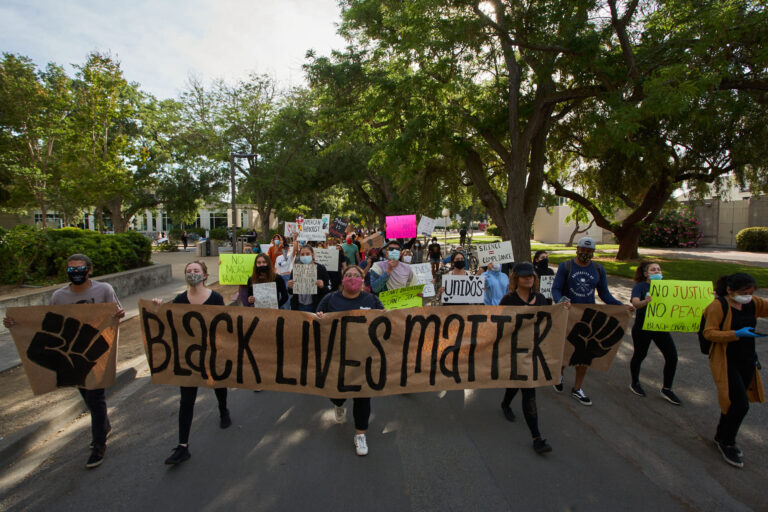
As the trial for former Minneapolis police officer Derek Chauvin began this week, Chancellor Gary May and Vice Chancellor for Diversity, Equity and Inclusion Renetta Garrison Tull spoke to The California Aggie about UC Davis’ most recent anti-racism initiatives. 

In May 2020, Chauvin was charged with the murder of George Floyd, a Black man, while on duty. The video of Chauvin kneeling on Floyd’s neck for nearly nine minutes even after Floyd expressed an inability to breathe went viral, sparking worldwide protests against racial injustice, police violence and corruption.

May’s letter to the university following Floyd’s death described the chancellor’s dismay with police violence against the Black community and exhaustion regarding his lived experiences as a Black man. 

Following Floyd’s killing, UC Davis introduced several anti-racism initiatives, including the Next Generation Reforms to Advance Campus Safety Task Force.

The task force’s first report was published in December 2020 and highlighted the ongoing controversy regarding the role of police on college campuses, particularly at student protests.

It also emphasized the importance of accountability in police behavior. Student members of the task force expressed concerns regarding a lack of connection and trust between police officers and members of the UC Davis community. 

They also spoke about a general fear of police, particularly among immigrant students, and a lack of transparency on the part of police officers. 

According to Tull, the task force’s final report will be published in June 2021.

“We made sure people knew that there was a listening session [for the task force] and that there were no right or wrong things to say,” Tull said. “It was a qualitative process of collecting data from the campus, which includes the Police Accountability Board (PAB).”

The PAB, established in 2014, allows students, professors and staff on UC Davis’ campus to file complaints on its website should they have a negative interaction with a campus police officer. 

Any identifying information is voluntary, so there is limited data available about the racial, ethnic or gender identities of the complainants, according to the most recent PAB report.

In his interview with The Aggie, May spoke of concerns raised by students regarding police activity on campus and emphasized the importance of community-based policing. 

“In my mind, we actually have a fairly progressive approach to campus safety at UC Davis,” May said. “I say that pretty confidently, and I’ve been attending the seminars held by UCOP [University of California Office of the President]. It seems to me that our sister campuses might not be as far along as we are in terms of progressive policing.”

Nevertheless, advocacy groups like Cops off Campus have pushed for police officers to be removed from the UC Davis campus entirely. 

May has publicly disagreed with this stance, saying that he believes Cops off Campus does not offer a constructive solution to the issues at hand.

The annual UC Davis PAB Report from the 2019-2020 school year provided data regarding policing practices on the university’s campus. 

The report addressed and closed four inquiries during that time frame. These inquiries involved allegations of improper use of force, improper police procedures, dishonesty, discourtesy and improper confiscation of property. 

Notably, one 26-year-old woman made allegations regarding discourtesy, intimidation and improper use of force in an interaction with campus police. However, her complaint was characterized as outside of the PAB’s purview since it was made more than 180 days following the aforementioned incident. 

The PAB findings recommended that campus police officers be better trained in de-escalating challenging situations rather than simply ignoring someone’s questions, as this can aggravate the problem at hand. 

They also recommended that the police force encourage officers to clarify and provide legal justification for their actions when arresting someone. 

The PAB requested further information about “updated policies and training” for de-escalation techniques and cultural sensitivity. 

In addition to the implementation of a task force and the continuation of the annual PAB report, the university has developed an anti-racism syllabus and curriculum. 

According to Tull, the term “syllabus” broadly refers to a number of diversity-related initiatives undertaken during the 10 months since Floyd’s death. These include seminars, workshops, racial healing services, town halls and resources for racial trauma and mental health. 

Currently, incoming freshmen are required to complete diversity, equity and inclusion training when they arrive at UC Davis. However, there is no mandatory anti-racism curriculum for students at the moment, May clarified. 

Tull said that the Office of Diversity, Equity and Inclusion recently held a meeting about making mental health and racial trauma resources more available for students, professors and staff members who may be struggling with Derek Chauvin’s trial. The trial has featured graphic cell phone footage of Floyd’s killing and eyewitness accounts from numerous people, several of whom are underage and many of whom broke down while relating their experiences. 

The Black Student Union at UC Davis said in an email that their members were unable to comment on these events. After multiple emails to ASUCD’s Ethnic and Cultural Affairs Commission, there was no response for comment.

May indicated that the university was considering offering resources specifically tailored to the issues raised by the trial of Derek Chauvin this month. 

“The measures can only be reactive, because I think if there’s something that triggers a particular reaction, I want to respond to it, but I don’t want to be the trigger and have people react in an unhealthy way. We will respond appropriately to situations [as they arise],” May said.
Written by: Rebecca Bihn-Wallace — campus@theaggie.org

NFL offseason in full swing

0

As the league prepares for the NFL draft, free agency marks the beginning of a new league year

As the National Football League (NFL) enters the second month of the offseason, all teams have begun gearing up for next fall. With free agency starting on March 17, it marked the beginning of the next chapter, with a lot of teams looking much different than before. 

Because COVID-19 prevented the majority of games from having fans in attendance, the league lost a lot of revenue. This was evident in the salary cap decreasing down to $182 million for 2021, and teams had interesting decisions to make when it came to key veterans making large amounts of money, like cornerback Malcolm Butler, offensive tackle Eric Fisher, linebacker Kwon Alexander and many more. As the salary cap will recover over time, this period of free agency saw a lot more short-term deals, as players hope they can cash in at a later date.

The reigning Super Bowl Champion Tampa Bay Buccaneers were a key storyline heading into this year’s free agency, as they were set to have key contributors hit the open market. As is with many Super Bowl winners, their starters would be a hot commodity, and it was unclear how many they would be able to keep. As a way to help with the money aspect of it, starting quarterback Tom Brady signed a one year extension with the team that allowed him to create salary cap space for the Buccaneers. With this, they were able to bring back wide receiver Chris Godwin, key linebacker Lavonte David, pass-rusher Shaquill Barrett, running back Leonard Fournette, tight end Rob Gronkowski and defensive tackle Ndamukong Suh. This meant that all 22 starters from the previous year will be back this upcoming season, making it the first time since 1979 a Super Bowl winning team brought back all starters on offense and defense. 

As Brady prepares to run it back with the same team, his former team—the New England Patriots—decided to take a different approach to this year’s free agency. Usually known as a team that drafts their talent, they came into free agency with over $56 million to spend—and they did just that. Aside from re-signing quarterback and former MVP Cam Newton, head coach and general manager Bill Belichick gave him the weapons he was missing last year, signing the top two free agent tight ends available, Hunter Henry and Jonnu Smith. They also signed wide receivers Nelson Agholor and Kendrick Bourne, who will be an upgrade over last year’s frustrating core. To bolster their defense, they added former Baltimore Raven Matt Judon on a four-year $56 million deal, and brought back Kyle Van Noy after he spent the past season with the Miami Dolphins. Overall, the Patriots decided to go all in and after their disappointing season last year, they have set themselves up for no excuses next season.

Teams in the NFL have the tendency to not let great players hit the open market, but players who can have an impact are always available. A pair of high round wide receivers—Corey Davis and Curtis Samuel—both landed with teams that are needing that extra boost. Davis is joining a young New York Jets team with a new head coach, hoping to find his consistent stride. After getting selected fifth overall in the 2017, Davis had his best season last year, and is hoping to give New York the potential he has shown at times. In Samuel’s case, he joined the Washington Football team and star wide receiver Terry McLaurin as another target for a team that lacked at the No. 2 receiver spot last season. Samuel is also coming off his best year, and can be used as both a catcher and runner, adding another element to a Washington Team that won the NFC East last year. 

After much talk about the possibility of both Deshaun Watson and Russell Wilson being traded, it has become evident that those moves are unlikely. With the Seattle Seahawks turning down offers for Wilson and Watson for being involved in sexual assault allegations, both star quarterbacks seem like they will stay in place for the time being. Because of this, the Chicago Bears signed Andy Dalton, who took over for the injured Dak Prescott last season and showed some flashes of good. The former longtime Cincinnati Bengal will have a fresh start in Chicago, where he is expected to start. The Bears have struggled for a long time in finding a franchise quarterback, but with former No. 2 pick Mitch Trubisky not being brought back, they had to start fresh. What was seen as another possible destination, the Washington Football Team decided to bring in veteran journeyman Ryan Fitzpatrick into the mix to hold the spot for the time being. While it is still an open quarterback competition, Fitzpatrick gives Washington some stability for at least next season as they defend their division crown.

With Mitchell Schwartz, Richard Sherman, Antonio Brown, Jadaveon Clowney and many more intriguing names still on the market, a lot of teams might wait until after the draft to assess other needs. Like with everything else, the pandemic has changed the way the draft process is working this year. In a normal season, the NFL combine would take place first in late February, and pro days would subsequently be held shortly after. That, however, has changed this year, as the combine list of 323 was still announced. The difference between this year and others is that this year players will workout at coordinated third-party pro days. Rather than the big public event, how a prospect will be promoted depends on how well they do at their respective pro day and visible they are to the media. 

With Clemson quarterback Trevor Lawrence most likely being the No. 1 pick, the rest of the draft remains to be seen. But, there was a shake up in the draft order that gave more of an indication of what kind of draft it would be. 

The San Francisco 49ers made a move into the top three, as they traded away this year’s No. 12 pick, a first rounder in 2022 and 2023, and third-round pick in 2022 for the third pick held by the Miami Dolphins. As starting quarterback Jimmy Garropolo has struggled to stay healthy, the move almost assures that San Francisco is looking towards the future at the quarterback spot. Almost immediately after the Dolphins acquired the No. 12 pick, they flipped it and traded back up to the No. 6 pick. In exchange, Miami sent the Philadelphia Eagles an additional first round pick next year, and the No. 123 pick this year. With a possible flurry of quarterbacks in the top five, Miami could be in prime position to acquire an elite prospect like offensive tackle Penei Sewell or tight end Kyle Pitts. 

With so many questions remaining between now and the NFL Draft and many veterans still available, free agency is far from over. The league is entering uncharted territory when it comes to the draft process, but with so much uncertainty when it comes to who is going where in the draft, the interest remains high even two months after the Super Bowl. Written by: Omar Navarro — sports@theaggie.org

City of Davis makes open-air tents in downtown Davis safer

0

Even as vaccination distribution increases, Yolo County officials stress the importance of adhering to safety guidelines

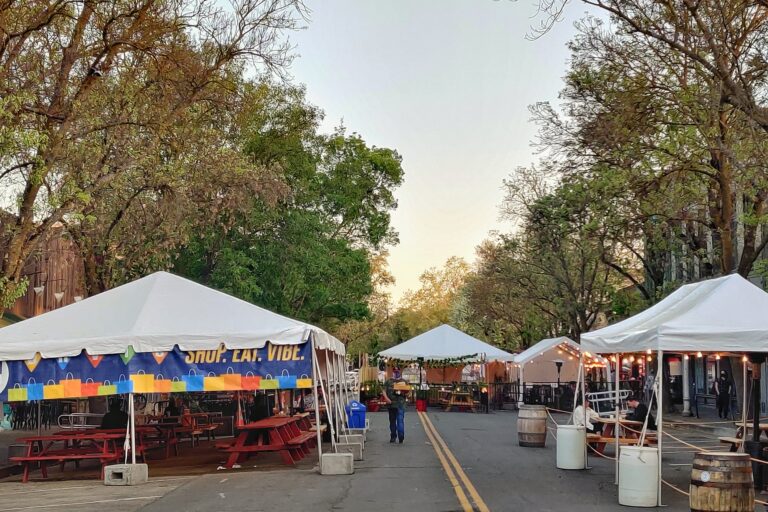
In an effort to curb the spread of COVID-19 and limit large gatherings, the City of Davis released mandatory changes to the open-air tents in downtown Davis, according to a news release published on Feb. 24 from the city. 

These changes include removing the large tents on E and G Streets, providing restaurants on G Street with smaller tents to replace the one large tent and confining open alcohol containers to restaurant spaces on G Street, rather than the entire street itself. 

The news release explained that a large gathering in one of the tents prompted these changes. 

“The City is aware of a large gathering that took place this past weekend at one of the downtown tent sites contrary to COVID-19 safety protocols,” the news release reads. “City staff met this week with the Davis Downtown Business Association leaders to address changes.”

Dr. Dean Blumberg, an associate professor at UC Davis and the chief of pediatric infectious diseases at UC Davis Health, explained via email how measures such as outdoor tents—if unsealed and not airtight—can help curb the spread of COVID-19.

“More than 90% of transmission takes place indoors, so it’s much safer to get together outdoors where the air volume is much larger and the virus is diluted thus decreasing transmission,” Blumberg said via email. “This is especially important when eating or drinking, since these are unmasked activities that will increase risk of transmission.  A tent outdoors is likely a safer environment than indoors as long as there is good ventilation.  If the tent is sealed practically airtight, then it is likely similar to indoors and will not decrease transmission.”

It is still important to continue following health and safety guidelines as vaccinations ramp up, even for those who are fully vaccinated, Blumberg explained via email.

On-call Yolo County Public Information Officer Frank Schneegas said that as of March 22, about 18,159 first doses and 15,423 second doses have been administered in Yolo County. 

Yolo County District 3 Supervisor Gary Sandy explained that “a healthy percentage of the people 65 and over” have been vaccinated in Yolo County, and that county employees have done outreach to groups such as farmworkers and those who “suffer disproportionately from COVID.” Moving forward, Yolo County will focus on targeting specific ZIP codes and neighborhoods that may not have sufficient vaccine supply in order to vaccinate more people. 

However, Sandy described that low supply has made it difficult to vaccinate everybody.

“[We] continue to face an inadequate number of vaccine doses that we receive from the state of California, and so that’s one of the reasons why we continue to underserve our populations,” Sandy said. “We just don’t have sufficient vaccinations to meet the needs. We place an order every week, and we rarely get our full order.”

Schneegas added that although Yolo County moved into the orange tier on March 24, meaning that businesses can operate at a greater capacity indoors, it is still important to continue adhering to health and safety guidelines to limit the spread of COVID-19. 

“There are restrictions on how those tents can be set up, so they can’t be like a closed tent, for example,” Schneegas said. “We are still encouraging people to continue wearing face masks, social distancing and avoiding gatherings when possible even though people continue to be vaccinated. Again, most people in Yolo County haven’t had the opportunity to be vaccinated yet, which means that a lot of people still don’t have any protection from a vaccine yet.”

Sandy stated that another surge is possible, especially among younger age groups.

“We can’t let up now,” Sandy said. “There’s already evidence in other parts of the country that another surge may be coming, and the numbers appear to be among younger people.”

Written by: Shraddha Jhingan — city@theaggie.org

Faculty spotlight: James Adams

0

James Adams reflects on his research studying political hostility after 16 years of teaching at UC Davis

Professor James Adams, Ph.D., graduated from Princeton University with his bachelor’s in economics and went on to sell computers for Hewlett-Packard in the 1980s. After two years of working in the sales industry, he decided to change his trajectory and earned his doctorate in political science at the University of Michigan–Ann Arbor. 

Having found his true calling in academia, Adams has taught political science at UC Davis for 16 years.

“You might almost say that I was raised to be a professor,” Adams said. “My father was a professor at UC Berkeley. My grandfather was a professor at UCLA. My great grandfather was a professor at Stanford. So, Adamses have been professors in California for close to 100 years now.”

 Adams teaches undergraduate courses on the politics of France, Germany and Britain. He is also currently teaching graduate-level courses on political polarization, political representation in advanced industrial societies as well as political behavior in the same nations.

Adams recently published a book titled, “American Affective Polarization in Comparative Perspective,” in which he explores animosity and polarization between political parties in the U.S.

“We seem to see so much distrust and hostility across party lines,” Adams said. “And not just between the politicians—but between rank-and-file voters—where Democrats and Republicans seem to not just disagree with each other, but they practically seem to think the other side is just evil.”

The project was in part motivated by Adams looking back to a time before modern political friction, in the 1970s, when Democrats and Republicans were able to respectfully disagree with one another, according to Adams. 

Adams said “you might not believe this” when explaining that people across party lines cooperated and often agreed on issues. Now the two dominant parties view the individuals within their opponents as morally corrupt. 

“Both sides just have these terrible caricatures of the other side,” Adams said. “No matter what the other side does, each side thinks, ‘Well, whatever you are doing, you have bad motives.’” 

His recent research found that income inequality contributes to political hostility across party lines. In terms of disagreement on policy, him and his coauthors found that so-called “cultural issues” such as gay marriage or immigration significantly gave rise to anger.

Adams said that opposing parties could fight about economics without impacting overall hostility toward one another.

“But these fights over race, immigration and the national way of life—which has really showed up in this country in the last four years—[…] seem to really make people angry,” Adams said.

In February 2020, Adams was awarded the Distinguished Teaching Award for Graduate and Professional Teaching from the UC Davis Academic Senate. 

Adams has also received awards for student mentorship, including the Outstanding Mentor Award from the Consortium for Women and Research from UC Davis. He credits his wife for reminding him that students may feel intimidated approaching professors with research proposals.

“[My wife] said sometimes [for] students, and particularly women students, it can be hard for them to walk into your office and look into your eyes and say, ‘Professor Adams, I would like to write a paper with you,’” Adams said. “I always try to emphasize to all of my graduate students, don’t be afraid and don’t be bashful to come to me and suggest a project or ask for help. I always try to emphasize that I will do everything I can to help you. I will never make you feel bad for asking.”

Professor Erik Engstrom serves as the chair of the political science department and has worked with Adams for 13 years. He said that Adams spends an enormous amount of time and effort in the success of students.

“[Adams] is just a very outgoing, exuberant person,” Engstrom said. “He’s very funny, which I think helps in the classroom, bringing students into the lectures.” 

Timea Balogh, a second-year political science Ph.D. student, has taken graduate-level courses taught by Adams and served as his teaching assistant (TA) throughout the pandemic. She highlighted how humble and down-to-earth Adams is while showing an immense care for his students’ interests and wellbeing.

“Even with 120 students on Zoom, he still started each class making sure how people are hanging in there and how can he can make class better to accommodate the world that we’re living in,” Balogh said. “I would TA for him forever.”

“He’s the kind of person that, from the very first conversation with him, you know you only want good things for him: success, health and respect,” Balogh said.

Adams said that the best part of his job is interacting with students.

“Especially since I am in the later part of my career, when I tend to get tired more easily and get more worried about things, I always come away from being on campus, or even now when I do my Zoom lectures, feeling so good just from interacting with all of you,” Adams said.

Sara Kazemian is a fourth-year Ph.D. candidate studying political science, and Adams serves as the chair of her dissertation committee. His graduate-level course on polarization from a comparative lens inspired the topic of her dissertation. 

“I think the thing that strikes me about Dr. Adams is that he’s equitable across the board and very approachable,” Kazemian said. “If you look at his undergraduate classes, his office hours are usually filled when normally students go to TAs.”

Adams said that if he hadn’t been a professor, the only other job he would excel at is baseball broadcasting. Adams’ colleagues and students called up his love for baseball in every conversation. 

“He’s a massive San Francisco Giants fan,” Engstrom said. “When they won the world series, I’ve never seen him happier.”
Written by: Rebecca Gardner — campus@theaggie.org

Research by the Center for Mind and Brain sheds light on how different brain regions are associated with objective and subjective memory

People’s thoughts about their memories affects their decision-making skills more than their actual memory, according to the study

Some individuals may have experienced the following scenario: they can still vividly remember how good a cup of coffee was from a cafe they went to last week, and so they decide to go to that same coffee shop and order the same drink. Only when they take a sip, they are disappointed to realize that they had remembered wrong and this was not the drink they had ordered last time. Yana Fandakova, a research scientist at the Center for Lifespan Psychology at the Max Planck Institute, explained that such a phenomenon demonstrates a difference in subjective and objective memory. When subjective and objective memory are misaligned, decisions are mainly guided by our subjective memory, as demonstrated in Fandakova’s recent study in collaboration with the Center for Mind and Brain at UC Davis.

“Objective memory refers to memory accuracy such as whether we correctly remember when or where something happened in the past,” Fandakova said via email. “Subjective memory refers to the vivid remembering of this past event—for example, being able to mentally relive the event again.”

Fandakova explained that subjective and objective memories go hand-in-hand, meaning our memory is usually accurate when we can vividly remember the event. She elaborated that as a result, it is difficult to isolate which brain regions are responsible for each type of memory. Through the use of experimental manipulation and functional MRI, researchers were able to dissociate subjective from objective memory and found that they are supported by different brain regions. The same region associated with subjective memory was connected with decision making, leading to their research conclusion. 

“How we feel about a memory such as how vivid and clear it is when we remember, or how confident we are that the event happened in a particular way, will influence our decisions and actions,” Fandakova said.

Eliot Johnson, a co-author of the study and a current postdoctoral researcher at Temple University, explained that one real-world implication that can be drawn from their study is eyewitness testimonies in the judicial system. He explained that based on how the witness is questioned, they may feel biased to listen to their subjective memory rather than their objective memory.

Simona Ghetti, another co-author of the study and a professor in the Department of Psychology at UC Davis, added that this study also sheds light on people’s daily experiences, such as determining how to find one’s car in a parking lot based on how strongly a person thinks they remember where they parked their car versus how well they remember the location objectively.

“The implications are important for everyday memory decisions when people ought to weigh internal evidence and act on this,” Ghetti said via email.

As this study was Johnson’s first project where he played a major role as a graduate student at UC Davis, he described being fascinated by the discrepancy between how well one thinks they remember versus what details one can actually produce. He further explained that it is easy to both overestimate and underestimate the strength of one’s memories due to subjective factors. 

“Memory isn’t so much a pristine videotape that you can play back at any time as it is a morphing set of details that are laid down at one point, but change subtly over time as we try to work with them to make decisions,” Johnson said via email. “This isn’t to say that we all have some sort of dense amnesia either or that we can’t trust our memories. The reality is somewhere in the middle, where we constantly have to make decisions based on a pretty good, but not perfect, intuitive sense of what we remember well and what we remember less well.”

All three researchers expressed interest in studying the development of subjective and objective memory in children. Fandakova conveyed wanting to understand how the development of brain regions in children and age-related decline in older adults may affect subjective memory and decision making. Johnson added that although it is more difficult to collect neuroimaging data from children compared to adults, there is still a lot left to discover about how the developing brain handles objective and subjective memories.

“Down the road, I would love to carry out a similar study that is carefully designed to be simple and fun for preschoolers, as this is an age where we see a lot of memory development but don’t know as much about how the developing brain might be supporting these growing cognitive abilities,” Johnson said.
Written by: Michelle Wong —science@theaggie.org

Student and local business employees reflect on spring break grants

0

Healthy Davis Together distributed $75 “staycation” grants to minimize travel and support local businesses during spring break

Healthy Davis Together, a partnership between UC Davis and the City of Davis that works to prevent the spread of COVID-19, offered students $75 “staycation” grants for staying in Davis during spring break. Students could redeem the grants at one of four Davis businesses that sell products in different categories: Get Active, Get Artsy, Home Improvement and Let’s Stay In. The goal of this program was to minimize travel and support local businesses during the pandemic.

The grants were given on a first-come, first-served basis. While there were originally 500 grants to be distributed, the overwhelming response from students prompted Healthy Davis Together to increase this number to 2,000.

John Christian Aguas, a fourth-year managerial economics major, received one of the grants. He used the money to buy running shoes at Fleet Feet, a local athletic store. 

“I just recently got into running, so it was very useful for me to get that grant,” Aguas said. “It’s good to know that UC Davis, as a whole, cares about their students and their community.”

Aguas stated that from his perspective, the grants effectively kept students in Davis during the break. One suggestion he had for improving the program is to decrease the amount of money per grant to $50 and increase the total number of grants distributed to allow more students to participate in the program. He also suggested expanding the categories so that there would be more options to choose from and more stores that could benefit.

“I think most people would appreciate the free money, no matter the amount,” Aguas said. “Another good part about this opportunity is that it’s supporting small businesses while keeping students safe. Having another category, maybe food, could have incentivized more people to find out more about this grant.”

Michael Prather is the manager of Fleet Feet, one of the four stores that participated in the grant program. Prather stated that the grants were a great help to Fleet Feet, especially since the store was shut down in March 2020 and did not reopen for many weeks because of COVID-19.

“The financial benefits of the program were substantial to our store and are going to make a huge difference in how we can serve the Davis community,” Prather said. “The most exciting part of the week for us was feeling like we made so many new friends and got to help so many new people.”

Since the store reopened last spring, they have gradually built back their customer base and are seeking out new customers. This effort was aided by the grants, according to Prather.

“Many students had never visited our store and had no idea about the products we carry, services we provide and running groups that are part of our store,” Prather said. “The grants allowed us to reach this new audience.”

He described the grant program as a success, reporting that the store had consistent visits from students throughout the week.

“The entire Davis staff was so excited to work with students last week,” Prather said. “The students were respectful of our [COVID-19] policies and patient during a very busy week. The students brought great energy and excitement to the store.”

Prather encouraged students to support local businesses during the pandemic, not only by shopping local, but also by understanding how local businesses can serve them. For example, Fleet Feet has regular running groups on Tuesdays at 6 p.m. and also offers training groups for people who are looking for direction in their running.

“Students can continue to support us through shopping with us, but we want them to be part of our community,” Prather said. “We would love more students to join our running groups, engage with us on social media or come experience our store.”

Jina Fahrni is the manager of The Avid Reader Bookstore, another store that participated in the program. Fahrni shared similar sentiments as Prather regarding supporting small businesses and encouraged students to take note of the unique services that local businesses have to offer. According to Fahrni, The Avid Reader established an effective online ordering system. If carried by their distributor, customers can receive most of the titles within a day or two.

“We can do just as well as Amazon, as far as speed of delivery,” Fahrni said. “It’s nice to support local businesses instead of going online and supporting Amazon, which doesn’t really get back to the community.”

Students were able to redeem the grant at either The Avid Reader or at its nearby sister toy store, Avid & Co. Fahrni stated that a total of 541 students visited the store to redeem their grants, while about 50-60 grant recipients did not redeem them. 

“That’s a great increase in foot traffic for us and just business overall,” Fahrni said. “It was fun to see all the new faces coming into the store, and it was nice that they could be introduced to our establishment. It was a win-win situation.”Written by: Liana Mae Atizado— features@theaggie.org

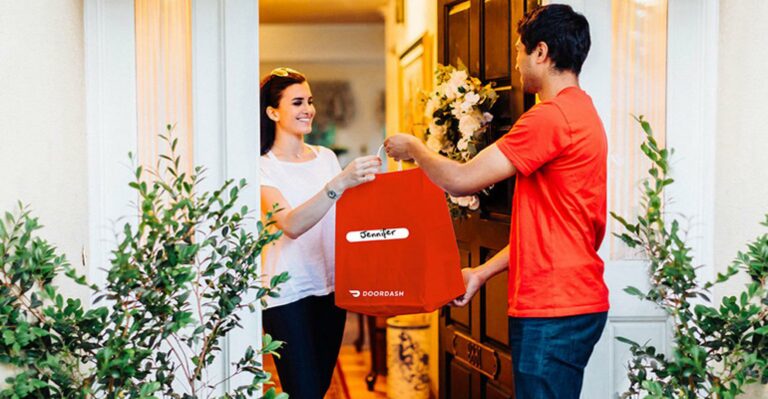
DoorDash has some bold post-pandemic plans

0

Going above and beyond normalcy

COVID-19 has not been great. However, it does not mean that all have

suffered. Many billionaires saw their wealth increase during the pandemic and saw

suffering trickle down to the rest of the population. While many restaurants struggled,

DoorDash has never been more profitable. As the vaccine rollout continues and some sort of pseudo-quasi-normalcy emerges, many have questioned the viability of DoorDash.

DoorDash foresees this problem and their new business strategy starts with industry-leading customer service practices for their employees independent contractors.

DoorDash CEO Tony Xu has provided the masses with an interesting look at

how the food delivery app plans to remain profitable. In the pandemic, DoorDash rolled out contact-free delivery. In order to overcorrect for such pandemic safety measures, DoorDash plans to roll out an array of post-pandemic unsafety measures. The most promising? Full-contact delivery.

Methods of full-contact delivery to start will likely include anything from tackling the recipient as their order is being delivered to spoon feeding them their orders “here comes the airplane” style. Although Xu has expressed hope that Dashers (the term for their employees independent contractors) will be equipped to “baby bird” the customer their meal.

These plans have not been received well by many. Public health experts have

already weighed in with worries about this practice being “unsanitary” and “a really good way to start an outbreak of something.” Labor rights activists have also called this proposed plan “degrading” and “unfair.” In more leaked memos, DoorDash responded that these critiques were “all we could hope for in a new program.”

DoorDash’s aggressive plans could put pressure on competitors such as

GrubHub and UberEats to continue to innovate better methods of capitalizing on a

nation trending further and further toward a sedentary, gluttonous and decadent

lifestyle.

Written By: Ean Kimura — etkimura@ucdavis.edu 

Disclaimer: (This article is humor and/or satire, and its content is purely fictional.

The story and or names of “sources” are fictionalized.)

The Editorial Board thanks teachers for their perseverance during the pandemic

0

With schools reopening, we would like to acknowledge teachers’ flexibility and dedication under unprecedented circumstances

By THE EDITORIAL BOARD

From learning our ABCs in kindergarten to studying integrals in high school, teachers shape our lives—whether we realize it or not. And even during a normal year, teachers have to deal with unresponsive students, pushy parents, a lack of funding and the list goes on, in addition to being underpaid. 

These problems are only made astronomically more difficult when teaching over Zoom. Online learning has also created a host of other issues including more work for teachers and parents. Battling Zoom fatigue and student disengagement, many teachers have dedicated hours and hours to create a virtual curriculum that works for their students and to ensure that all students are getting some level of pandemic-style instruction. 

Other educators have been working in person during the pandemic before even receiving a COVID-19 vaccine, putting their lives at risk in order to provide a high level of education to their students. The members of the Editorial Board would like to thank teachers everywhere for their dedication and resilience during this incredibly challenging time for education.

Throughout the pandemic, teachers have received immense pressure from parents and community leaders to return to teaching in person. The school reopening process has been stressful for all involved, and it has taken a great amount of time and effort to be able to reopen schools. Locally in the Davis Joint Unified School District (DJUSD), in-person instruction will resume five days a week starting April 12

We would like to thank all teachers, including those in the DJUSD, that are returning to educate students in person. In-person education is essential at a young age for academic and social growth. Interactions with peers as well as in-class, hands-on experiences are fundamental to a child’s education.

As college students, we can definitively say that the teachers that we had at a young age had a significant impact not only on our academic careers but also in our personal development. We still have fond memories of our teachers who gave us so much essential knowledge such as how to read and write—skills that literally allow us to write this editorial today. Through organizing activities such as puppet shows of historical figures or teaching students the value of money through rewarding them with plastic pennies, passionate teachers found creative ways to impart important academic and life lessons. 

Considering the incredible power of teachers to educate and inspire future generations and the care and effort many bring to their work, teaching is a greatly undervalued profession in our society. Concerningly, fewer people want to pursue the profession after seeing the turmoil the pandemic has caused, and teaching programs have seen a decline in enrollment numbers. We hope this relatively short-term impact will not continue to affect students’ long-term career ambitions, as public education is such a necessary service.

More than a year into the pandemic, the Editorial Board is amazed by the adaptability and dedication of educators who have persevered through immensely challenging circumstances. To all the teachers who logged into Zoom every day with an energetic smile after spending hours the night before on lesson planning and to all of the educators who are resuming in-person instruction: Thank you.

Written by: The Editorial Board