60.8 F
Davis

Davis, California

Wednesday, December 24, 2025
Home Blog Page 276

A guide to Davis’ spring plants and animals

0

Explore Davis’ lucious scenery with tips and recommendations on how to spot emerging plants and wildlife during the spring season

With blooming florals and lush greenery, the spring season is rapidly approaching and promises to bring new plants and animals to the Davis area. 

Chase Kautz, a sustainable horticulture apprentice at the UC Davis Arboretum and Public Garden, discussed the plants that will come into bloom in the next few weeks. Kautz listed redbuds (Cercis occidentalis), manzanitas (Arctostaphylos) and California poppies (Eschscholzia californica), stating that visitors will be able to spot the different colors of the redbuds, California lilacs and oaks when passing by the Arboretum.

“[Redbuds] can be found mostly in our Redbud and Foothill Collections and bloom with big displays of pink (and sometimes white) flowers from late February to April,” Kautz said via email. “California lilacs (Ceanothus spp.) are putting on big blooms this time of year in blue, white and purple. Most of our valley oaks (Quercus lobata) and coast live oaks (Quercus agrifolia) are putting out greenish-yellow catkins en masse and releasing a lot of pollen into the spring winds.”

Nina Suzuki, the Arboretum Waterway Steward, similarly stated how the bold colors will be seen with the blossoming of spring flowers.

“Right now, I would recommend the Eric E. Conn Acacia Grove for dramatic yellow

clouds of flowers and the Warren G. Roberts Redbud Collection for the early spring magenta-pink blooms,” Suzuki said. 

In terms of native Davis plants, Kautz mentioned valley oaks and several native wetland plants throughout the waterway including rushes, willows and California sedges. The center of the Arboretum is home to the leather root (Hoita macrostachya) and cobwebby hedge nettle (Stachys albens), unique plants that are sourced from the local Putah Creek watershed or Yolo Bypass.

Kautz also said that visitors can catch a rare view of the California pipevine plant which blossoms during this time of year.

“A notable but difficult-to-see plant [that] we have in the Arboretum [is the] California pipevine (Aristolochia californica),” Kautz said via email. “This is a vine native to riparian forests throughout the Sacramento Valley, and this time of year it puts out small, extremely unique and stunning maroon lantern or pipe-like flowers. It can be found in the Mary Wattis Brown Garden to the west of the footbridge growing in shrubs along the waterway.”

The California pipevine, according to Kautz, can also be spotted along the bike path that aligns with the west side of the train underpass and marks the west end of the Arboretum.

With spring just around the corner, Emilyw Griswold, Director of GATEway Horticulture and Teaching Gardens, said the plant she is looking forward to the most is the valley oak. 

“I love seeing the first new leaves on the valley oak trees,” Griswold said. “They’re lacey and delicate with glistening silver hairs and a hint of pink when they first emerge. There’s so much to appreciate if you just stop to look more closely at the details around you.”

To view these budding plants, Andrew Fulks, an assistant director at the Arboretum, recommends external applications, maps and the Arboretum site to gain more knowledge of the scenery. 

“Be sure to download the Arboretum visitor map to see the location of the various garden collections,” Fulks said. “Many of the plants have labels, but if not, there are phone apps, like the Seek app, that can be used for identification. We are working on a web-based interface that visitors will be able to use to see the locations and species of each plant in the Arboretum.”

Davis will also experience an influx of animals as they begin to migrate and explore larger parts of the area. Fulks stated that ducks, squirrels and turtles are most common but also noted the appearance of green herons, egrets and wood ducks. Kautz mentioned that during the spring, however,  many of these animals are in breeding season and will be seen in smaller packs while also showcasing mating habits. 

“Right now, male mallards are pursuing females, so you will see one or more males following a female around trying to mate,” Kautz said via email. “The same pattern can be seen with fox squirrels. Male turkeys can be seen displaying their large tail feathers to females in [an] effort to be chosen as a mate as well.”

With scrub jays and other small birds, Kautz stated that they are currently nesting and can be seen collecting nest materials or insects to feed their young. Kautz further explained that turtles are typically visible in the lowest level of the waterway, basking on logs or banks of water.  

Jenna Turpin, a third-year wildlife, fish and conservation biology major and the primary leader of the UC Davis chapter of The Wildlife Society, anticipates tending to these nesting birds while she works with the Putah Creek Nestbox Project.  

“During Spring Quarter, I band cavity nesting birds for the Putah Creek Nestbox Project,” Turpin said. “I always look forward to seeing the Tree Swallows, Western Bluebirds, House Wrens, Ash-throated Flycatchers and White-breasted Nuthatches that occupy the nest boxes we put up as a part of the project. Keep an eye out for our nest boxes hanging in trees in the Arboretum, and see if you can spot the parents flying in and out.”

Beyond land-based animals, Griswold specifically recommended searching for the pipevine swallowtail butterfly. 

“The pipevine Swallowtail Butterfly is another special one to look out for,” Griswold said. “They have black and iridescent blue wings with orange spots. We have made a special point of planting pipevine to provide more habitat for them.”

To further discover and identify these animals, Fulks recommended downloading a bird guide on one’s phone and bringing a pair of binoculars for closer, undisturbed viewing.

Turpin also recommended searching for the Yellow-billed Magpie, an animal endemic to California. This species follows a unique courting and mating procedure after building their nests. 

“The female will beg for food, and the male will start feeding her two days before her first egg is laid,” Turpin said. “The male’s courtship display involves circling around his female with puffed feathers and standing upright while calling in a way that sounds like a bubbly song. Following courtship, the pair will finally mate and lay their eggs. When hatched after 18 to 19 days, the nestlings are raised and cared for by their parents for two months. Then, by the end of spring, the nestlings will be out all on their own.”

According to Turpin, the Yellow-billed Magpies can be found among the oak trees within the Arboretum and can be identified by their size and color. 

“If you see a black-and-white bird a little smaller than a crow, it might be a Yellow-billed Magpie,” Turpin said. “You can further verify you are looking at one by their very long, iridescent blue-black tail and yellow beak.”

With the new animals and plants emerging, Turpin stated that we need to take proper precautions when viewing nature. She said visitors should stay on the trails to ensure the preservation and continuation of plant growth in addition to maintaining distance between themselves and the animals they may see.

“Anytime you are viewing wildlife, it is important to remember they are wild,” Turpin said. “Please give them space and keep your distance.”Written by: Farrah Ballou — features@theaggie.org

UC Davis alumni find high levels of plastic ingestion in Arboretum turtles

While plastic ingestion has been well documented in sea turtle populations, this study is the first to highlight the issue in freshwater turtles

Littering can have profound impacts on wildlife, causing complications for their health through ingestion or entanglement. Plastic ingestion has been well-documented in all seven species of sea turtles, but the issue is not well understood in freshwater turtles, according to Dr. Greg Pauly, the curator of herpetology and the co-director of the Urban Nature Research Center at the Natural History Museum of Los Angeles County. 

“Plastic ingestion by freshwater turtles: a review and call to action,” co-written by Pauly, was published in Scientific Reports on March 23, 2021, and details results from a field study and a literature review on plastic ingestion by freshwater turtles. This paper was written by Dr. Adam Clause, a postdoctoral researcher at the Natural History Museum of Los Angeles County, Dr. Aaron Celestian, the associate curator of Mineral Science at the Natural History Museum of Los Angeles County, and Pauly. This study is the first to highlight freshwater turtles ingesting plastic—which may be an underappreciated threat to the world’s declining populations of freshwater turtles, according to Pauly. 

Pauly, who earned a B.S. in Evolution and Ecology from UC Davis in 1999 and then returned for a postdoc from 2009–2011, started working with Arboretum turtles in 1998 as an undergraduate and has continued studying that population for several years. Dr. Adam Clause began working with turtles in the Arboretum during his time at UC Davis, where he graduated in 2010 with a B.S. in Evolution and Ecology.

“It’s been fun to work on those turtle populations off and on for the last 20 years,” Pauly said. 

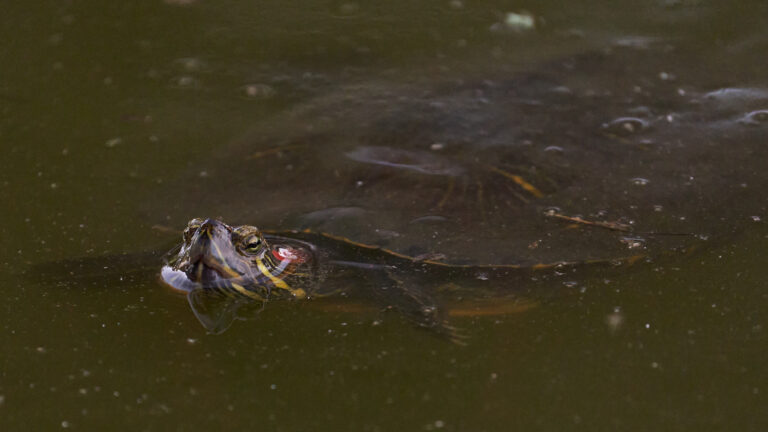
The scientists’ field study examined 65 non-native red-eared slider turtles from the Arboretum and found that 7.7% had plastic inside their stomachs or intestines. One of the ingested plastics was likely a nitrile exam glove. Although the turtle specimens were collected before the pandemic—in 2011 and 2012—this result highlights the potential impacts of increased personal protective equipment (PPE) litter in the environment, according to Pauly. Other ingested plastics likely included a white plastic shopping bag and a piece of disposable cutlery.

“I wasn’t surprised that we were finding these [plastics] because I see animals by these things all the time,” Celestrian said. “It was definitely not a good thing.”

One challenging part of this research was identifying the contents inside the turtles’ stomachs and intestines, as it can be difficult to distinguish plastic from organic material from what the turtles eat, such as crayfish exoskeletons, according to Celestian. To identify the plastic contents, Celestian used Raman Spectroscopy, a chemical analysis technique that details chemical structure, phase and polymorphy, crystallinity and molecular interactions of materials. 

“I have a spectrometer here in the lab called the Raman Spectrometer, which is very good at looking at very small particles and identifying what materials those particles are, even if they’re not recognizable,” Celestian said. “That’s what my main role was, to figure out these bits and pieces of plastics.”

In the scientists’ associated literature review, they found that dietary studies to identify plastic ingestion in freshwater turtles are rarely conducted. Over the past 10 years, nearly 50% of relevant turtle dietary studies have involved only marine turtles, according to Pauly. Marine turtles averaged 15.3 dietary studies per species during this period, whereas non-marine turtles averaged 0.3 dietary studies per species (across the 352 species of non-marine turtles), according to the study. 

The results from the field study and literature review together demonstrate that some freshwater turtle species are ingesting plastic, but researchers have little understanding of how widespread this issue might be because freshwater turtles are not getting the same amount of research attention as their marine counterparts, according to Pauly.

“There’s an increasing awareness of plastic ingestion in lots of marine species, but across the board freshwater environments are much less studied for plastic ingestion,” Pauly said. 

This is not the first study Pauly has conducted on turtles in the Arboretum. Pauly and other researchers at the Natural History Museum of Los Angeles County previously published a study in 2019 that found the living conditions and health of the two primary species found in the Arboretum, the native western pond turtles and the non-native red-eared slider turtles, is greatly improved by removing large percentages of invasive red-eared slider turtles. 

The 177 red-eared sliders removed from the Arboretum during the 2019 study were the turtles examined in this new project, which began as an investigation into understanding the dietary overlap between western pond turtles and red-eared sliders. However, when Pauly and Clause began to dissect turtles and look at their stomach contents, Pauly said they were shocked to find plastics in some of these individuals. 

“That completely changed the direction of the study to then start thinking about, ‘[…] what’s the number of turtles that might be ingesting plastic, what impact that it’s having on that population, and more broadly, is this a common issue for turtles globally?’” Pauly said. 

Right away, Pauly knew this was a noteworthy discovery, and after looking in the scientific literature, the scientists realized how poorly studied this issue is with respect to freshwater turtles. In their paper, the scientists issued a “call to action” for other researchers to look into this issue for freshwater turtles, Clause said.

Scientists are still unsure why the freshwater turtles consume plastic in the first place, according to Clause.

“Two of the most likely explanations are that [turtles] are either confusing it with a natural food item, or they’re just eating it accidentally while they’re eating normal things in their environment,” Clause said. 

UC Davis’ Arboretum and Public Garden works with multiple departments on campus to reduce pollution in the Arboretum Waterway. Prevention is the first step, according to Nina Suzuki, the waterway steward at the UC Davis Arboretum and Public Garden. Suzuki and other Arboretum employees work with many departments to prevent litter and other pollutants from reaching the Arboretum waterway. Some of these measures include education and signage, improved waste collection bins, promoting reusables and compostables, reducing single-use plastic at campus food service outlets, regular street sweeping, physical barriers at storm drain outlets and regular staff maintenance of the waterway and Arboretum. 

“I think this kind of research is important because it reminds us all that our actions have consequences beyond what we typically think of as our sphere of influence,” Suzuki said via email. “Most people who walk through the Arboretum probably haven’t ever looked a turtle in the eye. They probably also haven’t ever dropped a piece of plastic trash into the Arboretum Waterway. And yet, our use of disposable plastics in everything from beverage containers to utensils to toys, has resulted in tiny bits of plastic making their way into places we would never have expected, like the stomachs of turtles.”

The turtle species living in the Arboretum are commonly studied for research and in UC Davis courses, such as Wild Davis, a course taught by Dr. Laci Gerhart-Barley, an assistant professor of teaching, focusing on urban ecology and urban naturalism. 

Since the turtles in the Arboretum illustrate a number of important aspects of urban ecology, such as how invasive species like the red-eared slider turtles impact native species, Gerhart-Barley includes them in the class. As detailed in Pauly’s previous study, the dumping of non-native animals into an ecosystem, such as the Arboretum, can have very negative impacts on native species as well as the non-native species. 

“That’s an ongoing point of concern with long term management of those invasive turtle species,” Gerhart-Barley said.

Gerhart-Barley plans to include this new study in her Wild Davis course as an example of how human activity in the Arboretum can impact the animals in ways that are less visible; in this case, through the ingestion of plastic, she said. 

“That’s one of the problems with ingesting things is the animal might not look sick, or might not look harmed,” Gerhart-Barley said. “It’s not like the plastic copings around their neck or it’s really visible that there’s a problem. They could appear to be completely normal and still be really negatively impacted.”

Beyond understanding the reasons why turtles ingest plastic, this study brought up many more questions that need to be answered regarding plastic consumption—beyond just freshwater turtles, according to Celestian. 

“This is just the first study of its kind,” Celestian said. “I think more studies are definitely warranted to see how, what the level of pollution is versus what the health of the turtles might be.” 

According to Pauly, the goals of this study were twofold: to highlight the issue of turtles ingesting plastic in an urbanized waterway in California and to emphasize that this is an underappreciated problem for freshwater turtles globally.

“We know across the globe, we know that urbanization is a major threat to freshwater turtles as a group are experiencing—some of the highest rates of extinction of any urban group,” Pauly said. “[Plastic ingestion] is potentially a new emerging threat that freshwater turtles globally might be facing.”
Written by: Margo Rosenbaum science@theaggie.org

UC Davis launches a $3 million project for farmworkers

0

The project provides resources about farmworkers’ rights and COVID-19 spread prevention for farmworkers in their languages, as well as for distributors, employers and others in the agricultural industry

In a $3 million contract with the California Labor and Workforce Development Agency, UC Davis’ Western Center for Agricultural Health and Safety has been teaming up with different community-based organizations across California to provide resources and educational training to farmworkers in order to reduce the spread of COVID-19. 

“Our team will work directly with community organizations who are trusted by farmworkers and have already been assisting them throughout this COVID-19 crisis,” said Heather Riden, the program director at the Western Center for Agricultural Health and Safety, in a UC Davis press release. “Our goal is to amplify their efforts and help them build capacity as they continue to provide critical COVID safety information to their communities.”

According to Berkeley News, 46,000 agricultural workers in California tested positive for COVID-19, and in a study conducted by UC Berkeley, 20% of the 1,091 farm workers recruited for the study tested positive for COVID-19. 

“You’re looking generally at very low-income communities in rural spaces where there is difficulty [accessing] services of any kind,” said Sebastian Sanchez, the associate secretary for Farmworker Liaison and Immigrant Services at the Labor and Workforce Development Agency. “You add to that the type of work and the close-living and transportation conditions, and it was a [perfect storm for COVID-19 exposure].”

In the same study, it was found that 50% of those who had symptoms still reported going to work, despite California offering paid time off for those affected. 

“There’s a lack of information, and it’s information that is [applicable] to farmworkers,” Sanchez said. “A large percentage of the farmworker population [is] undocumented and living paycheck to paycheck. There’s a real concern about losing work and losing employment. There’s three things that we are trying to prioritize: what are their rights to health and safety [work standards], what are their rights to paid sick leave and what are their rights to retaliation if an employer does punish the worker or fires them, cuts their hours or cuts their pay.”

Teresa Andrews, an education and outreach specialist for the Western Center for Agricultural Health and Safety, credits this lack of educational awareness to language barriers. By teaming up with different community-based organizations, Andrews and her team have been able to provide resources on farmworkers’ rights and COVID-19 spread prevention for farmworkers, distributors, employers and others in the agricultural industry in their respective first languages.

One key organization for communicating directly with farmworkers has been Centro Binacional para el Desarrollo Indígena Oaxaqueño (CBDIO), located in Fresno, CA.

“We have been working closely with them, and they help us to decide effective material,” Andrews said. “[Most of these indigenous languages] are not written; they’re starting to have a written language, but most of them [are] just verbal. The [CBDIO] wrote scripts. We helped them to polish the scripts, and then they created videos. Those videos have been widely distributed among the indigenous farmworkers so it’s a very effective way because it’s a person looking and speaking like they do, so it’s more likely that [the information] is going to be understood and absorbed.” 

CBDIO has been partnering with different community-based groups across California, with teams reaching farmworkers in Imperial Valley, Salinas, Bakersfield, Fresno, Merced, Napa Valley and more. Those that have not personally received a video are still being reached through a radio station called Radio Bilingüe. 

“[Farmworkers] have a radio in the fields, so when we are speaking on the radio we are getting messages across,” Andrews said. 

Along with the community-based organizations focusing on reaching employees, some of the employer groups collaborating with CBDIO’s team include the California Farmworker Contract Association, AgSafe and Farm Employers Labor Service. 

In terms of physical, non-media outreach, the team has reached over 60,000 people through material handout, in-person conversations, trainings and more. They have also been conducting educational webinars where farmworkers and others can sign up online. They focus on COVID-19 safety standards and workplace protocols, with up-to-date discussion on the vaccine and where farmworkers can access it. Other resources are also available on their website

“There are different resources at the state and county levels because this is a community health issue,” Andrews said. “If we don’t take care of a specific group, the whole community is affected.”
Written by: Annette Campos — campus@theaggie.org

City of Davis passes resolution condemning anti-Asian violence

0

UC Davis professor explains that local resolutions express solidarity

After Yolo County passed a resolution on Feb. 23 condemning anti-Asian violence, the Davis City Council adopted a similar resolution on March 16. 

Davis City Councilmember Dan Carson explained that the resolution was suggested by community member Lisa Yep Salinas, who also suggested the Yolo County resolution.  

“There is a national group I know that has been reaching out all across the country, but on a personal level, I became aware of the concern from Lisa Yep Salinas,” Carson said.  “She had been posting on Facebook about her own personal experiences in the county in grocery stores and situations that she found very disturbing, uncomfortable and clearly racist.”  

The existence of the resolution itself, despite not appearing to establish any actionable goals, is important in curbing anti-Asian violence, explained UC Davis Professor of Asian American Studies Richard S. Kim.  

“Words do matter, and I think the next steps going forward is involvement and support of every level of government: at the local level, such as Davis, at the state level and at the national level,” Kim said. “In conjunction, we need a combination of educational and civil and community action to create more opportunities for allied individuals and groups to come together and stand strong together, rather than apart or pitted against each other. Resolutions are a step towards that.”

Kim elaborated that anti-Asian violence is nothing new in American history, and that such violence tends to have the effect of uniting the disparate ethnicities that constitute the Asian racial group.  

“Anti-Asian violence has been perpetual and continual for many, many, many years, that led to institutionalized laws that once sought to restrict Asian immigration to the U.S., that prevented Asians from becoming citizens until 1952,” Kim said. “This is rooted in a long history. This is not just something that’s new and unique to what’s happening now. All Asians of different ethnicities, different classes and generations are seeing that this hate is targeting them equally—that no one’s making distinctions between who’s Chinese, Korean, Vietnamese—but that this is a larger anti-Asian hatred, and that this can happen to any one of them. In many ways, this is enforcing that notion of an Asian American identity.” 

Kim also stressed that not all Asians espouse the same views.  

“That’s the misnomer that all Asians think alike in these racial issues,” Kim said. “There’s great diversity of thought within the Asian American community, and we don’t all react in the same way to these sorts of issues. The term Asian American was coined coming out of the social movements of the 1960s—not just the civil rights movement, the Black Power movement. It is rooted in solidarity with each other and with other racial groups as well.”

This resolution is not the end of the city’s efforts to combat racism, according to Carson. He added that the city also hopes to increase staff diversity in order to reduce racial bias.

“I think one of the most effective ways to combat this kind of racial bias is to find and add to our city commissions very good and talented people who also happen to be of Asian and Pacific Islander descent,” Carson said.  
Written by: Rachel Shey — city@theaggie.org

Review: ‘Raya and the Last Dragon’

0

The new Disney princess movie features a tale of trust

Fans of “Moana” and “Big Hero 6” will fall in love with Disney’s first Southeast Asian princess, Raya. “Raya and the Last Dragon” tells her story with vibrant colors, spot-on voice acting and a storyline that has everyone wondering who the real “villain” is. 

The movie follows five kingdoms split up by their greed. What started as the nation united as Kumandra—where people lived in harmony with one another—became a place where an evil magic plague turned all its victims into stone. Kumandra was threatened, so in a last attempt to save the nation, the dragons that occupied the land sacrificed themselves. All that was left of the dragons was one stone that protected the nations, but the nation split up into five kingdoms, each left to provide for themselves, and the dragon stone was kept in Raya’s home: Heart. 

When the stone is shattered, the evil plague is unleashed once again and each village takes a piece of the stone, running back to their homeland as they find their own way to protect themselves. Trained as a child to protect the stone, Raya makes it her mission to find the last dragon and have it restore the balance in the world. Through this adventure she meets a group of rag-tag individuals whose families have fallen due to the plague.

Disney stayed true to its recent princesses and didn’t give Raya a male partner, instead deciding to focus on teaching a moral and showing an internal struggle that we see Raya face throughout her story. The movie is a wonderful entrance into another world and it’s easy to see why it has a 94% rating on Rotten Tomatoes. 

“Raya and the Last Dragon” wasn’t a musical, which was surprising considering Disney’s past depiction of princesses, but the background music was enough to build the tension and move the story along without singing. The movie starts off by quickly retelling the story of dragons that once roamed the nation, setting the scene for the kingdoms that are now run by cynics. The fast-paced action and retelling made this film a great addition to the Disney princess movies. From the beginning, the story tells its audience why they should care about the movie enough to sit down and watch it. 

Ultimately, the best thing about the movie is the character Raya, who is voiced by Kelly Marie Tran. Past princesses that actively use their voice and strive for what they want were given redeemable and likable characteristics. They are strong-willed yet kind, hardworking yet soft. But with Raya, we see the flaws in her character. Raya is determined, of course, but the writers sprinkled in stubbornness and showered her with trust issues. All of these traits explain who she is and are understandable considering her past, making her a beautifully crafted three-dimensional character. The main character can make or break a movie, and Raya went above and beyond Disney princess expectations. 

The writers also portrayed the dragon as a sentient being that showed real empathy. Susu the dragon (voiced by Awkwafina) wasn’t merely a wise old dragon, nor was she a complete goofball; she had a balance that was necessary for both a heartfelt moment and a quick laugh to ease tension. Susu plays an important role in Raya realizing what must be done in order to heal the kingdoms. But the best part is that the dragon was not cast as the savior; this could have easily been scripted as a problem that required an otherworldly gesture to save all of those who have turned into stone, but instead it focuses on Raya. 

“Raya and the Last Dragon” gave representation that Disney’s “Mulan” (2020) attempted but ultimately failed to do. “Mulan” was able to celebrate Asian culture in the sense that the actors themselves were Asian and they were telling a Chinese story, but the writers, producers and directors were white. There was a lack of knowledge of Asian culture behind the scenes, creating a superficial attempt at representation. “Raya and the Last Dragon,” on the other hand, includes an Asian cast along with Asian writers, taking a step toward representation that is desperately needed in the film industry. 

However, with a new attempt for representation came some downfalls. With this movie, Disney gave viewers a peek of Southeast Asian representation, but there are numerous cultures in that group and viewers felt like the movie treated all of these cultures as one. Producer Osnat Schurer insists that the movie is not set in a specific nation. Instead, they took inspiration from different cultures around Southeast Asia. 

The movie “Raya and the Last Dragon,” is part of Disney Premiere’s access, where members have to pay an additional $30 on top of the original subscription to watch. 
Written by: Itzelth Gamboa — arts@theaggie.org

Trade deadline marks homestretch for NBA season

0

Contenders gear up for the last push in what’s been an odd season

With all teams having played at least 40 games thus far, the National Basketball Association (NBA) has entered the last two months of the season. This shortened 72-game—and sometimes fanless—season has brought many storylines, from injuries to major stars and superstar trades, among others. As teams battle for positioning while we approach the May 22 playoff start, the NBA trade deadline on March 25 saw some big moves from contenders hoping to gain that last championship push they needed.

The NBA trade deadline rivals Major League Baseball’s deadline in terms of player movement. It is not uncommon for big trades to happen, and entering this year, there were a couple of names that could help contenders. From Kyle Lowry possibly ending his time in Toronto, to Aaron Gordon looking for a fresh start away from Orlando, something had to give at this deadline. 

New era in Orlando

The Orlando Magic in recent years has been a team that has not been bad enough to get a high draft pick, but also not good enough to make any noise in the playoffs. Standing somewhere in the middle, they decided to finally lean one way and clean house. 

Two-time NBA All-Star Nikola Vučevićhad spent all but one year of his professional career in Orlando. So far this year, the 30-year-old center has averaged a career-high in points with 24.5 and 11.8 rebounds a night. Having been at the center of trade rumors before, the Magic’s reluctance to rebuild from scratch allowed him to spend some of his prime years with them. Finally, on Thursday, the day of the trade deadline, news broke that the player would be traded to Chicago, where he would join all-star Zach Lavine and the upstart Bulls. For Vučević, the Magic were able to gain Otto Porter, Wendell Carter Jr. and two first-round picks. Vučević joins a Bulls team that is currently in the 10th spot in the Eastern Conference, just 1.5 games back of the eighth seed and will be one of the centerpieces as the Bulls fight back into contention.

The Magic were not close to done, as they also shipped off guard Evan Fournier to the Boston Celtics in exchange for two second-round picks. The 28-year-old guard/forward is averaging a career-high 19.7 points per game and shooting 46% from the field. He joins a struggling Celtics team that is trying to regain a spot among the Eastern Conference’s elite in the hope that Fournier can bring some much needed bench help. 

To cap off their busy day, the Magic traded 25-year-old forward and former No. 4 pick Aaron Gordon to the Denver Nuggets in exchange for Gary Harris, RJ Hampton and a protected 2025 first-round pick. The Nuggets—hoping to get back to the Western Conference Finals—have been missing Jerami Grant this season, who left for the Detroit Pistons in the offseason. By trading for the disgruntled young wing, Denver gets someone who is able to contribute on the offensive end as well as play good enough defense against the Western Conference’s elite. Shooting nearly 38%, Gordon will be able to show off his skills, as the Nuggets hope playing him off of superstar Nikola Jokic can elevate Gordon’s play. 

Rondo on the other side of Staples Center

Veteran player and two-time NBA Champion Rajon Rondo is known as one of the game’s greatest facilitators and basketball minds. As the league reached the last hour of the trade deadline, the Los Angeles Clippers—in desperate need of a point guard—were able to snag Rondo from the Atlanta Hawks for shooting guard Lou Williams, two second-round picks and cash. In hopes to avoid another collapse like the one they suffered in last year’s playoffs, the Clippers look to the veteran as someone who can handle the ball and lessen the workload of Paul George and Kawhi Leonard. Rondo has battled injuries this year that have kept him from getting into a groove, which explains his low numbers. Despite missing 17 games already this season, the Clippers believe Rondo will give them the same boost he gave the other team at Staples Center—the Lakers—enroute to their championship last year. 

Scoring reinforcements for Western Conference hopefuls

One of the more intriguing players available was Toronto Raptors’ shooting guard Norman Powell. Currently having the best scoring year of his career, the sixth-year player out of UCLA has averaged 19.6 points a game while shooting almost 44% from three. Hoping to give franchise player Damian Lillard some more consistent scoring help, the Portland Trail Blazers sent Gary Trent Jr. and Rodney Hood to the Raptors for Powell. He now joins a team who has been hoping to get over the hump for quite some time, and with the West being up for grabs, the Blazers hope Powell lives up to his potential. 

Another Western Conference team that is looking to make some noise this year are the Dallas Mavericks, who traded for veteran three-point specialist JJ Redick. Although he has not shot the ball to his normal standards, Redick is a career 41% shooter from three. After trading Seth Curry last offseason, the Mavs have been in need of shooters around Luka Doncic. Redick gives them just that, as they look to advance once more in the Western Conference standings. 

At the buzzer in Miami

Leading up to the deadline, the expectation was that guard Victor Oladipo would be moved from the Houston Rockets. With the team leading into a rebuild, the former No. 2 pick did not fit into the timeline of the team. While he has battled major injuries, Oladipo was an attractive deadline target for teams as he is a free agent this summer. With time running out for the Rockets, they did in fact trade the guard, but not for what they hoped. In what looks like the deal of the deadline, the Miami Heat were able to bring in Oladipo for Avery Bradley, Kelly Olynyk and a draft swap. The Rockets did get a return for the former all-star, but much less than they had hoped for, as the Heat added another offensive threat in their Eastern Conference title defense.

Staying put

Although there was a fair share of big trades, the biggest names on the market were not moved. Point guards Lonzo Ball and Kyle Lowry are set to be free agents this offseason, with Ball being a restricted free agent. The young point guard Ball has had a much improved season so far, averaging a career high in points scored and high-level defense. With his contract coming up soon, many believed that the New Orleans Pelicans would trade him to gain some compensation. In the end, Ball will finish off the season in New Orleans, leaving his value and future destination in question. 

In Lowry’s case, the Raptors were looking to move the longtime point guard elsewhere, as they tried to begin a new era with Pascal Siakam. With the Lakers, 76ers and Heat all in the mix before the deadline, it was expected. Nonetheless, all teams decided the price was too steep for their liking and stood pat. 

What happens next?

With the deadline now over, the buyout market approaches. Players who are bought-out will be able to choose their destination for the rest of the season, oftentimes choosing contenders. With names like Andre Drummond, Lamarcus Aldridge and Otto Porter Jr. all possibly on the market, the buyout market is the last opportunity for teams to make final moves. 

After 16 trades, 23 teams and 46 players moved, rosters are now set for the most part and the trade deadline delivered more clarity on where the league stands. With injuries being a major factor this year, these deals may prove to be bigger than expected, as teams begin the homestretch of the NBA regular season. 

Written by: Omar Navarro — sports@theaggie.org

UC Davis Department of Nutrition collaborates with Kenyan Medical Research Institute in study connecting iron deficiency and malaria

Researches compiled data from a range of sources and determined that malaria is one cause of iron deficiency in African children

UC Davis researchers discovered a correlation supporting the hypothesis that malaria causes iron deficiency in African children. Researchers at the Kenyan Medical Research Institute (KEMRI) led the team that tackled this scientific inquiry alongside Assistant Professor Reina Engle-Stone and Professor Christine Stewart from the UC Davis Department of Nutrition. 

According to the recent study, malaria has an estimated parasite prevalence of 24% with 213 million cases reported in 2018 in sub-Saharan Africa. Iron deficiency is responsible for over 60% of anemia cases and was found to be associated with impaired cognitive development and the leading cause of  disability among children living in Africa.

Malaria can cause anemia through the destruction of parasitized and non-parasitized erythrocytes. When interrupting malaria transmission in a trial done in the Kenyan highlands, iron deficiency cases were reduced, while iron deficiency cases increased during the malaria season in Gambian and Kenyan children.

The research enabling the discovery of the correlation between iron deficiency and malaria is an example of involving larger groups of people to acquire more data sets to answer complex questions, according to Engle-Stone. The topic has been a challenge in the global field of nutrition, especially in studying the relationship between iron, infection and inflammation.

KEMRI is known for being involved with clinical, social, laboratory and epidemiological research on a local and international level, according to Chief Research Officer Dr. Norbert Peshu. Their mission is to “to deliver high quality research relevant to global health and to build local capacity for undertaking research,” according to their website. For this study, the organization needed many diverse data sets, so they reached out to different investigators who already had data from various studies that would be appropriate to include in their research efforts. The information from the shared data would make it possible for the KEMRI research team to analyze their data more efficiently. 

“This is when they reached out to me about a study that we conducted in Cameroon,” Engle-Stone said. 

The Cameroon study took place in 2012 when the country decided to address micronutrient deficiencies by fortifying wheat flour and cooking oil with vitamins and minerals. The researchers involved also studied inherited hemoglobin disorders, such as the sickle cell trait, and were interested in learning about anemia in Cameroon.

Studies on the sickle cell trait were instrumental in the most recent study because they allowed the researchers to avoid observation, which would put the results at risk of reverse causation and confounding. The sickle cell trait, which protects an individual against malaria, is used as a variable in the Mendelian randomization approach to reduce the bias in a researcher’s observations. 

Mendelian randomization, the process of taking measured variations of genes where the function is known, makes it easier to explore the causal effect on the genes when exposed to a disease in a controlled setting, according to the CDC.

Being a part of the UC Davis Department of Nutrition has allowed Engle-Stone to be aware of iron deficiency problems in sub-Saharan Africa. The nutrition department studies many nutrient deficiencies, including iron, and many cases are located in sub-Saharan Africa. The goal of researching iron deficiency problems is to discover factors that contribute to iron deficiency and to develop interventions that safely reduce iron deficiency, according to Engle-Stone.

The safety of iron deficiency interventions are discussed among many scientists because of the growing concerns that these interventions are being provided to individuals who are not iron deficient or in areas where infection is common. The supplementation of iron can increase the risk and severity of infections, but deficiency can lead to anemia so nutritionists must work on balancing these considerations, according to Engle-Stone. 

 Dietary intake is a risk factor for iron deficiency in sub-Saharan Africa, according to Engle-Stone. Animal products contain more available iron than plants, and the economic barrier in sub-Saharan Africa in accessing animal products prevents individuals in the region from getting the sufficient iron required for their health.

According to Engle-Stone, subclinical infections, where a person may not experience a lot of the symptoms of malaria but will have their metabolism affected, have been reported as well. Malaria is so common in the area that standard care for pregnant women in most of sub-Saharan Africa is prophylactic treatment with anti-malarial medication. The World Health Organization recommends distributing iron supplements along with anti-malarial drugs to fight both conditions simultaneously.

“Ideally if people have access to both, the nutritional interventions will result in good prevention and treatment for malaria,” Engle-Stone said.

Written by: Francheska Torres— science@theaggie.org

Student employees eligible for COVID-19 vaccine, low availability at UC Davis clinic

0

Though approximately 7,500 student workers are now eligible for the COVID-19 vaccine, few students have received their doses on campus due to low supply

On March 1, just over 7,500 student employees at UC Davis became eligible for the vaccine under the state’s “education and childcare” category.

BreAnda Northcutt, the communications director for finance, operations and administration, has been working with the Campus Ready communications team since it launched around June last year.

“Pretty quickly the county and state opened up to all education and childcare workers as frontline employees, and that just basically flattened all the tiers that had originally been set up for UC Davis employees,” Northcutt said. 

Cindy Schorzman, the medical director of Student Health and Counseling Services, said that they have a consistent and enthusiastic response for the vaccine clinic at the Activities and Recreation Center (ARC), but supply has been the main concern. 

“​Vaccine supply remains the limiting factor in the number of doses that we can give,” Schorzman said via email.  

Schorzman said via email that the clinic is able to accommodate between 140-350 people per day depending on the availability of doses.

Nathalie Moriarty is a first-year Ph.D. candidate in psychology and a graduate student researcher eligible under the “education and childcare” tier. She received her first dose on March 8 and received her second on March 29. 

Moriarty got her vaccine at California Northstate University College of Pharmacy in Elk Grove, CA, which is about a 30 to 40 minute drive from Davis. 

“I had been checking [vaccine appointment websites] periodically,” Moriarty said. “Somebody in my cohort or somebody in my lab would say, ‘Hey I got an appointment, here’s the link,’ and by the time we opened the link, they’d be full.”

Northcutt said that on top of the sudden increase in eligibility, the university has switched to using the state’s scheduling system My Turn as part of a state requirement to continue receiving doses of the vaccine. This means that the clinic that once served largely UC Davis employees is now open to the public to book appointments. 

“The general sentiment is there is a greater demand than we have the supply for,” Northcutt said. 

Michelle Andrews, a second-year environmental science and management major, was eligible as a student assistant who works currently on the UC Davis campus.

“I actually spent almost about two or three weeks checking both the school appointment site and the county appointment site multiple times a day to see if there were any appointments,” Andrews said. “It took about two to three weeks to get one through the county.”

Isabella Beristain, a third-year international relations and anthropology double-major, qualified for the vaccine as a writing intern.

“We knew that the best time to look for appointments was midnight to 6 a.m.,” Beristain said. “For me, it was luckily very easy, but I know for lots of other people it’s pretty hard to find vaccine appointments.”

Northcutt said she has been encouraging eligible people to get the vaccine wherever they can and notes that the clinic may expand once more doses of the vaccine become available.

UC Davis’ clinic has the capacity to store all three of the current Food and Drug Administration (FDA)-approved vaccines: Moderna, Pfizer and Johnson & Johnson. Like many clinics, they provide whatever vaccine is available at the time. 

“We administer whatever we have,” Northcutt said. 

Moriarty said she waited until other graduate students that she knew on campus had gotten the vaccine before she started looking for herself. 

“At one point, I received a link where the person who sent it to me said, ‘Hey, they’re not checking eligibility requirements,’ and that didn’t feel right to me at all.” 

Chancellor Gary May said in an email on March 5 that employees can use their UCPath login to print out proof of employment to show to vaccine clinics when asked.

Some of the first groups in Tier 1 were higher-risk agricultural workers, which Northcutt said the communications team made a grassroots effort to reach out to. 

The state’s tiered system has evolved rapidly, which has made keeping the UC Davis Campus Ready page up to date a constant challenge.

“So we put on information about the vaccine clinic opening,” Northcutt said. “Literally within hours, it changed from 75 plus to 65 plus.”

California Governor Gavin Newsom announced that the vaccine will be open to all adults 50 and over, regardless of other risk factors on April 1, as he anticipates an increase in vaccine supply. 

Northcutt said she often gets questions about whether people who are vaccinated can go back to ‘normal.’ At least for the time being, she said, the 6 ft social distancing measures, mask-wearing and testing that has become a normal part of life on campus for UC Davis will continue.

“There’s just so much that’s unknown about how the vaccine will protect other people,” Northcutt said. 

Though Moriarty’s personal risk is low, she said she doesn’t plan on making a lot of lifestyle changes after her second dose.

“I really don’t want to, even though I would be safe, I really don’t want to risk contaminating anybody else,” Moriarty said.

Andrews said she has hated shots ever since she was a little, but she was excited to get her vaccine. 

“I live at home so it was awesome to know that I could protect my family by doing this,” Andrews said. “As soon as the pandemic started out I was counting down the days until I could get the vaccine.”

Written by: Kathleen Quinn — campus@theaggie.org

Associate dean of public health sciences and clinical nurse discuss new CDC guidelines for fully vaccinated individuals

0

Although the number of fully-vaccinated individuals increases daily, there are still safety precautions that everyone must follow, according to the CDC and UC Davis employees

With the COVID-19 vaccine rollout well underway, the Centers for Disease Control and Prevention (CDC) has released new guidelines for fully vaccinated individuals. Changes for fully vaccinated individuals include being able to gather indoors with other fully vaccinated people without masks, gathering indoors with unvaccinated people from one household without masks and not being required to get tested after coming into contact with someone who has COVID-19 if they do not exhibit symptoms. While a sense of normalcy is slowly starting to return for those who have received the vaccine, there are still safety precautions everyone must take.

According to Dr. Brad Pollock, the associate dean of public health sciences at the UC Davis School of Medicine, the CDC always tries to use the best available scientific evidence to make their recommendations. The CDC recognized that individuals who are fully vaccinated are at a much lower risk of being infected and are at almost no risk of experiencing symptoms that are severe enough to require hospitalization or cause death. 

Despite this, Pollock stated that sometimes the available evidence is lacking. Where prior scientific studies are not available, the CDC will rely on expert opinion to help establish guidelines. While much of the guidance for fully vaccinated individuals is based on evidence, other recommendations were expert opinion. 

“They got most of it right,” Pollock said. “However, they suggested that fully vaccinated individuals do not need to be tested if they are asymptomatic. In my opinion, waiting until a vaccinated individual develops symptoms before testing is not prudent, especially where widespread, free testing is available, like in Davis.”

There is no scientific evidence yet that vaccinated individuals who become infected, despite being fully vaccinated, cannot be carriers of the virus and possibly infect others, according to Pollock. Those assessments are still being carried out, so it may be premature to recommend testing only for individuals with symptoms of COVID-19.

According to Pollock, while restrictions can be relaxed to reflect decreases in risk, it is important not to abandon preventative recommendations. Pollock also emphasized that if there are unvaccinated individuals present, fully vaccinated individuals should still wear masks in order to ensure the safety of all.

In addition to remaining vigilant to protect unvaccinated individuals, there has been a sense of urgency regarding new variants of COVID-19.

“So far, the vaccines we are using are effective against the common variants we are seeing in our area,” Pollock said. “The faster we roll out vaccination, the less opportunity there is for new variants to take hold. So we are really racing against time to get as many people vaccinated as possible now.”

Still, there is hope that the end of the pandemic is in sight. Precautions will slowly continue to ease as more individuals receive the vaccine. To achieve herd immunity, the proportion of susceptible individuals in the population must be decreased to 10-20%, according to Pollock.

“At that point, the pandemic will begin to snuff itself out,” Pollock said. “But that is not expected until late this year or early next year.”

The rising number of vaccinated individuals has been reflected in the healthcare setting. Eva Teniola, a clinical nurse in the emergency department at the UC Davis Medical Center, stated that the number of COVID-19 cases in her workplace has been decreasing and the ratio of COVID-19 patients to healthcare workers is very low. There have been no new cases of COVID-19 within the emergency department staff since the medical center reached herd immunity, with 95% of the staff being vaccinated.

“I am confident with the effectiveness of the vaccine from the evidence based in my hospital,” Teniola said. “I believe we still have to be responsible and follow the guidelines. We cannot afford to be complacent as everything is still new and the study of these vaccines is still ongoing.”

Furthermore, Teniola said that while hope for the end of the pandemic is real, it is crucial for community members to look out for one another in reaching this goal.

“I am thankful that we have the vaccine, but at the same time, I plead that we remain vigilant with what we do to protect each other,” Teniola said. “The incoming months look much brighter, and I hope the government will continue to support science in pursuing the vaccine study. Soon, a time will come when [COVID-19] will be like any other seasonal virus.”

As of April 1, California residents at or over the age of 50 can receive the vaccine. Those 16 or older will be eligible on April 15. UC Davis students, staff and faculty can visit MyUCDavisHealth or Health E-Messaging to make a vaccination appointment when eligible.

Written by: Liana Mae Atizado — features@theaggie.org

Several pieces of emergency legislation passed at March 11 ASUCD senate meeting

0

The ASUCD senators voted to support The Pantry in hiring three new managers to meet heightened student demand

The March 11 ASUCD Senate meeting was called to order at 6:10 p.m. by Internal Vice President Emily Barneond. 

Senator Lucas Fong was absent, Ex-Officio External Affairs Vice President Maria Martinez was absent, External Affairs Commission Chair Natalia Waid was absent and Gender and Sexuality Commission Chair Jane Casto was absent. Senators Annoushqa Bobde and Laura Elizalde were late.

Jason Lorgan, the executive director of student affairs, presented on the Equitable Access program. For a quarterly fee of $199, students using Equitable Access can access all their course textbooks for the quarter. 

Alexander Jackson, a third-year chemistry major, asked Lorgan about the pushback Equitable Access is receiving and for clarification regarding how students save money using the program.

“We did a student survey, we stood outside the Memorial Union (MU) during Winter Quarter of 2020 before the pandemic hit,” Lorgan said. “[The survey revealed that] 78% of UC Davis students said that they were skipping at least one required textbook due to cost, after the program launched […] that number went down to 27%.”

It is unclear how generalizable the results of the surveys were, since the participants—students passing through the MU at the time of the survey—may not be representative of the entire UC Davis student population.

Senator Kristin Mifsud then asked if Equitable Access would consider structuring the program to be course-load specific to each student’s department in order to more equitably address the cost of certain subject matter, rather than a blanket fee.

“We’re constantly evolving and we’re certainly willing to do that evolution as well,” Lorgan said. “One of the things that we were trying to do was model our program after how the rest of the campus works [because] there aren’t different [tuition] amounts per major when you choose a major.”

Valerie Tu, the unit director for The Aggie Reuse Store, presented the unit’s quarterly report. The Aggie Reuse Store is striving to improve outreach to ensure the Davis community knows about the store, according to Tu.

“Marketing has been working a lot with virtual outreach,” Tu said. “They’ve been collaborating with Davis community groups, such as The Davis Vanguard, a news organization. They’ve written a collaborative piece with us.”

The store’s Instagram has seen an over 400% increase in impressions and profile visits since Dec. 8, and over 2,000 post interactions, according to Tu.

Although the store’s register is closed due to COVID-19, the Reuse Store is focusing on improving inventory, creating a standardized price sheet, furthering social media outreach and preparing for a relocation.

“We’re moving to the EcoHub,” Tu said. “This [move] increases our store by five times the square footage. It’s amazing, but that means that we’re going to need a lot more money to operate and we’re going to need a lot more donations and supplies to prepare for this.”

The store used this past school year to prepare for this move by having a $0 budget.

“This will be a great way to cover the cost of supplies such as clothing racks, tables, a new cash register and possibly even a credit card machine,” Tu said.

Then, two new co-chairs, Aaron Wright and Wanshu Zhang, were unanimously confirmed to the STEM Committee.

Tariq Azim was also unanimously confirmed as the Transfer, Reentry and Veterans Committee (TRVC)  chairperson.

The senate proposed three emergency bills to be seen by the table as emergency legislation. Due to senate bylaws, only two pieces of emergency legislation are allowed per senate meeting, according to Barneond. 

Each bill was then introduced by its author, beginning with SB #64, authored by Senator Michael Navarro. 

“[The Senate table] is attempting to have financial vouchers for the undocumented community who have suffered financial burdens and other burdens throughout this pandemic,” Navarro said. “I’ve been working consistently this quarter with the AB540 Center along with The Undocumented Students Center and the Dream Committee to get some kind of structure in place.”

Senate Bill #64 was unanimously confirmed as emergency legislation.

The bill will directly allocate vouchers to the AB540 and Undocumented Student Center, Navarro said.

Controller Alexis Lopez-Perez then voiced concern regarding the Senate reserves and the urgency of passing SB #66, which would also use a large portion of the senate reserves to create additional stipend positions for The Pantry and was nominated to be seen by the table as emergency legislation.

Navarro agreed to table SB #64 until the next senate meeting due to the importance of passing SB #66.

Ryan Choi, The Pantry’s director and author of SB #66 then introduced the bill.

“Our team is currently at its manager capacity and is unable to meet the increased demand of the number of volunteers needed to serve our students,” Choi said.

Choi said the purpose of the bill is to allocate funds for three stipend positions. 

“We already have vacancy apps and job descriptions for [these positions],” Choi said. 

Senate Bill #66 passed unanimously.

Senate Bill #63, a bill on the dissolution of ASUCD committees, was then introduced, and the Internal Affairs Commission (IAC) offered their formal recommendation.

“The IAC voted unanimously to pass it,” said Juliana Martinez Hernandez, sitting in on behalf of IAC Chair Julian Garcia.

Lopez-Perez then provided his author’s comments on the bill.

“This is the second attempt at restructuring committees,” Lopez-Perez said. “We went back to the minutes and looked at some of the concerns with the initial bill ,and I think we’ve addressed them here.”

Mifsud then provided additional clarification regarding the bill.

“It’s to make sure that we’re having committees that can be strong and can really invest in the work they’re meant to be doing instead of just having committees, doing nothing or just standing there for performance reasons,” Mifsud said. 

With no objections, SB #63 passed unanimously.

Senate Bill #58, a bill related to the consolidation of ASUCD units, was then introduced.

“IAC passed SB #58 unanimously,” Martinez Hernandez said. “We think it’s an important bill for increasing the efficiency in the unit operations.”

Senate Bill #58 passed unanimously.

The table then moved on to SB #59, which edits a chapter of the ASUCD bylaws about budgeting.

The Business and Finance Commission recommendation by Commision Chair Alec Pitts passed the bill unanimously and recommended its passing in the Senate.

“This bill is doing two things,” Lopez-Perez said. “One of them is defining what the outcome of a budget hearing really is, and the second is having more transparency and accountability when it comes to budget amendments.”

Senate Bill #59 passed unanimously.

The table then brought up SB #60. 

“IAC passed SB #60 unanimously,” Martinez Hernandez said. “It clears up any ambiguity that could arise in the hiring process of the executive staffers and unit directors.”

The bill strives to clarify the president’s duties regarding hiring, as well as executive office staff and when they are hired, according to author Lopez-Perez.

With no objections, SB #60 passed unanimously.

Senate Bill #61 was then brought to the table.

“On Monday, IAC saw SB #61 and we passed unanimously,” Martinez Hernandez said.

Senator Lauren Smith, author of the bill, then further clarified the bill, with her author’s comments.

“This bill follows up the other bill that Senator Sahni and I wrote about special committees,” Smith said. “We wanted to look at executive task forces, how they’ve overlapped in the past with permanent standing committees, and how we can reduce those and redefine what an executive task force does.”

Senate Bill #61 was passed unanimously.

Vice President Barneond adjourned the meeting at 10:54 p.m.

Written by: Maddie Duley — campus@theaggie.org 

Escape room-style simulation for pediatric intensive care unit nurses presents a fun, innovative approach to learning

The Center for Simulation and Education Enhancement helps design engaging learning environments despite the barriers presented by the pandemic

Amid difficult learning conditions, UC Davis Health faculty have been brainstorming tactics to keep doctors, medical students and nurses engaged and motivated throughout their training. As a part of the pediatric intensive care unit (PICU) nurse training program, one session designed by Michelle Linenberger, a UC Davis Children’s Hospital nurse educator and professional development specialist, has made progress in helping nurses learn in a fun environment: an escape room-style simulation.  

“Especially with the stress of the pandemic and intensity level so high at the hospital, it’s nice to come together and create a fun learning environment to keep people excited and renewed for work in healthcare,” Linenberger said.

Having worked in the PICU nurse training program for several years, Linenberger described the program to include lectures from PICU physicians and nurses in addition to the simulation portion. She ran her first escape room session last year and continued to add on to her design to help students through the often stressful simulations.

“Simulations sometimes can be a stressful learning environment, and you want to balance supporting them but you want to try and create that real patient environment as best you can,” Linenberger said. 

Linenberger explained that the intensity of the escape room simulates what it’s like performing under pressure when taking care of a sick child while also allowing the new nurses to apply what they have learned from lectures. She emphasized how she enjoyed seeing the participants learn how to problem-solve, collaborate and communicate effectively through the simulation.

Courtini Sladek, a nurse in the PICU at UC Davis Health, explained that she was excited to experience an escape game related to nursing, as she often enjoys escape-style games with her husband. She explained that the escape room simulation challenged her knowledge and taught her new aspects about her position in a way that was enjoyable and entertaining.

“The escape game took the pressure off and turned what is normally a stressful activity into something that was fun and engaging, and it left me wanting to do another,” Sladek said.

Sladek explained that at the beginning of the session, the nurses were given a brief description of asthma patients that they would be treating. Once the nurses were situated in the simulation room, the timer began and music began to play as the nurses went on to assess the patient—a high-fidelity mannequin—in front of them. As she assessed the patient, Sladek described finding puzzle pieces with vital signs or symptoms that gave them clues to their next steps. She also worked together with other nurses to find a key to a lockbox which contained a blacklight, allowing them to gain access to more information that ultimately helped them treat the patient. 

Linenberger described working closely with the Center for Simulation and Education Enhancement to prepare props for the session. Ian Julie, the director of the Center for Simulation and Education Enhancement at UC Davis, explained that the center had to make multiple changes to training curriculums due to the pandemic. 

“The issue that we encountered is simulation training for doctors and medical students and nurses and all the other healthcare workers involves a lot of hands-on learning,” Julie said. “Because of social distancing rules, we really had to cut down on what we were doing in person.”

To overcome these barriers, Julie explained that they had to broadcast much of their curriculum through online platforms, where a small number of students were able to conduct the simulations in person while the rest of the class was able to watch. The center also used 360-degree cameras to create interactive environments where students could walk through scenarios virtually.

Not only did these virtual platforms allow simulations to be run safely, but they also received a fair amount of positive feedback from students. Julie explained that many doctors and students are unable to attend training exercises due to clinical duties at unprecedented hours. He expressed that because of their success in increasing the amount of participants in these activities, the center will continue using the screen-based content they developed throughout the pandemic and will experiment with new technology to help those who are still unable to attend in-person simulations post-COVID-19. 

“By being able to participate online and being able to do things asynchronously, we were actually able to include a lot more people who otherwise would’ve either been but been dead tired or would have skipped the activity entirely because they wouldn’t have been able to make it given their clinical responsibilities,” Julie said.

Linenberger said that being able to design the escape room simulation was rewarding as an educator, and to see the level of collaboration and excitement in learning was all worth the effort. She explained that other faculty members have reached out to her for help in creating escape rooms in other disciplines as well. She hopes to continue expanding her design in the future.

“It was probably one of the most enjoyable teaching moments that I’ve had in my 25 years here,” Linenberger said. “It was quite nice to see people excited, something different.”

Written by: Michelle Wong — science@theaggie.org

Culture Corner

0

The Arts Desk’s weekly pick of movies, TV shows, books and music

Movie: “The Wicker Man” dir. by Robin Hardy (1973)

A strange, funny, brilliant movie. Part musical-horror-comedy, part reminiscence of free love and the set sun of the ‘60s counterculture, “The Wicker Man” manages to saturate the screen with morbidity without spilling a single drop of blood. Edward Woodward as Sergeant Neil Howie wanders around a neo-pagan village off the coast of England and spends just about the entire 88-minute runtime of the film reacting with never-diminishing indignance at the gleeful debauchery of the village’s inhabitants, culminating in one of the most memorable scenes in horror history, a scene that I won’t do you the disservice of spoiling here.

Book: “Ficciones” by Jorge Luis Borges (1944)

In “Ficciones,” the legendary writer Jorge Luis Borges gifts us with 14 short stories centering around the concept of infinity, literature and inevitability. Each is weaved from verbose, elegant prose which has no issue staying sharp through translation. “The Library of Babel” is maybe the most noteworthy (which is saying a lot) with its libraries that contain every possible book with every possible page (including an accurate account of your death and, of course, every possible inaccurate account of your death), several reviews of authors and books that don’t exist, a man who remembers every minute detail he’s ever experienced and assassinations that are, in actuality, decades- and generations-long scripted dramas. Each leaves a distinct taste behind well after you’ve finished reading. It’s tightly constructed and brimming with imagination—hard not to recommend.

Album: “Acquiring the Taste” by Gentle Giant (1971)

Progressive rock O.G.s Gentle Giant came into their own not with their self-titled debut (which was poorly recorded and significantly less interesting than anything that followed), but with with their 1971 album “Acquiring the Taste,” exposing listeners to the calculated and instrumentally hyper-diverse dreamscape the group would later perfect with “Octopus.” Self-indulgent, but not to a fault, it showcases the moment that Gentle Giant evolved from just a band to something undeniably special. No two tracks sound the same, from the euphoric tumult of “Wreck” to the moody, quietly tilted “Edge of Twilight”—though most feature some form of string instrument and the nearly medieval vocals the band is known for. Prodigious guitarwork and some genuinely catchy moments elevate much of the tracklist. Despite its nature as less revered (and way, way less debilitatingly experimental) than some of the band’s later releases, “Acquiring the Taste” is meritorious in its own right and worth a listen.

TV Show: “Six Feet Under” (2001)

Many of HBO’s “Prestige Dramas” have a kind of childish edge to them, and “Six Feet Under” takes said edge to comical extremes. In between moving discussions of mortality and human nature are cartoonish dream sequences and abrupt non-diegetic musical numbers. Despite the weight of the show’s premise, it’s often not as unpleasant and heavy as one might think. The cast is abrasive, but charming, and their subtle neuroses expand and become clearer over time, forming a psychological web that’s intricate and compelling, though perhaps not very subtle. “Six Feet Under” places its maladjusted characters at the center of an oft-ignored and emotionally taxing industry, and makes no short change of the resulting strife. “I never worked in a funeral home that was this depressing,” one character says. 

Written by: Jacob Anderson — arts@theaggie.org

2021 MLB season preview

0

Dodgers prepare to defend their crown in a return to 162 games

Last year, Major League Baseball (MLB) underwent a myriad of changes in a variety of ways. As teams finalize preparations for the new season, fans can expect something more traditional this year.

April 1 marked the beginning of the 162-game season, as all 30 teams began their quest for the commissioner’s trophy. This year marks the return of the full season, as COVID-19 forced the MLB to shorten their season last year to just 60 games. With an improved testing system in most parts of the country and possible access to vaccinations down the road, the league hopes that the pandemic does not have the same major effect it had last year. 

The health and safety protocols set this year have a much better understanding of COVID-19 than the previous year. Aside from each team’s submitted COVID-19 action plan, they will undergo testing every other day and be subject to temperature checks and symptom screenings twice a day. Face coverings must also be worn at all times and in an effort to keep the players and their families safe, MLB has also expanded testing to include an individual’s household. 

Additionally, Kinexon contact tracing devices must be worn at all times in any activities with a team and teams must have a contact tracing group that will oversee and try to stop any possible spread of the virus. Any person who was in close contact with someone with COVID-19 has to be quarantined for at least seven days and tested negative after the fifth day to ensure that the individual cannot spread or cause an outbreak. Any person who does test positive must quarantine for at least 10 days and be cleared to return by league and team health officials. 

 After much negotiation between MLB and the player’s association, the rules set in place hope to avoid the number of postponements they had last year. Similar to the National Basketball Association (NBA), the league has also set rules for players outside of team activities. Players and anybody on the team cannot attend any indoor gatherings of 10 or more people, and members of the travel team cannot leave the club hotel unless they are approved by a committee and must let the team know they are leaving. These are just some of the long list of rules and protocols set up to prevent the spread of COVID-19. MLB has worked with many health officials to ensure they improve off of last year’s experience. While the protocols may seem excessive, sports leagues have learned to nail every last detail, as it may be important in the long run. 

On the field, the teams prepare to welcome back fans across the country. From full capacity to a percentage, all MLB teams currently have a plan in place to either host or prepare to host fans. How that progresses over time depends on the progress of each individual state and county, but players are excited to not have to play without an audience, as they all did last regular season. 

“I’m extremely excited that the fans are being allowed back in the stadium,” said New York Yankees outfielder Aaron Hicks. “It’s going to be nice to have fans back in the stands and give us some energy and excitement throughout the game.”

As the Los Angeles Dodgers prepare to welcome back fans into Dodger Stadium, they are also preparing to get every opponent’s best punch. The defending champions ended their long 32-year drought by winning the World Series last fall and now look to bank on that momentum. Winners of eight straight National League (NL) West division titles, the Dodgers are also betting favorites to win it all again, at +300. Their offseason addition of NL Cy Young award winner Trevor Bauer and the return of starting pitcher David Price has further strengthened the pitching rotation, and another year of Mookie Betts, Corey Seager and Cody Bellinger together could spell an even more impressive year for the Los Angeles team that is looking to make it two straight.

About 120 miles south of Dodgers Stadium is another NL West team who is looking to make some noise—the San Diego Padres. The Padres were not shy about making moves this offseason, as they traded for aces Blake Snell and Yu Darvish and added potential breakout right-hander Joe Musgrove to a stacked rotation. Coming off of their best season in some time, San Diego is hoping to ride the youth and talent into a long postseason run to finally break the curse.

As far as young teams go, the Padres are right there with the Atlanta Braves in terms of the young stars. Led by Ronald Acuña Jr., the Braves are hoping to bounce back from their crushing NLCS loss to the Dodgers—a series they led 3-1 before losing three straight games. Atlanta was able to retain outfielder Marcell Ozuna and add Charlie Morton to their rotation as well. With NL Most Valuable Player Freddie Freeman there, Atlanta is hoping to get over the hump this time around and get back to their first World Series since 1999. 

Teams in the Big Apple are trying to get back into the thick of things as well, as both the New York Yankees and New York Mets have inserted themselves into the mix. The Yankees were able to re-sign infielder DJ Lamathieu and sign former Cy Young award winner Corey Kluber. After suffering a tough loss in the second round of last years’ postseason, the storied franchise is trying to change their postseason misfortune of the last decade and get back to the World Series. 

On the Mets side, a multitude of changes from ownership to executives led to their most exciting offseason in some time. They pulled off a blockbuster trade for All-Star shortstop Francisco Lindor and starting pitcher Carlos Carrasco who many have seen as the steal of the offseason. A lot rests on the health of aces Jacob DeGrom and Noah Syndegaard, but the Mets were finally able to reinsert themselves back into the conversation heading into the season.

This year will serve as another sense of normalcy for the fans, as the MLB is going back to its traditional roots. With 162 games, no designated hitter and no expanded playoffs this time around, this year will likely have the feel of a pre-COVID-19 year. Teams will still have to take precautions, but if many factors continue to improve, all protocols set in place are subject to change and adjust with the situation. With spring time approaching and baseball season here once again, teams hope they aren’t interrupted this time around as they begin their long journey toward World Series glory. 

Written by: Omar Navarro — sports@theaggie.org

The Editorial Board celebrates everything UC Davis has to offer

0

 From the smelly cows to the flat farmland, Davis is hard to beat… (Happy April Fools’ Day)

As we come to the time of year when many future Aggies are contemplating attending UC Davis in the fall, the Editorial Board wanted to take a different approach to this editorial. As seasoned Davis students, the Editorial Board wished to share all that our wonderful campus and city have to offer. 

As we come to the time of year when many future Aggies are contemplating attending UC Davis in the fall, the Editorial Board wanted to take a different approach to this editorial. As seasoned Davis students, the Editorial Board wished to share all that our wonderful campus and city have to offer. 

Many students here will tell you that it’s hard to even make fun of UC Davis—perhaps that’s because it’s a welcome home to many who failed to get into UC Berkeley, who come to find that UCD is actually a thousand times better than the overrated “UCB.” 

Academically, UC Davis offers world-class courses including Introduction to Brewing and Beer from the “Pope of Foam” and Field Equipment Operation where you can put your tractor driving skills to the test. Because what better way to prepare you for the real world than drinking beer and driving tractors? 

One of the benefits of living in Davis is that you’re always surrounded by wildlife. According to many students, squirrels outnumber humans on campus by a wide margin. UC Davis researchers even had to inject squirrels with birth control to control the outrageous fox squirrel population. UC Davis is also home to one of California’s most violent predators: the wild turkey. Widely known to harass first years and tenured professors alike, the turkeys that run rampant through campus and the city of Davis are not to be trifled with. Sometimes the local bears hang out at the Hyatt Hotel, just like our very own Chancellor Gary May who recently visited the Hyatt during the January power outages. 

What many students really come here for, though, is to experience all the natural splendor that the golden state has to offer. It’s why so many students from all over the world come to UC Davis—just to get a taste of the real California experience. It’s hard to beat the dry, flat and endless fields that completely surround the city. Putah Creek and the Arboretum offer beautiful water features to stare at to escape the scorching summer days—the Davis climate is hard to beat. If hot, dry summers and cold, wet winters sound boring, seasonal tornados and California wildfires are guaranteed to spice things up come fall. 

Not only is UC Davis a wonderful place to study, it’s also a great university to risk your youthful body on a bike. Most students don’t need to worry about buying a bike because there are plenty of free ones laying around campus everywhere you look! Home to the fastest moving student body in the country, UC Davis students are hard to keep up with in the classroom and on the streets. 

People often ask if there’s anything to do in Davis… But the real question is what is there not to do around Davis? With quick access to the mountains in Tahoe or the ocean in the Bay, there’s plenty of fun to be had—only two hours away. With the skyline of Sacramento’s three tall buildings barely visible on the horizon, Davis truly is a happening little college town. 

April Fools! In all seriousness, the Editorial Board loves UC Davis for all that it has to offer. The experiences we’ve had and everything we continue to learn along the way would not be as special without the wonderful people, places, Egghead sculptures and animals that make UC Davis and the city of Davis so remarkable. You can barely smell the cows anyway—or at least you’ll get used to it. 

Written by: The Editorial Board

Disclaimer: (This article is humor and/or satire. The story and/or names of “sources” are fictionalized.)

As Spring Quarter brings some optimism, the Editorial Board emphasizes safe practices

0

Get your vaccine as soon as you can and continue maintaining COVID-19 precautions

As we start a new quarter, it’s a good time to remind ourselves to continue practicing safe COVID-19 behavior. A post-pandemic life looks even closer than it ever has, but that’s no excuse for putting ourselves or anyone else at risk. 

In just over two weeks on April 15, most college students who were not previously eligible can schedule vaccine appointments, since all Californians over the age of 16 will be eligible recipients. This is exciting news, but it’s important to keep in mind that being fully vaccinated requires waiting two weeks after a second dose of the Pfizer or Moderna vaccine or two weeks after a single dose of the Johnson & Johnson vaccine. 

The Centers for Disease Control and Prevention (CDC) says that once individuals are fully vaccinated, they can meet other fully-vaccinated people indoors without masks and can gather with one household of unvaccinated individuals who don’t have an increased risk of severe illness with COVID-19. 

With more students receiving the vaccine, bubbles are bound to expand, but make sure to have conversations about what that will look like in your living situation based on whether everyone is fully vaccinated and everyone’s comfort level. Once you are fully vaccinated, you still need to wear a mask in public, you should be avoiding medium to large gatherings and you should be maintaining a similar level of caution. 

Even though there has been a national increase in COVID-19 cases, California has had a decrease in cases, hospitalizations and deaths over the past week. But over the past year, increases in cases in the West Coast have followed increases in the East Coast, according to Los Angeles County Public Health Director Barbara Ferrer. Things looking comparatively better in California right now is not an excuse to forget COVID-19 guidelines that are in place to keep everyone safe.

In an editorial in January, we wondered whether optimism about the vaccine was too much too soon and whether early reopening plans were encouraging people to not worry about COVID-19 as much any more. Perhaps they were—a recent L.A. Times article says that “experts are worried” by some people believing that the pandemic is over. It’s okay to be hopeful and things are definitely looking up, but the pandemic is, in fact, not over. It is a disservice to everyone’s health to act like it is. 

The Editorial Board strongly encourages everyone to receive the vaccine once eligible; we all have a responsibility to keep our community safe. By receiving the Pfizer, Moderna or Johnson & Johnson vaccine, we can not only help protect ourselves but also keep moving on a path toward a post-pandemic lifestyle. 

You still need to be safe, but once you are fully vaccinated, there are some activities from a long-forgotten “normal” life that you can engage in. Meet a friend at your favorite cafe; go ahead and invite that one (also fully-vaccinated) friend you haven’t seen since March 2020 to your apartment. 

Part of the magic of Spring Quarter is the great weather. While you wait to be fully vaccinated and even once you are fully vaccinated, it’s a great time for outdoor meetings—whether that means masking up and going to the Farmers Market, having a picnic or, as the Editorial Board recommends, playing a match of pickleball. There are safe ways to interact with your friends and family; now is not the time to overlook the drastic implications of the pandemic. We’ve made it this far, and for the pandemic to truly be over we all must continue to be safe.

If you or anyone you know has concerns about the COVID-19 vaccine, there are resources available. The CDC has information about vaccine safety and effectiveness at https://www.cdc.gov/coronavirus/2019-ncov/vaccines/effectiveness.html. You can schedule an appointment through https://covid19.ca.gov/vaccines/

Written by: The Editorial Board