55.7 F
Davis

Davis, California

Wednesday, December 24, 2025
Home Blog Page 279

Yolo County adopts resolution on Feb. 23 that condemns anti-Asian violence

0

Growing calls for the City of Davis to institute own resolution are prompted by recent attacks against Asians and Asian Americans

The COVID-19 pandemic has led to an increase in anti-Asian hate crimes across the country due to the scapegoating of Asians and Asian Americans as the cause for the coronavirus. Recent attacks against Asian seniors have caused outrage in the community, which has called for further protection from anti-Asian violence. 

A resolution that condemns anti-Asian violence was approved unanimously by the Yolo County Board of Supervisors at the meeting on Feb. 23. 

Yolo County Supervisor Gary Sandy explained that the resolution was unanimously approved by the Board of Supervisors in a five-to-zero vote. 

“The Board unanimously approved the resolution, which calls for stronger protection of members of our Asian community who have been under violent attacks, verbal harassment and reprisals in recent history,” Sandy said.

Sandy further explained how the resolution was brought to him by one of his constituents, Lisa Yep Salinas, who had been victim to multiple incidents of anti-Asian racism. 

Yep Salinas, a Yolo County resident and survivor of multiple anti-Asian racist incidents, described how she was a victim of six racist incidents since the beginning of the COVID-19 pandemic. Some of these incidents occurred at local grocery stores or in the parking lot, where the agitators blamed her for COVID-19, swore at her, used racial slurs and even physically assaulted her.

“I had to use a grocery cart to defend myself,” Yep Salinas said. “I hope it never happens to anyone else.”

After President Joe Biden released a memorandum on Jan. 26 “condemning and combating racism, xenophobia, and intolerance against Asian Americans and Pacific Islanders,” Yep Salinas was inspired to suggest a resolution to Yolo County and other local entities to prevent the same racist incidents from happening to anyone else. 

“People are being harassed on the job, in public, in the streets—wherever they go—and people are being murdered,” Yep Salinas said. “We need to stop this.”

Senior Historian of the Bulosan Center for Filipino Studies Stacey Salinas noted how the model minority myth has contributed to the rise in anti-Asian hate crimes. 

“Our elders are seen as more vulnerable—more likely to be unable to speak out against these types of crimes because they’re older,” Salinas said. “Asians are usually seen as submissive and more quiet to represent more of the model minority myth.” 

Sandy explained how Yolo County has had anti-Asian racist incidents prior to the pandemic, such as the racially-motivated murder of Thong Hy Huynh at Davis Senior High School in the 1980s. 

“Yolo County was unfortunately the site of a horrific murder of an Asian youth in Davis many, many years ago,” Sandy said. “That has haunted many of us who have lived in the county for a great many years.”

Salinas addressed the long history of oppression against Black, Indigenous and People of Color (BIPOC) in general in the United States.

“We all have different circumstances—meaning different histories of oppression—but at the end of the day, all the different ethnic groups or racial groups, share a common goal in challenging white supremacy,” Salinas said. “That’s where we find common ground.”

Sandy detailed how Yolo County has had an extensive history of Asian involvement in the community such as farm labor and railroad construction. He also listed notable Asian leaders in the community including, but not limited to, Mariko Yamada, a former Yolo County Supervisor and later Democratic assemblywoman, Ruth Asmundson, a former mayor of Davis and John Kimura, a former mayor of Woodland.

Sandy stated his hopes that the new resolution will begin a discussion about how anti-Asian racism does exist in Yolo County, and how residents cannot be complacent when it occurs.

“We need to take steps to make sure that people have an opportunity to understand the Asian community, that we promote the many ways that the Asian community makes so many positive contributions to life and culture here and to the extent of Asian history that pre-exists so many of us,” Sandy said. “I believe that with greater understanding will come greater tolerance or acceptance over time.”

Salinas further addressed her hopes for the Asian/Pacific Islander American (APIA) community in continuing to defy Asian stereotypes and fight for equity.

“We’re challenging the model minority myth, and we’re showing America that we are not silent, we are not docile, we are not the model minority myth,” Salinas said. “In fact, we’re actually really aggressive when it comes to making sure that equity for all is the main platform that we’re advocating for.”

Yep Salinas urged the UC Davis and wider Davis community to email and call the Davis City Council about adopting a resolution specifically for the city of Davis. This item will be discussed in the next city council meeting on March 9, according to Yep Salinas. 

Yep Salinas also added a final note regarding the future of anti-Asian racism in regards to the pandemic. 

“COVID-19 has been so brutal—we need to come together stronger as a community to help and protect and respect each other so that we can survive into the next couple years,” Yep Salinas said. “Hating or brutalizing or being violent on the Asian/Pacific Islander (API) community is not a solution.”

Written By: Jelena Lapuz  — city@theaggie.org
Quarterly reports, Judicial Council member confirmed at Feb. 25 ASUCD Senate meeting

0

The Elections Committee discussed the issue of low voter turnout in ASUCD elections

Senator Amanjot Gandhoke called the Feb. 25 Senate meeting to order at 6:10 p.m. The Senate confirmed four nominees to positions on three committees.

The meeting opened with the quarterly reports of four commissions and committees. The Elections Committee went first, focusing on increasing voter turnout in future elections. Only 1,780 undergraduate students voted in the fall ASUCD election, an 11% drop from fall 2019.

The Campus Center for the Environment went next, outlining three major projects focusing on a partnership with the Community Garden’s composting program, increasing public education on environmental issues and working out logistics to continue upkeep for the on-campus Experimental College Gardens.

Afterwards, the Library Committee unveiled plans to work with the California Public Interest Research Group (CALPIRG) to bring an affordable textbook program to UC Davis. 

Lastly, the External Affairs Commission (EAC) set its priorities for Spring Quarter, which include planning for Activism Week during week five of the quarter, increasing advocacy for mental health and continuing relationships with on-campus police and government committees for the City of Davis. 

Following the presentation, EAC Chair Natalia Wade recommended Sarah Theubet as the chair of the Disability Rights Advisory Committee (DRAC). 

“Sarah has shown a relentless passion for disability advocacy,” Wade said.

Senator Kristen Mifsud further praised Theubet, saying Theubet is incredibly overqualified for the position.

“There’s truly no one else who would be better suited to this position,” Mifsud said.

As committee chair, Theubet said she plans to focus on student outreach so everyone who qualifies for disability accomodations at UC Davis knows they qualify and understands what their qualifications entail. She also plans on partnering with the Student Disability Center and the Human Rights Department. “This is a human right that is grossly left behind when we discuss human rights,” Theubet said.

Following ex-officio and elected office reports, the Senate confirmed Destiny Zelaya as the newest member of the ASUCD Judicial Council.

“The committee was thoroughly impressed by Destiny’s knowledge of the ASUCD structure and her knowledge of our governing documents,” Gandhoke said.

Senator Michael Navarro later echoed this, citing her experience in numerous internships, including one under Governor Gavin Newsom. 

Zelaya was confirmed without objection and will go on to serve on the Judicial Council to oversee disputes concerning the ASUCD constitution and its by-laws.

Before adjourning, the senate also confirmed two commissioners to the External Affairs Commission: Kiana Alirezaie and Allister Cote. Both commissioners were confirmed without objection.

The meeting was adjourned at 8:15 p.m. 
Written by: Wm. Schroedter Kinman — campus@theaggie.org

NASA teams up with UC Davis to land the Perseverance rover on Mars

Faculty at the McClellan Nuclear Research Center conducted neutron imaging on certain components of the NASA Perseverance rover to ensure the rover’s functioning abilities

On Feb. 18, National Aeronautics and Space Administration’s (NASA) Perseverance rover landed at the Jezero Crater on Mars after seven months of space travel. This was made possible by the contributions of the McClellan Nuclear Research Center, operated by UC Davis.

         The research center’s mission statement is to “provide educational and research opportunities for the advancement of the nuclear sciences in a safe and pro-active environment.” According to Wesley Frey, the director of the McClellan Nuclear Research Center, the center was originally constructed as a base for the U.S. Air Force. It was run by the Air Force for about 10 years before it was sold to UC Davis in 2000 and has been run by the university ever since.

         As the center’s director, Frey’s role is to find new applications for neutron imaging, a vital research technique for the aerospace industry. According to Frey, potential examples include building improved systems to observe water uptake in plant roots so that water can be conserved and still produce the same crop yield and quality. This application is more in line with UC Davis’ goal to improve the quality of agriculture.

         The McClellan Nuclear Research Institute is also known for its outreach program that brings about 1,000 high schoolers to the center every year to see the Training, Research, Isotopes, General Atomics (TRIGA) Mark ll reactor and conduct experiments. Though the program was temporarily discontinued due to the COVID-19 pandemic, Frey hopes to resume the program this fall.

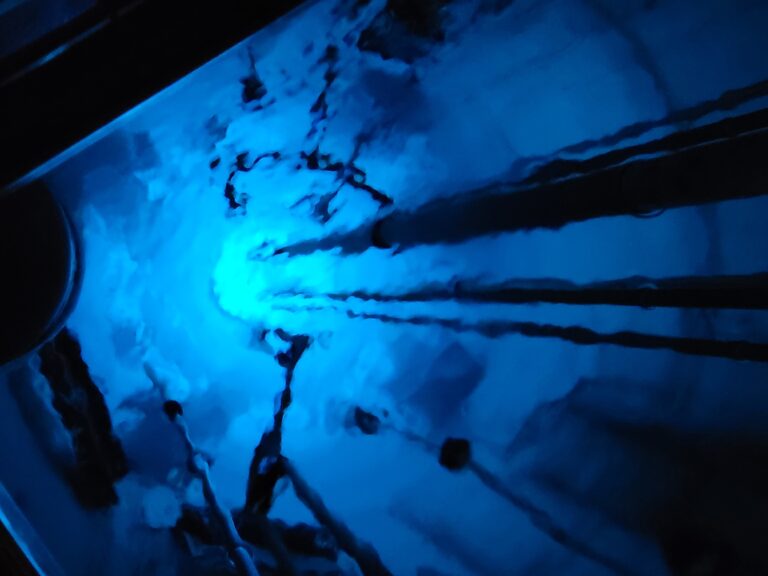
The McClellan Nuclear Research Institute also played a critical role in Perseverance’s landing on Mars. The technology used can be compared to an X-ray. These work and produce images with contrast because X-rays are preferentially absorbed in higher atomic number and more dense material like bone than lower atomic number and less dense materials like fat, muscle and skin.

Neutrons interact with material a little differently and are effective at interacting with hydrogen and carbon surrounded by metals. For example, neutron radiography can be used to image flowers inside a lead container because neutrons go through lead easily and can interact with flower material, according to Frey.

This technology is used to image pyrotechnic devices such as an airbag initiator. The initiator works by having a small explosive charge that sets off a gas-generating reaction to inflate the airbag. The majority of devices received at the research institute are one-time-use devices. The images make sure the devices are assembled correctly through nondestructive testing.

The neutron imaging method works similarly to X-rays, but instead of an X-ray tube, a neutron source such as a nuclear reactor is needed. 

The rover landing on Mars required one-time-use explosives like an airbag. The engine start up and space separations are possible with energy transfer lines, a fast-burning fuse that carries a signal from one place in the vehicle to the other. The nuclear research institute captured images of these lines using their TRIGA Mark ll reactor.

The institute is distinguished as one of two facilities in the country that can do this. There are dozens of reactors in the country similar to that of UC Davis, but only two are built to do this specific type of work of capturing images using neutron radiography, according to Wesley.

The imaging technique was used for the lander equipment as well. Images were taken of the generator that pushed out the parachute and of the explosive pellet that severed the parachute cords.

The reactor also imaged the NASA standard initiator that starts rockets that are fired on the lander, more pellet cutters responsible for cutting the four cords that lower the lander down and the four propellant tanks on the lander to make sure the rubber diaphragms inside the tanks are intact. This is an efficient way to make sure that all the moving parts of the equipment are placed correctly, according to Frey.

Dawn Sumner, a professor in the UC Davis Earth and Planetary Sciences Department, is one of the scientists on the Curiosity rover team and works directly with the rover, interpreting the data it gathers on Mars. 

“It’s still going strong, collecting excellent scientific data,” Sumner said.

         The Curiosity rover and Perseverance rover missions are connected because the results from the Curiosity are being used to make improvements to Perseverance, such as having the ability to map out the distribution of different types of organic molecules more efficiently. The two rovers are also in different locations on the planet and are used to make comparisons while asking the same scientific questions.

         “Different areas have different characteristics, and we need to explore a lot of places to understand the planet,” Sumner said. 

         The Curiosity and Perseverance missions are both international collaborations and consist of individuals with a variety of approaches working together on a difficult task. Missions like these inspire the younger generations to want to improve the world through science and engineering, according to Sumner.

         “I hope the public can be inspired by what we can do as a society. If we can land on Mars, we can solve a lot of the problems on Earth,” Sumner said. “We just need the will and persistence and resources to do so.”

Written by: Francheska Torresscience@theaggie.org

Davis admin launches Duo during COVID-19, because why not?

0

How bad could it be?

In a maddening choice from the UC Davis administration, the move to the authenticator app Duo has been enacted, and students have been forcibly moved, kicking and screaming, to the new education platform.

Regardless of student reception, the university will continue with the move. Even with only about 10% of the student body now currently on Duo, chaos has engulfed the campus. The sun didn’t rise yesterday, cows are walking on two legs and professors are still trying to give closed-book tests online. It may not have been the rapture we all expected, but the end of times is surely upon us.

With flames engulfing the Memorial Union, a Davis administrator gave a speech while a group of demons played frisbee on the quad. 

“We’ve gotten a lot of feedback on Duo, and we’d like to know that you’ve all been heard. And subsequently ignored. We see the impact of our actions, but the apocalypse is no excuse for students not turning in homework or not going to online lectures. We ask our student body to come together and pull themselves up by their bootstraps. I may not have had to go to school during times like this, but you don’t see me complaining,” one administrator said. 

The California Aggie attempted to get further comments on the subject, but the administrator was abruptly taken away by a flying monkey and thrown into the void in the sky that has now replaced the sun. 

In these trying times, I would also like to ask students to come together and tough out the end of the world. Education comes from hard work and perseverance and a few firestorms; wandering cow demons or Satan won’t stop you from getting your degree. So grab a pitchfork and some holy water, and fight for your education.

UC Davis administration would like to remind students that finals will still be held during week 11—and fending off the souls of the damned is not a legitimate excuse.

Written by: Ian Cosner — iacosner@ucdavis.edu 

Disclaimer: (This article is humor and/or satire, and its content is purely fictional. The story and/or names of “sources” are fictionalized.)

UC Davis is developing plans for return to in-person instruction in fall

0

Administration recommends that students prepare to be on campus by fall, but many details remain uncertain

UC Davis announced in late December 2020 that it plans to resume in-person instruction for Fall Quarter 2021. Shortly thereafter, on Jan. 11, 2021, the UC Office of the President announced that all 10 UC campuses are preparing to do the same.

Provost Mary Croughan established the fall planning work group to evaluate all of the logistics of bringing students, faculty and staff back on campus.

“The fall planning work group is made up of leaders across the entire campus,” Croughan said. “It’s not just focused on instruction; it’s on every aspect of running the campus. So research, education, service [and] what affects faculty, staff and students.”

The group is working to plan everything from how many students can be housed in a dorm to dining restrictions and research plans for how in-person instruction will function. It is complicated and challenging to make decisions in a pandemic when there is so much uncertainty about the future.

The working group must evaluate all different scenarios, considering the county tier status, state and county restrictions and vaccine availability and uptake. While President Joe Biden has promised that all Americans will be offered the vaccine by the end of May, the UC cannot ensure students will be vaccinated because it is not possible to mandate COVID-19 vaccinations at this point, according to Croughan.

“The problem with requiring vaccinations is you’re not allowed to mandate a vaccine if it’s still under an emergency use authorization,” Croughan said. “All of the COVID-19 vaccines are under an emergency use authorization right now. We will have to see what the federal government does. If they remove the [Emergency Use Authorization] designation, then it would be possible to mandate, but the University of California has not made a decision on that yet.”

ASUCD President Kyle Krueger is the only undergraduate who sits on the fall planning work group. He explained that travel restrictions could present additional challenges for international students and is concerned with ensuring the administration hears student voices.

“Through the fall planning work group, we’re also planning to do listening sessions with some different student communities to make sure administration is not just hearing from me,” Krueger said. “I want to make sure that [the] administration hears from a variety of student communities—minority students, international students. ASUCD is going to work to make sure that those connections between administration and students are made.”

While the details of fall instruction have not been solidified, Krueger and Croughan both concurred that the most important thing for students to do right now is to secure housing for next year because some portion of classes will be offered in person. 

“ASUCD is going to do everything it can to advocate to make good online options for students who can’t come to campus and make sure courses are [as] accessible as possible,” Krueger said. “Despite our advocacy, my recommendation for students would also be: If it’s possible for you to come back to campus [then] do that because [in-person instruction] probably is going to still be better despite our best efforts.”

Looking at the various ensuing scenarios and attempting to make “good educated estimates,” Croughan said possibilities for instruction could include seating students six feet apart, offering more sections, rotating who comes to class in person and live streaming lectures. The goal is to have such details figured out in time for fall registration, according to Croughan.

“The only way you can go back to having a lecture hall be full in a pre-pandemic number would be assuring that everyone had been vaccinated, everyone is wearing a face cover, everyone is practicing safe hygiene practices and everyone is doing asymptomatic testing at least once a week,” Croughan said.

Krueger said that over half of the student population who will come to campus in fall 2021 will have never taken an in-person course at UC Davis before, between first years, sophomores and transfer students.

Warren Jia, a first-year chemical engineering major, said he is worried about transitioning from online to in-person instruction, especially because most of his online exams allow for open-note test taking.

“I’m a little scared because I haven’t done a lot of the memorization in my prerequisite classes, I’m going to be behind,” Jia said. “I’m going to have to re-learn a lot of material later when I take upper division courses that require me to recall knowledge I learned this year. I’m not really scared of going back from a safety perspective because I believe in the vaccine.”

While Jia said that he looks forward to in-person instruction, as opposed to sitting at the computer all day watching hours of lectures on end, he expressed concern about social activities. He said that he hopes the university will offer support and opportunities for socializing for first-year students who lost out on the college experience. 

“There’s certainly a desire to go out and once you get your vaccine to go party or do something fun like that,” Krueger said. “I think that could pose an issue if folks prematurely start commencing with back-to-normal activities, like partying or large group activities, before everyone is vaccinated. We want to send the message that some things are re-opening, but it’s not back to normal until everyone is vaccinated and the public health officials say it’s back.”

In terms of enforcing social behavioral regulations off campus, Croughan said that expectations for students are the same when students are off campus as when they are on campus. 

For those who are already in Davis currently, Croughan said that students have done a great job complying with social regulations.

 “I am just really proud of our students for knowing what will help them and everyone around them stay healthy and follow those guidelines,” Croughan said.

Written by: Rebecca Gardner — campus@theaggie.org

Culture Corner

0

The Arts Desk’s weekly pick of movies, TV shows, books and music

Movie: “To All the Boys: Always and Forever” dir. by  Michael Fimognari (2021)

The final “To All the Boys” movie finally arrived last month, and it was my favorite addition to the series. Let’s admit this truth: Lana Condor carried the entire series on her back with her charm and adorable sense of humor. She is everything we could want in a main character, and we are robbed of seeing her in more productions, so I am sad to see this series come to an end. However, it was a bittersweet moment because I loved the way things wrapped up. As Lara Jean plans out her life, she sees herself next to Peter Kavinsky at Harvard, where they both go on adventures and never have to say goodbye at the end of the day. But when a trip to New York University comes along and college acceptances roll in, Lara Jean has to reevaluate her decision of whether staying near Peter is worth her new dream school. 

Book: “Pan’s Labyrinth: The Labyrinth of the Faun” by Cornelia Funke and Guillermo del Toro

Guillermo del Toro’s beautiful movie “Pan’s Labyrinth” was turned into an illustrated book. The book adheres to the movie’s creepy yet whimsical aesthetics, as young Ofelia goes through three challenges, trying to prove that she is the lost princess. Set in World War II (as in the movie), young Ofelia and her pregnant mother must move in with a sadistic captain. Thirteen-year-old Ofelia is hopeful that fairy tales exist, so when a creepy faun reveals that she is the princess of an underworld realm, Ofelia is quick to take on the task to prove it. The princess is said to have left her kingdom one day, but the sun was so bright that it erased her memory. Her father, stricken with grief, decided to open up multiple portals so that she could return home, but because so much time has passed, only one portal remains, and Ofelia must quickly complete the three tasks in order to return home to her realm and be at her true parents’ side.

TV Show: “Light as a Feather”

This Hulu original depicts the challenge that I was too afraid to accept as a teenager. The challenge “light as a feather, stiff as a board” is when a group of friends tries to lift someone with just two fingers. The show takes this challenge and tells the story of four friends inviting the new girl over on Halloween to play the game. They quickly regret their decision as they notice each girl starts to die off the way the game predicted. Because I never liked the introduction to the game, which proclaims the person lying down as dead, I was never up for playing it. The show isn’t the best horror series, but it kept my mind off of homework for a while, and it was a nice twist on the popular slumber party activity. 

Artist: Dove Cameron

Dove Cameron herself is a literal angel so it only makes sense that her voice is angelic. She doesn’t have an album released yet, only a couple singles throughout her career. But saving all of those singles and listening to them on repeat is sort of like an EP. Cameron was made for live theater, which is what she worked on most before COVID-19, but it’s a blessing to have her released music that I can appreciate at home. 

Written By: Itzelth Gamboa — arts@theaggie.org

Texas power outages shed light on the importance of reliable power grids

Extreme cold weather conditions caused failure of power plants, leaving Texans without electricity

The devastating conditions in Texas have been broadcasted across the country as Texans have suffered through several crises due to power outages, which stemmed from a series of severe winter storms beginning Feb. 10. Residents have had to go days without adequate heat, electricity and water—some losing their lives due to a lack of these resources. Such events have caused speculations surrounding the winter storm’s potential link to climate change. Yet Matthew Igel, an adjunct professor in the department of land, air and water resources, explained that this may not necessarily be the case.

“There’s some disagreement about the role of climate change in these kinds of events,” Igel said. “Certainly these temperatures are uncommon in Texas, but they’re not unprecedented. It’s not that these kinds of events historically have been impossible, but they are very rare.”

He explained that he is hesitant to attribute this particular snowstorm to climate change, and that similar extreme weather events happened in Texas in the early 1900s and in 1985. For this snowstorm in particular, he explained that the polar vortex—cold air trapped in the arctic—became unstable due to a pattern in the atmosphere known as blocking. Igel elaborated that air began to build up over the Pacific, which led to the slowing down of the polar vortex. This created an instability that allowed the cold air from the polar vortex to migrate toward the Southern U.S. 

“It’s easy to think of cold air trapped at the arctic as like a spinning top,” Igel said. “So when a spinning top spins really fast, it’s nice and stable. It doesn’t move. But when a top starts to slow down, it can start to wobble.”

Although there is some evidence that how much the polar vortex wobbles may increase as the world grows warmer, this is still a growing field of research. Though these recent events may not necessarily shed light directly on climate change, they do highlight another area in need of change: power grids. 

When extreme cold temperatures hit Texas, the state’s power plants were unable to continue operations. According to an article by the New York Times, out of natural gas, coal, nuclear and wind power plants, natural gas production was affected the most. The article further explained that, simultaneously, demands for electricity increased past estimations, forcing the Electric Reliability Council of Texas (ERCOT) to initiate controlled power outages. 

“Electricity systems need to balance supply and demand every second or it can result in complete grid collapse that can take weeks to recover from,” said James Bushnell, an economics professor, via email. “In order to prevent the total collapse, ERCOT, the system operator in Texas, started rotating blackouts. The supply shortfall was so massive that up to half of all demand had to be curtailed at some points.”

Keith Taylor, an assistant economic development specialist in cooperative extension in the Department of Human Ecology, explained that there were multiple causes behind the power outages. One of these causes is that there is no requirement for stockpiled energy resources. While the absence of this requirement helps keep costs down, it also means that the grid is not well prepared for disasters. 

In addition, Texas’ power grid is isolated from the two major American grids, according to Bushnell. For example, California is much more integrated with neighboring states compared to Texas. Although the two states differ in the types of energy they use, both rely on natural gas to sustain operations. Because of this, Taylor explained that since Texas was not able to pull more capacity from the electric grid, it could have pulled more from the natural gas pipelines feeding into Texas if more were connected to other states.

In order to avoid such issues from occurring again, Taylor expressed the need for the weatherization of power generators, along with the hardening of the transmission infrastructure which facilitates the delivery of energy from power plants to consumers. 

“[This event] certainly revealed that all energy sources have an array of vulnerabilities. We need to harden the system for the entire mix of energy sources,” Taylor said.

Although this specific event was concentrated in the Southern U.S., power outages have also occurred in California in conjunction with strong winds and high temperatures this past year. Bushnell expressed that as climate change causes more extreme swings in weather patterns, the swings themselves are expected to increase in severity. 

“The lesson from the last 12 months in both California and Texas is that electricity systems can, in turn, expect larger swings in both demand and available supply as a result,” Bushnell said. “In California, the increasing share of renewable generation creates further correlation between weather and supply, but Texas demonstrates that this correlation can impact natural gas as well.”

Bushnell explained that policymakers should examine the natural gas market and the pipeline systems moving forward. Furthermore, he emphasized the importance of reconsidering the way the reliability of electricity systems is assessed. 

“The traditional approach to reliability planning in electricity is to target generation ‘capacity’—that is the maximum a plant can produce if all goes well,” Bushnell said. “As we rely more and more on alternative resources such as renewables, batteries, as well as hydro and even natural gas sometimes, the problem is not one of capacity at all but rather the ability of that capacity to produce electricity when we need it.”

Written by: Michelle Wong — science@theaggie.org

City of Sacramento to receive $31.7 million to help low-income residents pay rent

0

The pandemic has caused many households to experience losses of income and jobs, potentially putting some at risk of homelessness

The City of Sacramento is going “to receive an additional $31.7 million in state and federal funding to assist low-income city residents who are unable to pay rent and have been impacted by the COVID-19 pandemic,” according to a media release from Sacramento City Express.

Around $15.2 million of this aid is from the recent federal stimulus package, the Consolidated Appropriations Act of 2021, and $16.4 million is from the SB 91 Bill, which was passed recently and extended the State of California’s Eviction Moratorium to June 30, 2021, according to the media release. 

The Sacramento Housing and Redevelopment Agency (SHRA) will be managing the funds, and applications are open through March 19. The eligibility of households to utilize the funds is not dependent on immigration status. More details can be found in the media release.

SHRA Assistant Director MaryLiz Paulson explained that the idea for the program originated as a result of nationwide concerns about households being unable to back pay rent. 

“President [Donald] Trump signed the stimulus bill on Dec. 27, 2020 making funds available for rental assistance, and then Governor [Gavin] Newsom signed SB91 on Jan. 29 making state funds available,” Paulson said via email. “This was in response to national concerns about low-income families that are unable to pay rent due to the COVID pandemic.”

Paulson added that the applications opened recently, “so information is just coming in.” 

Additionally, most work has been completed online due to the pandemic.

“In general, we have been working through online portals, reducing the need for face-to-face contact or even sharing paper documents,” Paulson said.

Housing Policy Manager for the City of Sacramento Danielle Foster explained that the pandemic has caused thousands of families in the city to be at-risk of losing their housing due to lost jobs and income. Increased demand for housing in other parts of California has also affected the region.

“Through the leadership of our mayor and council, the city has been able to implement a multitude of housing and homeless resources totaling more than $90 million this last year to directly assist our community impacted by the pandemic,” Foster said via email. “Our region is further impacted by increases in rents and housing prices due to greater demand on local housing from Bay Area transplants due to the mass increase of work-from-home options.”

Foster added that SHRA and “local community-based organizations” will be working to distribute the funds rapidly “to as many people as possible, including those residents who are most difficult to reach due to language and cultural barriers.” 

In addition to these funds, there are also “free COVID-related landlord and tenant mediation services available for both commercial and residential tenants,” to assist residents who may have conflicts with their tenant or landlord as a result of the pandemic or eviction moratorium. People who may be interested in using these services can visit the website or call 916-850-9010.

Yolo County Housing Interim Chief Executive Officer Sandra Sigrist described that, in Yolo County, the pandemic has caused landlords and tenants to be thrown “into tenuous circumstances as both try to find a path to sustainability.”

“Having said that, the rental assistance available for individuals who meet low income guidelines has reportedly been helpful for both groups, and the pending State-administered rental assistance program launching locally in mid-March, will provide further relief,” Sigrist said via email.

Some housing options that Yolo County has included are voucher subsidies, public housing, partnerships with apartment complexes, “single home collaborative programs,” as well as Migrant Agricultural Family housing, according to Sigrist. Yolo County Housing has been focusing on outreach to ensure that people have access to housing.

“While safety protocols have been at the forefront, the focus of our efforts has continued to be on supporting safe and affordable housing for all of those who are eligible for the programs we administer,” Sigrist said. “It’s involved a lot more reaching out to check in with people, rather than only responding when people contact the offices.”

Ultimately, Foster explained that these funds are meant to help those who may have been affected by the pandemic and may not be able to pay rent.

“If you are a low-income renter that has been impacted by COVID-19, please apply for this rent and utility assistance,” Foster said. “This assistance can cover back-owed rent and utilities from April 2020 and through June 2021.”
Written by: Shraddha Jhingan — city@theaggie.org

Is it ethical for ancestry companies to sell their customers’ DNA?

0

UC Davis law professors discuss the bioethics of ancestry companies that sell consumer data for research and drug development

Large ancestry companies such as 23andMe and AncestryDNA have been processing consumers’ DNA for years to provide consumers with a deeper understanding of their family history. Within some of these ancestry companies’ terms of service, however, there are statements that require consumers to agree to the sale and distribution of their DNA for research and medical purposes. UC Davis Law Professor Lisa Ikemoto, whose areas of speciality include bioethics and health care law, was featured on 60 Minutes on Jan. 31 to explain the implications of agreeing to these companies’ terms of service. 

“You have to look really, really carefully at the websites to find the agreements themselves and then you read through and they’re really long and they’re really detailed and the terminology is not perfectly clear, so it might be hard to understand what you’re consenting to, what you could opt out of,” Ikemoto said.

For Ikemoto, the idea of humans’ genetic material being used in technological advancements raises ethical concerns about who should have rights to that data.

“People are becoming sort of the source of raw materials that are used in science and so there are questions about who should have the say-so in bioethics terms,” Ikemoto said. “Who should have the control over those cells and tissues once they’re removed from their bodies? Can they be owned by somebody else? Can they be owned by the people who provided those cells and tissues?”

Law professor Alix Rogers, whose research focuses on new biotechnologies and regulating human biological materials, noted that ancestry companies are held to different ethical standards than medical companies.

“If the individual [was] signing up and giving their DNA to a medical study, for instance, we would have strict requirements around informed consent, and in these instances, we don’t,” Rogers said. “It’s sort of left a little bit more willy-nilly on, ‘How good is the informed consent—is it true informed consent?’”

Rogers said that oftentimes consumers of ancestry services tend to invest the same level of trust into ancestry companies as they would a healthcare provider, though she said these companies do not always make as much of an effort to get quality informed consent.

“You think that they’re looking for the individual’s best interest—a doctor has a duty to look after […] the best interest of their patient,” Rogers said. “They’re sort of existing in this liminal space where it seems like they’re kind of a healthcare provider, but they’re not, so that same duty doesn’t apply, and yet maybe some individuals who are engaging their services don’t quite understand that.”

Professor of Law Stacy-Ann Elvy, whose research focuses on how commercial law of privacy relates to emerging technology and human rights law, sees possible concerns in the privacy implications that consenting to ancestry services could have for consumers’ families.

“You’re essentially also providing genetic material, genetic information on everyone in your family, and these individuals didn’t consent to having genetic information disclosed,” Elvy said. “Notice and choice is a very important part of this issue.”

According to Elvy, another implication of consenting to these services is that there is no way to mend the damage caused by possible data breaches because genetic data is so highly sensitive.

“So, if for instance there is a cybersecurity incident, a data breach involving a credit card, or something to that effect, […] you can always get a new credit card number,” Elvy said.  “Some things can be replaceable and changed and that’s not genetic data.”

According to Rogers, many ancestry companies make the promise of anonymizing and aggregating your genetic information, but it’s becoming increasingly easy to trace genetic information back to a person.

“When DNA sequences are sold, the assumption is often that you could never trace back through and figure out, ‘Okay, in these 15 sequences, this is John Smith,’ and increasingly we’re able to do that, and so that is troubling,” Rogers said.
Written by: Lyra Farrell — features@theaggie.org

Davis Independent Music Initiative offers grants for local musicians

0

Joel Daniel of the DIMI aims to help Davis’ struggling artists

The Davis Independent Music Initiative (DIMI) was founded in 2019 with one mission: secure the future of independent music in Davis by collecting resources that would allow musicians to reach their full potential.

Joel Daniel, the founder of DIMI and the first recipient of its $5,000 grant (now $6,500, and as Daniel says, “Hopefully up to $10,000” in the future), remembers a time when “The G Street Club had bands like every Thursday to Saturday night minimum.” 

“I’ve watched musicians in town just sort of come and go over the years,” Daniel said. “And when I first got to Davis in the late nineties there were a bunch more venues to play in. Now there’s just fewer venues.”

“My hope is that we can all be like, ‘Oh yeah, I love that band’ and be like ‘Yeah they came from Davis!’ and have that personal connection to this thing that comes from the town that we all hopefully like,” Daniel said. We just want to support an original musical work from Davis that we could conceivably all be watching on the ‘Tonight Show’ in two years.”

The money for the DIMI grant comes from the city, and though the work has been challenging, Daniel hopes that it will help breathe life back into a local music scene that has faltered over the last 20 years. The annual DIMI Artist Grant is just one part of the project. Applications for the 2021 grant closed recently, and though just one of the 13 applicants will receive the funds, Daniel intends to “come up with other ways to help the other 12.” 

Some of the other ways DIMI intends to help aspiring musicians are through a series of video lectures and bi-weekly “Tune Ups,” which Daniel said will serve as a kind of “songwriting workshop,” with “the end goal being just trying to make people’s work better. To take something that’s good and make it really good.”

Ultimately, as Daniel said, “It’s just really hard to live in this town and support yourself when you do art. Over the last 5 years I’ve had rent increase like 25%. There’s no way any musician is going to be able to have 25% more revenue coming in over a 5-year period of time unless all of a sudden you get nominated for a Grammy.” The intention is that the grant, and DIMI itself, will make it easier to survive as an artist in Davis, even with the ever-ballooning rent prices and pandemic-induced lull in local art.

The fact remains that initiatives such as the DIMI may become essential—especially for music—to keep local art scenes alive. With streaming services like Spotify offering $0.003-0.005 per listen, putting together a sustainable existence has become much harder even for musicians with established audiences, let alone those first starting out in a local scene.

Daniel comes across as optimistic, though.

“If this resonates with any of your readers, they’re welcome to reach out to me. I’d love people to come to the Tune Ups if you write songs, but you don’t have to. We want a community to talk about this stuff. I just would like to see Davis be a place where you could think, ‘Yeah, these things are happening there, and that’s cool.’ We want to foster an artistic community.”

Written by: Jacob Anderson — arts@theaggie.org

It’s 2021, why are some species still named after confederate leaders?

0

If we’re going to rename things, let’s add some species names to that list too

Names have been in the news a lot the past year, whether it’s complaints of cultural appropriation in business names or changing the names of schools named after confederate generals. Everything has gotten its name from somewhere, and things can have multiple names. Many things in the U.S., from schools to rivers, are named after colonial figures in Western culture with no regard for the previously existing Indigenous names.

Colonialism is pervasive in Western culture—nothing is left untouched by it. Take, for example, Lewis’ woodpecker. Sounds innocent enough, right? It’s a beautiful dark red and black bird that differs from most woodpecker species in that it very rarely pecks against wood for insects, but instead catches them midflight. It’s name comes from Lewis Meriwether, who you might know from the Lewis and Clark expeditions, a known slave owner who reportedly often beat his slaves. Bottom line: cool bird, bad namesake. 

Unfortunately, this is not uncommon for species as the majority of common species names that we use today were given to them by wayfaring Westerners. In fact, this is so much of a problem that there is even an entire organization based around advocating for renaming birds with eponyms alone. 

So you might think, what’s the big deal? We can’t just rename every species, and it’s not like the names are hurting anyone. Actually, peer reviewed science has proven that idea wrong. In a recent study on the species names of New Caledonia, a small island off the coast of Australia, scientists found that there is a significant impact on the perception of species based solely on their names. In this case study, the majority of species names that had connections to the Indigenous peoples of the areas were discovered more recently, and Yohan Pillon, the author, conjectured that the naming actually impacted how willing people were to conserve the species. 

In the conclusion of his paper, Pillon states, “Areas of high biodiversity often overlap with areas of high linguistic diversity […] but the links among biodiversity and cultural and linguistic diversity are often underappreciated (Frainer et al., 2020). To promote the preservation of biodiversity, species should be named with an eye toward how these names will be perceived by the local communities involved.”

Species names also can perpetuate harmful stereotypes. For example, the Gypsy Moth is a common pest found throughout Europe and North America. The name has come under criticism as it incorporates both a slur for Romanis and associates them with the itinerant pest. There are countless other examples of this, like the Jew’s Ear which started as Judas’ ear but was shortened shortly after.

Additionally, the continued use of names that pay homage to white supremacists, misogynists and the white colonial narrative perpetuates the erasure of Indigenous peoples and cultures. In order to fight the climate crisis, there has to be a significant global cultural shift toward listening to Indigenous Peoples and the thousands of years of traditional ecological knowledge that is built into their culture. We can’t do that if we aren’t even past the basic step of acknowledging their existence by incorporating Indigenous names for species and places.

In New Zealand, this discussion has already begun with two researchers who have called for an Indigenous-led renaming of both species and genus names. This would be a huge disturbance to the already desperate attempts of the scientific community to standardize and categorize as many species as possible during a mass extinction event that claims species at 1,000 times the natural rate. Despite this, it is integral to thoughtfully and deliberately include Indigenous knowledge around naming newly discovered species and changing older ones.

If we can’t learn from the past, we are doomed to repeat it. If you don’t believe me, look at the recent CNN article about a British woman who claimed to discover a whale passage in Kenya. This article was met with immediate backlash from the local community, who had known about the existence of these whales for decades, but were portrayed as clueless in the article. Indigenous knowledge and inclusivity is integral for us to move forward. In 2050, when we are living in some giant monoculture urban landscape, I don’t want to have to explain to my kid why one of the four butterfly species left is named after Jefferson Davis.

Written by: Joe Sweeney — jmsweeney@ucdavis.edu 
Disclaimer: The views and opinions expressed by individual columnists belong to the columnists alone and do not necessarily indicate the views and opinions held by The California Aggie

Congress set for battle over hike in daylight savings

0

We take you inside the explosive battle on Capitol Hill

Much of the news coverage out of Capitol Hill remains largely focused on the battle over COVID-19 relief checks, the minimum wage and the confirmation of Neera Tanden. All three are equally important battles that will affect the lives of citizens on a day-to-day basis. However, another imminent battle looms over the chambers of Congress. No, not a literal one, just one that nobody really cares about.

Daylight savings time usually begins mid-March, but this year it’s a little different. The U.S. has faced a mounting debt of daylight, and according to policy experts, the country is in danger of defaulting on it’s daylight debt, plunging the nation into the darkness. 

House Democrats have put forth a proposal that would raise the daylight savings rate from one hour to one hour and 37 minutes, citing the fact that since the beginnings of daylight savings time it has never been raised from one hour. They have also called on states like Arizona and Hawaii to stop freeloading off federal daylight.

This proposal has already faced steep opposition from the GOP, as they advocate for sunshine austerity measures rather than taking more sunlight from the days of American citizens. They propose that we should just make daylight cuts when daylight savings time ends every November. Although it should be noted that they too agree that Arizona and Hawaii should stop freeloading off of federal daylight. So much for unity?

It should be noted that this is not a real issue. However, if Congress would like to stall any important bills that should come their way, and they feel like squabbling over means testing and forcing the entire bill to be read out loud is too cliche, they can feel free to use this as some irrelevant culture war issue to do so.

Written by: Ean Kimura — etkimura@ucdavis.edu

Disclaimer: (This article is humor and/or satire, and its content is purely fictional. The story and or names of “sources” are fictionalized.)

The Editorial Board shares favorite Davis businesses

0

In light of the struggles that local businesses have faced during the pandemic, members of the Editorial Board highlight Davis establishments that are meaningful to us

Anjini Venugopal, Editor-in-Chief

The first time I went to Taqueria Guadalajara was well after I moved to an apartment only 0.2 miles away from it. After telling some friends—at an Aggie Couch Concert actually—that I had never been to Guads, they insisted we walk from central Davis all the way back to North Davis for me to get a burrito. Their super burrito al pastor, my regular order, is incredible and I would highly recommend getting a bag of chips with a few salsas of your choice (they’re all great and you can’t go wrong with picking any of them, but I’d suggest their pico de gallo and salsa verde). Guads quickly became a constant in our apartment, joining us before finals study sessions and after nights out. Just before everything shut down in March of last year and we realized we may not be returning to Davis for a while, my roommates and I picked up one last burrito. Supporting your local businesses is always vital, but especially now, so the next time you are in the market for a burrito or just in the mood to support Davis businesses, go to Guads. 

Margo Rosenbaum, Managing Editor

Sweet and Shavery never fails to satisfy my cravings for a sweet treat. As someone with a  sizable sweet tooth, I love walking into the quaint shop situated on E St—my nose instantly filling with the delicious scents of custard, fresh fruit and Nutella. With their reasonable prices, friendly workers and delicious sweet options, Sweet and Shavery is one of my favorite small businesses in downtown. My housemate swears by their banana Italian ice, but I always buy their chocolate and vanilla frozen custard swirl (adorned with a waffle cone, of course). If you have yet to try frozen custard, I highly recommend it. The dessert’s thick texture and rich taste are incredible—creating an experience far superior to its wannabe cousins frozen yogurt and ice cream. While I tend to only order custard, the shop’s milkshakes and crepes are phenomenal as well. As the warmer months approach, a cup of frozen custard from Sweet and Shavery is sure to cool you off and brighten your day.

Sabrina Habchi, Campus News Editor

The Davis Food Co-Op is a magical place. I remember when I first walked in, I was instantly transported to the local grocery store I used to work at back home—the only difference being that store was right off the 101 and overlooked the ocean (yes, I am from San Diego). Still, the atmosphere and the characteristics are the same: quality, local produce and food items, an excellent liquor selection and delicious deli options. The Co-Op goes even one step further and has phenomenal sushi prepared daily by Mermaid Sushi, another small business. The Co-Op is where I have grocery store shopping dates with some of my best friends, where I walked to during the pandemic when I wasn’t getting any exercise and where I bought my first beer the day I turned 21. I highly recommend visiting the Davis Food Co-Op at least once—it is an excellent way to support a small business that allows other small businesses to flourish by supplying their products.

Eden Winniford, City News Editor

The last restaurant I dined-in at before the pandemic shut everything down was the Davis Sushi Buffet. It was my first time at a sushi buffet, and I loved the little boats that paraded plates of sushi and steamed buns around the bar. My boyfriend and I went on a Saturday night, and I must have eaten over 30 steamed buns—I especially recommend the custard-filled buns, but I also love their pork buns. Neither of us had cars, so we basically crawled back to our dorm building because we were too full to walk. We vowed to never eat that much again, but when Sunday rolled around, we found ourselves practically inhaling steamed buns at the buffet. As soon as I feel comfortable dining in again, eating way too many steamed buns at the Davis Sushi Buffet is the first thing on my list. 

Calvin Coffee, Opinion Editor

With an entire menu of plant-based fast food, Burger Patch (BP) is a vegan’s paradise and has become one of my favorite spots in Downtown Davis since they opened last spring. My go-to order is their classic Patch Burger and fries—with their fabulous ranch on the side of course. For the adventurous, BP also has an incredible “secret” menu where almost every possible combination of their ingredients resides. If you’ve never had a plant-based burger before, try BP and see if you might consider incorporating more meat and dairy alternatives in your diet—if you hate it, at least you’re supporting a local business. BP’s existence in Davis again proves that we have a community that supports sustainability, which is something we should all support and be proud of. (And not to nerd out or anything, but BP even goes the extra mile to make sure their straws and cups are also plant-based). In a town known for its cows, the burger that has nothing to do with dairy is the one for me—and the sustainability of our planet. Also, their Patch Mac (and cheese) is on the seasonal menu this spring, it’s fantastic. 

Sophie Dewees, Features Editor

An over 60-year-old establishment, the Davis Varsity Theatre is a staple of downtown Davis and will always be one of my favorite local businesses. I first fell in love with the velvet seats, draping curtains and Art Deco architecture last year. Before the pandemic, I visited the two-screen film house as often as possible, viewing titles such as “Jojo Rabbit, “The Lighthouse” and “Parasite.” Although theatres in Davis have yet to be able to reopen safely, Varsity offers the ability to rent newly-released films in support of the theatre. While nothing compares to experiencing films for the first time in person, renting is an option that allows members of the Davis community to not only support a historic local business but also view unique, thought-provoking films that they may not otherwise see. Looking forward, I’m hopeful that Varsity will be able to safely reopen in the near future and once again bring together students and community members alike to sit in anticipatory silence, waiting for a film to begin.

Allie Bailey, Arts & Culture Editor

When I first discovered this gem of a clothing store last summer, I couldn’t stop talking about it—I told everyone I could, even people who don’t live in Davis. I knew Treehouse Vintage was different when I left with not one, but two trendy, high-quality items that I had been searching for the past three months. Not to mention, Kenny, owner and founder of the secondhand co-op, was so kind and accommodating that it felt like we were old friends by the time I left the store. The next time I went—which I believe was later that week—I did some damage to my bank account, but considering what I picked up, it could’ve been so much worse. Coming from the Bay Area, where prices are hiked as if everyone were making a Silicon Valley salary, vintage clothing is usually out of my price range. But the stuff at Treehouse is actually affordable, especially for one of the best curated collections of vintage apparel I’ve seen. There are racks from vendors from all over the area that are consistently re-stocked, and on Instagram (@treehousevtg) they post their best new stuff almost daily. I’ve had to hold myself back from going too much after my bender last summer (I think my record is three times in one week), but every time I let myself go, Kenny is there with a warm welcome and a prime selection of items to fall in love with. 

Omar Navarro, Sports Editor

Opening almost 10 years ago, G Street Wunderbar has become a staple in Davis for a variety of reasons. From its game nights, live music and much more, it has served as a fun local spot for the residents of Davis. Even if you aren’t particularly interested in drinking to the events they host, it is a great place to watch any sporting event that’s on. Before the pandemic, I have many memories meeting with friends to watch many football and basketball games. Their TVs and projectors make it almost impossible to not see, and their seating arrangements made sure everyone was into the game. Whether it was going with others, or going by myself, it was a friendly environment where I was able to interact with others that had similar interests as me. What stood out to me in particular about this location was the food. Being an avid BBQ fan myself, I had an amazing time trying all the different foods like the Mac and Cheese Angus Burger, pulled pork sandwiches and many other BBQ favorites. I really appreciated the fact that Davis in general has many different food options for many moods, but because of my likings, G Street Wunderbar had me hooked. I look forward to catching up with others and watching a game while eating some BBQ once again, once it is safe to do so. 

Madeleine Payne, Science Editor

Situated next to Varsity Theater and under the tall green trees of 2nd Street, Mishka’s Cafe has managed to remain a vibrant community center for students and locals alike—even during the pandemic. On a warm afternoon, you can find masked students studying at the small outdoor tables lining the sidewalk and neighboring alleyway, carefully placed six feet apart to promote social distancing. Though the inside of the iconic red brick building is no longer packed with folks reading the newspaper and old friends catching up over coffee, customers can still admire the local artwork displayed on the walls while waiting for their cup to-go. Especially during the chaos of week 10, Mishka’s is one of my favorite study spots to sip on a rose latte and enjoy the fresh Davis air, a short moment of peace before cramming for finals in the week ahead. My brief visits there now remind me of studying with friends during pre-pandemic times, and I look forward to the (hopefully soon) times I’ll be able to reconnect with them over a cup of coffee.

Written by: The Editorial Board


‘Race, Museums, Art History’ speaker event highlights whiteness of museums

0

The 2021 Templeton Colloquium at UC Davis outlined ways to reframe how museums include non-white art and better understand the role they play in enacting real social change

On Friday, Feb. 19, the Department of Art and Art History presented a lecture over Zoom from Professor Bridget Cooks of UC Irvine and Dr. Susan Mullin Vogel, a curator, filmmaker and founding director of the Museum for African Art in New York. The two speakers discussed the roles of American museums in showcasing culture for the public, and their long history of both under and misrepresenting cultures outside their own. 

Both Cooks and Dr. Vogel spoke on the ways in which museums have consistently displayed art outside of their usual white, American or Eurocentric cultures as “other,” inferior (or primitive) and something to be anthropologically studied rather than appreciated. The separating of the “real” art in a collection from the “outsider” art reinforces a colonial hierarchy in the art world, one of the primary reasons why it feels so out of reach for many. 

How diverse art is presented has detrimental effects beyond the art world, easily illustrated by the framing effect in psychology, where the way in which information is presented can highly influence one’s subsequent decisions and attitudes toward it. If white museum curators are consistently presenting and grouping African-American artists simply by race, rather than by themes of the art or mediums (as is expected for white exhibits), unaware audiences will continue to see “Black art” and the Black experience in America as a monolith. The ways in which American museums have failed Black artists in this country is applicable to countless other non-white groups and cultures and has seriously deterred true understanding and appreciation of them. 

The duty of museums today, in this emerging era of accountability and social justice, is to change their harmful curatorial practices, and to make real, long-term changes to their collections. According to Cooks, this means more than the unsustainable approach that museums like the Brooklyn Museum and the Baltimore Museum of Art have taken, in which they are selling off portions of their permanent collections in order to fund the purchases of art by Black and/or women artists in the wake of calls for proper representation over the past summer. Cook argues that the only way to fully transform these collections and presentations is through the boards themselves, which are, as the New York Times puts it, “strikingly white.” Museums are technically democratic institutions, but when those who make all the decisions come from one highly privileged group, it is quite unlikely that any big changes will be made. 

The solution here, proposed by both speakers at the event, is to not only diversify the current positions of power within the art world, but to make a real effort in terms of art education and accessibility across divisions of class, race and gender. Allowing students to explore early on about the truth of art and its history—not just that of the white, European narrative—will not only foster a deeper understanding of art, but might encourage those with more varied perspectives to step into what often seems like an untouchable world. 

The loud calls for justice in the art world will not be fully answered until museums and institutions go from spouting mission statements on cultural awareness and diversity to actually being aware and creating diverse environments—both in terms of who holds the power within them, and who is given access to understanding and appreciating their collections. If American museums were to take the steps toward a more inclusive future, they could become spaces from which audiences at large and other institutions outside the art world could really learn about the beauty in all cultures and perspectives. 

Written by: Angie Cummings — arts@theaggie.org

UC Davis Softball season is in full swing

0

After a long layoff, the team is grateful to be back on the field

Back in March 2020, all UC Davis sports games were put to a halt to avoid the spread of COVID-19. After much progress and a lot of movement, most spring sports returned to play this year’s season. Some fall sports, like football, are also allowed to compete during the spring. 

UC Davis Softball made their way back onto the field for the first time in 11 months in February of this year. In their last season, they were only able to make it all the way to March 10 before having the last three games of the season canceled. This new season began Feb. 11, and the Aggies are determined to finish the season and face all their opponents as the year progresses.

“I’m looking forward to getting back on the field and feeling some type of normalcy even though it is definitely different,” said UC Davis’ softball head coach, Erin Thorpe. “It’s tough as an athlete when one of your largest priorities is being a member of a sport, and not being able to participate or play is a hard hit. For us to be able to play the game, and now compete, is amazing.”

Normally, 56 games are played in a regular non-pandemic season. This year, because of the pandemic and certain safety protocols, only 45 games will be played. This means that instead of playing five to six opponents a week, only two or three games will be played in one weekend. 

“There are definitely many changes this season,” Thorpe said. We have a lower number of games than we would usually play, but we still have a full schedule. We’re also limiting our exposure to other teams as much as possible, we’re not flying anywhere and we have to follow the right procedures of the locations we travel to.”

The stress of being in the middle of a pandemic and trying to play the season has been on the mind of many members of the softball team. No matter how safe or how many precautions are taken, there are always risks.

Athletes had to face a constantly changing routine as COVID-19 guidelines were modified throughout the year. Players were used to always practicing as a team, and now they have become accustomed to practicing in small groups of three to four girls, or oftentimes, individually—which was a huge adjustment.

“Practice always looked different because we never fielded the entire team. Even when we had a bulk of the team tested, we never had the full team,” said senior outfielder and international relations major Marissa Jauregui. “The institution was making sure we were safe; we were getting tested as much as possible. I know that we’re getting tested much more now just because testing has really expanded. We test three times a week. We also heavily sanitize every single thing that we touch, and we’re very very strict on social distancing.”

During their offseason, Thorpe took the extra step to insure the health of her players. She asked her players to remain in a bubble一similar to the National Basketball Association一and they weren’t allowed to participate in activities that the Center for Disease Control and Prevention allowed, in terms of leaving the area or going out to eat. 

Last August, the National Collegiate Athletic Association (NCAA) allowed all athletes to opt out of the season due to concerns about contracting the virus. Not all players returned to Davis during the fall, but after keeping in touch with their teammates and hearing how smoothly everything was going, many decided to come back in December. 

The players were isolated physically from each other and also from their families, but that didn’t stop them from keeping in touch and making sure their teammates were doing okay. 

In order to stay connected as a team, the UC Davis softball team had to get creative on how to stay in contact. They held many events, one in particular was a remake of the wedding scene from the show “The Office” through Zoom. 

“We’d be on Zoom with each other for an hour or an hour and a half just asking how our day was, because not everybody did come back from Davis,” Jauregui said. “Even though we were in different parts, we just continued to have those weekly or biweekly Zoom calls where we could catch up.”

Leading up to the spring softball season has been rough when it comes to maintaining social distancing and following the proper procedures to stay healthy. The team, along with its coaching staff have all been determined to start the season the right way and hope to finish strong. It is not what they were all used to, but they are grateful to be back in whatever capacity. 

“Softball is our relief. It can be motivation in itself to get back out on the field, get the opportunity to play and compete, with all the other things we have to worry about right now,” Thorpe said. “We’re really trying to do everything in a safe way, while trying to get our normal life back.”

Written by: Katherin Raygoza — sports@theaggie.org