55.9 F
Davis

Davis, California

Tuesday, December 23, 2025
Home Blog Page 306

Senate Resolution #2 calls on university to reverse unilateral decision to cancel PE offerings at Nov. 12 meeting

Judicial Council Chair confirmed after vacancy for five weeks and the previous week’s unconstitutional meeting

The Nov. 12 Senate Meeting was called to order at 6:10 p.m. by Vice President Emily Barneond.

The meeting moved into Judicial Council recommendations. Senator Amanjot Gandhoke introduced fourth-year statistics and computer science double major Nathan Chan as Judicial Council Chair candidate. Chan has been on the Judicial Council for four years.

“Nathan is the only person in the entire association that has enough qualifications to take on this role,” said External Affairs Vice President Maria Martinez.

Chan was confirmed as Judicial Council Chair. 

Environmental Policy and Planning Committee (EPPC) Chair Hunter Ottman delivered the EPPC Quarterly Report

Ottman expressed EPPC’s contribution to upcoming legislation—specifically Senate Bill #32.

“This is our audit team’s rewrite of Chapter 18 of the ASUCD bylaws, revitalizing the ASUCD sustainability audit that EPPC has been mandated to conduct every other year,”  Ottman said.

Academic Affairs Commission (AAC) Chair Navreet Hundal delivered the AAC Quarterly Report

AAC is promoting an online-instruction basic needs resource guide. Resources for students amid online instruction include: Shields Library textbook services, Wi-Fi hotspots, laptop loaner programs and housing, food and mental health resources 

The California Aggie’s Editor-in-Chief Anjini Venugopal delivered The California Aggie’s quarterly report.

Barneond moved the senate table into ex-officio reports.

President Kyle Krueger introduced ASUCD’s efforts with the Academic Senate to impose a mandatory asynchronous learning protocol.

“The executive office and the Graduate Student Association sent a joint letter to the Academic Senate some time ago asking for mandated asynchronous courses to help create equity during a time when access to academic material is not equitable,” Krueger said. “We received a response and they have indicated that although they are not able to mandate asynchronous courses for all courses, they are willing to work with us ahead of time to indicate whether a course will be synchronous or asynchronous. We are working on our response to that right now.”

Martinez discussed efforts with the Government and Community Relations department and the director of financial aid to double the Pell Grant aid amount, noting that the External Affairs Office will host events in the future to discuss the progress of their efforts.

Chan, after being newly confirmed as Judicial Council Chair, challenged the constitutionality of his title as an ex-officio member, saying that he would later send out a memo to explain his reasoning. 

Ethnic and Cultural Affairs Commission (ECAC) Chair Yalda Saii said ECAC is working on training and revising a statement they made this past summer.

Gender and Sexuality Commission Chair (GASC) Jane Casto has been meeting with candidates for GASC vacancies. 

Internal Affairs Commission (IAC) Chair Julian Garcia said IAC put up a vacancy listing for the Aggie Mentors program and two vacancies on the commission. 

The meeting moved into elected officer reports. 

Senator Samantha Boudaie said she helped IAC with the bylaw rewrite.

“The bylaws, as we all know, have been very disorganized,” Boudaie said. “We’re working on getting it all cleaned up.”

Senator Laura Elizalde, along with Senators Lucas Fong, Khalil Malik, Tenzin Youedon and others have been investigating the chancellor’s decision to cut physical education courses.

Malik had been focusing efforts on the past ASUCD election.

“A lot of students just don’t know that that’s happening.” Malik said. “We should be doing everything we can to promote that to our undergraduate student body.”

During public discussion, CALPIRG Campus Organizer Nico Gist introduced CALPIRG’s recent campaign work following the election.

“We’re moving on to four new campaigns for the rest of the quarter: 100% renewable energy, stopping plastic pollution, addressing equitable access and making textbooks more affordable,” Gist said.

Barneond moved the meeting into public discussion, and she and Garcia introduced the bylaw rewrite project. Bylaws were revised for grammatical errors and professional correctness.

“It categorizes everything into three sections,” Barneond said. “The first one being governing structure, then governing practices, then business practices. No content was altered; rather, content was cleaned.”

All the bills on the consent calendar passed with no objections. 

The meeting then moved into new legislation. 

“An ASUCD Senate Resolution requesting that campus administration immediately rescind its decision to eliminate the Physical Education (PE) program effective winter quarter, 2021 or, subject to the outcome of a campus-wide re-vote, cease collecting SASI fees from undergraduate students,” reads Senate Resolution #2.

Senate Bill 32 refers to a bill to revise the guidelines for environmental sustainability. Senate Bill 33 creates a STEM committee “in order to promote more STEM projects within the association.”

President Krueger, with the help of Boudaie and Malik, introduced emergency legislation: a constitutional cleanup amendment before the election. The legislation passed. 

Barneond adjourned the meeting at 9:30 p.m. 

Written by: Hannah Blome — campus@theaggie.org 

Student and staff member discuss taking a break from online school

0

The director of the Center for Chicanx and Latinx Academic Student Success and a UC Davis student share reasons for taking an academic break

During online learning, students have struggled more and more with mental health and maintaining a balanced lifestyle. For some, however, functioning in an online collegiate environment has become fatiguing, according to Dr. Lina Mendez, the interim director of the Center for Chicanx and Latinx Academic Student Success. She said that she’s worked with students who have had particular struggles with academics during this period of online school, to the point that they are considering withdrawing from the university.

“I have encountered a lot of students having a difficult time, especially this year, with everything going on,” Mendez said. “I don’t necessarily like to think of our students [as] dropping out as much as taking a break.” 

In Mendez’s sessions with students, she’s learned that the reasons for taking a break from school have varied, sometimes relating to stressors of navigating the online quarter as a first-year, other times pertaining to the tragic losses families have experienced.  

“It’s the fact that they’re losing loved ones,” Mendez said. “It’s the fact that they’re losing jobs or that they feel the pressure to get a second job and what that means for their studies. Or for new incoming students, just how hard it can be your first quarter and especially virtually, some of them are like, ‘Oh, I could take five classes,’ and the reality is for those of us who’ve been around, we know that’s not a good idea and that you should balance, but they don’t know that yet.”

Mendez said that she wants students to govern their own academic careers and to  know that it’s okay to focus on the present rather than feeling burdened by future challenges. 

“I always tell students that they’re in charge of their education and I always want students to feel like they have agency in the decisions they make and options that they have,” Mendez said. “I also tell students that during these times, we have to take it one day at a time—we don’t have to think about the end of the quarter or next quarter. We can just talk about today [in terms of] ‘What do I need to get done today?’ If you do the same thing for tomorrow and the next day, eventually we will get there.”

Pluto St John, a fourth-year wildlife, fish and conservation biology major, decided to take a break from school three weeks into the quarter for mental health reasons relating to the isolation of quarantine. 

“It was just really bad at the very beginning of the quarter,” St John said. “That’s what seven months inside will do to you. I had a really bad depressive episode, like, week one, and then started the quarter a week and a half behind on schoolwork. And it just got worse from there because I was just stressed about school.” 

St John said that they formerly dealt with mental health challenges and caught up on work before the pandemic by pulling all-nighters. They said that the format of online school has made this a near-impossibility for them. 

“I will genuinely just sit down and watch lectures for six hours straight and not realize that six hours have passed until I just forget to eat,” St John said. “Whenever I’m behind on stuff, my go-to is ‘Ok, I’ll drink a Monster, drink some coffee and just get caught up in one night,’ but that doesn’t really work when you’re constantly behind because you can’t do things because you don’t take care of yourself.”

Although St John was able to withdraw, they recognized that not everyone is in the position to do so.

“It really is a privilege to be able to drop out,” St John said. “I have the finances to continue paying rent, and I didn’t get my full tuition refund back. My job doesn’t depend on how many units I’m taking or my source of income because I don’t get financial aid.”

For students who feel a need to take a break but can’t afford this option, St John recommends seeking a case manager from the Office of Student Support and Judicial Affairs (OSSJA) to help coordinate extensions and other leniencies on due dates with professors. 

According to the OSSJA website, the office staff are tasked with communicating with students and assisting them with their needs. Their case managers “make connections so that students in distress do not fall through the cracks.”

St John said that students who are burdened by online school and feel the need to take a break should remember that dropping out is not a reflection of their success.

“I’m trying to take care of myself,” St John said. “And there’s no shame in dropping out or asking for help. A lot of people drop out, […] even one of my favorite professors that teaches here dropped out of undergrad for a while. It’s important to know that it has no impact long term.”
Written by: Lyra Farrell — features@theaggie.org

Reflect on Thanksgiving’s racist past with a justice-oriented, COVID-conscious celebration

As COVID-19 disproportionately impacts Indigenous people, The Editorial Board urges you to consider the historical context of the holiday

Thanksgiving isn’t just tracing hand turkeys, watching “A Charlie Brown Thanksgiving” or stuffing your face with pumpkin pie. Thanksgiving is a racist holiday with a dark, bloody past. While the Editorial Board acknowledges that the holiday has positive elements—such as bringing families together to share a meal or creating an outlet for people to express gratitude—it’s insensitive to disregard its harm on Indigenous people. 

With the many changes COVID-19 has brought to this year’s holiday, why not drop other traditions as well. We should change the outdated “pilgrims and Indians” narrative of Thanksgiving to honor Indigenous people. Though promoting the values of generosity, gratitude and community is more important than ever, celebrating Thanksgiving while ignoring its impact on Indigenous people naively glorifies a history of colonialism and suppression. Instead of commemorating the harmful, euphemized narrative, consider ways to celebrate a respectful Thanksgiving.

The Editorial Board urges you to study the real history of the holiday and reflect upon it. Educate yourself about the development of the Thanksgiving myth from Indigenous people’ points of view. Read stories written by Indigenous people and share positive representations of them. 

It’s important to acknowledge that we live on stolen land by educating ourselves about whose lands we are in. For people living in Davis, you live on land of the Patwin people, which today have three federally recognized tribes: Cachil DeHe Band of Wintun Indians of the Colusa Indian Community, Kletsel Dehe Wintun Nation and Yocha Dehe Wintun Nation. 

At the Thanksgiving table, you can revamp your dinner by adding food sources used by Indigenous people or foods native to the America’s. As a way to formally recognize and pay respect to Indigenous people, you can include a Land Acknowledgement at the beginning of your meal. 


Instead of just expressing gratitude towards family and friends, you can show gratitude to Indigenous people by donating to organizations like the California Heritage Indigenous Research Project. The Editorial Board asks you to consider donating if you’re able, especially with any potential funds saved from smaller Thanksgiving gatherings this year. 

By changing the way we celebrate and adopting a more accurate story of the holiday, we can drop the traditionally whitewashed version of Thanksgiving. We are still living in a pandemic, one that disproportionately impacts Indigenous people to an extent we may not even know. It is crucial that as we reconsider certain traditions, we ensure that we hold holiday gatherings with caution and that we are conscious of Thanksgiving’s problematic history. 
Written by: The Editorial Board

Gary May shocked and hurt by UC corruption scandal

May said he feels left out

Late last month, it was reported that the UC system admitted 64 students due to their connections with staff or donors. The audit was only done on four UC campuses: UC Berkeley, UCLA, UC San Diego and UC Santa Barbara. It was notable, however, that Richard Blum, a UC regent and husband of California Senator Dianne Feinstein, stated that he sent inappropriate letters of recommendation to the chancellors at UC Berkeley, UC Irvine and UC Davis. UC Davis Chancellor Gary May denied receiving any such letter. 

“I always thought that me and Rich were on good terms, but I guess we’re not close enough for him to include me in his nepotism,” May said. 

“He could have at least called me, or texted me, or even sent me a snap to make sure I had gotten the invite,” May said, adamant that Blum intentionally excluded him. “He could have at least recognized me somehow!”

“Look I get it,” May continued. “I’m not one of the cool kids pulling off corruption scandals with the military-industrial complex, but it really says a lot about what he thinks of me; he couldn’t even come to me about this.”

Unfortunately for May, the worst part was all the lying he had to face. 

“Look, I’d be okay if he just said he didn’t like me and didn’t want me to be a part of this, but he’s telling me that he tried to include me. Save it, Two-Face,” May said.

It looks like the relationship is beyond repair. Blum still claims that the letter got “lost in the mail.” And that he never meant “to diss Gary like that.” 

Recently, however, there was leaked audio released of Blum stating that he hated that “weird cow-town chancellor.” And that the “Star Trek nerd” doesn’t have what it takes to pull off a corruption scandal like this. 

Richard Blum has not responded to our request for a comment with regard to this leak.

Written By: Ean Kimura — etkimura@ucdavis.edu

(This article is humor and/or satire, and it’s content is purely fictional. The story and or names of “sources” are fictionalized.)

Georgia really milking that election attention

Drawn by: Rushi Tawade –– rntawade@ucdavis.edu 
(This cartoon is humor and/or satire, and its content is purely fictional. The story and names of “sources” are fictionalized.)

Killer Mike opens bank, excited to see what redlining is like from the other side

If white folks like doing it this much, it’s gotta be fun.

“The best way to punish a wicked system within capitalism is to use capital––your dollar,” begins Michael Render, the hip-hop superstar better known as “Killer Mike”. “Show that systemic racism is bad for money, it’s bad for business.”
I nod my head and write notes the best I can, but I’m still in awe that I actually got an interview with Render. The Atlanta native has a long and storied career including collaborating with Big Boi and shout outs by Kendrick Lamar on To Pimp a Butterfly (2015). He currently forms half of the rap duo, Run the Jewels.

As if that wasn’t enough, Render made headlines last month when he announced the launch of Greenwood, a digital-only bank that emphasizes economic justice for Black and Latinx customers and the importance of Black-owned businesses. It’s currently in its investor seed funding phase and preparing for launch. I’m sitting across from the guy and I can barely contain my giddiness. Our interview takes place in Lower Freeborn 081.

I straighten up to ask a question. “Mr. Render––”

“Mike is just fine,” he smiles. I blush.
“Of course. Mr. Mike, could you discuss the importance of redlining in the founding of Greenwood Banking?”

“Of course. Redlining is one way traditional banks have failed minority communities and it’s one of the longest enduring financial threats to people of color.” Render reaches for his mug of tea. “I’ve been a victim of redlining myself with respect to home loans, car loans––necessary steps to socioeconomic equality.”
I nod and write down his words. “Of course,” I reply.

“Which is why I intend to try it out as soon as we get Greenwood up and running.

I drop my pen on the floor. “Wait, uh what?” I ask.

“Oh I just mean I’ll try it out before we decide if it’s right for Greenwood.”

My brow furrows. “W-what do you… mean?”
“Well I have been a victim of redlining for years. And it might feel really nice to do it to…,” he gestures with his hand, “be on the other side of it for once.”

I’m shocked and trying to choke words out. “Why though?”
“Well I realized that no sane person would want to do something so terrible to minorities for literal decades unless there was a really good reason for it.” He smiles an ear to ear grin at me. “So, I figured white people must find it really fun.” He takes a long sip of his tea. “And there is no way I’m going to let them have all the fun to themselves.”
I take off my glasses and nervously run my hands through my hair. “You think… it’ll be fun?”
“Oh yeah! Here,” he says, pulling out a briefcase. “I already made our rejection flyers.” He opens the briefcase and hands me the flyer. It is bright yellow with red lettering that reads “Go F**k Yourself.” Smaller font at the bottom of the page reads “A message from Greenwood.”

He looks at me for my reaction, and I manage a weak smile. “But,” I continue, “Isn’t that not the point of a Black owned bank?”
He blinks at me.

“Like isn’t Greenwood a way for Black and Latinx people to build bank capital and create wealth?”

He coughs. An awkward moment passes.

“You clearly don’t know the point of owning a bank.”

Written by: Matthew Simons –– mrsimons@ucdavis.edu 

(This article is humor and/or satire, and it’s content is purely fictional. The story and or names of “sources” are fictionalized.)

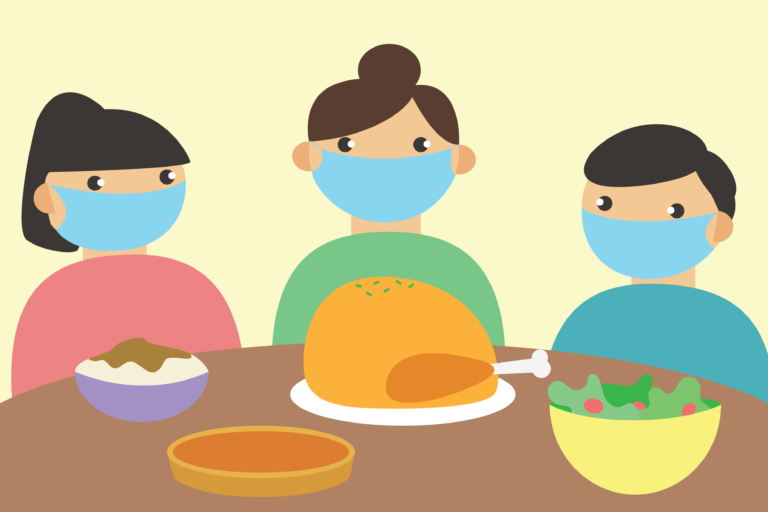
Students explore ways to celebrate Thanksgiving during the pandemic

0

Suggestions and guidelines on how to safely celebrate this holiday season can also be found at cdc.gov

For many students, Thanksgiving break typically consists of well-deserved rest from school, expressions of gratitude, family gatherings and home-cooked meals. As the 2020 holiday season approaches and county-wide restrictions change based on the fluctuating number of COVID-19 cases, UC Davis students and their families must adapt their traditions to fit county guidelines. Despite the restrictions in place, three students have found a variety of ways to celebrate Thanksgiving safely with their families.

Zoe Slipper, a third-year international relations major, is planning to have a socially-distanced, outdoor get-together with her family. In order to be safe, her at-risk family members, such as her grandparents, won’t be attending. 

“It’s definitely less-planned than usual in regards to knowing exactly how it’s going to go and who’s going to come,” Slipper said. “But at the same time, we have a lot more stress in regards to keeping each other safe.”

While she is currently living in Davis, Slipper plans to travel to her home in San Diego and stay there until New Year’s. This minimizes the amount of travel she has to undergo and lowers the risk of contracting and spreading the virus. She emphasized the importance of getting tested for COVID-19 before traveling, especially during the holidays.

“There’s definitely a greater amount of fear traveling back and forth,” Slipper said. “I’ve been hyper-aware of what I’m doing at school and who I’m seeing, and making sure that I’m getting tested before and after I travel.”

Some students’ family traditions are not significantly impacted by COVID-19. Paola Simbulan, a fourth-year design major, typically spends Thanksgiving at home, cooking with her immediate family.

“We don’t typically go outside during Thanksgiving,” Simbulan said. “We like to stay inside, listening to music while we’re cooking. We watch the parade in the morning and sometimes at night we have a fire. Just chilling the whole day with the family.”

Simbulan moved back to Southern California when lockdown measures first took effect. Upon hearing about the possibility of quarantine after Winter Quarter finals, she packed up her belongings and left Davis. Since then, she has been spending more time with her family at home. She took note of the way her family continues to make the most out of special occasions, despite the restrictions in place.

“Thanksgiving happens to land on my dad’s birthday this year,” Simbulan said. “We’re going to try to make it as special as we can during quarantine.”

Other students are utilizing the internet to bring their physically-distant family members closer together. Kory Chan, a fourth-year animal science major, usually spends Thanksgiving with his extended family. Each family would cook their own food according to a chosen theme, then they would reunite, enjoy the food and play games together.

Chan’s family decided to move their Thanksgiving celebration online this year. They still plan to prepare their own food, but instead of physically gathering together, they will deliver the food to their nearby family members. Afterwards, they plan to have a meal together over Zoom.

“It’s actually a blessing in disguise to have it all virtually, because it allows us to bring in more of our family members that don’t live here,” Chan said. “We have some in Georgia, some in Canada, a couple in Kentucky. They usually don’t meet up with us, but by having it on Zoom, we can include everybody.” 

While Chan typically enjoys his family’s in-person gatherings, he prioritizes the safety of himself and his family members.

“I know it’s the holidays and people really want to get together with their families, but it’s so important to make sure you’re doing it safely,” Chan said.

For those who are still in the process of making Thanksgiving plans, the Centers for Disease Control and Prevention (CDC) has compiled a list of tips to keep celebrations safe. Aside from the typical instructions to wear a mask, stay six feet away from those outside of your household and wash your hands, additional tips include:

  • Have a small outdoor meal with a limited number of guests.
  • Bring your own food, drinks, plates, cups and utensils.
  • Clean and disinfect frequently touched surfaces and items between use.
  • Get your flu shot before you travel.
  • Consider hosting a virtual Thanksgiving meal or playing games with people in your household.

More suggestions and guidelines on how to safely celebrate this holiday season can be found at cdc.gov. Thanksgiving guidelines for California include limiting gatherings to fewer than three households, protecting older, at-risk family members and keeping windows open for increased air circulation.
Written by: Liana Mae Atizado— features@theaggie.org

City of Davis approves 10-year plan to fix deteriorating bike paths and roads

0

$84 million plan involves no tax increases, pace of work depends on recession

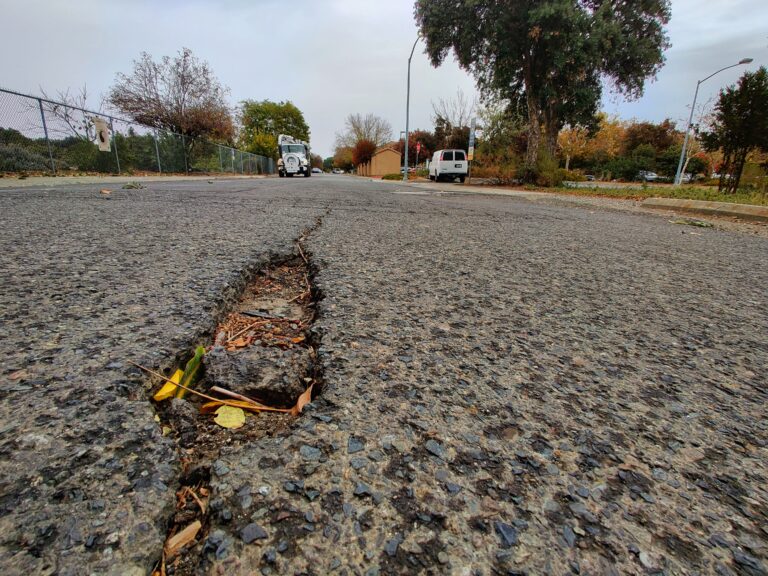
The Davis City Council has approved a plan to fix the city’s bike paths and roads. Davis roads are some of the worst in the region, with a pavement condition index of 57, lower than every city in the region and the statewide average of 65.A subcommittee formed in January by Davis Mayor Gloria Partida and Councilman Dan Carson created the plan.  

The roads are in poor shape partly because of funding issues. Whereas applying a new coat of asphalt to a road is fairly simple and inexpensive, it is much more expensive to fix roads which have deteriorated to the point of requiring reconstruction, according to Carson.

 In addition, Carson explained that Davis has a large quantity of roads and bike paths: 166 miles of roads and 52 miles of bike and shared-use paths have been identified for rehabilitation. 

“Not all local jurisdictions have the extensive network of bike paths that we do,” Carson said.

Carson explained that the subcommittee focused a great deal of attention on reducing the costs of the project.  

“The price tag we saw in January was a bit of a stunner, of $118 million over 10 years,” Carson said. “The original estimates had assumed that all bike path repair work in the city would be done using a material called portland cement. Trying to do all the work that way meant very little work got done, but the rest of the bike paths deteriorated, and as they deteriorated, the costs of their repair would go up immensely.” 

Changing the plan to use portland cement on a more targeted basis brought the total bill for the project down to $84 million. The city had already budgeted $53 million to do the work, and the subcommittee cobbled together the $31 million funding gap from various other unused areas of the budget, including $12.1 million from the General Fund, which comes mainly from sales taxes, motel taxes, property taxes and business license fees.  

The remainder of the gap will be filled with $10.1 million earmarked to offset road damage by garbage trucks, $6 million of uncommitted special funds for road and bike path rehabilitation projects and $2.8 million of uncommitted community enhancement funds.

A city of Davis staff report explains that although the road reconstruction project exceeded its budget, it won’t have adverse long-term effects on other city programs. 

“No currently budgeted program or infrastructure project would lose funding because of the adoption of this plan,” the staff report reads. “The ramp-up of road and bike path rehabilitation work would still allow other important transportation infrastructure and repair projects to proceed, although this reprioritization of funding could slow the funding of new programs or projects.”

A key part of funding the new project comes from increasing economic development in Davis, although a large amount of the funds are already available. To some extent, the pace of the project depends on when the current recession ends. The budgeting constraints of the project add “real accountability and transparency” to the project, as the city budget and finance commission will be monitoring its progress, according to Carson.  

“We’ve put together a plan that will put the city of Davis on the right track to significantly improve the condition of our roads and bike paths,” Carson said. “It won’t happen overnight, but this plan allows for steady progress to meet the goals of the city council.”

When informed about the poor condition of the roads in Davis, Jeffrey Nichols, a UC Davis third-year mathematics PhD student, expressed surprise.  

“Davis roads, from a cyclist perspective, definitely seem above average, having lived in Texas and Colorado before California,” Nichols said.  

Nichols stated that the cyclist culture in Davis is one thing that does not need to be fixed.  

“It’s important to maintain the roads; that’s obviously necessary, but whatever it is that Davis did to create this bike-friendly culture, they definitely need to make sure that it keeps happening,” Nichols said. “It’s awesome.”  
Written by: Rachel Shey — city@theaggie.org

Happy Thanksgiving from the Editorial Board

Aggie editors reflect on what they’re thankful for

Anjini Venugopal, Editor-in-Chief

This Thanksgiving, I am grateful to the people who have taught and supported me—and I am not exclusively referring to instructors. I am immensely thankful for the professors and teachers I have had over my years of education, but there are so many other people who have left me with nuggets of wisdom. My mom (a wonderful preschool teacher herself!) and my dad (who is always available to FaceTime and share his knowledge on countless topics) have always supported my endeavors and taught me by example. I know the value of staying informed—listening to NPR is a daily necessity—and I strive to be a compassionate person. My older sister lives across the country now but continues to provide me fashion advice, cover letter editing services and a listening ear. Being part of this incredible Editorial Board is an honor, and my fellow editors, who I am lucky enough to call friends, consistently provide new insights and perspectives that spark thought-provoking conversations (and often a healthy amount of anger or laughter). I am beyond grateful to all the staffers at The Aggie for their hard work, adapting to the unprecedented circumstances and producing work that serves to inform our community. It’s not easy to be a student right now and it’s not easy to be a student journalist, but we are doing valuable work and I am proud of all we’ve done over the past quarter. And to my friends from home: thanks for finding the meaning in my drawn out anecdotes, for your words of wisdom, for the masked and socially distanced walks over the summer and for your patience when I forget to hit send on my texts.

Margo Rosenbaum, Managing Editor

This Thanksgiving I am thankful for being healthy and able to keep doing what I love: exploring nature. I attribute my love of the outdoors to my childhood spent hiking and camping with my family and dogs. After every hike, horseback ride, camping trip, dog walk, bike ride or road trip, I find a new appreciation for the natural world around me. Escaping to the outdoors has always been a way for me to find peace. Ever since I was a young kid, I’ve felt deeply connected to animals and dedicated to protecting their homes. I thank my family for teaching me to appreciate nature and my boyfriend, Ben, and best friend, Kylie, for continuing to explore it with me. I’m thankful for writing as a way to reach others and express my thoughts about science and nature. Now more than ever, I understand that we need to protect our natural lands before it’s too late. A great start is recognizing how much we can learn about respecting and preserving nature from Indigenous people. It’s time to honor the knowledge and history of Indigenous peoples if individuals like me want to keep exploring the natural wonders this country has to offer. I thank any like-minded environmental steward who believes in science and recognizes the impending doom of our planet. It’s up to us to ensure future generations have the opportunity to spend time outdoors just like we can today. 

Sabrina Habchi, Campus News Editor

When asked about the place I am most thankful for, I can answer without hesitation: Davis, California. I’m absolutely convinced there’s some kind of magic in the universe or something in the distasteful water of this sweet little cowtown that attracts the most kindhearted, compassionate, intelligent, fun-loving people who can make me laugh until I cry with just one well-placed joke (honestly, one poorly placed vowel). It gave me my beautiful best friend, Katie, who is the person I would call at 4 a.m. in an emergency, the one I most want to talk to after a bad day and who I think of when I think of home—which is why it is incredibly fortunate that we grew up just 15 minutes apart in the same city. As if Katie herself is not enough, she has also brought people into my life that I am so blessed to know (Mary, if you’re reading this, I am your #1 fan). I would be utterly lost without you Doyle, and I cannot wait to see you so soon. Not only was I lucky enough to meet Katie here, but I have also met my other future bridesmaids, my wonderful colleagues on the Editorial Board who I am fortunate enough to call friends and my phenomenal professors who have shown tremendous kindness while constantly pushing me toward my best. Davis, thank you for the legendary Farmers Market, for coffees from Mishka’s, for Arboretum runs and below-freezing nights and beautifully colored trees—for giving me the people who make 10 hours feel like 10 minutes. I am eternally grateful.

Eden Winniford, City News Editor

I’m thankful for the people in my life who I can always count on to cheer me up. Even when I get overwhelmed with schoolwork or it feels like the world is ending, calling my family always helps me to destress and puts a smile on my face. I can’t wait to see and hug them all again once it’s safe. Watching dumb reality TV with my housemates and decorating for Christmas together gives me the sense of community I need, especially since I can’t see my family much this holiday season. Last weekend, we even dressed head-to-toe in flannel and took awkward “family” pictures together to print out and send to our real families. Meetings with the other editors are always a highlight of my day as we almost cry with laughter and keep a running list of inside jokes. And finally, I’m thankful for my boyfriend for always making me smile—whether it’s by cooking me chicken parmesan, playing co-op video games together like it’s a part-time job or staying up all night and getting donuts at 5 a.m. I appreciate them all so much, and I’m thankful everyday that I’m lucky enough to know and love them. 

Calvin Coffee, Opinion Editor

What am I thankful for in 2020? I’m thankful that Donald Trump will be a one-term president and that Joe Biden and Kamala Harris beat him with the most progressive presidential platform in history. Knowing that our country will be run by adults again is something I very much look forward to. As always, the support of my friends and family has been unrivaled throughout a particularly challenging year––I am thankful for them always. I’m especially thankful for everyone who has worked to fight COVID-19 and the many who protected us from wildfires this year. Also, and I find myself very grateful for those who have continued to entertain me throughout this isolated year, so thank you to all of the writers, podcasters, musicians, content creators, athletes and many others who have stopped me from going insane while we fight this pandemic. But more than anything I’m thankful to everyone who continues to follow all of the COVID-19 health and safety protocols––let’s keep it up.

Sophie Dewees, Features Editor

When I think of home, I think of playing guitar with my dad. Music has always been a significant part of my life, whether I was listening to Simon & Garfunkel or Steely Dan on road trips with my family, attending choir rehearsals starting in fourth grade or overhearing my dad play “Never Going Back Again” by Fleetwood Mac on guitar. I first picked up a guitar about five years ago and spent at least half an hour alternating between strumming two basic chords. Since then, my dad has taught me countless songs, fingerpicking and more. Though Thanksgiving will look different for many this year and everything feels uncertain, it can be helpful to remember the little moments and people that remind you of home. For me, I’ll be forever grateful for my parents for fostering my love of music and my dad for always being available for an impromptu jam session. 

Allie Bailey, Arts & Culture Editor

When the pandemic hit, I was expecting to have a terrible year. A few months in, though, I was proven wrong—2020 has given me more to be grateful for than any year of my life. In March, I found my person. I connected with someone in a way I didn’t think 2020 could possibly allow me to; if anything, quarantining expedited the process, and I couldn’t be more grateful to have had this time. She is my Marvel movie marathon buddy, New York Times Mini Crossword competitor, co-chef, support system and a never-ending source of laughter. In August, I moved into a big house with lots of character and the best roommates. Living in a bubble with the six of them has been loud and messy, but so much fun. Card games and a good movie is now my idea of a party, and they have become family. In October, a month after starting my role as Arts Editor, I established real relationships with my fellow editorial board members. The thought of meeting four times a week was burdensome when I began; now, I wish I could see them daily. This group of people has been a source of light and inspiration on even the hardest days, sometimes in ways I can’t find anywhere else. I frequently laugh so hard I need to turn off my camera and their talents constantly push me as a writer and as an editor. I have found a new community at The Aggie, a privilege I am well aware of as most of us are stuck without our usual social connections. I feel extremely fortunate to have been surrounded by so many good people this year. 

Omar Navarro, Sports Editor

This Thanksgiving, there’s nothing I’m more thankful for than still being here. In a year that has been filled with so much uncertainty, I am thankful for the health and safety of the people that I love and care about. With so much happening on a global scale and in my own life, I feel like just sitting down and acknowledging who and what I’m thankful for has been a ridiculously hard process. I’m thankful for my mom, my sister and those close to me who continue to support me through everything. I myself understand that I am not an easy person to deal with, but them sticking with me and helping me in my process means more than they’ll ever know. I’m thankful for everyone I have gotten to talk to in the Editorial Board, as they have become a big part of my college experience. It’s easy to go through the motions and take it for granted, but I feel like this year has been the most obvious to realize how even the smallest things can be taken away. Something like sports just disappearing for four months had a big impact in my life, as it was basically all I did or watched. I know that sounds weird, but I didn’t realize how important it was in my life, because I just thought it was always going to be there. I’m thankful that they are back, and that for those few hours I can get my mind off things, watch my favorite athletes play and interact with others online, talking about the things I love. This has been the toughest year for many worldwide, including myself. There’s so much more I can list, but I will make sure to acknowledge them and never take them for granted again. 

Madeleine Payne, Science Editor

In my family, there’s nothing we love more than good food. My grandma—the “cooking queen”—is always eager to help with any tricky recipes or offer any kitchen advice. At her house, where my extended family normally congregates for the holidays, her Tivo recordings are almost all cooking shows, from Alton Brown to Jacques Pépin, and she has one full bookcase dedicated to her cookbook collection, which includes an old binder with newspaper recipes she used while raising her three daughters in the 1970’s. She is best known in our family for her celebratory meals, like her famous cioppino for Christmas dinner and bûche de noël for dessert, but for me, her most memorable meals are often unexpected; during a particularly rough week for my family last winter, she kept us all fed with a constant supply of lentil soup and my favorite, scalloped potatoes. Though the pandemic is keeping much of our family at a distance this year, I am especially grateful for how my grandma created those memories centered around food and family, and I’m looking forward to the day we can all come together again over a home-cooked holiday meal.

Written by: The Editorial Board

Yolo County Food Bank distributed 1,000,000 pounds of food in October, holiday season could increase need

0

With fewer government support programs available, Yolo County food donation programs expand service

Similarly to how COVID-19 has affected many things this year, the pandemic and the upcoming holiday season will impact the operations of the Yolo County Food Bank.

Yolo County Public Information Officer Jenny Tan noted the likelihood that the upcoming holiday season would lead to gatherings of people despite the threat of COVID-19.

“We definitely know that people are going to gather,” Tan said. “We’re trying to impress upon people how they can gather safely and that ultimately, the best thing that they can do is to actually not gather at all.”

Tan also discussed the most recent Yolo County press release, which allows outdoor gatherings of no more than three households with up to 16 people for two hours or less.

For nonprofit organizations such as the Short Term Emergency Aid Committee (STEAC), the upcoming holiday season could lead to an increase in the demand for services.

STEAC Executive Director Liane Moody expressed her concern that the upcoming holiday season could lead to an increase in need from the community. Early in the pandemic, Moody explained how more government support programs were available such as stimulus checks, unemployment payments and eviction moratoriums, but now those programs are coming to an end. 

“We have already seen a huge increase in the number of people who are facing financial difficulty,” Moody said. “We expect that to continue and to get difficult throughout the holiday and then as long as the situation persists.”

Yolo Food Bank Director of Philanthropic Engagement Joy Cohan reflected on how the COVID-19 pandemic more than doubled the organization’s activities.

“We have experienced a massive increase in demand for our services,” Cohan said. “We are both collecting and distributing 2 ½ times more food than we were pre-pandemic.”

Cohan further explained that Yolo Food Bank has served approximately 60,000 Yolo County residents monthly. The organization has also been regularly distributing between 800,000 to 900,000 pounds of food each month and exceeded that amount in October with 1,000,000 pounds of food. 

Tan expressed concern that the upcoming cold season could lead to an increase in COVID-19 cases. 

“People just tend to get more sick in the winter normally,” Tan said. “With the introduction of COVID this year, it definitely adds another layer of something else that people can get or can suffer from.”

Tan suggested alternative ways for folks to celebrate the holiday season in order to avoid in-person gatherings as much as possible, such as hosting virtual potluck dinners, dropping off gift baskets, having virtual ugly sweater contests and participating in online arts and crafts classes. 

Moody explained how STEAC adapted when the COVID-19 pandemic hit in order to better meet the needs of the community. 

“STEAC is working hard to modify our programs to meet the needs of working in a pandemic, as well as to meet the growing needs of families who are facing the financial fallout of the pandemic,” Moody said. “The more that we get in donations, the less we have to purchase in order to serve low-income residents in Davis.”

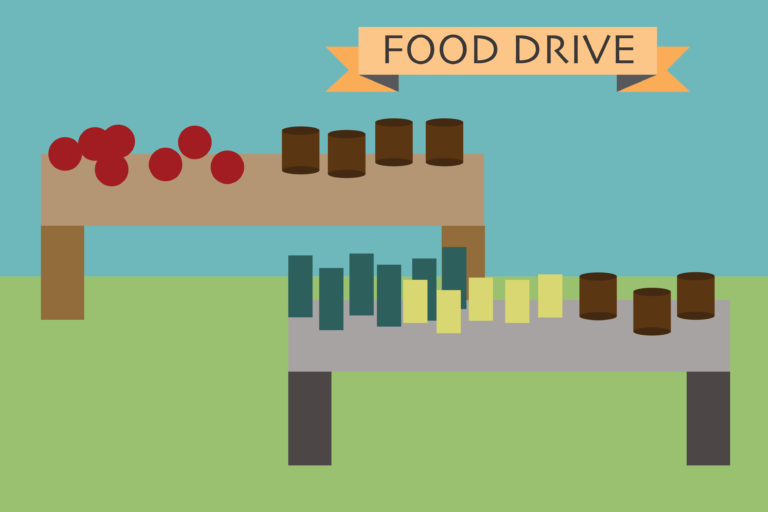
Moody explained how the Davis Realtors’ Food Drive on Nov. 7 is one of the biggest events for STEAC. Its goal is to provide food donations to support the local food closet in Davis, “which provides food to approximately 100-150 families every month,” according to Moody. The food each family receives would include items regularly bought during a routine grocery visit, such as milk, meats and shelf-stable foods.

Cohan reflected on the importance of organizations like Yolo Food Bank during the pandemic. 

“We’re really a place where individuals can count on there being justice,” Cohan said. “We look at the services we provide in terms of much more than just food and solving hunger.”

Moody added a final comment regarding support for the organization. 

“We can use any support that people have in order to help their neighbors during a really difficult time,” Moody said. “We’re so grateful for the support we’ve gotten already.”

Tan further urged for the community to have patience in the fight against COVID-19.

“We understand that people want to have a sense of normalcy, but the reality is that COVID is going to be with us for at least a little while longer,” Tan said. “To really protect our communities, our families and our loved ones, we still need to stay vigilant in our efforts to mitigate COVID.”Written By: Jelena Lapuz — city@theaggie.org

UC Davis Children’s Hospital successfully separates conjoined twins in rare case

Team of over 100 health experts collaborate on first surgery of this kind at UC Davis

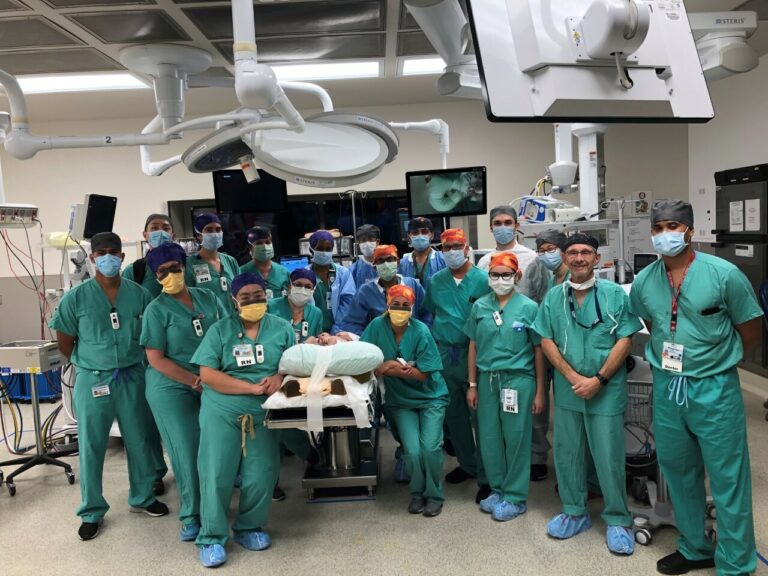
After a 24-hour surgery on Oct. 24 and 25 at UC Davis Children’s Hospital, nine-month-olds Abigail Bachinskiy and Micaela Bachinskiy went from being attached at the head to beginning their lives as two individual babies. When Granger Wong, the chief of plastic surgery at UC Davis Health, first heard there were craniopagus twins—conjoined twins fused at the head—born at UC Davis Medical Center, his mind was flooded with tempered excitement and concern for the twins.

“You have to balance the human side of it, because these are little babies and you don’t want little babies to have birth defects,” Wong said. “But then on the other hand, that’s what we’re trained to do and to treat, and this is a very rare and highly complex case, so from that aspect it’s fascinating.”

Although the twins were born on Dec. 30, 2019, Wong, who served as the lead plastic surgeon of this case, and the rest of the operating team needed to wait until the babies were strong enough to tolerate the operation to separate them. Wong explained that their extensive planning and use of up-to-date technology over the course of 10 months allowed the team to familiarize themselves with the anatomy of the twins and practice the surgical plan before the operation day.

“The surgical plan was practiced and choreographed to the point where […] you train for it so much that although you have a lot of concerns, it was a familiar execution,” Wong said. “It wasn’t quite as nerve wracking as one might think.”

Wong described the process as similar to how film directors created storyboards for each scene. UC Davis Health experts drew out their surgery plan on a whiteboard, planning every step down to the minute. The entire team—anesthesiologists, operating room nurses and scrub technicians included—rehearsed the operation three times, helping to mitigate any nervousness for the day of surgery. 

Rajvinder Dhamrait, the medical director of the children’s surgery center and the lead anesthesiologist of the operation, added that the procedures they had to conduct prior to the surgery also helped them become more familiar with the twins’ anatomy. Leading up to the day of surgery, the twins had to be anesthetized several times, an unusual case considering other types of conjoined twins usually only have to be anesthetized once. 

For Abigail and Micaela, multiple MRI scans had to be taken as they grew in order to model the growth of bones and vascular structures. In addition to learning valuable information—such as how each baby responded to drugs—with each scan, the anesthesiology team was able to practice moving the babies while they were situated in certain positions to mitigate any potential dangers during the operation. As the same anesthesiology team treated the twins over the course of 10 months, Dhamrait expressed they feel as though they have grown up with them.

“It’s very personal because we have bonded with the family and we’ve bonded with the girls, so it is pretty special to look after them,” Dhamrait said.  

Dhamrait still remembers his first conjoined twin case 16 years ago as a fellow at Great Ormond Street Hospital in London. He explained that he had specifically chosen this hospital because he had wanted to work somewhere that was capable of hosting such a surgery, but never imagined he would have the opportunity to be involved. In his entire 12 years of training, Dhamrait explained that the surgery was the best opportunity he had come across. Once he came to UC Davis and took over as the medical director of the unit, he specifically asked for an operating room large enough to conduct a conjoined twin separation.

“I never, honestly, never thought it would ever happen,” Dhamrait said. “For it to happen within two years of opening, it was just mind blowing.”

As stated in a paper published in 2019 detailing another craniopagus separation, “the craniopagus variant of conjoined twins is a rare congenital defect that occurs in 0.6 of every 1 million births.” 

Dhamrait explained that what made this case special was the fact that the rarest form of conjoined twins was UC Davis’ first ever separation. In addition, for most craniopagus twins, since their brains are merged together, it is impossible to separate them. These particular twins were joined in a way where their anatomy was conducive to separation. Dhamrait described the successful operation as one of the proudest moments in his 10 years of being the medical director, and attributed their success to the combined effort of surgeons, anesthesiologists and nurses.

“Now I can say, ‘I work in a hospital; I work in a health system that can cover this kind of case,’ which is something that we all have to be proud of,” Dhamrait said.

In a general sense, this success demonstrates the skill of clinicians at UC Davis Children’s Hospital in being able to take on highly complex cases, Dhamrait explained. He described that it is not often they can serve as a model for other centers from which to learn. More than that, this case also shows that those in the local community do not have to travel to other hospitals to receive this treatment, but can rely on UC Davis Health to treat them.

Five or ten years ago, Dhamrait could never have imagined conducting such a surgery at the Children’s Hospital. Yet, the consistent implementation of new facilities and faculty have allowed UC Davis Health to develop into a more accomplished institution. Wong argued the technology available to them today allowed them to understand more about the normalities and abnormalities of nature. 

“Nature is wondrous in all the things that it does right.” Wong said. “But sometimes there’s a glitch in formation and it results in something like these conjoined twins. It’s fortunate that in these times that we have the technology and the expertise to correct some of the glitches in nature to then result in two healthy divided separate baby girls.”
Written by: Michelle Wong —science@theaggie.org

Culture Corner

The Arts Desk’s weekly pick of movies, tv shows, books and music

Book: “On the Road” by Jack Kerouac 

Some books have a remarkable way of transcending time, and Jack Kerouac’s “On the Road” is without a doubt one of them. Throughout the novel, Kerouac recalls his adventures across the states from New York City to San Francisco, back to New York and everywhere in between. Indicative of the post-war beat generation, the story reads like one giant paragraph—at least in the original scroll edition I’ve read (the first draft, not the 1957 edition). Yet somehow Kerouac is able to keep the reader’s attention across hundreds of pages, without losing their place in the story because of the raw and unconventional style that is maintained throughout. The book has fictitious elements but is based on real events and people like Allen Ginsberg and Neal Cassady, other beat generation writers who were friends of Kerouac. Essentially, the reader becomes immersed in the mind of the author, following his stream of consciousness without any sort of filter. If you’re like me and know nothing about the beat generation: It’s nothing of what you would expect from a 1950s story, and that’s just one piece of many that make up the beauty of it. 

Movie: “Donnie Darko” (2001), dir. by Richard Kelly 

The phrase “28 days, 6 hours, 42 minutes, 12 seconds. That is when the world will end.” has been played over and over again now—19 years since the initial release of “Donnie Darko.” Remarkably, the movie was actually filmed in 28 days to match the timeframe of the script in which Donnie (Jake Gyllenhaal), a troubled schizophrenic teenager, must navigate mental illness and potentially a parallel universe in which a demonic-looking bunny named Frank gives him the countdown to doomsday. Full disclosure: there is a lot to unpack in this film and it requires undivided attention. But it is absolutely worth every bit of it, and if you’re at all like me, you’ll watch it again and again to unpack the layers of meaning the film possesses. 

Album: “Ok Computer” by Radiohead

To this day I’m convinced that Thom Yorke is an alien of sorts—his songs have a sound that is just out of this world. Plenty of artists lose it with age but, like good scotch, Radiohead’s work just keeps getting better as time goes on. Their third album, “Ok Computer,” released in 1997, is a 12-track journey with a sound completely beyond its time. It’s filled with lyrics that warn against consumerism, alienation, isolation, political unrest and the reach of technology. Track seven, “Fitter Happier,” sort of checks the listener to make sure they’re not just taking note of the overall sound, but to pay special attention to the grim, yet beautiful lyrics that are packed to the brim with imagery. Whether you know the band or not, songs like “Creep” and “Karma Police” are recognizable melodies to most. For the audiophiles in search of their next favorite or rediscovered album, look no further. 

TV Show: “Twin Peaks” 

Alright, this one is for the David Lynch fans out there. The 1990’s series’ first season begins with the aftermath of Laura Palmer’s murder, a Twin Peaks local girl whose death sets the framework for the series’ plot. Special Agent Dale Cooper from the FBI is brought in to assist the Twin Peaks Sheriff Department in their investigation, which slowly unravels peculiarities of the small town throughout the initial season. The follow-up season deviates heavily from this, diving more into the sci-fi aspects of Lynch’s universe than those of the simpleton, small-town, warm nostalgia of the 80’s that the town of Twin Peaks passes onto Agent Cooper. However dense and fantastical the plot becomes, coffee is one thing that seems to stand-in for a placeholder in both the audience and cast alike. “A damn-fine cup of coffee” drives the characters in this strange and unsettling world, and that alone is curiously relatable. 
Written by: Cameron Perry — arts@theaggie.org

Armchair Psychologists Association fails to take off on-campus

When it comes to the mental health of others, don’t be an armchair psychologist

Second-year Bonnie Devlin and third-year Ayden Herman have banded together to create the Armchair Psychologists Association on campus. The association gives advice and mediates relationships for free. Together, Devlin and Herman have one and a half classes worth of psychology experience, in addition to the one crash course video Herman watched on YouTube.

“My psychology professor told me it was a terrible idea to give out therapy without a license … and less than half of a psychology class taken,” Devlin said. “What does he know? I’m going to give people advice based on what I know, and that is something you can’t learn from any class.”

When Devlin noticed that the relationship between housemates Yasmin Nolan and Cara Lee turned sour, she decided to step in.

“First of all, honesty is really important in opening the lines of communication, so I’d like you to rate each as housemates with brutal honesty,” Devlin said. Noticing the hesitant reactions of her clients, Devlin gestures to Herman. “For example, as co-founder of our association I rate Ayden a two, because his inability to help himself makes him overproject while helping others.”

Herman swivels in his armchair to face Devlin. 

“And I would also rate Bonnie a two, because I think she’s deflecting because of her failed midterm in psychology and general fear of failure into a pursuit her psychology professor told her was terrible,” Herman said. “According to the YouTube video I watched, I think your position as the middle child in your family has solidified a constant need of approval.”

“Well, I sense that your aggression and the way you cling onto the fact that you know more than me is really telling of a God Complex,” Devlin said, with a sympathetic smile. “I’m not saying you’re a narcissist, but if I had to make a diagnosis …”

Standing up from his armchair, Herman flips Devlin off before leaving the room, amid a stunned Nolan and Lee.

“That is why honesty is so important,” Devlin said, eyes wide and nodding. “If we never rated each other honestly, I would still be partners with a narcissist.”

“Okay, well I guess I would rate Yasmin an eight,” Lee said. “She is such a great housemate, but lately she’s become so withdrawn and I can’t help her if I don’t know what’s wrong.”

“The truth is that my mental health has been struggling lately due to the pandemic,” Nolan said. “I read in the Washington Post that pandemic depression may also collide with seasonal depression. I’m afraid my mental health will worsen, and I don’t know what to do.”

“Thank you for confiding in me,” Nolan said. “I’ll do whatever I can to support you. Maybe we can start by setting up an appointment with a therapist?”

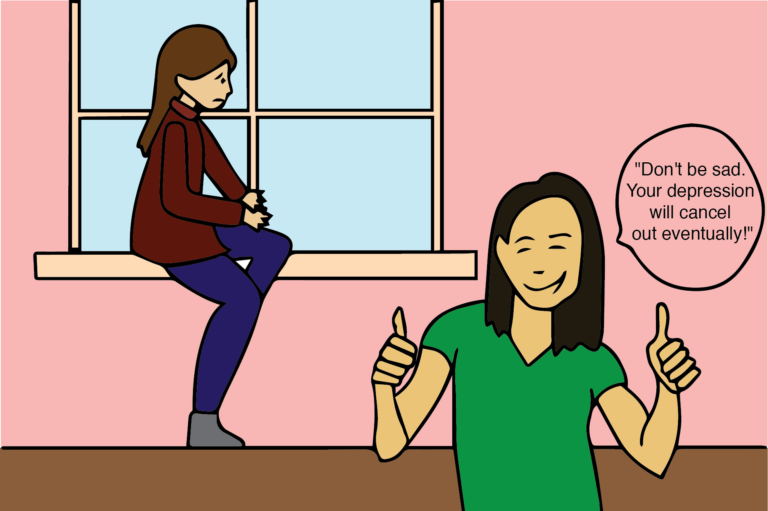
“I don’t know, I disagree with the experts. I think the ‘depressions’,” Devlin said in air quotes, “will eventually cancel out.”

With a shrug, Devlin stands up from her armchair. “Do you guys think you could sign this form so I can show my psych professor that my help as an armchair psychologist was helpful?”

Written By: Renee Wang –– reswang@ucdavis.edu 

(This article is humor and/or satire, and it’s content is purely fictional. The story and or names of “sources” are fictionalized.)

Environmental voters were crucial to Biden’s victory

Historically, the environment has taken a back seat to many other issues in national politics, but 2020 has not been an ordinary year

The election. It’s what everyone’s been talking about for the past month. People have been talking about President Donald Trump, President-elect Joe Biden, congressional seats, local seats and everything in between. Voting is a fundamental tenet of our democracy and Trump’s recent attacks on it have rightfully shaken the core of the nation. The administration’s various lawsuits and baseless claims of widespread voter fraud are a thinly veiled distraction from a last attempt to push through a wide variety of policies as quickly as possible. These last efforts of a dying administration include 24 environmental rollbacks in addition to the 84 completed dismantlements of fundamental environmental protections. These federal regulations range from legislation on toxic substances and pollution to federal climate change policy. The Trump administration has repeatedly shown a blatant disregard for environmental health––and in turn, human life. 

 Historically, the environment has not been a hot button issue for voters. According to data from the Environmental Voter Project (EVP), about 50% of voters who identified as environmentalists did not vote in the 2016 election. It is easy for many voters to forget about environmental issues if they are not directly impacting their daily lives, like the enormous wildfires that have rocked our state the past few years. Although environmental issues affect everyone, they have a disproportionate effect on Black, Indigenous and people of color (BIPOC) communities. It is imperative that the government pursue policies of environmental protection, not just to protect wildlife, but public health as well.

“In every state that the Environmental Voter Project works in, we find that young people are more likely than older people to care deeply about climate and the environment, […] women are more likely than men and people of color, especially African Americans and Asian Americans in Pennsylvania, are more likely than white people to talk about climate and environment as their top priority,” said Nathaniel Stinnett, the executive director of the EVP, in an interview with WHYY earlier this month.

So what about this year? The answer is complicated. Firstly, there were many significant environmental victories. From an initiative in Orange County, Fla., which legally designated clean water as a human right, to proposition 114 in Colorado, which ensured the development of a reintroduction plan for gray wolves. In Pennsylvania alone, first time environmental voters accounted for 54,000 votes, where Biden won by a margin of roughly the same number. 

Although not all environmental voters voted for Biden, their contribution to the record voter turnout this year is undeniable. In Arizona, there was a resounding effort by the Protect the Sacred and the Rural Utah Project to get Navajo voters out to vote. In a state that was decided by less than 12,000 votes, strong support for Biden by community leaders was a factor in flipping the state. Allie Young, a Diné activist, cited climate change as one of the major issues that contributed to her community’s turnout.

Despite these victories, there is always more work to be done. We have a long way to go. Attacks on environmental legislation did not start with Trump and will not end with him. The fight for comprehensive climate and environmental legislation does not end with its enactment, but it is our responsibility to hold our leaders accountable to enforce and protect keystone environmental legislation, like the National Environmental Policy Act (NEPA) which has been attacked several times by the Trump administration. 

Just because the election is over, doesn’t mean civic engagement can turn off until the next cycle. The League of Conservation Voters is a great resource to learn about any politician’s environmental voting records; the organization keeps pressure on federal and state governments to enact stronger environmental legislation. Additionally, the Environmental Voter Project works to increase environmentalist voter turnout and to pressure politicians to prioritize environmental interests. The bottom line is that the fight for environmental justice, public lands and comprehensive climate policy begin with you and me. The decisions and policies implemented by our government today will have a lasting impact on generations to come. 

Written by: Joe Sweeney –– jmsweeney@ucdavis.edu
Disclaimer: The views and opinions expressed by individual columnists belong to the columnists alone and do not necessarily indicate the views and opinions held by The California Aggie.

The Community Advising Network, AB540 and Undocumented Student Center lend support to marginalized communities in crisis

0

Mental health workers and advocates for marginalized groups provide insight into the unique struggles community members face

Many have struggled with stress related to the continued effects of the virus and the recent election. According to Liliana Campos—a health psychology doctoral intern for the Student Health and Counseling Services (SHCS) who partners with the AB540 and Undocumented Student Center—for some marginalized groups, the effects have been especially burdensome.

“I think [with] the presidential election, [the undocumented community is] among the most marginalized communities that would have been affected, that are affected,” Campos said. “And I think that in the conversations of whether it be a vaccine, whether it be financial support for communities, these are communities that are still left out of the conversation.”

Michelle Burt, the director of multicultural services for the Community Advising Network (CAN), said that it can be difficult to know how to seek support as a member of a marginalized community.

“Students’ experiences navigating stress related to managing [the] impact of COVID, racial injustice, economic and political uncertainty can lead anyone to feel isolated and overwhelmed,” Burt said via email. “It can be challenging for students to know how and where to get help.” 

Marian Ashley Fecha, a second-year economics major and mental health and cultural identity advocate for the UC Davis AB540 and Undocumented Student Center, mentioned some of the ways the center is helping to fulfill basic needs for the undocumented community.  

“So far, we have hosted support group workshops with our mental health partners, provided bedding (applications are still out for some), emergency grants, food vouchers, and are currently working on sharing other resources with the community with the hopes that they will feel less burdened,” Fecha said.

According to Laura Bohórquez García, the director of the AB540 and Undoumented Student Center, the center offers beneficial resources alongside community interaction.

“Opportunities to be in and create [a] community and access to emergency grants are two of the biggest strengths that the Center is currently providing,” García said.

With the grant, students can receive up to $500 that can be put toward basic needs and expenses brought on by the burdens that COVID-19 may have caused for them and their families. 

A new support group provided by the AB540 and Undoumented Student Center, called ‘Together We Rise,’ meets every first and third Monday of the month from 1-2 p.m., and allows undocumented students to meet with the center’s mental health partners to discuss their experiences together.

Fecha said that her role as a mental health advocate for CAN has been enriched by the conversations she’s had with underserved communities.    

“My own experience as an Asian femme immigrant within the LGBTQIA+ spectrum does allow me to have perspective and empathy, however, it was having those tough conversations and listening to the stories of those similar and those very different to me that allows me to be sensitive,” Fecha said. “Understanding burnout, intergenerational trauma, financial stressors, the myth that is the American Dream.”

Campos noted that she’s seen an attitude that is unique to those in the undocumented community since the beginning of the virus outbreak.  

“So much about the community that I connect with […] is that there’s this sense of hope, no matter how bad things are,” Campos said. “And I really do think that this is super unique to this community, as many of them have lived their entire lives under chronic stress and under chronic uncertainty.”

She mentioned that although the undocumented community may handle the stressors well, fundamental social and political atmospheres need to change in order to move past the marginalization to which they have been subject. 

“I think the community is so incredibly resilient,” Campos said. “And at the same time, we need to change the environment so that they can continue to thrive. […] We can’t keep doing the same type of mental health work without actually changing the social conditions and the political conditions.”


Written by: Lyra Farrell — features@theaggie.org