55.9 F
Davis

Davis, California

Tuesday, December 23, 2025
Home Blog Page 305

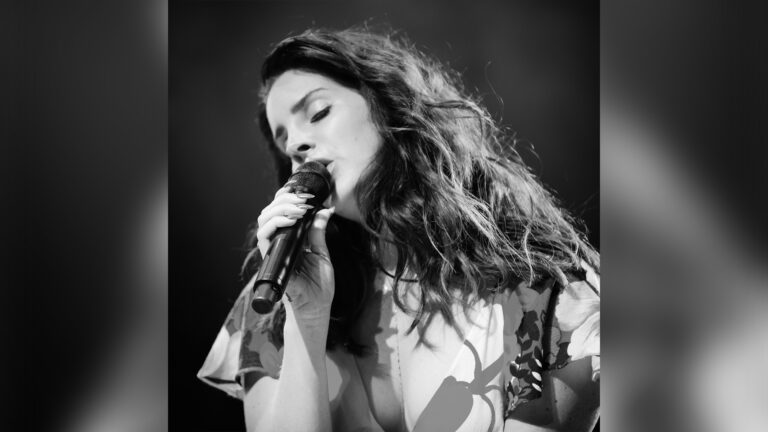
Lana Del Rey is the epitome of a ‘sad girl’

Scandals, daddies and love songs define Lana Del Rey’s image, but make it hard to support both the controversial artist and her art

To her fans, Lana Del Rey used to be a maiden of mystery—the personification of cigarette buds, drugs, long nails and an affinity for singing about older men. From claiming to find validation in her sexuality as a woman to wearing mesh masks in public, she is a New York vixen turned California “valley girl.”

Del Rey’s work began long before her critically acclaimed album “Born To Die.” In 2007, Del Rey released her debut EP “Kill Kill” with 5 Points Records under the name Lizzy Grant, which is a homage to her actual legal name of Elizabeth Wooldrige Grant. 2010 saw the release of her self-titled album “Lana Del Rey,” which garnered little attention and was ultimately shelved by her record label.

The woman who ditched her dark brunette locks for the California blonde highlights and an unofficial gay icon—this music artist garnered infamy during a “botched” SNL performance on January 14, 2012, right before the release of “Born to Die” (2012), which is ranked No. 435 in the overall greatest album chart with a total rank score of 4,508.

Del Rey has released six studio albums, 35 singles and 11 promotional singles. Her most popular and celebrated albums are “Born To Die” (2012), “Ultraviolence” (2014), “Honeymoon” (2015), “Lust for Life” (2017), and “Norman F****** Rockwell!” (2019), overall getting her 5 Grammy nominations. 

Her music speaks to identities her fans never knew they occupied. She is a lyricist that creates atypical love stories, a singer who makes the universe feel smaller than it is. Feelings of unrequited love, ache for freedom and need for constant change color each of her albums.

In “Born To Die,” the ballad “Ride” personifies the struggle of wanting to be free and  untethered, while also not wanting to be alone. As she so ironically says, “Been trying’ hard not to get into trouble/But I, I’ve got a war in my mind… so I just ride.”

Throughout the album, there is this struggle between wanting to be loved and accepted for her authentic self while also defining herself in terms of stereotypes of drugs and alcohol, being “daddy’s girl” and being pursued by older men. 

Her 2014 album “Ultraviolence” transports the reader back to the 1960s and 1970s with its dream pop and psychedelic rock elements. Songs like “West Coast,” “Cruel World” and  “Florida Kilos” make the reader feel as if they are in an intoxicating relationship filled with dangerous love, cocaine and chaos. 

Her sardonic songs “Sad Girl” and “Pretty When You Cry” are reminiscent of being in stereotypical relationships in which you’re always being let down, undervalued and made to feel like a side piece. In her bluesy song, “Sad Girl,” Del Rey shows that with lyrics “His money on the side, money on the side/Makes me so sad, girl.” 

“Honeymoon,” her fifth studio album is ironically named even though it is concoction of 

dark, gothic themes and submission to the one you love. In the song “Religion,” Del Rey creates a soundscape in which the person she loves is her “religion/You’re how I’m living.” Similar to some people’s experience with organized religion, the people we become romantically involved with can take over all aspects of our lives. 

In her fifth studio album, “Lust for Life,” Del Rey creates a light, airy feeling of hope that is solidified by songs such as “Get Free” and “Change.” With less focus on love stories, the 16-track album includes a myriad of experiences, from heart-ache, drugs and self-actualization of one’s inner saboteur to this need to change and wait for a “tomorrow never came.”  

This was also her first major album to have guest appearances—Sean Lennon, Stevie Nicks, Playboi Carti, ASAP Rocky and The Weeknd are all featured.

In regards to her sixth studio album “Norman F****** Rockwell!” (NFR!) produced by Jack Antonoff and Del Rey, there is an emergence of a new side of the singer. 

Arguably her most politically and socially aware album, Del Rey sings about the state of the world with her song “The greatest” in which she professes “Hawaii just missed that fireball/L.A. is in flames, it’s getting hot.” The Hawaii lyric referenced the Jan. 13, 2019 missile threat scare in which Hawaii residents woke up to an emergency alert on their phones saying “THIS IS NOT A DRILL.” Del Rey even comments on the climate crisis with her reference to the 2019 California wildfires. 

The seventh track on the album is “Cinnamon Girl,”which is a warm embrace on an ice-cold night. There’s this comfort in the universal feeling of wanting to love someone who might not be good for us, but still makes us happy, that is captured when Del Rey says “There’s things I wanna say to you, but I’ll just let you leave/Like if you hold me without hurting me/You’ll be the first who ever did.” 

Throughout the album Del Rey captures the unstable feelings of many millennials and Gen Z’ers. Happiness is fleeting, the world feels like it’s burning and going to consume us whole and our political world is in shambles. Kanye West isn’t the musical savior we had hoped he was, and there is this unshakable anxiety that makes us just say, “F*** it, I love you.” 

Yet, despite her Grammy nominations and fanbase, Del-Rey is not beyond scandal or controversy. She has often been accused of glamorizing abuse in her music. This was first seen in 2012 in her video for the song “Blue Jeans.” In addition, she experienced backlash for wearing a full Native American headdress in her music video for “Ride.” 

In 2018, Del-Rey butted heads on Instagram with Kanye West for whom she had previously performed her song,“Young and Beautiful,” at his rehearsal dinner at the Palace of Versailles for his wedding to Kim Kardashian in 2013. In 2018, West hosted Saturday Night Live in which he gave an impromptu speech endorsing President Trump. Del Rey threw a shot at him saying his endorsement of the US president was “a loss for the culture.” 

However, this headline worthy exchange caught the attention of rapper Azealia Banks who got involved in this West-Del Rey feud. 

“To me this just looks like the typical White woman using a weakened target to ‘pretend’ to be an ally,” Banks tweeted. In addition, the Twitter-trending, key-board battle escalated to alleged threats of burning Del Rey’s house as Banks tweeted “When her house mysteriously goes up in flames while she is asleep inside… I want to see as many #Azealiavoodoo hashtags as possible.”

Del Rey fired back on Oct. 9, 2018 with “u know the addy. Pull up anytime. Say it to my face. But if I were you- I wouldn’t.” 

In 2019, riding the high of her extremely successful sixth studio album, “Norman F****** Rockwell,” which had garnered two Grammy nominations, Del Rey shaded Ann Powers, NPR’s revered music critic, for her “NFR!” album review.

Powers characterized her music as having “uncooked” lyrics and that her artistic persona is like “a bad girl to whom bad things are done.”

Del Rey responded back on Twitter, saying, “Here’s a little sidenote on your piece — I don’t even relate to one observation you made about the music. There’s nothing uncooked about me. To write about me is nothing like it is to be with me. Never had a persona. Never needed one. Never will.”

Power’s overall critique of “NFR!” was positive as there were many parts of her piece that praised the album. “The power of NFR! emanates from another source: her compulsion to collapse logic, to violate boundaries musically, through imagery and within her storytelling,” wrote Powers. 

On May 21, 2020 Del Rey took to Instagram in which she penned a harsh letter that criticized “the culture” for allowing “Doja Cat, Ariana, Camila, Cardi B, Kehlani and Nicki Minaj and Beyonce have had number ones with songs about being sexy, wearing no clothes, f******, cheating, etc” but was offended that she was not allowed to sing, “about being embodied, feeling beautiful by being in love even if the relationship is not perfect, or dancing for money — or whatever I want — without being crucified or saying that I’m glamorizing abuse?”

Del Rey doubled down saying that, “Let this be clear, I’m not not a feminist but there has to be a place in feminism for women who look and act like me—the kind of woman who says no but men hear yes – the kind of women who are slated mercilessly for being their authentic, delicate selves, the kind of women who get their own stories and voices taken away from them by stronger women or by men who hate women.”

Del Rey’s most recent social media backlash was over pictures of her wearing a shimmering, mesh face mask at a book signing event. 

On Oct. 5, she was trending on Twitter with many concerned fans wondering why her actions felt tone-deaf given the current circumstances of the world.

At the end of the day, Del Rey’s music embodies melancholy, daddy issues, heartbreak and makes you feel nostalgic about feelings you’ve never experienced. She is controversial, creating a niche for unconventionality. A wealthy woman teetering on the edge of the “problematic white woman.” 

But she is also someone whose music passes for spoken poetry. Her music personifies an unattainable image of a romanticized lifestyle. She is a woman that contains competing multitudes. A storyteller who makes it hard to support the artist while also celebrating the music. Written by: Muhammad Tariq — arts@theaggie.org

A lot left unknown for the 2021 MLB season

0

Question marks surrounding the 2021 MLB season have many preparing for the worst

As the Los Angeles Dodgers culminated the Major League Baseball (MLB) season by winning the World Series, a sigh of relief spread across the sport of baseball. Regardless of the scandal that occurred with Justin Turner following the last out, they had finally reached the finish line. A long and dreadful year had come to an end, with almost everything still intact. Despite having early struggles with positive COVID-19 tests, the league powered through and delivered fans as best a season as they could. Although they can now put 2020 in the rearview mirror, the real work now begins for 2021, as there are many questions that still need to be answered on how next season might shape up.

In the shortened 60-game season, the MLB implemented new rules that would allow them to see if they could work in regular games. One of the bigger changes was the addition of the designated hitter (DH) in the National League (NL), as it was previously only in the American League (AL). This long-discussed rule change finally came to fruition, and many loved the move. Along with the DH move, another season-long change came with extra-innings. Having looked for more ways to speed up the game in recent years, the MLB decided to add a new rule that gave each team a runner on second base to start the extra-innings. It came with mixed reviews, but ultimately, it did in fact speed up the games. The final big change came in the postseason, as it was expanded to 16 teams from 10. This move allowed a lot more competitiveness but at the same time accepted teams below a .500 record to make it to October. 

With the 2020 season in the books, there is no official information about which, if any, of those major rule changes will stick around. When it comes to something like the DH, it was something that had to be addressed early, as many teams had decisions to make on players. If a player was strictly a DH on an NL team, it put the team in a predicament, because there was no word on what is going to happen in 2021. The San Diego Padres declined Mitch Moreland’s $3 million club option because of the uncertainty that lies in that DH spot. With Eric Hosmer holding the first base spot for the Padres, the DH not coming back to the NL would leave no spot for Moreland, leading to his release. 

The extra-inning and postseason changes are yet to be discussed. While the extra-inning change had the most mixed reviews, the MLB Commissioner Rob Manfred believed it had the best chance of surviving. With a large emphasis put on speeding up the games, it is a major possibility. As for the postseason, the league has pushed for an expansion to the postseason for many years, but 16 teams may be too drastic of a change to keep. 

The shortening of the season coupled with no fans in attendance up until the National League Championship and World Series led to a massive loss for the owners of the clubs. The Athletic reported that the league lost about $3.1 billion in the 2020 season. This has led owners to begin cost cutting, laying off many employees throughout the organization and leading thousands into unemployment. Their goal to try to maximize their earnings has bled into the teams themselves, as some teams have begun making moves to lower their payroll.

While some teams like the Dodgers, Yankees, Padres, White Sox and Mets look eager to sign the big free agents, other teams have been looking for ways to cut the cost of their team. With free agency beginning on Nov. 1, there have been no major signings that have taken place. Because there is no agreement between the MLB and the Players’ Association, not much is known financially. How much a team will have to spend is unknown, so we could be waiting a while until the big players on the market find a new home. 

“You know what we are going to hear for a while,” one veteran agent told the New York Post. “We don’t know what we can spend because we don’t know our budget.”

Of course, owners around the league are hoping that there will be fans in attendance in 2021. Attendance is a major financial factor that the owners would like to get back to try and limit their loss.

“As we look forward, we will be more aggressive about having fans in ballparks,” Manfred said. “I don’t think [no fans is] a tenable position for us going forward. We’re going to have to allow the clubs to operate safely. We’re obviously going to have league-wide protocols. If local public health authorities allow for fans, I think you’re going to see fans in the ballpark next year.” 

For the 2020 season to even occur, the league and its Players’ Association underwent brutal negotiations over players salaries. Entering 2021 negotiations may be an even taller task for both sides. With salaries, attendance and rule changes among other things that need to be discussed, the negotiations must be swift in order to ensure an 162-game season next year. But, as we saw in the negotiations earlier this year, the owners of clubs might look to cut some of the players’ pay in order to recover some of the lost money. Of course, adding in attendance can help the financial aspect of the situation, but with the country seeing an uptick in COVID-19 cases once again, the MLB will need to be mindful about what they would like to do.

“[162 games is] the plan,” head of the MLBPA Tony Clark said. “We’ve had some informal dialogue, but it’s very early in the process. When I say early in the process, although we’ve gotten some feedback from the players, that engagement is ongoing for our guys. It’s really laying out the moving pieces as far as health and safety and on-field rules are concerned.”

MLB, its owners and the Players’ Association must act fast. Not only can their negotiations affect the 2021 season, it can also affect a number of teams and players who are awaiting more financial numbers that can give them a clearer picture about their futures. Another strike for the league can be destructive, so it is in the best interest of both sides to get something done. Their lack of preparation is having a ripple effect on the entire league and with everyone already being affected by the pandemic, this winter’s negotiations can impact the future of baseball—for better or worse.


Written by: Omar Navarro — sports@theaggie.org


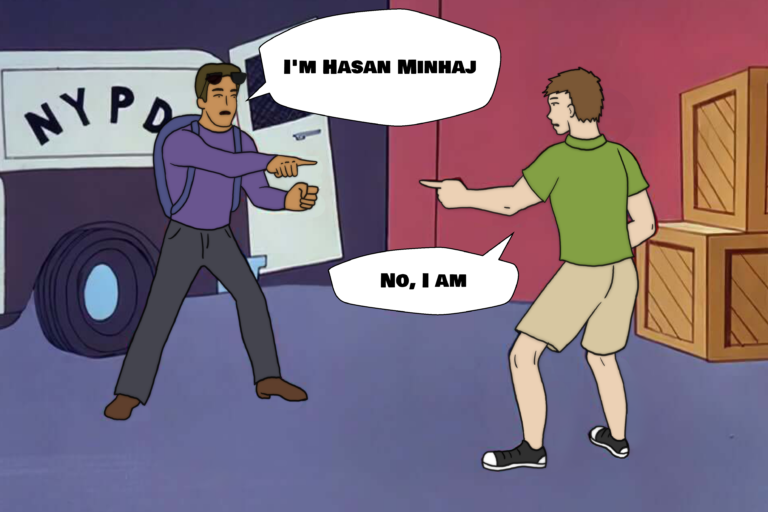
So you think you’re the next Hasan Minhaj?

One in six students believe they are the next Hasan Minhaj despite not being funny or politically savvy

“You want to do stand-up comedy?” a classmate asked third-year student Monica Flowers, incredulously. “Who do you think you are, Hasan Minhaj?

Flowers froze. She never thought to compare herself to Minhaj, a UC Davis alumnus with a Netflix show and two Peabody awards. But the comparison did make sense. Out of the 35,000 students at Davis, one of them had to be the next Hasan Minhaj. By sheer virtue of attending the same school as Minhaj, Flowers believed that the path to comedic success did not need to be carved out––she just had to retrace his steps.

“You know what? I think I am,” Flowers responded, nodding vigorously.

Although this phenomenon has remained dormant for a while, the Hasan Minhaj Effect has experienced a resurgence following the wrongful Netflix cancellation of Patriot Act. Stand-up comedy has never been more alive in Davis, with sales of bomber jackets and UCSC jabs more alive than ever. 

“Dude, if I wanted a Netflix show, I got it!” first-year student Andrei Irving said. “I’ll just tell these producers that me and Hasan have that Aggie connection, you know?”

Flowers walks mid-way into a stand-up comedy open call. A college student with perfectly coiffed hair, skinny jeans and a bomber jacket is in the middle of performing his set. In the background, the theme song of Patriot Act hums softly.

“And that’s what it’s like, being a brown dude in America, man!” the student finishes, gesticulating.

“Brian… I’m sorry, did you say brown dude in America?” the judge asks.

“Yeah, I don’t know if you know this, but a big part of Hasan’s routine is his Indian culture,” Brian said.

“But you’re not Hasan,” the judge points out.

“But I want to be,” Brian says, shrugging his shoulders.

“I think we all want to be Hasan, but not all of us can be,” the judge reemphasizes.

“No,” Brian says, rolling his eyes. “I am the next Hasan.”

“I just have a hard time believing you were made fun of for having an ethnic name, Brian, as you suggest in your routine,” the judge said.

Next to Flowers, a guy nudges her and asks: “Check this guy out, who does he think he is, the next Hasan Minhaj?”

“Tell me about it,” Flowers agrees. “Why does everybody think they can be the next Hasan Minhaj?”

Written By: Renee Wang –– reswang@ucdavis.edu 

(This article is humor and/or satire, and its content is purely fictional. The story and the names of “sources” are fictionalized.)

Simlish: When language and music transcend translation

Lass frooby noo, Yarby dansel dable doops, Imi dooka mimi shoops!

Everyone knows “The Sims.” Whether you spend your time designing the perfect house or seeing how many Sims you can fit in a single shallow pool, the game provides hundreds of hours of air-headed fun. Fans know it wouldn’t be the same without its fictional gibberish language. Simlish, which is often described as what English sounds like to non-English speakers, is the official language of the game and its many spin-offs and sequels. 

The language originated as just a few simple repeated phrases. Creator Will Wright knew dialogue was integral to the experience and decided to improve the audio. In an interview with Great Big Story, “The Sims” 1 & 2 audio director Claire Curtin explained that originally, the team considered using Navajo, Ukranian or Estionian as the base of Simlish. Rather than be held down by conventions, they opted for a structureless, improvisation-based sound. Most of the time, it sounds like jumbled English with a few similarities. Popular Simlish phrases that any dedicated “Sims” player will instantly understand vary from “Yebs” and “Neeb” (yes and no) to “Ravasheen!” (“Ooh, I look like a smokin’ hottie in this!”). 

The task of making Simlish equally believable and not-understandable lies on the shoulders of talented voice actors. Videos of Simlish recording sessions are jarring to watch. It is mostly just two people in a room shouting convincing nonsense into a mic with boundless enthusiasm. Realizing how much of an impact the language had in “The Sims 1,” Electronic Arts games decided to put more effort into the auditory experience of playing.

In “The Sims 2,” the inclusion of music is apparent. Originally, when your Sim interacted with a radio or music player, you would get stock music to fit different moods. They later expanded this by getting popular recording artists to come in and re-record their songs in the fictional language.

The list of musicians whose work appears in the games is incredibly long and even more varied. They are recorded with intention to fit various moods and genres, so they recruited many different artists. Some of the most notable being Aly and AJ, the Pussycat Dolls, The Veronicas, Neon Trees, Soulja Boy, My Chemical Romance, Luke Bryan, Paramore and 3OH!3. According to “Sims 2” audio director Robi Kauker, the artists love re-recording their songs. In an interview with cnet.com he said, “You’d be surprised how much the singers like it.”

Because of the way Simlish is set up, the songs are prepared for the artists rather than improvised. The language does not use an exact structure, but words do repeat. For example, Carly Rae Jepsen’s hit pop jam “Run Away With Me” chorus’ sounds like “nao eh tay son day/nao eh tay son day” everytime it is sung.

“The Sims” discography is close to flawless. Of their long list of timeless hits, one name undoubtedly sits atop: T.G.I.F by Katy Perry, arguably the most famous song recorded in Simlish (and whose lyrics are featured in the headline). This collaboration was so warmly welcomed it inspired an entire Perry themed expansion pack and recordings of her other songs in Simlish.

Many songs are accompanied by their own Sim music video. Lily Allen’s smash hit “Smile” is one of these. Same with “Need You Now” by Lady A, which retained its swooning vulnerability through the translation process. Though the lyrics are unintelligible, the flow of the song remains.

Sadly, neeb, Simlish songs are not available on streaming services. But most are on Youtube and they normally have really great comments sections so I would recommend checking those out. Who knew “The Sims” community was a bunch of comedians? Simlish songs are incredibly odd, but retain the flow and charm of the music we know and love. They once again prove that language isn’t a barrier when it comes to great music. 
Written by: Livvy Mullen — arts@theaggie.org


Series of burglaries occur on campus

“What you’re stealing is not what you think it is,” said Chief Joe Farrow about thefts in hemp research fields

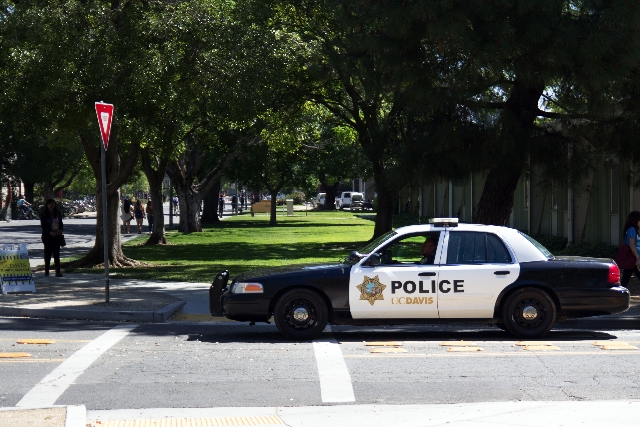
The California Aggie interviewed UC Davis Campus Police Chief Joseph Farrow about a recent spate of burglaries occurring on campus that occurred in late October and early November. According to a Clery Act notification sent out on Thursday, Nov. 5, approximately 11 burglaries occurred between Oct. 29 and Nov. 4. 

These burglaries took place on Orchard Road, Medical Sciences Drive, Russell Park Drive, Primero Grove Circle, East Arboretum Drive, Hutchison Park Drive, the East Quad, the Extension Center, the Social Sciences Building and the Health Sciences Mall. 

In response to the burglaries, the UC Davis Police Department (UCDPD) has increased its patrol on campus and is consistently checking doors and entryways. More technology, including key cards and alarm systems, may be introduced in some buildings. 

“Unfortunately, it is common knowledge in outer cities that UCD is a target-rich environment, and COVID mask wearing has destroyed our ability to identify people,” said Officer Mikio McCulloch, a member of the Outreach and Community Inclusion Unit for UCDPD, via email. “Also, the thieves are no dummies–they dress like students (even though 99% are not), they know which are the older buildings or less secure, and they pay attention over time and notice where the staff is less vigilant.” 

Most of these were what Farrow referred to in the interview as “crimes of opportunity,” several of which were perpetrated by 35-year-old Bluehawk Gonzales, who is not affiliated with the university. According to CBS Sacramento, Gonzales was arrested last Thursday, Nov. 12, while carrying a cash box out of a UC Davis Medical Group clinic building on West Covell Blvd. 

 “The dollar amount wasn’t really high—he would go in and take what he could see and leave, probably to resell it,” Farrow said. “The scary part for us was that he was going into buildings where people could actually be conducting research and working. He was coming back [a lot] because he could only steal so much at a time.” 

Although the burglaries occurred in the days preceding the U.S. presidential election, Farrow said he didn’t think they were politically motivated. 

“Sometimes [people are] looking for shelter or a place to sleep—they pull on doors, and doors open, and they go inside because they think the buildings aren’t being used because of the pandemic,” he explained. 

Notably, several of the burglaries occurred in the hemp fields off-campus, where the 

plant sciences department is conducting research. 

Hemp is often mistaken for marijuana and resold as such, Farrow explained. 

“We really had to tell people, ‘What you’ve found is not what you think it is,’” Farrow said. “It kind of looks and smells the same, so we made a few arrests out there. [The police department] spent a lot of time out there trying to dissuade and disrupt people who were going to steal the research.”

“The more notoriety the fields get, the more they’re known,” Farrow said. “That’s expensive research, and [people] put years of work into that. Curiosity is more of a nuisance. Destruction and theft are very problematic. Our purpose is to make this campus as safe as we possibly can, and sometimes it’s a community effort and not just a law enforcement effort.”

Gail Taylor, a professor in and chair of the department of plant science, expressed gratitude toward the UCDPD for their efforts in protecting research.

“We are very grateful for the police department for their work and collaboration on this issue,” Taylor said. 
Written by: Rebecca Binh-Wallace—campus@theaggie.org

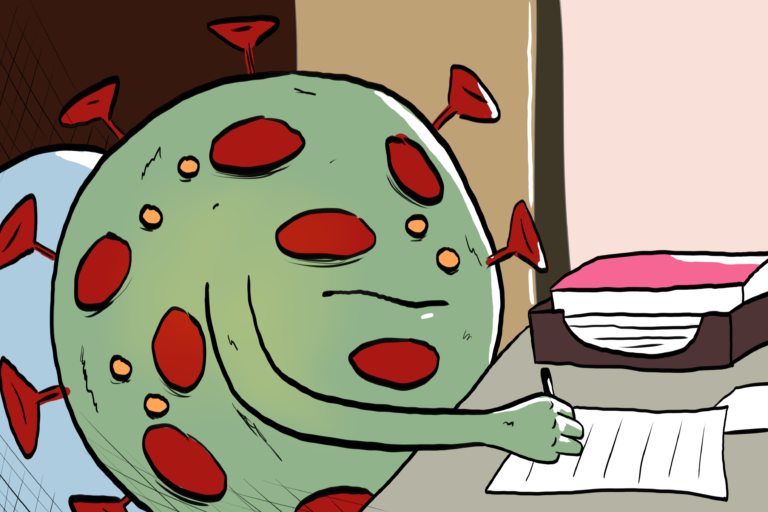
A love letter from the desk of Ms. C. Rona

I missed you so, so much America

Hello, my little American mortals. It’s me, Miss C. Rona. The virus formerly known for causing COVID-19. You used to be terrified of me, remember?

It’s been a few weeks since we’ve chatted, I know. I’ve been busy, not that you care. I’ve had to make a few appearances here and there. All over the planet. It’s no big deal. I got a haircut, a new publicist and a lot of press coverage. Doing my thing, chasing my bag. I’m thinking of making a TikTok account. The life of an international superstar is just exhausting. 

Anyway, I’m saying all of this to let you know that I’m actually kinda mad at you right now. Like… how could you just forget about me? Did you really think you could just go around opening the country all willy nilly without thinking of me?! I thought we had something here. Something real. You used to Google me and my location, and now? Now you’re obsessed with those face masks. Ugh. You do realize that they’re trying to keep us apart, right?

I won’t get into what we had, but I can fill you in on what I’ve done since we last spoke. For one, I took care of that stupid president of yours. He had the nerve to tell the American public that I’m just going to “go away.” So I infected his ass, just to prove him and all of his little friends wrong. It was a little gross, but I did what I had to do. I do not play games and he shouldn’t have tried to doubt me. 

America, I told myself I wouldn’t come crawling back, but I decided that I have to be vulnerable about my feelings. You’re all I have. Seriously. The rest of the world has moved on to new things, like “progress” and “climate change.” They “took care of me.” They might be laughing at our relationship, but we don’t have to pay attention to them. You’ve been dropping little hints that you still want me all year: the lack of masks, the lack of social distancing, the college ragers. I know you still want me around. And I’m eternally grateful for that. 

Here’s my plan for the rest of the year.

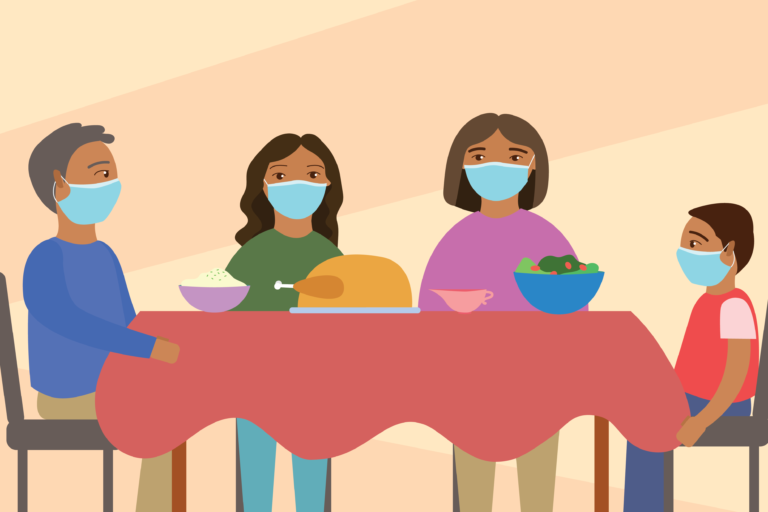
With the way things are going now, I’m thinking we can infect the Thanksgiving turkeys, stuffing and cranberry sauce. I’ve got cat-like reflexes, so I can dodge a turkey baster in the oven––no problem. 

Then, I’ll move on to Christmas. Santa’s old. He’ll be easy to take care of. 

And then, New Year’s! I was originally planning to shoot myself out of a firework but, given the time constraints and some crap I’m getting from Pfizer and Moderna, I can probably just hang out on your lips until you kiss your mom at midnight. 

And I can’t do any of this without your help. Just stop wearing those pesky masks and instead, breathe all over each other. Practice some throat singing with a circle of friends. Do a little spit shake with one of your homies. It’s just me and you against the world now, America. Let’s spread some holiday cheer. 

Written By: Isabella Chuecos –– ifchuecos@ucdavis.edu 

(This article is humor and/or satire, and its content is purely fictional. The story and the names of “sources” are fictionalized.)

Self-actualization can be fulfilled through our most basic needs

0

Take care of yourself like you would for your favorite houseplant

During quarantine, many of us took up the hobby of collecting house plants. Now, caring for our plants as if they were our children has become a part of our daily routine. We put them in spacious pots and provide them with the necessities to grow––good soil, water, light and love. Most of the time, however, we fail to build these nourishing habits for ourselves.

We wouldn’t dare put our plants in unsuitable environments or go without watering them. But we find it easy to neglect our own needs and health, often denying our bodies water, healthy food, sleep, sunlight, fresh air, time to relax and love. 

For some reason, taking care of our plants and others is easier than engaging in our own self-care. We find it therapeutic to water our plants each day but avoid drinking an adequate amount of water ourselves. Similarly, we jump at a chance to prepare a meal for a friend, but tend to satisfy ourselves with take-out for dinner. 

Eventually, our ability to keep giving to others will run out if we don’t take care of ourselves first––you can’t pour from an empty cup. Hence, the beautiful mantra: “You gotta nourish to flourish.” In order to flourish in all aspects of our lives, we have to nourish not just our bodies, but our minds too. This may include hydrating and eating but it also includes setting boundaries, loving ourselves and saying “no” occasionally.

As an introvert, I have canceled plans many times out of sheer social anxiety––instantly feeling guilty for setting such a boundary. Society pressures us to always say yes when presented with an opportunity, especially a social one. But it should be acceptable to opt out of activities we won’t enjoy or that add stress to our already hectic schedules.

We also live in a society that makes us feel selfish for putting ourselves first. At a young age we are taught to be polite and selfless. Now as young adults many of us have taken this idea to the extreme––sacrificing our well-being for the sake of others. 

We need to allow ourselves to say “no” without feeling guilty. Additionally, we need to accept “no” from others without questioning their reasons. Those that love us will understand the boundaries we set the same way we will accept theirs.

This does not mean you should start leaving your friends on read when they ask for help. Rather, it means you should regularly check in and recharge yourself so that when an opportunity to help someone comes up, you can do it without suffering. 

It’s possible to overly care for our plants (or others) when we over water them or leave them in the sun too long. In order to keep them healthy, we have to find a balance. Likewise, we need to recognise when we’ve given too much attention to others and learn when to give more to ourselves. 

Flourishing in life means reaching our fullest potential––true self-actualization. Per Maslow’s hierarchy of needs, we can’t expect to reach full self-actualization by ignoring our most basic needs. It may be a long and hard journey, but it’s a necessary one. 
Written by: Kacey Cain –– klcain@ucdavis.edu

Is Davis a political bubble?

0

Davis students reflect on Davis’s political climate and its effects on their beliefs

In the wake of a divisive election, many believe that “political bubbles,” or being surrounded by one’s own beliefs, are more frequently occuring, including in college towns. Evan Cragin, a fourth-year political science major and the executive director of the Davis College Democrats (DCD), said that he believes Davis is a political bubble. 

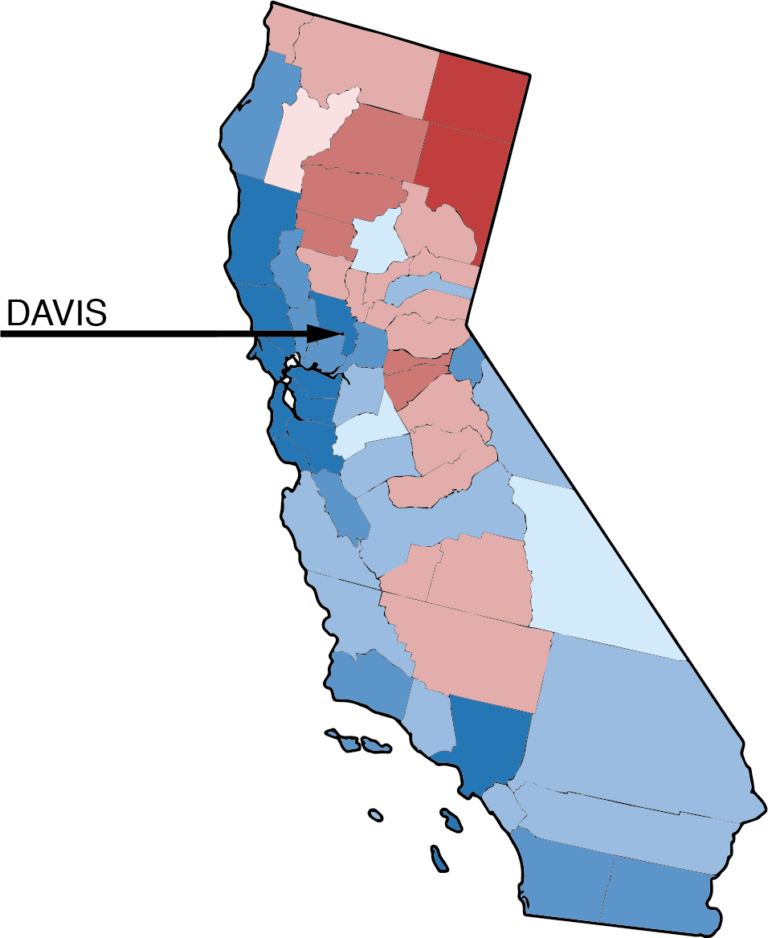
“Davis is a very politically-left college city in the Central Valley,” Cragin said. “Especially when you consider outside of the Sacramento-direct region, it’s a very conservative part of California. Davis is a college town, it’s very educated and high-income, […] but it’s very much its own little bubble that does not represent a lot of the areas it surrounds.”

Even though about 70% of presidential votes cast in Yolo County were Democratic, the neighboring counties in the Sacramento region have starkly different demographics. In El Dorado County, Republican presidential incumbent Donald Trump won the vote by over a one point margin. In Placer County, Trump won the vote by a margin of almost six and a half points. 

For some students in Davis, like Lauren Remish, a second-year psychology and cognitive science double major, this was shocking. 

“The people I surround myself with and people I encounter on a daily basis are all very like-minded, and even in my classes, teachers will make fun of Trump,” Remish said. “It was crazy to see that that’s not the case everywhere you go.”

Because Davis tends to be left-leaning overall, some students shared that they were surprised by the experiences they’ve had in neighboring towns. Cragin said that working on a campaign in the Central Valley was eye-opening. 

“I worked on a county supervisor race in Woodland, which is the city directly North of Davis, and at one point we were canvassing and we got into the West side of the city,” Cragin said. “It was very clearly very Republican and we got yelled at and doors slammed in our faces several times. It was very intimidating that even though Yolo County as a whole is very blue, there are still [cities] that are conservative.”

Other students had a similar experience working the polls on Nov. 3. Jackie Davis, a second-year international relations and communications double major, said that she was surprised by the demographic she encountered in Dixon.

“What shocked me the most is that [Dixon] is literally 20 minutes away,” Davis said. “You have Davis which is very liberal and you go 15 minutes down the road and you have the complete opposite.”

Emma Talbot, a second-year sustainable agriculture major and women’s studies minor, was also surprised by the experience working at a polling station. 

“It was crazy that people would come into the polls and I would tell them to go to the secrecy place to fill out their ballots, but they couldn’t care less about if anyone saw what they were putting so they would just fill it out on our desk,” Talbot said. “I think that speaks a lot to that no matter where you live, you try to surround yourself with people of a similar belief […] Everyone kinda lives in their own political bubble, like we do in Davis.” 

Talbot expressed that seeing the contrast between the two towns on election day made her consider the potential costs of being in a political bubble. 

“I think it’s really dangerous to live in a political bubble because you develop a mob mentality a little bit,” Talbot said. “It’s dangerous because you so firmly believe that you are right and everything you believe in is true.” 

Though political bubbles can have polarizing effects and lead to tense situations, Karan Brar, a fourth-year managerial economics major and the chair of the Davis College Republicans (DCR), said that members of the Davis community on both sides of the political aisle are able to effectively cooperate. 

“I’d say that it’s not like Davis is as extreme as some people might expect out of a California university,” Brar said. “A lot of the left-wing people here are moderates and we’ve had good conversations, we’ve worked together. Davis College Republicans and Democrats have collaborated on local issues together.”

Brar stated that he believes that a diverse community facilitates better conversation and stronger beliefs on both sides. 

“It’s very beneficial […] being exposed to people with different beliefs,” Brar said. “Either we change our beliefs to be more correct […] or you can find new ways to defend your own beliefs. If you see both sides of the issue, you might not change your belief, but at least you have a new counter argument against your own belief.”Written by: Katie DeBenedetti — features@theaggie.org

COVID-19 cases reach new heights as the winter season approaches

Daily cases and hospitalizations have peaked sooner than experts had expected

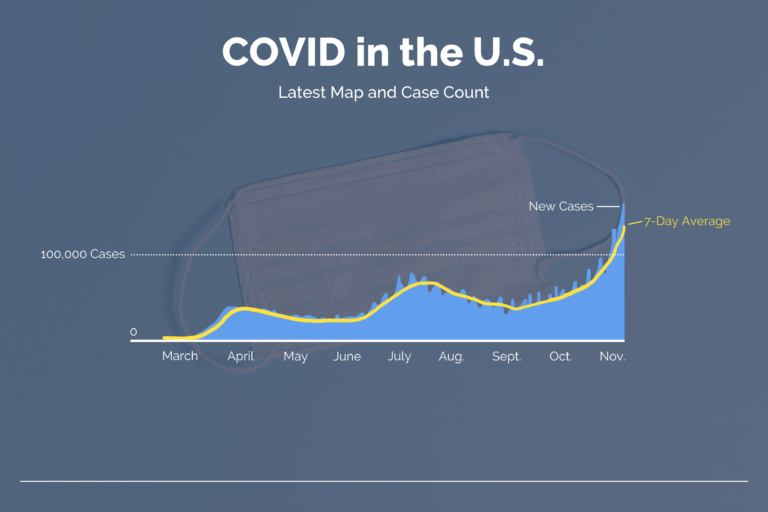
Despite promising developments in the race to find a COVID-19 vaccine, cases of infection have increased in all 50 states during the past few weeks, according to NBC News. The number of daily cases in the United States hit an all time high this month, and hospitals around the country have experienced a record-breaking influx of patients infected with COVID-19. A press release by UC Davis Health revealed that the number of positive COVID-19 tests in the Sacramento region has doubled in the past month.

“This virus continues to surprise us,” said Shaina Kaye, a medical resident in the UC Davis Department of Pediatrics, via email. “What is not surprising is that COVID-19 reached an all-time high from the steady increase over the past weeks.”

Although she had not expected this increase to be as early in the flu season as results have shown, Kaye—like many other physicians—had expected it to occur. She expressed that this increase is associated with the way people have been behaving and following social distancing orders over the past couple of months. More opportunities for transmission have occurred due to restaurants, gyms and other facilities opening up to the public.

“With the easing of restrictions, colder weather and people experiencing ‘COVID-19 and quarantine fatigue,’ more people interact in closer proximity,” Kaye said via email.

Because of this recent increase in cases, Yolo County has shifted from being in the red tier to the more restrictive purple tier, according to a press release. Jenny Tan, the public information officer at Yolo County, explained that although they had predicted a surge in cases with the holiday season coming up, they had hoped people would listen to guidelines they had implemented before Halloween to encourage residents to gather as safely as possible. 

“The state is looking at the statewide issues, and so they don’t really look at the local causes,” Tan said. “So it’s up to the counties and cities to really look at what are the causes that are here in our communities and then to address those causes.”

Tan explained how the majority of the cases from Yolo County have been linked to household exposures, workplace exposures and social gatherings. Although the message has been repeated many times, Tan emphasized that wearing face coverings and staying six feet away from others are still the best preventative measures one can take. With the holiday season continuing as Thanksgiving and Christmas are approaching, Tan encourages residents to gather less or not at all if they can, as the risk for COVID-19 increases with the number of interactions with people. 

“We get it. Everyone is so tired of COVID,” Tan said. “We’re so tired of being by

ourselves. I heard someone say today that they’ve given their dog more attention in the last nine months than in the last 10 years. But that doesn’t negate the fact that COVID is still here and we still need to follow these rules until […] there’s a way for us to overcome COVID-19.”  

Wang Liao, an assistant professor in the communication department, explained how this “quarantine fatigue” can cause people to become desensitized to information about COVID-19, leading to a decrease in the risk perception of the pandemic. Liao, along with other UC Davis faculty members, surveyed how people’s use of the internet and social media sites is related to how seriously they take COVID-19 preventative measures. 

“There are two important reason[s] behind whether people [take preventative measures],” Liao said. “One is their perception of the risk. The other is whether they think they can do it, whether they have the self-confidence in implementing those things or whether in general they believe those methods, like wearing masks are useful or not.”

Liao described the results from a study he conducted back in April and May of this year, when he claimed internet usage is a “double-edged sword.” He explained that on one hand, when people learn new information about the virus through the internet, their risk perception can be enhanced to take more preventative measures. On the other hand, when it comes to the emotional aspects of social media, ambiguity arises. People’s expression of emotions or emotional support through social media sites could increase others’ beliefs in the severity of COVID-19 and lead to more preventative measures being taken. It can also, however, exacerbate their risk perception to the point where people are not confident enough of their ability to protect themselves.

“I think at this point the issue is not a simple communication issue,” Liao said. “It starts to engage with very different aspects of everyday life: people’s daily practices, their social contacts, their political beliefs and also this uncertainty towards when this pandemic will be over. It just becomes much more complicated than we thought before.” 

Although he initially conducted a study on the use of social media sites to predict the number of COVID-19 cases back in May, Liao stated that the pandemic has become so complex that social media or the internet’s effect on people’s beliefs and behaviors is no longer as straightforward as it used to be. He explained that it would be much harder to conduct the same study now, as there are so many factors to consider when looking at one’s risk perceptions. 

Kaye mentioned that if individuals do not change their behaviors to more consciously implement COVID-19 preventative measures, the number of COVID-19 cases will continue to rise as the flu season progresses. Especially with colder weather and more indoor activities occurring, there is an increased risk for transmission in close proximity interactions.

“Students should absolutely be taking precautions during this season, especially since they may be going home to multigenerational families,” Kaye said via email. “A Zoom Thanksgiving is much better than a hospitalized Christmas.” 
Written by: Michelle Wong —science@theaggie.org

Yolo County makes COVID-19 race, ethnicity data publically available

0

Yolo County Public Information Officer explains the need to be transparent in regards to racial, ethnic health inequity

In an effort to provide transparent COVID-19 data to its residents, Yolo County has joined neighboring counties such as Sacramento, Napa and Solano in adding race and ethnicity fields to its COVID-19 dashboard

Yolo County decided to make race and ethnicity data public to provide residents with more information regarding the spread of COVID-19 in their communities, according to a press release

“Certain patterns and disparities can be noted by looking at this new data,” the press release reads. “Such patterns are not unique to Yolo County and can be seen in neighboring counties, throughout California and across the country. The causes of disproportionate COVID-19 cases in certain racial and ethnic groups are multiple and involve social, economic and environmental determinants of health.” 

Yolo County Public Information Officer Jenny Tan explained that providing race and ethnicity data is an extremely important priority for the county. 

“Over the last couple of years, Yolo County has really tried to make an effort to be a lot more inclusive and provide more information and data,” Tan said. “One of the ways to do this is really looking at the makeup and diversity of our residents.” 

Providing press releases and infographics in multiple languages such as Spanish, Russian and Chinese are all part of the effort to move towards more inclusivity, according to Tan. 

“In terms of COVID-19, we wanted to continue that transparency,” Tan said. “[We wanted] to continue showing the importance of our ethnic and racial identity data. One of the reasons especially is that we want people to know that this impacts everyone, and in some ways, it impacts the different demographics in a disparate way.” 

Tan cited the disproportionate number of Hispanic people being affected by COVID-19 versus white or Asian people as a reason why it is important to look at the data in its entirety. 

“Before we added race and ethnicity, we were already showing age and gender data, so the next step was going to be to add that race and ethnicity data,” Tan said. “When you talk about race and ethnicity these days, it’s never simple. It’s multifold, multidimensional and there are a lot of things included in that.” 

Because the data is self-reported, there are still unknowns, and that in itself is significant, explained Tan. 

“There are people who choose not to report that data,” Tan said. “When people don’t want to give that information—that is telling. There’s definitely a level of trust in the data too that needs to be built upon because about a quarter of people who test positive are choosing not to answer that question. But even when you take out the unknowns, it’s still way disproportionate.”

As of Nov. 19, 47.73% of people who tested positive for COVID-19 in Yolo County identified their ethnicity as being Hispanic or Latino. 

Brad Pollock, chairman of the Department of Public Health Sciences, associate dean for Public Health Sciences and a professor at UC Davis School of Medicine explained that contact first and foremost is what increases COVID-19 numbers. 

“We’re at an all-time high nationally,” Pollock said. “It’s not because the virus mutated. It’s because there is more contact. More people coming into contact with people that are infected, that is what drives numbers up.”

The demographics of who is coming into contact with whom, however, shifts when taking into account different cultural and socioeconomic factors. Around June or July, there was a spike of cases in Yolo County’s Latino community. In response to this data, the county made more of an effort in terms of community outreach, explained Tan. 

“We started doing a larger push in terms of educational outreach to these communities, looking toward local community leaders, talking to different non-profit organizations and getting the word out,” Tan said. “We even did a radio campaign specifically targeting Latinos. I think a part of it too is cultural. Family is really important to certain cultures. Even with the pandemic, that doesn’t lessen your filial piety or obligation.”  

Tan explained that providing this information to the public will hopefully allow Yolo County residents to make more informed decisions regarding their personal life. The decision to release this data follows a move towards health equity that has been a priority for Yolo County’s Health and Human Services Department for a while. 

“COVID[-19] helped to expose [these health inequities] a little bit more, but it is something that our department has already been working towards,” Tan said. “We have health equity in all policy and measures.” 

The county continues to look towards long-term solutions and be as proactive as possible, especially regarding the upcoming COVID-19 vaccine and an equitable distribution of it.

“Right now, we’re looking to the future in terms of how the vaccine gets out,” Tan said. “Making sure the vaccine is distributed in an equitable way. We are looking at what’s working now and trying to apply that to the future.” 
Written by: Yan Yan Hustis Hayes — city@theaggie.org

Berkeley tax reduces consumption of sugary drinks, according to study

Revenues raised from tax are reinvested in community public health organizations 

A recent study, co-authored by Dr. Jennifer Falbe, an assistant professor of nutrition and human development at UC Davis, assesses the impact of Measure D, a 2014 sugar-sweetened beverages (SSBs) excise tax in Berkeley, Calif. Within a year of the tax, the consumption of SSBs—drinks like sodas and sugary juices—dropped in lower-income neighborhoods as SSB purchases fell by about 10%. The tax generated more than $9 million in revenue to fund public health programs in the community. 

Reducing SSB intake through taxes has been an important tool used for improving public health. Dr. Kristine Madsen, a co-author of this study, an associate professor at the UC Berkeley School of Public Health and the Executive Director of Berkeley Food Institute explains why these taxes are useful.

“[SSBs] are the number one source of added sugars in the American diet,” Madsen said. “Added sugars, and sugar-sweetened beverages specifically, cause obesity and diabetes […] and diabetes is almost twice as high in communities of color as compared to white communities, and is also much higher in low-income communities than wealthy communities.”

The study looks at the implementation of the Berkeley tax as well as its impact on distributors and retailers. There was widespread support for the tax from parents, the Berkeley National Association for the Advancement of Colored People, Latinos Unidos, health professionals and others. The tax was also fairly straightforward—$0.01/oz for all sugar-sweetened beverages—compared to taxes on other goods, which can vary by product. Measure D also used an expert advisory committee to find the best public health use for the tax revenue. 

The excise tax of $0.01 per ounce was levied on SSB distributors. In interviews with the distributors and retailers, the researchers found that most SSB distributors raised their prices to the retailers, and most of the retailers raised the price of SSBs to compensate for this change. This finding debunked a claim often pushed by the beverage industry that SSB taxes raise prices of all other food prices and are essentially “grocery taxes.”

Some opponents of SSB taxes point out how the taxes disproportionately harm low-income consumers who can’t afford higher prices. The Berkeley SSB tax is levied on the distributors but because they raise their prices to cover for the tax, consumers may see higher prices at the store, which will mean lower purchase and consumption of SSBs and a greater public health benefit. 

“That means that low-income communities should experience the greatest health benefits from lower SSB consumption, which would translate into less money spent on health care costs and less suffering from SSB-related chronic disease like type 2 diabetes and heart disease,” Falbe said via email.

Berkeley is one of a handful of cities across the country implementing a SSB tax, including Seattle and Philadelphia. Like Berkeley, many of these cities have used the tax revenues to invest in public health and equity programs. 

“In Berkeley, revenues funded a Head Start obesity prevention program, nonprofits promoting health in the Black and Latinx communities and the public schools’ Gardening and Cooking Program, which ensures all children have access to nutrition education regardless of income,” Falbe said. “Philadelphia’s sweetened beverage tax is funding pre-K for low-income families. Seattle and San Francisco have spent revenues on COVID-19-related food security programs.”

The revenue from the Berkeley tax is facilitated by the Sugar-Sweetened Beverage Product Panel of Experts (SSBPPE) Commission, and the revenue goes to a variety of community programs. One such program, the Multicultural Institute in Berkeley, works with immigrant communities to empower and provide laborers and families important health and education services. Daniela Gonzalez, the Berkeley Programs Director at the Multicultural Institute, explains the importance of focusing on specific communities for public health outreach. 

“Marginalized communities, in this context the immigrant and day laborer population, are often unseen and not taken into account when policies are made,” Gonzalez said via email. “These communities sometimes don’t have access to healthier options, whether it’s due to finances, lack of locations of grocery stores in these communities or various other reasons. Our goal is to tackle head-on the health inequities that this population faces every day.”

  Prior to COVID-19, staffers and volunteers at the Multicultural Institute would conduct daily street outreach to the day laborers, hold workshops, provide reusable water bottles and encourage water over SSBs. Their outreach efforts look different in a pandemic but they remain committed to helping day laborers through weekly food distribution and sharing cookbooks to prepare healthy meals.

The Berkeley Unified School District (BUSD) Gardening and Cooking Program is another unique example of using SSB tax revenue to invest in public health outcomes, particularly for children and families. Students of all ages at BUSD, from preschool to high school, get to participate in the program. Jezra Thompson, the program supervisor at the Gardening and Cooking Program, shares why these activities are important to the students within the BUSD. 

“Often, folks that may not learn best in a traditional classroom may learn really well in these alternative spaces that have more invitation to nature, more invitation to expressing themselves in different ways that might be more culturally relevant to them or more sensitive to how they show up to the class,” Thompson said. “So a lot of students are able to succeed really well and thrive in these spaces.”

For Madsen, and others who work in public health, the question now is if SSB taxes work, then why are there only a handful of cities across the country implementing them?

“If they’re generating revenues which the cities are investing in health, and they don’t harm jobs—which they don’t, they are all based on studies that have come out—then why do we only have seven across the U.S.?” Madsen said. “I think we have to rethink how we do things in the U.S. Do we really want health to be the first priority or do we want profits to be the first priority?”

Written by: Simran Kalkat — science@theaggie.org


The effect of Proposition 16 on campus diversity

0

Faculty members weigh in on the outcome of Proposition 16 and how UC Davis continues to address structural barriers to higher education and employment

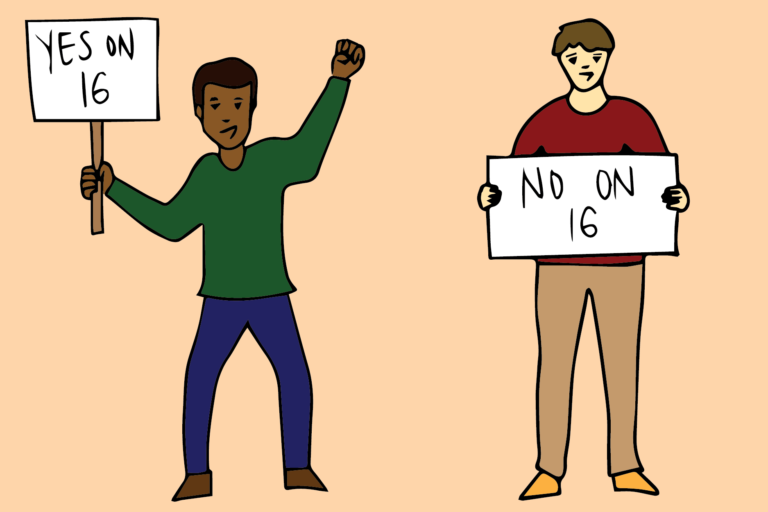
Despite the failure of Proposition 16 in the recent California election, the UC system has reaffirmed its commitment to promoting diverse campuses. The proposition would have replaced Proposition 209 that banned affirmative action and thus prohibited the consideration of race, ethnicity and gender in higher education and employment. UC Davis also released a statement regarding on-campus diversity.

Three faculty members at UC Davis have weighed in on the outcome of this proposition and how the UC system has found other ways to enhance diversity on campus.

Brian Soucek, a professor of law at UC Davis, theorized that Proposition 16 would not have created a lasting effect on the diversity of the UC Davis campus for two main reasons. The first involves the future decisions that are likely to be made by the U.S. Supreme Court.

“I think the current U.S. Supreme Court is incredibly likely to strike down affirmative action as unconstitutional under the U.S. Constitution, in which case, it wouldn’t matter what the California Constitution says on the subject,” Soucek said.

The second reason is that, since Proposition 209 was first passed in 1996, the UC system has almost 25 years of experience in working to diversify its institutions without the use of affirmative action. While it can’t make specific use of race and gender in admissions and hiring, the UC administration utilizes outreach targeted towards underrepresented minorities to diversify the applicant pool.

“Proposition 209 limits the methods we can use in building the university’s diversity,” Soucek said. “We can’t consider race directly, but it just means that we have to do a better job building pipelines, doing outreach, making sure that people of all races in California know that UC Davis is a place where they can get in and thrive.”

According to Soucek, other efforts to enhance diversity include fellowships that nurture graduate students from underrepresented populations, targeted hiring efforts that attract a diverse population of workers to Davis and the requirement of diversity statements from faculty candidates.

Raquel Aldana, a professor of law at UC Davis who specializes in criminal law and immigration, stated that affirmative action was a flawed solution to the greater problem of structural inequality.

“The silver lining of Proposition 209 is that, in the absence of affirmative action, the UCs had to take a hard look and say, ‘How do we take up the harder task of addressing the barriers to access, now that we don’t have this tool to create this pipeline?’” Aldana said. “‘And how do we become more honest about our own responsibility in the creation of these barriers?’”

One of the ways that the UC system has worked towards dismantling these barriers is by implementing a more holistic admissions process. Earlier this year, the UC Board of Regents decided to suspend the requirement for standardized test scores in applications, such as those from the ACT and SAT.

“The standardized tests, increasingly, have been shown to not be perfect measures of what it actually means to be successful and a good citizen,” Aldana said. “These instruments, and grades as well, also reflected the inequalities because the people who did best are the people who had access to resources to prepare.”

UC Davis currently has early outreach programs in place to help high school students overcome these obstacles. For example, the Educational Opportunity Program (EOP) helps students from historically-disadvantaged communities prepare for college by understanding what courses to take, how to apply for financial aid and how to connect with campus resources. Another program that Aldana herself has benefitted from is Upward Bound, a federally-funded program that provides low-income high school students with financial assistance for college.

The UCs turn their attention not only to high school students, but students in community college as well. Aldana, a previous co-chair of the Hispanic Serving Institution Task Force at UC Davis, has also done research on the experiences of Latinx students. She stated that, of the Latinx students who go to university, 72% will go to community college first. After two years, only 6% transfer to a four-year institution.

“The problem is that community colleges are not resourced adequately to be able to help students navigate towards a four-year institution,” Aldana said. “So supplemental programs, like the ones that UC Davis has, to create that pipeline from community college to the UCs is really, really important. That’s another important contribution of the UCs that is attempting to ameliorate, in a more meaningful way, the true structural barriers to accessing elite higher education institutions.”

UC Davis has programs geared toward enhancing the diversity of not only their students, but their faculty as well. Philip Kass, the vice provost of Academic Affairs at UC Davis, stated that the university has put much effort into hiring diverse faculty. For example, every person who applies for a job at UC Davis must write a statement about their contributions to diversity.

“That’s one way we continue to try to hire people who care about diversity, equity and inclusion,” Kass said. “Many of the people who do are women and people of color.”

Kass also stated that UC Davis has received more than $1 million in grant funding to conduct experiments with respect to faculty hiring that would increase the number of people within the applicant pool who care about diversity, equity and inclusion. One example is the Advancing Faculty Diversity Grant of the 2018-2019 school year, which allowed UC Davis to hire eight new individuals who have made an outstanding contribution to diversity on campus. 

“Having a diverse faculty leads to a more diverse educational experience, which our diverse student population benefits from,” Kass said. “There’s a lot of research to show that students want to see role models who relate to them, who look like them in all kinds of dimensions that define diversity.”

While there is still much room to learn and grow, UC Davis has gained national recognition for its commitment to enhancing diversity, even without the use of affirmative action.

“We are trying, year after year, to improve the way we advertise faculty positions,” Kass said. “Every initiative that we have worked on has come with complete and total support of our campus leadership who are 100% behind trying to have a diverse campus, one that promotes inclusive excellence.” 


Written by: Liana Mae Atizado— features@theaggie.org


Trump threatens to take over as Jeopardy host if denied second term as president

If fabricated claims of voter fraud don’t work, a bit of the ol’ extortion might

As President Donald Trump’s “voter fraud” lawsuits are summarily dismissed and laughed out of court, one thing that judges of facts-versus-fiction aren’t laughing about is the passing of beloved Jeopardy host Alex Trebek. Trebek passed away at age 80 earlier this month after a battle with stage four pancreatic cancer.

Lovers of science, history, mythology, geography, geology, books, film, music, language, words, culture, trivia, obscure factoids and all types of objective knowledge in general are mourning the loss of Trebek. Meanwhile, lovers of the opposites of all those things are still mourning the loss of Trump in what they are calling a “stolen” presidential election. But neither Trump nor his supporters are ready to admit that their uniquely dangerous form of stage four democratic cancer is showing any signs of remission after Nov. 7’s initial dose of electoral chemotherapy

In fact, Trump and his team are now threatening more than just lawsuits in their attempts to overturn the election results. That’s right, the Trump camp is now saying that if Americans continue in refusing to recognize how privileged they are to have Trump as their president, then he instead will take over the empty position as host of Jeopardy, by force if necessary. The Trump presidency has been nothing if not a destructive, relentless and shameless assault on truth, so stoking fear over the ominous possibility of a Trump hostship on a show that revolves around the concept of truth might just be the golden strategy that can delay Trump’s retreat back up the gaudy and garish yet cheaply-built bronzer-and-piss-stained golden elevator from whence he came.

Make no mistake—the ramifications of a Trump Jeopardy hostship would be just as bad, if not worse, than those of his presidency. Just on the surface-level, it’s a pretty safe bet that Jeopardy’s iconic set would get the same tasteless, tawdry and trashy makeover as everything Trump has ever built (via the work of contractors he refused to pay). 

And I’m sure we can expect a shake-up in the types of categories we’d see as well—sometimes just as a result of Trump’s inability to pronounce words correctly on the first try. Contestants should be sure to study up on categories like “Patriotic History,” “Word Oranges,” “Homophobes and Homophones,” “Pol Pot, Pot Poory, Pot Poury, Pot Porey and Potpourri,” “Potent Potables, with pre-recorded clues read by Brett Kavanaugh” and of course, “Alternative Facts.” 

Perhaps when contestants on Trump’s revamped Jeopardy don’t know the correct answer, they can simply say “What isn’t [blank]?” in order to show that they are correct in their incorrectness. This would be a perfect way for Trump to continue his long tradition of giving undeserved air time to unqualified idiots, professional liars, professional idiots and unqualified liars.

If Trump’s threat to usurp the Jeopardy hosting gig proves successful in keeping him in the White House, then he might try the same trick again in four years to become president for life—especially if “Star Trek” actor LeVar Burton is named the new host, as many fans are hoping. Lord knows that Americans wouldn’t be able to bear watching Trump yet again do everything in his power to undo the legacy of a supremely qualified black predecessor…. There’s a chance that this might be a tantalizing prospect too tempting for Trump’s fat, orange, racist ass to resist. But I think he ultimately cares more about staying in office so he can avoid prosecution for tax fraud and money laundering—and ultimately avoid prison, where he would have to confront the legacy of his fellow racist white lawmakers in the form of a large number of fellow Black prisoners.

Whether Trump becomes Jeopardy host or remains president, we are currently sitting on the precipice of a schism in which one half of the country will have a completely different set of facts from the other. Over the last decade, social media algorithms and online echo-chambers have fueled our polarization, but the mass exodus from Facebook and Twitter to Parler and from Fox News to outlets like One America News and Newsmax could result in America’s increasingly irreconcilable information bubbles becoming forever cleaved. If these trends aren’t stymied or reversed, then the false, fabricated and FRAUDULENT narrative that Trump was cheated out of a second term through an election stolen by a cabal of corrupt Democrats and establishment Republicans will in all likelihood become the primary political organizing principle for as much as half the country for a generation, just as resentment over the Treaty of Versailles was in interwar Germany.

Currently, Jeopardy is the last place of refuge where all Americans, liberal or conservative, Democratic or Republican, can gather and operate with the same set of objective facts. But if Trump continues to have free reign to pollute America’s physical and informational environments with carcinogens both literal and figurative, then we risk allowing Trump’s cancer on the organs of democracy to further metastasize and become inoperable.

Trump most likely will never actually be the host of Jeopardy—but in a certain sense, he already is. So let’s honor the legacy of Alex Trebek by beating the cancer of disinformation. 

Written by: Benjamin Porter— bbporter@ucdavis.edu 

(This article is humor and/or satire, and its content is purely fictional. The story and the names of “sources” are fictionalized.)


Yolo County experiences record voter turnout this year, approximately 83%

0

99,576 votes were cast which could have been the effect of “negative partisanship”

In the recent 2020 general election, the total votes cast in Yolo County reached an all-time high, according to a press release.

“[The] total votes cast in Yolo County reached a record high—99,576,” the press release reads. “This equates to an approximate 83% voter turnout.”

Jesse Salinas, the Yolo County assessor, clerk-recorder and registrar of voters, explained  via email that in California, universal vote-by-mail ballots and large amounts of press coverage contributed to the record voter turnout this year. . 

Magdalena Wojcieszak, a professor of communication at UC Davis and associate researcher at the University of Amsterdam, further explained the reasons that contributed to a higher voter turnout via email.

“[…] This election and the high turnout in the traditionally blue/Democratic Yolo County are [an] example of what scholars call negative partisanship, or partisans voting against an outparty candidate and not for a candidate from their preferred party,” Wojcieszak said via email. 

Wojcieszak also highlighted that while “Barack Obama managed to mobilize millions of new young and minority voters because of his personal charisma and outreach,” the high voter turnout this year could be attributed to people being “[…] very strongly against […]” one candidate, rather than being very excited about the other. 

  Although there was a pandemic this year, it did not have a significant impact on election results, according to Wojcieszak. 

“I don’t think that the pandemic affected voter turnout this year,” Wojcieszak said via email. “The fear of the pandemic or getting infected with COVID-19 may have prevented some people from voting in-person, but it is unlikely to have influenced whether they voted or not. In fact, Yolo County also had a record number of vote-by-mail ballots.”

As of Nov. 5, there were 37,988 ballots left to be processed in Yolo County, according to the press release. Of these, 35,684 were vote-by-mail ballots, including those forwarded from other counties. Another 222 were provisional ballots, 1,518 were conditional voter registration provisional ballots, and 384 others, such as unprocessed ballots that were damaged and needed to be remade or unprocessed ballots that needed to be reviewed further. 

“Mail balloting has been very popular in California long before COVID-19, yet its popularity increased this year, likely due to COVID,” Wojcieszak said via email. “Furthermore, extensive research and public opinions polls suggest that Democrats are taking COVID-19 more seriously than Republicans, and so—again—the largely democratic Yolo and California were seeing very high turnout in general, and especially by Democrats voting early and by mail, regardless of the pandemic.”

On a more general note, Wojcieszak also explained the impact that social media can have on elections and voter turnout. She noted that while it does encourage political participation and voter turnout, it mostly does so among social media users “[…] who are already politically engaged.”

“That said, even those traditionally politically disengaged individuals may inadvertently encounter political or election information on social media, such as when their friend posts something about the candidates or when a targeted election advertisement appears in their feed,” Wojcieszak said via email. “This incidental exposure has some potential to energize people.”

Furthermore, various social media platforms also featured information pertaining to the elections and voter information hubs, which increases the probability of young users—who are generally less politically participative and interested compared to older generations—becoming more politically engaged, according to Wojcieszak.

Even after elections and voting is over, Salinas highlighted ways that people can continue to affect political change. 

“Voters can continue to let their voices be heard by participating at a local and state level by getting involved in community groups, attending city council meetings, etc. and speaking out on issues that matter to them,” Salinas said via email. 

Salinas also encouraged students to continue staying engaged and voting, not only in the presidential elections, but also in non-presidential elections.”

“There are important decisions being made in every election so stay connected and vote,” Salinas said via email. 

 Written by: Shraddha Jhingan — city@theaggie.org


Non-essential travel discouraged by university officials amid holiday season

Expansion of weekly COVID-19 tests show effort to curb transmission of virus

UC Davis has “discouraged non-essential travel to help reduce any potential spread of the virus” for the remainder of Fall Quarter, according to an email sent by Vice Chancellor for Student Affairs Pablo Reguerín and Medical Director of the Student Health and Wellness Center Cindy Schorzman. 

“Student Housing and Dining Services surveyed residents to determine how many will be leaving for the break,” said Michael Sheehan, the associate vice chancellor for Student Housing, Dining and Divisional Operations, via email. “We are directing our residents to test prior to leaving and to test immediately upon return. We are also directing our residents to shelter in place upon return.”

The email also stated that students returning to Davis from their home or Thanksgiving destinations are also expected to be tested at a kiosk within seven days of their return. 

  Student housing, dining and residence halls will be closed on Dec. 19 and will reopen on Jan. 2 for winter break. 

As of Nov. 18, all staff, faculty and students arriving on campus will have to complete weekly COVID-19 tests, according to the UC Davis website. The number of weekly COVID-19 tests being conducted on campus nears 20,000. 

“We have stressed public health recommendations including face coverings, avoidance of large gatherings (especially indoors), minimizing all non-essential travel and physical distancing,” Schorzman said via email. 

Schorzman also said that parties and gatherings tend to contribute to the spread of COVID-19 and that screening for the virus during the week prior to Thanksgiving is recommended. 

In a free webcast through UC Davis Live on COVID-19, Director of Humanities, Arts and Cultural Partnerships Soterios Johnson dissected how to navigate the holiday season while avoiding contracting the virus. 

 “The worst-case scenario following conventional Thanksgiving practices is that it could lead to the death of a loved one or loved ones,” said Natascha Tuznik, an assistant clinical professor for the department of internal medicine at UC Davis Health. “The risks are substantial right now. Unfortunately, as everyone is aware right now, we are seeing the highest case rates we have since the pandemic started. We just don’t see it slowing down in the foreseeable future.”

Johnson emphasized the importance of not mixing households when celebrating the upcoming holidays safely. Tuznick described a household as individuals who have been living together, in accordance with current quarantine guidelines, for 14 days. 

“I completely understand about COVID burnout, being fatigued with not seeing family, being asked to batten down the hatches just a little bit longer,” Tuznick said.

Tuznick said she advises individuals to consider the risks involved when mingling with others, including threats to oneself, others, elders and people with diabetes, obesity or immunosuppressive disorders. 

“Keep the gatherings small—six individuals or less,” Tuznik said. “Outside is preferable, ventilating your house and opening doors or windows is recommended, masking when you’re not eating or drinking—being extremely vigilant about that, practicing social distancing, following really good hand hygiene and making sure everyone is on board.”

Theresa Harvath, a clinical professor and senior director for strategic initiatives, said it’s important to recognize that this may be the only holiday season with these precautions.

“So, [don’t] see it as a forever change to our traditions that so many of us love and look forward to, [but] think about how we can modify those traditions in virtual or socially distanced ways,” Harvath said. “Recognize that the biggest gift we can give to family and friends is reduction of exposure to something that could make them very ill or kill them.” 

Written by: Aarya Gupta — campus@theaggie.org