59.3 F
Davis

Davis, California

Wednesday, December 24, 2025
Home Blog Page 338

How to keep locally owned businesses like Mishka’s, Varsity Theatre, alive during COVID-19

Streaming movies, buying bulk coffee can help protect Davis’ favorite mom-and-pop shops

While many students are away from Davis or staying inside, local businesses struggle to stay afloat. Sinisa Novakovic, the owner of Davis’ local coffee shop Mishka’s and the Davis Varsity Theatre, said that while chain corporations will survive the pandemic, he worries about how small mom-and-pop shops will fare.

“You don’t need any better example than Starbucks and Mishka’s,” Novakovic said. “[Starbucks] could probably ride out 12 months of a total disaster, whereas two months for [Mishka’s] to pay rent and mortgage and food can be devastating.”

Novakovic said he is grateful for the support the Davis community has given to both Mishka’s and the Varsity Theatre. Mishka’s, which is still open daily for take-out, gets about half of its normal number of customers per day despite the pandemic, and many people who are no longer in Davis are purchasing gift cards, merchandise and bags of coffee from the website to support the coffee shop. And currently, 35 movies, with rental prices ranging from $5 to $12, are available to stream on the Varsity’s website

Despite this help from the community, Novakovic worries that, when this is over, small, specialty shops, like Mishka’s, could be wiped out completely if people don’t continue to give support.

“I’ve been going around and telling everybody that even if you’ve always supported a chain it doesn’t matter, just skip it for the next few months and go to your local seller,” Novakovic said. “Soon, it’s going to be a matter of life and death, and many of these businesses will fail. We will have the chains, and nothing will happen to them. But those unique, little places that are special to a locale and don’t exist anywhere else, those are going to be the ones to disappear.”

Although Mishka’s is still able to do business at this time as an essential service, the Varsity Theatre, like movie theaters throughout the country, has been forced to close for the time being. In these unprecedented times, movie studios have teamed up with theaters like the Varsity to continue bringing movies to customers stuck at home. 

This new way of streaming movies has, according to Novakovic, been able to help keep both the studios and theaters afloat.

“A number of small studios that obviously had many movies in the pipeline that were going to premiere in theatres over the coming weeks […] realized that theatres will not be reopening in these months,” Novakovic said. “Instead of just going immediately on demand and trying to get whatever money they can that way, they can try at the same time to help the theatres that normally play their movies and that are basically their partners.”

These studios have begun making movies that were originally planned to premiere in the coming months available to rent through the theaters they were slated to play at. A number of these films, such as “Eating up Easter” and “The Innocent” are available to stream exclusively through theaters, including the Varsity, before they will be made available on demand. 

Written by: Katie DeBenedetti — features@theaggie.org

Russia: home of falsified elections

Where voter apathy is the strongest candidate

On March 18, 2018, Vladimir Putin –– Russia’s longest-serving ruler since Joseph Stalin –– won his fourth term as president in a landslide victory. A record 56.2 million Russians cast their ballots, giving Putin more than 76% of the vote. 

Although his victory came as no surprise, following his other wins in the past 18 years, the validity of voter turnout remains questionable. Russia is a democracy and appearances do matter, especially with western accusations of autocracy. High levels of support for Putin, therefore, are still necessary to convince Russian citizens, and perhaps even the Kremlin, that his win is well deserved.

Following the election, thousands of volunteer electoral observers revealed that only 55% of the voting population voted for Putin — a 21% decrease since the last election. Opposition leader Alexei Navalny accused government authorities of rigging votes to avoid an embarrassingly low turnout.

Surveillance footage from polling stations even caught numerous instances of ballot-stuffing by electoral workers, totaling over 2,000 complaints of violations for the independent electoral monitor Golos.

When observers sent by Navalny were present in polling stations in Chechnya, a region that generally reports 99% participation, the turnout was markedly reduced. Physicist Sergei Shpilkin suggested that nearly 10 million votes were falsified for Putin. This would not be the first time, as Shpilkin noted similar patterns during Putin’s first reelection in 2004 and again in 2012.

Though eliminating those votes would not prevent Putin’s victory, they do paint an inaccurate picture of voter morale in Russia. This intervention gives the illusion that the majority of Russians actually want to re-elect Putin –– that every electoral outcome is made democratically. Worse, it shows that any other votes or candidates are futile.

“The problem wasn’t the falsifications, the problem was how the campaign was conducted,” said Grigory Melkonyants, the head of Golos. “When voters are forced to go to the polling station, when they don’t have information about the candidates, the media endlessly talk about one but don’t mention others or speak negatively of them, when free media doesn’t give information, so voters could form a different position, that’s a problem.”

Navalny, Putin’s most vocal and popular rival, announced his candidacy back in December of 2016. His campaign focused on domestic issues, like improving the economy and combating corruption. In the past, he was jailed several times for organizing anti-Putin marches and was nearly blinded after a pro-Kremlin activist threw chemicals at his face.

Though Navalny seemed like the only candidate with a real chance of challenging Putin, his campaign was cut short after he was charged with embezzlement –– disqualifying him from the race.

Navalny insisted that the charge was politically motivated and considered it a sign that the Kremlin found him too dangerous to take part in the election. It is not surprising that this was not the first incident. In 2013, Navalny also faced an embezzlement charge. The European Court of Human Rights, however, ruled that the fraud conviction imposed against Navalny was “arbitrary and manifestly unreasonable.”

Even with Putin’s predetermined victory each election, it’s interesting that the Kremlin still attempts to vilify those who oppose him. This leaves Russians with either no choice or abstention, which the government then masks with fake ballots. Instead of voters asking themselves, “Who should I vote for?” the question becomes, “Why bother?”

“Anything the Russians did concerning the 2016 Election was done while Obama was president. He was told about it and did nothing! Most importantly, the vote was not affected,” President Donald Trump recently tweeted.

Assurance that “the vote was not affected,” sounds similar to Russia’s 2018 election. Disqualifying Navalny and reporting higher votes may not have changed the outcome, but declaring Putin president in the name of the Russian citizens is as misleading as it is dangerous. And with plans to extend Putin’s rule until 2036, Russian citizens’ vote won’t count for a long time.

Written by: Julietta Bisharyan — jsbisharyan@ucdavis.edu

Disclaimer: The views and opinions expressed by individual columnists belong to the columnists alone and do not necessarily indicate the views and opinions held by The California Aggie

Cost of college must come under more scrutiny

COVID-19 highlights student debt crisis, exorbitant cost of tuition

Student loan debt in the U.S. is currently estimated to be around $1.6 trillion. 44.7% of Americans and counting carry an average of $32,731 in student loan debt, which many have argued is far too hefty a price tag for a few years at a university. These figures far outweigh the burden of both credit card debt and auto loans — in fact, student loan debt in the U.S. ranks #2 in consumer debt, right behind mortgage debt.

The global COVID-19 pandemic has taken its toll not only on global health but also on labor markets worldwide. In the U.S. alone, widespread shelter-in-place orders resulted in an unemployment rate of 5.3% in March. Unemployment for the month of April is slated to be released from the government today and is expected to get even worse. A CNN article titled “US unemployment hasn’t looked this bad since the 1930s” includes unemployment estimates from various economists that range from 10 to 20% for April.

This is problematic for a number of populations. The class of 2020 is graduating into what could be “the worst job market for new college grads since the financial crisis,” according to CNBC. A majority of students — 69% in 2019 — are graduating with student loan debt. 

How should soon-to-be college graduates be expected to pay these bills when there is a very real possibility they won’t have a job after graduation? And, even more so, how will millions of Americans continue to pay off their student loans when unemployment may be at levels the country has never seen before? 

This does not even address the situation many parents of prospective college students are finding themselves in. If they are choosing to financially support their children through college but have lost their jobs due to COVID-19, how will they manage to cover the ever-increasing costs of college? Though price tags vary, the average yearly cost of college for the 2019–2020 academic year was $30,500 in America.

The Editorial Board firmly believes that one of the best ways to remedy this ever-evolving situation is to reduce the amount of money that borrowers owe and to forgive some or all student debt. The $2 trillion stimulus relief package did address the greater weight student debt carries during this time and allows individuals to stop making payments on most federal student loans for six months without additional interest. This “payment holiday” is not enough for many who are struggling financially, especially given that this policy only delays the inevitable.

There is also an issue with the actual tuition and fees that universities charge. Universities across the country are unsure of what the next academic year will look like for them in terms of in-person instruction, and UC Davis is no exception. Emily Galindo, the associate vice chancellor for Student Affairs, informed students via email that “while no final decisions have been made, some or all instruction for all or part of Academic Year 2020-21 may be delivered remotely.” She also noted that tuition and fees have already been set and are not subject to any refunds nor adjustments.

Many institutions, including UC Davis, are cutting down on their services and operations. While we recognize that there are some added costs, such as paying for various video-conferencing services, as well as fixed ones, such as payroll for instructors, there is a very real possibility that enrollment for the 2020–2021 academic year could be lower than that of past years. Prospective and current students may not want to or be able to pay the normal rate for a full or partially online university. Due to remote instruction and out of respect for students’ unique situations, we urge universities everywhere to consider restructuring how current fees are being assessed and charged to students.

If you are a student and your financial situation has changed, we highly recommend that you submit or resubmit a FAFSA form. We feel that the Federal Student Aid office should automatically reassess current applications or notify applicants by email to update their information. We would also encourage students to reach out to their respective colleges’ financial aid offices for further assistance. 

This goes beyond student debt — this is a crisis affecting millions of individuals. People are finding themselves in situations they’ve never imagined, and the last thing anyone should have to worry about is university bills. We are hopeful that better days lie ahead.

Written by: The Editorial Board

International students transition to virtual classes

SISS maintains communication, coordinates accommodations with professors

The transition to virtual courses presents different obstacles to every student, depending on their circumstances. For both international students who have returned to their homes abroad and international students unable to return home, there are challenges posed by the virtual classroom setting, including time zone differences and each country’s unique method of containing COVID-19. 

Hitesh Rohra, a second-year design major, explained why he chose to stay in Davis for the remainder of this quarter rather than take courses from his home in India.

“If I had class at 3:00 p.m., in India I would have class at 4:00 a.m.,” Rohra said. “I would have to be up all night every day this quarter.” 

Mickey Makhija, a second-year biochemistry and molecular biology major, explained that some students did not have a choice as to whether to stay or leave. 

“I usually reside in Moscow, Russia,” Miakhija said. “I definitely did not want to stay in Davis, but Russia shut down their borders so I didn’t really have the option to decide.”

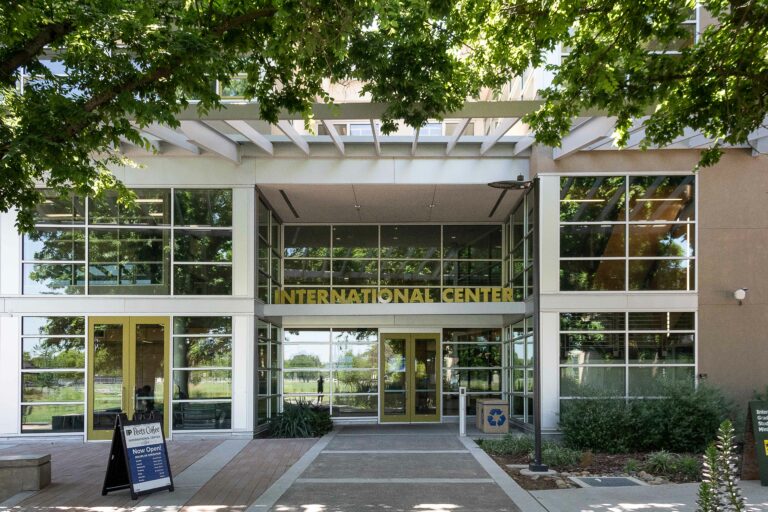
Services for International Students and Scholars (SISS) is a division of Global Affairs and the International Center on campus. SISS Director Wesley Young said advisors are ensuring that students abroad are granted the same foundation for success as domestic students. 

“While the International Center is physically closed, the Global Affairs team including Services for International Students and Scholars (SISS) staff continue to work from home to ensure that our services to students are not interrupted,” Young said in an email interview.

International students taking virtual courses abroad can still reach advisors virtually. Appointments can be scheduled on the SISS website.

Professors have been urged to update teaching formats to accommodate all students. 

“All faculty have been encouraged to record their online classes so they are accessible to students during normal daytime hours no matter where they live,” Young said. 

Students like Rohra have seen professors accommodate accordingly.

“One of my professors removed mandatory attendance [from the syllabus] and transitioned to recordings we can access at any time,” Rohra said.

Mikhija said SISS has maintained communication with students virtually via frequent emails reminding students of resources and time zone information. Additionally, SISS regularly updates coronavirus-related changes to global learning online.

“SISS staff are working from home, actively advising and supporting international students,” Young said. “We encourage students to take advantage of some of the services available through campus to help cope with this challenging time.” 

President Donald Trump’s recent executive order banning immigration may affect international enrollment. 

“Students who still have not obtained a non-immigrant visa (such as F-1, J-1, TN, E-3, O-1 or H1-B) should be monitoring local U.S. consulate websites and be prepared to submit a visa application as soon as consulates begin taking visa appointments again,” Young said. “Students can learn more about this at this recent announcement on our website.”

The president’s immigration ban should not affect students currently enrolled at UC Davis under non-immigrant visas (F-1, J-1, TN, E-3, O-1 or H1-B) nor permanent legal residents (LPR/Greencard), Young explained.

“This proclamation is valid for 60 days, but there may be additional restrictions recommended that affect non-immigrants, including students,” Young said. “We continue to monitor the situation and will keep students updated on any changes.”

Written by: Hannah Blome — campus@theaggie.org

COLA movements among groups who participated in May Day actions

Strikes and protests reflect discontent with handling of COVID-19 measures

Cost of Living Adjustment (COLA) movements from seven UCs, including UC Davis, went on strike on May 1, International Workers’ Day, withholding labor and organizing car rallies in their respective neighborhoods. 

According to a joint press release from COLA movements UC-wide, the actions were a call for full investment in universities, public education and public services. 

“Not one dollar cut, not one layoff, not one life lost,” the statement reads. “The months-long fight for a COLA has sought to highlight a fundamental, structural hypocrisy of the UC system: Despite sitting on billions of dollars, the UC does not think its graduate student workers deserve a living wage and financial security when it accepts them into their ‘world-renowned’ programs.”

In the press release, COLA organizers called for the UC to give graduate students guaranteed summer funding, extend time to degree and funding packages by a year and drop non-resident supplemental tuition for international graduate students.

Anthony LaBarbera, a first-year graduate student at UC Davis, said in a previous interview with The California Aggie that he hadn’t yet started his research when the pandemic began. 

“We can really just focus on our research,” LaBarbera said about summertime, adding that he’s not “too worried” about his timeline being pushed unless summer began and he still couldn’t go into lab — at that point, he explained, he’d be thrown off “about a year.”

Though there’s a possibility that UC Davis Summer Session II lab courses may be online, both Summer Sessions I and II will be administered through remote instruction. Currently, only research related to COVID-19 is being conducted on campus. 

These changes motivated other UC Davis graduate students to circulate a petition calling for similar concessions, laid out in demands included in the COLA organizers’ press release, from UC Davis’ Office of Graduate Studies.

The Aggie reached out to the UC Office of the President for comment regarding graduate educational changes. UCOP did not send a response before this article went to press.

COLA movements were among the more than 80 graduate and university labor organizations that took part in May Day actions on May 1, International Workers’ Day.

UC Academic Federation of Teachers (AFT), a union representing lecturers and librarians across the UC, was one such organization. UC-AFT put an online picket on its website featuring allies and UC-AFT workers sharing how layoffs would impact them.

As of Jan. 31, UC-AFT lecturers are without a contract.

John Rundin, a lecturer teaching ancient Greek and Latin at UC Davis and the former president for UC-AFT Local 2023, said on the online picket that if all lecturers in his program were laid off, the discipline could be killed. 

Rundin, who has spent 19 years teaching for the UC, also said a layoff on June 30 would be “very sad,” given how close he was to retirement.

“A layoff would damage my retirement severely […] and my partner of decades and I would lose good medical benefits,” he said. “We need those for my partner’s arthritis.”

Another post on the online picket, sent in by Nora, a third-year undergraduate at UC Davis whose last name was withheld, called for the university to be more transparent about where tuition money is going — which will not decrease whether or not instruction is remote.

“The school states lengthy and quite unproductive emails [about] how they will continue to support the community, yet they decide they will lay-off amazing lecturers who provide so much to the university,” she wrote. 

The most recent bargaining session UC-AFT had with the UC was on March 21

Other May Day actions occurred nationwide, with workers from FedEx, Instacart, Target, Amazon, Walmart and Trader Joe’s striking for hazard pay, stricter social distancing and cleaning measures and greater sick-leave policies. 

In multiple press releases, all of the aforementioned companies have affirmed their commitment to workers’ safety, citing measures they have taken to acquire protective equipment for workers and lay out social distancing guidelines in stores. 

Workers, however, disagree. One of the organizers of the May Day actions, Willy Solis, said in an interview with The Washington Post that Target is not following through on its commitments.

“In reality, only a very small portion of people received [PPE],” he said.

Meanwhile, protestors unsatisfied with Gov. Gavin Newsom’s shelter-in-place orders headed to Huntington Beach, with The Guardian reporting that nearly 3,000 people protested there. At the State Capitol, where The Sacramento Bee said roughly 1,000 came to protest, 32 protesters were arrested.

These actions underscore the increasing frustration and dissatisfaction at changes the pandemic has caused and, according to COLA organizers, the hypocrisy of larger institutions. 

While the COLA movement has been building since last November, the car rallies on Friday happened in the wake of UC Santa Cruz COLA organizers announcing on April 27 that they planned to submit Fall and Winter Quarter grades that were initially withheld as part of the COLA movement.

“By submitting the grades we have carried through our struggle, we ensure that our students receive the grades they earned despite the administration’s continued indifference towards undergraduate education,” the statement reads.

Organizers also said in the statement that building toward an Unfair Labor Practice (ULP) strike — a strike sanctioned by UC graduate students’ union, United Auto Workers (UAW) 2865 — represents the strongest path to fired graduate student instructors’ reinstatement, with the UAW-2865 proposed contract also calling for a salary raise to $40,000 a year for all graduate students.

UAW-2865, which announced it would hold an ULP strike vote in early April, is pushing for 5,000 union member pledges before it calls the vote. There are currently over 2,300 union members who have pledged to vote in favor of authorizing the strike. 

Written by: Janelle Marie Salanga campus@theaggie.org 

UC Davis hosts COVID-19 public awareness symposium via Zoom, YouTube

Experts across variety of disciplines answered questions about novel coronavirus

UC Davis experts on immunology, infectious diseases, pathology and emergency medicine gave presentations and answered questions from the public about the novel coronavirus. The “COVID-19 Symposium: Answering your Questions” was held on Thursday, April 23 from 1:30 to 5:10 p.m. Close to 1,000 viewers tuned in to watch the free program via Zoom and YouTube, according to a UC Davis Health article

For those who missed the symposium but still want to watch, a video of the broadcast can be viewed on YouTube. It can be found on the “Biochemistry Channel” YouTube channel owned by Walter Leal, the moderator of the symposium and a distinguished professor in the Department of Molecular and Cellular Biology.

One goal of the symposium was to give professionals a platform to speak about their latest insights and research regarding COVID-19, Leal explained. 

“There is a lot of pent-up demand to hear the evidence around this condition,” said Nathan Kupperman, a professor and chair of the Department of Emergency Medicine at the School of Medicine. “It is so dramatic and there is a lot of misinformation at the highest levels of government, and the social media and the web. The UC Davis webinar presented experts that could provide solid evidence to a very interested population.”

Another goal was to provide an opportunity for the public to ask questions to experts regarding the pandemic, Leal said. The audience could submit questions beforehand or in the chat during the symposium. There was so much involvement that the symposium ran over an hour after the scheduled closing time. 

“We had so many questions, it became more than three and a half hours,” Leal said. “It was a long one, but it was worth doing that.”

Most attendants of the webinar were from Yolo County, however, people from all around the world tuned in, including from Germany, Brazil, Indonesia, Mexico, Canada and Slovakia, Leal said. 

“People from all walks of life came,” Leal said. “People from UC Davis, staff and faculty, and the general public attended. Even some politicians [and] community leaders attended.” 

Leal drew inspiration for the webinar because so many people were asking him questions that he could not answer about the virus. Leal knows a lot of professors and experts that could answer these questions, so he used his teaching skills to organize the speakers and make the symposium happen. 

“I called a lot of professors to ask them to participate,” Leal said. “Almost every single person that was invited accepted. We got together a wonderful panel that was able to address most of the questions that [the audience] had.”

Chancellor Gary May kicked off the symposium through an introductory address in which he welcomed the presenters and described how UC Davis has been both affected by the pandemic and involved in battling the pandemic. Leal explained the schedule and the five main speakers then gave their presentations and answered questions from the audience. 

The first speaker, Emanuel Maverakis, a professor in the Departments of Medical Microbiology, Immunology and Dermatology at the School of Medicine, compared Taiwan’s strategy with that of the Centers for Disease Control and Prevention (CDC) in the U.S. Maverakis spoke about what could have been done to prevent the severity of the pandemic. 

“I did complain about there not being national reporting guidelines,” Maverakis said. “This pandemic has been going on forever. You would think that our country would have some national reporting guidelines on coronavirus.”

Maverakis also explained the importance of wearing masks and keeping proper hygiene. He said, however, that washing one’s hands too frequently can be problematic for people with sensitive skin, so a balance of cleanliness and safety is important. 

“All of the soap is too much for some people,” Leal explained. “Too much soap might be problematic and may have eaten [away] from the skin.”

Kupperman, another main speaker, shared about the UC Davis Medical Center’s preparations for the pandemic. The hospital has access to personal protective equipment, ventilators and other supplies, so it is able to support infected patients. Now that the infection curve has flattened, the hospital is seeing fewer COVID-19 patients.

“My big message was that the COVID situation in California is fortunately under relative control because we have a very enlightened governor, and because of physical distancing and sheltering in place and everything we have done to flatten the curve,” Kupperman said. “We did not see the massive influx of patients that other cities like New York, Detroit or New Orleans have seen.”

People with emergencies unrelated to COVID-19 are delaying coming to the emergency room in fear of contracting the virus. Hospitals are safe places, as all staff, patients and visitors are wearing masks and staff and visitors are screened for temperature and symptom checks, Kupperman said. 

“The bigger danger is ignoring your health needs, especially if you are sick and having an emergency,” Kupperman said. “You need to come in and get care.”

Staurt Cohen, another speaker and a professor and chief in the Division of Infectious Diseases at the School of Medicine, discussed the various implementations of clinical trials to find antiviral treatment and vaccines for COVID-19, especially those that UC Davis has been involved in.  

“I went through the clinical presentation of patients, how they show up, what their symptomatology is, what we see on exams and then how long it takes to get infected [and] how the virus is transmitted,” Cohen said. “And then I talked about some of the potential drug treatments.”

Nicole Baumgarth, a professor in the Center of Comparative Medicine and the Department of Pathology, Microbiology and Immunology in the School of Veterinary Medicine, explained the structure of the virus, the way it spreads and its genetic ancestry. 

State Sen. and Dr. Richard Pan, the chair of the Senate Committee on Health and a member of the Special Committee on Pandemic Emergency Response, gave an update on the status of the outbreak in California. He compared the state’s response to the outbreak to New York, illustrating the importance of California’s timely shutdown of schools and businesses as well as the shelter-in-place restrictions.  

“We are not even close to the point where we have enough people immune to the virus,” Pan said during the symposium. “The state has a roadmap to opening and lifting shelter-in-place and loosening up restrictions, but there is a need to expand testing capacity and implement consistent restrictions across the country. The restrictions are hard, but the alternative is even worse as we are as strong as the weakest link. The data and the science have to drive the decisions related to COVID-19.”

In addition to the main speakers, other experts gave presentations. You-Lo Hseih, a distinguished professor in the Department of Textiles and Clothing, explained the differences between regular masks, surgical masks and N95 masks, as well as what the public can do when masks are unavailable.

 Back in 2016, Leal organized a similar public awareness symposium about the mosquito-borne Zika virus. Cohen, who also participated in the Zika webinar, said Leal is 

“terrific about going out and finding outside experts and bringing people onto the call.”

After the webinar, the team received positive feedback. Members of the public expressed their thanks at the opportunity to be better informed, Kupperman said. 

“By trying to address the fears of people and trying to provide accurate information, I think that it really ultimately helps everybody,” Cohen said. “It helps people understand what’s going on and helps people feel like they’re not totally in the dark.”

Written by: Margo Rosenbaum — science@theaggie.org

New Esports Digital Recreation Program launched

Gunrock Gaming, Campus Recreation team up to bring Esports program to UC Davis

In light of the recent shift to remote learning and the precautions taken to minimize social contact, UC Davis Campus Recreation made the decision to cancel all planned Spring Quarter intramural sports. In place of these activities, Campus Recreation has teamed up with Gunrock Gaming to expand the rec sports program and bring an Esports digital recreation program to the UC Davis community.

The program, which falls under the Aggies at Home initiative, is currently open for enrollment. It will allow students to connect with one another and compete in a variety of online games and tournaments. To determine which video games to include in the program, Campus Recreation and the Gunrock Gaming solicited feedback from the UC Davis community via surveys. Through these surveys, they were able to gain a better understanding of what resources students currently have access to, student preference for timings of competitions and which games to include in competitions.

Luis Castro, the lead for the Aggies at Home Esports Committee, said the goal of this program is to help expand the recreation center service from strictly physical to online so that students can continue to stay connected to campus and each other. 

“The goal is to bring students together through competition and create a community even if participants are miles, states, or countries apart,” Castro said via email.

The program will include a large range of games that are both team-based as well as played individually, including Super Smash Bros Ultimate, Call of Duty: Warzone, FIFA 20, League of Legends and more. Registration to take part in the online tournaments is free, and many of these games were chosen because they are free to play online. 

Castro, a gamer himself, got involved with the program as a way to combine his passion for gaming with community service and to help students stay connected with one another.

According to Ferguson Mitchell, the assistant manager for the Memorial Union in charge of the games area, the idea for the Esports program has been around for a while. Conversations about a possible gaming recreation program started when the Gunrock Gaming facility was first launched in April of 2019. Now, with all in-person instruction canceled, the idea was brought up once again. 

“It’s a really good time to engage, because a lot of people are turning towards gaming [and] the internet,” Mitchell said.

Mitchell said he hopes the interest from students in the program this quarter will allow him to keep the program running as a permanent feature of the Gunrock PC gaming facility and rec sports, even once the campus resumes in-person instruction.

For Mitchell, the desire to bring gaming to the whole campus is personal. As an undergraduate student at UC Davis, Mitchell founded a Starcraft video game club that competed on the national level. After developing his passion for video games, Mitchell began competing in the Esports world in 2010. 

Despite graduating with a degree in civil engineering, Mitchell found his passion through the club he founded. Once he graduated, he focused on making a career for himself within the Esports world. 

“I turned [that passion] into a career, and I’ve been doing Esports streaming for a while and then Esports journalism for eight years now,” Mitchell said. “It’s kind of like a night and weekend job I still have and I like doing just to stay involved in that community.”

Although the Starcraft club disbanded due to the rising popularity of other games, such as League of Legends, Mitchell still maintains a connection with the gaming club on campus. He regularly communicates with them through the UC Davis gaming discord channel and helps arrange events including online tournaments at Gunrock Gaming and the MU. 

Mitchell is intent on continuing to foster the sense of camaraderie and fun, not just for the students involved in those clubs, but also for anyone in the student body with an interest in gaming. Through the discord channel, Mitchell regularly checks in with the student gaming community, asking them what times work best for the members, what games they want to play and what kind of support he could provide them. 

“People want support with mental health right now,” Mitchell said. “I was surprised to see that being the number one thing, and I think it’s just acknowledging that we’re all kind of going through a really tough time with how things have changed. And that is my number one goal right now, to support students, to give them a place to go to have fun [and] to try to capture some of those feelings they would have hanging out with friends on Friday night.”

Those interested in getting involved in the gaming community on campus can join the Gunrock Gaming Discord channel or sign up to participate in the E-Sports Recreation program through Fusion IM.

Written by: Priya Reddy — sports@theaggie.org

The end of an era: Tom Brady’s move from New England to Tampa Bay

Brady leaves Patriots after 20 seasons, joined by former teammate Gronkowski

One of the biggest headlines from this year’s NFL offseason is Tom Brady’s transition from the New England Patriots to the Tampa Bay Buccaneers. On the morning of March 17, the former Patriots quarterback announced that after 20 seasons in New England, he was preparing to continue his NFL career elsewhere. 

Speculation of Brady’s departure started to develop among fans in New England toward the end of what turned out to be his final season as a Patriot, as he was set to become a free agent at the end of the 2019–2020 season. 

Just a few days after his announcement, it was confirmed that Brady had signed a two-year contract with the Buccaneers, leaving the Patriots with the difficult task of somehow moving forward without their future hall-of-famer at quarterback. 

Although Brady’s decision did not come as a huge surprise to Patriots fans, it was one that put him in rare company. Assuming that he finishes his career in Tampa Bay, Brady could potentially join a list of quarterbacks, such as Brett Favre, Peyton Manning and Joe Montana, who finished their football careers with other teams after each dedicating over a decade to the respective organizations they began with. 

For Tampa Bay, Brady’s arrival can only be beneficial for a team that has never really posed a significant threat to the rest of the NFL. Brady will, however, be working with a new and improved offensive line, in addition to the powerful receiver duo of Chris Godwin and Mike Evans.

Godwin, who finished third in the NFL last season with 1,333 receiving yards, and Evans, who finished the season with 1,157 yards, will most likely be working with the new level of experience that Brady brings to the team to produce a productive offense for Tampa Bay going into next season.  

This is especially true now that Brady’s former teammate and superstar tight end Rob Gronkowski announced that he would be coming out of retirement to reunite with Brady in Tampa Bay. Acquiring Brady was already advantageous enough for the Buccaneers, but the addition of one of the league’s best tight ends could prove to be the competitive boost that the Bucs needed going into next season. 

In their time together on the Patriots, Gronkowski and Brady had an undeniable chemistry, one that Tampa Bay is hoping to continue. Since Gronkowski entered the league in 2010, the pair have connected for 78 touchdowns, by far the most Brady has thrown to any receiver in his career. 

For New England, it faces the unfortunate reality of having to fill the gap that Brady left behind. Going into this year’s NFL draft, many assumed the Patriots would pick up a new quarterback to help fill the huge loss they had at the position, but were surprised to see that never happened. 

Instead, the Patriots are most likely looking at 23-year-old gunslinger Jarrett Stidham, Brady’s backup from last season, to carry the team. It is obviously a huge shift to go from one of the most experienced quarterbacks in the league to somebody who has only been in the NFL for one season and has yet to make his first regular season start. 

The Patriots also have journeyman quarterback Brian Hoyer as an option, who is now returning to New England for his third stint with the team. With Hoyer entering his 12th NFL season, Stidham likely presents a more viable option to develop at the quarterback position. The upside for the Patriots is that both Stidham and Hoyer have experience working with Brady and already have some knowledge of the New England system. 

The Patriots did end up signing two free agent quarterbacks who went undrafted, but it is unlikely that either will be preferred over Stidham or Hoyer. New England’s disinterest in picking up a new quarterback in the draft could be interpreted as a show of confidence in Stidham and his ability to perform for the team. 

Brady’s move to Tampa Bay will also now open the league to a new sense of competition. The Patriots have dominated the AFC East and the NFL in general since Brady became their starting quarterback and carried the team to nine super bowl appearances and six championships. But teams that have been overwhelmed by the Patriots for the last two decades now see a chance to compete for a postseason spot. 

This move is also just one of a handful of changes seen in this year’s NFL draft at the quarterback position. With the addition of Brady, the Buccaneers let go of their former starting quarterback Jameis Winston — who was originally expected to receive a new contract — and has since signed with the Saints. Although this makes sense for Tampa Bay, it brings about the question of what New Orleans has planned for their current starter, Drew Brees, and his career going forward. 

A similar situation arose in Green Bay, with the Packers surprisingly drafting quarterback Jordan Love from Utah State in the first round and raising similar questions of what the organization sees for the future of their veteran quarterback Aaron Rodgers. 

The Cincinnati Bengals, who went 2-14 last season, made the most expected choice by taking Heisman Trophy winner and national champion LSU quarterback Joe Burrow with the No. 1 overall pick. The Chargers also acquired Oregon quarterback Justin Herbert to replace former starter Philip Rivers, while the Dolphins used their first round pick on Alabama’s Tua Tagovailoa. Clearly, next season will see a good amount of young QB talent as each of these players will benefit their respective teams in their own ways.

Of course, this is all contingent on whether or not the 2020–2021 football season takes place as scheduled due to the adjustments and suspensions taking place in sports due to the coronavirus.

Although NFL fans will just have to wait to see exactly how much the Bucs evolve with Brady and Gronkowski, it’s clear that the team will ultimately be improving overall and can possibly be considered one of the teams to compete with.

Brady’s departure is definitely going to impact the Patriots, but it is unclear whether they will be an especially unsuccessful team without him. A good part of Brady’s success in his career can be attributed to head coach Bill Belichick, who is known for the high standards he maintains for the team, and will definitely not allow the team to completely fail without Brady.

For Patriots fans, this offseason marks the end of an era in which they were able to watch Brady grow and perform for 20 years. He delivered endless dedication and brought what felt like constant success to New England. But now, a new chapter begins. 

Written by: Rain Yekikian — sports@theaggie.org

How students, hair stylists are handling shelter-in-place orders

Reopening Davis salons, barbershops 

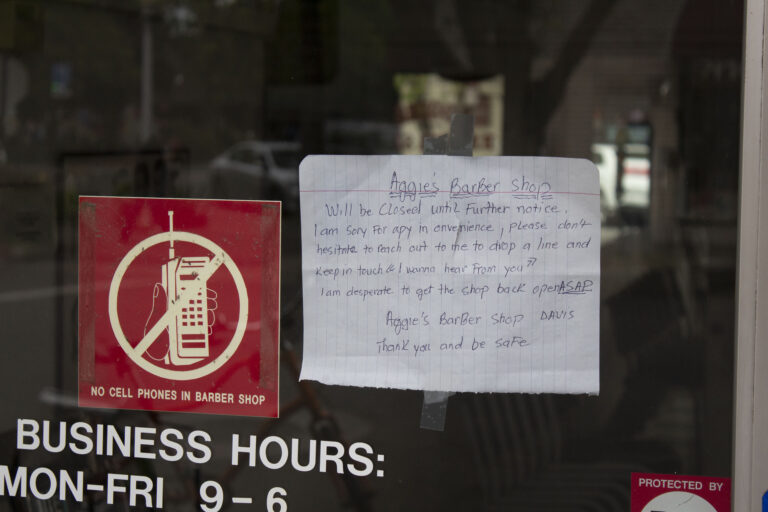
Yolo County officials extended the shelter-in-place order through May 31, with exceptions for religious drive-in services and construction, more than a month after the county issued the initial order. Social distancing measures have struck salons and barbershops in Davis as many students, the most substantial clientele, have gone home. In a press conference on April 28, Gov. Gavin Newsom presented the four phases for reopening California, with salons and barbershops remaining closed until phase three, which could be weeks or months away.

These shelter-in-place orders have led to financial hardships for some local business owners. 

Motown Guerrero, owner of Motown Barber, said several desperate clients have offered to meet him in a park or even asked him to come to their homes. Guerrero has limited his services to his family in his home and close friends. He wears gloves and a mask, and requires others to do the same, but he is still hesitant to cut hair. Guerrero plans to talk to his bank to apply for a loan to get him through the next couple weeks after finding no luck online. 

“The problem is that the government tells us there are these programs we can apply for, but when you go online and apply, there’s nothing there,” Guerrero said. “They said the website would be up by April 28, but I gave up.”

At the time this article was written, the Professional Beauty Association began accepting applications for a $500 relief fund.

Guerrero relies on students, especially students who stay in Davis during the summer. But that may look different this year. Guerrero said he plans to reopen, despite the social distancing measures. 

“I’m going to open on Tuesday because I have to do it,” Guerrero said. “I’m only going to do appointments and have one person at a time.”

Jacquie Crabtree is the owner of Strands Salon in Davis and a member of the Board of Barbering and Cosmetology. Crabtree and her employees have been more fortunate in finding financial relief since they are, in fact, employees and not independent contractors — making them eligible to file before the CARES Act. There is, however, the question of paying rent at the four Strands Salon locations in Davis, Natomas, Elk Grove and East Sacramento. 

“The Davis landlord has been amazing, Steve Boschken,” Crabtree said. “He’s workable with us and understanding.”

Crabtree applied and received a personal protective equipment loan to prepare to reopen safely when the shelter-in-place order is lifted. She is also working to release health and safety guidelines for other beauty workers in California with the Board. 

“With the shelter-in-place, I understand that people are desperate to get their hair done, but I find it very selfish,” Crabtree said. “We need to care about our health more at this point, more than getting our hair done.”

Others are taking this time to experiment with scissors and clippers. Social media has been saturated with people buzzing their hair off and others attempting to dye their hair. 

Trevor Carpenter, a third-year computer science major, said there hasn’t been a better time to bleach his hair. 

“I’d been talking about it for a long time, so it wasn’t super impulsive,” Carpenter said. “I knew how I was going to do it and had a plan. Shelter-in-place just gave me the motivation to finally do it.”

Written by: Josh Madrid — arts@theaggie.org

Culture Corner with Alyssa Ilsley

The Arts Desk’s weekly picks for television, movies, novels and music

Television: “Bojack Horseman”

Since the last season premiered this January, Bojack Horseman should be mentioned as one of the best animated comedies since “The Simpsons.”  What began as a show about a quick-witted, but cripplingly depressed, horse-man has evolved during its six-season run to be a contemplative analysis of the human condition. Characters in “Bojack Horseman” wrestle with trauma, substance abuse and mental health problems in a painfully accurate and beautifully written way. Of the last season, “Good Damage” is one of the most well-animated and empowering episodes. It explores the concept of trauma and the ways in which people attempt to cope with it. 

Movie: “Little Women” (2019)

Greta Gerwig’s take on this classic tale is fresh and unique, reinvigorating the beloved story for our modern times. The cast is made up of many well-respected contemporary actors, from Laura Dern to Meryl Streep. The most notable performance, however, was Saoirse Ronan’s role as the strong and independent Jo. She imbues humor and passion into the character and acts as the glue that keeps the entire story together. Timothée Chalamet’s depiction of Laurie became a fan-favorite as well, and it is hard not to be charmed by his depiction of the heartwarming and romantic character. 

Novel: “Born a Crime: Stories from a South African Childhood” by Trevor Noah

In his new autobiography, comedian and political commentator Trevor Noah details his childhood in South Africa and the several odd jobs he worked while struggling with poverty before landing his role as the host of “The Daily Show.” The novel is praised for its wit and endearing anecdotes, as well as his depiction of growing up mixed race and his constant search for belonging. The book is fascinating and thoroughly enjoyable to read. 

Musician: Noah Cyrus 

Sister of popstar Miley Cyrus and daughter of country music artist Billy Ray Cyrus, Noah Cyrus has a long history in the entertainment business. She began her acting career at the age of two. Since 2016, her focus has been on her music. She is vocal about her struggles with addiction and mental health, and her transparency courses through her music. Cyrus’s hit song “July” was released in 2019 and depicts the downfall of a toxic relationship. The somber lyrics over a folk-inspired beat is almost haunting and truly feeds on the heart of the listener. 

Written By: Alyssa Ilsley — arts@theaggie.org

Humor: Amid pandemic, Brazil loses 7-1 to President Bolsonaro

A defeat to exceed the embarrassment of the nation’s 2014 loss to Germany?

At the 2014 FIFA World Cup, Brazil suffered what was arguably the most humiliating and catastrophic defeat in its footballing history, losing 7-1 on home soil to Germany. Star forward Neymar was ruled out after fracturing a vertebra in his spine in the previous match. Six years later, Brazil finds itself hosting a match against COVID-19, an even more formidable foe than Germany (Germans might beg to differ, especially their chancellor). But luckily, this time around, Brazil’s new star player, President Jair Bolsonaro, is fit to lead his nation to victory, despite having fractured his frontal lobe (and, of course, having been stabbed a few years back). The Aggie’s play-by-play commentators Pelle A. Baipplae and Comán Tater were in Brazil to tell us about this high-profile sporting event.

Live match text:

0’ Kick Off: First half begins. Coronavirus enters Brazil’s half, with the first cases coming from wealthy people traveling abroad. But the virus is now passing with great fluidity and making its way into the final third, leaving Brazil’s crowded, low-income favelas wrongfooted as it breezes toward the penalty area with great efficiency.

10’ Corner, Coronavirus. Conceded by Bolsonaro. Bolsonaro told to defend the near post — fails to heed these tactical instructions, minimizing the threat of an opposition goal. Claims without evidence that Brazil’s state governors are manipulating the number of coronavirus cases for political reasons.

11’ OWN GOAL! Brazil 0, Coronavirus 1. President Bolsonaro with an own goal from point blank range. By thinking offensively and not being where he was supposed to be, Bolsonaro managed to deflect an opposition shot into his own goal. Bolsonaro argued that conceding a few goals does not matter when the economy — a good offense — should be prioritized over a good defense: “I’m sorry, some people will die, they will die, that’s life. You can’t stop a car factory because of traffic deaths.”   

23’ OWN GOAL! Brazil 0, Coronavirus 2. Can you believe that? It’s Bolsonaro with another own goal, saying that a “little flu,” a “measly cold” can’t hurt him. Bolsonaro adds that Brazilians can be dunked in raw sewage and won’t “catch a thing.” 

24’ OWN GOAL! Brazil 0, Coronavirus 3. Wow! That’s a hat-trick of own goals for the president! And he’s out there snubbing social distancing by shaking hands with his fans in a large crowd. Don’t they know he’s sabotaging their own team? Wait, what’s that? Did he just wipe his nose

26’ OWN GOAL! Brazil 0, Coronavirus 4. Bolsonaro again! Unbelievable! Despite shortages of large-scale testing, hospital beds and crucial medical supplies, Bolsonaro refuses to be a team player. He did, however, tell his fans that “God is a Brazillian, the cure is right there.”

29’ OWN GOAL! Brazil 0, Coronavirus 5. It’s only getting worse for Brazil….Bolsonaro seems oblivious to how the virus could, and already is, impacting Brazil’s indigenous populations.

45’+1’ Half Time. First Half ends. Brazil 0, Coronavirus 5. Yikes.

45’ Substitution. Substitution, Brazil. Going into the second half, Bolsonaro has made the decision to fire his health minister, Luiz Henrique Mandetta, for contradicting him by urging people to obey social distancing measures. Bolsonaro has brought Nelson Teich off the bench to replace Mandetta and his harmful defensive tactics. Teich is an oncologist who supported Bolsonaro’s presidential campaign, of course. Luckily, with Bolsonaro’s abdication of responsibility, reports suggest that gangs and organized crime have stepped up to enforce quarantine measures and distribute supplies in the favelas in the government’s place.

69’ OWN GOAL! Brazil 0, Coronavirus 6. Bolsonaro’s supporters are now protesting the quarantine measures by forming a motorcade to block access to hospitals in São Paulo. 

79’ OWN GOAL! Brazil 0, Coronavirus 7. Bolsonaro uses an executive order to overrule the state governors defying him by enforcing social distancing. Brazil’s Supreme Court throws it out. Bolsonaro reacts by holding a rally, however, and, while coughing, calls for a “self-coup” in which the military would seize power and end the quarantine. This could be a disastrous defeat for Brazillian democracy.

90’ GOAL! Brazil 1, Coronavirus 7. Brazil claws one back as the nation’s Supreme Court authorizes a corruption and obstruction of justice investigation into Bolsonaro for allegedly interfering with federal police probes. But this is little more than a consolation goal — a political crisis would likely weaken the effectiveness and cohesiveness of Brazil’s federal and state responses to the pandemic.

90’+2’ Full-Time. Brazil 1, Coronavirus 7. Bolsonaro forces the ref to officially blow the final whistle, but he unofficially knows the coronavirus is still a threat to his people. Yet, as all the Brazil fans leave the stadium in body bags, he continues to dribble down the pitch and strike the ball into the back of his own net.

Written by: Benjamin Porter— bbporter@ucdavis.edu

(This article is humor and/or satire, and its content is purely fictional. The story and the names of “sources” are fictionalized.)

Woodland nursing facility experiences coronavirus outbreak, Davis nursing homes take extra precautions

Eleven residents have died at Woodland nursing facility, 64 cases between residents and staff

An outbreak of COVID-19 among residents and staff at a nursing facility in Yolo County has left several dead and 66 people infected. Due to the susceptibility of elderly residents to the coronavirus, nursing facilities in Davis are taking extra precautions to prevent similar outbreaks and to protect staff and residents. 

The Stollwood Convalescent Hospital at St. John’s Retirement Village in Woodland had initially reported 35 confirmed cases of coronavirus, 23 among residents and 12 among staff, when the outbreak was announced on April 13, 2020. Since then, the number of confirmed cases has risen to 66, and 11 residents have died due to the disease, according to the Yolo County’s coronavirus dashboard

Stollwood facility is taking steps to keep residents safe, including screening staff for symptoms, training staff on how to use personal protective equipment and setting up a family homeline to connect residents to their families, according to a press release by Yolo County. 

Yolo County Health Officer Dr. Ron Chapman highlighted the emotional effect this outbreak has on the residents and their families in the press release. 

“We must acknowledge the suffering of family and friends at this time, who not only lost a loved one but were unable to be at that individual’s bedside due to the risk of exposure to illness,” Chapman said. “This fear and uncertainty continue for those that are battling COVID-19 and must remain in isolation.”

Sean Beloud, the chief executive officer of St. John Retirement Village, shared a similar sentiment of heartbreak and mourning in an announcement on April 28.

“We are heart stricken by the deaths of any of our residents and are incredibly grateful for the vast support and gratitude from our residents’ families in dealing with this invisible enemy,” Beloud wrote.

He added that many local community members have been showing their support through donations and kind gestures toward the community.

“For example, the Sunrise Rotary donated and delivered lunch to our staff from Cracchiolo’s Market and Deli, Woodland’s McDonalds on West Court street is donating 100 meals for two weeks in a row, and American Medical Responses’ supervisors mowed the lawns of the entire campus,” Beloud wrote.

Despite the community support, COVID-19 has proven to be a persistent “invisible enemy,” as another coronavirus case has been identified at a separate nursing home in Woodland. The affected resident lives at the Californian Assisted Living and Dementia Care facility, but they were transferred to Stollwood “since Stollwood already had resources in place and had implemented care plans and infection control measures for COVID 19 patients,” according to Yolo County’s press release. 

Though no other cases have been identified, nursing facilities throughout Yolo County are on strict lockdown, taking several precautions to protect residents and staff in an effort to prevent an outbreak. Long-care facilities were one of the first services to be restricted in response to the coronavirus pandemic. Days before the countywide shelter-in-place order was issued on March 18, a health order was distributed to long-term care facilities throughout the county, instructing facilities to limit visitors and restrict non-essential travel by residents. 

One Davis care facility, Atria Covell Gardens, began introducing other regulations in phases, which ultimately led to restricting residents to their rooms and requiring mandatory staff testing for the virus, according to Julia Blizard, the activities director in the Memory Care Unit of Atria.  

“Our community jumped on it pretty early,” Blizard said. “We started ramping up the phases. So at first, only one family member could visit at a time, and then it ended up being no family members could visit. Then the residents couldn’t eat in the dining room anymore all together, and they were all restricted to their rooms.”

Keeping residents in isolation is much harder for the residents in the memory care unit, who require more frequent care and cannot be left alone in their rooms. Despite these challenges, Blizard said the community is finding ways to keep residents connected, including hallway activities in the main facility.

“The residents stay six feet apart and usually just stand in their doorways, and they’ll do an exercise class, hallway bingo and they have a happy hour cart that goes around with ice cream or drinks,” Blizard said. “They have music performers come every once in while outside, and the residents go outside on their balcony, listening to the entertainer for the afternoon.”

Written by: Madeleine Payne — city@theaggie.org

After Temple Coffee Roasters told employees not to wear masks, CEO steps down

Following backlash, coffee company issues apologies

Before the use of masks was mandated in Yolo County, an email was sent to employees of Temple Coffee Roasters instructing them not to wear masks as it was a violation of the dress code. 

“At this time, Sacramento and Yolo County have not mandated that masks be worn at this time and Temple does not allow the use of masks in our cafes as it violates the dress code,” Office Manager Will Talbot wrote in an email, according to Sacramento News and Review. “If this changes at any point, I will send out an update to our current dress code to all team members via email and Deputy.”

Employees, however, were still able to wear gloves as long as this did not impact “job responsibilities,” according to the email. 

The dress-code policy received an onset of backlash from people across social media platforms. One comment, posted on Reddit, criticized the company’s policy: “To prioritize dress code over public health and the safety of their employees is… problematic.”

Another comment addressed the owners of Temple Coffee directly.

“If Temple Coffee is reading, I’d like them to know that some of us are avoiding stores and restaurants that do not allow employees to cover their face,” another comment read. “I want these hard-working employees to have protections and also believe that it is safer for employees to wear masks.”

Temple Coffee Roasters posted an apology on Facebook and Instagram, accompanied by a photo containing the text: “@everyone, we hear you, and we are making changes.”

“First and foremost, we owe a massive apology to our team members,” the post read. “But an apology is not enough. No apology will take back what has been done, and our company knows we need to do more to make things right and to be the company that our team members deserve. They are, after all, our heartbeat. They keep us going morning to night, seven days a week, 365 days a year. We are changing for the better, and we realize there is a long road ahead to regain trust from them.”

Employees will now be given face coverings to wear while at work, according to the post. 

Furthermore, the company’s CEO Sean Kohmescher has stepped down and will no longer be involved in decision-making according to the post.

“After admitting responsibility and apologizing for the email regarding face coverings to team members, our company founder Sean Kohmescher stepped down from his role as CEO,” the post read. “He will no longer have a say in decisions regarding policies, procedures, and company culture.”

Instead, the previous director of retail operations will take over.

“Effective immediately, our former Director of Retail Operations, Shannon Loudon, will assume her new role as Chief Operating Officer, providing guidance and oversight over all seven cafes as well as our production warehouse,” according to the Facebook post. “While we know this leaves an empty title within our company, this will not leave a gap in leadership.”

Temple Coffee issued another statement on Instagram and Facebook, acknowledging their disappointment in the email that was sent. 

“Over the past 14 years, we have had the privilege to serve our communities thanks to our amazing team members who work to make this a possibility everyday,” the caption read. “The email included misinformation and miscommunications regarding our current health and safety protocols and policies.”

According to the post, the email had not been approved by Temple Operations. 

“We are committed to creating the work environment that our team deserves,” the post read. “Thank you for the continued support of our team members.”

Written by: Shraddha Jhingan — city@theaggie.org 

Midterms in the era of remote learning

From business as usual, to no exam at all: different ways professors are administering midterms remotely

With the first ever wave of online midterms now behind us, students and professors alike have been forced to evaluate, and reevaluate, the merits of exam-based assessments and how best to navigate them in this new digital terrain.

At the beginning of the quarter, many professors who normally hold in-class, closed-note and timed exams decided against this model for this extraordinary quarter. 

Korana Burke, a lecturer in the Math Department and current Math 17B professor, chose not to administer midterm exams this quarter due to the sudden switch to remote learning. 

“Part of the reason why I decided not to give midterms this quarter is because I wanted to have some time to gather more information on how to best give exams in this kind of setting,” Burke said.

By choosing not to hold midterms, Burke gave herself time to weigh her options regarding the final — though the exact format is still up in the air. 

As Burke normally provides everything to her students but a writing utensil during exams, her goal in crafting an online examination is to have it be as close to this model as logistically possible. This means that the only barrier to taking an exam should be events out of both her and her students’ control, such as the internet cutting out. 

In place of midterms, Burke has opted for increased homework and weekly quizzes, which she is also using as data points while crafting a final. 

Other professors have decided to continue administering midterms but have changed key aspects of exam taking. 

Chemistry Lecturer Bryan Enderle, a current instructor for Chemistry 2B, has decided to follow this route by making what would normally be a closed-book exam completely open-book. Enderle chose to make the exam open-book in order to mitigate cheating and to level the playing field.

“[A] really negative result would have been a bimodal mean, which to me might have indicated access issues for people: The disadvantaged folks on the bottom of the mean and the very advantaged or savvy people up on the high end,” Enderle said.

Despite the potential for this achievement gap and fears from colleagues who expressed concerns that making the exam open-note would skew the mean, the exam’s histogram was perfectly normal. 

“The plot of the histogram was beautiful,” Enderle said. “Some better than some in-class exams.”

Another aspect of exams that every instructor must address is whether to — and how to — proctor exams. Though Burke had considered the use of a proctoring system such as ProctorU, concerns still remain about the accessibility, accuracy and privacy of such proctoring tools. Other universities, including UC Berkeley, ban the use of proctoring systems for these very reasons. Enderele decided to proctor his exam by having students unmuted in Zoom Discussion sections, allowing TAs to hear a student’s environment while also allowing students a quiet testing environment if they turn their device volume down. 

In addition to simply allowing the TAs to monitor for any suspicious activity, this form of proctoring allowed Enderle more control. 

“I was hoping [for control] in a positive way, of the students and the proctoring situation, to tailor it toward the students and to be understanding of the situation that they were in,” Enderle said. 

This form of proctoring also addresses one of the largest concerns with proctoring systems: their effect on those who have accommodations

While using proctoring systems, students who have accommodations to read out loud, to have bathroom breaks or to use assistive technology can be wrongly flagged as having potentially cheated. 

Accessible Technology Analyst Joshua Hori explained that this is why it is crucial that even though exams may be online and students are in rooms alone, students must still seek out accommodations beyond just extended time on exams.

Similarly, many students who didn’t need accommodations on campus now need them in the era of online learning. This doesn’t just affect students: The Student Disability Center is also offering 12–1 p.m. drop-in hours, Monday through Friday, for faculty and other resources on the Keep Teaching website to help support instructors during this time.  

Though the switch to online instruction has made exams more logistically challenging for some students with accommodations, others, such as those who have accommodations to take exams in a quiet room or in a room alone, are often helped by the switch to online instruction. 

In general, the switch to online instruction has made people think more broadly about testing mastery of a subject, beyond simply traditional testing formats. Hori is optimistic that this change in the way exams are administered can positively impact future students. 

Science and Technology Studies Assistant Professor Emily Merchant also expects the way that we administer exams during remote instruction will make a lasting impact on the way we view future exams. 

“I feel like [taking exams is] not a great use of class time because we only have 10 weeks to begin with,” Merchant said. “It’s possible that this will lead faculty in the future to give out-of-class exams using this kind of software rather than giving exams in class.”

Another viewpoint is that exams are not simply a way to separate students who will pass the class and those who will fail, but exams are also a tool for assessing how much students have learned and which topics need more reinforcement.

“[Exams are] a way for faculty to assess if there are areas that students are struggling with and then they can go back and cover the material that students might be struggling with,” said Susan Ebler, the associate dean of undergraduate academic programs in the College of Agricultural and Environmental Sciences. “I think faculty view exams as an important part of the learning process.” 

Written by: Jessica Baggott — campus@theaggie.org

“A big step backwards” — Chancellor, UCOP respond to new Title IX rules around sexual assault, harassment

Department of Education reveals new Title IX regulations

New Title IX regulations regarding sexual harassment and assualt were revealed on Wednesday, May 6 by the Department of Education, led by Education Secretary Betsy Devos.

These new guidelines — which will take effect Aug. 14 — were finalized after a lengthy review process initiated in 2018. Under the new rules, students accused of sexual misconduct will have full access to the evidence used against them and will be presumed innocent throughout the disciplinary process.

In response to the new rules, the UC Office of the President (UCOP) issued a statement describing the Trump administration’s new sexual assault and harassment guidelines as “misguided,” adding that the efforts of the Department of Education to implement such measures amounted to a “reversal of hard-fought social and policy gains.” 

“Imposing these new rules in the midst of the COVID-19 pandemic when students and staff are already anxious, and providing a tight timeline for compliance when schools have limited ability to meet with community members to discuss these changes, adds to the challenges,” the statement said. 

Though UCOP added that it approved of including relationship violence as a factor in the guidelines, it also said the Department of Education had disregarded much of the feedback from “students, educators, Title IX professionals and institutions across the nation” who raised concerns about other regulations. 

In particular, objections have been raised about the practice of allowing the accused to cross-examine those accusing them, and vice versa. The guidelines also narrow the definition of sexual harassment, such that a claim is only legitimate if the actions taken by the perpetrator are deemed “severe, pervasive, and objectively offensive.” Schools will also have the choice between two evidentiary standards, either through the preponderance of the evidence standard, which the UC currently operates under, or the more stringent, clear and convincing evidence standard.

UC Davis has taken a similarly critical stance regarding the Department of Education’s decision.

 “These rules narrow the definition of sexual harassment and lower the standards to which the federal government holds schools,” said Chancellor Gary May in a statement. “These changes are a big step backwards and I am concerned they might discourage survivors from coming forward in the future. I join University of California President Janet Napolitano in expressing my deep disappointment with the Department of Education’s action.”

The ASUCD Gender and Sexuality Commission (GASC) has also taken a stand against the regulations. 

“The changes made by […] DeVos are linked to an essentialist or evidentiary based legal system that censors and diverts survivors from sharing their truth,” Elena DeNecochea, the GASC chair, said via email. “DeVos is in many ways saying that if you can’t prove you were assaulted (by evidence) then it never happened. We know this is not true for survivors. We are aware that sexual assault is more complex than our legal system is willing to confront.” 

According to DeNecochea, GASC is currently working with the External Affairs Commission to expand Title IX protections on campus to prevent sexual assault. She also noted that Title IX has the potential to be helpful rather than “criminalizing and promoting systems of punishment,” and described the Department of Education’s new regulation as “dismantling protections designed for survivors.” 

UC Davis is still in the process of reviewing the new regulations.

“At UC Davis, we are reviewing the new regulations and will work with the UC system to determine how they may be implemented,” said Wendi Delmendo, the chief compliance officer and Title IX officer for UC Davis, and Sarah Meredith, the director of the Center for Advocacy, Resources and Education, via email. “Nothing in the new regulations changes the support we continue to offer to survivors of sexual violence or sexual harassment.”

Written by: Rebecca Bihn-Wallace — campus@theaggie.org