56 F
Davis

Davis, California

Wednesday, December 24, 2025
Home Blog Page 339

UC President says campuses will not be fully reopened by fall

Chancellor May convenes two task forces exploring how to return to campus

UC campuses will not be fully reopened by this fall, according to UC President Janet Napolitano, who said last week that UC campuses will be “exploring a mix” of both in-person and online instruction. 

In an email sent to The California Aggie, Chancellor Gary May said that UC Davis has two task forces currently working on ensuring the safety of a potential return to campus in a “thoughtful and measured manner.” This return will be subject to local and statewide guidelines implemented by public health authorities.

 “The keys to this will be the availability of widespread testing, [contact] tracing, and isolation capability (including social distancing, masking, and quarantining),” May said. 

Some campuses have already said they are considering mixed instruction. UC Berkeley, for example, recently announced that online courses would still be offered even if in-person instruction is available during the fall term. 

But a potential return to campus is complicated by social-distancing regulations and the communal nature of classrooms and dormitories. Napolitano added that a re-opening of campus housing would necessitate “widespread testing [for coronavirus],” with a space set aside for infected students to quarantine.

Since closing its campuses, the UC has faced significant financial losses. The combination of “lost revenue and increased expenses” has been particularly challenging, according to UC Berkeley Chancellor Carol Christ in an article in the San Francisco Chronicle. The curtailing of housing and dining contracts, the lack of intercollegiate athletics as well as an “uncertain enrollment picture” — particularly among out-of-state and international students — are just a few of the challenges UC Berkeley and other campuses are facing. 

In total, the UC system lost approximately $600 million in March alone. According to Napolitano, the 10 campuses lost around $300 million due to refunds given for student dining and housing contracts, and UC hospitals lost an additional $300 million.

Napolitano noted that the financial losses accrued during the month of April are “going to be ugly.” 

Written by: Rebecca Bihn-Wallace — campus@theaggie.org


Instructors: Coronavirus pandemic requires your patience and empathy

Monday’s internet outage highlights need for flexibility in instruction

This Monday, Davis experienced an Xfinity internet outage for the majority of our waking hours — the second in a week’s time. Events like this only complicate the remote learning experience that is new to all of us: students, professors, lecturers and TAs alike. We all must prepare ourselves for the unique challenges we will face during these completely unique times, and that means that maximum flexibility from all parties in the educational system is paramount.

The nine members of the Editorial Board are, first and foremost, UC Davis students. As students, we understand firsthand the challenges of this transition to remote learning.

Our own experiences and anecdotal stories from our peers have shown us that many of our instructors do not hold our health in the same high regard we do. This came to a head on Monday, as we ourselves and our friends faced inflexible educational demands during the internet outage — demands to still attend class, to still turn in midterms and to still access online readings and other materials.

The internet was out. There was no option for many students to access or submit these required materials for our academic success. Some of us were fortunate to have data tethering on our cell phones to submit absolutely necessary assignments. Others weren’t so lucky and had to go to campus, which still had internet, all the while violating social distancing protocols.

Requiring students to go to any extraneous length to succeed educationally, including traveling to campus to access the internet during a global pandemic, is unconscionable. Our instructors need to have the health of the UC Davis community as their first priority, as the health and wellbeing of our community should be our highest concern during this crisis.

Apart from unique circumstances like Monday’s internet outage, instructors generally need to be aware of the effects of their educational expectations. Our capacity to be successful students is greatly diminished. We are stuck at home almost 24 hours a day, seven days a week. There is no library to go to for silence. There are no third-spaces for us to go to and try and get some work done. We sleep, and eat, and bathe and work all from the same space.

We want to be good students, and we are trying our best. But we can’t be expected to perform to the same academic standards as we would during any other quarter.

So, instructors, please be aware of what you are asking us to do. We are spending countless hours staring at screens to do our online readings and watch our video lectures. Our eyes are strained and our backs are hurting. Many of us don’t have the proper equipment to protect our bodies from the increased strain of sitting at a desk for hours on end.

Instructors: You must monitor the amount of work you assign. If you give a midterm during a given week, please don’t also upload a video lecture for the day of the exam. Remember, you wouldn’t be able to have a lecture the same day as an in-class exam, so don’t do the same during remote instruction. Don’t upload hours of readings and assignments to “make up for what we are missing.” We are doing our best to keep up, and many of us are falling behind.

We are at UC Davis because we value our education. Instructors, please don’t tarnish our time here with unreasonable expectations. We want to learn as much as we can, but we can only do so much. Be kind, listen to our needs and don’t endanger our health.

Written by: The Editorial Board


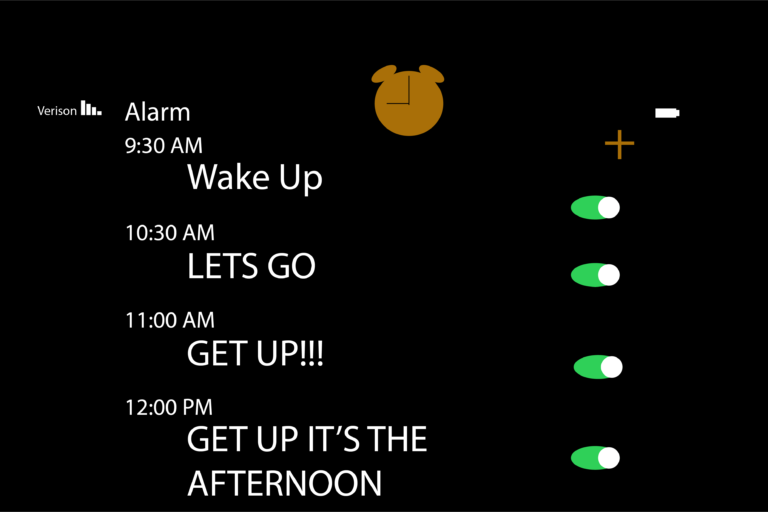
Students’ sleep schedules affected during coronavirus pandemic

How remote learning complicates natural sleep habits 

In this unprecedented time, abnormal is the new normal. Now that the whole world is out of whack, it’s only fair that we contribute to the chaos via our sleep schedules. We have surrendered to the powerful nature of sleep — so much so that we’ve become bear-like in habit. UC Davis students discussed how their sleep habits have changed since the pandemic. 

Alexander Markosian, a junior transfer and sustainable agriculture and food services major, is “definitely not a natural morning person.” What first motivated Markosian’s switch to a morning routine was the amount of screen time required for this new virtual way of life. He said this new routine is “healthier, but for the wrong reasons.” 

The visual strain of increased screen time has taken its toll on Markosian. Now that school is remote, he finds himself using technology more than usual. As a result, eye strain and headaches occur, leaving him exhausted and ready for bed at an earlier time. 

“I’m not staying up at night scrolling on my phone because I’ve already done that during the day,” Markosian said. 

Although his sleep schedule improved, it comes at the cost of increased screen time, or rather, the negative effects of it. 

According to recent studies, the blue light emitted by screens obstructs a good night’s sleep and leaves remnants of the night’s exhaustion into the next morning in the form of grogginess. 

The light disrupts our body’s biological clock — that is, our circadian rhythms that transmit messages that prompt us when to sleep and when to wake up. Data reveals that the blue light, specifically, makes us less tired and more alert through the nighttime — making it harder to get the sleep we need. 

It is recommended to set screens aside for two hours before heading to bed. That way, the body has time to readjust to its natural clock away from the artificial blue light that prevents our bodies from rest.

In addition, amid remote learning, study spaces have been compromised. Beds are now utilized as a sleep, television and study area all in one. As a result, beds have become a metropolitan of all our daily activities — convoluting work with rest. 

Markosian said he avoids doing schoolwork in his bed. By natural association of bed and sleep, he likes to “keep those realms separate.” 

Evidence of recent studies reveals that one should not study in bed to avoid cross-contamination of sleep and study habits. The choice of pressing “snooze” in the bed will inevitably lead to pressing “snooze” in your work habits — subconsciously promoting laziness in work. 

“If I start working in my bed, I start sleeping,” Markosian said. By avoiding his bed while studying, he chooses to not “mix business with pleasure.” 

Prior to social distancing, Markosian would go to bed around midnight and wake up around 10 a.m. Now that he is going to bed earlier, he wakes up earlier as well. As a result, he has established a morning routine of yoga and meditation to start off his day. 

“I feel like my mornings aren’t being wasted, there’s more time to be productive,” he said, adding that he hopes to continue this new sleep schedule once shelter-in-place orders are lifted. 

According to Oscar Hood, a second-year economics major, treating social distancing “as a blessing in disguise” keeps him grounded amid the pandemic. 

Although Hood admitted that his sleep schedule is now “pretty messed up,” he has been harnessing his hours awake “100%” for his music — practicing and recording until the wee hours of the morning. 

Jam sessions at 3 a.m. may not be ideal for many, but for Hood, his “circadian rhythm is naturally tuned” to the night. Since quarantine began, Hood has been “insanely productive” with pastimes he wouldn’t normally have time to pursue. 

“I’m actually kind of thriving,” Hood said. Although this is an unprecedented time with many alterations to normalcy, Hood’s methodology of maintaining sanity is by approaching it with a glass half full mentality. 

Not everyone is as optimistic as Hood, however. Some are using the extra time as an opportunity to catch up on some sleep — arguably, a little too much. 

“I’m just oversleeping and not doing anything,” said Brooke Henderson, a fourth-year human development major. “Now it’s just a habit, and I feel like I have to get so much sleep. I’m more tired than I normally am during the school year.”

Some habits die hard. Henderson admitted that her sleep schedule was healthier prior to shelter-in-place orders. Although she still goes to bed around midnight, she now sleeps in until about noon. Without the routine schedule of normalcy prior to COVID-19, Henderson has little motivation to simply get out of bed in the morning. 

“I’m just sleeping out of boredom, I guess,” Henderson said. 

Henderson’s sleep schedule now includes more naps. She admitted that although she aims for a twenty-minute cat nap, it realistically ends up being one to two hours long. 

Henderson was a morning person before the pandemic, but now she doesn’t know what she is — she’s “just asleep.” 

She is optimistic that her sleep schedule will gradually improve once shelter-in-place orders are lifted — once there is “more motivation to switch back to old habits.” 

Under the circumstances, Henderson empathizes with those suffering the distortion of prior normalcy.

“This is just so unnatural for humans,” she said. “I feel like no one should be that hard on themselves for getting too much sleep or not being productive. We’re all doing the best we can right now in this very unprecedented time.”

Sleep schedules have been altered, there’s no denying that. Whether taking this time to hibernate or hone in on your craft, everyone is learning as they go — even if it is by hitting the snooze button one too many times. 

Written by: Sierra Jimenez — arts@theaggie.org


Self-care shouldn’t cost you a fortune

It’s more than just a face mask 

Ever since “Self Care Sunday” became a trend, stores like Sephora have flourished with girls spending a fortune on face masks and bath bombs. I’m a fan of a good clay mask and a colorful bath. I’m not, however, a fan of dedicating just one day to self-care. Our bodies are our temples and deserve to be taken care of every day with more than just beauty products.

The wild popularity of this trend has created the misconception that self-care is something to be bought and that it only pertains to our skin. Rather, true self-care includes taking care of both our minds and bodies every day. 

If you’re like me, you spend a lot of time doing homework and chugging multiple cups of coffee just to get through the day. There almost never seems to be time to take care of myself. I’m lucky if I go to bed before midnight, let alone put on a face mask or paint my nails. But no matter how hard I try, I know I can’t just run on coffee and zero hours of sleep, so I’ve had to learn the importance of self-care. This means taking time out of each day to maintain my needs and keep myself sane. 

One of the best ways we can take care of our bodies is to eat food — but not just any food. Filling our bodies with sugar and saturated fats will only add to our problems. Instead, we should focus on eating clean, healthy foods that provide our bodies with the nutrition it craves. This includes foods that are fresh and unprocessed and compose well-balanced meals. It’s important to take care of our bodies from the inside out, especially when we demand so much of ourselves as students. 

This is not to say we shouldn’t indulge in comfort food from time to time. There are moments that warrant eating cake instead of an apple, and that is okay. In fact, I encourage you to do what will make you feel better — you are your own boss. Just keep in mind that you can’t survive on cake alone. 

In a similar vein, you also can’t survive on just a few hours of sleep. There are many scientific reasons why that’s not possible, but you didn’t come here to have me explain that to you. Instead, I will say that sleep is just as important as eating. Just as we need the nutrients from food, we also need to recharge by sleeping — a fancy face mask doesn’t provide these benefits. 

There are a plethora of ways in which you can take care of your body, but if you have ever taken a health psychology class, you know you can’t have a healthy body without a healthy mind. So it’s important to incorporate self-care activities that focus on your mind too. 

If you find yourself struggling to find ideas, Pinterest has a huge supply of yoga poses, journal prompts and crafts that help put the mind at ease. If this is not your cup of tea, there are plenty of other alternatives that may be helpful. Talking to a friend, going for a walk or even taking a long-overdue nap may be better for you. When it comes to our mental health, it’s important that we do what works best for ourselves — there is no one-size-fits-all approach.

Don’t get me wrong, I am all for an at-home spa day. But we shouldn’t rely solely on our skin care products for self-care. Instead, these habits should be integrated with our other personal care practices to create the ultimate self-care routine. Sometimes the best thing for us costs no money at all and requires very little time and effort. 

Self-care is different for everyone; there is no right or wrong way. So I encourage you to keep buying your favorite products, just make sure that while you do that, you also fuel your body, get some sleep and ease your mind, too. 

Written by: Kacey Cain — klcain@ucdavis.edu 

Disclaimer: The views and opinions expressed by individual columnists belong to the columnists alone and do not necessarily indicate the views and opinions held by The California Aggie

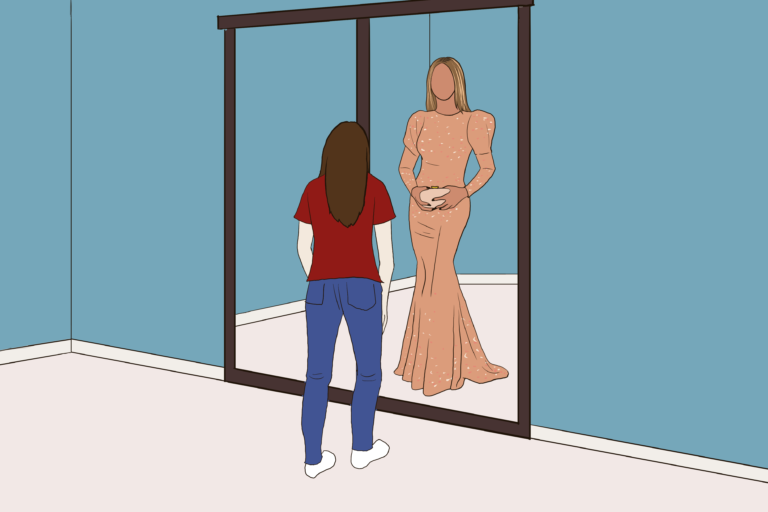
Fashion: bottom-up or top-down?

Celebrity and luxury fashion doesn’t dictate style culture, at least not alone 

I am not someone who keeps up with fashion trends, but fashion itself still plays an important role in my life. It’s one of many physical manifestations of society and culture, and for many of us, it’s an outward expression of self.

Since freshman year of high school, one of my all-time favorite style icons has been Lemon Breeland from Hart of Dixie. No one knows how to pull off bold patterns and bright fabrics better than Lemon, a sassy and gritty southern belle. But my love for Lemon Breeland’s style is just one example of the infatuation that our culture has for celebrity style and fashion. When I was bored in high school, I spent a good amount of time scrutinizing looks from the biggest fashion events like the Met Gala to celebrity streetwear, captivated by the breadth and diversity of fashion.

My obsession and fascination with different celebrity styles was just one of the many clear indications that fashion is not vain or trivial. It can be a formative experience, defining the culture and perception of different decades and eras. 

Fashion often feels like a top-down structure in which top style icons such as Blake Lively or Idris Elba sanction trends to be lauded and celebrated and become embodiments of what good style looks like. The scrutiny over celebrities’ style in fashion blogs and magazines is a testament to the immense leverage fashion has in shaping culture. From the Kardashians to Meghan Markle, celebrities live under a thick magnifying glass that serves as a means to amplify and spread their style

When taking a step back, however, I’m not sure if viewing culture through the lens of celebrity fashion is an accurate portrayal of the role that fashion plays in our daily lives. Fashion is often regarded as a topic of immense cultural value but only for those who devote the time and resources to study and scrutinize it at its depths, like celebrities, designers and other artists. But fashion is an intimate part of every individual’s being. 

We all make decisions every day, conscious or not, on what colors and patterns best define us. When we think about the trajectory of style through different decades in history, we don’t solely or even necessarily focus primarily on the trends of affluent fashion houses and designers. Every era has a style icon, but we often view these eras of fashion through the style choices of ordinary people — students, teachers, workers and others who define fashion culture based on their individual style choices.

Even changes in today’s luxury fashion encapsulate this idea. In recent years, many luxury brands have gravitated away from their usual elegant and up-scale products to more casual, laid back and informal clothing articles. Part of the reason for this shift is the increasing presence of millenial and Gen Z consumers in luxury fashion. 

Fashion and luxury aren’t one and the same, although we often conflate them as such. Many of today’s luxury brands are large fashion powerhouses that hold immense cultural capital, but it would be wrong to assume that fashion is a conversation for luxury brands to lead. This is partly because fashion is something every one of us, style enthusiast or not, interacts with on an intimate level. The resurgence of buying vintage clothing or thrifting, for example, allows consumers to find their own unique style through more affordable means. But, in part, it’s also a result of recent changes in luxury fashion. 

Luxury brands have been moving toward casual streetwear for younger consumers, incorporating sweatpants, athletic wear and other clothing items into their collections. What makes these past few years even more unique is the emergence of services that allow for millenial and Gen Z consumers wider access to luxury fashion products, even if it doesn’t mean ownership. Outlets like Rent the Runway allow for a broader range of consumers to engage with a section of the fashion industry that may have otherwise been out of reach. 

Luxury brands and the fashion industry are ever-evolving, and although this new trend may not speak large volumes, it’s indicative of the dynamic and ever-present nature of fashion. Although I may be the biggest fan of Lemon Breeland’s style, at the end of the day, fashion isn’t necessarily driven by the trends from the top of popular culture. It comes from the mingling and appreciation of the style choices and we all make every day.

Written by: Simran Kalkat — skkalkat@ucdavis.edu 

Disclaimer: The views and opinions expressed by individual columnists belong to the columnists alone and do not necessarily indicate the views and opinions held by The California Aggie

Police Logs

Virtual Picnic Day turned into backyard-dog-on-roof Picnic Day 

April 16

“Heard talking about school and test.”

“She took a picture of him because he was not practicing safe social distancing.”

April 17

“Subject coughing in respondents face as they crossed paths.”

April 18

“Approximately 6 people in backyard.”

“10-15 subjects in backyard.”

“Dog on roof.”

“10-20 subjects in the backyard.”

“Loud party.”

April 19

“Only a face mask and boxer shorts pushing a shopping cart.”

April 20

“Honey bees, not aggressive, but respondent is concerned due to being in a park, potentially full of children.”

“Slacklining.”

April 21

“Large male turkey has taken up roost in front of this business for the last three days and is becoming more aggressive with people and cars that pass by.”

April 22

“Too much going on.”

UC Davis, UC San Diego and UC Santa Cruz graduate students on grade strike submit Winter Quarter grades

Organizers call grade strike “no longer the strongest tactic” for achieving a cost of living adjustment

Graduate students at UC Davis who withheld grades as part of the Cost of Living Adjustment (COLA) movement submitted Winter Quarter grades on April 12, ending a grade strike that began on Feb. 27

UC San Diego graduate students in support of COLA, who also withheld Winter Quarter grades starting March 18, also submitted grades on April 12. On April 27, the UC Santa Cruz COLA movement released a Twitter statement saying they were moving to a “new phase of organizing” and that those withholding Fall and Winter Quarter grades would submit them.

In the statement, the UC Santa Cruz COLA organizers said that they were also submitting grades because the administration said they would be switching all missing grades to a P on May 1.

“The administration has shifted the burden of missing grades from themselves and onto the undergraduates it purports to care for and educate,” the statement reads. “We cannot allow this.” 

Organizers for UCD4COLA and COLA4UCSD both said the grading strike was causing more stress under the pandemic, and that to continue the grade strike would contradict the movement’s goals. 

COLA4UCSD said in a letter sent out to UC San Diego faculty and staff that those participating in the movement will pursue actions that won’t create additional labor for staff and faculty. 

Similarly, UCD4COLA organizers said in a statement that the strike’s end came as a result of COLA organizers reaching a consensus that the grade strike wasn’t the best way to achieve their goal of a COLA. 

“Strikers collectively decided to submit Winter Quarter grades in order to refocus our energies on a diversity of tactics and strategies,” the statement read. “Submitting Winter grades does not signal retreat for UCD4COLA and the COLA4All movement.” 

Ashley Teodorson-Taggart, a PhD student in cultural studies at UC Davis and a COLA supporter, decided before this consensus that she would submit her students’ Winter Quarter grades.

She explained that when the pandemic began to shut down campus operations during Week 10 of Winter Quarter, she started to get emails from students who needed to prioritize their families and themselves. These students were worried because they still had to carry on with normal academic responsibilities. 

“As that [finals] week unfolded, I thought very carefully about what it would mean for my students [to not submit grades],” she said. “I think as teachers, our first responsibility is to think about ethical obligations to our students and to support safe and healthy learning.” 

“Threats of disciplinary action” from Interim Dean of Letters & Sciences Ari Kelman also spurred strikers with UCD4COLA to submit grades, according to its statement.

In an email provided to The Aggie by a graduate student who asked to remain anonymous for privacy reasons, Kelman wrote that if those withholding grades did not submit them by April 13 at 5 p.m., they could face disciplinary action per Article 3 of the Unit 18 Memorandum of Understanding.

Kelman said in the email that withholding grades may violate three clauses of the article: “undue and unexcused delay in evaluating student work, use of faculty position to cause harm for arbitrary or personal reasons and participating in or deliberately abetting disruption, interference or intimidation in the classroom.” 

Though he acknowledged instructors’ efforts to protect students from potential harm caused by grade withholding, Kelman also said in his email that some students may not be prepared to advocate for themselves if they feel uncomfortable with the grade strike.

“We have many students who are very anxious about their lack of grades, including some who are facing financial jeopardy or academic peril,” Kelman wrote. “My hope is that […] given your stated interest in protecting students, you will submit your grades. […] Your conduct, no matter how well-intentioned you think it may be, is creating additional stress for these students and others.”

In a separate email to The Aggie, Kelman said he sympathizes with the cause and believes UC Davis is strengthened by organized labor. Kelman also said, however, that he supported undergraduate students and their right to their grades given the “stressful time of remote instruction,” adding that the grade strike was unsanctioned by the graduate students’ union, United Auto Workers (UAW) 2865. 

“While I respect the right of members of the campus community […] to protest, I also hope that protesters understand that there are consequences to violating the Collective Bargaining Agreement, particularly if their conduct causes harm to undergraduate students,” Kelman wrote.

COLA supporters at UC Berkeley, UC Santa Barbara, UC Santa Cruz and UC Irvine are currently still participating in some form of unsanctioned striking. 

Wildcat strikers at UC Santa Cruz withholding grades were told by UC Santa Cruz on March 30, after negotiations with UAW 2865, that the 82 graduate students fired for striking in February would be able to find a Spring Quarter appointment if they submitted Winter Quarter grades by 5 p.m. the same day. Prior negotiations between UAW 2865 and UC Santa Cruz resulted in the reinstatement of the fired students’ healthcare through summer.

Though the strikers issued a counter-offer calling for compensation for those who were unable to find appointments, UC Santa Cruz did not respond. 

According to Scott Hernandez-Jason, UC Santa Cruz’s Director of News and Media Relations, nine academic student employees had not turned in Winter Quarter grades by April 13. 

“Two of those cases turned out to be unrelated to the grade strike and we have retracted the [dismissal] notices sent to those students,” Hernandez-Jason said in an email. “We have seven cases underway.”

UC Irvine graduate students in support of the COLA movement are currently engaged in what they call a social welfare strike, creating resource lists and mutual aid networks to connect those in need of support to those who can provide it. They are doing this in lieu of teaching, grading and research.
UCD4COLA has engaged in similar mutual aid efforts, such as conducting a survey that found 37 undergraduate respondents living in “unsafe and unreliable conditions.” They then announced these results on Twitter and encouraged people to donate money to their Venmo to help these undergraduate students. 

Meanwhile, though UAW 2865 announced it would hold an Unfair Labor Practice Strike Authorization Vote in early April, the union has been focusing its efforts on bargaining for COVID-19 protections and said it was currently still looking at options for a strike authorization vote. If that vote succeeded by a two-thirds majority, all students represented by UAW 2865 would officially be on strike. 

UC has filed an unfair labor practice charge against UAW 2865, arguing that the union leaders have not thoroughly enforced the “no strikes” clause of the parties’ collective bargaining agreement. UAW, in return, filed an unfair labor practice charge against the UC for “unlawful bargaining” with individual graduate students and entities. 

In statements from the UC Office of the President, the UC has repeatedly maintained that it will not bargain with the union over a COLA until the collective bargaining agreement expires in 2022. 

Supporters of the COLA movement have been pushing UAW 2865 to move the vote up through phone banking and signing a pledge in support of a sanctioned strike, according to the UCSC COLA website

While the next phase of UCD4COLA remains in flux, Teodorson-Taggart said, right now, the top priority of the movement should be keeping people as safe and balanced as possible.

“All of these changes are happening quickly,” she said. “How do we assess the ways we contribute and support and resist [labor] extraction and allow that not to happen while also tending to the needs of our students and our families? We need to have a flexible response.”

Written by: Janelle Marie Salanga — campus@theaggie.org 

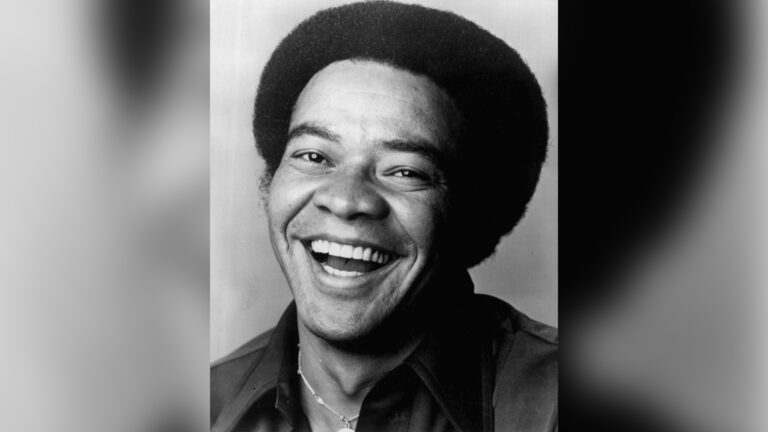
Bill Withers: remembering a laid-back legend in soul

Withers passes away at age of 81

It’s not every day that a middle-aged aircraft toilet mechanic decides they are going to try their hand at becoming a musician, and even less often that it actually works. But for a 32-year-old Navy veteran from the coal mining town of Slab Fork, West Virginia, that’s exactly what happened — and the world is better off for it. Bill Withers, whose songs “Ain’t No Sunshine,” “Use Me” and “Lovely Day,” among others, continue to delight anyone with a soul. I was saddened to learn that this timeless, straight-talking legend passed away on March 30 at the age of 81.

Withers, the youngest of six children, came from modest means in coal country where he was an outsider — not by choice, but by default. Born with a stutter, he was both the butt of jokes from his peers and the ire of impatient folk, berating him with remarks like, “Just spit it out already” (as if he had any choice in the matter). Withers found solace in his family and “learned to love through [a] fine old lady,” — his grandmother who helped raise him when, at the age of 13, his father passed away from a heart attack. In the documentary “Still Bill,” Withers fondly recalls that his grandmother’s church was filled with his favorite kind of singing: spontaneous singing. Whether intentional or not, this effortless quality seeped into Withers’ musical repertoire.

During his nine-years in the Navy, while stationed in Guam, Withers began playing music as a way to pass the time. Returning from Guam, he worked at Weber Aircraft installing toilets. In a moment of clarity, Withers decided to record a tape and try his hand in the music biz. He played his tape to pianist and “guardian angel” Ray Jackson of the 103rd Street Watts Band, where it then made its way through the grapevine and finally landed on a desk at the Los Angeles-based label Sussex Records. They immediately signed him to a record deal. 

From there, he began performing and touring with a couple of Jackson’s bandmates, including Ray Jackson, James Gatson, Melvin Dunlap and Benorce Blackman — a group of audaciously talented musicians worthy of their own signatures in the history books of soul, funk and rhythm ‘n’ blues. Despite his newfound success, Withers, being the sensible man he was, refused to leave his day job. After a performance on The Tonight Show Starring Johnny Carson, Withers’ popularity swelled and his songs filled the radio waves alongside the likes of Sly and the Family Stone, Al Green and Led Zeppelin.

Although Withers gradually evolved into a household name, he never truly embraced superstar status. He was satisfied to play music and make a good living doing it, preferring to opt-out of the industry hullabaloo. His laidback persona shone through his performances. Withers was probably best known for his abilities with pen in hand, writing songs that sheared off any hint of malarkey and cut straight to the heart. Withers said during his acceptance speech for the Rock and Roll Hall of Fame that “every kind of music has its own constituency,” and yet his own reach knew no bounds. He managed to tap into a spectrum of emotions from sorrow to safety. Honesty inherent in his technique, he wrote about everyday life and love — not just for a lover, but also for a friend and beloved relative. His songs were by no means engineered for the masses, but seemed to connect with most all the same. 

Despite his rise to stardom, he remained true to himself. When the business and the Artists and Repertoire (or in Withers’ words “antagonistic and redundant”) staff tried to bend him to fit a mainstream mold, he put his foot down and walked away on his own terms. From that point on, he slowed down the pace, shifting his energy and time to enjoy the company of friends and family.

This past summer, at a camp for children affected by different forms of grief, I was huddled with kids who were given the opportunity to share whatever was on their mind. By the end, just when all involved were either nearing or already in tears, Withers’ “Lean on Me” came through the stereo. Every kid and counselor from the ages of six to 23 stopped, sang and swayed together. Withers once remarked that all he wanted was to make simple but profound songs. Withers turned a few solemn chords on the piano, three verses and a chorus into an instant classic. “Lean on Me,” released over 48 years ago, is still admired as a paragon of amity and hope for a better tomorrow. 

There is a dark irony in the time of Withers’ passing — a time in which we crave the solidarity and love infused in his music now perhaps more than ever before. At the same time, it is also a moment in which his music’s grace and power rises to its highest ebb. We are all due to crank up some Withers and pay our respects to the tenderness and integrity of both the sound and the man.

Written by: Andrew Williams — arts@theaggie.org

The five men you will date at UC Davis

The completely accurate, irrevocable truth 

I hope I am, at the very least, self-aware. Self-aware enough, that is, to recognize that I am often a parody of myself, a man on the fringes of what constitutes a “real” adult and an old-timey cartoon character. It’s this self-awareness that has led me to realize I have a type, and that indeed, I am also very much looked at as a type, albeit a small one, mainly with women who have their favorite Renoir as a forearm tattoo.

 I have never dated a man, but I know tons of women, and men, who have. And what follows is an anthropological study on the five types of men you’ll find at UC Davis. Let it be both a vehicle and a compass on your journey to find romantic attachment in the breadth of Cowtown’s male populace. 

Man #1: The Fraternity Guy 

It’s welcome weekend, and the roommates you just met implore you to go out with them. After some prancing down Russell Boulevard, you end up at Zeta Jamiroquai Theta, or whatever their name is. A man comes up to you, strutting without caution, dressed in a brightly-colored tank top holding an even more brightly-colored bottle of Svedka. You have a couple shots, accompanied by the most average conversation. This is a guy you either have a one-night stand with or date for a year. There is no in-between. He seems nice enough, though there are probably several serious character flaws lurking under the thin veneer of his Patagonia fleece. But honestly? It’s well worth it, just to get those pics at winter formal. 

Man #2: The Indie Guy 

The moment this man enters a room it will rapidly begin to smell like patchouli. Thrifted clothes, bad facial hair and a dangly earring are all this guy needs to impress any girl who has even entertained the thought of getting a nose ring. His band will be playing at Turtle House this quarter, and he will ask you to come. Don’t be alarmed: They sound just like Tame Impala, but like, more experimental. Whatever that means. Good luck trying to actually date this guy, because he’ll probably ignore your texts for a couple weeks, saying life has “just been so crazy, we’re locked in the studio haha.” But then you see him at Mishka’s the next day with a jar of homemade kombucha, talking about jazz loudly enough so others notice. 

Man #3: The Weirdly Southern Guy

These guys may be hard to spot, because of all the camo, but once you start talking to one, you’ll know. You don’t need to scroll through his Instagram page, because every single post since high school has been the same. Cheap sunglasses, a gas station trucker hat and tons of good-looking dead fish staring straight into the camera. The weirdly Southern guy has a certain…je ne sais quoi to him. Something about him just…hooks you in, no pun intended. He’s most definitely an agricultural major, or at the very least, something adjacent in engineering or biology. Be careful, because if you’re drinking anything but Coors, Hamms or Natty Light around these guys, there will be hell to pay. Coming from the big city, I was apprehensive about being around so many guys unironically wearing Carharrt here at Davis — but they’ve been nothing but sweet to me. Until they turn on Luke Combs. Then things get rowdy. 

Man #4: The Really Nice Guy 

It’s tough to believe that this guy is really going to Davis to study the immigration rights of native bird populations, but here we are. From what one can gather, this is a genuinely good guy‚ with a winning smile, on the club soccer team, with no weird sex thing…but perhaps that is his greatest weakness, as well. The paradox of “the nice guy” is that what you see is exactly what you get. There is no satisfying gooey center at the end of that sturdy exterior; indeed, the exterior is the reward. He definitely lived in Segundo and is constantly approached first to be people’s partner in lab. If he’s from California, there’s a 90% chance he’s from San Diego, but if not, then there’s a 100% chance he’s from Cape Cod. Either way, be prepared to get respected and cared for. And for every date to be a movie night at home with a Trader Joe’s frozen entree. 

Man #5: Your Best Friend 

Oh no. Oh God. You’ve known him since you were five. Your families always went to that one Mexican place in Berkeley together. This can’t be happening…except it just did. There are a million different things that you could be telling yourself, but in the end, it just so happened that 15 years of friendship have led to the biggest sexual tension in the Northern Hemisphere. It’s fine. This is fine. While things may be a bit strange at first, the best friend is somehow unphased, almost embracing the surreal reality in which you two now live. You, on the other hand, may not be so lucky. 

Bonus: The Republican 

It was one time, okay?

Written by: Ilya Shrayber — arts@theaggie.org

Viral TikTok whipped coffee trend is thanks to second-year UC Davis student Hannah Cho

“Dueting” the infamous TikTok coffee with UC Davis’ own Hannah Cho

By now, you’ve seen it all over TikTok and Instagram stories: whipped coffee. Equal amounts of instant coffee powder, sugar and hot water are whipped together, and the resulting foam is spooned atop a glass of milk, hot or cold. Made globally popular by second-year intended human development major Hannah Cho in a TikTok that was viewed over 12 million times, the light and frothy drink combines taste and aesthetics, and it’s relatively simple to make.  

Cho forayed into the world of whipped coffee toward the end of February, and she posted a TikTok of her making the drink with her best friend on March 10. That post now has over 110,000 likes. Four days later, she posted a video that now has nearly two million views and counting.

@imhannahcho

yes i hand whisked this whipped coffee for like 20 mins bc my mommy wanted to try it 👻 she loved it!! (달고나 커피) ##korean ##fyp ##aesthetic

♬ Put your head on my shoulder cover by karlo – karlogutierrez

Armed with a two-dollar IKEA milk frother, my housemates and I took a break from studying and attempted to produce the luscious foam. Inspired by the slew of TikTok videos we had seen and desperate to finish off the milk we had in our fridge before spring break, we began by meticulously measuring two tablespoons of coffee, sugar and hot water. Unfortunately, we ended up with a dark brown froth-like sludge rather than the promised caramel-colored foam. Albeit strong, it tasted great, but as Cho says, part of the appeal is the aesthetic.

“The first video I uploaded didn’t blow up,” Cho said. “The second time I did, my mom told me that my video wasn’t pretty enough. She said it had no aesthetic value to it and she made me redo it.”

Cho said her mom is quite proud of her contribution and considers it a big “I told you so” moment. As the caption of the TikTok says, Cho made the drink for her mom, and she really liked it.

Cho didn’t expect the TikTok to go viral. She recalls checking her phone and getting thousands of views every minute. She realized that it was actually a big deal when someone from The New York Times contacted her for an article

“I was shocked at first,” Cho said. “I thought it was just going to stop, but I guess not. It became a worldwide trend. It’s crazy seeing everyone dueting my video and commenting. I didn’t expect it to get this much attention just for coffee.” 

The popularity of the drink stems from its aesthetic value as well as for its simplicity, Cho said. It requires two fairly ubiquitous household ingredients and only about five to 10 minutes of whisking, so long as you don’t use a spoon like she did. In the video, she uses a spoon to whisk the ingredients together, which ended up taking 20 to 30 minutes. After filming that video, she bought a whisk, and the whisking process took about five minutes.

Some commenters on Cho’s TikTok spoke up about not having success in creating whipped coffee.

“You need to have the perfect one-to-one ratio, or it doesn’t work quite as well,” Cho said. “If you have a whisk, use a whisk because that saves a lot of time as well. 

The issue of where the drink originated has popped up in the comments of Cho’s post as well — a number of people argue that whipped coffee is in fact a Greek frappé and others discuss it having roots in India or Thailand. Cho emphasized the fact that different cultures have different takes on the same types of food, often with different methods.

“I don’t actually know what the origin of this drink is, but I guess a lot of [cultures] have similarities in the drink itself,” Cho said. “I actually researched Greek frappés because I didn’t want people thinking I stole their culture’s ideas or anything. It is also Korean.”

With everyone in my house on a phone call or meeting, the whisk mysteriously missing (it was in the dishwasher) and a hankering for coffee, I decided to attempt whisking it with a spoon instead of using a hand mixer. This was, of course, before I talked to Cho about the process. Thirty minutes into stirring, my sister had finished her class and burst out laughing at the sight of me frantically stirring a mostly liquid mixture. It took an additional 10 minutes after that to reach foamy perfection. The coffee was good, better than the first attempt, but I would never use a spoon for this again. 

Different versions of the drink have popped up on TikTok, and Cho hopes to try them once she can leave her house to get the ingredients.

“It’s really nice to see the trend go around,” Cho said. “People are actually getting creative with it. I’ve seen chocolate, caramel, cinnamon and matcha versions of it. If I do go out, I’m definitely looking forward to trying the matcha version.” 

Inspired by another TikTok and missing Philz, my sister and I attempted to replicate the mint mojito; using the hand mixer, we were able to quickly get the desired consistency for the foam. The iced coffee is simultaneously light and decadent, and paired with mint, it makes the perfect caffeinated summer drink. We’ve made this version at least five times in the past 10 days. 

With some additional free time from being at home, I’ve experimented quite a lot with this drink and tried to make adjustments based on my family’s coffee drinking habits. My dad, who mostly drinks black coffee or Americanos, and my sister, who doesn’t like her coffee too sweet, both provided pretty glowing reviews of the coffee with a two-to-one ratio of coffee to sugar. My mom doesn’t drink coffee, and she finds it somewhat comical that we pull out the hand mixer every other day to make this coffee. Admittedly, it is a bit comical, but the hand mixer allows me to make this gourmet coffee ten minutes before my Zoom class starts. 

If you’re looking for something to do that will take up a good amount of time while sheltering in place, whisking it by hand might be the way to go.

“I’m really glad that people are enjoying it and having fun with it, especially during quarantine,” Cho said. “I know everyone’s bored and I guess this kind of eases that pain of boredom.”

Written by: Anjini Venugopal — features@theaggie.org 

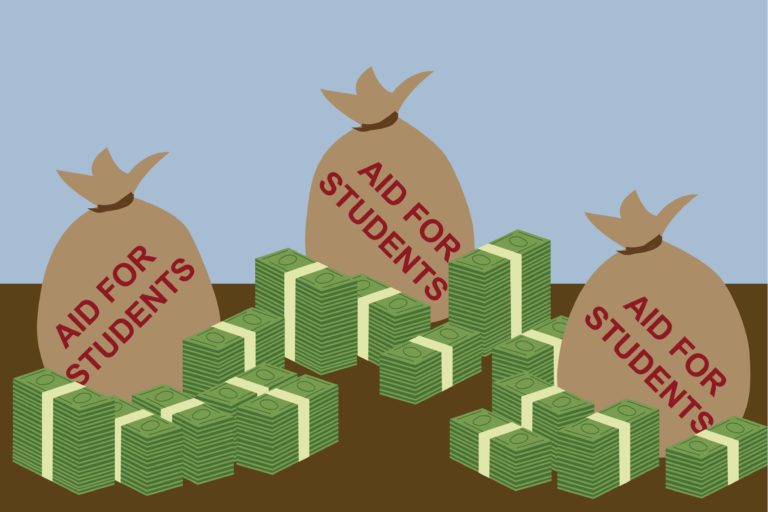
CARES Act provides aid to undergraduate, graduate students with demonstrated need

UC Davis will use institutional funds to give aid to undocumented, international students

UC Davis undergraduate and graduate students will be receiving emergency relief payments through the roughly $16.9 million the university has received through the CARES Act for such purposes.

The CARES Act is a federal bill passed in March to support the economy in the wake of the COVID-19 pandemic. Students who are eligible for a part of the $16.9 million that UC Davis has will see it appear as a line item on their financial aid packages. 

Though the aid is listed as a “cost” toward the cost of attendance for “CARES Act Related Adjustments,” it will go directly to students if they have signed up for Direct Deposit. Otherwise, payments will be sent to the addresses students have on file. 

This financial aid is different from the payouts that were made to many U.S. citizens through the CARES Act, which many college students were ineligible for because they are over 17 and claimed as dependents by a parent or another person. 

Undergraduate students with demonstrated need will fall into three tiers: Pell Grant recipients receive $1,000, other students with grants receive $750 and students with demonstrated need but no state, institutional or federal loans receive $500. 

The $16.9 million being made available to students is part of the roughly $34 million given to UC Davis through the CARES Act, though per federal guidelines, the university was only mandated to put half of that amount toward emergency relief payment for students. The other $17 million, according to Kelly Ratliff, the vice chancellor of Finance, Operations and Administration, will go toward institutional expenses. 

The CARES Act, however, dictates that students receiving aid through the act must be Title IV eligible; undergraduates who are not U.S. citizens and do not meet the noncitizen standards to qualify for federal student aid are ineligible for the CARES Act money. 

UC Davis and all UC campuses, according to Chancellor Gary May, will be using institutional funds to help undocumented and DACA students with need.

Don Hunt, the assistant vice chancellor of Enrollment Management, added that international students will also be able to receive aid through an appeal basis. That process will be explained in an email sent out to all students early this week, Hunt said.

Graduate students with demonstrated need — regardless of citizenship status — will all be receiving a payment of $600 through a combination of CARES Act and institutional funds.

The Hope Center, an organization that says it is centered around college, community and justice, produced a guide to emergency grant aid distribution that outlines three principles for distribution: minimizing red tape for students, ensuring quick distribution and application processes and imposing the least administrative burden possible to maximize equity, impact and efficiency. The UC, along with the federal government, has released its own guidelines for use of CARES Act funds, though each university within the UC system has some flexibility regarding the distribution of the money.

Hunt said UC Davis decided on a non-application-based strategy in part due to estimations that the aid would reach around half of all undergraduate students because of the university population’s high need. UC Davis reported 71% of all students, undergraduate and graduate, received some type of aid during the 2018–19 academic year. 

“Our strategy was driven by two principles: How can we reach as many students as possible? And how can we do that while still giving students a reasonable amount of money?” Hunt said. “If we used circumstance-based requirements, the money would’ve run out and it would’ve been difficult to spread our funds as broadly as we should.”

Some higher education institutions, like Montgomery College, a community college with around 54,000 students, have decided to make students individually request aid. Montgomery College’s form requires students to give their name, ID number, funding needed, information for an advocate and a rationale for funding. Each student’s financial need will be evaluated based on the information the student gave and the responsiveness of the student’s advocate.

UC Davis’ Director of News and Media Relations Melissa Lutz Blouin said via email that the university experienced over $80 million in unanticipated losses over the past month. 

Ratliff said the financial losses were related to extra costs required to move the university to a remote environment, pay university staff and faculty, offer 600 loaner laptops to students, provide access to course materials without fees and backsell department fees. 

At least 100 of those laptops loaned to students were paid for through donations, according to a previous article published in The Aggie about the program.

Ratliff added that Student Housing anticipates at least $30 million in losses and said the university needed to allocate a portion of CARES Act funds there in order to prevent steeper fee increases in the future.

“The things we’ll do with CARES Act funds are related to the university mission, and some are connected to students at large,” Ratliff said.

Undocumented students can receive money through other non-federal sources. Gov. Gavin Newsom announced a $75 million Disaster Relief Fund on April 15 that would support undocumented Californians who are ineligible for disaster relief due to their immigration status.

The press release from Newsom’s office states that around 150,000 undocumented adults in California will receive a one-time $500 per adult benefit, with a cap of $1,000 per household. The process will be application-based. 

Though there is currently a lawsuit against the fund, undocumented and DACA students will still be able to apply for grants through the AB540 and Undocumented Student Center on campus. 

Mayra Llamas, the executive director of the Community Resource and Retention Centers, said that even before the pandemic, the center had already facilitated emergency grants for students, which are application-based and restricted to once a year, with $500 being the maximum amount given out. 

As soon as the staff knew that remote instruction would be administered during Spring Quarter, they decided to increase their funding allocation for emergency grants, lifting the $500 cap and the once-a-year application restriction.

“We could immediately see the potential that students may need more aid due to wage loss, especially families and students losing their jobs, folks in Davis who were working in part-time jobs and for those whose jobs no longer existed,” Llamas said. 

Llamas added that the additional funding came from a reallocation from a mentorship and professional development program from the center that could no longer be hosted in the spring.

Llamas said the center has also been working with the Aggie Compass team to refer students to their resources, including a rent support grant, and that since January close to 65 students have been taking advantage of monthly food vouchers provided through the Basic Needs Program for students who don’t qualify for CalFresh.

“We are very open to supporting students as much as possible — we are offering emotional and legal support, but we’re seeing that students need that tangible support with their finances,” Llamas said. “Students are expressing to us that this [financial aid] is what they need right now.”

Ratliff echoed Llamas’ call for feedback.

“As decisions get made, I hope you’ll find that we’re very transparent,” Ratliff said. “If there’s something you want to know, just ask. There’s so much fear and so much for people to figure out and we want you all to have the best resources.” 

Written by: Janelle Marie Salanga — campus@theaggie.org

ASUCD Senate canceled for second week in a row

Vacant Judicial Council seat still unfilled at time of canceled meeting

The weekly ASUCD Senate meeting on April 30 was canceled for the second week in a row due to a continued vacancy on the ASUCD Judicial Council.

According to the ASUCD Constitution, the Senate cannot hold weekly meetings as long as a vacancy on the Judicial Council remains. While Senate leadership posted an application to fill the position last week and closed the application window on Monday, April 27, the meeting was still canceled as interviews took place.

Senator Samantha Boudaie, the recently elected senate pro-tempore, is working with ASUCD leadership during the interview process.

“We’re currently reviewing applications and will be interviewing candidates into the weekend and next week,” Boudaie said via email. “We are confident that Senate meetings will proceed as usual starting this coming week.”

While there was no official meeting, Senators did participate in a Zoom meeting to prepare for upcoming budget proceedings, expected to take place in the coming weeks. 

Senator JB Martinez, a fourth-year political science major, commented on the purpose of the unofficial meeting.

“We are going to have a pre-budget discussion to prepare ourselves for that,” Martinez said. “Mostly senators will be at the meeting to learn about how the budget works, allocations and how COVID-19 will impact our budget going forward.”

Written by: Ally Russell — campus@theaggie.org

The COVID-19 pandemic will change college as we know it

Universities and prospective students alike must prepare for an uncertain future

If you’re a UC Davis student, odds are you’re reading this at home.

The current COVID-19 crisis has led to the cancellation of in-person lectures across the nation. From Berkeley to Ann Arbor to Ithaca, university campuses and the college towns dependent on them have shuttered their doors. The answer to their economic woes caused by the pandemic don’t appear to be arriving anytime soon.

Colleges across the country remain skeptical of the possibility of in-person instruction returning this fall. A number of them, including Boston University and Stanford, are considering pushing the start of in-person instruction to Jan. 2021, with the latter proposing an entirely modified academic year that would begin with a “fall” quarter that same month. UC Berkeley has already stated its intentions to offer the option of remote instruction, even if in-person lectures return next semester –– a move that is likely to be replicated by universities across the nation. More and more, the prospect of ordinary academic instruction next year looks questionable at best.

The economic repercussions of COVID-19 are likely to devastate college finances as well. Even now, schools are contending with the unexpected financial pitfalls of remote instruction. Accurate numbers on just how much colleges are losing during this crisis are hard to come by, but the University of Michigan, for example, estimates losses between $400 million and $1 billion through the end of the year. The Los Angeles Times likewise reported that the UC system spent $558 million in unexpected costs in March alone. 

Should mandatory remote instruction continue through fall, colleges are likely to see a substantial dropoff in the size of their freshman classes, intensifying an already troubling trend. College enrollment has previously declined for eight straight years, with nationwide enrollment dropping by about 11% in that time period. Now it’s likely to shrink even more.

Across the nation, students and their families are debating the merits of attending college, especially when that education is now all but guaranteed to be remote. Reductions in scholarships and financial aid are likely to harm lower-income students, and there is a strong possibility that even current enrollees may not return next fall. For many prospective students, college is looking like a gamble and a heavy investment that will almost assuredly lack the usual coming of age experiences of university life. 

Consequently, high school seniors across the nation are debating just what they plan to do next year. Some are considering taking a gap year, while others are turning down their dream schools to save money and attend somewhere closer to home. Many college students too, are evaluating their future plans, questioning whether or not remote instruction is giving them what they’re paying for.

Elsewhere, another higher education experience is also crumbling under the weight of the COVID-19 pandemic –– collegiate athletics. For the vast majority of NCAA Division I schools, particularly among Group of 5 and FCS programs like UC Davis, athletic funds are accrued through tuition fees, NCAA payouts and lucrative game contracts against bigger name opponents. The cancellation of the NCAA men’s basketball tournament this year meant that the NCAA reduced its annual payout to schools from $600 million to $225 million, a gut-punch likely to affect mid-major programs more than wealthy Power 5 teams. But now, even the latter is wrestling with the possible loss of its own multibillion-dollar revenue generator –– college football. 

With the likelihood of college football this upcoming fall diminishing day by day, athletic directors have struggled to grapple with cash-stricken budgets –– some even proposing a spring football season. The dependence of so-called “Olympic sports” programs, like swimming or track and field, on money generators like football and basketball have led athletic departments to consider cutting certain non-revenue sports. This has already occurred at the University of Cincinnati and elsewhere. One Power 5 athletic director went as far as saying there was “no point” in planning a football-less budget, as the financial implications would be too devastating to even consider. 

A decline in overall enrollment would mean a loss of funding for more than just sports. Hiring freezes and staff furloughs have impacted academics and service workers alike, with substantial pay reductions likely to remain permanent. In many cases, students dependent on campus employment or crucial services, like food banks and mental health centers, are now largely deprived of these forms of assistance. Delaying these resources, even if it may prove medically necessary, could have dire consequences for a vast number of young Americans.

There are still tough times ahead. Even if COVID-19 dies down with the summer heat, experts fully expect the virus to return in strength next fall. When it does return, let’s make sure we’ve made the proper preparations to handle another school year in the heart of a pandemic. What this contingency plan consists of remains to be seen, but we better start working on it now. 

Written by: Brandon Jetter — brjetter@ucdavis.edu 

Disclaimer: The views and opinions expressed by individual columnists belong to the columnists alone and do not necessarily indicate the views and opinions held by The California Aggie

New program launched to help seniors who are currently isolated during COVID-19 outbreak

Volunteers check in regularly with YHAA Phone Friends for Seniors participants

The Yolo Healthy Aging Alliance recently launched “YHAA Phone Friends for Seniors,” a new program to help seniors who are isolated at home due to the COVID-19 pandemic. The program aims to connect seniors with resources they may need, as well as reduce loneliness and isolation. 

Sheila Allen, the executive director of the Yolo Healthy Aging Alliance (YHAA), explained the impact that COVID-19 has on seniors via email. 

“Because seniors are at high risk of suffering more effects if they are infected by the COVID-19 virus, public health officials recommend that seniors stay home and avoid going to places where public interaction occurs,” Allen said. “Even with ‘senior hours’ established by some of our local markets and pharmacies to make it safer for them to shop, many seniors can’t easily get groceries and [get] prescribed medications.”

As a result, seniors may start to experience loneliness, depression and anxiety, Allen said. 

To help, volunteers and seniors will be matched as “phone friends.” Seniors can participate in the program by signing up to receive calls or by being identified by their families, friends or YHAA’s partner agencies. The volunteers will check in and socialize daily with the program’s participants, as well as “ensure that their senior friend has the food and medicine they need,” according to YHAA’s website. Additionally, to ensure the safety of seniors, YHAA will help seniors access home deliveries for medication and food. 

“The YHAA Phone Friends for Seniors program will operate until the COVID-19 shelter in place guidance is lifted, and beyond if seniors have an ongoing desire for the social connections that will be created with phone friends,” read a press release from YHAA. 

The idea for the program originated when the shelter-in-place order for those over the age of 65 was implemented on March 15. The YHAA Board of Directors held a meeting to discuss what could be done to help people who may be feeling isolated, while continuing to support the stay-at-home order. 

“We received input from our Collaboration Committee of over 90 providers of services for older adults in Yolo County as to what they saw would be the greatest impact,” Allen said via email. “While the Yolo Food Bank and Meals on Wheels was addressing access to food we know that social isolation has many physical and mental health impacts. We also wanted an immediate community based response.”

Allen also noted that there has been “an unmet need […] to digital access for seniors.” Despite social gatherings and possibly even medical appointments being moved to an online format, seniors may not have internet access, a computer or knowledge about how to utilize their devices. 

“This is the next step we are looking at addressing through grants, donations and community involvement,” Allen said via email. “Yolo Healthy Aging Alliance would like to identify low cost internet and tablets and then community members to serve as digital buddies to assist [the seniors] getting connected.”

The general public will also be able to help in the execution of the program.

“Yolo Healthy Aging Alliance will gladly accept more volunteer callers and referrals for people to receive calls,” Allen said via email. “Moving forward we may have additional need for over the phone tech support for seniors. As a non-profit organization, we accept donations to support our work.”

The program has received positive feedback from both its participants and volunteers, with some seniors saying the call has been “the highlight of their day.”

Those who are interested in volunteering can do so by signing up online through YHAA’s website or calling them. Volunteers will receive materials for orientation via email, alongside with a quick phone interview. After this, volunteers will be matched with seniors from their towns to connect with.

Volunteers will initially call every day, but as the friendships develop, they can decide what is best. Volunteers will also be provided with questions and a sample script during orientation, as well as an updated weekly list of medicine and food home delivery options. YHAA can also help to solve and provide access to additional issues, needs and services.

Despite having to physically social distance, such programs help bring people closer together.

“We are finding that the program is bringing community members together during a time when we have to physically be apart,” Allen said via email. “There is a real value to making human connections for both the senior and the volunteer.”

Written by: Shraddha Jhingan — city@theaggie.org

How the Global Learning Hub is handling study abroad programs during COVID-19 Pandemic

Students affected by study abroad cancellations will receive refunds

The UC Davis Global Learning Hub announced the cancellation of Spring Quarter and Summer Session study abroad programs, but it has yet to decide the fate of Fall Quarter programs. 

Zachary Frieders, the executive director of the UC Davis Global Learning Hub (formerly the Study Abroad Office), said the department will assess the continuation of UC Davis’ Fall Quarter Study Abroad programs no later than mid- to late-May.

“[The Global Learning Hub] is taking into account not only the risks associated with travel and COVID-19, but also whether our partners abroad will be able to support students,” he said. 

Frieders explained that even if travel restrictions were lifted by May, there are many other factors to consider before traveling abroad. Each country is responding to the pandemic differently and will experience different economic and political effects, he said. The Global Learning Hub is evaluating the status of each program by looking at individual countries rather than canceling all programs en masse. 

Global Learning Faculty Director and UWP Professor Akili Dragona said they are looking at guidance from the Centers for Disease Control and Prevention and the State Department as well as campus leadership.

“The safety of the students is the most important,” Dragona said. “That is the first thing we are going to consider.”

Dragona and Frieders specified that they speak on behalf of UC Davis faculty-led programs, not the UC Education Abroad Program, which is UC-wide. Dragona leads the annual “Writers in Greece” study abroad trip, which was canceled due to COVID-19 precautions.

The Global Learning Hub is still developing plans to accommodate students impacted by study abroad program cancellations, Frieders said. The May deadline to determine the fate of Fall Quarter programs “is to make sure that we make a decision early enough to give students enough time to make plans for Fall Quarter,” Frieders said. 

“For Spring Quarter students, we worked with the registrar’s office to get them re-enrolled in courses on campus,” he said, adding that students will receive a full refund for canceled programs and saying the Global Learning Hub is working with UC insurance providers to refund airfare.

Many study abroad programs offer internships and experiences that are difficult to replicate, but the Global Learning Hub had been in the process of creating virtual global learning initiatives even before the COVID-19 outbreak. 

“The ‘Global Education for All’ initiative on campus tries to look at global learning holistically and broadly, as something beyond just traditional student mobility,” Frieders said. “Learning about global issues does not always require students to travel.”

Frieders and the Global Learning Hub are still developing remote programs to ensure that most students can still virtually participate in internships with partners abroad. The Global Education for All Initiative was implemented before the COVID-19 outbreak and Frieders described it as an alternative and more accessible global learning experience.

Dragona said a transition to virtual global learning is a work in progress. 

“We are just exploring virtual internships, maybe even some programs that can be delivered remotely,” Dragona said. 

Departments that offer Study Abroad programs are adjusting to the sudden transition to remote learning, just like on-campus courses are.

Ayush Garg, a second-year computer science and cognitive science double major is planning to study psychology and philosophy in Copenhagen, Denmark this upcoming Fall Quarter. 

“They still haven’t fully canceled [the program] yet,” Gard said. “I’m really unsure whether I’m going to be in Davis this fall or not.”

Garg did say, however, that study abroad coordinators have been very communicative and have updated students regularly.

Written by: Hannah Blome — campus@theaggie.org