56 F
Davis

Davis, California

Wednesday, December 24, 2025
Home Blog Page 340

Commentary: #MeToo Lives On

How the movement that rattled Hollywood made waves, what it missed and how the fight for justice and healing continues

The Me Too movement is quite possibly the most society-shaking, patriarchy-dismantling movement in history — and it has barely scratched the surface of one of the greatest repercussions of the abuse of male power. 

Sexual assault was a daily topic on the news only a couple of years ago, when Me Too galvanized women everywhere to speak up against acts of abuse committed against them. New allegations came out constantly against some of the most powerful men in the entertainment industry and beyond, in effect grabbing Hollywood by the balls; but stories fizzled out, and the media stopped reporting. 

April is sexual assault awareness month, granting this movement a well-deserved re-entrance into the news. But almost no news sources have covered the topic that was once as prevalent in the media as the coronavirus is right now.

Granted, in the face of a pandemic, news outlets are focusing on COVID-19, and with few public accusations of assault recently, there’s no specific event to report. But that mentality is the problem: This goes beyond specific cases where a woman with status is the victim, or the perpetrator is important enough to be written about. Sexual assault happens every day, and women without status are certainly not spared from it.

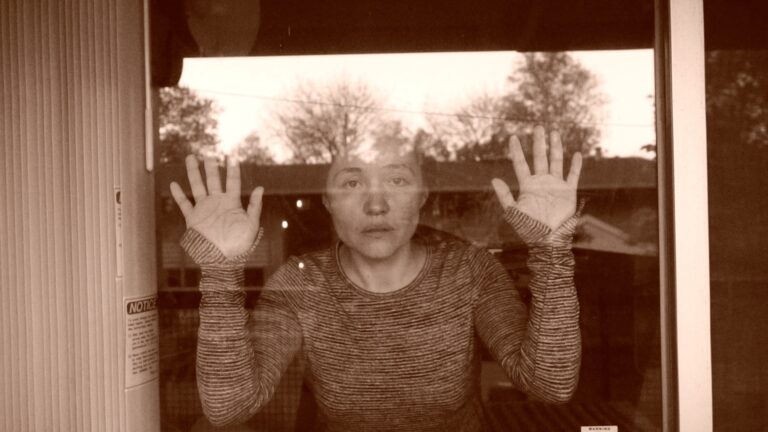
The increase in domestic abuse with the world in isolation shines a harsh light on prevailing misogynistic forces. A recent increase in phone calls to abuse hotlines reveal the critical conditions partners and children find themselves in when trapped inside with an abuser. Me Too knows this, and issued a response and toolkit for anyone in this situation as a result of COVID-19 precautions. This surge in abuse makes the need to emphasize this month’s significance even more urgent. 

The Me Too movement wasn’t a trend, nor was it a breaking news story that would eventually pass, like the pandemic one day will. Sexual assault and battery is an ongoing, relentless plague to society, and without attention, change won’t be made. The rise of the movement in 2017 was an amazing step and sparked real change, but that moment only publicized the scope of assault, just grazing the gravity of female suffering. 

So what is Me Too today? Many hear that phrase and think of a past time; a revered moment in history that took down disgusting men and brought voices to women across the globe. But Me Too isn’t history — at least not yet. So long as women are being assaulted, Me Too lives on, as do many other organizations with similar goals of support and prevention. 

The movement went beyond providing a platform for voices to be heard. It caused a cultural shift, one that encourages believing victims and refuses self-blaming and shame. It sends the message that assault will no longer be tolerated (Read: Harvey Weinstein’s prison sentence). And it tells not only women, but any victim of sexual assault, that they are not alone in their experiences and that they deserve happiness. 

This message has always been what Tarana Burke, the founder of Me Too, has promoted in her work. Burke coined the “Me Too” campaign in 2006, long before the movement we know today was celebrated in the media. She used the phrase “me too” on social media to bring women, especially women of color, together through their shared experiences of sexual assault. Today, she continues her original mission with the platform of a globally recognized organization. 

From developing curriculum, to giving talks, to creating a new hashtag (#metoovoter, directed at getting presidential candidates to raise the issue in debate), Burke puts in work. In 2019, Burke went on a tour to different Historically Black Colleges and Universities to discuss issues related to sexual assault and consent in black communities. 

Assault disproportionately impacts women of color, women with low socioeconomic status, trans men and women and any other group facing challenges beyond solely gender identification. As such, Burke’s efforts stress the need to increase community support among the most affected, often those who are given the fewest resources in the first place.

This is a pivotal element perhaps lost in the frenzy of Hollywood-ers coming forward and being accused. While white entertainers have every right to share their story — and it was vital that they did so for the progression of the movement — their faces headlining the cause diminished the underlying truth that certain women are far more vulnerable to sexual assault.

It is important to highlight what the “peak” of Me Too missed in 2017–2018 since there is still movement happening and opportunity to address the issues the media has overlooked. Burke’s connection with black communities is a meaningful example; the way we experience and heal looks different for every group, and there hasn’t been much attention drawn to the intersectional impacts of assault. 

We also did a bad job backing up abused men. It happens less often, but it’s just as important to support them. Football player-turned-actor Terry Crews came forward with his assault story in 2017, and while his story was received well by some, many took to social media to abate his experience, including fellow men in the industry. Crews responded to the criticism saying, “ABUSERS PROTECT ABUSERS but they MOCK SURVIVORS as well,” showing the reality for men who share their stories. They aren’t seen as victims, since it’s men who typically inflict these acts, and men aren’t supposed to be vulnerable. This is unacceptable, and Crews’ story is a powerful cry out against that notion.

The Me Too website offers healing and advocacy resources as a means of activism. The extensive information on how to help survivors contributes to the culture of prevention that is crucial to this movement. Healing needs to happen, but if we can get people to rally around not just believing and supporting victims, but inhibiting victimization in the first place, the most change can be made. The long-term goal is to stop assault all together.

Though only popularized recently, the almost 15-year-old movement behind the words “Me Too” has made waves for feminists and assault awareness advocates across the globe, and the work has not, and will not stop. As society slowly approaches a comprehensive awareness of the issues at hand, efforts only propel forward, fighting for recognition beyond a period of accusations and public outcry. 

Burke said it best herself in a 2019 TED Talk: “‘Me too’ is a movement, not a moment.”

If you or someone you know has/ is experiencing sexual assault, call the National Sexual Assault Hotline at 1-800-656-4673 or the National Domestic Violence Hotline at 1-800-799-7233. 

Written by: Allie Bailey — arts@theaggie.org

Recipe: Khoresht Loobia Sabz, Green Bean Stew

A step-by-step recipe for a vibrant Perisan dish 

Khoresht Loobia Sabz, Farsi for Green Bean Stew, is a popular dish that can be found in the center of many Persian dinner tables. Persian food is full of spices and vegetables, mainly rice and stews, and this recipe is no exception. With its tangy taste, it is based in a tomato broth and showcases the main ingredients of green beans, eggplant and beef. While this recipe only includes the stew, it is usually served on top of white rice. 

This recipe is authentic, passed down by generations and shared by my mother, who grew up in Iran. Persian food goes hand-in-hand with culture, it commemorates the past and is the center of tradition. Family is an integral part of this tradition, and since most Persian meals are eaten among family, the following recipe serves around eight to 10 people. So, try something new, and share some with your family — it could just be a new favorite!

Ingredients: 

  • Cut green beans (2 lb)
  • Onion (2)
  • Tomato paste (8 tablespoons) 
  • Beef, cut into pieces (2 lbs)
  • Eggplants (8)
  • Turmeric (1 teaspoon)
  • Cinnamon (½ teaspoon)  
  • Vegetable Oil (⅓ cup)
  • Salt and pepper (as needed)

Directions: 

  1. Dice onions, then begin sautéing in a pot with oil. Add tumeric to the pot. Stir well until onions brown. 
  2. Add small beef pieces to the pot. Add ½ teaspoon pepper and cinnamon. Stir well until beef browns. 
  3. Add tomato paste. Stir everything well. Add water to the pot until it reaches about an inch above the meat. 
  4. Let everything cook for about an hour – until the meat is fully cooked. 
  5. In a separate pan, sauté cut green beans (about 1 inch length each) with oil. 
  6. Once beef is cooked in the first pot, add the sautéed green beans to the pot. 
  7. Let this cook on low temperature for about an hour. 
  8. Peel and cut eggplants, then sauté in a separate pan. Add the sautéed eggplant to the original pot. 
  9. Let this cook for another 30 minutes on a low temperature. The stew should be relatively thick, and not watery. 
  10. This dish is usually served on top of white rice. Enjoy! 

Written by: Nora Farahdel — features@theaggie.org

Recipes in quarantine: Dark chocolate avocado truffles

Tips for making a snack sure to satisfy any chocolate craving

When I try to explain how I feel about chocolate, the best way I can get my message across is through the Lindt Lindor commercial. On the screen, a beautiful woman appears, clad in an off-white fisherman sweater. Sitting on her couch at home, she reveals the shimmering red of a Lindor truffle, and slowly bites into its hard shell. The screen shifts to a close-up of the velvety sphere, and I suddenly find myself wishing that I had a fisherman knit sweater and a piece of chocolate in my hand. Without hesitation, I always get up from my worn place on the couch and search the kitchen cabinets, usually settling for an Eggo waffle doused in honey or an apple. Both fail to satisfy my chocolate craving. 

Luckily, Nicole Goldman, a third-year psychology major, has the perfect truffle recipe. Filled with dates, avocado and cocoa powder, these are the most elegant and guilt-free treat I’ve ever had. With all the elements of a classic truffle, these truffles maintain the moist texture and the rich taste. They are the most refined concept of indulgence, especially when paired with an afternoon coffee.

 In addition, there are no extraordinary cooking measures needed. All you need is a blender and a handful of ingredients. After trying these truffles, I can confidently say they fulfilled my need for chocolate. The main changes I made to the original recipe was opting to add a finely cut chocolate bar, which I melted and added into the blender. I think the recipe could have fared perfectly without it, but adding a little chocolate never hurt anyone. If you are planning to add in chocolate, I would recommend a 50% chocolate bar — on the edge between milk and dark chocolate. Personally, I find that this is the perfect blend, but in your own re-creation, choose the chocolate you most enjoy. 

A small sprinkle of sea salt added into the mixture is incredibly important in order to enhance the sweetness. Orange rinds can also serve to bring citrus color to the mixture and create a summertime version of the traditional recipe. 

Considering how easy these truffles were to make, I found them to be the perfect solution to my daily sugar craving, and I still have a container of them sitting in my fridge, waiting to be eaten. 

Dark Chocolate Avocado Truffles

1 ripe avocado

½ cup medjool dates, pitted

½ cup dark chocolate powder 

1 ½ tbs coconut oil

1 ½ tbs coconut flour 

Dash of sea salt 

Cocoa powder for dusting 

Optional: 2 teaspoons orange zest

Optional: 3-4 oz melted chocolate

  1. Place all ingredients in a blender or food processor. Blend until silky smooth, about five minutes. 
  2. Place an assembly line to roll out the balls with a plate and parchment paper. Scoop out one tablespoon, and roll into a ball. Once all the balls are rolled, place in the fridge for 30 minutes. 
  3. After 30 minutes, take them out and dust them with the remaining cocoa powder. 
  4. Refrigerate for 2–3 hours until hardened. Time in the fridge may vary based on ingredients used. 

Written by: Athena Aghighi — features@theaggie.org

Humor: Davis College Republicans upset they can’t host controversial speaker this year

College Democrats upset they can’t protest it

In this series of investigative pieces, The California Aggie investigates how the COVID-19 crisis has affected individual lives in our community.

“This is a violation of free speech, you know.”

Benson Rickman sinks into his chair. “This whole…” he gestures, “coronavirus thing.” 

Rickman is the executive chair of the Davis College Republicans (DCR). Our interview takes place in his second-story apartment on F Street.

Prior to the outbreak of COVID-19, DCR had potential plans for hosting numerous controversial speakers on campus. Today, all these speakers have canceled their plans to speak at UC Davis. 

“We usually go for politically radical speakers,” Rickman explains, “but we even had some openly racist ones planned this year.” He shakes his head. “It’s a real shame.”

Among other names floated to speak at UC Davis — Ann Coulter, Ben Shapiro, a racist uncle — there was even an explicit speaking offer from Sean Spicer, the former press secretary for the Trump Administration.

“I even had posters made for him,” Rickman said. He opens his phone to show me a picture of Sean Spicer photoshopped onto the movie poster for “Spice World.”

“I was super excited. We were going to rent out the ARC Ballroom, and he was going to talk down to us for 90 minutes,” he sighs dreamily. “Maybe he’d even get angry and end the whole thing early, like he would on TV.”

Rickman stands up from the table. “Here, let me show you something,” he says as he pulls out a scrapbook. He shows me some of the photos he’s taken with past speakers. In one, he and Martin Shkreli are laughing at people in the prescription aisle. A more recent photo shows him and white nationalist Richard Spencer running from a mob of minorities. The caption reads “best friends 4 eva,” written in glitter.

“Wow,” I say. “Did you get any pictures from this year?”

He shrugs. “I got one with Rebecca Friedrichs last quarter, but…” he shifts in his seat, “it’s not the same.”

“We tried to get other speakers to come to Davis, but the COVID-19 outbreak basically ruined everything. Our speakers backed out.” He hands me a list from his club-planning folder:

Other Potential Speakers

“Ann Coulter? Too expensive.

Ghost of Ronald Reagan  Séance failed. Also, he doesn’t like Zoom calls.

Ghost of Rupert Murdoch Not dead yet.

Joe Biden during the ’70s  I have been informed it is no longer the ’70s.

“Y’know, I don’t even miss the speaking events, really. I miss the connections. I miss the people, y’know?” I nod. He continues.

“I miss the…” he chokes up. “I miss the Davis College Democrats, y’know?”
“We had a good thing going with them. We would protest their events, they would protest our events — it was fun.”

“Everytime we invited a controversial speaker, they never missed it.” A tear rolls down his face. “They were always there for us.” 

He gets up and stares out his window. “I don’t know what I’d do if something happened to them during this crisis.”

A handful of pebbles hits his window and it startles us both. He gets up to investigate and gasps.
Outside the window stands Brandy Pitch, the president of the Davis College Democrats. She holds a sign that says “___________ is bad for Davis,” with the name of the speaker not yet filled in.

Rickman sheds a single tear. “You came,” he chokes out.

She smiles. “I never left.”

Written by: Matthew Simons — mrsimons@ucdavis.edu 

(This article is humor and/or satire, and its content is purely fictional. The story and the names of “sources” are fictionalized.)

AvenueB guides transfer students within biological sciences toward success

Funding by Genentech Foundation creates new program for transfer students 

The Genentech Foundation awarded the College of Biological Sciences $2.5 million, the largest single grant the college has ever recieved, to fund a new program aimed at boosting opportunities for students transferring to UC Davis. This program, AvenueB, will provide financial support and preparatory programs for community college students studying biological sciences. Ten selected students will start the program this fall, said Beth Broome, the senior advisor to the provost.

AvenueB aims to reduce the ‘transfer maze,’ those challenges specific to community college transfer students. Issues regarding coordinating class requirements, units and fees can delay a transfer student’s road to success, resulting in extra costs. Students transferring from community colleges to UC campuses may pay $36,000 more in tuition and fees than students who enter as freshmen, according to the Campaign for College Opportunity

“High-potential, low-resource students and first-generation college students” will be served through AvenueB, said Carla Boragno, the board chair of the Genentech Foundation, via email. 

The program also hopes to remove barriers and boost participation of women and underrepresented minorities in STEM, according to Boragno. 

Through AvenueB, transfer students will receive many helpful services to ease their transition, as well as provide them with new professional opportunities. The amount of aid each student receives will be based on a model that describes where community college transfer students typically struggle, Broome said.

“Most often, it’s not academic, it’s other issues that arise,” Broome said. “We want to begin to put measures and supports in place so that students can overcome those obstacles to have a kind of safety net, so we can help them successfully graduate from UC Davis.”

The funding provided by the Genentech Foundation will carry over five years. UC Davis has a duty to raise money to help sustain the program in years four and five, said Shari Kawelo, the executive director of development for the College of Biological Sciences, via email.  

“The university needs to put in some funds as well,” said Mark Winey, the dean of the College of Biological Sciences. “And we do have a proposal out there for some additional funding for the program, but the initial launch of the program is mostly funded by the Genentech Foundation.”

Students will have access to an intensive preparatory program prior to entering their final year at community college, as well as a summer bridge program before their first quarter at UC Davis. Financial support, specialized advising and access to exclusive internships will be available to these students during their time at UC Davis. 

“In addition to financial support, students can participate in social and academic opportunities that foster peer-to-peer learning, community building and career exploration over the duration of their time at UC Davis,” Boragno said.

Through opportunities provided by AvenueB, the program fits in with the College of Biological Sciences’ goal of offering many hands-on experiential learning opportunities, such as internships, Winey said. 

“The goal for us is not only student success in terms of your first step in your career or your next step in your academic history, but also reducing student debt,” Broome said. 

The initial implementation of AvenueB will have a “rolling start” — UC Davis will select one community college to partner with and select students from, Winey said. Then, the program will expand out to work with multiple community colleges across California. The program will start with around 10 transfer students and will grow to add 20 or more a year. 

“I think, in its final form, the students would be prospective students with the expectation that they would apply to and get accepted in Davis,” Winey said. 

Future goals for transfer students within the program would be to do well in their studies  at UC Davis, continue on to earning advanced degrees or land in well-paying jobs at biotech companies, according to Winey.

“[AvenueB] really is a career development program, so the preparation students will get towards careers in the life sciences and health professions are why we are excited about it,” Winey said. 

AvenueB is modeled after AvenueE, a similar program for transfer students in the College of Engineering. Funded in 2016 in partnership with Chevron, the Koret Foundation and the Office of the Provost STEM Strategies, AvenueE aims to eliminate similar gaps that transfer students face in the engineering field. 

The Genentech Foundation was first interested in funding this program after a member heard Broome give a talk about AvenueE. Winey was asked to go to South San Francisco to teach the Foundation more about Avenue E and how a similar program could be created for the College of Biological Sciences.

Since UC Davis is one of the top five recruiting campuses for Genentech and because UC Davis has well-over 1,200 alumni employed by the company, it makes sense why Genentech was interested in the program, Kawelo explained. 

“Genentech is a major biotech employer and they are interested in ensuring that there’s a strong pipeline of future employees in the biotech field for them and for the entire industry, which is so strong in Northern California,” Winey said. 

In addition to providing funding, the Genentech Foundation will likely have a representative serve on the advisory board that will be created for AvenueB, Kawelo said. 

“I’m sure our strategic engagement with Genentech will increase due to this major support,” Kawelo said. 

During their partnership with UC Davis, the Genentech Foundation also looks forward to exploring new opportunities for Genentech employees to engage with students. Through tours, mentorship and other industry experiences, Boragno said she hopes students will get insight into the real-world application of life science studies.

“UC Davis is home to a vibrant, diverse student population, and we are proud to be a catalyst for AvenueB through our support, which is the first grant the Foundation has awarded to UC Davis and the college’s single largest grant received to date,” Boragno said. 

AvenueB and AvenueE are an extension of the commitment UC Davis has made to serve the students of California, Broome said. 

“When we look at the universe of students, we’re looking at those that are traditionally underserved in a particular stem discipline,” Broome said. “It’s really a win-win for the university and the student, because it allows us to give those students that are most at risk, a little bit of an extra boost. The cash rewards that students often get often make the difference between whether or not they can come to Davis.” 

Written by: Margo Rosenbaum — science@theaggie.org

The art of language: UC Davis alumni helps integrate hip-hop rhythm and beats into spring play “AntigoneNow”

Dahlak Brathwaite digitally returned to his alma mater to help students find new meaning

“How do you look at a text and find rhyme? How do you look at a text and find alliteration?” These questions are just two of many posed by Dahlak Brathwaite to the cast of the Theatre Department’s spring play, “AntigoneNOW,” in a workshop held over Zoom. As a playwright, composer and performer specializing in spoken word and hip-hop music, Brathwaite said he believes it is only natural to take 2,000-year-old texts, like the script of “Antigone,” and discover the rhythm and poeticism of the words.  

“I did this workshop partly to help the students identify the musicality of the words and of the language,” Brathwaite said. “It’s so poetic and it’s so rich with poetic texture.”

According to Brathwaite, hip-hop elements can bring greater meaning to the play. 

“How can we use hip-hop as a way to interrupt, disrupt, accelerate and thrust the language forward?” Brathwaite said. “It’s just about using that type of aesthetic and the way hip-hop approaches language and really digging into that and seeing how that element and that aesthetic could be brought into the work of ‘Antigone.’”

From Davis to New York

Brathwaite started his career at the intersection of spoken-word poetry, hip-hop and as a UC Davis undergraduate in a student-run crew. 

“I’ve been in [spoken word] and moving through that world since I was at Davis beginning with a crew […] which was a campus organization that later moved on into a professional collective organization,” Brathwaite said. 

The group continued after Davis, and Brathwaite toured universities throughout the U.S. as a performer. Since leaving the group, Brathwaite began studying musical theater writing in an MFA program at New York University and has composed multiple plays — his most recent being a solo piece entitled “Spiritrials,” which he is scheduled to bring to Davis this upcoming winter.

“I’ve been making my way in the theater world and just getting to this point where I’m beginning to have the opportunity to have my own work produced and do the type of work that I’m interested in, which is finding some plane between music and theater, specifically hip-hop music and theater and using spoken word poetry as a vehicle of narration,” Brathwaite said.

Beyond the workshop with its cast members, Brathwaite will also be composing music for “AntigoneNOW.” Returning to Davis and becoming involved in the most recent endeavor of the Theater Department is particularly significant for him, as a UC Davis alumni.

“I started out working in the Theater Department when I was there, and now I’m out in the world with it,” Brathwaite said. “There’s something special to me about coming back.”

Poetry in the written word

During the workshop, Brathwaite had the students focus on what he called “performance poetry.” He pulled different pieces from the play’s text and asked students to recite each section according to a certain rhythm in addition to encouraging movement to accentuate their words. According to Margaret Kemp, associate professor of theatre and dance, although this combination of hip-hop and classical theater might seem unconventional, hip-hop’s emphasis on language and the order of language can be useful when considering ancient works like “Antigone.”

“It’s interesting to think about hip-hop,” Kemp said. “A lot of people don’t realize how much it has in conversation with classical work because it’s really specific about how language is used, and trying to think about how you organize language, as an actor or a writer, influences the meaning.”

For Mayuko Agari, a cast-member and Japanese exchange student, the workshop’s emphasis on the delivery of words and identifying patterns within a given text made the play sound more interesting.

“I think the hip-hop workshop was really important to us in the way that he gave us a way to get out of our stereotype about theatrical speech,” Agari said. “We did an exercise in which we unusually emphasized a repetition of certain words. It was a good opportunity for us to break the walls we have created unconsciously.”

Art over the internet

In adapting to the challenges posed by COVID-19, the cast members of the play participated in the workshop from remote locations around the world, with a few students even joining the Zoom call at 2 a.m. In addition to these challenges, attempting to synchronize and teach complex rhythms is difficult when using a medium of communication with lag time, Brathwaite said.

“I’m doing a workshop all about timing and all about music and music is heavily based on timing, it’s heavily based on being able to hear one another,” Brathwaite said. “Like all things, I just had to be creative. It became more individualized, just because there was less group dynamic work that we could do.”

Despite these difficulties, Kemp believes students are adapting well to working remotely.

“I think because the approach to acting and performance uses a lot of the energetic work of Michael Chekhov, the students are actually saying ‘You know what, I can feel somebody’s energy through the internet,’” Kemp said. “The students are starting to see the possibilities in the virtual world beyond the smallness of the device.”

Written by: Sophie Dewees — features@theaggie.org

Aggie Experience Live! replaces annual Decision UC Davis

COVID-19 prompts university to host a series online sessions, webinars for admitted students, their families

Aggie Experience Live!, a virtual open house, was created in response to shelter-in-place directives addressing the COVID-19 pandemic that prevented admitted students and families from going to campus to attend the annual Decision UC Davis.

“While you’re staying close to home to flatten the COVID-19 curve, we’re still working hard to plan your enrollment here,” said Chancellor Gary May in a video prefacing Aggie Experience Live! “We’re going to try to give you everything you need to make the right decision, and we hope that decision is to come to UC Davis and be an Aggie. Everyone associated with the university has a bond, and we want to make that bond one of the mechanisms that we use to get through this difficult time.” 

Spanning across two weeks, from April 6 to April 10 and April 13 to April 20, admitted students and their families were given the opportunity to attend interactive, online sessions and webinars covering an array of topics pertaining to UC Davis. 

“The purpose of Aggie Experience Live! is to help admitted students and their families get to know the campus and what it offers,” said Ebony Lewis, the executive director of Undergraduate Admissions, via email. “Many people made Aggie Experience Live! happen because they care so much about helping students get the wonderful education that UC Davis offers.”

Lewis added that the virtual event offered participants the opportunity to ask questions to advisers, “hear from staff, faculty, and current students” and “take a virtual tour.” 

“Special sessions provided opportunities to explore campus communities, learn about financial aid and scholarships, tour residence halls, and all other things incoming students and their families want to learn about,” Lewis said. 

Alumna Katerina Kountouris, from the class of 2014, was the host of Aggie Experience Live!. On April 6, Kountouris virtually introduced viewers to the campus, students and representatives from groups at UC Davis, followed by a session covering financial aid and support for undocumented students on April 7. 

“We understand that families’ financial circumstances may have changed or may change in the future,” Lewis said. “UC Davis will consider revisions to financial aid where there have been significant changes to financial conditions due to things like job loss, loss of a family member of medical expenses.” 

On April 8, Aggie Experience Live! touched on living in the residence halls and the dining options available to students. The 25 Division I athletics programs on campus as well as the club sports, intramural programs and wellness services were showcased in the session on April 9. 

“Thousands of admitted students and family members have participated in Aggie Experience Live! And there’s a lot of excitement,” Lewis said. 

The week closed with an introduction to the four academic colleges: the College of Agricultural and Environmental Sciences, the College of Biological Sciences, the College of Engineering and the College of Letters and Sciences. There was also an introduction to majors, programs for first-year students and research opportunities. 

“Aggies — including students, faculty and staff — offered their insights on the academic colleges, how to get involved in undergraduate research and much more,” Lewis said.  

The videos were presented at 3:30 p.m. each day and were made available through Facebook or Zoom. Students who missed the sessions or who would like to review the information can view the recordings of the videos. 

“These are challenging times, especially for our young people and their families making important decisions for their future,” Lewis said. “We want to do all we can to help. We focused on creating an event that would help [prospective students] experience the UC Davis campus as much as possible, short of actually being here.” 

Incoming first-year student Renee Wang, from Sunnyvale, California, plans to major in communication and committed to UC Davis after receiving her acceptance. 

“I committed to UC Davis because I really appreciate what a well-rounded school it is,” Wang said. “A really common thing I’ve heard about Davis is how nice everyone is and how there is not so much a competitive culture in terms of academics, but more of a collaborative one. I also like the more unique aspects like what a big biking community is and how there are animals on campus.”

In addition to attending a few sessions and webinars through Aggie Experience Live!, Wang watched YouTube videos filmed by UC Davis students. 

“A big influence on my decision are the current students at UC Davis who make YouTube videos about campus life,” Wang said. “I liked that they portrayed the campus in an intimate and honest way, and the videos really helped me to imagine myself at Davis, although I did not get a chance to visit due to COVID-19. In all honesty, compared to the other schools I was considering, I could not find a disadvantage in attending Davis.”

Overall, Wang appreciated how the moderators directly answered her questions and the information she received from attending. 

“Because we are in a pandemic, how prospective students visit and explore a school is limited to the internet, as we are unable to visit the campus in person,” Wang said. “As such, I think it is important for schools to keep an open line of communication to prospective students and really utilize the internet during this time.” 

For the freshman class for fall 2019, 5,982 first-years and 3,101 transfer students have enrolled, according to the UC Davis website. This year, however, due to external factors related to the COVID-19 pandemic, Lewis said “we won’t know for months how fall enrollment will be affected.” 

If students have additional questions, Lewis encourages students to contact the Office of Undergraduate Admissions. 

“Most of all, we want to encourage students to remain committed to their future and why they’ve chosen to pursue higher education,” Lewis said. 

Written by: Aarya Gupta — campus@theaggie.org

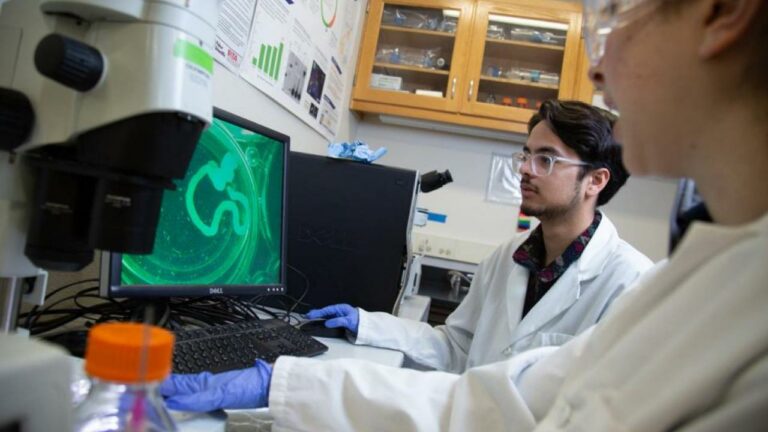
UC Davis research simulates how drugs interact with heart proteins

Computer model predicts arrhythmia risks associated with various drugs

UC Davis researchers have taken the first steps toward developing a reliable method to identify the effect of a drug on the heart through a computational model which simulates the interaction of drugs with cardiac channels. The goal of the study is to tackle the lack of a known method to predict the cardiotoxicity of a drug based on its chemistry, according to Kevin DeMarco, a postdoctoral scholar in the Department of Physiology and Membrane Biology. 

“One of the main reasons that drugs are removed from the market or removed during development is that they end up causing deadly arrhythmias,” DeMarco said. “Thus far, there’s no surefire way to determine what drugs may cause arrhythmias and what drugs won’t.”

DeMarco explained that the mechanism of these interactions consists of the drug disrupting the electrical activity of proteins in the cardiac cell, which ultimately leads to the heart no longer being able to pump blood. By developing models of the protein channels and drugs, the researchers were able to calculate these simulations on a molecular level. After developing the framework, the researchers were able to validate the output of the model on the tissue level through human clinical data involving two widely studied drugs, dofetilide and moxifloxacin. 

The integration of these vastly differing scales — from protein to cell to organ — proved to be a challenging aspect in developing the framework of their model due to a lack of studies demonstrating it, according to Igor Vorobyov, an assistant professor in the Department of Physiology and Membrane Biology.

John Dawson, a graduate student in the Department of Physiology and Membrane Biology, went through his undergraduate career studying biochemistry unaware of this field of conducting simulations in science. It was not until he joined a graduate program and saw Vorobyov present that he was opened to its possibilities.

“I was told in my undergraduate [career] that this stuff didn’t work,” Dawson said. “And here people are actually doing it and they can actually explain why it works.”

In Russia, Vorobyov studied chemistry for his undergraduate degree but he later switched to computational chemistry during his graduate studies when he moved to the U.S. After working with renowned professors at various universities and gaining experience developing computational models of different proteins and ion channels, he was excited to partake in this study.

“[I] integrated all of the knowledge I got in my graduate study during postdoc to be able to solve these real world problems and major biomedical significance,” Vorobyov said. “This was, again, a dream come true.”

DeMarco added that being able to apply various skill sets to biomedical applications is something very exciting for all of the people involved in this project.

“Team science can bring people together who are trained in completely different disciplines,” said Colleen Clancy, a professor in the Departments of Physiology and Membrane Biology and Pharmacology. “We have a chemist, we have somebody who has a background in computers [and] I have a PhD in biophysics. We all come together to make a project work that none of us could do on our own. That’s truly a collaborative project.”

Although the model has only been tested with two drugs so far, Vorobyov explained that they will be able to greatly expand this study to many more drugs. 

Clancy currently envisions the model to be able to be implemented for pre-clinical drug screening in an industry setting, but she also sees potential for its use in a clinical setting as well. This could mean physicians being able to determine the risk profiles for individuals based on their state of health, the drugs they may be taking and even their genetic background.

“I think what we hope will happen in the future is a way for us to make this more efficient and [with a] really high throughput,” Clancy said.

Written by: Michelle Wong — science@theaggie.org

UC Davis beach volleyball reflects on shortened second season

Team remains positive, sets goals for next year

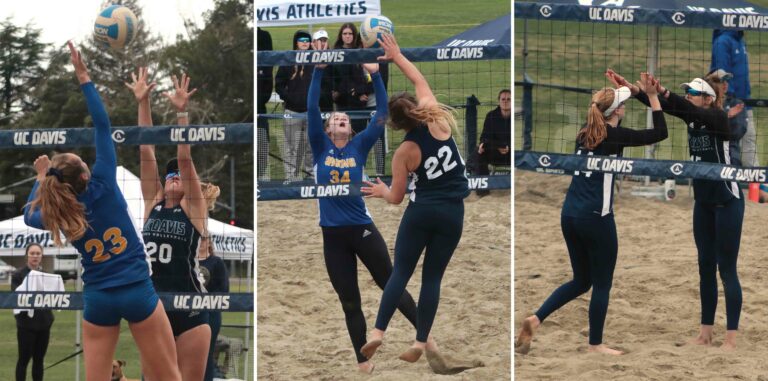
The UC Davis beach volleyball team had just started to find its confidence when its second season as a program was cut short by the recent suspension of all sporting events and practices due to the COVID-19 pandemic. 

Members of the team spent their first season trying to establish themselves as players and were using their second season as an opportunity to compete with teams at a higher level. Although they were not able to complete their 2020 schedule, the Aggies are now taking this time to focus on themselves and set goals for the next season. 

“I think they handled it really well,” said Head Coach Ali McColloch regarding the team’s response to the cancellation. “There were a lot of disappointed faces because they had been working so hard towards getting better and finally feeling like they were getting used to the beach game.”

McColloch explained that almost everyone on the team is new to beach volleyball. The athletes viewed this season as a chance to showcase what they had been working on, since most of them had gotten much stronger and faster as players. 

“Obviously the team was bummed that we were no longer going to be able to compete,” said junior Paloma Bowman in an email interview. “[But] we completely understood why the precautionary measures were taken.”

Bowman, one of the athletes who had returned to the team after playing on last year’s squad, was often playing at the No. 1 spot in the lineup with sophomore Jane Seslar. The pair’s wins this season were clinchers in victories against San Jose State and Utah. 

The team was proud of the progress it had made up until the suspension, Bowman said. Rather than looking at the situation as their season being cut short, they were more grateful for each day they were able to be part of the program. 

“It all happened so fast,” McColloch said. 

In the team’s final meeting, everyone took the time to process the news while still remaining positive and praising one another for their accomplishments. 

The beach volleyball team is a fairly young program compared to most others at UC Davis. It’s one that lacks a significant senior presence and has a handful of newcomers who joined the team this season. This is something McColloch sees as a positive, as it means almost everyone will be returning next season. Players who had redshirted this past season can also take this time to build on their skills. 

According to McColloch, the freshmen on the team took the news really well, and understood the situation as something much bigger than beach volleyball. She acknowledged the sense of unity that exists within the team and the members’ ability to “handle anything that is thrown at them.”

For freshman Megan Luly, this was her first time competing at the college level. Her main goal this season was to make the transition from the junior level of volleyball, which required a lot more dedication to the sport, both physically and mentally. 

Luly finished the shortened season with a 5-3 overall record, performing at the No. 2 and No. 3 spots in the lineup. She posted a three-match winning streak and won back-to-back matches at different points throughout the season. 

“We all knew that we should be putting our personal and others’ safety above competition,” Luly said in an email interview. “Personally, I was sad to see my first season end so shortly, but was pleased that we were able to get a few games in.”

McColloch also sees this time as an opportunity for the team’s athletes to direct all their focus and energy into their academics, rather than having to juggle between athletics and their education. 

The team is currently preparing for next season through virtual check-ins, which include goal setting and film review, McColloch said. The athletes also hold virtual group meetings on their own to stay connected with one another.

But McColloch prefers to limit the amount of time that everyone is required to spend on a computer because of how much time they already spend looking at a screen during their Zoom class meetings.

“Team communication is extremely important to us,” McColloch said. “But for us to require even more time on the computer is backwards from what we always talk about, which is trying to get rid of the screen.” 

McColloch highlighted the most important things for the team’s athletes to be doing at this time, primarily focusing on academics and “strengthening their mental toughness.” She believes now is an important time to focus on the mental side of their game instead of the physical aspect. 

The athletes also reflected on the hopes they had for themselves going into their second season, and believe they made a lot of progress toward the goals they wanted to achieve. 

As a younger team with less experience, the Aggies were at an obvious disadvantage when playing teams that had been together much longer, said McColloch. But through building endurance and becoming a more physical team, UC Davis was able to make up for the lack of experience and compete with teams at a higher level. 

The Aggies also faced much more difficult competition this season, playing against teams like No. 11 California and No. 17 Arizona. McColloch said these duels against tougher opponents were important to gain experience and knowledge, even if the Aggies did not win. 

McColloch looks back at a double-header from Feb. 29 as a “turning moment” for the team, in which the Aggies were dominated by California in the first game but came back out and defeated Utah in the second. She explained that the Aggies developed from being “out of their comfort zone” last year to actually feeling that they could challenge more difficult teams this season.

“The process of learning is a trying and challenging one, but that’s why we have a support system to carry each other when we need it,” Bowman said. “I think the beautiful part about our team is the ability to show up and be a part of a culture that cultivates growth.”

Bowman’s current schedule without volleyball consists of online classes, schoolwork and working out. She said this is the longest she has gone without touching a volleyball in the 13 years she has been playing the sport, and is using this time instead to train for a half marathon with one of her teammates. 

Luly also maintains a similar schedule, balancing academics and trying to remain active while following the current social distancing guidelines. 

Although the team did not get the chance to compete in a full season, there was a lot of effort that went into preparing for it, Luly said. The team still maintains an energetic and encouraging demeanor, with the athletes pushing each other to become better players every day. 

“I think everyone on the team had personal goals that they were looking to achieve,” Bowman said. “While we did not necessarily all peak at this point in season, I have no doubt that every single one of my teammates is capable of anything and everything she puts her mind to.”

Above all else, the team is remaining positive and continuing to set goals for next year.

“We love each other unconditionally, not to say we do not have our disagreements or setbacks, as every family does, but we persevere by leading with compassion, working hard each day, and holding each other accountable,” Bowman said. “I would say being as strong as family is the quality I hope to continue in the next season and the future of this program.”

Written by: Rain Yekikian — sports@theaggie.org

The past, present and tomorrow of Times New Roman

Helvetica

A glimpse into the legacy of academia’s poster font

All night is spent pounding away at the keyboard. The deadline nears and the six-page requirement is just on the horizon. Jacked up on three Yerba Mates, you finally hit your goal and release an exasperated sigh of pent-up anxiety. You do a once over to make sure the formatting is correct. Double-spaced? Check. Numbered pages? Check. Bibliography? Check. Times New Roman?… S–t, it’s Calibri. You scroll through the font settings and brace yourself for impact. How bad is it going to be this time? It’s a heart-wrenching half-page shorter, and the tap, tap, tapping away begins once again. 

Times New Roman for humanities and liberal arts majors like myself is as ubiquitous as the scurry of squirrels frolicking in the Quad. Nearing the tail-end of my college career, I took a step back and asked myself a question I had never summoned up the time or energy to do before: Where did this all-consuming font come from and why has it become the golden child of academia? Why not Calibri or Arial or, God help me, Futura?  To address this question, we have to jump into the past and across the Atlantic.

The year was 1931, and Stanley Morison, a typographer for the British division of the foundry Monotype, wrote an article criticizing the design quality of the London periodical — The Times — font. Morison found their font, posthumously referred to as Times Old Roman, as legibly inadequate. In retaliation, The Times challenged Morison to design something better. Morison obliged.

He had a hefty task on his plate, as the font had to retain the utmost clarity while also using space efficiently so that the newspaper could maximize the number of words per page. Morison drew his inspiration from the font Plantin, which itself had drawn inspiration from the 16th Century font Gros Cicero. 

Morison supervised the project working alongside fellow typographer Vincent Lardent. Together they reduced the spacing (or “tracking”), narrowed the letters in the original Plantin and made other minor adjustments. The reduced tracking and narrowing is the reason why the font usually condenses the space of any written work. One year later, in 1932, Times New Roman was born, and it became the first font designed specifically for a newspaper. The Times had been using Linotype — Monotype’s main foundry rival — for all of their typesetting and printing needs. This forced Monotype to license the “Times New Roman” font to the Linotype company. As a result, there are now two nearly identical versions of Times New Roman. One being the original Monotype font Times New Roman and the other being a Linotype remake known simply as Times Roman. 

Times New Roman has risen to prominence across academia and the legal field due to its space efficiency and clear legibility. In the last 90 years, there has not been a true challenger to its primacy. I was curious as to how fellow students perceived the font — was it timeless or dated?

Cathie Crossan, a fourth-year communication major, said she personally finds Times New Roman crowded and lacking inspiration. 

“I think that sometimes it makes information on a page look ten times more intimidating than what the information actually is, and it’s extremely boring to read,” Crossan said. “If I’m reading notes that I took in Times New Roman, I just start glazing over the page.”

In defiance, Crossan opts to write and edit her papers in Comic Sans; choosing to switch to the required Times New Roman after she has finished. In comparison, she finds Comic Sans to be a much less intimidating companion and also noted an increased ability to digest information.

“I like Comic Sans because it just makes reading seem less intimidating,” Crossan said. “And when I go back to my notes to study for exams, I have an easier time reading it compared to Times New Roman.”

Eleanor Bemis, a third-year design and communication double major, reflected on the font’s austere and professional characteristics.

“The Times New Roman is definitely a male, probably older,” Bemis said. “He is a lawyer or a banker or in a serious profession where he went to grad school and sits in his mahogany office. I would say he’s a little bit more reserved — like, clear and concise. Maybe he smokes cigars, but not in a fun way — in a stuffy way.”

Although acknowledging its “stuffy” characteristics, Bemis appreciates the font for its ability to fade into the background and facilitate the reading process.

“Most books are in Times New Roman,” Bemis said. “That’s because it’s easy to read. That’s because you don’t notice it. And that’s the beauty of the font is that it doesn’t stand out to you, it doesn’t distract you from the content.”

Miki Wayne, a third-year English and political science double major, noted that although Times New Roman is not her favorite font, she has grown fond of its consistency across her work.

“I think it’s kind of timeless,” Wayne said. “I am the kind of person who uses the same pen for all my notes, and I like consistency. It’s kind of nice and visually pleasing to see that all my papers in all my classes have the same font.”

Perhaps not stylish, certainly not flashy, but always consistent, Times New Roman has etched itself into our lives. As for the foreseeable future, it looks like the Honda Civic of fonts is here to stay.  

Written by: Andrew Williams — arts@theaggie.org

UC Davis professors speak to environmental changes COVID-19 pandemic has brought and will bring

Though COVID-19 has presented environmental upticks, many caution against celebration

One lens the unfolding COVID-19 pandemic has been analyzed through is that of the environmental side effects resulting from lockdown measures across the globe in attempts to contain and prevent the spread of the virus. 

There was a 50% reduction in nitrous oxide and carbon monoxide in China due to the closing of industries and factories, according to Scott Collis, an atmospheric scientist at Argonne National Laboratory. In the U.S., some regions are seeing nitrogen dioxide levels lower by as much as 30% compared to the levels before lockdown. In Rome, the air pollution was 49% lower between mid-March and mid-April this year than in 2019. 

These improvements, however, are very much temporary — given that they are simply the direct results of economies the world over largely shut down. The United Nations and scholars around the world, however, are arguing that the pandemic should act as a “wake-up call” and serve as an opportunity to make permanent changes to the global economy in support of the environment. 

UC Davis’ Frances Moore, a professor from the Department of Environmental Science and Policy, agrees with this idea, saying these environmental shifts are not evidence of sustained environmental progress, but instead pose a potential threat to the climate as the world moves forward.

“We shouldn’t mistake what’s going on now with environmental progress,” Moore said. “It’s temporary, and associated with extremely bad things for many people. I think the bigger environmental issue is that when societies are stressed […] that is not an environment in which you make advances on public good issues like climate change, like biodiversity issues.”

As countries continue to navigate the pandemic and the subsequent economic downturn, Moore warns that climate change progress has the potential to be pushed to the sidelines. She said, however, that this could be an opportunity for progress to be made toward protecting the climate and biodiversity if the government turns its attention to green policies. 

“In very, very bad economic downturns, historically, the government has done a lot of investing,” Moore said. “[That] potential could be directed toward green infrastructure and the kind of big projects that we need to improve our grid, our transportation infrastructure, improve our housing stock to make it compatible with a low-carbon economy. I think that’s where you see potential. You have to have political will and interest in doing that and directing the funds in that way.”

Another important change moving forward which would support the environment is the scaling back of developmental activities. UC Davis Professor and Chair of the Department of Environmental Science and Policy Edwin Grosholz noted that, amid the pandemic, development and the need for developmental activities have dramatically decreased, which contributes to the positive changes seen in air and water quality. 

Grosholz hopes that some of this positive change will be maintained, but said it will be difficult.

“It’s going to be hard for humans to kind of hold back from entering into wilder areas,” Grosholz said. “Our continual movement into wild areas will continue to push the development of diseases like this”

Moving further into animal habitats inherently raises the risk of crossover between animal and human communities, according to Groscholz. This is thought to be how COVID-19 originally began spreading — it is also a primary way other viruses have spread. A decrease in the speed at which humans race to develop and expand, however, will leave more of the natural environments, especially at the coast, less affected, which helps protect the biodiversity in those areas. 

The pandemic has also exposed the ways transportation can be adjusted to be more environmentally friendly. One of the biggest reasons for the cleaner air and water currently seen around the world is due to the decrease in car, train and bus travel, as a majority of the world works from home. 

Dr. Susan Handy, another UC Davis professor in the Department of Environmental Science and Policy, noted that it is a distinct possibility that as shelter-in-place orders are lifted, people may still be hesitant to return to public transportation, given the close quarters associated with this type of travel. Resistance to public transportation could mean more car travel — or, as she says she hopes, an uptick in bike commuting.

“Biking had a lot more potential than we’ve taken advantage of,” Handy said. “Especially if cities are making conditions more comfortable for biking by widening bike lanes [and] putting in bike lanes, I think people are going to feel a lot more comfortable doing it.”

Handy said that amid the lockdowns, many people are walking and biking more, leading some governments to open more streets up for use by pedestrians and bikers. She is hopeful that these moves will be permanent, or at least lead to walking and biking as more accessible forms of commuting moving forward.

Potentially even more impactful, she said, could be a transition toward telecommuting on a wider scale, even as in-person gatherings begin to occur again.

“Telecommuting has been an idea that’s been around for decades and has been an idea that just hasn’t caught on the way planners hoped it might,” Handy said. “But now that so many of us are doing it and learning how to do it and seeing that it works and companies are seeing that yes, in fact, their employees can still be productive [working from home], I think that’s something where we are going to see some permanent change.”

An increase in telecommuting could decrease the use of public transit, the amount of vehicles on the road and business air travel moving forward. 

As the economy reopens and the world begins to see some normalcy after the coronavirus pandemic, it will also see an opportunity for substantial environmental change, if some of these practices — and many others — are considered. 

Handy said she believes right now is an important moment to prioritize the environment as we begin to move forward: “I think we have a really important opportunity right now [to] take advantage of this moment in time to make some permanent physical changes to cities.”

Written by: Katie DeBenedetti — features@theaggie.org

Four professors give their TV show recommendations

Recommendations to procrastinate studying for midterms

With so many new television series coming out, four professors shared their TV recommendations with The California Aggie. 

Environmental Science and Policy Professor Mark Lubell 

Favorite TV show: “Game of Thrones”

“Game of Thrones” is based on George R.R. Martin’s book series, “A Song of Ice and Fire.” 

“I’m a big fan of fantasy and science fiction literature, including George R.R. Martin’s Game of Throne series,” Lubell said in an email interview. “I read those books before the television show. I also read lots of other similar series.”

Like many students, Lubell finds that television is a nice break from academia. 

 “When I’m not reading stuff about environmental policy and science, I’m usually reading sci-fi and fantasy,” Lubell said. “Good escapism for the mind, when you’re in a job that requires a lot of critical thinking.”

His favorite “good guy” character is Jon Snow, but Arya Stark is a close second. As for the villain, his favorite is Lord Varys the spymaster.

“Overall one of my favorite things about GoT are all the different characters with different personalities, and really none of them unambiguously ‘good’ or ‘evil,’” Lubell said. “Lots of complicated motivations,” Lubell said. 

He recommends the show to all students, but gives the teacherly advice to do your homework first. 

“Game of Thrones” is available on Hulu, HBO and Amazon Prime. 

Animal Science Professor Michael Mienaltowski

All-time favorite TV show: “Star Wars: The Clone Wars”

Other favorite TV shows: “Last Week Tonight with John Oliver” and “The Man in the High Castle”

I am always pretty busy, so if I can sit down and take a moment to escape from work, the pandemic news lately, and the stresses of life otherwise, then I just like to sit down and appreciatively soak in the experience,” Mienaltowski said in an email interview.

Mienaltowski said “Star Wars: The Clone Wars,” which first aired on Oct. 3, 2008, is his “favorite ‘favorite show.’” The show continued for seven years and has over 100 episodes available to stream. 

“I have been a fan of Star Wars since I was a child, and this particular animated series has done a good job of adhering to the brand of Star Wars I remember fondly, all while more fully developing the prequel characters,” Mienaltowski said. “Perhaps the biggest reason I love the show is because it is something that I can watch with my seven-year-old son, and when I look over at him, I see the same excitement over Star Wars that I experienced when I was his age. It’s nice to share this with him.”

  Mienaltowski’s other favorite shows are “Last Week Tonight with John Oliver,” a late-night talk show that takes on a satirical view of current news and politics, and The Man in the High Castle,” an American history show that tells the story of an alternate universe where the Axis powers (Japan and Nazi Germany) won World War II. 

“Last Week Tonight has been one of my favorites because John Oliver’s style harkens back to the silliness of vintage Daily Show bits back when Jon Stewart ran the show on Comedy Central,” Mienaltowski said via email. “His research and arguments are well-delivered and the silliness he reaches sometimes makes difficult topics both easier to understand and easier to stomach.”

“Star Wars: The Clone Wars” is available on Disney Plus, “The Man in the High Castle” can be watched through Amazon Prime and “Last Week Tonight with John Oliver” is available on Hulu, HBO Now and Amazon Prime. 

History Professor Susan Gilson Miller

Favorite TV Show: The Nightly News Report on PBS 

“It is an informative, unbiased source for news, much better than Facebook, Twitter, or other apps on social media,” Miller said of her favorite show via email. 

Miller said she finds the news anchors make the show. 

“Judy Woodruff, the anchor, is superb,” Miller said. “Also Yamiche Alcindor, the White House correspondent, is a star. As well as Amna Nawas, co-anchor — all women, all excellent.”

The local station for this news is KVIE. 

German and Russian, Cinema and Digital Media Professor Jaimey Fisher

Recommended TV Shows: “Better Call Saul” for a multi-season show; “The People vs. OJ Simpson” for limited series and, for old-style comedy, “The Office (US)” and “Treme”

Because Fisher is planning on asking his students what they think his favorite TV show is at the end of the quarter, he couldn’t give us an exact answer. He did, however, give something even better: multiple good TV recommendations. 

“Better Call Saul” is a crime drama series and a prequel for the beloved show “Breaking Bad.”

“‘Better Call Saul’ hits a sweet spot of funny but also moving and heartbreaking, all while offering indispensable observations about post-2000 America,” Fisher said via email. “Saul Goodman/Jimmy McGill is engaging: hilarious but also heartbreaking, also very revealing of the places that American economy can lead people.”

“The People vs OJ Simpson: American Crime” is a 10-episode true-crime anthology that tells the story of the infamous OJ Simpson murder trial. The show has three seasons, with the first focusing on this case. 

“‘People vs. OJ Simpson’ perfectly captures its mid-1990s moment as well as the complexity of race relations in the US,” Fisher said via email. 

“Treme” is a drama series set in 2005 New Orleans that focuses on how residents are dealing with the aftermath of Hurricane Katrina. 

“I’ve lived in New Orleans and am also partial to David Simon’s brilliant but category-defying Treme,” Fisher said via email. “‘Treme’ is another David Simon’s piercing analysis of the way the US mistreats its great cities.”

“The Office (US)” likely needs no introduction. The show, a sitcom based on the British TV show of the same name, stars Steve Carell and depicts, in documentary-style, the employees of a paper company located in Scranton, Pennsylvania.

“‘The Office’ is one of the most humanistic shows I’ve seen, for its consistent fashioning of art out of the mundane,” Fisher said. “I think that Dwight Schrute on ‘The Office’ is one of the greatest characters created for television. I grew up in the rural northeast and can tell you that they hit a very particular and peculiar nail on the head with Dwight.” 

“Better Call Saul” is available on AMC for free and on Netflix, “The People v. O.J. Simpson: American Crime Story” is available on Netflix, “Treme” can be watched on Hulu, HBO Now and Amazon Prime and “The Office” is on Netflix.

Written By: Itzelth Gamboa — arts@theaggie.org

Review: “Little Fires Everywhere,” once again, the book is better than the adaption

A novel that thrives on subtleties becomes a gripping TV drama — and loses most of its charm 

American writer Celeste Ng’s second novel “Little Fires Everywhere” was published in 2017 and met with generally positive reviews. The novel takes place in Shaker Heights, Ohio, the small town where Ng grew up. 

The story follows two mothers with different backgrounds as their lives become increasingly intertwined. Ng contemplates themes such as class differences and small-town politics with an understated tension that gradually builds throughout the novel. The point of view shifts from character to character seamlessly, making the novel well-rounded and multi-dimensional. 

“It’s this vast and complex network of moral affiliations — and the nuanced omniscient voice that Ng employs to navigate it — that make this novel even more ambitious and accomplished than her debut,” writes Eleanor Henderson in The New York Times

On March 8, a miniseries based on the novel debuted on Hulu, with Reese Witherspoon and Kerry Washington starring as the conflicting protagonists. The series received a score of 77% on Rotten Tomatoes and has been praised most strongly for the cast’s performances. 

“‘Little Fires Everywhere’ is one of those rare multi-generational dramas where the arcs involving the kids are every bit as good as the adults, as the conflicts gradually build,” writes Brian Lowry in an article for CNN. “Indeed, while Witherspoon and Washington understandably have some of the showiest moments (both are producers on the project), the series has the feel of a true ensemble piece in all the best ways.” 

While the series closely follows the plot of the novel, there are moments where the series purposefully strays. One negative change the series made was magnifying and overdramatizing the tension between Witherspoon’s and Washington’s characters, Elena and Mia. Replacing Ng’s nuanced character interaction in favor of more dramatic and emotional scenes distracts viewers from the subtle complexity the novel imbues in the characters.

“In the novel, neither protagonist is fully wrong or fully right,” Constance Grady writes for Vox. “They’re both understandable enough to be sympathetic, and they also both make plenty of mistakes. But on the TV show, there is clearly a correct party and an incorrect party nearly every time Elena and Mia interact. And generally, Elena is the incorrect one.” 

What made the novel so fascinating was the omniscient narration and entry into the minds of many vastly different characters. Readers understood the background behind characters like Elena, which made her behavior more human and nuanced. The series sees the characters in black and white, whereas Ng navigates her prose excellently in the grays.

The most significant change the series made, however, was in altering the entire ending — that is, who started the fires in the Richardsons’ home. 

“I actually hope it took the end of the book and it just added even more complexity and layers to it because we had the space to do that,” said executive producer Liz Tigelaar in an article in the Los Angeles Times. “In the book, you know basically from the beginning, on the first page, that [Izzy] started this fire. We liked the idea of doing more of an overarching mystery, so that we didn’t really have the answer to the end at the beginning.”

It is obvious that the series aimed to expand the universe of the novel to make it more hard-hitting and dramatic. While some of these changes were positive, such as allowing for more emphasis on the racial differences between the characters, it also took away from some of the novel’s essence. Ng’s “Little Fires Everywhere” was a character piece about flawed people in a small town; she allowed the readers to come to their own conclusions after reflecting on the issues presented in the novel within themselves. The television series makes all the decisions for you while trying to force drama and excitement in places it isn’t meant to be.  

Written by: Alyssa Ilsley — arts@theaggie.org

Moscow: Russia’s mask of progression

Despite being Russia’s capital city, Moscow’s underground liberalism misaligns with country’s political ideologies

To President Vladimir Putin, the “liberal idea” is now obsolete. Coming from the president of Russia, this statement doesn’t surprise me. While liberalism refers to many things, including economic, political and social liberalism, Putin seems to be most concerned with the latter. His criticism of immigration, multiculturalism and LGBT issues, which are most prominent in Western governments, have made this clear over the past decade.

“This liberal idea presupposes that nothing needs to be done,” Putin said in an interview with the Financial Times. “It has come into conflict with the interests of the overwhelming majority of the population.”

Although Russia is by no means a defender of progressivism, it’s capital city Moscow — where the overwhelming majority of citizens live — might be.

Back in 2017, thousands of civilians took to the streets of Moscow to protest government corruption. Although many were detained as a result, activism in Russia gained a new significance, especially among newer generations.

“Down with the tsar!” shouted the crowd, referring to Putin’s dictatorial leadership, which has now lasted for nearly 20 years.

With dozens of protests held since then, Russians are beginning to reject state-controlled propaganda fed by the authoritarian regime. And Moscow, home of the Russian White House and the face of the country, is the perfect host for democratic change.

As the capital city and a huge tourist center, it makes sense that Moscow is far more liberal than other regions of Russia. Like any other country, most people who visit Russia focus on the city’s tourist attractions, such as the Red Square or the Kremlin, rather than the political dissonance underneath. And unless LGBT tourists overtly disobey Russia’s gay propaganda law, which bans individuals from promoting “nontraditional sexual relations to minors,” they should be fine traveling in one of the country’s most tolerant cities.

It also makes sense that the majority of protesters rally in the capital, outside the government buildings. But if Moscow, or any capital city for that matter, is a microcosm for the rest of the country, then there is a great political and social imbalance occurring.

Even with a radically conservative president in the White House, Washington D.C. is the second most liberal city in the U.S., following San Francisco. Based on D.C. alone, one could assume the rest of the U.S. follows suit. The overwhelming amount of red on presidential election maps, however, says otherwise. Statistically, conservatives overrule liberals in the U.S. by 35% to 26%, with the remaining percentage consisting of moderates.

But what sets Moscow apart in particular is how starkly it contrasts socially with the rest of the country. 

In 2006, Moscow held its first ever pride parade, and did so annually until 2008, before the court banned them in 2012 for the next 100 years. Still, activists continue to protest despite homophobic attacks and police interventions, specifically in St. Petersburg — the country’s most LGBT-friendly city.

         Today, some bars and restaurants in Moscow hold “gay nights” for men and women to openly express their sexual orientation without fear. Many LGBT members also move to Moscow or St. Petersburg in hopes of escaping their homophobic hometowns.

“Many of the LGBT clubs look like normal restaurants during the day — people come to have business lunches or whatever. Then only at night do they become an LGBT club. So even the venues have a double life,” said Elena Kostyuchenko, an LGBT activist and journalist, in an interview with The Guardian. She also stressed how it’s easier to be gay in Moscow or St. Petersburg than anywhere else in Russia.

With political protests and strikes on the rise, the realities brewing behind government doors fail to represent the cultural attitude of Russian citizens. 

“Moscow is a trendsetter. It’s always a step ahead — but the rest of the country eventually catches up,” said Ilya Yashin, a Russian government representative. 

Liberalism isn’t obsolete — at least not in Russia. One quick look at Moscow’s streets, the protests and the LGBT clubs in the shadows of the Kremlin reveals the disconnect between those inside the government buildings and those outside of it.

Written by: Julietta Bisharyan — jsbisharyan@ucdavis.edu

Disclaimer: The views and opinions expressed by individual columnists belong to the columnists alone and do not necessarily indicate the views and opinions held by The California Aggie

Without message, music has no meaning

I’m talking to you, Drake. 

TikTok has become an unfortunate constant in my life. 

In the time of coronavirus, I find that my lectures are punctuated by a scroll through the hilarious video-sharing app as a sort of cleanser. 

TikTok is an important tool in music because its trends, like dances and lip syncs, are usually reliant on different song clips and remixes. The app’s influence is so widespread that successful TikTok songs become smash hits in a matter of weeks. It also helps that other social media platforms, such as Instagram, have become a mecca for TikTok videos.

What I initially admired about TikTok was its ability to popularize unknown artists. Doja Cat, for one, has finally received the critical acclaim she deserves. Her album “Hot Pink” is the breeding ground for multiple TikTok trends. 

Lip syncing to Ant Saunders’ “Yellow Hearts” landed him a record deal with Arista Records, a label that has signed the likes of Patti Smith and Aretha Franklin. Audrey Mika went from making YouTube covers with a toy microphone to releasing  “Y U Gotta B Like That,” which has garnered over 25 million streams as well as high-profile collaborations for the young artist. 

Danceability plays a large role in the virality of these tracks, as many users choreograph routines to different catchy songs. These trendy songs also usually have a story, a message that the artist is trying to paint for listeners through their lyrics. 

The rise of these songs, however, has shed light on a developing issue in the music industry.

Drake’s “Toosie Slide” is a perfect example of this problem. When “Toosie Slide” dropped, I wasn’t expecting much out of it beyond a new workout anthem. Lyrically, Drake had other plans for us. In a “Cupid Shuffle” fashion, Drake tells listeners to pick up our left foot, then slide. Is this real life? 

I don’t understand why Drake needed to release this record. Besides the fact that the “dance” is a watered-down Cha-Cha Slide, it felt like “Toosie Slide” was something Drake released to entertain the masses while they have absolutely nothing else to do. 

Drake doesn’t need any popularization. He found fame before I could do long division. “Toosie Slide” was a cash grab that capitalized off the stagnation of our society and the popularity of choreographed dancing. Drake even reposted a video featuring the children of Ugandan orphan organization Masaka Kids Africana doing an amazing iteration of the dance. Even though it’s adorable, it’s exactly what Drake wanted. Viral hits, viral dances, big money. 

Justin Bieber sought the same sort of acclaim earlier this year with “Yummy,” employing the same dance company from the “Sorry” music video to bolster the dance “feel.” And it worked. Hundreds upon hundreds of videos showcasing TikTok, Instagram and Twitter users’ body rolling talents dominated these platforms for weeks. 

Drake and Bieber aren’t even the worst of this whole charade. Curtis Roach, a previously low-profile rapper, made “Bored In The House,” a fun little TikTok rap about quarantine. Users were inspired to show off their quarantine digs and activities with the song as their background. In fact, my friend had to do this TikTok challenge as a sort of back-to-school project for his professor. 

Everyone’s favorite rapper, Tyga, decided to piggyback off the viral fame of Curtis Roach, turning the charming table beat about quarantine into yet another creepy Tyga song. 

Curtis Roach has to be very excited about this, and rightfully so. Tyga is a heavyweight hitmaker, and to have him be featured on your song spells future success. But at the end of the day, Tyga reeks of greedy intentions. It’s self-serving to slap your name and a few bars onto a song that could have just remained a fun trend.

The strategies of Drake, Bieber and the like are logical. If being successful means going viral on social media, then it makes sense to strive to make the catchiest songs possible. But this need for virality will eventually change the ebb and flow of the music world as we know it.

With everyone working to make the social media world happy, we’re seeing dance hit after lipsync hit crop-up on the charts with no regard for the message behind them. 

This is what I like about Doja Cat. Doja Cat’s “Cyber Sex” has gone viral for a six-second clip, but it tells the story of relationships in the digital age, which is what makes it so interesting to listen to. She also had a pretty grassroots start, similar to Audrey Mika. Both bred by the Internet, it’s only right they should gain so much attention on these platforms. 

We shouldn’t settle for music without intention. This is what “Toosie Slide” and “Bored In The House” lack. Sure, make a song for the kids stuck inside. They’ll eat it up. But don’t give us something that is just for the sake of trends and money. Music can be fun and catchy while still being meaningful. As an art form, it is cheapened when it’s made for the sole purpose of financial gain. 

Written by: Isabella Chuecos — ifchuecos@ucdavis.edu 

Disclaimer: The views and opinions expressed by individual columnists belong to the columnists alone and do not necessarily indicate the views and opinions held by The California Aggie