54.2 F
Davis

Davis, California

Friday, December 19, 2025
Home Blog Page 37

For many students, graduate portraits serve to commemorate the achievement of completing university

Three local photographers describe the experience photographing UC Davis graduates 


By RACHEL GAUER — features@theaggie.org


Graduate photos have entered the list of many students’ must-do’s before concluding their undergraduate careers. Whether the photos themselves are used to alert LinkedIn or Instagram followers that you’ve graduated or to announce future plans to distant relatives via grad announcements, they serve as a way to commemorate the achievement of an important milestone. Though we all carry cameras on us constantly, having a professional photo done still certainly holds symbolic significance.

Soleil Barbour-Berson, a UC Davis alumna who holds a Bachelor of Arts (B.S.) in international relations, had personal portraits and photos with friends taken to commemorate her early graduation in fall of 2024. Barbour-Berson explained that because she graduated from high school during the pandemic, she felt particularly inclined to get photos taken for her undergraduate commencement.

“I didn’t get high school grad photos and really regretted not having them,” Barbour-Berson said. “I really wanted to do it this time — it’s a good way to commemorate the moment and the accomplishment of graduating.”

As grad photos increase in popularity, some student photographers have taken advantage of the opportunity to provide their photography services to the growing market of students.

Sophie Beifuss, a first-year maternal and child health graduate student, began photographing her friends’ graduation photos during her final year of her undergraduate career at UC Davis in 2024 and has now progressed to offering her services to the larger student population. Beifuss, who advertises under @sophiebportraits on Instagram, said she found a love for photography early in her adolescence and later realized she could apply it to more formal avenues.

“I got my first camera when I was 13; I saved up all my allowance and was so excited to finally be able to start taking pictures that weren’t only on my iPod touch,” Beifuss said. “Ever since then, I’ve always had a camera in my hand, taking photos of everything. My favorite type of photography is portrait photography — I love taking candids and helping people feel comfortable and have a fun time in front of the camera.”

Savannah Luy, a UC Davis alumna with a B.S. in computer science, also began her photography career casually shooting friends and peers in high school. She first began her business, Luy Photography, in 2017, long before her university days. Now, she shoots not only in Davis but also has extended her services to other local universities like Stanford University, UC Berkeley and Sacramento State University. Her undergraduate career at UC Davis, she said, has led her to be particularly aware of the campus’ beauty and photographability.

“During my time at Davis, I spent a lot of time walking around campus and just being fully aware of different things around me, whether that be all the different trees or the way the light hits a certain building at a certain time,” Luy said. “I feel like I paid a lot of attention to stuff like that which really helps me plan my sessions.”

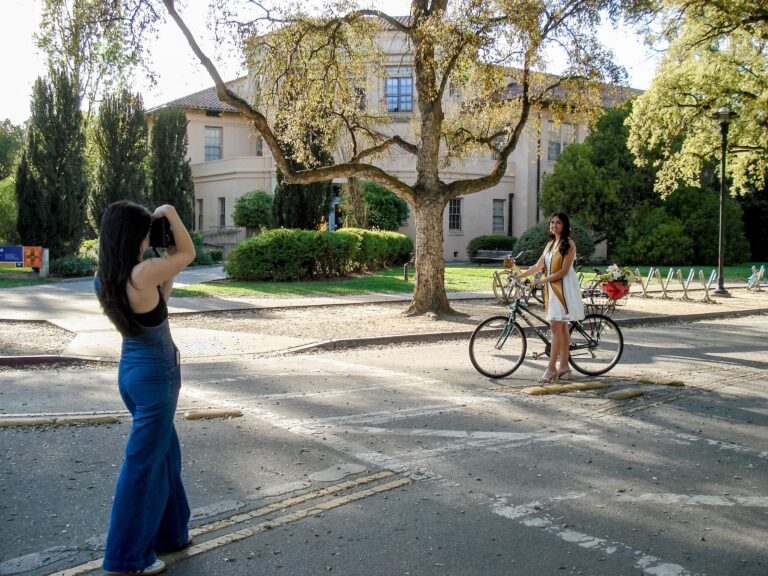
The process of taking graduate photos varies from student to student and from photographer to photographer, but Beifuss pointed out several hot spots for students to select to be featured in their photographs.

“Some grads have fun memories in the library, [the] Death Star or the Quad and have special requests to have photos there,” Beifuss said. “Others let me take the wheel, in which [case] I take them to my three favorite spots: the brick wall on A Street, the trees near the Quad and the wildflowers near the Arboretum.”

A stroll across these iconic campus spots, particularly at sunset during the spring months, will inevitably bring the sight of students with stoles across their shoulders, champagne bottles in hand and photographers clicking away on their cameras.

Unlike most photographers who have the ability to take hundreds of photos during a single session, however, every photo counts for Alexandria Ikuma, a fourth-year physics major.

Ikuma takes a more old-school approach to photography — she uses a film camera to capture grad portraits. One singular roll of film, Ikuma explained, allows for about 36 photos.

Citing the uniqueness and nostalgic quality of film photos, Barbour-Berson decided to book with Ikuma for her grad portraits. She explained the experience of not having access to digital features like previewing photos and taking many shots in one sitting.

“We had to be a lot more intentional about the photos we were taking,” Barbour-Berson said. “It was really cool to not know how they were going to turn out — I really liked the anticipation of waiting to see what they were going to look like.”

Though Ikuma tends to mostly take photos for friends or acquaintances and considers herself to be a non-professional, as of this year she has begun posting her content to her photography-specific Instagram account, @gradfilmphotos, where she also allows for booking sign-ups.

Ikuma explained that her services started last year when her friends expressed a love for her film photos she would often post on her social media page.

“Two of my friends who were graduating last year asked me to take their grad photos,” Ikuma said. “I’d never thought of doing that but I said yes, and it was really nice to spend that time with them since they were graduating,”

Unlike Ikuma, Luy has connected with a variety of clients previously unknown to her via her business’ Instagram, @luyphotography, and by way of flyers across campus. Luy, however, also highlighted the unique time spent one on one with a client as being one of the most impactful parts of photographing graduating students.

“I think that shooting college students in general, everybody has this sort of chaos going on around them — everybody seems to be part of different clubs and [organizations] and everybody is doing something crazy,” Luy said. “But when I get to do these shoots, it feels like me and the grad come together and the world goes silent. We don’t have to worry about anything else going on in the world for that hour and instead we get to recognize that graduating is a huge milestone and a moment to celebrate.”


Written by: Rachel Gauer — features@theaggie.org
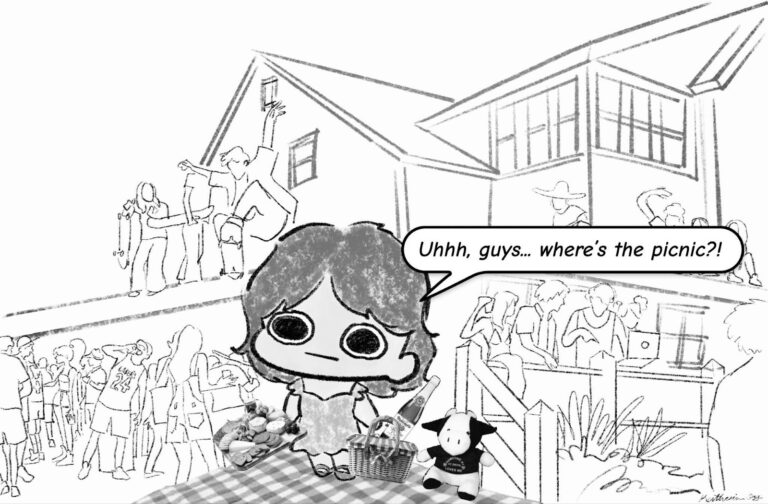
Time to put the ‘picnic’ back into Picnic Day

Drawn by: Katherine Ong–– keong@ucdavis.edu

Disclaimer: This cartoon is humor and/or satire, and its content is purely fictional. The story and names of “sources” are fictionalized.

Neutrality is unacceptable; Reinstate the Law Student Association

UC Davis’ suspension of the LSA and what this means for students’ right to open expression


By TARA ROMERO — tcrome@ucdavis.edu


On Feb. 28, 2025, the Law Student Association (LSA) on our campus passed an amendment to their constitution that adopted Boycott, Divestment and Sanctions (BDS) legislation in support of Palestine. Through this amendment, the LSA would no longer put student funds toward any businesses on the BDS boycott list and no longer fund events or speakers who represent Israel — in support of Palestinian people’s fight for freedom.

Less than a month later, on March 24, UC Davis officially suspended the LSA’s right to govern, and the administration has since taken over control of student funds.

Shasun Sulur, a second-year graduate student at UC Davis Law, explained how the LSA made a concerted effort to ensure their amendment follows UC Davis policy and “received no clear notice, no clear direction and no clear communication from [the] administration as to why this policy was against their guidelines.” Rather than make any attempt to negotiate or communicate with the LSA, UC Davis overturned their students’ democratic vote and took over student funding.

The policy in question that the LSA allegedly broke states student governments must “provide financial and other tangible support for student activities and organizations on a viewpoint-neutral basis.” According to this logic, since the LSA is not remaining “neutral” on the topic of genocide, they are not fit to govern themselves.

The root of the issue here is the phrase “viewpoint-neutral.” There’s a common misconception that being neutral is inherently good. This mistaken line of logic follows as such: If there is no bias in either direction, then the neutral party is being fair to both sides — they deserve a pat on the back for remaining unbiased!

However, being neutral also means ignoring the truth. Playing both sides intentionally is an action that refuses to acknowledge the lived realities of the Palestinian people for the last 75 years. Neutrality ignores the displacement of over 750,000 Palestinian people from their land since the 1948 Nakba, ignores the discrimination and violence against Palestinian people in the years since the Nakba and ignores the genocide of over 50,000 Palestinian people by the hand of the Israeli government since Oct. 7, 2023. Not to mention, it ignores the United States’ significant role in this ethnic cleansing.

To be neutral is to be complicit. Remaining neutral means treating 75 years of violence and oppression against Palestinian people as the norm. The choice to be “neutral” in this context is a refusal to denounce a genocide — therefore, siding with the oppressor. Neutrality cannot be an option and yet, neutrality is the standard UC Davis is forcing its students to uphold.

UC Davis’ Principles of Community Statement reads, “we promote open expression of our individuality and our diversity within the bounds of courtesy, sensitivity and respect.” In this clause, our school tells us there are limitations to our “open expression.” The boundaries themselves are vague moral values: courtesy, sensitivity and respect. All three of these values are certainly important, but also highly subjective.

How is it not courteous to say you stand in solidarity with Palestine? How is it insensitive to state the fact that Israel is unlawfully occupying Palestinian land? What is disrespectful about denouncing the genocide of Palestinian people?

To say anything otherwise is to be complicit or to endorse the ongoing violence against the Palestinian people — and if that is where UC Davis says the LSA is “out of bounds” of open expression, then it is very clear where the campus’ allegiances lie.

By suspending the LSA, UC Davis is prioritizing obedience first and foremost. Our campus will “promote open expression” but only “within the bounds” that the university decides. The “bounds” themselves are arbitrary and bend over themselves to fit the university’s current agenda. Over a year ago, UC Davis Professor of English and Comparative Literature Joshua Clover presented us with a question: “How many Zionist student groups have been banned by universities?” The answer is the same then and now: none. Yet, universities like our very own have no problem banning pro-Palestinian student groups.

In the face of federal oversteps on our freedom of expression, we cannot allow this type of infringement on our own campus. It’s unacceptable to allow UC Davis to silence a democratically passed vote to no longer be complicit in genocide. We must demand that the LSA be reinstated and for the campus to return control of their funds.


Written by: Tara Romero— tcrome@ucdavis.edu

Disclaimer: The views and opinions expressed by individual columnists belong to the columnists alone and do not necessarily indicate the views and opinions held by The California Aggie.

Sacramento hosts ‘Hands Off!’ protest

Thousands rally at the California State Capitol for nationwide protest against the Trump administration


By KATYA OKS — city@theaggie.org


As part of a series of protests taking place across the nation, Sacramento hosted a “Hands Off!” protest as part of a nationwide mobilization on April 5, 2025. Over 1,400 protests were held across all 50 states.

The national “Hands Off!” protests mobilize to fight against President Donald Trump and Elon Musk for their work in: “dismantling Social Security and Medicare”; “handing trillions to billionaires”; gutting protections for working people”; and “assaulting our communities and our rights,” according to their website.

“Hands Off!” described what they call a “national crisis.”

“Our democracy, our livelihoods, and our rights are all on the line as Trump and Musk execute their illegal takeover,” the website reads.

The Sacramento “Hands Off!” protest was held at the Capitol building, where thousands of people attended the mobilization. The protest was facilitated by the Sacramento chapter of the 50501 movement, which calls for non-violent, nationwide mobilization movements.

“The first #50501 protests were a decentralized rapid response to the anti-democratic and illegal actions of the Trump administration and its plutocratic allies,” the 50501 movement’s website reads. “The idea [is] 50 protests in 50 states on 1 day.”

50501’s description of the movement focuses on the working class of the United States.

“Our movement shows the world that the American working class will not sit idly by as plutocrats rip apart their democratic institutions and civil liberties while undermining the rule of law,” the website reads.

Alyssa Gatti, a third-year sociology and political science double major, is one of the volunteers on the media team of the 50501 movement. Gatti explained how she became involved with the organization as a peacekeeper for an earlier protest due to her passion for activism, later becoming part of the core group of the Sacramento chapter.

“I have always been passionate about defending human rights and caring for others, seeing our community as our family,” Gatti said. “The biggest concern regarding the government and the state of politics would be the executive overreach, the criminalization of human lives and the defiance of the Constitution.”

Gatti also stated the importance of the greater UC Davis community getting involved in protests, advising students to use their voice in issues they are passionate about.

“I feel so much fulfillment from being involved with this cause and being able to work towards something bigger than myself,” Gatti said. “I would advise anyone to get involved with us.”

Aside from community members attending, the 50501 movement hosted speakers at the mobilization event.

Harue, a member and organizer of Indivisible Sacramento, who wishes to leave her last name anonymous, spoke at the protest about her mission as part of Indivisible.

“Indivisible empowers everyday people to take action and make their elected officials stand up for their voters and democracy,” Harue said.

Harue mentioned Senator Cory Booker’s marathon speech, in which Booker denounced and protested against the Trump administration for “25 hours and 5 minutes,” breaking “the record for longest individual floor speech ever delivered.” She emphasized the role of constituents in making said speech happen.

“Why do you think Cory Booker did this?” Harue said. “Because he was pressured by his constituents to just do something.”

Maggy Krell, an assemblywoman representing California’s 6th Assembly district, also spoke at the protest. Krell expressed the importance of politicians upholding and defending the Constitution.

“Donald Trump and I have something in common […] we both took that oath, and we raised our hands and we swore to defend and uphold the Constitution of the United States,” Krell said. “Instead, he’s firing tens of thousands of veterans who fought for that Constitution. He’s targeting immigrants who belong here, under the Constitution. He’s deporting people who have due process rights under this Constitution.”

A Sacramento State University student organizer for Students for Justice in Palestine, who wishes to remain anonymous, reminded the audience in her speech at the protest of the importance of not only recognizing the humanity of Palestinians but continuing to fight for their justice and livelihood.

“We are not just names; We are dreams, futures, stories which are stolen from us,” the student organizer said. “Being Palestinian is not just a nationality, it is an act of resistance.”

Jinnae Looney, the executive director for the MikeB Foundation, talked about the importance of recognizing that the Trump administration’s actions are a result of American systems of oppression that have always existed.

“This system has always been dangerous,” Looney said. “This is not just one political moment or a moment in history, […] it is now just visible to everybody.”

Mai Vang, a community organizer and city council member for South Sacramento, discussed at the protest the importance of defining the current period as one where the community comes together to transform American society as opposed to a period of hopelessness. She encouraged protest attendees to think about the legacy they want to leave behind, urging them to continue to “rise up and fight back.”

“Today, tomorrow, every one of us has an opportunity and power to decide what kind of legacy we want to leave behind,” Vang said. “What mark do you want to make in your family, in your world, in your community? And I have to tell you, you are leaving a legacy today by showing up.”

Camille Adams, a queer artist and advocate, reiterated the message above at the protest.

“Our joy is resistance, our solidarity is strength and our vision for a better world is still possible, but only if we keep showing up like you have today,” Adams said.

Many in the audience cheered and chanted in agreement throughout each speaker’s speeches. Attendees carried posters with messages such as “Restore American Values,” “Respect the Rule of Law,” “Dump Trump,” “Educate, Don’t Defund” and many more statements calling out “the coup” and “oligarchy” taking place within the Trump administration.

The 50501 movement’s next event will take place on April 19 at the California State Capitol in Sacramento. More information can be found on the 50501 movement’s website.


Written By: Katya Oks — city@theaggie.org

Spring 2025 fashion at UC Davis

Students discuss spring trends, @fashionofucd on Instagram and Davis-specific style


By GRACIELA TIU — features@theaggie.org.


On a bright day in spring quarter, while walking through the crowds of students passing the Memorial Union Quad, you brush past a girl and catch a glimpse of her outfit. She’s wearing a long, flowing white skirt, a cropped, loose-fitting tank top and tied black boots, and she is adorned with a broad selection of accessories — sunglasses, a large purse, a beaded belt and stacks of gold jewelry — all effortlessly complementing the look. Inspired, you pause for a moment, already imagining how to incorporate elements of her outfit into your own style.

As the seasons shift each year, trends evolve and styles fluctuate, bringing new opportunities for people to explore and define their own stylistic identities. At UC Davis, students notice a specific culture of fashion and style when walking throughout campus.

“Davis has a really unique campus,” Apple Lin, a second-year design and communication double major, said. “At Davis, people really show their individuality through their outfits. It’s cool to see everyone’s personal styles shine through their clothing.”

There are many Davis-specific Instagram accounts showcasing student life, including multiple fashion accounts. A popular account that has existed at Davis for many years is @ucdfits, but other accounts have been created by students, including a new one called @fashionofucd.

Belal Ismail, a second-year international relations major and co-founder of the @fashionofucd Instagram account, discussed his take on UC Davis fashion.

“I feel like we have a big, kind of indie, hippie-esque, granola culture at Davis, and that really shines in people’s fashion,” Ismail said. “I feel that people really try to mix their styles of being very functional — like they could go on a hike at any point — and also finding bold colors while mixing with a bunch of neutrals as well.”

Within these style umbrellas, specific items have also become especially prevalent in the season’s fashion trends.

“We’ve been seeing a lot of skirts, and I think they’ve been in for a while,” Ismail said. “I think as the weather gets warmer, people are going back to wearing more free-flowing clothing like skirts, both long and short.”

Accessories and shoes are also a particularly defining aspect of spring 2025 fashion.

“Big purses have been really coming in,” Ismail said. “I also think shoes that are slingbacks are [going to] come in. Or like a Mary Jane kind of shoe, I know some are really cute, and they have this kind of flower cut-out detail on the front. I’m also thinking [Adidas] Sambas. I think we’re [going to] see a different silhouette of Samba-esque shoes.”

In addition to overall styles and specific items, certain colors also typically pop out in each season.

“Color-wise, I’ve seen a lot of people gravitating toward white,” Lin said. “I think this is a spring trend in general. But I’ve also noticed a lot of earth tones, like browns and greens, especially here at Davis. There’s also been a lot of red popping up on campus.”

Katy Lawlor, a second-year design and psychology double major and another co-founder of @fashionofucd, described the creation of the account.

“Every week, we take photos of what people are wearing on campus, and we post them on Fridays,” Lawlor said. “It started because we had a design class together and our friendship grew, and we realized that there was a bit of a gap in representation of different styles on campus, so we wanted to fill that gap and be consistent. We were both basically thinking about how we wanted things [to] look at when we wake up in the morning and are trying to get dressed.”

One of the co-founders’ primary goals with the account is to spotlight the little details in students’ fashion.

“Part of the reason we started @fashionofucd is because we felt like there are students at Davis who are really great at the little things that might go unnoticed if you don’t take a photo, point them out or highlight them in some way,” Lawlor said. “We wanted to help everyone notice the little details — because how fun is that?”

Lawlor also participates in a campus ambassador program with Depop, a second-hand merchandise app that partners with Davis students to host swap shops and flea markets in collaboration with on-campus groups.

When it comes to finding style inspiration and balancing dressing with trends and maintaining her own personal style, Lin has some advice.

“I try to make [my style] my own by choosing clothing that flatters me and mixing in some current trends,” Lin said. I think it’s all about finding what works for you and making it your own.”

Ismail commented on how he feels his personal style often draws from both men’s and women’s fashion, giving him more room to explore and break through gender limitations.

“I oftentimes look at both guys’ trends and girls’ trends and kind of take [inspiration] from both,” Ismail said. “Like I got like my platform [Adidas] Gazelles, and I love them so much and they’re so comfortable. People were complimenting me on my shoes — they haven’t really seen them on guys, so I think it’s just kind of a thing people like when they see it on different people than who they usually sit on, it’s kind of fun.”

Though fashion can often be complex, intricate or multilayered, the founders of the @fashionofucd account wanted to showcase styles that keep it minimal and simple as well.

“I also like to keep it very basic sometimes,” Ismail said. “I literally just do maybe a graphic tee or just like a plain tee and then plain shorts and shoes. I feel like fashion is often thought of as being super extravagant and cutting edge, but it’s also the mundane.”

When looking for style inspiration, Lawlor not only looks through typical media sites like Pinterest, but also utilizes seemingly unconventional pieces to stimulate her creative side.

“Since I’m a design major, in one of my classes, my teachers had us make a design board,” Lawlor said. “But I think I’ve been looking at that a lot for outfit inspiration. It’s more abstract how I can apply a design of a vintage birthday card and make it an outfit, things like that.”

Ultimately, fashion culture at UC Davis provides endless opportunities for students and community members to display their individuality through their clothing.

“Everyone at Davis has such a unique and fun style,” Lin said. “I love how the environment here lets everyone express themselves through fashion, no matter their major. It’s really cool to see all the different ways people use fashion as an outlet for self-expression.”


Written by: Graciela Tiu — features@theaggie.org

Review: ‘A Minecraft Movie’ is anything but boring

The latest blockbuster video game adaptation has lots of laughs, if little substance


By NATALIE SALTER—arts@theaggie.org


If one thing is true of today’s popular culture, it’s that absurdity is everywhere. Just scrolling through social media is disorienting — everything is written in a language of obscure references and indiscernible words that require at least a month’s worth of online knowledge to translate. Simple “top text, bottom text” punchlines have been discarded in favor of media so ironic and bizarre that it swings back into humor. Simply put, in 2025, the word “brainrot” has more power than ever.

However, Hollywood’s latest attempt at adapting a video game for the silver screen, “A Minecraft Movie,” feels like the first time this characteristic of the contemporary online realm has fully leaked into the world of professional art. If its status as a TikTok darling has not made this obvious, the film’s chaotic 101-minute run hammers its clear influence home.

We open with Steve (Jack Black), a disillusioned office worker with a lifelong passion for mining who, in deciding to pursue his childhood dream, digs up a strange pair of artifacts that open a portal to another world. This is the Overworld, the blocky expanse of fields and trees known to every “Minecraft” player, and Steve quickly makes it into his home.

A hostile encounter with the pig-humanoid residents of the Nether, a hellish plane of reality within the Overworld, separates Steve from the mysterious orb that got him there in the first place. Thanks to his trusty dog Dennis, it winds up back in the real world — ready to accidentally fall into the hands of an unlikely group of heroes.

There’s an amusing cast of characters at the film’s center, though some are more memorable than others. Jack Black plays Steve with boisterous authenticity, delivering every line without a hint of irony. He has a particularly fun dynamic with Jason Momoa’s Garrett Garrison, a retro-gaming champ turned broke store owner; their competitive hostility alchemizes into a begrudging fondness that is honestly a delight to watch.

Then there’s Henry (Sebastian Eugene Hansen), a plucky and awkward kid who learns to embrace his creativity and confidence in an arc that is sweet, but nothing new. His older sister Natalie (Emma Myers) is the ragtag group’s voice of reason, teaming up with real estate agent Dawn (Danielle Brooks) to try to keep her brother out of harm’s way. There is also a remarkably absurd, yet nevertheless hilarious, arc involving Jennifer Coolidge and a blocky Villager who wanders his way into the real world.

Where “A Minecraft Movie” attempts to excavate deeper meaning, it’s not particularly life-changing. The message of the film is that you should never stop being creative — it’s a nice sentiment, though it doesn’t hit home emotionally.

What the film succeeds at being is an absurd, unbelievable comedy. The film’s gags are just ironic enough to appeal to audiences of all ages, steeped in Internet neologisms (an antagonist uses the word “unalive”) and just-silly-enough lines ripe for using in a slew of over-edited TikTok memes.

This is what makes watching “A Minecraft Movie” so deeply disorienting. You’ll laugh plenty, sure, but it will often be because your brain is so baffled by what you’re watching. It’s nonsensical in a way that is funny and yet also frighteningly resemblant to the experience of scrolling through Instagram reels. It’s, frankly, a very strange filmgoing experience.

Perhaps this is the inevitable consequence of an increasingly online era, the endpoint we’ve been hurtling toward with every iPad we put in a toddler’s hands. The newest generation of kids is more plugged into the Internet than ever, and that means they’ve got a different sort of humor to show for it.

That’s not to say that “A Minecraft Movie” is bad or that it’s 101 minutes of pure cinematic brain-rot. It’s plenty of fun and certainly leaves an impression. There are lots of thoughtful and enjoyable little homages to the original game that anyone who has played it will appreciate. It’s just an entirely singular film, more a reflection of our current online culture than anything made before — whether that’s a good or bad thing is up to you.

Written by: Natalie Salter—arts@theaggie.org

Local artist Gregory Shilling showcases 3D works at new Delta of Venus solo-show, ‘A Matter of Life and Depth’

Shilling discussed the process behind creating the show’s sculptural, painting-like pieces


By SAVANNAH ANNO — arts@theaggie.org


Celebrating its opening on April 11, “A Matter of Life and Depth” is the third installation of Local Artist Gregory Shilling’s work at Delta of Venus, a colorful café located on B Street in Downtown Davis.

Shilling explained the beginnings of his work and how he came to create the installation.

“The owner of Delta of Venus, Lee [Walthall], and I have become friends over the years, and I am so grateful he keeps letting me decorate his walls,” Shilling said. “Lee puts a lot of trust into the artists that display and perform here and he doesn’t shy away from the wacky, weird or opinionated. I don’t feel like I need to rein anything in or soften any edges here, and that sort of creative freedom is rare in the world of cafés and galleries.”

Featuring at least one work on each wall of the café, the show features new and old pieces by Shilling, showcasing various figures, faces and even a handful of landscape paintings. Inspired by the importance of the body and face in human communication, Shilling’s most notable stylistic choice is the distortion and abstraction of the traditional “figure.”

In works like “Little Rest for Big Man” and “Mice and Me,” Shilling exaggerates the proportions of figures and leaves behind interesting shapes to be found through color blocking. With stretched-out limbs and heavy features, Shilling has become well-versed in drawing emotion out of each body part — from a droopy wrist to a bowed head.

While you may not yet be familiar with Shilling’s work through a café or gallery setting, Davis locals have most likely seen Shilling’s signature, saturated colors in large murals around the city or wrapped around the cans of Sudwerk Brewing Co.’s beers.

“I owe the relative financial stability of my 20s to Sudwerk,” Shilling said. “I like the art I’ve made for Sudwerk over the six or seven years we’ve been working together, but the work my soul wants to make doesn’t sell beer. The function of my designs is to look cool or eye-catching or badass. The stuff I do in the studio is in pursuit of something deeper and more human.”

A UC Santa Cruz alumnus, Shilling has been creating art since childhood, inspired by nature and figures to communicate human narratives. While he possessed a stronger background in painting, Shilling’s time as a student led him to another medium: wood sculpture.

“When I was in college, I really fell in love with the wood shop — I was just grabbing wood from the scrap bin and building little faces or houses, and eventually an entire miniature town,” Shilling said. “Sculpture always came second to painting, but I kept getting hung up on the idea that everything I was painting existed on a flat, rectangular canvas.”

Motivated by the idea of making a more intentional choice about the shape of his artwork, rather than just continue to paint in traditional forms, Shilling decided to incorporate his sculptural skills and new love for working with wood into his creations.

Ending with how it began, his first ever three-dimensional piece, “Regret and Shame,” is now displayed at the very back of Delta of Venus, the final work most people will see as they walk through Shilling’s show.

Based on a poem written by Shilling, an image of a woman in bed turning off a lamp is made up of finely cut wooden pieces, all layered on top of each other. Shilling breathes life into the three-dimensional work with small details — tiny, framed sketches, a real cloth curtain and even a small nightstand with cabinets that can physically open.

“When I finished ‘Regret and Shame,’ I had one of those moments where I was like, ‘Oh man, I’m really onto something here,’” Shilling said. “I could suddenly see all the possibilities of the future. Obviously I’m not the first person to cut out the elements of a painting and arrange them in a sort of sculpture, but I did feel like I was starting to pioneer something.”

Following the creation of “Regret and Shame” in 2023, Shilling continued to experiment with a unique mixture of painting and sculpture. Today, the artist uses thin pieces of wood to layer various shapes and colors within each of his signature, abstracted figures.

Shilling begins each piece in a sketchbook. Afterwards, the drawing is put into photoshop, where Shilling can trace and spread out each individual shape. The separated pieces are then projected onto a large piece of wood, which the artist uses to trace and cut out each section. He then finishes each work by painting each piece and assembling them into their original form, creating a layered figure held together with gorilla glue and small nails. While the three-dimensional images are similar to Shilling’s style in flat paintings and prints, the layered wood allows for an even greater emphasis on the artist’s use of color and unique shapes.

A UC alumnus with a full-time career in art and graphic design, Shilling also offered advice to current students that may be looking to go down a similar path.

“Make the absolute minimum number of concessions when it comes to pursuing your art,” Shilling said. “You can make a million excuses, about needing to afford nicer things or have more stability, but as the years go by, you will regret that you didn’t take bigger risks in service of your passion when you were young. There will be time for practicality when you’re older.”

With a determination to continue creating no matter what, Shilling has become a beloved local artist of Davis over the past few years. Hosting community events like the annual live painting competition, Art Mania, filling up wall spaces across the county with highly detailed murals of wildlife and continuing to hold solo-shows in local spaces like Delta of Venus, it’s almost impossible to not be met with Shilling’s bright painting style and passion for the arts as a member of the Davis community.


Written by: Savannah Anno — arts@theaggie.org 

UC Davis women’s water polo puts up a fight against LBSU

The Aggies just narrowly miss an at-home win


By DANIELLE WIRNOWSKI — sports@theaggie.org


The UC Davis women’s water polo team returned to the pool on April 5 for their first home game of the season. Coming back from their loss to the University of Hawai’i at Mānoa the previous week, the Aggies were ready for a chance to fight for a win against California State University, Long Beach.

The Aggies put up a vicious fight against Long Beach, who entered the game with determination after facing a loss against Stanford University. The Aggies started off the first quarter strong, with Sam Yoo, a fourth-year human development major and utility, scoring her first goal of the game within the first two minutes of gameplay. However, Long Beach quickly tied the score with a goal of their own.

Just one minute after Long Beach scored, Margo Tempel, a first-year neurobiology, physiology and behavior major, scored her first goal of the game. Tempel’s goal brought the Aggies into a brief lead with a score of 2-1 before Long Beach scored yet again to tie the score at the end of the first quarter.

The start of the second quarter was a struggle for the Aggies, as Long Beach scored two back-to-back goals within the first three minutes of gameplay, bringing the score to 2-4. However, Yoo took this challenge to score her second goal, with an assist by Bridget Miller, a second-year human development major and center, within minutes after Long Beach scored, giving the Aggies a fighting chance.

Long Beach shut down this chance with a fifth goal of the game two minutes after Yoo’s goal, pushing the Aggies down by two goals. Nonetheless, Tempel scored her second goal of the game in the last second of the second quarter, bringing the score to 4-5, with the Aggies trailing close behind Long Beach.

After the back-and-forth scoring of the first half, the Aggies returned to the second half with a strong determination to get more scores on the board. Entering the third quarter one point behind, the Aggies put up a strong defense against Long Beach. Unfortunately, due to a penalty, Long Beach was able to score an additional goal in an unguarded shot, bringing the score to 4-6.

The Aggies came back offensively after multiple attempts at a goal for the next few minutes in the third quarter. With a timeout called four minutes into the third quarter, the Aggies were able to put together a plan and regroup.

Their planning paid off as Chelsea Johnson, a second-year human development major and center defender, scored a fifth goal for the Aggies, with an assist by Maddie Sumner, a third-year psychology major and attacker. This celebration did not last long, as Long Beach scored another unguarded shot at the Aggies, bringing the score to 5-7.

Lillie Vehling, a second-year mechanical engineering and statistics double major and attacker, went on the offensive and scored a sixth goal for the Aggies with just over two minutes left in the third quarter. Following this goal, Long Beach called a timeout with 45 seconds left in the third in an effort to strategize how to maintain the lead against the Aggies. Long Beach proceeded to score another goal with seven seconds left in the third, bringing the score to 6-8.

Long Beach continued the attack in the fourth and final quarter as they attempted to score within the first 30 seconds, only to be blocked by the Aggies. The Aggies came back with an attempted goal right after Long Beach’s attempt, though they were unsuccessful.

Long Beach called another timeout two minutes into the final quarter, following up with another goal seconds after the timeout ended. The Aggies’ Ally Smith, a third-year economics major and attacker, took the ball and scored a goal for UC Davis just seconds after Long Beach’s score. Unfortunately, this would be the last goal that the Aggies would score in the game.

Long Beach followed up this goal with another one of their own, with only three minutes and 30 seconds left in the game, bringing the score to 7-10. Tensions between players and fans reached an all-time high in the last few minutes of the game, with multiple attempts on the goal by both teams, though neither team scored.

The Aggies, in a last-ditch effort, brought their goalie into the field to attempt to score within the last seconds of the game, ultimately missing the goal. Overall, it was a very exciting matchup with both teams fighting for a spot in the Big West Conference Championships. The Aggies will return to their home pool as they host the Big West matchup against UC Irvine on April 12 at 12 p.m.


Written by: Danielle Wirnowski

Run, don’t walk, toward failure

The key to being “good” is being terrible first


By NADIA IWACH — nmiwach@ucdavis.edu


My first run left me unconvinced that evolution was complete — when my feet first hit the pavement, I swore the pavement hit me back. Barrelling down Russell Boulevard, I lasted about eight minutes before I saved face with a fake phone call and sulked back to my dorm. Kicking off my shoes, I lay on the floor, starry-eyed, mouth breathing and wondering if I was a counterargument for survival of the fittest.

No amount of humility or self-deprecating humor could distort the fact that I was bad at running. Objectively. Visibly. My limbs looked like they wanted to do anything but play lateral cat and mouse, and the Celsius swirling in my stomach only intensified the growing anxiety that I was undoubtedly bad at something.

I had been humbled by calculus and cold-calling alike, but struggling with such a primitively human task felt like a deeper kind of failure. Fighting the urge to quit entirely, I kept running. One mile, then two miles, then back to one for a couple of weeks. But I kept running.

As the months trudged on, I fell in love with the rhythm of running and the formulaic improvement it offered: if I run “x” miles at “y” pace “z” times each week, I’ll improve. Amid the noise of my early college days, the routine and predictability became an anchor.

Before running, I had considered myself categorically hopeless at anything with a ball and goal, and for good reason. One soccer season, the only point I scored was for the other team. Running, however, allowed me to redefine an immovable piece of my identity with a tangible metric of improvement. Redefining myself as a “runner” granted agency over what I was truly capable of — I was good! Life was great!

In line with many untethered, unemployed individuals, I then decided to register for a half marathon, which landed me in a physical therapy office four weeks out from the race.

“Just a few days off,” I told myself, deeply in denial. One missed run turned into two, and the race day passed me by like a pacer I couldn’t catch. I had flown too close to the sun and my swift descent reintroduced me to the fact that I was still fundamentally “bad at running: genetically averse and biomechanically unblessed.

Fast-forward to now, I’m 15 weeks out from the San Francisco Marathon. This time, all 26.2 miles. A feat that even now feels kind of impossible, a little pretentious and eye-rollingly ambitious.

At first glance, the leap seems to fall into the trite hero’s journey, which many runners and LinkedIn warriors alike tend to inject into their obstacles. Under pressure to reframe setbacks as stepping stones, failure can only be absolved by appropriating it as part of the inevitable ascent to success. In this narrative, unoptimized failure is a black mark, only second to mediocrity.

My experience was void of that and found its resolution in rejecting that oasis of success and self-realization entirely.

In this lies the greater thesis: Growing comfortable with stagnance and the possibility of permanent inability, I was freed from the pressure to constantly improve. Exceptionality was no longer the price of entry for effort; If I was destined to fail, it was worth failing miserably and beautifully. If there’s a binary of those who “can” do something and those who “can’t,” the only way out is through.

With what feels like the end of the world closing in, it’s easy to feel like there’s no time to be anything but perfect. Compulsive perfectionism feels ingrained, with people sometimes boasting about how little they slept or how many units they’re taking. Growing up in the microcosm of Bay Area high schools, I’m all too familiar with the macabre underbelly of this mindset and the allure of achievement for achievement’s sake.

But running, something I remain objectively and artistically bad at, taught me to pursue something without success as a prerequisite. With this, I received a gift more valuable than a title or a medal: the ability to be terrible — and doing it anyway.


Written by: Nadia Iwach— nmiwach@ucdavis.edu


Disclaimer: The views and opinions expressed by individual columnists belong to the columnists alone and do not necessarily indicate the views and opinions held by The California Aggie.

Downtown business owners discuss Picnic Day and reschedule Day in Downtown

The Davis Downtown Business Association heard from UC Davis and Davis PD representatives


By RORY CONLON — city@theaggie.org


The Davis Downtown Business Association (DDBA) discussed the aftermath of the violence on Picnic Day and rescheduled an upcoming event during their meeting on April 17. 

Kelly Fong Rivas, the local government relations director at UC Davis, delivered a statement regarding the violence that happened on Picnic Day.

“Everybody is aware of Picnic Day and the shooting incident that occured,” Rivas said. “We continue to cooperate with that investigation as a campus. As you know, we are limited in our jurisdiction for things that happen off campus, but we’ll be getting together with the city at a sort of leadership level to look at next steps and things we can do in future years.” 

Kyler Klingberg, a board member on the DDBA, asked Rivas about the future of Picnic Day.

“I’ve heard a bunch of rumors going around saying this is the last Picnic Day,” Klingberg said. “A similar event happened in Chico, and then they shut down their similar, Picnic Day-esque event. Can you debunk that myth that [you’re] in the works of cancelling it?” 

Rivas confirmed that she has no knowledge of upcoming plans to cancel Picnic Day. 

“That would be news to me,” Rivas said. 

Brett Lee, the executive director of the DDBA, said he doubted that Picnic Day would be cancelled, as the event has evolved over time to be more family-friendly. 

“It’s a different event today than it was 15 years ago, where the hallmark of Picnic Day was extremely heavy drinking and lots of injuries,” Lee said. “There might be some changes to how the city issues permits to groups and how those events are controlled, but I don’t sense there will be any kind of momentum around curtailing Picnic Day.” 

Kevin Wan, the president of DDBA, agreed with Lee’s assessment of the situation. 

“If you were to come to Picnic Day in the late aughts or the early 2010s, you would see swarms of police patrolling the streets, mobs in the middle of the streets and fights on the sidewalk,” Wan said. “That no longer happens, and it’s a much more positive, family-friendly event, at least in the downtown and on campus. The incident in Community Park is very unfortunate, but in terms of Picnic Day itself, the city, DDBA and UC Davis have gone to great lengths to improve certain traditions.” 

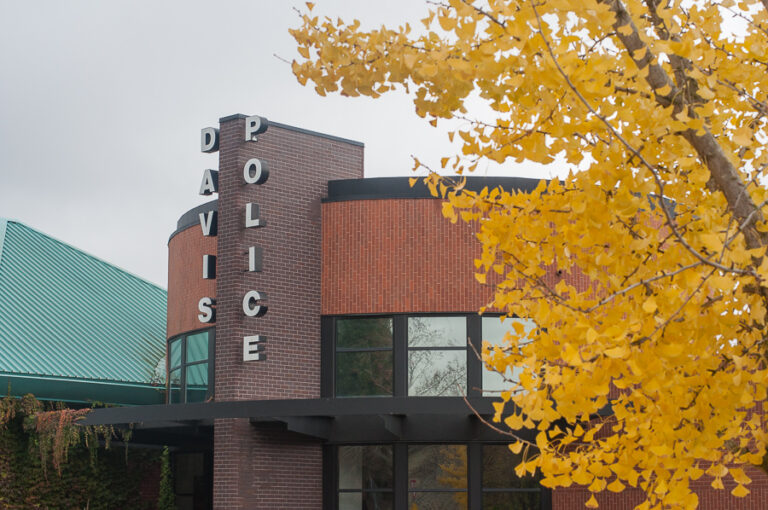
Antonia Dias, a sergeant from the Davis Police Department (DPD), spoke about crime downtown. She said that while the volume of calls from that part of the city has gone down, there have been isolated incidents of violence over the last few years. 

“Approximately five years ago, there were rounds fired on campus through a drive-by at [Highway] 113 on Hutchison,” Dias said. “In 2015, a bunch of us were surrounded in our cars in College Park right by International House, and we had people throwing bottles at our car.”

Dias said the biggest difference this year, unlike past years, is that people are acting on opportunities for violence. 

“There’s been large groups like this and big parties with potential for violence,” Dias said. “At the PD every year, we sigh in relief that no one pulled the trigger. This year, they did, so I would say that’s the big difference.” 

Dias had no further updates on the investigation, but she said that the department cancelled its regional crisis negotiation training the day before so staff and detectives could continue their work on the case. 

Autum Foss, an event coordination consultant for the DDBA, is planning a new event called Day in Downtown. Foss said she and her team are making changes to their event in light of Picnic Day. 

“In light of everything that’s going on with PD and them being busy with other things right now, we will forego our street closure for this first pilot event and focus on having it in E Street Plaza and the E Street parking lot,” Foss said. “We also moved the date, so the event will now be May 18, just to give us more time to properly advertise for the event.”

Foss said that they are anticipating between 50 and 55 vendors at the event, and they have submitted their permit to the city to secure the new location.

Larry Groves, a co-owner of the Growing Groves Plant Shop, is working in collaboration with Foss to plan the event. Groves said that while they are still excited to hold the event, the changes they made were necessary. 

“It’s going to be a little more of a controlled situation and also a good way to gauge how we can move the event to a larger space and progress in the future,” Groves said. “Obviously, things that are happening right now are a little stressful and confusing, but we’ll adjust accordingly.” 

Written By: Rory Conlon — city@theaggie.org


Walnut Park Library’s groundbreaking ceremony to take place on April 18

The new library will be located in South Davis and will open in late 2026


By OLIVIA HOKR — city@theaggie.org


In partnership with the city of Davis and the California State Library, the Yolo County Library will host the groundbreaking ceremony of a new library on April 18 at 11 a.m. at 2700 Lillard Drive, where the Walnut Park Library will be built.

Plans for the new library have been in development since 2001. Laura Galindo, the associate management analyst at the County Administrator’s Office, shared more about the timeline of the project.

“In 2001, a county-wide library facility plan recognized the community need for a library south of I-80, with an emphasis on serving youth and recreational readers of all ages,” Galindo said. “In 2015, a South Davis ad hoc committee presented a Library Services Report to the Board of Supervisors. The report included a timeline with a South Davis stand-alone branch opening in 10 years. In 2020, the [Yolo County Library] met with community partners about services needed for a South Davis branch. Architects developed the first concepts for a library in Walnut Park.”

Over the past few years, the county was able to gain funding to make the library possible through the Building Forward Grant from the California State Library, awarding $8.7 million to the county. More funding was acquired from $1.5 million pledged from the city of Davis and $850,000 given by United States Congressman Mike Thompson, as well as the passing of Measure T by Davis voters which will provide ongoing funding for library operations.

Yolo County Supervisor Lucas Frerichs expressed gratitude for those who have been working on the project for years to make it happen.

“For the past decade, both on the city council and now the county Board of Supervisors, I’ve worked in partnership with stakeholders to expand library services to South Davis,” Frerichs said. “I’m thrilled to celebrate the groundbreaking of the Walnut Park Library with many agencies and community members who helped us reach this important milestone.”

The city of Davis has primarily existed with only one active library in North Davis. Galindo shared details about why South Davis was chosen for the location of a new library in the city.

“The facility plan from 2001 stated the need in South Davis,” Galindo said. “Especially since the Mary L. Stephens Davis Branch Library is at capacity and not very convenient to get to for residents in South Davis. […] Adding library services to South Davis will allow the library to more equitably serve the entire city and also give South Davis residents convenient community room access that is sorely lacking in the community and is something residents have been asking for.”

The groundbreaking ceremony will provide community members with information about the upcoming development process and celebrate the achievement of expanding library services. Yolo County’s press release on the event shared more about who will be participating.

“The groundbreaking ceremony will feature remarks from key local and state leaders, including Vice-Chair of the Yolo County Board of Supervisors Sheila Allen, Yolo County Supervisor Lucas Frerichs, retired Yolo County Supervisor Jim Provenza, Congressman Mike Thompson, Davis City Council Member Josh Chapman, and a representative from the State Librarian’s Office,” the press release reads.

Further details, contact information and sketches of the building are available on the Walnut Park Library page on the Yolo County Library website.


Written by: Olivia Hokr — city@theaggie.org


What’s happening in the world of pistachios?

UC Davis researchers successfully produced the most highly extensive DNA sequencing of pistachios, alongside an in-depth characterization of the pistachio development stages


By MADELINE HASS — science@theaggie.org


Until recently, relatively little research has been conducted on pistachios despite their economic importance, great nutritional value and sustainable crop qualities. A team of UC Davis researchers has now generated the most comprehensive genome sequence of the pistachio, alongside an in-depth account of pistachio nut development.

This research study involved the collaboration of two labs focused on the Kerman cultivar of the pistachio nut. The new genome sequencing of the pistachio was accomplished by Grey Monroe’s team, while Bárbara Blanco-Ulate’s team focused on characterizing four distinct development stages of the pistachio.

Monroe, an assistant professor in the department of plant sciences at UC Davis and head of the Monroe Lab, said that this new type of in-depth sequencing was made possible by new advancements within DNA sequencing.

“In the realm of genetics, we are in a time of a lot of technological advances; one of those advances is around new technologies in DNA sequencing,” Monroe said. “The sequencing method we used is called circular consensus sequencing, which is available through the company Pacific BioSciences. They have something they call HiFi sequencing, which is what we used.”

As described in the team’s published study in the New Phytologist Foundation, young leaf tissue samples from Kerman trees were collected and flash-frozen in nitrogen for HiFi sequencing. HiFi sequencing employs fluorescent light signals to identify DNA bases and modified bases.

Once this initial sequencing is accomplished, Monroe’s team begins analyzing the data collected through extensive coding and writing computer software; this process is called bioinformatics. The team can then generate a data file with the genome sequence enclosed.

This data is then applied to the work being done within Blanco-Ulate’s lab to achieve a detailed analysis of the pistachio development processes. Blanco-Ulate’s team specifically focuses on characterizing four stages of development in the Kerman cultivar.

Jaclyn Adaskaveg, a postdoctoral research contributor and member of Blanco-Ulate’s lab, described the methods used.

“We were able to characterize the development every week as we collected samples across a 24-week period and did different phenotyping on each sample,” Adaskaveg said. “We looked at the different coloring on the pistachio, what the kernels looked like and other characteristics. We also gathered information on how its size is increasing and the hardness and texture of the shell itself.”

After examining many of the physiological aspects of development, Blanco-Ulate’s team complemented the data collected with a transcriptomic study, which is an account of gene expression at different periods. This allowed them to characterize individual stages of development in a way that had not previously been defined in depth.

“The transcriptomic study was across mainly the kernel development, which is about 12 weeks, during which we were able to integrate these two data sets and identify genes that were involved in key aspects of pistachio development,” Adaskaveg said. “We could see what genes were present, when protein was developing or what genes were driving [fat accumulation].”

This new information about each stage of development can serve as great insight for a variety of groups while also offering a new understanding of crop development and harvesting strategies.

“Pretty much anybody who works in pistachios can now use this tool,” Monroe said. “For example, here at UC Davis, we have plant breeders who are now going to use this as a tool for their plant breeding program.”

Real-world application of this research has already been displayed and as time continues on, the hope is that this new tool continues to prove beneficial. With this research, the future developments regarding pistachios remain boundless.

“We’ve now been able to give the pistachio world a lot more resources to work with,” Adaskaveg said. “There wasn’t really as high of a definition of a genome prior and we weren’t able to apply that to the development yet, so this will hopefully have really good applications for farmers and growers.”


Written by: Madeline Hass— science@theaggie.org


Ashley Stokes announced as new dean for the College of Agricultural and Environmental Sciences

Stokes is a dean emeritus for the University of Tennessee

Ashley Stokes named new dean of the College of Agricultural and Environmental Sciences (CAES) (UC Davis CA&ES / Courtesy)

By JORDAN POLTORAK— campus@theaggie.org

UC Davis announced that Ashley Stokes will be the new dean of the College of Agricultural and Environmental Sciences (CAES) starting on July 1. She is a dean emeritus for the University of Tennessee, where she is currently a professor of veterinary large animal clinical sciences. Stokes will replace Helene Dillard, who served as the dean of CAES for 11 years and announced her retirement in 2023.

“I have always admired and had so much respect for UC Davis,” Stokes said. “It’s a place I’ve thought about my entire career. They are the best in the world. I’m thrilled to become a part of this team.”

With more than 30 years of work in higher education, Stokes has also worked at Colorado State University, the University of Hawaii and Louisiana State University. Her work spans cardiovascular physiology, livestock transportation, food systems and community development.

Stokes discussed how this work impacts both the communities she works with and communities around the globe.

“When looking at issues in communities like in Kenya or countries in the Pacific, we see similarities in our communities here as well,” Stokes said. “Because we are a land grant university, the work we do is so important across California and the world.”

One of the many strengths Stokes cited within the CAES department is the hands-on learning opportunities for students.

“Her collaborative and empathetic approach to advancing educational and research opportunities beautifully aligns with the transdisciplinary culture we have at UC Davis,” Provost and Executive Vice Chancellor Mary Croughan said in a press release on Stokes’ hiring. “We look forward to welcoming her to campus and to seeing her vision unfold as the leader of this highly respected college and all of its programs.”

Stokes holds a Bachelor of Science degree in physiological psychology from the University of Alabama, a Doctor of Veterinary Medicine and a Ph.D. in cardiovascular physiology and pharmacology from Louisiana State University and a Master of Business Administration from Colorado State University.

Aside from serving as dean for the University of Tennessee’s Institute of Agriculture Extension, Stokes previously served as the associate vice president for engagement and extension at Colorado State University.

CAES has over 7,600 undergraduate students, some 1,000 graduate students, just under 400 faculty and another 700 staff members, according to their website.

“The cornerstone of what we do is relationships,” Stokes said. “Faculty and staff are our greatest assets. What we do is built on relationships and I want to foster them.”

During her time as the dean of the University of Tennessee Extension program, Stokes helped secure a $16.5 million endowment for a new 4-H center — an organization for the education and development of individuals aged five to 19 — which was the largest amount secured for a Youth Development center in the state’s history. Her future plans for UC Davis CAES revolve around helping the college thrive.

“When people thrive in what they do, the impacts are so great,” Stokes said. ”As a leader, I’m here to serve and when people thrive, that’s when we see that impact.”

Written by: Jordan Poltorakcampus@theaggie.org

‘The Last of Us Part II’ was underappreciated

Revisiting “The Last of Us Part I” video game before the second season of “The Last of Us” comes out on Max


By BELLA PETERSON —- arts@theaggie.org


With the release of the second season of the television series “The Last of Us” soon to be released, it might be fitting to revisit the game, specifically the sequel that during its release caused a major controversy. Heads up for strict show watchers: If you have not played the game, then this article will contain possible spoilers for the show.

“The Last of Us Part I” was regarded as a masterpiece: a perfect mix of drama and action for a video game. It was a fresh take on the post-apocalypse genre that changed the trajectory of many gamers’ lives. Eventually coming to win the “Game of the Year” title from the Annual Game Developers Choice Awards, “The Last of Us Part I” was a staple in gaming for a long time. When “The Last of Us Part II” was announced at the Playstation Experience on Dec. 3, 2016, fans were ecstatic.

It’s important to acknowledge that right before the game’s release, there was a leak within the game developers’ studio, Naughty Dog. This leak revealed the death of a beloved character within the series that incites the journey of revenge for the protagonist of the sequel, Ellie. These leaks were nearly impossible to avoid and were spread everywhere, and only a lucky few fans were able to play the game without any spoilers.

These spoilers really turned the tables for the release, and the pre-existing excitement was now abruptly lost to an unfortunate turn of events. The few that found themselves able to go into the game without these spoilers still felt upset at the choice the game developers had made. Now, it has been nearly five years since its release, and it’s safe to say that the attitude toward the game has changed drastically.

Naughty Dog made brave choices with the material of “The Last of Us Part II,” but now that people have had time to grieve and fully digest the content of the game, it seems that there is a fresher perspective with what the story had to offer. “The Last of Us Part II” wasn’t done in the way that it was simply just to “shock” players. It was meant to be quick and hard, because that is what loss is. Something we have to go through unexpectedly just like the protagonist, Ellie, does.

Where “The Last of Us Part I” is a story of finding light in the darkness, “The Last of Us Part II” is a story of what that light can transform us to be. We see this beloved character go to drastic lengths to get revenge for the death of the person closest to her. In doing so, we see that she starts to lose parts of herself and eventually comes to sacrifice the life she has built. The story of “The Last of Us Part II” is meant to be a forewarning that revenge is a path that only causes further destruction. By not knowing when to give up, you may end up losing whatever else you have left.

What really makes this story special is the parallel shared between the protagonists in the game: two girls who lost someone brutally taken by them seek revenge to lessen the pain that was bestowed unto them. Like two sides of the same coin, we see that Ellie is at the beginning of her journey through revenge while the other protagonist, Abby, is at the end.

We see the point of view of someone who has earned her revenge through great effort and trials only to find that she isn’t fulfilled or better for it. Through the progression of her gameplay, we find her struggling to come to peace with her choice, not only from the taking of someone’s life but also its effect on the people who joined her on this mission.

It isn’t until Abby comes across two kids and saves their lives that she finds something to fight for — something to help her move past the pain. Despite these kids coming from the group that her community is actively at war against, Abby finds herself caring more for them than the life she previously built through her journey of revenge. It is because of this that Abby is finally able to find peace, the peace she thought she would find through revenge.

Abby is a direct foil of Ellie. The latter also seeks revenge but fails in the many ways that Abby succeeds in and, in turn, sees the life taken of another person she cared for. Ellie had to face this loss without actually getting the revenge she sought. After this loss, she struggles with the post-traumatic stress disorder she acquired through her experience and isn’t able to move on. She has all she needs for her future right in front of her: a family that loves and cares for her. And yet it isn’t enough. We see that Abby was able to walk away from revenge and choose the second chance she was given, but Ellie just doesn’t have the same strength to do so.

“The Last of Us Part II” is a beautiful story of how love and loss can transform us: How much would we have to offer up of ourselves in order to give that love and what lengths would we go to for it? It’s rare to see stories that are able to show how two similar journeys can also differ from each other. “The Last of Us Part II” is a perfect sequel to “The Last of Us Part I” and, to this day, still goes far too under-appreciated. After seeing the choices Max took with the first season adaptation of “The Last of Us,” we can only hope for the second season to accomplish the same things the second game did.

Written by: Bella Peterson — arts@theaggie.org

Anxiously attached to my TikTok algorithm

I lie to TikTok and it lies back


By ABHINAYA KASAGANI— akasagani@ucdavis.edu


Most days, I scroll through TikTok absentmindedly, typing in phrases like “disorganized attachment,” “What if I love my partner but don’t like them?” or “Am I operating out of fear or instinct?” TikTok has none of my answers, but that doesn’t stop me.

Sometimes, I lie about my questions, conceiving impractical scenarios to beget impractical answers. It is amusing to note how TikTok repackages attachment theory into archetypes, reducing psychology into bite-sized, emotionally flattened aesthetics. Do not get me wrong: Attachment theory is a useful clinical framework in which one understands relational patterns, and TikTok has been accomplished in making these tools accessible to the user. Despite its usefulness, this prevalence of “packaged” information has encouraged people to self-diagnose and leverage their dysfunctions as excuses; a cavalier “TikTok told me that I….” misplaces all accountability.

Attachment theory was originally developed by John Bowlby and later expanded by Mary Ainsworth, explaining how caregiver relationships (especially between mothers and children) shaped the child’s approach to emotional control and their understanding of intimacy. Bowlby and Ainsworth’s work resulted in the four major attachment styles: secure, anxious, avoidant and disorganized. Operating on a flexible spectrum that explained the psychological inclinations of the child, these were seen as informative tools that made sense of these behaviors — not to be confused with fixed personality types or rigid roles.

If you, like me, are chronically online, you might be asking yourself: Why is everyone an avoidant nowadays? Reducing these behaviors into easily consumable archetypes allows one to dramatize these tendencies. The “anxious girl” is an overthinker who only likes people who do not seem to reciprocate. You laugh both at the truth it conceals and at the lie it presents. These dynamics are romanticized to contend with the presence of a pattern, of being trapped in a cycle: wanting something and getting another. The Internet is known to monetize anything even remotely “relatable,” so you are not confused as to why this happens.

The Internet loves checking boxes, labeling categories and forcing things into boundaries of black and white. Think of the Myers-Briggs Type Indicator (MBTI), Enneagram or astrology. This prevalence of memes, infographics and point-of-views (POVs) on these subjects results in the establishment of personalities as performance — the strategic use of therapy-speak makes surface-level understandings feel insightful.

Oversimplifying these behaviors can cause misdiagnosis or a glamorization of these proclivities that then allows one to believe that as an “anxious” attachment style, they are fated to seek out “avoidants” and are forever bound to this cycle. They quit any attempts to break it. Others might use it to excuse their mistreatment of others, making no effort to address it — “I am who I am” is a terrible excuse.

Attachment theory was intended to help understand and solve the gaps in our patterns of communication, and TikTok offers up these patterns that were previously taboo or confusing to us on a silver platter. The paradox of TikTok psychology is that, despite its desire to educate, it leverages therapy-speak as social capital, concealing the amount of work that needs to be done.

So, the clock ticks and you scroll through posts for nearly an hour and a half. Your anxious attachment to your phone is why you are so easily lied to and misguided — break the cycle or don’t. Use what you’re told or put your phone away. To aestheticize all talk and no action is dangerous; nothing that is 60 seconds long can do the work alone.


Written by: Abhinaya Kasagani— akasagani@ucdavis.edu

Disclaimer: The views and opinions expressed by individual columnists belong to the columnists alone and do not necessarily indicate the views and opinions held by The California Aggie.