55.1 F
Davis

Davis, California

Saturday, December 20, 2025
Home Blog Page 38

Students learn and relax in the UC Davis Botanical Conservatory

The “living museum of botanical wonders” is an important space for students on campus


By LAILA AZHAR — features@theaggie.org


The Botanical Conservatory is one of the hidden gems on UC Davis campus. As Marlene Simon, the conservatory’s curator, recounted, people are often surprised to discover it.

“Just the other day, a retired professor stopped by and said, ‘I worked on campus right here in Kerr Hall for 30 years and didn’t know this place existed,’” Simon said. 

The conservatory, which is located in the greenhouses just north of Storer Hall, began in 1959 as a collection of Coleus, a colorful foliage plant. In 1998, when Simon was studying environmental horticulture at UC Davis, her class visited the greenhouses.

“I walked through the doors and just went: ‘Wow,’” Simon said. “There used to be Wednesday volunteer nights, so I did those, and then my last quarter here I did an internship — which we still provide — and I thought if I was ever back in Davis, I wanted to work there.” 

Today, the Botanical Conservatory is home to nearly 4,000 different species of plants, including many of which are critically endangered. 

“It’s housing important genetics that, sadly between habitat destruction and global warming, are being wiped out,” Simon said. 

Alongside preserving plant genetic diversity, the conservatory is an important hub of education. It provides plants for classes, and classes — ranging from kindergarten to post-graduation — visit the greenhouses on field trips. 

“Our primary mission is teaching,” Simon said.

The conservatory has been a beneficial resource for more than just students studying plant science. Art, writing and photography classes often use the plants as sources of inspiration. Simon shared that two artists recently borrowed some of the plants as part of an immersive theatrical play. 

The space also often serves as a place for students on campus to relax, Sarah Lee, a second-year managerial economics major, said. 

“It’s right on campus, so it’s easy to stop by in the middle of a long day of studying,” Lee said. “Being surrounded by plants and nature is really calming.” 

Ashley Wong, a third-year psychology major, emphasized the soothing effect of nature. 

“College students especially spend a lot of time on their laptops,” Wong said. “The botanical conservatory is the perfect place to step away from that and focus on the natural world for a little bit. It takes your mind off of school.” 

Students can stop by from Monday to Friday from 9 a.m. to 5 p.m. and can participate in the internship program or check their website for volunteering hours.

Many students choose to visit the greenhouses during Picnic Day. This year, during Picnic Day, the conservatory will showcase the Victoria Amazonica, one of the largest water lilies, on display. 

Additionally, on Saturday, April 19, the conservatory will be hosting a plant sale in its parking lot. Those interested in buying plants can stop by from 10 a.m. to 2 p.m. and purchase plants with cash or check. 

From housing endangered plants, providing educational resources to bringing joy to students on campus, the Botanical Conservatory is more than just a collection of plants. Students who wish to remain up to date with their events can follow the conservatory on Instagram, @ucdavisbotanicalconservatory


Written by: Laila Azhar — features@theaggie.org

 

Trump’s deportation of U.S. citizens and undocumented residents alike is fascist

It has become abundantly clear that these deportation efforts’ true aim is to ethnically cleanse Latino communities and restrict freedom of speech 


By THE EDITORIAL BOARD


As the year continues on, it feels like not a day goes by where headlines aren’t filled with new instances of people being wrongfully deported. The Trump administration has made it clear that their ongoing actions do not reflect concerns for United States citizens and their security — this is blatant ethnic cleansing. Free speech has been completely redefined according to the new presidential ticket, and we are entering yet another scary and uncertain reality that defies the boundaries of law and order. 

29-year-old El Salvadorian Kilmar Ábrego García has been living under protected legal status in the U.S. since 2019. The Trump administration conceded that the deportation was an “administrative error,” yet has done nothing to help bring him back — claiming that they are not responsible for Ábrego García’s repatriation. On March 15, he was detained and questioned by Immigration and Customs Enforcement (ICE) officers regarding alleged gang affiliation. 

19-year-old Venezuelan Merwil Gutiérrez, in addition to 237 Venezuelans, was targeted by ICE and deported to El Salvador on Feb. 24. Wilmer Gutiérrez, Merwil’s father, reported that his son was apprehended at their Bronx apartment building along with two other young men.

“The officers grabbed him and two other boys right at the entrance to our building,” Wilmer said in an interview with Documented on Newsweek. “One said, ‘No, he’s not the one,’ like they were looking for someone else. But the other said, ‘Take him anyway.’” 

These are merely two examples of a deeply concerning national trend. These people are being wrongfully deported without due process, oftentimes with no proof whatsoever that they are deserving of legal repercussions. This pattern is deplorable, unconstitutional and incredibly contrary to the morals upon which this country is supposed to stand. 

ICE officers have also begun apprehending individuals while completely concealing their identities and wearing face coverings. These efforts are reflective of a broader precedent being set by the Trump administration: ignoring due process and constitutional rights across the board, letting the nation know that no one is safe. 

“[Gutiérrez’s] family and attorneys say he has no criminal record, no gang affiliations and ‘not even a tattoo,’ which authorities often use to profile alleged gang members,” the Newsweek article reads

Gutiérrez is now being held at the Counter-Terrorism Confinement Centre (CECOT) mega-prison in El Salvador, which is known for its inhumane treatment, along with providing no visitation, education or recreational amenities. The facility is also notorious for housing alleged Venezuelan gang members who are a part of the Tren de Aragua gang, where now, hundreds of immigrants are being transferred. The CECOT has been a recent tool of the Trump administration’s efforts to expedite immigration processes. However, the morality of these motions is not up for question — sending immigrants to a cruel prison in a country they are not even from is the mark of an authoritarian regime.

Trump has reportedly even begun calling for U.S. citizens to be deported to El Salvador, referring to “homegrown criminals” that are “absolute monsters” — Trump plans to follow through with this idea if and when his administration deems it legal. Most recently, a Mexican U.S. citizen was detained by ICE in Florida, even after a judge verified his birth certificate’s authenticity. 

This unconstitutional ruling is evidence that the Trump administration is targeting Latinos regardless of their citizenship status. As these instances continue, the Trump administration is deporting anyone who they can in an effort to cleanse the United States of “criminals.” 

These deportations have also recently included international students who have engaged in protests for the pro-Palestine movement. Palestinian activist Mohsen Mahdawi, a legal permanent United States resident who has held a green card since 2015, helped spearhead pro-Palestine protests at Columbia University. Mahdawi was told he was going to be interviewed about finalizing his U.S. citizenship, but was instead detained by ICE at a Vermont immigration office on April 14. 

“This is immoral, inhumane, and illegal,” a statement from Senator Bernie Sanders, Senator Peter Welch and Representative Becca Balint said. “Mr. Mahdawi, a legal resident of the United States, must be afforded due process under the law and immediately released from detention.” 

This is one of many examples of students who are engaging in free speech and are being deported for speaking up against atrocities. Other students include Turkish graduate student Rumeysa Öztürk, who was detained by ICE on the street, Mahmoud Khalil, who was the first of these arrests despite being a permanent legal resident, and Columbia University Ph.D. student Ranjani Srinivasan, whose visa was revoked after she was accused of being a “terrorist sympathizer” with no evidence.  

The actions that have been taking place are unacceptable, and the administration’s continual lack of due process is wholly unconstitutional. These students are doing nothing beyond expressing their views freely through peaceful protest and the written word, rights that should never be revoked from university students — or from anyone. 

The Editorial Board condemns these ongoing deportations and encourages you to educate yourself on your rights and the rights of others; It has become abundantly clear that civil liberties are being thoroughly restricted, with deportations and unjustified arrests becoming increasingly normalized. 

We implore you not to become apathetic to these headlines, even if they continue to grow more frequent. While this is a national issue, its impacts spread to the local level. As of the time of publication, 12 known UC Davis students and recent graduates have had their visas revoked. This is proof that the Trump administration’s actions are not just restricted to the national stage: it is happening to those around you, from your friends to classmates to neighbors.

The fast-paced nature of the news cycle can make it difficult to keep up with the changes happening in our current legal system, but this is even more of an incentive to stay on top of what is changing in our country — even if it doesn’t directly affect you, yet.


Written by: The Editorial Board

The Spokes take over Mondavi Center stage

The Davis group’s annual HellaCappella event to be held on April 19


By NOAH HARRIS — features@theaggie.org 


UC Davis’ all-female a cappella group, The Spokes, will be performing at the Mondavi Center for the Performing Arts on April 19 for HellaCappella, an event held annually featuring a cappella groups from across the West Coast. For fans of “Pitch Perfect,” this event may serve as an opportunity to live vicariously through collegiate performers. 

HellaCappella, which The Spokes call “the West Coast’s premier a cappella showcase,” is an event hosted every year by The Spokes that features several other a cappella groups from UC Davis, as well as other universities across the West Coast. It will be the 21st edition of HellaCappella and will feature seven a capella groups in total. 

In the months leading up to HellaCappella, The Spokes have held rehearsals multiple times a week. During their time together, they practice both the songs they will perform and the dances to accompany those songs. 

Unlike the Barden Bellas from “Pitch Perfect,” their rehearsals are free of drama, with most critiques coming in the form of suggestions. At the beginning of their practices, they start by doing “Roses and Thorns” — a reflective, check-in activity where “roses” are a positive and “thorns” are a negative — before starting their rehearsal with a full run-through of a song they have been preparing.

Nandini Rai, the president of The Spokes, explained how special it is that HellaCappella is being hosted at the Mondavi Center. 

“We got really lucky because I think maybe 10 or 15 years ago, someone in the group had a connection with Mondavi,” Rai said. “That’s why we’re the only a capella group that puts on our show in the Mondavi.”

Johanna Kapsis, the vice president of The Spokes, provided some insight into the event. 

“It’s one of Mondavi’s biggest shows of the year, which is really exciting for us,” Kapsis said. “It’s very high energy, so people who come are very often just really engaged and clapping and shouting.”

While “Pitch Perfect” will inevitably come up when thinking about an a capella group, Kapsis sees a benefit within that fact.

“Honestly, I think we try to generally lean into it,” Kapsis said. “‘Pitch Perfect’ is a really good movie and I think by mentioning ‘Pitch Perfect,’ it kind of draws people in because that’s what they know of. We’re an all-female-identifying a cappella group who sings pop music and we compete just like the Barden Bellas.”

Natalie Dennis, the music designer of The Spokes, shared what she expects to feel after the group performs at HellaCappella

“I’m expecting to cry at the end of it, because it’s just like, a lot of the hard work we put throughout the year is just in this show,” Dennis said.

Besides HellaCappella, the other main event for The Spokes is the annual International Championship of Collegiate A Cappella (ICCA) tournament — the same one shown in “Pitch Perfect.” Last year, the group finished in second place. 

“Whenever we compete at ICCA, [it] feels like I’m living like real-life ‘Pitch Perfect,’” Rai said.

Dennis described how she feels onstage in front of the audience and The Spokes’ goal for ICCA, where they finished second in their region the previous year.

“I black out on stage,” Dennis said. “I don’t remember a single thing. The goal is to do the best we can. Obviously with the pressure of placing in second place last year, it fuels a little bit more fire. But I think like my attitude going into it, especially as a leader, [is that] we’re going to do the best we can.”

Every year, The Spokes holds auditions in spring quarter that are based just as much on personality as musical ability. 

“It’s just a lot of commitment in general,” Rai said. “I think some people join the group and aren’t fully aware of how much of a time commitment this is, but it kind of pays off. But I would also say, if you want to meet people that could literally become like your family and your best friends — like [Johanna Kapsis], I met her through The Spokes and [now she] and I are president and vice president together. But we’re also best friends, outside of The Spokes.”

Tickets for HellaCappella are available on The Spokes’ website.


Written by: Noah Harris — features@theaggie.org

The Davis Night Market battles food insecurity in Davis

The market hosts weekly free food recovery events to support the local community


By KATYA OKS — city@theaggie.org


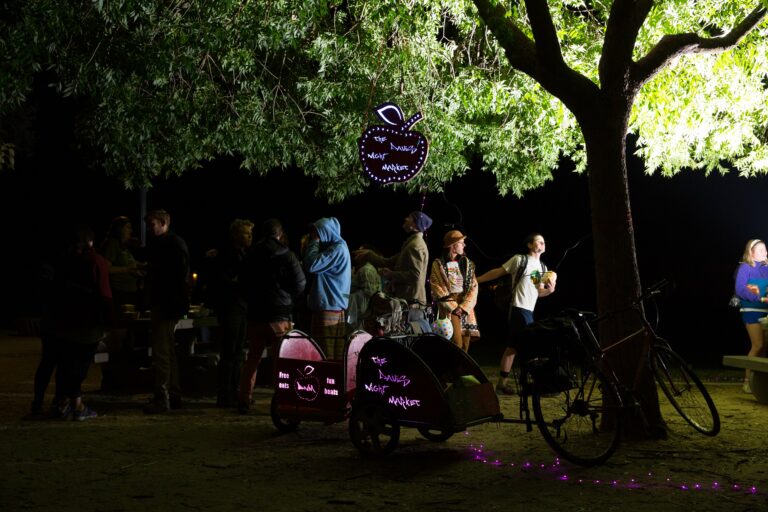
Every weekday, from 9 to 11 p.m., the Davis Night Market sets up their stand and hosts a free food recovery in Central Park in Downtown Davis. 

The night market defines itself as “an environmentally sustainable community-based food recovery organization,” and they work with local businesses and community members to “recover both cooked and non-perishable excess food, and redistribute to the community,” according to their official website.

Some of the local businesses that are partnered with the Davis Night Market include Chickpeas Kitchen, Sophia’s Thai Kitchen, Davis Food Co-op, Panera Bread, Village Bakery, Capay Farms, Noah’s NY Bagels and Peet’s Coffee. 

Max Morgan, one of the three community coordinators for the Night Market, explained how they work directly with businesses.

“We’ll approach local restaurants, grocery stores or really, almost anyone to try to get food,” Morgan said. “We also have people that know us and approach us when they have food. So, good example, there’s a woman I know from Buy Nothing, who helps out with a cardiovascular conference. And, every year when they have it, they reach out to the market to give us the excess food.”

The organization is entirely run by volunteers from Davis, who are responsible for setting up the market, planning events, partnering with businesses and aiding community members. The night market is built not only to work with businesses in minimizing their own food waste but also to create a more equitable environment that provides food security to the Davis community.

Connor Gorman, one of the volunteers at the Davis Night Market, expressed the importance of the organization’s role in creating a stronger community with its mutual aid mission. 

“[The] Night Market is a very open and welcoming space,” Gorman said. “Everyone is welcome to come and both get food and other material things that are being given away, if needed.”

Gorman also discussed the diversity of the community. 

“There’s obviously a lot of students because of the university, [and] there’s also a lot of unhoused people and low-income people,” Gorman said. “But, there’s also, like, people who are neither students nor low-income who still are here, because it’s a welcoming space for everyone to just come out and mingle and cohabitate and socialize.”

Dragos Zaharescu, a volunteer at the Night Market, also reiterated the importance of a diverse community.

“It’s cool to also hang out with people that normally we marginalize in society,” Zaharescu said. “You get to learn from their life stories, you know, and their past, their passion, the steps in the future they want to take. I think it’s good for them to find a space, a community, that doesn’t mistreat them, look down at them or anything like that. Here, we share resources, we exchange memories.”

The Davis Night Market also “strives for a non-hierarchical, anti-racist operating structure steeped in the ideals of radical inclusivity and climate change awareness,” using the organization as a way to hold space in support for the Davis community in response to the current political climate, according to their website.

One of the volunteers, who wishes to remain anonymous, highlighted the work of the Davis Night Market on Jan. 20, providing a community space of reflection and mutual support in light of Trump’s inauguration. 

“The whole area was just filled with people making soup and hanging/handing out clothes and distributing literature and all the food that we have,” the volunteer said. “We had a ton of food that night, and we had the heating station and water, […] all these beautiful things and pride flags — just everything that the community wanted to see out. It was a hard night, I think for a lot of people, but seeing that brought a lot of joy, and hearing the reactions afterwards, I think that was really memorable.” 

Cadrick Odysseus, another volunteer for the Night Market, mentioned the importance of UC Davis students not only getting involved with the Night Market but also allowing themselves to be inspired by their events and actions.

“A constant theme that I hear is there seems to be a great deal of dismay, especially with the political climate that’s going on, and a degree of hopelessness,” Odysseus said. “It plagues everybody, and now more than ever, we are disconnected from each other.”

Odysseus suggests the idea of taking part in what he called “water stations” in which people would bring two air pots filled with cold and hot water, instant ramen packs, tea bags and more, and then set up a station in a public space.

“You can reach out to people on the street who need it the most,” Odysseus said. “You can reach out to people just on a cold call, and to strike up a conversation that way. I would highly recommend, during these times, to continue to find ways where it may not be the loudest protest, but it’s certainly some form, where you can occupy space, particularly a public space, […] and that’s pretty powerful.

More information and events organized by the Davis Night Market can be found on their official website and social media platforms


Written By: Katya Oks — city@theaggie.org


Davis City Council addresses student population and community housing issues

With declining enrollment rates, the city council faces the challenge of implementing new housing measures 


By YUENJO FAN — city@theaggie.org


The Davis City Council met on April 1 to address concerns about declining grade-student enrollment rates, housing affordability and an update on the city’s mid-year budget.

As the most pressing issue, Davis Joint Unified School District (DJUSD) Superintendent Matt Best addressed the council on how the district has experienced a gradual decline in enrollment rates and how new affordable housing measures must be undertaken to combat this occurrence. 

“This last year, in June, we had 636 students graduate from Davis schools and an incoming cohort of 410 [students],” Best said. “As that smaller cohort rolls forward, we’re going to have a significantly different district than we do today.”

With an average decline of 100 students a year, DJUSD is now seeking solutions to combat this trend. Attributed to lower birth rates and housing unaffordability, the decrease in the student population has now forced the district to turn to boosting the housing market. 

Village Farms and Willow Grove, the district’s two proposed housing projects, are aimed at attracting young families whose children will help boost DJUSD’s enrollment numbers. Whether these two housing projects are finalized will ultimately be decided by local voters in November 2025 and June 2026, respectively. 

DJUSD Chief Strategy Officer Maria Clayton provided more information about the impact of creating new housing.

“If Village Farms and Willow Grove are both put forward and approved by Davis voters, we are looking at a problem of rebalancing school boundaries,” Clayton said. “We will have enough seats throughout the district and enough students to fill them, but they won’t be in the right places. We will have to think about rebalancing and shifting [school] boundaries and program locations for the entire district. […] With this in mind, the board of education is expected to make a final decision in October 2026 to reflect solutions to the challenges that we face at that time. This decision will begin to be implemented for the 2027-28 school year.”

Best further stressed the importance of the success of these two housing projects, stating that if voters struck down the development plans, anywhere from one to three school closures would be imminent. He also stated how major alterations would be made to the school district if new housing could not be built. 

“I’ll say this just plainly, […] without new housing we will need to restructure our district,” Best said. “That restructuring will include school closure, consolidation, model adjustment and program movement throughout town. [DJUSD] can’t lose 1,000 students over a decade without making significant structural changes.”

Best also indicated that if Village Farms passes but Willow Grove is rejected, DJUSD would have to close one school. However, if Willow Grove passes while Village Farms is struck down, then the District would be forced to close two to three schools. Thus, Village Farms will shoulder a larger portion of DJUSD’s enrollment numbers. 

Leslie Blevins, the president of the Yolo County Association of Realtors, gave her insight on how Davis’ current population desperately needs the development of new housing units. As Blevins explained, without new, affordable ways of attracting younger families and people, Davis risks losing an important part of its community. 

“Davis is changing,” Blevins said. “Our population is aging and we cannot ignore the consequences of that. As we become a community with a larger percentage of seniors, we risk losing the energy that the younger generation brings. […] This creates an urgent need to address the housing situation in our town. Without increased housing options, especially affordable housing, we risk losing the ability to attract young families, students and essential workers who are vital to our community’s health.” 

Moreover, the council also listened to a mid-year budget update from Finance Director Elena Adair, who provided an air of optimism about the city’s revenue and expenditures.  

“General fund overall tax and fee revenues are at or in some cases, above expectations,” Adair said. “Only a few are below but the net effect is still positive. General fund expenditures are still within the budget, [..] and city-wide expenditures are generally within acceptable ranges.”

The Davis City Council meets on the first and third Tuesday of each month. More information can be found on their website.


Written By Yuenjo Fan — city@theaggie.org


ASUCD Senate confirms new vice controllers, interim senator at April 10 meeting

The Senate also heard the AAC quarterly report and approved new legislation 

By AALIYAH ESPAÑOL-RIVAS — campus@theaggie.org

The ASUCD Senate confirmed three new vice controllers and an interim senator at its April 10 meeting, before passing a series of constitutional amendments and legislation.

Vice controllers are tasked with aiding the head controller in the management of the annual budget and overseeing the association’s fiscal matters. The three confirmees to the position are: Trinity Chow, a fourth-year neurology, physiology and behavior major and former senator, Ashley Knauss, a third-year economics major and former vice president of the UC Davis Economics and Business Association, and Zayd Musa, a first-year computer science and economics double major.

The Senate also confirmed Noblejot Singh, a fourth-year political science — public service major, as an interim senator. He fills the seat left vacant by former Senator Asif Ahmed, who graduated last quarter.

Singh previously served as an interim senator in fall quarter 2024 and hopes to overcome academic challenges in regard to diversity, equity and inclusion (DEI) within the academic community.

“I want to continue working with the international student representative office and working directly with Registered Student Organizations to overcome a lot of the challenges we’re having with DEI within the academic community,” Singh said. “[I also want to work on] creating that collaborative space ASUCD is supposed to be through representation, but also giving a meaningful diverse representation of those communities by having them be a part of the process.”


Legislation

Following some other business, ASUCD President Gaius Ilupeju urged senators to pass Constitutional Amendment (CA) #94, to revise the appointment system for interim elected officers.

“I think we’ve been having a lot of discussion around the hiring of interim senators this year,” Ilupeju said. “I think more so because it is the first time we ever [have] had to and been able to hire interim senators. Usually people finish the term but that’s not really the case anymore. [CA#94] adds more clarity and transparency in the process.”

The amendment was later passed unanimously.

The Senate also unanimously passed Senate Bill (SB) #69, allocating $1,129.84 to the Environmental Policy and Planning Commission for its inaugural Environmental Action Week, an initiative encompassing various events throughout the week of Earth Day to “establish better awareness of planet friendly practices in collaboration with various student organizations.” SB#70, amending the legislative transition seminar process for newly elected senators, also passed unanimously.

Afterwards, the Senate moved into consideration of old legislation. SB#68 was passed unanimously, adding a public disclosure statement to the weekly agenda of Senate meetings.

CA#95, adding two stipulations for decreasing the impeachment threshold — failure to complete legislative transition seminars and failure to complete two volunteer hours with ASUCD subordinate bodies per quarter — passed without objection as well.

The Senate also passed CA#93, seeking to amend the selection process for the ASUCD Student Advocate, but the amendment was later tabled until fall quarter, according to the ASUCD Legislation Tracker.

Other Senate affairs

Following the confirmations, the Senate heard the quarterly report from the Academic Affairs Commission (AAC).

AAC Chair Iris Chen provided updates to ongoing policies, including mandatory orientation courses and lecture capture, a standardized Artificial Intelligence policy and adding syllabi to schedule builder. The commission plans to continue student outreach and awarding ASUCD scholarships. Chen concluded her presentation by encouraging collaboration and communication between the Senate and AAC.

During public comment, La Familia de UC Davis Co-Presidents Danny Lopez, a fourth-year design and communication double major, and Tiffany Herrera, a fourth-year English and Chicano studies double major, requested funding for their second annual Queer Quinceñera event. La Familia de UC Davis is a LGBTQIA+ and Latinx community club dedicated to supporting and fostering connections for queer and Latinx students on campus.

“This event serves as a space for the LGBT students to come together and celebrate their identities and honor their journeys in a supportive and inclusive environment,” Lopez said. “[The Senate’s] partnership would not only make a significant impact on the success of this community event, but also contribute to fostering a more supportive and affirming campus environment for us.”

Gender and Sexuality Commission (GASC) Chair Tristen Dillard expressed interest in working with La Familia for the event and for future plans.

“[GASC] would love to financially contribute and just work with the event itself,” Dillard said. “Our GASC task force would love to have another project on our radar and find out the best way we can uplift you and help to contribute to the success of the event.”

The event was also adopted by Senators Solana Rodriguez and Dhilena Wickramasinghe for additional assistance.

The meeting was called to order at 6:21 p.m. and was adjourned at 7:22 p.m.

Written by: Aaliyah Español-Rivascampus@theaggie.org

Estelle Bakery opens in Davis

Beloved Sacramento-based bakery chain opens storefront in Davis


By ALMA CULVERWELL — city@theaggie.org


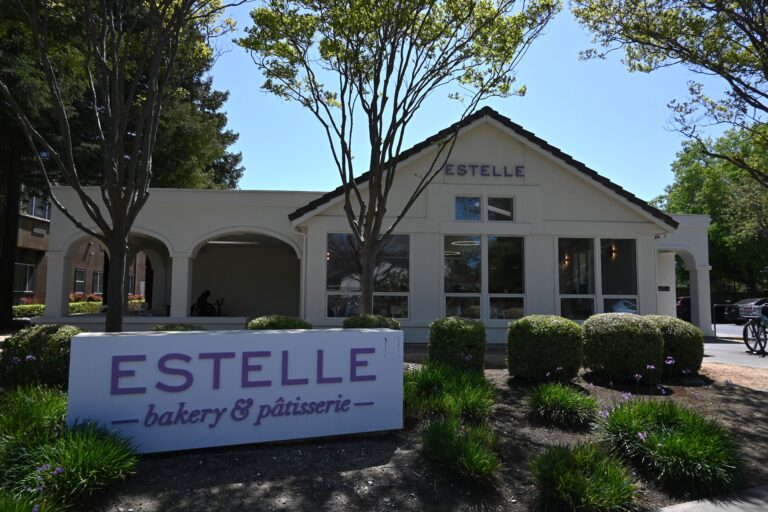
The highly anticipated Estelle Bakery & Pâtisserie opened its doors on Tuesday, April 1 at their new storefront at 2710 5th Street, bringing a fresh mix of French-inspired pastries and artisan breads to the local community.

In addition to their new Davis location, Estelle has two other bakery locations in Sacramento. Owner Esther Son, a UC Davis Graduate, has been developing the Davis branch of the bakery since 2022 after purchasing the space from the former Konditorei Austrian Pastry Cafe, which closed earlier that year when the owners retired.

Many local residents were excited about the bakery’s arrival in town, including Sabrina Perez, a local Davis resident who had frequented one of Estelle’s Sacramento locations prior to their Davis opening.

“I heard about Estelle coming to Davis through the Comings and Goings article,” Perez said. “I had previously been to their Arden location and fell in love with the atmosphere and, of course, the pastries. The Davis location is smaller in size, but still comes with their full menu and friendly staff.”

Perez described her favorite order choices and what she recommends first-time visitors to try.

“My go-to order is the ham quiche with a side of fruit and rose latte,” Perez said. “If going, you should definitely try their chocolate almond croissant.”

Anne Norton, a current Davis resident, commented on her experience with Estelle Bakery.

“I used to live in Sacramento, so I’m familiar with Estelle and I had been there once or twice a long time ago,” Norton said. “I heard about the Davis location because I live right down the street, plus I saw the posts about the opening on Facebook and Instagram. I was very excited to finally go there and get some goodies.”

Reflecting on her initial visit to the new Davis location, Norton shared both her excitement and concerns about the experience.

“I’m half German and lived in Europe for several years as a child,” Norton said. “I grew up eating European baked goods and sweets and my mama used to bake those things when we came back to the [United States]. I’ve never really cared for American desserts because they’re mostly too sweet, so I know real European pastries.”

Norton commented on her first time visiting the Davis location, and the few limitations she noticed from her trip.

“My first experience at this location is a mixed bag for me,” Norton said. “I know this is a soft opening schedule but I think they should have planned better for inventory.”

Norton also emphasized the importance of accessibility, pointing out that small changes could make a big difference for people with disabilities. She shared her own experience navigating crowded spaces and expressed hope for greater consideration from both businesses and fellow customers.

“I think they could make better accommodations for handicapped people like me and ask waiting customers to move over so we can see everything,” Norton said.

Though Norton noted some concerns about accessibility and limited food options, she was thoroughly impressed by the quality and flavor of the baked goods she sampled.

“The plus: everything was absolutely delicious,” Norton said. “The croissants were light and fluffy, yet buttery without being greasy. The bear claw had the real almond filling and wasn’t too sweet and the rose raspberry macarons were absolutely to die for.”

Moving forward, Norton shared her hopes for future visits and how she plans to approach them.

“As far as future visits, I’m going to wait until the rush of people dies down and go back when it’s not so busy and they have more of a selection to choose from,” Norton said. “But definitely a repeat.”

Soft opening hours for April are 7 a.m. to 2 p.m., Tuesdays through Saturdays. Beginning May 1, the bakery will be open seven days a week from 7 a.m. to 7 p.m.

The menu during the soft opening will reflect those of the Sacramento locations, with a slightly limited selection of hot foods. Estelle offers a range of breakfast and lunch options with a French twist, including French toast, soups, quiches, salads and sandwiches. The bakery is best known for its pastries and desserts, featuring croissants, cronuts (croissant-donut hybrids), Danish, scones, muffins, bear claws and brioche donuts available on Fridays. There is also a selection of French baguettes, sourdough breads, macarons, tarts, mousses and cakes.

Among the featured items is the Mont Blanc tart, a staff favorite promoted on Estelle’s Instagram page.

As Estelle Bakery & Pâtisserie continues its soft opening in Davis, the community can look forward to a full menu rollout and extended hours beginning in May. With its blend of European-inspired pastries, artisan breads and more, Estelle brings a new option to the area, and is already making an impression on longtime customers and new visitors alike. If early feedback is any indication, the bakery is poised to become a popular staple in the Davis food scene.


Written by: Alma Culverwell — city@theaggie.org


UC student advocates call for ethnic studies requirement, but institutional barriers remain

The UC Assembly of the Academic Senate is set to vote over the Area A-G/H Ethnic Studies on April 23 following five years of consideration


By KHADEEJAH KHAN — campus@theaggie.org


Ethnic Studies is the only academic field that has manifested from student activism, with a history rooted in student movements from San Francisco State University and UC Berkeley. Today, UC students continue to advocate for ethnic studies in K-12 education, but its supporters are concerned about the lack of structures that encourage student participation in university governance.

The Area A-G/H Ethnic Studies proposal would require high school students to take a non-additive, one-semester ethnic studies course for admission into any of the University of California’s nine undergraduate campuses.

Following the murder of George Floyd by a Minneapolis police officer in 2020, students like Dan Ma, a 2021 UC Berkeley alumnus, began advocating for an ethnic studies curriculum in his old high school. Alongside local high school students and alumni, he founded a group called “Education Organizers for Racial Equity” to promote ethnic studies at school board meetings. 

“There was a nationwide reckoning of racial injustice, and it was the energy that was just permeating among students that we needed to do something,” Ma said. “I saw a lot of that energy, not just among college students, but in high school students.”

Students who have taken ethnic studies courses prior to college have higher standardized test scores, grade point averages and increased school attendance, according to 2021 research by Stanford University’s Center for Education Policy Analysis. 

Despite nationwide opposition to ethnic studies, as seen with Arizona’s 2010 ban on Mexican American Studies, Ma believed that “California was in a unique position to take the lead.” Inspired to advocate for Area A-G/H Ethnic Studies within the UC Academic Senate, he joined two systemwide committees.

To attend committee meetings, Ma would take the bus from Berkeley to Oakland — a time commitment he found necessary to advocate for the proposal. While the proximity of the two cities made it possible for Ma to attend meetings, they were not as accessible for students from other UC campuses — a structural flaw of the Academic Senate that Ma believes hinders more students from participating. 

“There’s no real mechanism to educate students about how the system works,” Ma said. “It almost feels like it’s structurally meant to be that way. The environment needs to be set up for students to take advantage of that opportunity and be empowered.”

After five years and multiple votes on the proposal, the Assembly of the Academic Senate is set to vote on the Area A-G/H Ethnic Studies once again on April 23.

There are no means of student representation within the Academic Council, the administrative arm of the assembly. The primary way students have participated in the Academic Senate is by joining systemwide Senate committees like Ma did. Presently, seven of 20 systemwide Senate committees include undergraduate student representatives.  

Currently, the only way students can provide input on the proposal is by submitting petitions

While the Academic Senate is a body that primarily enables faculty to participate in shared governance, Ma believes that student representation should not be “just a figure,” as the body’s deliberations greatly impact student life.

Both the UC Student Association (UCSA) and GenerationUp, a student-led education policy group, have widely supported the proposed requirement to bring equitable curricula to California high schools. Currently, four UC student governments have passed resolutions supporting Area A-G/H Ethnic Studies, including UC Davis.

“The fact that many campuses’ student governments have already passed resolutions and [given] support illustrate the large student desire to see ethnic studies being put in the A through G requirements,” UCSA President Aditi Hariharan said. “But the fact that the Academic Senate has forced this to be voted on almost three times illustrates the huge divide between what students on the ground want versus what folks in power proceed to be the next decision to make.”

Shortly after the 2011 pepper spray incident at UC Davis, UC Regents discussed the possibility of increasing opportunities for students beyond public comment sessions at their meeting. Over a decade later, public comment is still the primary method of student involvement at the Regent level. For Hariharan, public comment feels performative as there are no follow-up conversations to comments within meetings. 

“[The lack of follow-up] illustrates ways in which concerns are brought up but never fully addressed,” Hariharan said. “Meeting after meeting, students don’t see their advocacy, their emotions, real-life stories and their soul that they’re putting into this work ever lead to actionable change.”

The UC Ethnic Studies Faculty Council has noted that while some 80% of California’s K-12 student population are students of color, 64% of UC management is white. Additionally, only 10% of UC ladder-rank faculty are from underrepresented racial and ethnic groups. 

“As long as free speech is being undermined and Ethnic Studies does not get passed, students of color are clearly being shown that they aren’t being prioritized,” Hariharan said.

When asked about student concerns regarding the structure of the Academic Senate, Academic Senate Chair Steven W. Cheung, a professor-physician at UC San Francisco, said that he hears the voices and concerns of students amid the upcoming vote. Yet he said that he acknowledges that the faculty’s views, especially at Davis, are very split.

“UC’s review process is designed to ensure that UC community members will have an opportunity to share input and feedback on this important and complex subject,” a spokesperson for the UC Office of the President (UCOP) said.

Faculty systemwide have expressed concerns about implementing the requirement in low-income school districts, as well as accessibility for out-of-state students at the Dec. 12 meeting of the assembly, according to Cheung. 

However, in a white paper from the UC Ethnic Studies Faculty website, Area A-G/H, as a non-additive requirement, can be fulfilled through already existing A-G coursework.

A separate white paper from GenerationUp notes that rural districts in California are “leading the way in ethnic studies implementation,” complying with AB101, a piece of pre-existing legislation that makes ethnic studies a California graduation requirement. The white paper also states that Area A-G/H only applies to California residents, so adding a requirement should not impact out-of-state applications. 

Two contingencies may impact the outcome of the vote: California’s state budget and federal executive orders, according to Cheung. If the proposal is approved by the assembly on April 23 by a majority vote, UC President Michael V. Drake will present the requirement to the UC Provost and Regents, who would have the final vote on the proposal. 

The UCOP spokesperson said the UC is “closely monitoring developments and potential impacts from recent actions from the federal administration.”

“We need to move forward despite the contingency, and we must honor the contingency,” Cheung said. “We will defend academic freedom in what we teach and how we teach it.” 


Written by: Khadeejah Khan — campus@theaggie.org

What happens on the farm, stays on the farm

Drawn by: Lauren Swing–– laswing@ucdavis.edu

Disclaimer: (This cartoon is humor and/or satire, and its content is purely fictional. The story and names of “sources” are fictionalized.)

Don’t make the same mistake I did

If you’re thinking about taking 28 units next quarter, don’t 


By JHANA RHODES—jsrho@ucdavis.edu


If I could use one word to describe my experience taking 28 units this past winter quarter, it would be “lukewarm.” It was not exactly hell, but it was not super “chill” either. Now that the quarter has passed and my grade point average (GPA) has decreased significantly (even though it seemed like a good idea in the beginning), through experience, I now know that taking 28 units right before graduation was a little too ambitious.

At UC Davis, 28 units is the maximum course load a student can take per quarter (after schedule adjustment). Therefore, based on the Carnegie Unit Rule, a 28-unit workload would equal approximately 84 hours of academic work per week. In retrospect, that’s like working three part-time, minimum-wage jobs. I could watch season three of The White Lotus 14 times a week and still be under 84 hours.

As you can imagine, I had no social life during that quarter. However, my absence from UC Davis sports games, club meetings and spirit weeks did not deter me from staying focused on getting good grades and finishing the quarter strong. In fact, I finished the quarter so strongly that my GPA went from 3.6 to 3.2.

Self-deprecation aside, taking 28 units is technically doable, depending on your major. However, I strongly advise against it because, to put it simply, it’s not worth it. Taking 28 units meant sacrificing not only my college experience (friends, activities, extracurriculars) but also caused me to burn out a lot faster than usual. Alas, I ignored the advice of several counselors and accomplished a mission not even Tom Cruise could pull off. On the bright side, taking 28 units is only the second most overwhelming thing I’ve done — the first being driving on the freeway for the first time.

In fact, the workload wasn’t just overwhelming; it was unsustainable and took over most of my life. I was in class from 9 a.m. to 6 p.m. every day, five days a week, for 10 weeks straight. While my weekends should’ve been time for me to live the college experience 13-year-old me dreamed of, I was too busy reading over 100 pages of textbook material. And don’t get me started on finals week; 28 units is the equivalent of seven classes, which means I had seven finals in one week. Worst of all, I had three back-to-back finals on a single day. By the third final, the brain fog had progressed so much that it became almost impossible to read a single sentence.

But, as I mentioned before, 28 units is doable; it inherently forces you to make crucial choices about allocating your limited time. This meant (happily) prioritizing specific club and volunteer activities. I had no social life to begin with, so this was exceptionally easy! However, as I learned quickly, it became detrimental to my mental health when core aspects of a healthy lifestyle became negotiable trade-offs. This “pick and choose” lifestyle caused time to fly rather quickly, and, before I knew it, I was two weeks past the drop deadline with no other option but to live with the consequences of my own actions.

While a part of me feels accomplished with somehow passing all of my classes with A’s and B’s, I do have one huge regret. Spending so much time in lecture halls meant I never went out to see how beautiful and full of life Davis was. In recent days, and for the first time in two quarters, I’ve visited places like the Arboretum and Putah Creek and even seen buildings other than Wellman and California Hall for the first time. This entire year, I wasted so much time trying to finish college that I didn’t actually get to enjoy all the things it had to offer. Nevertheless, the damage was done.

All in all, if you want to take 28 units, who am I to stop you? Only you know what’s best for you, and if that means taking seven classes, then I wish you the best of luck! But, before you do, try to take a moment to reflect on what you may lose in the process. If you do well, you may get a GPA boost or achieve your expedited graduation. However, you may be missing out on unique experiences during some of the best years of your life.


Written by: Jhana Rhodes— jsrho@ucdavis.edu 

Disclaimer: The views and opinions expressed by individual columnists belong to the columnists alone and do not necessarily indicate the views and opinions held by The California Aggie.

Annual UC Davis Powwow to be held on April 19

The free event will be hosted on the Quad from 11 a.m. to 9 p.m.


By JESSICA YUNG — campus@theaggie.org


The UC Davis Cross Cultural Center (CCC) will be hosting its 49th annual UC Davis Powwow on Saturday, April 19 on the Quad from 11 a.m. to 9 p.m. It will feature dance contests and other specials. Both the event and on-campus parking will be free.

CCC Native Community Coordinator Hannah Villanueva, a fifth-year cognitive neuroscience major, describes the UC Davis Powwow as an inter-tribal, cultural celebration open to all.

“Everybody is welcome and encouraged to attend and enjoy the beauty that is native culture,” Villanueva said. “It’s not just any one nation or any one tribe that participates. It’s multiple coming together, coalescing, sharing dance, song, ceremony and good company, good medicine.”

The UC Davis CCC’s website describes powwow as a gathering to showcase Indigenous tradition and culture to everyone.

“Powwow, as practiced today, is a social gathering intended to provide the campus and local community a space to learn about, engage with and celebrate the traditions and cultures of Indigenous peoples and bring visibility to the vibrancy of Native American music, dance, and arts,” the website reads. “Everything put into preparing and holding the annual UC Davis Powwow affords the opportunity for the campus and local Native community to build connections to address the social, cultural, historical and political issues facing Indigenous people today.”

Villanueva described powwow as having roots in the illegalization of Native practices in the 1800s due to “ethnic cleansing [and] genocide.”

“There was [only one] way where [Natives] could leave the reservation and make money, which was performing in a Wild West Show,” Villanueva said. “It was exploitation and commodification of Native culture and identity. It also offered a space for political engagement and activism. [Wild West Shows] evolved and grew over the ‘50s and ‘60s [into powwow].”

The annual UC Davis Powwow will feature many different types of Native dances with different age groups, led by event organizers and varying musical drumming styles.

”Head man, head woman, they will lead all the dances for every category,” Villanueva said. “If a woman’s fancy song is starting a competition, the head woman dancer is starting the arena competition.”

There will also be craft vendors selling jewelry, shirts and other items, and food vendors will sell different fares. These include frybread, which has its roots in the forced displacement of Native communities, according to CCC Native Community Coordinator Isaac Tobon, a third-year cognitive science major.

“[Frybread is a] food that has arisen through colonialism, through the forced movings of Natives,” Tobon said. “We were provided only a couple things by the government, which were flour [and] lard. We made use of it to make frybread. Frybread is a treat, but an interesting one.”

Powwow is for everyone, and Tobon asserted that attendees should be sure they are respectful and open minded.

“I want to say to not be intimidated in coming,” Tobon said. “You are supporting Native peoples by being present and immersing yourself in the tradition to open your perspectives and not being so close minded.”

Both Tobon and Villanueva also reiterated that there are many tangible benefits to going to the event, from monetarily supporting the Native American community through buying their products, to embracing Native joy and hearing stories from Indigenous elders and people.

Organizers also recommended that visitors to powwow should bring walking shoes, spending money and cultural humility. They also noted that the drumming can be very loud and intense for people who are sensory sensitive, and earplugs will be available upon request.

Even if those interested cannot make the UC Davis Powwow, Villanueva was clear that there are other ways to get involved in Native events and culture on campus.

“If folks are interested in general, people should just go check out the Native Nest [the Native American Academic Student Success Center],” Villanueva said. “It’s a really nice spot and a super good study place. It’s such good energy.”


Written by: Jessica Yung — campus@theaggie.org

The city of Davis conducts its third annual monitoring of waste-sorting

To ensure the city’s compliance with Senate Bill 1383, Recology Davis will be monitoring for waste contamination during trash collection


By PIPER AWEEKA city@theaggie.org


Beginning this April, Recology Davis is teaming up with the city of Davis to ensure its compliance with California’s Senate Bill (SB) 1383. Enacted in January of 2022, state law requires all California cities to evaluate residents’ trash-sorting efficacy. 

Jennifer Gilbert, the conservation coordinator for Davis’ Public Works department, elaborated on the purpose of the bill.

“SB 1383 aims to keep organic waste out of landfills since decomposing organic waste generates 20% of the state’s methane emissions,” Gilbert said. “All California cities are required to perform annual contamination monitoring either by flipping the lids on carts set out for collection and seeing how waste sorting is going […] or by performing annual waste characterization studies. We presented both options to the city council in December 2021 and they selected contamination monitoring.”

Following the city council’s decision, the city of Davis then further elaborated on the methods Recology has taken and plans to enact in the future, according to their website.

“Recology staff will lift the lid of containers to see the contents,” the city of Davis article reads. “If waste materials are sorted correctly in that container, they will leave a ‘congratulations’ tag to thank the customer for doing a good job. If the container has contamination (items inside that should not be there), Recology staff will leave a ‘let’s sort this out’ tag, encouraging customers to place waste into the correct container.”

Adam Dell’Orto, a resident living on Russell Boulevard, described his appreciation for this waste-sorting initiative.

“I think surveillance is a great idea,” Dell’Orto said. “A lot of people I know just throw their trash into whatever bin is closest, regardless of whether it’s recyclable or not. It’s easy to forget that trash contamination is really quite bad for the environment.”

Though Dell’Orto expressed his concern over potential consequences, the city of Davis’ website elaborates on the lack of drastic new repercussions.

City staff may follow-up with additional checks on excessively contaminated bins, but citations and fines for contaminated bins would not be considered unless there is an egregious situation with continued contamination over a long period of time where continued tagging and reminders is not showing any improvement in waste-sorting behavior,” the article reads. 

With Davis’ compliance with California state law via Recology surveillance, Gilbert emphasized the initiative’s unanticipated findings and the ways the city looks to address them.

In recent years, we have been surprised to see that cardboard is the most common recyclable item found in the trash, so we are adjusting our programs and outreach to try and improve cardboard recycling city-wide,” Gilbert said. “These waste sorting checks provide the city with valuable data on how our community is doing with sorting waste and where we need to direct our outreach efforts.”


Written by: Piper Aweeka — city@theaggie.org


The city of Davis is now accepting applications for advisory commissions

10 out of the 11 city council commissions are seeking new members


By OLIVIA HOKR city@theaggie.org 


Applications to serve on a city commission are now open for Davis residents ages 18 and older. The following commissions are hiring: Climate and Environmental Justice, Fiscal, Human Relations, Open Space and Habitat, Planning, Police Accountability, Recreation and Park, Senior Citizen, Social Services and Transportation. 

Advisory commissions play an important role in the city council process. Commissions are established and directed by the city council and are made up of citizens who can provide input on specific topics from the perspective of a community member. 

Public Information Officer Barbara Archer shared further details on the purpose of commissions.

“They provide advice and increase public input and participation in city council decision-making within their scope of responsibility,” Archer said. “Commissions must adhere to city council policies and represent the general interests of the entire city and not specific program areas or specific interest groups. In addition, the planning commission has assigned quasi-judicial duties and may take final actions in certain areas on land-use matters.”

Mayor Bapu Vaitla also shared a statement on the city’s website regarding the significance of commissions.

“We value the expertise and dedication of our commissioners to help improve our Davis community by supporting the efforts and projects of the city council. The input and recommendations provided by commissions are valued,” the website reads. “With the General Plan being updated soon, commissions will take a leading role in community engagement and will help collect feedback from residents on key elements in the plan, such as open space, land use, housing and conservation.”

Advisory commissions are each focused on a specific area. Residents are encouraged to apply to those that align with their expertise or interests. Archer briefly described what it would take to serve on a commission.

“Commissioners are community members who volunteer for public service to help shape the future of Davis,” Archer said. “They should be able to prepare for and attend commission meetings, understand their roles and scopes of responsibility and conduct their actions in an ethical manner.”

The city council has appointed a subcommittee on commissions which will take the lead on processing applications and selecting applicants for interviews. After interviews, applicant recommendations will be forwarded to the full city council for appointment. A majority vote of the council will be required for the appointment of a commission member. 

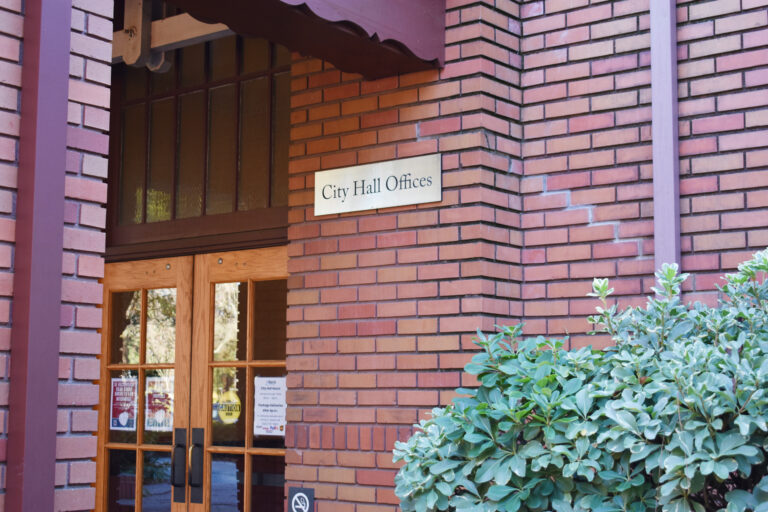
The application is accessible on the city’s website. Applications can be submitted via email or mail sent to the city clerk’s office or the drop box at the city hall. The submission deadline is May 2, 2025, and the city council is tentatively scheduled to review applications in June 2025. 


Written by: Olivia Hokr — city@theaggie.org

Scientists discover the cure for imposter syndrome: steal their identity

The world is your oyster


By ALLISON KELEHER — adkeleher@ucdavis.edu


There has been some serious chatter going around the UC Davis campus about something called imposter syndrome — everyone claims to have it. 

Now, here’s my thinking: If everyone has it, then no one has it. Or, maybe, if everyone in the world chooses to be someone else’s imposter, then it will cancel out. Anything is possible if we all work together.

In the wake of this emerging field of research, some scientists have uncovered a solution. If you feel stressed about not being as successful as someone else, just steal their identity. 

Just hear me out. Let’s say there’s someone in your class who is involved with research, has internships lined up and has graduate schools knocking down their door. What can you do about it? Nothing. No amount of sabotage could ruin the success that they have built up. The other option is for you to become just as successful — which is, admittedly, really difficult. 

There’s this secret third option that no one talks about, and it’s identity theft. You only need three things: their full name, date of birth and social security number. Now the world is your oyster, and you can have all those research opportunities, internships and grad school offers. 

Before this cure for the imposter syndrome, many undergraduates were lost without a purpose to guide them. Now, there’s a simple way to become as successful as you wish to be. In lieu of this cure, students won’t be wasting their time pondering their abilities in the bathroom mirror — these students will be making moves toward their new lives. 

When asked for a statement, one student said that this cure has “changed her life for the better.” Another, albeit more dramatic student, thinks that this is “a recipe for disaster.” Something tells me that they had their identity stolen.

Looking toward the future, there might be some challenges with this new solution. When searching for a new identity, some people may become even more lost than they were before: stuck in an endless cycle of discovery, trying to figure out which identity suits them. 

One student reported that they “spent their entire adult life trying to find out who they want to be, and this new cure just complicates things.” 

I can understand how this high-level thinking may be difficult for some people, and that’s how I know that this method isn’t for everyone. I recommend that everyone take time to decide whether or not they want to go down this road before they commit to identity theft. Once you steal someone’s identity, you can’t really go back. 

On a lighter note, this means you can become whoever you want to be in life. Do you want to be a doctor? Steal that identity. It can’t be too hard. 


Written by: Allison Keleher — adkeleher@ucdavis.edu


Disclaimer: (This article is humor and/or satire, and its content is purely fictional. The story and the names of “sources” are fictionalized.)

Review: ‘Adolescence’

The Netflix series paints a vivid yet horrifying picture of every parent’s worst nightmare 


By BETH MUNRO-MORRIS — arts@theaggie.org 


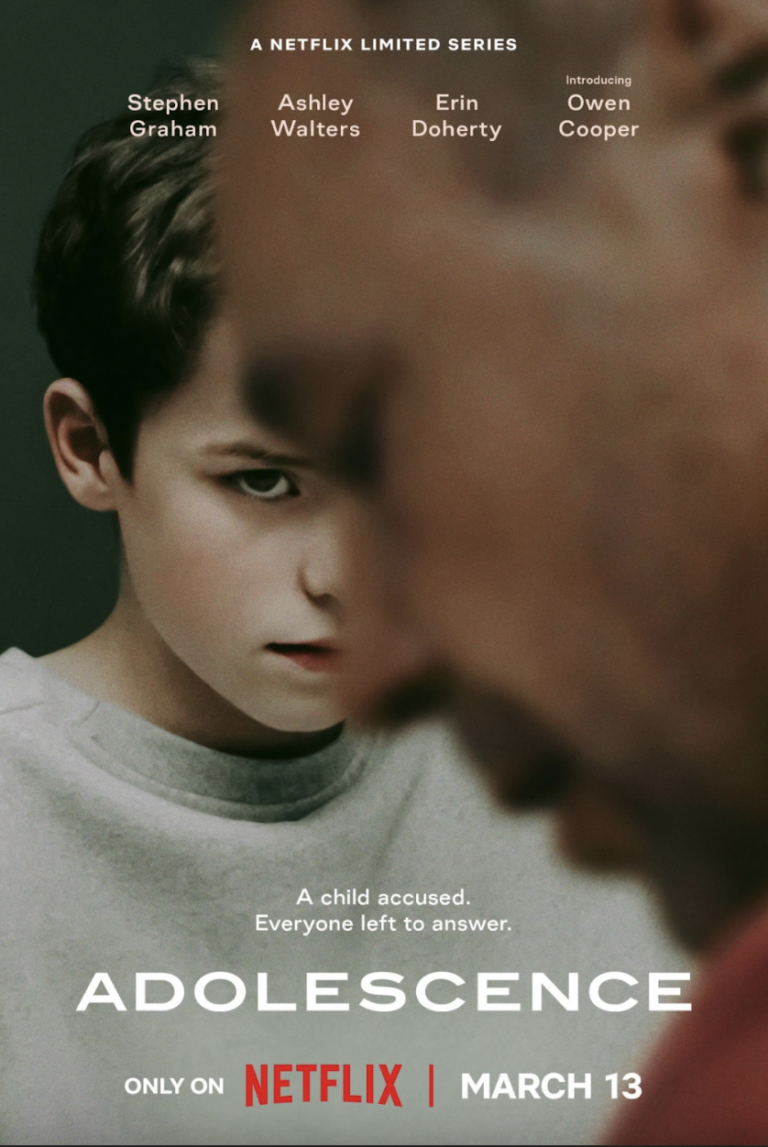
Netflix’s latest British drama, “Adolescence,” has rapidly captured the attention of television consumers worldwide, with its unflinching, stark portrayal of juvenile violence. Set in the heart of Yorkshire, United Kingdom, the show dives into the issues plaguing today’s youth such as toxic masculinity and the manosphere.

Jack Thorne’s technically outstanding four-episode drama unravels with a raw sense of haunting realism. Each installment is shot in a single, continuous take — a refreshingly unique style that provides a natural, yet distinctive, viewing experience.

“Adolescence” immerses you in a harrowing nightmare, following the story of Jamie Miller, a 13-year-old schoolboy who is arrested on suspicion of murdering his classmate. Miller is portrayed by Owen Cooper, aged 15, who plays the role flawlessly despite his complete lack of acting experience.

“Adolescence” cuts straight to the action in episode one, providing us with a front row seat to an armed police raid at the Miller family home. An overwhelming sense of childlike innocence is portrayed in Jamie, as he is pulled from his bed, pants soiled, repeatedly claiming his inculpability. Jamie’s affectionate parents (played by Stephen Graham and Christine Tremarco) are utterly stunned and clueless to the situation, as they insist that the police have made a mistake. This lack of awareness becomes a vital, underlying theme throughout the show.

The show’s realness offers an accuracy that glamorized television fails to deliver. Mug shots, blood tests, strip searches and questioning, Jamie is rushed into the police station as if he were an adult. However, the mystery surrounding his charges, alongside whatever hope the audience may hold for him, is extinguished within 40 minutes of the first episode.

Concrete, conclusive evidence cements the scarring reality of his situation and the revelation of the victim, Katie, a young girl at Jamie’s school. His conviction isn’t a spoiler, but rather confirms the true narrative of “Adolescence” — a deep exploration into youth violence and the contemplation of why, rather than who.

Detective Investigator Bascombe (Ashley Walters) and Detective Sergeant Frank (Faye Marsay) search for answers in episode two, unravelling a web of communication beneath the surface of parental supervision. Audiences are exposed to a toxic online world beyond the comprehension of the older generation: encrypted messaging, disguised threats and cyber bullying. Drawing on controversial figures such as Andrew Tate and topics such as “incel” and “the manosphere,” “Adolescence” exposes the truly virulent impact of social media and toxic masculinity on the impressionable youth.  

The penultimate episode of this four-part thriller is perhaps the most gripping installment of them all and unfolds entirely within the confines of a youth detention facility. Child psychologist Briony (Erin Doherty) aims to assess Jamie’s mental state and understand the factors leading to his alleged crime, seven months after his initial incarceration. 

Doherty and Cooper perform flawlessly together, showcasing a diverse spectrum of emotions to create a transparency in Jamie’s character and the reasoning behind his actions. Despite Jamie’s rash and unpredictable behavior, Briony’s calm demeanor encourages intriguing discourse surrounding self-image and masculinity. 

In this enthralling display, tension escalates as Briony’s probing questions lead to volatile outbursts from Jamie, revealing deep-seated anger and grief. Delving into his relationship with victim Katie and friends at school, as well as family at home, she highlights his vulnerability and susceptibility to societal pressures.

The fourth and final episode of “Adolescence” provides a platform for Graham and Tremarco to truly shine in their portrayal of Jamie’s parents, Eddie and Manda. Both illustrate the raw emotion, hurt and trauma that the family have been burdened with indefinitely following their son’s arrest. Rather than laying blame and excusing their child’s actions with some form of obvious childhood abuse or negligence, “Adolescence” focuses on displaying the severe implications of Jamie’s actions on the people around him. 

Setting it apart from other crime dramas, the show’s refusal to “point the finger” invites the audience to reflect on collective responsibility, urging a future where intervention takes precedence over punishment. By following the perspectives and lives of numerous characters as they intertwine, “Adolescence” delivers a vast spectrum of emotion that has the power to resonate with audiences beyond a personal level. 

A striking mix of intimacy and chaos, this compelling piece of British television offers an all-too-real glimpse into the dark reality of today’s youth, with hopes of inspiring meaningful change in the social justice system.


Written by Beth Munro-Morris —- arts@theaggie.org